
In his October 2025 General Conference address, “Lovest Thou Me?”, Elder Steven C. Barlow teaches that love for God is not only something we feel. It is something we demonstrate through our choices and priorities.
He explains that love grows when it is both expressed and received.
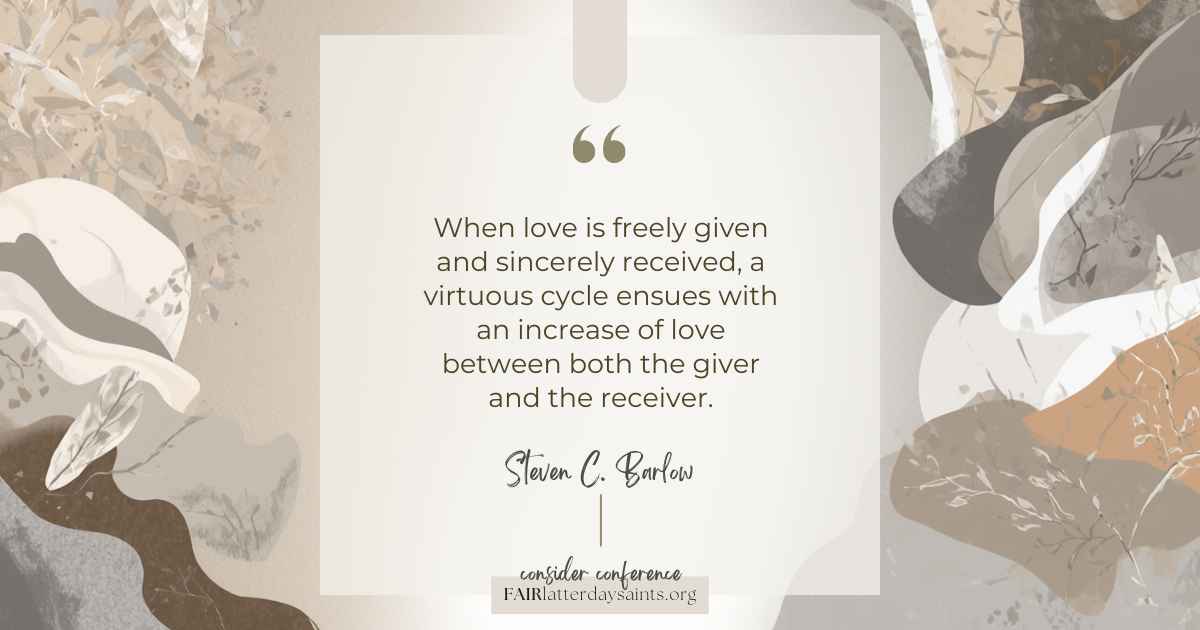
When love is freely given and sincerely received, a virtuous cycle ensues with an increase of love between both the giver and the receiver.
Drawing from the Savior’s conversation with Peter after the Resurrection, Elder Barlow explains that the Lord’s question, “Lovest thou me more than these?”, invites each disciple to examine what truly comes first in their life.
Rather than leaving disciples guessing how to show devotion, the Lord has clearly revealed the ways we demonstrate love for Him.
Common Criticism: “Religious devotion often focuses too much on rules and obedience rather than genuine love.”
Some observers assume that religious commandments encourage compliance rather than sincere devotion. From this perspective, obedience appears mechanical rather than relational.
Fallacy at Work: Love vs. Obedience
This criticism assumes that love and obedience are opposites. In reality, relationships often express love through willing commitment, loyalty, and sacrifice.
Elder Barlow’s Correction: Love Is Demonstrated Through Action
Elder Barlow teaches that the Savior Himself explained how disciples show their love for God.
When Jesus asked Peter, “Lovest thou me?”, His response was not abstract. The Savior invited Peter to demonstrate that love through meaningful action.
- Put God first in life.
- Serve and care for others.
- Express gratitude to God.
- Choose obedience to His commandments.
These actions are not attempts to earn God’s love. They are natural expressions of loving Him.
Resolving this Fallacy:
Love for God becomes visible through daily choices. When disciples prioritize the Lord, serve His children, and follow His teachings, they demonstrate the sincerity of their devotion.
Living Apologetics: Love That Shows Itself
Elder Barlow’s message reframes obedience as an expression of love rather than a replacement for it.
In everyday life, love is often demonstrated through action. Parents care for children, friends show loyalty, and spouses make sacrifices for one another. These actions are not empty obligations. They reveal the depth of the relationship.
Similarly, disciples show love for God through the way they live.
Elder Barlow highlights four practical expressions of devotion:
Putting God first.
When disciples prioritize spiritual commitments, they show that their relationship with God matters most.
Serving others.
Jesus taught that serving God’s children is one of the clearest ways to show love for Him.
Showing gratitude.
Recognizing God’s hand in our lives deepens faith and strengthens our relationship with Him.
Choosing obedience.
Obedience becomes an act of willing devotion rather than forced compliance.
Practical Apologetic Use
- If someone says: “Religion focuses too much on rules.”
- You might respond: “Elder Barlow explains that obedience is one way we show love for God. Just like in any relationship, love becomes real through the things we choose to do.”
 Ways to Apply Today

1️⃣ Make a small decision today that places God first in your priorities.
2️⃣ Look for one opportunity to serve someone quietly.
3️⃣ Thank God in prayer for specific blessings you have received.
Keep This Talk With You
Elder Barlow reminds disciples that God’s love for His children is perfect and constant. The more we focus on expressing our love for Him, the more clearly we begin to recognize His love in our lives.
This creates a beautiful spiritual pattern. As disciples show devotion through service, gratitude, and obedience, their relationship with God deepens.
The Savior’s question to Peter is also a question for each of us.
“Lovest thou me?”
Our answer is revealed not only in words, but in the life we choose to live.
What is one thing I could place ahead of other priorities to show the Lord that I truly love Him?

The Consider Conference series by FAIR offers an in-depth look at recent General Conference talks to help members of the Church of Jesus Christ of Latter-day Saints navigate common questions, misunderstandings, and criticisms. Each post provides doctrinal insights, historical context, and practical ways to apply gospel principles in everyday conversations. Through this series, we hope to equip readers with faith-promoting resources that encourage thoughtful reflection, respectful dialogue, and a stronger foundation in gospel truths, fostering both personal conviction and meaningful discussions with others.
