• Skip to primary navigation
  • Skip to main content
  • Skip to primary sidebar
  • Skip to footer

FAIR

  • Find Answers
  • Blog
  • Media & Apps
  • Conference
  • Bookstore
  • Archive
  • About
  • Get Involved
  • Search

FAIR Staff

How we got the Book of Abraham

July 31, 2014 by FAIR Staff

Papyrus Joseph Smith I, containing the original illustration of facsimile 1 from the Book of Abraham.

[This article was written by Kerry Muhlestein and originally posted at Meridian Magazine. An excerpt is reposted here with permission.]

When Napoleon invaded Egypt he opened it up to a wave of Western exploration that the country had never known. Soon after his defeat there, many European countries sent consuls to Egypt with one major goal: bring back amazing antiquities—and that is exactly what they did.

The man who oversaw Egypt on behalf of the Ottoman Empire, Mohammed Ali, was eager to seek Western European help in modernizing his country. He, and most Muslims of the time, also viewed the ancient Egyptian monuments as relics of abominable paganism. So he was happy to trade monuments for modernization, and a flood of artifacts flowed from Egypt into European museums, creating the foundation for some of the greatest museums of the world, such as the British Museum, the Louvre, and the Berlin Museum.[i] In one of the most interesting twists of history, this movement of artifacts would bring the Book of Abraham to Joseph Smith.

Many people have questions about the Book of Abraham. It is an interesting, yet complex subject.[ii] In order to help people find answers to these questions, I will write a series of columns, each addressing a separate subject. In these essays I will attempt to be fully forthcoming and transparent, honestly talking about the answers we have, the mistakes we have made, the incorrect assumptions people have long believed, and the answers we don’t have.

This first column will only be a history of the papyri. Other subjects, such as the source of the Book of Abraham, the interpretations of the Facsimiles, the Kirtland Egyptian Papers, etc., will follow in future columns. These columns will not be heavily footnoted. They are instead designed to be read quickly by the lay reader, the honest seeker for truth, and to have just enough notes to point people who want more to places where they can read further. The story is interesting and complex enough to fill more than one volume of books, but here we give a more condensed version.[iii]

[To continue reading this article, please visit the Meridian Magazine website link above.]

Filed Under: Book of Abraham

A Word on a “Liberal” vs. a “Conservative” Understanding of Scripture

July 29, 2014 by FAIR Staff

scriptures[By David Larsen, cross posted with slight alterations from Heavenly Ascents.]

I recently saw a blog post by Dr. William Hamblin that responded to a Round-Table panel on the topic: “Is Scripture Relevant.” I had not initially seen this discussion, so I am grateful to the two bloggers referenced for posting their thoughts. I have since gone back and watched the panel discussion and came away with sentiments similar to Dr. Hamblin’s. I didn’t feel that the panelists really addressed or answered that question. As I have strong feelings on this topic, I thought I would share a few comments.

As Dr. Hamblin also suggested, some of the ideas presented in the discussion can be boiled down to, at least in part, the differences between a liberal versus a conservative understanding of what scripture is and how it functions in a community.

The LDS understanding of scripture can appear, for those on the outside looking in, to be very complex. Most Mormons could legitimately be described as having both a liberal and a conservative view of scripture. For many of my protestant/evangelical friends and colleagues, our dismissal of the idea of sola scriptura (i.e., the Bible is the inspired word of God and as such is of higher authority than tradition or ecclesiastical authority), or of scriptural inerrancy is a very liberal position. For some, like Catholics, Anglicans, and Methodists, our position, in this regard, is perhaps not so radical (although our acceptance of additional scripture beyond the Bible is).

As I went through my graduate degrees in theology and Biblical Studies, I had many discussions with troubled evangelical students whose world seemed to be crashing down around them because in class after class they were presented with evidence that the process of the scriptural canon coming together was a rather messy one and that there are many conflicting manuscripts, apparent contradictions, and human errors that entered into that process. Some expressed to me that they had lost their faith or were in the process of losing it, because of these revelations (if you pardon the pun). They wondered how I was able to get through my studies without feeling so shaken. I would tell that my Mormon faith taught and prepared me to accept a view of scripture that allowed for errancy — the fallible hand of human beings in the transmission of the inerrant word of God. It is one of our articles of faith that “we believe the Bible to be the Word of God, as far as it is translated [or ‘transmitted’] correctly.” But for many of my Christian friends, this is an unacceptably liberal position.

As I listened to some of the comments made at this recent panel discussion, including in the Q&A period, I found some ideas expressed that, in my opinion, would be “unacceptably liberal” in the minds of most Latter-day Saints. In the interest of brevity, I will focus on a few specific responses to a question that concerned the difference between scripture and literature in a more general sense. I realize that in doing this, I am taking these responses out of their full context, but I hope that I am not misrepresenting the speakers’ intended meaning. I don’t mention the presenters’ names because my purpose is not to criticize them personally nor their research in general, but simply to discuss these particular ideas.

One of the presenters responded by saying: “What is the difference between a prophet and a poet? I’m not sure.”

Another stated: “I don’t think there is a rigid distinction between literature and scripture. Scripture is precisely that — anything has the potential to be scripture if it helps you deepen your relationship to the divine world.” He went on to explain (this is my summary) that basically any literature that helps a community bond together and access deity as they understand it should be considered scripture.

Now this is a liberal view of scripture in a different sense than what I explained above. In this regard, most Latter-day Saints’ view of scripture would be comparatively conservative. For most Mormons, including myself, this is a much more broad definition of scripture than we would be willing to accept or use. As Bill Hamblin explains in his post, this view defines as scripture whatever a community accepts or believes scripture to be. He goes on to define how he sees scripture, a view with which I think most Latter-day Saints would agree:

This perspective ignores that scripture is scripture because of something in its nature and essence, not in our response to it. It is and remains scripture even if no one believes in it. Scripture is a manifestation of God to humans that humans can accept or reject. But human rejection of scripture does not change its scriptural nature; that comes from God. Scripture is scripture whether we believe it or not.

Hamblin’s response speaks to the difference between what we could call a liberal, sociological, or secular view of what scripture is and what most believers understand scripture to be. The former seems to side-step the question of the objective reality of God — a real Being who speaks to mankind — and the question of whether God can actually speak to mankind. Instead, it sees scripture as something subjective that becomes “the word of God” only to the extent that a particular community imagines it to be such. Although this view makes understanding the diversity of religious beliefs and the proliferation of sacred texts throughout the world and throughout history easier, this perspective is not sufficient (in my view), to explain what many Latter-day Saints have experienced with the Word of God.

Again, speaking for “most Latter-day Saints,” we view the Word of God as directly inspired by Deity. Although we acknowledge that this Word is filtered by the inspired man/woman of God through his/her mortal mind and human language, and that these factors must always be taken into account, the idea that there is an essential core of direct divine communication cannot be denied or dismissed.

Our belief in and loyalty to the Word of God that has been revealed to us is ultimately based on our testimony that those who delivered that message were indeed called, elected, and inspired by God and entrusted with his divine communication. If we do not believe this about an individual, then we are not obligated to accept their word as divinely inspired. However, as Dr. Hamblin argued, this does not change the fact that either God did speak to them or He did not.

Based on this distinction, there may be elements in the books that we generally acknowledge as Scripture that may not, in fact, be divinely inspired by God.  As the belief states, we accept, for example, the Bible “as far as it is translated correctly.” This exception provides for some ambiguity as to what exactly we should accept to be the actual word of God and what is erroneously transmitted as such. However, this obstacle is largely alleviated by the LDS belief in modern revelation. Unlike the Protestant reliance on sola scriptura, which, as I discussed above, can be frustrated by the realization that the process of the transmission of scripture is indeed imperfect, Latter-day Saints have another, more immediate source of authoritative communication with God — the living oracle.

In the first section of our modern scriptures, the Doctrine and Covenants, we are informed, in no uncertain terms, that the word of the Lord is the same whether it comes from His own mouth or by the voice of his living servants (D&C 1:38).

Furthermore, in D&C 18:34–36, the Saints are specifically instructed to not consider his revealed word as the words “of men nor of man.” Another way of saying this is that the words of a prophet are most emphatically not the same as the words of a poet. Scripture is not the same as literature in general. Not simply “anything” has the potential to be scripture, in a true sense. As Jesus Christ himself states through his prophet:

34 These words are not of men nor of man, but of me; wherefore, you shall testify they are of me and not of man;

35 For it is my voice which speaketh them unto you; for they are given by my Spirit unto you, and by my power you can read them one to another; and save it were by my power you could not have them;

36 Wherefore, you can testify that you have heard my voice, and know my words.

These divine pronouncements do not accord with the liberal definition of scripture that I have discussed here. So, in this sense, most believing Latter-day Saints have a conservative view regarding what scripture is. When we begin to argue that the Scriptures are not what they claim to be or that they are something other than what they claim to be, we begin to tread on unstable ground.

A case in point is a discussion that I had not long ago with a colleague from the Community of Christ church (formerly known as The Reorganized Church of Jesus Christ of Latter-day Saints). The Community of Christ is largely recognized as a more liberal branch of the Restorationist movement — one that has aligned itself much more closely with “mainstream” Protestantism than has the LDS Church. As a side note, I have found that some Latter-day Saints that describe themselves as liberal tend to idealize or sympathize with the Community of Christ church to varying degrees and for various reasons (see this blog post). As I was saying, in this conversation I had with the colleague of mine from the Community of Christ, he was explaining to me the liberal position that many in their church now take towards the status of the Book of Mormon as scripture — or what it means to accept the book as “scripture.” Although their church officially accepts the Book of Mormon as part of their scriptural canon, the definition of what that actually means varies.

Starting from the highest levels of their ecclesiastical hierarchy, it has become popular to see the book from a more subjective understanding of scripture than the conservative position I have described. Many (but not all) have called into question the historicity of the Book of Mormon and this seems to correlate with a diminishing of its estimation as the Word of God when compared to the Bible. My colleague informed me that belief in the Book of Mormon is now seen as optional among many members and that in many new Community of Christ congregations that are being opened up in areas such as Africa, ministers are not even mentioning the book as part of their scriptural canon.

I am not trying to make a direct correlation with the type of thoughts expressed by the panelists in this Round-Table discussion and the direction the Community of Christ has taken with their understanding of the scriptures of the Restoration. I again acknowledge that I have merely taken a few statements from a longer discussion and that these statements likely do not represent the presenters’ full perspective regarding scripture. However, I do feel that it is very important to privilege what we know to be the Word of God over other types of literature — including what other civilizations have understood or considered to be scripture. Again, this distinction comes from the authority we afford to the persons that we consider today to be prophets, seers, and revelators, from the time of Joseph Smith to the present day. If we consider them to be called and inspired by God, then what they say (when inspired by the Holy Ghost) is scripture and what they designate as scripture is such.

I will close with another passage from modern scripture:

D&C 68:4 And whatsoever they shall speak when moved upon by the Holy Ghost shall be scripture, shall be the will of the Lord, shall be the mind of the Lord, shall be the word of the Lord, shall be the voice of the Lord, and the power of God unto salvation.

Filed Under: General, LDS Scriptures

Faith and Reason 13: If/And Conditional Sentences

July 25, 2014 by FAIR Staff

https://media.blubrry.com/mormonfaircast/www.fairlatterdaysaints.org/wp-content/uploads/2014/07/Evidence-12.mp3

Podcast: Download (4.1MB)

Subscribe: RSS

From the book: Of Faith and Reason: 80 Evidences Supporting the Prophet Joseph Smith

by Michael R. Ash

Dr. Daniel Peterson and Dr. Royal Skousen recently discovered that the Book of Mormon contains odd sentence structures utilizing the conditions if and and. In the original Book of Mormon manuscript, as dictated by Joseph Smith to Oliver Cowdery we find several examples, such as the following:

…yea and if he saith unto the earth move and it is moved…

…yea if he say unto the earth thou shalt go back that it lengthen out the day for many hours and it is done…

…and behold also if he saith unto the waters of the great deep be thou dried up and it is done…

In modern editions of the Book of Mormon,  these phrases were edited to sound more grammatically correct to English readers.

The if/and conditional sentence structure is also found in ancient Hebrew and biblical Hebrew. It is not surprising that the if/and sentences in the King James Version of the Bible, were also modified to make it sound more palatable to English readers.

As far as the research of Skousen and Peterson have shown, this authentic Hebrew sentence structure was not available in any other English text in Joseph Smith’s lifetime, but is a strong evidence for the Hebraic background of the Book of Mormon text.

Michael R. Ash is the author of: Of Faith and Reason: 80 Evidences Supporting The Prophet Joseph Smith. He is the owner and operator of MormonFortress.com and is on the management team for FairMormon. He has been published in Sunstone, Dialogue: A Journal of Mormon Thought, the Maxwell Institute’s FARMS Review, and is the author of Shaken Faith Syndrome: Strengthening One’s Testimony in the Face of Criticism and Doubt. He and his wife live in Ogden, Utah, and have three daughters.

Julianne Dehlin Hatton  is a broadcast journalist living in Louisville, Kentucky. She has worked as a News Director at an NPR affiliate, Radio and Television Host, and Airborne Traffic Reporter. She graduated with an MSSc from the Maxwell School of Citizenship and Public Affairs at Syracuse University in 2008. Julianne and her husband Thomas are the parents of four children.

Music for Faith and Reason is provided by Arthur Hatton.

Filed Under: Uncategorized

Faith and Reason 12: Stylometry and The Book of Mormon

July 17, 2014 by FAIR Staff

https://media.blubrry.com/mormonfaircast/www.fairlatterdaysaints.org/wp-content/uploads/2014/07/Evidence-10.mp3

Podcast: Download (7.1MB)

Subscribe: RSS

From the book: Of Faith and Reason: 80 Evidences Supporting the Prophet Joseph Smith

by Michael R. Ash

Critics generally claim that Joseph Smith either created (rather than dictated) The Book of Mormon, or that he plagiarized the text from some other nineteenth-century scholar. The invention of the computer has brought a new tool with which to test a document’s authorship. Stylometry (or word print studies) can detect an author’s fingerprint style by the individual word patterns they use for non-contextual words such as a, of, the, and it. These patterns are typically unconscious to the author and are not easily altered. Using stylometry, scholars have compared the writings of Joseph Smith, Oliver Cowdery, and other contemporaries to the authors in The Book of Mormon. According to the experts who conducted the research, word prints conclusively demonstrate that The Book of Mormon was written by many authors (there were twenty-four distinct word prints) –none of which matched Joseph Smith or the contemporaries tested.

Michael R. Ash is the author of: Of Faith and Reason: 80 Evidences Supporting The Prophet Joseph Smith. He is the owner and operator of MormonFortress.com and is on the management team for FairMormon. He has been published in Sunstone, Dialogue: A Journal of Mormon Thought, the Maxwell Institute’s FARMS Review, and is the author of Shaken Faith Syndrome: Strengthening One’s Testimony in the Face of Criticism and Doubt. He and his wife live in Ogden, Utah, and have three daughters.

Julianne Dehlin Hatton  is a broadcast journalist living in Louisville, Kentucky. She has worked as a News Director at an NPR affiliate, Radio and Television Host, and Airborne Traffic Reporter. She graduated with an MSSc from the Maxwell School of Citizenship and Public Affairs at Syracuse University in 2008. Julianne and her husband Thomas are the parents of four children.

Music for Faith and Reason is provided by Arthur Hatton.

Filed Under: Uncategorized

Faith and Reason 11: Book of Mormon Politics Unlike Joseph Smith’s

July 10, 2014 by FAIR Staff

https://media.blubrry.com/mormonfaircast/www.fairlatterdaysaints.org/wp-content/uploads/2014/07/Evidence-9-V-3.mp3

Podcast: Download (8.1MB)

Subscribe: RSS

From the Book: Of Faith and Reason: 80 Evidences Supporting the Prophet Joseph Smith

by Michael R. Ash

In 1976, during America’s bicentennial, Latter-day Saint historian Dr. Richard Bushman was preparing a speech and turned to The Book of Mormon to find some quotes that would resonate with the principles in our Constitution. To his surprise, he found that besides some superficial similarities, The Book of Mormon did not reflect typical U.S. political thought. Instead, Bushman found that the Nephite scripture was “an anomaly on the political scene of 1830”. He continues, “Instead of heroically resisting despots, the people of God fled their oppressors and credited God alone with deliverance. Instead of enlightened people overthrowing their kings in defense of their natural rights, the common people repeatedly raised up kings, and the prophets and the kings themselves had to persuade the people of the inexpediency of monarchy”. According to Bushman, The Book of Mormon is “strangely distant from the time and place of its publication” but it’s political attitudes are at home when we compare it to the history of the Israelites.

Michael R. Ash is the author of: Of Faith and Reason: 80 Evidences Supporting The Prophet Joseph Smith. He is the owner and operator of MormonFortress.com and is on the management team for FairMormon. He has been published in Sunstone, Dialogue: A Journal of Mormon Thought, the Maxwell Institute’s FARMS Review, and is the author of Shaken Faith Syndrome: Strengthening One’s Testimony in the Face of Criticism and Doubt. He and his wife live in Ogden, Utah, and have three daughters.

Julianne Dehlin Hatton  is a broadcast journalist living in Louisville, Kentucky. She has worked as a News Director at an NPR affiliate, Radio and Television Host, and Airborne Traffic Reporter. She graduated with an MSSc from the Maxwell School of Citizenship and Public Affairs at Syracuse University in 2008. Julianne and her husband Thomas are the parents of four children.

Music for Faith and Reason is provided by Arthur Hatton.

Filed Under: Uncategorized

What is God Thinking? Reflections on Mormon Women and the Priesthood

July 7, 2014 by FAIR Staff

Sister Missionaries serving in Berlin Germany. (Photo from LDS.org.)
Sister missionaries serving in the Germany Berlin Mission. (Photo from LDS.org.)

[This is a guest post from Deborah Rowley, a Latter-day Saint woman sharing her perspective on the subject of women and the priesthood. These comments are Deborah’s alone, and do not necessarily reflect the official position of FairMormon or The Church of Jesus Christ of Latter-day Saints..]

I am a woman. I am also a member of The Church of Jesus Christ of Latter-day Saints. I am aware of the events surrounding Kate Kelly, her excommunication, and the Ordain Woman movement. Many people both inside and outside the Church have been asking questions like, “What are the leaders of the church thinking?” or “What is Kate Kelly’s bishop thinking?” Those on the other side of the controversy are asking, “What is Kate Kelly thinking?” or “What are the members of Ordain Women thinking?” While these are good questions, I think they’re the wrong ones. No one in the swirling social media frenzy surrounding this situation is asking the right question.

Here is the right question, “What is God thinking?” I know how that must sound. Just stay with me for a second. Let’s just assume that the priesthood leaders at the head of the Church are telling the truth. They have said that only God makes this decision about who holds the priesthood. And they have told us that God said, “Not women.” That answer may change in the future but for now, the answer is no. You may not believe that those men are speaking for God and that is your right. But I do. My faith depends on it. Otherwise the leaders of my church are lying. If they are lying, why would I want to be part of their organization or hold the priesthood anyway? Let’s just assume for the sake of argument that they are telling the truth and that God said no. That is where my question comes in.

The right question is, “What is God thinking?” Einstein famously said that he wanted to know God’s thoughts. I am no Einstein but I think I know my Heavenly Father well enough to know what he is not thinking. He is not thinking that his daughters are undeserving or unworthy. He is not thinking that his daughters couldn’t do the job as well as his sons. He is not thinking that he loves his daughters less than his sons or that he values their growth and development less than that of his sons. He is not thinking that he wants to drive women away from his church or hold them down or keep them subservient. I am confident that God is not thinking those things.

So what could be God thinking? I don’t want to be struck by lightning for the presumption of thinking like God or for God, but I really like that question. As I’ve pondered that question sincerely, I’ve come up with several answers that make sense to me. They may not make sense to you, but below are three possible reasons that I came up with. (God is not in the habit of letting me read his mind so feel free to take this with a grain of salt if you want.)

I started my thought process by acknowledging that God thinks in the big picture. He looks at the long term and can see perfectly how thumping that one domino will set in motion a stream of events that we cannot even begin to see. God knows the consequences down the road that are hidden to us with our limited perspective. Can he see that what seems like one positive to us right now would result in even bigger negatives in the long run? What could those negatives be?

First, perhaps God is saying no because he is protecting his youngest and most innocent children and wants to safeguard a mother’s very limited time in the home. Second, perhaps God is saying no because he is concerned about the growing distortion in our understanding of men and women’s unique roles. Perhaps giving the priesthood to women would further blur the distinction between men and women and jeopardize our Father’s plan for all his children. Third, perhaps God is saying no because he is aware of negative consequences to his sons.

Many boys are struggling in a world of violence, pornography and fatherless families. Perhaps this decision would further marginalize boys which in turn would negatively impact their wives, mothers, sisters, and daughters. You may agree or disagree with my three points and that is just fine. I am not trying to argue my points as definitive answers because I don’t know what God thinks. But I think it is very probable that he has different purposes and reasons that I wouldn’t even understand if he were to try to verbalize them to me. Nevertheless, it has helped me to think of some reasons that make sense to me. You could do the same. Why do you think God would be saying no?

Whatever the reason, I trust God. I trust that he has my best interests at heart, that he loves me and is thinking continually of my needs. He knows what those needs are and how to fulfill them far better than I do. He knows how to fulfill them better than a group of women activists or a group of priesthood leaders. I do believe that God is behind this decision and I trust him. I believe that conscientious leaders have prayed to him to know if now is the time and God said no. I don’t speak for God, but his prophets do. You don’t get too far in reading the Bible before realizing that the prophets’ words are never popular. Why should that change in our modern day?

The unpopularity of their teachings should confirm rather than discount their validity. I do not see denying women the priesthood as hurtful to women. I do not see this decision as holding women back. Why would a loving God purposefully hurt his daughters? From where I sit, I see women in the church thriving and continuing to grow and progress without the priesthood. I see powerful women who lead with strength and purpose, who express their views openly and honestly. I have never been asked to shut up or sit down. Quite the contrary. I have been asked time and time again to step up and speak up. I feel nothing but respect from my priesthood leaders and I admire and respect them in return.

I will continue to give my all to the religion that I believe in. I love being a woman in the Church. I believe it is the place where I can reach my fullest and highest potential and where I can most fully develop a relationship with God and with his Son Jesus Christ. One day I will know God’s thoughts and I will see how this decision fits into his eternal plan. For now, I will not tell God what to think or what to do. I will trust him and exercise my faith.

Filed Under: Gender Issues, Women

Faith and Reason 10: Evidence That The Book of Mormon Was Dictated

July 3, 2014 by FAIR Staff

https://media.blubrry.com/mormonfaircast/www.fairlatterdaysaints.org/wp-content/uploads/2014/07/Evidence-8-V-2.mp3

Podcast: Download (15.9MB)

Subscribe: RSS


From the book: Of Faith and Reason: 80 Evidences Supporting the Prophet Joseph Smith

By Michael Ash

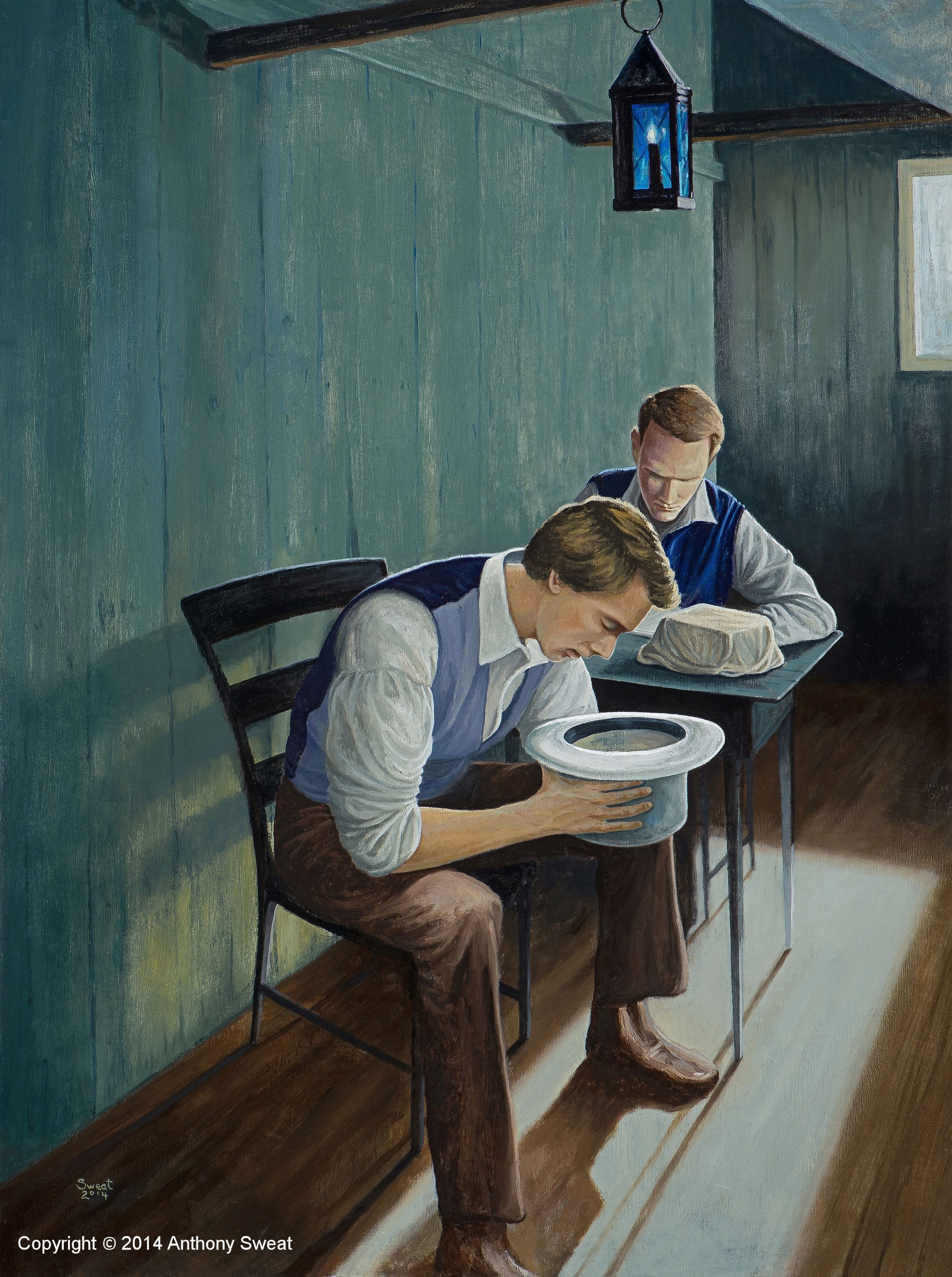
Although the method Joseph Smith used to translate the The Book of Mormon has been described in church history and literature, some members seem taken aback when they find that their perceptions about the translation mechanics employed by Joseph don’t conform to what they previously envisioned. Some members are surprised because they had been taught that Joseph Smith translated the plates by way of the Urim and Thummim. This is true. What most members don’t realize however, is that Urim and Thummim was the name given both to the Nephite Interpreters that were included in the stone box with the plates, as well as the seer stone that Joseph owned and later used to received revelations.

Michael R. Ash is the author of: Of Faith and Reason: 80 Evidences Supporting The Prophet Joseph Smith. He is the owner and operator of MormonFortress.com and is on the management team for FairMormon. He has been published in Sunstone, Dialogue: A Journal of Mormon Thought, the Maxwell Institute’s FARMS Review, and is the author of Shaken Faith Syndrome: Strengthening One’s Testimony in the Face of Criticism and Doubt. He and his wife live in Ogden, Utah, and have three daughters.

Julianne Dehlin Hatton  is a broadcast journalist living in Louisville, Kentucky. She has worked as a News Director at an NPR affiliate, Radio and Television Host, and Airborne Traffic Reporter. She graduated with an MSSc from the Maxwell School of Citizenship and Public Affairs at Syracuse University in 2008. Julianne and her husband Thomas are the parents of four children.

Music for Faith and Reason is provided by Arthur Hatton.

Filed Under: Faith and Reason

Faith and Reason 9: Textual Consistency of The Book of Mormon

June 27, 2014 by FAIR Staff

https://media.blubrry.com/mormonfaircast/www.fairlatterdaysaints.org/wp-content/uploads/2014/06/Evidence-7.mp3

Podcast: Download (14.9MB)

Subscribe: RSS


From the book: Of Faith and Reason: 80 Evidences Supporting the Prophet Joseph Smith

by Michael R. Ash

More than a few critics seem to think that it would be easy to produce a work like the Book of Mormon. Are the critics right?

If so, then why hasn’t any critic attempted to produce something like it? Not only does the book incorporate profound doctrinal insights, but it also discusses politics, war, geography, and migrations, and includes various sermons and a variety of specific events involving distinct individuals.

The original manuscript was not polished or revised by Joseph Smith. His wife Emma, who served as a scribe for a time, said that when Joseph “stopped for any purpose at any time he would, when he commenced again, begin where he left off without any hesitation”. Witnesses also claimed that Joseph translated without notes, manuscripts, or reference books.

If the Book of Mormon is a work of fiction, there would be mistakes in chronology and the inter-connectivity of the many multiple events –based on Joseph’s method of translation. Yet those who have studied the Book of Mormon find that it is a complete and amazingly consistent text.

Michael R. Ash is the author of: Of Faith and Reason: 80 Evidences Supporting The Prophet Joseph Smith. He is the owner and operator of MormonFortress.com and is on the management team for FairMormon. He has been published in Sunstone, Dialogue: A Journal of Mormon Thought, the Maxwell Institute’s FARMS Review, and is the author of Shaken Faith Syndrome: Strengthening One’s Testimony in the Face of Criticism and Doubt. He and his wife live in Ogden, Utah, and have three daughters.

Julianne Dehlin Hatton  is a broadcast journalist living in Louisville, Kentucky. She has worked as a News Director at an NPR affiliate, Radio and Television Host, and Airborne Traffic Reporter. She graduated with an MSSc from the Maxwell School of Citizenship and Public Affairs at Syracuse University in 2008. Julianne and her husband Thomas are the parents of four children.

Music for Faith and Reason is provided by Arthur Hatton.

Filed Under: Uncategorized

What Is Apostasy?

June 23, 2014 by FAIR Staff

The following definition of “apostasy” was penned by Elder George Q. Cannon, a member of the Quorum of the Twelve Apostles and editor of the Deseret Evening News, in which paper the following was published on 3 November 1869.

Here Elder Cannon sets forth the difference between “honestly differing in opinion from the authorities of the Church” and “publishing those differences of opinion, and seeking by arguments, sophistry and special pleading to enforce them upon the people to produce division and strife.”

A copy of the original publication is available through the Utah Digital Newspapers Program. [Read more…] about What Is Apostasy?

Filed Under: Doctrine, Faith Crisis, LDS Culture, LDS History, News stories

A Review of Alex Beam’s Treatment of Polygamy

June 20, 2014 by FAIR Staff

brian-hales*Cross posted from Mormon History Guy.

By Brian C. Hales

On June 5, 2014, I downloaded the Kindle version of Alex Beam’s American Crucifixion and reviewed Chapter 5, “Polygamy and Its Discontents.” I immediately identified a few weaknesses of the chapter including the predominant use of secondary sources, quoting of problematic evidences apparently without checking their reliability, ignoring of historical data that contradicts his position, promotion of narrow and often extreme interpretations of available documents, and going beyond the evidence in constructing conclusions.

Two days later in San Antonio, Texas, at the Mormon History Association’s annual meeting, Mr. Beam presented a thoughtful essay and then fielded questions from the audience. As near as I can recall, I took the opportunity to pose the following question: “I’m not trying to put you on the spot but about three-fourths of your sources are secondary. Were you concerned you might be criticized for this?” and I again added: “I’m not trying to put you on the spot.” At this, the audience laughed, and Alex was gracious in acknowledging he was aware of my books, but at that point in the research process, he was not inclined to read another three books on the subject because he was satisfied that he had sufficiently researched the topic. In Alex’s defense, my three volumes (Joseph Smith’s Polygamy: History and Theology with over 1500 pages) were released about the time he had probably just finished his final draft. Few authors would hold up such a project in order to integrate the contents of a new book that dealt with the subject of only one of the chapters. [Read more…] about A Review of Alex Beam’s Treatment of Polygamy

Filed Under: Polygamy Tagged With: Brian Hales, Joseph Smith, Polygamy

  • « Go to Previous Page
  • Go to page 1
  • Interim pages omitted …
  • Go to page 23
  • Go to page 24
  • Go to page 25
  • Go to page 26
  • Go to page 27
  • Go to Next Page »

Primary Sidebar

Faithful Study Resources for Come, Follow Me

Subscribe to Blog

Enter your email address:

Subscribe to Podcast

Podcast icon
Subscribe to podcast in iTunes
Subscribe to podcast elsewhere
Listen with FAIR app
Android app on Google Play Download on the App Store

Pages

  • Blog Guidelines

FAIR Latest

  • Come, Follow Me with FAIR – Doctrine and Covenants 137–138 – Part 2 – Autumn Dickson
  • Come, Follow Me with FAIR – Doctrine and Covenants 137–138 – Mike Parker
  • FAIR December Newsletter
  • Come, Follow Me with FAIR – Doctrine and Covenants 137–138 – Part 1 – Autumn Dickson
  • Prophets of God 

Blog Categories

Recent Comments

  • LHL on Come, Follow Me with FAIR – Doctrine and Covenants 132 – Mike Parker
  • Stephen Johnsen on Come, Follow Me with FAIR – Doctrine and Covenants 132 – Mike Parker
  • Bruce B Hill on Come, Follow Me with FAIR – Doctrine and Covenants 124 – Part 1 – Autumn Dickson
  • Gabriel Hess on Join us Oct 9–11 for our FREE virtual conference on the Old Testament
  • JC on When the Gospel “Doesn’t Work”

Archives

Follow Us

  • Facebook
  • Twitter
  • iTunes
  • YouTube
Android app on Google Play Download on the App Store

Footer

FairMormon Logo

FAIR is a non-profit organization dedicated to providing well-documented answers to criticisms of the doctrine, practice, and history of The Church of Jesus Christ of Latter-day Saints.

Donate to FAIR

We are a volunteer organization. We invite you to give back.

Donate Now

Site Footer