• Skip to primary navigation
  • Skip to main content
  • Skip to primary sidebar
  • Skip to footer

FAIR

  • Find Answers
  • Blog
  • Media & Apps
  • Conference
  • Bookstore
  • Archive
  • About
  • Get Involved
  • Search

Apologetics

Fair Issues 72: How did the Book of Mormon people travel to the New World?

October 26, 2014 by Ned Scarisbrick

https://media.blubrry.com/mormonfaircast/www.fairlatterdaysaints.org/wp-content/uploads/2014/10/Fair-Issues-72-Pod.mp3

Podcast: Download (9.9MB)

Subscribe: RSS

MAIn this podcast brother Ash discusses how the Lehites weren’t the only Book of Mormon people to come from the Old to the New World.  The Mulekites (or people of Zarahemla) and the Jaredites (who preceded the Lehites) also begin their journeys from the Old World.  The next few issues will examine the world of the Jaredites and their journey to the New World.

The full text of this article can be found at Deseret News online.

Brother Ash is author of the book Shaken Faith Syndrome: Strengthening One’s Testimony in the Face of Criticism and Doubt, as well as the book, of Faith and Reason: 80 Evidences Supporting the Prophet Joseph Smith. Both books are available for purchase online through the FairMormon Bookstore. Tell your friends about the Mormon Fair-Cast. Share a link on your Facebook page and help increase the popularity of the Mormon Fair-Cast by subscribing to this podcast in iTunes, and by rating it and writing a review.

The views and opinions expressed in the podcast may not reflect those of the Church of Jesus Christ of Latter-day Saints or that of FairMormon


Filed Under: Anti-Mormon critics, Apologetics, Bible, Book of Mormon, Conversion, Evidences, Faith Crisis, General, Hosts, Joseph Smith, LDS History, Michael R. Ash, Mormon Voices, Ned Scarisbrick, Podcast, Power of Testimony, Science

A Mormon Reads a REAL Atheist’s Blog Post

October 24, 2014 by Neal Rappleye

"An ostracon from the end of the eight century BCE. In the first line we have the ciphers 50 + 7 in Egyptian hieroglyphic forms used widely in Israel and Judah." (Shmuel Ahituv, Echoes from the Past, 36.)
“An ostracon from the end of the eight century BCE. In the first line we have the ciphers 50 + 7 in Egyptian hieroglyphic forms used widely in Israel and Judah.” (Shmuel Aḥituv, Echoes from the Past, 36.)

[Cross posted from Studio et Quoque Fide.]

Many have probably already seen the post, “An Atheist’s Response to the First 31 Pages of The Book of Mormon.” I am going to guess that fewer people have seen “A REAL Atheist’s Response to the First 31 Pages of the Book of Mormon.” This “real atheist” appears to be an ex-Mormon named Benjamin V. (or else a Benjamin posted this on behalf the atheist). In any case, this “real atheist” (RA from here on out) is much less flattering than the first, providing a critique of the historicity of the Book of Mormon. (In keeping with RA’s own practice, I will not link to either of these blog posts.)

RA was respectful in his critique, no snarky remarks or sarcastic jabs, which I appreciate. I nonetheless found his critique to be somewhat naïve not only of LDS scholarship, but of biblical scholarship more generally. In RA’s defense, he (I am assuming gender here) does admit, “I’m not an expert on Christian theology or the Bible, and I certainly don’t believe in much of either, but I do have a passing familiarity with them.” In the spirit of promoting a more informed discussion, I would just like provide an informed Mormon’s opinions of RA’s objections.

  1. Pre-Exilic Jews: RA thinks Nephi’s frequent reference to “Jews” is anachronistic. He writes, “the term ‘Jew’ wasn’t coined until after the Israelites returned from captivity under the reign of the Persians.” RA then tries to predict the apologetic response:

Knowing a bit about Mormon apologetics, I’m sure some would like to explain this away by appealing to Joseph Smith’s imperfect translation skills. Perhaps Nephi used a word like “Israelite,” and Joseph Smith translated it as “Jew.” But there are clues in the text that would argue against this explanation. For example, in 1 Nephi 15:17 (on page 31, as it happens), Nephi refers to “…the Jews, or… the House of Israel.” Clearly Nephi was familiar with both terms, when only one would have been invented at the time of his writing.

Actually, a more simple solution is that Nephi used yehudi (יהודי); plural yehudim (יהודים), which is translated as “Jew” (or in the plural, “Jews”) in the KJV, and even in some instances in modern translations like the NIV and the NASB. In fact, it appears at a rather high frequency in the writings of Jeremiah, Nephi’s contemporary (e.g., Jeremiah 32:12; 34:9; 38:19; 40:11, 12, 15: 41:3; 44:1; 52:28, 30). Though it more properly means “Judean” or “Judeans,” the distinction was not made in 1830. So, there is really no problem with Nephi’s use of the term. In fact, there are arguably a number of wordplays in the underlying text on the Hebrew meaning of the word.[1] An interesting point to consider, since Joseph Smith did not know Hebrew.

  1. Egyptian Writing: RA’s next comments, “It’s hard to understand why someone who was born and raised in Jerusalem ‘in all his days’ would have known Egyptian at all.” This is not really a serious conundrum. Stefen Wimmer has documented several instances of what he calls “Palestinian hieratic,” an Egyptian script being used by Israelites in ancient times (cf. 1 Nephi 1:2).[2] According to Wimmer, this script was used in Palestine “probably over several centuries,” and its usage peaks in the late-7th century bc, coming to an abrupt end “after the Babylonian captivity.”[3] This is the very time period of Lehi, Nephi’s father (it probably would not have been his primary language, but nothing in the text requires it to be). Given that RA says he knows “a bit about Mormon apologetics,” I am little surprised he does not know about this, since it has frequently been commented on by LDS scholars.[4]

The idea that Lehi’s “children write their diaries in Egyptian,” is not really in the Book of Mormon. Nephi is not writing a “diary,” but an official record of his people, replete with an origin story meant to give them a sense of identity and meaning. Under such circumstances, Nephi was probably following the pattern of the Brass Plates, which were actually written in Egyptian (Mosiah 1:4). This resolves the contradiction RA creates by saying, “This document seems to have been written in Hebrew, but it is taken, in part, ‘that we may preserve unto our children the language of our fathers.’ So is the language (always singular) of their fathers Egyptian or Hebrew?”

  1. Clarity About the Messiah: The next strange thing, according to RA is “their portrayal of the Messiah.” RA goes on to explain that there are few explicit prophecies of Christ in the Old Testament, and the prophecies of the Messiah that do exist provide a very different picture than the Christian version. He states that most Messianic prophecies are taken out of context.

if you read the Old Testament and 1 Nephi back-to-back, 1 Nephi’s Messianic prophecies are wildly out of place. The Old Testament contains a few scant clues that (even if read the way Christians traditionally understand them) are so vague that they could only be understood in hindsight. Meanwhile, Nephi is receiving incredibly specific prophecies that could only apply to Jesus. The Jewish conqueror-Messiah of the Old Testament is nowhere to be found in 1 Nephi. In his place is a Jesus precisely described, right down to the time and place of his birth, his name, his mother’s name, and a description of John the Baptist. It also specifically refers to this Messiah as God, which would never have occurred to any Old Testament prophet. If anything like this had appeared in the Old Testament, it’s hard to imagine that anyone would have questioned Jesus’ divine identity.(emphasis added)

Frankly, I think that RA answers his own question here. The prophecies are only “wildly out of place” if one rejects the idea of genuine prophecy. If we accept that God can, in fact, reveal the future, then there is no real barrier to believe that God could reveal even highly specific prophecies; nor can there be a reasonable objection to God revealing more specific prophecies to one group of people, and less specific prophecies to others. Within Mormon theology, agency is an all-important principle: people need to have the ability to choose. Thus, since highly specific prophecies like those in the Book of Mormon make it “hard to imagine that anyone would have questioned Jesus’ divine identity,” such specificity could not be revealed to those who would be there for his mortal ministry; otherwise it would be so obvious their agency would be compromised. Meanwhile, those who would not be there could have more specific details.

I get that this answer can come across as a bit of a cop-out. But the purpose of the Book of Mormon is to provide evidence that revelation is real. As such, it seems inappropriate, to me, to judge its historicity on grounds which rule prophecy and revelation out a priori. For what it is worth, some non-LDS scholars would dispute RA’s points entirely. Margaret Barker, for instance, has argued that Christianity was based on deep roots of pre-Exilic (i.e., before the Babylonian captivity) Israelite religion. When she commented on the Book of Mormon, she wrote:

The original temple tradition was that Yahweh, the Lord, was the Son of God Most High, and present on earth as the Messiah. This means that the older religion in Israel would have taught about the Messiah. Thus finding Christ in the Old Testament is exactly what we should expect, though obscured by incorrect reading of the scriptures. This is, I suggest, one aspect of the restoration of “the plain and precious things, which have been taken away from them” (1 Nephi 13:40).[5]

Daniel Boyarin, a Jewish scholar, has made a similar argument.[6] I have not yet read Boyarin’s book, but Daniel C. Peterson quotes him as saying, “The theology of the Gospels, far from being a radical innovation within Israelite religious tradition, is a highly conservative return to the very most ancient moments within that tradition, moments that had been largely suppressed in the meantime — but not entirely.”[7]

Nephi’s prophecies still might seem much too specific for those who refuse to believe in revelation, but in light of work by the likes of Barker and Boyarin, they really are not quite so “wildly out of place” after all.

  1. Law of Moses: RA states that, “upon a cursory analysis of the text, I could find very little evidence that these people even knew what the Law of Moses was, let alone that they lived it.” Many who have given the text more than a cursory reading, however, have found that the law of Moses permeates the text. John W. Welch, who is an attorney and a scholar of ancient Jewish and Israelite law, has provided numerous studies of the law and the Book of Mormon. Welch has shown that the text describing Nephi’s “particularly grizzly murder,” of Laban, as RA calls it, was in fact consciously written with an understanding of the Mosiac law as it existed and was interpreted in 600 bc.[8] Welch has also thoroughly examined 7 legal cases in the Book of Mormon, finding them consistent with the ancient law of Moses.[9]What about the “holidays or festivals that play such an important role in Jewish life,” which RA says, are never “mentioned in the Book of Mormon”? Several scholars have shown that major sermons like those of Jacob in 2 Nephi 6–10 and Benjamin in Mosiah 1–6 are examples of just such festivals.[10] Several other aspects of the law of Moses have also been found in the Book of Mormon.[11]

Then there is the fact that, “the moment Lehi and his (non-Levite) family leave Jerusalem, they immediately set up altars and sacrifice animals in the wilderness, which would have scandalized a family of Israelites raised in the Deuteronomistic Mosaic tradition.” This actually finds an interesting solution in the Dead Sea Scrolls, where the Temple Scroll allows such sacrifices if you are beyond a three-day journey from the temple.[12] It also worth pointing out that some have argued that Lehi was not fully on board with the Deuteronomistic reforms going on in his day, and in fact spoke out against them; in which case, his not being in full compliance with the Deuteronomistic tradition is not a serious defect.[13]

  1. Miscellaneous Topics: RA states that, “there are so many other oddities that it would be ponderous to give an exhaustive list.” In that same spirit, I note that there are so many other responses, both to the topics I have chosen to respond to, and the ones I have not, that it would be a rather tedious task to keep going. He notes that, “structures that seem to be natively English,” and “phrases copied from the New Testament” which are, in my opinion, not surprising for an English translation made ca. 1830. He also notes “a pattern of prophecy that is highly unusual, consisting of uncharacteristically specific predictions from the time of Nephi to the time of Joseph Smith … followed by absolute silence about anything that’s happened since the early 19th Century, which would have been most useful to the stated audience of the book.” This, like the prophecies of Christ, are really a matter of accepting prophecy or not, and agency could again be invoked for the lack of specificity on details after Joseph Smith’s time—highly specific prophecy of events after its publication would have simply made it’s truth to obvious, and thus interfered with the exercise of true agency (which requires that competing explanations have seemingly approximately equal merit). I could go on with the issues I have skipped over, but will refrain.

Closing Comments

I appreciate that RA was willing to read and comment on the Book of Mormon, and his professional tone. I hope I have successfully engaged him with just as much professionalism. I realize that little of what I have to say is going to convince RA or any other atheist that the Book of Mormon is true. And, it is certainly correct that none of the above proves the Book of Mormon true. I have merely sought to add to the conversation, as I said before, with some reflections from a Mormon who considers himself well-informed. I hope that, at the least, I have shown some that the Book of Mormon merits a more serious reading. Much of what initially seems odd and out of place turns out to fit more comfortably than one would expect, and certainly more comfortably than what was known in 1830.

[1] Matt Bowen, “‘What Thank They the Jews’? (2 Nephi 29:4): A Note on the Name ‘Judah’ and Antisemitism,” Interpreter: A Journal of Mormon Scripture 12 (2014): 111–125.

[2] Stefen Wimmer, Palästiniches Hieratisch: Die Zahl- und Sonderzeichen in der althebräishen Schrift  (Wiesbaden: Harraossowitz, 2008).

[3] An English summary of Wimmer’s work, from which I have quoted, is  William J. Hamblin, “Palestinian Hieratic,” at Interpreter (blog), September 1, 2012, online at http://www.mormoninterpreter.com/palestinian-hieratic/ (accessed September 25, 2014).

[4] For example, Stephen D. Ricks and John A. Tvedtnes, “Notes and Communications—Jewish and Other Semitic Texts Written in Egyptian Characters,” Journal of Book of Mormon Studies 5/2 (1996): 156–163; John S. Thompson, “Lehi and Egypt,” in Glimpses of Lehi’s Jerusalem, ed. John W. Welch, David Rolph Seely, and Jo Ann H. Seely (Provo, Utah: FARMS, 2004), 266–267; Aaron P. Schade, “The Kingdom of Judah: Politics, Prophets, and Scribes in the Late Preexilic Period,” in Glimpses of Lehi’s Jerusalem, 315–319; William J. Hamblin, “Reformed Egyptian,” FARMS Review 19/1 (2007): 31–35.

[5] Margaret Barker, “Joseph Smith and Preexilic Israelite Religion,” in The Worlds of Joseph Smith: A Bicentennial Conference at the Library of Congress, ed. John W. Welch (Provo, Utah: BYU Press, 2006), 79.

[6] Daniel Boyarin, The Jewish Gospels: The Story of the Jewish Christ (New York: The New Press, 2012).

[7] Daniel C. Peterson, “Messianic Ideas in Judaism,” Deseret News, June 14, 2012, online at: http://www.deseretnews.com/article/765582991/Messianic-ideas-in-Judaism.html?pg=all (accessed October 23, 2014).

[8] John W. Welch, “Legal Perspectives on the Slaying of Laban,” Journal of Book of Mormon Studies 1 (1992): 119–141.

[9] John W. Welch, Legal Cases in the Book of Mormon (Provo, Utah: BYU Press and Neal A. Maxwell Institute of Religious Scholarship, 2008).

[10] John S. Thompson, “Isaiah 50–51, the Israelite Autumn Feastivals, and the Covenant Speech of Jacob in 2 Nephi 6–10,” in Isaiah in the Book of Mormon, ed. Donald W. Parry and John W. Welch (Provo, Utah: FARMS, 1998), 123–150; John W. Welch and Stephen D. Ricks, eds., King Benjamin’s Speech: “That Ye May Learn Wisdom” (Provo, Utah: FARMS, 1998).

[11] For example, John W. Welch, ed., Reexploring the Book of Mormon: A Decade of New Research (Provo, Utah: FARMS, 1992), chaps. 16, 18, 24, 38, 39, 44, 50, 54, 56, 70, 72, 73.

[12] David Rolph Seely, “Lehi’s Altar and Sacrifice in the Wilderness,” Journal of Book of Mormon Studies 10/1 (2001): 62–69.

[13] Margaret Barker and Kevin Christensen, “Seeking the Face of the Lord: Joseph Smith and the First Temple Tradition,” in Joseph Smith Jr.: Reappraisals after Two Centuries (New York: Oxford University Press, 2009), 143–172; Kevin Christensen, “The Temple, the Monarchy, and Wisdom: Lehi’s World and the Scholarship of Margaret Barker,” in Glimpses of Lehi’s Jerusalem, 449–522; Kevin Christensen, “Paradigms Regained: A Survey of Margaret Barker’s Scholarship and Its Significance for Mormon Studies,” FARMS Occasional Papers 2 (2001).

Filed Under: Apologetics, Atheism, Book of Mormon

4th Watch 17: A Broken Vessel – What is anxiety and PTSD?

October 18, 2014 by Ned Scarisbrick

https://media.blubrry.com/mormonfaircast/www.fairlatterdaysaints.org/wp-content/uploads/2014/10/4th-Watch-17-Pod.mp3

Podcast: Download (32.4MB)

Subscribe: RSS

4thWatch SmallIn the last podcast I talked about depression and now add anxiety and PTSD will be added to the mix of mental and emotional issues we may have to deal with in this life.

These issues can cause cognitive dissonance in our relationship with the Lord and His Church and create unintended consequences from our perceptions of world.  We often don’t see the world the way it is.  We see it more as we are.  If we are viewing our life as full of danger and threats it may be because we have experienced events in our lives that foster those feelings.

In this podcast we look at possible causes of anxiety and post traumatic stress and the counsel we have received from Elder Jeffery R. Holland of the counsel of the twelve apostles.

The book “When Bad Things Happen to Good People” by Harold S. Kushner along with other books he has written is available here.

As always the views and opinions expressed in this podcast may not reflect those of the Church of Jesus Christ of Latter-day Saints or that or FairMormon


Filed Under: Anti-Mormon critics, Apologetics, Conversion, Doctrine, Evidences, Faith Crisis, General, Hosts, Joseph Smith, LDS Culture, Mormon Voices, Philosophy, Podcast

Mormon Fair-cast 297: #5, Is the Bible an authentic source of truth?

October 16, 2014 by Ned Scarisbrick

https://media.blubrry.com/mormonfaircast/www.fairlatterdaysaints.org/wp-content/uploads/2014/10/KT_AUTH-OF-BIBLE_5_POD.mp3

Podcast: Download (22.0MB)

Subscribe: RSS

i-believe-podcast-karen-239x300In this fifth of nine podcasts with D.M Johnson, we’ll examine the various methods historians use when studying ancient texts. D.M. and I address the following methods:

  • Multiple attestation: having multiple ancient sources talking about the same event

  • Early attestation: having an ancient source or sources that date close to the time an event is thought to have happened

  • Disinterested testimony: having a source from a writer who was completely detached and unbiased

  • The criterion of dissimilarity: when a historical figure does something against the social norms of his/her time period

  • The principle of embarrassment: when something embarrassing or incriminating is recorded about a historical person

  • Enemy attestation: when an enemy of a cause or group writes something about that cause or group

We’ll talk about each of these methods and how using them with the Bible can help give us confidence that it is true.

Click here to view the complete transcript.

This series of podcasts were produced by the “I Believe” podcast group. They are used by permission of Karen Trifiletti the author of this work.

As always the view and opinions expressed in this podcast may not represent those of the Church of Jesus Christ of Latter-day Saint or that of FairMormon

Filed Under: Apologetics, Bible, Conversion, Doctrine, Early Christianity, Evidences, Faith Crisis, General, Mormon Voices, Podcast, Power of Testimony

Fair Issues 70: What was Nephi’s ship like?

October 12, 2014 by Ned Scarisbrick

https://media.blubrry.com/mormonfaircast/www.fairlatterdaysaints.org/wp-content/uploads/2014/10/Fair-Issues-70-Pod.mp3

Podcast: Download (6.9MB)

Subscribe: RSS

MABrother Ash discusses how Nephi was instructed to build a ship to take his family to their new land.  The ship was not to be built “after the manner of men” but according to the Lord’s instructions.  There are few clues in the text as to what this ship may have looked like but several types are explored in this episode.

The full text of this article can be found at Deseret News online.

Brother Ash is author of the book Shaken Faith Syndrome: Strengthening One’s Testimony in the Face of Criticism and Doubt, as well as the book, of Faith and Reason: 80 Evidences Supporting the Prophet Joseph Smith. Both books are available for purchase online through the FairMormon Bookstore. Tell your friends about the Mormon Fair-Cast. Share a link on your Facebook page and help increase the popularity of the Mormon Fair-Cast by subscribing to this podcast in iTunes, and by rating it and writing a review.

The views and opinions expressed in the podcast may not reflect those of the Church of Jesus Christ of Latter-day Saints or that of FairMormon


Filed Under: Anti-Mormon critics, Apologetics, Book of Mormon, Evidences, Faith Crisis, General, Geography, Hosts, Joseph Smith, Michael R. Ash, Mormon Voices, Ned Scarisbrick, Podcast, Power of Testimony

Mormon Fair-cast 294: #4, Is the Bible an authentic source of truth?

October 9, 2014 by Ned Scarisbrick

https://media.blubrry.com/mormonfaircast/www.fairlatterdaysaints.org/wp-content/uploads/2014/10/KT_AUTH-Of-BIBLE_4-Pod.mp3

Podcast: Download (17.4MB)

Subscribe: RSS

i-believe-podcast-karen-239x300This is the 4th in a series of 9 interviews, D.M. Johnson, author and Bible scholar, and I discuss the archaeological evidence for the Bible. We’ll discuss the following archaeological evidence:

  • The Dead Sea Scrolls

  • Ossuaries and inscriptions which corroborate Biblical figures

  • Archaeological sites, including the Western Wailing Wall, the Parthenon, and Mars Hill

  • The Cyrus Cylinder

  • Clay cuneiform tablets from ancient Mesopotamia

Once again, our discussion invites you to consider the evidences supporting the Bible.

We also invite you to read the Bible for yourself, because in addition to these physical evidences of its historicity, you can also obtain a spiritual witness from God concerning its truthfulness.

Click here to view the complete transcript.

This series of podcasts were produced by the “I Believe” podcast group. They are used by permission of Karen Trifiletti the author of this work.

As always the view and opinions expressed in this podcast may not represent those of the Church of Jesus Christ of Latter-day Saint or that of FairMormon


Filed Under: Apologetics, Bible, Conversion, Dead Sea Scrolls, Doctrine, Early Christianity, FAIR Conference, Faith Crisis, General, Mormon Voices, Philosophy, Podcast, Power of Testimony

Does God Authorize His Prophets to Make Mistakes?

October 7, 2014 by SteveDensleyJr

Crucible_of_Doubt

[The Crucible of Doubt can be purchased from the FairMormon Bookstore.]

Within the past year, the Church published an article addressing the fact that for a long period in the Church’s history, black men were not allowed to be ordained to the priesthood.[i] The article acknowledged that leaders of the Church gave explanations for the ban that we now recognize as being incorrect. For some people, this article has raised as many questions as it answered. While many have experienced a sense of relief in seeing the Church disavow explanations for the ban that denigrated those of African descent, others have experienced a new sense of anxiety over the question of the extent to which we can rely on the teachings of the prophets and apostles. And to what extent can we be confident that the policies adopted by the Church are ordained of God?

Terryl and Fiona Givens directly addressed the question of prophetic infallibility in their book Crucible of Doubt: Reflections on the Quest for Faith. Terryl Givens has earlier, if only briefly, addressed this question, in his “Letter to a Doubter.”[ii] In their new book, the Givenses expand on this issue. The “Letter to a Doubter” essentially limited itself to a discussion of the fact that prophets are human, and humans make mistakes. However, chapter six of The Crucible of Doubt goes into more depth regarding the principles of delegation of authority and prophets as agents for God.

The concept of God delegating his authority to men on Earth and making them His agents, who act on His behalf, is not a new one. However, the Givenses discuss the concept in a way that may help illuminate the mechanism by which prophets act on God’s behalf and why doing so does not ensure that mistakes will not be made by God’s agents.

The title of chapter six is “On Delegation and Discipleship: The Ring of Pharaoh.” This title is a reference to the story of Joseph of Egypt:

When Joseph of the many-colored coat had gained Pharaoh’s complete trust and confidence, “Pharaoh took off his ring from his hand, and put it upon Joseph’s hand.” With this gesture, Pharaoh transferred his own power and authority to the former Hebrew slave. “Without your consent,” the Pharaoh told him, “no one shall lift up hand or foot in all the land of Egypt.”[iii]

Of course, when authority is delegated, it does not mean that the agent will always do precisely what is intended by the one delegating authority. This is obvious in the context of human interactions. However, we sometimes may hope and expect that when God delegates authority to a prophet, that the human in this scenario will somehow rise to the level of perfection inhabited by the one who has delegated the authority; that if one is acting for God, one will act like God. However, the scriptures do not give us this assurance.

In fact, the scriptures provide plenty of examples of prophets making mistakes and acting in ways that could be considered ungodly. For example, Moses disobeyed God’s instruction to speak to the rock and instead hit it. He then attributed the miracle to himself and Aaron, saying, “Must we fetch you water out of this rock?” He was chastised by the Lord afterward. (Numbers 20.) Nathan told David that the Lord approved of his desire to build a temple, and that he should commence the project. The Lord later told Nathan that such was not His desire, and that he was to tell David that the temple would be built by another. (2 Samuel 7.) And Jonah felt some personal prejudices against Assyrians, to the point of expecting the Lord to give them fewer blessings than to Jews. (Jonah 4.)

So prophets can guide us and direct us, but they can also test our faith, not just in calling us to live on a higher plane, but also in demonstrating that they do not always reach a higher plane themselves. In light of this, the Givenses note:

And if delegation is a real principle—if God really does endow mortals with the authority to act in His place and with His authority, even while He knows they will not act with infallible judgment—then it becomes clearer why God is asking us to receive the words of the prophet “as if from mine own mouth, in all patience and faith.”[iv]

Of course, most of us are familiar with the observation made by Joseph Smith that “a prophet [is] a prophet only when he [is] acting as such” (HC 5:265). We also often hear repeated the scripture, “whether by mine own voice or by the voice of my servants, it is the same.” (D&C 1:38.) When these two statements are considered at once, we may tend to think that if we can just determine whether or not a prophet is acting as a prophet, or as God’s “servant,” we will know whether or not we can consider his words to be the infallible words of God. It may seem that if the president of the Church makes a statement that we later learn to be untrue, or enacts a policy that seems to have been mistaken, we can find comfort in the notion that the man may not have been acting on behalf of God on those occasions. This becomes more difficult, however, when a statement is made, or a policy announced, in General Conference, or on Church letterhead along with the signatures or other members of the First Presidency.

But perhaps in thinking this, we have misunderstood the principle of delegation of authority. For example, while there are statements that have been understood to mean that prophets, or God’s servants, cannot err when acting as God’s servants, the scriptures themselves undercut this interpretation. For example, while D&C Section 1 says “whether by mine own voice or by the voice of my servants, it is the same,” a few verses earlier, we read:

Behold, I am God and have spoken it; these commandments are of me, and were given unto my servants in their weakness, after the manner of their language, that they might come to understanding. And inasmuch as they erred it might be made known; And inasmuch as they sought wisdom they might be instructed; And inasmuch as they sinned they might be chastened, that they might repent; And inasmuch as they were humble they might be made strong, and blessed from on high, and receive knowledge from time to time.

(D&C 1:24-28; emphasis added).

Another commonly quoted statement in support of the concept of prophetic inerrancy is that of Wilford Woodruff, when, speaking of abandoning the practice of polygamy, he said:

The Lord will never permit me or any other man who stands as President of this Church to lead you astray. It is not in the programme. It is not in the mind of God. If I were to attempt that, the Lord would remove me out of my place, and so He will any other man who attempts to lead the children of men astray from the oracles of God and from their duty. [v]

However, in addition to the aforementioned reasons to doubt that this statement supports the view that prophets cannot make mistakes, Elders Packer and Uchtdorf have given us additional reasons to doubt this conclusion. Elder Uchtdorf said, “This is the Church of Jesus Christ. God will not allow His Church to drift from its appointed course or fail to fulfill its divine destiny.”[vi] Elder Packer added that “…even with the best of intentions, it [the governance of the Church by mortal priesthood holders] does not always work the way it should. Human nature may express itself on occasion, but not to the permanent injury of the work.”[vii] In other words, while leaders can make mistakes, God will not allow the leaders to utterly destroy the work of the latter-day Church or cause the members to lose their opportunity to receive exaltation.

So when God says that the prophet is His agent on Earth, perhaps He is not saying that, when acting as the prophet, the man will always do exactly what God wants any more than by giving Joseph his ring, Pharaoh was assuring the people of Egypt that Joseph would always do exactly what Pharaoh would have done in his place. Right or wrong, the people of Egypt were to consider Joseph’s actions to be the actions of Pharaoh and were to be bound by Joseph’s words and actions as if they were the words and actions of Pharaoh.

Of course, this principle is not limited to the delegation of authority to a prophet. The Givenses ask “If a bishop makes a decision without inspiration, are we bound to sustain the decision?” And what if an apostle makes a mistake in calling a stake president?

The story is told of a Church official who returned from installing a new stake presidency. “Dad, do you Brethren feel confident when you call a man as the stake president that he is the Lord’s man?” the official’s son asked upon his father’s return home. “No, not always,” he replied. “But once we call him, he becomes the Lord’s man.” The answer disconcerts initially. Is this not hubris, to expect God’s sanction for a decision made in error? Perhaps. It is also possible that the reply reveals the only understanding of delegation that is viable.[viii]

The Givenses continue by observing:

If God honored only those decisions made in perfect accord with His perfect wisdom, then His purposes would require leaders who were utterly incapable of misconstruing His intention, who never missed hearing the still small voice, who were unerringly and unfailingly a perfect conduit for heaven’s inspiration. And it would render the principle of delegation inoperative. The Pharaoh didn’t say to Joseph, your authority extends as far as you anticipate perfectly what I would do in every instance. He gave Joseph his ring…. And after calling Joseph Smith to his mission, the Lord didn’t say, I will stand by you as long as you never err in judgment. He said, “Thou wast called and chosen. . . . Devote all thy service in Zion; and . . . lo, I am with thee, even unto the end.”[ix]

In light of all this, what are we to believe, ask the Givenses, when confronted by “faith-wrenching practices (polygamy), missteps and errors (Adam-God), and teachings that the Church has abandoned but not fully explained (the priesthood ban).”[x] In response, they quote the Anglican churchman Austin Farrer, who said “Facts are not determined by authority. Authority can make law to be law; authority cannot make facts to be facts.”[xi] To this, they add the words of Henry Eyring, who once quoted his father as saying, “in this church you don’t have to believe anything that isn’t true.”[xii]

Of course, while we may harbor misgivings in our minds regarding some policy, teaching or practice, how are we to act when confronted with doubts about whether or not an agent of God is actually doing God’s will? In response to this issue, Farrer is again quoted: “If Peter and his colleagues make law in applying the Lord’s precepts, . . . their law is the law of Christ’s Church, the best (if you will) that God’s Spirit can make with human instruments there and then, and, as such, to be obeyed as the will of God Himself. But to call Peter infallible in this connection is to misplace an epithet.”[xiii]

To carry the metaphor of agency and delegation further, we can consider the legal realm. What recourse exists against a principle when the agent causes some harm? Under the doctrine of agency law, if a person is injured by an agent who is acting under the authority of the principle, the principle will be liable for the harm and is required to set things right. Of course, while all wrongs and injustices have not yet been set right in this imperfect world, Christ has already paid the price for such wrongs. In other words, the miracle of delegation of divine authority does not ensure that the agent will always act according to God’s will. Rather, it ensures that God will guarantee the actions of the agent, and if the actions are wrong, through Christ’s atonement, all will be made right in the end. Indeed, even those things that can cause fear, doubt and pain can be made to benefit us in the end:

One comfort is to be found in a God whose power is in His magnanimity as well as His wisdom. These two traits mean that His divine energies are spent not in precluding chaos but in reordering it, not in preventing suffering but in alchemizing it, not in disallowing error but in transmuting it into goodness.[xiv]

Even the agents of God, even when acting as God’s agents, can cause fear, pain and confusion in this world. Although this may frustrate us, it does not frustrate God’s plan. In closing, we are reminded that the words of God’s servants can provide comfort and direction, even when counseling us regarding the imperfect words and actions of God’s servants themselves:

“Imperfect people are all God has ever had to work with,” reminds Elder Jeffrey Holland. “That must be terribly frustrating to Him, but He deals with it. So should we.” Generosity with our own inept attempts to serve and minister to each other in a lay church, charity toward those in leadership who, as President Dieter Uchtdorf noted, have “said or done [things] that were not in harmony with our values, principles, or doctrine,” and faith in Christ’s Atonement that makes up the human deficit—these could be the balm of Gilead for which both wounded disciples and striving leaders seek.[xv]

[i] Race and the Priesthood.

[ii] Terryl L. Givens, “Letter to a Doubter,” Interpreter: A Journal of Mormon Scripture 4 (2013): 131-146. An audio version was published on FairMormon Blog.

[iii] Terryl Givens & Fiona Givens, The Crucible of Doubt (Salt Lake City: Deseret Book, 2014), 73, citing Genesis 41:42 & 44, NRSV.

[iv] Givens & Givens, 75, citing D&C 21:5 (emphasis added).

[v] Sixty-first Semiannual General Conference of the Church, Monday, 6 October 1890, Salt Lake City, Utah. Reported in Deseret Evening News (11 October 1890): 2; cited in LDS scriptures after Official Declaration 1.

[vi] Dieter F. Uchtdorf, “Come Join With Us,” general conference, October 2013.

[vii] Boyd K. Packer, “”I Say unto You, Be One,'” in BYU Devotional and Fireside Speeches, 1990–1991 (Provo, Utah: University Publications, 1991), 84, emphasis added.

[viii] Givens & Givens, 75-76, citing a personal conversation reported to authors by Robert L. Millet.

[ix] Ibid., 76, quoting D&C 24:1, 7, 8.

[x] Ibid., 74.

[xi] Ibid., 74, quoting Austin Farrer, “Infallibility and Historical Tradition,” in The Truth-Seeking Heart, ed. Ann Loades and Robert MacSwain (Norwich: Canterbury Press, 2006), 83.

[xii] Ibid., 74, quoting Henry J. Eyring, Mormon Scientist: The Life and Faith of Henry Eyring (Salt Lake City: Deseret Book, 2007), 4.

[xiii] Ibid., 74-75, quoting Farrer, “Infallibility,” 83–84.

[xiv] Ibid., 78.

[xv] Ibid., 82, quoting Jeffrey R. Holland, “Lord, I Believe,” Ensign, May 2013, 94 and Dieter F. Uchtdorf, “Come, Join with Us,” Ensign, November 2013, 22.

Filed Under: Apologetics, Book reviews, Doctrine, Racial Issues

Fair Issues 69: Where is the land Bountiful?

October 5, 2014 by Ned Scarisbrick

https://media.blubrry.com/mormonfaircast/www.fairlatterdaysaints.org/wp-content/uploads/2014/10/Fair-Issues-69-Pod.mp3

Podcast: Download (7.0MB)

Subscribe: RSS

MAIn this podcast brother Ash discusses possible locations for the land Bountiful.

Current research supports the view presented in the Book of Mormon. In the southern Arabia country of Oman near the border of Yemen is a costal province known a Dhofar which has a fertile region – only a few miles wide – on the coast of the Arabian Sea.  This mountainous area covers more than 38,000 miles square miles and historically was the chief source of frankincense in the world.

The full text of this article can be found at Deseret News online.

Brother Ash is author of the book Shaken Faith Syndrome: Strengthening One’s Testimony in the Face of Criticism and Doubt, as well as the book, of Faith and Reason: 80 Evidences Supporting the Prophet Joseph Smith. Both books are available for purchase online through the FairMormon Bookstore. Tell your friends about the Mormon Fair-Cast. Share a link on your Facebook page and help increase the popularity of the Mormon Fair-Cast by subscribing to this podcast in iTunes, and by rating it and writing a review.

The views and opinions expressed in the podcast may not reflect those of the Church of Jesus Christ of Latter-day Saints or that of FairMormon


Filed Under: Anti-Mormon critics, Apologetics, Book of Mormon, Evidences, Faith Crisis, General, Geography, Hosts, Joseph Smith, LDS History, Michael R. Ash, Mormon Voices, Ned Scarisbrick, Podcast, Power of Testimony

Mormon Fair-cast 289: #3, Is the Bible an authentic source of truth?

October 2, 2014 by Ned Scarisbrick

https://media.blubrry.com/mormonfaircast/www.fairlatterdaysaints.org/wp-content/uploads/2014/10/KT_AUTH-OF-BIBLE-POD_3.mp3

Podcast: Download (27.0MB)

Subscribe: RSS

i-believe-podcast-karen-239x300This third interview in a series of nine with guest D.M. Johnson discusses the manuscript evidence for the Bible. Karen and Dave go more in-depth on the wealth of manuscript evidence that exists for the Bible, particularly the New Testament.

They discuss the following topics:

  • Criteria the ancients used for placing a book or epistle in the Bible

  • Number and origin of ancient manuscripts

  • Variants between the manuscripts and how these affect our understanding of the Bible

Most importantly, they witness that the Bible is indeed God’s word, and invite all listeners to read and pray about its truthfulness.

You can find the complete transcript here

This series of podcasts were produced by the “I Believe” podcast group. They are used by permission of Karen Trifiletti the author of this work.

As always the view and opinions expressed in this podcast may not represent those of the Church of Jesus Christ of Latter-day Saint or that of FairMormon

Filed Under: Anti-Mormon critics, Apologetics, Bible, Early Christianity, Evidences, First Vision, General, Interfaith Dialogue, Mormon Voices, Podcast, Power of Testimony

Letters to a Former Missionary Companion – Letter 6

September 29, 2014 by Mike Ash

MAThe following series of articles is a fictional dialogue between Shane and Doug, two former missionary companions many years after their missions. Shane writes to his friend Doug who has posted comments about his on-going faith crisis on Facebook. The characters are fictionalized composites of members who have faced these same dilemmas but the issues are based on very real problems which have caused some to stumble. Likewise, the responding arguments are based on the author’s own personal engagement with these same concerns as well as his discussion of these issues with other members who have struggled. (By Michael R. Ash, author of Shaken Faith Syndrome: Strengthening One’s Testimony in the Face of Criticism and Doubt, and Of Faith and Reason: 80 Evidences Supporting the Prophet Joseph Smith, and Director of Media Products for FairMormon.)

Dear Doug,

I’m glad to hear that you are reading the Book of Mormon again. I hope you are reading it with a spirit of seeking the truth, not just to see if you can find “problems.” People tend to find what they are searching for.

Let’s begin this discussion with your concerns about the manner in which the Book of Mormon was translated.

Like virtually every Mormon, I was taught that Joseph Smith translated the golden plates by way of the Urim and Thummim—a holy relic that looked like spectacles and were somehow attached to a breastplate. The Urim and Thummim, I was told, were among the items Moroni buried in the box containing the golden plates.

The truth is, however, that the Book of Mormon doesn’t refer to the translating tool as the “Urim and Thummim.” The Book of Mormon calls them the “Interpreters” (Mosiah 8:13). Some early Latter-day Saints began referring to the Interpreters as the “Urim and Thummim”—a reference to a device in the Old Testament that was associated with the High Priest’s breastplate and used for divination or for receiving answers from God (see Exodus 28:30). The early Saints didn’t think that the Nephite Interpreters were the Urim and Thummim mentioned in the Bible but were another Urim and Thummim given for translating the plates.

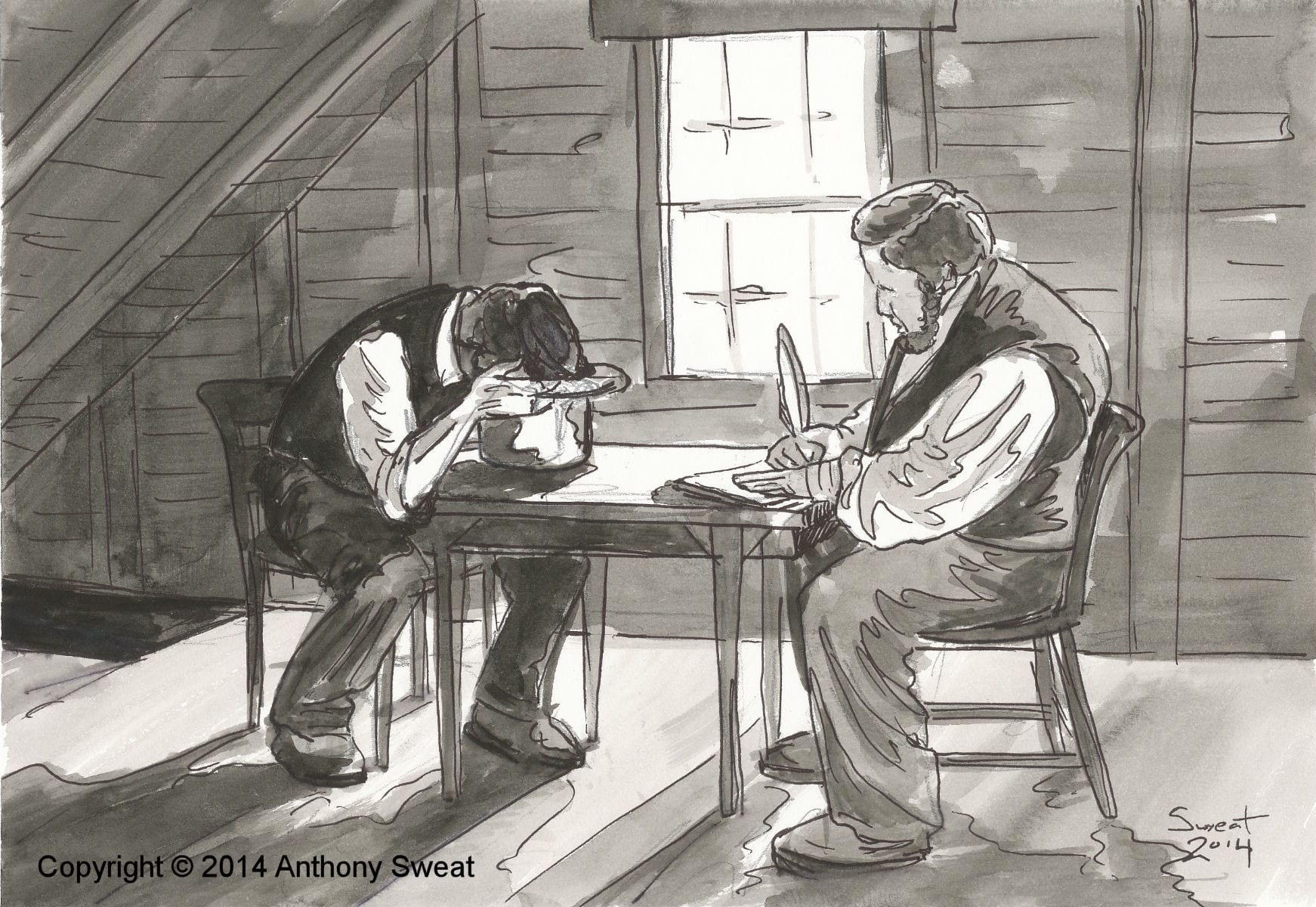
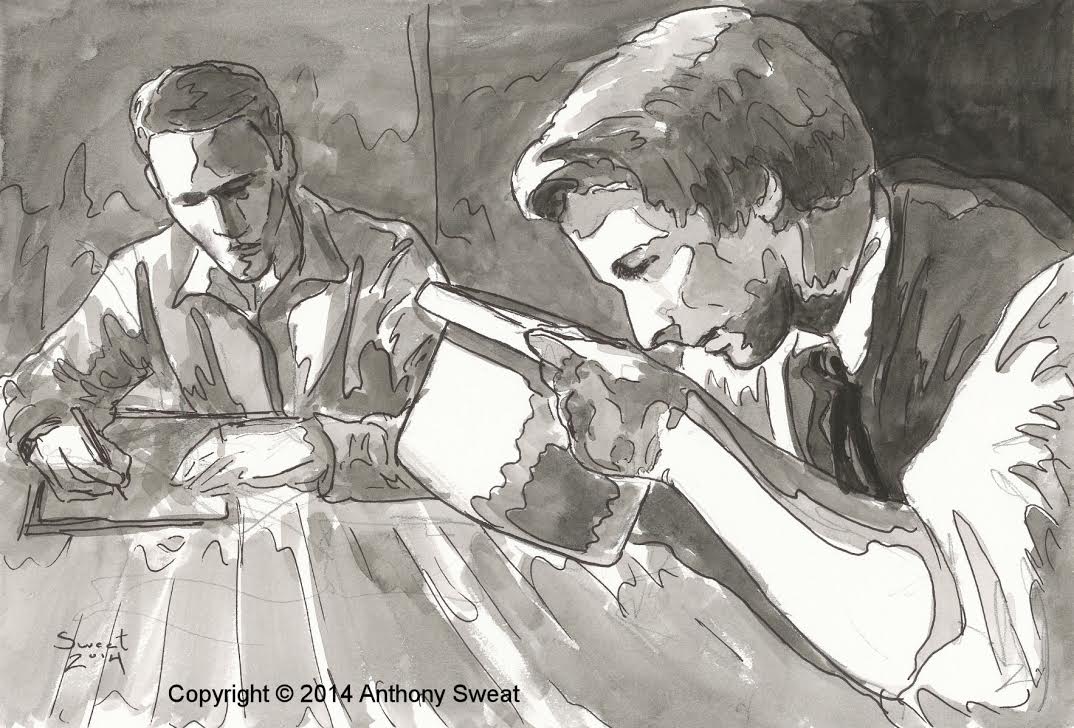
When I was a fairly young man I read several LDS publications about Joseph Smith’s history—all books that could be found at Deseret Book or in the Institute Library. I quickly learned that Joseph sometimes used a seer stone to translate the Book of Mormon. The fact was in no way hidden from members who were interested in reading Church history. During my own faith crisis, however, there were two things that surprised and bothered about the translation process. First was the fact that Joseph put the stone in a hat, and peered into the hat while translating. The second troubling issue (for me) was that Joseph obviously believed in “magical” divining by way of seer stones. I had never heard of either of these two points before, and I must admit that I was initially shaken by the disclosure.

Unfortunately, my image of the translation process was like that of the typical member—it was based on what I had seen in Church magazines and comments from Sunday school teachers rather than from a critical examination of the historical evidence. Most artists, however, are not historians and occasionally produce artwork that is based on misassumptions. Some wonderful LDS artwork, for example, depicts Caucasian-looking Nephites with romance-novel cover-model physiques wielding broadswords and Viking-like helmets—none of which fits the actual images that could be created for how early American warriors would have looked or the weapons they would have utilized.

The average painting of the Savior typically falls victim to similar problems with features generally based on the cultural or theological perspectives of the artist rather than on historical accuracy. Da Vinci’s “Last Supper,” for example, depicts European-looking men sitting at a regular table instead of Middle Eastern men reclining at the low tables of Jesus’ day. An Italian Renaissance portrait of Mary and the baby Jesus has a Renaissance castle and town in the background, and the 1569 “Census of Bethlehem” by a Belgian artist depicts snow and ice-skaters in what appears to be a Renaissance Belgium village.

The truth is that the Interpreters didn’t come with instructions and Joseph was apparently left on his own as to how to use them. This is when his cultural background came in handy. In Joseph Smith’s day many of the frontiersmen in his vicinity believed that divining rods and seer stones could be used to find water, lost objects, and treasures. The ability to divine was generally considered to be a God-given gift and was practiced by devoutly religious men and women.

Long prior to acquiring the plates the young Joseph Smith was a believer in divination. In fact, he and his friends and family believed that he had the God-given gift to find lost objects by way of a seer stone. Seer stones were thought to be special stones in which one could see the location of the object for which one was divining. The seer stones were related to crystal balls or the practice of looking into pools of water or mirrors to divine information (such as the Queen’s magic mirror in the Snow White tale).

I already knew—but hadn’t made the connection until I began learning about Joseph’s translation process—that some people in Joseph’s day used divining stones. I recalled reading Joseph’s history by his mother Lucy Mack Smith (a book I read when I was about 16). In that book Lucy told about a company of men who were trying to get the plates from Joseph and brought a woman who could find things by looking into a green rock. She apparently came within inches of finding the plates!

While this seems strange in modern times, in Joseph’s day many intelligent, educated, and religious people believed that such real powers existed in the forces of nature. Well into the nineteenth-century, for instance, a number of people believed in alchemy—the belief that baser metals could be turned into gold. Some of New England’s practicing alchemists were graduates from Yale and Harvard and one alchemist was the Chief Justice of Massachusetts.

In order to see inside of the stone, it was sometimes placed between one’s eye and the flicker of a candle, or into something dark—such as an upside down hat—to shield out all light. It was believed that in such an environment a seer (someone who “sees”) could stare into the stone for the information one was seeking.

When Joseph first acquired the Nephite Interpreters he also tried placing them into a hat to shield the light. Although he apparently managed to translate the 116 lost pages by this method he complained that he had a hard time fitting the spectacles into the hat and that the two lenses were set too far apart—and were apparently made for someone with a broader face. It gave him eyestrain when he stared into the lenses.

After Joseph lost the first 116 pages, the Interpreters and his gift to translate were temporarily taken away. Eventually, after repenting, Joseph’s gift was returned but instead of using the Nephite Interpreters Joseph was allowed to use his seer stone to finish the translating process. In Joseph’s “language” the seer stone had the same properties as the Interpreters and was therefore also a Urim and Thummin. So when many early records speak of Joseph translating by way of the Urim and Thummim they are generally referring to the seer stone and not the Interpreters. Unfortunately, through time, members have forgotten about the seer stone (as divination become less accepted by society) and eventually most members assumed that the only Urim and Thummim Joseph used was the Interpreters.

The seer stone made the translating process much easier and we read that Joseph would sit for hours, his face in the hat—to obscure the light—while he saw the English translation of the Book of Mormon text that he dictated to his scribes.

The more I thought about it, the less the translation process bothered me. I already believed that Joseph Smith translated by way of a sacred “rock”—the Urim and Thummim—why would it seem so odd that God gave Joseph the power to translated with a “rock” from his own culture—the “seer stone”? And in hindsight, I already knew that other people in Joseph’s vicinity used seer stones in “magical” ways. If Joseph and the people of his day believed that you could see other-worldly things in special rocks, why couldn’t God use that cultural belief as a focal point for Joseph to receive revelation regarding the content of the Book of Mormon? How Joseph translated the plates was really unimportant compared to what he gave us in that translation.

Your friend,

Shane

Letters to a Former Missionary Companion – Letter 5

Letters to a Former Missionary Companion – Letter 4

Letters to a Former Missionary Companion – Letter 3

Letters to a Former Missionary Companion – Letter 2

Letters to a Former Missionary Companion

Filed Under: Apologetics

  • « Go to Previous Page
  • Go to page 1
  • Interim pages omitted …
  • Go to page 28
  • Go to page 29
  • Go to page 30
  • Go to page 31
  • Go to page 32
  • Interim pages omitted …
  • Go to page 46
  • Go to Next Page »

Primary Sidebar

Faithful Study Resources for Come, Follow Me

Subscribe to Blog

Enter your email address:

Subscribe to Podcast

Podcast icon
Subscribe to podcast in iTunes
Subscribe to podcast elsewhere
Listen with FAIR app
Android app on Google Play Download on the App Store

Pages

  • Blog Guidelines

FAIR Latest

  • The Lord Is Hastening His Work
  • Come, Follow Me with FAIR – Doctrine and Covenants 137–138 – Part 2 – Autumn Dickson
  • Come, Follow Me with FAIR – Doctrine and Covenants 137–138 – Mike Parker
  • FAIR December Newsletter
  • Come, Follow Me with FAIR – Doctrine and Covenants 137–138 – Part 1 – Autumn Dickson

Blog Categories

Recent Comments

  • JC on The Lord Is Hastening His Work
  • LHL on Come, Follow Me with FAIR – Doctrine and Covenants 132 – Mike Parker
  • Stephen Johnsen on Come, Follow Me with FAIR – Doctrine and Covenants 132 – Mike Parker
  • Bruce B Hill on Come, Follow Me with FAIR – Doctrine and Covenants 124 – Part 1 – Autumn Dickson
  • Gabriel Hess on Join us Oct 9–11 for our FREE virtual conference on the Old Testament

Archives

Follow Us

  • Facebook
  • Twitter
  • iTunes
  • YouTube
Android app on Google Play Download on the App Store

Footer

FairMormon Logo

FAIR is a non-profit organization dedicated to providing well-documented answers to criticisms of the doctrine, practice, and history of The Church of Jesus Christ of Latter-day Saints.

Donate to FAIR

We are a volunteer organization. We invite you to give back.

Donate Now

Site Footer