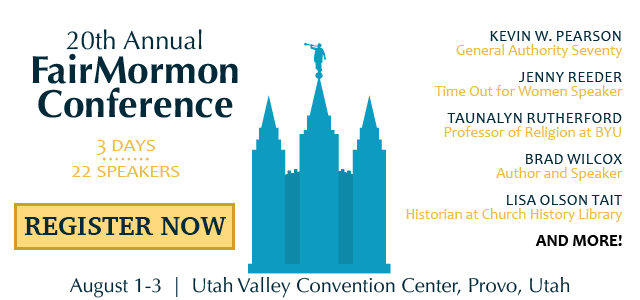
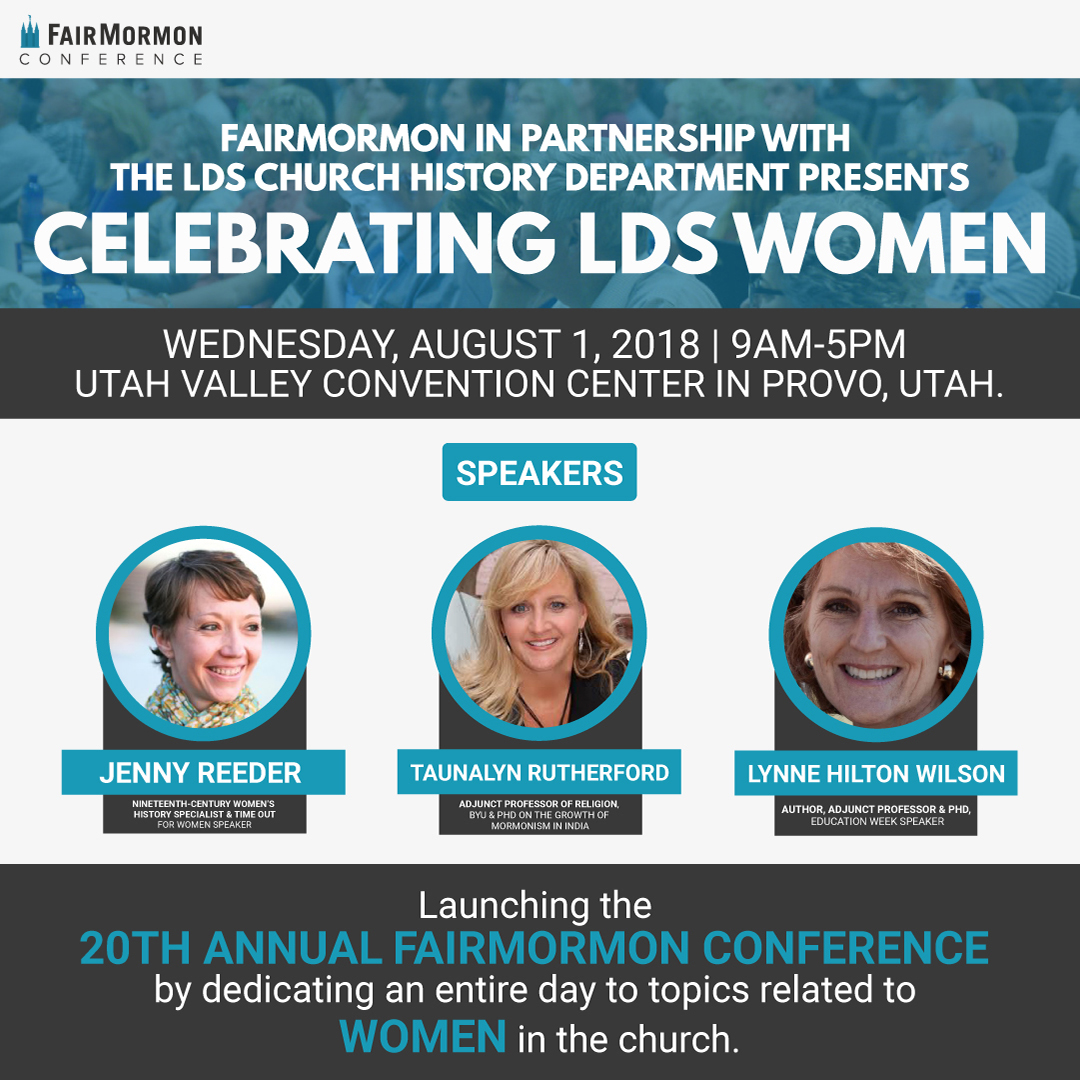
We had another great conference last week (it was our 20th!). This time it ran for 3 days. Some of the topics covered were lesser-known women’s stories in church history, the Gospel Topics Essays, stories of members of the church in India and Africa, the new Saints church history series coming out from the church, grace, the Book of Abraham, homosexuality, horses in the Book of Mormon, and how to help people having a faith crisis. We also had a general authority speak for the first time. Elder Kevin W. Pearson spoke about the good that FairMormon and other organizations are doing to help correct misunderstandings about the church, and that more voices are needed in the effort. Awards were given to Scott Gordon, Louis Midgley, and Michael Hickenbotham for their service, and a painting of “Mary Whitmer and Moroni” in honor of Lynne Hilton Wilson was unveiled.
Each day, one presentation was live-streamed free on Facebook, where you can still watch the recordings. You can also watch them here:
- Jenny Reeder: “Fire In My Bones”: Women’s Stories on churchhistorianspress.org
- John Gee: Selling Our Birthright for a Mess of Pottage: The Historical Authenticity of the Book of Abraham
- Elder Kevin W. Pearson: A Sacred and Imperative Duty
It’s not too late to purchase the streaming and watch the videos of the entire conference. After purchase, they will be available to view on any device with a web browser, as well as on a Roku box. You can buy it here.
We have had several articles published about the conference (this section will be updated as more appear):
- Church News: FairMormon conference sheds light on impact women have had on the Church, why it needs to be talked about
- Mormon Newsroom: Elder Pearson Says Independent Voices Are Needed to Sustain Faith
- Church News: “Your Voice Matters” on Social Media to Share Truth, Clarify Beliefs, Seventy Says
- LDS 365: Members’ Help Needed to Create Gospel Messages Online
Mike Ash, one of our volunteers who is a great photographer, has posted photos from the conference on our Facebook page.
Transcriptions of the presentations will be posted on our website after they are prepared by our volunteers.
The full conference schedule can be reviewed here.
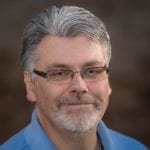 Michael R. Ash is the author of Shaken Faith Syndrome: Strengthening One’s Testimony in the Face of Criticism and Doubt, Of Faith Reason: 80 Evidences Supporting the Prophet Joseph Smith, as well as Bamboozled by the “CES Letter.” A former columnist for the Deseret News’ Mormon Times, he has also been a frequent contributor to the online blogs, Meridian Magazine, as well as the Mormon Hub. Mike has been published in the Ensign, Sunstone Magazine, Dialogue: A Journal of Mormon Thought, in the FARMS Review, and most recently contributed a chapter to Kofford Book’s Perspectives in Mormon Theology: Apologetics. Joining FairMormon in the year 2000, Mike delivered a paper at the 2nd annual FairMormon conference and has contributed papers to seven additional conferences (including this one) since. Mike and his wife Chris live in Ogden and are the parents of three daughters and the grandparents of six grandchildren.
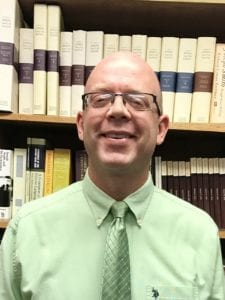
 Janiece Johnson is a transplanted Bay Area, California, native who loves history, design, art, good food, and traveling. She has master’s degrees in American Religious History and Theology from Brigham Young University and Vanderbilt’s Divinity School respectively. She finished her doctoral work at the University of Leicester in England. Janiece has published work on gender and American religious history—specializing in Mormon history and the prosecution for the Mountain Meadows Massacre. She is a co-author of The Witness of Women: First-hand Experiences and Testimonies of the Restoration (Deseret Book, 2016) and general editor of the recently published Mountain Meadows Massacre: Collected Legal Papers (University of Oklahoma Press, 2017). A visiting professor in Religious Education at BYU-Idaho for the last three years, Janiece will begin as a research fellow for the Maxwell Institute’s Laura F. Willes Center for Book of Mormon Studies at BYU this fall.