• Skip to primary navigation
  • Skip to main content
  • Skip to primary sidebar
  • Skip to footer

FAIR

  • Find Answers
  • Blog
  • Media & Apps
  • Conference
  • Bookstore
  • Archive
  • About
  • Get Involved
  • Search

FAIR Conference

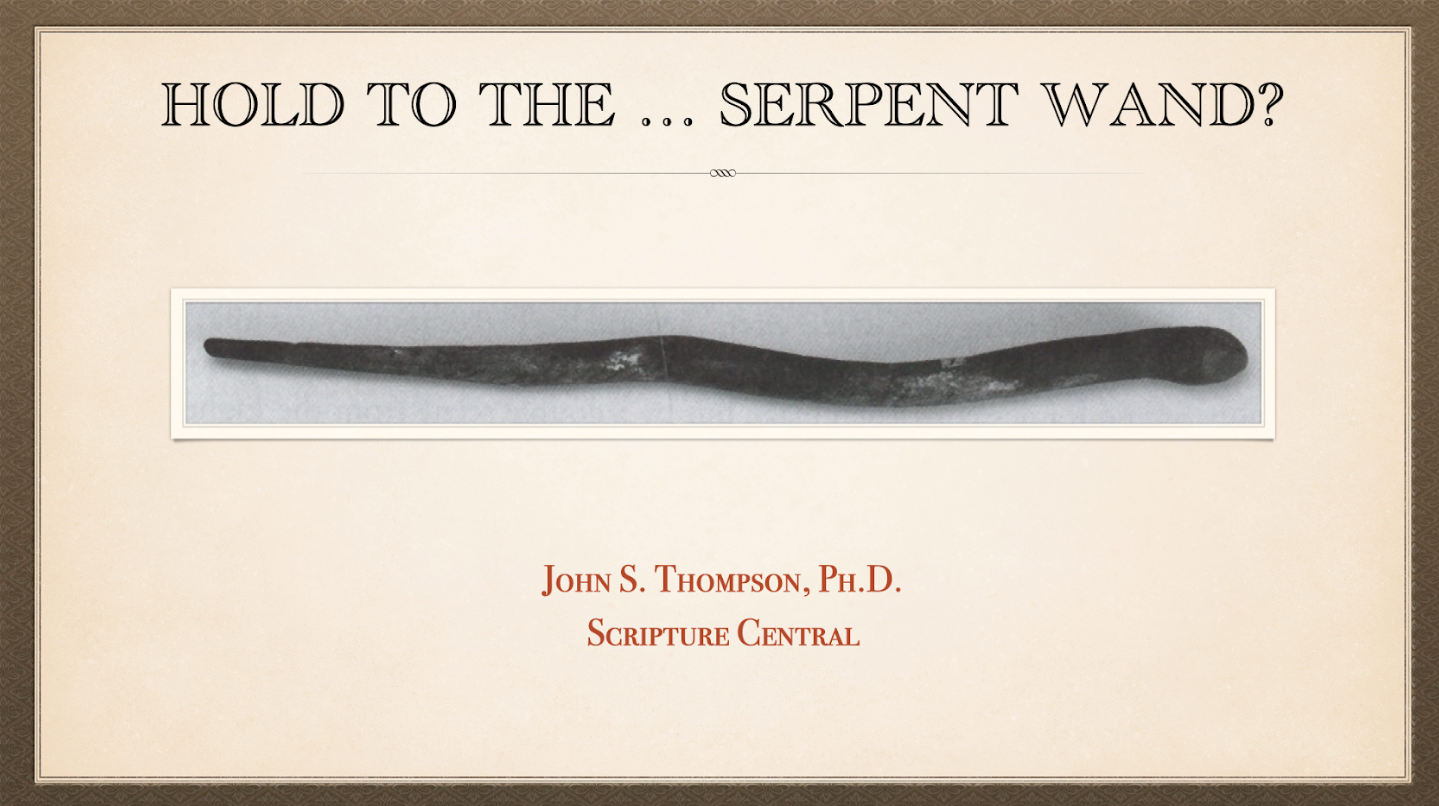
Hold to the…Serpent Wand

Summary

Summary

The presentation establishes that in ancient Egypt, serpents held in the hand symbolized divine words and authority, often connected with protective rituals and spoken incantations. These serpent symbols parallel rods and scepters in scripture, representing both protection and judgment.

Through comparisons with biblical and Book of Mormon narratives—such as Moses’ rod, the brazen serpent, Lehi’s rod of iron, and Revelation’s imagery—the speaker argues that serpent symbolism consistently reflects a duality: divine authority versus chaotic opposition. Ultimately, these symbols point to the Messiah, whose authority brings healing, guidance, and victory over evil.

TL;DR

TL;DR (Too Long; Didn’t Read)

Ancient Egyptian serpent imagery shows that serpents held in the hand symbolized divine words and authority—helping explain scriptural symbols like Moses’ rod, the brazen serpent, and the rod of iron as representations of God’s power overcoming evil.

Introduction

Speaker Introduction

John S. Thompson obtained his BA in ancient eastern studies from BYU and his MA from UC Berkeley and completed a PhD in Egyptology at the University of Pennsylvania, with a dissertation emphasis on the ancient priesthood. He was an employee of the Seminaries and Institutes of Religion for 28 years, most recently as a coordinator and the institute director in the Cambridge, Massachusetts area. John is now very happy to research and write full-time for Scripture Central, a nonprofit organization that focuses on ancient and modern historical and cultural context of the Bible, Book of Mormon, and other Latter-day Saints scripture. He is married to the former Stacy Keller from Orem, Utah, and they have nine children and six grandchildren.

Introduction and Background

In 2010, I gave a presentation at BYU entitled Tree Goddesses and Serpent Wands: Exploring Scriptural Symbols in their ancient Neareastern context. The purpose was to illuminate the trees of life and rod of iron motifs in scripture. Two further presentations and publications have grown out of that initial effort.

Egyptian Tree Goddesses and the Tree of Life

First, building on Dan Peterson and others’ great works on tree goddess motifs in the Bible and the Book of Mormon, I presented and published a paper detailing some iconographic specifics of Egyptian tree goddesses and what we learn from them that help us see finer details in our ancient scriptural stories regarding trees of life.

Serpent as Symbol

And second is this presentation and paper which delves a little deeper into Egyptian artifacts and images where serpents are being grasped and utilized as symbols of divine protection and power. I view this work as complimentary to the excellent work that Andrew Skinner and Neil Rappley have done looking at the ancient neareastern background of serpent imagery to help us understand their symbolic duality representing both good and evil and the fiery and flying nature of serpents depicted in the story of Moses.

Exploring the Connection Between Serpents and Rods

This paper will focus on the deep connection of serpents to rods and divine words in ancient Egypt that will hopefully illuminate some passages of scripture a little more.

Egyptian Language and the “Word of God”

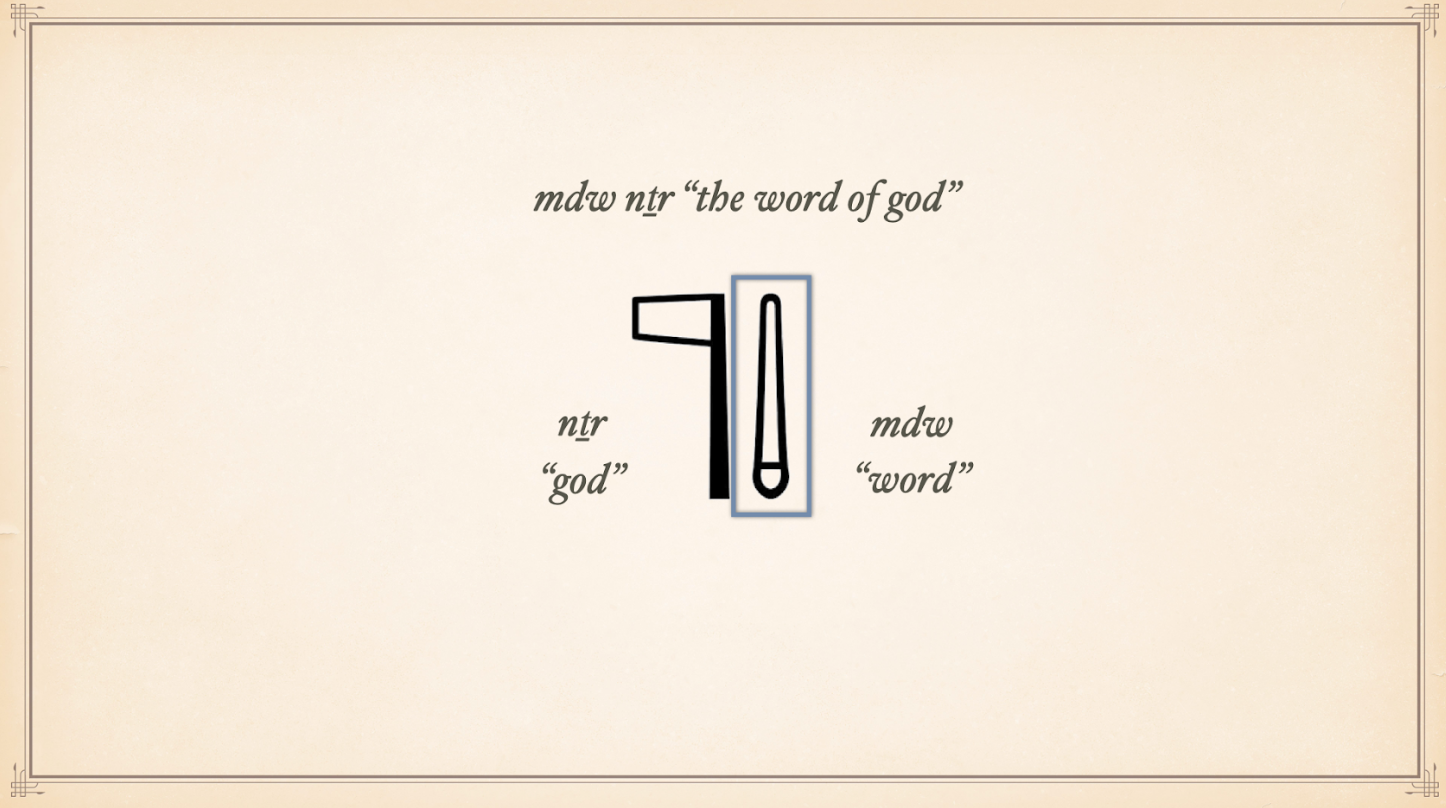
When the ancient Egyptians refer to their own hieroglyphics writing system, they call it zšn mdw nṯr, “the writing of the word of God.” And they call their documents, written in hieroglyphics mḏꜣwt nt mdw nṯr, “the scrolls of the word of God.”

The term mdw nṯr, “the word of God”, is attested from the earliest ages of ancient Egypt. For example, a title appearing in non-royal tombs as early as 2400 BC is ḥr(y)-sštꜣ n mdw-nṯr, “overseer of the secrets of the words of God.”

Rods, Words, and Authority

The term medu, word or utterance, is represented in hieroglyphics by a simple rod or staff. So the equation of word with rod goes way back well before Nephi, Moses, and even Abraham.

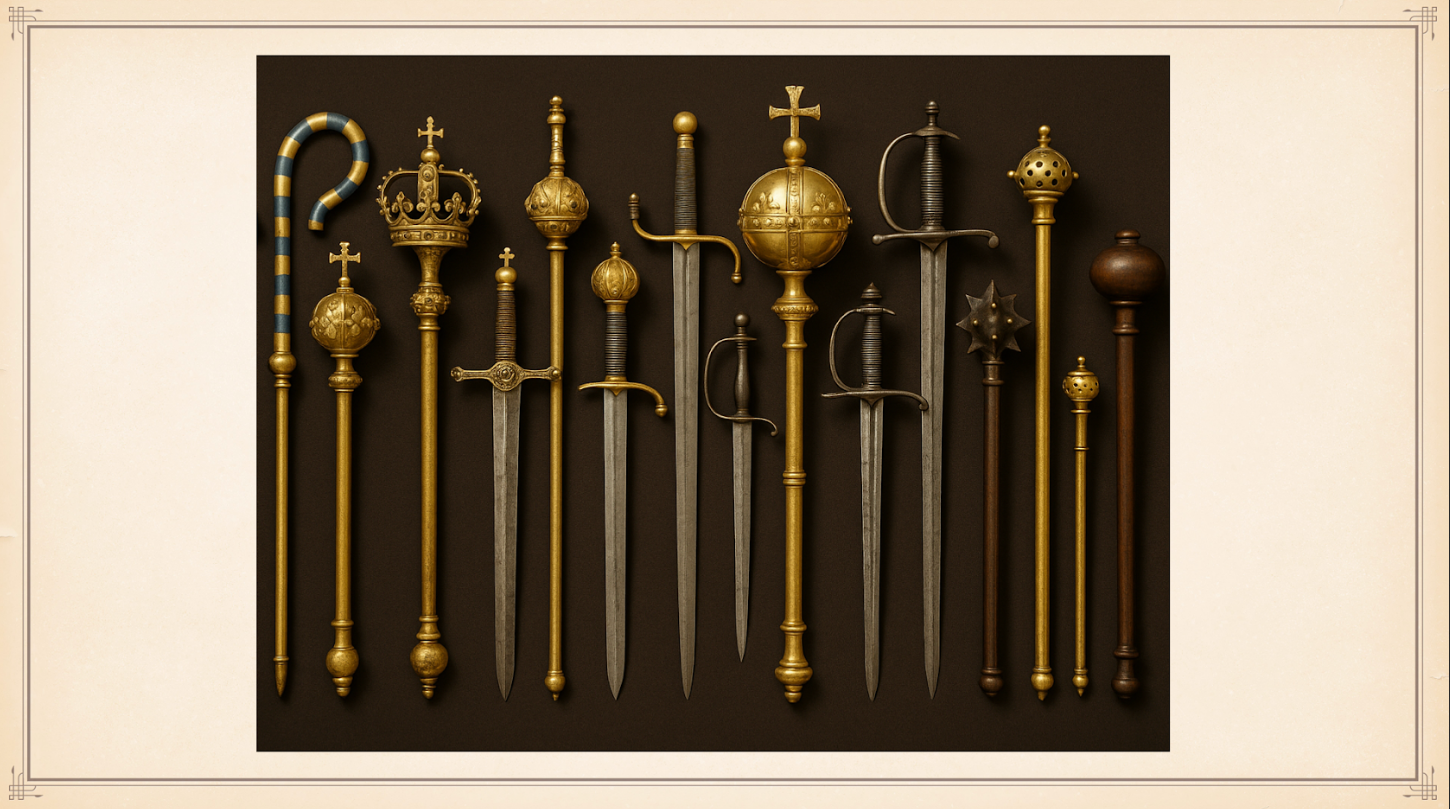
The relationship of God’s word to a rod is probably best understood through the symbolism of royal scepters or maces and swords and similar items. Such objects held in the hand were often used in texts and imagery to represent divine or royal authority in words that provide protection or guidance for their subjects and judgment against enemies.

Scriptural Connections

In fact, scriptures explicitly equate rods with scepters or the act of ruling. For example, Isaiah says, “The Lord has broken the rod of the wicked, the scepter of the rulers.” (NIV Isaiah 14:5) And Ezekiel likens Israel to a mother tree, saying, “She had strong rods for the scepters of them that bear rule, and her stature was exalted among the thick branches.” (Ezekiel 19:11)

In the New Testament, God declares in John’s revelation that: “to him who overcomes the world will I give power over the nations, and he shall rule them with a rod of iron.” (Rev. 2:26-27)

Rods as Standards and Measures

Rods were also used as a standard of measurement, the rule. For example, John uses a rod to measure the temple in Revelation 11. As such, rods were natural symbols for the words of a deity or king, the ruler, because their words were the law, constitution, or standard by which people or nations were measured.

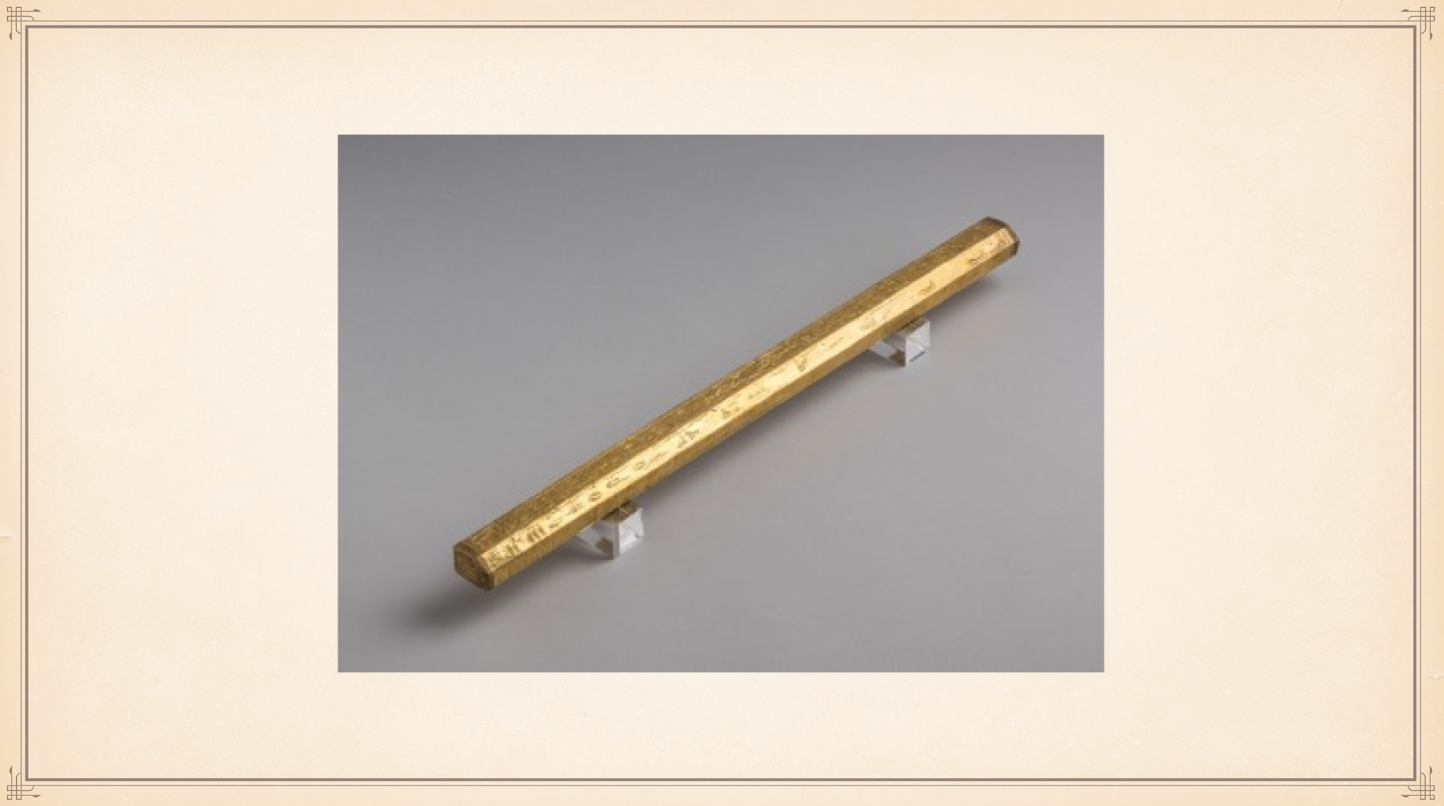
Physical royal cubit rods survive from Egypt’s new kingdom. This one depicted here was given as a gift from King Amenhotep II to a man named Ka, the architect and overseer of works at Deir el-Medina in the 18th dynasty.

Royal Symbolism and Propaganda

The inscription on it includes some royal propaganda celebrating the king as “the perfect god, … the lord of strength … strong and heroic … ruler of Heliopolis … strong bull in every foreign country … who plunders in every foreign county.”

These words connect the king’s ability to rule with a measuring rod.

Prophetic Imagery of Rod and Word

The deep relationship between rods or scepters and royal or divine words can be seen in these old and new testament passages.

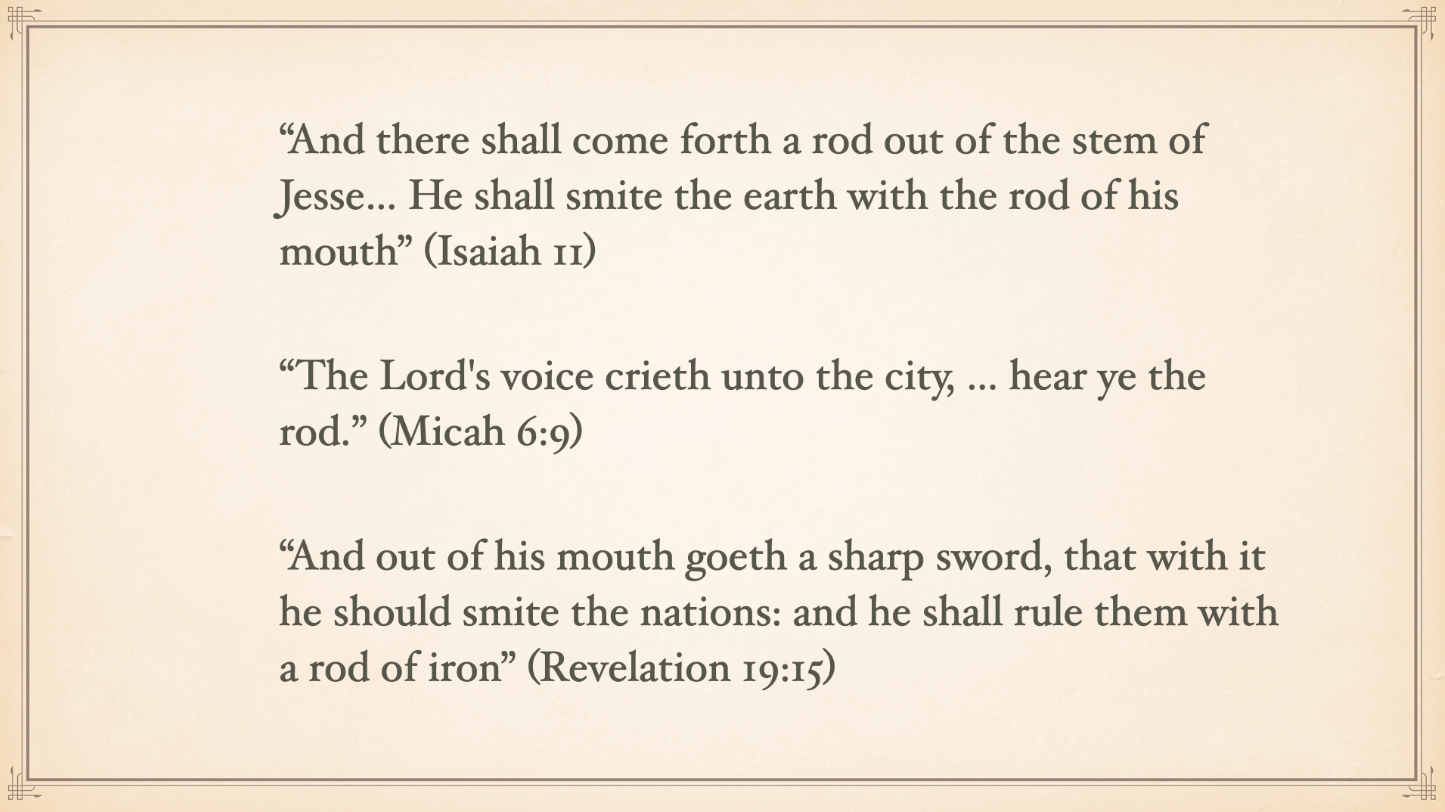
And there shall come forth a rod out of the stem of Jesse. He shall smite the earth with the rod of his mouth. Again, suggesting the “rod” is “words” – as recorded in Isaiah 11.

Micah chapter 6 indicates, “The Lord’s voice crieth unto the city, hear ye the rod.”

And the book of Revelation mentions, “And out of his mouth goeth a sharp sword, that with it he should smite the nations. He shall rule them with a rod of iron.” So again, coming out of the mouth.

Serpent Wands as the Word of God

Everything mentioned up to this point merely serves as a background to the main purpose of this presentation, which is to explore serpent-shaped objects from the ancient world that are also held in the hand and also appear to symbolize royal or divine words of authority as protection or judgment.

Not only the counterfeit words and authority of false gods, but the word and authority of God. It is hoped that this will provide deeper insight into the serpent imagery found in the Old Testament, New Testament, and Book of Mormon.

Serpent Artifacts and Ritual Use

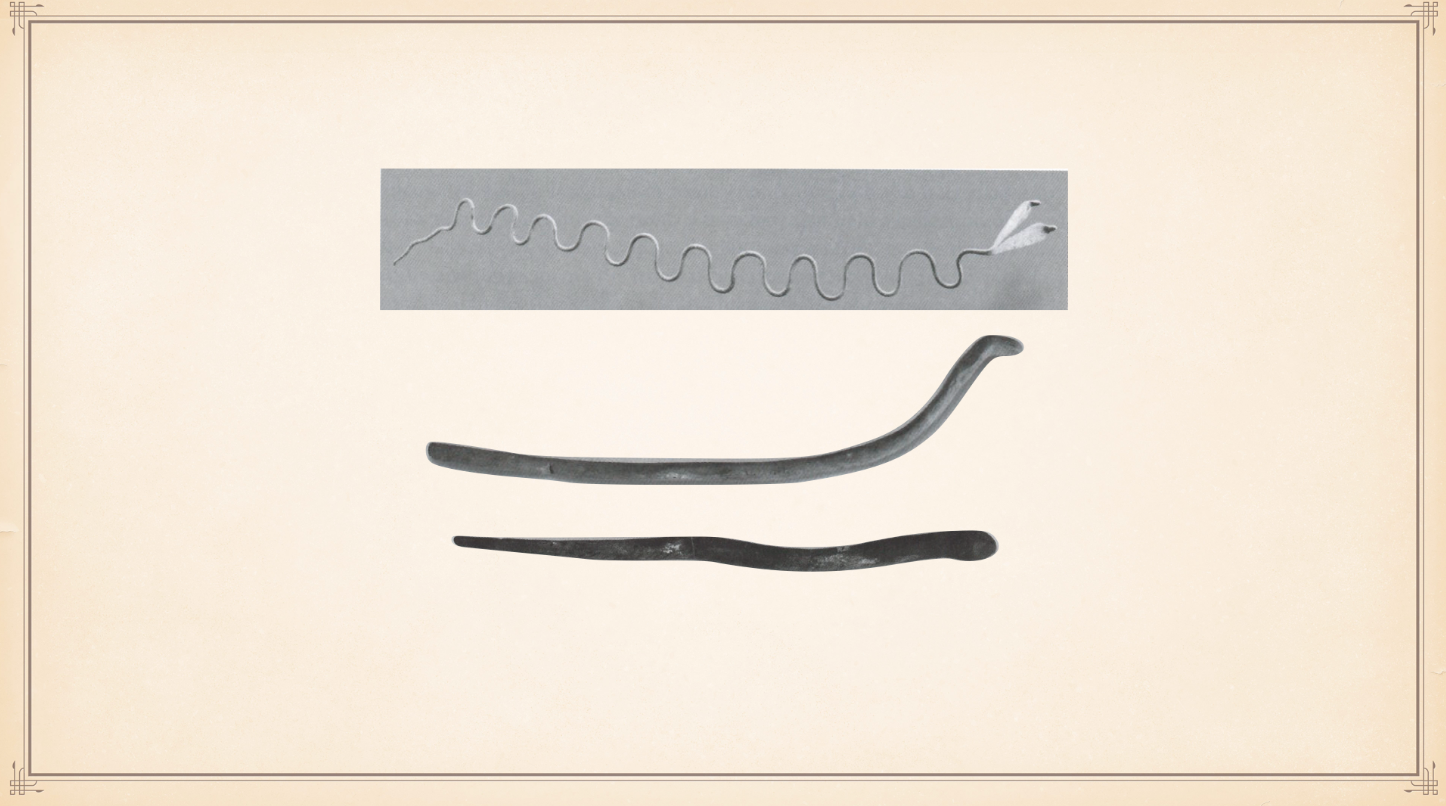
Artifacts in the shape of serpents are attested from the Middle Kingdom to the late period of ancient Egypt in the archeological record. They vary in style and material, and some of the objects are likely just decorative. But others, such as these from the Museum of Fine Arts in Boston, were most likely held in the hand and used as ritual wands.

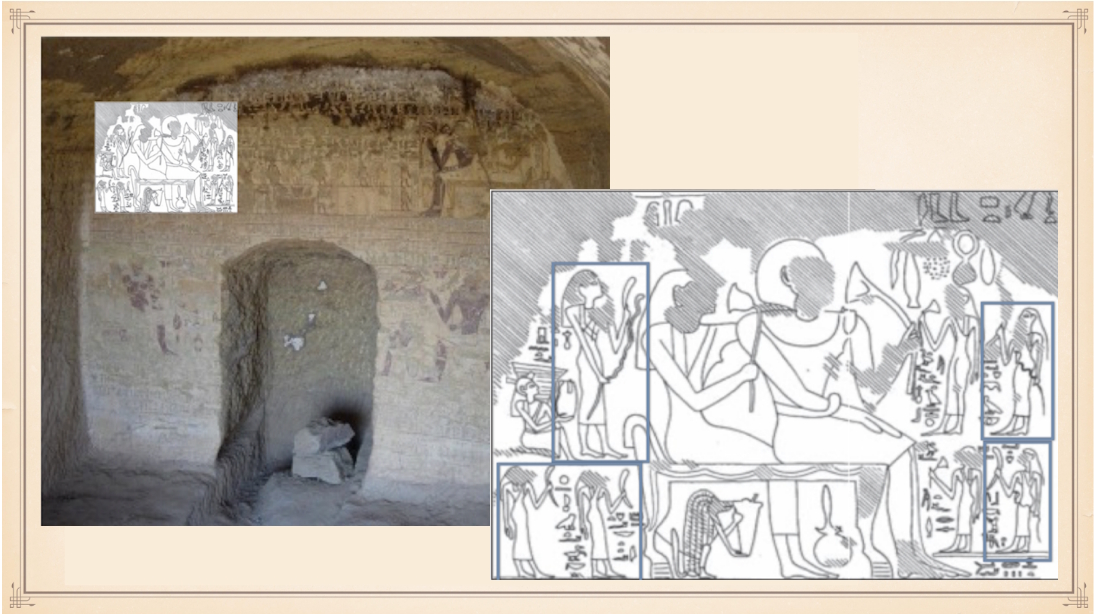
Robert Rittner studied these objects and noted that although serpent wand artifacts are rare, corresponding depictions of clutched serpents are common and perhaps serve as artistic prototypes for the actual ritual implement.

For example, this upper left scene in the tomb of Tomb of Bebi at El Kab depicts females raising serpent stabs and curved amuletic knives towards a seated couple. One is labeled as ḫnmt.t, meaning nursemaid.

Protective Knives and Spoken Words

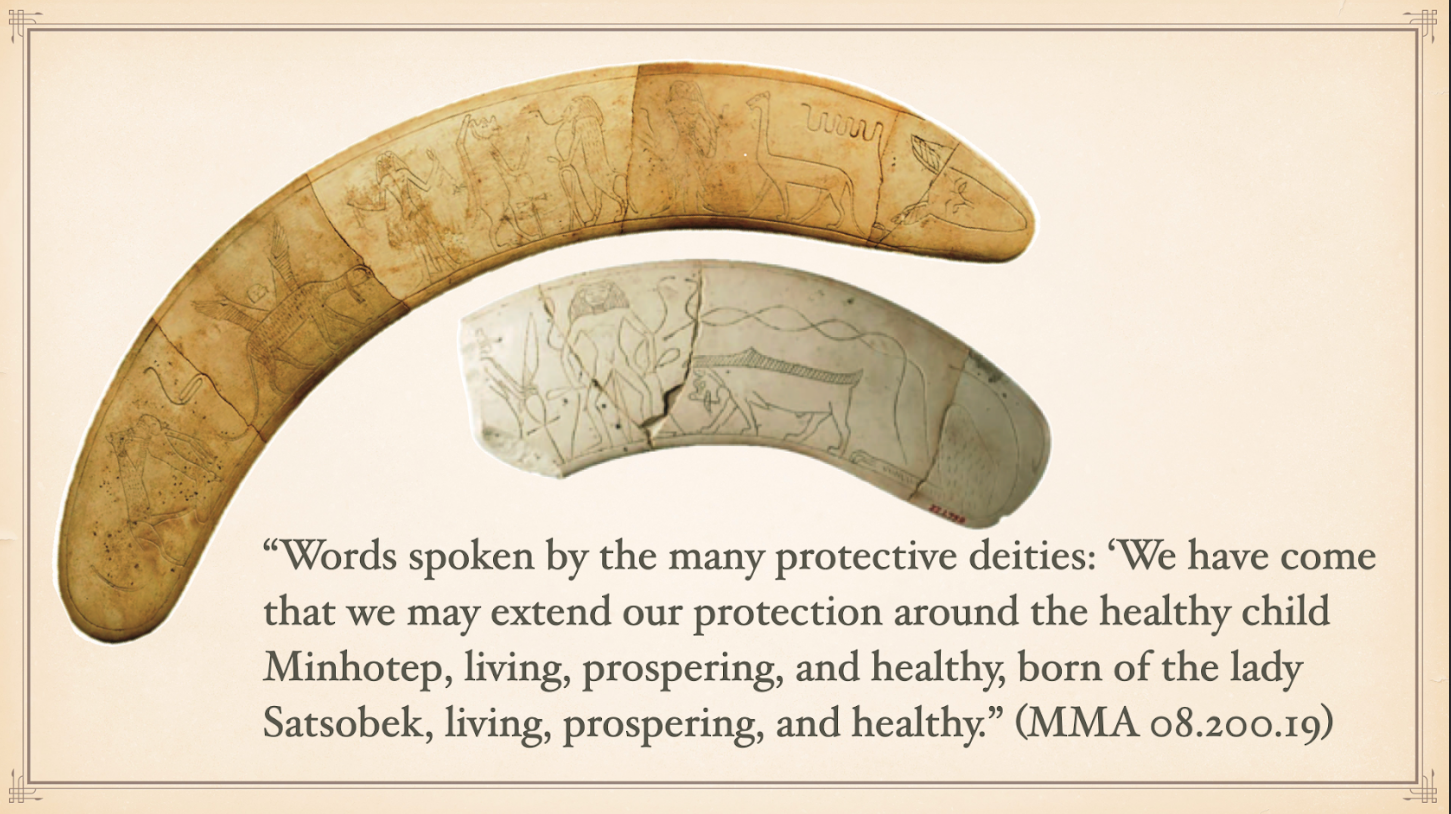
Curved amuletic knives like those depicted are attested in the archeological record. They are carved from the tusks of hippopotami. And frequently, having images of serpent-wielding deity – primarily the dwarf god Bes, or Beset (the feminine version) – among others upon them.

Some also have texts written on them that reveal the purpose of these curved knives and their associated serpent wands. They were used to provide protection for a child. One states:

“Words spoken by many protective deities. We have come that we may extend our protection around the healthy child, Minhotep, living, prospering, and healthy. Born of the Lady Sitsobek, prospering, and healthy.”

Serpents, Deities, and Healing Implements

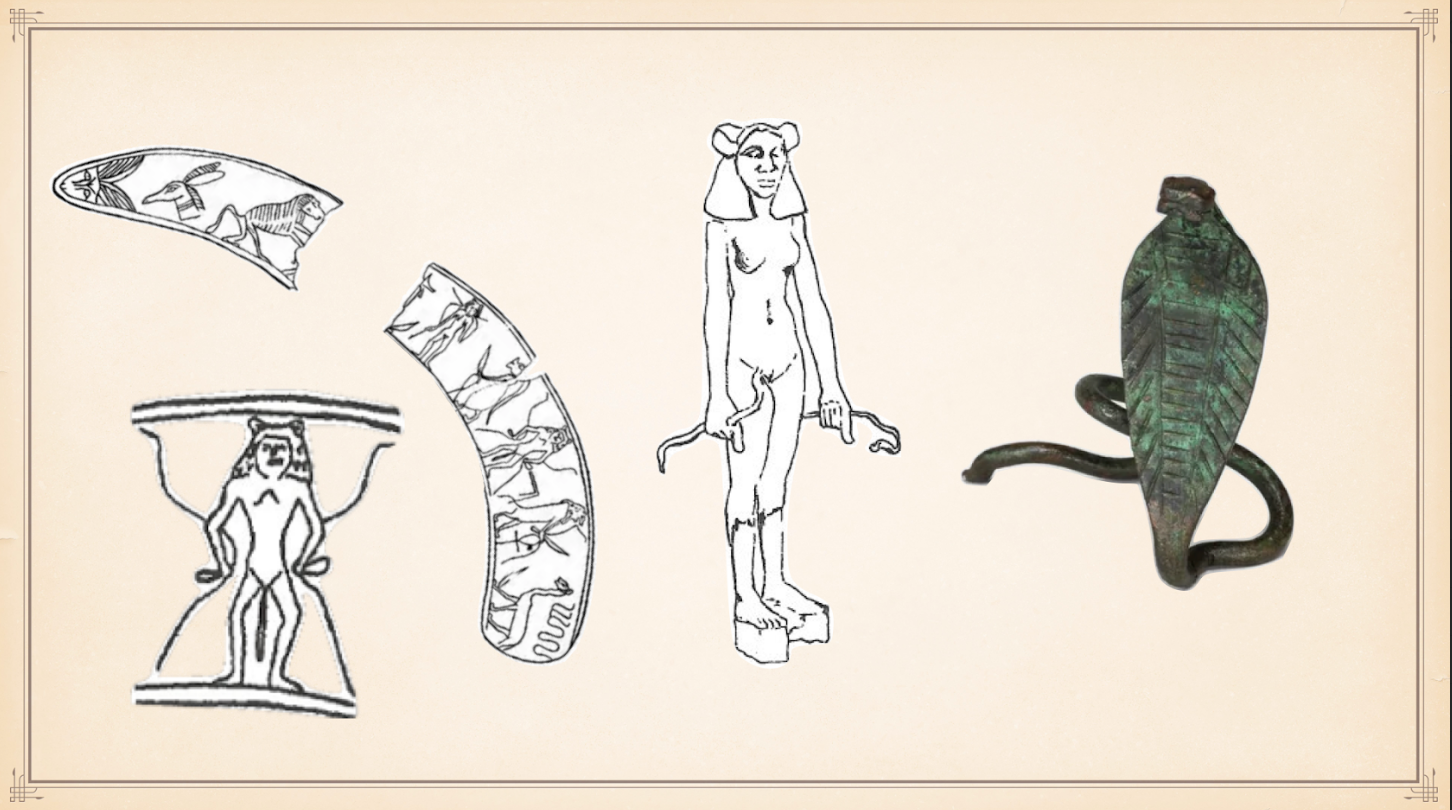
A Middle Kingdom tomb excavated at the Ramesseum in Thebes, contained a box of papyri that included some healing incantations. On the lid of the box is a figure of a jackal reclining on a chest, a graphic substitution for the title r(y)-sšt, “overseer of secrets,” recalling the title “overseer of secrets of the word of God” mentioned earlier.

Along with the box were some curved amuletic knives depicting the god Bes and goddess Beset grasping serpents, and the detail of that is on the left in this image. Also there was a bronze statueette of the goddess Beset holding serpents in each hand, shown in the center here, and a bronze object of a serpent, shown on the right, among other objects.

Scholars who have analyzed this collection have suggested that the healing incantations in the box and the depictions of the serpent grasping deities on the left and the middle, help clarify the use of the artifact on the right. It is a wand held in the hand and used for apotropaic purposes, likely when the protective spells were being spoken.

Horus, Magic, and Spoken Protection

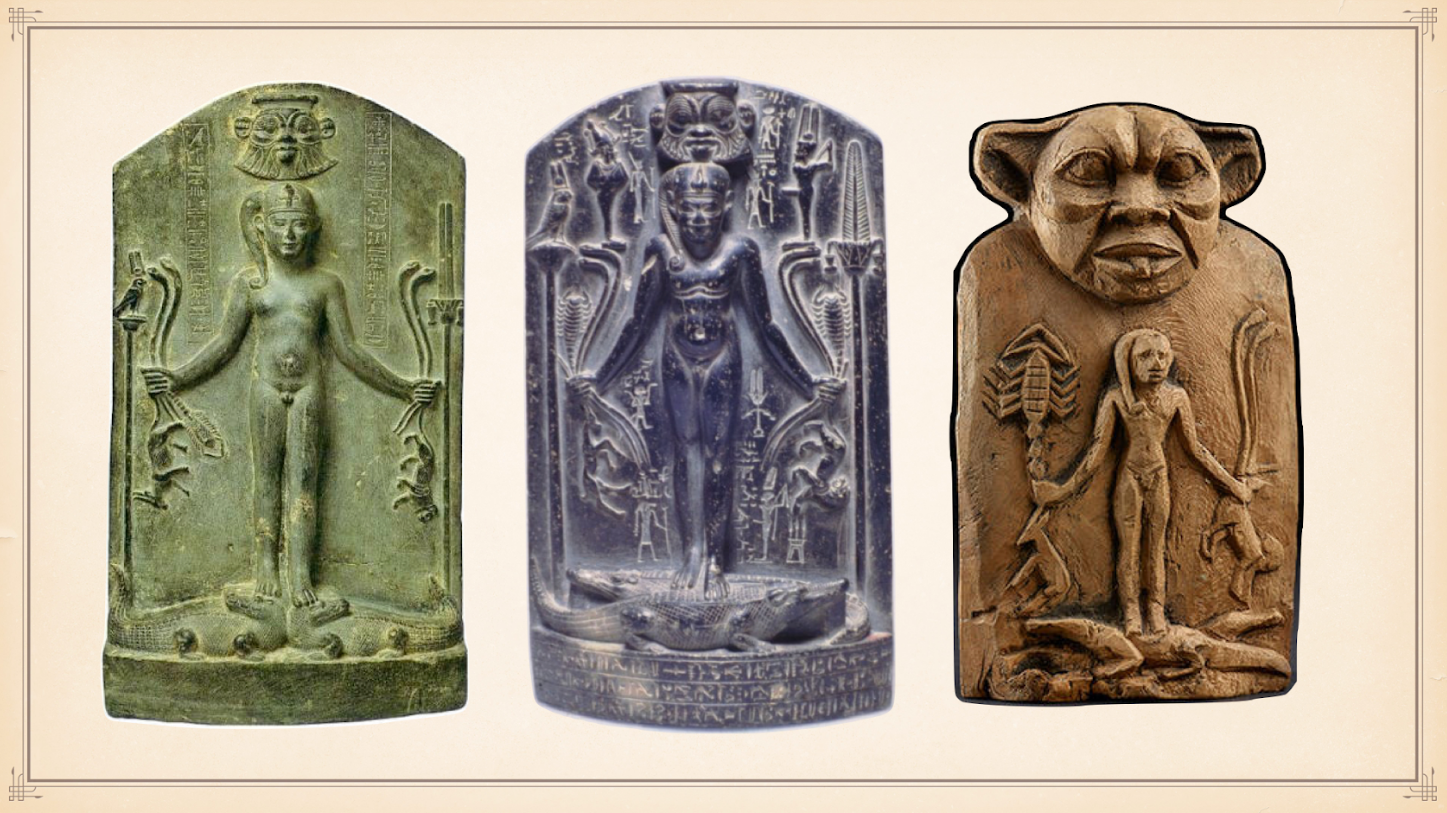
Horus on the crocodile cippi, attested from the new kingdom to later periods, depict the god Horus as a child brandishing serpents while standing on crocodiles. These objects are accompanied with hieroglyphics framed as speeches and spells by Isis and Thoth to ward off evil and to heal the child Horus, the divine counterpart of the king himself.

The work of these gods protecting the child king on a cosmic/mythological level provides impetus for the layman to drink the waters that were poured over these objects and receive similar protection and healing in their personal lives.

This is similar to what we saw earlier where the spells associated with the curved amuletic knives and the serpent wands contain the words of a god for protecting a child. And again we have Horus as a child depicted here.

Isis, Speech, and Power Over Serpents

A further connection is that the objects mentioned earlier preserve images of Bess or Bessette wielding snakes. And these objects here—the cippi—depict Bess’s face directly above Horus at the top as you see there—as Horus wields serpents in his hand.

One of the texts reads, quote, “Words spoken by Isis, the great mother of God, mistress of magic. She seals the mouth of all reptiles which bite with their mouths and sting with their tails.” End quote.

So, the words from the goddess’s mouth stops the mouths of the serpents and other dangerous animals. In the same corpus, Isis describes her efficacy as quote powerful speech and chosen words end quote when countering the venom and disease that the serpents embody.

Divine Power Over Chaos

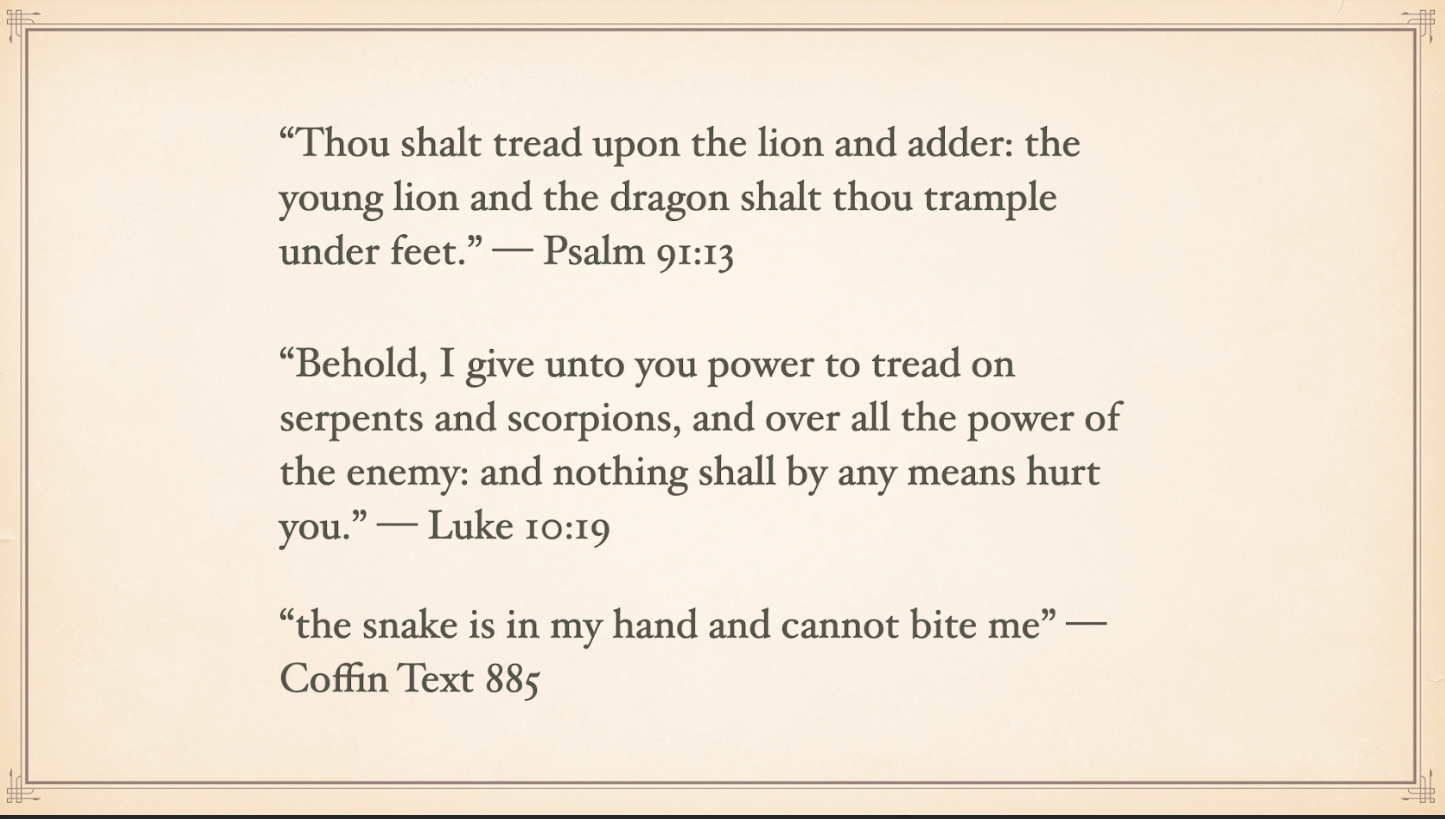
The child king treading on dangerous animals provides a cultural context for the psalmist and Jesus who stated, “Thou shalt tread upon the lion and add the young lion and the dragon shalt thou trample under feet.” That’s from Psalms 91.

And then Jesus speaking to his disciples or to the seventy said, “Behold, I give unto you power to tread on serpents and scorpions and over all the power of the enemy, and nothing shall by any means hurt you.”

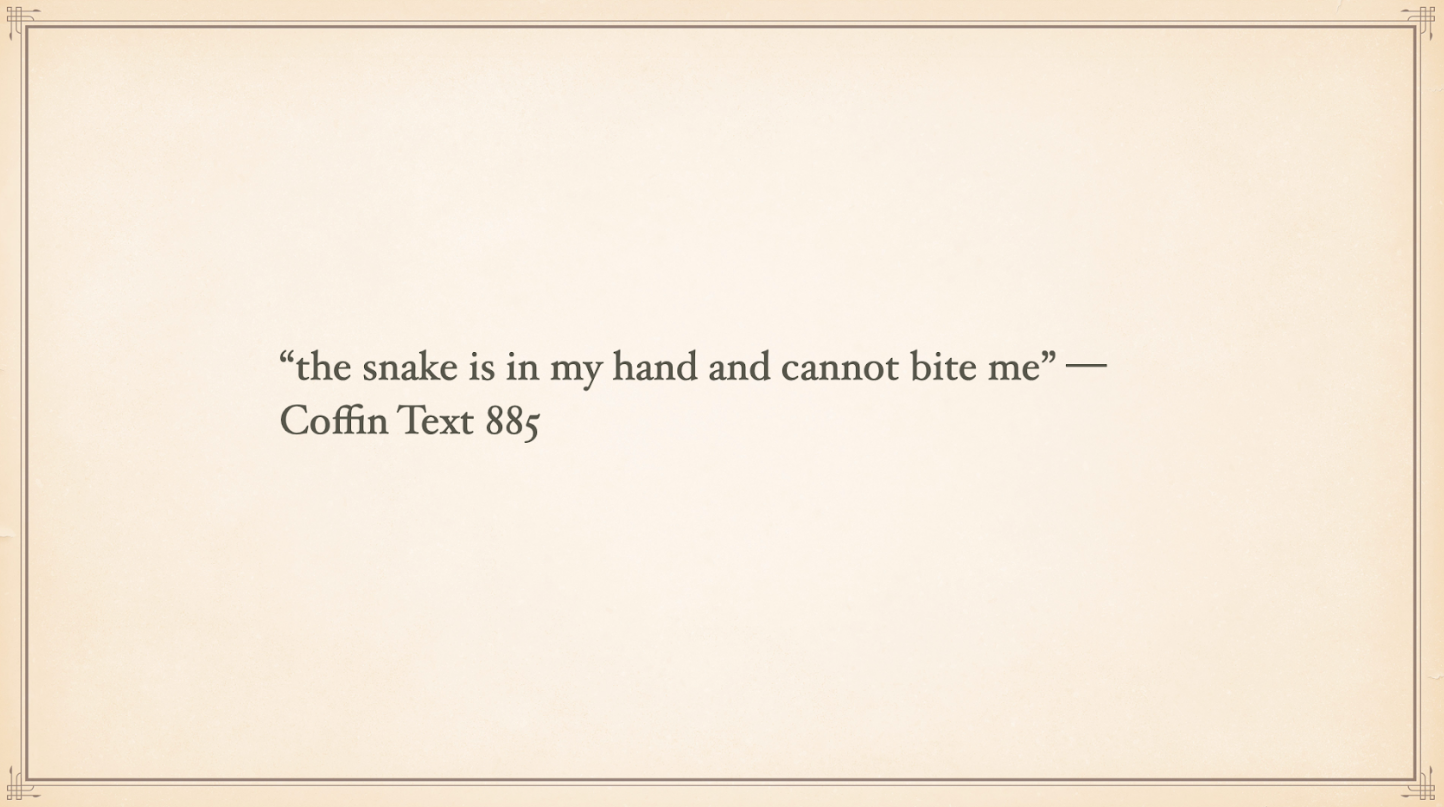
Jesus’s words are similar to the coffin text 85, which states, “The snake is in my hand and cannot bite me or nothing shiny any means hurt you.” Right?

It appears that when dangerous animals are beneath the feet, they are symbolic declarations of divine rule or power over forces of chaos and danger as the psalmist and Jesus’s text seems to imply. However, I think there is an ancient cultural distinction between those dangerous animals under the feet versus those that are held in the hand—as will be clarified momentarily.

Words of Power and the Image of Bess

Two common features of the handheld serpents mentioned previously are one, they are accompanied by words of power spoken by deity, and two, Bess or Besset is often presented in some way.

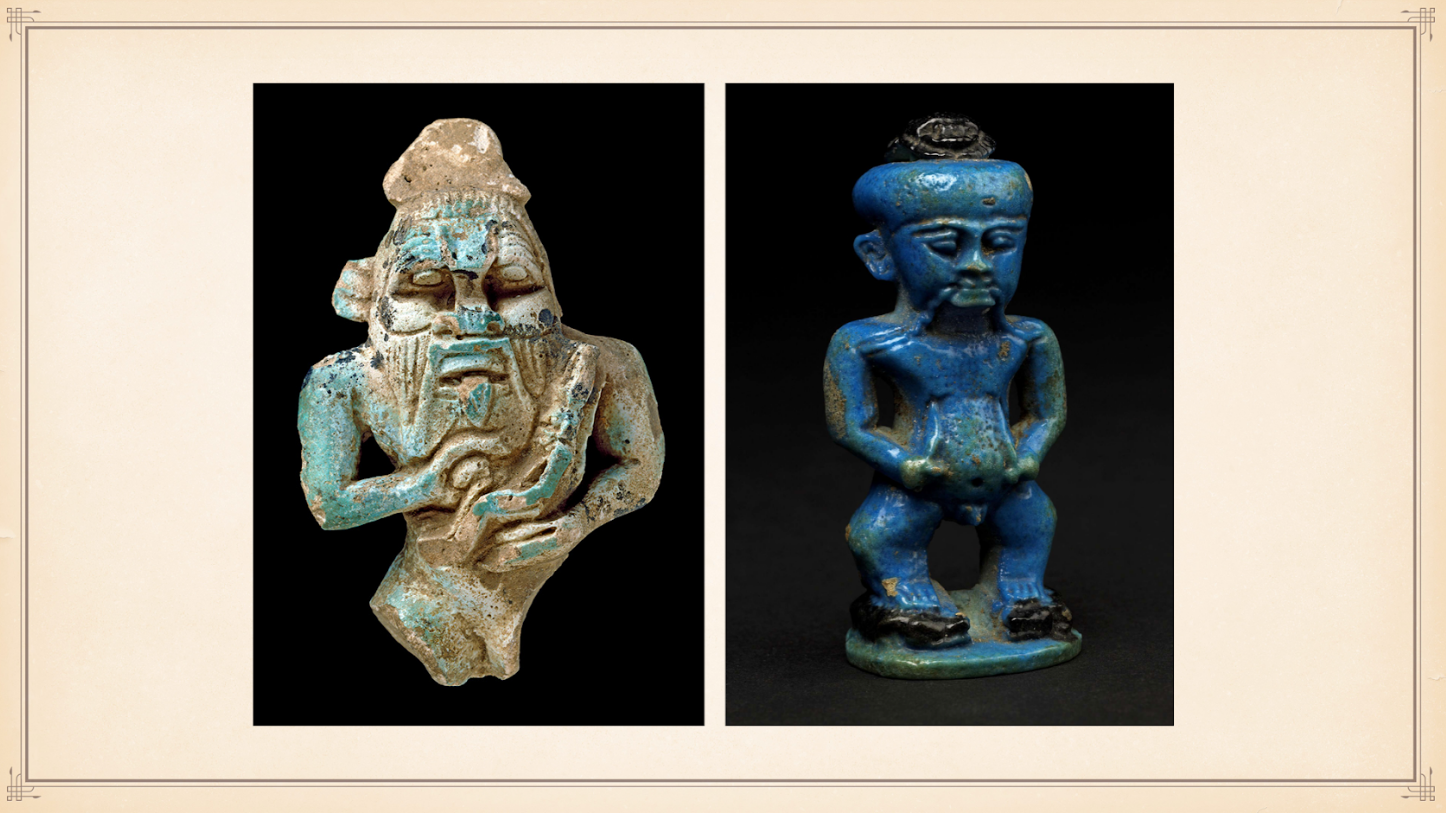
A classic iconographic feature of Bess that you can see on the left here is that he is often depicted with his tongue sticking out of his mouth as depicted here. While such action is usually interpreted by scholars as an apotropeic grimace—in other words, driving away evil by distorting the face and sticking out the tongue—no text actually states that this is the reason.

The ancient Egyptians understood the tongue to be the organ of speech. So it is just as valid to interpret the tongue sticking out as representing words of power coming out of the mouth of the god for repelling evil.

And by the way, he—Bess here in this depiction—is holding this, the child Horus, in his hands. So he’s again protecting Horus like we had in the cippi earlier.

Protective Serpents and the Mouth

In later years, artifacts of the dwarf Paychus (which is the image on the right) stands on crocodiles at the bottom, with serpents in his hands and also serpents coming out of his mouth, replacing the horse on the crocodile image that we saw earlier. And these are also protective.

That serpents, not a tongue, comes out of the mouth, heightens the association of serpents with words, akin to rods or swords coming out of the mouth for smiting the earth.

As mentioned earlier, it is also possible that Pataikos isn’t hosting benevolent serpents in his mouth, but is biting or swallowing malevolent serpents with his mouth. But this interpretation would also relate to divine words or authority as discussed later.

Weret Heeka and the Serpent as Spell Power

The relationship of words of power to serpents is probably illustrated best by the iconography of the goddess Weret-hekau who was often depicted as a cobra and whose name means literally great of magic or great of spells.

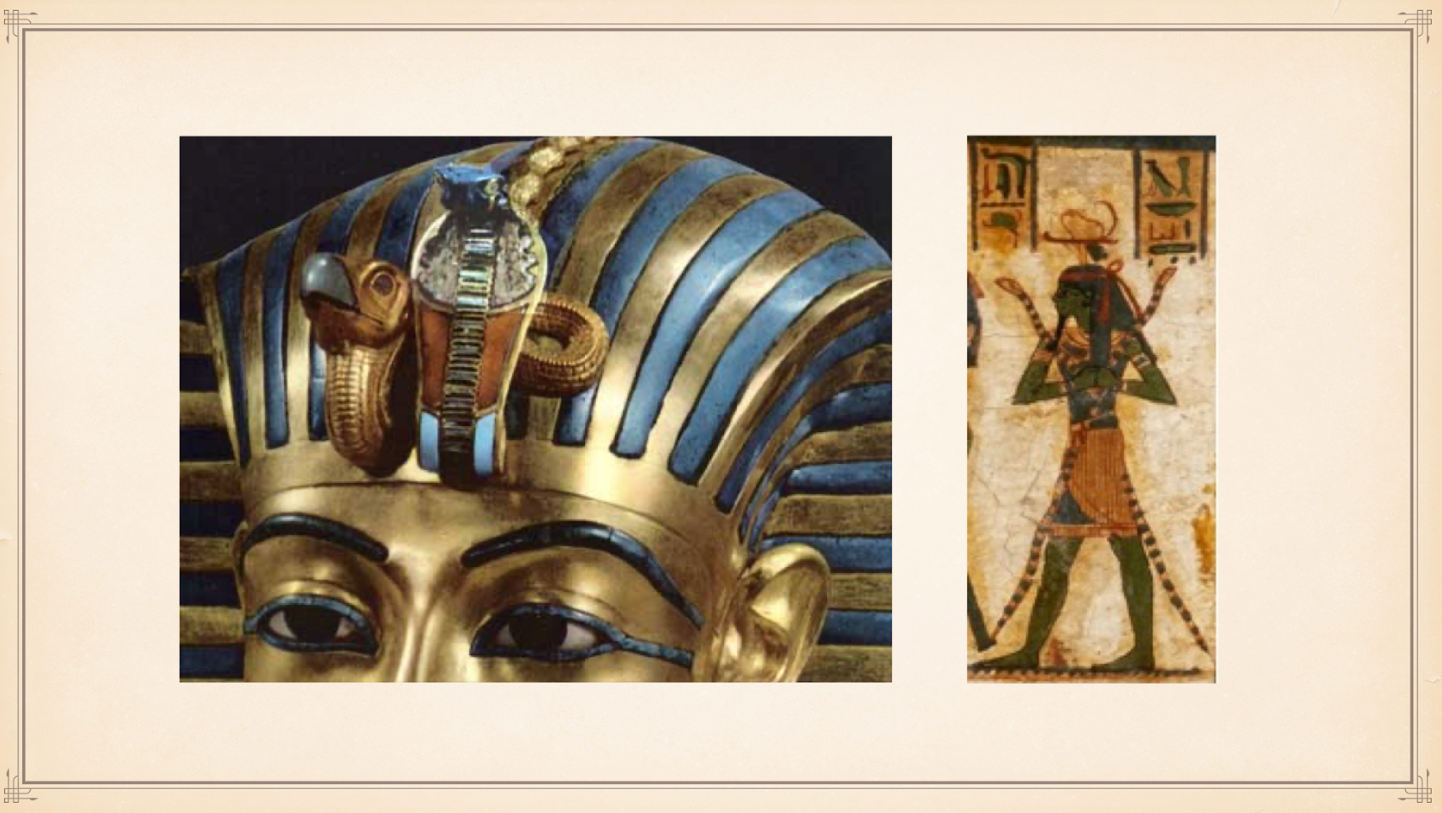
Weret-hekau is linked to the serpentine Uraeus in coronation regalia that you see on the left. The snake objects held in the hand reviewed so far likely represent her.

In other words, the royal serpent emblem is the symbolic embodiment of spell power or in other words, words. Indeed, the personification of Hekah, “magic itself”, is a god typically holding two or four serpents across the chest as seen on the right.

Grasping Serpents as Divine Authority

While it is a little easier to understand why a rod, a mace, or a sword can be used as a symbol of royal or divine justice or authority—thus God’s word—it is a little more difficult to understand why holding a snake could also be representative of divine words of power and authority.

Britner suggests based on Coffin text spell 885, which we mentioned earlier, that by grasping a serpent or other threatening animal, “the deity or his priestly representative exerts mastery over the animals and the power they embody rendering them harmless to the holder but dangerous weapons against enimical forces”.

In other words, grasping serpents is not just demonstrating divine power and authority over dangerous beings. It suggests that the dangerous beasts can be used in the service of the divine to overthrow forces of chaos or evil.

In other words, grasping them makes them benevolent and then they could be used against malevolent serpents or other kinds of symbols of chaos.

The Was-Scepter and the Benevolent Serpent

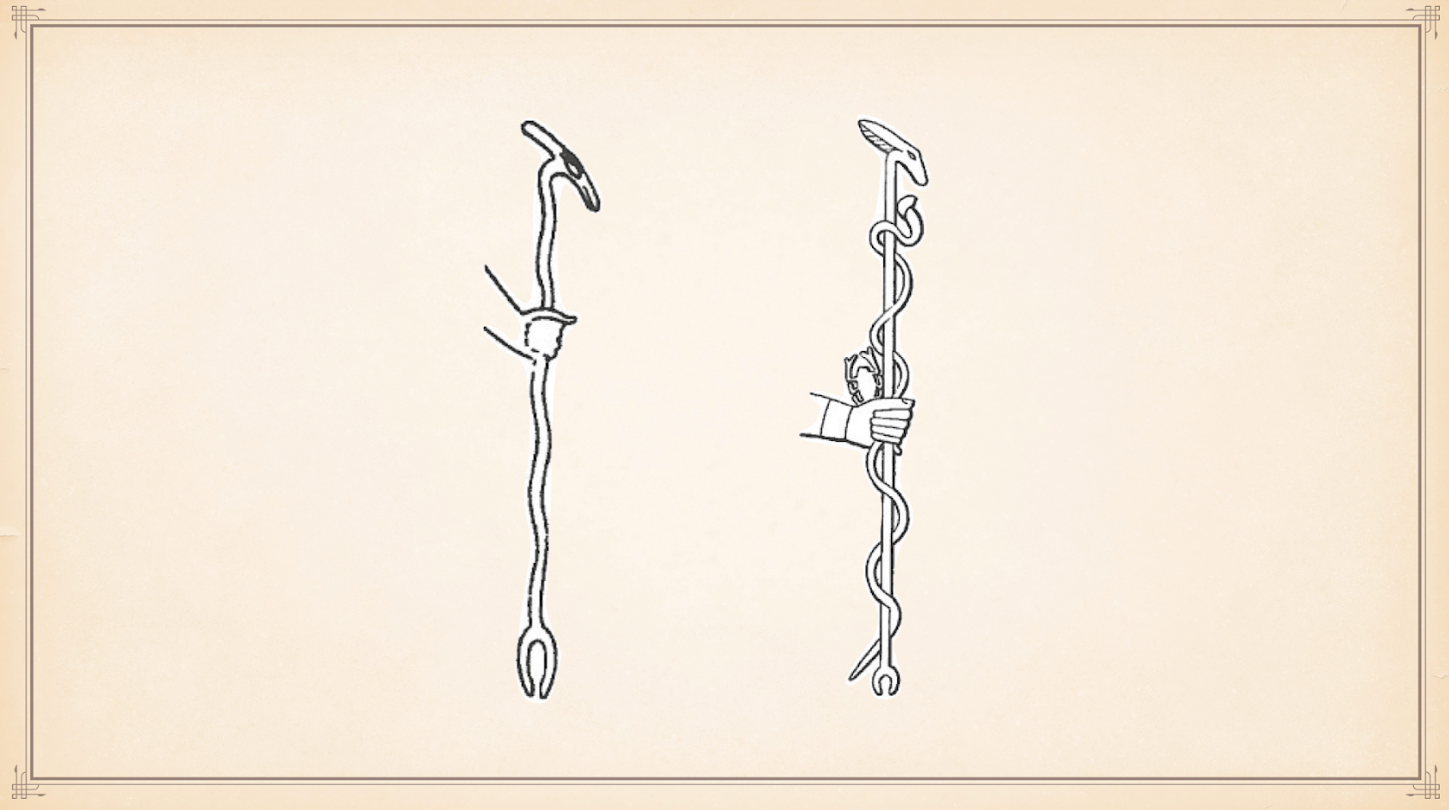
One of the most formal icons representing divine authority in ancient Egypt is the was-scepter. Sometimes the was-scepter can be depicted serpentine-shaped like the one on the left or wrapped with a serpent as appears on the right.

The fork at the bottom of the scepter has the functional purpose of pinning a malevolent serpent’s head in order to kill it as depicted in the Egyptian book of gates and noted by scholars.

Hence, the serpent around the scepter held in the hand is the god’s word or authority as benevolent serpent.

It is used to attack the malevolent serpent underfoot on the ground representing chaos or evil or death and attacked again by that forked part of the bottom of the scepter.

Moses, Serpents, and Divine Authority

With all that as a background then, the scriptures are full of God’s word or authority as benevolent serpent fighting against a false word or authority as malevolent serpent.

The very first sign God gives to Moses of his authority is to cause his rod to turn into a serpent and then back into a rod again when Moses grasps the serpent’s tail.

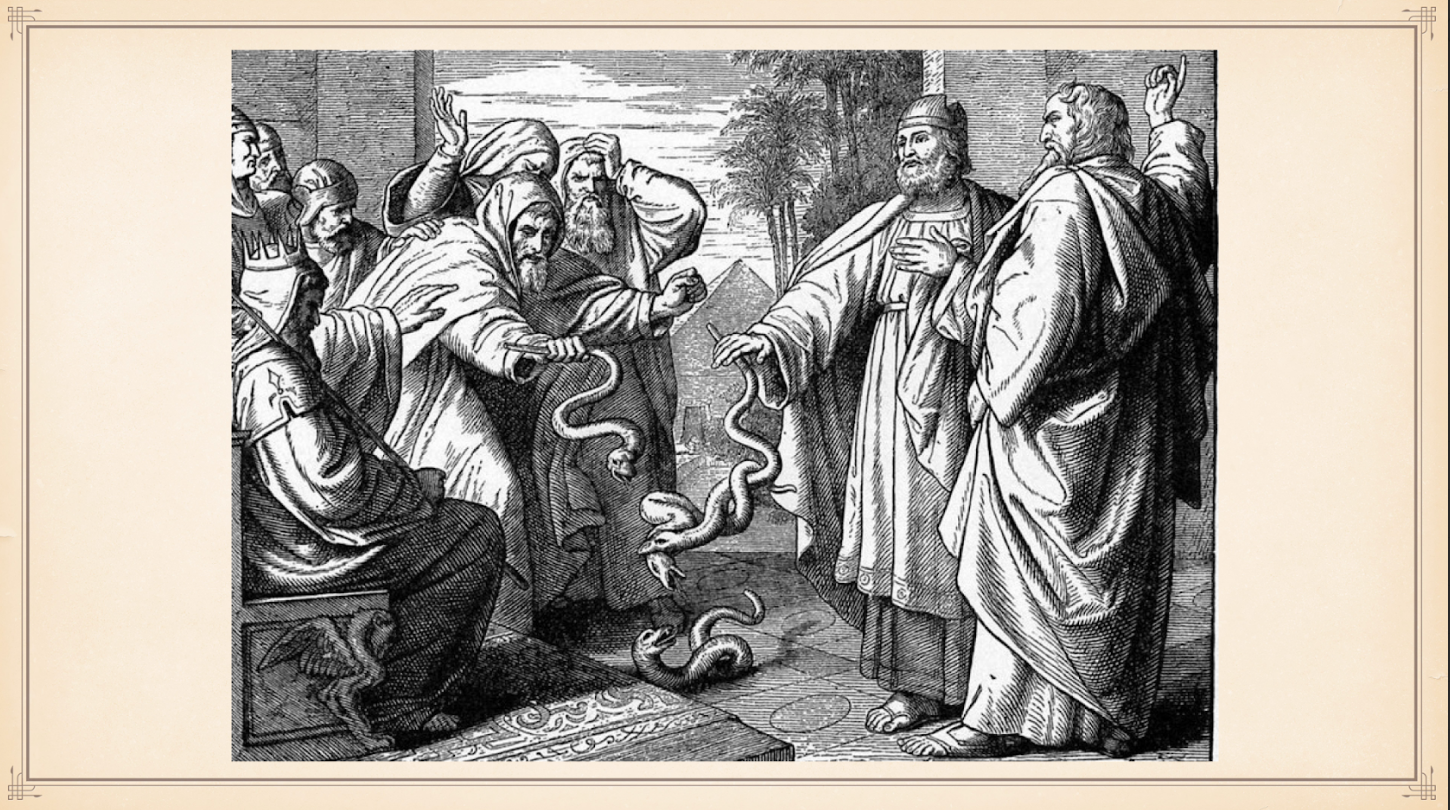
This, of course, was provided to Moses as a foreshadow and a preparation for the classic duel between Moses and the Egyptian priests later, each with rods turning into serpents as depicted in Exodus chapter 7.

Moses’s serpent however swallows the serpents of the Egyptian priests and then becomes a rod again. So again the mouth becomes central to the story—swallowing—and we’ll come back to that in the context of the ancient culture just outlined.

This story becomes a perfect symbol of God’s word or authority bettering the false words or authority of the priest.

If Pataikos is swallowing a malevolent serpent in the earlier image, he may represent the supreme power of the mouth or words of God over serpents of chaos. So if the serpent coming out of his mouth is representing the divine word, then it’s a benevolent serpent.

But if you want to interpret him as biting or killing or swallowing a serpent, that also works in the symbolism of the cultures. So, it just depends on how you want to interpret that.

Modern Echoes and Symbolic Parallels

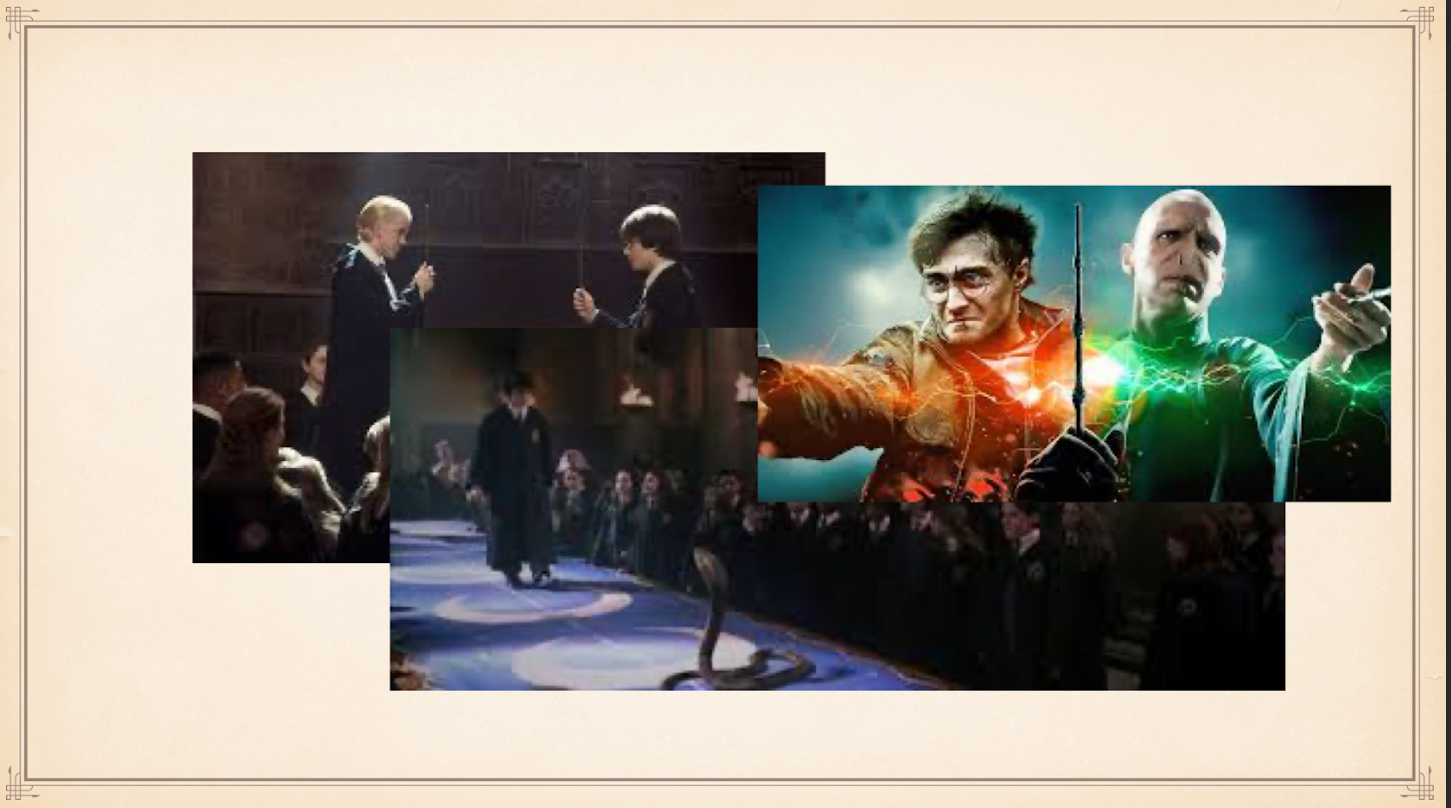
I guess a modern fictional echo of Moses and the magicians is when Draco Malfoy, right, from House Slytherin, duels with Harry Potter, the boy who speaks snake or parcel tongue, and they duel with their wands.

And Draco’s wand produces a serpent from its tip.

Also you can think of Harry dueling with his wand against Voldemort, the snake-like enemy, with his wand.

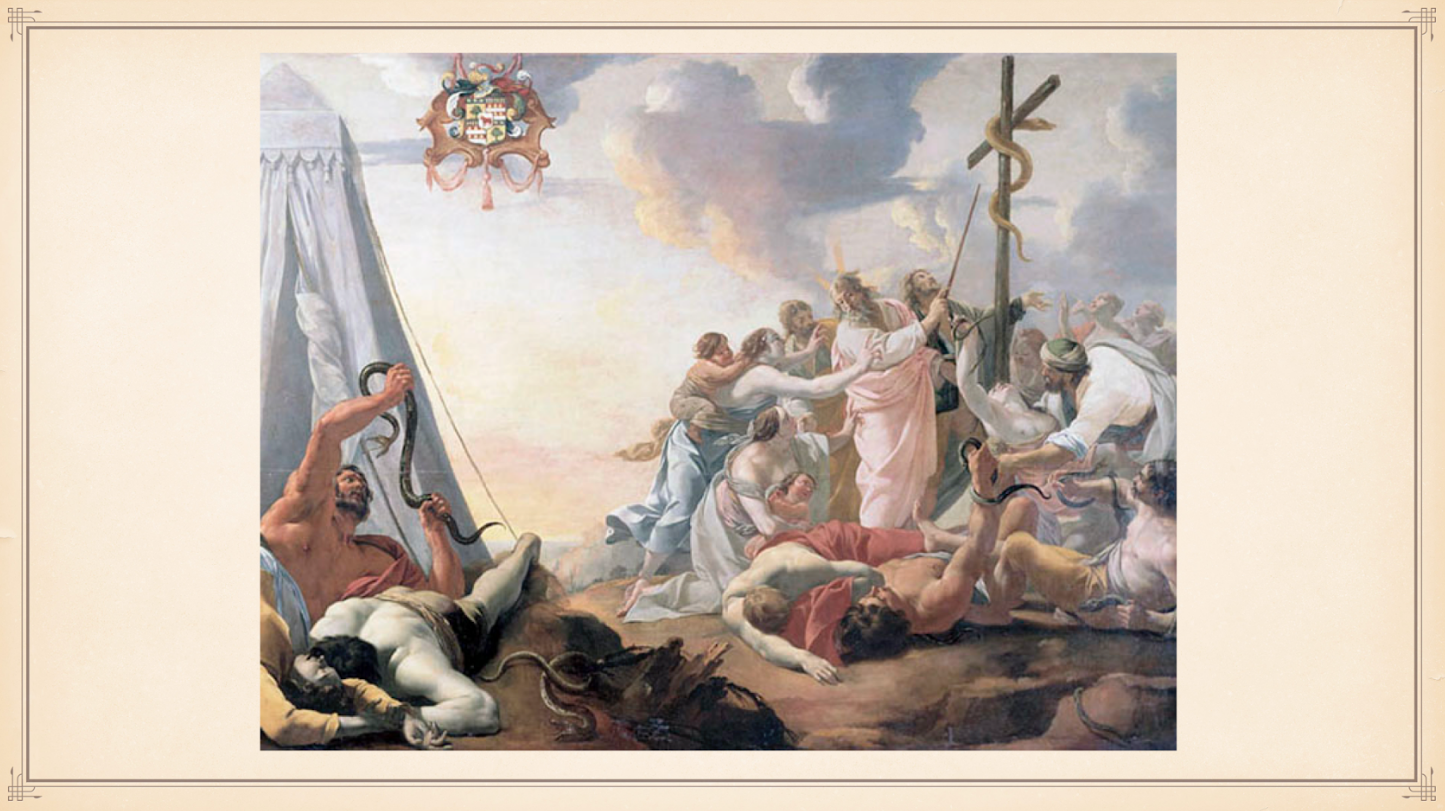
Likewise, the brazen serpent held in the hand on a staff overcomes the venom of the fiery flying serpents on the ground underfoot.

Nephi, Moroni, and the Serpent Symbolism

Nephi in the Book of Mormon understands the cultural context of serpents and declares that the fiery serpents were God’s effort to “straighten the children of Israel in the wilderness with his rod”.

Note the benevolence of the serpent held up versus the malevolent serpents on the ground.

Similar cultural distinctions may inform Captain Moroni’s distinction of placing a piece of his coat up on a pole versus the remainder of their coats which were cast down and trodden underfoot.

In other words, which remnant will they be? Which will they be the coat on the pole or will they be the coat on the ground?

Echoing Moses’s serpent on the pole versus the serpents on the ground.

Divine Authority vs. False Authority

Both of the Mosaic stories just mentioned are symbolic depictions of the authority or word of God as benevolent serpents versus the counterfeit forces of chaos as malevolent serpents.

The message is clear.

God’s divine authority which heals and gives life is greater than the false authority of the world which leads to sickness and death.

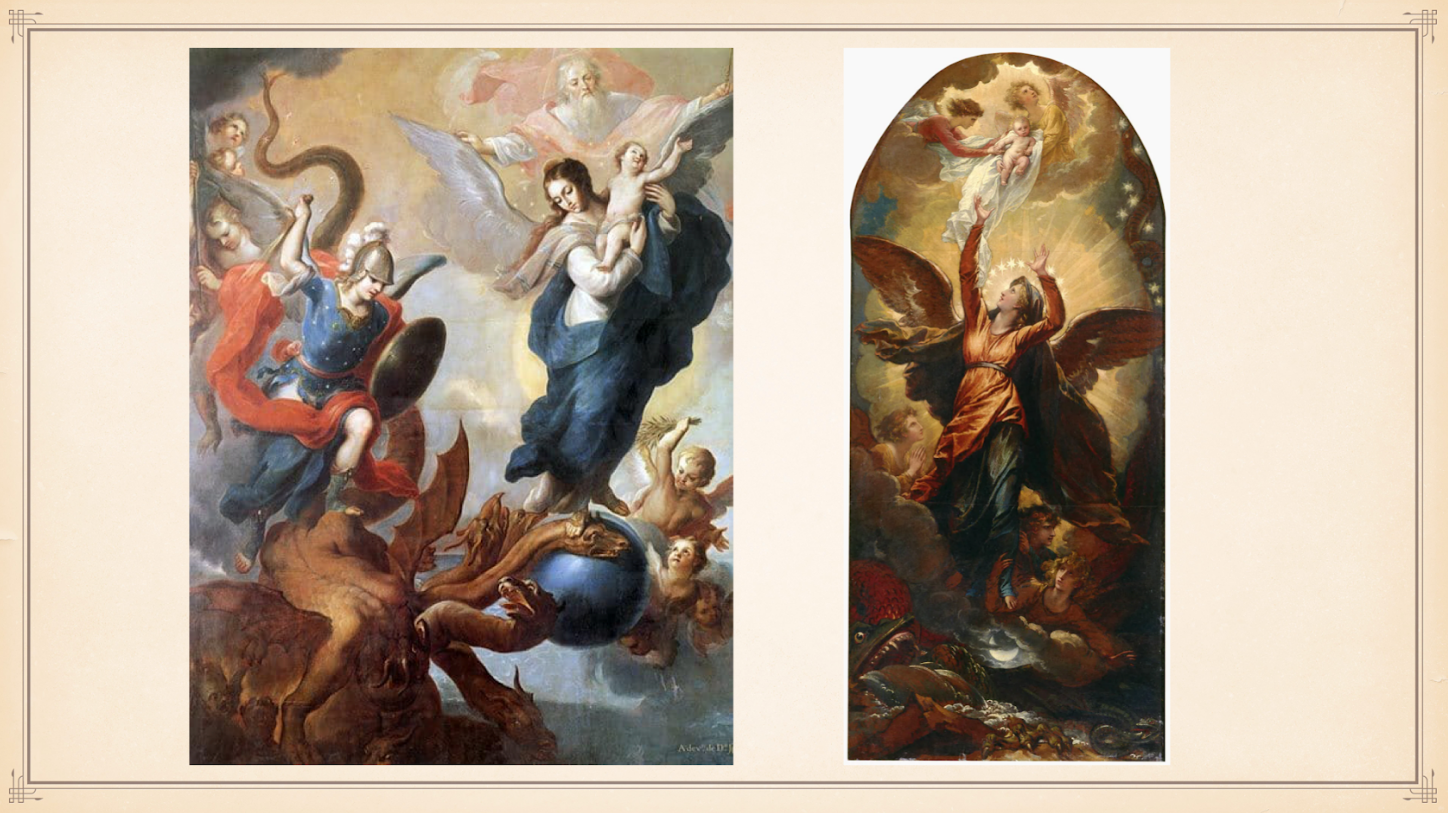
God’s serpent wand of Moses swallowing the Egyptians serpent wands prefigures Revelation 12’s depiction of the great serpent who seeks to swallow the child—and interestingly the child is holding a rod in his hand.

Revelation and the Child with the Rod

That detail doesn’t make it into a lot of the art as even the art we see here.

But the rod in the hand of the child is important because it is opposing the serpent who is trying to devour the child.

That the object of the serpent’s intended harm is a child holding a rod echoes the need for protecting the royal child Horus holding serpents in the cippi shown earlier.

The serpent in Revelation persecutes the child’s mother, the woman with 12 stars on her head, and she flees into the wilderness.

Words from the Mouth: Flood and Counter-Flood

The serpent sends a flood of water out of its mouth, suggesting a flood of false words to prevent the woman from ever coming back.

But interestingly, John records that the earth opened her mouth and swallows the dragon’s flood that came out of its mouth to help the woman return.

The Book of Mormon, I believe, fulfills the imagery of this revelation perfectly.

For it is God’s word, that literally came from a hole in the ground, the mouth of the earth, the voice from the dust, and it was prepared for the purpose of swallowing the false words of the dragon that flooded the earth.

As the church was in the wilderness, the serpent in the Garden of Eden speaks words that tempt Adam and Eve towards the tree of death.

Eden, Lehi’s Vision, and the Rod of Iron

This serpent and its words are in symbolic opposition to the flaming sword which is God’s word and which keeps the way to the tree of life.

The parallel in Lehi’s vision are the mist of darkness which is the temptations and they are in symbolic opposition to the rod of iron which is God’s word which may also be flaming depending on how you read First Nephi 15.

That Lehi and Nephi speak of mist of darkness in opposition to the rod of iron when we would expect a false rod or a false serpent based on the cultural context we’ve been exploring—I think is interesting though because in the ancient world, mists of darkness are often associated with the great cosmic serpent of chaos.

Apep and the Serpent of Chaos

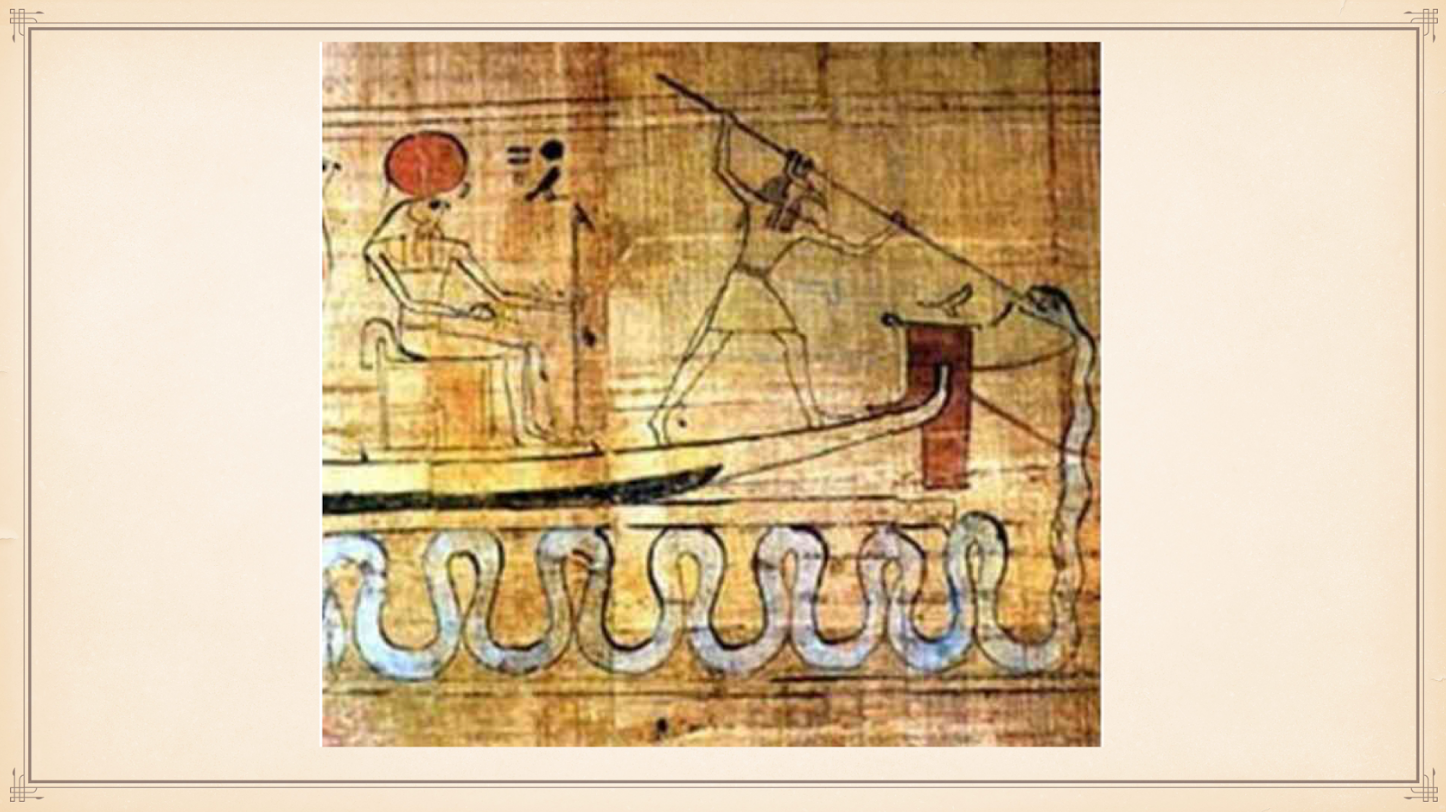
For example, Apep or Apophis in the Egyptian tradition is a serpent of chaos and he tries to devour the sun god Ra each night in the underworld.

He is often depicted emerging from darkness or from storm clouds attempting to plunge the cosmos into eternal night.

Texts speak of “the storm of Apep or the demon of darkness”.

Another mentions “Apep, the foe of Ra, is felled in storm by the shining of Ra. Apep is felled in very truth.”

Ritual Destruction of Chaos

And then it kind of seems to imply some kind of a execration ritual – they’re taking some image of Apep and they’re going to destroy it in some way.

It mentions he is to be burned in a fire and his remains placed in a pot of urine and pounded up into one mass.

Thou shalt place Apep on the fire, spitting on him and trampling on him with thy left foot.

So again the serpent under the foot it’s being tread upon – like Horus upon the crocodiles.

Apep, Storms, and Ritual Power

So Apep is being underfoot.

Thou shalt do accordingly when storm brews in the east of the sky and when Ra sets in the west in order to prevent the storm red from growing in the east of the sky. Thou shalt do accordingly very often in order to prevent thunderstorms from growing in the sky.

Thou shalt do this very often against storm, so that the sun may shine, and Apep be felled in very truth.

It will be well with who so does it upon earth, and it will be well with him in the realm of the dead.

Strength shall be given to that man to attain the office of his superior, and it will be his salvation from all evil and harmful things in very truth.”

So these texts in essence describe Apep again in connection with storm clouds and mist of darkness.

As a matter of fact, Wallace Budge, an Egyptologist many decades ago in England spoke of Apep as “the serpent devil of mist, darkness, storm, and night”.

Serpent of Darkness and False Authority

In light of the cultural context outlined herein, the serpent in the Garden of Eden and the cosmic serpent’s mist of darkness in Lehi and Nephi’s visions are symbols of the counterfeit words, the false authority or rods like those of the magicians that tempt and blind people leading them astray.

They are in opposition to the flaming sword and rod of iron representing the true word and authority of God that guides us to life and salvation at the tree.

Crushing the Serpent

One last point, the serpent in the garden of Eden is cursed to crawl upon his belly and eat dust and to have his head crushed.

But the tool for crushing the head is not mentioned.

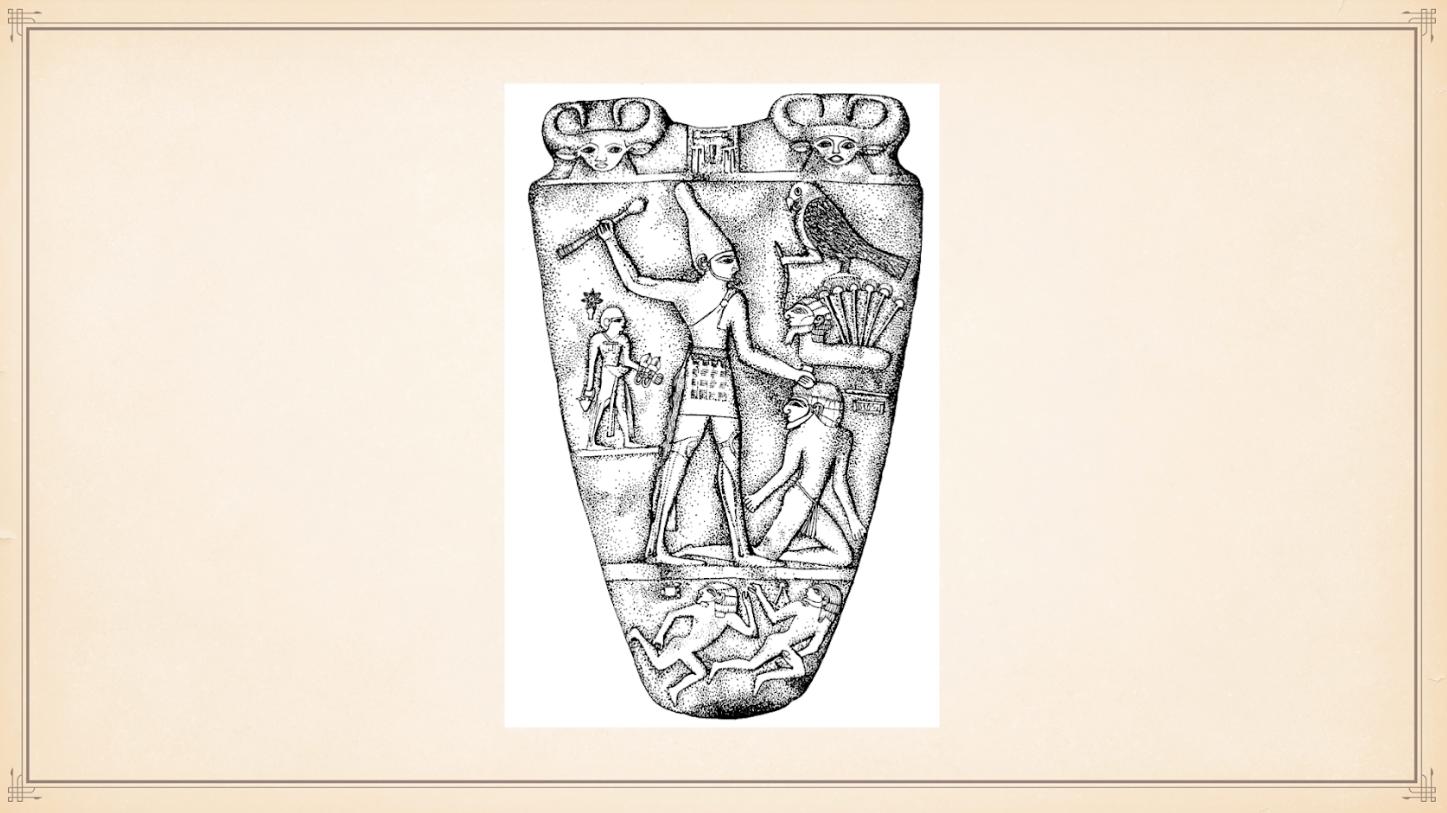
However, smiting scenes in ancient Egypt portray the king using a rod or a mace to crush the head of the enemy who is interestingly depicted in a gesture of crawling like a serpent, one knee back, the other forward.

This image occurs from the earliest days of Egyptian history such as on this pre-dynastic pallet of Narmer.

Crawling, Dust, and Curse Imagery

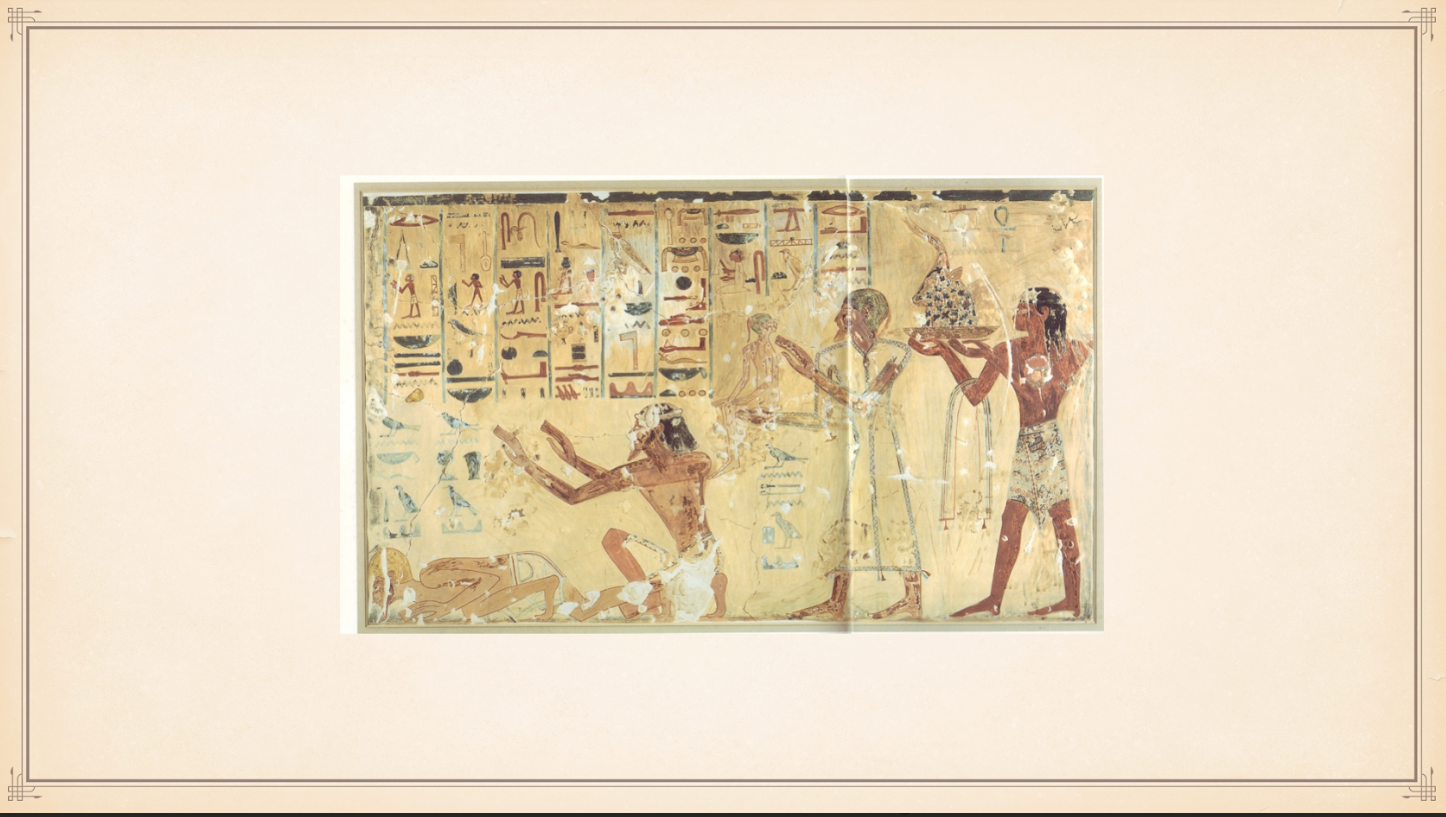
The tomb of Menkheperreseneb at Thebes depicts foreign nations appearing before the king.

The first nation on the left is depicted crawling upon his belly. Note the crawling position of the legs—one forward tucked under the body, the other one extended back like we saw in the previous depiction.

With his face to the ground towards the dust before the pharaoh.

While it may appear that the nation is merely paying respect to the king, crawling and licking or eating dust has curse imagery linked to it as seen in scriptural passages such as Isaiah 49:23 wherein the foreign nations or kings and queens lick the dust of Israel’s feet.

That they are to be seen as a cursed people who go upon their bellies and ultimately will be crushed notwithstanding their furthering the work as nursing mothers etc. is clarified in the Book of Mormon wherein Jacob interprets this very chapter and verse of Isaiah and tells us that “they (the Gentiles) that fight against Zion and the covenant people of the Lord shall lick up the dust of their feet unto their destruction.”

Of course, any of these gentile helpers who repent and make the covenant will be saved, being made into Israel.

Serpents, Dust, and Symbolism

As an aside, snakes literally do lick or eat dust as they crawl as a form of perceiving their environment. So the curse of God, as written in the scriptures, is poetically framed within the observable behavior of serpents.

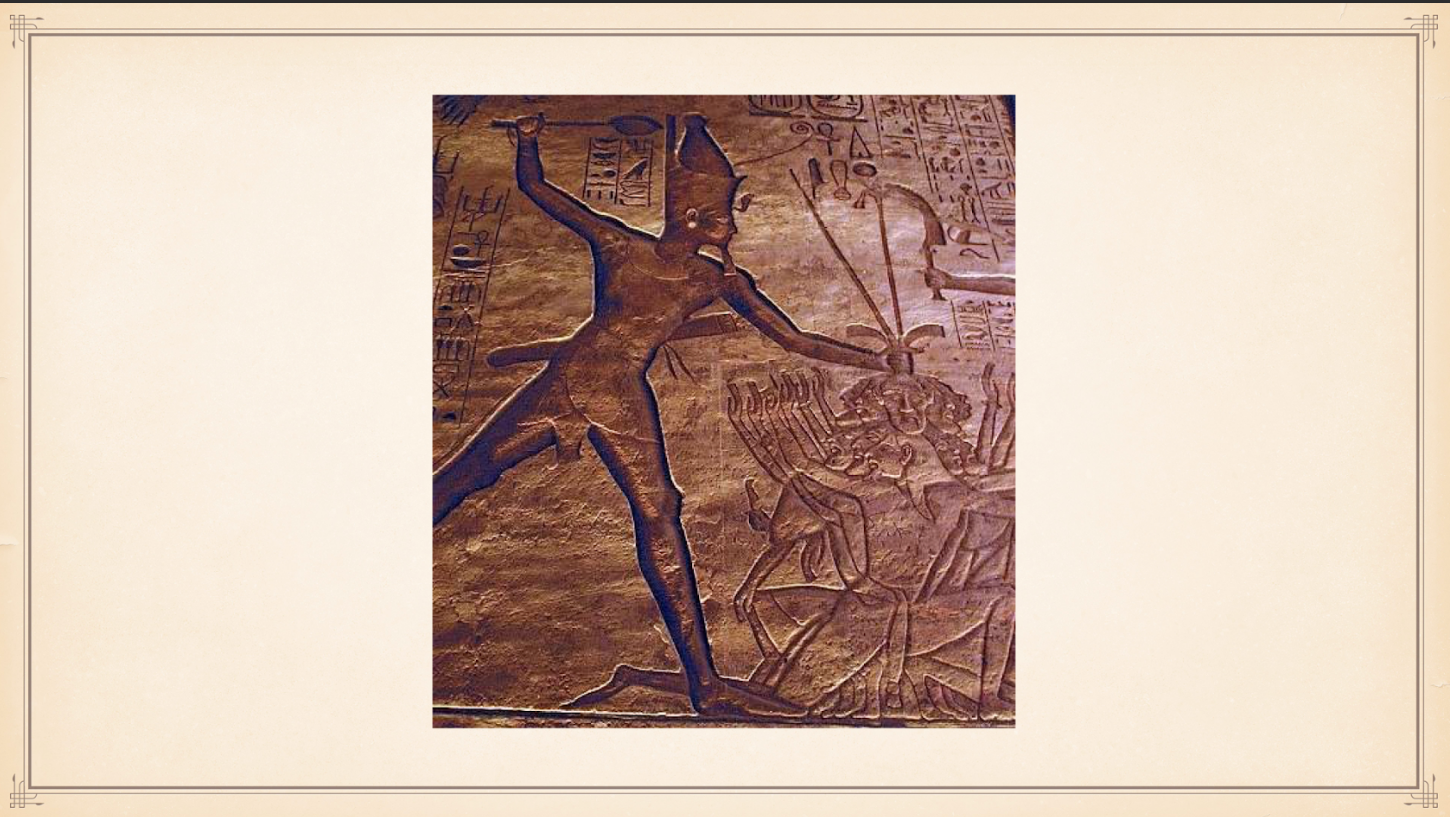
From a New Kingdom temple – the king’s rod is poised to crush the heads of foreign enemies whose legs again are in a crawling posture.

Final Synthesis: Rod, Serpent, and Messiah

The point of these examples is to demonstrate once again the king’s rod held in the hand is in opposition to the serpent-like figure crawling at the foot and echoes the crawling serpent whose head is to be crushed in the opening chapters of the Bible.

God’s word and authority prevails over that of Lucifer’s false word and authorities in the world.

I hope it is clear that the use of serpents in the hand to represent divine authority and words in the ancient world parallels the long tradition of rods, maces, and swords being utilized as divine authority and words—objects again held in the hand.

Rods and swords in the hand can smite an enemy and protect or guide a friend.

So likewise, a venomous serpent in the hand, controlled by and thus representative of divine power, can oppose the forces of chaos, also represented by a serpent or dragon.

Or these venomous serpents can protect, heal and guide as a symbol of the royal or divine word.

Conclusion and Testimony

Consequently, all these symbols ultimately become emblematic of the anointed king or messiah in scripture sent to deliver his people.

It is his scepter, whether sword, rod, or serpent, that can fully protect, heal, guide, and vanquish every foe.

By extension, he is the serpent scepter held in the hand of his father and lifted up, that he might draw all men unto him to be healed.

And because of his virtue and his charity, his dominion flows unto him without compulsory means forever and ever.

And that is my testimony in the name of Jesus Christ. Amen.

Search topics ancient Egyptian serpent symbolism; serpent wands; was scepter; medu neter word of God; Egyptian magic heka; Bess and Beset iconography; Horus cippi; apotropaic rituals; coffin texts serpents; Weret Heka cobra symbolism; rods and scepters symbolism; Moses rod serpent Exodus 7; brazen serpent Numbers 21; rod of iron 1 Nephi 8; Revelation 12 child rod serpent; Apep chaos serpent Egyptian; smiting scenes Egypt rod mace; serpent underfoot symbolism; divine speech ancient Egypt CES Letter serpent symbolism; Mormon symbolism criticism; Book of Mormon symbolism debate; LDS scripture symbolism questions; biblical symbolism interpretation critiques; Egyptian parallels criticism LDS; rod of iron interpretation debates; brazen serpent meaning controversy; Revelation 12 interpretation LDS; apologetics serpent imagery

Get Tickets for the FAIR Conference 2026

August 5-7, 2026 | Thanksgiving Point | In person + livestream

Get Tickets
View Schedule & Speakers

Why attend the FAIR Conference?

Because the questions are real—and so are the answers.

Faithful answers to difficult questions

Responses to questions about Latter-day Saint doctrine, history, and belief—grounded in both scholarship and faith.

Clarity for real conversations

Better understand the issues your family and friends are encountering—and how to respond with both confidence and charity.

Strengthen your own faith

Come away with greater clarity, deeper understanding, and renewed confidence in Jesus Christ and His restored gospel.

A community that understands

Spend time with others who care deeply about faith, questions, and truth—and who are striving to navigate both with integrity.

This conference is for you if…

  • You’ve found yourself saying, “I don’t know how to answer that.”
  • You have a loved one who is struggling with questions about the Church.
  • You want to better understand common criticisms of Latter-day Saint doctrine and history.
  • You value both faith and scholarship—and don’t feel like you have to choose between them.
  • You want to feel more confident, more grounded, and more at peace in your faith.
  • You’re looking for faithful, thoughtful responses—not contention.

You’re not the only one asking these questions.

Join us—and let’s talk about them together.

Get Tickets

Choose the FAIR Conference Experience That Fits You Best

Compare ticket options at a glance and choose the experience that best fits how you want to attend, connect, and support FAIR.

Features Most Premium
VIP Patron $325
Best Value
Sustaining Member $150–$250
Standard In-Person $185 Student $50 Online / Livestream Online Access
Attend all in-person sessions ✓ ✓ ✓ ✓ —
Livestream access ✓ ✓ ✓ ✓ ✓
On-demand replay access ✓ ✓ ✓ ✓ ✓
Lunch included ✓ ✓ ✓ ✓ —
VIP seating ✓ — — — —
Private pre-conference reception ✓ — — — —
Exclusive Thursday Sustaining Member event — ✓ — — —
Priority check-in ✓ — — — —
Printed program ✓ — — — —
Supports FAIR’s mission beyond attendance ✓✓ ✓✓ ✓ — ✓
Best for Donors and VIPs who want the full experience Attendees who want value, connection, and insider access Simple in-person conference attendance Students attending at a reduced rate Individuals, families, or groups watching remotely
Looking for connection and community? Sustaining Members are invited to a special Thursday gathering with speakers, influencers, and fellow supporters of FAIR.
Get your ticket now

Most Value

Premium in-person access

Get the full conference experience plus added value through sustaining and VIP options.

Best for those who want the most complete experience and want to support FAIR’s mission.

Explore Premium Options

Premium Ticket Options

These options include both in-person attendance and livestream access—offering the most complete conference experience.


VIP Ticket
Enhanced conference experience with added benefits.

Sustaining Member Ticket
Best value ticket, exclusively for our Sustaining Members.

Sustaining Member Bundle
Become an annual Sustaining Member today and receive a special discount on conference attendance.

Monthly Member Ticket
Become a monthly Sustaining Member today and get a discount on conference access.

In-Person

Standard conference tickets

Attend the conference in person with access to all sessions—simple and straightforward.

Best for those who want to attend in person without additional extras.

View Standard Options

Standard In-Person Tickets

Simple, straightforward access to the full conference experience—no extras, just the content.


Standard Conference Ticket
Full in-person access to all keynote and breakout sessions.

Student Ticket
A limited number of discounted in-person access for currently enrolled students.

Online

Watch from anywhere

Join remotely with livestream access for individuals, families, or group settings.

Best for those who prefer to participate from home or host a group viewing.

Select Online Access

Online Access Options

Join the conference remotely with flexible options for individuals, families, or group settings.


Streaming Pass
Watch the conference live from home—ideal for individuals or families in the same household.

Classroom License
Group viewing access for organized classes or church settings.

Clarity

Understand complex issues—history, doctrine, and culture—without confusion.

Confidence

Learn how to respond calmly and clearly in real conversations.

Community

Be around people asking the same questions you are.

Learn from Trusted Voices

Scholars

  • Dan Peterson
  • Matt Roper
  • Anthony Sweat

Historians

  • Brian Hales
  • Janiece Johnson
  • Keith Erekson

...and more!

Faithful Experts

  • Wendy Ulrich
  • Josh Coates
  • Jasmin Rappleye

Come ready to learn.

Leave ready to respond.

Register Now

Classic FAIR – Why Did Joseph Smith Practice Polygamy? – Brian Hales, 2010

October 29, 2025 by Trevor Holyoak

https://media.blubrry.com/mormonfaircast/www.fairlatterdaysaints.org/wp-content/uploads/2025/10/Why-Did-Joseph-Smith-Practice-Polygamy.mp3

Podcast: Download (44.2MB)

Subscribe: RSS

“Controversies in Joseph Smith’s Polygamy: New Evidences and New Observations Indicate Fawn Brodie Should Have Done More Research” by Brian C. Hales at the 2010 FAIR Conference

Why did Joseph Smith practice plural marriage? There are three different places we could go for answers. [Read more…] about Classic FAIR – Why Did Joseph Smith Practice Polygamy? – Brian Hales, 2010

Filed Under: Bible, Book of Mormon, Doctrine, Doctrine and Covenants, FAIR Conference, FAIR Conference, Homosexuality, Joseph Smith, Law of Chastity, LDS History, Marriage, Old Testament, Podcast, Polygamy, Prophets, Women

Join us Oct 9–11 for our FREE virtual conference on the Old Testament

October 9, 2025 by Trevor Holyoak

🔍 Dive deep into ancient scripture for modern faith!📜

Join us Oct 9–11 for the FREE FAIR Virtual Old Testament Conference: Ancient Truths for Modern Faith. Hear from scholars like Kerry Muhlestein, Daniel Ellsworth, Jennifer Roach Lees, Stephen Smoot, Spencer Kraus, Allen Hansen, John Gee, Christopher Blythe, Paul Bryner, Jeffrey Bradshaw, Matthew Roper, John Thompson, Tyler Golightly, and Ben Spackman as we “defend the Old Testament” through restoration lenses, covenant themes, temple theology, and prophetic tradition. Don’t miss this unique online opportunity to engage scripture with fresh eyes.

This conference will only be available to stream through the weekend; don’t miss out! (No registration required.)

The streaming will happen on our YouTube channel: https://www.youtube.com/@fairldsorg

The schedule can be viewed here: https://www.fairlatterdaysaints.org/conference/virt_2025-ot

Filed Under: Bible, FAIR Conference, News from FAIR, Old Testament

FAIR Conference Podcast #84 – Ahmad S. Corbitt, “Prophets of the Past, Faithfulness in the Present”

September 3, 2025 by Trevor Holyoak

https://media.blubrry.com/mormonfaircast/www.fairlatterdaysaints.org/wp-content/uploads/2025/09/Prophets-of-the-Past-Faithfulness-in-the-Present.mp3

Podcast: Download (41.5MB)

Subscribe: RSS

This podcast series features past FAIR Conference presentations. This presentation is from our 2024 conference. If you would like to watch all the presentations from our 2025 conference held last month, you can still purchase the video streaming.

This audio podcast version has been made available for convenient listening. If you would like to watch or read the full presentation, it is available here.

Elder Ahmad S. Corbitt was sustained as a General Authority Seventy in April 2023. A former mission president, public affairs director, and trial attorney, he holds a law degree from Rutgers. Currently, he serves the Church with extensive experience in leadership, communication, and global outreach.

Filed Under: FAIR Conference, FAIR Conference, Podcast, Prophets, Racial Issues

Classic FAIR – “What I Learned about Life, the Church, and the Cosmos from Hugh Nibley” – Boyd Petersen, 2005

August 29, 2025 by Trevor Holyoak

https://media.blubrry.com/mormonfaircast/www.fairlatterdaysaints.org/wp-content/uploads/2025/08/What-I-Learned-about-Life-the-Church-and-the-Cosmos-from-Hugh-Nibley.mp3

Podcast: Download (48.6MB)

Subscribe: RSS

“What I Learned about Life, the Church, and the Cosmos from Hugh Nibley” by Boyd Petersen at the 2005 FAIR Conference

February 24, 2005 was one of those beautiful false-spring days when we all leave our coats at home and venture out in shirt sleeves, despite the fact that we all know that winter will have one final gasp before yielding to spring. The snow had all melted from the valley floor, but the mountains were covered with a brilliant white snow pack that contrasted sharply against the deep blue sky. The temperatures were making their first climb into the seventies, and everyone wanted to be outside. My students and I were all restless as I plodded through another lecture on formatting research papers. Between classes, I stopped by my office to check my e-mail when I got a call from my wife. “He’s gone,” she practically whispered. I immediately knew. Hugh Nibley was no longer with us. We believe that, like the rest of us, Hugh had simply longed to be outside, to leave the hospital bed that had been his home for almost two years and enjoy the beautiful day.

CONTINUED HERE

Filed Under: Apologetics, FAIR Conference, FAIR Conference, Latter-day Saint Scholars Testify, Old Testament, Perspective, Podcast, Revelation, Science, Temples

FAIR Conference Podcast #83 – Daniel C. Peterson, “Brigham Young and Slavery”

August 20, 2025 by Trevor Holyoak

https://media.blubrry.com/mormonfaircast/www.fairlatterdaysaints.org/wp-content/uploads/2025/08/2025DanPeterson-Audio.mp3

Podcast: Download (38.3MB)

Subscribe: RSS

This podcast series features past FAIR Conference presentations. This presentation is from our 2025 conference held earlier this month. If you would like to watch all the presentations from the conference, you can still purchase the video streaming.

This audio podcast version has been edited to make it easier for listening. If you would like to watch the full presentation, it is available here.

Daniel C. Peterson is the president of the Interpreter Foundation, which publishes the online periodical Interpreter: A Journal of Latter-day Saint Faith and Scholarship, produces books, convenes conferences, and sponsors a weekly radio program:  https://interpreterfoundation.org.  He and his wife were the executive producers of the 2021 theatrical film Witnesses and have served in the same capacity for its 2022 docudrama sequel, Undaunted: Witnesses of the Book of Mormon.

A native of southern California who earned his doctorate at UCLA after study at BYU, in Jerusalem, and in Cairo, he retired on 1 July 2021 as a professor of Islamic studies and Arabic at Brigham Young University, where he had taught since 1985.

Formerly director of research and chairman of the board of the Foundation for Ancient Research and Mormon Studies (FARMS), now BYU’s Neal A. Maxwell Institute for Religious Scholarship, he is also a former president of the Society for Mormon Philosophy and Theology and is currently a member of the board of the Foundation for Religious Diplomacy.

Dr. Peterson served in the Switzerland Zürich Mission (1972-1974), and, for approximately eight years, on the Gospel Doctrine writing committee for The Church of Jesus Christ of Latter-day Saints. He also presided for a time as the bishop of a singles ward adjacent to Utah Valley University.

He is married to the former Deborah Stephens, of Lakewood, Colorado, and they have three sons and three granddaughters.

Filed Under: FAIR Conference, FAIR Conference, LDS History, Podcast, Racial Issues

Classic FAIR – I Don’t Have a Testimony of the History of the Church – Davis Bitton, 2004

August 15, 2025 by Trevor Holyoak

https://media.blubrry.com/mormonfaircast/www.fairlatterdaysaints.org/wp-content/uploads/2025/08/I-Dont-Have-a-Testimony-of-the-History-of-the-Church.mp3

Podcast: Download (57.0MB)

Subscribe: RSS

“I Don’t Have a Testimony of the History of the Church” by Davis Bitton at the 2004 FAIR Conference

I don’t have a testimony of the history of the Church. That is why I can be a historian and also a believing Latter-day Saint. I will expand on this idea, but first let me address some related questions.

Do all well-informed historians become anti-Mormons?

The critics would have you believe that they are disinterested pursuers of the truth. There they were, minding their own business, going about their conscientious study of Church history and–shock and dismay!–they came across this, whatever this is, that blew them away. As hurtful as it is for them, they can no longer believe in the Church and, out of love for you, they now want to help you see the light of day.

Let’s get one thing clear: There is nothing in Church history that leads inevitably to the conclusion that the Church is false. There is nothing that requires the conclusion that Joseph Smith was a fraud. How can I say this with such confidence? For the simple reason that the historians who know most about our Church history have been and are faithful, committed members of the Church. Or, to restate the situation more precisely, there are faithful Latter-day Saint historians who know as much about this subject as any anti-Mormon or as anyone who writes on the subject from an outside perspective. With few exceptions, they know much, much more. They have not been blown away. They have not gnashed their teeth and abandoned their faith. To repeat, they have found nothing that forces the extreme conclusion our enemies like to promote.

CONTINUED HERE

Filed Under: Anti-Mormon critics, FAIR Conference, FAIR Conference, Faith Crisis, Joseph Smith, LDS History, Podcast, Testimonies

FAIR’s history and impact

August 13, 2025 by Trevor Holyoak

https://media.blubrry.com/mormonfaircast/www.fairlatterdaysaints.org/wp-content/uploads/2025/08/FAIRs-history-and-impact.mp3

Podcast: Download (9.9MB)

Subscribe: RSS

by Scott Gordon at the 2025 FAIR Conference

History of FAIR

In 1997, I logged in to America Online Mormonism message board 1 expecting to find friends. Instead, I found critics. I was quickly surprised by the sheer volume of vitriol and criticism of The Church of Jesus Christ of Latter-day Saints.

Common claims included:

  • You can’t add to the Bible (referencing, of course, the Book of Revelation)
  • You preach a different gospel (quoting from Galatians),
  • You believe Jesus is the brother of Satan (I’m not sure where that comes from in the scriptures, but it was there)
  • You’re getting your own planets; and
  • Mormon women will be eternally pregnant.

Even baptism was weaponized, declaring that it was a work that can’t save you.

These arguments, of course, were unfair, misrepresentative, or flat out wrong. And yet, this year, some seminary students in my ward in Redding, California, reported hearing these same arguments at school.

CONTINUED HERE


Scott Gordon
August 2019

Scott Gordon serves as President of FAIR (Faithful Answers, Informed Response) which can be found online at www.fairlatterdaysaints.org. FAIR is a non-profit organization dedicated to helping members deal with issues raised by critics of The Church of Jesus Christ of Latter-day Saints. He has an MBA and a BA from Brigham Young University. He is currently an instructor of business at Shasta College in Redding, California and teaches business classes online at BYUI. Scott has held many positions in The Church of Jesus Christ of Latter-day Saints including serving as a bishop, ward mission leader, seminary teacher, and member of the elder’s quorum presidency. He is married, has five children and 14 grandchildren.

Filed Under: FAIR Conference, FAIR Conference, Podcast

Thank You for Making the 2025 FAIR Conference Unforgettable!

August 11, 2025 by FAIR Staff

Dear Friends,

What an incredible FAIR Conference we had this year! From thought-provoking presentations to heartfelt conversations, we are so grateful to every sponsor, attendee, speaker, volunteer, donor, and supporter who made this year’s event at Thanksgiving Point one to remember.

[Read more…] about Thank You for Making the 2025 FAIR Conference Unforgettable!

Filed Under: FAIR Conference, News from FAIR, Newsletter

  • Page 1
  • Page 2
  • Page 3
  • Interim pages omitted …
  • Page 19
  • Go to Next Page »

Primary Sidebar

Faithful Study Resources for Come, Follow Me

Subscribe to Blog

Enter your email address:

Subscribe to Podcast

Podcast icon
Subscribe to podcast in iTunes
Subscribe to podcast elsewhere
Listen with FAIR app
Android app on Google Play Download on the App Store

Pages

  • Blog Guidelines

FAIR Latest

  • Come, Follow Me with FAIR – Deuteronomy 6–8; 15; 18; 29–30; 34 – Part 2 – Autumn Dickson
  • Come, Follow Me with FAIR – Deuteronomy 6–8; 15; 18; 29–30; 34 – Jennifer Roach Lees
  • Come, Follow Me with FAIR – Deuteronomy 6–8; 15; 18; 29–30; 34 – Part 1 – Autumn Dickson
  • Alive in Christ
  • Come, Follow Me with FAIR – Numbers 11–14; 20–24; 27 – Part 2 – Autumn Dickson

Blog Categories

Recent Comments

  • Guerry Green on Come, Follow Me with FAIR – Exodus 7–13 – Part 1 – Autumn Dickson
  • Antonio Moreno on Taking on the Name of Jesus Christ
  • Sister Truelove on Humble Souls at Altars Kneel
  • Antonio Moreno on Forsake Not Your Own Mercy
  • Wayne on Come, Follow Me with FAIR – Genesis 12–17; Abraham 1–2 – Part 1 – Autumn Dickson

Archives

Follow Us

  • Facebook
  • Twitter
  • iTunes
  • YouTube
Android app on Google Play Download on the App Store

Footer

FairMormon Logo

FAIR is a non-profit organization dedicated to providing well-documented answers to criticisms of the doctrine, practice, and history of The Church of Jesus Christ of Latter-day Saints.

Donate to FAIR

We are a volunteer organization. We invite you to give back.

Donate Now

Site Footer