
• Skip to primary navigation
  • Skip to main content
  • Skip to primary sidebar
  • Skip to footer

FAIR

  • Find Answers
  • Blog
  • Media & Apps
  • Conference
  • Bookstore
  • Archive
  • About
  • Get Involved
  • Search

Faith Crisis

How to be Comfortable Not Knowing

March 5, 2015 by Laura Hales


Square-pink-glass-plate

[This piece originally appeared at LDS.net and is reposted here with permission.]

unmatched-china-plates
My mother collected unmatched china plates because she couldn’t afford a set of china.

My mother is a dish-collector of sorts. Due to the large size of our family and her limited budget, her treasure hunts mainly consisted of browsing the neighborhood yard sales. There wasn’t a matching set of dishes in our cupboard but rather a collection of others’ surplus that became my mother’s gems.

One evening a close friend stopped by while we were eating dinner. He noted the pink plate and mentioned that it was valuable, and I shouldn’t be eating on it. And with that, my days of elegant dining ended.

After a careful washing, my dish was placed in the china cabinet with others deserving such honor. My mother took our friend’s proclamation at face value; the dish was far too precious to be used as a child’s dinner plate.

I can’t say I ever felt the same way about our friend. At dinner as I looked down at a plate that was not as lovely as the one to which I was accustomed, I resented the unsolicited comments on the value of our dinnerware. Looking at the plate in the china cabinet didn’t give me nearly the same pleasure as actually using it had.

About ten years ago my mother gave me the pink plate. “Here,” she said, “I saved this for you.” For the first time as an adult, I closely inspected the beloved plate. There were no markings identifying a manufacturer, which would aid in revealing its origins.

“So,” I asked my mother, “Why did our friend think this plate was so valuable?” She responded by describing features with which I was already familiar: “It is made of pink glass, and it is etched with those pretty flowers.”

With the tools available to me on the Internet, I decided to do a little research of my own. After checking several sources, I found I could purchase a set of five new dishes pretty much identical to the one I now housed in my cupboard for about ten dollars. The dish had intrinsic value, but its monetary value was nominal.

My mother had taken her friend’s declaration without entertaining an ounce of skepticism despite the fact he had no special training in evaluating the quality of dinnerware. She accepted what she heard as truth simply because it had been uttered, was plausible, and was even enticing. Perhaps the dish really was worth a bit of money.

Accepting Truth

A bit of skepticism is not a bad thing. After all, it is through questioning that the greatest discoveries are often made. Earnest truth seeking often encourages us to question that which we are told, which results in acquiring more complete and accurate information. It is unfortunate our society often conditions us to do the opposite.

Instilled at a young age to accept words spoken from those with the stamp of authority, we become accustomed to generally trusting that which others promote as truth. This authority is often established by a cursory examination of the fact giver’s credentials, such as age, profession, personal relationship, and ecclesiastical position.

This is not to say that our society has conditioned us to be consistently duped. Most justifiably consider a textbook a more accurate source of information than a grocery store tabloid magazine. But how many times have we unquestionably taken as truth the word of tour guides—certainly they have been briefed; accepted some gossip about a neighbor—after all their husbands work together; or a lecture in a Social Studies class—that master’s degree in history must account for something. It seems the bar for establishing a source of authority may be too low at times.

Searching-online
Not all online information is reliable. How can we judge what is true?

This social conditioning is especially detrimental with the advent of the Internet. Anyone can say anything at any time, but it doesn’t mean it is true. And with a click of the mouse, that information is made available to the world. The more the information is accessed, the more credence is attributed to it, creating what I refer to as the “Search Engine Fallacy.” A source is assumed authoritative simply because it has been frequently viewed.

Wisdom from Antiquity

There is an oft-repeated quote by Aristotle declaring: “It is the mark of an educated mind to be able to entertain a thought without accepting it.” In our quest for truth, it may be wise to ponder an idea without immediately accepting it. Instead weigh the facts carefully before making a decision and explore the reasoning behind a conclusion.

The flip side of this statement is true as well. It is important to consider an opinion before dismissing it entirely. Even arguments that result in faulty conclusions usually contain some bit of truth. One may entertain a thought that is alien to one’s normal way of thinking and after careful study and contemplation find it worthy of embracing.

This quote urges truth seekers to approach ideas with an open mind and weigh their merits carefully through study and examination; trying best to understand the concepts, but in the end, there is no need to agree with them.

Authentic vs. Counterfeit

This quote, which is easily found on the Internet, has been used in numerous blogs, college papers, and inspirational speeches over the years. A simple search on a popular Internet engine will result in hundreds of hits. It is a great quote: pithy, thought provoking, and easily understood. But I am not confident Aristotle actually coined the phrase. In fact, I am pretty sure he did not; if Aristotle always wrote so clearly, philosophy classes might be more popular.
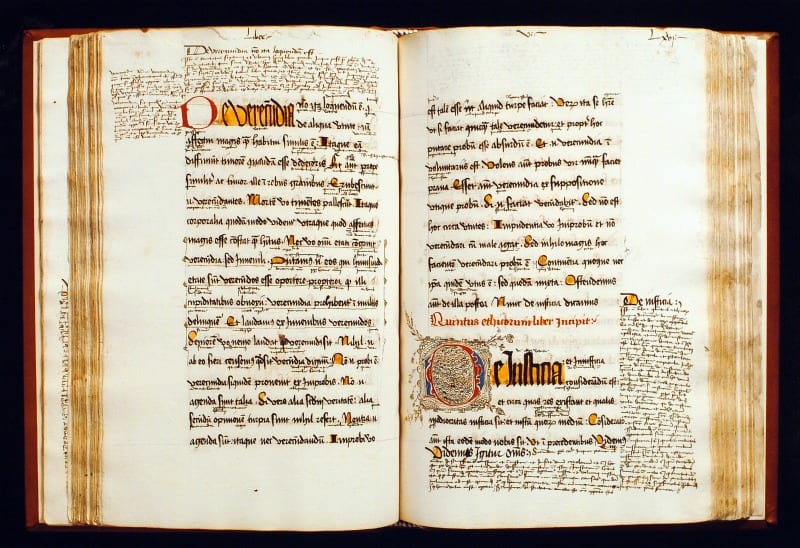
Neomachaian-Ethics-by-Aristotle
Aristotle’s real quote was more complex than we think.

The closest reference to a quote by Aristotle resembling this familiar rendition is found in his book Nicomachean Ethics: “It is the mark of an educated man to look for precision in each class of things just so far as the nature of the subject admits; it is evidently equally foolish to accept probable reasoning from a mathematician and to demand from a rhetorician scientific proofs.”

The essence of the quote is similar to its twentieth-century update, but the subtle differences impart nuances of meaning much deeper than its counterfeit cousin. Both quotes are worthy of contemplation, but only one is authentic and is in truth the voice of Aristotle.

Comparing the two quotes brings forth meaning in the authentic that is lost in the condensation. Aristotle urges one to “look for precision in each class of things just so far as the nature of the subject admits.” Constraints such as lack of historical data and insufficiencies in scientific knowledge limit our ability to determine the nature of truth, but these resources and others ought to be exhausted before accepting the accuracy of any conclusions.

Accepting Uncertainty and Determining Truth

But unless a thing is witnessed, can its reality ever be established with certainty? And if another has not had that same witness, can they assuredly take another’s word as a witness?

Aristotle brings up a second point that addresses these questions of uncertainty and where to turn for resolution: “it is evidently equally foolish to accept probable reasoning from a mathematician and to demand from a rhetorician scientific proofs.”

mormon-prayer6
Spiritual truths are best discovered by spiritual means.

Similarly, those things that are historical are best obtained from personally studying history and the work of historians; those things that are spiritual are best obtained through spiritual means, whether that be through study of secular and religious sources, prayer, spiritual gifts, or slowly over time.

Truth seekers will undoubtedly encounter information with which they are either unfamiliar or uncomfortable. I encourage them to test Aristotle’s authentic dictate. For those things which are disconcerting, study them out “with precision . . . so far as the nature of the subject admits,” and only after doing so, make a decision whether to accept or reject them as truth.

When we accept as truth that which is proposed by another without seeking a knowledge of that truth ourselves, we not only risk exiling a cherished dish to the china cabinet but also perpetuating falsehoods by relying on words simply put forth rather than words that represent truth.

 

Filed Under: Apologetics, Faith Crisis

Fair Issues 80: What is the Peruvian model?

February 22, 2015 by Ned Scarisbrick

https://media.blubrry.com/mormonfaircast/www.fairlatterdaysaints.org/wp-content/uploads/2015/02/Fair-Issues-80-Pod.mp3

Podcast: Download (11.3MB)

Subscribe: RSS

MAIn this podcast brother Ash explains the basics of the Peruvian model for the Book of Mormon lands.

The full text of this article can be found at Deseret News online.

Brother Ash is author of the book Shaken Faith Syndrome: Strengthening One’s Testimony in the Face of Criticism and Doubt, as well as the book, of Faith and Reason: 80 Evidences Supporting the Prophet Joseph Smith. Both books are available for purchase online through the FairMormon Bookstore. Tell your friends about the Mormon Fair-Cast. Share a link on your Facebook page and help increase the popularity of the Mormon Fair-Cast by subscribing to this podcast in iTunes, and by rating it and writing a review.

The views and opinions expressed in the podcast may not reflect those of the Church of Jesus Christ of Latter-day Saints or that of FairMormon


Filed Under: Apologetics, Book of Mormon, Evidences, Fair Issues, Faith Crisis, General, Geography, Hosts, Joseph Smith, Michael R. Ash, Ned Scarisbrick, Podcast Tagged With: Book of Mormon Geography

Fair Issues 79: A consistent Book of Mormon map

February 8, 2015 by Ned Scarisbrick

https://media.blubrry.com/mormonfaircast/www.fairlatterdaysaints.org/wp-content/uploads/2015/02/Fair-Issues-79-Pod.mp3

Podcast: Download (11.1MB)

Subscribe: RSS

MAIn this podcast brother Ash relates how the work of Dr. John Sorenson and Randall Spackman come together to approach the textual elements of Book of Mormon geography in three main areas of scholarly assumptions.  Simplicity, consistency and uniformity.

The full text of this article can be found at Deseret News online.

Brother Ash is author of the book Shaken Faith Syndrome: Strengthening One’s Testimony in the Face of Criticism and Doubt, as well as the book, of Faith and Reason: 80 Evidences Supporting the Prophet Joseph Smith. Both books are available for purchase online through the FairMormon Bookstore. Tell your friends about the Mormon Fair-Cast. Share a link on your Facebook page and help increase the popularity of the Mormon Fair-Cast by subscribing to this podcast in iTunes, and by rating it and writing a review.

The views and opinions expressed in the podcast may not reflect those of the Church of Jesus Christ of Latter-day Saints or that of FairMormon


Filed Under: Anti-Mormon critics, Apologetics, Book of Mormon, Evidences, Fair Issues, Faith Crisis, General, Geography, Hosts, LDS Culture, Michael R. Ash, Ned Scarisbrick, Podcast, Power of Testimony Tagged With: Book of Mormon Geography

4th Watch 18: OCD and addiction recovery

January 29, 2015 by Ned Scarisbrick

https://media.blubrry.com/mormonfaircast/www.fairlatterdaysaints.org/wp-content/uploads/2015/01/4th-Watch-18-pod.mp3

Podcast: Download (46.2MB)

Subscribe: RSS

4thWatch SmallThis is the third and final podcast in this series on physiological issues from a practical standpoint.  We all have our own interpretations of how the world works and in this episode we evaluate how our personal understanding of life can become clouded by debilitating addictions and what we can do to about them.

Obsessives compulsive disorder is another difficulty that some of us may encounter within ourselves, friends and loved ones.  The ability to stay focused is a valuable trait in many aspects of our lives but we can fall into the valley of despair if we become obsessed or out of balance in our perspectives.  Our good brother Ned offers several observations in the first part of this podcast that can help someone who may be struggling with this issue to seek that proper balance in life and the gospel of Jesus Christ.

In the second section of this episode brother Scarisbrick interviews Mark from the LDS addiction recovery program of the Church of Jesus Christ of Latter-day Saints. His personal testimony concerning the nature of addiction is a moving story about the Savior’s love for each one of us.  You can view Marks video on the Church’s official web site here.

As always the views and opinions expressed in this podcast may not represent those of the Church of Jesus Christ of Latter-day Saints or that of FairMormon.

Filed Under: Chastity, Doctrine, Evidences, Faith Crisis, General, Hosts, LDS Culture, Ned Scarisbrick, Philosophy, Podcast, pornography, Power of Testimony Tagged With: Addiction Recovery, OCD, Pornography

RiseUp podcast: Using Family History Work to Overcome Trials of Faith, Depression, and Addiction

January 23, 2015 by NickGalieti

https://media.blubrry.com/mormonfaircast/www.fairlatterdaysaints.org/wp-content/uploads/2015/01/RiseUp-FamilyHistory.mp3

Podcast: Download (29.6MB)

Subscribe: RSS

In what might be an unlikely option for people that are experiencing questions about their faith, on this episode, Nick Galieti sits down with Craig L. Foster of the Church’s Family History Library to talk about how doing Family History work can help people who are experiencing trials of faith, wanting to overcome addictions, or even dealing with depression.

FairMormon-Rise-Up-iTunes-logo


Filed Under: Faith Crisis, Hosts, Nick Galieti, Podcast, RiseUp Tagged With: Addiction Recovery, Depression, Family History

Questions and Apostasy

January 22, 2015 by FAIR Staff

scripture-study-258662-gallery[The follow was written by DeeAnn Cheatham, a volunteer with FairMormon.]

Occasionally statements arise asserting that Mormons are not allowed to ask questions. Some go even further by contending that certain people were excommunicated or might face discipline simply for “asking questions.” This is puzzling, because the Church of Jesus Christ of Latter-day Saints was founded by a young man precisely because he asked questions. Additionally, Church leaders teach that asking questions often leads to revelation and is part of the learning process.

While there may indeed be instances where church policy has not been followed, it is clear that LDS church policy allows members the freedom to question. Even questions where the intent is not to find answers but instead to challenge church doctrine or leaders are not grounds for church discipline unless the questioner becomes public and sustained in their advocacy. Below are some statements from church leaders that substantiate this point.

From a First Presidency Statement this past June:

We understand from time to time church members will have questions about church doctrine, history or practice. Members are always free to ask such questions and earnestly seek greater understanding. We feel special concern, however, for members who distance themselves from church doctrine or practice and, by advocacy, encourage others to follow them.

Simply asking questions has never constituted apostasy. Apostasy is repeatedly acting in clear, open and deliberate public opposition to the church or its faithful leaders, or persisting, after receiving counsel, in teaching false doctrine. (June 28, 2014, First Presidency Statement)

Elder Dallin H. Oaks, a current apostle in the LDS church stated:

We have the concept of apostasy. It is grounds for Church discipline…

Apostasy, being rare, has to be carefully defined. We have three definitions of apostasy: one is open, public and repeated opposition to the Church or its leaders. Open, public, repeated opposition to the Church or its leaders — I’ll come back to that in a moment. A second one is to teach as doctrine something that is not Church doctrine after one has been advised by appropriate authority that that’s false doctrine. In other words, just teaching false doctrine is not apostasy, but [it is] teaching persistently after you’ve been warned. For example, if one were to teach that the Lord requires you to practice plural marriage in this day, it would be apostasy. And the third point would be to affiliate and belong to apostate sects, such as those that preach or practice polygamy.

So, we go back to the first cause of apostasy — open, public and repeated opposition to the Church and its leaders. That does not include searching for a middle ground. It doesn’t include worrying over a doctrine. It doesn’t include not believing a particular doctrine. None of those are apostasy. None of those are the basis of Church discipline. But when a person comes out publicly and opposes the Church, such as by saying, “I do not think anyone should follow the leaders of the Church in their missionary program, calling these young people to go out and preach the gospel,” or whatever the particular issue of the day. And when you go out and begin to “thump the tub” and try to gather opposition and organize opposition and pronounce and preach against the Church — that can be a basis for Church discipline. [http://newsroom.lds.org/article/elder-oaks-interview-transcript-from-pbs-documentary]

Clearly, apostasy is going much further than simply “asking questions.” But even if “questioning” doesn’t lead to church discipline, are church members discouraged from asking questions?

During the most recent General Conference we receive this counsel from Apostle Russell M. Ballard:

…having questions and experiencing doubts are not incongruent with dedicated discipleship. Recently, the Council of the First Presidency and the Quorum of the Twelve Apostles stated: “We understand that from time to time Church members will have questions about Church doctrine, history, or practice. Members are always free to ask such questions and earnestly seek greater understanding.’

Remember, Joseph Smith himself had questions that began the Restoration. He was a seeker and, like Abraham, found the answers to life’s most important questions.

The important questions focus on what matters most—Heavenly Father’s plan and the Savior’s Atonement. Our search should lead us to become kind, gentle, loving, forgiving, patient, and dedicated disciples. We must be willing, as Paul taught, to “bear ye one another’s burdens, and so fulfil the law of Christ.” [Elder Russell M. Ballard, “Stay in the Boat and Hold On!” October 2014 General Conference]

Pres. Dieter Uchtdorf, a member of the First Presidency of the church , affirmed:

In this Church that honors personal agency so strongly, that was restored by a young man who asked questions and sought answers, we respect those who honestly search for truth. It may break our hearts when their journey takes them away from the Church we love and the truth we have found, but we honor their right to worship Almighty God according to the dictates of their own conscience, just as we claim that privilege for ourselves [Pres. Dieter Uchtdorf, “Come, Join With Us,” October 2013 General Conference].

Later in the same talk he stated:

It’s natural to have questions—the acorn of honest inquiry has often sprouted and matured into a great oak of understanding. There are few members of the Church who, at one time or another, have not wrestled with serious or sensitive questions. One of the purposes of the Church is to nurture and cultivate the seed of faith—even in the sometimes sandy soil of doubt and uncertainty. Faith is to hope for things which are not seen but which are true.

Therefore, my dear brothers and sisters—my dear friends—please, first doubt your doubts before you doubt your faith. We must never allow doubt to hold us prisoner and keep us from the divine love, peace, and gifts that come through faith in the Lord Jesus Christ.

Elder Holland, also an Apostle, counseled in the April 2014 General Conference:

Last observation: When doubt or difficulty come, do not be afraid to ask for help. If we want it as humbly and honestly as this father did, we can get it. The scriptures phrase such earnest desire as being of “real intent,” pursued “with full purpose of heart, acting no hypocrisy and no deception before God.” I testify that in response to that kind of importuning, God will send help from both sides of the veil to strengthen our belief [Elder Jeffrey R. Holland, “Lord, I Believe,” April 2013 General Conference].

And in the 2003 October General Conference, President James E. Faust, then a member of the First Presidency stated:

This morning I would like to bear a humble testimony to those who have personal struggles and doubts concerning the divine mission of The Church of Jesus Christ of Latter-day Saints. Many of us are at times like the father who asked the Savior to heal his child with the “dumb spirit.” The father of the child cried out, “Lord, I believe; help thou mine unbelief.” To all those with lingering doubts and questions, there are ways to help your unbelief. In the process of accepting and rejecting information in the search for light, truth, and knowledge, almost everyone has—at one time or another—some private questions. That is part of the learning process [Pres. James ‘E. Faust, “Lord, I Believe; Help Thou My Unbelief”, October 2003 General Conference].

The prophet Joseph Smith received these revelations, encouraging us to ask questions:

“If thou shalt ask, thou shalt receive revelation upon revelation, knowledge upon knowledge, that thou mayest know the mysteries and peaceable things—that which bringeth joy, that which bringeth life eternal.” (D & C 42:61)

“Verily, verily, I say unto thee, blessed art thou for what thou hast done; for thou hast inquired of me, and behold, as often as thou hast inquired thou hast received instruction of my Spirit. If it had not been so, thou wouldst not have come to the place where thou art at this time.” (D & C 6:14)

One can easily see from these quotations, that rather than trying to control or squelch questions, LDS church leaders believe that sincere questioning can lead to answers and revelation.

Finding answers requires faith. While Heavenly Father may not come down and give explicit explanation for all of one’s questions, He can and will guide us in our search for answers. The key to receiving such guidance is to ask in faith, and then exercise that faith by acting on it. Wavering rarely, if ever, leads to answers from God. One must commit to the Lord, take the leap of faith and live the gospel. There are no shortcuts. Alma taught us in Alma 32 to “awake and arouse your faculties, even to an experiment upon my words, and exercise a particle of faith, yea, even if ye can no more than desire to believe, let this desire work in you, even until ye believe in a manner that ye can give place for a portion of my words.” (Alma 32:27)

Elder David A. Bednar counseled:

Please notice the requirement to ask in faith, which I understand to mean the necessity to not only express but to do, the dual obligation to both plead and to perform, the requirement to communicate and to act [Elder David A Bednar, “Ask in Faith,” April 2008 General Conference].

Elder Scott also reminds that we must try our faith to receive answers.

Faith is things which are hoped for and not seen; wherefore, dispute not because ye see not, for ye receive no witness until after the trial of your faith” (Ether 12:6). Thus, every time you try your faith—that is, act in worthiness on an impression—you will receive the confirming evidence of the Spirit. As you walk to the boundary of your understanding into the twilight of uncertainty, exercising faith, you will be led to find solutions you would not obtain otherwise. With even your strongest faith, God will not always reward you immediately according to your desires. Rather, God will respond with what in His eternal plan is best for you, when it will yield the greatest advantage. Be thankful that sometimes God lets you struggle for a long time before that answer comes. That causes your faith to increase and your character to grow [Elder Richard G. Scott, “The Sustaining Power of Faith in Times of Uncertainty and Testing,” April 2003 General Conference].

Even when asking questions, one may not receive or find answers to all of them. It is wise to focus first on the most important questions–Does God exist? Will He speak to me? Was Jesus his son? Was Joseph Smith a prophet?” Having received affirmative answers to these questions, it is easier to be patient and move forward with confidence when another question does not result in an immediate response.

Leaders of the Church of Jesus Christ of Latter-day Saints have allowed and even encouraged its members to ask questions. If one truly wants an answer from God, then the key is “ask in faith, nothing wavering.” (James 1:5–6) Of course, not everyone wants or expects an answer and may even be disingenuous in their intentions. But simply asking questions is not grounds for church discipline or censure, and never has been.

If anyone claims that they were disciplined “just for asking questions,” you can be certain there is more to the story.

Filed Under: Apologetics, Faith Crisis, Youth

Keeping the Faith 14: Leaving and Returning–Lessons Learned pt. 1

January 19, 2015 by SteveDensleyJr

https://media.blubrry.com/mormonfaircast/www.fairlatterdaysaints.org/wp-content/uploads/2015/01/Rich-Millar-pt-1.mp3

Podcast: Download (27.7MB)

Subscribe: RSS

10680104_10101730586812129_1130540584652822496_oRich Milllar loved the Church as a teenager. He served a successful mission to Russia. After returning, he was fully committed to the Church and served as an elders quorum president. But he began to slowly lose his faith until, eventually, he decided the Church was not true and God did not exist. Find out why he left, why he decided to return, and what lessons he learned in his journey away from the Church and back into it.

Rich shared much of his story in a Facebook post that can be found here. He was later featured on a Mormon Channel video that can be found here, and a Deseret News article that can be found here.

The opinions expressed in this podcast and in the referenced books, presentations, podcasts and articles do not necessarily represent the opinions of the Church of Jesus Christ of Latter-day Saints, or of FairMormon.

Filed Under: Atheism, Book of Mormon, Faith Crisis, Joseph Smith, Podcast, Power of Testimony, SteveDensleyJr

Keeping the Faith 14: Leaving and Returning–Lessons Learned pt. 2

January 19, 2015 by SteveDensleyJr

https://media.blubrry.com/mormonfaircast/www.fairlatterdaysaints.org/wp-content/uploads/2015/01/Rich-Millar-pt-2.mp3

Podcast: Download (30.6MB)

Subscribe: RSS

This is part 2 of a two-part episode called Keeping the Faith 14: Leaving and Returning–Lessons Learned.

Filed Under: Atheism, Book of Mormon, Conversion, Faith Crisis, Joseph Smith, Podcast, Power of Testimony, SteveDensleyJr

Fair Issues 76: How were the languages confounded at the tower of Babel?

January 4, 2015 by Ned Scarisbrick

https://media.blubrry.com/mormonfaircast/www.fairlatterdaysaints.org/wp-content/uploads/2015/01/Fair-Issues-76-pod.mp3

Podcast: Download (11.0MB)

Subscribe: RSS

MAIn this episode Mike explores several possibilities that may have resulted in the confounding of languages as recorded in the Book of Ether and in the Old Testament of the Bible.

The full text of this article can be found at Deseret News online.

Brother Ash is author of the book Shaken Faith Syndrome: Strengthening One’s Testimony in the Face of Criticism and Doubt, as well as the book, of Faith and Reason: 80 Evidences Supporting the Prophet Joseph Smith. Both books are available for purchase online through the FairMormon Bookstore. Tell your friends about the Mormon Fair-Cast. Share a link on your Facebook page and help increase the popularity of the Mormon Fair-Cast by subscribing to this podcast in iTunes, and by rating it and writing a review.

The views and opinions expressed in the podcast may not reflect those of the Church of Jesus Christ of Latter-day Saints or that of FairMormon


Filed Under: Apologetics, Bible, Book of Mormon, Doctrine, Evidences, Fair Issues, Faith Crisis, General, Hosts, Joseph Smith, Michael R. Ash, Mormon Voices, Ned Scarisbrick, Podcast

Mormon Fair-cast 330: #9 Is the Bible an authentic source of truth?

December 18, 2014 by Ned Scarisbrick

https://media.blubrry.com/mormonfaircast/www.fairlatterdaysaints.org/wp-content/uploads/2014/12/KT_AUTH-OR-BIBLE_9-POD.mp3

Podcast: Download (39.9MB)

Subscribe: RSS

i-believe-podcast-karen-239x300In the concluding podcast of this series Karen talks about the prophecies of Jesus. The scriptures consist of 66 books, with over 40 authors, [and] were recorded over a span of 1500 years; they contain heavy prophetic threads. If we just think about a few books—take Daniel, written 500 years before Christ, and the meticulous descriptions of the rise and fall of the empire of Alexander the Great. This just makes us marvel at the consistencies of those prophecies. How about Zachariah, who in advance truly describes the crucifixion of Christ; and Isaiah, of course, writes of how Christ would suffer. Through these miraculous and historical writings, we really come to see the perfect person of Jesus Christ. Dave, welcome. Let’s set the stage for reviewing and sorting through some of these prophecies.

You can find the complete transcript at ibelievepodcast.com.

This series of podcasts were produced by the “I Believe” podcast group. They are used by permission of Karen Trifiletti the author of this work.

As always the view and opinions expressed in this podcast may not represent those of the Church of Jesus Christ of Latter-day Saint or that of FairMormon


Filed Under: Apologetics, Bible, Conversion, Doctrine, Early Christianity, Evidences, Faith Crisis, General, Mormon Voices, Podcast, Power of Testimony

  • « Go to Previous Page
  • Page 1
  • Interim pages omitted …
  • Page 18
  • Page 19
  • Page 20
  • Page 21
  • Page 22
  • Interim pages omitted …
  • Page 26
  • Go to Next Page »

Primary Sidebar

Faithful Study Resources for Come, Follow Me

Subscribe to Blog

Enter your email address:

Subscribe to Podcast

Podcast icon
Subscribe to podcast in iTunes
Subscribe to podcast elsewhere
Listen with FAIR app
Android app on Google Play Download on the App Store

Pages

  • Blog Guidelines

FAIR Latest

  • Come, Follow Me with FAIR – Joshua 1–8; 23–24 – Part 2 – Autumn Dickson
  • 2026 Small Plates of Nephi Conference
  • Come, Follow Me with FAIR – Joshua 1–8; 23–24 – Jennifer Roach Lees
  • Come, Follow Me with FAIR – Joshua 1–8; 23–24 – Part 1 – Autumn Dickson
  • Come Home

Blog Categories

Recent Comments

  • Guerry Green on Come, Follow Me with FAIR – Exodus 7–13 – Part 1 – Autumn Dickson
  • Antonio Moreno on Taking on the Name of Jesus Christ
  • Sister Truelove on Humble Souls at Altars Kneel
  • Antonio Moreno on Forsake Not Your Own Mercy
  • Wayne on Come, Follow Me with FAIR – Genesis 12–17; Abraham 1–2 – Part 1 – Autumn Dickson

Archives

Follow Us

  • Facebook
  • Twitter
  • iTunes
  • YouTube
Android app on Google Play Download on the App Store

Footer

FairMormon Logo

FAIR is a non-profit organization dedicated to providing well-documented answers to criticisms of the doctrine, practice, and history of The Church of Jesus Christ of Latter-day Saints.

Donate to FAIR

We are a volunteer organization. We invite you to give back.

Donate Now

Site Footer