• Skip to primary navigation
  • Skip to main content
  • Skip to primary sidebar
  • Skip to footer

FAIR

  • Find Answers
  • Blog
  • Media & Apps
  • Conference
  • Bookstore
  • Archive
  • About
  • Get Involved
  • Search

RiseUp

RiseUp Podcast – Freetown Movie – Interview with Garrett Batty and Melissa Larson

March 24, 2015 by NickGalieti

https://media.blubrry.com/mormonfaircast/www.fairlatterdaysaints.org/wp-content/uploads/2015/03/RiseUp-Freetown.mp3

Podcast: Download (58.8MB)

Subscribe: RSS

Click here to find showings of Freetown at a theater near you.


Films have an impact on how we view the world. But in some cases, films have an impact on the way the world views us. Freetown is the latest film from Garrett Batty, the director of The Sarratov Approach, With this film, the film makers wanted to help the world to see the power of faith with the story of young missionaries in Africa who had to trust in God, and teach the gospel, while their lives were being threatened in the midst of a bloody civil war.

In this episode of RiseUp, we interview Writer and Director Garrett Batty about his work with the film, why he included topics like race and the priesthood, as well as the impact films like this can have on the way individuals throughout the world and their perception of The Church of Jesus Christ of Latter-day Saints. We also interview Melissa Larson, the screenwriter of the film about what it meant to take a real life story of faith and hardship and translate that to the big screen.

FairMormon-Rise-Up-iTunes-logo

Filed Under: Hosts, Nick Galieti, Podcast, RiseUp Tagged With: Africa, film, Freetown, Ghana, movie, race and the priesthood, Racial Issues

Rise Up Podcast – What Is Your Mission in Life?

March 11, 2015 by NickGalieti

https://media.blubrry.com/mormonfaircast/www.fairlatterdaysaints.org/wp-content/uploads/2015/03/RiseUp-WhatsYourMission.mp3

Podcast: Download (29.9MB)

Subscribe: RSS

Rise Up is a show for the youth and young adults looking for answers and encouragement to the difficult and critical questions that some may face about the doctrines, teachings, and culture of The Church of Jesus Christ of Latter-day Saints. This episode is presented by Nick Galieti and uses portions of two devotionals from Patricia Holland, and Elder John H. Groberg, both given at BYU in 1989 and 1979 respectively.

What is your mission in life?

Some difficult questions about the Church arise from critics. While other difficult questions come from just living life. This week we approach the difficult question, “What is my mission in life?”

With this question comes several other, let’s call them “sub-questions,” that we often ask at the same time. “What job should I get?” “Where should I go to school?” “Is this a person I should date or marry?” Maybe even, “Is this Church true, or is the Book of Mormon true, and if so, then what?”

Because each individual is given the gift of agency, or the ability to spend the time we have been given in this life for what we choose, it would seem like a good idea that we use that agency in the best possible way. For that same reason, discovering and determining our mission and purpose in life is all the more intimidating.

I want to share with you some thoughts that I hope will reinforce the importance of finding our mission. Not because I want to make the question all the more intimidating, but because I think that the more we realize just how important the decision is, the more we will come to understand that because of this high priority, God has put in place all that is needed for us to discover our mission, but also to succeed in that mission. Knowing how important this is to God, may help us have more confidence to approach Him in prayer, knowing He is anxious to bless us with this knowledge.

As with the all the quotes that I share, I will leave you the link for to the full presentation for the posting of this episode at blog.fairmormon.org, so that you can spend time researching the main source, as well as the context in which the quote is given.

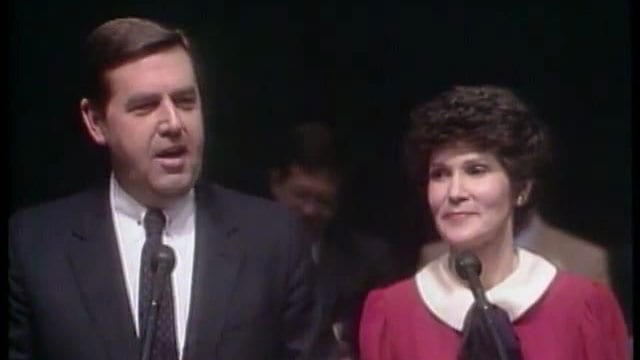
To start off, I want to share some parts of a presentation given by Sister Patricia Holland at a BYU devotional entitled Filling the Measure of Your Creation given back in 1989 when her husband, Jeffrey R. Holland was president of the University. She said the following:

YPDEV-1-45_LargeAll of us face those questions about our role, our purpose, our course in life—and we face them long after we are children. I visit with enough of you (and I remember our own university years well enough) to know that many of you, perhaps most of you, have occasions when you feel off-balance or defeated—at least temporarily. And we ask, ‘What will I be, when will I graduate, whom will I marry, what is my future, how will I make a living, can I make a contribution?”—in short, “What can I be?”

Take heart if you are still asking yourselves such questions, because we all do. I do. We should concern ourselves with our fundamental purposes in life. Surely every philosopher past and present agrees that, important as they are, food and shelter are not enough. We want to know what’s next. Where is the meaning? What is my purpose?

When asking these questions, I have found it extremely reassuring to remember that one of the most important and fundamental truths taught in the scriptures and in the temple is that “Every living thing shall fill the measure of its creation.”

Every one of us has been designed with a divine role and mission in mind. I believe that if our desires and works are directed toward what our heavenly parents have intended us to be, we will come to feel our part in their plan. We will recognize the “full measure of our creation,” and nothing will give us more holy peace.

I once read a wonderful analogy of the limitations our present perspective imposes on us. The message was that in the ongoing process of creation—our creation and the creation of all that surrounds us—our heavenly parents are preparing a lovely tapestry with exquisite colors and patterns and hues. They are doing so lovingly and carefully and masterfully. And each of us is playing a part—our part—in the creation of that magnificent, eternal piece of art.

But in doing so we have to remember that it is very difficult for us to assess our own contributions accurately. We see the rich burgundy of a neighboring thread and think, “That’s the color I want to be.” Then we admire yet another’s soft, restful blue or beige and think, “No, those are better colors than mine.” But in all of this we don’t see our work the way God sees it, nor do we realize that others are wishing they had our color or position or texture in the tapestry—even as we are longing for theirs.

Perhaps most important of all to remember is that through most of the creative period we are confined to the limited view of the underside of the tapestry where things can seem particularly jumbled and muddled and unclear. If nothing really makes very much sense from that point of view, it is because we are still in process and unfinished. But our heavenly parents have the view from the top, and one day we will know what they know—that every part of the artistic whole is equal in importance and balance and beauty. They know our purpose and potential, and they have given us the perfect chance to make the perfect contribution in this divine design.

This is where faith comes in: learning to trust God to guide our lives in such a way that we will actually get a to a point where our greatest potential is realized. While this may seem scary and even intimidating at times, starting with a simple desire to know our mission and purpose in life is huge step in the right direction. Sister Holland continues in talking about the importance of starting with the right desire.

The Lord. has promised us in D&C 12:7 that the only qualification required to be a part of this magnificent plan is to “have desires to bring forth and establish this work.”

Yea, whosoever will thrust in his sickle and reap, the same is called of God.

Therefore, if you will ask of me you shall receive; if you will knock it shall be opened unto you. [D&C 14:4–5]

Sometimes in our sowing and reaping and sifting, it may seem that God says “no” or “not now” or “I don’t think so” when what we want for him to say—what we wish our tapestry to receive—is an affirmative “yes” or “certainly, right now” or “of course it can be yours.” I want you to know that in my life when I have had disappointments and delays, I have lived long enough to see that if I continue to knock with unshakable faith and persist in My patience—waiting upon the Lord and his calendar—I have discovered that the Lord’s “no’s” are merely preludes to an even greater “yes.”

I have a five year old daughter who is incredibly headstrong and is very determined to get what she wants, when she wants it. But she is also learning that asking Mom and Dad the right way increases her chances of getting what she wants when she wants it. But, just as we may find with our earthly parents, our Heavenly Parents know what is best for us and when is the best time for us to get experience those blessings. In the times in my life when I have sought to find answers to prayers, wether they be prayers for answers to questions about gospel topics, or for what to do with my life, I forget that answers come in a couple different ways. They can be a yes, do that. They can be no, don’t do that, or they can be a not yet. That answer, “not yet.” is probably the hardest for me to get because when that answer comes I feel as if I have to guess as to when that answer turns into a yes. To further complicate things, sometimes, the answer that was a “not yet” can turn into a “not anymore-it is no longer the right thing to pursue.” I can echo Sister Holland’s statement, the Lord’s “no’s” are merely preludes to an even greater “yes.”

Because of this, the quest to discover what is our mission in life, is an ongoing and repeated effort. Elder John H. Groberg gave a really good presentation at BYU back in 1979 entitled, “What Is Your Mission?” He also talked about the importance of finding our mission, and implied the importance of re-discovering or reconnecting with our divine work over and over again throughout our lives. He ushers in this process of discovery with this quote:

Groberg,JohnH-bw“Let me begin by asking you a very simple question. The question is this: What is your mission? You might think, “Well, I served in Japan,” or “I served in Virginia,” or wherever, and that is fine; but it is not what I am asking. I mean—what is your mission now? What is your mission in life? What does God expect you to accomplish during your sojourn here upon the earth? And, are you doing it?

I hope that in the next few moments, with the help of the Spirit of the Lord, we can all realize, if we have not realized it before, or, if we have known it, reaffirm in our lives the importance of at least three things: first, that God, our Father in Heaven, does have a specific mission for all of us to fulfill and perform while we are here upon this earth; second, that we can, here and now in this life, discover what that mission is; and third, that with His help we can fulfill that mission and know and have assurance—here and now in this life—that we are doing that which is pleasing to our Father in Heaven. These are all very important concepts; and they are all true.

If we do not know what our mission is, if we are not sure, if we are uncertain as to whether we are in fact fulfilling it, or if we do not have the positive assurance in our lives that our actions and our performance are pleasing to our Father in Heaven, then it does not really matter what else we are spending our time doing—it is not as important as finding out what we should be doing and having the assurance that we are doing it. Or to put it another way, if we are really interested in doing our Father’s will we had better pay the price—whatever price is necessary. We had better pray however fervently, study the scriptures and listen to the Brethren however intently we need to, or in short do whatever is required so that we can have the assurance that we are doing what our Father in Heaven wants us to do—that we are moving in the general area of the mission he has for us to perform. Obviously, that mission will be different for each of us.”

I want to share my testimony that God can and does reveal His will for our lives to individuals all over the world. I know that he has done that for me in my life at different times. I have also witnessed that people will encounter trials, they may even experience trials of their faith, that will cause them to question their life path. Others may be searching for an answer to other difficult questions, and feel that they are not able to find answers to those questions or overcome those trials. When this happens some feel that the option to give up, to stop trying to live gospel standards, is their best option given the circumstances.

Others may even consider that they must not be loved of God, or that maybe there is no God because he is being silent in their lives. I have felt similarly in some trials that I have experienced and in its own way those feelings can be very scary. When this happens some come to a decision that much of what they believed in their life prior to that is either a lie, or some kind of wasted effort. However, the level of doubt I felt during those times of trial, has been exceeded by the level of assurance and peace that I know feel after having heard the voice of the Lord confirm to me, my life’s mission.

There are things that need to take place in order for us to be receptive to God’s voice, to the influence of our Divine Parents. We need to first, have the willingness mentioned earlier, a willingness to not just want an answer, but, as Moroni put it in Moroni 10:3-5, we must listen to God’s voice with real intent. In this case, real intent is not just really wanting to know, but really wanting to follow the answer that is given. Only doing what God wants if it matches what we want is not obedience, nor is it wise. I can say with surety, that God lives, and that he does guide us back to him if we are willing to follow the path that he will place in front of us, regardless of the challenge that may lie in that path.

Next, look to the unique talents with which the Lord has blessed you. Look at who you are, and the experiences you have, no matter how tragic they may appear. These experiences can be utilized in the work of blessing others, and bringing comfort to those who stand in need—to bring others unto Christ.

For some, our purpose may have little to do with career, or education. For some it might be that, for a time, God may need us to simply be there for someone else. To be a disciple of Christ, to be a comfort to those who stand in need of comfort. This is not a diminished calling, or mission in life. We don’t have to be famous, we don’t have to be rich, sometimes the opposite is what the Lord has in place for us at any given time. The answers are different for each person, therefore, it is important that each person spend time in prayer and meditation to discover what the Lord has in store for each individual. Consequently, this also makes it difficult to pass judgement on the choices of others. This is also why we should not rush the process of coming to know our mission in life. The answers will come. They may not come right away, but they will assuredly come to all who seek with real intent. God is not a revelation vending machine. We don’t just pay a price and get the revelation as soon as we ask for it.

There is much more to consider with this subject, so I would recommend listening to the full talks from both Sister Holland and Elder Groberg as those talks will offer additional insights in this effort to find your mission in life, and to live in such a way so as to fulfill it. For now, Sister Holland shares these thoughts with which we will conclude.

When my daughter, Mary, was just a small child, she was asked to perform for a PTA talent contest. This is her experience exactly as she wrote it in her seven-year-old script.

“I was practicing the piano one day, and it made me cry because it was so bad. Then I decided to practice ballet, and it made me cry more; it was bad, too. So then I decided to draw a picture because I knew I could do that good, but it was horrid. Of course it made me cry.

“Then my little three-year-old brother came up, and I said, ‘Duffy, what can I be? What can I be? I can’t be a piano player or an artist or a ballet girl. What can I be?’ He came up to me and whispered, ‘You can be my sister.’”

In an important moment, those five simple words changed the perspective and comforted the heart of a very anxious child. Life became better right on the spot, and as always, tomorrow was a brighter day.

The Lord uses us because of our unique personalities and differences rather than in spite of them. He needs all of us, with all our blemishes and weaknesses and limitations.

So what can I be? What can I be? We can be what heavenly parents designed us and intend us and help us to be. How does one fill the measure of his or her creation? We do so by thrusting in a sickle and reaping with all our strength—and by rejoicing in our uniqueness and our difference. To be all that you can be, your only assignment is (1) to cherish your course and savor your own distinctiveness, (2) to shut out conflicting voices and listen to the voice within, which is God telling you who you are and what you will be, and (3) to free yourself from the love of profession, position, or the approval of men by remembering that what God really wants us to be is someone’s sister, someone’s brother, and someone’s friend.

I bear my testimony that each of you has a purpose. It is different, it is distinct, it is divine. God lives. God loves you. And I do, too. I say this in the name of Jesus Christ. Amen.

FairMormon-Rise-Up-iTunes-logo

Filed Under: Hosts, Podcast, RiseUp, Youth Tagged With: ask questions of god, difficult questions, Find your mission, finding answers, prayer

RiseUp Podcast: What I Learned In My First Year With FairMormon

February 25, 2015 by NickGalieti

https://media.blubrry.com/mormonfaircast/www.fairlatterdaysaints.org/wp-content/uploads/2015/02/RiseUp-10ThingsILearnedMyFirstYearAtFairMormon.mp3

Podcast: Download (17.6MB)

Subscribe: RSS

NGFairMormon is an organization that seeks to offer faithful answers to difficult or critical questions about The Church of Jesus Christ of Latter-day Saints (also known as LDS Church or Mormon Church). FairMormon does this through an effort called apologetics, which comes from the greek word aplogia—which sounds like someone is apologizing or are saying sorry for something. The origin of term really speaks to the effort to defend one’s position or beliefs. This can be done through scholarship, it can be done by people simply being a voice in defense of elements of culture, doctrines, and other activities. When it comes to the Church of Jesus Christ of Latter-day Saints, FairMormon and its volunteers are engaged in apologetics in the sense that we seek to defend the Church, its positions, and its doctrines using reason, research, and scholarship.

FairMormon has a wikipedia style database with answers to critics, to specific questions about church doctrines and history, and so on. There is also a blog that features book reviews, articles, and podcasts or on demand radio style programming with interviews, and other information that falls under the heading of apologetics. That’s where I come in to this whole thing—podcasting.

My official registration as a volunteer at FairMormon began on February 18th 2014. In the year prior to becoming a volunteer, I had entered the world of podcasting with my show, The Good Word Podcast, where I interviewed LDS (Mormon) authors and writers about their various works. In the course of producing and hosting that show, I had been given the opportunity to interview Michael R. Ash about his book Shaken Faith Syndrome, published by FairMormon.

The episode/interview was recorded then went live on the Internet some time later. In the time before the interview, and in between recording the interview and it being made public, I did some research on the organization and was impressed with the mission and purpose of FairMormon. After having a wonderful lunch meeting with Steve Densley the Executive Vice-President of FairMormon, I was brought on board as manager of the FairMormon podcasting effort.

Since that time I have produced, hosted, or supervised the production, of 5 different on going shows with over 100 total podcast episodes, and started the FairMormon Internet Radio Station. More importantly I have been introduced to and acquainted with some notable individuals, learned some important truths (as well as some falsehoods), and become more aware of issues surrounding the day to day experience many have with The Church of Jesus Christ of Latter-day Saints. I have learned a great deal about my own abilities to manage time (producing that many shows as a volunteer is no easy task), but I have also learned other things that have added to my faith. While not everything I have learned I would put into the category of “constructive” or “true,” because I know these things, I can better know truth when I read, hear, or see it.

While I have learned far more than 10 things during this first year with FairMormon, they can fit into some categories or general principles. Each learning experience I have had, supports my choice to be a part of this apologetic effort. So here are the 10 main things that I have learned (or had confirmed) in my first year of volunteering at FairMormon:

1) We are all children of God our Eternal Father and that The Church of Jesus Christ of Latter-day Saints is lead by His Son Jesus Christ. God has called a Prophet and Apostles to lead this church, to bless the lives of those who have ears to hear.

2) Joseph Smith Jr., while a fallible man subject to the same conditions and purposes of a mortal experience, was, by the Grace of God, given the authority to restore the Kingdom of God to the Earth. Through the Church that Joseph Smith Jr. helped establish, all mankind may be granted the opportunity to return to God’s presence renewed, and eventually perfected as well as find lasting peace in this life and in the life to come.

3) FairMormon is not the true church (or a church at all), it is not lead by a prophet, but is filled with volunteers that seek to defend and build up the Church through their best efforts in scholarship, reason, and with whatever talents the Lord has blessed them. These volunteers are fine people who have, at times, become a verbal dartboard by those who disagree with the Church, its leaders, or its teachings.

4) Many people feel an emotional and spiritual pain when encountering doubts about their faith. This pain can be severe and ought not to be ignored or marginalized.

5) Having doubts does not equal having questions. Doubts are questions without accepted answers. Doubts can quickly grow into disagreement if given the wrong “fertilizer.” With the presence and love of an all-knowing God, there is no question that does not have an answer. If given time, patience, and faith, all questions can be answered. The answers require work, study, faith, and trust to obtain. When the answer comes from God, that answer will build faith in Him, and in his Church.

6) There are individuals in this world who have perpetuated the need for organizations like FairMormon. Some of these individuals are quite gifted, and charismatic in their efforts to discourage belief or conviction of a divine Church, its leaders, or its teachings. Much of the rhetoric of such critics are filled with a volatile cocktail of hurt and anger that resonates with those who are experiencing the pains that come with doubt.

7) My impression is that over the last 10-20 years, more critical questions or aggressive posturing against the church has come from those disaffected with the church, in other words those from within, than from those outside of the church’s membership.

8) One never knows the influence for good that they may have as they are “about doing good.” I have received emails, friend requests, and other in-person compliments and expressions of gratitude with the work that I have been doing with FairMormon than I would have expected. We are all capable of doing more good than we currently realize. As Bonnie Parkinson once offered as sound Christian advice, “never suppress a generous thought,” I would add, never suppress a generous act. (BYU Devotional, Personal Ministry: Sacred and Precious – 13 February, 2007)

9) Volunteering for FairMormon is a generous act.

10) On occasion I wonder why I have dedicated so much time and effort to a cause and an organization that at times seems to have more critics than supporters, but I do not regret it. I feel that I have made a positive contribution to a theology, a community, and a church and cause that I believe, in such a way that can have a profound ripple effect across the globe—for good.

I am grateful for the opportunity I have had to help people through their trials of faith, and to personally have an enlarged perspective on my faith as well as the many ways that God works through individuals to bring out his righteous purposes. I am grateful that the Lord has seen fit to bless me with enough talent and opportunities to be a part of this effort.

Nick Galieti – 2015

FairMormon-Rise-Up-iTunes-logo

Filed Under: Apologetics, Hosts, Nick Galieti, Podcast, RiseUp, Youth Tagged With: apologetics, Volunteer

RiseUp Podcast: Modesty

February 18, 2015 by NickGalieti

https://media.blubrry.com/mormonfaircast/www.fairlatterdaysaints.org/wp-content/uploads/2015/02/RiseUp-Modesty.mp3

Podcast: Download (15.5MB)

Subscribe: RSS

Modesty is a challenging subject for both youth and adults to wrap their heads around, especially considering the constant challenges to gospel standards from society. That is why it is important to hear from those who deal with this issue on a daily basis, and have overcome some of the struggles associated with staying true to those standards.


We are happy to introduce a new voice on the RiseUp podcast. Now a freshman in college, Katelyn has lived across the United States. In this episode she addresses the topic of modesty with some stories from her own life.

FairMormon-Rise-Up-iTunes-logo

Filed Under: Podcast, RiseUp Tagged With: Modesty, youth

RiseUp Podcast: Trying to Serve the Lord Without Offending the Devil

February 11, 2015 by NickGalieti

https://media.blubrry.com/mormonfaircast/www.fairlatterdaysaints.org/wp-content/uploads/2015/02/RiseUp-Trying-to-Serve-the-Lord-Without-Offending-the-Devil.mp3

Podcast: Download (31.6MB)

Subscribe: RSS

FairMormon-Rise-Up-iTunes-logoPrimary Source: November 15th, 1994 BYU Devotional – Elder James E. Faust

When it comes to living our lives, we have a lot of choices placed before us. We have our choice of schools to attend after high school, or even a choice of career path. Spiritually speaking, we have a choice to make. When viewing the world around him, even Joshua in the Old Testament dealt with this same question. In Joshua 24:14-15 he was speaking prior to his death and reflecting on the different choices that he made in his life when he recorded this often quoted passage:

14 ¶Now therefore fear the Lord, and serve him in sincerity and in truth: and put away the gods which your fathers served on the other side of the flood, and in Egypt; and serve ye the Lord.

15 And if it seem evil unto you to serve the Lord, choose you this day whom ye will serve; whether the gods which your fathers served that were on the other side of the flood, or the gods of the Amorites, in whose land ye dwell: but as for me and my house, we will serve the Lord.

When Jesus Christ was ministering personally on the Earth both in the Old World and in the Book of Mormon lands, he made a rather declarative statement that leaves little room for confusion. A statement that invites the one who hears it, to search their heart and make an assessment of where they are at in their life. In Luke chapter 16:13 or in 3 Nephi 13:24 we read: “No man can serve two masters; for either he will hate the one and love the other, or else he will hold to the one and despise the other. Ye cannot serve God and Mammon.” The bible dictionary teaches us that the word Mammon is aramaic for “riches.” In other words, this scripture is saying that you cannot serve both God and the things of this world.

In my time with FairMormon, and even for some years prior to volunteering, I would come across a variety of people that seemed to struggle with this idea. When I say struggle, it isn’t something that they consciously notice. To a certain extent, we all will have time in our lives where it seems like we might be serving one more than the other. But there are those who Try to Serve the Lord without Offending the Devil. It is a concept that was addressed by Elder James E. Faust at a BYU devotional back in 1994. I want to share some of his council with you, not only because he says it better than I could, but also because it is important to hear the voice of the Lord’s chosen apostles. They have been blessed with the ability and spiritual capacity to guide us through some tough questions we might have about how to approach our lives. Here are some highlights from that presentation.

In the great universities of the world, one does not often choose to speak of the influence of Satan. Perhaps it is not cool to address this subject, but I choose to do so anyway. Someone said in these few words: “I have heard much about the devil. I have read a great deal about the devil. I have even done business with the devil, but it didn’t pay.” Your generation lives in a day when many things are measured against the standard of social or political correctness. Today I challenge that false doctrine of human behavior. The influence of Satan is becoming more acceptable. Elizabeth Barrett Browning said, “The devil is most devilish when respectable”

It is not good practice to become intrigued by Satan and his mysteries. No good can come from getting too close to evil. Like playing with fire, it is too easy to get burned: “The knowledge of sin tempteth to its commission” (see Joseph F. Smith, GD, p. 373). The only safe course is to keep well distanced from him and from any of his wicked activities or nefarious practices.

However, Brigham Young said that it is important to “study . . . evil, and its consequences” (DBY, p. 257). Since Satan is the author of all evil in the world, it would therefore be essential to realize that he is the influence behind the opposition to the work of God. Alma stated the issue succinctly: “For I say unto you that whatsoever is good cometh from God, and whatsoever is evil cometh from the devil” (Alma 5:40).

My principal reason for choosing this subject is to help young people by warning them, as Paul said, “lest Satan should get an advantage of us: for we are not ignorant of his devices” (2 Corinthians 2:11). We hope that young people, unfamiliar with the sophistries of the world, can keep themselves free of Satan’s enticements and deceitful ways.

I owe my text to Elder Marion G. Romney, who, at a BYU devotional in 1955, stated: “Now there are those among us who are trying to serve the Lord without offending the devil.” This is a contradiction of terms. President Romney goes on:

Must the choice lie irrevocably between peace on the one hand, obtained by compliance with the Gospel of Jesus Christ as restored through the Prophet Joseph Smith, and contention and war on the other hand? [Marion G. Romney, “The Price of Peace,” Brigham Young University student body, March 1, 1955, p. 7]

Yogi Berra is reported to have said, “If you come to a fork in the road, take it.” But it doesn’t work that way. The Savior said,

No man can serve two masters: for either he will hate the one, and love the other; or else he will hold to the one, and despise the other. Ye cannot serve God and mammon. [Matthew 6:24]

Today many of us are trying to serve two masters: the Lord and our own selfish interests, without offending the devil. The influence of God, our Eternal Father, urges us, pleads with us, and inspires us to follow him. In contrast, the power of Satan urges us to disbelieve and disregard God’s commandments.

In another address President Romney continues:

The consequences of [mortal man’s] choices are of the all-or-nothing sort. There is no way for him to escape the influence of these opposing powers. Inevitably he is led by one or the other. His God-given free agency gives him the power and option to choose. But choose he must. Nor can he serve both of them at the same time, for, as Jesus said, “No man can serve two masters: . . . Ye cannot serve God and mammon.” [Marion G. Romney, CR, October 1962, p. 94]

Here then is the challenge, in what issues do we see this “riding the line,” or trying to serve the Lord without offending the Devil. One current issue that is causing some discord or one where one may feel that is walking that line, is the issue of Homosexuality or Gay marriage. Elder Faust addresses the issue this way:

The Church’s stand on homosexual relations provides another arena where we offend the devil. I expect that the statement of the First Presidency and the Quorum of the Twelve against homosexual marriages will continue to be assaulted. Satan is only interested in our misery, which he promotes by trying to persuade men and women to act contrary to God’s plan. One way he does this is by encouraging the inappropriate use of sacred creative powers. A bona fide marriage is one between a man and a woman solemnized by the proper legal or ecclesiastical authority. Only sexual relations between husband and wife within the bonds of marriage are acceptable before the Lord.

Any alternatives to the legal and loving marriage between a man and a woman are helping to unravel the fabric of human society. I am sure this is pleasing to the devil. The fabric I refer to is the family. These so-called alternative lifestyles must not be accepted as right because they frustrate God’s commandment for a life-giving union of male and female within a legal marriage as stated in Genesis.

I suggest that the devil takes some delight every time a home is broken up, even where there is no parent to blame. This is especially so where there are children involved. The physical and spiritual neglect of children is one of the spawning grounds for so many of the social ills of the world.

Sometimes these issues are not so charged. Sometimes these issues involve matters of temptations and personal conduct, and not necessarily social issues. Elder Faust continues with this counsel:

I now turn to milder ways of not offending the devil. Nephi has given to us the pattern or formula by which Satan operates:

And others will he pacify, and lull them away into carnal security, that they will say: All is well in Zion; yea, Zion prospereth, all is well—and thus the devil cheateth their souls, and leadeth them away carefully down to hell.

And behold, others he flattereth away, and telleth them there is no hell; and he saith unto them: I am no devil, for there is none—and thus he whispereth in their ears, until he grasps them with his awful chains, from whence there is no deliverance. [2 Nephi 28:21–22]

C. S. Lewis gave us a keen insight into devilish tactics. In a fictional letter, the master devil, Screwtape, instructs the apprentice devil Wormwood, who is in training to become a more experienced devil:

You will say that these are very small sins; and doubtless, like all young tempters, you are anxious to be able to report spectacular wickedness. . . . It does not matter how small the sins are, provided that their cumulative effect is to edge the man away from the Light and out into the Nothing. . . . Indeed, the safest road to Hell is the gradual one—the gentle slope, soft underfoot, without sudden turnings, without milestones, without signposts. [The Screwtape Letters (New York: Macmillan, 1961), p. 56]

So-called small sins include the challenge to the “sin laws” that seek to control forms of gambling, alcohol, and drug consumption. Some who wish to appear broad-minded say, under the guise of not imposing religious belief, “I don’t drink or gamble, but I don’t think we ought to have any laws to control others that wish to.” This completely ignores the health and social costs to society of the vices. They foolishly argue that laws cannot control human behavior. My long legal career has led me to conclude that all criminal laws have a moral basis.

I now come to some even milder forms of trying to serve the Lord without offending the devil. Having a temple recommend and not using it seems mild enough. However, if we live close to a temple, perhaps having a temple recommend but not using it may not offend the devil. Satan is offended when we use that recommend, going to the temple to partake of the spiritual protection it affords. How often do we plan to go to the temple only to have all kinds of hindrances arise to stop us from going? The devil has always been offended by our temple worship.

I want to add my own voice to the principle and importance of temple work as a way to help protect us even from our own desires that might not fall in line with God’s principles. When one spends time on the internet or in reading material that some would call anti-mormon, or even material that is is critical of the Church, the leaders of the Church, or otherwise, it can take a toll on our spiritual immune systems. It starts to wear people down and bring a sort of unhappiness into their lives that slowly creeps in, poisoning the spirit of peace. It is the power of the temple and temple service that can cast aside that anger, and helps us to find a place for the peace that comes from feeling close to the Lord.

Elder Faust concludes:

I wonder how much we offend Satan if the proclamation of our faith is limited only to the great humanitarian work this Church does throughout the world, or to our beautiful buildings, or to this great university, marvelous as these activities are. When we preach the gospel of social justice, no doubt the devil is not troubled. But I believe the devil is terribly offended when we boldly declare by personal testimony that Joseph Smith was a prophet of God and that he saw the Father and the Son; when we preach that the Book of Mormon is another witness for Christ; when we declare that there has been a restoration of the fullness of the gospel in its simplicity and power in order to fulfill the great plan of happiness.

We challenge the powers of darkness when we speak of the perfect life of the Savior and of his sublime work for all mankind through the Atonement. This supernal gift permits us, through repentance, to break away from Satan’s grasping tentacles.

We need not become paralyzed with fear of Satan’s power. He can have no power over us unless we permit it. He is really a coward, and if we stand firm, he will retreat. The apostle James counseled: “Submit yourselves therefore to God. Resist the devil, and he will flee from you” (James 4:7). And Nephi states that “he hath no power over the hearts” of people who are righteous (l Nephi 22:26).

Satan has had great success with this gullible generation. As a consequence, literally hosts of people have been victimized by him and his angels. There is, however, an ample shield against the power of Lucifer and his hosts. This protection lies in the spirit of discernment through the gift of the Holy Ghost. This gift comes undeviatingly by personal revelation to those who strive to obey the commandments of the Lord and to follow the counsel of the living prophets.

I emphasize that fasting and prayer is a great way to receive the moral strength and spiritual strength to resist the temptations of Satan. But you may say this is hard and unpleasant. I commend to you the example of the Savior. He went into the desert, where he fasted and prayed to prepare himself spiritually for his ministry. His temptation by the devil was great, but through the purification of his spirit he was able to triumph over all evil.

I testify that there are forces that will save us from the ever-increasing lying, disorder, violence, chaos, destruction, misery, and deceit that are upon the earth. Those saving forces are the everlasting principles, covenants, and ordinances of the eternal gospel of the Lord Jesus Christ. These same principles, covenants, and ordinances are coupled with the rights and powers of the priesthood of Almighty God. We of this church are the possessors and custodians of these commanding powers that can and do roll back much of the power of Satan on the earth. We believe that we hold these mighty forces in trust for all who have died, for all who are now living, and for the yet unborn.

I pray that we will dedicate our lives to serving the Lord and not worry about offending the devil. I also pray that through the spreading of righteousness, the evil hands of the destroyer might be stayed and that he may not be permitted to curse the whole world. I also pray that God will overlook our weaknesses, our frailties, and our many shortcomings and generously forgive us of our misdeeds. I further pray that he will bring solace to the suffering, comfort to those who grieve, and peace to the broken-hearted, and I leave this witness and testimony and blessing with you in the holy name of Jesus Christ. Amen.

Filed Under: Hosts, Nick Galieti, Podcast, RiseUp, Youth

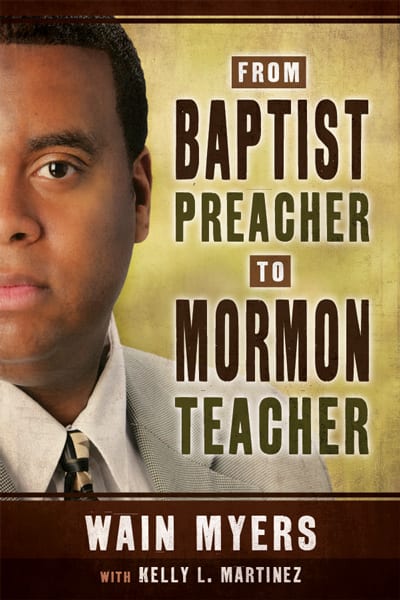
RiseUp Podcast – From Baptist Preacher to Mormon Teacher, the story of Wain Myers

January 28, 2015 by NickGalieti

https://media.blubrry.com/mormonfaircast/www.fairlatterdaysaints.org/wp-content/uploads/2015/01/RiseUp-WainMyers-FromBaptistPreacherToMormonTeacher.mp3

Podcast: Download (50.6MB)

Subscribe: RSS

From-Baptist-Preacher-to-Mormon-Teacher_978-1-4621-1702-4Wain Myers is a native of Dayton, Ohio and a graduate of John H. Patterson High School where he was a state discus champion and musician. After graduation, Wain enlisted in the United States Army and served a tour of duty in Bad Kissingen, Germany. After his military career, Wain returned to the U.S. and began preaching at True Vine Missionary Baptist church. Where he preached for over five years and was then introduced to the LDS church by his now lovely wife Sebrina.

Wain developed a passion for finance after his military career and enrolled in the Alpha & Omega College Real Estate in Virginia Beach, Virginia, and became a loan originator in 2007. Investing into his insurance business, he and his family moved to Terre Haut, Indiana, in 2009. Wain became very active in the Terre Haute community.

Wain has also been an active member in The Church of Jesus Christ of the Latter-day Saints since 1995 and served on the Bloomington Indiana Stake High Council before moving to Salt Lake City, Utah, and being call as second counselor in the Genesis Group leadership.

Wain and Sebrina are the proud parents of seven amazing children; Le’Roy Jr., Isaiah; who is currently serving his mission in the Baton Rouge Louisiana mission, Bradford and his wife Paige, Quesley, Braxton, Spencer, and Ammon.

FairMormon-Rise-Up-iTunes-logo

QUESTIONS ADDRESSED IN THE INTERVIEW:

The story of you coming to find the church has some interesting twists and turns and would be a great way to get to know you. Would you tell us the story of your military career leading up to first starting as a baptist preacher?

What were some of the impressions that you had about the Mormon Church prior to becoming a member?

At one point in your story you had some difficulties with what has come to be called the Priesthood ban where those of black African decent were not allowed to hold the priesthood. You ended up having to come to terms with that and have since of course remained an active member. How did you view that part of church history, and how have you overcome it?

You are now involved in the Genesis Group. What is the Genesis Group?

You have a book coming out in October 2015 I believe called, at for now, From Baptist Preacher to Mormon Teacher. The title might be a little obvious, but what will the book be about?

Filed Under: Hosts, Nick Galieti, Podcast, Racial Issues, RiseUp Tagged With: 1978 Revelation on Priesthood, Blacks and Mormonism, Blacks and the Priesthood

RiseUp podcast: Using Family History Work to Overcome Trials of Faith, Depression, and Addiction

January 23, 2015 by NickGalieti

https://media.blubrry.com/mormonfaircast/www.fairlatterdaysaints.org/wp-content/uploads/2015/01/RiseUp-FamilyHistory.mp3

Podcast: Download (29.6MB)

Subscribe: RSS

In what might be an unlikely option for people that are experiencing questions about their faith, on this episode, Nick Galieti sits down with Craig L. Foster of the Church’s Family History Library to talk about how doing Family History work can help people who are experiencing trials of faith, wanting to overcome addictions, or even dealing with depression.

FairMormon-Rise-Up-iTunes-logo


Filed Under: Faith Crisis, Hosts, Nick Galieti, Podcast, RiseUp Tagged With: Addiction Recovery, Depression, Family History

Mormon Fair-Cast: Peoples Choice Podcast Awards

January 22, 2015 by Ned Scarisbrick

https://media.blubrry.com/mormonfaircast/www.fairlatterdaysaints.org/wp-content/uploads/2015/01/Podcast-Awards-Promo.mp3

Podcast: Download (8.7MB)

Subscribe: RSS

Neds Used Car Smile ThumbStop what you are doing – right now and do this. We really need you to do this.

We need your help to get nominated again for the People’s Choice Podcast Award. In 2011 and in 2013 we made the list of nominations for our religious podcasts and in 2013 we won best religious podcast. We really appreciate your support on that. In 2012, we were beat out by an atheist group. We would rather that not happen again.

In order for us to be nominated again, we need your help NOW. Time is very short. We need you to nominate us.
We also need you to send this to your Facebook and Twitter. Spread the word! Tell your friends!
Nominate the Mormon Fair-Cast Podcast for the People’s Choice Podcast Award.
Go to this link:
http://www.podcastawards.com/
Scroll down to “Religion Inspiration”
Type in the following in the two boxes:
Podcaster Name: Mormon Fair-Cast
Podcast URL: http://blog.fairmormon.org
Our Podcasts have several hosts and themes. They are as follows:
Nick Galieti is our Podcast manager. He is the host for three podcasts:
Front Page News is a new podcast series Nick does with Cassandra Hedelius. They review the previous week of The LDS Church and members in the press.
The Articles Of Faith is a show where Nick interviews scholars and other notables.
Rise Up Podcasts Nick gears toward the youth.
Julianne Hatton does a podcast series called Faith and Reason.
These are interviews with Mike Ash and his book on evidences of The Book of Mormon.
Ned Scarisbrick does a podcast series titled The 4th Watch. It is based on the story of Jesus meeting his apostles while walking on the water during the 4th watch of night and keeping our focus on the Savior through the storms of life.
Ned Scarisbrick does a second series titled Fair Issues. These podcasts are based on articles that support the Gospel of Jesus Christ.
Steven Densley Jr.  podcasts are titled Keeping the Faith. This series which centers on dealing with contemporary issues and criticisms of The Church.
We have other podcasts as well. Perhaps you would like to join us.
Please nominate us, and please listen.
Thank you,


Scott Gordon
President
FairMormon

WE APPRECIATE YOUR TIME. THANKS FOR LISTENING.

Filed Under: Articles of Faith, Fair Issues, Fair Mormon Front Page News Review, Faith and Reason, General, Hosts, Julianne Dehlin Hatton, Michael R. Ash, Ned Scarisbrick, News from FAIR, Nick Galieti, Podcast, RiseUp, SteveDensleyJr, Youth Tagged With: Peoples Choice Podcast Awards

RiseUp Podcast – Having conversations about the history of Blacks and the LDS Church

January 15, 2015 by NickGalieti

https://media.blubrry.com/mormonfaircast/www.fairlatterdaysaints.org/wp-content/uploads/2015/01/RiseUp-RaceandthePriesthood-Stevenson.mp3

Podcast: Download (25.9MB)

Subscribe: RSS

Race issues in the LDS Church can be difficult to understand and even more difficult to talk about. The church released an official statement regarding some history on this subject, but there are those who still have questions. Russell Stevenson has dedicated a good portion of his adult life to studying this history, and has written on this subject. He offers three suggestions on how to approach and discuss this controversial subject—namely the history of Black’s in the Mormon Church.

To purchase a copy of Russell Stevenson’s latest book: For the Cause of Righteousness — click here.

To purchase a copy of Russell Stevenson’s previous book, Black Mormon: The Story of Elijah Ables — click here.

FairMormon-Rise-Up-iTunes-logo

Filed Under: Podcast, Racial Issues, RiseUp Tagged With: Blacks and Mormonism, Elijah Ables

RiseUp Podcast: What’s Wrong with Masturbation

January 8, 2015 by NickGalieti

https://media.blubrry.com/mormonfaircast/www.fairlatterdaysaints.org/wp-content/uploads/2015/01/RiseUp-WhatsWrongWithMasturbation.mp3

Podcast: Download (19.9MB)

Subscribe: RSS

Youth, or Young Adults in the Church of Jesus Christ of Latter-day Saints have had questions about various aspects and applications of the Law of Chastity. One such question surrounds quotes and commentary on masturbation. This response is read by Steve Densley, Executive Vice-President of FairMormon in a podcast he published in Jan 2013.

FairMormon-Rise-Up-iTunes-logo

Question Submitted to FairMormon:

I’ve been reading a lot lately on the internet and listening to podcasts about the church’s stance on masturbation and the current science on the subject. I have understood that masturbation is considered to be addictive and that Jesus taught that we should not think lustfully about members of the opposite gender. But some people are saying that the Church’s approach to this issue has changed lately, and that masturbation is no longer considered a serious sin. I’m also hearing that if a man does not ejaculate regularly, that it could be harmful and even lead to death. I know that looking at pornography is wrong. It is misleading, degrading and lusting after any person who is already married is a sin. However, I wonder now if masturbation without lusting after someone to whom you are not married might be acceptable.

And now for the answer:
In responding to this question, there are two main points that should be considered: 1) Sexuality is sacred, and its enjoyment is given strict bounds by scripture and modern revelation; and 2) Sexual acts, including masturbation, generate profound and powerful neurochemical reactions.

These two principles are, it seems, related–the physical and mental consequences of sexuality are so important and powerful that God has good reason to give us commandments that help us enjoy the best of those consequences and avoid the worst.

Now, you distinguish pornography use from masturbation, and in a way that’s valid. For instance, part of the sin of pornography use is lustfully, selfishly using images of another’s sacred body, and supporting an industry that exploits those sacred bodies for profit. Masturbation without pornography at least avoids that.

However, in a larger sense, pornography use and masturbation are not so distinguishable. Their main feature is the same: They change sexuality from the divinely-sanctioned sacrament of love for another, into a solely self-oriented activity.

Let’s talk more about what it means to say that sexuality is sacred. First, and most obviously, through the power of procreation, we share in the creative power of God by helping to bring His children into this world. But there are other ways in which proper use of the procreative power helps us to become more like God. Our ultimate goal in life is to become like Christ by overcoming selfishness and becoming a person who is perfectly able and willing to love and serve others. Because sexuality is so powerful, it can easily motivate selfishness–wanting to use others for one’s own sexual gratification. To prevent that, and to help us progress, God instead taught us how to express sexuality in a context, marriage, that encourages selflessness, kindness, and loyalty.

Therefore, a problem with masturbation is that it removes sexuality from that very important context of kindness in marriage. Even though masturbation doesn’t use others for gratification, it teaches an individual to regard sexuality as an individual event, free from the demands of a spouse.

This is where neurochemistry comes in, too. Sexual climax involves incredibly powerful chemical events that can even be analogized to the effect of powerful drugs. Both make the brain perceive incredible pleasure. Because of neuroplasticity (the brain’s tendency to rewire itself so that a stimulus and its response are closely associated with each other), sexual stimulus will be associated with its incredible neurochemical reward. Some of the chemicals that are released during sex are the same as those released after a woman gives birth. And just as these chemicals help a mother to bond with a newborn child, they also help sexual partners to feel bonded to one another.

But when sexual stimulus comes in the form of masturbation, completely devoid of the sharing and vulnerability and complementarity of marriage, then the brain can become wired so that it is primarily masturbation that produces the reward, and an individual can become increasingly unable to sexually respond to a spouse. Masturbation and intercourse are simply different. One who masturbates frequently has a very direct knowledge of what actions bring pleasure most effectively. It can be difficult or impossible for a spouse to reproduce the pleasure that a masturbator has learned how to produce on his or her own. Thus, sexuality, if not expressed in the context of a loving and devoted relationship, turns inward and becomes a focus on self. It is spiritually dangerous to use sexuality for self when God intends for it to be used to help us overcome our love of self.

Even if one were to masturbate while focusing one’s thoughts on one’s spouse, it’s still impossible to replicate the experience of being with another, actual person with flaws and fears and perhaps very different sexual needs. It doesn’t change the fact that one is providing one’s own sexual stimulus, instead of having to learn how to give and receive.

Any claims you have heard that you will be physically harmed unless you do masturbate are simply false, or greatly over-blown. There is a study that shows that older men have a lower risk of prostate cancer if they ejaculate more frequently. However, this same finding was not replicated in the case of young men. In fact,higher rates of masturbation raise the risk of prostate cancer in young men. Interestingly, more frequent intercourse did NOT raise the risk, but masturbation did.

In approaching issues of obedience, the correct approach is not to lay out the “risks and benefits” of obeying or not, and then trying to decide where the best “deal” lies. It seems instead, that our first question ought to be, is it true that God wants me to abstain from masturbation. If so, it doesn’t matter what it does to my physical health, or anything else. And, we must not over-look the possibility that men who are more healthy, more vigorous, etc. for a variety of reasons may be more sexually active or interested–thus, the finding may not be a matter of cause and effect, but more ejaculatory acts may reflect better over-all health. And, masturbation in young men might reflect higher hormone levels, which in the long run might lead to higher cancer risk–again, perhaps the link isn’t causative. Or, perhaps masturbation leads to higher hormone levels via positive feedback. No one knows yet.

The prophets have been clear that masturbation is not a practice that is approved by the Lord. While the current edition of For the Strength of Youth pamphlet does not use the term “masturbation,” it clearly refers to the act all the same. It reads: “Do not do anything else that arouses sexual feelings. Do not arouse those emotions in your own body.”

President Packer made it clear that it is not a grave, heinous sin on the order of (say) fornication or adultery, but it is still something we should avoid:

One of you, perhaps, has not fully understood until now. Perhaps your father did not talk to you. You may already have been guilty of tampering with these powers. You may even have developed a habit. What do you do then?

First, I want you to know this. If you are struggling with this temptation and perhaps you have not quite been able to resist, the Lord still loves you. It is not anything so wicked nor is it a transgression so great that the Lord would reject you because of it, but it can quickly lead to that kind of transgression. It is not pleasing to the Lord, nor is it pleasing to you. It does not make you feel worthy or clean.

(To Young Men Only, pamphlet, Salt Lake City: The Church of Jesus Christ of Latter-day Saints.)

President Kimball said something similar: “Masturbation, a rather common indiscretion, is not approved of the Lord nor of his church, regardless of what may have been said by others whose ‘norms’ are lower. Latter-day Saints are urged to avoid this practice. Anyone fettered by this weakness should abandon the habit before he goes on a mission or receives the holy priesthood or goes in the temple for his blessings.” (Spencer W. Kimball, “Love Versus Lust,” Brigham Young University Speeches of the Year [Provo, 5 Jan. 1965], p. 22.)

Note that he calls it both “common” and an “indiscretion.” It is also termed a “weakness.” This isn’t something catastrophic, and it acknowledges that most of us have to learn how to moderate this part of our lives. But, the standards that the Lord teaches are clear. And, if we are not willing to obey him in the “little” things, when faced with a greater trial, we will not have developed either the strength or resolve to obey in the big things.

C.S. Lewis has a wonderful passage in which he describes what may be the root reason that God gives us this commandment:

For me the real evil of masturbation would be that it takes an appetite which, in lawful use, leads the individual out of himself to complete (and correct) his own personality in that of another (and finally in children and even grandchildren) and turns it back: sends the man back into the prison of himself, there to keep a harem of imaginary brides. And this harem, once admitted, works against his ever getting out and really uniting with a real woman. For the harem is always accessible, always subservient, calls for no sacrifices or adjustments, and can be endowed with erotic and psychological attractions which no real woman can rival. Among those shadowy brides he is always adored, always the perfect love: no demand is made on his unselfishness, no mortification ever imposed on his vanity. In the end, they become merely the medium through which he increasingly adores himself….

Masturbation involves this abuse of imagination in erotic matters (which I think bad in itself) and thereby encourages a similar abuse of it in all spheres. After all, almost the main work of life is to come out of our selves, out of the little, dark prison we are all born in. Masturbation is to be avoided as all things are to be avoided which retard this process. The danger is that of coming to love the prison.

(C.S. Lewis, letter to Keith Masson (3 June 1956); cited in Yours, Jack: Spiritual Direction from C.S. Lewis (HarperOne, 2008), 292-293.)

At the very least, it violates one of the commands of Jesus:

27 Ye have heard that it was said by them of old time, Thou shalt not commit adultery:
28 But I say unto you, That whosoever looketh on a woman to lust after her hath committed adultery with her already in his heart.
29 And if thy right eye offend thee, pluck it out, and cast it from thee: for it is profitable for thee that one of thy members should perish, and not that thy whole body should be cast into hell.
30 And if thy right hand offend thee, cut if off, and cast it from thee: for it is profitable for thee that one of thy members should perish, and not that thy whole body should be cast into hell.
(Matthew 5:26 – 30.)

Jesus here tells us to abstain from lust. And, frankly, masturbation without lust is pretty difficult, even in the manner you describe. Could this be difficult for us? Yes, many people find it so. But, Jesus makes it clear that to be his disciple, we must be prepared to sacrifice our comfort, and even things that we cherish deeply. Losing an eye or hand is a big deal: but, Jesus uses these symbolically as something which we must be willing to part with if it keeps us from obeying God.

This is the sort of case where theory and talking is not as good as practice. “If any man will do his will,” said Jesus, “he shall know of the doctrine, whether it be of God, or whether I speak of myself.” (John 7:17.)

There are many people who can verify that it is entirely possible to have a happy life and later rewarding marriage despite abstinence from masturbation. But, the only way, in some sense, to become convincedRise of that is to try the experiment. And, if one is not able to try the experiment, that suggests that this is more of a problem than one might suspect. If you find yourself in this situation, you will find strength and encouragement if you will read the recent counsel of the Church and if you will take up these matters with your bishop, and with the Lord.

If there is an issue that you have been wondering about, you can often find the latest answers at the FAIR wiki, found at fairmormon.org. If you can’t find your answer there, feel free to pose your question to the FAIR apologists by visiting the FAIR contact page. Occasionally, such a question will be featured on FAIR Questions. Before questions are used for this podcast, permission is obtained from the questioner.

Questions or comments about this episode can be sent to [email protected]. Or join the conversation at fairblog.org.

Tell your friends about us and help increase the popularity of this podcast by subscribing in iTunes and by writing a review.

Music for this episode was provided courtesy of Lawrence Green.

The opinions expressed in this podcast are not necessarily the views of the Church of Jesus Christ of Latter-day Saints, or of FAIR.

Filed Under: Podcast, RiseUp, SteveDensleyJr Tagged With: chastity, LDS, Masturbation, Mormon, Young Adults, youth

  • « Go to Previous Page
  • Go to page 1
  • Go to page 2
  • Go to page 3
  • Go to page 4
  • Go to Next Page »

Primary Sidebar

Faithful Study Resources for Come, Follow Me

Subscribe to Blog

Enter your email address:

Subscribe to Podcast

Podcast icon
Subscribe to podcast in iTunes
Subscribe to podcast elsewhere
Listen with FAIR app
Android app on Google Play Download on the App Store

Pages

  • Blog Guidelines

FAIR Latest

  • Come, Follow Me with FAIR – Doctrine and Covenants 137–138 – Part 2 – Autumn Dickson
  • Come, Follow Me with FAIR – Doctrine and Covenants 137–138 – Mike Parker
  • FAIR December Newsletter
  • Come, Follow Me with FAIR – Doctrine and Covenants 137–138 – Part 1 – Autumn Dickson
  • Prophets of God 

Blog Categories

Recent Comments

  • LHL on Come, Follow Me with FAIR – Doctrine and Covenants 132 – Mike Parker
  • Stephen Johnsen on Come, Follow Me with FAIR – Doctrine and Covenants 132 – Mike Parker
  • Bruce B Hill on Come, Follow Me with FAIR – Doctrine and Covenants 124 – Part 1 – Autumn Dickson
  • Gabriel Hess on Join us Oct 9–11 for our FREE virtual conference on the Old Testament
  • JC on When the Gospel “Doesn’t Work”

Archives

Follow Us

  • Facebook
  • Twitter
  • iTunes
  • YouTube
Android app on Google Play Download on the App Store

Footer

FairMormon Logo

FAIR is a non-profit organization dedicated to providing well-documented answers to criticisms of the doctrine, practice, and history of The Church of Jesus Christ of Latter-day Saints.

Donate to FAIR

We are a volunteer organization. We invite you to give back.

Donate Now

Site Footer