• Skip to primary navigation
  • Skip to main content
  • Skip to primary sidebar
  • Skip to footer

FAIR

  • Find Answers
  • Blog
  • Media & Apps
  • Conference
  • Bookstore
  • Archive
  • About
  • Get Involved
  • Search

Power of Testimony

Book Review – Who is Truth? Reframing Our Questions for a Richer Faith

June 12, 2019 by Trevor Holyoak

Available in the FairMormon Bookstore

Jesus said, “I am the way, the truth, and the life” (John 14:6). We take this literally for the words “way” and “life,” but what if we also took it literally for the word “truth”? In their book Who What is Truth? Reframing Our Questions for a Richer Faith, that is exactly what authors Jeffrey L. Thayne and Edwin E. Gantt encourage us to do, changing our way of thinking from truth as an idea (this turns out to be rooted in Greek philosophy) to truth as a person (Hebrew thought).

The chapter headings give a good summary of what is covered: “What if truth is a person?,” “The ancient roots of person-truth,” “Faith in ideas, or faithfulness to a Person?,” “Knowing God vs. believing ideas about Him,” “Person-truth does not give us control,” “Knowing person-truth through covenant,” “Our on-and-off relationship with person-truth,” “What it means to be an authority on truth,” “The archnemesis of person-truth,” “What is sin, if truth is a person?,” “Rethinking the atonement of Christ,” and “Person-truth in a world of science and reason.” There is also a conclusion chapter, a list of further readings, and appendixes with more on Greek and Hebrew thought and questions and answers.

I was initially skeptical when offered this book to review. But it claimed to offer help for those having a faith crisis, and to strengthen faith in Jesus Christ and the Restoration, so I thought it would be worth a look. I was pleasantly surprised, and found myself agreeing with the conclusions (the good fruit being brought forth), even as I am still processing the explanations that led up to them. The authors anticipated skepticism, and they addressed all the potential red flags that came up in my mind as I read. [Read more…] about Book Review – Who is Truth? Reframing Our Questions for a Richer Faith

Filed Under: Anti-Mormon critics, Apologetics, Apostasy, Bible, Book of Mormon, Book reviews, Conversion, Doctrine, Early Christianity, Faith Crisis, Perspective, Philosophy, Power of Testimony, Prophets, Questions, Resources, Science, Temples, Testimonies

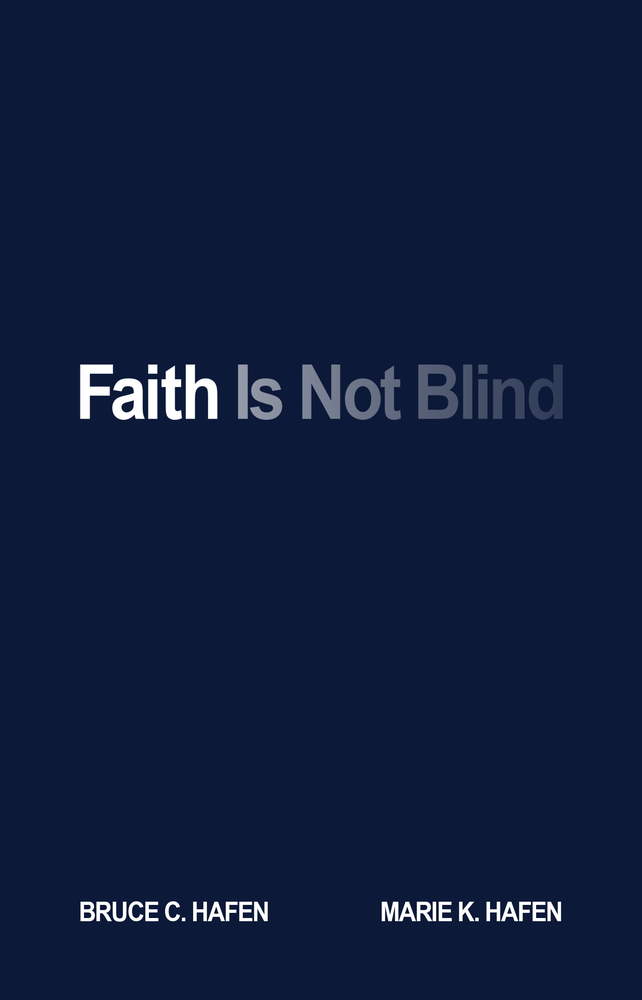
Faith is Not Blind – Interview with Elder and Sister Hafen

April 15, 2019 by NickGalieti

https://media.blubrry.com/mormonfaircast/www.fairlatterdaysaints.org/wp-content/uploads/2019/04/LMC-Faith-is-not-Blind.mp3

Podcast: Download (39.2MB)

Subscribe: RSS

Faith is Not Blind is a book by Elder Bruce C. and Sister Marie Hafen and published by Deseret Book. This book addresses the many ways that individuals encounter the challenges to developing faith or the language of testimony. In preparing to serve missions, while on a mission, or when someone returns from missionary service, we all encounter stages of faith progression. But how do we manage those experiences in such a way to come out the other side with greater faith?

In this book, and with this interview, Elder and Sister Hafen discuss their mission, temple, and personal experiences dealing with difficult issues about how to travel the trials of faith, the challenges of life, and develop a stronger relationship with God as a result. This podcast comes courtesy of Latter-day Saint MissionCast, and carries a missionary slant to the content.

To purchase a copy of Faith is Not Blind, by Elder and Sister Hafen, click here. Purchase the Audio CD click here.

Filed Under: Faith Crisis, Missionary Work', Nick Galieti, Perspective, Podcast, Power of Testimony, Questions, Testimonies Tagged With: Blind Faith, Complexity, Simplicity

“The Laborers Are Few” (The Church in the DR Congo: A Personal Perspective, Part 11)

February 13, 2019 by Jeffrey M. Bradshaw

Antoine Gadan, 1854-1934: Les Moissonneurs, 1910

In a presentation at the 2018 FairMormon Conference,[1]I shared stories of some of the faithful Saints in the Democratic Republic of the Congo (Kinshasa). In this new series of presentations, I would like to speak from a more personal perspective, reflecting on the meaning of that experience for Kathleen and me, and pondering some of the dynamics of numerical and spiritual growth of the Church in that country.

The series is organized into eleven parts:

  1. Prologue: What brought us to Africa?
  2. Snapshot of the Church in the DR Congo
  3. The missionaries
  4. What attracts people to the Church?
  5. Building from centers of strength 1 — Kisangani
  6. Building from centers of strength 2 — Wagenya
  7. Taking the Gospel to the “ends of the earth”
  8. The temple 1: “Turning the hearts of the children”
  9. The temple 2: “Holiness to the Lord”
  10. The temple 3: A light to the world
  11. “The labourers are few”

Jesus said: “The harvest truly is great, but the labourers are few: pray ye therefore the Lord of the harvest, that he would send forth labourers into his harvest” (Luke 10:2). In this eleventh and final episode in this series, I describe how fittingly this verse applies in the DR Congo. Despite the continued steady growth of the Church and the recent addition of a fourth mission in the country, there is only one full-time missionary couple serving in all of the DR Congo.

I discuss President Russell M. Nelson for all members to engage with greater vigor in the gathering of Israel. Though the gathering of Israel can be done in many ways, depending on the inspiration and personal situation of each member, he has emphasized that a key part of fulfilling the blessing of Abraham is the sending of “missionaries [to] take the gospel across the globe,” “infus[ing] the lives of all” with “the light of the gospel and the love of the Lord.” (https://www.lds.org/church/news/president-nelson-invites-record-crowd-in-arizona-to-help-gather-israel?lang=eng [accessed 12 February 2019]).

We will review the Lord’s vision of missionary work in section 4 of the Doctrine and Covenants. The wholehearted nature of the service we are called to render is exemplified in the figure of the laborer, who is required to thrust in his sickle “with his might,” that he may bring “salvation to his soul” (D&C 4:4). Embarking in the service of God requires a firm resolve to leave one’s familiar labors and companions to take up a new work for which one is never fully prepared, and at a destination which is never adequately known or described in advance

We close with a testimony of Jean Claude Mabaya, former Area Seventy and newly called mission president in the DR Congo.

[1]The video version of the entire FairMormon presentation is available on the FairMormon YouTube channel at https://www.youtube.com/watch?v=nJl9FvLKmjw. The seven segments of this presentation, in an edited and somewhat expanded form, are available for reading at Meridian Magazine(www.ldsmag.com) and the website of The Interpreter Foundation(https://interpreterfoundation.org). For more articles and videos by Jeffrey M. Bradshaw, see www.templethemes.org.

Filed Under: Conversion, Missionary Work', Power of Testimony Tagged With: Church in Africa, DR Congo, Jean Claude, LDS Church History, Mabaya, President Russell M. Nelson

FairMormon Questions: Is it true that most historians that look into the life of Joseph Smith eventually leave the Church?

December 22, 2018 by Trevor Holyoak

FairMormon has a service where questions can be submitted and they are answered by volunteers. If you have a question, you can submit it at http://www.fairmormon.org/contact. We will occasionally publish answers here for questions that are commonly asked, or are on topics that are receiving a lot of attention. The question and answer below have been edited to maintain confidentiality.
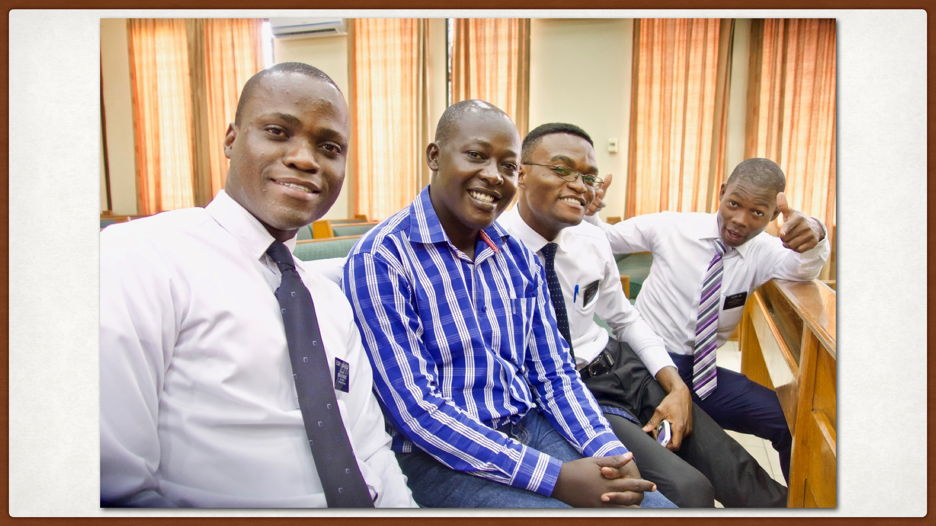
QUESTION:

I have heard that most historians that look into the life of Joseph Smith wind up leaving the Church. Is this true?

ANSWER FROM FAIRMORMON VOLUNTEER CRAIG L. FOSTER:

My comments are my own and do not reflect either the Church or Fairmormon. I read your email and felt strongly that I needed to respond given my background. While I am certainly not a Joseph Smith expert, I have done a significant amount of research on the Prophet. As I have written numerous articles and several books dealing with aspects of Church history, I consider myself an LDS historian. Therefore, I feel I am in a position to respond to the assertion that most historians who look into the life of Joseph Smith wind up leaving the Church.

I am aware of a few who studied Church history and did end up leaving. However, they were very few. In fact, for most historians I have known, it has strengthened their testimony – and I have known and been friends with almost all of the major Mormon historians from Leonard J. Arrington to Thomas G. Alexander, James B. Allen, Richard Lyman Bushman, etc. These men were/are staunch defenders of the prophetic mission of Joseph Smith.

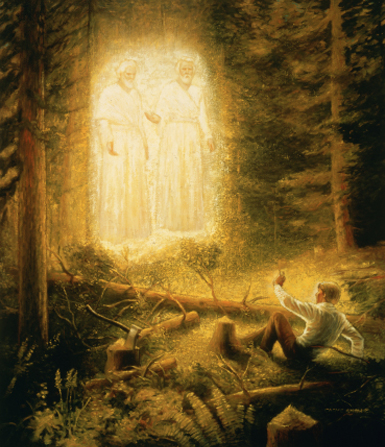
Recently, a friend of mine named Don Bradley posted a Facebook post about Joseph Smith and the First Vision. He has given me permission to include his comments. He emphasizes that he had come to consider Joseph Smith a liar and a fraud. He had his name taken off of the membership of the Church but continued to do research. Because of his research on Joseph Smith, he returned to the Church, was rebaptized and is a strong, believing member. We spoke the other day and he again bore testimony to Joseph Smith’s prophetic mission. Here are his comments: [Read more…] about FairMormon Questions: Is it true that most historians that look into the life of Joseph Smith eventually leave the Church?

Filed Under: First Vision, Joseph Smith, LDS History, Perspective, Power of Testimony, Prophets, Questions, Testimonies

Taking the Gospel to the “Ends of the Earth” (The Church in the DR Congo: A Personal Perspective, Part 7)

December 9, 2018 by Jeffrey M. Bradshaw

Emmanuel Issamba, an investigator from the remote city of Bunia, DR Congo. Left to Right: Elder Luzayadio, Emmanuel Issamba, Elder Lokpo, and Elder Ga.

In a presentation at the 2018 FairMormon Conference,[1] I shared stories of some of the faithful Saints in the Democratic Republic of the Congo (Kinshasa). In this new series of presentations, I would like to speak from a more personal perspective, reflecting on the meaning of that experience for Kathleen and me, and pondering some of the dynamics of numerical and spiritual growth of the Church in that country.

The series is organized into ten parts:

  1. Prologue: What brought us to Africa?
  2. Snapshot of the Church in the DR Congo
  3. The missionaries
  4. What attracts people to the Church?
  5. Building from centers of strength 1 — Kisangani
  6. Building from centers of strength 2 — Wagenya
  7. Taking the Gospel to the “ends of the earth”
  8. The temple 1: Turning the hearts of the children
  9. The temple 2: A light to the world
  10. “The labourers are few”

In this episode, I will tell the story of how a new branch came to be formed in Boma, and the situation of isolated members and investigators of the Church who live in cities where groups and branches have not yet been organized. Illustrating the challenges and opportunities of these individuals, we will share the story of Emmanuel Issamba, who traveled at great personal sacrifice a distance equivalent to halfway across the United States to learn more about the Church, only to be told that he could not be baptized because he was 436 miles away from the nearest organized Church unit. [2] We explore current efforts in social media to help such individuals stay in touch.

In his call for a “home-centered, Church-supported” approach to Gospel living,[3] President Russell M. Nelson has signaled the urgency of an oft-repeated theme while significantly expanding its rationale. He has made it clear that rebalancing our efforts to ensure a “home-centered, Church-supported” approach will not only increase the simplicity and effectiveness of Church programs, but will also be a key development that will enable the Gospel to be taken to the “ends of the earth.”

Complementing the policy of building up centers of strength geographically, we summarize the teachings of Elder Joni L. Koch of the Seventy, who explained to our missionaries how they should focus their finding efforts in light of the fact that we could currently teach only a fraction of those who were interested in the Gospel in the DR Congo. Echoing the promises of scripture and modern apostles and prophets, he testified that the day will eventually come when “the Gospel will have been preached everywhere, to all people; and this will occur before the second coming of the Son of Man.”[4]


[1]The video version of the entire FairMormon presentation is available on the FairMormon YouTube channel at https://www.youtube.com/watch?v=nJl9FvLKmjw. The seven segments of this presentation, in an edited and somewhat expanded form, are available for reading at Meridian Magazine(www.ldsmag.com) and the website of The Interpreter Foundation(https://interpreterfoundation.org). For more articles and videos by Jeffrey M. Bradshaw, see www.templethemes.org.

[2]Ibid., p. 7. See, e.g., D&C 1:11; 65:2; 72:21; 90:9; 105:39; 109:57;112:4; 133:3.

[3]R. M. Nelson, Opening Remarks (October 2018), p. 7.

[4]B. R. McConkie, Revelation on Priesthood.


Filed Under: Conversion, Power of Testimony, Testimonies Tagged With: Bunia, centers of strength, Church in Africa, Democratic Republic of the Congo, Elder Jony L. Koch, Emmanuel Issamba, Home-Centered Church-Supported, missionary work, President Russell M. Nelson

Building from Centers of Strength – Wagenya (The Church in the DR Congo: A Personal Perspective, Part 6)

December 5, 2018 by Jeffrey M. Bradshaw

Photo of a Wagenya fisherman taken by Irish photographer Andrew McConnell in 2010. To get a glimpse of the Wagenya fishermen in action, see McConnell’s video at https://vimeo.com/45188921

In a presentation at the 2018 FairMormon Conference,[1]I shared stories of some of the faithful Saints in the Democratic Republic of the Congo (Kinshasa). In this new series of presentations, I would like to speak from a more personal perspective, reflecting on the meaning of that experience for Kathleen and me, and pondering some of the dynamics of numerical and spiritual growth of the Church in that country.

The series is organized into ten parts:

  1. Prologue: What brought us to Africa?
  2. Snapshot of the Church in the DR Congo
  3. The missionaries
  4. What attracts people to the Church?
  5. Building from centers of strength 1 — Kisangani
  6. Building from centers of strength 2 — Wagenya
  7. Taking the Gospel to the “ends of the earth”
  8. The temple 1: Turning the hearts of the children
  9. The temple 2: A light to the world
  10. “The labourers are few”

In this episode, the theme of “building from centers of strength” is concluded. Among other things, I will discuss the creation of a second branch in Kisangani, near the traditional home of the famous Wagenya fishermen. As was the case with Jesus’ disciples, fishermen were among the first members of the Church in Kisangani. Through photos and videos, their unique lifestyle, their challenges, and their faith will be highlighted.

We will also introduce the story of Brother Wilfrid MALEO, the current president of the Wagenya branch. After his baptism, he resigned his position as a teacher and later refused a post at the university of his former church, one of many sacrifices that he and his family have made in behalf of his fellow branch members.

[1]The video version of the entire FairMormon presentation is available on the FairMormon YouTube channel at https://www.youtube.com/watch?v=nJl9FvLKmjw. The seven segments of this presentation, in an edited and somewhat expanded form, are available for reading at Meridian Magazine(www.ldsmag.com) and the website of The Interpreter Foundation(https://interpreterfoundation.org). For more articles and videos by Jeffrey M. Bradshaw, see www.templethemes.org.

Filed Under: Conversion, Power of Testimony, Testimonies Tagged With: Bandundu, Boma, centers of strength, Church in Africa, Democratic Republic of the Congo, fishermen, Melinda "Mindy" Webb, missionary work, Muanda, Stanley J. Webb, Wagenya, Wilfrid Maleo

Building from Centers of Strength – Kisangani (The Church in the DR Congo: A Personal Perspective, Part 5)

November 20, 2018 by Jeffrey M. Bradshaw

Little children at school for the poor in Kisangani, DR Congo

In a presentation at the 2018 FairMormon Conference,[i]I shared stories of some of the faithful Saints in the Democratic Republic of the Congo (Kinshasa). In this new series of presentations, I would like to speak from a more personal perspective, reflecting on the meaning of that experience for Kathleen and me, and pondering some of the dynamics of numerical and spiritual growth of the Church in that country.

The series is organized into eight parts:

  1. Prologue: What brought us to Africa?
  2. Snapshot of the Church in the DR Congo
  3. The missionaries
  4. What attracts people to the Church?
  5. Building from centers of strength — Kisangani
  6. Building from centers of strength — Wagenya and elsewhere
  7. The temple: A light to the world
  8. “The labourers are few”

Despite the great potential for explosive growth in the vast area covered by the DR Congo Kinshasa mission, the Church is organized in only a handful of cities. This is due in large measure to the general policy of building outward from “centers of strength.” Given its distance from Kinshasa, Kisangani provides an interesting case study in Church development in a remote area of the DR Congo.

In Part 5, I describe the challenges for dedicated leaders and members in this historic and rapidly developing area. We also highlight the work of Elder Stan and Sister Melinda Webb, who served as a Member Leader Support (or MLS) couple in Kisangani. During their mission, they were a tremendous support for the branch, for the missionaries, and in building friends for the Church in Kisangani. Videos and photographs of their enthusiastic work in teaching English to neighborhood friends and in schools for the poor give poignant evidence of the value of their service.

We will also meet Jean-Pierre GOIKABA, a kind and faithful member of the Kisganani Makiso Branch, who is the director of government efforts for disabled students in two provinces. With him and the Webbs, we will visit a school for blind children. We will witness their gratitude for the gift of basic learning materials, including five thick volumes of the Book of Mormon in Braille.

This video presentation is available on the Interpreter YouTube channel at: https://www.youtube.com/watch?v=yD3c7iihmC4


[i]The video version of the entire FairMormon presentation is available on the FairMormon YouTube channel at https://www.youtube.com/watch?v=nJl9FvLKmjw. The seven segments of this presentation, in an edited and somewhat expanded form, are available for reading at Meridian Magazine(www.ldsmag.com) and the website of The Interpreter Foundation(https://interpreterfoundation.org). For more articles and videos by Jeffrey M. Bradshaw, see www.templethemes.org.

Filed Under: Power of Testimony, Testimonies Tagged With: Blindness, centers of strength, Church in Africa, Democratic Republic of the Congo, Disabilities, English classes, Humanitarian Service, Jean-Pierre GOIBAKA, Jeannot KIRONGOZI, Kisangani, Melinda "Mindy" Webb, missionary work, Stanley J. Webb

Prologue: What Brought Us to Africa? (The Church in the DR Congo: A Personal Perspective, Part 1)

October 23, 2018 by Jeffrey M. Bradshaw

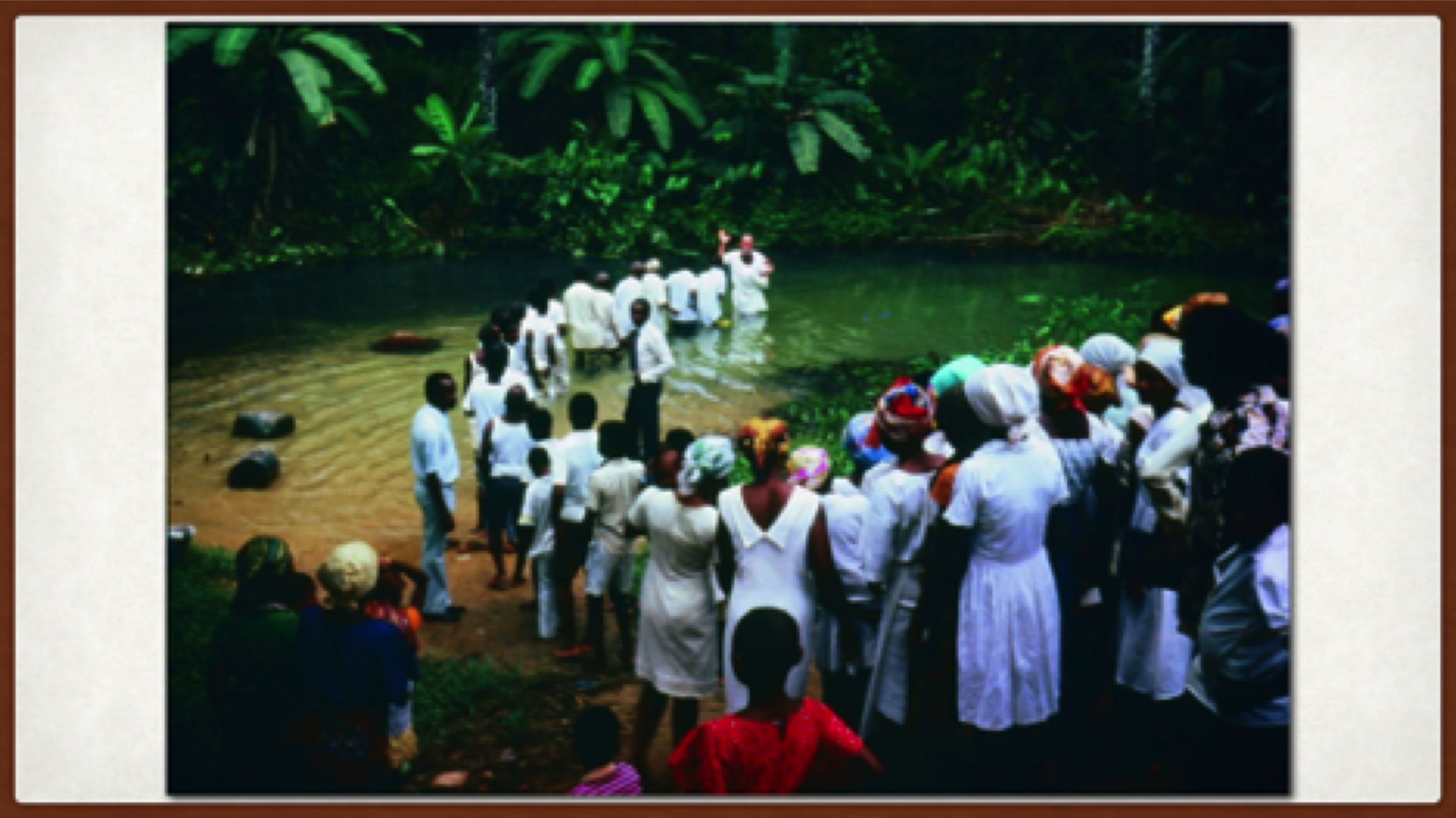
Baptismal Day near Ikot Eyo, Cross River State, Nigeria, by Janath R. Cannon. Elder Edwin Q. Cannon, Jr. baptizing. Photo taken 4 March 1979. Following the June 1978 revelation on the priesthood, the message of the restored gospel of Jesus Christ was taken to West Africa. On 4 March 1979, at a small stream near the village of Ikot Eyo, Cross River State, Nigeria, sixty-seven persons were baptized [by Elder Edwin Q. Cannon, Jr.]. One hundred seventeen had been baptized the day before. Supervising the baptism (at left and right of the baptismal line) are the Cross River State District president [Ime Eduok] and his first counselor [E. D. Ukuot]. They were the first two black brethren in [West] Africa to receive the Melchizedek Priesthood.
In a presentation at the 2018 FairMormon Conference,[i]I shared stories of some of the faithful Saints in the Democratic Republic of the Congo (Kinshasa). In this series of presentations, I would like to speak from a more personal perspective, reflecting on the meaning of that experience for Kathleen and me, and pondering some of the dynamics of numerical and spiritual growth of the Church in that country.

The series is organized into eight parts:

  1. Prologue: What brought us to Africa?
  2. Snapshot of the Church in the DR Congo
  3. The missionaries
  4. What attracts people to the Church?
  5. Building from centers of strength — Kisangani
  6. Building from centers of strength — Wagenya and elsewhere
  7. The temple: A light to the world
  8. “The labourers are few”

Part one is a prologue that begins by outlining some important milestones in the history of the Church in West Africa. This will be presented through the eyes of my mother and father who served in Nigeria twice, beginning in 1980. I will then give a few of the circumstances of our call as a couple as senior missionaries to the DR Congo.

This video presentation is available on the Interpreter YouTube channel at: https://www.youtube.com/watch?v=BAvgzAWDswI


Endnotes

[i]The video version of the entire FairMormon presentation “Stories of the Saints in the DR Congo” is available on the FairMormon YouTube channel at https://www.youtube.com/watch?v=nJl9FvLKmjw. The seven segments of that presentation, in an edited and somewhat expanded form, are available for reading at Meridian Magazine(www.ldsmag.com) and the website of The Interpreter Foundation(https://interpreterfoundation.org).

Filed Under: LDS History, Power of Testimony, Racial Issues, Temples Tagged With: Aba, An Redd Bradshaw, Barbara Crockett, Brent Johnson, Brian August Espenshied, Church in Africa, conversion, David W. Eka, Doug Weaver, DR Congo, Edwin Q. "Ted" Cannon, Eka-Etta, Elma S. Bradshaw, Ephraim S. Etete, Eugene Nwagbara, Ginette Baehrel, Hervé Baehrel, Janath Russell Cannon, Jeff Salt, Jonathan D. Bradshaw, Kevin Curtis, Lamar S. Williams, LaNore Marion Dorton Espenshied, Lazarus and Sylvia Onitchi, Leslie Johnson, Malika Aomar, Marcus B. Nash, Marjorie Sackley, Mark J. Bradshaw, Michael L. Larsen, Neal A. Maxwell, Nigeria, Nnenna Iroweje Nwagbara, Nyal B. Williams, Omar Aomar, Patricia Etete, Patricia Larsen, Paul Crockett, Port Harcourt, Rachel Ivins Wilson Mabey, Rendell Noel Mabey, Robert E. Sackley, Robert W. Bradshaw, Samuel H. Bradshaw, Sandy Bradshaw, Scott B. Bradshaw, Thomas M. Bradshaw, Uduka Ituma, Warren L. Bradshaw

“Cease to Sleep Longer Than Is Needful” (Stories of the Saints in the DR Congo Part 7)

October 15, 2018 by Jeffrey M. Bradshaw

Family and friends of Luvualu Mwinza David and Ndotoni Josephine

Author’s note: This series shares stories about members of The Church of Jesus Christ of Latter-day Saints from the Democratic Republic of the Congo. Each story is framed in the context of a Christlike attribute. This article is adapted and expanded from part 7 of a presentation given at the FairMormon 2018 Conference.

As I think about the faithful Congolese Saints, I realize that what I love the most is that they take the Gospel seriously. For them, the Gospel is not simply a part of life, it istheir life, their hope, and their joy.

Not long before the end of our mission, I met with a Congolese church leader who is a great example of devotion and diligence. He had scheduled another meeting later that morning. He called the Congolese brother who was in charge of this meeting to confirm the time. But the brother told my friend that he had just returned to Kinshasa by plane and for that reason had had to cancel the meeting.

After my friend hung up, he gave the situation some more thought. He realized that it couldn’t be true that this brother had justreturned to Kinshasa because there were no flights that morning. He must have come back the night before. Because this brother had returned the night before there was no reason he couldn’t have been available for the meeting that morning. My friend called him again and took him to task for having canceled the meeting.

I felt compassion for the brother who had been corrected. But I also felt the power of the sincerity and earnestness with which my friend had spoken. D&C 121:43 speaks of “reproving betimes with sharpness, when moved upon by the Holy Ghost.” According to Elder H. Burke Peterson, this “means reproving with clarity, with loving firmness, with serious intent. It does not mean reproving with sarcasm, or with bitterness, or with clenched teeth and raised voice. One who reproves as the Lord has directed deals in principles, not personalities.” Among other things, my friend had said in a spirit of love and inspiration, with directness and without guile: “You like to sleep too much. You cannot sleep when the work of the Lord awaits you.”


The video version of the entire FairMormon presentation is available on the FairMormon YouTube channel at https://www.youtube.com/watch?v=nJl9FvLKmjw

The article relating to this story can be found at the Interpreter Foundation website: “Cease to Sleep Longer Than Is Needful” — Stories of the Saints in the DR Congo, Part 7

If you would like to watch the other presentations from the 2018 FairMormon Conference, you can still purchase video streaming.

Filed Under: Conversion, Power of Testimony Tagged With: Church in Africa, conversion, DR Congo, Global South, Luvualu Mwinza David, Missionary-in-reverse, Ndotoni Josephine, Samuel the Lamanite, Sleep

“Abound in Hope” (Stories of the Saints in the DR Congo Part 6)

October 14, 2018 by Jeffrey M. Bradshaw

Family of Luvualu Mwinza David and Ndotoni Josephine

Author’s note: This series shares six stories about members of The Church of Jesus Christ of Latter-day Saints from the Democratic Republic of the Congo. Each story is framed in the context of a Christlike attribute. This article with examples of hope is an adapted and expanded from part 6 of a presentation given at the FairMormon 2018 Conference.

This story is fascinating account of joy, but even more so one of hope. Luvualu Mwinza David, a skilled tailor of men’s and women’s clothing, is totally blind in both eyes. The Lord gave Him hope by multiplying his talents, finding a fitting companion, introducing him to the Church, and giving him a firm assurance in the promise of eternal life.

The video version of the entire FairMormon presentation is available on the FairMormon YouTube channel at https://www.youtube.com/watch?v=nJl9FvLKmjw

The article relating to this story can be found at the Interpreter Foundation website: “Abound in Hope” — Stories of the Saints in the DR Congo, Part 6

If you would like to watch the other presentations from the 2018 FairMormon Conference, you can still purchase video streaming.

Filed Under: Conversion, Marriage, Power of Testimony Tagged With: Adversity, Athanase Ngandu, Blindness, Church History, Disabilities, DR Congo, Ephraim Zola, hope, joy, Luvualu Mwinza David, Maguy Meta Kadima, Ndotoni Josephine, Nephi Kaluwa, Self-Reliance, Tailor

  • « Go to Previous Page
  • Go to page 1
  • Go to page 2
  • Go to page 3
  • Go to page 4
  • Interim pages omitted …
  • Go to page 9
  • Go to Next Page »

Primary Sidebar

Faithful Study Resources for Come, Follow Me

Subscribe to Blog

Enter your email address:

Subscribe to Podcast

Podcast icon
Subscribe to podcast in iTunes
Subscribe to podcast elsewhere
Listen with FAIR app
Android app on Google Play Download on the App Store

Pages

  • Blog Guidelines

FAIR Latest

  • Come, Follow Me with FAIR – Doctrine and Covenants 137–138 – Part 2 – Autumn Dickson
  • Come, Follow Me with FAIR – Doctrine and Covenants 137–138 – Mike Parker
  • FAIR December Newsletter
  • Come, Follow Me with FAIR – Doctrine and Covenants 137–138 – Part 1 – Autumn Dickson
  • Prophets of God 

Blog Categories

Recent Comments

  • LHL on Come, Follow Me with FAIR – Doctrine and Covenants 132 – Mike Parker
  • Stephen Johnsen on Come, Follow Me with FAIR – Doctrine and Covenants 132 – Mike Parker
  • Bruce B Hill on Come, Follow Me with FAIR – Doctrine and Covenants 124 – Part 1 – Autumn Dickson
  • Gabriel Hess on Join us Oct 9–11 for our FREE virtual conference on the Old Testament
  • JC on When the Gospel “Doesn’t Work”

Archives

Follow Us

  • Facebook
  • Twitter
  • iTunes
  • YouTube
Android app on Google Play Download on the App Store

Footer

FairMormon Logo

FAIR is a non-profit organization dedicated to providing well-documented answers to criticisms of the doctrine, practice, and history of The Church of Jesus Christ of Latter-day Saints.

Donate to FAIR

We are a volunteer organization. We invite you to give back.

Donate Now

Site Footer