• Skip to primary navigation
  • Skip to main content
  • Skip to primary sidebar
  • Skip to footer

FAIR

  • Find Answers
  • Blog
  • Media & Apps
  • Conference
  • Bookstore
  • Archive
  • About
  • Get Involved
  • Search

Power of Testimony

“Continue in Humility” (Stories of the Saints in the DR Congo Part 5)

October 14, 2018 by Jeffrey M. Bradshaw

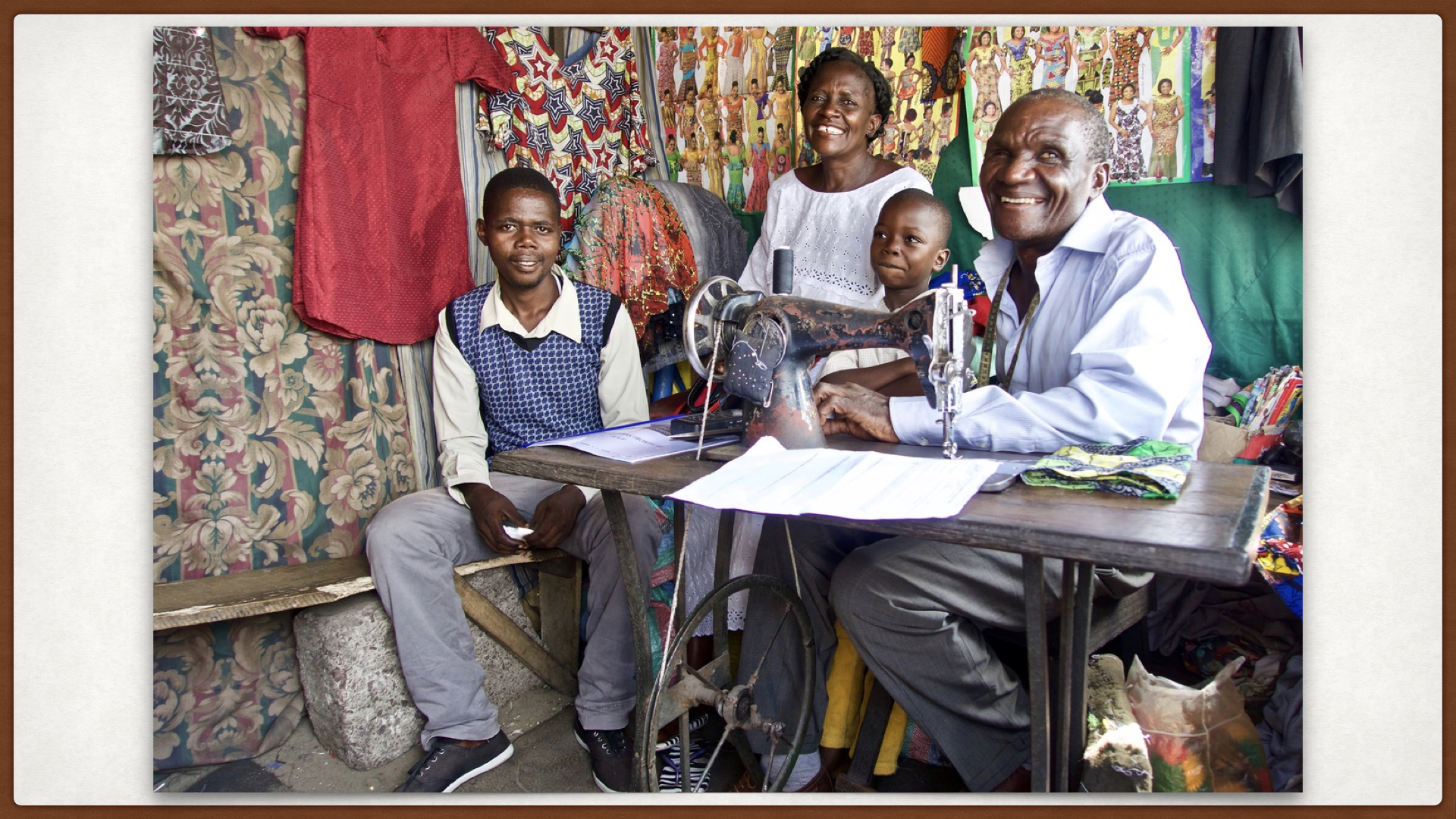
Norman Kamosi

Author’s note: This series shares six stories about members of The Church of Jesus Christ of Latter-day Saints from the Democratic Republic of the Congo. Each story is framed in the context of a Christlike attribute. This article with examples of humility is an adapted and expanded from part 5 of a presentation given at the FairMormon 2018 Conference.

As I think about the many steps, each one small but necessary, that have been required to prepare the Church in the DR Congo for a temple, I remember the scripture: “Out of small things proceedeth that which is great.”

The story of Norman and Jinky Kamosi describes one of those steps, made possible by events that the Lord had put in motion decades beforehand.

The video version of the entire FairMormon presentation is available on the FairMormon YouTube channel at https://www.youtube.com/watch?v=nJl9FvLKmjw

The article relating to this story can be found at the Interpreter Foundation website: “Continue in Humility” — Stories of the Saints in the DR Congo, Part 5

If you would like to watch the other presentations from the 2018 FairMormon Conference, you can still purchase video streaming.
Filed Under: Conversion, LDS History, Power of Testimony, Temples Tagged With: Ann Houghton, Church in Africa, Democratic Republic of the Congo, DR Congo Kinshasa Temple, Humility, Jared Banner, Jinky Kamosi, Kyle Houghton, Norman Kamosi, Stan Houghton

“With All Diligence” (Stories of the Saints in the DR Congo Part 4)

September 25, 2018 by Jeffrey M. Bradshaw

Author’s note: This series shares six stories about members of The Church of Jesus Christ of Latter-day Saints from the Democratic Republic of the Congo. Each story is framed in the context of a Christlike attribute. This article with examples of diligence in family history work is an adapted and expanded from part 4 of a presentation given at the FairMormon 2018 Conference.

Family history work in places like the DR Congo calls for a particular kind of diligence. This story illustrates the quiet work the institutional Church and the local Saints are doing on an impressively large scale to preserve vanishing family records.

The video version of the entire FairMormon presentation is available on the FairMormon YouTube channel at https://www.youtube.com/watch?v=nJl9FvLKmjw

The article relating to this story can be found at the Interpreter Foundation website: “With All Diligence” — Stories of the Saints in the DR Congo, Part 4

If you would like to watch the other presentations from the 2018 FairMormon Conference, you can still purchase video streaming.

Filed Under: Conversion, LDS History, Power of Testimony Tagged With: Church in Africa, Daniel Tusey Kola, Diligence, DR Congo, Family History, Genealogy, Oral Genealogy, Sylvestre Muzengo Mambasah, Thierry Mutombo

“Obey … With Exactness” (Stories of the Saints in the DR Congo Part 3)

September 20, 2018 by Jeffrey M. Bradshaw

Author’s note: This series shares six stories about members of The Church of Jesus Christ of Latter-day Saints from the Democratic Republic of the Congo. Each story is framed in the context of a Christlike attribute. This article with examples of obedience is an adapted and expanded from part 3 of a presentation given at the FairMormon 2018 Conference.

The Congolese saints are on the whole a faithful and obedient people. This is epitomized in the fact that, according to Elder Joni Koch, the DR Congo Kinshasa mission is not only among the fastest growing in the world, but also has the highest rate of sacrament meeting attendance — double the percentage of a typical stake in the United States. Quiet evidence of this faithfulness and devotion is to be found everywhere.

The video version of the entire FairMormon presentation is available on the FairMormon YouTube channel at https://www.youtube.com/watch?v=nJl9FvLKmjw

The article relating to this story can be found at the Interpreter Foundation website: “Obey … With Exactness” — Stories of the Saints in the DR Congo, Part 3

If you would like to watch the other presentations from the 2018 FairMormon Conference, you can still purchase video streaming.

Filed Under: Conversion, LDS History, Power of Testimony, Women Tagged With: Aimé Ngoy, Church in Africa, Dowry, DR Congo, Marriage, Milambo couple, obedience, Pascal Lomboto, Thierry and Nathalie Mutombo, Tito Tshibanda

Charity: “The Greatest of All” (Stories of the Saints in the DR Congo Part 2)

September 11, 2018 by Jeffrey M. Bradshaw

This series shares six stories about members of the Church of Jesus Christ of Latter-day Saints from the Democratic Republic of the Congo. Each story is framed in the context of a Christlike attribute. This article with examples of charity is an adapted and expanded from part 2 of a presentation given at the FairMormon 2018 Conference.

The video version of the entire FairMormon presentation is available on the FairMormon YouTube channel at https://www.youtube.com/watch?v=nJl9FvLKmjw

The article relating to this story can be found at the Interpreter Foundation website: Charity: “The Greatest of All” — Stories of the Saints in the DR Congo, Part 2

If you would like to watch the other presentations from the 2018 FairMormon Conference, you can still purchase video streaming.

Filed Under: Conversion, LDS History, Power of Testimony, Youth Tagged With: Bernard and Yaya Balibuno, Charity, DR Congo, Vincent Sakala

Da and Angélique Tarr: The Power of Faith (Stories of the Saints in the DR Congo Part 1)

September 4, 2018 by Jeffrey M. Bradshaw

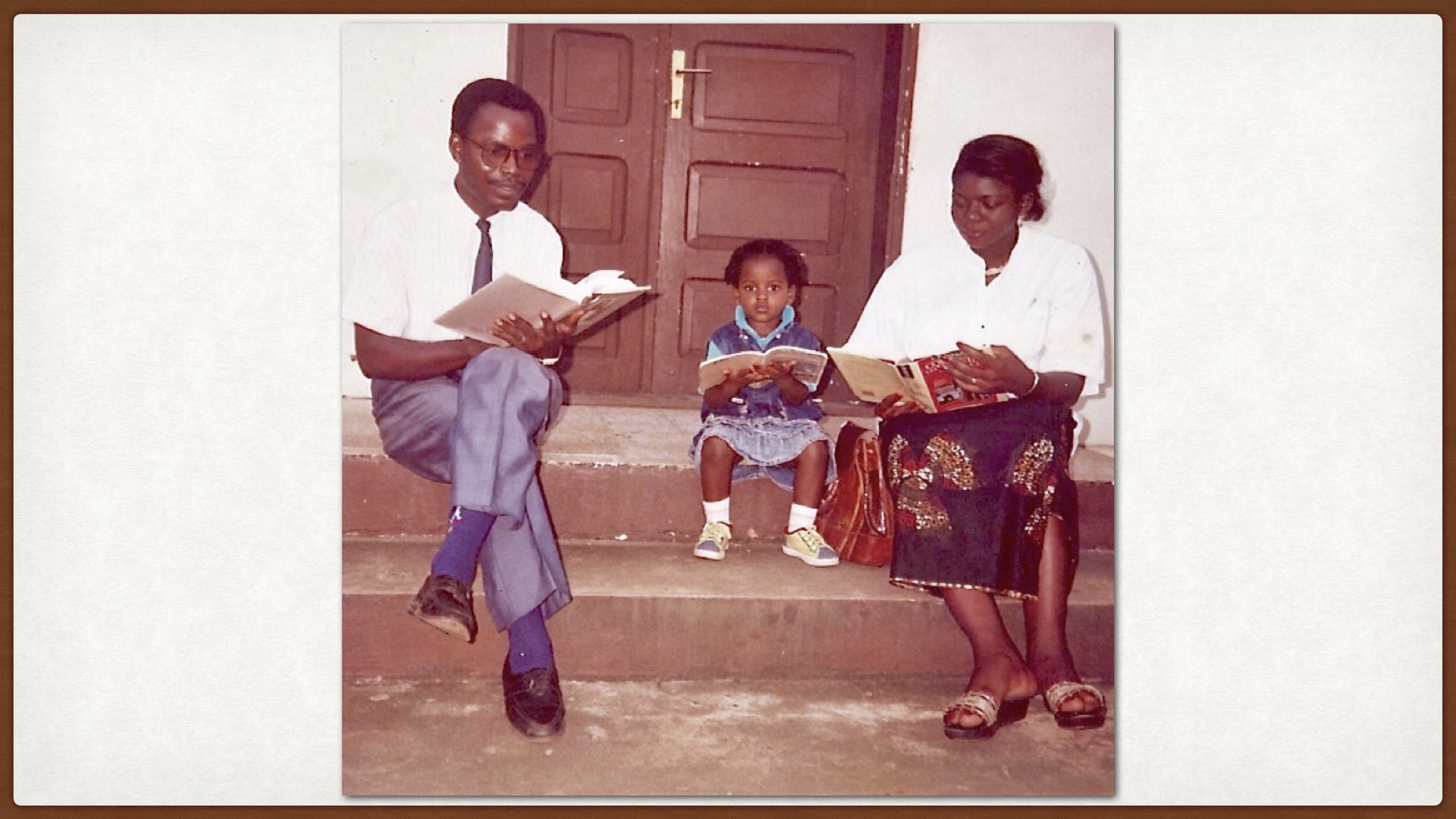
Da and Angélique hold a Family Home Evening on the porch with their daughter Messah after their return to Monrovia, Liberia in 1992


This series shares six stories about members of the Church of Jesus Christ of Latter-day Saints from the Democratic Republic of the Congo. Each story is framed in the context of a Christlike attribute. The story of Da and Angélique Tarr is an adapted and expanded from part 1 of a presentation given at the FairMormon 2018 Conference.

The video version of the entire FairMormon presentation is available on the FairMormon YouTube channel at https://www.youtube.com/watch?v=nJl9FvLKmjw

The article relating to this story can be found at the Interpreter Foundation website: Da and Angélique Tarr: The Power of Faith
Stories of the Saints in the DR Congo, Part 1

If you would like to watch the other presentations from the 2018 FairMormon Conference, you can still purchase video streaming.

Filed Under: Conversion, LDS History, Power of Testimony Tagged With: Da and Angelique Tarr, DR Congo, faith, Liberia, obedience

From convert, to anti-mormon, to reconversion – Interview with Dusty Smith

June 25, 2018 by NickGalieti

https://media.blubrry.com/mormonfaircast/ldsmissioncast.com/wp-content/uploads/2018/04/LMC-DustySmith.mp3

Podcast: Download (77.5MB)

Subscribe: RSS

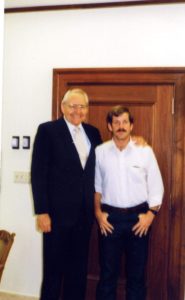
Dusty Smith with Elder L. Tom Perry
Dusty Smith (right) with “pen pal” Elder L. Tom Perry (left)

Welcome to the LDS MissionCast. To those of you who are new listeners to our show, thank you for listening. We hope you enjoy what this podcast has to offer as education and inspiration for missionary work in The Church of Jesus Christ of Latter-day Saints. Each week we try to bring you interviews that can help you to be a better missionary, or to help you feel inspired in missionary work. This week features an interview with Dusty Smith. While that may not be a name you immediately recognize, this is a story you won’t want to miss. This story is filled with the hand of God, and is an amazing, extraordinary example of how simple acts of missionary work can have a profound impact on literally hundreds of thousands of people throughout the world.

Shawn Rapier Ryan Snarr Latter-day Lives Podcast LDS MissionCast
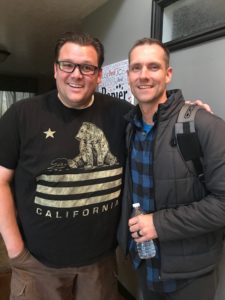
Shawn Rapier (left) host of Latter-day Lives Podcast, Ryan Snarr (right) guest for the Latter-day Lives segment.

Occasionally we have Shawn Rapier from the always entertaining, Latter-day Lives podcast who records a special side interview with his guests about their mission experiences, or missionary-related experiences that can make you laugh, feel nostalgic for your own mission, or just leave you feeling inspired. This week Shawn had on artist Ryan Snarr, who tells a story about the enduring relationships that can be created from serving a mission, and how rich and fulfilling those relationships can be as they extend beyond the years of missionary service.

Each episode we try to feature different music or different LDS Musicians. This week we are showcasing a website and service called Music For Missionaries.net. Heather Bosshardt arranges and performs some great arrangements of the hymns. She sends you firesides in your inbox each and every week. It is FREE to missionaries while they are on their missions. This is music and spiritual messages that are sent to you each week that you can use for your own inspiration or you can share it with those being taught, or wards where you serve. Check out, www.musicformissionaries.net

Thank you to FairMormon for the continued sharing of LDS MissionCast.

Music for LDS Missionaries

Videos of Dusty Smith’s story:


Filed Under: Conversion, Faith Crisis, LDS History, Nick Galieti, Podcast, Power of Testimony Tagged With: anti-Mormon, convert, Missionary

The Coming Revolution of Virtual Missionaries: Review of Books by Greg Trimble

May 3, 2018 by Trevor Holyoak

Available from the FairMormon Bookstore at 15% off

If I remember correctly, I first came across Greg Trimble’s blog by seeing his post “Quit Acting Like Christ Was Accepting of Everyone and Everything” shared by a friend on Facebook, apparently some time in 2014. I liked it enough that I shared it in a few places as well. He has since written a bunch of other posts that have also been shared widely, so most LDS people online are probably familiar with his name.

In the last year, Trimble has started publishing books. His first one, Dads Who Stay and Fight: How to Be a Hero to Your Family, showed up on Audible’s website, so I thought I’d give it a listen. It is a book about being a good father written by a young father, so it does have its weak spots. A lot of the chapters could have used fewer stories and more concrete examples. But there were some really good ones that made the whole thing worthwhile, in particular the ones on marriage, technology, and protecting your family from worldly influences.

A few months ago, I saw that he had published another book, The Coming Revolution Inside of Mormonism. I was curious enough about the title that I wanted to take a look at it, and I requested a review copy. When it arrived, it was accompanied by The Virtual Missionary: The Power of Your Digital Testimony, which had also recently been published. Since then, The Coming Revolution Inside of Mormonism has been retitled to The Cultural Evolution Inside of Mormonism, apparently because the original title had caused a lot of confusion. In order to avoid confusion here, I will refer to the book by its new title (and assume that none of the actual content has changed). [Read more…] about The Coming Revolution of Virtual Missionaries: Review of Books by Greg Trimble

Filed Under: Anti-Mormon critics, Apologetics, Atheism, Book of Mormon, Book reviews, Conversion, Doctrine, Faith Crisis, Interfaith Dialogue, Joseph Smith, LDS Culture, LDS History, Polygamy, Power of Testimony, Prophets, Questions, Resources, Temples, Testimonies Tagged With: blog, blogging, book review, digital missionary, Greg Trimble, Trevor Holyoak

Courtroom Analogy

November 3, 2016 by Keller

Guest post by Paul Brooks from The Reasonable Mormon

Not guilty vs innocent


Since the organization of the Church in 1830, some form of the question “Is the Church true?” has been prevalent among proponents and detractors alike. While much can be said to directly answer the question, much can also be said about nature of the question itself. This post demonstrates why believing the Church is “not true,” or not believing the Church is “true,” does not necessarily mean believing the Church is “false” or worthy of abandoning faith.

Imagine the following fictional conversation between two critics of the Church we shall call Simon and Peter:

Simon: I’ve just been speaking with a friend who asked me to provide a good argument that the LDS Church is false.

Peter: Oh right, how did you get on?

Simon: I couldn’t do it. Everything I raised was contended with good counter evidence, many that I hadn’t heard before.

Peter: OK, so what now?

Simon: Well there isn’t one reason to think it’s false so I guess it’s true. I’m going to start attending each week.

Now this doesn’t usually happen and it’s obvious that something is wrong. Just because Simon couldn’t demonstrate the LDS Church was false, it doesn’t necessarily mean he should believe that the Church is true. We would rightfully expect Simon to be troubled by his experience but not to start attending Sunday services.

But look what happens when we flip this on its head, now imagine two believing members of the Church in a similar conversation:

 Simon: I’ve just been speaking with a friend who asked me to provide a good argument that the LDS Church is true.

 Peter: Oh right, how did you get on?

 Simon: I couldn’t do it. Everything I raised, was contended with good counter evidence, many that I hadn’t heard before.

 Peter: OK, so what now?

 Simon: Well there isn’t one reason to think it’s true so I guess it’s false. I’m going to stop attending each week.

Again, something is wrong but we do see this in our own experience. Sadly this is an argument from ignorance, which is a logical fallacy and occurs when something is believed to be false simply because it has not been shown to be true (or vice versa).

So let’s explore a little more why this is a problem.

In everyday language we use the words “not true” and “false” interchangeably, but they are actually distinct. Usually the distinction doesn’t get us into trouble, but in this situation it may prove highly problematic. Imagine risking eternal salvation based on an error in logic!

The key point to remember is that something that is “not true,” is not necessarily “false.” This would constitute a false dichotomy, meaning that only two options are presented but in reality there are more than two options available. The condition “not true” is a negation of “true,” but also encompasses other conditions in addition to “false.”  

To put it another way:

  • Something “true” is clearly “not false”, but something that is “not true” is not necessarily “false” – for example it may be unknown or nonsensical
  • Something “false” is clearly “not true”, but something that is “not false” is not necessarily “true” – for example again, it may be unknown or nonsensical

This principle is demonstrated in a courtroom, where a case is presented to the judge and the jury for them to evaluate whether the person accused is “guilty” or “not guilty.” This is done by setting a threshold for guilt, such as “beyond reasonable doubt.” In the context of a courtroom, it is important to note:

  • The judge and jury are not deciding between “guilty” and “innocent.” They are looking to see if there is enough evidence to consider them “guilty,” or else consider them “not guilty.”
  • If the person is found to be “not guilty” they are not found to be “innocent,” they were already presumed innocent as a matter of principle before the hearing. It would require another case to evaluate the evidence as to whether the person is actually “innocent” or “not innocent.”
  • A person could theoretically be found “not guilty” and then found “not innocent!”  

Usually faithful members of the Church when called upon to give reasons or an argument that the Church is true, in addition to a spiritual witness, might include things such as:

  • The visions of Joseph Smith
  • The hundreds of statements by the Book of Mormon witnesses
  • The complexity and beauty of the Book of Mormon

However after reading material that challenges these reasons, members may feel they are left without any compelling reason or argument and potentially doubt their own experience of the Spirit. Even if they previously had many reasons for belief, if each one fails then a problem arises. As atheist-turned-deist Anthony Flew once said:

“If one leaky bucket will not hold water there is no reason to think that ten can” (1)

So what should be remembered if you no longer feel you have a compelling or sufficient reason to believe that the Church is true?

The first thing to remember is that your threshold for truth is naturally subjective. Regarding levels of confidence, John Welch has observed:

How much evidence do we need in order to draw a certain conclusion? Answering this question is another choice that combines and bridges faith and evidence.

…a survey conducted in the Eastern District of New York among ten federal judges determined that the phrase “beyond a reasonable doubt” ranged from 76 percent to 95 percent certainty (although most were on the high end of this range). “Clear and convincing evidence” covered from 60 percent to 75 percent. Obviously, a degree of subjectivity is again involved in deciding what level of certitude should be required or has been achieved in a given case.

…In a religious setting, no arbiter prescribes or defines the level of evidence that will sustain a healthy faith. All individuals must set for themselves the levels of proof that they will require… Few people realize how much rides on their personal choice in these matters and that their answer necessarily originates in the domain of faith. (2)

The second thing to remember is that two people can fully agree on the evidence but come to different conclusions based on their assumptions and expectations of what a true Church would look like. From a Church historian’s perspective, Davis Bitton has said:

What’s potentially damaging or challenging to faith depends entirely, I think, on one’s expectations, and not necessarily history. Any kind of experience can be shattering to faith if the expectation is such that one is not prepared for the experience.

…One moves into the land of history, so to speak, and finds shattering incongruities which can be devastating to faith. But the problem is with the expectation, not with the history (3).

The third and most important thing to remember is that irrespective of your level of confidence and your expectations, no longer believing the Church is true is not the same as believing the Church is false (remember the courtroom analogy of “not guilty” and “innocent”). Flip the question around and see if you believe that the Church is false. To say that the Church is false, is a positive statement that carries a rather heavy burden of proof.

If you believe the Church is false, then this would most likely include the Book of Mormon too. You would need to believe there is a good explanation for:

  • How Joseph obtained physical gold plates that weighed around 60 pounds, with the appearance of gold and engravings on both sides
  • How Joseph was able to dictate the complex narrative of the Book of Mormon while looking into a hat without any divine intervention
  • How the Book of Mormon contains different specialist areas (horticulture, seasons of warfare, Bedouin poetry etc) without being an actual ancient record
  • Why the book is full of hebraisms that were not even realized or noticed when it was written
  • How there are multiple writing styles implying multiple authors, which were only noticed by computer power
  • Why none of the witnesses ever recanted their testimonies

With the above in mind, it would be difficult to honestly conclude the Book of Mormon is false. Dan Peterson at the FairMormon conference in 2016 said that:

…the alternative explanations just don’t work and they get more and more complex and it’s just too much for me, and so I’ve said sometimes that I simply don’t have the faith to disbelieve Joseph Smith’s story. I just can’t get there. I can’t do it. And I’ve tried. I’ve really tried… (4).

Again, from Church historian Davis Bitton:

Let’s get one thing clear. There is nothing in church history that leads inevitably to the conclusion that the church is false. There is nothing that requires the conclusion that Joseph Smith was a fraud. How can I say this with such confidence? For the simple reason that the Latter-day Saint historians who know the most about our church history have been and are faithful, committed members of the church. More precisely, there are faithful Latter-day Saint historians who know as much about this subject as any anti-Mormon or anyone who writes on the subject from an outside perspective. In fact, with few exceptions, they know much, much more. They have not been blown away. They have not gnashed their teeth and abandoned their faith. To repeat, they have found nothing that forces the extreme conclusion our enemies like to promote (5).

This consideration could very likely put the person in a limbo period, and in terms of the courtroom analogy, somewhere between “not guilty” and “not innocent.”

As shown above, no longer believing the Church is true, is not concluding the Church is false or necessarily worthy of abandoning faith. In the same way a critic would still need a positive reason to believe the Church is true, a member should still need a positive reason to believe the Church is false.

In many cases, potential reasons for believing the Church is false are based on our own expectations of God or the Church, such as “A true Church would not allow (or be permitted to allow) XYZ to happen, but XYZ did happen.” When we examine our assumptions and expectations, we may see that some are quite questionable. Even our opinion of sufficient conditions for the Church being false may be questionable.

In summary, if there are things you have come across which challenge your testimony, it is likely that there are still things to come across which would strengthen your testimony, such as over 200 KnoWhys from Book of Mormon Central or 80 evidences supporting the Prophet Joseph Smith from Michael R. Ash.

Ultimately faith is a choice and we can choose to be faithful, or choose not to be faithful, to the light that we have been given, remembering the promise that:

…he that receiveth light, and continueth in God, receiveth more light; and that light groweth brighter and brighter until the perfect day. (D&C 50:24)

Further reading

I Don’t Have a Testimony of the History of the Church

Recommended reading – Positive evidence for Mormonism

References

1. Antony G. N. Flew, God and Philosophy (London, 1966), 63.

2. John Welch. 2016. The Power of Evidence in the Nurturing of Faith. [ONLINE] Available at:http://publications.mi.byu.edu/fullscreen/?pub=1082&index=4. [Accessed 21 October 2016].

3. Davis Bitton. 2004. I Don’t Have a Testimony of the History of the Church. [ONLINE] Available at:http://publications.mi.byu.edu/publications/review/16/2/S00017-5176ad2f5804e17Bitton.pdf. [Accessed 24 October 2016].

4. Daniel Peterson. 2016. The Logic Tree of Life, or, Why I Can’t Manage to Disbelieve. [ONLINE] Available at: http://www.fairmormon.org/perspectives/fair-conferences/2016-fairmormon-conference/logic-tree-life. [Accessed 19 October 2016].

5. Davis Bitton. 2004. I Don’t Have a Testimony of the History of the Church. [ONLINE] Available at:http://publications.mi.byu.edu/publications/review/16/2/S00017-5176ad2f5804e17Bitton.pdf. [Accessed 24 October 2016].

Filed Under: Evidences, LDS History, Philosophy, Power of Testimony

Fair Issues 100: Evidence versus proof

May 15, 2016 by Ned Scarisbrick

https://media.blubrry.com/mormonfaircast/www.fairlatterdaysaints.org/wp-content/uploads/2016/05/Fair-Issues-100-Pod.mp3

Podcast: Download (11.8MB)

Subscribe: RSS

Ash (newer) PictureIn this installment brother Ash explains the differences between what we consider as evidence versus proof in religious matters.

The full text of this article can be found at Deseret News online.

Brother Ash is author of the book Shaken Faith Syndrome: Strengthening One’s Testimony in the Face of Criticism and Doubt, as well as the book, of Faith and Reason: 80 Evidences Supporting the Prophet Joseph Smith. Both books are available for purchase online through the FairMormon Bookstore. Tell your friends about the Mormon Fair-Cast. Share a link on your Facebook page and help increase the popularity of the Mormon Fair-Cast by subscribing to this podcast in iTunes, and by rating it and writing a review.

The views and opinions expressed in the podcast may not reflect those of the Church of Jesus Christ of Latter-day Saints or that of FairMormon


Filed Under: Anti-Mormon critics, Apologetics, Book of Mormon, Evidences, Fair Issues, Faith Crisis, General, Hosts, Joseph Smith, Michael R. Ash, Ned Scarisbrick, Podcast, Power of Testimony Tagged With: Book of Mormon evidences

Fair Issues 99: Emotion is part of testimony and decision making

May 1, 2016 by Ned Scarisbrick

https://media.blubrry.com/mormonfaircast/www.fairlatterdaysaints.org/wp-content/uploads/2016/05/Fair-Issues-99-Pod.mp3

Podcast: Download (9.6MB)

Subscribe: RSS

Ash (newer) PictureIn this article brother Ash discusses how emotions play an integral part in our decision making process.

The full text of this article can be found at Deseret News online.

Brother Ash is author of the book Shaken Faith Syndrome: Strengthening One’s Testimony in the Face of Criticism and Doubt, as well as the book, of Faith and Reason: 80 Evidences Supporting the Prophet Joseph Smith. Both books are available for purchase online through the FairMormon Bookstore. Tell your friends about the Mormon Fair-Cast. Share a link on your Facebook page and help increase the popularity of the Mormon Fair-Cast by subscribing to this podcast in iTunes, and by rating it and writing a review.

The views and opinions expressed in the podcast may not reflect those of the Church of Jesus Christ of Latter-day Saints or that of FairMormon

Filed Under: Anti-Mormon critics, Apologetics, Conversion, Fair Issues, General, Hosts, Michael R. Ash, Ned Scarisbrick, Podcast, Power of Testimony Tagged With: Building a Testimony

  • « Go to Previous Page
  • Go to page 1
  • Go to page 2
  • Go to page 3
  • Go to page 4
  • Go to page 5
  • Interim pages omitted …
  • Go to page 9
  • Go to Next Page »

Primary Sidebar

Faithful Study Resources for Come, Follow Me

Subscribe to Blog

Enter your email address:

Subscribe to Podcast

Podcast icon
Subscribe to podcast in iTunes
Subscribe to podcast elsewhere
Listen with FAIR app
Android app on Google Play Download on the App Store

Pages

  • Blog Guidelines

FAIR Latest

  • Come, Follow Me with FAIR – Doctrine and Covenants 137–138 – Part 2 – Autumn Dickson
  • Come, Follow Me with FAIR – Doctrine and Covenants 137–138 – Mike Parker
  • FAIR December Newsletter
  • Come, Follow Me with FAIR – Doctrine and Covenants 137–138 – Part 1 – Autumn Dickson
  • Prophets of God 

Blog Categories

Recent Comments

  • LHL on Come, Follow Me with FAIR – Doctrine and Covenants 132 – Mike Parker
  • Stephen Johnsen on Come, Follow Me with FAIR – Doctrine and Covenants 132 – Mike Parker
  • Bruce B Hill on Come, Follow Me with FAIR – Doctrine and Covenants 124 – Part 1 – Autumn Dickson
  • Gabriel Hess on Join us Oct 9–11 for our FREE virtual conference on the Old Testament
  • JC on When the Gospel “Doesn’t Work”

Archives

Follow Us

  • Facebook
  • Twitter
  • iTunes
  • YouTube
Android app on Google Play Download on the App Store

Footer

FairMormon Logo

FAIR is a non-profit organization dedicated to providing well-documented answers to criticisms of the doctrine, practice, and history of The Church of Jesus Christ of Latter-day Saints.

Donate to FAIR

We are a volunteer organization. We invite you to give back.

Donate Now

Site Footer