• Skip to primary navigation
  • Skip to main content
  • Skip to primary sidebar
  • Skip to footer

FAIR

  • Find Answers
  • Blog
  • Media & Apps
  • Conference
  • Bookstore
  • Archive
  • About
  • Get Involved
  • Search

Testimonies

Alan Frank Keele

I freely acknowledge that my lifelong serendipitous scholarly meanderings through the broad field of German Studies correspond closely to certain ideas suggested by doctrines and lore of the Church of Jesus Christ of Latter-day Saints to which I have a particular personal affinity.

A postmodernist might view my interest in “Mormon” ideas in German texts as a social construct, a form of Rorschaching, or a kind of subjective projection of my private a priori views onto the elaborate tapestry of German Studies.1

But such constructs are two-way streets, for it is also true that my involvement with things German has emphatically influenced what I have come to see as the most important doctrines of my own “virtual Mormonism” as it were, those tenets I have assembled from the elaborate tapestry of “Latter-day Saint” ideas into my own private credo.

Thus my current views on war, pacifism, and civic responsibility for example, have clearly grown out of my exposure to Germany’s historical experiences, including that of young Helmuth Hübener and his two fellow-LDS friends Karl-Heinz Schnibbe and Rudi Wobbe, whose story I first encountered in the oeuvre of Nobel-Laureate novelist Günter Grass. (Further research into the subject, including extensive interviews with Schnibbe and Wobbe as well as with other survivors who had emigrated to the US, particularly to Utah, enabled me and my collaborators, BYU historians Douglas Tobler and Blair Holmes, to publish several articles and books on the subject and to participate in the making of a documentary film.)2

So just as the general German experience with dictatorship, war, and the incurring of national guilt on a gigantic, genocidal scale influenced my later reaction to truth claims I heard voiced by supporters of various US wars from Vietnam to the invasion of Iraq, the Hübener story forced me to confront LDS ideas about the degree to which citizens should subject themselves to governments, and under what conditions.

In the end, I came to see that the matter of civic responsibility and ethical behavior is much more complex and sophisticated than the simple LDS 12th Article of Faith3 might suggest on its surface. Indeed, I have come to include in my personal German-history-inspired credo what I consider a much more nuanced LDS position, derived in part from the 98th Section of the book of Doctrine and Covenants.4

Quite a different “LDS idea” which has had a particular fascination for me is the concept that the souls of human beings existed eternally prior to our physical births on this planet. This is an ancient notion with a long history of advocates and detractors.5 The German texts to which this idea drew me include a pair of remarkable films by Wim Wenders6 (with some collaboration by Austrian poet and novelist Peter Handke), which posit the existence of a kind of preexistence, where angel-like beings, portrayed in the film wearing distinctive overcoats and ponytails, are seen (by film viewers though not by other characters in the film, save some children) hovering about Berlin, having been there since time immemorial, witnessing and observing life generally.

In due course, one of the “angels,” Damiel, (all such names have that –el suffix connoting divinity), decides to become human, to “earn a (hi-)story for myself by struggling for it” (“mir selber eine Geschichte erstreiten.”) In the second film, Damiel’s angelic companion Cassiel also becomes human, having weighed the implications of the change rather less than Damiel had, since Cassiel has to make a split-second decision to become human so that he can rescue a young girl for whom he serves as a guardian angel. (Cassiel is a compulsive lifesaver: In the end, after having taken many missteps in his brief sojourn on earth, Cassiel selflessly gives his own life to save all his friends.)

Thanks to the artistic gifts of Wenders and Handke, a notion that exists as a kind of black-and-white, two-dimensional concept in Mormon lore now takes on rounded contours and becomes a colorful, living idea, able to resonate in our minds and souls. Watching Damiel and Cassiel do the same, we are invited to contemplate, for example, just how we ourselves must have struggled with the concept of evil (Berlin, with its recent Nazi and Cold-War history is certainly an appropriate location for the contemplation of the existence of evil) before agreeing to become mortal.

We consider with Wenders and Handke the role of love and fellowship among former angels, for there are many (including a cameo role by Peter Falk) who have retained a memory of their prior life, trailing clouds of glory, as Wordsworth would have said it, who treat their fellow humans with the respect and dignity such courageous eternal beings deserve.

In the end, the films point forward to the creation of a new global family of like-minded former angels, who understand the profound eternal reason for their lives and have the potential to create a fairer, more peace-loving and humane society.

(In the course of discussing these films with colleagues, Professor Walter Whipple pointed out to me a related poem, “One Version of Events” by Polish Nobel-Laureate Wisława Szymborska,7 which I also highly recommend.)

Other German texts bear brief mention in the context of preexistence: The most remarkable Viennese author Hugo von Hofmannsthal collaborated with the deservedly famous composer Richard Strauss to create an opera entitled Die Frau ohne Schatten8 (The Woman Without a Shadow), which is a veritable compendium of LDS ideas, including this one. The plot is complex, but includes the idea that a disembodied spirit from a preexistent state, the Empress, has taken upon herself a human form but, in a kind of intermediate Garden of Eden milieu, has not yet taken the final step to become truly human.

This she does, finally, by renouncing a human shadow – here a symbol of mortality – which her evil nurse has illicitly acquired for her from another woman, the Dyer’s Wife, who at one juncture wants to renounce her mortality to avoid having to bear children. (The Dyer’s Wife changes her mind when she has a vision of her seven unborn children, whose voices seem to sing out to her – from seven fishes cooking in a pan.)

When the Empress renounces the ill-gotten shadow (though she believes that by so doing she has doomed her own husband, the Emperor, to eternal death), by virtue of her own selfless behavior it is seen that she miraculously has earned her own shadow, and her husband returns to life from his death-like state.

The risen Emperor sings that he, too, has had a vision of unborn children, and then soon the Empress, also, is able to see and hear the songs of the unborn. She asks: “Sind das die Cherubim, die ihre Stimmen heben?”(“Are they the Cherubim, who raise their voices so?”) The Emperor enlightens her: “Das sind die Nichtgeborenen, nun stürzen sie ins Leben mit morgenroten Flügeln zu uns, den fast Verlorenen; uns eilen diese Starken wie Sternenglanz herbei. Du hast dich überwunden. Nun geben Himmelsboten den Vater und die Kinder: die Ungebornen frei! Sie haben uns gefunden, nun eilen sie herbei!” (“They are the unborn, now they rush into life with dawn-red wings to us, who were nearly lost; these strong ones hasten to our side like starshine. Thou hast overcome thyself. Now heavenly messengers free the father and the children: the unborn! They have found us, now they hasten hither.”)

The unborn continue to address their parents and encourage them not to fear the trials of parenthood: “Hört, wir gebieten euch: ringet und traget, dass unser Lebenstag herrlich uns taget! Was ihr an Prüfungen standhaft durchleidet, uns ist’s zu strahlenden Kronen geschmeidet!” (“Listen, we command you: struggle and bear your burdens, so that our day of life may dawn gloriously! That which you unwaveringly suffer through in the way of tests is wrought for us into glittering crowns!”)

The opera ends with a mysterious song by all the unborn children, revealing that they are really the hosts, not merely the guests, at any (wedding) feast:

Vater, dir drohet nichts,
siehe, es schwindet schon,
Mutter, das Ängstliche,
das euch beirrte.

Wäre denn je ein Fest,
wären nicht insgeheim
wir die Geladenen,
wir auch die Wirte!

(Father, nothing threatens thee,
behold, Mother, that which made
both of you anxious,
is already disappearing.

Could there ever have been a feast
at which we, the invited ones,
were not also
secretly the hosts?)

Another important German opera attracts me strongly, in part for its portrayal of yet another “LDS” idea dear to my heart. This is Wolfgang Amadeus Mozart’s Die Zauberflöte,9 (The Magic Flute) and the idea is one which certain other Christian denominations love to hate, namely the notion of apotheosis, of man becoming like god. In The Magic Flute, the idea comes up relatively early, when Papageno, the opera’s comic bird-man figure, first meets Pamina, the opera’s heroine. Together they sing a duet about the universal nature of love and the personified goddess of love:

Ihr hoher Zweck zeigt deutlich an,
Nichts Edlers sei als Weib und Mann.
Mann und Weib und Weib und Mann
Reichen an die Gottheit an.

(Her – love personified’s – noble purpose demonstrates clearly
That there is nothing more noble than a wife and a husband.
Husband and wife and wife and husband
Reach up to – and attain – godhood/divinity.)

(Another of my favorite ideas will be mentioned here only in passing, namely that it is in this eternal bond between two spouses that the potential for attaining godhood is greatest. This paean to eternal, temple marriage – another important LDS idea – is found in The Magic Flute as well as in The Woman Without a Shadow. And in The Magic Flute, the Egyptian gods Isis and Osiris appear as role models: a married god-couple!)

At the end of Act I, the chorus sings an important text, the (bold) portions of which are repeated in Act II:

“Wenn Tugend und Gerechtigkeit
Der Großen Pfad mit Ruhm bestreut,
Dann ist die Erd’ ein Himmelreich
Und Sterbliche den Göttern gleich
.”
(When virtue and justice
Strew the path of the great ones with fame,
Then earth will be a heavenly kingdom
And mortals will be equal to the gods
.)

In Act II, the three young boys who serve as spiritual guides to the characters also promise a proximate apotheosis:

“Bald prangt, den Morgen zu verkünden,
Die Sonn’ auf goldner Bahn.
Bald soll der Aberglaube schwinden,
Bald siegt der weise Mann.
O holde Ruhe, steig hernieder,
Kehr in der Menschen Herzen wieder;
Dann ist die Erd’ ein Himmelreich
Und Sterbliche den Göttern gleich
.”
(Soon, to herald the morning,
The sun will be resplendent on its golden path.
Soon superstition will disappear,
Soon the wise man will be victorious.
O graceful, lovely peace, descend to us,
Return into the hearts of humans;
Then earth will be a heavenly kingdom
And mortals will be equal to the gods
.)

At the end of the opera, when the appearance of the sun has driven away the night, Pamina and Tamino, as well as Papageno and his wife, Papagena, are blessed with many children (in the one case) and truly exalted (in the other). The High Priest Sarastro sings:

Die Strahlen der Sonne vertreiben die Nacht,
Zernichten der Heuchler erschlichene Macht.
(The rays of the sun drive away the night,
Destroying the ill-gotten power of hypocrites.)

The choir of priests then sings to Pamina/Tamino:

Heil sei euch Geweihten!
Ihr dranget durch Nacht.
Dank sei dir, Osiris,
Dank dir, Isis, gebracht!
Es siegte die Stärke
Und krönet zum Lohn
Die Schönheit und Weisheit
Mit ewiger Kron’!
(Hail to both of you consecrated ones!
You have penetrated through night.
Thanks be to thee, Osiris,
Thanks to thee, also, Isis!
Strength was victorious
And, as a reward, crowns
Beauty and wisdom
With an eternal crown!)

As a last example I will mention a related, and supporting, notion to that of apotheosis, namely imago dei, man in the image of god. I had the good fortune to have been given by Professor Douglas Tobler a copy of a paper once presented at a conference in Switzerland by Ernst Benz, a Professor of Church History at the University of Marburg, entitled: “Der Mensch als imago dei” (“Man in the Image of God”). Later I was asked by Professor Truman Madsen to translate the piece when Professor Benz visited BYU but gave a talk deemed less appropriate for inclusion in Madsen’s volume of collected Reflections on Mormonism.10

A difficult, dense piece, Benz’s magisterial work is nonetheless a very important synchronic contextualization of this lofty idea, carefully traced by Professor Benz from the distant Biblical and Hellenic past via Neoplatonists (many of whom believed it) to the Church Fathers, many of whom – such as Augustine – were less inclined. Eventually the idea was marginalized and made anathema – expressing it was even punishable by death! – and sent underground). It surfaces in the German mystics of the Middle Ages, and then in Jacob Böhme in the seventeenth century and the German romantics of the nineteenth, finally to appear … mirabile dictu! … in its fullest form in the teachings of the uneducated boy Joseph Smith in far-off America, and on the wild frontier at that!

Here, among the followers of Joseph Smith, says Benz, is the place where the idea of humans in the image of god finally really took root and unfolded itself in all its important implications: for education, for universal medical care, for adequate nutrition for all, for suitable dwellings and clothing worthy of beings created in the image of god, for non-stultifying employment that reinforces respect and allows the mind and body to develop … in short, implications for how we really see and treat all our fellow beings across the globe, namely as eternal, divine beings created in the image of god, with the potential to become like gods.

This brief recitation of a few of my favorite theological/anthropological ideas taken from German texts and from LDS doctrines will have to suffice for now to convince any reader of these lines that I see the gospel of Jesus Christ restored through the Prophet Joseph Smith as a great compilation of some of the best ideas ever thought and believed by humankind. It is inconceivable to me that an untutored youth, Joseph Smith, in a nineteenth-century American frontier milieu, could, on his own, have tapped into so many sources of universal truth as these.

I am fully aware that there are all manner of notions entertained by people calling themselves Latter-day Saints. Theirs is the burden of demonstrating that their favorite “LDS ideas” are consonant with truly Christian values and, if consistently applied, will result in a better society.

For my part, I have chosen to populate my own virtual credo with those ideas I resonate with and those ideas I also find expressed by great thinkers and artists, but most especially, those which have, in my humble opinion, the potential to remake a vicious, polarised, warlike, obscurantist, social-Darwinite world of fear and hate into a truly enlightened, irenic, equitable, humane, compassionate Christian civilization of love and hope.

—-
Notes:

1 As evidence I submit my book, In Search of the Supernal: Preexistence, Eternal Marriage, and Apotheosis in German Literary, Operatic, and Cinematic Texts (Münster: Agenda-Verlag, 2003) A German-language version is also available, at http://aufdersuchenachdemsupernalen.blogspot.com/
2 The film is Truth and Conviction (see: http://www.imdb.com/title/tt0420975/). The books are: The Price, the True Story of a Mormon who Defied Hitler (see: http://www.amazon.com/price-story-Mormon-defied-Hitler/dp/0884945340); When Truth Was Treason: German Youth against Hitler: The Story of the Helmuth Hübener Group Based on the Narrative of Karl-Heinz Schnibbe (see: http://www.amazon.com/When-Truth-Was-Treason-Karl-Heinz/dp/0252022017); and (in German) Jugendliche gegen Hitler: Die Helmuth Hubener Gruppe in Hamburg, 1941-42 (see: http://www.amazon.com/Jugendliche-gegen-Hitler-Helmuth-Hubener/dp/3921655757). The articles include: “The Führer’s New Clothes: Helmuth Hübener and the Mormons in the Third Reich.” (See: http://www.sunstonemagazine.com/pdf/024-20-29.pdf)
3 “We believe in being subject to kings, presidents, rulers, and magistrates, in obeying, honoring, and sustaining the law.”
4 “5 And that law of the land which is constitutional, supporting that principle of freedom in maintaining rights and privileges, belongs to all mankind, and is justifiable before me. 6 Therefore, I, the Lord, justify you, and your brethren of my church, in befriending that law which is the constitutional law of the land; 7 And as pertaining to law of man, whatsoever is more or less than this, cometh of evil. 8 I, the Lord God, make you free, therefore ye are free indeed; and the law also maketh you free. 9 Nevertheless, when the wicked rule the people mourn. 10 Wherefore, honest men and wise men should be sought for diligently, and good men and wise men ye should observe to uphold; otherwise whatsoever is less than these cometh of evil. 11 And I give unto you a commandment, that ye shall forsake all evil and cleave unto all good, that ye shall live by every word which proceedeth forth out of the mouth of God. 12 For he will give unto the faithful line upon line, precept upon precept; and I will try you and prove you herewith. 13 And whoso layeth down his life in my cause, for my name’s sake, shall find it again, even life eternal. 14 Therefore, be not afraid of your enemies, for I have decreed in my heart, saith the Lord, that I will prove you in all things, whether you will abide in my covenant, even unto death, that you may be found worthy. 15 For if ye will not abide in my covenant ye are not worthy of me. 16 Therefore, renounce war and proclaim peace, and seek diligently to turn the hearts of the children to their fathers, and the hearts of the fathers to the children;” (I have added emphasis here to some of the phrases I deem particularly relevant to the Hübener story).
5 Cf. for example, the recent book by Terryl Givens, When Souls Had Wings (see: http://www.amazon.com/When-Souls-Had-Wings-Pre-Mortal/dp/0195313909).
6 Der Himmel über Berlin (translated as Wings of Desire) (see: http://www.imdb.com/title/tt0093191/) and In weiter Ferne, so nah! (Far Away, So Close! see: http://www.imdb.com/title/tt0107209/)
7 See: http://www.vqronline.org/articles/2001/spring/szymborska-one-version-events/
8 See: http://www.metoperafamily.org/metopera/history/stories/synopsis.aspx?id=43
9 See: https://byustudies.byu.edu/PDFLibrary/EntireJournals/2004_v43_n03%200348e2d4-ce07-4ad6-b307-95f5ac54a541.pdf
10 Reflections on Mormonism: Judaeo-Christian Parallels (see: https://ojs.lib.byu.edu/spc/index.php/BYUStudies/article/viewArticle/5165). Professor Madsen shortened the essay to fit the requirements of his volume, but eventually the full essay appeared in the FARMS Review. See: http://maxwellinstitute.byu.edu/publications/review/?vol=17&num=1&id=573

————————————-

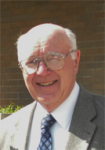
Alan Frank Keele is Professor Emeritus of German Studies at Brigham Young University.

Professor Keele was born in 1942 in Provo, Utah. He attended schools in Springville, Utah; Laramie, Wyoming; Spanish Fork, Utah; and Bicknell, Utah, and graduated from Wayne High (Utah) in 1960. He then attended the University of Utah in Salt Lake City, Utah, on a Rotary International scholarship, majoring in chemistry. After serving a thirty-month mission for the Church of Jesus Christ of Latter-day Saints in Germany from 1962 to 1964, he received his B.A. from Brigham Young University in German and History in 1967. In 1971, he received a Ph.D. in German Language and Literature from Princeton University in 1971, whereupon he began his career teaching at Brigham Young University. He has studied German, French, Greek, Latin, Spanish, and Russian (in ascending order of incompetence).

He is married to Linda Kay Sellers. They have six children and ten grandchildren. Professor Keele has served on the board of Utahns United Against the Nuclear Arms Race, Utah County Chapter, on the Area Advisory Council for the Alpine School District, as chair of the Utah Democratic Forum, as co-chair (with Professor Donald K. Jarvis) of Russian Relief, twice as an LDS campus high councilman, as an LDS branch president of a BYU single student branch (1974-1977), and as LDS bishop of a BYU married student ward (1993-1997). He has been an ordinance worker in the Mt. Timpanogos LDS temple, a choir director, a Primary teacher, and Ward Mission Leader. Since 2010 he has been retired from Brigham Young University.

Posted February 2012

Garold N. Davis

Joseph Smith Had the Plates, or Did He?

Now faith is . . . evidence.
~Paul, Hebrews 11:1

The moral of all this is an old one; that
religion is revelation. In other words,
it is a vision, and a vision received by
faith; but it is a vision of reality. The
faith consists in a conviction of its reality.
~G.K. Chesterton, The Everlasting Man

Hearing the “Joseph Smith story” for the first time may raise a few eyebrows, and a few questions. Mitt Romney recently reported that he responded honestly and frankly to a reporter’s request for an explanation of his, Romney’s, belief in Joseph Smith’s “first vision.” After complying with this request Romney said he was astounded, perhaps “blindsided” was the word he used, at the reporter’s follow-up question. “How can you believe in that kind of stuff?” That is not an easy question to answer in a few words, and the length of the answer depends somewhat on the theological knowledge and maturity of the one asking. Is it a sincere question? And does his or her knowledge of religion go beyond a sophomore course in “The Bible as Literature”?

Nevertheless, the “first vision” has been rather easy for critics to dismiss. Joseph was an uneducated farm boy, only fourteen years old. The religious fervor around him cried out for spiritual experiences. He admits he was unconscious for at least part of the time. “When I came to myself again, I found myself lying on my back, looking up into heaven” (JSH, 20). And little changed in his life for the next three years. Joseph tells us, “I continued to pursue my common vocation in life until the twenty-first of September, one thousand eight hundred and twenty-three . . .” (JSH, 9)

But on the night of September 21, 1827, everything changed. Joseph Smith reports the visit of a “messenger sent from the presence of God,” whose name was Moroni. This messenger (soon to be known commonly as the Angel Moroni) instructed Joseph in lengthy detail, quoting scriptures, telling of “gold plates, giving an account of the former inhabitants of this continent,” and most surprisingly (I assume Joseph was surprised) instructing Joseph that he was to get these plates, translate the ancient characters into English, and publish the translation. And this time Joseph was conscious throughout the whole of this amazing scene.

. . . when almost immediately after the heavenly messenger had ascended from me for the third time, the cock crowed, and I found that day was approaching, so that our interviews must have occupied the whole of that night (JSH, 47).

If the “first vision” raised questions which critics have, in their minds, easily answered, the events of the night of September 21, 1823, and the following day, and subsequent events which continued through the next seven years until the publication of the Book of Mormon in 1830, raise many more questions which are not so easily answered. I discovered this when I tried to approach these events through the eyes of the unbelieving critic, and said to myself: Suppose there were no Moroni and no gold plates? What then?

Joseph told his father the next morning about the visit from the angel and then left his father standing in the field and went, supposedly, to the hill, supposedly to meet the angel again and discover the plates. That evening he told his entire family that he had gone to the hill, had pried off a big rock which was covering a cement repository, had seen the plates, and had seen the “angel,” a fifth time within two days. And here comes the first question. Was Joseph Smith a liar?

The much-admired scholar Harold Bloom says that in his opinion Joseph Smith was “a religious genius,” even “an authentic religious genius, unique in our national history” (The American Religion, 80, 82). Since we are assuming here, as Professor Bloom assumes, that there was no Moroni and no gold plates, we must then also assume that Joseph Smith was, in addition to being a genius, devious, crafty, and very clever. We might even say shrewd. In kindness we may also believe him to have been sincere in his intentions. But having said that we must still raise the question again, Was he also a liar? Harold Bloom says no, he was not a liar.

In explaining the Book of Mormon and the plates Professor Bloom has the following rather strange explanation: “I assume that magical trance-states were involved, so that we can dismiss the literalism both of the golden plates and of conscious charlatanry” (emphasis mine). There were no golden plates ergo no Angel Moroni. But in saying multiple times to many people over the course of several years that these plates existed and that he had communicated directly on several occasions with the Angel Moroni, Joseph Smith is not telling lies. Did he exist in a perpetual “magical trance-state and therefore there was no “conscious charlantanry”?

I am reminded of a favorite passage from G.K. Chesterton.

Long words go rattling by us like long railway trains. . . . It is a good exercise to try for once in a way to express any opinion one holds in words of one syllable. If you say “The social utility of the indeterminate sentence is recognized by all criminologists as a part of our sociological evolution towards a more humane and scientific view of punishment,” you can go on talking like that for hours with hardly a movement of the gray matter inside your skull. But if you begin “I wish Jones to go to gaol and Brown to say when Jones shall come out,” you will discover with a thrill of horror, that you are obliged to think. The long words are not the hard words, it is the short words that are hard. (Orthodoxy, Image Books, 124)

Following Chesterton’s theory, the sentence: “I assume that magical trance-states were involved, so that we can dismiss the literalism both of the golden plates and of conscious charlatanry” actually says: “Forget about the gold plates. Joseph Smith was not an outright liar because he was a crackpot.” Can we have it both ways? When one reads the description of Joseph Smith’s first visit to the hill and his first experience with the plates and his fifth visit by the angel, it is hard to read the detailed, matter-of-fact descriptions of this event and think of Joseph as being in a continuous “magical trance-state.” But maybe it is too harsh to call his description of these events “lies”. The British have a kinder word. They call such little harmless things “taradiddles.” He embellished these taradiddles further by telling the family he had tried to take the plates but “was forbidden by the messenger.” Furthermore, he was to go to the hill each year on that day for a total of four years. Question: Where had he been all day when he should have been working in the field? Why did his family believe him? His brother William later answered the last question by saying that of course they believed him, that Joseph was a good and an honest boy. Why shouldn’t they believe him? William also mentioned that they were a religious family and frequently read the scriptures together in the evenings, which would make Joseph’s taradiddles all the more astounding.

And here I have to pause before asking a big question. I must make it clear that I consider Joseph Smith to have been a very intelligent man. He was not a fool, and certainly not a crackpot. Nor did he have schizophrenia. I have lived with a schizophrenic. My older brother completed a degree in mathematics and then suffered what we called back in those days, a “mental breakdown.” He remained a pleasant fellow, walked the streets of Provo talking to himself or to anyone else who wanted to listen to his theories about squaring the circle, but schizophrenics or delusionary people (people in a magical trance-state), in my experience, do not write books. They may see small birds as angels, but that does not inspire the confidence and admiration that Joseph Smith enjoyed from those closest to him. No, if Joseph Smith was not a prophet, he was a liar.

So what was the motive behind the lies? Did Joseph Smith want to become the creator of a new “biblical religion,” with himself at the head? Did he want to restore early biblical Christianity? Did he want to model a new church after the apostolic church that arose after the death of Christ? If so, he was not the only one. Many contemporary ministers claimed to be doing just that. So, another following question would be, why didn’t he do just that? It would have been so easy. Why did he invent this fantastic story about gold plates with ancient engravings telling about the origin of ancient inhabitants of this continent? And plates that he would have to get his hands on, keep, translate, and publish? Why did he lay on himself at the outset of his ecclesiastical career such an impossible burden? Of course, it turned out not to be an impossible burden. He actually did, in a relatively short time, dictate, complete, and publish the Book of Mormon. And, according to the assumptions I am suggesting here, he did it without the assistance of an angel and without gold plates!

How did he do it? Did he memorize twenty-one chapters of Isaiah? All the scribes insist he had no papers with him while he dictated. And speaking of Isaiah, we must ask other questions. Joseph Smith reported that the messenger, Moroni, quoted specific passages from Old and New Testament prophets. There was no Moroni giving him instructions, and yet these quotations all point in the direction of a “restored” Church of Christ, a rebuilding of “the house of Israel.” He even has the messenger telling him that the prophecies found in Isaiah concerning this restoration were “about to be fulfilled.” What did Joseph Smith have in mind at this early date? Thousands of readers of the Book of Mormon have seen the genius of the organization of these restoration prophecies. And in every case, as far as Isaiah is concerned, the passages include detailed commentaries. How did he do it? Had Joseph Smith, with his meager formal education, become a master scholar of the writings of Isaiah?

We find, for example, twenty-one chapters of Isaiah arranged with complete commentaries by Nephi, Jacob, Abinadi, and Jesus Christ. We also find the term “house of Israel” occurring 106 times in the book, frequently occurring in conjunction with the term “gentiles,” with the commentaries instructing us that “in the last days” the “house of Israel” is going to be “restored” by a “gentile” nation. It is also interesting that these terms (“house of Israel” and “gentile”) only occur when the prophet Isaiah is being quoted—that is, only in First and Second Nephi, in Jacob, and in Third Nephi. Did Joseph Smith arrange all of this in his mind before and during the time he was dictating?

Perhaps there are answers to these questions about Joseph Smith’s dictating the Book of Mormon. But even more questions arise when we continue with the problem of there being no gold plates. Huge questions. There is probably no event in Joseph Smith’s early life for which there are so many reliable and insistent witnesses. When Joseph reported to his family that he had received a severe reprimand from the Angel for not being diligent enough in his work, what was he talking about? More lies? When Joseph and Emma took Joseph Knight’s horse and wagon away from the Smith home at midnight where did they go? When Joseph returned home with a dislocated thumb and said he had been waylaid in the woods by persons trying to steal the plates, where had he really been and what had he been up to? First he told his family that he had hidden the plates in a log, but shortly thereafter he brought the plates home, covered with a cloth or with a coat, and each member of the family was allowed to handle them but not remove the covering. Joseph’s brother William (16) says “I was permitted to lift them as they laid in a pillowcase but not to see them, as it was contrary to the commands he [Joseph] had received. They weighed about 60 lbs. according to the best of my judgment.” Another time William handled whatever it was that Joseph had covered and said: “I could tell they were plates of some kind and that they were fastened together by rings running through the back.” Joseph’s sister Catherine (15) “hefted” them and declared they were “heavy.” What did Joseph have hidden in the coat or under the cloth that could deceive the members of his family?

Joseph asked his brother Hyrum for a box to store the plates in. Hyrum had also “hefted” the plates and was quick to provide the box. Why? Several days later Martin Harris’ wife and daughter visited the Smith home with the intention of seeing the plates. They went home disappointed and told Martin Harris that they were not permitted to see the plates but they were permitted to hold the box. Martin reported: “My daughter said they were about as much as she could lift . . . and my wife said they were very heavy.” So Martin himself went to the Smith home to see the plates with the same result. He was allowed to lift the box which contained the plates and reported: “I knew from the heft that they were lead or gold, and I knew that Joseph had not credit enough to buy so much lead” (Anderson, 26). A farmer like Martin Harris worked with and knew all kinds of metals. What was in that box?

These experiences could be repeated many times and each time would raise many questions. What did Joseph’s wife Emma have sitting on the table in her house “wrapped in a small linen table cloth?” She says:

I once felt of the plates as they thus lay on the table, tracing their outline and shape. They seemed to be pliable like thick paper, and would rustle with a metallic sound when the edges were moved by the thumb. . . . I moved them from place to place on the table, as it was necessary in doing my work. (Anderson, 29)

What was under the cloth?

Mrs. Whitmer says that she was shown the plates. In David Whitmer’s words:

My mother was going to milk the cows, when she was met out near the yard [by a stranger] who said to her: “You have been very faithful and diligent in your labors, but you are tired because of the increase of your toil; it is proper therefore that you should receive a witness that your faith may be strengthened.” Thereupon he showed her the plates. (Anderson, 31-32)

She repeated this story to her children and grandchildren all her life. Was she also a liar? If not, what did she see? Who was the stranger?

Another question: Why would a man like Joseph Smith, who was in his right mind, who had a plan in his head, and who had finished dictating the Book of Mormon and was about to take the manuscript to the printer, why in the world would he invite eight shrewd and probably still somewhat skeptical farmers, including his father and his two brothers Hyrum and Samuel, to meet him in a secluded spot in the woods near their house where he would show them the plates, if he had no plates to show them? His father and brothers, as well as the Whitmer family, had been waiting for several years for this opportunity. They were all religious men. They trusted in Joseph Smith. There were no plates to see, but when they returned to the house they each signed a document stating they had seen “the plates of which hath been spoken which have the appearance of gold . . . we also saw the engravings thereon. . . we have seen and hefted, and know of a surety that the said Smith has got the plates. . . . And we lie not, God bearing witness of it.” If there were no plates, what happened that day in the woods? What conversation took place between Joseph and these men? What did Joseph tell his father and his brothers when he showed up with no plates? Sorry, Dad, I have been lying to you all these years, but if you will only say you actually saw the plates, that would help me out a whole lot. What would Joseph’s father answer to such an absurd statement?

I am now getting to the point of weariness suggesting these questions, and this reminds me of an interesting anecdote in the life of Samuel Johnson which is somewhere in Boswell’s Life. James Macpherson, the compiler and editor of the Ossian papers, was disturbed that Samuel Johnson did not believe the poetry came from an early-medieval Celtic bard, but believed, rather, that Macpherson himself had collected old highland poetry and fused it together with a few poems of his own. Incensed, Macpherson asked Mr. Johnson: “Sir, Do you believe any man living in this age could have produced such poetry?” to which Johnson answered, “Yes, sir. Many men, many women, and many children. A man could write such stuff all day if he would abandon his mind to it.” But there were not any men, let alone women and children who could have written the Book of Mormon. But I could continue asking such questions all day if I would abandon my mind to it. But I will not abandon my mind to it; I will close this session of questions.

And Joseph Smith did not abandon his mind. His mind became sharper and clearer as his work as prophet continued through city planning, through temple building, right on through his imprisonment when he dictated this pearl of the Doctrine and Covenants:

. . . let virtue garnish thy thoughts unceasingly; then shall thy confidence wax strong in the presence of God; and the doctrine of the priesthood shall distil upon thy soul as the dews from heaven. The Holy Ghost shall be thy constant companion, and thy scepter an unchanging scepter of righteousness and truth; and thy dominion shall be an everlasting dominion, and without compulsory means it shall flow unto the forever and ever. (D&C 121:45-46)

——————————————

Garold N. Davis (Ph.D., Johns Hopkins University) is professor emeritus of German and comparative literature at Brigham Young University, where he also chaired the Department of Germanic and Slavic Languages and served as associate dean of the College of Humanities. Prior to joining the faculty at BYU, he taught at the University of Pennsylvania, Southern Oregon College, and the University of Colorado.

Among his Mormon-oriented publications are “Pattern and Purpose of the Isaiah Commentaries in the Book of Mormon,” in Davis Bitton, ed., Mormons, Scripture, and the Ancient World: Studies in Honor of John L. Sorenson (Provo: FARMS, 1998); and, with Norma S. Davis, “Behind the Wall: The Church in Eastern Germany (Part 1: Saints in Isolation, 1945-1989),” Ensign (April 1991); “The Wall Comes Down: The Church in Eastern Germany (Part 2: 1989-1990),” Ensign (June 1991); Behind the Iron Curtain: Recollections of Latter-day Saints in East Germany, 1945-1989 (Provo: BYU Studies, 1996) [German edition: Jenseits des eisernen Vorhangs: Erinnerungen von Heiligen der letzten Tage in Ostdeutschland, 1945-1989 (Bad Reichenhall, Germany: LDS Books Schubert & Roth OHG, 2005).

Dr. Davis is married to Norma S. Davis, and they are the parents of five children. Together, they have served two missions for the Church of Jesus Christ of Latter-day Saints in Germany and Austria. He is currently an assistant executive secretary in his home ward, and a sealer in the Provo Utah Temple. His hobbies “in a previous life” were backpacking, cross-country skiing, and marathon running; now, they’re somewhat more sedate: golf and woodcarving.

Posted February 2012

Melissa Wei-Tsing Inouye

Is the Church true? Are its teachings correct?
These are the questions that I asked myself as a teenager. I was fairly diligent and non-rebellious as far as teenagers go. I worked hard to please my parents, Church leaders, high school teachers. I practiced the piano, I memorized scriptures, I studied for tests in history and chemistry and calculus. I wasn’t just going through the motions to please others, either. I loved learning about the world; I wanted to learn to know God.

And yet at that time, I felt that there was tension between the two major tracks of learning in my life (learning how to interpret the world as an educated person, and learning how to become a mature member of the Church). For instance, my biology textbook talked about the theory of evolution as the widely accepted view of how human life came to be. But when I questioned my Sunday School teacher on evolution, he gave me a dismissive look and said, “Melissa, do you really think that we came from monkeys?”

Now, this Sunday School teacher was—like all Mormons at the local level—doing his job as a volunteer. Actually, he was a conscript. A local bishop appointed him to the job. This Sunday School teacher wasn’t a scientist, either. So I didn’t see him as the final authority on whether the claims of Mormonism could harmonize with the claims of science.

However, it troubled me that contradictions seemed to exist among “the things that I knew” as an educated member of the Church. It also troubled me that others also sought to draw attention to contradictions within my faith. I was aware that some of my Christian friends had anti-Mormon lessons at their church youth groups. Clearly, what they had learned led them to feel contempt and derision for my deeply held beliefs. One of them told my brother that, as a Mormon, he was “living a lie.”

Therefore, to my high school self, the questions “Is the Church true? Are its teachings correct?” were not only very important, but also rather terrifying because it seemed that the validity of so many other things also hinged on these questions. I knew that I would have to figure this out, but at the same time I didn’t want to. I was afraid of what I perceived to be a zero-sum contest between my religious truth and “everybody else’s truth.” What if the Church lost? And then what could I believe, and who would I be?

“There are a lot of stories in the world, but Mormonism is the story that I want to be true. To the extent that it is not, I will make it true.”

For help I turned to my “crazy Uncle Charles,” as he called himself: my dad’s little brother, a Stanford-and-Harvard-educated professor of Japanese literature at Tufts University. [Uncle Charles is also featured on the Mormon Scholars Testify website, and I commend to you his essay, which is much more eloquent and articulate than mine.] I told him about my intellectual doubts about Mormonism’s claims. In the sort of long, belabored emails that high school students with Big Questions are wont to write, I laid out all of my doubts: What about evolution? What about blacks and the priesthood? What about polygamy? What about Joseph Smith saying that there were five-foot-high Quakers living on the moon [or something like that]?

Uncle Charles replied that when he was an undergraduate, he, too, had had doubts. He had gone to another Latter-day Saint professor for help. This professor had told him that there were a lot of stories in the world, but the Mormon story was the one that he wanted to be true. Uncle Charles concluded his message with the statement, “There are a lot of stories in the world, but the Mormon story is the one I want to be true. To the extent that it is not, I will make it true.”

At the time, I read this as a sort of well-meaning self-deception, kind of like what happens with the Santa Claus story. Santa Claus doesn’t really exist, but for kids who believe in Santa Claus, he does. Wow! He flies around the sky in a sleigh drawn by reindeer! He fits down the chimney and magically leaves presents with tags signed in parents’ handwriting! That’s great and magical for, say, five year-olds, but for everyone else (and for those five year-olds whose parents have let them in on one of life’s harsh realities) it’s just another tender falsehood. To say something like, “to the extent that it is not, I will make it true” sounded foolish and also a little arrogant. You can’t make a religion “true” in the same way that you can pull off the Santa Claus act. There had to be “a right answer” that was definitely and completely right.

At the same time, I didn’t really know that there was a right or a wrong answer. As a sophomore at Harvard College, I took a moral reasoning class that pitted the world’s great moral philosophers against each other on the question of whether a belief in God was necessary for the formation of moral laws. Everything I read sounded about right to me, even when the syllabus set philosophers up to directly contradict each other. I read A and agreed with A. Then I read B and agreed with B.

In the midst of my ambivalence, I was ultimately comforted by Uncle Charles’s endorsement, incomplete as it seemed to me at the time. Maybe there were some things about religion that weren’t clear to me at the moment, but Uncle Charles was a pretty smart person. I still knew for a fact that the key to what I loved most about my wonderful extended family was the common faith that we all shared in the Gospel of Jesus Christ as interpreted by the Church of Jesus Christ of Latter-day Saints. I knew for a fact that I had felt the Spirit’s powerful witness—not all the time, but enough times to make a difference. Maybe I would figure things out someday.

I testify that this message is true. Will you follow Jesus Christ and be baptized into His church?

I turned in my mission papers and was called to Taiwan. I had just finished my junior year as an East Asian Studies major with a specialization in Chinese literature and I hit the ground running in terms of language. At the Missionary Training Center (MTC), where new missionaries go to acquire languages, doctrine, and psychological resilience, my teachers dispatched me to study Chinese with Elder McMullin, a missionary with thick, owlish glasses and a generally nerdy demeanor, who had previously been an exchange student in China. For the sake of propriety, our teachers kept the classroom doors ajar and had us move our desks into the well-trafficked hallway. We memorized discussions and waited impatiently for the opportunity to leave the MTC for Taiwan. I must admit that my eagerness to leave arose partially from narcissistic self-assurance: I already speak and read Chinese! I already know the Confucian classics as well as the Bible and the Book of Mormon! Taiwan needs me! The Lord needs me! Here I am, send Me!

I got to Taiwan, was assigned a trainer, and found that I had a good deal to learn. In the first place, my knowledge of Chinese religious and philosophical traditions was not the secret conversionary weapon that I’d imagined it would be, but actually a hindrance. I would try to talk to people about the Dao (the Way), or about the bodhisattva’s ultimate sacrifice, and draw connections to the conclusion that whoever it was to whom I was speaking should join my church. However, I soon found that while comparative philosophy was interesting, it didn’t demand that anyone change anything about their lives—myself included. My companion and I invited many people to accept Jesus Christ and be baptized, and some accepted, but I didn’t feel a sense of certainty about the presence of the Holy Spirit in my work as a missionary. I worked hard, studied hard, prayed hard. But in many ways, despite my “successes” as a missionary in terms of logging hours and baptizing converts, during the first part of my mission I was actually missing the point.

Create in me a clean heart, O Lord; and renew a right spirit within me. (Psalms 51:10)

After a while, my many failures and shortcomings as a missionary and as a person became more apparent to me. I’m not quite sure how this happened or how long it took, but I do recall one event from this period of self-reflection. It was the day I picked up a new companion from the train station in Tainan. She was a new missionary who had only been out for six weeks. On the bike ride home from the train station—suitcases strapped to our back racks with bike tire inner tubes, motorcycles and giant trucks rumbling past in clouds of black exhaust—I found out that she hated riding a bike in a skirt, disliked Chinese food, was struggling with Chinese, and didn’t like doing missionary work. My response was something like, “Tough. We’re missionaries, we work hard, and we love it. So just get over it.” Shortly thereafter, as we left the apartment and paused at the door to pray, I looked up and saw my companion with tears streaming down her face, weeping. I thought to myself: How can someone who is supposed to be representing Jesus Christ be the kind of person who fails to take care of someone who needs extra love and support?

I decided that of all things, being a better disciple of Christ, and not the statistics showing “how hard I worked,” should be the measure of my success as a missionary. As I rode my bike from appointment to appointment, I repeated in my head a scripture from Psalms: Create in me a clean heart, O Lord; and renew a right spirit within me.

I had the good fortune to spend the last nine months of my mission in the western district of the city of Tainan. The members of the Church there were so dedicated and generous. I came to know the families and individuals in the ward well enough to understand how to serve them better. I loved them for their diverse gifts and personalities and for their desire to follow Christ.

I also became well acquainted with Tainan’s neighborhoods and cultural institutions, including its religious institutions. My companion and I went every week to a nursing home run by a Catholic nunnery and helped the nuns do the laundry. We hung damp sheets and adult-sized cloth diapers to dry. Sometimes we helped to iron the priests’ collared shirts. The nun with whom we worked most often told me how she had been called to serve God when she was a young woman about my age who was engaged to be married. She was an American woman, cheerful and hardworking as she labored in this part of God’s vineyard. I felt certain that God appreciated and accepted her sacrifices. I was also beginning to feel certain that God appreciated and accepted the sacrifices that I was making as a missionary. I experienced the good fruits of the Spirit in the happiness I felt, in the joy and love that welled up spontaneously in me like a miracle, like a superpower, like a fountain of living water.

When I returned from my mission and resumed my undergraduate studies, I found that I had become a better student. I was less easily swayed by first this and then that forceful argument. I was able to think critically and exercise judgment. I was more invested in the work of studying and less easily distracted. I decided to apply for a Ph.D. in Chinese history and was accepted to the program at Harvard.

Church history has some sticky spots, and the Church sure is a patriarchal, conservative institution, but I really love my husband.

I deferred Ph.D. studies for one year because I ended up engaged to Elder McMullin, the nerdy, skinny elder who had been my Chinese study partner in the MTC. During our engagement, I participated in a summer research seminar at the Smith Institute for Church History at BYU. It was the first time I had ever studied Mormon history in-depth.

Over the course of the summer, as I delved through history books and primary sources, I was alternatively inspired, impressed, intrigued, and shocked. I began to see that the early Saints had been flawed human beings like all of us. I learned that early leaders such as Joseph Smith and Brigham Young had made missteps in the course of their leadership. I learned that Church culture, organization, policies, and even doctrines have been subject to shifts over time. I learned more about the Church’s nineteenth century practice of plural marriage, which is a very difficult subject for nearly all Mormon women, no matter how orthodox. Finally, I confronted the reality that in terms of its formal doctrinal and administrative structure, the Church—past and present—is a patriarchal and very conservative organization. This reality is not a challenge for many members of the Church, and it is not a significant challenge for me now. However, it was a challenge for me at the time, as I prepared for marriage in the temple and anticipated having to submit to the various aspects of the temple liturgy that reinforced this patriarchal order.

At the same time, I was in love with my fiancé Joseph, the former Elder McMullin. He was intelligent, whimsical, even-tempered, and generous. We had many shared interests, including our shared experience as missionaries in the Taiwan Kaohsiung Mission and our interest in China and the Chinese language. He was supportive of my plans for pursuing a doctorate and later a professional career while also raising a family. He was deeply committed to following Christ, serving in the Church, and fulfilling the responsibilities of a husband and a father. He was in love with me. Intellectual concerns about patriarchal liturgies notwithstanding, I couldn’t think of anything more wonderful than being married to Joseph for time and all eternity. I was sure that our marriage would be a partnership of equals. Furthermore, I knew that so much of what I valued about who he was, including why he valued who I was, was directly linked to his upbringing as a Latter-day Saint.

So, on my wedding day, I thought: Patriarchy, smatriarchy. We’ve been married for eight years now—we’ve had three kids along the way—and it’s been wonderful. I don’t mean for this to devolve into a hubbi-mony: “I know my husband is true.” What I’m trying to say is that the formal structures of a religion can be very different from the everyday practice of that religion. Focusing on the formal structures alone yields an incomplete picture.

There are a lot of stories in the world, and they all have sticky spots.

When I went back to Harvard for the Ph.D., I studied the history of Christianity in China and was based in the Department of East Asian Languages and Civilizations. During seven years of taking classes, preparing general examinations, conducting field research, and writing my dissertation, I studied the history of religious movements from the great world religious traditions of Christianity, Buddhism, Daoism, and Islam. I examined numerous historical accounts showing how these religious traditions have also had leaders who made missteps in the course of their leadership, that these religious traditions have also been subject to shifts and swings over time, and that—generally speaking—these religious traditions in their various global and historical manifestations have tended to be quite patriarchal and very conservative.

In the context of the world’s religious traditions, I didn’t see anything particularly problematic about Mormonism. If there is any reason why Mormonism seems more vulnerable to intellectual criticism than other major world religions, it is because Mormon history begins relatively recently. The miracle of a virgin getting pregnant is no more believable than the miracle of a fourteen-year-old boy seeing God and Jesus Christ in a vision. The “problem” with the Mormon miracles is simply that they haven’t been shored up by thousands of years of religious tradition. But that problem lies in the eyes of beholders who are willing to withhold scrutiny from “old” but not “new” religious claims, not in the miracles themselves.

Learning about how religious texts are created, translated, and disseminated from place to place and from culture to culture also helped me to appreciate the Book of Mormon, the Doctrine and Covenants, and the Pearl of Great Price. I’ve read many accounts of people who have left the Church for lack of archaeological evidence of the Book of Mormon in the Americas, “therefore the Book of Mormon is not an accurate historical record, therefore Joseph Smith wasn’t a prophet, therefore the religion that he founded is all bogus.” Or I’ve heard of people who say they left the Church because they researched this or that prophecy made by Joseph Smith in the Doctrine and Covenants and found that it never came to pass, “therefore Joseph Smith wasn’t a prophet, therefore the religion that he founded is all bogus.”

There was a time in my life when I would have thought about religion in this same uncompromisingly syllogistic way, as if a religious system is a string of cheap Christmas tree lights. If one light gets broken, the whole string is out. This was what was in my mind when, as a high school student, I asked my Uncle Charles: Is the Church true? Are its claims correct? In my mind, one incorrect claim, such as Joseph Smith’s alleged statement that the moon was inhabited by people dressed like Quakers, could set off the whole chain reaction that ended with my faith being bogus. To me at the time, Uncle Charles’s response, “To the extent that [the Church is] not [true], I will make it true,” was small comfort. If something is bogus, how can you do anything to make it true?

But I now have a different perspective on this issue of religious claims. From a scholarly perspective, most religious claims are by nature miraculous and indefensible from an empirical point of view. When good primary sources exist, religious founders all turn out to be real people, not perfect beings. Religious texts and systems of doctrine are all problematic in their own way, from the Bible to the Mahayana Buddhist sutras to the Koran. Maybe this is what Uncle Charles meant when he alluded to ways in which the Church might not be “true” according to my line of thinking at the time. Maybe when he said, “I will make it true,” he was simply speaking of the initiative required to nurture and exercise faith. “It’s not a spectator sport,” he said on a subsequent occasion, referring to religious life as a Mormon. I, too, have learned about the work of faith: that it is neverending, sometimes arduous, and that it has great value. It is work worth doing.

Instead of a string of Christmas tree lights, perhaps a better metaphor for how I see The Church of Jesus Christ of Latter-day Saints is a building. To last, a building must have a good foundation. If it has a solid foundation, it can be built taller and larger, retrofitted and remodeled as use dictates. But if it has a shoddy foundation, it will be impossible for the building to endure, no matter how determined the builders. It will simply fall apart or sink into the soil. To me, the foundation of the Church was laid by the prophet Joseph Smith, his interpretation of the Bible and the Christian tradition, his revelation of humankind’s closeness to God, and the new scriptures that he brought forth, the Book of Mormon, the Doctrine and Covenants, and the Pearl of Great Price. No matter how ungainly or flawed it may appear to some, the foundation of Mormonism continues to withstand the stresses of expansion and change.

There are a lot of stories in the world, and some of them are very similar to the Mormon story.

I wrote my dissertation on the history of the True Jesus Church, a Chinese Christian church with a founding story that Mormons find familiar: A man considered himself a Christian and read the Bible, but looked at the numerous Christian denominations and wasn’t sure that any of them represented the church that Jesus had founded. One day he had a vision in which Jesus spoke to him and commanded him to restore Christ’s true church. So in Beijing in 1917, Wei Enbo founded the one true church: the True Jesus Church. Same story, different punchline.

During my research, I became personally acquainted with many members of the True Jesus Church who were moral, intelligent, and in many cases impossibly kind to me, the “Gentile” researcher. I was certain that they were truly striving to follow Christ. I heard their testimonies of God’s love and care. Just as one hears in LDS General Conference or church publications, in the course of my research on religious experience in the True Jesus Church I heard and read many stories of miraculous healings, divine intervention, guidance given in answer to prayer. I was certain that church members were not lying when they recounted miraculous or life-changing manifestations of God’s power in their interviews. Why should they be? These were people of faith, and they saw the Holy Spirit at work in their lives.

The resemblance of the True Jesus Church to the church to which I belonged, along with the respect that I felt for the True Jesus Church members’ faith, provoked much reflection. If the Mormon story is not entirely novel, I thought, what is it that makes it different? What makes it matter? What makes it true?

Religions are more than just stories. So is truth.

One thing that I have learned as a scholar of religion is that religions are more than just “stories”. That is, a religion is much more than simply the scriptures, recorded teachings of religious leaders, institutional policies, and popular narratives that explain the state of the world and humankind’s place in it. Religion includes what people do, what people eat, when they pray and what material objects they use to pray, how they decorate their houses and how they build sacred places. Religion is how people feel, what they see in visions that no one else can see, how they make friends and what they do to make amends to those whom they have offended. Religion is people’s lived experiences, which are impossible to represent with a single list of doctrines or a single narrative. To understand religion, a scholar must encounter it on its own terms and according to the understanding of its believers, although understanding of course is not limited to this alone. This view is the state of the field in religious studies.

Telling stories is important, but I don’t think that any story that we try to tell about God can be complete as a “truth” in itself. To me, the way truths can be manifest in lived experience is a more valid measure of what is true, real, or from God. Who cares whether something is “true” by any abstract measure, including intellectual or theological argument, if it cannot be realized in our daily work, our bodies, or, most importantly, our relationships with our fellow beings? In the Sermon on the Mount, Jesus said that what people did was more important than what people said, and that people could be known by their fruits. I think that the ultimate responsibility for whether someone grows into the measure of a true disciple of Christ lies with that individual herself, not her religion. However, religions teach us what is possible, what is expected, what we can become. They set parameters and create the conditions for our growth.

This is why I think that Mormonism is the most amazing religious system that I have ever encountered, professionally or personally. As I have matured as a scholar and have gained a deeper knowledge of religions and religious believers, especially global Christian movements, I’ve gained a much deeper appreciation for Mormonism as a religious system based on powerful and compelling ideas and organized in a unique and compelling way that helps people in real life, that evolves over time, and that will endure. More importantly, however, my years of experience as a member of the Church have developed my testimony that the Church is an inspired organization where people can learn about Christ not only through prayer and study of the scriptures, but through continuous opportunities to yield, to serve, and to express gratitude. I know for a fact that the Church and its members are not perfect. As a people and as an institution, we’ve come a long way and we still have a long way to go. As a group, Mormons are probably no better than other people, be they Jews or Buddhists or atheists, who are committed to doing what is right even though it is hard, including loving one’s fellow beings as one’s self. I have good friends who belong to other faiths or who have left the faith traditions within which they were raised; they are moral, kind, wonderful people, and, because of them, the world is a better place. I can’t speak for them. What I can do is speak from my own experience. I testify that the Church is a divinely inspired organization, that Joseph Smith was a prophet who received divine revelation, and that the ordinances we receive and the covenants that we make within the Church have divine authority. I value the Church and I am so grateful to be a Latter-day Saint.

O then, is this not real? (Alma 32:35)

As I’ve continued to learn and grow as a person, as a member of the Church, and as a parent, I’ve been blessed with many wonderful opportunities to feel the active presence of the Spirit: the powerful, transforming awareness that God exists and is mindful of us. I have been inspired by the patterns and the commandments set forth in our scriptures, the Bible, the Book of Mormon, the Doctrine and Covenants, and the Pearl of Great Price. On countless occasions I have witnessed the Spirit working in people’s lives: giving them words of power and blessing, expanding their capability to be humble and generous, transforming enemies into friends. I am grateful that my life as a Latter-day Saint has helped me to develop a relationship with God and has defined the scope of this relationship in such marvelously limitless ways. I am grateful for the discipline that we learn as Latter-day Saints: for the laws of the fast, of the Sabbath, of the Word of Wisdom, and of tithing. I know that today, as in days of old, prophets still exhort in the name of God for people to repent and to become better.

There are still many things that I don’t completely understand about how the world works or doesn’t work and what God wants us to do about it. There are still many things that I don’t completely understand about how the Church works, or about the way that Mormons did or thought about things decades or centuries ago.

And yet my life experiences and education as a scholar have led me to treasure the blessings in my life: the fruits of the restored gospel in a world where such fruit has great value. As the prophet Alma says in his sermon about a seed that is planted, that grows, and that bears good fruit, “O then, is this not real?”

————————————–

Melissa Wei-Tsing Inouye earned her Ph.D. in Chinese history from Harvard University in 2011. While researching and writing her dissertation, “Miraculous Mundane: The True Jesus Church and Chinese Christianity in the Twentieth Century,” she lived in Xiamen, China, and was an affiliate of the Shanghai Academy of Social Sciences from 2009-2010. Her dissertation research project was funded by the U.S. Department of Education’s Foreign Languages and Area Studies Dissertation Fellowship and by the Religious Research Association’s Constant R. Jacquet Research Award. Melissa taught in the history departments of Loyola Marymount University and California State University, Los Angeles, from 2006-2008. In 2003 she graduated magna cum laude in East Asian Studies from Harvard College, delivering the Harvard Oration at the Class Day graduation exercises.

Melissa currently serves as co-director of the Mormon Chapter of the Foundation for Religious Diplomacy. Her journalistic work and creative writing have been published in The Far Eastern Economic Review, the NPR show Here and Now, and various literary journals and blogs. She is the mother of three children. She and her family live in Hong Kong, where she is engaged in additional research in the archives of Hong Kong Baptist University to prepare her dissertation manuscript for publication in book form. [email protected].

Posted January 2012

Tom Yuill

A Forty-Three-Year Odyssey: Tom Yuill’s Conversion Story

I grew up mainly in Maryland. My mother was a Christian Scientist and my dad an inactive Presbyterian, so my brother and I were brought up in the Christian Science faith. No two faiths in Christianity could be more different than Christian Science and that of the LDS Church. As an undergraduate student at Utah State University, I had serious questions about the faith of my youth, even though I had seen healing and other positive results of that faith. Unable to resolve the conflicts and questions about the basic principles of that religion, I had my name removed from the rolls of that church. That loss of faith left me very unsettled religiously.
As a college senior, I met Ann, a thoughtful, attractive, young woman student. Two years later we were married and moved to the state of Wisconsin for my graduate studies. Ann was a life-long and active member of the LDS Church. Ann’s parents were disappointed that she married a nonmember. She had faith that I would join the Church. Ann, knowing that I was deeply involved in scientific research, began to gently introduce me to evidences for the Book of Mormon. These were mainly articles in FARMS and books such as Lehi in the Desert. I read them willingly, and would say, “Hmmmmm. That’s interesting.” But nothing changed outwardly. That process went on for many years.

After graduating with my doctorate from the University of Wisconsin, I still had uneasiness about faith, having once lost my own. We lived in Thailand, where 95 percent of the population is Buddhist. My friends and colleagues there were Buddhists, and they had faith that if they followed the teachings of their religion, they would reach Nirvana, and, while on earth, Buddhism did give them a sense of peace and contentment and a good moral code to live by. After Thailand, we moved to Colombia, the most Roman Catholic country in Latin America. Most of my friends and colleagues there were Catholic, and had faith that if they followed the teachings of their church, they would be released from Purgatory and would go to Heaven. And their Catholic faith did result in healings and other blessings. And so, I was exposed to very different faiths, but all with apparent positive results and blessings.

I developed an early appreciation for the LDS Church and had no resistance to Ann’s activity nor to raising our two daughters in the Church, which helped them navigate through childhood and adolescence. Ann continued to pass along evidences of the Book of Mormon to me. But I remained doubtful about faith as a basis for belief and commitment, having lost mine and seen some very different faiths in operation among my friends. I had not experienced that spontaneous, overwhelming feeling that the Book and the Church were true. Several years earlier, a friend of mine, who had not been particularly religious, knew the Church was true when he saw two missionaries approaching his house, and when they came in the door, he was ready to receive the lesions and be baptized before they even taught him. Our foster son, a Catholic from Colombia, just knew that the Church was true when it was first explained to him. I expected to experience similar feelings, but they never came.

Ann continued to pass along articles on evidence for the Book of Mormon and discuss them with me. Little by little, I began to see that the Book of Mormon might be true. Finally, she passed along an article on word print analysis of the Book of Mormon that provided strong evidence of multiple authorship of the Book. That meant that Joseph Smith, Jr. wasn’t a genius who just made it up. With that, I decided that I needed to discuss this with a friend of mine. He was a distinguished biological scientist who had been an active Church member all his life. He agreed to meet with me, and brought along two missionaries. I had had missionary lessons before, but they did not connect with me. The missionaries were unable to make one of the appointments with me, but my friend came. I mentioned that I had not experienced those feelings that my friend and foster son had received that convinced them that the Church was true. He said something important—there are many ways to achieve a testimony of the truthfulness of the Gospel and the Church. I should not expect to have the same experiences that others, like my friend and foster son, have had. An intellectual path can also lead to faith and a testimony. The key point is that all paths end up at the same point, with a conviction that the Book of Mormon and the Church are true. One could be both a good biological scientist and an active LDS member.

I think that there is a useful lesson for missionaries coming out of my experience. I had received missionary lessons before. Forty years before, a couple of sister missionaries met with me. I asked them to set aside their flannel boards and routine approach and just tell me about the Church, what they believed in and why they believed it. They handled the challenge well and we had begun to make progress when they were transferred to another area. The two elders who replaced them just couldn’t handle discussions done that way and we didn’t make any progress. Forty-three years later, my scientist friend was able to provide an explanation that cleared away my doubts about faith and the many ways to achieve it, and I was baptized nine years ago. The lesson for missionaries is this: My impression is that, forty years ago, the missionaries were not as well trained as those coming out of the MTC today. Although better trained today, it is still necessary to adapt the message to the investigator’s background, interests, and values. A single approach does not fit all, so missionaries must become perceptive enough to know what will connect with investigators and what will not.

There are two other messages for all of us coming from my conversion story. First, Ann’s steadfast commitment to the Church and dedication to her callings were a constant, good example for me, and showed me that she truly believed in the Church and its teachings and acted on that. People within our families and outside them will judge the validity of the Church by our own actions and examples. Like it or not, we are all daily missionaries, and our actions will speak louder than any words we say. Second, from the beginning of our marriage, Ann prayed constantly that I would come to the conclusion that the Church was true and join. And I finally did, but it took a long time. The message is that prayers are answered, but not necessarily as quickly as we would like. True, she would have preferred that my conversion would have come in forty-three months rather than forty-three years, but it came in the Lord’s time, not hers. We are grateful that her prayers were answered when they were.

I say this in the name of Jesus Christ, Amen.

———————————

Tom Yuill is an emeritus professor of Pathobiological Sciences and of Wildlife Ecology at the University of Wisconsin, now living with his wife, Ann, in Mapleton, Utah, since his retirement eight years ago. He was on the UW faculty for thirty-three years as a teacher and researcher, and during that time also served as Associate Dean for Research in the School of Veterinary Medicine for ten years and, for another ten years, as Professor and Director of the Nelson Institute for Environmental Studies.

Posted January 2012

John L. Fowles

C.S. Lewis said, “I believe in Christianity as I believe that the sun has risen: not only because I see it, but because by it I see everything else.”1 This powerful quote represents my feelings about the restoration of the gospel through the instrumentality of the prophet Joseph Smith. I believe in the restoration because of many personal spiritual confirmations throughout my life. I also know through the lens or window of the restoration one can correctly view the gospel of Jesus Christ. Faithful scholarship is pursuing academic studies from a standpoint of belief. During my life I have had and still entertain questions about certain details of the gospel, historical quandaries, puzzlement about applications, etc. However, from a very young age I have had the gift of faith or the easiness to believe. This knowledge and testimony was so strong at times, that my witness of the authenticity of the prophet even superseded my feelings concerning Jesus Christ. I have always had a testimony of Jesus Christ and His Father. However, my testimony of Joseph Smith’s role seemed to be even greater than my witness of Jesus Christ. Mentally, I knew this priority of Joseph Smith was incorrect. Years later, I remember reading Truman Madsen’s book regarding Joseph Smith and being thrilled with the idea of the restoration being the window through which many have come to a surer knowledge of Jesus Christ. Truman Madsen said, “Joseph Smith is for me a window to Christ, the clearest one I’ve ever found.”2
I came to realize that I share Bro. Madsen’s view. My witness of the truth of the prophet’s role in the restoration came first. It is the foundation of my faith. Joseph Smith’s life and thought, and, more importantly, the Lord’s revelations through him, have been my window to the Savior.

Therefore, as Peter taught, I have a reason for the hope that is in me when he said, “. . . sanctify the Lord God in your hearts: and be ready always to give an answer to every man that asketh you a reason of the hope that is in you with meekness and fear.”3 As a youthful missionary, I remember violating part of Peter’s declaration by always wanting to intellectually defend the church and the doctrines of the restoration from its detractors by proof texting, using the Bible. During those efforts to defend the church and my faith, I did not always do it in a spirit of meekness and fear. In addition, many times I did not first sanctify the Lord God in my heart before entering into gospel discussions with those who were antagonistic toward the restoration. At the time, I felt the Bible would at least be a good starting point and common ground among other Christian faiths. However, after life’s experiences and a long teaching career I have “learned for myself” that the Bible is at times the battleground, not the common ground among denominations. During those early missionary days, I was not inviting my investigators into their own sacred grove. Joseph Smith spoke of his religious quest for truth in this profound way: “the teachers of religion of the different sects understood the same passages of scripture so differently as to destroy all confidence in settling the question by an appeal to the Bible.”4 Religious truth ultimately comes by personal revelation augmented by rational argument. Austin Farrer said, “Though argument does not create conviction, lack of it destroys belief. What seems to be proved may not be embraced; but what no one shows the ability to defend is quickly abandoned. Rational argument does not create belief, but it maintains a climate in which belief may flourish.”5

For me, developing a firm testimony and faith in the gospel of Jesus Christ is primarily a spiritual endeavor. As I read the scriptures, study languages, or study modern scholars, I constantly see rational evidences or reasons to believe in the restoration through the instrumentality of Joseph Smith. In my mind, for example, Joseph did not simply write the Book of Mormon in approximately sixty-five working days. He did not know or understand Hebrew chiastic structure as we find throughout the work. He did not manufacture the names of Mahijah and Mahujah in the Pearl of Great Price associated with the Book of Enoch as found much later with the discovery of the Dead Sea Scrolls.6 However, my ultimate witness of the gospel and the restoration comes from the spiritual confirmation of the Holy Ghost. Jacob teaches, “the spirit speaketh of things as they really are, and of things as they really will be.”7

Similarly, experiences with the spiritual realm were the source of Jacob’s faith during his encounter with Sherem the anti-Christ. Jacob said he could not be shaken from the faith because of “the many revelations and the many things which I had seen concerning these things for I truly had seen angels, and they had ministered unto me. And also, I had heard the voice of the Lord speaking unto me in very word, from time to time; wherefore, I could not be shaken.”8 Recently, as I was reading the Book of Mormon, it appeared to me that the book treats the word “mysteries” very consistently, albeit with a little different meaning than the New Testament word musterion.9 The Book of Mormon references to “mystery” or “mysteries of God” are always associated with the notion that certain gospel principles can only be learned by revelation. For instance, the sacred record teaches, “for he that diligently seeketh shall find; and the mysteries of God shall be unfolded unto them, by the power of the Holy Ghost.”10

While discussing these matters recently, a brilliant professor friend of mine reminded me that, when emphasizing this spiritual approach to gaining gospel knowledge, I should not in anyway disparage the life of the mind. Man himself is “an intelligence,” or, in other words, light and truth. Hugh Nibley suggests that the LDS temple experience is a model for learning the gospel. “Why do we call the temple a school? The initiatory ordinances make that clear . . . bring your brain with you and prepare to stay awake, to be alert and pay attention; also come often for frequent reviews repeating the lessons to refresh our memory, for you cannot leave without an examination—you have to show you have earned some things.”11

The Lord expects us to “bring our brain and intellect” to the temple and to life’s journey. The theme of pursuing knowledge through study and faith is clear in the Doctrine and Covenants and the teachings of Joseph Smith:

D&C 4:6 “Remember faith, virtue, knowledge”
D&C 42:61 “If thou shalt ask, thou shalt receive revelation upon revelation, knowledge upon knowledge”
D&C 93:24 “And truth is knowledge of things as they are, and as they were, and as they are to come”
D&C 93:36 “The glory of God is intelligence, or, in other words, light and Truth”
D&C 130:18,19 “Whatever principle of intelligence we attain unto in this life, it will rise with us in the resurrection. And if a person gains more knowledge and intelligence in this life . . . he will have so much the advantage in the world to come.”
D&C 131:6 “It is impossible for a man to be saved in ignorance”
Teachings of the Prophet Joseph Smith, 217 “A man is saved no faster than he gets knowledge”
Teachings of the Prophet Joseph Smith, 287-88 “In knowledge there is power. God has more power than all other beings, because he has greater knowledge; and hence he knows how to subject all other beings to Him. He has power over all.”

Therefore, there is no doubt the Lord wants us to advance in knowledge and truth. We should, as Peter says, be able to give a reason for the hope that is in us, spiritually as well as rationally. We need to seek learning by study as well as by faith.12 Elder Hugh B. Brown taught, “I’m impressed with the testimony of the man, who can stand and say he knows the gospel is true, but what I would like to ask is, ‘But, sir, do you know the gospel?’ I say it is one thing to know the gospel is true and another to know what the gospel is. Mere testimony may be gained with but perfunctory knowledge of the Church and its teachings, as evidenced by the hundreds now coming into the Church with but bare acquaintanceship. But to retain testimony and to be of service in building up the Lord’s kingdom requires serious study of the gospel and a knowing of what it is.”13

So in order to retain testimony and to be of greater service to the kingdom we should seriously study the gospel and truth wherever we can find it. I honestly believe that Mormonism has the answers, at least as well as we can have them in this life, to mortality’s basic questions regarding God and the life beyond. However, the problem at times is that we as Latter-day Saints do not fully understand the questions. One cannot appreciate the answers until you know the history behind the question being asked. This is what higher learning has done for me. When I attended the University of Missouri, I studied with students of different faiths, including Judaism and all forms of Christianity. This helped me to truly appreciate other approaches to biblical hermeneutics. As stated above, this was a totally different experience than I had in my youthful missionary days. I came away with a much better tolerance for differing interpretations of the scriptures according to one’s theological biases. In the process, I deepened my own faith and the LDS approach to religious quandaries and interpretation of the Bible. Education will always dissipate arrogance and misunderstanding, and create mutual tolerance. As Joseph Smith once said, “truth is Mormonism.”14 Truth is what we always seek for from wherever the source may be.

In our personal quests for truth through faith and study, we should remember that doubt at times serves its purpose. As Terryl Givens explains, “It would seem that among those who vigorously pursue the life of the mind in particular, who are committed to the scholarly pursuit of knowledge and rational inquiry, faith is as often a casualty as it is a product. The call to faith is a summons to engage the heart, to attune it to resonate in sympathy with principles and values and ideals that we devoutly hope are true, and to have reasonable but not certain grounds for believing them to be true. I am convinced that there must be grounds for doubt as well as belief in order to render the choice more truly a choice—and, therefore, the more deliberate and laden with personal vulnerability and investment.”15

I testify that faith and religion is a matter of the heart. Faith is a choice. It is not always to have a perfect knowledge of things. I, along with many others, hope for things which are not always physically seen but are true because of the revelations of the Holy Ghost to our souls. I trust that anyone who becomes a student of the scriptures of the restoration will begin to “see God’s own handwriting in the sacred volume, and he who reads it oftenest will like it best. . . and once discovered will bring an obedience to its heavenly precepts.”16

—–

Notes:
1 C.S. Lewis 1947.
2 Truman G. Madsen (Jan. 29, 2005) at BYU-Idaho’s Religious Lecture Series commemorating the life of Joseph Smith.
3 1 Peter 3:15.
4 Joseph Smith History 1:12.
5 Austin Farrer, “The Christian Apologist,” in Light on C.S. Lewis, ed. Jocelyn Gibb (New York: Harcourt, Brace & World, 1965), 26.
6 See Moses 6:40 and Moses 7:2.
7 Jacob 4:13.
8 Jacob 7:5.
9 “Secret, secret rite, secret teaching, mystery associated with strange customs and ceremonies.” A Greek- English Lexicon of the New Testament, by Arndt and Gingrich, page 530. In the 1828 Webster’s dictionary the definition of the word mystery is “A profound secret; something wholly unknown or something kept cautiously concealed, . . . In religion, any thing in the character or attributes of god, or in the economy of divine providence, which is not revealed to man . . . beyond human comprehension until explained.”
10 1 Nephi 10:19; see also Alma 12:1- 11.
11 Hugh Nibley, “Abraham’s Creation Drama,” in The Temple in Time and Eternity, edited by Donald W. Parry and Stephen D. Ricks, page 16.
12 D&C 88:118; 109:7, 14.
13 Personal correspondence, dated 28 January 1969, as quoted by Robert J. Matthews, “Using the Scriptures” (Brigham Young University 14 July 1981).
14 Teachings of the Prophet Joseph Smith, page 139.
15 Terryl L. Givens, “‘Lightning Out of Heaven’: Joseph Smith and the Forging of Community,” BYU Speeches of the Year (29 November 2005).
16 Teachings of the Prophet Joseph Smith, page 58

————————————-

John L. Fowles received his BS and MA degrees from Brigham Young University and a PhD from the University of Missouri-Columbia in Social Foundations of Education, with an emphasis in Religious Studies. He has taught in the LDS Church Educational System for thirty-five years—previously in Scottsdale, Arizona; Provo, Utah; and Columbia, Missouri where he directed the LDS Institute)—and is currently an instructor at the Logan LDS Institute of Religion adjacent to Utah State University.

He is the author of “Zenos’ Prophetic Allegory of Israel,” in A Symposium on the Book of Mormon (Salt Lake City: Church of Jesus Christ of Latter-day Saints, CES, 1986); “The Decline of the Nephites: Rejection of the Covenant and Word of God,” in The Book of Mormon: Helaman through 3 Nephi 8, According to Thy Word, edited by Monte S. Nyman and Charles D. Tate Jr. (Provo: Brigham Young University Religious Studies Center, 1992), 81-92; “The Jewish Lectionary and Book of Mormon Prophecy,” Journal of Book of Mormon Studies 3 (Fall 1994): 118–122; “Missouri and the Redemption of Zion: A Setting for Conflict,” in Regional Studies in Latter-day Saint Church History: Missouri, edited by Arnold K. Garr and Clark V. Johnson (Provo: Department of Church History and Doctrine, Brigham Young University, 1994), 155-171; “John’s Prophetic Vision of God and the Lamb,” SBSS 1998, 74– 82; and, with Newell K. Kitchen, “Finding the Haun’s Mill Face Wheel,” Mormon Historical Studies (Fall 2003).

In the Church of Jesus Christ of Latter-day Saints, Dr. Fowles has served in elder’s quorum and high priest group leadership, on a high council, as a bishop, and as a counselor in two stake presidencies. He currently serves as a Gospel Doctrine teacher in his ward.

Posted December 2011

Karl Ricks Anderson

Testimony of Joseph Smith

My conviction that the Church of Jesus Christ of Latter-day Saints is Christ’s restored Church is centered in Joseph Smith and his calling and work as a prophet. A friend characterized my feelings for Joseph when he said, “I love Joseph because of the many thousands I meet who love and believe in Jesus Christ because of him.” Joseph Smith centered his life and teachings in Jesus Christ. He re-introduced Christ to the world. Revelations dictated by Joseph focused on Christ and His redemption of mankind. The words of this canonized Book of Mormon scripture, translated by Joseph, stood at the center of his life: “We talk of Christ, we rejoice in Christ, we preach of Christ, we prophesy of Christ, that our children may know to what source they may look for a remission of their sins.” (2 Nephi 25:26)
In 1838, Joseph felt compelled to compose his equivalent of a press release. In it, he clarified what he considered to be the foundation of the church. He said, “The fundamental principles of our religion are the testimony of the Apostles and Prophets, concerning Jesus Christ, that He died, was buried, and rose again the third day, and ascended into heaven; and all other things which pertain to our religion are only appendages to it.” (History of the Church, Vol. 3, p. 30)

In revelations given to Joseph Smith, Christ bore witness of Himself and His mission of atonement and redemption dozens of times. The Savior reinforced, expanded, and clarified earlier teachings and introduced new principles and insights into His redemptive mission, declaring it to be “glad tidings.” In one revelation, Joseph recorded, “This is the gospel, the glad tidings. . . . That he came into the world, even Jesus, to be crucified for the world, and to bear the sins of the world, and to sanctify the world, and to cleanse it from all unrighteousness; That through him all might be saved.” (Doctrine and Covenants 76:40-42) Joseph recorded the key aspects of the Savior’s mission and His willingness to take upon Himself the sins of the world. He documented the Savior’s suffering and agony. He documented well over 100 descriptive names and titles that Christ used for Himself that identify aspects of His divine mission.

Joseph Smith endured a lifetime of persecution. Apparently, like ancient prophets, it was part of his calling. In an early revelation, Joseph was told, “Be patient in afflictions, for thou shalt have many.” (Doctrine and Covenants 24:8) Toward the end of his life Joseph exclaimed, “The envy and wrath of man have been my common lot all the days of my life. . . . deep water is what I am wont to swim in. It all has become a second nature to me; and I feel, like Paul, to glory in tribulation.” (Doctrine and Covenants 127:2) However, also like ancient prophets, Joseph apparently had received this divine assurance, which he declared, “They never will have power to kill me till my work is accomplished.” (History of the Church, Vol. 6, p. 58)

My conviction has also been strengthened by research that clearly shows me that Joseph knew and willingly accepted his life of intense persecution. Like the ancients, Joseph was willing to endure all and even offer up his life in the pattern of his Master. His life became one of never-ending persecution, affliction, false accusations, and imprisonments. He was falsely arrested over twenty times. He was severely beaten, tarred, feathered, mocked, and derided. In one instance, he was jailed for months, during the cold of winter, in primitive and inhumane conditions with only prison bars for windows. A son died as an indirect result of one attack. Mobs chased and forced him, with his wife and children, out of four states into Illinois where they martyred him. He could have easily stopped all of this had he been willing to recant what he knew to be true. But, he could not! He said:

How very strange it was that an obscure boy, of a little over fourteen years of age… should be thought a character of sufficient importance to attract the attention of the great ones of the most popular sects of the day, and in a manner to create in them a spirit of the most bitter persecution and reviling…. I had actually seen a light, and in the midst of that light I saw two Personages, and they did in reality speak to me; and though I was hated and persecuted for saying that I had seen a vision, yet it was true; and while they were persecuting me, reviling me, and speaking all manner of evil against me for so saying, I was led to say in my heart: Why persecute me for telling the truth? I have actually seen a vision; and who am I that I can withstand God, or why does the world think to make me deny what I have actually seen? For I had seen a vision; I knew it, and I knew that God knew it, and I could not deny it, neither dared I do it; at least I knew that by so doing I would offend God, and come under condemnation. (Joseph Smith History 1:23-25)

In one instance, after a severe mob beating which almost cost Joseph his life, his commitment and relationship with the Savior became evident. He said:

I will try to be contented with my lot knowing that God is my friend. In him I shall find comfort. I have given my life into his hands. I am prepared to go at his Call. I desire to be with Christ. I Count not my life dear to me only to do his Will. (Dean C. Jessee, Personal Writings of Joseph Smith, p. 238)

One of his close associates disclosed private conversations wherein Joseph confirmed that he understood his fate, “He often said to me…’I shall die for it . . . It is the work of God and he has revealed . . . it.’” (Brigham Young Discourse, Oct. 8, 1866, Church Archives)

Joseph Smith lived under the constant scrutiny of harsh critics who did not believe in his divine calling. Many judged him unfairly and looked for faults they could expose. Joseph conceded, “Although I do wrong, I do not the wrongs that I am charged with doing.” (History of the Church, Vol. 5, p. 140) He addressed his own faults and said, “I never told you I was perfect; but there is no error in the revelations which I have taught.” (History of the Church, Vol. 6, p. 366) On one occasion, in addressing statements of critics, he blurted out in frustration, “I have it from God, and get over it if you can.” (History of the Church, Vol. 6, p. 475) Perhaps those who want to understand Joseph would benefit most by focusing on what he gave the world as a prophet. A great example of this is the Book of Mormon. Speaking from the perspective of a mature author with an advanced college degree, I could not even begin to attempt to compose what the young, uneducated Joseph did—and he did it without the capabilities of a computer. I know of no other author, as well, who could have accomplished such an undertaking. A recognized authority put the translating effort in this perspective:

One of the most amazing facts about the Book of Mormon is that it took Joseph Smith only about sixty-five working days to translate a book that, in the current edition, is 531 pages long…. That works out to be an average of eight pages per day. At such a pace, only about a week could have been taken to translate all of 1 Nephi; a day and a half for King Benjamin’s speech. Considering the complexity, consistency, clarity, artistry, accuracy, density, and profundity of the Book of Mormon, the Prophet Joseph’s translation is a phenomenal feat. (John W. Welch, “I Have a Question,” Ensign, Jan. 1988, 46)

Joseph became a conduit through whom the equivalent of over 1200 pages of holy scripture were given, which have become an inspiration and beacon and have been treasured by millions who love Christ and have drawn nearer to Him through these pages of scripture.

My testimony is strengthened through my research of Joseph Smith’s contemporaries who were present during visions of Deity and direct revelation from the heavens. I have researched over twenty men who signed published statements certifying that they were witnesses to the divinity of his revelations. Over twenty-five saw visions of Deity with him. Others heard the voice of God. Some left detailed descriptions of the personage of God and Jesus Christ. Hundreds, with Joseph, saw and heard angels. These many additional witnesses bear irrefutable testimony of the divine work the Lord began through Joseph Smith

It is my conviction, based upon research, prayer and a lifetime of experiences, that Joseph Smith is a prophet of God and did restore Christ’s church once again on the earth. God and His son, Jesus Christ, did in reality appear in vision and instruct Joseph Smith many times, beginning in 1820 near Palmyra, New York. President Gordon B. Hinckley stated the importance of this divine beginning simply:

Our whole strength rests on the validity of that vision. It either occurred or it did not occur. If it did not, then this work is a fraud. If it did, then it is the most important and wonderful work under the heaven. . . . This must be our great and singular message to the world. We do not offer it with boasting. We testify in humility but with gravity and absolute sincerity. We invite all, the whole earth, to listen to this account and take measure of its truth. (President Gordon B. Hinckley, “The Marvelous Foundation of Our Faith,” Ensign, Nov. 2002, 78)

I love Joseph Smith. I love him because he endured trials and persecutions and was faithful to his calling. He even gave his life for it. I love Joseph Smith because of the Book of Mormon and other divine scripture he revealed to the world. The Lord speaks to me through their pages. I love Joseph Smith because he received and dispensed the keys to temple building and ordinances, assurances, and covenants. I feel God’s Spirit there. I love Joseph Smith because of the peace, joy, happiness and love that come into my life radiating through the Gospel he restored.

I am amazed at all Joseph accomplished in his short thirty-nine years of life, which were cut short by assassins’ bullets. After many years of research, it is my conclusion that Joseph Smith is who he claimed to be—a prophet of God. I believe that he felt his central mission was to testify of Christ. I firmly believe that he would want us to place our focus and belief on Jesus Christ because of him. Yes, I love Joseph Smith. Because of him, my quest has become one of striving to draw nearer and become more like my Lord, Savior, and Redeemer, Jesus Christ.

——————————————-

Karl Ricks Anderson is affectionately known as “Mr. Kirtland” throughout the Church because of his love for, and his research and well documented writings on, the 1830s period in Ohio Church history. Originally a native of Ogden, Utah, Karl has lived for over forty years in the Kirtland area. He is a noted authority on Kirtland history and has played a primary role in its restoration. The Mormon Historic Sites Foundation honored Karl in 2006 by awarding him their second annual Junius F. Wells Award in recognition of his leadership and lifelong contributions to the preservation of Historic Kirtland. The first annual award was given to President Gordon B. Hinckley.

Utilizing his expertise on the Kirtland area, he is a popular author and entertaining speaker. He wrote the book Joseph Smith’s Kirtland: Eyewitness Accounts. He co-authored the book Teachings and Commentaries on the Doctrine and Covenants. He also co-authored Church Sites in Ohio, which is a guidebook to seventy-eight LDS historic sites. Karl is in the process of publishing a new book highlighting the visions and voice of the Savior from Kirtland. He has also authored articles in the Encyclopedia of Mormonism, Encyclopedia of Latter-day Saint History, and the Historical Atlas of Mormonism.

Karl has taught seminary and institute with the Church Educational System for over thirty years and is presently serving as coordinator and institute director for Northern Ohio. He received both a bachelor’s degree and master’s degree in business from the University of Utah and has more than twenty-five years of experience working in business.

Brother Anderson has spent much of his time giving church and community service. He served as president of the Cleveland Ohio Stake, as Regional Representative, and as Area Family History Advisor to the North America North East Area. He is currently serving as patriarch in the Kirtland Ohio Stake. Karl served as a full-time missionary in the Swiss-Austrian Mission from 1957 to 1960. He has been on the board of directors for the Greater Cleveland Council of the Boy Scouts of America for thirty-four years, and serves as an officer and board member of the Joseph Smith Sr. and Lucy Mack Smith Family Foundation. He also played a central role in restoring the Smith Family Cemetery, by the Homestead in Nauvoo, Illinois.

He is married to Joyce Hirschi, and they are the parents of seven children and the grandparents of twenty-eight grandchildren.

Posted December 2011

Thomas E. (“Ted”) Lyon

I here write a few words, words from the heart, words from the head, words from my deepest feelings. I will divide these words into two parts – my (1) life, and my (2) testimony.
I was born in 1939 and am the fifth son of T. Edgar and Hermana Forsberg Lyon. My twin brother, Joseph Lynn Lyon, now a well-known medical doctor and researcher at the University of Utah, and I were raised in the rural outskirts southeast of Salt Lake City. My earliest memories of spiritual instruction come not from our home, but from attendance at the old East Mill Creek ward house (now torn down and replaced with a much more modern, utilitarian edifice). The small chapel was begun in 1848, and there I gleaned, from it, as well as from the members, a certain pioneer spirit, a heritage that went back in time, much beyond my own short life. My own lineage also proffered a similar link—my parents taught us that one great-grandfather, a Scottish convert in 1844, was the first Mormon to publish a book of poetry. He (John Lyon) later became a patriarch in Salt Lake City. Another great-grandfather, on my mother’s side, was a skeptical Swede, who immigrated to Utah without yet converting, because he wanted to see what Mormons were really like before he sought baptism. He found positive confirmation to his doubts, and joined the Church in Utah just in time to attend the 1893 dedication of the Salk Lake Temple. He too was called to serve as a patriarch in the early 1900s. My grandfather Lyon, born in 1864, was a prominent printer and businessman and served as bishop for many years in the upscale “Avenues” section of Salt Lake City, and was intimate with many general authorities of the Church, including neighbors and friends Joseph F. Smith and Heber J. Grant. My mother’s father, born in Sweden, served a mission in his native country, and was later called to return there with his family to preside over the mission. His wife, as a young woman, had also chosen to serve a full-time mission, and was among the first sister missionaries of the LDS Church. My father was called to serve a mission in the Netherlands, in 1923, and just ten years later accepted the call to put his education on hold (he was studying for a Ph.D.in the Divinity School of the University of Chicago) and serve for four years as mission president in the same country where he had previously preached. I also knew that both he and Mom were “famous”: She served on the Primary General Board of the Church and wrote manuals for the same Primary classes I was in, and Dad taught at the LDS Institute of Religion at the University of Utah. He also wrote manuals for the Church, had spoken in General Conference, and was well-known for his deep knowledge of Church history.

So I knew that I came from “pioneer stock” and basked in the recognition granted to my parents. Yet none of this gave me a conviction of the truth of their beliefs. Like most LDS boys, I had to “find” my own assurance. I attended Church meetings quite faithfully, listened to my teachers, performed my personal prayers, and only occasionally opened the scriptures. Despite the push by Sunday School, seminary, and Aaronic Priesthood teachers, and a firm desire to know if what they and my parents taught and believed was true, the scriptures proved too difficult or too uninteresting for my tastes. However, during the summer of 1955, a fine friend, Clark Tanner, and I took advantage of his father’s generosity in buying a jeep and “outfitting” us to prospect for uranium in the deserts of southern Utah. We took an evening class on prospecting and launched ourselves into the desert, establishing a base camp way beyond any road, on the tamarisk-lined banks of Last Chance Creek (now part of the Grand Staircase-Escalante National Monument). Clark liked to sleep during the only cool hours on the summer desert, often until 9:00 a.m. I always awoke when it got light (5:45 or 6:00) so I had many hours by myself. I only had one book—the Book of Mormon, which my mother had surreptitiously placed into my duffel bag. I read and read, and thought and thought, about what I was reading, and occasionally prayed. In two weeks I had completed the entire book. I slipped off my cot in the shade of the bushes, and prayed, telling the Lord that I had (finally) finished this book that my teachers and parents had been talking about for so long. “Lord, I’ve done my part, now give me the testimony.” Nothing. No response, no voice, no feeling. Could this all be true, or was I part of a very big hoax perpetuated by parents and teachers? I felt deceived. I had finally finished the book and expected an immediate confirmation. Nothing. Since I only had one book to read, and plenty of time, I began again, and just six or seven days later, while reading in Alma, chapter 40, I experienced what I had never expected—not a voice nor a vision, but the strongest and surest internal sensation, connecting my mind and my heart, thoughts and feelings, and I understood that “This book was written by ancient prophets in the Americas, not Joseph Smith.” I even looked around through the bushes, trying to see if someone was there who might have uttered that phrase. No one, nothing. Then my mind started racing, thoughts and feelings came so fast that I didn’t even have time to digest them – “Joseph Smith indeed got the plates from an angel, the Book of Mormon came from ancient prophets, your parents have been telling you the truth, David O. McKay is truly a prophet for the Lord, the Church is true, you are on the right path, this is God’s church . . .” and many other rapid-fire, confirming thoughts. They did not come from me, nor did I understand their source. I now know that this was what we call a manifestation of the Spirit, but at the time my young mind was unprepared for the profound spiritual experience. During that event-filled summer I completed the book three times, each time more sure than the previous reading. We found a little uranium, but never became fabulously rich, as our fantasies had imagined. But I found a much richer, more lasting jewel—the beginnings of a firm testimony of Jesus Christ and His gospel on earth.

That singular experience has been a foundation of my strength and surety in the gospel. But it is not singular – it has been re-confirmed hundreds of times. And despite these assurances, I still made a few dumb choices, and have often had minor doubts and concerns, but I have not turned from Christ nor His gospel because it is revealed truth.

I completed high school at Olympus High in Salt Lake City, and immediately served six months of active duty in the U.S. Army (and seven and a half years in the Army Reserve), and then attended the University of Utah. Like my father and four brothers, I interrupted my college studies by accepting a mission call, to Argentina (from 1959-1961), where I fell in love with the culture, food, people, and language. Upon returning from Argentina my adorable and long-waiting fiancé, Cheryl Larsen, and I were married in the Salt Lake Temple. She graduated in Elementary Education that year (1962) and taught in the public schools. I graduated from the University of Utah (Phi Beta Kappa, Magna Cum Laude) with a major in Spanish literature. I received an excellent NDEA fellowship to the University of California at Los Angeles (UCLA), where I studied Latin American literature with some of the most eminent professors in the country, graduating with a Ph.D. degree in four years, in 1967. I accepted an offer to teach at the University of Oklahoma that year and the next. This was an era when college jobs were increasing and when I was offered a position at the University of Wisconsin in Madison, we accepted—it was rated as the top graduate school in the country, and I simply wanted to teach at the best university that would accept me.

Cheryl and I had set out a plan to try to return to Utah within ten years of leaving for graduate studies, with the intention of being near our parents, and allowing our children to know their grandparents. We had intended to return to the Language Department at the University of Utah, but instead accepted a fine offer at Brigham Young University (BYU), a school I had not previously considered. We came to Provo, Utah, in the fall off 1972; this has been ‘my’ university since that time. I teach courses in Latin American literature and culture, as well as classes in the Honors Program and the David M. Kennedy Center for International Studies. I have published a few books, numerous articles and reviews, mainly dealing with Latin American literature and history. I have served in too-many administrative positions at BYU and received too-many fleeting teaching and research awards.

My academic career at BYU has been interrupted three times (1996-1999; 2002-2004; 2007-2010, a total of eight years) to accept mission calls from the Church of Jesus Christ of Latter-day Saints: to serve as mission president in Osorno, Chile, and as missionary training center president and temple president in Santiago, Chile. These calls have greatly limited and reduced my academic productivity but dramatically increased personal friendships, spiritual progress, human understanding, and love of all things Latin American and Chilean.

MY TESTIMONY

No written or spoken testimony is ever complete. Either there is not enough time (as in oral expression during our testimony meetings), or else the written page (here) simply does not capture the sincerity of voice or depth of feeling. When expressing my most intimate feelings I abhor trite expressions that I or others have used to the point of near-memorization. Further, it is difficult to express full testimony because it is a mystical mix of my deepest feelings with sure knowledge, obtained by other-than-rational experience. Despite these difficulties, I shall try to write what I truly feel and know.

I am sure that there is a God who created my spiritual identity, from some pre-existing, eternal form that we call ‘intelligence.’ I know that this God exists in a physical space and that He somehow recognizes me as His offspring, and, in some way that I don’t fully understand, hears my prayers and responds to them in the best possible ways for me. I know He is concerned about me, and desires my happiness. I know that God knows me; my task is to try to know him better. Without understanding the details, I know that “all things are done in the wisdom of Him who knoweth all things.” That scripture, from II Nephi, has been a guiding scripture for my life—there is a God who knows and understands all, and the best thing I can do is accept and submit to His wisdom.

I know that I existed before coming to this earth and that I will exist after this life. I am sure that there is a spirit world and that it is close to us—my parents and grandparents are there now and I am sure that they are trying to bless and help me and all their offspring. I know that when I depart this life I will go to that spirit world and will continue working and serving, in activities similar to what I am doing on the earth now. I will die, but I will live again. I am sure that there is a future resurrection and that my aging body will someday be resurrected and restored to a much more perfect form. I know that my soul (body and spirit) will exist forever, in eternal lives (yes, plural), in ways that I do not even begin to understand now.

I have read and prayed and felt enough to know that Christ was a real being, very much like his Father, and that He created this earth for our chance to work, learn, and try to follow Him. I know that Christ was/is what He said He was—the Son of God. I very much believe what the scriptures teach—He died for all of humankind, somehow taking upon himself the sins and pains of the entire world. And His literal resurrection will give me, and all humankind, the joy of our own resurrection. I am sure that Christ must be a very happy person because He has given so much of Himself in service to others, to us.

I have an unshakable assurance that the Book of Mormon was written by ancient prophets, and certainly not written by Joseph Smith (or anyone else in the nineteenth century). I have already detailed my dramatic experience of this personal spiritual knowledge while prospecting on the Utah desert, in 1955; But since that first undeniable experience I have read the Book of Mormon many (thirty, forty, or more) times and my testimony only grows more sure each time I read and study it. This conviction helps me know that Joseph Smith told the truth—he indeed communed with God and Jesus Christ in 1820, and on many subsequent occasions. And he received other celestial visitors who, under Christ’s directions, brought spiritual gifts and powers to earth; we continue to hold those spiritual powers in these days. I have been blessed to receive many of these powers in the various Church callings that have come to us.

And I do know that in these days (the early twenty-first century) we continue to receive divine direction from the heavens. I wholeheartedly sustain the fifteen men who direct the Church of Jesus Christ of Latter-day Saints as modern prophets. I know many of them from personal relationships, and affirm that they are sincere, are accepted by Christ as those chosen to direct His Church. They receive revelation and inspiration from the Lord, in ways that are not miraculous, but quite normal in the Lord’s communication with His children. I have known many of the past prophets and can assuredly testify that they are what we sustain them to be—prophets who represent Jesus Christ. Their desires for us are the same as Christ’s: our happiness now and in the eternal future.

There are still many things I do not know about God, about His Son, about the scriptures, about modern revelation, but I have had sufficient proof and assurance that I cannot deny all that I have stated above. There are so many eternal truths that are much beyond my ability to comprehend at this stage in my eternal life.

———————————

Thomas E. (“Ted”) Lyon (Ph.D., University of California, Los Angeles) teaches Latin American literature and culture at Brigham Young University. In July 2006, he was named Honorary Consul of Chile in Utah.

Posted December 2011

Joseph Lynn Lyon

I, like Nephi, can say I was born of goodly parents who loved the Lord, and they also loved learning. They were the first generation to attend University and obtain a degree (a bachelor’s degree for my father and an associate in education for my mother). Dad began as a high school teacher in Rigby, Idaho. After a year he ended up as the seminary teacher through the intervention of a highly independent stake president who hired him without the permission of the Church. This began a journey that finally led to his obtaining a master’s degree at the University of Chicago, and then on the path to a Ph.D. in the midst of the Great Depression. In September 1933 the Lord intervened and President Grant called Dad to preside over the Netherlands mission, and the Ph.D. was deferred because of his devotion to the Church. (He finally obtained it in 1962.)

My twin and I, born in 1939, came along as Dad and Lowell Bennion were now the only two teachers at the newly created LDS Institute at the University of Utah. During all my growing up years the Institute and the students it attracted were the center of Dad’s professional and spiritual life. My earliest memories were of Dad doing service projects with students, and Mom feeding them her famous hamburgers. Of his constant service, staying late to close the building so that the Lambda Delta Sigma chapters could meet after school hours, chaperoning Lambda Delta Sigma socials on weekends, and on Sundays providing the priesthood support for the first student Church units (the Stadium Village Branch), and speaking at hundreds and hundreds of sacrament meetings.

My mother was called to the Primary General Board in 1944 at age 38, and because of her skills as a writer and editor was assigned to produce the lesson manuals for many of the Primary classes until Correlation assumed this assignment. This calling meant traveling throughout the U.S. training branch, ward, and stake primary leaders. She returned from these journeys to tell us of the great faith and devotion of Church members in places far from Salt Lake while Dad saw to our needs (we ate a lot of hot dogs when Mom was gone).

My father had the gift of framing the history of the Church in stories about the people who had preceded us. One of the blessings of being with my Dad was to hear him tell us of the history of the Church, often tied to a particular place where we happened to be. As the history of the Church came to life in his stories, I was astonished at the strength of those who preceded me, and who had founded the Church and struggled mightily to insure its survival. Dad’s stories covered many aspects of our history. I heard the story of the Mountain Meadow Massacre at age nine on my first trip to California, as we neared Cedar City. Dad strived for an honest history—highlighting the faith of those who lived it, but also recognizing problems that had occurred.

One story I remember was of my grandfather, who was President Grant’s bishop and often walked to work with him. President Grant had severe insomnia and he dealt with it by riding the “Bamberger” train to Ogden in the morning because he discovered he could always sleep on a train. It gave him a couple of hours of sleep, which was enough to get him through the work day. This story helped me understand the human side of President Grant, but also his devotion to his calling as the prophet.

Foundations of My Testimony

So I grew up warmed by the testimonies of my parents. I also saw the Church in action. Dad took my twin and me to pick peas early one summer morning in the welfare pea patch. The Second World War had just ended and I recall my mother’s meal time prayers, asking the Lord to help those starving in Europe, especially the good Dutch Saints she and Dad knew so well. As we worked in that pea patch Dad explained that we were doing exactly that, helping to feed the hungry. (In the mid-1990s, a Brother Manfred Schütze visited our ward and thanked us for saving his life through the welfare system, and I again thought of that pea patch, and its meaning in terms of Christian service.)

The Church decided to build a new ward in the vacant lot next door to our house, and I learned to help doing jobs a small boy could do, such as cleaning up bits of lumber, and cement sacks, as I watched the priesthood and Relief Society do the heavier work to create a chapel. As newly ordained deacons my twin and I went with the adult priesthood to haul bales of hay from a Church dry farm in South Jordan to the Church dairy. It was my first priesthood assignment besides passing the sacrament. Again I felt part of a great enterprise serving the needs of others, carried out by the ordinary people I attended Church with each Sunday.

During my teenage years I fell in love with a lovely young woman who was a staunch Episcopalian, and the intensity of our love kept the relationship alive for three years despite her moving to California. My parents were wise enough to let me make my own decision in the matter, though their concern with my course was evident. The intensity of her beliefs, and her refusal to consider “Mormonism” as anything but a cult, forced me to question my own beliefs, and I even toyed with the idea of becoming an agnostic in an attempt to bridge the gulf between us. It also prompted me to read the New Testament in its entirety, and I knew without a shadow of doubt that Jesus was the Christ, that he had been resurrected, and that through him I, too, would be resurrected. I simply could not abandon the Church. Though I did not have a witness of its truthfulness, I certainly knew of the goodness of the members, their devotion and great faith, and with great reluctance I terminated our relationship in the spring of 1957.

In June 1957, I served six months active duty in the U.S. Army, and I recall falling to my knees after “lights out” the first day after starting basic training at Fort Ord, California, and asking for the Lord’s help to get me through the most challenging circumstances I had yet faced. I felt great comfort, and found attending Church to be a blessing through the next six months. At Fort Chaffee, Arkansas, our group leader, a sergeant, only made it to church one Sunday, which meant that we eighteen- and nineteen-year-old priests had to organize and conduct our own sacrament meetings, and we did! During this time I made several attempts to read the Book of Mormon, found Ist Nephi a truthful testimony, but foundered on the Isaiah chapters in 2nd Nephi.

In January 1958, I was enrolled at the University of Utah, with only a vague idea of what I wanted to do professionally. One option was to follow in my father’s footsteps as a teacher of history. Another was journalism. I began working on the student newspaper, found I had some talent for writing, and was on track to become the editor of the paper.

In February 1958 I felt the need for a patriarchal blessing. Our stake patriarch was a retired railroad worker of modest means, but with a great spiritual presence. Before the blessing he asked what I hoped to obtain from the blessing, and I told him I needed direction concerning what career I should pursue. In his kindly way he told me that I was asking a great deal of him, and that it would require great faith on my part to fulfill such a request. He then proceeded to pronounce the blessing, and explicitly counseled me to seek knowledge of a scientific nature. Such a career course had never occurred to me, nor did I feel I had the intellectual abilities to succeed, mathematics having been problem for me. I left his house feeling much like Jonah when told to go to Nineveh. I finally resigned from the paper and began taking some basic level science classes, but with no clear career goal in mind, hoping the Lord would help me to fulfill the blessing the patriarch had pronounced.

In June 1959, I accepted a call to serve in the New Zealand mission. It was certainly the hardest two years of my life up to that time. I soon realized that though I had a testimony of Christ I did not have a testimony of the Restoration, only a strong belief in the truthfulness of the Church. As my companions and I bore witness our investigators of European ancestry would counter our testimonies with, “Of course you believe that because you were raised that way, but I was not raised as you were, and cannot accept what you say.” Their other response was often, “Well, Darwin explained it all!” The contrast with our Polynesian investigators was astonishing. Their reaction was one of complete faith and acceptance of our testimonies, though they often lacked the faith to change their lives sufficiently to be baptized. Their response brought home to me the meaning of the beatitude “Blessed are the poor in spirit for theirs is the Kingdom of Heaven.” I also saw the power of conversion to make astonishing changes in the lives of people we taught who did accept baptism.

I continued to pray for the witness of the Spirit that I had read about. It came on December 6, 1960, at a day-long testimony meeting with all of the missionaries in the Auckland area presided over by Elder Spencer Kimball. As I came forward to bear my testimony, I was filled with the most powerful yet peaceful feeling I had ever experienced. I felt as if my very soul was filled with a golden light, and I knew, not just believed, that Jesus was the Christ and that Joseph Smith was a prophet who had restored the Church to the earth. The memory of that event is still with me and remains the anchor of my faith to this day.

Upon returning from my mission I put the promises in my patriarchal blessing to the test and enrolled as a freshman pre-medical student. The first few weeks were a challenge, but then I was blessed to be able to pass the examinations, and with grades high enough to make medical school a possibility. I entered the University of Utah School of Medicine in the Fall of 1963 and graduated in June 1967. I worked two summers during the second and third years of medical school as a very junior surgeon/research assistant with Russell M. Nelson, then a cardio-thoracic surgeon, now an Apostle. He had said that the one trait that set me apart from his other students was an insatiable curiosity, and he was right.

Because of his powerful example, I set off to be a surgeon, but soon realized that my desires to be surgeon did not match with my curiosity and with what the Lord wanted me to do. So, after a year of internship, I entered the Harvard School of Public Health to pursue a Master’s Degree in Public Health. I was interested in a discipline I had only heard about, epidemiology. It was a branch of medicine which no one in my medical training to that point had ever talked about, but it is where I ended up; so I became an epidemiologist studying the causes of chronic diseases.

I have taught the subject at the University of Utah since 1974, have published over 140 scientific papers on the subject, and hopefully have made one or two contributions to the discipline. I was the first to document and quantify many of the benefits of living the Word of Wisdom among the LDS using the methods of epidemiology. This research has continued and been expanded by others, and has helped the Church in its missionary efforts. I was blessed in this effort by the strong encouragement and help of Dr. James O. Mason, then in charge of the Church’s health programs, now an emeritus general authority. I was also helped because the Church, unique among any churches I am aware of, maintains a central file of Church members. Without the efforts of nameless ward clerks throughout Utah who updated the ward records and recorded the births and deaths in their ward, it would have been impossible to do such research.

One highlight of my professional career was to be invited to present some of my findings on the health of the LDS to the Princess Takamatsu Cancer Conference. Princess Takamatsu, the sister in law of the Emperor of Japan, complimented me personally on my contribution to her conference. My findings had been the only scientific report that the Japanese newspapers chose to report, and she was pleased with the publicity. I felt I had had a small part in being able to bear testimony to the wisdom of the Lord in revealing the Word of Wisdom through Joseph Smith.

I also stumbled on the adverse effects on the health of children in Southern Utah caused by exposure to radiation from the testing of atomic bombs at the Nevada Test site. My research on that topic caused me to testify before the U.S. Congress five times, and finally resulted in financial compensation to those injured.

As I near retirement, my wife and I have experienced the blessings of working weekly in the Salt Lake Temple, and have come to a greater appreciation of the great work for the dead, and the power of commitments made in the temple and the eternal nature of the sealing ordinances performed there. I hope the demands of memorization in our temple assignment have also helped to keep my aging brain a little more agile.

————————————–

Joseph Lynn Lyon is a professor in the Department of Family and Preventive Medicine at the University of Utah School of Medicine. He received his B.S. and M.D. degree from University of Utah, and a Master of Public Health degree from the Harvard School of Public Health.

He has published over 140 articles in the peered reviewed scientific literature. He has been the recipient of 29 grants and contracts, mostly from the U.S. National Institutes of Health and the U.S. Centers for Disease Control and Prevention. He has served as a reviewer for a number of scientific journals, including the Journal of the American Medical Association and the American Journal of Epidemiology.

Posted December 2011

Jed A. Adams

My birth certificate states that I was born January 2, 1932, in East Garland, Utah, to Floyd Ardell Adams and Zelda Barbara Atkinson Adams. It does not indicate that I was born in my parents’ two-room farmhouse, which did not have running water. A hand water pump was on the outside porch that Mother had to go to any time she needed water. However, we did have electricity. I was the second child and the first son. Later, five brothers were added to the family.

East Garland was not a town. It was an agricultural area, with the town of Garland on the west, the town of Tremonton on the south, the Bear River on the east, and Fielding, another agricultural area, on the north. The only non-farm building in East Garland was the church house. As was the case at that time, especially in rural Utah, all the people in East Garland were members of the Church of Jesus Christ of Latter-day Saints. Dad and Mother had attended Bear River High School. Mother graduated valedictorian of her class. She was an avid reader all her life. Dad was only able to complete his sophomore year, as his father needed him to help on the farm. However, even though Dad’s formal education was short, I never met a man who had more wisdom.

While we lived in East Garland, Dad said we would go to church together as a family, and we did. There was no pressure. It was simply something we did on Sunday as long as any of us children were living at home. Sometimes we walked to church, since the church house was only half a mile away. In addition to teachings at church, Dad and Mother taught us concepts from the Bible and the Book of Mormon. Mother also told us about our great great grandparents and great grandparents, who were among the first to join the Church in Europe. Some were disowned by their families, and others were mocked by friends who did not join the Church. Like others, they said goodbye to their homeland and came to a new country by ship and crossed the plains to Utah with other pioneers. Both of these were heart-breaking and fatiguing trips, but they were determined to come. They were from Switzerland, Sweden, and Denmark, but mostly from England. Of this group of ancestors, I only met my Grandfather Delos Adams and Grandfather Joseph Atkinson. The others had passed on before I was born.

In 1936, Mother’s sister and her husband, who lived in California, purchased a bare seventy-five-acre farm in Yuba City, California. By “a bare farm,” I mean that there weren’t any crops growing on it. There was a house, a barn, and a deep well pump for irrigation. They wanted Dad to come and develop their farm. After much thought, Dad and Mother decided to move to Yuba City, which is about fifty miles north of Sacramento. We made this move in 1937, when I was five years old. Dad prepared the ground with his team of horses, and planted alfalfa, peaches, and almonds. The first crop of alfalfa came the second year we were there, and, at age seven, I became the designated alfalfa mowing and raking person with Dad’s team, as well as being an irrigator. Of course, Dad had to harness and unharness the team, since I could not reach the top of their backs. This continued after Dad bought his own farm.

As soon as we arrived in Yuba City, Dad and Mother located the Church. We continued attending church as a family. When I was eight years old, I was baptized in the font at the Gridley Stake chapel. I cannot say that I had a real testimony at that time. I had learned a lot about the gospel in church and from my parents. I was familiar with Joseph Smith’s quest to find the true Church; his visitation from God the Father and his Son, Jesus Christ; the instructions he received at that time; his organizing the Church of Jesus Christ of Latter-day Saints; and his translating the Book of Mormon from golden plates given to him by the angel Moroni.

A person might conclude that anyone who had three generations of grandparents plus parents with strong personal testimonies of the gospel would automatically inherit a strong testimony. But it doesn’t work that way. A testimony is personal, and one must discover for himself or herself the truthfulness of these things. During my later teenage years, I began to see more clearly the disparity between my parents’ testimony and what I was thinking. I could not say in all honesty, “I know the Church of Jesus Christ of Latter-day Saints is the only true church on the earth.” I thought it was the true church. This may be a necessary beginning condition, but it is not a sufficient condition for a real testimony. Like many others, I concluded that the Book of Mormon was the starting point because of a promise that it contains in chapter ten, verse four, of Moroni, which states:

And when ye shall receive these things, I would exhort you that ye would ask God, the Eternal Father, in the name of Christ, if these things are not true; and if ye shall ask with a sincere heart, with real intent, having faith in Christ, he will manifest the truth of it unto you, by the power of the Holy Ghost.

Like many others who wanted verification from Heavenly Father, I began to put this to the test. I studied the Book of Mormon, fasted, and knelt down and prayed many times with a sincere heart to know if it was true. I also prayed to know if Joseph Smith truly saw God, the Father, and Jesus Christ. I also prayed to know if the Church of Jesus Christ of Latter-day Saints was the true church on the earth. These efforts continued after I began attending the University of California at Berkeley. In due time, Heavenly Father did answer my prayers by the gift of the Holy Ghost. Since that time, I have had other personal experiences that could easily be called miracles. These will not be discussed, as they are most sacred to me. I have also witnessed positive changes in the lives of others who have sincerely put this to the test. These experiences have further strengthened my testimony about the truthfulness of the Church.

For many years it has been my testimony that I know the Church of Jesus Christ of Latter-day Saints is Christ’s true church on the earth. I know that Joseph Smith did see God, the Father, and Jesus Christ, and conversed with them. I know Joseph Smith was chosen by Heavenly Father and Jesus Christ to be the prophet to restore His Church to the earth with the same organization and doctrine as the church Christ established when He was on the earth. I know the prophet Joseph Smith was given the holy priesthood as part of this restoration, and it continues in the Church today. I know the prophet Joseph Smith translated the Book of Mormon from the golden plates by the gift and power of God, and that it is a second witness of Heavenly Father’s plan for us to return to Him, and that Jesus Christ is the Savior of the world.

This same process is available to anyone who sincerely desires to know the truthfulness of these things. I encourage you to put it to the test.

—————————————–

Jed A. Adams received his B.S. degree from the University of California at Berkeley, and then proceeded on to receive a Ph.D. in agricultural economics, also from the University of California at Berkeley. He spent his entire career with the California Department of Food and Agriculture in Sacramento, retiring in 1993. As a young man, he served in the Spanish American Mission of the Church of Jesus Christ of Latter-day Saints (1954-1956).

Posted December 2011

David L. Paulsen

As a professor of philosophy at Brigham Young University (1972-2011), I have rationally defended the restored gospel in local, national, and international venues. Indeed, in all my published work, I have done nothing else. Yet my own conviction of the restored gospel is not based on philosophical or theological reasoning; it is grounded in personal manifestations of the Holy Spirit. Though these are sacred experiences, not often communicated or communicable, I share one such experience here.

Confirmation at Bellingham

Several years ago I attended an eight week Institute in the Philosophy of Religion at Eastern Washington University in Bellingham, sponsored by the National Endowment for the Humanities. The Institute was directed by Professors William Alston and Alvin Plantinga and included as faculty some of the most prominent philosophers of religion in both the U.S. and Great Britain. We met all day Monday thru Fridays and a half day on Saturday, as well as three evenings a week. Near the end of July, sensing participant burnout, Professor Alston announced that we were going to take a day off the coming Friday and that, for those interested, plans had been made for a whaling boat excursion of the coast of Puget Sound.. All of us eagerly signed up.

On Thursday night—the eve of the excursion—I remembered that I had accepted an invitation to teach the priesthood lesson on Sunday in the High Priests group of the Bellingham 2nd Ward—my ward for the summer. Realizing that there would be little time later, I decided to read and begin to prepare the lesson. The manual that year was based on the Old Testament. The particular lesson dealt with seeking and receiving spiritual confirmation of gospel truth. The introduction to the lesson included a passage from Jeremiah containing the phrase “in mine heart like a burning fire,” and a quotation from President Harold B. Lee which said (I’m paraphrasing): “One is not truly converted until he sees the spirit of the Lord resting upon the leaders of the Church and that testimony goes down into one’s heart like fire.” As I read and pondered the lesson material, I felt a very strong impression that there was someone who was struggling with his faith who very much needed this lesson and that I consequently I needed to prepare the lesson with great care and prayer—so much so that I should forego the whaling boat excursion on the morrow and spend the entire day Friday in preparation. I tried to brush these feelings aside—I really wanted very much to go on that whaling boat expedition. But the feelings persisted. The thought came to me: you will only pass this way but once. There is someone who will especially benefit from your thorough preparation of the priesthood lesson. The battle continued. That’s a very vain and presumptuous thought, I countered. God doesn’t need me; he can do his work through anyone. The conflict continued for some time, but eventually my lower self lost the battle. I gave up the excursion and spent all day Friday preparing the priesthood lesson. I read and reread the lesson, together with the scriptures cited. I took several walks to ponder the manual’s content and spent much time on my knees praying for guidance. And guidance came. Impressions were clear. You need to deal with these issues; you need to invite class members to respond to these questions. You need to reflect on these scriptures, you to need to share these experiences. Never before had I felt such clear direction in my preparation. By the end of the day, my lesson outline was completely and clearly spelled out. I thought about the members of high priest group, wondering for whom I was specially preparing the lesson, but I drew a blank. Having been in the group for only six weeks, I didn’t know any of them very well.

It was the first Sunday in August and Ward meetings began with fast and testimony meeting. Near the end of the meeting, a young woman (probably in her early forties) came to the podium to share her testimony. Before doing so, she explained that she and her family were from out of state and that they were on their way to Vancouver, Canada, which was hosting the World’s Fair. They felt impressed to stop in Bellingham to attend their meetings. She bore her testimony and returned to the bench, a few rows ahead of mine, where her husband and children were seated. Her husband immediately followed her to the podium. He explained that, before the meeting, he had made a deal with his wife: although he had never spoken a word in a Church meeting, if she would bear her testimony, he would bear his. He began by sharing some personal background. He reported that he had never been a believer. And that his study of the hard sciences, including chemistry, in college had served to confirm him in his atheism. While in college, he met and subsequently married the woman who was now his wife. She was, and she had always remained, an active Latter-day Saint. Throughout their married life, she had always taken their children to the church, while he almost always spent his Sundays reading the newspapers, watching TV, and resting. Occasionally, he went to church with them, almost always when a family member was speaking or otherwise performing. And he sometimes participated with his wife in Church social activities. In time, his rabid atheism was supplanted by an open agnosticism. It was then that he, at his wife’s urging, was baptized. He became fully active in Church activities. Nevertheless, he said, until this morning, he had never before borne his testimony, asked a question, or even spoken a word in a Church meeting. In ending his remarks, he said: “I cannot honestly say ‘I know the Church is true.’ I have never experienced a spiritual confirmation of its truthfulness. But, I can honestly say ‘I know the Church is good.’” And, he concluded: “I hope the Church is true.” He then returned to his seat.

While this brother was speaking, I received a powerful spiritual confirmation that he was the person for whom, with God’s help, I had prepared the priesthood lesson. Accordingly, immediately following the close of the fast and testimony meeting, I introduced myself to him and invited him to our high priest group meeting. “Thank you,” he said, “but I’m an Elder.” “That’s alright,” I said. “You’re supposed to meet with the high priests this morning.” Puzzled, he nonetheless came with me.

In the group meeting, I presented the lesson material—asking the questions, pondering the scriptures, sharing the experiences—as I had been divinely guided to do. Consistent with what he had reported in his testimony, this brother did not say a word.

But he lingered in the classroom following the closing prayer until only the two of us were left in the room. Then he thanked me for the priesthood lesson, reporting that the issues dealt with in the class were the very ones that he had struggled with throughout his life. “Now I know how to resolve them,” he said, “Thank you very much.” He continued, “During the lesson, I received a spiritual confirmation that the restored gospel is true.” And then with tears streaming down his cheeks, he continued, “God brought me to Bellingham this morning.” And, through my tears, all I could say was, “I know.”

——————————————–

David Lamont Paulsen is an emeritus professor of philosophy at Brigham Young University (BYU), where, from 1994 to 1998, he held the Richard L. Evans Chair of Religious Understanding.

Professor Paulsen received an associate’s degree from Snow College in English, a bachelor’s degree from BYU in Political Science (graduating that year as BYU’s valedictorian), a J.D. from the Law School of the University of Chicago in 1964, and then, after several years spent as a practicing attorney, a Ph.D. in philosophy from the University of Michigan in 1975, with emphasis in the philosophy of religion.

With Donald W. Musser, Professor Paulsen edited Mormonism in Dialogue with Contemporary Christian Theologies (Macon, GA: Mercer University Press, 2008). He also wrote the foreword to The Mormon Doctrine of Deity: The Roberts-Van Der Donckt Discussion (Salt Lake City: Signature Books, 2000).

Professor Paulsen has contributed articles to The International Journal for the Philosophy of Religion, Analysis (“Divine Determinateness and the Free Will Defence” [43:1]), The Harvard Theological Review (e.g., “Early Christian Belief in a Corporeal Deity: Origen and Augustine as Reluctant Witnesses” [83:2]; and, with Carl W. Griffin, “Augustine and the Corporeality of God” [95:2]), Faith and Philosophy (“Must God Be Incorporeal?” [6:1]), and Speculative Philosophy.

He has also contributed essays to the FARMS Review (including, among others, with Ari D. Bruening, “The Development of the Mormon Understanding of God: Early Mormon Modalism and Other Myths” [13:2]; with Brent Alvord, “Joseph Smith and the Problem of the Unevangelized” [17:1]; and, with Cory G. Walker, “Work, Worship, and Grace” [18:2]), the Journal of Book of Mormon Studies (e.g., with Roger D. Cook and Kendel J. Christensen, “The Harrowing of Hell: Salvation for the Dead in Early Christianity” [19:1]; with Brock M. Mason, “Baptism for the Dead in Early Christianity” [19:2]; and, with Kendel J. Christensen and Martin Pulido, “Redeeming the Dead: Tender Mercies, Turning of Hearts, and Restoration of Authority” [20:1]), and BYU Studies (e.g., “The Doctrine of Divine Embodiment: Restoration, Judeo-Christian, and Philosophical Perspectives” [35:4]; “Joseph Smith and the Problem of Evil” [39:1]; “Joseph Smith Challenges the Theological World” [44:4]; “Are Christians Mormon? Reassessing Joseph Smith’s Theology in His Bicentennial” [45:1]; with Julie K. Allen, “The Reverend Dr. Peter Christian Kierkegaard’s ‘About and Against Mormonism’ (1855)” [46:3]; “What Does It Mean to Be a Christian? The Views of Joseph Smith and Søren Kierkegaard” [47:4]; with Clark H. Pinnock, “Open and Relational Theology: An Evangelical in Dialogue with a Latter-day Saint” [48:2]; and, with Martin Pulido, “‘A Mother There’: A Survey of Historical Teachings about Mother in Heaven” [50:1]).

Posted December 2011

  • « Go to Previous Page
  • Page 1
  • Interim pages omitted …
  • Page 10
  • Page 11
  • Page 12
  • Page 13
  • Page 14
  • Interim pages omitted …
  • Page 44
  • Go to Next Page »

Primary Sidebar

Faithful Study Resources for Come, Follow Me

Subscribe to Blog

Enter your email address:

Subscribe to Podcast

Podcast icon
Subscribe to podcast in iTunes
Subscribe to podcast elsewhere
Listen with FAIR app
Android app on Google Play Download on the App Store

Pages

  • Blog Guidelines

FAIR Latest

  • Come, Follow Me with FAIR – Exodus 1–6 – Jennifer Roach Lees
  • Come, Follow Me with FAIR – Exodus 1–6 – Part 1 – Autumn Dickson
  • The Atoning Love of Jesus Christ
  • Come, Follow Me with FAIR – Genesis 42–50 – Part 2 – Autumn Dickson
  • Come, Follow Me with FAIR – Genesis 42–50 – Jennifer Roach Lees

Blog Categories

Recent Comments

  • Sister Truelove on Humble Souls at Altars Kneel
  • Antonio Moreno on Forsake Not Your Own Mercy
  • Wayne on Come, Follow Me with FAIR – Genesis 12–17; Abraham 1–2 – Part 1 – Autumn Dickson
  • Tanya Alltop on Be Reconciled to God 
  • Darci Larson on Adorned with the Virtue of Temperance

Archives

Follow Us

  • Facebook
  • Twitter
  • iTunes
  • YouTube
Android app on Google Play Download on the App Store

Footer

FairMormon Logo

FAIR is a non-profit organization dedicated to providing well-documented answers to criticisms of the doctrine, practice, and history of The Church of Jesus Christ of Latter-day Saints.

Donate to FAIR

We are a volunteer organization. We invite you to give back.

Donate Now

Site Footer