
• Skip to primary navigation
  • Skip to main content
  • Skip to primary sidebar
  • Skip to footer

FAIR

  • Find Answers
  • Blog
  • Media & Apps
  • Conference
  • Bookstore
  • Archive
  • About
  • Get Involved
  • Search

Testimonies

John Howell

John Howell In contemplating the marvelous creations of God, I lend my voice with Alma in saying, “All things denote there is a God” (Alma 30:44). “[His] hand hath laid the foundations of the earth, and [his] right hand hath spanned the heavens. [He calls] them and they stand up together” (Isaiah 48:13). “All things are created and made to bear record of [Him]” (Moses 6:63). I exclaim as Lehi, “Great and marvelous are thy works, O Lord God Almighty!” (1 Nephi 1:13)

I chose to study physics because someone shared with me the slightly misquoted statement by Einstein, “I want to know what God knows.” This lofty goal seemed reasonable at the outset of my studies. However, after twenty years of study, it has been tempered by the realization that we know so very little of the world and God’s creations.

I teach and study quantum mechanics and the quantum effects of light. I marvel at the beauty, the symmetries, the asymmetries, the order, the chaos, the uniqueness, the reproducibility, the simplicity, and the complexity of the natural world. I remember one day being almost overwhelmed at a leaf on a tree. I found that this rather mundane object was so complex from a quantum mechanical standpoint that any hopes of writing a mathematical description from a quantum level were far beyond my capabilities.

There are some who would argue that science has all the answers. I would argue that science is about the questions. The questions are manifold more interesting when coupled with theology. I would like to share some of the questions I have that bridge science and theology, especially those related to light.

What if the forces holding together the universe are all divine? What if the gluons are actually god-mediated forces? What if the Big Bang, which is essentially an energy-to-matter conversion, was a means to create matter from God’s great power? What if the biblical account of the creation was simply applying divinely directed forces on the previously created matter? Where does agency end and divine influence start?

Our theology speaks of an all-powerful, all-knowing God who has a universal divine influence. How can this theology be reconciled with the ultimate scientific “theory of everything”? The “theory of everything” is a scientific belief that all of the forces and all seemingly disparate fields of scientific study can be unified. A theory of everything would reconcile quantum mechanics and general relativity. The theory would have some fundamental axioms and then any predictive outcome could be determined. Many have spent considerable time trying to achieve a theory of everything and there are compelling reasons for it. However, every attempt has been unsuccessful or unverified so far. So how can we reconcile our limited understanding of eternal truth with such a significant scientific theory?

Section 88 of the Doctrine and Covenants discusses the pervasiveness of divine influence called “light” and hints at an eternal “theory of everything.” I will come back to verse six later. In verse seven, we read, “As also he is in the sun, and the light of the sun, and the power by which it was made.” In verse eight, “As also he is in the moon, and is the light of the moon, and the power thereof by which it was made.” We learn that he is the light of the stars and earth and the power thereof. In verse eleven, we learn, “And the light which shineth, which giveth you light, is through him who enlighteneth your eyes, which is the same light which quickeneth your understandings.” He caps these verses with verse thirteen, “The light which is in all things, which giveth life to all things, which is the law by which all things are governed, even the power of God, who sitteth upon his throne, who is in the bosom of eternity, who is in the midst of all things.”

When a physicist considers light, electromagnetic radiation first comes to mind. Every heavenly body emits light in the form of blackbody radiation. However, this narrow interpretation cannot possibly capture the meaning of these verses. The light that we study doesn’t govern all things, and studying it as the power of God is outside the purview of the scientific method. This is a simple example of how current scientific understanding falls short of comprehending eternal truths.

What if the Lord is trying to teach us about an even grander “theory of everything”? The “light” discussed in these verses isn’t just electromagnetic radiation, but a more generalized radiation. This light radiates information, eternal truth, governance, power, force, and life (spiritual and physical). This light proceeds from the presence of God and fills the immensity of space (verse twelve). This light, as a subset of its functionality, fully describes all of the four forces, all the way down to the gluons that keep the elementary particles together and thus sustain us from moment to moment. This gives new meaning to King Benjamin’s thoughts that the Lord is keeping us, preserving us from day to day and lending us breath (Mosiah 2:20,21) or Paul’s statement, “ye are not your own” (1 Corinthians 6:19).

What role does the atonement play? In verse six of section 88, we read, “He that ascended up on high, as also he descended below all things, in that he comprehended all things, that he might be in all and through all things, the light of truth.” Typically, when we talk of the Savior descending below all things, we are discussing the atonement. This passage of scripture invites us to ask several questions. Does the atonement play a role in a universal divine influence? What if the atonement is more than the expiation of all sin and the reconciliation of man across an infinite gulf from a corruptible to an incorruptible state? What if the atonement overcomes space and time, both forward and backward, in such a way that that it allows divine influence in all aspects of creation and existence, so that the Savior’s influence might be in all things? Truly, “great is the mystery of godliness” (1 Timothy 3:16) from this perspective.

Let me sum up. There are numerous unanswered scientific and theological questions. However, I believe there is a divine influence in our existence beyond anything we can currently comprehend. Our doctrine denotes a scientific theory of existence and creation, but our powers of comprehension are feeble, at best. I believe God does have a theory of everything that allows perfect understanding of all phenomena and that the axioms of this theory are eternal truth.

Thankfully, we don’t have to have a perfect understanding of these things to find peace in this life and have assurances of a loving God. As a scientist, I find no conflict in believing in God and the endeavors of pursuing scientific truth. I know that He lives and that He loves us and that He has provided a way for us to return to Him. I have experimented upon His word and have tasted of its goodness.

————————————

John Howell, Professor of Physics at the University of Rochester in New York, was born in Logan, Utah, in 1971. He was raised in San Diego, California, and Millville, Utah. He served a mission in Jacksonville, Florida, from 1990-1992. He married Heather Mitchell, daughter of James and Terri Mitchell, and together they have five boys. They have lived in Pennsylvania, England, Italy, and Israel with their main residence in Rochester, New York. He enjoys date nights, reading and wrestling with his boys, ultimate Frisbee, scout camps, serving in his callings, languages, sharing the gospel of Jesus Christ, and studying the scriptures.

Prof. Howell received his B.S. in Physics (1995) with a minor in Mathematics from Utah State University, and his M.S. and Ph.D. in Physics (2000) from Pennsylvania State University. He then took a postdoctoral research position at the Centre for Quantum Computation at the University of Oxford. Prof. Howell joined the University of Rochester in 2002 as Assistant Professor of Physics, and promoted to Associate Professor in 2007 and Professor in 2011. He received a Research Innovation Award from the Research Corporation, a Presidential Early Career Award for Scientists and Engineers, and the Adolph Lomb Medal from the Optical Society of America “For innovative contributions in quantum optics, particularly aspects of quantum cloning, violations of Bell’s inequalities and maximal photonic entanglement.” He was the Lady Davis Visiting Professor at the Hebrew University in Jerusalem in 2011. He is the director for the newly founded Center for Coherence and Quantum Optics at the University of Rochester.

Posted October 2013

Christopher Lund

Christopher Lund Pilgrim’s Progress.

Like Nephi, I was born of goodly parents. I knew the stories of how my great great grandfather had come from Norway in the 1870s, who, when he turned eight during a Wisconsin winter, was taken out and baptized in a river. This was done in the still of the night so as not to arouse the antagonism of suspicious neighbors. The point in this narrative at which my brothers and I looked at each other in disbelief was where the missionaries chop a hole in the ice, and baptize our relative. He comes out of the water, stunned, and stands there for about thirty seconds, not knowing what to do. As he goes to step forward, he falls his length and has to be carried home. But that is a war story—one I am happy to own, but not really a pillar of my faith.

My family lived in New York State, but we went to church in New Jersey. There was no seminary where I grew up. Who knew how much doctrine I absorbed at church meetings? Sunday School through my teenage years was little more than a socialization process where the six or eight of us in my age group—each from one of ten different towns in two different states—talked about the next stake dance. We enjoyed each other’s company because we knew that somehow we were different from those we hung out with at our respective schools. Unified in purpose, we used to show up late for Sunday School after sneaking out regularly to buy candy at the corner store. But, in those days, we had to go out of town to get to church—not to miss it.

Undoubtedly, during my high school years, I was subconsciously learning to navigate spiritually in a wilderness of values that ranged from sociopathic to those of my Jewish friend Jeffrey Shreiber or those of my Greek Orthodox friend Leonard Behr—ones more parallel to my own intuitive but increasingly vague sense of right and wrong. Whatever gospel learning I was doing was more passive than active, more nebulous than clear. I knew of course that the Mormon difference involved abstinence from tobacco and alcohol—although two members of our young church group used both quite unabashedly, much to my confusion. My family lived out in the country on land that bordered forested hills, and I was content to spend most afterschool hours exploring those hills in ever-widening circumferences. Thus my life proceeded. I was a good student in high school, programmed to be Mr. Worldly Wiseman, probably bound for Cornell University—from whence I would move on to graduate school and become Mr. Doubtful Richman.

But, one day during my senior year of high school, on a Sunday after church during those hectic fifteen minutes when families are trying to herd themselves to their cars, two missionaries stumbled into conversation with me. It was a brief one, maybe five minutes, but full of heartfelt conviction and with an edge of unpretentious authority that I found both startling and compelling in men so young. After all, these guys were only a year or two older than I was and they knew exactly what life was all about. They suggested that I, having been the lone Mormon in my high school for four years, probably ought to consider going out west where the church was strong—perhaps even to Brigham Young University.

Why? To see what other LDS youth were like. Imagine, they said, thousands of young people just like yourself working through life together. To this day, those two young men have no idea just how profound a talk we had that afternoon. They had spoken directly to me, to my questioning soul, to my insecurities, in ways that my parents or church leaders had not been able or inspired to do during the previous ten years of my life. On the other hand, it was more probable that I simply had not had the ears to hear. So I forgot about Cornell, put in a late application, was accepted., and came to BYU in the Fall of 1961.

I was so overwhelmed by the mountains and the wonderful dry air that my weekends often began on Thursday and ended on Monday. I don’t remember much about the inside of classrooms during that freshman year. But I was dating a lot of LDS women and seeing what spiritual things seemed to be important for them in their lives. It was amazing to me how many things that I had never even heard of or contemplated were axiomatic to them, to my roommates, and to the members of my campus ward.

I decided to cap off my pilgrimage in Utah by attending April conference that Spring. Owning no car, I hitchhiked to Salt Lake City. When I got to Temple Square, I reconnoitered and saw that, who knew why?, the southwest door of the Tabernacle was not being used by those hundreds of persons who thronged the other doors. So I walked in through that southwest door at about five minutes to ten, snuck up the stairs and realized belatedly that I was up in the choir loft and that—Oh my golly! —this was obviously the Tabernacle Choir that I had heard so much about but had never seen. I kind of perched there near the top step, pretending not to notice the inquisitive stares of the choir members, and listened to that magnificent organ whose base registers were booming two feet from my delighted ears, and listened to apostles and a prophet talk. As the final amen was said, I moved quickly forward, down and toward the center, and in seconds was moving past the line of men who were obviously forming a kind of joyfully benevolent human fence for President McKay. But I focused my gaze upon his eyes and reached forward, hoping to shake his hand. He looked down at me with warm, penetrating eyes, his stunning white hair seeming to radiate light about him, and took my hand firmly, shook it, and said “Thank you for coming to conference.” I wanted to say, “No, thank you,” but tears were running down my face and the words would not come. Prepared by the music, attuned to the messages I had heard from special witnesses for Christ, I had had what I would call my first profound spiritual experience. It would be one that I would discuss with my roommate, a man from Idaho, who was just putting in a semester before he would go on a mission.

(Now I must insert parenthetically that, in my entire youth during the fifties, the concept of any of us personally serving a mission was never mentioned in any Sunday school class or priesthood meeting. Nor did any bishop ever talk to any of us about it or ask us if we wanted to consider serving a mission. There were no firesides on the topic. There was no missionary tradition in our branch, for none had ever been sent from it. )

Missionary work back in New York had been limited to home teaching. The route my father and I had ran from Spring Valley, New York, to Easton, Pennsylvania, to Leonia, New Jersey, and back to my home in Orangeburg. We had ten families, with two or three new ones to look up each month. It took us eight to ten hours on a given Saturday, picnic included. We were not hundred percenters.

During my sophomore year at BYU, I met a young woman named Nancy, from Oregon, with whom I fell in love against all my better judgment. But who can argue with one’s heart? Yet just when this single Pilgrim was getting used to the idea of marriage, Nancy, for whom the idea of a mission in a young man’s life had been an integral part of her growing up in the church, said to me during one of our dates: “Let’s consider our future very carefully. I don’t want it ever to be said that I stood between you and a mission.” Well, thus prompted, I began reading the Book of Mormon—for the first time. It was an incredible experience. My brain, otherwise uncluttered with academic distractions—for I barely knew where my classes were—devoured the stories of Lehi and Nephi and of Christ’s visit to the American continent. I received a powerful affirmation of the truths that I read there. And I decided I wanted that mission.

“A mission? What’s a mission?” Although not overly encouraging, my parents agreed to support me. I would be the first missionary sent from our North Jersey branch. I was at BYU when the letter came. The call to serve in Brazil was pure excitement. Now, money was too tight for me to fly back east for a farewell. So I sent a testimony on tape to my own farewell.

There followed scores of experiences on my mission that continued to cement the freshness of what for me was then only a recently acquired articulation of a testimony. It had been born of my experience at General Conference that previous Spring, ratified by my reading of the Book of Mormon, consolidated by my equally recent reading of the New Testament, and nourished by the daily experiences of the mission and the love I felt for Nancy. Through the very formula we preached to investigators—study, pray, and attend church—I soon gained the same certitude that I had felt in those two elders at our branch meeting three years earlier. Nancy, whose own mission to Chile had overlapped mine, returned. We married, began our family, and functioned over the years in numerous church callings. At critical turns, it seemed, we gratefully felt the nudgings of the Holy Ghost.

I need to tell you about one of those experiences. My first job was teaching at Rutgers University in New Jersey, where we raised our family for twenty years. During the early years, I found that I needed to work an extra job in order to make ends meet. So, one day a week, after a long Sunday nap, I would work the midnight to nine shift at Roadway Express, moving cargo in and out of trailers. That was a different world and, while in it, I functioned on autopilot. The daily demands of family and my classes during the week literally eclipsed the memory of my work on the loading docks. After about three months at that job, one of my fellow workers told me about a new RCA color TV that he could let me have, in the box, for $50. We didn’t even have a TV at that time, let alone a color set. I was pretty excited about that opportunity, and I told him that I thought we could afford it. I would see him next week. The following Sunday it was my turn to give a lesson in priesthood on receiving the Holy Ghost. As I prepared, I prayed for fresh inspiration. Immediately I was impressed with a sudden stroke of ideas—words, really—which in short told me that “you should have nothing to do with the television or you and your family will suffer needlessly.” Well, we really wanted that TV, but what could I do but follow what, to me, had been a very personal revelation? That night at Roadway Express, I learned that my colleague was no longer working there, having been arrested for stealing a truckload of televisions.

Fired by a radical optimism and tempered only occasionally by a circumstantial pessimism, my own spirit has found peace and promise whenever it engages in the easy dialogue offered in the lessons of our standard works.

It is satisfying to read the plain and simple truths of the American prophets as translated by Joseph Smith. There must needs be an opposition in all things.

And it is an equally rich experience to contemplate the Christic metaphors found in John: for truly Jesus is Bread of life, Light of the world, the Way, Good Shepherd, Gate, True Vine.

So many of life’s moments reflect the truths of these metaphors. When we take the sacrament we affirm that Jesus is the Bread of Life. When we read the scriptures we are impressed by the lighted truth of his word. When we serve missions we learn his Way. When we visit each other’s homes or meet together on Sundays, we emulate both the sheep and the Good Shepherd. When we garden, or discipline our children or ourselves, we know and live the lessons of the True Vine. When we enter the temple gate, it is a representation of our entering the door that Jesus said He was, and we do find pasture there.

My testimony is founded on specific moments of personal revelation—experiences that I cannot deny or explain away—moments that have usually followed decisions that I have consciously made to engage or not to engage in a specific undertaking. Those moments, through the years, have been cemented and maintained by the society and activity of the church—usually in exact proportion to my commitment. We have seen this marvelous growth process replicated in the lives of our own children and in our grandchildren.

One of the lessons found in the Bible and in the Book of Mormon is that Jesus is the same today, yesterday, and forever. As a young student of the gospel, I used to dismiss this statement as impossible to understand. But the older I get, the more personal experiences that I accumulate and can revisit, the more understandable this truth is to me. Jesus is the empire, the nation, in which we all aspire to become citizens. We are his colony. Our forebears Adam and Eve were the first of Heavenly Father’s colonists on this earth. Jesus really is the same yesterday, today, and tomorrow. We, the colonists, are the ones who change. As students of earthly empires, we have seen them rise, and change, and fall: Babylon, Greece, Rome, more recently England, France, Spain, and Portugal—because they were in every case built upon shaky foundations. Daniel saw that great vision wherein the rock cut out of the mountain without hands rolls forth and breaks down the other empires. I believe the rock that Daniel saw and that was later personified in Jesus’ serious wordplay with his disciple, Peter, is the rock of revelation. The Lord of that empire communicates frequently, regularly, and as needed, and occasionally dramatically, with his colonists. Of this I testify.

——————————

Christopher Lund was raised in Orangeburg, New York. He served a mission for the Church of Jesus Christ of Latter-day Saints in Brazil from 1964 to 1966, and graduated from Brigham Young University with a degree in Portuguese. He then earned both an M.A. and a Ph.D. from the University of Texas at Austin, with, respectively, a thesis on the novels of Ciro dos Anjos (1970) and a dissertation on “Conceptismo in Three Seventeenth-Century Portuguese Poets” (1974).

In 1973, Professor Lund was hired by Rutgers University to build a Portuguese program there, and he remained in New Jersey for approximately two decades. While he was there, among many other things, the Library of Congress contracted with him to catalogue its Portuguese manuscripts, an undertaking that helped to create and feed his continuing interest in unpublished literary works. (His catalogue of the collection appeared in 1980, but he continued to do archival research there long beyond its publication.)

He and his wife, the former Nancy Irene Robins, have three sons and two daughters.

Posted June 2013

Heidi Beus Naylor

Heidi Beus Naylor I’m Mormon because of the faith of my mothers and fathers. Five generations of it, starting with Marianne and Michael, who joined the Church in 1851.
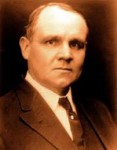
Shortly after, they answered a call to gather. They left their loved ones in the Italian Alps and traveled by coach and rail and steamer to London and then to Ellis Island, where an official changed their surname. Further, by rail and river to Florence, Nebraska. There, they joined the Ellsworth handcart company and walked across the plains, over the mountains into the Salt Lake Valley.

The trek took most of a year, and Michael and Marianne buried an infant son on the way. My firstborn has his name. In Utah, they manufactured charcoal and cultivated silk, working off the debt we all owe to the Church’s Perpetual Emigration Fund. They never learned English, but they handed down the values that drove their journey.

Today I teach English to multilingual students (among others), and I think—I hope—that I feel Marianne’s pleasure. Her devotion and that of my parents and their other forebears have taught me that human endeavor is sacred and family ties bring joy.

I’m Mormon, or should I say I’m here, because of polygamy. My distant grandmother, Jane, was the seventh of eleven wives. Her husband, Milo, fathered 56 children. I find this shocking. But Jane was widowed early in her journey from England to Utah; when she married Milo, she must have been grateful for the protection and care of a new family. I both wonder at their sacrifice, and pity them unfairly, as though I understand it. Those poor women, I say. I hand my husband the broken vacuum cleaner. He smiles: those poor men.

It’s natural for me to see devotion as a pathway of rigor and bravery and meaning. “A religion that does not require the sacrifice of all things never has power sufficient to produce the faith necessary for life and salvation,” taught Joseph Smith, who gave everything for Mormon faith. Those words thrill me, and why not? Don’t we love what we would die for? Don’t we hope to more perfectly live for it?

That hope helps me view problems in Mormon history—persistent, ambiguous, discouraging—as reflective of imperfect people trying, yet sometimes failing, to do God’s will. It is the same with patriarchy and insularity, which I find equally troubling—yet also softening, even diminishing, in a process I trust will continue.

My view improves as I consider the wonder and triumph in Mormon history—persistent, affirming, encouraging—and reflective of covenant people trying to do God’s will. These qualities have their echo in so many forgiving, affectionate Mormon people who wrap themselves in faith, love, duty, integrity, good humor, altruism, compassion, and desire.

I have found that negotiating faith and doubt requires a painstaking self-honesty. The Book of Mormon missionary Amulek captures some of my feeling. “I said I never had known much … of the ways of the Lord … but behold, I mistake, for I have seen much of his mysteries and his marvelous power … Nevertheless, I did harden my heart … I knew concerning these things, yet I would not know.”

Like Amulek, I have at times resisted faith. Yet as I’ve chosen to turn toward Christ, to believe and accept him, his response recalls the promise to Isaiah: “Then shalt thou call, and the Lord shall answer. Thou shalt cry, and He shall say, Here I am.”

Thus I’m convinced that knowledge involves the heart as well as the mind, and above all involves the dignity of choice. I believe God’s touch in my life is real and personal and powerful, that he knows my name and desires my company, as he does of all who walk the earth. But I also believe it is up to me and my faith to recognize this, to search for and respond to him; and that he will respect my choice to do so or not.

I’m Mormon because of the Book of Mormon. I don’t yet know if this book is what many have claimed it to be—factual, historical record? Fantastic, inspiring collection of stories? Something of both?

But working closely with literature has helped me live with ambiguity and navigate tensions between factuality and truth. It has helped me see that extracting meaning and understanding from text is arduous, worthwhile, and fascinating.

So if I have trouble accepting the book as exactly what it claims to be, I find joy in discovering—again and again—that the Book of Mormon does what it claims to do.

And that is to bring me to Christ, in ways so tender I can hardly express them. “Come unto Christ and be perfected in him … by his grace,” teaches Moroni. As a small person with great need, I rely on that grace every day as I try to bridge the gap between what I am and what I long to be.

I’m Mormon because of the simplicity and beauty and spiritual sustenance of the weekly sacrament.

I’m Mormon because it has blessed my family—strengthened our bonds, taught us forgiveness, increased our reach, given us laughter, and brightened our hope.

I’m Mormon because of story. The story is that of a crucial journey from a fallen, even desperate state to one of reconciliation, of joy and knowledge, transcendence and peace—a journey both daily and eternal, a journey infused with divine love. This is a story not unique to Mormons, but a story of humanity—captured and reflected in the world’s most compelling and beautiful literature. Mormon faith provides a pathway for the reality of this story.

I’m Mormon because it’s a quest. Every day, a devout Mormon prayerfully asks: how should I direct my energies on this day? How shall I manage this uncertainty? How might I achieve success in this good endeavor? How may I be of help to my fellow travelers? To engage these questions over a lifetime seems to me a sacred privilege. Indeed, Mormonism was founded on the answer to a heartfelt question.

I’m also Mormon because they’ll have me, despite my resistance, my pride, my kicks, my doubts, my shortfalls, and my need. Like Christ, whose “arm is stretched out still,” Mormons take all comers. They understand we are all God’s imperfect children, relying on grace, trying to make our way in a perilous world. They’ll help if they can. They’ll smile as they do.

——————————–

Heidi Beus Naylor grew up in Pittsburgh, Pennsylvania. She received an undergraduate degree from Brigham Young University and an MFA from Boise State University, where she teaches writing and literature. Her fiction and features have appeared in The Washington Post, The Jewish Journal, Portland, The Idaho Review, Sunstone, New Letters, and other magazines. She holds a current fellowship from the Idaho Commission on the Arts. Heidi and her husband, Patrick Naylor, are the parents of three sons.

Posted May 2013

James E. Talmage

JamesTalmage1 You ask me to tell you how I received my testimony that the Church of Jesus Christ of Latter-day Saints is the true Church of God. I cannot tell you for I do not know myself. That I have such a testimony, an unquestionable knowledge of the truth of this work, I am most certain; but how or when such knowledge came to me I know not any more than I know the moment which marks the passing away of night and the dawning of day.
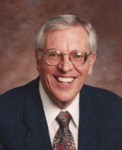
Yet my testimony does not remain ever the same; it grows in strength as the years bring additional evidences through reflection and study and prayer.

I was not born in the Church; my early training was received through the schools of the world; amongst the Methodists, Wesleyans, Presbyterians, and in the Church of England I have been by turns a pupil. But even during those periods of first tuition I had a knowledge of the divinity of God’s work as taught and practiced by the Latter-day Saints, for my parents had previously learned of the gospel, and were then awaiting the reorganization of the branch of the Church in the region of our home. This was in due time accomplished, and soon after my years had filled the allotted number, I was baptized by my father, who was an Elder in the Church. Jeers from schoolmates and scoffs from neighbors came to me as a matter of course. Our family being alone in the professions of the gospel there, to me it seemed that we had always been the recipients of such unkind attentions, which however served to strengthen my faith.

My testimony of this work dates back to the limits of my earliest memories. Since reaching the years that bring with them the powers of judgment, I have never been without an assurance of the divinity of this cause, and therefore I claim no honor for having gained such knowledge. I regard it as the greatest gift of God to me on earth; for though it is a natural endowment, I am none the less certain of its divine origin. I cannot remember a time when I did not live, yet I know that my life is a gift of our heavenly Father, so also is my testimony of His will.

Do not conclude that my faith has never been assailed; that it is like a greenhouse plant nourished through artificial culture, and alive only because protected from the blasts that wither and the frosts that destroy. I call to mind many periods of sore temptation and trial, when snares of the wily adversary have been set with alluring baits of mis-called science, and that which men style wisdom. Sophistry, doubt, and the craft of misbelief have surged in threatening torrents about the delicate roots of the feeble plant of my faith; yet, through the protecting care of the All Merciful, these dark rivers have been made to yield nutriment and impart strength to the rising stem and its sprouting branches.

I know that these vicissitudes are not yet over. A retrospect of my faith’s feeble growth gives me thankfulness, but the thought of the future brings fear lest after all the sapling should be uprooted. Did I not know that there is One who will temper the elements and adapt the conditions to my weak and immature growth, despair would bring destruction. Yet by prayer and works I may hope for the continued support of Him who is the source of my testimony and the author of my life – our Father.

(James E. Talmage, “How I Gained My Testimony of the Truth,” Young Woman’s Journal [March 1893], 258-259. Brought to our attention by Ardis E. Parshall, and reproduced here, with her kind permission, from keepapitchinin.org: http://www.keepapitchinin.org/2010/10/21/in-his-own-words-james-e-talmage-1893/.)

I say stand by your testimony. When you have received it from the Lord, let it be your guide. It will be no handicap to you in your researches, your studies, your explorations and investigations. It will not detract from your reputation for learning, if you deserve any such reputation, provided you stand by the truth. (Conference Report, April 1929, p. 48. Thanks to Kristopher Swinton for bringing this to our attention.)

—————————–

James E. Talmage was born in Hungerford, Berkshire, England, on 21 September 1862. Baptized into the Church of Jesus Christ of Latter-day Saints at the age of ten, he emigrated with his family to the United States in 1877.

Talmage received the first diploma ever issued by the Scientific Department of the Brigham Young Academy and, thereafter, studied chemistry and geology at Lehigh University, in Bethlehem, Pennsylvania, and at The Johns Hopkins University, in Baltimore, Maryland. In 1896, he received a Ph.D. from Illinois Wesleyan University.

Talmage taught at the Brigham Young Academy, served as president of Latter-day Saints’ University and the University of Deseret (later the University of Utah), and, from 1897 to 1907, was professor of geology at the University of Utah. He also served as director of the Deseret Museum. He was elected a Fellow of the Royal Microscopical Society (London), the Royal Scottish Geographical Society (Edinburgh), the Geological Society (London), the Geological Society of America, the Royal Society of Edinburgh, and the American Association for the Advancement of Science, and as an Associate of the Philosophical Society of Great Britain (or Victoria Institute).

He was the author of a number of books that continue to be popular and even revered among the Latter-day Saints, including The Articles of Faith (1899), The Great Apostasy (1909), The House of the Lord (1912), and Jesus the Christ (1915).

In 1911, Talmage was called as a member of the Quorum of the Twelve Apostles of the Church of Jesus Christ of Latter-day Saints. From 1924-1928, he presided over the European Mission of the Church. He died on 27 July 1933.

The testimony above was written when he was thirty years old, nearly two decades before his calling as an apostle.

Posted February 2013

Richard D. Draper

Assurance through God’s Prescience

RichardDraper1 “No one has a crystal ball.” Those who make this statement, even with resignation, are most often trying to assure themselves that we are all on an equal footing, because no one knows the future. Everyone must plan as best he or she can without that advantage. Interestingly, however, the statement is only partially correct. It is true that no human in and of himself has access to the future, but heavenly beings do. In the Doctrine and Covenants we learn that angels “reside in the presence of God, on a globe like a sea of glass and fire, where all things for their glory are manifest, past, present, and future, and are continually before the Lord” (D&C 130:7-11). Divine beings, it would seem, do have a crystal ball of sorts that allows them to see the future. God particularly has the power of prescience and from time to time manifests it to mortals in the form of prophecy. By prophecy I mean those insights God shares with us about the future.

I am intrigued not only by God’s ability to foresee the future, but also with His desire to share what He knows to his faithful followers. By doing so, He prepares them for what is to come.

God’s display of his prescience, however, has another purpose. He uses it as a means to prove that he is God and can be relied upon. When he called Abraham out of Haran, he assured him, “My name is Jehovah, and I know the end from the beginning; therefore my hand shall be over thee” (Moses 2:8). With these words, the Lord assured Abraham that with Him there are no surprises and, therefore, He could protect Abraham from anything untoward.

A millennium later, the Lord tried to bolster flagging Israel’s faith by appealing to the same power. Using history as his text, he said, “I have declared, and have saved, and I have shewed, when there was no strange god among you: therefore ye are my witnesses, saith the Lord, that I am God” (Isaiah 43:12). His words pointed them back to previous prophecies that had been fulfilled. He pointed out that Israel could not credit them to some other god than He, for, at the time, they worshiped none other.

Showing that He still had the ability, He went on: “Behold, I will do a new thing; now it shall spring forth; shall ye not know it”? (Isaiah 43:19). He then prophesied to them right there and then. In the process, He even named their future deliverer, the Mede Cyrus (Isaiah 44:28; 45:1). Castigating Israel’s lack of devotion to Him, He went on: “I have declared the former things from the beginning; and they went forth out of my mouth, and I shewed them; I did them suddenly, and they came to pass. Because I knew that thou art obstinate, and thy neck is an iron sinew, and thy brow brass; I have even from the beginning declared it to thee; before it came to pass I shewed it thee: lest thou shouldest say, Mine idol hath done them, and my graven image, and my molten image, hath commanded them. Thou hast heard, see all this; and will not ye declare it? I have shewed thee new things from this time, even hidden things, and thou didst not know them. They are created now, and not from the beginning; even before the day when thou heardest them not” (Isa. 48:3-7).

In these verses, we see God using prophecy, with which He alone can empower a prophet, as the means through which He verifies and authenticates His position as the God of Israel and of the nations. Thus, by using explicit statements about the future, Jehovah proved to the Old Testament people that He, and He alone, was God. There was a moral corollary; they should trust, worship, and obey Him alone.

A question naturally arises, “Just how does God interact with the future?” Does he know the future and express it, or does He engineer the future and share what He makes happen? In other words, does the future exist for God as something already concrete and unchangeable which He can see? In that case, prophecy would be God sharing His vision with the Saints, allowing us to see from His height the inevitable course of events flowing within the stream of destiny. Or is the future something fluid that God creates? In that case, God knows the future because He has predetermined the course it will flow and shares His plans with us.

Joseph Smith gave us some insights into the question. He announced that for the great Jehovah, “the past, the present, and the future were and are, with Him, one eternal ‘now.’” Does the phrase “one eternal ‘now’” mean that time is static for God—that everything that has existed, does now exist, and ever will exist actually abides with God right now? Does the “eternal now” freeze events into a predetermined, unbreakable whole? The Prophet went on to say that Jehovah “knew of the fall of Adam, the iniquities of the antediluvians, of the depth of iniquity that would be connected with the human family. . . . He was acquainted with the situation of all nations and with their destiny” (Teachings of the Prophet Joseph Smith, 220).

On the surface, the Prophet’s comments make it look as if God interacts with the future as an observer, but that is not the case. In the same discourse, Joseph Smith said that Jehovah “ordered all things according to the council of His own will.” The phrase suggests that God shapes and directs history within the parameters of human agency. That makes prophecy God’s sharing with humans His “ordering” of all things. Thus, it seems that God creates the channel in which history flows. History, therefore, is not inevitable or fated until God makes it so. The revelation of God in Isaiah reinforces this view.

But does God still share with his people what will happen? Having studied prophetic and apocalyptic literature for much of my academic life, I am impressed that He still uses the power of prescience to direct and prepare his people for the future.

The Restoration is full of examples of prophecies fulfilled. One of the more dramatic is God’s disclosure to Joseph Smith on Christmas Day 1832 concerning the upcoming Civil War. The Lord declared that the wars of the last days would begin with “the rebellion of South Carolina, which will eventually terminate in the death and misery of many souls” (D&C 87:1). He had already hinted at this event in March 1831, saying: “Ye hear of wars in foreign lands; but, behold, I say unto you, they are nigh, even at your doors, and not many years hence ye shall hear of wars in your own lands” (D&C 45:63). Though it took three decades before that prophecy was fulfilled, as foretold, it was one of the bloodiest wars in history and started with the rebellion of South Carolina.

That prophecy went on. It declared “that war will be poured out upon all nations” (D&C 87:2). Indeed, one of the prophetic themes of latter-day scripture is that “peace shall be taken from the earth” (D&C 1:35; see also 29:23; 43:31; 43:31-32; 56:11) and there shall be “wars and rumors of wars” (JS—M 1:23; D&C 45:26; 63:33). Since 1832, the world has not only seen the Civil War but two brutal world wars and scores of lesser wars. Today, rumor is full of the prospect of nuclear war looming on the horizon.

There are, fortunately, other prophecies that bode well for the righteous. One of these is God’s assurance that “this Gospel of the Kingdom shall be preached in all the world, for a witness unto all nations, and then shall the end come, or the destruction of the wicked” (JS—M 1:31. See also D&C 10:49; 14:10; 18:28; 35:15; 38:33; 42:63; 90:11). When these prophecies were first uttered, some of the Church’s detractors felt they were nothing short of delusions of grandeur, but look at the breadth of the Church’s reach today.

In association with that the Church’s spread is prophecy concerning temple building throughout the world (see for example, Brigham Young, Journal of Discourses, 3:372; 10:254). We are living in the age where temples can be found on every continent, in many nations, and upon the isles of the sea—and their numbers will continue to grow.

But the Lord through prophecy also tells us that the world will not be converted. Indeed, until after the Millennium opens, the Church is not destined to be popular. God’s word tells us that the Saints will be found “upon all the face of the earth,” but that “their dominions upon the face of the earth were small, because of the wickedness” that will prevail (1 Ne. 14:12). It also tells us that, “among the nations of the Gentiles,” there will be those who “fight against the Lamb of God.” Nonetheless, the Saints have little to fear, for “the power of the Lamb of God” will descend “upon the saints of the church of the Lamb, and upon the covenant people of the Lord, who are scattered upon all the face of the earth,” and they will be “armed with righteousness and with the power of God in great glory” (1 Ne. 14:13-14; compare D&C 45:66-70).

I wish I had time to elucidate the many prophetic statements that have been made to us by a loving Father, but space does not allow that. I can say in sum, however, that God has not departed nor is he asleep, but continues to direct his Church though living prophets who have access to his Spirit. There are no surprises coming (see D&C 106:4-5) and, therefore, I find great comfort in God’s prescience and knowing that he speaks through living prophets today. Though the future is full of evil portents, the scriptures combine to give a tremendous assurance to the faithful that God governs history and has protected and will protect His saints. For me, no scripture rings truer than this: “If ye are prepared ye shall not fear” (D&C 38:30). Knowing what is coming, we have no excuse not to be prepared and, therefore, we have no reason to fear the future.

————————————

Richard D. Draper (Ph.D. in ancient history, Brigham Young University) is an Emeritus Professor of Ancient Scripture at Brigham Young University, where he continues to work with other professors in producing the fourteen-volume BYU New Testament Commentary Series. He is the author of several books and articles, including Opening the Seven Seals: The Visions of John the Revelator (Salt Lake City: Deseret Book Company, 2006) and The Savior’s Prophecies: From the Fall of Jerusalem to the Second Coming (Salt Lake City: Covenant Communications, 2001).

Dr. Draper has served as Associate Dean of Religious Education, Associate Manager of the Religious Studies Center, and Graduate Coordinator for the College of Religious Education.

In the Church, he has served as a bishop, on the high council, and, three times, as a scoutmaster (thus making his calling and election sure).

He and his wife, Barbara, have served a mission at Brigham Young University-Hawaii and at the Polynesian Cultural Center on Oahu. They are the parents of six children and the grandparents of fourteen.

Posted February 2013

Arthur Henry King

arthurhenryking When I was first brought to read Joseph Smith’s story, I was deeply impressed. I wasn’t inclined to be impressed. As a stylistician, I have spent my life being disinclined to be impressed. So when I read his story, I thought to myself, this is an extraordinary thing. This is an astonishingly matter-of-fact and cool account. This man is not trying to persuade me of anything. He doesn’t feel the need to. He is stating what happened to him, and he is stating it, not enthusiastically, but in quite a matter-of-fact way. He is not trying to make me cry or feel ecstatic. That struck me, and that began to build my testimony, for I could see that this man was telling the truth.

Joseph Smith begins his story in his matter-of-fact way, setting out carefully the reason that he is writing this history and the facts about his birth and family. Then he moves from the matter-of-fact to the ironical, even the satirical, as he describes the state of religion at the time—the behavior of the New England clergy in trying to draw people into their congregations. He tells about reading the Epistle of James. He doesn’t try to express his feelings. He gives a description of his feelings instead, which is a very different thing. Look at verse 12:

Never did any passage of scripture come with more power to the heart of man than this did at this time to mine. It seemed to enter with great force into every feeling of my heart. I reflected on it again and again, knowing that if any person needed wisdom from God, I did; for how to act I did not know, and unless I could get more wisdom than I then had, I would never know; for the teachers of religion of the different sects understood the same passages of scripture so differently as to destroy all confidence in settling the question by an appeal to the Bible. (JS—H 1:12)

I am not good enough to write a passage as good as that. That is beautiful, well-balanced prose. And it isn’t the prose of someone who is trying to work it out and make it nice. It is the prose of someone who is trying to tell it like it is, who is bending all his faculties to expressing the truth and not thinking about anything else—and above all, though writing about Joseph Smith, not thinking about Joseph Smith, not thinking about the effect he is going to have on others, not posturing, not posing, but just being himself. The passage continues as follows:

At length I came to the conclusion that I must either remain in darkness and confusion, or else I must do as James directs, that is, ask of God. (JS—H 1:13)

Notice the coolness: “At length I came to the conclusion.”

I at length came to the determination to “ask of God,” concluding that if he gave wisdom to them that lacked wisdom, and would give liberally, and not upbraid, I might venture. (JS—H 1:13)

Notice the rationality of it, the humility of it, the perfectly good manners of it.

So, in accordance with this, my determination to ask of God, I retired to the woods to make the attempt. (JS—H 1:14)

Just imagine what a TV commentator would make of this sort of thing.

It was on the morning of a beautiful, clear day, early in the spring of eighteen hundred and twenty. It was the first time in my life that I had made such an attempt, for amidst all my anxieties I had never as yet made the attempt to pray vocally. (JS—H 1:14)

Do you see how the tone is kept down, how matter-of-fact it is? Notice the effect of a phrase like “to pray vocally.”

After I had retired to the place where I had previously designed to go, having looked around me, and finding myself alone, I kneeled down and began to offer up the desires of my heart to God. (JS—H 1:15)

Plain, matter-of-fact, truthful, simple statements in well-mannered prose. This is no posture. We are not thinking of Joseph Smith; we are just waiting, waiting, waiting to hear. Do you see how beautifully this is built up, how the tension is built up by his being so modest, so well mannered?

I had scarcely done so, when immediately I was seized upon by some power which entirely overcame me, and had such an astonishing influence over me as to bind my tongue so that I could not speak. (JS—H 1:15)

He is telling us about something terrible. But he is not trying to make us feel HOW TERRIBLE THIS IS. He is telling us that it happened.

Thick darkness gathered around me, and it seemed to me for a time as if I were doomed to sudden destruction. (JS—H 1:15)

He felt he was going to be killed. But there is no excitement, no hysteria about this. He just tells us. Notice in particular the coolness of the phrase “for a time.”

But, exerting all my powers to call upon God to deliver me out of the power of this enemy which had seized upon me, and at the very moment when I was ready to sink into despair and abandon myself to destruction—not to an imaginary ruin, but to the power of some actual being from the unseen world, who had such marvelous power as I had never before felt in any being—just at this moment of great alarm . . . (JS—H 1:16)

Notice the expression “of great alarm.” What would a posing sensationalist do with that? What kind of explosion would he devise, I wonder?

I saw a pillar of light exactly over my head, above the brightness of the sun, which descended gradually until it fell upon me. (JS—H 1:16)

“A pillar of light exactly over my head,” “above the brightness of the sun,” “descended gradually”—note the modifiers, the exactness. What he is trying to do is tell us what happened. He goes on in the same tone. He doesn’t get ecstatic. He doesn’t run over. He just goes on telling us just what happened in this astonishingly cool, and at the same time reverential, way. This is a visit of God the Father and God the Son to a boy of fourteen. But he is not in undue awe. He doesn’t stare. He is not frightened. He was perhaps terrorized by what happened before, but he is not frightened of this. He doesn’t lose his self-confidence, and at the same time, he is modest.

And then the humor: he returns home, leans up against the fireplace, and his mother asks him what is wrong. He answers, “I have learned for myself that Presbyterianism is not true” (JS—H 1:20). We have to remember that his mother had joined the Presbyterian Church shortly before this. How do you assess that as a conversation between a fourteen-year-old and his mother? All mothers know that sort of thing really happens to them with their teenagers.

The whole man is involved in this account, but the whole man isn’t posturing and appealing to you to believe it. He is merely stating it, stating it with the whole of himself. The conviction is behind it. The emotion is there in perfect control. It is in the rhythm, the superb rhythm of that piece, and we won’t get that unless we read it aloud. There is an extraordinary alternation of short and long sentences. Some of the sentences are long indeed—magnificent sentences—periods much better than Samuel Johnson could write. So there is this combination of a firm, convinced rhythm and a matter-of-fact statement drawing on all the resources of early nineteenth-century prose to produce a piece of prose better than anything Coleridge ever wrote.

Now there is no passage in mystical literature or in any other kind of literature concerned with visions that I know of which is like this, and therefore I am not prepared to give credence to other “mystical” passages outside the scriptures—I know the difference. I am thinking about St. Bridget, who lived in Sweden in the fourteenth century, and whose life I have studied in some detail; she had her ecstatic visions. I am thinking about St. Teresa, that great Spanish saint who wasn’t quite sure whether Christ was her Lord or her husband. They don’t compare with Joseph Smith. They attitudinize; they get into postures, contortions of mind, in expressing themselves. Not so Joseph Smith. . . .

I am asked sometimes, “Why don’t we have any great literature now?” And we don’t, you know; we may kid ourselves or other people may try to kid us that we do, but we don’t. There were Homer, Virgil, Dante, Shakespeare, and Goethe; and there it seems to have stopped. There seems to have been no supreme figure since then. But I tell you there was one: Joseph Smith. . . .

Think of Joseph Smith as a man who speaks to our time from eternity.

(Taken from “Joseph Smith as a Writer,” in Arthur Henry King, Arm the Children: Faith’s Response to a Violent World [Provo: BYU Studies, 1998], 288-293.)

—————————-

Born in England to Quaker parents, Arthur Henry King (1910-2000) graduated from the University of Cambridge in 1931 and went on to earn his doctorate from the University of Lund, in Sweden. He taught English and English literature for fourteen years at the universities in Lund and Stockholm.

For twenty-eight years, he served on the British Council, which supervises overseas educational and cultural affairs for the British government. He was twice decorated by Queen Elizabeth II for this work.

In 1966, he joined The Church of Jesus Christ of Latter-day Saints, and, in 1971, he joined the faculty of Brigham Young University. Following his retirement from BYU, he presided over the London England Temple of the Church.

Posted February 2013

Elizabeth W. Watkins

Elizabeth Watkins In 1976 I earned a bachelor’s degree from Brigham Young University in archaeology (historical emphasis) with a minor in French. In 1984 I received a master’s degree from BYU in humanities, with emphases in music and folklore. If ever I pursue a Ph.D., I would choose to study patterns.

Patterns are particularly important to those who, like me, come from a background of autism spectrum disorder. I am on the mild end of the spectrum, with a case of attention deficit disorder (ADD) that has never been formally diagnosed but is very evident to those familiar with the symptoms. The poor social skills and consequent shyness that characterized my childhood and youth were the least of my problems. The greatest were the unpredictability of the world and people around me due to my lack of understanding of cause and effect.

When—as is typical of those with ADD—all stimuli hit the brain with equal weight, all clamoring for equal notice, an adult finds it difficult to maintain the focus necessary to complete a sustained task. For a child, it is all but impossible. With a bright, inquisitive mind that loved to absorb new knowledge, I did well in all aspects of school except for those that involved listening attentively, following sets of directions accurately, and predicting likely outcomes—all part of what most people consider common sense. Instead, a written or spoken fact might send me on a tangent of thought to a different subject entirely. While I was processing and visualizing ways to fulfill step one of the instructions, steps two and three floated past me unheeded. As for the standard four pictures to order into a simple story of cause and effect, I could arrange them in any order to illustrate any number of highly imaginative stories, all of which I found equally plausible.

Identifying patterns became my means of preserving sanity. Letters in specific patterns stood for words, and words in specific patterns stood for ideas and forms of action. By studying ideas and actions in books, I could safely investigate the world and its inhabitants. Gradually, I learned from a combination of books, instruction from my ever-patient parents, and trial and error how to interact with others and how to sort my billions of bits of knowledge into usable experiences. The process has taken a long time; until I turned about twenty-five, I felt essentially as if I were a lost child still struggling to understand an alien world. Even now, as I pass my sixtieth birthday and can no longer skip down the sidewalk due to two total knee replacements, my acquaintances often place me considerably younger than my years due to my outlook and mannerisms. Perhaps I still adhere to the formative patterns of my youth.

My graduate studies in folklore first introduced me to the deep patterns dubbed archetypes by the pioneering psychologist Carl Jung. He defined them as the most fundamental patterns embedded in the human soul and postulated a “collective unconsciousness” that housed them within humanity. As evidence of their existence, he pointed out parallels in folk tales, religions, mythology, customs, traditions, and particularly symbols that spanned cultures around the globe. One such archetypal symbol is the mandala, or quartered circle, prominent in many traditional forms of folk art. Another is the tree of life. Archetypes also include characters, such as the “great father,” who may be a wise, kindly, nurturing mentor in his positive aspect and an evil, manipulating, destructive magician in his negative aspect. They also take the form of themes, such as the story of the earth’s miraculous creation and the common descent of all human beings from the same set of parents.

Being patterns, archetypes immediately attracted my attention. Much of what I learned about them from my teachers rang true and solidified my impression that they were of eternal significance. The fact that they had endured for millennia in all parts of the world testified that they held great power and meaning for human beings in general. On the other hand, they seemed too powerful to be comfortable. The austerely formalized archetypes of Greek mythology seemed abstract enough to deal with. But I found them totally repulsive when exposed in their primeval near-nakedness in the stories of modern writers such as Isaac Bashevis Singer and Federico García Lorca. Even when barbarically costumed in the elaborate trappings of nineteenth-century Wagnerian operas such as Der Ring des Nibelungen, I could barely tolerate them. They seemed inexorable, unyielding, oppressive, hopeless. After completing my thesis on the archetypal characters and themes in Richard Wagner’s Ring saga, I let my study of archetypes lapse and pursued a satisfying career in editing scholarly books and articles.

However, archetypes are everywhere and are not so easily escaped. Movies ranging from David Puttnam’s Chariots of Fire through George Lucas’s ever-popular Star Wars to Pixar’s Brave are full of them. So are all the classic novels, whose lasting appeal stems directly from their adept use of archetypes. So, to some extent, are the more forgettable movies and books, whose clumsy attempts to subvert these powerful patterns for the sake of novelty are precisely what make them forgettable. Archetypes underlie the raw, untamed wilderness settings of Jack London; the brooding, emotional tales woven by the Brontës; the stark, semimythical works of Herman Melville. But it was when I discovered them buried deep within the placid, enlightened, ultracivilized world of Jane Austen that I truly came to understand them.

All archetypes have both a positive and a negative side, usually characterized by light and darkness. For the instruction of children, most folklore embodies both sides of an archetype by bringing the main character into life-threatening brushes with dark forces but allowing him or her to escape, with help from positive sources, into a “happily-ever-after” of safety. In a world where adults are expected to have adopted the principles of morality and integrity representing the valued way of life, stories that illustrate the dark side of an archetype may seem to wield more power. As in Joseph Conrad’s Heart of Darkness, they illustrate what can happen when one is enticed by the dark side of an archetype to abandon these principles. The fear factor thus serves to keep adults from straying. Far fewer stories for adults deal as powerfully with the positive side of an archetype by illustrating what happens to those who reject the dark side and embrace the light.

Jane Austen’s novels, I eventually realized, are full of both negative and strongly positive archetypes—so positive and so intrinsic to her portraits of young rural Englishwomen and their associates that many fail to recognize them as archetypal patterns. Her characters seem utterly true-to-life and very distant from the formalized savagery of mythology, folklore, and certain genres of fiction. Nevertheless, they include animus and anima figures, great fathers, great mothers, enemy brothers, saviors, traitors, and archetypal figures of many other kinds. Her novels obviously specialize in the coming together of animus and anima but explore other themes as well, including fall and redemption, betrayal, and—my personal favorite—the hero journey. If her orderly, domesticated world was built upon the beams of archetypes, I wondered, was mine? To my delight, I found that it was—thanks to the gospel of Jesus Christ.

Although archetypes appear in human art, literature, and mythology, they are not human creations. They come directly from a loving and provident Heavenly Father and are an essential part of his divine purposes. This assessment is by no means considered academically correct. I once broached to Joseph Campbell, the great name in scholarship concerning the archetypal hero journey, the possibility that one of the many hero-savior stories that he considered near-parallels might be true. He laughed, made a polite joke, and turned away dismissively. Even at Brigham Young University, my teachers remained safely within the traditional academic parameters and never so much as speculated beyond them for their eternal source or purpose. I still see plainly every day that people of all academic levels live unheedingly among archetypes, unaware of the power and love that they represent.

While the physical creation of the earth unfolded, we, our Father’s children, underwent an intensive period of schooling to prepare to inhabit it. With so much at stake for our future, our Father did not release us into an earthly garden of pleasures, temptations, and consequences with nothing to help us. He established careful plans to disseminate and redisseminate His truths among his children on earth (the various dispensations of the gospel), directed the writing of a “book of remembrance” (the scriptures), and appointed messengers (the prophets) to remind us constantly of these things. And for the benefit of those who might never encounter the gospel of Jesus Christ, the Bible, or a prophet during their mortal lives, He schooled us well in the crucial archetypal patterns: a great father and mother who love us, creation of this earth expressly for our well-being, our enemy brother who betrays us for his own ends, our Savior and loving brother who sacrifices all to redeem us, and our own hero journey through the dark mists of mortality back into the light of our eternal home (see Mosiah 3:15; Moses 6:63).

So what has the Great Father provided for His children born into Jewish homes? The example of Moses, an archetypal hero who answered the call to adventure and brought his people the elixir of one God, His law, freedom, and a promised land. What has He provided for those born into Muslim homes? The sunnah (example) of Muhammad, who answered the call and brought his people the knowledge that “there is no god but the God,” who will always extend mercy to those who obey him. For those born into Confucian or Taoist homes? The models of Confucius and Lao Tzu, who, in their disparate ways, taught adherence to the order of heaven. Into Buddhist homes? The pattern of the Buddha, who developed the Eightfold Middle Path to an enlightened life. Into Hindu or Jain homes? A myriad of avatars of Krishna, bearing a myriad of elixirs, all meant to better the human condition. Into unchurched or pagan homes? Prometheus, Beowulf, Maui, and other mythological heroes of all kinds, all answering calls and retrieving elixirs for humanity. Into agnostic or atheistic homes? Superman, Batman, the Avengers, the Lone Ranger, Luke Skywalker—all human heroes after the divine model.

Is Jesus Christ just another human creation, then? Absolutely not. He was and is the pattern after which all the others are modeled, however imperfectly (see 2 Nephi 11:4). Human beings have an intrinsic need for heroes and savior figures; if none are available, we will create them after the example deeply engrained within us. We are all heroes currently engaged in the cycle, having answered the greatest call to adventure: to emulate our Savior. Jung’s “collective unconscious” was our Heavenly Father’s very conscious effort engineered to guide us, using threads of folklore that, if followed, would lead us to the more substantial “iron rod” of truth, whether in this life or the life beyond it. “Happily ever after” is no cop-out from reality; it is reality of the highest kind and is the preprogrammed destination for all of us, if we will only follow the many guides that lead to it (see Alma 33:19–20).

Are all seeming archetypes equally sound? No. Like any other medium, they can be distorted and counterfeited. Satan has been doing so from the beginning. He has proliferated mythologies of superhuman beings without principle who subvert their own rules of conduct and strike down at whim any who displease them, who contend with each other for power and use human beings as pawns in gigantic, meaningless games of chance. In other words, he projects his own warped agenda onto his Father and ours. And for the time being, he may seem to have the upper hand, since God’s plan depends entirely upon our freedom to choose. All Satan needs to do is multiply the poor choices and use them to obscure the truth until we run out of time in our probation period. Even if he cannot corrupt us entirely, he can cause us to waste our resources in useless or harmful worldly pursuits.

But he cannot obliterate the truth. It is there; and for those who hark back to their premortal training, it shines like a gold thread in a multicolored fabric. We were all taught to recognize it. If we let the other colors in the fabric distract us from it or choose to ignore it, it is not because we lacked the background, the opportunity, or many spirit helpers to guide and exhort us. Above all stands the example of the Savior, who in every way precisely emulated the divine pattern while in His mortal state, bearing His own burdens and all of ours in the process. Look among all the other savior figures on earth for another who accomplished this overwhelming task, and you will look in vain. Of all those heroes who tried to return from the jaws of death bearing the elixir of eternal life in the presence of God the Father, Jesus the Christ is the only one who succeeded. He offers it to us freely, asking only that we exert the faith necessary to receive and act upon it.

Is it possible, then, for ordinary mortals to emulate the Savior of the world? Emphatically, resoundingly yes. It may well take longer than a lifetime for most of us, but it is possible. If a lost, flawed, chronically confused child such as I can find, amid the chaotic tangle of mortal existence, the fine gold threads that lead to the iron rod, so can anyone else. Years of investigation have convinced me that there is no easier or surer route to eternal life than the rod, which is open for all of humankind to use. I pray that we may all use it steadfastly so that we may each complete our journey successfully and return as heroes to our heavenly home.

——————————

Elizabeth Wilkinson Watkins received a B.A. in archaeology and an M.A. in humanities from Brigham Young University. She entered a career in scholarly publications at the age of nineteen and has been involved with that work ever since, with the exception of a year and a half spent on an LDS mission in France and French-speaking Switzerland and eight years spent as a full-time mom. She has edited books in a large number of fields, including music, art, biography, comparative religions, law, politics, medieval Arabic philosophy and medicine, and especially history—United States, western, and Mormon. She has also written and published articles on United States and world history, essays on scholarly publishing, and several novels.

Elizabeth has worked in publishing at Brigham Young University with the former BYU Press, Scholarly Publications, BYU Studies, and the Neal A. Maxwell Institute’s Middle Eastern Texts Initiative. She has written and edited for the National Center of Constitutional Studies and the newly founded James Madison Institute in Provo, Utah. She has also had the opportunity to work as a researcher and writer on the Joseph Smith Papers biographical project and on Brigham Young University’s Education in Zion project. And she has enjoyed the remarkable blessing of loving her profession and the increased knowledge and understanding it has always given her.

January 2013

Robb Cundick

RobbCundick While somewhat uncomfortable with the term “Mormon scholar” as it applies to me, I have worked very hard to achieve my academic credentials and that hard work does seem to justify adding my voice to the chorus. Thus, I have finally decided to toss my hat into the ring beside that of my father, Mormon Tabernacle Organist Emeritus Robert Cundick, whose name I share, and who was one of the earliest contributors here.

Surely there has never been a time when heartfelt feelings about religion were viewed with more skepticism than in our day. Feelings are seen as barriers to reason. The search for knowledge must be conducted dispassionately because emotion can cloud objectivity and lead us astray. But while my professional life has been lived in the world of science, as the child of a musician—and from twenty years as a singer in the Mormon Tabernacle Choir—I have experienced another home in the world of the arts. And how could an artist deny the power of feelings and emotion? The genius of artistic creativity would be impossible without them.

Thus it is that I am unashamed to admit that feelings play a large part in my belief that in 1820 a teenaged boy living in upstate New York knelt in prayer in a grove of trees to seek light and knowledge from our Father in Heaven. Joseph Smith’s prayer was answered with a glorious vision in which he saw and spoke with God the Father and His son, Jesus Christ. As a result of that vision and others to follow, Joseph was eventually led to a stone box hidden on a hillside. Within the box were golden plates containing the engraved record of a civilization that existed somewhere upon the American continent between 600 B.C. and 400 A.D. These plates had been expressly preserved to come forth in our day. With God’s help, Joseph translated the record and published it in 1830 as “The Book of Mormon.” The book’s most remarkable feature is its account of a visit of Jesus Christ to the Americas following his resurrection.

This is the point where the skeptic will doubtless pause and say, “How can an educated person possibly believe such things?” Indeed, only this afternoon I encountered an article expressing this very reaction from evolutionary biologist and atheist Richard Dawkins, who opined that anyone who could believe in Mormonism is a “massively gullible fool.”

Marginalized to the class of gullible fools, what have I to say for myself?

First of all, if there is one thing of which I am absolutely sure, it is of the existence of a God whose spiritual children we are and who hears and answers our prayers. My evidence? Certainly it is nothing that an evangelist of nonbelievers would accept. It is simply the warmth that I feel when I approach Him in prayer, the insights and inspiration He gives to me, and the tangible support I have felt throughout my life whenever I have called upon Him.

All I can say to someone who doubts this reality is that you will never know until you kneel down and try it for yourself. Ask Him if He is there, and then listen. Be patient. If you are sincere and express a willingness to believe in Him, He will answer. You will have to take a leap of faith and trust your feelings, but if you do so, your confidence that He lives will grow to the point where it can reach a kind of certainty. While this will never qualify as proof in the scientific sense, you can nevertheless be very sure of it.

But what of Joseph Smith? How can I have confidence in such a story? How can I believe that a man who thumbed his nose at the religious establishment of his time, told stories of golden plates that were later conveniently returned to an angel, and introduced the controversial practice of polygamy [a practice which, by the way, I believe served as an Abrahamic-like test of faith, and which I fervently hope will never be asked of the church again]—how can I believe that such a man could have been called of God? The short answer is, “I have read The Book of Mormon many times and found it to be the surest testament that Joseph’s story is true.”

Google “Book of Mormon” and you’ll find all kinds of assertions as to why it cannot possibly be true. I’m sure I have read just about every argument there is. But to me, what the arguments continually fail to account for is how an uneducated young man such as Joseph Smith could possibly have produced a religious book of such great depth. Consider this:

The best available scholarship suggests that what Joseph described as translation took place as he put special stones inside of a hat and pressed the hat to his face. He would then dictate to a scribe. He first used a pair of stones he referred to as “the Nephite interpreters.” These were with the plates when he found them and have since come to be known as the “Urim and Thummim.” Later, he used a “seer stone”—a small oval-shaped stone a little smaller than a hen’s egg. Pressing the hat to his face apparently helped him eliminate outside distractions and focus his spiritual awareness. Whether he saw the words he dictated or simply expressed impressions that came to him we cannot know for sure, but while focusing in this way, he dictated for hours upon end.

Yes, in our day this sounds like superstitious nonsense and makes it easy for people like Dawkins to dismiss the whole thing with the wave of a hand. Joseph’s father-in-law, Isaac Hale, thought that he was pretending and that it was all a conspiracy to extract money from gullible people. Taking the story upon its surface, I can sympathize with that reaction. However, here’s the problem:

If Joseph was pretending, if he was making it all up as he went along, or even if he had spent a great deal of time beforehand working out what he was going to dictate to the scribe, how could he possibly have produced—speaking with his face buried in a hat and without asking to review the manuscript—a book of over 500 pages that would have any sense of coherency? Add to that the presence of sophisticated ancient literary devices such as chiasmus, or the powerful imagery and exposition of Lehi’s dream of the tree of life, or a detailed knowledge of ancient olive tree cultivation demonstrated by the allegory of the olive tree, or the profundity of King Benjamin’s speech, and it is even more baffling. These are but a few examples. Scholars have pointed out many remarkable complexities in the book that would not be apparent to the casual reader.

I have reviewed and rewritten the words of this short testament many times. I cannot imagine working it through in my mind, then dictating it once from memory and leaving it to stand with only minor grammatical corrections.

Given Joseph’s wife, Emma’s, later recollection that “Joseph Smith could neither write nor dictate a coherent and well-worded letter; let alone dictating a book like the Book of Mormon,” other theories have been proposed. It has been suggested that he must have obtained a manuscript from someone else or written the text in advance while borrowing heavily from other sources. But here, too, a major difficulty arises. Joseph dictated the first 116 pages of the Book of Mormon to a man named Martin Harris. Harris pleaded with Joseph to let him take the pages home to show to others, including his wife, who were skeptical about what was going on. After Joseph reluctantly allowed him to do so, the pages were lost.

Joseph was devastated. After a time he began again, but rather than repeat the same material, he translated from what was described as a separate account of the same time period taken from a different section of the plates.

“A likely story,” one may say. Joseph knew that he could not reproduce the precise text of the lost pages and so he manufactured an excuse as to why it came out differently the second time. But the point is that this clearly contradicts the theory that he was dictating from a manuscript. If that were so, the lost pages would not have presented a crisis. Joseph would simply have read them off again.

Regardless of the precise nature of the process, the bottom line for me is what was actually produced. For the serious reader the book defies easy categorization. Give it a cursory glance as did Mark Twain and you can simply pass it off as “chloroform in print.” But give it the benefit of a close, prayerful reading, and you’ll find unexpected depth.

Yes, there are chapters and verses that mirror the Bible. There are even a few verses with close parallels in the New Testament. With the exception of the section on the visit of Jesus Christ, it would seem that these verses must have come from somewhere besides the plates since ancient American prophets would not have had contact with the old world at the time. Perhaps in some cases both the Book of Mormon and the New Testament were drawing upon earlier, common scriptural sources. But elements that seem to have been influenced by sources outside of the plates may also tell us something about the translation process. Perhaps it was not as literal as many would like to think.

In any case, elements that appear to have come from the Bible or the times and culture in which Joseph lived are seamlessly interwoven with events and descriptions that, to me, ring true as authentic ancient history. In this mixture, my artistic sense sees similarities to an impressionistic painting. Monet, for example, created works that transcend the literal scene. They are as much atmosphere as depiction. When I view them it is as though I am sensing something half remembered and ever longed for.

In the same way, I can see the Book of Mormon as the product of a kind of spiritual impressionism. That is not to imply that it is not based on the actual record of an ancient civilization. But just as Monet transformed literal scenes into something more, so might the Holy Spirit have helped Joseph to combine echoes of the religious life of an ancient civilization with inspired insights from the Bible and his own experience to form a work that both surpasses the verbatim translation and integrates teachings important to the founding of a modern-day church.

Let the critics quibble over individual brush strokes. For me, the whole of the canvas—from “I, Nephi, having been born of goodly parents” to “And when ye shall receive these things, I would exhort you that ye would ask God, the Eternal Father, in the name of Christ, if these things are not true”—is a spiritual masterpiece. And its major focus, even while recounting events of war and conflict, is always upon the life and mission of our Savior, Jesus Christ.

By a process that may seem strange to us but is not so foreign to the world of the past, Joseph Smith produced a new scripture that is especially suited to the needs of our day. The Book of Mormon both affirms and clarifies the mission of Jesus Christ and the teachings of the Bible. My testimony of its truth does not rest upon whether there were horses or elephants in ancient America (two examples of issues raised by critics—horses and elephants are among animals that, while only briefly referenced in the book, are not proven to have existed in the new world during Book of Mormon times). Details that Joseph may have gotten wrong are trivial given all that he got right.

I always have to return to his own description of how the book came about, and, fantastic as it may seem, it continues to make the most sense to me. He described the translation process as “the gift and power of God” and I can think of no better explanation than that. And as with the Bible, the Book of Mormon is best appreciated and comprehended by prayerfully seeking help from our Heavenly Father.

Yes, those golden plates may at first sound far-fetched. But what other writing medium would likely survive for centuries buried underground? The Dead Sea Scrolls—another set of ancient records hidden in hopes of preservation—were written upon animal skins. Many of these disintegrated over the years, leaving only fragments. Absent the good fortune of an unusually dry ambient climate they would not have survived at all.

And we are not limited to Joseph Smith’s word that the plates existed. Three witnesses testified that they were shown them by an angel of God, and Joseph showed them personally to eight others. Though critics have worked hard to discount these witnesses, I have found nothing that convinces me they should not be taken at face value—especially given that the three who saw the angel became disaffected and left the church (two later returned) and yet went to their graves affirming the truth of their witness.

Furthermore, my convictions are not limited to the events of the early nineteenth century; more light has shown upon us through the intervening years. We have loved and appreciated every president of the church. The strengths and inspiration of each have always seemed to match the needs of their time and there has never been a hint of insincerity in our beloved hymn, “We Thank Thee, Oh God, for a Prophet.” But the church is nonetheless an institution led by mortals doing their best to listen for God’s direction. It is not perfect, although it is sometimes difficult to resist a natural desire for it to be so. And I suspect that important changes have sometimes had to wait until the people as a whole were ready to receive them.

Have I convinced you that my words are true? Not likely unless you were already convinced. But I do hope that I have at least helped you to better understand how intelligent, educated people can believe such things, and perhaps even prompted you to inquire further. If you want to understand what Mormons really believe, the first thing you should do is read The Book of Mormon. The most important question is whether or not this book comes from God, and I believe that it does.

Several years ago my father was commissioned to write a choral piece to commemorate the 200th anniversary of the birth of the prophet Joseph Smith. Dad conceived of a dialog between the chorus, representing the modern day church, and a soloist, representing Joseph Smith. It was my privilege to compose the text. Towards the end, the chorus sings these words to Joseph, speaking of our Savior, Jesus Christ:

So as He appeared unto you,
We know that we, too, shall see Him,
Whether in this life or in the world to come.
And we shall fall at His feet and worship Him;
And shall testify with our tears of our love for Him;
And shall smile as we look on His tender face in gratitude.

One of the things I love most about Mormon doctrine is that we don’t believe people will be condemned on judgment day simply because they were unable to find or embrace God’s truth in this life. If not here, everyone will have a fair opportunity to learn about, understand, and accept the gospel of Jesus Christ in the afterlife. [That’s what our practices of proxy baptism and other temple work are all about, but that’s a subject for another day.]

I believe that one day, each of us¬—Mormon and non-Mormon alike—will be a participant in the scene I have described above. And on that day, all will know that what was only vaguely perceived or not discovered at all by many here upon earth is in fact the central truth of the universe: God, our Heavenly Father, lives. Our Savior, Jesus Christ, is real.

May we all one day greet one another in their presence and rejoice in the opportunity they have given us to learn from our experiences here upon earth!

And finally, when all is said and done, it is my conviction that our Heavenly Father has left the choice to believe as an exercise of individual free will. Scientific proof of beliefs about God and realities beyond the physical world will not come in this life, nor is it meant to. Confirmation from our Heavenly Father is only given upon terms of faith. “…Ask, and it shall be given you; seek, and ye shall find; knock, and it shall be opened unto you” (Luke 11:9). Our choice to believe is our knock upon God’s door. Once that is accomplished, we need only ask Him to open.

If you choose to believe, you will find many convincing reasons to do so. If you choose not to believe, you will doubtless find many reasons for that, too. But I am glad that I have made the choice to believe. God has blessed me greatly; this choice has led me to great happiness in this life and great hope for the life to come. I would urge any who read this to perform the “experiment” of choosing to believe. I am confident that if you are sincere in your efforts, the result will be the same for you.

——————————-

Robert Milton (“Robb”) Cundick, Jr., earned a BA in Biology and PhD in Medical Biophysics and Computing (now known as Medical Informatics) from the University of Utah. From 1970-72 he served a mission for The Church of Jesus Christ of Latter-day Saints in Germany. Since graduation in 1978 he has pursued a career in medical software development, having worked at Technicon Instruments, Inc. of Tarrytown, New York, and the Department of Medical Informatics at the University of Utah, where he worked closely with Dr. Homer Warner as a chief developer of the medical expert system Iliad. For the past sixteen years he has developed research database applications for Huntsman Cancer Institute in Salt Lake City. He also teaches a course, “Decision Support Systems,” for the online Medical Informatics program at Northwestern University. From 1990 through 2011 he sang 2nd Tenor in the Mormon Tabernacle Choir, and he currently serves as webmaster for the Choir’s internal and public websites. He is married to the former Laurel Soderborg and has five children and eight grandchildren.

Posted January 2013

Shinji Takagi

Takagi ShinjiNearly three years have passed since I was first invited to contribute a testimony to this site. I have often wondered what I should say and how best I might express it. My decision has not been made any easier with the passage of time, and I have determined that additional time will not solve the problem. Time, however, has further strengthened my understanding of Jesus Christ and His teachings.

Jesus taught: “whosoever hath, to him shall be given, and he shall have more abundance; but whosoever hath not, from him shall be taken away even that he hath” (Matthew 13:12). Steeped in the redistributionist philosophy of Japanese upbringing, I was a little taken aback when I first read this passage. But I have increasingly found this principle operative in my own life. I now enjoy a portion, though I once had none.

This has been a remarkable journey. I was born a Buddhist by heritage, raised in an atheist family, and educated in the most secular of all secular societies. There was nothing in the world around me that would encourage spirituality, let alone belief in God.

The Lord found an ordinary teenager on a small island of the Japanese Archipelago. He placed a copy of the Holy Bible in his way, inspired in him a desire to read the book. When the time was ripe, the boy found a copy of the Book of Mormon in a doctor’s office, soon received his own copy from missionaries who happened to come by his house; having kept the promise to read the book, he called the mission home while attending school in Tokyo some 700 miles away.

The old Tokyo mission home, where I took my first missionary discussions in 1972, was demolished some time later to make room for the construction of Asia’s first Mormon temple. The old Japanese house on a busy Tokyo street where I attended my first Mormon service was sold by the Church to raise funds for the Temple construction. My occasional visits to the Tokyo Temple, and to the area of Tokyo where that house once stood, seldom remind me of the physical setting in which my earnest soul searching began. Too many things have happened since to care where it all started.

The theophany claimed by Joseph Smith did not challenge me in the least. If Moses could talk to God, why couldn’t Joseph do the same? Nor was I disturbed by any other supernatural occurrence associated with the origins of Mormonism. I believed that Jesus had performed many miracles. If he performed them two thousand years ago, why wouldn’t he perform them now? It was evident to this 18-year old boy that these claims, however extraordinary, could not be used against the truthfulness of Mormonism. Couldn’t the same accusations be made more broadly against Christianity?

The message was logical and consistent. If there was apostasy, there must be restoration. Man cannot establish the Lord’s church; man must be authorized by the Lord to do so. Authority is a concept universally applied in worldly organizations, including universities; how amazing it is that religious organizations hardly mention the word! Likewise, the doctrine that everyone is given a chance to hear the Gospel made sense, as did the doctrine of continuous revelation. If God is fair, how do we account for the millions who have died in ignorance, including my own heathen ancestors? If God spoke through the prophets in ancient times, why doesn’t He do so now? The Mormon message went even further: we are entitled to personal revelation, and can find for ourselves the truth of all things.

I was overwhelmed by the idea that God is both personal and corporeal, someone I could intimately approach in prayer. I was intrigued by the explanation offered by a missionary that the people drawn in a painting hanging on the wall of the old Tokyo mission home represented Adam and Eve. I had assumed that the story of Eden was fiction, and that man was the outcome of evolution. But somehow what the missionary said sounded congruous. If true, not only was I a literal spirit son of Heavenly Father but also I was a literal descendant of the common parents of the human race.

Adam became part of the coherent message. If Adam had not transgressed, there would have been no need for redemption. Adam and Christ go hand in hand; there couldn’t be one without the other. If one denies Adam, it logically follows that one must also deny Christ. I don’t know how the dinosaurs and the cave men would fit in this picture or how much of the Biblical stories should be taken literally. I have only learned to set aside these and other similar issues to another time and place.

I accepted the message with conviction. But baptism was only the beginning of a life-long process of spiritual reconstitution. Among other things, I needed to more fully come to grips with two of the most fundamental tenets of Mormonism: the Book of Mormon and Jesus Christ! I accepted both on faith; and I intellectually understood what they were about. But when the Book of Mormon or Jesus Christ was preached from the pulpit, it did not generate much personal excitement. Occasionally I thought there was too much hype in Mormon meetings about these things; sometimes what I heard sounded rhetorical.

Part of the reaction was cultural. I felt uneasy or even cultish about venerating the writing of a human hand and deifying a historical individual. Finding what appeared to be grammatical or syntax errors in the Book of Mormon did not help, nor did the self-declaration of divinity and perfection by Jesus Christ. In Japanese culture a great man never calls himself great in contravention of modesty. The Book of Mormon offered doctrinal insights in some passages, but it was largely a collection of interesting stories. I accepted Jesus as the savior of the world, but principally it remained an abstract idea.

My spiritual reconstitution, still an on-going process, has involved efforts on two fronts. The first is to examine the life and teachings of Jesus Christ; the second is to make a systematic study of the Book of Mormon. The two are interrelated, with one reinforcing the other. A careful reading of the New Testament, especially the Book of John, has generated a sweet conviction that Jesus was perfect in everything he said and did; His every word and action embodied what a perfect person would say or do under the circumstance. Modern Mormon scholarship has uncovered traces of ancient Hebraism in the Book of Mormon, which one cannot easily dismiss. Once it is taken seriously, the complexity of the book, with multiple layers of authorship, becomes evident. I determined that fiction could not have produced the transparency and power with which individual authors spoke.

The Prophet Mormon, for example, became no less real than the Apostle Paul, my other favorite author from the scriptures. Mormon was a fourth century AD prophet-general who abridged the first century BC record called the Book of Alma. The book is mostly about the Prophet Alma, but almost a third is devoted to a military general named Moroni. Mormon evidently thought much of Moroni. Mormon must have seen in Moroni a model for himself—a disciple of Christ who was a military leader in an age of great wickedness. Moroni is described as “a man of a perfect understanding,” “a man whose heart did swell with thanksgiving to his God,” “a man who did labor exceedingly for the welfare and safety of his people,” and “a man who was firm in the faith of Christ” (Alma 48:11-13). But how did Mormon know that? The only answer I can think of is that he, recognizing his own traits in Moroni, was describing himself.

Some five hundred years later, in another era of great wickedness, Mormon named his own son Moroni. In the concluding book, the son Moroni quotes his father’s teaching about faith, hope, and charity (defined as the pure love of Christ), concluding with the admonition that we should “pray unto the Father with all the energy of heart, that [we] may be filled with this love, which he hath bestowed upon all who are true followers of his Son, Jesus Christ” (Moroni 7:47-48). Moroni joins with his own admonition that we should “come unto Christ, and lay hold upon every good gift” and “be perfected in him” (Moroni 10:30, 32). To me, these sound like real people telling me what they know to be true, having experienced it themselves. These and other Book of Mormon authors have taught me how one can attempt to become a follower of Jesus Christ, my Savior.

The Bible has shown me that Jesus is everything He claimed to be; the Book of Mormon continues to teach how to make that knowledge a living force in my life.

—————————–

Shinji Takagi has taught economics since 1990 at Osaka University, Osaka, Japan, where he was made a full professor in 1995. Born and raised in Japan, he studied at Swarthmore College in Pennsylvania on a scholarship from the Grew Foundation (established in honor of Joseph C. Grew, US Ambassador to Japan during the ten year period preceding the outbreak of war in 1941) and subsequently obtained a Ph.D. in economics at the University of Rochester in New York. Professor Takagi has authored or coauthored over 150 journal articles, monographs, book chapters, and other publications, most of which are in the English language. His textbook on international monetary economics, currently in its fourth edition, is a long seller in the Japanese academic market, where nearly 30,000 copies have been sold. He has lectured at nine universities in Japan and the United States, and worked for or consulted with seven national and international public agencies. He has alternated his residence almost equally between Japan and the United States in his adult years; his work has taken him to over forty countries on six continents during a professional career spanning thirty years. Professor Takagi’s favorite pastimes include visiting ancient Buddhist temples in Kyoto and Nara to enjoy their gardens and surroundings, eating Japanese soba noodles at authentic soba restaurants, and accompanying his wife to visit pottery kilns in various parts of Japan. They have four children and an increasing number of grandchildren.

Posted January 2013

Ralf Grünke

RalfGrunke“No,” he insisted, “you must either be Catholic or Lutheran. There is nothing besides those two, nothing.” I almost started to doubt myself a little because of how sure he seemed to be of his case. We must have been in first or second grade, and my best buddy Sven was not going to let go of his theory, which was firmly based on his experience as a young boy in Germany during the 1970s. Of course, he knew that there were various churches in town – St. Henry’s, St. Matthew’s, St. Mark’s, and others, but they were all either Catholic or Lutheran. When I told him that I belonged to The Church of Jesus Christ of Latter-day Saints and that this was a Christian faith of its own, he concluded that I was on the wrong steamboat, as the Germans say. This was the first time I became aware of my religious otherness, growing up in the land of Martin Luther and St. Boniface.

Looking back, the continued impression of otherness has turned out to be blessing in disguise. I may have felt a bit like an ugly duckling between the swans when one of my teachers at secondary school (a devout Lutheran) singled me out in the classroom for being a member of a “Sekte”(a term with a very negative connotation in German culture, yet still commonly used in public to classify minority religions). Nevertheless, this encounter and a few similar experiences have profoundly impacted my own perspectives, both spiritually and scholarly.

Above all, I learned that I could stand my ground in face of opposition as long as I had a firm foundation. Nevertheless, when it came to my religion, which was so obviously objectionable to others, there was only one conclusion: The Mormon story had to become my own or I wanted no part of it. I was barely a teenager when I began a journey of study and serious reflection. I paid frequent visits to our city library and read every single book I could find that touched on the subject of Mormonism, including a small repertoire of anti-Mormon literature. I attended worship services of other churches and left out no opportunity to engage in discussions with various street preachers, testing my religious conclusions at the time with a critical audience.

I decided to “awake and arouse [my] faculties” (Alma 32:27) and followed the steps towards acquiring faith as outlined by the prophet Alma in the Book of Mormon and experienced in quiet and very personal ways that the word of God has the power to “enlarge my soul” (ibid, verse 28) and “enlighten my understanding” (ibid). And yes, the faith taught to me by my parents and grandmother has become my own. All of this being said, I cannot point my finger to any particular moment when I concluded, once and for all, that God existed, that He was a loving Father in heaven, and that He saw my place in The Church of Jesus Christ of Latter-day Saints. My relationship with God has been an ongoing journey.

The sense of otherness also led me to look beyond the surface. The answers to scholarly questions, but also to the great questions about the meaning of life, are all too often not found by casual thinking or relying on public opinion. Mormon scripture encourages me to “study and learn, and become acquainted with all good books, and with languages, tongues, and people” (Doctrine and Covenants 90:15). To this day, when approaching a challenging subject, I prefer to gain a broad perspective and investigate systematically, seeking for truth for its own sake.

In process of years, my impression of otherness has increasingly given way to a deep feeling of being connected to society and to humankind at large. I suppose that much of what drives me toward Mormonism at the very core would be familiar to most any other human being. The Book of Mormon states that “men are, that they may have joy” (2 Nephi 2:25). The search for joy and happiness, so it seems to me, is a universal human urge, and it is certainly the aim of my personal religious practice and worship.

———————————

Ralf Grünke is a political scientist. He received a bachelor’s degree from Brigham Young University, a master’s degree from Friedrich Alexander University in Erlangen, and a doctorate, magna cum laude, from Chemnitz University of Technology. As a doctorate candidate, he was granted a merit-based stipend by the Hanns Seidel Foundation for two-year, full-time participation in a research group on political extremism. He has since left the world of academia and, today, works as a public relations professional.

Posted January 2013

  • « Go to Previous Page
  • Page 1
  • Interim pages omitted …
  • Page 8
  • Page 9
  • Page 10
  • Page 11
  • Page 12
  • Interim pages omitted …
  • Page 44
  • Go to Next Page »

Primary Sidebar

Faithful Study Resources for Come, Follow Me

Subscribe to Blog

Enter your email address:

Subscribe to Podcast

Podcast icon
Subscribe to podcast in iTunes
Subscribe to podcast elsewhere
Listen with FAIR app
Android app on Google Play Download on the App Store

Pages

  • Blog Guidelines

FAIR Latest

  • Come, Follow Me with FAIR – Exodus 1–6 – Part 1 – Autumn Dickson
  • The Atoning Love of Jesus Christ
  • Come, Follow Me with FAIR – Genesis 42–50 – Part 2 – Autumn Dickson
  • Come, Follow Me with FAIR – Genesis 42–50 – Jennifer Roach Lees
  • Come, Follow Me with FAIR – Genesis 42–50 – Part 1 – Autumn Dickson

Blog Categories

Recent Comments

  • Sister Truelove on Humble Souls at Altars Kneel
  • Antonio Moreno on Forsake Not Your Own Mercy
  • Wayne on Come, Follow Me with FAIR – Genesis 12–17; Abraham 1–2 – Part 1 – Autumn Dickson
  • Tanya Alltop on Be Reconciled to God 
  • Darci Larson on Adorned with the Virtue of Temperance

Archives

Follow Us

  • Facebook
  • Twitter
  • iTunes
  • YouTube
Android app on Google Play Download on the App Store

Footer

FairMormon Logo

FAIR is a non-profit organization dedicated to providing well-documented answers to criticisms of the doctrine, practice, and history of The Church of Jesus Christ of Latter-day Saints.

Donate to FAIR

We are a volunteer organization. We invite you to give back.

Donate Now

Site Footer