• Skip to primary navigation
  • Skip to main content
  • Skip to primary sidebar
  • Skip to footer

FAIR

  • Find Answers
  • Blog
  • Media & Apps
  • Conference
  • Bookstore
  • Archive
  • About
  • Get Involved
  • Search

Testimonies

Matthew Roper

I grew up in a Latter-day Saint home in southern California, where at an early age with the help of kind parents I cultivated love for Jesus Christ and for the Scriptures. I read the Bible as a child and through prayer I came to an understanding of God as a loving Heavenly Father, whom I could trust and go to in times and fear and difficulty and find peace. I felt then and I am now certain that God heard me and comforted me. Those early experiences were a touchstone against which I have subsequently measured experiences. My faith in God has provided meaning and direction to me life. My faith, or what I today call my testimony, did not arise from any one experience alone, but has grown out of and been nurtured by a series of personally significant “recognitions” or “realizations” of that same influence in my life which early in my life brought me joy and peace. These have brought me greater understanding and thereby strengthened my faith in Jesus Christ. One of these came to me when I first read the Book of Mormon through and asked God if it was true. While spending two years serving as a missionary in Argentina, I found among my most joyous experiences were those instances when others were able to recognize that same divine influence for themselves.
I have subsequently studied the life of the Prophet Joseph Smith and the history of the Church of Jesus Christ all of my adult life. As I have done so I have developed a deep appreciation for what Joseph did and what it cost him and those who followed him. I believe he was a mighty Prophet of God. I do not believe he was perfect person, but I am confident that he was what exactly what he claimed to be. More than Joseph, I am profoundly impressed by the revelations he brought forth, including especially the Book of Mormon. Joseph Smith’s account of its remarkable origin is, in my view, much more plausible and consonant with the historical data than any of the several counter-explanations that have been offered by his critics. On an intellectual level I cannot explain it away. On another and more fundamental level, Joseph Smith’s story simply rings true to me.

I have made and continue to make the Book of Mormon an object of lifelong study and have found this to be tremendously fulfilling. It has been a useful guide to me in my life and has given me comfort in challenging times. Its teachings, when followed, have always brought me hope and light. I have found the Lord’s promise true that those who genuinely “believeth these things which I have spoken, him will I visit with the manifestations of my Spirit, and he shall know and bear record. For because of my Spirit he shall know that these things are true; for it persuadeth men to do good” (Ether 4:11).

—————————————–

Matthew Roper is currently a Research Scholar at the Neal A. Maxwell Institute for Religious Scholarship at Brigham Young University. He received a B.A. in History and a M.A. in Sociology from Brigham Young University. He has published numerous articles and review essays on issues relating to Latter-day Saint history and Scripture. He is the husband of Julie Roper. They are the parents of five children.

Posted June 2011

Douglas M. Chabries

I grew up as the son of a recently converted Roman Catholic father and an LDS mother whose roots in the Church extend back to the early days in Nauvoo. For the first few years of my life, we lived within earshot of the Los Angeles International Airport. The Church was still small in that area when I was a boy, so nearly all of my friends were from other religions. My grandparents were practicing Catholics who immigrated to the US from the Austro-Hungarian state of Croatia. None of my paternal cousins, with whom I grew up, were LDS. As one might guess, I was exposed to several religious ideas, but I was baptized into the LDS Church at the age of 8, and then my family moved to Utah.
I sensed at an early age that I had a Heavenly Father who loved me, cared for me and watched over me. I had a great love for learning and read voraciously as a young boy. Each week in those days, my mother would accompany me to the library and check out several bibliographical books on the lives of great men. These books impressed upon me the desire to learn truth and the importance of good character. In Utah, I found many good LDS friends, so I really didn’t see any reason to change my course in life. Then I was called to serve a mission for the LDS Church in South America.

Up until that time, I had relied mainly on the testimony of others. At a conference I had attended previously, I had heard the words of Elder Joseph Fielding Smith, who was then an Apostle in the Church of Jesus Christ of Latter-day Saints, as he admonished us to read the Book of Mormon and promised great blessings to those who would do so – and in his own inimitable manner described the alternatives. Finally, though long overdue, I read the Book of Mormon through for the first time. I studied the Bible, read the book Jesus the Christ and I prayed. The assurance of the truth that I was seeking did come to me, but it did not come in a single spectacular event as I had earnestly hoped for, nor did it come in a single instance that I can identify. Rather it grew as I learned, and with that learning I obtained a spiritual assurance that what I was learning was true. This process of receiving a spiritual witness of the truth has continued regularly throughout my life as I have studied, pondered and prayed. After some time had passed, my mind reflected back upon the promises which had been made by Elder Joseph Fielding Smith. I now understood what he was trying to teach.

Alma, a prophet in the Book of Mormon, compares the evolution of faith to a seed which “beginneth to enlighten my understanding, yea, it beginneth to be delicious to me.” That phrase echoes the feelings that I have had as my faith grew, was confirmed and became knowledge. Still today, many years later, I regularly study things in the gospel that I have read before, and new insights pop into my mind and enlighten my understanding. This testimony is anchored in a witness from the Holy Ghost. As such, words are often difficult to find to express the assurance I have received regarding the truthfulness of the gospel of Jesus Christ. But that assurance is real, and has become a driving force and a sweet fortification to me as I have had to deal with the crucible of life.

As I developed my interests in life, for some reason I was led naturally to study Electrical Engineering. My desire to continue my education to obtain a PhD led me on an interesting and rather enjoyable path. As a result, I have come into contact with some of the great scientists and thinkers of the world. I have observed the careful attention that they give to finding the truth in their fields and my interests have expanded in many directions. Some of the most noted and respected scientists and scholars have been most fastidious to make sure that new facts they were learning were indeed true before they would accept them and go on. Throughout my life, I have enjoyed being around these great thinkers in several fields and I love to learn from them. Yet almost as interesting as the learning has been the opportunity to observe the care with which they search for the truth.

Rather than causing me to distance myself from God, these experiences have distilled upon my soul a great admiration for Him as the Creator of the universe who is personally aware of each one of us. As I compare and observe the wonders of science at the nano and micro levels and then gaze into the enormity of the heavens, I marvel at the greatness of that Being who loves each of us personally in the midst of the greatness of all of His creations. I know that He provides revelation to living prophets for us today just as He did anciently. I marvel at the sweet experience of the modern day Prophet, Joseph Smith. But amidst all of this, I know that He will provide a personal testimony to any who sincerely desire to know the truth and ask Him for that personal knowledge which will assuredly come to you as it has come to me.

———————————————–

Douglas M. Chabries received degrees from the University of Utah (BS), California Institute of Technology (MS) and Brown University (PhD). He is married to Ada Smith Chabries, his childhood sweetheart, and they have six children. He has served in several positions for the LDS Church including Bishop, High Councilor, Counselor in the Stake Presidency, District President and served two missions – one to Uruguay/Paraguay as a youth and a second mission to Croatia with his wife after retirement from Brigham Young University. Currently he serves as a Primary teacher and is a temple worker in the Mount Timpanogos Temple.

Professionally, Dr. Chabries worked for the US Navy as a civilian scientist for just over 10 years and then joined the faculty at Brigham Young University. His research and academic focus was in an area of Electrical Engineering which dealt with processing of signals for imagery and sound. He holds 14 US patents and has published approximately 70 articles in the academic literature. He received the BYU Blue Key Faculty of the month award, the Outstanding College Faculty award for the College of Engineering, the BYU Technology Transfer award, the UEES (University of Utah) Pathfinder award and the Governor’s Science Medal for the State of Utah. Dr. Chabries also served as Department Chair, Dean, and Asst. Academic Vice President.

His work broadened out into several related areas with FARMS which involved the imaging of ancient texts from such places as Petra and Herculaneum as well as the Dead Sea Scrolls and Maya glyphs. He worked on the development of low power digital hearing aids. This work was featured in several articles in the popular literature such as Forbes, Business Week, USA Today and Parade magazine.

Posted May 2011

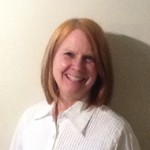
C. Riley Nelson

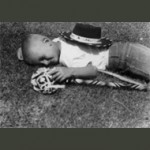
The world is a diverse place and I find my place in it in diverse ways, using a diversity of discovery tools. My earliest memory combined the evidence of science with the spiritual yearnings of the soul. I clearly remember seeking the material, tactile and sensory, feel of warm green grass on my three-year-old face as I lay with my plastic and stick hobbyhorse on the lawn. The exact material touch of the grass and the faithful love of my constructed horse were both part of my personal reality and form an eidetic image that guides me still. Of course neither the conventions of materialist science nor the structure of religious thought had directly taught me or influenced my feelings that day. Thinking back, I can now see that I had used them in tandem. I have changed little since. I have added more discovery tools through the years to that original simple “materialism” and “spiritualism” I experienced that day, in what is the earliest concrete memory I have. Perhaps these added tools have merely been a subdivision of the first two as I have come to use faith and inspiration; science and materialism; force and compulsion; consensus and social agreement; and art and personal creation to help me better understand the world and universe in which I live and move.
I use faith as a discovery tool. I believe in the reality of a personal God, my spiritual father, who communicates with me and I with him. I also believe in the grace and mission of my older brother, Jesus Christ, and the atoning power he provides to help me be a better person now and forever. I believe Jesus Christ’s gospel has been clearly restored to the earth, essentially as it was in the apostolic age. I see this in the organized Church of Jesus Christ of Latter-day Saints, and accept this church with all the parts it entails, including visions, revelations, the role of Joseph Smith, the Book of Mormon, covenants, ordinances, and priesthood authority in current leaders. I believe these things from a spiritual depth I cannot fully and materially explain. I believe in personal and social revelation, inspiration from God. These are concrete beliefs, not to be taken lightly. I have learned them in the quiet of my room, on the tops of mountains, along tumbling streams, in considering the detail of flies and flowers, in teaching moments with others, and in rapt attention in temples around the world. I hope and trust in God in faith. I believe.

Using science as a discovery tool I know something of the diversity of living and non-living things that surround me. I know of their reality by seeing, touching, hearing, tasting, and smelling them. I know also of their reality by virtue of machines which magnify, clarify, and record each of these senses I use to make observations of material reality. I combine induction, deduction, and hypothesis to know of the world, living and nonliving, human and otherwise, that surround me. I have seen the crayfish walk to food and away from my hand. I knew the crayfish. I touched the wind with my face and watched it bend the bunchgrass. I knew of the wind and bunchgrass. I smashed pennies on railroad tracks and knew the weight of the train and know the power of the engine. I use the word “know” quite carefully, generally, but realize that it has a diversity of meanings. I generally restrict “to know” to mean to materially sense something. But I would not be entirely honest if I didn’t acknowledge that sensing, believing, feeling, and knowing are intertwined in ways I will continue to explore at least until I am dead. I believe and know with science.

These two discovery tools, faith and science, are the primary methods I use on a day-to-day basis. I “know” of some things that I “sense” without understanding well from whence comes this “knowing”. Yet the reality of these “feelings” is part of the discoveries I make each day and have made each day of my life. I add to these more tools: force, consensus, and art, to round out my ways of knowing.

Using force, or compulsion, as a discovery tool I submitted as a child to the wishes of my parents Aileen and Winston Nelson and “knew” the right things to do as I grew up. I learned my multiplication tables under the forceful tutelage of a loving Mrs. Sewell in my third grade class at Lincoln Elementary School in Brigham City, Utah. I was “forced” and guided to learn and do good things. I also “knew” that taking the neon tetra fish from the tank at Taylor’s pet store in Ogden, Utah, and putting it in my pocket, was wrong. I knew this through social norms and also through it becoming a dead lint covered fuzz ball in my pocket in a relatively short time. I still buy seeds from the Taylor family most years as my self-enforced penance for that shameful act at age five.

I was forced to learn a myriad of wonderful things in school from elementary to college. I am grateful for what I was forced to learn. Sometimes I rebelled and resisted but more often than not was to able to learn more with that guidance. I am sure some of what I was forced to learn was not true and valuable, but I endured the “force” to gain knowledge. And now I “force” others to learn in the same way. I force, or the university forces, students like I once was to learn of biology in a required curriculum. I am also “forced” to pay my taxes. I welcome the chance that gives me to use the roads, build the bridges, and help the homeless without needing to think deeply of such things each day. I have been “forced” to learn and work, and am grateful for knowledge thus obtained. Of course I realize I could rebel against such force and authority. I have that choice. But I assent to much. I choose to change what I can or ignore what I can’t. Force has a place in my discovery toolbox.

I can know things from a consensus of a group. I can help know who the leaders of the nation are to be by voting, which provides a balanced consensus. With other citizens we can discover a majority opinion of some sort, to get answers to such questions as, “Who should our leader be?” I never agree with all the opinions of all the leaders nor most certainly do I agree with all of the citizens all the time. Some of those leaders and those citizens participating in this consensus are clearly nuts or evil or uninformed or power hungry or worse. Yet I submit to the “knowing” of who is to be the leader using the discovery tool of consensus.

We sometimes gain this consensus “knowledge” by either peaceful or radical means: by debate, competition, war, public demonstration, and sports. Perhaps by voting more often in the sports stadium or in the theater of war for who the winner would be we could save time, injury, and lives. But would that be as effective, fun, entertaining, or binding? Would it be as effective a learning experience? Consensus is somehow related to force as we bind ourselves in society. I keep exploring this consensus discovery tool, sometimes rather nonchalantly.

I have learned through art. I “know” through this medium. My soul has been moved by the creations of human hands, hearts, and minds. I have thrilled at the gradients of colors spread carefully on canvas. I have learned of myself by seeing a fluid dancer run and jump across a stage or perform on a busy street corner. I have heard music that moves me in pleasant and unpleasant ways. My soul has rejoiced at times and has been appalled at others while the ideas that words on a page carry feelings into my being. I know through art. From my earliest experience of grass on my face, I have put a priority on realism and I continue to this day to value it most, I think. My own artwork with photography is an attempt to capture the reality of the moment. Yet I have recognized that all is not “real” in my compositions of frame, of angles, and choice of contrasts and manipulations of color. I know that all is not real and objectively unmanipulated, in the materialist sense, in what others and I can create. The realities of the impressionists, surrealists, cubists, and a variety of –ists for which I don’t even know the names, help me know more about the world. The careful story, nearly completely fabricated in detail yet accurate in scope and realm of human and natural things can move me to know more about how I fit in the nonliving, living, and societal world. I can know things through the fiction of words and visual arts. I can explore and use these simulations to perform experiments of the mind. Some material experiments explored thus are not feasible, or ethical, yet can guide reality so I use these valuable constructs. I can know through the discovery tool of art.

I am a trusting soul. I am an optimist when it comes to believing what people tell me. I believe in the basic goodness of people. But early and near constant experience has taught me to smell a rat. Rats come in many forms and I use many tools to sort the ugly, stinky rats from the beautiful sweet squirrels. It takes a lot of hard digging to unearth the clues that tell them apart. What might first present itself as a filthy rat can become a lovely squirrel, and vice versa. The apparent change comes in my eyes and heart when using a combination of faith, science, force, consensus, and art. That we can all dig with a variety of tools to come closer, to reach, truth is what I do and profess. In the name of Jesus Christ, Amen.

—————————————————

I’m a husband, father, scientist, photographer, professor, and church guy. Insect studies carry me all over the world. Kaye and I have been married for 31 years and have three grown children, Jason, Andrea, and Amy. I’ve been a professor at Brigham Young University in Provo, Utah for 11 years and was a professor at the University of Texas in Austin for the previous 10 years. My LDS mission to Tahiti in the South Pacific changed my worldview about love, gratitude, and sharing. My college training came with degrees from Utah State University and Brigham Young University and a postdoctoral fellowship at the California Academy of Sciences. I enjoy Utah and am proud of my roots in Brigham City where I discovered wonder. My summers are spent in the tropics of Tahiti and South America or in the mountains and steppes of Mongolia. Lately I’ve been enhancing that wonder in remote Mongolia for a month each year working out where aquatic insects live and how they can be used to help Mongolians preserve their amazing rivers, streams, and wildlands. My scientific publications deal with stoneflies, robber flies, species inventories, conservation, and how to be a better science teacher. My photos focus on nature and humans fitting in a wonderful puzzle. I specialize somewhat in ultra close-ups and panoramas. Have you ever pondered the eye of a fly on a wide horizon? I have never lost my sense of wonder of the world and hope you are teaching wonder to your children and grandchildren.

Keep asking what, how, and why.

Posted May 2011

Julie J. Nichols

I have a firm testimony that stories are the truest thing there are—that they co-create reality. I mean “fictions” as well as history—as any history scholar will tell you, every history has its own subjectivities, its own fictions. Human beings are agents choosing; characters in stories acting; and therefore it could be said that every human being is a series of sentences unrolling one by one, subject-verb-complement, contributing to the great True Story which is “the sum of existence,” the “fairest gem that the richest of worlds can produce” (Jaques). Nearly every one of the articles on this site contains a story. Mormons are a story-telling people. “Tell me the stories of Jesus,” our children sing,”I love to hear!—[oh, the] things I would ask him to tell me if he were here!” (Parker) I’ve played fast and loose with the line breaks in that song, but I’m a “creative” writer—playing fast and loose with words is what we do.

Ergo, this is my story, or one version of it: I grew up in the San Francisco Bay Area during the upheaval of the 1960s, the daughter of two conservative Mormons transplanted by my father’s business. I watched them go to the temple regularly and faithfully, and we went to church as a matter of routine, but my father openly disliked my best friends, hippies who questioned everything, including the way I took for granted that God was male and that Jesus was a Jew who lived in Palestine two thousand years ago. I couldn’t defend myself very well, but I loved listening to my friends’ arguments. They were smart. They made me think.

At BYU I came in contact with my first well-read Mormon women—Dorothy Hansen (aunt of Kristine Hansen, whose article is on this site) and Elouise Bell among the most important. They ushered me into a world of academics whose kindness and spirituality felt familiar and trustworthy—and they, too, made me think. Eugene England, that wonderful unorthodox father of the Mormon personal essay, took me under his wing (as he did so many), enabling me to teach lower-division creative writing at BYU. Eventually I took a graduate internship in Salt Lake City, where one day a fine Sunday School teacher in a U of U student ward said matter-of-factly, “Everything Jesus did we can do, except the Atonement.” I was totally hooked. What kind of story does that imply? I want to explore it, to tease and unpack it, to write it! Thank you for giving me something to think about forever!

I seem to have been born knowing that neither God nor Jesus Christ is threatened by questions. One of those excellent Bay Area hippie friends once told me I already had the answers to all my questions– my job was to find them. This consciousness-raising declaration simply paraphrases Jesus’s injunction/invitation: “Seek, and ye shall find! Knock, and it shall be opened unto you!” (Matthew 7:7 and elsewhere.) What permission this gives to explore, to question, to overturn what’s taken for granted! A few years into my marriage, I found I could not happily move forward in my life unless I dove wholeheartedly into the question of Jesus, his identity and his powers. Remembering that teacher in the U of U student ward, I prayed: “Tell me how Jesus did what he did, because I want to do it too.” And answers came pouring into my hands. That’s a story too long for this article, but it was a process of almost two decades involving (among other things) Buddhist meditation, feminist literary theory, alternative healing….

For six years I studied with a remarkable hands-on energy healer back in the Bay Area, a man patient enough to let me write two books about his work, which seemed to me to be a direct answer to my original question. And let me not neglect to say that my family—my husband and four children—were also supremely patient with me throughout this process. We are still married, and all my children have graduated from college and married in the temple. Questioning does not have to lead to divorce or mayhem.

Another crucial scene in the story: for writing and publishing fiction that described interrogation of and deviation from orthodox Mormonism, I was fired from a long-standing “permanent part-time” position teaching creative writing at BYU. Not everyone on this site has had a fully and freely happy relationship with the Church and its employment prospects! But Gene England told me, “You’re well shed of that job,” and he was right. I completed a Ph.D. in fiction writing at the University of Utah and took a tenure-track position at Utah Valley State College (now Utah Valley University). I became a counselor in a Relief Society presidency and then the president. I kept asking questions, corollaries of my original one: who was Jesus? What’s the temple really about? What does its story mean? Why is it structured the way it is? Why are scriptures so important? Or family history? Or serving others?

Answers have flowed into my hands.

I have a clear, confident testimony that God answers prayer, that praying is natural and desirable, a highly efficacious healing tool on multiple levels of consciousness because through it, questions can be answered and frustrations resolved. I have a more complicated testimony about Jesus, one that continues to grow and develop, not because my witness is immature but because Christ is a complicated entity. That Jesus is in fact who he said he was—the incarnation of Godhood in a human body at the meridian of time, come to show us how to be, and to save the human race from desiccation and destruction—can, in my experience, only be understood as we investigate deeply the very real need for his appearance on earth, for his Atonement, and for our continued efforts to live what he exemplified. What we’re doing on this planet as a species is not simple. God’s purpose “to bring to pass the immortality and eternal life of [mankind” (Moses 1:39]—this is not simple. And God begs us to ask about it.

I thank God every day in my prayers for the writers whose stories have led to answers and then guided me to the next ones. The fiction and nonfiction of such writers as Owen Barfield, Doris Lessing, Virginia Woolf, and many others, has shed light on scriptures, described and explained mysteries of the human heart, and rewritten stories I have not fully understood until I found their work. I don’t suppose I’m an orthodox person. But I believe you could trust me to speak truth in regard to the gospel if I were the only Mormon you ever met. Joseph Smith restored remarkable truths, translated remarkable stories, ancient and important, yea, vital, essential to our salvation. The more witnesses we have, the better. I’m thankful to be one among many who call themselves “scholars,” and to add my story to theirs.

Work Cited

Barfield, Owen. Various works, particularly Saving the Appearances: A Study in Idolatry. First published 1957; most recent edition by Barfield Press, UK, 2011.

Jaques, John. “Oh Say, What Is Truth?” Hymns of the Church of Jesus Christ of Latter-day Saints 272.

Parker, W. H. “Tell Me the Stories of Jesus.” Children’s Songbook of the Church of Jesus Christ of Latter-day Saints. Corporation of the President of the Church of Jesus Christ of Latter-day Saints 1989.

———————————————-

Julie J. Nichols is associate professor in the Department of English and Literature at Utah Valley University, where she teaches the writing of fiction and creative nonfiction as well as British literature and basic and advanced composition. She presents yearly at national conferences, most recently on the intersection of literary writing with what Owen Barfield calls “the evolution of human consciousness,” and her work has been published in Sunstone, Dialogue: A Journal of Mormon Thought, The Journal for the Assembly for Expanded Perspectives on Learning, and elsewhere. She is married to Jeff W. Nichols III; they have four children and eight grandchildren.

Posted May 2011

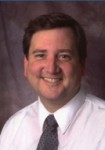
John Bennion

My injunction here is to give reason of the hope that is in me, which hope I apprehend as a patchwork of light and dark memories. The scriptures about opposition say there is no pleasure without pain, no joy without sorrow, no hope without despair. So I find myself focusing on the seams of my being and of the universe, fault lines, where one thing becomes another. One reason for hope: I am grateful that Jesus Christ fulfilled the law of the Old Testament.
I’ve been reading the Book of Judges recently. Many of the stories show how women were not valued beyond their ability to procreate or give pleasure to men: Jeph-thah swore as he returned from a successful battle that he would sacrifice whatever came out of his door to greet him. His only child, a daughter, emerged and he rent his clothes in sorrow but sacrificed her anyway. The writer of the passage uses the story to show the daughter’s nobility as she says, “My father, if thou hast opened thy mouth unto the Lord, do to me according to that which hath proceeded out of thy mouth” (Judges 11:36). I think he was a double fool for making a rash promise and for valuing abstractions more than he valued his daughter.

In Judges 19 an unnamed Ephraimite, a houseguest in a city of the tribe of Benjamin, protected himself by allowing his concubine to be offered to a mob surrounding the house. The men abused her all night, injuring her so severely that she died with her hands on the threshold. The Ephraimite cut her body into twelve sections and sent the pieces to the borders of Israel. Israel, outraged at her rape and murder and probably at the threat to her husband, declared war on the tribe of Benjamin. Still the first evil act was when the master of the house opened the door and offered her to the men, valuing her safety and life less than the life of his guest.

The stories go on and on. Women also killed savagely: Jael hammered a nail through the temple of Sisera while he was sleeping. The violence is horrific, not just in Judges, but in much of the Old Testament, and it wasn’t just women who were treated cruelly. The Children of Israel seized Canaan by force and believed God commanded them to destroy many cities of their enemies—man, woman and child. There are exceptions to this cruelty against women and foreigners, which seem connected to the strong tradition of hospitality to strangers. The tribes of Ephraim and Manasseh allow the Canaanites to dwell in Gezer and serve under tribute. Boaz is courteous to Ruth. Throughout the Old Testament some men treasure their wives, some consider that they are not the only child God respects.

So for me the love of God shines only periodically or even sporadically through the history of the Old Testament. This light is especially strong through the words of the prophets. Isaiah prophesied of the Savior, “The people that walked in darkness have seen a great light: they that dwell in the land of the shadow of death, upon them hath the light shined. . . . For unto us a child is born, unto us a son is given: and the government shall be upon his shoulder” (Isaiah 9: 2, 6). In a voice like Jesus’ voice Jeremiah wrote,

For among my people are found wicked men. . . . As a cage is full of birds, so are their houses full of deceit: therefore they are become great and waxen rich. They waxen fat, they shine: yea, they overpass the deeds of the wicked: they judge not the cause, the cause of the fatherless, yet they prosper; and the right of the needy do they not judge.” (Jeremiah 5: 27-28)

Earlier Elijah discovered God’s love for his children, and did so on the rack of his apparent failure to motivate Israel to keep covenants. His voice is mournfully lonely as he complained, “I, even I only, am left, and they seek my life, to take it away” (I Kings 19:10). In response God commanded Elijah to stand on the mountain and observe:

And behold the Lord passed by, and a great and strong wind rent the mountains, and brake in pieces the rocks before the Lord; but the Lord was not in the wind: and after the wind and earthquake, but the Lord was not in the earthquake: and after the earthquake a fire; but the Lord was not in the fire; and after the fire a still small voice.” (I Kings 19:11-12)

In that small voice even mournful Elijah found hope in the love of God.

Despite these glimmers of hope, as Israel discovered and defined itself against covenants made with God, many of the Israelites didn’t seem to fret much about those destroyed and killed in God’s name. I understand that judging a former time by my own light might be anachronistic. I also understand that sometimes death isn’t the worst that can happen, that sometimes killing someone is the best available option. But I don’t have to like it. I don’t believe in the virtue of letting war and killing sit comfortably in my head.

All of which leads me to admire to the core of my soul the revolution that Christ embodied. His attitude toward women and foreigners was nontraditional: He treated the Samaritan woman at Jacob’s well with courtesy, asking her for water, divining details of her life but not insulting her for them, telling her about the living water constituted in his being. He said to the woman caught in adultery, “Neither do I condemn thee” (John 8:11). He spoke respectfully to the Greek woman whose daughter had an unclean spirit. When she suggested that, while the Jews might get served first, others might gather crumbs from under the table, he doesn’t rebuke her. She has the confidence to engage in a witty battle with him, using his own metaphor to get him to consider her position. He said to her, “For this saying, go thy way; the devil is gone out of thy daughter” (Mark 7:29). When the woman with an issue of blood, unclean by traditional law, touched the hem of his garment, he turned and said, “Daughter, be of good comfort: thy faith hath made thee whole” (Matthew 9:21). He also respected his mother’s wish when he transformed water into wine. Jesus was a man who loved all—women and foreigners, those without power, not just those who were fellow citizens. He gave respect to lepers, sinners, publicans, Samaritans, and working people like fisherman. He didn’t even have a prejudice against truth seekers from the higher echelons of society.

Down to our day the world says might is right or the strong will conquer. His Sermon on the Mount reverses this order of power, gives us the very machinery to learn empathy for others: Blessed are the meek, the merciful, the poor in spirit. He overturned our basic instinct for survival and domination, redefining it as less important than purity of heart. He told his followers that we are the salt of the earth, a light to the world, a city on a hill, but what gives us these qualities is our compassion for others, our ability to become like children in our openness and respect for God and all his children. He said he had not come to destroy the law crafted with Israel through centuries of mixed obedience to covenants, but to fulfill. He overturned without overturning: “Ye have heard, thou shalt not kill, but whosoever is angry at his brother without cause shall be in danger of the judgment” (Matthew 5:22); and “Ye have heard that it was said by them of old time, Thou shalt not commit adultery: But I say unto you, That whosever looketh on a woman to lust after her hath committed adultery with her already in his heart” (Matthew 5:28). He opened/opens our hearts, breaks us, so that we can feel and live. The road to perfection is forgetting ourselves, paradoxically. He taught his disciples: Let not thy left hand know what thy right hand doeth; Lay up treasures in heaven; For where your treasure is there will your heart be also. The light of the body is the eye. Let thy body be full of light. Take no thought for your life, what ye shall eat, or what ye shall drink. Consider the lilies of the field and trust God. (Matthew 6) His lectures to his disciples are instructions in how to see ourselves and each other without the base desire to compete, to vaunt ourselves over others, including women, strangers, and foreigners. He taught us to live without bigotry.

Still he transformed the world only as we allow him to. Many throughout history have ground down the weak or the foreign in his name: the Crusaders, the Inquisitors, those who burned the martyrs in England, those who perpetrated the Mountain Meadows Massacre. Many Christians have mistaken virginity for value, foreignness for evil, difference for worthlessness. Without forcing us to obey, he opened the door to a new way of seeing that can fundamentally change the way we think about ourselves and other people.

My hope is that he would have me do today what he did then: respect those who it is easy to hate—anyone who is different, weaker, who doesn’t think the way I do. This includes the gay person, the immigrant, the person of a different religion. He would have me love the tyrant and the rich man. He would have me urge employers to pay women the same as men, would fight against child pornography, would enable the impoverished sick to get care, would work to end such practices as female castration, child slavery, prostitution, and other kinds of cruelty and inequity.

My experience with prayer coincides with what I know about Jesus from the scriptures. As I pray to God, the Father, somehow Jesus is there also, mediating, helping me bridge or breach the gulf between me and God. We know, as Mormons, that God and Christ both have bodies, and this may make us guilty of an odd kind of anthropomorphism, believing that God sees the universe as we do. I don’t think this belief is supported in the scriptures. We are told that we see through a glass darkly and that God’s ways are mysterious. Mormon, reviewing the history of the Nephites, wrote, “Oh how great is the nothingness of the children of men; yea, even they are less than the dust of the earth. For behold, the dust of the earth moveth hither and thither, to the dividing asunder, at the command of our great and everlasting God” (Helaman 12:7-8). I also think it’s clear that while our vision falls short of God’s vision, as we strive to see humanity and the universe as Christ does, we grow to be more like him (1 John 1:3).

How do we see? One metaphor is that we see the universe the way a poor writer of fiction sees his own characters, as stock stereotypes revolving around one central complex story, our own. Or we see others as we see the moon, which also has only one face toward us. We have difficulty imagining, as Roger Waters put it, the dark side of the moon. We see in stereotypes, as bigots, narrowly. We often see others as one-sided or even malformed beings.

There is a man in my ward who doesn’t see Muslims this way. If I’ve ever met a warrior, this man is one, and he studies the people he fights against. He never makes the mistake of thinking that all Muslims are the same. He has read their holy texts, talked to them extensively, and is as patient as a fisherman with people he’s met from Iraq and Afghanistan. He spends time finding similarities between his own beliefs and theirs. I’m not interested in violence and I never thought I could learn Christianity from a man capable of killing another human being, but to his core this soldier is a Christian.

As happened with my neighbor, I occasionally get glimpses of the way God may see the universe. One was when I stared at the bone yard at Dinosaur National Park, which is located at the bend of an ancient river. As animals died and floated down, they became caught where the water slowed and turned. Through the ages sediment built on sediment, bone on bone. Then an earthquake tipped the whole section of earth on its side. Once scientists had made a horizontal cross section, they had cut through all the ages. They left the last layer half exposed, for anyone to examine. As I looked at those giant femurs, massive pelvises, larger than any land animal living today, I was struck with the massiveness of the universe and the majesty and complexity of God. It felt the same as I feel looking into the immensity of space. God is just larger than we can easily imagine.

Another experience: I was irrigating in the desert before leaving on my mission. I carried 3×5 cards in my back pocket so I could memorize them as I worked in my father’s alfalfa fields. I walked down the lane, in the middle of small green field in the middle of a high desert valley, and I read, “For God so loved the world, that he gave his only begotten Son, that whosoever believeth in him should not perish, but have everlasting life” (John 3:16). At that moment I knew God’s love for me. I felt the God of the universe condescending to me. During that time in the desert and during many other periods of my life, I felt unprepared and haphazard, as if I stumbled forward into the darkness, but at that moment, I felt God’s individual, specific love for me.

Christ’s vision seems complex, not in any way simple. How does he see? A metaphor: perhaps the way an insect eye sees reality with multifaceted or compound vision. He sees as man and as God, both at once, our mediator. Another metaphor: perhaps he apprehends reality from four, six, or infinity dimensions. So how do we grow to see as Christ does? I believe that it’s a little like writing fiction. We imagine. We imagine the dark side of the moon, the faces our friends give to others. We imagine someone else’s perspective and feel it in our gut as strongly as we feel our own being.

George Eliot, who didn’t believe in Christ’s divinity, nonetheless understood the basic tenet of Christianity, trying to understand another person as they understand themselves. She wrote of a character who realizes that her hopes and dreams are not those of her husband:

We are all of us born in moral stupidity, taking the world as an udder to feed our supreme selves: Dorothea had early begun to emerge from that stupidity, but yet it had been easier for her to imagine how she would devote herself to Mr Casaubon, and become wise and strong in his strength and wisdom, than to conceive with that distinctness which is no longer reflection but feeling—an idea wrought back to the directness of sense, like the solidity of objects—that he had an equivalent centre of self, whence the lights and shadows must always fall with a certain difference.” (Middlemarch)

Last night we drove to Grantsville to watch my niece perform in Joseph and the Amazing Technicolor Dream Coat. My sister had invited us to have dinner in honor of her daughter before watching the play. We were late and could only quickly say “break a leg” before my niece had to leave to put on her costume and makeup at the high school. Later, as I sat in the dark, watching my niece’s face as she sang and danced, I imagined her being crushed by the world, that her innocence could become disillusionment, her hope despair, and her happiness sorrow. Her pure face will become wrinkled and eventually she will die. Then I knew, despite the likelihood that many of these things may indeed happen to her, she can hope and I can hope because of Christ’s life and sacrifice.

After the play was over, in the middle of the crowd congratulating the performers, I saw my sister weeping as she spoke with a man. I didn’t know him but discovered that he had taught another of my sister’s children, a son, in high school. My nephew was killed in an auto accident twelve years ago. Before his death, while he was still in high school, my nephew had done something wrong, harming this teacher. Soon after my nephew’s death, my sister wrote the teacher a letter, expressing her belief that her son was sorry for his mistake. The letter was misplaced somehow and not found until now. My sister wept as this man told her he had just read the letter and had forgiven her son. My sister still mourns her son, especially on the anniversary of his death. She will never forget this loss. So she wept because of gratitude and grief, happiness that this man had forgiven and sorrow that he couldn’t say so to her son, face-to-face.

I know through my study of the scriptures and through personal experience, that Christ has not forgotten my sister and her children, alive and dead, and I know he has not forgotten me. This is my hope.

————————————————

Born in 1953 in Salt Lake City, I grew up in Vernon, Utah, a village of about 200 people in the southern end of Rush Valley. I attended elementary school there and worked on my father’s ranches at Greenjacket (6 miles south of town) and Riverbed (40 miles west). I completed junior high and high school in Tooele and went to BYU for a year before being called on my mission, which was to the Navaho reservation. I learned to speak only a little Navaho, mostly in connection with religious subjects. When I returned, I finished my undergraduate degree in English with a certificate to teach secondary classes.

I met Karla and we married on 10 June 1977. We lived in Logan through the summer and moved to Mt. Pleasant, where we lived while I taught English, journalism, and art (for which I was not qualified) at Sanpete Junior High. Much of what I know about pain I learned in those classrooms, because I was a horrible disciplinarian and an inadequate teacher. We soon moved to Karla’s father’s farm near Mona, and I transferred to Juab Middle School, where I taught for three years, meanwhile getting my MA degree at BYU.

In 1982 I quit and we moved to Logan where Karla finished her Masters Degree in psychology. In 1984 we moved to Houston, where we lived for 5 years, while I completed my doctorate in Literature and Creative Writing. In 1989 I was able to get a job at BYU, where I have taught ever since. Karla completed her doctorate at BYU and now works as a psychiatric therapist.

We have 5 children, all married but one. One is a lawyer, one a jazz musician and agent for Delta Airlines, one works at the Utah School for the deaf, one is an artist, and one is just starting college.

I write novels, essays, and short fiction about the western Utah desert and the people who inhabit that forbidding country. I have published a collection of short fiction, Breeding Leah and Other Stories (Signature Books, 1991), and a novel, Falling Toward Heaven (Signature Books, 2000). I have published short work in Ascent, AWP Chronicle, English Journal, Utah Holiday, Journal of Experiential Education, Sunstone Magazine, Best of the West II, Black American Literature Forum, Journal of Mormon History, The Hardy Society Journal, and others. I have written two historical mystery novels (not yet published), Avenging Saint and Ezekiel’s Third Wife. I am currently working on a young adult mystery, The Hidden Splendor Mine. As an associate professor at Brigham Young University, I teach creative writing and the British novel. I have made a special study of the late Victorian and Modern writer, Thomas Hardy. As a teacher, I specialize in experiential writing and literature programs, including Wilderness Writing, a class in which students backpack and then write personal narratives about their experiences; and England and Literature, a study abroad program during which students study Romantic and Victorian writers and hike through the landscapes where those writers lived. A documentary The Christian Eye: An Essay across England covers the 2007 tour.

I currently teach the Gospel Doctrine class in my ward.

Posted May 2011

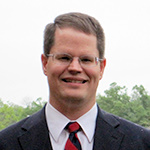
Dallin D. Oaks

One of my favorite scriptural passages is found in the revelations that the prophet Joseph Smith received. In this passage we find: “And as all have not faith, seek ye diligently and teach one another words of wisdom; yea, seek ye out of the best books words of wisdom; seek learning, even by study and also by faith” (Doctrine & Covenants 88: 118). Later in this same book of scripture we also learn that obedience is an important element in gaining “knowledge and intelligence” (Doctrine & Covenants 130: 19; see also John 7: 17). I find great meaning in these passages and have seen their truth confirmed in my own life. Although some people are suspicious of religious and spiritual matters, I have actually found that such things complement the academic and secular approaches to learning. In my own life I have learned things through both study and spiritual intimations. In fact, at times I have sought the help of the Lord to solve particular problems, even academic ones that transcend the current limits of my own understanding. At other times I have experienced a burst of insight or direction that I had not anticipated but that has allowed me to make further progress in my own life or academic work.
To acknowledge that the Lord takes an interest in our lives, sometimes even matters related to our work, is not to say that he regularly solves our problems for us. He certainly expects us to do our part. The first passage I mentioned above mentions study, not just faith. But if people merely study and shut themselves off from the additional font of light and knowledge, then they are imposing an unnecessary limitation on their potential happiness and success.

I am certainly aware that some skeptics might propose counterarguments or alternative theories by which they might attempt to explain away what I have just said about my own personal experiences with faith and reason. But my own conclusions about this relationship between faith and reason have not been developed through some kind of naiveté. I have had many years of experience and personal reflection on this relationship. And although I don’t claim to have figured out everything in this regard, I have seen and experienced enough to know that the relationship is a real one. As with many truths in life, I think it involves paradoxes. Some might ask how faith and obedience can bring learning or knowledge. It might initially seem like a backwards proposition to those who assume that faith and obedience should come after evidence or knowledge. But in the same way that many people have “found” themselves only after first losing themselves in the service of others, I can also say that faith and obedience often precede greater light and knowledge. Indeed, the relationship in my own life seems to be cyclical. Faith and obedience bring greater understanding, which in turn builds a greater faith and desire to be obedient, which can bring more understanding, and the process continues. Along the way we can see evidence of the truth of what we believe, so we are not operating with what others would incorrectly assume to be “blind faith or obedience.” We aren’t expected to abandon our intellect and reason. The Book of Mormon, in fact, encourages us to try an experiment in relation to faith (and it actually uses the word “experiment”). It invites people to first “exercise a particle of faith” to plant a seed (the word of God) and then observe whether the seed grows with watering and cultivating. The seed won’t grow if it is not a good one. But if the seed grows and enlarges our soul and increases our understanding, then we know it is a good seed. Thus we have evidence along the way to confirm what originally only required just enough faith to plant the seed as part of an experiment (Alma 32). This description in the Book of Mormon is consistent with my own person experience. And my own conviction of the truth of the restored gospel has not come through just one experience but many experiences, stretched out over a lifetime.

As I read the Book of Mormon and other latter-day scriptures revealed through the prophet Joseph Smith, I am continually impressed with the richness and beauty of the doctrines presented within them. I am also amazed at the continuity and consistency between these scriptures and the Bible. Moreover, when I read the latter-day scriptures, I feel the same spirit that I feel when I read the Bible. This confirms to my soul that the ultimate source of both is the same: the Lord Himself.

—————————————

Dallin D. Oaks is a member of the Linguistics and English Language Department at Brigham Young University, where he teaches courses on the structure and history of the English language. He has a Ph.D from Purdue University and has published a variety of books and articles, including a two-volume work on structural ambiguity.

Posted May 2011

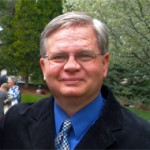
Jason A. Tullis

As a member of the Church of Jesus Christ of Latter-day Saints, I am a missionary at heart. Before I began studying botany and geographic science at Brigham Young University, I formally represented the Church on a full-time mission in Spain from 1993-1995. In various cities along the Mediterranean coast, I worked long days as the seasons progressed until two years of volunteer service were completed. A few individuals I met were interested in the Church’s message about the Prophet Joseph Smith and the restoration of Christ’s prophets and apostles in the nineteenth century. A small number of men and women I talked with accepted the invitation to read portions of the Book of Mormon. Some took to heart the invitation to pray and ask God to manifest its truth to them. I saw hope, happiness, and faith begin to fill the hearts of people who accepted the restored gospel and who strived to live all of its teachings. This illuminated my own faith.
After serving as a full-time missionary, I returned home in the fall of 1995 to Covered Bridge Canyon, a small mountain community south of Provo, Utah. Today I don’t have a different testimony of Christ’s restored gospel or plan of salvation than I did sixteen years ago in Spain, though it has become stronger with the help of the Holy Ghost and also through frequent study. As I consider how I obtained this testimony, there are many evidences to count in both nature and humanity. The foundational reasons why I am a Latter-day Saint have to do with the Book of Mormon and its ancient authors’ message about the living Christ. I know their words are true and that they are of God. The Book of Mormon helped me understand what steps were necessary to obtain this knowledge, and explained to me that it is obtained in the name of Christ and by the power of the Holy Ghost.

As my father, F. LaMond Tullis, notes in his written testimony on this website, he can’t prove his faith. I know what he is talking about. I can’t prove my faith with either reason or science. I rely upon revelation from God through the Holy Ghost to know the truth of the Book of Mormon. I have been blessed to have my understanding of scriptures gradually improved. As amply proclaimed in the official publications of the Church of Jesus Christ, the canon of scripture is open. For me, this is like being able to peer through the expanding digital archives of space sensors and telescopes. There will always be more to learn of divine and human things. Study and reason are wonderful gifts from God that enable this process. These helped me fulfill some of the preparatory requirements even before I asked God whether the Book of Mormon was true. Revelation was and is available to answer our deepest questions.

In the things of God, divine special revelation ranks higher than our own reasoning. We may ask: “What is the point of all these challenges we face?” I have asked this question. And received what I can recognize as answers. I know that God loves me, and that he loves all of us, individually in ways that are beyond our current human comprehension. I can’t explain how this works. I simply know it and this knowledge has brought me comfort and peace when these were most needed, including during times of sorrow after loved ones passed away. Seeking the truth in and about the Book of Mormon is worth the effort! It leads to other treasures of knowledge by revelation from God.

Sixteen years after serving a full-time Church mission in Spain, I am still anxious to share my faith with friends and neighbors, or anyone who is searching for answers to questions such as “What is the purpose of life?” or other really important questions. I know that God will answer prayers even if the questions are tough. I am often invited to assist the local full-time missionaries as they teach Christ’s words from ancient and modern scripture. I have also been invited by local Church members to actively support community service projects such as the annual Northwest Arkansas [Emergency] Preparedness Fair and a major tree cleanup project following a severe ice storm in 2009. Serving others is a way to share my faith by example.

I am amazed how the gospel lessons taught by the missionaries and a desire to serve others are also taught by prophets and apostles in modern times. Their words in turn confirm ancient scriptures including the Holy Bible, the Book of Mormon, and the Pearl of Great Price. Being a Latter-day Saint is like being a “saint” in the primitive church, when it was led by Christ through Peter, James, John, and the apostles. Jesus Christ has restored his kingdom in modern times through the Prophet Joseph Smith, and it is the Church of Jesus Christ of Latter-day Saints. This was seen by Daniel as a “stone… cut out of the mountain without hands” (Daniel 2:45). It is God’s work.

It is a most wonderful freedom and privilege to be a Latter-day Saint. The accompanying blessing of knowing that Christ lives, and that his plan of salvation or restored gospel is extended to all humanity, including even me, is news too great for words.

———————————————-

Jason A. Tullis traces a strong sense of place to the mountains around Covered Bridge Canyon, Utah, his home between 1980 and 1999. (His family took him to Lewes, England and Princeton, New Jersey for year-long stays where new adventures were not hard to find.) He served as a full-time Latter-day Saint missionary in the Spain Barcelona Mission from 1993-1995. He studied geographic information science (GIS), botany, and remote sensing at Brigham Young University and University of South Carolina. He now lives in Fayetteville, Arkansas with his wife Marrianne and their three children. Jason has served in a variety of local Church “callings” or assignments within the Fayetteville 2nd Ward. He is an Associate Professor in the Department of Geosciences at University of Arkansas. His university work is energized by an untapped potential of geography, computing, and remote sensing to facilitate wise land use decisions and multidisciplinary discovery in a modern information economy. He serves as the Associate Editor of GIScience and Remote Sensing. Jason enjoys practicing language skills gained in Spain, and in his work this has given him a love for Latin America.

Posted May 2011

Neal W. Kramer

My testimony has arisen from simple things that happen in ordinary life but are also extraordinary. As a young boy I received clear answers to my prayers. I chose to be baptized when I was eight and my sins were remitted. I received the Gift of the Holy Ghost shortly thereafter. I read the Book of Mormon and prayed in faith to know if it was true. I witnessed the miraculous recovery of people who were ill, after we had fasted and prayed. I have witnessed administrations and healings. Before I left for Germany to serve a mission, I received a sacred manifestation that gave me near certain knowledge that I was truly going to serve Jesus Christ, the very Savior of the world. After I returned from my mission, I married my wife in the Holy Temple. Again I received sacred manifestations of the reality of the Atonement of Jesus Christ. I have repented of my sins and have received the sacred witness that they are forgiven.

Thus, my testimony is based on simple experiences typical of those of other Latter-day Saints. Do not construe this, however, as suggesting that my testimony or any other is trivial. It is not. Instead, my testimony is a clear expression of profound truths that define my life and the lives of my wife, my children, and my grandchildren.

I stand as a witness that Jesus Christ, the Son of the Living God, was born into mortality, lived a perfect life, suffered for our sins, felt our pains and weaknesses, died on the cross, and was resurrected on the third day that we might escape the bondage of death and hell. I testify that He lives and that we are surrounded by evidence of His everlasting love for all. I testify that He seeks to draw us closer to Him through holy ordinances performed under his direction by authorized servants today.

I testify that our Father in Heaven lives. He answers prayers. He draws close to us as we draw close to Him. His great plan of happiness fulfilled by Jesus Christ brings us all everlasting life. He is not an essence or a universal force. He is a personal being who knows and loves his children.

As the Holy Ghost has borne witness to me, so also I bear witness that Joseph Smith, Jr., was a true prophet of God, like Moses, Abraham, Elijah, and Isaiah. His translation of an ancient record, The Book of Mormon, stands today as Holy Scripture, another witness of Jesus Christ and His atoning sacrifice for all mankind. As part of the restoration of all things, he truly was ordained by angelic messengers to the priesthood, the authority to act as God’s true servants in this day.

By the authority of the priesthood, the Church of Jesus Christ was restored in 1830. It remains on the earth today, ready to accept all people from all walks life who are willing to repent, be baptized, and keep the commandments. The Church of Jesus Christ of Latter-day Saints is that church, the true Church of Christ.

As in ancient times, so also today, living apostles and prophets walk among us. They bear special witness of Christ and organize and oversee the work of His church today. I testify that Thomas S. Monson is God’s prophet today. We should look to him, for through him the words of life come to us under direction of the Savior himself. He will guide us in the paths of righteousness and truth.

As a person committed to reason and the truth it can help us find, how do I know these things are true? As I wrote above: by means simple yet extraordinary. In answer to my prayers, in my daily experience, in moments of sacred communication, the Holy Ghost has borne witness to my soul that they are true. I therefore stand at the end of a long line of witnesses who have been similarly inspired and testify that the things I have written are true. I invite all to come unto Christ. I do it in the name of our Lord and Master Jesus Christ. Amen.

——————————————-

Neal W. Kramer is an adjunct faculty member in the department of English at Brigham Young University in Provo, Utah. He is currently a member of the Arts and Sciences editorial board at BYU Studies. He has previously served on the board of the Association for Mormon Letters and as President of AML for two terms. He has published numerous essays and reviews, three of which have been anthologized in the following collections: Colloquium: Essays on Literature and Belief, Living the Book of Mormon, and Faithful History. He lives in Provo with his wife, Leila. They have five children and twelve grandchildren. Number thirteen is on her way.

Posted May 2011

Robert E. Riggs

I was born in Mesa, Arizona, in 1927, to parents who had been married in the Salt Lake Temple and who themselves were children of LDS parents. I absorbed my testimony from my mother and from regular church attendance and association with others of the faith. I have always been a believer, even as a small child. Mother once recalled to me how, as a little boy of three or four, I shot an arrow into the air and never saw it come down. When I couldn’t find the arrow I told Mother, “I guess Heavenly Father has it.” In my young mind the spiritual and the temporal were not different kinds of reality but just parts of one, integrated natural order. I still feel that way.

As I grew a little older I was constantly and profoundly aware of the gospel standards that should guide my conduct, and they influenced my decisions on a daily basis. That is not to say I never did anything wrong. I did, but it was usually from thoughtlessness and carelessness, or ignorance, rather than a conscious decision to do something I knew the Lord would not approve. God was very real to me then, as he is today, and I wanted to do what was right.

Although I felt good about my relationship with the Lord, my obedience to what I accepted as his commandments sprang more from a sense of duty than from any overpowering love of God and fellow man. I recognized God as my Father in Heaven, and felt comfortable with that concept, and I generally felt good will toward other people (except temporarily when someone did something that offended me). But I was never sure I really loved God with all my heart, might, mind and strength, and I was quite certain I didn’t love my neighbors as myself. I still have difficulty with that. As a young teenager, I always assumed I would get better as I traveled along life’s highway, so it didn’t bother me to admit I had some distance to go before reaching perfection. It is a little more troubling sixty or seventy years later to recognize that the gap hasn’t narrowed much, but the pain is softened by a realization that the mortal condition, for the vast generality of humanity, is not compatible with perfection. The really good news is that the atonement of Jesus Christ will fill that gap, if only we keep trying.

During my teenage years I felt a desire to learn more about the scriptures, and I read them all, word for word, with the exception of some of the more obscure materials in the Old Testament. I don’t recall taking Moroni’s challenge at the end of the Book of Mormon to pray fervently to know if the book was true. I already believed the book was what Joseph Smith said it was, and to ask if it were true would have been the expression of a doubt I never felt.

Higher education did not in anyway detract from that simple testimony. In Champaign, Illinois, where I did my Ph.D., Sunday meetings were for me a needed break from studies. A number of university faculty were members of the branch and, in Sunday School and Priesthood meetings, gospel principles were often examined with some degree of rigor by keen minds intent on reconciling faith with secular learning. As I saw it, gospel principles never lost out in the process; they simply were placed on a foundation of reason as well as faith. This was my first exposure to such careful analysis of the gospel by people strong in the faith, and I found it both faith-promoting and intellectually stimulating. It helped set the pattern for reconciliation of faith and secular learning that has undergirded my testimony throughout my life.

This is not to say that my testimony has remained stagnant throughout my life. There is always more to learn about the gospel as well as about the physical and social world. In Minnesota where I taught for eleven years, I came to know the true meaning of a “ward family.” Beyond the reasons of faith, fellowship and personal development, which makes the Church important to us wherever we are, the Church in Minnesota became our surrogate family. In Arizona my wife and I had family all around us. In Utah where I first taught, contacts with extended family were less frequent but still considerable. In Minnesota we were far removed from parents, siblings, cousins, uncles and aunts, as were many other Mormons who had come to Minnesota from points west. Local members generally had family connections, but those members were often converts whose new religion was more likely to separate them from their non-member family than bring them together. Thus uprooted, geographically or socially, we turned to each other for support and sociability. The expression “ward family” is used throughout the Church in recognition of the close ties that do, or ought to, exist among the membership. In Minnesota we really were a ward family.

There has never been a time when I doubted the truthfulness of the Book of Mormon as a sacred record of ancient peoples, nor Joseph Smith’s story of the events that accompanied the restoration of the gospel in our day, nor indeed the reality of the Savior’s life, atoning sacrifice and resurrection. Can I say I know these things are true? From personal experience I know that prayers are answered, sometimes in surprising ways. I know that people can receive inspired spiritual promptings that have tangibly good outcomes when acted upon. I know that blessings come from living according to the teachings of Christ as revealed through the scriptures and through our latter-day prophets. There are many things I know about the church and its teachings that are good and true.

For some things, however, at this stage of my eternal progression, I must settle for an unwavering belief, based on faith and trust, sufficient to exclude doubt. Moroni tells us, in the Book of Mormon, that “by the power of the Holy Ghost” we “may know the truth of all things.” I hope some day to reach that point. But at present I am comforted by the discussion of spiritual gifts in Section 46, verses 13-14, of the Doctrine and Covenants:

To some it is given by the Holy Ghost to know that Jesus Christ is the Son of God, and that he was crucified for the sins of the world.

To others it is given to believe on their words, that they also might have eternal life if they continue faithful.

This is my testimony of the truthfulness of the restored Gospel and the reality of the Savior’s life, atoning sacrifice and resurrection, which I declare, in his Sacred Name.

———————————————-

Robert E. Riggs is Professor of Law Emeritus at the J. Reuben Clark Law School, where he held the Guy Anderson Chair and received a Karl G. Maeser Distinguished Teaching Award.

He lived in Arizona until age 18, was drafted into military service at the end of World War II, and served in Korea prior to the outbreak of the Korean war. After discharge he served a two-year mission in Britain and edited the Millennial Star during his second year there. He married Hazel Dawn Macdonald, September 1949, in the Arizona Temple. They have seven children, twenty-seven grandchildren, and at latest count eighteen great grandchildren. Together they served a mission at the Arizona Temple Visitors Center, 1993-94.

He received a B.A. (1952, with highest distinction) and an M.A. (1953) from the University of Arizona, both in political science, studied a year at Oxford University under a Rotary Foundation Fellowship, and was awarded a Ph.D. (1955) in political science from the University of Illinois. He taught political science at B.Y.U., 1955-1960, with a year on leave as Rockefeller Research Fellow in International Organization at Columbia University. During 1960-1963 he was a Research Associate in the Bureau of Business and Public Research at the University of Arizona while earning an Ll.B in the law college. In 1970, he was retroactively granted membership in The Order of the Coif, conferred by the college upon the top student in each class that graduated before the University of Arizona chapter of the society was organized. For a year he practiced law in Arizona, then accepted a position in the Political Science Department of the University of Minnesota. He served two terms as Mayor of Golden Valley, Minnesota, and conducted a losing campaign for Congress as the Democratic candidate in Minnesota’s Third District in 1974. From 1975 until retirement in 1992 he was Professor of Law at the J. Reuben Clark Law School.

His published works include books, monographs and articles in the disparate fields of constitutional law, international relations, and Arizona state government.

Posted May 2011

Richard J. McClendon

The Apostle Peter counseled that we ought to “be ready always to give an answer to every man that asketh . . . a reason of the hope that is in [us]” (1 Peter 3:15). Taking this as my guide, I now share the reasons for hope and convictions that are in me. The Prophet Ezra Taft Benson once said, “Every man eventually is backed up to the wall of faith, and there he must make his stand” (Ezra Taft Benson, “The Book of Mormon is the Word of God,” Ensign, May 1975, 63). I firmly believe this is true not only in regards to religion and spiritual matters, but also about science, reason, or any other ideology or worldview we encounter. Although I am a disciple of Christ first and foremost, I am also a social scientist and as such have been formally trained to rely heavily on the scientific method. This method, although a powerful and effective tool, is in and of itself only a philosophy. As Slife and Williams put it, “[S]cience itself is based on theories and speculations. The method used to support or disprove other theories is itself a theory about how this supporting and disproving is done. Scientific method was not divinely given to scientists on stone tablets. There is no foreordained or self-evident truth about how science is to be conducted, or indeed, whether science should be conducted at all. Scientific method was formulated by philosophers, the preeminent dealers in ideas. These philosophers, not scientists, are responsible for the package of ideas now called scientific method” (B.D. Slife and R.N. Williams, 1995. What’s Behind the Research?, Sage Publications, Thousand Oaks , CA, 4). With this in mind, I believe that science just like religion or any other belief system must be accepted on faith and, contrary to its own assumption, it is not the only way of knowing.

From its beginning, science was handicapped by limiting itself to accepting only five modalities of learning: we generally call them the five senses (taste, touch, smell, hearing, and seeing). Unfortunately, philosophers excluded a key modality when they invented the scientific method; that modality is called “the sixth sense.” Some call it intuition, while those in the religious community often call it “the Spirit of God,” ‘the Light of Christ,” or “the Holy Ghost.” This modality presents itself in the form of feelings or thoughts and generally cannot be seen, touched, smelled, heard, or tasted, yet it is as real and as valid as any of the five senses. In fact, my experiences in life have brought me to a firm conviction that the sixth sense or the Holy Ghost is preeminent to any other modality of learning.

God our Father has encouraged us to combine all of our modalities of learning to discover truth rather than simply using them separately or even abandoning one for the other. Alma instructs us to experiment upon the word of God (scientific method) and He will confirm its truth by the feelings (Holy Ghost) we will receive (Alma 32). Paul said, “Prove all things; hold fast that which is good” (1 Thes. 5:21). More recently, the Lord declared to Oliver Cowdery, “Yea, behold, I will tell you in your mind and in your heart, by the Holy Ghost, which shall come upon you and which shall dwell in your heart. Now, behold, this is the spirit of revelation; behold, this is the spirit by which Moses brought the children of Israel through the Red Sea on dry ground” (D&C 8:2-3). After Oliver was unsuccessful in doing what the Lord asked of him, the Lord further clarified by saying, “Behold, you have not understood ; you have supposed that I would give it unto you, when you took no thought save it was to ask me. But, behold, I say unto you, that you must study it out in your mind; then you must ask me if it be right, and if it is right I will cause that your bosom shall burn within you ; therefore, you shall feel that it is right” (D&C 9:7-8). What God was saying is: “Oliver, here is how you can learn truth. You first go use your mind and other senses to ‘study it out’ (scientific method) and formulate your ideas and conclusions. Then ask Me if these conclusions are right. I will confirm them by the feelings I will send you through my messenger the Holy Ghost. This is how I did it with Moses, this is how it will work for you, and this how I will do it with anyone else who is a sincere seeker of truth.”

Elder Neal A. Maxwell recognized the value of respecting both scientific and religious modalities in discovery when he said, “For a disciple of Jesus Christ, academic scholarship is a form of worship. It is actually another dimension of consecration. Hence one who seeks to be a disciple-scholar will take both scholarship and discipleship seriously; and, likewise, gospel covenants. For the disciple-scholar, the first and second great commandments frame and prioritize life. How else could one worship God with all of one’s heart, might, mind, and strength? (Luke 10:27)” (On Becoming a Disciple-Scholar: Lectures Presented at the Brigham Young University Honors Program Discipline and Discipleship Lecture Series. Edited by Henry B. Eyring, Bookcraft, 1995).

As one who takes both discipleship and scholarship seriously, I have come to a clear and bold conviction through much study, prayer, and the power of the Holy Ghost, independent of anyone else, that God, our Father lives. I testify that we are His children and that He loves us, that He watches over each of us and is very aware of our personal circumstances. I know that we lived before our birth and that we will continue to live after this earthly existence. I am keenly aware that the spirits of many of our family and friends who have died are close to us and that the “veil” between this life and the next is at times very thin.

I know that Jesus Christ is God’s Almighty Son and is our Lord, Savior, and Redeemer. As His servant, I am honored to accept Him as The Master. He is the Chosen One—the Messiah. He made it possible for all of God’s children to be redeemed from the Fall of Adam and brought back into His presence to be judged, and there to remain if we have repented. As He was resurrected, so we will be resurrected and receive a glorified body like His.

I am thankful that God has given me the gift of the Holy Ghost. I count it as one of the greatest privileges of my life to have the companionship of one of the Godhead. He has spoken to me many times in a “still small voice” and has confirmed and directed me to know what to do or say when I have needed His guidance. His influence is real.

I testify that God and Jesus Christ visited the young boy, Joseph Smith, in a grove of trees near his home in 1820. I know that Joseph Smith was not a liar, but that he saw what he said he saw! I look forward to meeting the Prophet Joseph again to express my sincere love and affection for all of the things he did to restore the fullness of the Gospel once again back to earth.

I know the Book of Mormon was brought forth by the gift and power of God, that Joseph Smith received the Nephite plates and translated them through the spiritual gifts that God gave him. I have spent the past twenty-five years of my life studying and pondering the Book of Mormon almost on a daily basis. Each time I study the Book of Mormon I am lifted by the words and spirit of the book. I know that it was written by ancient prophets who sacrificed much to record their stories, testimonies, and revelations so that their posterity, along with latter-day Israel and the Gentiles, would learn of the true Gospel of Jesus Christ and of God’s covenants made to Abraham and “the Fathers.” I testify that the Bible, the Doctrine and Covenants, and the Pearl of Great of Great Price are the word of God.

I testify that God loves all of His children no matter their race, religion, or creed and that no church or organization holds a monopoly on God’s love. This being said, I boldly testify that The Church of Jesus Christ of Latter-day Saints is the only church on earth today that holds all the priesthood keys necessary for the salvation and exaltation of God’s children. I know that God our Father and His Son, Jesus Christ, sent heavenly messengers to visit the Prophet Joseph Smith. These angels conferred knowledge and the fullness of the keys and authority of the priesthood upon him, and Joseph then in turn conveyed all of these keys to the twelve apostles before his death. I testify that these keys have continued on the earth and that President Thomas S. Monson holds the fullness of these priesthood keys to guide and direct Christ’s Church today.

Finally, I testify that God has established families as the basic unit of society and that by making eternal and sacred covenants in the Temples of God, families can be sealed for time and for all eternity. These things I solemnly witness in the name of Jesus Christ.

————————————————

Richard J. McClendon is an Associate Director of Institutional Assessment and Analysis at Brigham Young University. Prior to this position he was the research director for the Ballard Center for Economic Self-Reliance in the Marriott School of Management at BYU. He has taught in the Department of Sociology at BYU and has taught Book of Mormon classes in Religious Education at BYU for over fourteen years. Before coming to BYU, he spent several years teaching for the LDS Church Education System as a seminary and institute instructor. He received both his Ph.D. in sociology and his M.Ed. in educational leadership from Brigham Young University. He has worked as a research consultant and has conducted research in various areas of education, religion, family, and business. He recently co-authored the book, Shield of Faith: The Power of Religion in the Lives of LDS Youth and Young Adults, which provides seventeen years worth of empirical data that establishes a significant link between religious activity and various aspects of well-being among Latter-day Saint youth and young adults.

Posted May 2011

  • « Go to Previous Page
  • Page 1
  • Interim pages omitted …
  • Page 17
  • Page 18
  • Page 19
  • Page 20
  • Page 21
  • Interim pages omitted …
  • Page 44
  • Go to Next Page »

Primary Sidebar

Faithful Study Resources for Come, Follow Me

Subscribe to Blog

Enter your email address:

Subscribe to Podcast

Podcast icon
Subscribe to podcast in iTunes
Subscribe to podcast elsewhere
Listen with FAIR app
Android app on Google Play Download on the App Store

Pages

  • Blog Guidelines

FAIR Latest

  • Come, Follow Me with FAIR – Exodus 1–6 – Jennifer Roach Lees
  • Come, Follow Me with FAIR – Exodus 1–6 – Part 1 – Autumn Dickson
  • The Atoning Love of Jesus Christ
  • Come, Follow Me with FAIR – Genesis 42–50 – Part 2 – Autumn Dickson
  • Come, Follow Me with FAIR – Genesis 42–50 – Jennifer Roach Lees

Blog Categories

Recent Comments

  • Sister Truelove on Humble Souls at Altars Kneel
  • Antonio Moreno on Forsake Not Your Own Mercy
  • Wayne on Come, Follow Me with FAIR – Genesis 12–17; Abraham 1–2 – Part 1 – Autumn Dickson
  • Tanya Alltop on Be Reconciled to God 
  • Darci Larson on Adorned with the Virtue of Temperance

Archives

Follow Us

  • Facebook
  • Twitter
  • iTunes
  • YouTube
Android app on Google Play Download on the App Store

Footer

FairMormon Logo

FAIR is a non-profit organization dedicated to providing well-documented answers to criticisms of the doctrine, practice, and history of The Church of Jesus Christ of Latter-day Saints.

Donate to FAIR

We are a volunteer organization. We invite you to give back.

Donate Now

Site Footer