• Skip to primary navigation
  • Skip to main content
  • Skip to primary sidebar
  • Skip to footer

FAIR

  • Find Answers
  • Blog
  • Media & Apps
  • Conference
  • Bookstore
  • Archive
  • About
  • Get Involved
  • Search

Testimonies

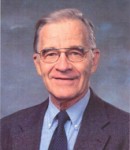
James K. Lyon

Combining Religious Faith and Academic Excellence

Though I was raised in a faithful Latter-day Saint home with a strong Gospel heritage (my great-grandparents joined the Church in 1842; from 1933-37 my parents presided over the Netherlands Mission), in one sense mine was perhaps not the conventional LDS home. My father, T. Edgar Lyon, an Institute teacher at the University of Utah with remarkable and widely recognized knowledge of Church history, instilled in us a questioning attitude that helped shape my thinking, and probably steered me into the academic profession.
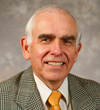
He never questioned basic Church doctrinal beliefs or practices, but primarily the writing and teaching of Church history. A stickler for accuracy, he was troubled when students approached him after his Church history classes at the Institute and complained that they had been taught inaccurate or false versions of our history. They then asked what other aspects of Church history or doctrine they had been taught that they could no longer trust. My father insisted that teaching fact-based and unembellished Church history and doctrine was more faith-promoting and strengthening than emotionally-based representations that often were inaccurate or wrong, and would not hold up to scrutiny. This desire for careful, solid scholarship within the context of faith not only shaped my thinking but contributed strongly to my later entering the academic profession.

Unlike some others, I cannot remember a specific time or event when I gained a knowledge of the divinity of Jesus Christ and the prophetic mission of Joseph Smith in restoring the Lord’s true church. But I do remember a number of smaller, seemingly less dramatic, but nevertheless memorable and undeniable spiritual events from my childhood and teen years whose cumulative effect instilled in me a sure witness and knowledge that God lived, that He answered prayers, and that Joseph Smith was a prophet who restored His Church on earth. Still exploring the apparent conflict between reason and faith as an undergraduate at the University of Utah, I found in the writings of Carl Jung what proved for me to be a decisive insight. He observed that “Religious experience is indisputable.” He continued (and I paraphrase) that once a person has such an experience, no one can dispute, disprove, or explain it away. At best the only statement an observer can make is, “I didn’t have that experience.” The apostle Paul and Joseph Smith made similar statements earlier, but for the first time this insight corroborated for me the validity of my own personal revelation regarding the things of God. And though logic, facts, and accuracy continued to drive my academic thinking through my life, this new understanding confirmed that there are valid ways of knowing beyond the limits of rational, logical, thinking that produce insights, understanding, and knowledge about a spiritual sphere of which science and logic can tell us almost nothing.

I strongly believe that the Lord directed my academic career in placing me where he needed me, and where He could bless my family. Going to Harvard for my Ph.D. gave me the privilege of working with a remarkable dissertation advisor, Bernhard Blume, a native German scholar who fled Nazi Germany because his wife was Jewish. He effectively adopted me as a son and continued to promote my career for nearly two decades. Partly through his influence I was offered my first position, that of assistant professor at Harvard, before I had finished my doctoral dissertation. Within the Church my position of assistant professor at Harvard also allowed me to serve as an elders’ quorum president with some remarkable men, and later as the bishop of the first student/singles ward on the east coast, where I again gained more than I gave. And contrary to my own inclination, when I left Harvard the Lord altered my career plans that would have taken me to the University of California, Davis, where I had an offer. In answer to prayer, and against my own wishes, He made it clear that I should go to the University of Florida instead. I reluctantly listened. Less than three years after leaving Harvard as an assistant professor, I was then recruited by the University of California, San Diego, as a full professor. Had I taken the position at UC Davis, it would have been six to eight more years before I would have achieved the rank of full professor at UC Davis, and ten to twelve years before receiving the equivalent salary offered me at San Diego. Nor did I have any compelling reason to leave UCSD for BYU in 1994, and I would not have done so without the direction of the Spirit. In short, the Lord has always been my career counselor, as well as the guide for my personal life, and a better one than any I could have chosen alone. I sincerely believe He cares about even those of His children in the world of higher learning, and that He directs our lives and academic work if we involve Him in it.

Certainly He did so with me. By the time I began my studies as a freshman, I realized that the Lord expected my very best in everything I did, from my role in my family to my teaching, research, and entire academic career. This motivated me powerfully, and in return the Lord blessed me beyond measure. Among many apparent “coincidences” that blessed my career, and in which I later recognized His hand, was a phone call in 1969 to my department at Harvard asking if anyone there knew anything about the writer Bertolt Brecht. Since I had just returned from the Brecht Archives in Berlin (I was already working on a book about him), I was asked to meet this person, who owned a large number of unknown original letters from Brecht to an American friend. After I finally arranged for him to sell them, copies of these letters became the basis for two of my subsequent books, following the one on which I was already working, and set a research agenda for me that I would not have followed had this not happened. I submitted the manuscript for the last of these three books to the most prestigious publishing house in Germany, where it was rejected after receiving a negative, error-filled evaluation by an East German scholar who wanted his country to have a monopoly on the Marxist writer Brecht. Meanwhile the manuscript was accepted and published by Princeton University Press. Soon after it appeared in the USA, but before it became, by university press standards, an academic best-seller, the German publisher who had turned me down approached me with a generous contract to translate and publish it. It went on to become a big seller in German and stands today in Brecht scholarship as the standard work on that writer’s exile years and writings in America.

I could cite dozens of examples where I felt the Lord intervened in this and subsequent research efforts, such as apparent “coincidences” in discovering or extracting unpublished documents from unwilling persons or libraries, or mistakes made by archivists in my behalf that gave me access to documents I should not have seen. Such ”lucky breaks” happened again frequently during my work on my last book dealing with the poet Paul Celan and the philosopher Martin Heidegger, where I gained access to documents no one else knew existed, and I was the only one allowed to see them. Some of these cases might have been chalked up to luck, but their frequency and nature defies odds, and I choose to see the Lord directing my career, though I am not sure that He cares especially about the writings of Bertolt Brecht, Paul Celan, or Martin Heidegger. But I came to know that He cared about me and my academic work, for which I am profoundly grateful.

Gospel principles and Christ’s teaching also played a major role in my teaching. Knowing that students liked to know more about the human side of their professors, and wanting to get to know each of my students better, I began early in my career to invite them to our home at the beginning of each quarter or semester, or to invite small groups of them to eat lunch with me once or twice a week. In these informal settings I informed them briefly about what determined my thinking and my values system. I never talked about my faith in the classroom, but in these gatherings I could let them know comfortably that I was LDS, describe our faith and its influence on my family and our life together, and how it shaped my values and thinking. And I sincerely tried to teach by the Spirit and treat my students with charity and understanding. This, I think, made me a better teacher and resulted in many close personal relationships with students over the years, as well as garnering an “outstanding teacher” award at the University of California, San Diego.

Though I kept the Gospel overtly out of the classroom in the secular universities where I taught, my understanding of the Lord’s teachings determined how I presented difficult or controversial subjects, knowing that some students had deeply-held religious or personal sensibilities that were easily offended. In my view the study of Literature generally, as well as any of the so-called Human Sciences, is potentially more subversive and threatening to student values and feelings than the study of the natural or engineering sciences, since it raises troubling questions about who we are, what we think, how we behave, and our ideas, values, and ideologies. In teaching courses on the writer Bertolt Brecht and helping students understand Marxist ideology, which was unavoidable for that deeply committed Marxist writer, I tried to remain detached so it was clear that I was not advocating Marxism, but only presenting it as a serious, deeply felt belief system of many people. Since most students knew my personal values system, my detachment from the subject made it easier for them to deal with incompatible or difficult ideas or problems they encountered in the course material. To me, any faculty member who does not identify her/his personal value system in teaching about areas of faith or ideology is not being intellectually honest. And I came to the conclusion very early that my classroom was not the place to ventilate my own doubts or uncertainties about issues I was still working through for myself.

The Holocaust, which I had studied since my Ph.D., presented a different challenge, and one with which I struggled before finally offering courses on this topic three decades later. In any other setting, much of what we read in my course, and almost all the documentary films I showed, would be considered x-rated. This troubled me, but also prompted me to excuse students from viewing or reading materials they found too distasteful, which happened only rarely. By knowing my personal belief system, they understood why I emphasized topics such as the problem of evil in the world; questions of faith in times of trial; and the issue of forgiveness as seen differently in Jewish and Christian (or LDS) theology. My Holocaust courses became some of the most popular and satisfying I taught in my career and elicited some of the best work, including original research, from students.

When I began teaching at the University of California, San Diego, in 1974, it was (and remains today) one of the top research universities in the country. On the high-powered faculty at the time were seven Nobel laureates, more than fifty members of the National Academy of Sciences, and an equal number of fellows of the American Academy of Arts and Sciences. According to annual surveys, my colleagues spent an average of 62½ hours a week on their professional work. But my commitment to my wife and our eight children, and to Church callings that ranged from a bishopric to a stake high council, and finally nine years in a stake presidency, made that impossible for me. At best I was able to devote no more than 40-45 hours a week to my profession, and part of that was doing administrative work as a department chair, associate dean of the Graduate School, chair of the Academic Senate, and, finally, provost of an undergraduate college. How, then, could I compete in terms of research and scholarly productivity? Again I turned to the Lord for help. I have no rational explanation for how He compensated for this disparity in time spent, but in the course of my twenty years there my research and publications allowed me to advance through all seven steps of the full professor series and reach the top level. I still do not understand how this was possible, but again it confirmed that the Lord watched over and blessed me remarkably in my professional life.

From the beginning of my forty-three-year academic career I believed that the Lord expected both faith and academic excellence from me. In my mind there was no conflict, since I understood that one required the other. As an American working in the field of German language and literature, I recognized early on that to gain recognition of my work in Germany, the ultimate validation of one’s standing in my field, would require the Lord’s assistance, and unusual effort on my part. Very few German scholars specializing in English or American literature ever have their research articles published in scholarly journals in Great Britain or the USA, much less their full-length books. The reverse is equally true. Few native-born Americans writing about German language and literature consistently have their scholarly works published in Germany. Yet in my field I have been one of few in this category to have my research appear in German scholarly periodicals and my books published by the most prominent publishing house in that country. Before the Berlin Wall came down I was also among the few native-born Americans in my field invited to deliver papers in East Germany, to serve on the editorial board of a scholarly encyclopedia, or to hold a chair as a visiting professor at a German university.

For all of this I give the Lord full credit and profound thanks. He has carried me in my academic career and made possible results I only could have dreamt of when I began my career. His presence in my life has been the strongest single motivating and strengthening factor in a very gratifying and satisfying academic life. And His expectation that I give my best has motivated me to do work far beyond my own natural capacities. Above all, I am deeply grateful for the knowledge that God and Christ live, and that Joseph Smith was his prophet who restored the Church Christ established. This knowledge has determined my thinking, my career, and my life.

——————————————-

James K. Lyon (Ph.D., Harvard University) came to Brigham Young University in 1994 following a career at Harvard, the University of Florida, and the University of California at San Diego, where he served as department chair, associate dean of the Graduate School, and provost of Fifth College.

Professor Lyon is the author of nine books: with Craig Inglis, Konkordanz zur Lyrik Gottfried Benns (Hildescheim: Georg Olms, 1971); with Hans Otto Horch and Craig Inglis, Indices zur Deutschen Literatur, Nr. 5: Gottfried Benn, Gedichte (Frankfurt: Athenaeum, 1971); Bertolt Brecht and Rudyard Kipling: A Marxist’s Imperialist Mentor (The Hague: Mouton & Co., 1975) [a German translation appeared in Frankfurt am Main: Suhrkamp, 1976]; Bertolt Brecht’s American Cicerone (Bonn: Bouvier Verlag Herbert Grundmann, 1978); Bertholt Brecht in America (Princeton: Princeton University Press, 1980) [a German translation appeared in Frankfurt am Main: Suhrkamp, 1984]; Bertolt Brecht Gedichte: Eine Chronologie (Frankfurt am Main: Suhrkamp, 1986); ed., Brecht in den USA: Eine Dokumentensammlung (Frankfurt am Main: Suhrkamp, 1994); ed. with Hans-Peter Breuer, Brecht Unbound (Newark, Delaware: University of Delaware Press, 1995); Paul Celan and Martin Heidegger: An Unresolved Conversation (Baltimore: Johns Hopkins University Press, 2006).

He is also the author of seventy-one articles and twenty-six book reviews, including “Hangmen Also Die Once Again: Dispelling the Last Doubts about Brecht’s Role as Author,” The Brecht Yearbook 30 (2005), 1-60; “‘Das hätte nur Brecht schreiben können’: Zur Entstehung und Verfilmung von Hangmen Also Die,” Brecht plus minus Film: Filme, Bilder, Betrachtungen (Forum Verlag: Berlin, 2004), 15-32; “The Original Story Version of Hangmen Also Die—A Recently Discovered Document,” The Brecht Yearbook 28 (2003): 1-30; “The Fugitive Venus,” Brecht Handbuch, ed. Jan Knopf, vol. 3, “Prosa, Filme, Drehbucher” (Stuttgart/Weimar: Metzler, 2002): 385-390; “Silent Witness” Brecht Handbuch, ed. Jan Knopf, vol. 3, “Prosa, Filme, Drehbucher“ (Stuttgart/Weimar: Metzler, 2002): 390-395; (in Greek) “Brecht in America,” Brecht: A Critical Introduction (Athens, 2002), 369-396; “Mormonism and Islam through the Eyes of a ‘Universal Historian,’” BYU Studies 40/4 (2001): 231-326; “Elements of American Theatre and Film in Brecht’s Caucasian Chalk Circle,” Modern Drama 42/2 (Summer 1999): 238-246; “The Reclusive Eileen Chang and an Innocent American Visitor,” Unitas: A Literary Monthly 4 (1997): 59-73; “Use and Misuse of Brecht’s FBI File,” The Brecht Yearbook 20 (1995): 359-362; primary editor and author (with John Willett, Siegfried Mews, and Hans Christian Noregaard), “A Brechtbuster Goes Bust: Scholarly Mistakes, Misquotes, and Malpractices in John Fuegi’s Brecht and Co.” The Brecht Yearbook 20 (1995): 269-367; “Brecht’s Mann ist Mann and the Death of Tragedy,” The German Quarterly (Fall 1994): 513-520; “A Slightly Different Approach to Languages Across the Curriculum,” Translation Perspectives VII (1994): 73-78; “Der Holocaust und nicht-referentielle Sprache in der Lyrik Paul Celans,” Celan Jahrbuch 5, ed. Hans Michael Speier (1993): 247-270; “Repentance,” Encyclopedia of Mormonism: The History, Scripture, Doctrine and Procedure of the Church of Jesus Christ of Latter-day Saints, ed. Daniel H. Ludlow, vol. 3 (New Jersey: Macmillan, 1991), 1216-1218; “Gleich und Gleich gesellt sich gern’ und ‘Gegensaetze ziehen sich an’: Das dialektische Verhaeltnis Karl Kraus-Bertolt Brecht,” in Karl Kraus: Meister der Sprache – Meister des Ethos (Tübingen: Francke Verlag, 1990), 1-19; “Brecht auf dem Broadway,” Deutschsprachige Exilliteratur seit 1933. Bd. 2 New York, eds. John Spalek and Joseph Strelka (Bern: Francke Verlag, 1990), 1549-1564; “George Saiko als Dramatist,” George Saikos magischer Realismus: Zum Werk eines unbekannten grossen Autors, ed. Joseph P. Strelka (Bern: Peter Lang, 1990), 155-164; “Die (Patho-) Physiologie des Ichs in der Lyrik Paul Celans,” Zeitschrift für deutsche Philologie 4 (1987): 591-608; “Rilke und Celan,” Argumentum e silentio: Ein internationales Paul Celan Symposium, ed. Amy Colin (Berlin: Walter de Gruyter, 1986), 182-197; “Altered States of Consciousness: Trakl and the Mystical Experience,” Internationales Georg Trakl Symposium, ed. Joseph Strelka (Frankfurt am Main and Zurich: Peter Lang, 1984), 78-93; “Brecht und Stalin: Des Dichters ‘letztes Wort’,” Exilforschung 1 (Munich: Text und Kritik, 1983), 120-129; “Poetry and the Extremities of Language: From Concretism to Paul Celan,” Studies in Twentieth Century Literature 7 (Fall 1983): 40-63; “The FBI as Literary Historian: The File of Bertolt Brecht,” Beyond Brecht/Über Brecht hinaus. The Brecht Yearbook, vol. 1 (Detroit and Munich: Wayne State University Press, 1983), 213-231; “Das FBI als Literaturhistoriker: Die Akte Bertolt Brechts,” Akzente (August 1980), 362-383; “Brecht, Thomas Mann und Deutschland,” Tintenfisch 15, Thema Deutschland (Berlin: Verlag Klaus Wagenbach, 1978), 46-52; “Paul Celan’s Language of Stone: The Geology of the Poetic Landscape,” Colloquia Germanica 2: 3-4 (1974): 298-317; “Paul Celan and Martin Buber: Poetry as Dialogue,” PMLA 86 (January, 1971): 110-119 [excerpts reprinted in Contemporary Literary Criticism 19, ed. Sharon R. Gunton (Detroit: Gale, 1981), 87-88)]; “Georg Trakl’s Poetry of Silence,” Monatshefte 62 (Winter 1970): 340-356; “Bertolt Brecht’s ‘Bericht vom Zeck’: Eine Berichtigung,” Etudes Germaniques 23 (April-June 1968): 257-279; “The Poetry of Paul Celan: An Approach,” The Germanic Review 39 (January 1964): 50-67.

Professor Lyon has been the recipient of a Guggenheim Fellowship, two National Endowment for the Humanities Fellowships, and two grants from the American Council of Learned Societies, and has served as the principal investigator for two substantial grants from the Ford Foundation.

Posted May 2011

Richard E. Bennett

I have been teaching LDS Church History and Doctrine for much of my professional career. However, my interest in and commitment to this field began in my life at least as early as ten years of age. In the year 1956 I participated in a family pilgrimage, visiting Church History sites from Vermont to Utah. It was a summer of unforgettable memories as eight family members crowded into a small Ford sedan in a trip that covered over 6,000 miles. Despite the crowded conditions, the lack of seat belts, the heat, and the camping out in tents every night, I began to taste and feel Church History. A year or two later I witnessed my grandfather’s conversion in the Sacred Grove and later travelled cross-country with him to the temple, and this at a time when he was dying of cancer. I came to feel Church History even before I read Church History. I did not then know all the academic arguments, the philosophical debates, or divergent paths of the restoration, but I gained a foundation of understanding, feeling, and faith that has stayed with me since. I believe the Lord in his kindness impressed upon my young soul a testimony that no amount of book learning could ever provide. Thank God for that foundation.

Church History is not so much about debates or facts, myths or dates, books or historiographies. For me it is less about the past and more about the present and future. In short, I have felt my way through Church History and its doctrines, and the peaceful, sweet feelings of the Holy Ghost have ever confirmed my childhood testimony that, with all its ups and downs, frustrations and disappointments, our history is a wonder to behold! Men and women throughout our history may have made shipwreck of their lives but the Gospel message of faith, hope, forgiveness, and love remains a constant no matter who the changing personalities have been or what the changing lay of the land may be. And for all the arguments put forth that the Church has changed, that we gave up this or that practice, and that we are not the same Church in the twenty-first century as we were in the beginning, I have a contrary view. Like a corn stalk that starts with a small seed and blade of grass and then grows and matures into something almost unrecognizable by those who have been away for a time, this is the same Church and Gospel today in 2011 as it was in 1830! I look back upon the pages of Church History in much the same way I look upon my childhood. ‘So that’s what the experience means.’ ‘So that is what I have learned from it.’ If, as Wordsworth once wrote, “The child is father to the man,” than our history is critical to know because it tells us why we now are what we are. It is a mirror to our souls.

And the same principles and teachings remain, despite changing policies and priorities and even temporary practices. The same spirit pervades, and not one just of pilgrimage or curiosity but one that brings a lifetime of joy and lasting change for the better.

I am at peace with our history because of the peace that the Spirit of the Lord has given me concerning it. It remains for me a testimony of the hand of the Lord.

——————————————–

Richard E. Bennett, a native of Sudbury, Ontario, Canada, served a mission to Texas, 1967-1969. After earning a Ph.D. in American intellectual history from Wayne State University, he was the head of Special Collections at the University of Manitoba, 1978-1987, during which time he also served as a stake president in Winnipeg. He is the author of several books and articles, mainly on nineteenth-century LDS History, including We’ll Find the Place: The Mormon Exodus, 1846-1848 (Deseret Book, 1997)and Mormons at the Missouri: 1846-1852 (University of Oklahoma, 2004). Presently, he is the Church History editor for BYU Studies and an associate editor of the Journal of Book of Mormon Studies.

Posted April 2011

Mark Clayson

I’m a true Southern Californian, having grown up here (near “the happiest place on earth”) through high school, and having returned after college in the cold country (Utah and Colorado) to live and work in sunny California. It’s perhaps the most diverse, cosmopolitan, and interesting environment in the world—I truly enjoy the variety of activities, cultures, and foods. I’m doubly fortunate, having been raised in a very good family, with excellent foundational values (work, faith, education, etc.), and at the same time having a broader perspective and awareness of so many other values and ideas. Perhaps that has helped increase my appreciation of those values and of the faith into which I was born. As I later learned in remote sensing, contrasts clarify or sharpen our vision.
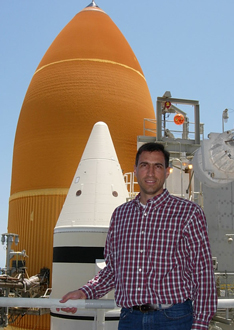
Others of my faith were few in number, and in my youth my closest friends were of other faiths. I was exposed to challenging questions about my faith—questions that demanded either answers or blind faith. Curiosity, coupled with aptitudes in science and math, would not leave me satisfied with blind faith, nor did I think that was expected. Answers did not always come easy, but I began to learn that if I was not afraid to dig deep enough, be honest with myself, and be open to accept the truth whatever it might be, I always seemed to find satisfying, logical answers, which only bolstered my faith. Truly, “seek, and ye shall find.”

But there was another important aspect of that budding faith—more substantial than rational or “thought experiments” alone, and relating to our dual nature as physical and spiritual beings, with both kinds of senses. It is along the lines of what Paul describes, “Now faith is the substance of things hoped for, the evidence of things not seen” (Hebrews 11: 1). In my mid-teens, I studied and accepted the Bible, and as I read the Book of Mormon seriously I had a profound and undeniable spiritual experience that left no doubt as to its truth and reality. My satisfaction and joy were incredible. I learned for myself the power of the Holy Ghost speaking directly to our spirit as a witness of truth, as promised to all who seek it. That enabled me to share that truth with others, despite discouragements, as a young missionary in Switzerland. Those two years abroad broadened my perspectives even further, and left me with even greater thirst for knowledge in many areas.

And so I resumed my college studies with renewed vigor, majoring in physics and astronomy (especially the latter) and pursuing minors in math and German. Studies and careers can take interesting turns, and graduate work in Astrophysical, Planetary and Atmospheric Sciences brought me a bit more “down-to-earth,” focusing on atmospheric science and remote sensing, which led to a career in aerospace—specifically space systems—and to another (corporate-sponsored) graduate degree in Systems Architecture and Engineering. Challenging work on space systems has enabled me to make meaningful contributions to the country I love.

Learning and teaching have been lifelong pursuits. I found interesting contrasts between Brigham Young University, the University of Colorado, & the University of Southern California (USC). Also, while working full-time, I fit in night classes in Russian at the University of California at Los Angeles (UCLA), teaching astronomy at El Camino College and teaching and taking technical courses at work. I have completed various leadership and Scouting training courses, and have studied and learned more about the gospel at early morning seminary, at LDS university Institutes, at church, and on my own. It adds up to a fair amount of experience in academia (~twelve years) and industry/engineering (thirty years in aerospace).

But just as academia challenges us to use our education in experimentation and application, so too does religion. God Himself challenges us to “Prove me now herewith…” (Malachi 3:10), and says that, “If any man will do His will, he shall know of the doctrine, whether it be of God” (John 7:17). And so, over the years I have further tried the experiments and promises of living more and more aspects of the gospel. As a result, my faith has continued to grow.

Paul also taught, “faith without works is dead.” It has been easy and natural for me to practice the service the gospel teaches, both within the Church and the community. It is a very meaningful and fulfilling part of my life. I have served in various positions in the Church, such as bishoprics, part-time missions, and Boy Scout leadership. I also lead family and neighborhood organizations and an astronomy club at work, am politically active, and am a member of the Community Emergency Response Team, with an amateur radio license.

I think it is in our nature to want to have the “big picture.” In my work as a systems architect/engineer, this is called the “systems view.” It is an overall understanding, from various perspectives, of how the many parts of a system (e.g., a spacecraft, the internet, or the human body) fit and work together to produce a synergistic whole, and how the results may be optimized. This is a view or vision that the creator of the system has, and that He may share with those who are interested, or who have a “need to know.”

In the same way, the restored gospel is truly comprehensive and expansive to our vision of ourselves as whole persons, and how we can reach our potential, as well as to our understanding of creation as a whole. It goes beyond the spiritual to encompass the many other aspects. And it is a vision shared by the Creator with us, through His spokesmen, the prophets. I see their role in spiritual matters as paralleling that of research scientists in physical matters—both have first-hand documented experience that others learn from and build on. I believe both faith and the scientific method are commonplace in both realms. While one purpose of life is to learn to live by faith, it is not blind faith that is expected, nor ignorance.

The prophets of old (e.g., Abraham, Moses) were given universal visions far beyond the Hubble telescope’s. They recorded them for our benefit as part of our heritage and privilege—as God’s children—to expand our vision of God’s greatness, and to show that there is much more for us beyond this life. I marvel at the many recent astronomical discoveries, for instance by the Hubble and Kepler telescopes. My faith has been bolstered as I’ve discovered that some (e.g., the expansion of the universe and dark matter) were alluded to in scripture hundreds or thousands of years before their scientific discovery. Science has only recently discovered a small number of planets like ours, but scripture cites millions—and inhabited. To cite the line in the book and movie “Contact,” “if it is just us . . . it seems like an awful waste of space.”

The gospel “systems view” more clearly emphasizes the interconnectedness/
interdependency/synergy of the physical, social/emotional, intellectual, and spiritual, and concern for our welfare in all of these realms (what we call “provident living”). It provides a much clearer view of where we came from, why we’re here, and what follows this life—the “Plan of Salvation (or Happiness),” which again encompasses all of the above areas. It truly describes and facilitates our potential as “joint-heirs with Christ” (Rom. 8:17) of “all that my Father hath.” It also explains the great potential of the union of spirit and body, which are reunited in the resurrection, and continued growth and progression after this life.

Joseph Smith’s first vision brought clarity to much of the confusion about God and religion that had long been disputed, and this clarity can bring the “unity of the faith” sought by Paul. Joseph restored a clearer, consistent overall vision of the history of God’s dealings with all of His children, including those on the Western hemisphere, through the Book of Mormon. That book also clarifies the disputed theology and doctrines of the Bible, as a second nail prevents a board from being turned every which way.

With my background in astronomy, systems architecting, and engineering, I appreciate all the more the Creator’s acts of creation and the divine spark of creativity He has shared with us, including procreation. Much of the great art, science, and work in other fields has been created by people of faith. One could argue that faith has been much more a source of than a hindrance to enlightenment and sustainment in scholarly pursuits. As evidenced in the level of education of its members, and its doctrinal advocacy, certainly the LDS Church places a very high premium on education and knowledge.

And as we claim to follow Paul’s admonition to seek after “anything virtuous, lovely or of good report” and the revelation that “Man is that he might have joy,” we rejoice in so much of that creativity. We are encouraged to broaden ourselves. I’ve traveled to thirty-five countries. I’ve also taken great interest in history, current affairs and politics, geography, cinema, music, etc. And I remain physically active, working out, swimming, backpacking, skiing, scuba diving, etc.—enjoying and trying to preserve the body God created.

I sometimes encounter tantalizing outside support for my faith. As I read Eusebius’ historical account of debates at the time of the Nicene Council a few hundred years after Christ, my heart was warmed as I saw many of our doctrines clearly still present (the apostasy was not yet thorough), and valiantly yet unsuccessfully defended by some; truth does not win every argument. I appreciate the archaeological and literary evidences of the Book of Mormon, and research showing the benefits of the LDS lifestyle.

I have more thoughts about faith than I can share here, but would refer you, if interested, to my blog on faith, “Fast in the Faith” at http://fastinthefaith.blogspot.com/. My posts there include: “Faith, Experience & Reason in the Secular & Religious Realms – a Unity & Symmetry,” “Acquiring Faith,” “Exercising Faith” and a link to my profile on Mormon.org.

———————————————–

Mark Clayson is a Senior Engineering Specialist (Systems Architect/Systems Engineer) in the Space Architecture Department, Systems Engineering Division, at the Aerospace Corporation in El Segundo, California, where he has worked for twenty-six years. He leads teams in developing and evaluating architectures and conceptual designs for new government space systems and systems of systems, including communications, navigation, surveillance, and environmental. And he provides technical oversight as contractors build the systems, seeing some of his concepts materialize. He has also done work in decision support systems, and sensor systems modeling and simulation. He has received various corporate and customer awards and commendations, while supporting numerous programs and studies for the Department of Defense, the National Reconnaissance Office, NASA/JPL, and NOAA. He has published several professional papers (including for AIAA, INCOSE, and the International Ozone Symposium) and many internal documents. He also worked four years on the technical staff at Hughes Aircraft in the Advanced Technology Department, Optics Laboratory. He was research and teaching assistant in the Astrophysical, Planetary and Atmospheric Sciences Department at the University of Colorado at Boulder and in the Physics and Astronomy Department at Brigham Young University, a computing fellow at NCAR (the National Center for Atmospheric Research), and an adjunct astronomy instructor at El Camino College. And he was an Aerospace Corporation Systems Engineering Fellow at USC. He is also an Eagle Scout.

He has a B.S. in Physics and Astronomy from Brigham Young University; an M.S. in Astrophysical, Planetary and Atmospheric Sciences (with a thesis on BUV satellite retrieval of stratospheric ozone profiles) from the University of Colorado, Boulder; and an M.S. in Systems Architecture and Engineering from the University of Southern California.

Posted April 2011

Matt Walters

When Dan Peterson invited this entry, I thought he was just going easy on family, and immediately challenged his definition of “scholar.” He was generous. I reflected. If the word “school” is related to the Greek word for “leisure,” only freshman year lived up to it. The remainder was a personal Mt. Everest. As I neared the goal, however, countless higher peaks came into view, and it became apparent that a Ph.D. is merely a lower threshold for expertise in a thin slice of a narrow field—only four years of study in what takes a lifetime to partially understand. I started the climb thinking it would land me at the very top, make me king of something, and it sort of did—a hill in studentdom.
So from that perch in an unrelated field I’m supposed to champion God and religion against the likes of Oxford mathematician Stephen Hawking, whose theories on creation I hardly understand? Or defend Mormonism when a person like Mark Twain calls the Book of Mormon “chloroform in print,”1 and Yale professor Harold Bloom recommends against giving it a close read?2 A sense of humor can’t resist observing that perhaps Bloom took his own advice, and that Twain was numb while reading. But they’re in company with others like historian Paul Johnson, who dismisses Joseph Smith with a line that gives the impression he was holding his breath.3 Closer to home, a research scientist with M.D. and Ph.D. degrees, concerned for his secretary’s soul, gave my wife a pamphlet with a sketch depicting Mormon missionaries as neatly-attired zombies. Even my close high-school friend, now himself an M.D., once firmly prohibited me from adding to a shared observation with a verse from the Book of Mormon. If academic status or reputation decides the case, I lose. And feel oddly like a leper.

Fortunately, there’s a pattern. H. L. Mencken observed that “all the durable truths that have come into the world within historic times have been opposed as bitterly as if they were so many waves of smallpox.”4 Whether Mormonism is true or not, because it contains much that is fantastic, peculiar, shocking, and heretical even to traditional Christianity, many forgo legitimate assessment and behave as though all things Mormon should be quarantined. But half the story engages half the brain, and forgetting to consider what we don’t know can lead us to ridicule and vilify what the part makes of the whole.5 Instinct and reason naturally recoil from stories of angels, prophets, golden plates, and polygamy, so it’s no surprise that Mormonism has, over the years, collected a healthy coating of tar, feathers, and rotten fruit. Many still discover something of great value beneath that surface, but those who look only superficially will likely react as to Frankenstein’s monster.

This entry is too late to persuade anyone distrusting of zombies, so I see the effort as more of an evolving journal entry to document for my children some thoughts and experiences with “testimony,” and an experiment to develop what logic there might be in my beliefs. To anyone outside of the church who might chance to read this, my role would be something of the tribesman recounting lore around the fire to the visiting anthropologist. Those who try to understand native thinking in this way will at least address the requirement of scholarship to understand original sources, which in this case includes Mormons as well as their book, since the significance of a thing is its effect upon those who find it significant. The perspective of those who belong to a religion explains why that religion exists. The perspective of those who don’t explains why it wouldn’t. With no Mormons to give it notoriety, few would bother with the book. Similarly, the primary value to outsiders in studying the Tanakh, New Testament, or Qur’an, is to learn how and why they influence Jews, Christians, and Muslims. When we approach scripture in ways different than believers, we are most likely to discover not what they do, but what we are predisposed to find. Until we can in some measure feel what they feel, we can be sure we don’t see what they see.

This applies to just about anything that requires new perspective to perceive. Take fishing, for example—an activity which, for most of my life, I would have described much as Twain and Bloom did the Book of Mormon: boring, dumb, and a waste of time. Conversation with fishing lovers has been insufficient to sway a perspective formed through slight experience, and dominated by the specter of fish guts after the trout farm when I was sixish; empathy for things impaled on a hook, including my sister’s finger; impatience with the idea of just sitting there holding a pole when there’s so much else to do in, on, or around the water; and the incomprehensibility of maiming with a hook and then lovingly releasing food you’ve wasted so much to catch. Without children pestering me to take them, the love of fishing would probably have remained a permanent mystery, but through my struggles to help them catch something, I’ve discovered fishing to be more complex and engaging than previously imagined, and myself less intelligent relative to fish. Coming to grips with fish guts and my daughter’s threat to release anything she catches is yet to be determined (as it requires success outside the trout farm, where release wasn’t an option and a small charge for cleaning postponed the inevitable), but as of now, by setting aside prejudice and aversion, and by reluctantly (at first) following the path of enthusiasts, I’m beginning to see how it’s possible for a person to be both sane and (sorry) hooked.

Distrust of my own such prejudices largely results from observations of how not to evaluate Mormonism. Like the colleague who, as I attempted to explain a Mormon belief, squinted with skepticism and countered me after every sentence. Or the fellow who related to me that, after missionaries had “testified” to him that the Book of Mormon is true, he “testified” right back that it isn’t. “Have you read the book?” I queried. “No.” I’m not sure what exactly these two did know, but true understanding of a religion assimilates all perspectives, beginning with the first. And first-hand knowledge of one tribe isn’t learned around the fires of neighboring tribes. Primary understanding of Mormonism is found within the Mormon Church, not the church or the coffee shop next door.

So, my scholarship need not compete with a Hawking or a Bloom. Our stations simply offer different perspectives. From what little I’ve read, Hawking seems to be atheistic, and Bloom appears to have approached the Book of Mormon from the perspective of a Jewish gnostic.6 Twain seems to have approached it as a favorite whipping-boy for an east coast audience, and Johnson’s brief treatment didn’t require him to approach it. Something spooked the research scientist into bypassing original sources, and my high-school friend, as I later learned, had also attended the church of the zombie pamphlets. But I was born and raised on the hills of Mormondom, and this is what I see.

At eight I was baptized, and, at eighteen, still obeyed church and parents with indifferent regularity. Mom and dad planned college at BYU, a two-year church mission, a degree in civil engineering, and a career working in the family construction business in Southern California. I didn’t see or think differently, went where pointed, and in the fall of 1989, found myself reclined in a freshman dormitory at BYU, indifferently reading the Book of Mormon—required reading for a required class.

A peculiar ritual occurs on the first Sunday of each month in a Mormon church: “fast and testimony meeting.” Members “fast” (voluntarily starve themselves of two meals), donate the savings to help the involuntarily starving, and during church services, they’re given access to center stage to express religious convictions (testimony). Many testimonies include the statement “I know this church is true” without an explanation of what exactly that means. The integrity of some who said this there was good reason to trust, and the honesty of others there was no reason to suspect. So, for the time being, I took their word for it. Nevertheless, when they would say this, I would often reflect, and follow the thought inward to see what response there might be, as though listening for an echo. But to the statement “I know this church is true,” came only the reply “I don’t.”

That day at BYU, I read the last several chapters in what is titled the Second Book of Nephi. According to the text, Nephi was a prophet who lived some 600 years B.C. He states his purpose: “. . . we talk of Christ, we rejoice in Christ, we preach of Christ, we prophesy of Christ, and we write according to our prophecies, that our children may know to what source they may look for a remission of their sins” (2 Nephi 25:26). After several pages of that flavor, I entered the chapter where Nephi closes his account—with a testimony. His final words assert in simple and forceful language the divinity and mission of Jesus Christ. As I read, a powerful feeling came over me, and my own mental narration gave way to the intense impression that the words actually originated from this Nephi, and that they were true. This perception was so real that it was described quite precisely by his words “I speak unto you as the voice of one crying from the dust” (2 Nephi 33:13).

Understanding continued to flow into my mind. There appeared to my thoughts three occasions from previous years during which I had experienced the same powerful emotion without understanding what it was or what it meant. As though someone external to me silently whispered an explanation to my thoughts, those three past events linked themselves to the present moment, and I comprehended perfectly that this feeling and flow of understanding was from the Spirit of God I had so often heard of. The Spirit had literally identified itself to me. So singular and unexpected was this event, so suddenly and so dramatically had light and understanding burst upon darkness and uncertainty, that after so many years of not knowing, I knew. For so many years I had no idea what I was looking for, but I had found it. I had approached the Book of Mormon in the manner prescribed by believers, and discovered what I was prepared to find. My excitement over this discovery, this awakening, this revolution in understanding, this revelation, was such that I had to convince myself not to go down the hall broadcasting to everyone that I had just received a testimony, for others may have treated the news . . . with indifference.

Two strong patterns emerged from this experience. First was the connection, as though among torches passing a flame, between so many instances of testimony (now more rigorously defined as “knowledge gained through the Spirit”). Nephi’s testimony, those of church members, and finally my own, all centered on the role of Jesus Christ as Savior, as would be expected from Revelation 19:10, which states that “the testimony of Jesus is the spirit of prophecy.” Second is the pattern of communication through the Spirit found in the Old Testament (Numbers 11:29), New Testament (Matthew 16:17, 1 Corinthians 2:10-13, Luke 24:32, Ephesians 1:17-18), the Book of Mormon (Jacob 4:6, Alma 5:46, Moroni 10:3-5), and Joseph Smith’s written revelations (Doctrine and Covenants 8:2-3, 9:8-9). I have also observed the pattern described in familiar terms by Joseph Smith, many other church leaders, and many common church members like me.

I now understand why when as a youth, after awaking from a nightmare and instinctively reaching for the scriptures, a soothing calm displaced sickening darkness and restored peaceful rest. I understand the experience of a non-religious acquaintance who said that when she read the Book of Mormon, she felt that it “spoke” to her. I know what it was that a Korean friend and grad-school colleague felt when he says that an overpowering sensation came over him when he “accepted Jesus as his Savior.” I know why my Brazilian friend and grad-school colleague, after she began to study the Gospels for the first time in her life, came to a moment when she couldn’t stop crying. I recognize why there was such a good feeling in the temple when I went there as a young teenager, and why a good feeling was present while listening to the leaders Mormons call prophets and apostles.

Truth keeps going. Scientific understanding gradually and continuously expands by holding to what is known and reaching out to discover the next and unseen rungs of the ladder. Newton developed his three laws of motion by standing on the shoulders of giants, and by standing on Newton’s shoulders, the efforts of millions, through a million advances in mathematics, science, and engineering, have led in continuous and well-defined steps to wonders like the Space Shuttle. Each scientific advance is the discovery of exactly what the scientist is prepared by his training and effort to discover. And with each advance, something that had been hidden in shadows of uncertainty becomes illuminated as it links logically and harmoniously to every adjacent point within a continuous fabric of understanding. If it’s true, there’s an equation for it, because it consistently relates to other truths within the fabric, according to established patterns.

During the last twenty years since that day in the dorm room, I have observed that, according to well-established and repeatable patterns, understanding gained through the Spirit advances in exactly the same manner as scientific understanding (Isaiah 28:10, 2 Nephi 28:30, Doctrine and Covenants 50:24 and 52:14). But spiritual learning, as it depends upon spiritual growth and progress, leads to a much more desirable end than scientific learning: happiness. The Spirit of God, by enlightening the mind, helps us to understand the gospel of Jesus Christ, and by bringing light to the soul, gives us the desire to live it. The question of whether Mormons are Christian depends upon how you define “Christian,” but 3 Nephi 27:13-20 in the Book of Mormon provides what is probably the most official definition of Christianity to Mormons. And how does it lead to happiness?

The answer is equilibrium, meaning the state of balance or harmony among all things that interact. Laws of physics govern equilibrium of matter. The gospel of Jesus Christ governs the equilibrium of everything. And as happiness is an optimal state of human equilibrium, the gospel leads us to it. We have internal equilibrium when we master our thoughts, actions, and passions. We’re in equilibrium with others when we conduct ourselves according to ideal patterns exemplified by Christ, and we’re in equilibrium with God when we’re in equilibrium with all of creation. When there are no vices that enslave, no disputes that divide, and no misdeeds to regret, we experience happiness, or what Victor Hugo calls the general serenity of a clear conscience.8

According to this definition of happiness, sin may be identified simply as anything that upsets or prevents the state of optimal equilibrium in an individual, family, or society. Through continuous improvement (repentance), we may restore equilibrium with God by getting back on the right track and righting our wrongs. But we can’t exactly right a wrong, because time seals up our actions so they can’t be undone. This fact is likely at the root of why there needs to be a Savior such as Jesus Christ to reconcile us with God, upon whose universe we leave the blight of our disobedience. And since Christ is a God whose atonement for all mankind is an infinite and eternal sacrifice, there must be an equation of equilibrium that describes how the effects of our sins may be erased through Him. And I suspect it involves a singularity. My own experiences confirm that there is real and enduring equilibrium of the soul that comes through the process of repentance as defined in scripture; through conforming oneself to the example set by Christ as documented in Matthew, Mark, Luke, and John; and through humbly seeking forgiveness from God in the name of Christ. With continued faith and obedience, Christ’s atonement eventually washes away guilt and restores equilibrium.

Despite what Mormons like me say about what we’ve learned through Joseph Smith, many arguments have been forwarded to demonstrate that Joseph Smith was a fraud, and that the Mormon Church is led by false prophets. Some of these writings are academic in nature, and some that I’ve read are far from zombie pamphlets, having as perhaps their only flaw a narrow focus on scandalous, dubious, and controversial material that has nothing to do with why Mormons like me are Mormon. Are Mormons guilty of cognitive dissonance when we discount or ignore such material when it is true or convincing? The creativity of human reasoning allows both pro- and anti-Mormon arguments to sound plausible, and there are many of each. But of God, we may know as true only what the Spirit indicates is truth. All other arguments provide temporal evidence of spiritual truths that by definition they can’t prove or disprove. For this reason, evidence of textual, archaeological, or other oddities in the Book of Mormon, for example, must defer to what the Spirit has revealed.

Because arguments can be constructed for or against anything, it’s impossible to evaluate a whole puzzle by comparing, one at a time, alternative versions of each piece of the story. In performing fracture control for components of the white solid-rocket motors that provide the main thrust to the Orbiter during the first stage of flight, it is necessary to assess the potential effects of cracks located in parts of the structure that are highly loaded. We assume a conservative estimate of the material’s resistance to cracking, then assume that the largest crack possible went undetected during inspection procedures, then that the cracked material is as thin as possible, that the crack is in the worst possible orientation, and that loads are as high as they can theoretically be. Simultaneously accounting for all these conditions provides a high degree of confidence that if there is a crack in such a location, it won’t cause a catastrophic failure. But it isn’t necessary to assess such theoretical cracks for impact from a piece of ice or a seagull. Including such unlikely events in a fracture assessment would stack improbabilities to the point where the failure scenario becomes so unlikely as to be non-credible, so the Space Shuttle flies without them.

It’s possible to stack arguments about Mormonism in the same way: Joseph Smith was a fraudulent, money-digging mountebank; he deceived his wife, mother, and many others in producing the Book of Mormon with the help of ghost writers and plagiarized material; he wrote a book that forcefully champions Christ-like behavior while being himself a devil; he tricked many adults into seeing golden plates with ancient-looking characters; he induced others to see an angel who showed them the golden plates in such a convincing way that they never denied it even after falling away from Joseph Smith and the church; he tricked several others into thinking they saw angels; being an unlettered farm boy, he produced writings filled with rich, coherent, and satisfying answers that clarify millennia-old doctrinal questions, and lead to more and more understanding of the same nature; he established a religion and community of gullible dupes by the age of thirty-nine; he tricked me to experience what I did in the dorm that day; he brainwashed me into thinking I’ve observed the Mormon Church function on the same principles of revelation as established in the Bible; etc., etc., etc. Individually, these issues may be argued in such a way as to paint a damning picture. But as improbable as angels, revelations, and golden plates are, stacking the above possibilities creates a picture even more difficult to believe. Based on what I’ve experienced, the combination of these arguments is simply non-credible, like theories that the moon landings were fake. Despite the plausibility of individual arguments of moon-landing conspiracy theories, taken together they would require an impossibly monstrous cover-up. And despite the theories, NASA chugs along with space exploration just as though it actually does have moon voyages under its belt. In similar fashion, the Book of Mormon chugs along, churning out answers and inspiration just as though it had been given by revelation, and the Mormon Church chugs along just as though it were guided by true prophets.

I consider how silly such belief seems to a world governed by skepticism, and think of the patterns and understanding established by a thousand experiences with the Spirit. I think of Edward Gibbon’s diagnosis of the divine light discovered by an eleventh-century monk as “the production of a distempered fancy, the creature of an empty stomach and an empty brain.”9 The delight of Gibbon’s sublime prose combined with my own sublime paradox forces a smile. During a recent family scripture study, we read of a fellow who preached, in language like Gibbon’s, that belief in Christ is the effect of a “frenzied” and a “deranged mind” (Alma 30:16).”10 “Why do ye look for a Christ?” the man asks, “For no man can know of anything which is to come” (Alma 30:13). With the challenge of that assertion, I paused and reflected, following the thought inward and probing a few personal experiences to observe how they could reply. “Kids,” I stated, “that is not true.”

———

Notes:

1 Mark Twain, Roughing It. Harper & Brothers Publishers, New York, 1913, p. 110.

2 “I cannot recommend that the book be read either fully or closely, because it scarcely sustains such reading.”—Harold Bloom, The American Religion: The Emergence of the Post-Christian Nation. Simon & Schuster, New York, 1992, p. 86.

3 Of course, there may be another way to interpret “Smith was providentially murdered by a mob…”—Paul Johnson, A History of Christianity, Atheneum, New York, 1976, p. 434.

4 “The capacity for discerning the essential truth, in fact, is as rare among men as it is common among crows, bullfrogs and mackerel. The man who shows it is a man of quite extraordinary quality—perhaps even a man downright diseased. Exhibit a new truth of any natural plausibility before the great masses of men, and not one in ten thousand will suspect its existence, and not one in a hundred thousand will embrace it without a ferocious resistance. All the durable truths that have come into the world within historic times have been opposed as bitterly as if they were so many waves of smallpox, and every individual who has welcomed and advocated them, absolutely without exception, has been denounced and punished as an enemy of the race. Perhaps ‘absolutely without exception’ goes too far. I substitute ‘with five or six exceptions.’ But who were the five or six exceptions? I leave you to think of them; myself, I can’t.”—H. L. Mencken, Prejudices: Third Series. Cosimo Classics, 2009, p. 129.

5 May Johnson forgive my borrowing the original, and Boswell how I’ve declawed it: “Nothing has more retarded the advancement of learning than the disposition of vulgar minds to ridicule and vilify what they cannot comprehend.”—Samuel Johnson, The Rambler, Number 117, 30 Apr 1751. In The Works of Samuel Johnson, LL.D., printed by J. Haddon, London, 1820, vol. v., p. 292.

6 “Harold Bloom,” www.wikipedia.com, 22 Feb., 2011: “He would later come to describe himself to interviewer D. Leybman in the Paris Review as a ‘Jewish gnostic,’ explaining ‘I am using Gnostic in a very broad way. I am nothing if not Jewish. . . . I really am a product of Yiddish culture. But I can’t understand a Yahweh, or a God, who could be all-powerful and all knowing and would allow the Nazi death camps and schizophrenia.’” If this quote is accurate, it’s ironic, in light of footnote 2, that chapter fourteen of Alma in the Book of Mormon provides as satisfying an explanation of God’s perspective of a holocaust as there might ever be.

7 I’ve since observed that, most often, understanding through the Spirit comes regularly and subtly when we approach God according to scriptural patterns. In my case, the faucet had been flowing for so long without my noticing it, that a reservoir burst upon me all at once.

8 Victor Hugo, Les Miserables, Penguin Putnam, New York, 1987, p. 554.

9 Edward Gibbon, The History of the Decline and Fall of the Roman Empire, Ed. J. B. Bury, AMS Press, New York, 1974, vol. vi, p. 529.

10 Did Joseph Smith borrow from Gibbon, or does the language of skepticism never really change?

—————————————————

Matt Walters, a native of Southern California, earned a minor in Spanish and a B.S. in civil engineering at Brigham Young University, and M.S. and Ph.D. degrees in civil/structural engineering at the University of Illinois at Urbana-Champaign. He now works at ATK Space Launch Systems performing fracture control for NASA projects, including the white solid-rocket motors that help launch the Space Shuttle.

Posted April 2011

R. Kirk Belnap

I attempt here to give a brief account of “the reason of the hope that is in [me]” (1 Peter 3:13). Let me begin by saying that I cannot remember a time when I did not feel a love for God and trust that He loves us and watches over us. I also acknowledge that I have been backed up against the wall of faith many a time, but, in answer to prayer, the Spirit of God has always pierced the clouds of doubt or discouragement to enlighten my mind, for which I am most grateful.

A servant of God placed his hands upon my head when I was a young man and declared, “Thou shalt be given special experiences which shall strengthen thy testimony of the divinity of the Gospel.” That prophecy has been and continues to be fulfilled. As a youth I had a number of experiences that taught me that God hears and answers prayers. For example, when I was a 16-year-old high school student in Fairbanks, Alaska, the Lord heard me and came to my aid in a miraculous manner. The divine intervention that helped me to solve a significant problem that I could not solve on my own was astounding, but what impressed me most: I experienced God’s love so powerfully then and have on occasions since that I know for myself that the love of God is indeed “most desirable above all things” (1 Nephi 11:22). I have also learned that what we call “miracles,” those things we cannot explain, do not convince. They confirm, they are an occasional and natural result of faith in Christ, but sure knowledge comes only through the witness of the Spirit of God.

As a child I admired the men and women of faith in the scriptures and soon became a student of holy writ, which has become a life-long love affair. At first I played favorites. I was so taken with the New Testament at age 17 that I was certain it would be my life’s work. Accordingly, I began studying Biblical Greek as a freshman at Brigham Young University (BYU). However, as a full-time missionary in Switzerland and Germany I developed a greatly increased appreciation for the power of the Book of Mormon to bring one to God and could no longer say that there was one volume of scripture that held pre-eminence in my heart. Since then, I have in turn come to greatly value the Doctrine and Covenants, the Old Testament, and the Pearl of Great Price, all the word of God, “profitable for doctrine, for reproof, for correction, for instruction in righteousness” (2 Tim. 3:16). The unity of these inspired volumes became particularly clear to me as I taught Old and New Testament courses during the 1996/97 academic year as a faculty member at BYU’s Jerusalem Center for Near Eastern Studies. This entailed both classroom and on-site teaching, a marvelous experience for our whole family. We had the opportunity to become intimately acquainted with Bible lands and with our students over the course of our months together, in and out of the classroom. It was wonderful to be part of such a community of believers, all intent on learning more about their Savior.

I can’t say when the Arabic seed was planted, but it was already growing when as a missionary I took a particular interest in the many Middle Easterners we met. During my sophomore year at BYU, my Biblical Hebrew professor suggested that I take Arabic. I’d already been thinking that I should study either Chinese, Arabic, or Russian. In spite of the fact that I was then living with a family that spoke Russian and had studied a little Chinese and showed some aptitude, I felt drawn to Arabic. I began to study it and this eventually led to my receiving a fellowship that took us to Cairo for a year. I ended up getting a Ph.D. in Linguistics from the University of Pennsylvania.

During graduate school, the Spirit of the Lord blessed me in my studies and in my interactions with faculty, students, and others. I was only in residence at Penn two years before the financial needs of our growing family compelled me to find full-time employment. My graduate advisor warned that if I left then I would never finish my degree, but leave we did. The Spirit guided me as I worked and prayed my way through selecting my dissertation topic, doing the research, and writing it up. The results ended up shedding new light on the history of Arabic and drew the attention of highly respected scholars. From previous experiences with the Spirit of the Lord, I recognized its influence at various stages of the dissertation process and can only give God the glory for those insights and subsequent professional endeavors that would not have turned out as well as they have without inspiration from Heaven. Here is one such experience:

12/12/04 12:01 am
Good day. We had a major breakthrough in our research, something I’d felt in my gut but had been hoping to demonstrate statistically:

Students’ attitude about the difficulty of learning Arabic significantly (p=.01) correlated negatively with the students’ perception that their instructors believe in the students’ ability to learn Arabic. In other words, the instructors’ faith in the students’ ability to learn the language correlates with students’ feeling that Arabic is not so difficult. Even more simply put, without assuming causation, the more the teacher shows they believe the student can learn Arabic, the less the student feels that Arabic is difficult, and vice-versa.

This is really a big deal. It gives us real ammunition to back up our subjective observations of the negative effect of the common belief held by Arabs that Arabic is the most difficult language in the world, so difficult that it is more or less unlearnable. I feel particularly grateful because I believe I was prompted by the Spirit to put in those [survey] items, especially the one about the instructor believing in their students’ ability to learn the language.

In short, the Spirit has been a key partner to good things I have been blessed to accomplish in my professional life. I only wish I were better at acting on the light granted me.

Upon completing my Ph.D. coursework I was hired by BYU to set up its intensive Arabic program. This was our first Jerusalem experience (1989). In an unusual development (there were already two Arabists on the BYU faculty), I ended up being asked to stay on at BYU, which has been tremendously rewarding. The atmosphere of faith and open inquiry is intellectually and spiritually stimulating. My life has been blessed in countless ways through my association with world-class scholars who are no less men and women of great faith and character.

I teach mostly Arabic courses. I did not plan or aspire to do so. For years I didn’t really consider myself an Arabist. I have come to recognize that the Spirit of the Lord led me into my present field, an answer to my prayers as a young man to be an instrument to make a difference in the world. Learning Arabic is a challenging matter (one reason being that there is so much hype about it being so difficult to learn). I feel a sense of mission in connection with this in at least two ways. First, in teaching Arabic (particularly in helping to make learning Arabic an enjoyable rather than a tedious process), I have the opportunity to help students come to understand Arabs and prepare them to have positive experiences traveling or working in the Middle East. I feel a sense of mission in building bridges of understanding between East and West.

Generally, when I ask our students why they are studying Arabic, they answer that they are not sure, but they feel it is something they should do. One day in Jerusalem in 1997, I was writing an email message to try to encourage my students as they struggled with the feelings of discouragement that are common to students early in their study abroad experience. As I wrote I commented that I did not believe that they were there studying Arabic by accident. Immediately the Spirit of the Lord let me know in no uncertain terms that they were indeed there by design, that they have a mission to fulfill. I communicated that experience to the students in that email message. Without my asking for a reply, one after another wrote back that they were not certain as to why they were there studying Arabic, but that they had been led to do so. One young man commented that he had never received a clearer answer to prayer in his life. It was at that moment that I realized, more clearly than ever before, that I had been led to be involved in teaching Arabic at BYU, that we have a work to do.

Historically, Christians have considered Islam the enemy, even the anti-Christ. “Christianity” has also dealt harshly with Jews. I believe that God has a special plan in mind for these children of Abraham, for all of His children, but the matter of God’s dealings with Muslims and Jews has particularly been on my mind for decades now. I have had the opportunity to become acquainted with people from many different lands and faiths. I have learned that God is at work in all the world, that He knows best and leads people along patiently. I have learned that He is in charge, that He knows what He is doing, that He rarely forces light and knowledge on us. I have also learned that He works through us. I believe that when we see the big picture, probably after this life, when we understand the extent and wisdom of God’s work with every human being, it will be “great and marvelous” in our eyes (Rev. 15:3). I am sure that the Father of us all is disappointed at the demonization of other faiths. I believe that Islam has played a very important role in challenging “Christianity” and keeping it from becoming worse than it did become in its darkest hours. I suspect this is just one of the eye-openers awaiting “Christians.”

I wish to share one missionary experience from my first few months in Switzerland. One Sunday morning as I sat in the little chapel in Thun and watched the faithful Saints, members of the Church of Jesus Christ of Latter-day Saints, come in and take their seats I was filled with the Spirit of God. I felt overwhelmed with love and gratitude, and I was made to understand that these humble Saints who honor the name of Joseph Smith as a prophet of the living God are a fulfillment of divine prophecy. Here is Joseph Smith’s account of the experience: “He called me by name, and said unto me that he was a messenger sent from the presence of God to me, and that his name was Moroni; that God had a work for me to do; and that my name should be had for good and evil among all nations, kindreds, and tongues, or that it should be both good and evil spoken of among all people” (Joseph Smith-History 1:33). That prophecy continues to be fulfilled, as the knowledge of God’s work spreads, by word of mouth, by print, and by personal revelation to many seekers of truth.

Some Christians question the mention of Joseph Smith in a “testimony.” I know for myself that the word of God has been conveyed to us and continues to come to us through mortals, through special witnesses. Yes, the heart and soul of our message really is “Jesus Christ, and Him crucified” (1 Cor. 2:2). But even Paul, the author of these words, reminds us of the special place of God’s special mortal messengers, that we are “built upon the foundation of the apostles and prophets, Jesus Christ himself being the chief corner stone” (Eph. 2:20). We would know nothing of God’s work in ancient times without these prophets and apostles.

Nothing has changed. I would no more be free of baggage by discarding Joseph Smith than I would by setting aside Peter, Matthew, John, Paul, and Isaiah. To be sure, the witness and revelations of such special witnesses, ancient and modern, are the means, not the end (John 5:39); they were and are and will be given to bring us to Christ and keep us rooted in Him. I believe in Jesus Christ. He is my Savior. I know that without Him I am lost. With the prophet Alma, I have cried out in the anguish of my soul, “O Jesus, thou Son of God, have mercy on me, who am in the gall of bitterness” (Alma 36:18). I have felt that “the chains of hell which encircled [me] about, were…loosed, and [my soul] did expand,” and I have felt to “sing redeeming love” (Alma 5:9). I feel acutely the weakness of the flesh, but I am encouraged by what the Spirit of the Lord has done to my heart. I hope and pray that I will continue, by His grace, to grow up in Him (Eph. 4:13-15; Heb. 12).

My experience as a “born-again Mormon” is that I have not been led in any manner to distance myself from the Church of Jesus Christ of Latter-day Saints or Joseph Smith. Nor do I detect a hint of this in other Latter-day Saints in whom I perceive the Spirit of God working. Rather, we are led by the Spirit to sit at the feet of Christ’s living prophets and apostles. This is not blind faith. Born of the Spirit, this is a vital, active faith in God, the Father, and in His Son, Jesus Christ. My determination and prayer is to be true to the Spirit’s prompting to continue “steadfastly in the apostles’ doctrine and fellowship” (Acts 2:42). I thank God for that great opportunity. And let me add my witness in this matter. There are many things I do not know or understand. However, the Spirit of God has witnessed with power to my soul that those who lead the Church of Jesus Christ of Latter-day Saints are indeed Christ’s apostles. To hear for yourself apostolic witnesses and direction as to how to know for yourself, I highly recommend two recent addresses. The talk given by President Dieter F. Uchtdorf’s in the Sunday Morning session and “A Living Testimony”
by President Henry B. Eyring, both available at: http://lds.org/general-conference/sessions/2011/04?lang=eng

I invite you to sincerely investigate the matter, trying the spirits (1 John 1:4). If you do not feel led to do so I would enjoin you to beware of passing judgment. I suggest the counsel of Gamaliel: “And now I say unto you, Refrain from these men, and let them alone: for if this counsel or this work be of men, it will come to nought: But if it be of God, ye cannot overthrow it; lest haply ye be found even to fight against God” (Acts 5:38-39). Most important, let me add my witness of Jesus Christ. That same Spirit of which I have spoken has revealed to my Spirit, in a manner that transcends the knowledge gained through the natural senses, that He is the Son of God. He lived. He suffered and died for me and you. He arose from the tomb and He lives, for me and for you.

When the Spirit of God comes over me, I feel remade. I feel hope, light, joy—filled with love. And it is light. With it, I can see things I do not otherwise see, my mind is opened to understand. It whispers peace. I testify that I regularly hear the Lord speaking to me in a very personal manner through the scriptures. God has prepared a powerful tool to bring souls to Christ, to help them know that: 1) Jesus is the Christ, the Son of God; 2) He has called prophets and apostles and restored truth and keys of authority to perform crucial ordinances; 3) what we read in the Bible is true. The means he has ordained: The Book of Mormon: Another Testimony of Christ.

A few years ago the Lord’s prophet, Gordon B. Hinckley, challenged members of the Church to read or reread The Book of Mormon from cover to cover. I, with many others, embraced this counsel. Contained in the book’s final chapter is this important promise:

Behold, I would exhort you that when ye shall read these things, if it be wisdom in God that ye should read them, that ye would remember how merciful the Lord hath been unto the children of men, from the creation of Adam even down unto the time that ye shall receive these things, and ponder it in your hearts.

And when ye shall receive these things, I would exhort you that ye would ask God, the Eternal Father, in the name of Christ, if these things are not true; and if ye shall ask with a sincere heart, with real intent, having faith in Christ, he will manifest the truth of it unto you, by the power of the Holy Ghost.

And by the power of the Holy Ghost ye may know the truth of all things. (Moroni 10:3-5)

I have read the book many times and received repeated spiritual witnesses of its truth, but when I read that promise again, I felt moved to do as the ancient prophet counseled. Here is my account of what happened:

12/23/04 11:18 pm
This morning I read Moroni chapter 10. I read verse four carefully and bowed my head in prayer and asked that my testimony of the Book of Mormon might be strengthened. I wondered if I was in any position to be asking in confidence. I wondered if I was asking without taking thought to ask, if I’d studied it out in my heart as the Lord counseled Oliver Cowdery [D&C 9:8]. I didn’t feel in any position to insist or push, but I asked more intently. I kept reading and wondered if the Lord would see fit to answer my prayer any time soon. I read thoughtfully through the rest of the chapter….

After some pondering of what I’d read I took a shower. As I showered my thoughts seemed to be directed to significant testimony-building events throughout my life, in rapid succession. I thought about the time I prayed in our Peugeot [in Fairbanks], begging for help to find a lost tool. How powerfully I felt the Lord’s love. I thought of the time I was prompted to bear testimony of Elijah and temple work to the newly-married woman on the flight from Washington to Atlanta.

As I stood in front of the mirror, shaving cream on my face and razor in hand I felt to say, “It’s true, isn’t it.” As I did so the Spirit settled upon me. I felt a warmth spread from my head all the way down my body. I felt peace and gratitude. I knew that the witness I had requested had come. And once again I felt to praise the Lord and acknowledge His great mercy and kindness to me….

20 min[ut]es later: I just told the girls about my experience and bore my testimony of the Book of Mormon as I finished. The Spirit filled me and I testified with fire in my heart. I knew this would happen. Earlier, I felt that the final witness of the truth of the book would come as I opened my mouth to bear witness. What an amazing thing it is, that we mortals can be conduits for the heavenly message, and that our testimonies are strengthened and even obtained in the bearing of them.

12/26/04 11:34 pm
Once again I feel profoundly indebted to the Lord for His grace, for touching hearts in our Sunday School class. [My daugher] said it was a great lesson—which means a lot. I’ve wanted so to help my students to feel a desire to become life-long students of the Book of Mormon, to ask to know of its truth. For many reasons I felt unworthy, unprepared—but I also felt that I had not been given the experiences I had this week just for my own benefit. Yesterday and today I felt prompted that I should tell my class that their fledgling testimonies will be strengthened as they follow the promptings of the Spirit to open their mouths and share what they know or believe or feel. What a blessing it is to be an instrument in the Lord’s hands.

12/27/04 7:21 am
P.S. I was impressed yesterday (or was it the day before?) that in upcoming fireside opportunities I should stress that the Book of Mormon has lessons for our time that we are failing to heed, that we, like the Nephites, need to go to our Muslim brothers and sisters like the sons of Mosiah and serve in Lamoni’s courts, that we need to band together with our good Muslim brothers and sisters against secret combinations. There are just too many who believe that things will only get worse, that there’s no hope for the Middle East. I felt impressed that I should remind them of Elder Nelson’s comments that peace is possible and of Pres. Hinckley’s related comments….

How blessed we are to have the Book of Mormon. What treasures await us as we search its pages, hungering and thirsting after righteousness. Sometimes it takes a little patience, but, without fail, as we prayerfully do so, the Spirit fills us up to overflowing, again and again. The Book of Mormon really is a work for our time. While it is key, we should also feast on the word of God found in the Bible, the Doctrine and Covenants, and the Pearl of Great Price. How my life has been blessed as the Lord has spoken directly to me through each of these sacred volumes. I know, with the certainty that only God can bestow, that these things are true.

Finally, here is a more recent account that illustrates the working of the Spirit of God in me and others:

2/2/11 5:02 am
I awoke about 4:00 am and couldn’t get back to sleep. Soon thereafter I heard the Call to Prayer and got on my knees. I’ve felt a little distant from the Lord in the past couple of weeks. I haven’t been drinking as deeply from the words of life as usual. I poured out my soul to the Lord, praying for the Spirit….

I felt impressed to do as I felt Sunday, to write to my Sunday School class members…. I also felt some guidance as to how to move things forward in my work. I’ve felt of late that we need to do two things: show students how to reach Advanced levels of proficiency, but also hold out hope for those who won’t make a lot of linguistic progress, but who nevertheless can enjoy significant benefits. I began to think about brain research and benefits of foreign language study.

As I was about to begin writing this journal entry I wondered if I shouldn’t first open the scriptures or perhaps the Conference Ensign to see what the Lord might have to say to me. At this moment my eyes fell on my January 1 journal entry that appeared on the screen and I began to read and knew that here was where the Lord would speak to me this morning. In the second paragraph I read: “How grateful I am for the Spirit of the Lord that can help us to see with eyes of faith.” Amen and amen!

My prayer this morning to be strengthened in my faith in Christ was answered as I read of experience after experience where the Lord had opened my eyes to see and blessed me and others to be instruments to bless….

How grateful I am for the Spirit of the Lord that has worked in me this morning, that has worked in so many of us of late…. I know indeed that the verse I read again this morning in my Jan. 1 entry is true: “redemption cometh through Christ the Lord” (Msh. 16:15), that our kind and loving Heavenly Father sent Him “to heal the brokenhearted, to preach deliverance to the captives, and recovering of sight to the blind, to set at liberty them that are bruised [literally: those who are pressed down]” (Luke 4:18). This morning I have been “wrought upon by the Spirit of God, and [have] been healed” (3 Nephi 7:22)….

After writing this I felt to kneel and thank my Father in Heaven from the bottom of my heart for His tender mercies manifest in His Son. As I did so the Spirit opened my eyes to see that events of the past couple of days that I felt a little disappointed about are in fact blessings in disguise. I saw that I have been blessed as I’ve tried to follow Pres. Monson’s recent counsel “to thank the Lord thy God in all things” (Alma 34:38), which I read again on the plane yesterday. He also said: “We can lift ourselves and others as well when we refuse to remain in the realm of negative thought and cultivate within our hearts an attitude of gratitude.”

2/4/11 1:25 pm
I’m just back from church. What a treat…. After the meeting…I got into a fascinating conversation with a fellow working here with the State Dept. on water issues…. [He] told me his story. Raised [as a conservative Christian], he couldn’t go through with his plans to be a minister because he couldn’t teach that all will be damned who aren’t baptized (he’d met some great people [of other faiths] while serving in the military). For ten years he and his wife searched but did not find a church they felt comfortable joining (they went to church every week). LDS missionaries found them in the Philip[p]ines. He read the Book of Mormon through in little more than 24 hrs. and prayed about it. He said that all his life he’d hoped to be filled with the Spirit, but only experienced this after praying to know of the truth of the Book of Mormon. He recalls how that he could feel the warmth down to his toes.

Interestingly, he said that a pastor of the congregation they’d been attending shook him for a little when he said, “You’re going to risk your eternal salvation for a feeling?!” That worried him for a bit and he wondered if he should trust the feeling. Our faith will always be tried. I could not help but think of:

And now, verily, verily, I say unto thee, put your trust in that Spirit which leadeth to do good—yea, to do justly, to walk humbly, to judge righteously; and this is my Spirit. Verily, verily, I say unto you, I will impart unto you of my Spirit, which shall enlighten your mind, which shall fill your soul with joy; And then shall ye know, or by this shall you know, all things whatsoever you desire of me, which are pertaining unto things of righteousness, in faith believing in me that you shall receive…. (D&C 11:12-14)

The witness of the Holy Ghost is much more than a feeling—though the feeling side of His influence can overwhelm us, and especially long-term memory (which, I believe, better records emotional aspects of experiences). We may feel completely comfortable in trusting the Holy Spirit because our eyes are opened to see and know the truth of things we could not have otherwise known.

————————————————

R. Kirk Belnap (Ph.D., University of Pennsylvania) is a professor of Arabic in the Department of Asian and Near Eastern Languages at Brigham Young University, where he has been since 1988. He has served since 2002 as director of the National Middle East Language Resource Center, a virtual center funded by the U.S. Department of Education that brings together language professionals from twenty major universities in order to increase and improve opportunities for Americans to learn the languages of the Middle East. He previously served as executive director of the American Association of Teachers of Arabic, then editor of its journal, and serves now as president of the association. His research interests include language policy and planning, second language acquisition, and the history of Arabic. He has a particular interest in developing and studying effective intensive study abroad programs and has personally directed programs based in Jerusalem, Damascus, Tangier, and Amman. Since 2007 he has directed BYU’s annual summer intensive Arabic camps for high school students and oversees BYU Independent Study’s Arabic without Walls, an award-winning hybrid distance learning course that allows these and other students to pursue the study of Arabic, supported by online tutors, wherever they might be in the world.

Posted April 2011

Henry Eyring

I have been announced as a student of science. But I also like to think of myself as one who loves the Gospel of Jesus Christ. For me there has been no serious difficulty in reconciling the principles of true science with the principles of true religion, for both are concerned with the eternal verities of the Universe. . . .
So I would like to address my remarks to those who find themselves troubled by an inner conflict between the traditional teachings of the Christian faith on the one hand, and on the other the challenge of modern education to explore, to dissect and to test in the cold light of fact and demonstrated proof. I believe that many of our young people have impoverished their lives by a thoughtless denial of all aspects of the faith of their fathers in their desire to be what they call scientific and objective.

Now I am also of the opinion that some theologians have unwittingly assisted in this rebellion by taking positions so dogmatic as to stifle the honest and thoughtful inquiries of youth when they needed help and sought it. . . .

Apparent contradictions between religion and science often have been the basis of bitter controversy. Such differences are to be expected as long as human understanding remains provisional and fragmentary. Only as one’s understanding approaches the Divine will all seeming contradictions disappear. Such complete understanding is to be approached as a part of the eternal progress which will continue in the life to come. In the meantime, we can only continue our quest for the balanced view that comes from weighing all evidence carefully in the search for enduring values. The road is a long one, but the outcome is assured if we are willing to travel it. . . .

Some have asked me: “Is there any conflict between science and religion?” There is no conflict in the mind of God, but often there is conflict in the minds of men. . . .

A young man said: “In high school we are taught such things as pre-Adamic men, and that kind of thing, but we hear another thing in Church. What should I do about it?”

I think I gave the right answer. I said, “In this Church, you only have to believe the truth. Find out what the truth is!”

I am happy to represent a people who throughout their history have encouraged learning and scholarship in all fields of honorable endeavor, a people who have among their scriptural teachings such lofty concepts as these: “The glory of God is intelligence, or in other words light and truth.” “It is impossible for a man to be saved in ignorance.” “Whatever principle of intelligence we attain unto in this life, it will rise with us in the resurrection.” . . .

Contemplating this awe-inspiring order extending from the almost infinitely small to the infinitely large, one is overwhelmed with its grandeur and with the limitless wisdom which conceived, created and governs it all. Our understanding, great as it sometimes seems, can be nothing but the wide-eyed wonder of the child when measured against Omniscience. . . .

For one who feels compelled, as I do, to accept the existence of the Master Architect, it is important to examine His handiwork for the light it throws on Him and on His program for His children. . . .

Now, curiously enough, there are good people who would have you believe that man, who conceives all these wonderful things, and masters them in part, is no more than the dust of the earth to which his body returns. To me, this is unbelievable. . .

If one picked up a watch far from human habitation and found it running, one would ask not only who made it, but also who wound it up. So it is with this universe. It was not wound up by chance, but by some as yet unfathomed operation of eternal law. . . .

In this universe governed and created according to eternal laws, is it likely that the most intelligent creatures in it are here by chance? The great measure of the Restored Gospel is that the Creator not only made the world but that He made it for His children and that He is still actively interested in a program which was not completed two thousand years ago, as is sometimes supposed. . . .

May the Lord bless us to appreciate the life of the Prophet Joseph Smith and the wonderful message that he brought to us with the restoration of the Gospel of Jesus Christ to the earth. May we live and understand it in a big way and not worry about the small things that we do not understand very well, because they will become clearer as we go on. . . . The things we believe are only a part of the things that are yet to be revealed, and if we do our part, our position is sure.

(Excerpted from Henry Eyring, The Faith of a Scientist [Salt Lake City: Bookcraft, 1967], 1-3, 14-16, 33, 36-37, 43-44 [though not always in that order].)

————————————————–

Henry Eyring was an American theoretical chemist known primarily for his contributions to the understanding of chemical reaction rates and intermediates.

The author of more than six hundred scientific articles, ten scientific books, and several books on the relationship between science and religion, Dr. Eyring was elected to the National Academy of Sciences in 1945, and became president of the American Chemical Society in 1963 and of the American Association for the Advancement of Science in 1965. In 1966, he received the National Medal of Science for his development of the absolute rate or transition state theory of chemical reactions, one of the most important achievements in twentieth-century chemistry. Since several other chemists later received the Nobel Prize for work based on it, his own failure to receive the Nobel Prize puzzled some observers. It has been suggested that the Royal Swedish Academy of Sciences did not understand or appreciate his theory in time to award him the Nobel Prize, though some have also suspected that his religious beliefs may have been the obstacle. In any event, the Academy awarded him the Berzelius Medal in 1977, perhaps as partial compensation. He also won the Priestley Medal, the highest award given by the American Chemical Society, in 1975 and the Wolf Foundation Prize in Chemistry in 1980.

Henry Eyring was born in 1901, in the Mormon settlement of Colonia Juárez, Chihuahua, Mexico. He earned degrees in mining engineering, metallurgy, and chemistry from the University of Arizona, and received his doctorate in chemistry from the University of California at Berkeley in 1927. He did postdoctoral teaching and research at the University of Wisconsin 1927-1929, and was a fellow at the Kaiser Wilhelm Institute in Berlin 1929-1930, where he worked mainly with the famous chemist and philosopher of science Michael Polanyi. Then, after another year in Berkeley, he began fifteen years of teaching and research at Princeton University, in New Jersey, in 1931. In 1946, he accepted appointment as dean of the graduate school at the University of Utah.

He and his wife, Mildred Bennion, had three sons. The eldest, Edward, became a professor of chemistry at the University of Utah. Their second son, Henry, taught at Stanford University before becoming president of Ricks College (now BYU-Idaho), and has served as a General Authority of The Church of Jesus Christ of Latter-day Saints since 1985, becoming a member of its Quorum of the Twelve Apostles in 1995 and a counselor in its governing three-member First Presidency in 2007. Their youngest son, Harden, served as an administrator in the higher education system of the State of Utah.

Dr. Henry Eyring died on 26 December 1981 in Salt Lake City, just two months after a large meeting was held in Berlin to celebrate the fiftieth anniversary of his famous paper with Michael Polanyi, “Über einfache Gasreaktionen.”

A great deal has been written about Professor Eyring, including, but definitely not limited to: S. H. Heath, “Henry Eyring: Mormon Scientist,” master’s thesis, University of Utah, 1980; S. H. Heath, “The Making of a Physical Chemist: The Education and Early Researches of Henry Eyring,” Journal of Chemistry Education 62 (1985): 93-98; and Henry J. Eyring, Mormon Scientist: The Life and Faith of Henry Eyring (Salt Lake City: Deseret Book, 2007). A complete list of his publications, doctoral students, and collaborators can be found in the Journal of Physical Chemistry 87 (15): 2641-2656, an issue of the journal dedicated to him.

Posted April 2011

Paul V. Hyer

As I reflect on my spiritual development and particularly my testimony of the Restored Gospel / Church I feel that many of us have some predisposing tendency in our life and the influence of a loving Father in Heaven that are factors in the matter. In my case, growing up during the Great Depression and the onset of World War Two, my inclination towards spirituality was derived from my mother. She was the first surviving child born in America of an immigrant, convert family. She had a fervent testimony, but ironically, was not active in attending Church meetings (my parents, like many members in the 1930s and 1940s, were only occasionally active in the Church). Nevertheless, at home my mother taught me Bible stories and especially taught me the importance of prayer. When I left for the war in the Pacific with the Japanese at age seventeen, the habit of prayer served me well in having the influence of the Holy Spirit at times of stress, temptation, difficulty, etc.

In the service I became involved with an LDS group of Marines that included an Italian convert, a returned missionary, and other LDS men on our bases near Pearl Harbor. I felt very comfortable with this group. We soon became involved in helping a rather small, defunct LDS branch in an isolated home-stead area at Nanakuli, Oahu. There I experienced rather unique “cottage” meetings, some in the Hawaiian language, and I became involved in various efforts to reactivate lapsed members. I look back on the experience as an “apprenticeship” for a mission.

Later I was also introduced to a group of Japanese converts. This was a special experience, because I had been propagandized, conditioned to have a negative view of our Japanese enemies. However, learning of their conversions and testimonies had a profound effect on my feelings about the gospel, especially in contrast to some “Navy low-life” that was part of my work environment on my Navy airbase. Some of my Japanese acquaintances were “special spirits” who later became mission presidents, temple presidents, and general authorities. I have enjoyed their association all my life. During the above experiences, as my own testimony grew, I determined to become a missionary. I had not been raised to think in such terms. For me, after a special mission I was never the same in testimony and commitment to the Gospel.

My experience has inclined me to believe that testimonies may come: 1) As a sudden revelation of the Spirit; 2) As the result of a process of living certain gospel principles over a period of time. I have experienced both. For me the first type of testimony came as I was reading the Book of Mormon down in the hold of a Navy ship in the Pacific Ocean. As I was reading the sacred record such an intense feeling overcame me that I could not continue to read. I went up and walked around on the deck of the ship. The second process, according to my experience, was that a strong testimony came over an extended period of time by living the principles of the Gospel. Jesus explained: “If a man will do his will, he shall know the doctrine, whether it is of God.” (John 7:17).

Furthermore, it is my experience that testimonies grow and change. My testimony matured and became more firm as I served a mission among the Japanese, our former enemies. This included the experience of going “without purse or scrip” multiple times, once for as long as three months, depending entirely on Japanese families in the countryside for food and a place to sleep. Later, during two missions in the Republic of China (Taiwan), as a Mission President and a Temple President among a special people, my testimony matured. Again, during a period in the People’s Republic of China (1991-1999), commissioned by Elder Neal Maxwell, I taught religion to classes of Communist Party members. They were prospective officials to coordinate religious affairs in China. This was a special experience at the Central University of Nationalities in Beijing.

During my experience among the Chinese, I observed at first hand how the Restored Gospel affects people’s lives. One special case was that of my counselor, a former Chinese Catholic priest of some twenty-three years and a convert who eventually became an LDS temple president in the Republic of China (Taiwan). I add that my testimony was also influenced by at least two experiences in which my life was miraculously spared. One was quite recent—my life was saved from an advanced case of cancer, this by a priesthood blessing of my neighbor, a former mission president in Belgium. Also important were prayers at the altars of the temple and those of my family.
In an earlier situation, as I was preparing for my first mission, my life was spared from certain death as a large wooden spear was forced into the cabin of a truck I was driving loaded with war surplus. I was prompted in a split second to turn my body and the spear came so close that it tore my shirt as it penetrated the cab of the truck but missed my body.

——————————————-

Paul V. Hyer (Ph.D., University of California at Berkeley), professor emeritus of history at Brigham Young University (BYU) and executive director of the International Society, has been a prominent Asian specialist for over fifty years. Focusing on modern Chinese history, he has published numerous articles and books, taught at major universities, traveled extensively throughout Asia, and resided in Asian countries for over twenty years. As a professor he taught and conducted research in five major Chinese Universities. He was the first Asian Studies professor at BYU, establishing courses and lecturing in Asian History. Over the years, he was active in various academic associations, such as the Mongolia Society and the Association of Asian Studies (AAS). In 1960, he organized the Asian Studies Program at BYU and he has been involved in training two generations of Asian specialists. Dr. Hyer served as president of the LDS mission in Taipei, Republic of China (Taiwan), from 1982-1985 and as president of the LDS Taipei Temple from 1988-1990, and has been involved in many special projects in Taiwan, Mongolia, and the People’s Republic of China. He served an LDS Church Japanese mission in Hawaii after he returned from Pacific Theater naval service in World War II. His major research emphasis and over eighty-five journal articles have been concerned with the China borderlands of Mongolia and Tibet. He is fluent in Japanese and Mandarin Chinese. All three of his sons served Asian missions; one, Eric Hyer, is professor of Chinese politics at BYU.

Posted April 2011

Janet L. Eyring

When I think about all the factors that caused me to return to the religion of my youth after twenty years away, one stands out—a reexamination of the person, Joseph Smith, and his role in restoring original Christianity. From a very young age, I have been a seeker of truth. I was born in Berkeley into a family that valued thinking. My mother was an inquisitive person who read a lot and liked to discuss ideas. My father graduated from UC Berkeley with a graduate degree. Most of my father’s brothers and sisters have degrees and seeking knowledge was always a priority. My grandfather Eyring had the motto that “You don’t have to believe anything that isn’t true.”

I also had many thinking (and doing) relatives that certainly seemed to believe in Joseph Smith’s mission. On my mother’s side, my great great grandfather, Gudmundur Gudmundsen, was the first Mormon missionary to Iceland. My paternal great grandfather, Miles Park Romney, was born in Nauvoo, Illinois, crossed the plains to Salt Lake City, and later helped establish the Mormon colonies in Mexico. His great grandson, Mitt Romney, former governor of Massachusetts, is an active Mormon. My paternal great-grandfather, Henry Karl Eyring, immigrated from Germany, met the missionaries in St. Louis, and eventually joined the church (he did not believe their message at first). His grandson, Dr. Henry Eyring, world-renowned chemist, wrote a book entitled Faith of a Scientist, never seeing a contradiction between his scientific profession and his faith. His son, President Henry Eyring (Ph.D. Harvard) is the first counselor in the First Presidency of the Church of Jesus Christ of Latter-day Saints. His aunt and my aunt, Camilla Eyring, was married to Spencer W. Kimball, who later became President of the Church of Jesus Christ of Latter-day Saints.

These strong spiritual and administrative family connections might suggest that I had a sure knowledge of Mormon claims to restored Christianity by the time I got to college. Unfortunately, I did not. There was no genetic transfer. I graduated from BYU and then served a mission to Toronto, Canada, hoping to gain the “testimony” so highly valued in Mormon circles, but returned empty-handed, certain that Joseph Smith was a fraud. Anti-Mormon literature and conversations with very intelligent detractors and ex-Mormons that called Joseph Smith’s character and mental health into question persuaded me out of the church. Honest person that I was, I followed my grandfather’s counsel, “You don’t have to believe anything that isn’t true” and I left the church for twenty years.

So, what brought me back? Being on the other side of the fence, investigating other faiths, comparing them with my childhood teachings, thinking deeply about principles, meeting lots of people from all walks of life, feeling something amiss, wanting more balance, I decided to reexamine my church roots. Biblical scripture study, often using the New International Version Study Bible with its extensive and informative footnoting, meditation, and prayer were key to the revising of my view of Joseph Smith. At this later time in my life, his “delusions and hallucinations” seemed better explained as real experiences, much like those of earlier prophets and apostles who had claimed to see angels and God. (Few believed them either.) Reading Richard Bushman’s 2007 book Rough Stone Rolling: A Cultural Biography of Mormonism’s Founder (Vintage Books) was pivotal in permanently changing my view of this man—from charlatan to humble seeker. Joseph Smith’s own statement, “If I had not experienced what I have, I would not have believed it myself” (History of the Church, Vol. 6, p. 317.) and other writings confirmed that he was an honest man. The hardships he suffered and the life he gave sealed the truthfulness of his claims for me.

Acknowledging Joseph Smith as a modern-day prophet was only a starting point—but an important starting point for understanding other Christian doctrines. Since then, I have been able to thoughtfully explore other questions about angels, temples, health, preparedness, etc. within a faithful context through Sunday School discussions, books, organizations (Sunstone, Mormon History Association), journals (Sunstone, Dialogue, BYU Studies), on-line journals (FARMS and FAIR), and gatherings like Sunstone conferences and the Miller-Eccles Group in Southern California. A seeker is always a seeker and scriptures and principles such as the following provide a lot of food for thought: “The Glory of God is intelligence, or . . . light and truth” (D&C 93:36), “Whatever principle of intelligence we attain unto in this life, it will rise with us in the resurrection” (D&C 130:18), and the Thirteenth Article of Faith, “We believe in being honest, true, chaste, benevolent, virtuous, and in doing good to all men; indeed, we may say that we follow the admonition of Paul—We believe all things, we hope all things, we have endured many things, and hope to be able to endure all things. If there is anything virtuous, lovely, or of good report or praiseworthy, we seek after these things.”

I have been back in the “restored” church” for ten years. I feel joyful, refreshed, and loved unconditionally as never before. Fellow believers meet together regularly and consciously learn about and apply the teachings of Christ in their own lives and communities. Children are trained (not brainwashed as I had earlier thought) and family life is considered essential for a loving, caring upbringing. I feel closeness to other members as we help each other through the sad times, and these relationships are deepened with greater involvement and service inside and outside the church. Since returning to the church, I also met my wonderful husband, who shares my beliefs. We have cherished our experiences meeting people in the church from all races, countries, socioeconomic backgrounds, and dispositions; for this is a church for all and depends on the faith, talents, and work of each member.

As a scholar, who values the marketplace of ideas and demands quality in discourse, I had to think twice about what the Church of Jesus Christ of Latter-day Saints offers. Nineteen-year-old missionaries knocking on doors could be dismissed as “irritating and naïve,” but they take on new significance as one realizes they are doing this on their own dime. But more than this, they reach the elderly and mentally ill who feel lost and forgotten, drunks and drug addicts seemingly beyond repair, youth spoiled by poor choices, people suffering from illness or injury, single parents stretched beyond their limits, and the humble who are willing to listen. I know this because I interacted with such people on my mission and many of them found solace and relief in the gospel message.

And what about the talks and classes given week to week on Sundays by a lay clergy? They may not compare to the polished sermons of a theologian or the polished lecture of a distinguished scholar, but they speak deeply to the human soul in need of repair. A church that calls itself a “true” church should do no less.

At a Mormon sacrament meeting, I not only take the sacrament, recognizing and remembering Christ’s loving example, but also hear individuals doing or reporting something about those beliefs–giving prayers for the sick, singing a hymn, delivering a talk on a gospel topic, hearing a missionary report from a foreign country, seeing a new baby blessed, enjoying a choir, listening to a piece of advice from a local member of the priesthood, or providing a vote of approval for someone who has been “called” to serve. And if it is a fast and testimony meeting (the first Sunday of every month), I can hear stories just like mine of new realizations, rebirths, and returns. You ask, “Why did I leave the Mormon church for twenty years and come back?” That is my answer.

———————————————–

Janet L. Eyring (BA Spanish, Brigham Young University; MA TESOL and Ph.D. Applied Linguistics, UCLA) chaired the Department of Modern Languages at California State University, Fullerton, from 2003-2010. She is currently a professor of Teaching English to Speakers of Other Languages (TESOL). Her research and teaching interests include: Methods of Teaching Reading and Writing, Pedagogical Grammar, Second Language Curriculum, Second Language Assessment, Experiential Learning, Technology and Language Learning, and Service-Learning. She served on the ICAS ELL Task Force to study ESL students in California public higher education and is a current member of the English Language Advisory Panel for the California Commission on Teacher Credentialing, investigating teacher preparation for English Language Learners (ELLs) in California. She is married to Brian Thompson and has two step-children, Melanie Thompson Spencer and Melissa Thompson.

Posted April 2011

Wayne Brockbank

From the beginning of my professional career, I have deeply contemplated the integration of my spiritual beliefs into my professional life. As I have matured in both, the two have merged, reinforced each other, and become somewhat indistinguishable. While the symbiotic relationship of the two is undoubtedly bilateral, it is also undoubtedly the case that my spiritual life informs my professional life to a much greater degree than the reverse. The Gospel of Jesus Christ as taught through the Church of Jesus Christ of Latter-day Saints graces my professional life as the sun graces the world with clarity, viability, life, and warmth. As C.S. Lewis once observed, “I believe in Christianity as I believe that the sun has risen, not only because I see it, but because by it I see everything else.”

Out of necessity, this topic itself requires more intense reflection and transparency than is generally the case in professional settings. Such will be the case in this essay.

I study organizations. I am enthralled by what makes them work. I am intrigued by why and how people together can get things done that individuals cannot do separately. Given the ubiquitous nature of organization, I am fascinated why throughout history some organizations succeed and some fail. I have studied organizations through the lens of four major themes. Each of these is fundamentally shaped and expanded by the Gospel of Jesus Christ. These themes include:

  • Purpose and meaning in organization.
  • Defining organization culture from the outside in.
  • Unity as an attribute of effective organizations.
  • Change as an integrating construct.

Purpose and meaning in organization. Purpose and meaning contribute several essential outcomes to the success of organizations. Purpose provides direction; it establishes long term goals, medium term agendas, and short term actions. It provide standards for achievement that integrate otherwise disparate functions and departments. It provides criteria that unify thoughts and integrate behaviors of otherwise potentially disparate people; it is, therefore, the foundational element of an organization’s culture. It not only integrates specific actions, it also breaks down the paradigmatic walls between people and departments. It motivates to higher performance by capturing discretionary efforts of constituent members. Finally, purpose tends also to integrate the head with the heart. It appeals not only to self-interest; it also may deeply appeal to the composite emotions of its members. For these reasons, understanding the nature of organizational purpose and the practices that influence its institutional evolution is a dominant logic of my research and teaching.

The Gospel of Jesus Christ deeply informs my understanding of the role of purpose in organizations. At the most basic level, modern day scriptures explain that the purpose of God is fundamental to His existence: “to bring to pass the immortality and eternal life of man.” This purpose entails the eternal duration of life as well as the quality of life as measured by God’s love and outreach. Some time ago I was asked, “What does the Gospel mean to you?” In one of my life’s important moments, I responded, “As I look into eternity I can see my family unified in love and righteousness in the presence of God the Father and His Son, Jesus Christ. That is what the Gospel means to me.” The purpose of existence focuses on unifying both immediate and extended family; it entails having family members helping others to find God’s purpose in their lives. It focuses on glorifying God. As we contribute to the righteous progress of God’s children, we likewise play a part in exalting God’s universal family and enhancing the glory of God as reflected in his children.

Defining organization culture from the outside-in. A basic principle of organization is that virtually nothing that an organization does has value unless it meets the needs and requirements of external constituents. Organizations do not exist for their own purposes; they only exist to fulfill society’s purposes for them. The fact that this fundamental premise is lost on many organization is evidenced by the substantial time and effort senior leadership teams spend conceptualizing and writing mission, vision, and value statements. They occasionally forget that their primary mission is to fulfill the purpose that society gives to them. Once an organization fails to accomplish society’s purposes, it quickly ceases to exist. The seduction of the internal focus is pervasive in many, if not most, organizations. When an organization succumbs to this tendency, it not only begins to die economically but its collective strength, energy, and vitality begin to atrophy. When organizations maintain their external focus, they not only maintain their economic vitality; they also maintain a cultural robustness and vigor that engages the spirit of their collective members. Anecdotal and large scale empirical research supports this conclusion.

This fundamental logic that pervades my thinking has its origin in my personal experiences in basic Christianity. “If you want to find yourself, lose yourself.” “Love your neighbor as yourself.” “It is better to give than to receive.” These fundamental beliefs are translated into institutional action in the Church of Jesus Christ of Latter-day Saints. Many of the fundamental organizing principles of the church are built on these premises. In the Church we have no paid ministers at the local levels. On a broad scale, members are exposed to remarkable opportunities to give selflessly of their time and resources in building and maintaining local congregations and larger organizational units. As a college student, I had the opportunity at the expense of my family and my own savings to interrupt my studies for more than two years to serve a mission for the church in Southern Germany. The opportunity for such selfless service is available to all worthy young men and women in the church. As adults, my wife, Nancy, and I were provided the opportunity to interrupt our professional activities for two years to again serve a mission. This time we were called to serve in Nigeria and Ghana. A fundamental premise of the church organization is that people grow spiritually when they are in their service of others. We believe that when we are in the service of others, we are in the service of God. The Church of Jesus Christ of Latter-day Saints not only teaches the principle of external focus but encourages through its organization the active opportunity to practice the principle.

Unity as an attribute of effective organizations. Organizations that are unified likewise have an enhanced likelihood of success. When people unify themselves in thought and action they have a greater possibility for efficient and effective throughput processes and eventual outcomes. As people work together, share information, support each other in their respective responsibilities, trust each other’s motives, and integrate their activities, the organization’s whole becomes greater than the sum of the parts. However, there can be a downside to organizational unity. When organizations become unified around their own short-term self-interests instead of the best interests of external constituents, especially customers, institutional “group think” can set in and performance will decline; however, when organizations are unified around externally defined effectiveness criteria, unity amplifies the external focus into sustainable high performance.

Jesus Christ has unambiguously stated the importance of unity: “If ye are not one ye are not mine.” “Be ye all of one mind.” He prayed to his Father that we might be one even as he and his father are one. His Apostles reemphasized: “Be ye all of one mind.” “Be of one accord and one mind.” “Be perfectly joined together in the same mind.” One of the inspired elements of the church organization is that we are organized into geographical units. Learning to cooperate with and to avoid negative feelings toward individuals with whom you might not otherwise choose to associate is an important serendipitous benefit of the church. Fundamental to making and keeping covenants in the church is being unified in compassion and benevolence for each other. We have regular opportunity to deeply consider this in our ordinances. This is nowhere more evidenced than in Church marriages. Marriages that are performed in temples are stated to be “for time and for all eternity.” This provides an explicit motivation for married couples to be unified in commitment and love. Couples who are married in the temples of the Church have made such promises to each other and to God. They therefore have an incentive to begin early and to continue through their lives to work out differences, to support and sustain each other, and to be unified in heart and mind. Since marriage may continue into eternity, couples are well served to establish marital unity as soon as possible.

Change as an integrating construct. Each year for the last thirty-five years, I have taught that change had never been more pronounced than it was at that time. Of course, each year it became truer than it was the year before. And there seems to be little reason to conjecture that the rate of change will do anything but increase as we look to the foreseeable future. In my selected specialty of human resource management, the research is clear that human resources matter most under conditions of change. There are several reasons for this: (1) Human capability matters most when creativity, innovation, and improvement are the order of the day. (2) Most organizations can manage steady-state status quo, but effective organizations help their people to overcome fear of change and engage their people in facing change with confidence, flexibility, and enthusiasm. (3) Given the premise that we live in a world of change, organizations that can redesign their basic institutional practices in the midst of constant change have a decided advantage. (4) The practices that maneuver an organization to lead or, at least, be consistent with business change are generally related to human resource management. As the world changes, so should an organization’s recruitment, promotions, measurements, rewards, training, communications, leadership development and information management. Organizations that continually redesign these practices in the midst of change help their constituent members to individually and collectively realign themselves with the mandate for change and, thereby, position themselves to move ahead of those that cannot.

The assumption of change is built deeply into the theology of the Church of Jesus Christ of Latter-day Saints. We fundamentally believe that we are eternal beings whose possible destiny is to acquire the attributes of Godliness into eternity. The paradoxical nature of the universe requires the exercise of choice and continual change. A fundamental teaching of the Book of Mormon is: “it must needs be that there is an opposition in all things.” Resolving oppositional paradoxes is much of what our eternal existence is all about: finding strength in humility, receiving by giving, exalting by abasing, finding urgency in patience, being unyielding in submissiveness, consecrating with unambiguous selflessness, and receiving personal glory without seeking it. We are agent beings with the freedom to make the most fundamental choices, with options to eternally grow spiritually and intellectually.

Occasionally we make choices that do not take us where we would ultimately like to go. When such is the case we believe in the God-given process by which we can change and improve. The Book of Mormon teaches that the Atonement of Christ covers all space (it is infinite) and all time (it is eternal). Thus, the influence of Christ in our existence will likewise be eternal as we continually grow and develop in acquiring the attributes of Godliness. As the Savior taught in the Sermon on the Mount, the perfecting attribute of Godliness is love of God and to all others. Christ allows us to regroup when we fail. He gives us cause for hope and encouragement. He amplifies our capacity to continually improve and to eventually accomplish our most deeply held desires for goodness. This assumption of positive change is embedded in all that I strive to do.

It is these God-given principles that inform my professional life. They are fundamental to all that I have attempted to achieve from a personal perspective. I have an unambiguous conviction that these assumptions are based in truths as they are taught and reinforced by the teachings and doctrines of the Church of Jesus Christ of Latter-day Saints. For this knowledge and for these perspectives, I am grateful.

——————————————-

Dr. Wayne Brockbank is a Clinical Professor of Business at the University of Michigan’s Ross School of Business, an Emeritus Partner in the RBL Consulting Group, and currently a primary Advisor to the Abu Dhabi Investment Authority. At the Ross School of Business, he is the Co-director (with Dave Ulrich) and core faculty of the Advanced Human Resource Executive Program. He is also the Director of HR executive programs in Hong Kong, India, Singapore, and the United Arab Emirates. Over the past twenty years, these executive programs have been consistently rated as the best HR executive programs in the United States and Europe by the Wall Street Journal, Business Week, Fortune and Leadership Excellence. He serves on the core faculty to Michigan’s senior executive programs in India. He is a Distinguished Visiting Professor at IAE Management and Business School, Universidad Austral (Argentina), and has held visiting faculty appointments in Australia, China, India, the Netherlands, Kuwait, and Saudi Arabia.

His research and consulting focus on: (1) linkages between business strategy and human resource practices, (2) creating high performance corporate cultures, and (3) organization levers that drive business performance. He has published on these topics in the Annual Review of Business Strategy, Human Resource Management Journal, Human Resource Planning, and Personnel Administrator, and has contributed numerous book chapters. In 1990, 1995, and 2000, he received the best paper of the year award from the Society of Human Resource Management and the Human Resource Planning Society. He has co-authored with Dave Ulrich (and others) five books on HR strategy and performance differentiating competencies of HR professionals.

He has also consulted in these areas with major corporations on every continent. Among his clients have been General Electric, BAE Systems, Royal Mail, Eli Lilly, Cathay Pacific Airways, Unilever, Motorola, Harley-Davidson, Citigroup, Shell, LaFarge, United Bank of Switzerland, Wyeth, Microsoft, IBM, Tata Group, Handelsblatt, ICICI Bank, Perez Companc, Sony-Ericsson, Cisco, Godrej Group, Cardinal Health, Medtronic, Goldman Sachs, Rolls Royce, LG Electronics, Verizon, Walt Disney Corporation, General Motors, Boston Scientific, Saudi Aramco, Texas Instruments, BP, Exxon-Mobil, Wal-Mart, JP Morgan, and Hewlett-Packard. He has served on the Board of Directors for the Society of Human Resource Management and the Human Resource Planning Society.

Professor Brockbank completed his Ph.D. at UCLA, where he specialized in organization theory, business strategy, and international business. He received his Bachelor of Arts and Master of Organizational Behavior degrees from Brigham Young University.

Posted April 2011

A. Jane Birch

I’m grateful for the opportunity to share my testimony in this forum as it has encouraged me to stop and think carefully about why I believe in the gospel of Jesus Christ as proclaimed by the Prophet Joseph Smith. I was born and raised in the LDS Church and have never, not for a moment, considered leaving. But why? What is it about the LDS version of the gospel that has such a hold on me? Why do I resonate with these truths? Why am I willing to devote my entire life to this cause? Why, when I believe my eternal salvation is at stake, is there no doubt or hesitation in committing to this path? Up to this point, I don’t think I had a reason to dig deep for an answer. I was just completely convinced, beyond doubt, that it is true.

As I have considered these questions, I have examined many reasons for my faith, all of which are good and legitimate. This gospel is sound, logical, beautiful, and profound. It bears good fruit, and I feel the witness of the Spirit of its truth. All these, and many more, are reasons to believe, but to believe this passionately? Why do I believe this passionately? Perhaps the simplest answer is this: it fills me with immense joy.

The gospel of Jesus Christ, as it has been taught to me from my youth, has given me, and continues to give me, immense joy. It fills me with feelings, thoughts, and desires that are utterly delicious and soul-satisfying to me. These truths make my spirit sing with joy and thanksgiving. Since before I can remember, I have experienced this joy and have been convinced that it testifies of the truth.

From the time I was very young, I knew God lived, I knew God loved me, and I knew He answered prayers, even if He did not always answer mine. Once, when I was in first or second grade, I stood on a street corner in southern California and prayed to God that He would help me jump higher than it was physically possible for me to jump, just so I would know that He could do it. I prayed very hard and very sincerely, all the while knowing that this was not the type of prayer I should be praying. Sure enough, the experiment failed. I jumped my usual height and no more. But this reinforced the fact that I knew better than to ask that type of thing of God. I think, even at that young age, I appreciated a God who did not show signs simply to satisfy our whimsy. So, while my prayer was not “answered” in the way I asked, this experience confirmed my understanding of a living, loving God who cares about the things that are truly important.

We moved a lot while I was growing up. As a Mormon, I was intensely conscious of being very different than others in the community. I felt I knew some important things that other people did not know. I believed that what I knew about God, and about His restored gospel, obligated me to live my life in a certain way, to follow the Savior and be more like Him. My life was certainly not very Christ-like, but when it was not (as was too frequently the case), I had a keen sense that I knew better, and that I could do better.

I loved learning and I loved school, but I recognized the difference in joy that spiritual learning produced in me over secular learning. I felt keenly aware of the fact that what we learned at school, as useful and as important as it often was, was not based on the premise that God lives, much less that He appeared to Joseph Smith in a grove of trees. Minus that intense joyful foundation of life, I felt that some of what we learned at school was not only less important than what we learned at church, but could also be false, or at least not as true. I kept this in the back of my mind and therefore was somewhat skeptical of secular knowledge, as much as I loved learning of all kinds.

As I finished high school, I eagerly anticipated entering Brigham Young University as a freshman. Having lived outside of Utah for most of my life, I had very little experience with BYU or LDS scholars and could not anticipate what I would experience there. But I was very hopeful because I knew my professors would be both disciples of Christ and competent scholars, and I naively assumed that every professor would be able and eager to help me integrate the joy of spiritual learning with the joy of secular learning. I felt that these joys should not be radically different, that they could be combined to create one beautiful whole.

The diversity of opinion at BYU was a bit of a surprise to me. I was used to diversity of opinion among “non-members,” (after all, they did not have “the truth”). But why were faithful LDS faculty members disagreeing with each other? And why were so many teaching their disciplines as though God’s existence had no impact on it? How could the central, joyful fact of God’s life and God’s love not change everything?

But though I was puzzled why every BYU professor did not make the gospel a central aspect of their search for truth, this disappointment was more than made up for by the number of BYU faculty members I encountered who surpassed my hopes and dreams as role models of faithful LDS scholars. These men and women had a deep, profound, and lasting effect on the development of who I am and how I think, believe, and behave. They helped me to see that the joys I had experienced through the gospel in my youth were only the mere beginnings of all the joy Heavenly Father has in store for us.

I thought I knew a few things about the world, even as a freshman, but I soon learned that I had much to learn, and that learning “by study and also by faith” (D&C 88:118) could lead to new vistas and worlds of understanding that I had never before imagined. In other words, the joy I felt in the gospel, as great as it seemed in my youth, was relatively small compared to the increased measure of joy I felt as I continued to study and learn and grow, both in the gospel and in my understanding of the world around us. And the tutelage of faithful BYU faculty members was central to this growth.

The gospel and this church give me joy and satisfaction in ways that are hard to describe. The gospel is satisfying on so many levels, most of all spiritually, but also intellectually, emotionally, and socially. All my years of academic study continue to teach me that the LDS faith is up to the intellectual task and burden of the ages. Through this gospel, there is no end to the questions that can be pursued, the answers that can be received, the joy that can come from learning and growing and discovering the greatest joys. I see now that this exhilarating learning, this opening to new vistas, can continue forever, and again, it fills me with joy.

So, I believe in the gospel of Jesus Christ as revealed through the Prophet Joseph Smith for many reasons, but the joy that is gives me is the best assurance I have that what I am pursuing is worth every bit of the time, energy, and effort that I have expended and will continue to expend. This joy certainly does not assure me, however, that I have all the truth or that all my present understanding is correct. Not at all. Rather, it assures me that God is faithful and trustworthy, and that if I follow Him, He will correct my misunderstanding, my ignorance, my weakness, and my failings, and through His grace, I can be redeemed from everything that keeps me from Him: “Line upon line; here a little, and there a little” (Isaiah 28:10).

Interestingly, the more I grow in the gospel, the less different I feel I am than every other person who lives or has lived on this earth, no matter what their religion or lack of religion might be. There is so much in the LDS church and this gospel that is uniquely rich and beautiful. I know this is God’s work. But I have long since come to understand that God’s work is not limited to this church. He loves and works with all His children, and just as others may learn some beautiful truths from me, so may I learn some beautiful truths that He has revealed to them.

I appreciate the fact that while my testimony of the gospel has given me precious knowledge and joy, God has showered knowledge and joy on His children in a wide variety of ways, not all of which may appear “religious.” I am much more aware now of the many profound truths that others, not of my faith, have and which I can learn from, and I’m eager to learn these truths. I’m grateful for a God who loves all His children and generously blesses them, as much as they are willing to receive. He is not stingy with joy or with blessings. I am grateful that if we aren’t willing or don’t have an opportunity to learn in one way, He seems willing to teach us in other ways. After all, there is so much to learn and so many ways to develop!

While I believe it is true that others will eventually need to learn the truths I have learned as a Mormon, I believe it is equally true that I will need to learn the things that people not of my faith know in order to become all I can be. I have been given great blessings, but sin, weakness, and the tradition of the fathers blind me and make it impossible for me to enjoy even more of the blessings God has in store for His children. Life-changing, life-altering insights and realizations can come from many places, and when they prove to be good, true, and beautiful, we know their ultimate origin is God. I look forward to the future with great anticipation, knowing that there is even “greater happiness and peace and rest for me” (Abraham 1:2).

In conclusion, I bear testimony of our Savior and His love for all us. I feel the presence of God every day of my life. This reality does not wipe out all my fears or solve my problems, but it remains an anchor to my sanity and the source of my joy. Perhaps the greatest joy we can receive in this life is to understand and embrace the mysteries of God: who He is, who we are, and what we can achieve together through the love and atoning sacrifice of our Savior. “As it is written, eye hath not seen, nor ear heard, neither have entered into the heart of man, the things which God hath prepared for them that love him” (1 Corinthians 2:9). This is a “joy no [one] taketh from you” (John 16:22).

————————————————-

A. Jane Birch is assistant director for faculty development at the Brigham Young University Faculty Center. She received her B.A. in History and Ph.D. in Instructional Science at BYU. She directs the BYU Faculty Development Series, an 18-month program for new faculty hires. It is designed to assist new faculty in building a strong foundation for quality teaching, scholarship, and citizenship. Central to this program is helping faculty understand and embrace the unique mission of BYU, which is to “assist individuals in their quest for perfection and eternal life.” In addition to serving new faculty, Jane loves helping all faculty members think about how to blend religious faith with their academic disciplines and professional work. Her research interests center on the relationship between faith and intellect.

Posted April 2011

  • « Go to Previous Page
  • Page 1
  • Interim pages omitted …
  • Page 18
  • Page 19
  • Page 20
  • Page 21
  • Page 22
  • Interim pages omitted …
  • Page 44
  • Go to Next Page »

Primary Sidebar

Faithful Study Resources for Come, Follow Me

Subscribe to Blog

Enter your email address:

Subscribe to Podcast

Podcast icon
Subscribe to podcast in iTunes
Subscribe to podcast elsewhere
Listen with FAIR app
Android app on Google Play Download on the App Store

Pages

  • Blog Guidelines

FAIR Latest

  • Come, Follow Me with FAIR – Exodus 1–6 – Jennifer Roach Lees
  • Come, Follow Me with FAIR – Exodus 1–6 – Part 1 – Autumn Dickson
  • The Atoning Love of Jesus Christ
  • Come, Follow Me with FAIR – Genesis 42–50 – Part 2 – Autumn Dickson
  • Come, Follow Me with FAIR – Genesis 42–50 – Jennifer Roach Lees

Blog Categories

Recent Comments

  • Sister Truelove on Humble Souls at Altars Kneel
  • Antonio Moreno on Forsake Not Your Own Mercy
  • Wayne on Come, Follow Me with FAIR – Genesis 12–17; Abraham 1–2 – Part 1 – Autumn Dickson
  • Tanya Alltop on Be Reconciled to God 
  • Darci Larson on Adorned with the Virtue of Temperance

Archives

Follow Us

  • Facebook
  • Twitter
  • iTunes
  • YouTube
Android app on Google Play Download on the App Store

Footer

FairMormon Logo

FAIR is a non-profit organization dedicated to providing well-documented answers to criticisms of the doctrine, practice, and history of The Church of Jesus Christ of Latter-day Saints.

Donate to FAIR

We are a volunteer organization. We invite you to give back.

Donate Now

Site Footer