• Skip to primary navigation
  • Skip to main content
  • Skip to primary sidebar
  • Skip to footer

FAIR

  • Find Answers
  • Blog
  • Media & Apps
  • Conference
  • Bookstore
  • Archive
  • About
  • Get Involved
  • Search

Testimonies

Ann N. Madsen

My father’s mother was my favorite grandmother. She was the only one of my two grandmothers whose life overlapped mine. My Grandma Nicholls looked exactly the way a grandmother should look. She was short, stout, and always immaculately clean from her shiny white hair to her sensible black walking shoes. And she always smelled of a sweet sachet her husband had brought her from his Church mission in England forty years before. I knew her well.
It was easy to love Grandma Nicholls because she was so kind to me. She patiently taught me to cook, knit, crochet, tat, and darn socks. She was the child of pioneer parents who had walked across a continent. Darning socks was only one of the unspoken frugalities in her life. She never wasted anything. I remember the carefully crocheted rugs she fashioned of fabric from old dresses; each fabric piece included a memory. Today such scraps would be discarded in our disposable culture. She is the one who is constantly spoken of in my family when a bit of food is perfectly good but left over. We must eat or recycle it. “What would Grandma say?” She never seems far away.

Grandma had many stories to tell, and I loved to hear them. Her mother had come to Utah from Sweden after joining the Church with her sister, Amelia, and had walked eleven hundred miles across this rugged country. Amelia was frail and ill during much of the journey. They did not have a team and wagon, but someone had offered to transport their belongings so they could walk unencumbered. My grandmother described the journey in a matter-of-fact way:

[My aunt] Amelia was so slight that when she became too tired to walk further, my mother would put her on her back, Amelia’s arms around her neck and her legs over her hips, and Mother would thus carry her. It took one hundred days to cross the plains, and on November 8, 1865, they arrived safely in Salt Lake City, six months and fourteen days since they embarked from Sweden.

The stories were part of Grandma and became part of me. Her personal favorite and mine was about her courtship with our grandfather, Frederick William Nicholls:

When I was fifteen I went to live with a prominent family named Sharp at 111 South Temple Street. It was here that I learned the art of cooking under the supervision of a very able and proficient cook. It was while in this home that my romance with my future husband commenced. He was the handsome young man who called for the orders for meat. He was courteous and always had a smile on his face. Once, after greeting him at the door he asked if I would like to go to the theater. I thought he was joking but to prove he was serious he said he would bring the tickets to me and I could keep them. My first date with him was to see the opera, “Faust. ” We attended many social functions in the old Social Hall, as well as plays and operas in the Salt Lake Theater. . . . We had wonderful times in the “Gay Nineties.” He was a wonderful sweetheart and our courtship lasted a little over two years. He made arrangements for a local florist to send flowers to me every Saturday night. Our marriage took place in the Logan LDS Temple on the 23rd of April, 1890. Three children had been born to us when my husband was called on a mission [for the Church] to Great Britain in April, 1895. He returned home in 1897.1

My grandfather died in May 1901, when my father was nearly three years old. My father never really knew his father. Of course, I never knew him either until I came upon the two journals Frederick William Nicholls kept on his mission to England. I was so elated to touch the pages of the book he had touched. This was his own handwriting. I tried to conjure his voice reading the words to me. I remember the moment when I realized that if I could hear him saying these words, it would be with an English accent. I read each Sunday afternoon until I had read every word. Finally I knew him. I was so sad that my own father had never touched these precious pages.

On one page my grandfather had drawn the outline of a large apple he had been given, writing:

Just before leaving the Ashbrooke’s Estate I was presented with a couple of very large apples. The smallest was just the size of this circle. I also received a large bunch of double violets, also some white ones, some primroses and daffodils. The whole making a handsome bouquet. I’ve pressed some and others I have given away.

A few of those pressed blossoms fell into my lap that day. I found such tender clues to my own DNA page after page. Along with the references to fruits and flowers, I discovered his solid devotion to a cause that has become precious to me. Once in a lonely moment, he cried from the page, “I could not stay here one moment, so far away from my sweet Annie and our three beloved children, if I did not know that what I am teaching is the truth!” What pathos I felt when I read those words! I knew, but he didn’t, that in a scant six years he would be dead; in that tiny slice of history before his death, my father would be born and my Uncle Bill barely conceived.

My grandfather’s journal makes regular references to his Uncle John and Aunt Sarah and his cousins Percy and Edith Pearson. I decided to search the records to see if they had ever been baptized. They had not. In harmony with our belief in proxy ordinances, this was soon clone by our family. My journal records how it was accomplished:

Our family shared a tender experience as we went up to the [Provo] Temple to perform the baptisms for the family of my Grandfather’s Uncle John Pearson. Before our grandchildren went, I read to them from my grandfather’s missionary journal where he wrote how he loved the Pearsons and longed to bring them into the Church. We assigned each grandchild a name from these entries; they saw each person for whom they would be baptized through my grandfather’s eyes.2

That sunny morning, when we went to the temple in their behalf, was almost exactly one hundred years since my grandfather had written these entries. I told our grandchildren that Grandfather Nicholls had learned to be an effective missionary but that he had died shortly after he returned home from England. Surely a hundred years was plenty of time (in the spirit world)3 to complete the teaching begun in 1894.

Thus, our children’s children were able to turn their hearts to their fathers in a profound way and know them, too. Our fourteen-year-old grandson, Max, later described his feelings in the temple baptismal font:

The water feels warm when you step into the font, and it feels really good to think about the people who never were baptized who are just leaping for joy because now they are members of the Church. And you made that possible! That’s a really good feeling.

There is a bond we discover when we find members of our family whom we have never known, whether living or dead. I had heard from my mother about my cousin David Weeks, her sister’s son. I thought I remembered meeting him when I was a tiny girl. My vague image was of a handsome, dark-haired boy in a sailor suit, but I wasn’t even certain if it was my memory or a learned memory from my mother, who adored the little boy but after her sister’s premature death had somehow lost track of him.

Eventually, as an adult, I became curious. Was there really a David Weeks, and was he alive? I began the search, and soon it became very important to me to find him. I used the Family History Library in Salt Lake City combined with several Internet search engines, including FamilySearch. I pieced together the puzzle from many sources, and late one evening, after a day of searching, I found myself speaking to his wife, Betty. He was, indeed, very much alive and in New York City on business. She gave me his number, and the next morning I nervously called, reaching a secretary who asked my name. Then I heard a voice, which seemed so familiar, on the other end of the phone saying my name: “Ann?” And I heard myself saying simply, “David?” He quickly went on, ‘The last time I saw you was when you were a pretty little girl with blond ringlets.”4 I heard myself mumble something about the boy in the sailor suit, and we promised to meet.

Just a few weeks later, we did. My husband and I flew up to Oregon to David and Betty’s home. Their view of a range of gorgeous, snowcapped mountains I will remember, but more than that, I treasure the family feeling, the tangible bond that is so real. I was apprehensive as I arrived but was loath to leave this newfound, bona fide member of my own family. I came home cherishing the times he took my hand as we four walked by the river. I didn’t ever want to let go.

If there is something remarkable about Latter-day Saint families, I think it is linked to this attitude toward the extended family.

We learn to honor our ancestors. These good folk chose to bear children—us. We understand clearly that their legacy is our opportunity. They are who we are. We search to find them; then we bind ourselves to them in temples built and dedicated to that very purpose. Our hearts turn to them in love and gratitude for their legacy. In a disjointed world where being disconnected is becoming the norm, in The Church of Jesus Christ of Latter-day Saints we are connecting families, forging eternal links between husbands, wives, parents, children, grandparents, aunts, uncles, and cousins.

In a world that is saturated with technology, many log on to chat groups to counterfeit a family feeling rather than tapping into their own family. We are using technology to gather and write our authentic family stories, moving back through time and using this amazing, swift access to the past to link ourselves to our ancestors. Our family histories become our personal scripture filled with important values and lessons once learned that need not be repeated.

We own our ancestors, complete with their foibles and sins. Our hearts turn to them with a kind of tolerance that transcends here-and-now relationships. We can manage a deepened understanding, having seen their struggle at a distance with the perspective of a generation or two. Given that hindsight we can learn to improve our own here and now. For these insights we are filled with love for them. Providing them the ordinances of the temple is the means by which we can express that love.

When that perspective finds a place in our hearts, we work at building lasting relationships now: husband, wife, brother, sister, father, mother, children. We know we will live together forever so we resolve differences. We forgive. We forget. We help redeem one another. We see life as a test, and we’re all in it together. Those of us who are here now can become transition figures. We can learn from those who have preceded us and love them for letting us profit from their lives, thereby blessing those who come after us. A wonderful line from the Book of Mormon, written by the last writer in what in many ways is a remarkable
family history,5 conveys this idea precisely :

Condemn me not because of mine imperfection, neither my father, because of his imperfection, neither them who have written before him; but rather give thanks unto God that he hath made manifest unto you our imperfections, that ye may learn to be more wise than we have been. (Mormon 9:31)

A tree is a wonderful metaphor for a family. Solid roots nurture the newest twigs. Branches grow stronger having withstood wind and rain. But for the tree to remain alive and thriving, it must draw on its roots constantly.

Having families “sealed,” or tied together in bonds that we believe transcend this earthly life, is the crowning ordinance in the temple. Family history research is essential to the task. To connect our families, we have to find them. We begin with our parents and work back through the lives that have produced ours. Then the temple becomes a bridge of love between this world and the next. In the temple we feel the closeness of our eternal family, here and just beyond a thin veil.

We have complete trust in a life after this. Temples are our affirmation of that trust. Families are meant to be together forever. This remarkable and transcendent facet of Latter-day Saint doctrine is just one reason why I believe.

Notes:
1 Personal History of Anna Johnson Nicholls, in author’s possession.
2 Frederick William Nicholls, Missionary Journal, in my possession.
3 We believe that all who die go to the spirit world to await resurrection.
4 More than sixty years before.
5 The Book of Mormon includes the history of a family in Jerusalem—Lehi and his wife, Sariah, and their children.

——————————————

Ann N. Madsen is the mother of three (plus an Indian foster son), the grandmother of sixteen, and the great-grandmother of 21. Her hobbies include swimming, cooking, writing poetry, researching family history, and photography. Ann received her B.S. degree from the University of Utah and her M.A. degree from Brigham Young University in ancient studies with a minor in Hebrew. She began teaching at BYU in 1976 when her family was grown. She has also taught biblical courses, including Isaiah, at BYU’s Jerusalem Center for Near Eastern Studies. She has published a book titled Making Their Own Peace: Women of Jerusalem, which tells of twelve modern women who live or have lived in Jerusalem. She served with her husband, Truman G. Madsen, who was president of the New England Mission. She has been Jerusalem Branch Relief Society president as well as a stake Relief Society president. She presently serves on the Sunday School General Board of the Church of Jesus Christ of Latter-day Saints.

Posted July 2011

Truman G. Madsen

A renowned sociologist cornered me in the Harvard library stacks one day. “I can’t account for it,” he said, “and I probably wouldn’t trust your explanation. But I find more spiritual vitality per square inch among the Latter-day Saints than any other group I’ve studied. And I’ve covered the waterfront.”
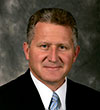
I didn’t ask him to define his terms, and he didn’t wait around for my “explanation.” Here, I am invited to give one in brief and totally subjective terms.

For nearly half a century I have had an absorbing academic but also sympathetic role: to study and interrelate world religions and philosophies and to lecture and write about them. Five of those years I have lived in or near Jerusalem.

Over these decades I have often ascended the Mount of Olives from the east with clusters of visitors, most of them here for the first time. Whatever their origins and backgrounds, whatever their faiths or unfaiths, they, like me, typically gaze in awe at the golden vista of Jerusalem. In the heavy silence I wave my arm and say, “There is our past, present, and future.”

But I see and feel and revel in something few of them can yet see. Cranes loom on the horizon to testify that Jerusalem is being rebuilt. My mind’s eye sees a related rebuilding. In my own life, in my very nerve endings, so to speak, I have vindicated the audacious and unique affirmation of the Latter-day Saints. It is this: The original religion of Jesus and His first-generation church and community have, in fact, been twice-born; once in Jerusalem and once in a newer Jerusalem in America. The splendor of Christ’s past and much of the splendor of His future has become embodied and realized in a community that is a nucleus of the eventually all-inclusive kingdom of God. This new beginning, this fresh start with all of its fire and fervor, is in the process of transforming lives in the pattern of the earliest disciples of Jesus. The book of Acts is being rewritten in the lives of flesh-and-blood people in the world today. It will lead to a full-scale messianic and millennial age.

How all this came about is chronicled elsewhere. But there is nothing sectarian about it. The vision, traceable to Christ himself, is of a near-nation, a people, a culture, a civilization that encompasses everything this-worldly and everything other-worldly and aspires to make them one in the beauty of holiness.

Colleagues of other faiths who have done their homework on the heart of this restoration theology find in it all the traces of Jewish Christianity. When I studied under Paul Tillich, he called it “neoprimitivism.” The label helps a little if taken as a glimpse of what the Latter-day Saints mean by the “restoration of all things.” Primitivism points to the testimony that the covenant made with and by Abraham is forever binding and will eventually reach to the whole human family, that the major and minor prophets were prophets in the fullest sense. It points also to the Latter-day Saint recapitulation of the history of Israel, including their exodus into a new Zion—also to the merger of laws and ordinances in people-hood. Above all it points to the centrality of temples as the sanctuaries of full access to Christ’s most pervasive life-giving powers. All this is clearly in continuity with the Jewish heritage.

The term neo suggests the unblinking witness that men and women of God have beheld the living Christ in this generation as did Paul on the road to Damascus, and that traveling the world today are apostles and prophets and charismatic men and women whose credentials are identical to those of old. Under the sanctions of a royal priesthood, they are empowered and mantled as “servants of all.” (See Mark 10:44.) Young and old, all laypersons, are promised anew all the spiritual gifts of the biblical record. From the day of their conversion, youth as well as aged are called to be a combination rabbi/priest/minister. All teach, all serve, all occupy the pulpit, all perform functions of priestly ministration. More startling still is the insistence on the need and the reality of individual continual revelation. When it comes through the leadership and is upheld by the common consent of the membership, the result is modern scripture, some of which mirrors biblical teaching, some of which clarifies and supplements it.

Newly discovered ancient writings confirm the essential thesis that the role of the Messiah has been anticipated in every generation. All this increases the resonance and relevance of biblical scholarship in my life. Doctrinally speaking, it can be put in five sentences:

Christ is like God and God is like Christ.
If we are not Christlike we are not Christian.
There is only one way to become Christlike
That is the way He became what He was.
He submitted to the will of the Father and to all of His laws and sacraments.

These are required of us: They begin but do not end with faith and trust in Christ’s atonement. He who was full of grace was also full of truth—and is therefore a Revelator. The process requires enlightenment and growth in knowledge. We are saved through His mission, which is to overcome ignorance and sinfulness, and, beyond both deaths in the body and of the body, to bring us forth in resurrection.

Focus on these precepts as precepts may miss their dynamism, their power in life. In me, and in many others, the movement has created—not just fostered and encouraged, but created—new levels of openness in conscious imitation of the Jesus of history. I call it “Christianity in the present tense.” If we follow Him, it means we are:

1. Open upward, to inspirational and creative guidance from on high.
2. Open inward, to the deepest impulses and insights of our own vibrant spirits and those of every man, woman, and child.
3. Open outward, to all the good and true principles in the world, regardless of their source—and to their beauty.
4. Open, if need be, downward, to the wounded and staggering and addicted.

As a biographer I have worked with the whole history of notables from ancient times to now. In this context I have studied line by line and day by day the teachings and life of Joseph Smith. Harold Bloom, prolific Yale literary critic, has lately written that, by almost any measure, Joseph Smith stands with the greatest and most influential of American religious figures, including Thoreau, Emerson, and William James. But intriguing and impressive as he is becoming in world thought, his prime impact for those who knew him was to point beyond hearsay and secondhand assent.

Joseph Smith taught after his own encounters firsthand that all could come unto Christ in this way and eventually receive and give what Jesus called a “fulness” (D&C 93:19). With the advantage of recency and of trustworthy witnesses who shared and duplicated his experience, he stood for the opposite of what many supposed was the role of a prophet. Instead of “take my word for it,” his life and teachings say, “Find your own sacred grove and come to your own individual and independent awareness.” The one secure way to comprehend a prophet as a prophet, ancient or modern, is both humbling and terrifying. It is to become yourself endowed with the spirit of prophecy, which we are told in the Apocalypse is “the testimony of Jesus” (Revelation 19:10). My people know as well as we know anything what this means in heartfelt prayer and submission. Privileges follow that are laden with intimate personal effects, or in the word of Jesus, “fruits” (Matthew 7:20). Among them are His vitalizing love, joy, and peace that endure and even intensify in the midst of affliction and tragedy. I have tested and been tested by these realities through every critical wringer I know. They hold up.

My life has overlapped the decline and fall of many -isms and institutions. Some around me have despaired of religion and then made a religion of despair. When they cry out, “How can you know?” they are often saying to themselves, “None of these alleged experiences and spiritual outpourings occur today, so how can we believe they ever did?” My response: “Exactly backward.” The cumulative witness of the Latter-day Saints is that all of these things are happening today, so one may be assured they could have happened before. Much that distinguishes the movement is public, shareable, and repeatable.

In philosophical terms it could be said that the restoration movement is at once rational, for Christ who was and is the truth dissolves contradictions. It is empirical, for the senses were and will be involved in the invitation of the resurrected Christ, “Handle me, and see” (Luke 24:39). It is existential, for it is whole-souled. And it is pragmatic, for it works at all levels of human need. In these ways, what appears to some to be the least verifiable religion has turned out to be the most.

It is said that we cannot choose three things: our parents, our birth, and, because they are thrust upon us in tender years, our attitudes toward religion. That is as it may be. But in another sense I, and many like me, have chosen all three. I have been reawakened to and reclaimed my Divine parentage and have come to realize that it is as inescapable as my DNA. By submitting to what our people call “the first principles and ordinances of the Gospel” (fourth Article of Faith), I have chosen the time and extent of my rebirth. And with my family I choose regularly to seek out environments charged with light and godliness—among them the sacrament table and the temple. And I choose to bring them into the daily din and into my home.

In short, I, my wife, and my children—a family, we are assured, that can be as immortal as any individual—have embraced to our depths the religion of Jesus Christ, which transforms all of our loves and all of our lives.

—————————————–

Truman G. Madsen earned an A.M. and a PhD from Harvard University in philosophy and philosophy of religion. He was a guest professor at Northeastern University, the Graduate Theological Union at Berkeley, and Haifa University in Israel. At Brigham Young University, he was for two decades the Richard L. Evans Distinguished Professor of Religious Understanding and was named both Professor of the Year and Honors Professor of the Year. He served as director of Brigham Young University’s Jerusalem Center for Near Eastern Studies and as a member of the Jerusalem-based Dead Sea Scrolls Foundation and, in the Church of Jesus Christ of Latter-day Saints, as a mission president, stake president, and patriarch. He wrote and lectured widely on comparative religion and sponsored many symposia with Jewish, Christian, and Muslim scholars. Among his published works are Reflections on Mormonism, The Temple in Antiquity, Covenant and Chosenness in Judaism and Mormonism, Defender of the Faith: The B. H. Roberts Story, and The Search for Human Nature.

Professor Madsen died, following a lengthy struggle with cancer, on 28 May 2009. His statement here is reproduced—at the suggestion and with the kind permission of his widow, Ann N. Madsen—from Why We Believe (Salt Lake City: Bookcraft/Deseret Book, 2001).

Posted July 2011

Fred E. Woods

I was born and raised in southern California and have always believed that Jesus Christ is the Savior of all mankind, though my behavior in my youth did not always demonstrate my belief. I was also deeply interested in truly understanding the purpose of life and spent several years as a teenager searching for the answer to this important question. With time, I was blessed to meet some wonderful Latter-day Saints on a construction job in Arcadia, California, who exerted a great effort to help a wandering young man find some answers. After much prayer and study, I discovered the answers I was seeking and soon thereafter became a member of The Church of Jesus Christ of Latter-day Saints, just shy of my twentieth birthday. Since that time I have been blessed with thirty-five years of peace and joy. During this time I have also tried to share my beliefs with anyone who was willing to listen. This has resulted in many wonderful experiences of meeting other truth seekers.
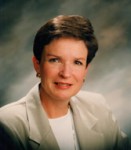
I have found that most people do not truly understand the Mormon people, nor their message. However, most cannot deny the fact that the Mormons are a very family-oriented people who want to serve their communities and be good neighbors. At first, I too did not understand that Mormons believed in Christ, nor their important message that the primitive church of Jesus Christ has been restored to the earth and that apostles of a living God can still provide the current needs of our world which desperately needs to hear the words of living prophets to direct them in these troubled times. I have found in my travels that most people do not know that the word Mormon comes from the Latter-day Saint belief in the Book of Mormon, which serves as a second witness, along with the Bible, that Jesus Christ is the Savior of all mankind. I have read, pondered, and prayed about the teachings of this book and know with a surety that it is in fact the word of God. It bears a powerful testimony of the teachings of Jesus Christ given to the ancient inhabitants of the Americas covering the millennium from about 600 BC to 400 AD. These inspiring words testify that the Lord remembers His “other sheep” and that He was and is mindful of his people living in all regions of the world.

I was raised by a wonderful, loving Christian mother who taught me to love Jesus and how to pray and created an interest in me to study the Bible. However, I must confess that, when I was a boy, this desire was enhanced by an extra incentive of cash to memorize various passages of scripture—which I used to buy baseball cards, etc. One of my favorite passages both then and now is Paul’s admonish to “prove all things; hold fast that which is good” (I Thessalonians 5:22). I have also found that the proof of confirming spiritual truths is not found in a cerebral laboratory, but rather in both the mind and heart by the whisperings of the Holy Ghost, the Comforter which bears witness to our spirits of divine truths. As His mortal life drew to a close, Jesus taught his disciples that “the Comforter, which is the Holy Ghost . . . shall teach you all things, and bring all things to your remembrance” (John 14:26). At this same time, He also taught that a central role of the Holy Ghost was to testify (John 15:26) and that this “Spirit of truth” would “guide you into all truth” (John 16:13). Paul also taught that the things of God are only made known by the spirit of God and that “the natural man receiveth not of the things of the Spirit of God; for they are foolishness unto him: neither can he know them, because they are spiritually discerned” (I Corinthians 2:11, 14). I have sought a loving God in prayer on many occasions and have found answers to many questions throughout my life. As I look back, I now realize how often He has responded to my pleadings and that I have been guided in my journey for truth on many occasions. I believe the most important question I ever asked was on the night of March 14, 1976, when I knelt in prayer in my home in Temple City, California, and simply asked, “Heavenly Father, humbly I ask thee if the Church of Jesus Christ of Latter-day Saints is truly the Church of Jesus Christ.” As I concluded that prayer, I felt a power running through my entire body like I had never experienced before. I was filled with living light and instantly knew with every fiber of my being that the true Church of Jesus Christ had once again been restored to the earth and that it had the power and authority to perform saving ordinances and to receive divine direction through living apostles as in the days of Peter, James, and John.

I bear my witness that God does live and that we were created in His image and likeness, that He is literally the Father of our spirits, and that he is a loving God who is aware of our every need. I know that Jesus is the Christ and speaks through his special witnesses today (as in times of old) and that these chosen vessels were called by Him to direct His church and to provide inspired counsel to guide us. I bear witness of the truths taught in the Bible and I testify that the Book of Mormon is a divine record which was translated by the gift and power of God through an unlearned farm boy who also was a truth seeker. In this ancient record, there is a divine promise that if anyone reads, ponders, and prays to know the truth of this book, it will be revealed unto them by the power of the Holy Ghost (Moroni 10:3-5). I have applied this formula and know that the Book of Mormon is true. I love the Bible and I am grateful for its teachings, which led me to yet another divine record to testify of a loving Redeemer. Indeed, it is true that in the mouths of two or three people (or nations) the truth is established (II Corinthians 13:1). I also know that The Church of Jesus Christ of Latter-day Saints is truly the Church of Jesus Christ. It is not Mormon’s church (the name of an ancient American prophet) nor the church of mortal men. Christ stands at the head and, as in the days of Amos, He still reveals His will through modern day prophets and apostles (Amos 3:7).

I rejoice in the glad tidings that the heavens are still open and that God not only spake, but that He yet speaks. I am grateful that in his tender mercies he has provided apostles and prophets “for the perfecting of the saints, for the work of the ministry, for the edifying of the body of Christ: [so that we may] come to a unity of the faith and of the knowledge of the Son of God . . . that we henceforth be no more children, tossed to and fro, and carried about with every wind of doctrine” (Ephesians 4:14). I know by the power and witness of the Holy Ghost that these things are indeed true. I know by the same power which revealed to Peter at Caesarea Phillipi that Jesus is the Christ (Matthew 16:13-17), that same power that pricked the hearts of many truth seekers on the day of Pentecost and caused “three thousand souls” to be baptized that very same day. I cannot refute these things. I know them to be true and understand clearly that I will one day be required to give an accounting of what I done with my life, when the books are opened and “the dead [are] judged out of those things which [are] written in the books, according to their works” (Revelation 20:12). Yet, in the end, I know that it will not be our good works that save any of us, but rather the atoning blood of our loving Lord and Savior, even Jesus Christ. I conclude with my favorite scripture I memorized as a boy and which I still hold to be true, that “God so loved the world, that he gave his only begotten Son, that whosoever believeth in him should not perish, but have everlasting life” (John 3:16).

Finally, if we do not always agree on our beliefs, may we seek to disagree without being disagreeable and may we always embrace the Latin maxim: “In essentials, unity; in non-essentials, liberty; and in all things charity.” In the sacred name of Jesus Christ, Amen.

——————————————-

Fred E. Woods received a Ph.D. in Middle East Studies from the University of Utah with an emphasis in Hebrew Bible. He is currently a professor at Brigham Young University in the Department of Church History and Doctrine. A former holder of the Richard L. Evans Professorship of Religious Understanding, Dr. Woods has a great interest in building bridges with other faiths. Professor Woods has been a visiting professor at several universities and has lectured at many academic institutions in the United States and internationally. His academic area of expertise is Mormon migration. He and his wife JoAnna Merrill live in Springville, Utah, and are the parents of five children and three granddaughters.

Posted June 2011

Janet S. Scharman

I am the fourth of five children and was raised in a strong LDS family. My father was a psychologist and university professor, and my mother retired as an elementary school teacher when she and my father married. From my earliest memories, I was always very clear that family and the gospel of Jesus Christ were the most important things to my parents. I thought then and have continued to believe that I was raised in an ideal situation. Because I felt happy and secure, because religious teachings and practices made sense to me, and because I trusted my parents and other leaders, I don’t remember a time growing up when I struggled with deep religious philosophical questions. And so my testimony grew not by testing, but rather by life validating the teachings I received beginning from my earliest years.

Now, as many decades have passed, I have had a few of life’s painful disappointments. Just living a long time allows more opportunity for us to experience some of the challenges of mortality, as well as the blessings that come from dealing with things we would not have chosen – those things that have in the end pushed us to be more dependent on our Heavenly Father and then in turn stronger than we knew we could be.

One of the most powerful and impactful such experiences happened shortly after my third child, Holly, was born. She arrived a little earlier than expected, but she appeared to be healthy and normal in every way. During her early days she began having breathing difficulties, but it was a cold winter and the doctors believed her issues would pass. However, by age three months she was in intensive care at the hospital and continued to fail with no clear diagnosis of the cause. After having spent several days and nights at the hospital, my husband and I were advised to go home and get some rest. Holly was being carefully monitored, and if there were a change, we would be called immediately. We were awakened by the dreaded call that came during the very early morning hours, informing us that we should return to the hospital quickly as our daughter’s death was imminent.

Both of Holly’s lungs had completely collapsed and it seemed there was nothing more the medical staff could do for her. We were told that, if we hurried, the hospital would do its best to keep her alive until we were able to return. During the ride to the hospital, the thought crossed my mind that this was a time to bargain with the Lord. Allow this baby to live, I wanted to plead, and I would give anything in return. But I couldn’t think of anything that I could offer that would be worth my infant’s life. So instead I prayed as fervently as I knew how that He would do what was best for this little girl and then help me to handle whatever was in store. Although still very anxious, I felt somewhat calmed.

Entering the intensive care unit, we saw our tiny baby surrounded by several doctors, nurses, and support staff. Holly could no longer be on a ventilator and a doctor was hand pumping oxygen into her lungs. Our first request was that we have a moment to give her blessing. Almost simultaneous with the final word of the blessing, “amen,” one lobe of her lung opened. One of the physicians present commented that this was beyond medical explanation. It wasn’t a lot, but it was enough for the time being. I knew I had just witnessed a miracle, and feelings of gratitude greater than anything I had ever before experienced swept over me.

During the next twenty-four hours other miracles, one by one, just seemed to pour in. Her extremely rare physical problem was at last diagnosed, a surgeon skilled in performing a similar surgery on another infant was on staff at this hospital, and friends and family immediately began fasting and praying for our little child. Although there was a high probability that in her weakened condition she still might not survive the surgery, it was at this time and place that I for the first time truly understood the Holy Ghost as a comforter. Uncharacteristically for me, I was not crying. In fact, I was reassuring others. I felt hopeful and optimistic. I was certain that if my baby could be helped, the operation would be successful. If that were not to be her destiny, I knew we would learn and grow from this experience. I could almost feel other unseen individuals standing by and supporting me. My Heavenly Father’s love seemed tangible.

Holly made it through the surgery and, though the next few years were a little tough as her body began to repair from the major trauma, she continued to grow stronger. She kept beating the odds on many fronts. Today Holly is a beautiful, talented grown woman, married and mother to four exceptionally bright and adorable children – a fact I can report with total objectivity. The many, many prayers in her behalf were answered as I had wished, and I will be forever grateful for this tremendous blessing.

As stated, I consider Holly’s life to be a true miracle in my life. Not all of my prayers have been answered just the way I would have wanted, and I am not smart enough nor do I have a grand enough perspective to fully understand God’s wisdom when life takes us in directions different than what we hoped. Often we may need to wait a little longer to understand how the details of the moment – the details that are often extremely important to us – fit with the expansiveness of God’s broader plan for us. These can be opportunities to learn patience and trust, and to feel His strength propping us up when we have spent our own.

I believe that some of us are blessed to have experiences that are so meaningful and powerful that we cannot deny their divinity nor can we ever forget them. Such was the case for me with my daughter. I also believe that most of the time our miracles are less dramatic and can be easily missed if we don’t take time to notice. I regret the times when I have been too busy or too preoccupied to recognize the Lord’s influence in my life. I try to do a little better each day, and when I fail, I know He will let me try again. What I know for certainty is that the Holy Ghost has continued to be a comforter to me throughout my life. At times I have felt warnings that have prompted my actions, new insights have come to me, and often I have the overwhelming feeling of my Heavenly Father’s love for me. I know of God’s reality. I know His work and His glory is to help each of us return to His presence. I know that He will bless each of us as we allow Him into our lives.

——————————————-

Janet S. Scharman (Ph.D., University of Utah) is the Vice President of Student Life at Brigham Young University

Posted June 2011

Emily Bates

I believe in a God who knows and loves me as He does everyone. I believe that His love for us is not dependent on our actions, our belief, or our situation in life. More than anything, I want to share that trait.
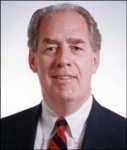
I believe that God is the source of goodness and doesn’t send bad things to the world—that the bad things and events come because of mortal life, our own bad decisions, and others’ bad decisions. I believe that, in general, the commandments lead to a good and happy life—that their purpose is to minimize the hardship and hurt in the world. I especially love the word of wisdom and see that as a great witness of God’s love and wisdom. I believe that God understands why we doubt, fear, and end up messing up a lot. I think it saddens Him because He knows we are sacrificing something good that we can’t see for some momentary fix. I have felt His love after I messed up and tried to come closer to Him again. I have felt redeemed and close to God after periods of neglecting that aspect of life. I believe strongly that family relationships and other deep relationships are necessary and important for us in this life. Learning to love and care for each other is one of the main points of life.

I believe in God because I have received answers to sincere prayers at key times in my life. My faith, like that of many kids, started as blind desire to be a good kid. I had a strong sense of spirituality and was the one in my family to ask for family daily scripture study and family prayer, even when I was a little girl. I felt security in the ritual of prayer and comfort in feeling that I was good and worthy because I did the check-list of things throughout high school, when many kids rebel. I believed that God would protect and keep bad things from my life because of my diligence and faith.

My faith was simple, but not mature. My real conversion occurred later, when my beliefs were called into question. When I had followed the protocol, bad things did happen. My senior year of high school, I suffered severe and frequent migraine attacks that robbed me of my vision, caused excruciating pain and uncontrolled vomiting. Sometimes the migraines would rob me of two or three days a week. The days between, I felt weak and fearful of another attack. I lost many of the successes on which I had based my self worth—my school, athletics, and violin performance.

First, I didn’t think it was fair that, even though I took good care of my body, I was sick all the time. And second, I didn’t think a just God would let that happen when I was praying with all my might for him to take the sickness away. Since God didn’t take away my illness after months of praying for only that, I concluded that either there was no God or He didn’t care about me. I felt alone. I stopped praying.

There were quite a few months of feeling miserable, both because of my health and because I was mad at everyone who was healthy. I was pretty much the opposite of what I wanted to be in every way at that point: not healthy, not kind, not fun, and certainly not believing or ready to sacrifice anything for God or anyone else.

At some point in the year, I was reading a novel by Olive Burns called Cold Sassy Tree. In it, a grandpa was explaining to his grandson his observations about God. He told him that often God doesn’t physically take away hard things, but if you pray for spiritual gifts to help you get through things, like patience, strength, or feeling God’s love, He comes through with those gifts. I remember underlining the words in the book and thinking about them.

The next time that a migraine struck me, again I hurt and I felt alone. I prayed asking only two questions to God—first—if He was there and if he loved me. I felt God’s love—like the emotional response that you feel when you get a hug from your mom after you’ve been away for a long time. It was such a change from the anger and hurt I had been feeling. It was evidence for the existence of God and of His love for me.

I have since had even greater challenges and there have been times when I didn’t have the heart to even turn to God as I should have. But eventually when I have gathered the emotional strength to turn to Him, I have received His comfort, either through a person who was inspired to help me or through a feeling of comfort.

But believing in Christ isn’t only about being comforted when you need to be comforted, it’s also about following Him and using His sacrifice to become better. My belief in Christ gives me a concrete standard of goodness. And when I don’t measure up to that standard, Christ’s sacrifice allows me to lose the part of myself that doesn’t measure up. It allows me to look at myself and not be limited by my current identity. When I find a selfish motive or I say something defensive or unkind, it is Christ who said, “Go and sin no more.” His words tell me “You can be better than that.” God is not like the rest of the world. He won’t remember the past if we rely on Christ, and change. So, my identity is not stuck in my faults. I can drop them to become better.

So—my childhood understanding of faith was wrong. There is no magical world where if you believe in something, suddenly, without effort, you have no problems and become this great person. It is believing in Christ, following his standard of goodness, letting Christ’s sacrifice allow us to change and forgive life’s troubles as they come that will allow us to become better. I’m just trying to be a little better one day at a time.

God is real. I am grateful for Christ’s sacrifice that allows me to come back to God to feel his love, be forgiven, and start over. My belief gives me power to heal, and to improve.

———————————————

Emily Bates is the daughter of two of her heroes: a mother and a father who both gave countless hours to teach her. She had attentive professors at the University of Utah where she earned her Bachelors of Science in Biology and minor in Chemistry. She attended Harvard Medical School where she completed a PhD in Genetics. Her dissertation work identified modifiers of neurodegeneration in Huntington’s disease. Dr. Bates completed her postdoctoral studies at UCSF school of medicine where she established a genetic model to study migraine. She is now an assistant professor at Brigham Young University in the department of Chemistry and Biochemistry. Her lab uses genetic models to study human disorders: migraine, cancer, and birth defects.

Posted June 2011

M. Gerald Bradford

What It Means to Me to Be a Latter-day Saint

Recently, I’ve been taking stock in terms of what it means to me to be a Latter-day Saint. I appreciate the opportunity afforded me by Mormon Scholars Testify to share some thoughts along these lines.
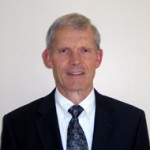
In the early 1960s, around the time I was beginning graduate school, the question of God loomed large for me. Eventually, I found myself drawn toward philosophy and religious thought, ending up in religious studies. Looking back, I suspect gravitating toward this course of study was part of an effort on my part to better understand my faith. I’ve never regretted this; I just wish I’d known earlier to listen more intently for God’s call.

In this academic setting I was trained to think and write about things religious in a particular way. It has been my good fortune over the last several years, as a result of several influences in my life (not the least of which has been the help of friends and colleagues at Brigham Young University and elsewhere, along with those of other faiths, based elsewhere, who have written insightfully on such matters), to have learned how to think about such things differently. Consequently, I now view my faith in a different light, one that puts the emphasis on what it means, first and foremost, to love God and depend wholly upon him.

Part of what this entails, at least for me, is learning to read the scriptures (especially the Book of Mormon, but also the Old and New Testaments) in a particular way. Doing this, I find in them an overarching message. It is one of covenant and hope. It tells how God calls us and how, if we respond properly, he brings us into covenant with him and blesses us. It is part of a much larger message about what he is doing to redeem the whole of creation. I’ve heard God’s call. It came long ago and continues to come, bidden or unbidden. Long ago, I responded by binding myself to him. Ever since, I strive day-in and day-out to live my life in covenant with him.

While doing this I also struggle to come to terms with such things as evil, suffering, and death. I have discovered that this requires me to think about religious beliefs differently. Many view such beliefs as hypotheses or conjectures that can be used to explain how things are. Some, for instance, try to explain God and the things of God in the face of all the negative things that surround us. That is, they adhere to the well-established, modern view of religious beliefs. I used to view my religious beliefs this way. But not any more. Now I see them as a form of response or a mode of acceptance of a world where evil and suffering happen and are only too real. Doing this and learning more each day about what it means to love God and to be solely dependent upon him, I’m able to see his hand in all things – in the good things and the bad – and can thus better grapple with such negative realities.

I’ve also discovered that my love affair with God is best expressed in terms of a range of things that I try my best to do – worship him with full intent (with all that this entails in terms of fasting, prayer, singing hymns, and so forth), partake of the Lord’s Supper (in an attitude of repentance and thanksgiving, while promising to always remember him and abide by his commandments), and participate in prescribed priesthood ordinances aimed at blessing others (while also being the recipient of blessings by this same means) and by this and other means try my level best to deal properly with them and do right by them (with all that it entails) – more so than by focusing on my beliefs about God or other related matters or on what I say or write about him.

I find that my perspective on this differs from others, including, it seems, some fellow Saints. It has been my experience that many Latter-day Saints view their faith almost exclusively from the vantage point of what they believe, rather than in reference to the many things the Savior asks them to do. This may account, at least in part, for why some find a need to elaborate on, if not speculate about, a whole range of church teachings or beliefs (what are often referred to as “doctrines”), thereby giving the impression that the gospel of Jesus Christ is complex and that to be a Latter-day Saint means devoting a great deal of time and effort trying to figure out what all these beliefs mean, how they hang together, how they can best be used to explain things, and so forth. I once understood my faith this way. But not any more.

For me, the message of the gospel is simple on its face yet it is profound in its implications. I discern in the way the brethren and other church leaders speak about it in general conference and on other occasions and how they write about it in church sponsored publications that, for the most part, they see it this way as well. In a rich variety of ways they readily proclaim this plain and precious truth to all the world, resting assured that its profundity will manifest itself in the lives of those who take it to heart and live it.

For me, the message is clear. We need to hear and heed God’s call. We need to be thankful for the faith in him that has been given us (and for all of the other gifts he continually bestows upon us). We need to love and trust in him with our heart and our mind. And, in particular, we need to evidence this by how we live our lives – by striving to relate properly with him and with others while doing right by them and by viewing the world from this vantage point. This is what it means to me to be a Latter-day Saint.

Given how I understand my faith, I find myself thinking and writing about Heavenly Father and the Savior largely in terms of the many gracious things they have done and will yet do for us. Two events in particular stand out: the unique things they began to do nearly two thousand years ago, in ancient Palestine (referred to as the “Good News” or the gospel of Jesus Christ). And what they did (in furtherance of this) in the nineteenth century, in this land, working through the Prophet Joseph Smith and others (referred to as the Restoration).

My core beliefs about Heavenly Father and the Savior are grounded in these two events and in other things they have done and will yet do for us. What is more, I have come to realize that these beliefs take on the meaning and value they do for me to the extent that I diligently strive to live in covenant with them. At the same time, I confess (with Paul) that I glimpse such things through a glass darkly. That is, I acknowledge that what I’m able to grasp about Heavenly Father and the Savior pales in comparison to my sense of how much I’m not able to comprehend about them – who they are in and of themselves, how they have accomplished what they have to this point, how they will yet accomplish many great and marvelous things, and so forth.

But I’m at peace with this, since, for me at least, the goal is not so much to learn more about God in this regard as it is to try my level best to master the life that he has called me to live. Besides, I’ve discovered that by putting the priority this way, he guides me in terms of what I seek to understand about him and the things associated with him, and, what is more important, he makes himself known to me.

Presently I’m comparing my particular covenantal approach to God with the traditional theological one. The latter is a long, well-established way of coming to an understanding of him and the things associated with him. It is a mainstay for most Christians. It is utilized by some fellow Saints. I used to follow this path, at least to some extent. But over the years I have come to realize that I actually approach him quite differently.

Like others, I strive to do this by searching the scriptures and the teachings of living prophets, relying principally on guidance from the Holy Spirit. But I now know there is more to it than this. The scriptures urge us to get ourselves into a position where we can say that we know God. But what does this mean? What is required of us in order to be able to say this? What I’m learning is that the answers to these and similar questions are found in the manner in which I’m struggling to live my life with God. As he has always promised, having heard and answered his call (with all that this entails), he has brought me into covenant with him and blesses me and my loved ones. He protects me and my loved ones. Over the course of my life he is changing me – for the good. He is teaching me more about himself (and about myself), and he is making himself known to me.

Trying my best to do all of this is sufficient to guide me in all things, especially in my dealings with others. It is what enables me to withstand the things I am confronted with in this life. It allows me to see God’s hand in all things. It evidences to my Father in Heaven that I truly have within me the hope that by his grace, and being led by the Savior, my loved ones and I can someday become more like him and thus ascend into his presence. It represents my best efforts at being the kind of disciple he wants me to be. It is what it means to me to be a Latter-day Saint.

It also means one other important thing: learning to live in community (communion) with others. This is prefigured in the scriptural message of covenant. It is tightly woven into the fabric that our lives with others should become, as we were taught by the Prophet Joseph Smith.

Let me explain. In the course of participating in the various ordinances associated with entering into the covenant, I did so openly and willingly, in front of God, angels, family members, and fellow Saints, just as JeNeal and I did when we pledged ourselves to each other and to God when we were sealed in the temple.

However, having done these things individually, we now realize that we have changed our status before God. Now both of us stand before him as members of a much larger community, a covenant community. We experience this, first and foremost, of course, in terms of our own immediate and extended family (including those for whom we and others have performed vicarious priesthood ordinances in the temple). But we also experience this in terms of those who are members of our ward family, our stake family, even the entire family of the church. The Savior loves us individually and cares about us personally; nevertheless, the salvation we hope for is more than an individual thing, more than just something between the Savior and each of us. It is this, but it is so much more.

JeNeal and I will always be able to relate personally with the Savior and with Heavenly Father; however, being in covenant with them also makes it possible for us to relate with them as a family. My hope is that the day will soon come when the Savior will lead us and our loved ones by the hand into the presence of the Father. The joy this contemplation brings is magnified all the more because I anticipate being able to experience this with them.

The Restoration happened so that everyone who hears God’s call and responds may be able to do so by agreeing to be bound to him. It again established the authority and means by which this key thing can be done. God is again calling all of us throughout the world (and on the other side of the veil), not on the basis of race, ethnic, tribal, class, gender, or any other form of identity or ideological affiliation (political or otherwise), but simply because we are his children. He is again gathering us into his earthly family, his earthly kingdom, in anticipation of the mighty things he will yet do for us and for the whole of creation. And he is again reminding us that the time is coming when he will separate the sheep from the goats, the wheat from the tares.

This is why, for me at least, following the Savior entails much more than merely declaring his name or renouncing my own private, personal sins (as important as it is that I do these things), but then pretty much living my life like everyone else. Instead, what I need to do is adopt a totally different way of life, become (according to the ways of the world) a peculiar person, a member of a distinct community, a child of the new covenant.

Indeed, such centrally important things as our understanding of God, the truth of the Gospel of Jesus Christ, the authority of the priesthood on the basis of which saving ordinances are performed on our behalf, and the conviction I have that the life I’m struggling to live is the one I should be living – all have the meaning and significance they do for me precisely because they are securely anchored within God himself and the household of faith he has again established on earth and of which I am a part.

It is in this community with fellow Saints (as I assume it may have been in the community formed by those who followed the Savior anciently) that we teach one another these and other important truths, again, largely by the simple, straight-forward things we do in the course of worshiping God – we fast and pray together, sing hymns together, tell stories about the acts of God in our life, bear testimony to one another of him, read the scriptures together, love and care for one another, especially those in need, and worship in the temple together. And, of course, we do one other vital thing. We share the emblems of the Lord’s Supper with one another. Doing this in an attitude of repentance while making an offering of our broken heart, we witness to God our intent to keep the commandments and thus stay within the covenant and make it real in our lives, in light of all that it has come to mean to us. We express our hope that by so living we may continue to have the companionship of the Holy Spirit. Partaking of these emblems nourishes and renews us (it is a meal, after all) in our on-going efforts to follow him. In doing this (indeed, in doing all of these things) we remember all that God has done and is doing for us and contemplate all that he will yet do for us. And we achieve one other thing, a pearl of great price – we knit ourselves tighter together as a community and thereby share God’s love for us and the many ways in which he blesses us.

I’ll conclude with an acknowledgment, a confession really. It is one thing to strive to live according to promises I have made to God. It is something else altogether to actually do this. I am the first to admit that I often stray from God, not in the sense of being in open rebellion against him, but in regard to choosing to focus too much on things of little import, the wrong things of the world. I find myself not doing what I know I should and vice versa. I find myself wandering back toward center stage, forgetting God and how much I depend on him every day and in every way. I find myself treating others as objects and not doing right by them.

When this happens I know what I need to do to make amends, to set things right. I need to remember him (and forget about myself), seek him out in fasting and prayer, repent and plead for his forgiveness, worship him once again with full intent, concern myself with the welfare of others, strive to do good in all my dealings with them, and otherwise struggle to live the life I know I should. In short, I need to live my life in covenant with God – what it means to me to be a Latter-day Saint.

————————————–

M. Gerald Bradford is the executive director of Brigham Young University’s Neal A. Maxwell Institute for Religious Scholarship. Since 1995 he has held various administrative positions with the Institute and its predecessor organizations. From 1988 until he came to BYU, Jerry was the executive associate of the Western Center of the American Academy of Arts and Sciences, with offices on the campus of the University of California, Irvine. From 1980 to 1988, he was administrative director of the Robert Maynard Hutchins Center for the Study of Democratic Institutions, located on the campus of the University of California, Santa Barbara. For four years prior to this appointment he was associate director of the Institute of Religious Studies, an organized research unit on the UCSB campus. While pursuing these administrative responsibilities, Jerry also taught courses in the Department of Religious Studies at UCSB and in the Department of Cognitive Sciences at UCI. He has also taught at Bowdoin College in Brunswick, Maine, and at BYU. Jerry received his Ph.D. in Religious Studies from UCSB in 1977. He has a M.A. in Religious Studies, also from UCSB, and in 1965 received a M.S. in Business Administration and Finance from San Francisco State University. He is a graduate of the University of Utah.

Jerry is married to JeNeal (Jones) and they live in Provo, Utah. They have two children and seven grandchildren. He currently serves in a branch presidency in the MTC in Provo.

Posted June 2011

David Jack Cherrington

My Declaration of Belief

Explaining why I believe is rather simple and probably not as interesting as what I believe. I think I was born with the gift of faith and all my life I have had a solid belief in God and in life beyond this mortal experience. I had the privilege of being raised in a religious home by devoted parents who were faithful believers in the restored gospel. The seeds of my faith were sown in my earliest days when I was taught to pray and love the scriptures. I have always believed in the Godhead, the great plan of redemption, the latter-day restoration, and the calling of modern-day prophets to lead us. I have always believed that the scriptures are the inspired word of God, as preserved for us by divine intervention. My confidence in these beliefs has been as real and as certain to me as my confidence in other unseen truths, such as the assurance I have always possessed of my parents’ love.
I find it more interesting to discuss what I believe than why I believe. The Savior taught that “by their fruits ye shall know them,” and the results I have witnessed of living gospel principles convince me that God lives. The blessings of living the gospel are so clear and impressive that for me they declare the wisdom of God and the natural order of the world He created. My faith in God has grown with all that I have learned. I would like to illustrate this by describing how one simple doctrine regarding the celestial kingdom has had an enormous impact on my life.

In the fall of 1987, I was asked to teach a family relations class to groups of young married couples. The lesson manual that I used applied the three degrees of glory in the life hereafter, as explained in Section 76 of the Doctrine and Covenants, to customary behaviors in everyday family life. The insights that came from these scriptures had a lasting impact on the quality of my family interactions and I observed noticeable improvements in the marital relationships of many of the couples I taught. Following these simple gospel principles dramatically improved the way couples treated each other and led to greater happiness within their families.

After we die and are resurrected, we will be assigned to one of three degrees of glory—telestial, terrestrial, or celestial—depending on how we lived here. The Apostle Paul equated these three degrees of glory to the glory of the stars, moon, and sun (1 Corinthians 15:40-42).

Telestial behaviors are very selfish behaviors characteristic of “liars, and sorcerers, and adulterers, and whoremongers, and whosoever loves and makes a lie” (D&C 76:103). At this lowest level of family life, people are motivated by what is fun and pleasurable; they ask such questions as “What’s in it for me?” and “What do I get out of this?”

Terrestrial behaviors are just and fair, consistent with the norm of reciprocity. At this level, people want to be good citizens and they are willing to participate in relationships that are perceived as fair and equal; they are honorable people who want to make and abide by laws that maintain a stable social order. Terrestrial people are described as not being “valiant in the testimony of Jesus” (D&C 76:79).

President Spencer W. Kimball commented on this verse: “I wish our Latter-day Saints could become more valiant. As I read the seventy-sixth section of the Doctrine and Covenants, the great vision given to the Prophet Joseph Smith, I remember that the Lord says to that terrestrial degree of glory may go those who are not valiant in the testimony, which means that many of us who have received baptism by proper authority, many who have received other ordinances, even temple blessings, will not reach the celestial kingdom of glory unless we live the commandments and are valiant” (Conference Reports, April 1951, pp. 104-105).

Celestial behaviors are focused on serving and blessing the lives of others. Rather than focusing on themselves, people who display celestial behaviors esteem others as much as themselves; they treat others as they would like to be treated. These people accept and live the gospel and are true and faithful in all things. “They see as they are seen and know as they are known” (D&C 76:94). Being valiant in the testimony of Jesus requires us to live as He taught us to live. In the Sermon on the Mount, for example, Jesus taught his followers to turn the other cheek, go the second mile, love their enemies, avoid angry feelings, and shun lustful thoughts or desires.

Since I planned to teach this lesson to multiple groups, I created a handout that explained the principles on the front side, while the back side described family situations to which the principles could be applied in a class discussion. I thought the episodes I created were quite entertaining and would make an excellent family home evening lesson. One Monday evening as we were finishing our dinner, I told my family we needed to quickly clean the kitchen so we could have a lesson. David, my oldest son, said, “Dad, it has to be really short because I have a lot of homework.” Jennifer said she had so much to do that she didn’t have any time for a lesson.

I told my family that in spite of what my previous record might suggest, tonight I was well prepared. I even pulled my handout off the shelf behind me and said I was prepared to lead them in a stimulating 90-minute discussion.

Jennifer took the handout from me and read the front page aloud in what I thought was a very dramatic tone of voice. Nathan then read the back side in a way that seemed to combine sarcasm and theatrics. I listened to their renditions with growing resentment and finally decided to share my disappointment with them. I explained how I thought these were valuable principles that would greatly bless our family if we learned to apply them. They said they had learned the principles and did not need any more discussion. I decided to quiz them. To my surprise, they answered all my questions correctly, and I felt even more irritated.

I thought my efforts to teach my family had been a colossal failure. However, when the children began to label each other’s behaviors, I realized that my teaching was not all in vain. For instance, one day after school one of my sons ate the remainder of a cake and his sister told him, “That was certainly very telestial of you to eat the rest of the cake all by yourself.” He replied, “Well, it is certainly very terrestrial of you to point it out to the rest of the family.”

We had a dishwashing routine in our home where I did the dishes on Monday nights and the four children were assigned the other four days of the week. This routine seemed to be working quite well, and everyone completed their assignments and accepted it as fair. But one of the children noted that even though it required a certain degree of personal sacrifice and commitment from all of us, it was still only a terrestrial behavior.

Realizing that she was right, I decided to offer to help. After dinner each night I would announce to the child responsible for cleaning the kitchen “I’m willing to help you if you’d like. It’s your job, but I’m willing to do whatever you ask me to do.” I was almost always asked to wash the pots and pans and for a long time I thought I would spend the rest of my life with my hands in dishwater. I think all of my family would agree that for a period of time I did an enormous amount of dishwashing. But I also think my helping contributed to a tremendous improvement in our family. We treated each other better and there was much more happiness and harmony in our home.

As I analyzed my conduct I decided that in my better days my behaviors typically reached only a terrestrial level; I frequently fell short in my goal to act celestially. But, as I tried to show more celestial behaviors, I saw a noticeable improvement in our home.

One memorable Thursday night when we were in the middle of dinner, Jennifer stood up and began bustling about in the kitchen. Jill, who was only 13 years old at the time, sensed Jen’s anxiety and knew that Jen was anxious to leave to play a volleyball game. Jill turned to Jen and said, “Jen, I know you don’t want to be late for your volleyball game. So, why don’t I do your dishes tonight and you can do mine tomorrow night?” Jennifer turned to Jill and said in a rather dramatic voice, “Thank you, thank you, Jill. That is so celestial of you.”

After Jen left, there was a brief, quiet pause and then Jill said, “That wasn’t really celestial of me after all.” My wife, Marilyn, asked Jill to explain her comment and Jill said, “If I was really celestial, I would have offered to do her dishes tonight without asking her to do mine tomorrow.” I was impressed that a 13 year-old would have the sensitivity to understand these principles and apply them. The quality of family life in our home has been a living testimony to the truths of these simple doctrines from Section 76: telestial behaviors create unhappiness and misery, while celestial behaviors create joy, peace, and happy family interactions.

The attributes of celestial, terrestrial, and telestial people are suggested in Section 76 and amplified elsewhere in the scriptures. In the Sermon on the Mount (Matthew 5-7) Jesus explains the principles of celestial living and commands us to live them rather than the terrestrial-level Law of Moses. Jesus probably taught these central doctrines week after week as He visited the various synagogues in Galilee as well as when He visited the people in America after his resurrection (3 Nephi 12-14). Clearly, this life is the time for us to develop celestial behaviors (Alma 34:34). Other scriptures (e.g., D&C 88:28-32) explain that the degree of glory to which we will eventually be resurrected will depend on the kind of character we acquire here; if we desire a celestial glory in the next life, we need to acquire celestial habits in this life.

The principles of celestial living are not limited to just family interactions. It is interesting to examine the differences between celestial, terrestrial, and telestial behaviors and apply them to other aspects of living, such as leadership, communication, group dynamics, and sexual intimacy. These great insights have produced valuable consequences – delicious fruit – in both organizational and family settings.

I have witnessed great blessings that have come from living other commandments also. I know that the “windows of heaven” (Malachi 3:10) have been opened to my family as a result of paying tithing. I know that living the word of wisdom has helped me “run and not be weary and walk and not faint” (D&C 89:20). As I have counseled youth, I have seen how living a chaste and virtuous life creates happiness, self-confidence, and trust. I know why we are told to “stand in holy places” (D&C 87:8) and “shake at the very appearance of sin” (2 Nephi 4:31).

I have a testimony from my own experience about the importance of knowing and obeying God’s commandments. Long before we stand before the judgment bar of God, we will experience the consequences of living God’s commandments. Righteousness brings joy and happiness, while the “bondage of sin” produces pain and misery.

When asked why I believe in God, I often say it is because I choose to believe; it is a conscious choice. What I see, what I learn, and what I feel all convince me that what I believe is true; and my confidence grows as I continue to observe, discover, and feel. Although my training has taught me to be skeptical, and although I have had many conversations that have challenged my beliefs, and although I have had puzzling questions that were not immediately answered, at the end of the day I choose to believe because believing is the most reasonable and sensible choice. For me, believing has been both a rational decision and a spiritual confirmation that has been very real albeit difficult to describe.

I believe God communicates with us in a variety of ways and we need to recognize and be grateful for inspired messages. When Joseph Smith prayed in the sacred grove, he was visited by God the Father and Jesus Christ. I firmly believe that this marvelous experience actually occurred and from it we learn much about the attributes and reality of God. Some messages from God have been communicated by heavenly messengers, such as Moroni, Gabriel, Moses, Elijah, and John the Baptist. These marvelous visitations, which must have been very powerful and persuasive, were reserved for special purposes. Other spiritual experiences are much more subtle, but no less real.

Some people have heard the voice of God telling them what to do. On three occasions during the last few months of my father’s life, he told me about his experience of hearing the voice of God. This event is recorded in his life history; but I think he wanted me to remember it. It occurred in 1938 while he was serving as a missionary in the Central States Mission. As a district president, he was travelling on a bus to visit the missionaries in Bellville, Illinois, when he had a strong impression to visit the elders in Hannibal, Missouri. He read the weekly letters of the Hannibal missionaries and concluded that there was no reason to change his travel plans.

When he was waiting to board another bus in St. Louis, however, he heard a voice tell him, “Elder Cherrington, go to Hannibal.” He told me that the voice he heard was just as audible and clear to him as was my voice as we were visiting. Consequently, he exchanged his bus ticket for a train ticket to Hannibal, and during the three-hour train ride he wondered why he was being sent to Hannibal and what he would do when he arrived.

When he interviewed the Hannibal missionaries, he learned about a serious problem with one of the missionaries. By intervening in this problem, my father protected the reputation of the missionary program in a state where many people still harbored ill-will toward the church and where an earlier extermination order had not been rescinded.

I believe in inspired dreams. Most of my dreams would be described as fleeting thoughts or brief fantasies, but on one occasion I had what I believe was an inspired dream that protected me from harm. I dreamed that I was approaching an intersection in our neighborhood in Champaign, Illinois, and my brakes failed to stop my car. I was awakened at the point of impact when I was struck by another car. The dream was so vivid that it took me a while to go back to sleep. In my dream, the intersection looked somewhat familiar, but a little unusual; and there was a light snow falling.

Later that afternoon, I had to do an errand on my way home from work which caused me to take a different route into our neighborhood. As I entered our neighborhood there was a brief snow storm, which I thought was unusual for that early in the fall. The falling snow reminded me of my dream and as I looked ahead, I recognized the intersection I had seen in my dream. Immediately, I decided to check my brakes and was surprised to discover that I had no brakes even though they worked well two minutes before. By shifting into lower gears and using the curb to slow my progress I was able to avoid a string of cars that passed through the intersection. I offered a prayer of thanks for what I have always believed was an inspired warning.

I believe that my life has been blessed by inspired thoughts and feelings that have helped me in my responsibilities as a father in the home, in church assignments, and also in my professional work. I am grateful for the inspiration that helped me know that my son was becoming a diabetic even though he had not yet manifested any symptoms. For a couple of days I was troubled by a dark feeling that something was wrong but I didn’t know what. Finally, I asked my wife to take our oldest son to be checked and learned that he was in the early stages of diabetes. I am grateful for the inspiration I received while counseling ward members as a bishop. I remember times when I was totally unsure what to say; I pleaded for help and received divine inspiration.

I believe I could have received much more inspiration in my life if I would have only asked for it and done more to prepare for it. Too often in my arrogance and pride I failed to recognize the true source of insights and ideas. In hindsight, I realize that I have been the recipient of divine inspiration much more frequently than I appreciated at the time.

I am grateful for inspired feelings and answers to prayers. These experiences are not easy to describe, but they are no less real to me. As I study the Book of Mormon, I am firmly convinced that it is the word of God. My testimony of the Book of Mormon comes not only from studying what it says but equally from knowing how it came to be. As I study early church history, I know that Joseph Smith was a prophet of God and that he translated the Book of Mormon by the gift and power of God.

As I read the scriptures, I know that God lives and that I am a son of a loving Father in Heaven. I am grateful for the scriptures that teach us about God’s dealings with men and about the life and atonement of our Savior, Jesus Christ. Reading the scriptures gives me feelings of peace and joy, which I believe are manifestations of the Holy Ghost. I am confident that one day we will all stand before God to account for what we have done in this life. To the nonbelievers I suspect God will say much like I say to my failing students, “Did you read the text?” With Moroni, I promise that anyone who reads the Book of Mormon with a sincere heart and real intent will know that it is the word of God.

———————————————-

David Jack Cherrington is a Professor of Organizational Leadership and Strategy in the Marriott School of Management at Brigham Young University.

He graduated from Preston High School in Preston, Idaho, and served a two-year LDS mission to New York and New Jersey. He attended Utah State University and Brigham Young University, where he received a bachelor of science in 1966 with a major in psychology and a minor in mathematics. He also attended Indiana University where he received an MBA and a doctoral degree in business administration (DBA) in 1970.

He taught at the University of Illinois in Champaign for four years before transferring to BYU in 1973. He also taught at the University of Wisconsin – Madison in 1977 and BYU-Hawaii Campus in 1980. He is a member of the Society of Human Resource Management and the Academy of Management. He has served as President of the Personnel Association of Central Utah and as the National Director of Codification and Research for the Human Resource Certification Institute. He is certified as a Senior Professional in Human Resources (SPHR) and served from 1989 to 1995 as a member of the national HRCI board of directors.

Professor Cherrington has written three textbooks with study guides and instructors’ manuals accompanying them, including The Management of Human Resources and Organizational Behavior. He is also the author of two other books (Rearing Responsible Children and The Work Ethic: Working Values and Values that Work), and the coauthor of Moral Leadership and Ethical Decision Making and three reference books, including the Human Resource Certification Self-Study Program (6 Units), two computerized training courses on ethics, and three independent study courses available on the Internet (Human Resource Management, Organizational Behavior, and Business Ethics). He has also authored or coauthored about fifty articles in professional journals and magazines.

He was a member of an inter-disciplinary research team studying the causes of fraud and white-collar crime from 1978 to 1980 and has been active since then in studying problems of dishonesty. His research has included extensive data analysis from questionnaires, qualitative research from interviews of convicts, and seminars with students and executives. In 1986 he testified before the Senate Judiciary Committee in Washington D.C. Professor Cherrington is married to Marilyn Daines Cherrington and they are the parents of four children, all married, and fifteen grandchildren.

Posted June 2011

Marianne M. Jennings

I converted to Mormonism six days shy of my graduation from Brigham Young University. When I began my studies at BYU in 1971, I was one of the 499 non-members of the 25,000 students. I was a person of faith before I went to BYU, having been raised in a Baptist home by remarkable parents who were converts to that faith. I come from a long line of truth-seekers.

My decision to go to BYU was the result of one semester at another university. When I began my college education, the nation was at the height of the anti-Vietnam war protests, and the Baby Boomers who were protesting were all at the height of their drug use, something evidenced by the fact that they actually understood the Beatles’ White Album. I was spinning my wheels trying to be a serious student in an atmosphere where you inhaled each time you used the restroom, whether you wanted to or not, because the drug culture was so pervasive. Having been raised in a small coal-mining town in western Pennsylvania among God-fearing blue-collar workers, I was miserable among the stoners. When I talked with my Dad about the challenges, he worried. His worries percolated to the surface as he spoke with his friends at the office. He happened to have several Mormons working at the office and they offered their advice, “Send her to BYU!”

Dad came home and explained the Mormons and BYU as follows, “They’re an odd people, they are clannish, and some of their doctrine on Christ is heretical, but they have no anti-war protests and any drug use means you get the boot.” Within six weeks, I had an admission letter as well as a welcome from one “Sister Matthews,” my dorm mother. Sister Matthews? As I prepared to head to Utah, the doubts were creeping in, “What have I gotten myself into?” In the era of the mini-skirt, I had to lengthen all my skirts four inches. No jeans or pants to class. I was moving from a campus where officials were happy if students showed up class with clothing on to one where the standards that demanded professional dress. I was struck by the sheer chutzpah of these folks in the midst of a cultural revelation.

My father’s analysis and my preparations for BYU were not my first exposure to Mormonism. In the ninth grade, I had chosen “History and Nature of the Mormon Church,” as my topic for a paper and presentation in my history class. I had found them fascinating as I researched their tense quest for religious freedom in the years leading up to the Civil War. I was also taken by their “Articles of Faith,” a pithy 13-part summary of Mormon beliefs. I closed my oral presentation by reciting the 13th Article of Faith, “We believe in being honest, true, chaste, benevolent, virtuous, and in doing good to all men; indeed, we may say that we follow the admonition of Paul—We believe all things, we hope all things, we have endured many things, and hope to be able to endure all things. If there is anything virtuous, lovely, or of good report or praiseworthy, we seek after these things.” Any group still holding fast to chastity in the era of Woodstock, truth in the era of Watergate, hope in the era of Barry McGuire’s “Eve of Destruction,” and the strength and words of Paul was okay in my book. If their expressed beliefs in this short statement were odd, then I eschewed normal.

My arrival on campus brought the same reaction George Will had upon his visit to Provo – young men and women who are so polite and spiffy clean that it feels as if you have landed on another planet. It was inspirational to see them all walking to church early that first Sunday morning, all looking even spiffier than on weekdays. From the first time I set foot on the campus, I took on the role of an anthropologist. I felt like Butch Cassidy and the Sundance Kid, “Who are these guys?”

To answer my anthropological question, I studied the Mormon culture, I researched my professors and their work and background, and I took the missionary lessons more times than I can remember. I complied with the two credit hours of required religion courses each semester. I enjoyed gloating when I got higher scores in my Book of Mormon courses than my life-member room-mates and friends. I watched them trot off faithfully to meetings twice each Sunday and a fireside on Sunday night. I had fancied myself a faithful church-goer, but I lacked their stamina. I hated it when Baptist church went longer than an hour. These people were putting in 5 hours on Sunday, more during the week, and those stats did not include their mandatory religion courses. Who are these people?

A former Baptist minister was my New Testament professor. He took passages from the New Testament that had always troubled me such as the Parable of the Ten Virgins. I wondered why, if we were indeed to show the pure love of Christ, the five prepared virgins didn’t just ante up some of their oil for the unprepared? (Matthew 25) And the father of the prodigal son had long been an irritant to me – why make the fuss over the rotten son? (Luke 15:11-32) Using Mormon doctrine, revealed through the Book of Mormon, the Doctrine and Covenants, and the Joseph Smith translation of the Bible, Professor Ledbetter began to fill in the blanks I had long stewed and fretted over – the seeming gaps, inconsistencies, and inexplicables in my faith . From my other religion professors and even from my econ instructor, I found receptive ears, willing guides, and knowledgeable souls. They explored my questions with me. I gained insight and noticed constancy in Mormons, their faith, and their doctrine. I also saw a level of doctrinal knowledge among my own roomies that belied their tender age of 18. In addition, I saw a people who would come to help anyone, day or night. Their tender hearts gave service, money, and love in a way that convinced me it was in their DNA.

I was shaken by what my anthropological and religious studies were unveiling. I began to realize that I did not have the full gospel of Jesus Christ despite my steady Baptist faith and activity. There was substantive depth to the Mormon faith – a depth that found me asking, “How could we understand our Heavenly Father and his plans for us without the help of these additional scriptures and modern revelation?” These people were offering me enlightenment and insight – a doctrine of salvation that was remarkable in its clarity and benevolence. I was shaken to my very core because of all I had not understood before I came to Utah.

When you have been brought up in another faith and its tenets are challenged by the doctrine and behavior of the faithful of another sect, you become defensive. You want to find fault. You want to zero in on that one hypocrite and conclude, “See, you’re not so great, now are you?” As hard as I tried to find fault, my combined sense of fairness and respect for truth would not allow me to reach any conclusion other than this, “These are remarkable people who have something special.” The odd thing was that they never acted as if they were remarkable. They were possessed of a humility that required my anthropological mode. Their strength and insight are obvious through their conduct and example. Boasting is antithetical to their Mormon faith and culture. I knew who these people were. In fact, I realized over my three years as an undergraduate that I was one of them.

I took formal action on April 13, 1974, and changed my informal status as anthropologist-in-residence to formal membership. The decision to join the Church of Jesus Christ of Latter-day Saints found my family disappointed and my friends stunned. Despite the loss of friends and the understandable sadness of my parents, I have never wavered in my commitment to the Church.

A Christian academic has a tough row to hoe. The academy does not suffer the faithful well. A Mormon academic has a steeper hill to climb to acceptance. Not all Christians have the same positions on the hot-button issues of our time. But, the characteristic constancy of the Mormon faith means that your colleagues know your views on all social issues. Initially, there is resentment of a Mormon colleague in the academy as an embarrassment for holding archaic views on social issues. But I allow my colleagues the opportunity to act as anthropologists – if they are good researchers who pursue truth without bias and inquiry with zeal, they will find what I discovered so many years ago.

Field studies of Mormons in academia are limited because we are dealing with a small set. That we Mormon academics are so small continues to surprise me because our faith demands daily study and requires ongoing intellectual challenge and inquiry. Nothing in my studies or research has challenged me as much as the daunting task of learning the depths of the gospel of Jesus Christ. If I studied full time for the next 20 years, I could still pick up any of the standard works of the Church or an Ensign article, read one small passage, and find myself saying, “I never thought of that.” For the intellectually curious, the restored gospel is a treasure. For all of us, the restored gospel is redemption. We have the blessings of peace and joy that come from its moral clarity and eternal constancy. I know who these people are, and I am one of them and with them.

————————————————-

Professor Marianne Jennings is a member of the Department of Management in the W.P. Carey School of Business at Arizona State University and is a professor of legal and ethical studies in business. At ASU she teaches graduate courses in the MBA program in business ethics and the legal environment of business. She served as director of the Joan and David Lincoln Center for Applied Ethics from 1995-1999. From 2006-2007, she served as the faculty director for the MBA Executive Program. Professor Jennings earned her undergraduate degree in finance and her J. D. from Brigham Young University. Her internships were with the Federal Public Defender and U.S. Attorney in Nevada, and she has done consulting work for law firms, businesses and professional groups including AES, Boeing, Dial Corporation, Mattel, Motorola, CFA Institute, Southern California Edison, the Arizona Auditor General, the Cities of Phoenix, Mesa, and Tucson, the Institute of Internal Auditors, Coca-Cola, DuPont, Blue Cross Blue Shield, Motorola, Mattel, Pepsi, Hy-Vee Foods, IBM, Bell Helicopter, Amgen, Raytheon, and VIAD.

Professor Jennings has authored hundreds of articles in academic, professional and trade journals. Currently she has six textbooks and monographs in circulation. The seventh edition of her textbook, Case Studies in Business Ethics, and the ninth edition of her textbook, Business: lts Legal, Ethical and Global Environment were published in January 2011. Her first textbook, Real Estate Law, had its ninth edition published in January 2010. She was added as a co-author to Anderson’s Business and the Legal Environment in 1997, a text whose 21st edition was published in January 2010. Her book, Business Strategy for the Political Arena, was selected in 1985 by Library Journal as one of its recommended books in business/government relations. A Business Tale: A Story of Ethics, Choices, Success, and a Very Large Rabbit, a fable about business ethics, was chosen by Library Journal in 2004 as its business book of the year. A Business Tale was also a finalist for two other literary awards for 2004. In 2000 her book on corporate governance was published by the New York Times MBA Pocket Series. Professor Jennings’ book on long-term success, Building a Business Through Good Times and Bad: Lessons from Fifteen Companies, Each With a Century of Dividends, was published in October 2002 and has been used by Booz, Allen, Hamilton for its work on business longevity. Her latest book, The Seven Signs of Ethical Collapse was published by St. Martin’s Press in July 2006. Her books have been translated into five languages.

Her columns have been syndicated around the country, and her work has appeared in the Wall Street Journal, the Chicago Tribune, the New York Times, Washington Post, and the Reader’s Digest. A collection of her essays, Nobody Fixes Real Carrot Sticks Anymore, first published in 1994 is still being published. She was given an Arizona Press Club award in 1994 for her work as a feature columnist. She has been a commentator on business issues on All Things Considered for National Public Radio.

She has conducted more than 300 workshops and seminars in the areas of business, personal, government, legal, academic and professional ethics. She has been named professor of the year in the College of Business in 1981, 1987, 2000, and 2010 and was the recipient of a Burlington Northern teaching excellence award in 1985. In 1999, she was given best article awards by the Academy of Legal Studies in Business and the Association for Government Accountants. She was given best article awards by the institute of Internal Auditors and Association of Government Accountants in 2001 and 2004. She has been a Dean’s Council of 100 Distinguished Scholar since 1995. In 2000, the Association of Government Accountants inducted her into its Speakers Hall of Fame. In 2005, she was named an All-Star Speaker by the Institute of Internal Auditors. In 2006, her article, “Ethics and Investment Management: True Reform,” was selected by the United Kingdom’s Emerald Management Review from 15,000 articles in 400 journals as one of the top 50 articles in 2005. She was named one of the Top 100 Thought Leaders by Trust Across America in 2010.

She is a contributing editor for the Real Estate Law Journal, New Perspectives, The Smart Manager, and the Corporate Finance Review. She was appointed to the Board of Editors for the Financial Analysts Journal in 2007. She served as editor-in-chief of the Journal of Legal Studies Education during 2003-2004. During 1984-85, she served as then-Governor Bruce Babbitt’s appointee to the Arizona Corporation Commission. In 1999 she was appointed by Governor Jane Dee Hull to the Arizona Commission on Character. During 1986-1988, she served as Associate Dean in the College of Business. From 1986-87, she served as ASU’s faculty athletic representative to the NCAA and PAC-10. From 1999-2009 she served as president of the Arizona Association of Scholars.

She is a member of twelve professional organizations, including the State Bar of Arizona, and has served on four boards of directors, including Arizona Public Service (now Pinnacle West Capital) (1987-2000), Zealous Capital Corporation, and the Center for Children with Chronic Illness and Disability at the University of Minnesota. She served as chair of the Bonneville International Advisory Board for KHTC/KIDR from 1994-1997 and was a weekly commentator on KGLE during 1998. She was appointed to the board of advisors for the Institute of Nuclear Power Operators in 2004. She has appeared on CNBC, CBS This Morning, the Today Show, and CBS Evening News.

Personal: Married since 1976 to Terry H. Jennings, Maricopa County Attorney’s Office Deputy County Attorney; five children: Sarah, Sam, and John, and the late Claire and Hannah Jennings.

Posted June 2011

Giuseppe Martinengo (Italian)

[Click to read English version.]
[Click to read Portuguese version.]

Non sono nato e cresciuto in Utah, tra i mormoni, ma sono stato allevato da cattolico, in Italia. Quando avevo 10 anni, mio ​​padre è morto e sono dovuto maturare più velocemente, rispetto alla maggior parte dei ragazzi. A 15 anni, le domande sullo scopo della vita, da dove veniamo e dove andremo dopo aver vissuto, sono diventate molto frequenti. Leggevo molti libri, cercando di trovare le risposte, e ho avuto lunghe discussioni filosofiche con i miei amici. Molti di loro erano cattolici e avevamo l’abitudine di riunirci presso la parrocchia locale, gestita dai Salesiani di Don Bosco, per discutere di religione e di eventi attuali.

Ho sempre avuto una mente curiosa, ed ero disposto ad imparare dai libri, ma ero anche alla ricerca di qualcosa da vivere. Non mi sono mai piaciuti i dogmi e i misteri che non possono essere compresi, ma devono essere accettati con una fede cieca, o perché una persona importante ha detto così. In breve, non mi piaceva essere una pecora che seguiva il gregge senza sapere dove stava andando e, quindi, ho deciso di scoprire da me stesso quale fosse il cammino. Pertanto, mi sono imbarcato in un viaggio, alla scoperta di me stesso, e di ciò che fosse vero e ciò che non lo fosse.

Crescendo, ho notato che molti amici della mia età, e molti adulti, accettavano i dogmi e i misteri senza discussioni, altri li rifiutavano completamente, ma pochi si chiedevano se ci fossero alternative, o si preoccupavano di cercare qualcosa di meglio. D’altra parte, sono sempre stato attratto dalla religione, ma non potevo accettare di essere tenuto al buio e delegare a una casta di sacerdoti la mia conoscenza di Dio o la mia salvezza. Volevo sapere da me. Inoltre, non mi piaceva l’idea di dover separare la vita religiosa dal matrimonio, com’è tipico nella Chiesa cattolica. Ero attratto da entrambi ed io non volevo dover scegliere tra di loro.

Avevo un caro amico, Stefano, che era un membro di una piccola chiesa protestante, ed ero affascinato dal fatto che, nella sua chiesa, la gente poteva seguire una vita religiosa e sposarsi allo stesso tempo. Anche piccoli esempi come questi possono fare una grande differenza, con il passare del tempo, persino per qualcuno come me, immerso in una forte cultura cattolica.

Nella mia ricerca di risposte, sono stato attratto da molti autori e libri. Ho dovuto studiare filosofia per tre anni al liceo, ma ben presto è diventata una passione e non solo un oggetto di studio. Alcuni dei miei libri preferiti erano di Platone, Nietzsche, e Kierkegaard. Ho avuto anche accesso a molti libri di psicologia, e alcuni dei miei preferiti erano quelli di Eric Fromm, come L’Arte di Amare o Avere o Essere.

Dopo la morte di mio padre, mia madre aveva cominciato a interessarsi di Yoga e di altre filosofie orientali. Di conseguenza anche io cominciai a leggere libri sulle religioni e filosofie orientali, come l’Induismo, lo Zen, e il Buddismo. Mi misi anche a studiare e praticare Yoga per un pò, ma lo feci come modo per avvicinarmi a Dio, cercando di avere un’esperienza diretta di Lui, e non semplicemente come un modo per cogliere dei benefici fisici.

Tutte queste idee ed esperienze stavano aprendo la mia mente. Stavo cercando qualcosa che ancora non sapevo come definire esattamente, l’Assoluto, o Dio, ma stavo soprattutto cercando risposte. In quegli anni avevo anche occasione di leggere la Bibbia. Fin da piccolo ero stato colpito dalle storie di Mosè, o di Giuseppe in Egitto, o degli Apostoli. Tuttavia, mi chiedevo spesso perché lo spirito e le sensazioni che avevo durante la lettura del Nuovo Testamento fossero così diversi da quelli che avevo quando andavo in chiesa a partecipavo di una messa, e ascoltavo un prete parlare.

Più tardi, mi sono interessato alla fisica, soprattutto a causa di libri come Il Tao della Fisica, di Fritjof Capra, un libro che tratta dei paralleli tra la fisica moderna e il misticismo orientale.

Come ho accennato in precendenza, la presenza della chiesa cattolica è stata molto forte, nel mio ambiente, mentre crescevo. Ricordo ancora una esperienza, quando avevo circa 10 anni. Un giorno, mentre ascoltavo la mia maestra elementare, mi sono chiesto: “Come può la gente non essere cattolica? Non sanno quale terribile destino li aspetta?”

Quando avevo 15 anni, però, ho avuto una di quelle esperienze che cambiano la vita. Sono andato in viaggio a Roma, con altri giovani cattolici. Eravamo arrivati ​​da tutta Europa, per raccoglierci presso la Basilica di San Pietro ed incontrare il Papa. Durante quel viaggio, è accaduto qualcosa di speciale.

Il giorno stabilito, migliaia di giovani erano pronti a incontrare il papa. Il Papa, quando siamo arrivati, non c’era. Ci siamo tutti seduti sul pavimento della chiesa e abbiamo cominciato a cantare. Io, in realtà, non cantavo, ma ho ascoltato per almeno un’ora quei testi gregoriani. Avevo grandi aspettative, per questo speciale incontro con il Papa, ma dopo un po’ ho cominciato a pensare: “Perché sono qui, dopo tutto? Che ci faccio qui? Solo perché gli altri mi hanno detto che sarebbe stato speciale?” Ho lottato per un pò con questi pensieri, ma poi ho deciso di andare via. Ho avuto una sensazione di sollievo, quando ho lasciato la strana atmosfera della Basilica di San Pietro. Avevo uno zio, a Roma, e ho deciso di fargli visita e passare del tempo con la sua famiglia, invece che incontrare il Papa.

Sulla via del ritorno, verso la mia città, nel nord Italia, mentre viaggiavo in treno, ho avuto l’opportunità di raccontare quello che avevo fatto alla nostra guida, un sacerdote molto estroverso e amichevole. Gli ho spiegato i miei sentimenti e i miei dubbi e gli ho detto perché avevo lasciato la riunione. Ho cominciato a fare domande sulle convinzioni cattoliche. Dopo aver ascoltato e discusso con me, per qualche tempo, ha finalmente detto: “Se credi queste cose, allora non sei un cattolico”. E’ stata davvero una dichiarazione forte e stimolante, un richiamo all’ortodossia. Ero un po’ perplesso, ma ho risposto: “Allora, io probabilmente non sono un cattolico”.

Suppongo che lo Spirito del Signore fosse presente quel giorno, a sostenermi ed aprire la mia mente, perché mi sono sentito sollevato, quando ho detto quello che pensavo veramente, e non avevo paura della reazione del sacerdote. Dopo questo episodio, la mia ricerca di risposte è stata diretta principalmente al di fuori della Chiesa cattolica (anche se ho continuato a frequentarla per alcuni anni), dal momento che anche quel prete, apparentemente aperto, non era riuscito a darmi le risposte che cercavo. Di fronte a domande difficili, non riusciva a trovare niente di meglio che suggerirmi di fare affidamento alla fede cieca o considerarmi un eretico! Non potevo accettare quelle soluzioni. Avevo fede che ci fosse qualche cosa di meglio.

Dopo diversi anni da quell’episodio, in cui ho continuato ad incontrare i miei amici cattolici, ero, ormai, sempre più coinvolto nella lettura di libri sulle altre religioni.

Un autore che ebbe una forte influenza su di me, per un periodo, ad esempio, fu Sri Aurobindo. Nei suoi libri, egli suggeriva che l’umanità potesse evolvere spiritualmente, oltre i suoi attuali limiti, e raggiungere un futuro stato di esistenza “sopramentale”. Era un concetto interessante, per me, in quel momento, che mi dava qualche speranza per il futuro (si potrebbe paragonare vagamente alla speranza di un Millennio, ma con chiare differenze).

Tutte le letture che ho fatto, durante quegli anni importanti, mi stavano preparando a capire il messaggio della restaurazione. Credo che lo Spirito del Signore insegni alle persone a seconda della loro lingua e della loro comprensione, e guidi i veri cercatori, un passo alla volta, fino a quando non sono pronti per la pienezza del Vangelo.

Avere il coraggio di non essere ortodossi e sfidare la tradizione, e pensare con la nostra testa, praticare ciò che crediamo e verificare che funzioni, sono tutti passi necessari, che ci preparano a ricevere una testimonianza ed accettare il vangelo restaurato. Questo era particolarmente vero per me, dato che non ho accettato di essere battezzato nella chiesa mormone per motivi sociali o per un interesse temporaneo, ma solo perché sono stato toccato dallo Spirito, dopo aver contemplato l’architettura semplice, ma potente, e la logica della dottrina mormone.

Ho sentito persone criticare ciò in cui credono i mormoni e dire che noi abbiamo delle menti semplici, a causa di ciò in cui crediamo; ma ho studiato molte religioni e filosofie e molto poche, o forse nessuna, può essere paragonata, secondo me, al vangelo restaurato di Gesù Cristo, in logica e chiarezza . Un semplice esempio è la sezione 76, dove sono descritti i regni di gloria. Anche se ci limitiamo a studiare i principi fondamentali del Vangelo, non possiamo evitare di vedere la perfezione del piano. Tuttavia, se andiamo più in profondità, ci rendiamo conto che c’è molto di più di quello che può essere inteso inizialmente.

Nonostante la meravigliosa logica del vangelo restaurato, la cosa più importante è che noi possiamo ricevere una testimonianza, in realtà molte di esse, e so per esperienza personale che è vero, in modo che non abbiamo bisogno di fare affidamento su altri o in una “fede cieca”, ma possiamo avere una fede basata su ciò che sappiamo essere vero, e questa fede e conoscenza, possono crescere, fino a diventare perfette.

Ho sempre creduto che la verità possa essere trovata. Non è una ricerca senza speranza. Ma non possiamo avere paura di cercarla in molti luoghi diversi e, alcuni di essi, possono essere strani, alieni alla nostra cultura ed esperienza. Abbiamo bisogno di credere che possiamo raggiungere i nostri obiettivi di conoscenza spirituale, a volte per tentativi ed errori, fino a trovare quello che stiamo cercando. Non possiamo delegare ad altri questa responsabilità e, a volte, dobbiamo lottare per essa.

Posso testimoniare, con tutta la mia convinzione, che la Scrittura che dice “cercate e troverete, bussate e vi sarà aperto” (Luca 11:9) è vera, perché il Signore mi ha guidato per mano, attraverso molteplici esperienze, fino a quando ho trovato quello che stavo davvero cercando, la vera Chiesa di Gesù Cristo, ancora una volta stabilita sulla terra.

Il Medioevo della mia vita è stato fugato, quando finalmente ho incontrato i missionari ed ero pronto a capire e ad accettare il loro messaggio. Non posso che essere grato di essere nato in un momento in cui la vera Chiesa era presente sulla faccia della terra. Non riesco a immaginare le difficoltà che gravavano sulle persone che cercavano di trovare la Chiesa, quando non era sulla terra.

Ho bisogno di riconoscere che devo alla Chiesa cattolica la mia prima limitata comprensione e fede in Gesù Cristo, fede che non mi ha mai lasciato, anche quando mi sono concentrato su altre religioni. Tuttavia, devo a queste altre religioni e filosofie, una migliore comprensione di molti principi veri e la costruzione di una mente aperta, che mi ha aiutato a non avere paura, quando ho finalmente trovato la vera Chiesa di Gesù Cristo.

————————————-

Giuseppe Martinengo, nativo di Vercelli, in Italia, ha conseguito una laurea in Scienze Sociali, alla UEL, in Brasile, e un Master in Amministrazione degli Affari e un Dottorato in Matrimonio, Famiglia e Sviluppo umano alla Brigham Young University. La sua ricerca si concentra su l’interfaccia lavoro-famiglia, e in una serie di documenti, a più riprese, usando equazioni strutturali e dati culturali IBM, Giuseppe ha analizzato le somiglianze e le differenze tra gruppi di lavoratori IBM, divisi per sesso, fasi della vita e culture. Giuseppe è diventato un membro della Chiesa di Gesù Cristo dei Santi degli Ultimi Giorni nel 1985, quando ancora viveva in Italia. E’ sposato con Giovanna e ha quattro figli. Attualmente è Responsabile dell’Operatività aziendale della More Good Foundation, un’organizzazione non-profit dedicata alla promozione di una corretta informazione, via Internet, sulla Chiesa di Gesù Cristo dei Santi degli Ultimi Giorni.

Posted June 2011

Koji Okumura

証 神を知る経験

人生で最も影響を受けた人を挙げよと言われると、物理的には両親ですが、内面的に最も影響を受けたのは神とイエス・キリストです。私は、1981年、末日聖徒イエス・キリスト教会の宣教師との出会いを通して、福音を知り、改宗しました。それ以来、30年間にわたり、イエス・キリストの教えに従って歩んできました。ごく一般的な日本人家庭に生まれ育ち、両親は特に信心深い仏教徒でもなく、宗教に対する興味も関心もほとんどないまま生きてきたわけですが、高校三年生の時、受験からのストレスと個人的な悩みのせいで神経が衰弱し、軽いうつ症状を経験しました。約一年間、人生について、生きる意味について、生まれて初めて非常に重いテーマについて深く考える時期がありましたが、ある日、予備校からの帰宅途中、教会の宣教師に声をかけられ、福音を学ぶ機会が訪れました。1820年アメリカにおいてジョセフ・スミスが神とイエス・キリストの訪れを受けたことを初めて聞かされたときの記憶は非常に鮮烈で、もし、それが真実であれば、神は生きておられ、この教会は真実の教会であると理解しました。宣教師と会う前に、聖書を読んだことはなかったのですが、イエス・キリストについては学校で習いなんとなく知っていました。そのような私にも、祈ることにより真理を知ることができるということを教わり、新約聖書とほぼ同じ時代に書かれた『モルモン書』を読み、祈ることを繰り返すことで、確かに、神とイエス・キリストがジョセフ・スミスを訪れたという確信を得たのです。この確信は、頭で考えで判断した結果得られたのではなく、聖霊、すなわち、真理を証する霊によって心と全身で感じて得られたものです。それは、目の前にある物体が存在することを視覚(しかく)を通して物理的に確かに「そこにある」ことを理解するかのごとく、神やイエス・キリストがまさしく「そこにいる」そして、福音が真実であるということを「知る」経験なのです。

今思えば、幼少(ようしょう)の頃から知的障害を持った伯母(おば)と同居して、健(けん)常者(じょうしゃ)とは異なる人が身近にいることで、人の多様性(たようせい)を理解することができたり、キリスト系の幼稚園に通うなど、福音を聞く準備が少しずつできていたのかもしれません。

改宗してから、福音に沿った生き方をすることにより、私の人生は神とイエス・キリストによって導かれた生活を送ってきたと感じます。それは、心の奥深いところに神の霊がささやき、生きる道を示されてきたと言ってもよいでしょう。そのささやきは、とても細く、繊細なものです。喧騒な世の中で、その声を聞き分けることはとても困難で、何度も、自分の考えに従って生きてきました。聖霊の声を理解するためには、自分自身を整えて、聖霊の導きを受けるためにふさわしい生活を送る必要があります。戒め、いわゆる戒律、を守ることは、福音に沿った生活を送るということです。神の教えに従う時に、神の導きを受けます。

これまでの人生で、自分を成長させてくれた経験が2つあります。1981年に改宗してから3年後、大学2年を終えた時点で、末日聖徒イエス・キリスト教会の宣教師として1.5年間ボランティア活動、布教活動を行いました。どの地で伝道を行うかは預言者が決めます。当時日本人が赴任(ふにん)することのなかったアメリカのオハイオ州で伝道に携わりました。生まれて初めて海外に行き、外国語を現地で学びながら、現地の人たちに福音を説いて回ったのです。成人初期の私にとって、とても鮮烈な経験であり、将来のキャリアを考える上で大きなきっかけを作ってくれた期間となりました。日本人が全くいない環境で、異文化に触れ、語学、他者に対する忍耐、家族の大切さを学び、人間的に成長できたのではないかと感じます。日本を離れることによって、自分が何者であるのか、日本とはどういう国なのかについて深く考えることができました。この経験を通して、異文化に対する適応能力、語学、対人能力が身に着いたと思います。

伝道を終えて、日本の大学を卒業すると、かねてからの希望であった大学院で心理学を学ぶ道を模索しました。留学の準備をしていたころ、たまたま、教会の大学に心理学の大学院があることを知り、応募した年の試験官が第二次世界大戦中日本で駐留したことのある人で、私のメンターになるR.C. Bennion教授でした。彼の理解と橋渡しによって、人生で2番目に大きな影響を与えることになった留学時代が始まりました。修士号と博士号を取得する過程は長く険しい(けわしい)ものでしたが、専門領域(りょういき)を極める上で大いに役に立ったと思っています。特に、学問として確立されている心理学をアメリカで学べたことは、後の人生でとても役に立っています。留学経験は、高度(こうど)な専門知識を学べただけではなく、ものごとの捉え方(とらえかた)や考え方を学ぶことができました。

以上のように、神は大きな視点(してん)で私を導いてくれたと感じています。そして、これからも、神の御手が働くことを願っているのですが、神は人間が理解しえない方法で導かれます。私たちはときとして、何故このような人生を歩んでいるのか理解しがたい時があります。しかし、数年経って、振り返ってみると、その道を歩んだ理由が分かり、神の慈悲深いご加護(かご)が備わって(そなわって)いたことが分かります。この世に生まれた理由があり、神が確かに生きておられることを知ることで、この世の生き方が異なってくる。私は、そのことを、心から証することができます。

————————————————–

1962年10月22日大阪生まれ。関東在住。妻と息子の3人家族。ブリガム・ヤング大学心理学修士号、カウンセリング心理学博士号取得。ファイザー製薬、ドレーク・ビーム・モリン、リクルートワークス研究所、PDIを経て、現在、R.C.Bennion代表。立教大学大学院MBAコース講師、ビジネスクリエーター創出センター研究員。東京福祉大学心理学講師。さめじまクリニックカウンセラー。NPO国際ボンディング協会理事。NET、TMF顧問。Global Leadership Coaching Association代表補佐。American Psychological Association会員、Society of Industrial and Organizational Psychologyインターナショナル会員。

———————————————-

Testimony: My experience of coming to know God

Considering the people from whom I have received the most influence in my life, physically from my parents, but for my inner self, it is from God and Jesus Christ. In 1981, through meeting missionaries of The Church of Jesus Christ of Latter-day Saints and learning the gospel, I was converted. During the 30 years since that time, I have continued following the teachings of Jesus Christ.

Born and raised in a very ordinary Japanese home, my parents were not devoted followers of Buddhism. I lived that way with almost no interest or concern about religion until my third year of high school when I experienced some symptoms of depression because of a nervous breakdown caused by the stress of taking college entrance examinations and personal anguish. For about a year, there was a period when, for the first time in my life, I thought deeply about serious matters, but one day on my way home from school, missionaries from the Church called out to me and the opportunity to learn the gospel came to me.

I vividly remember when I first heard that Joseph Smith received a visit from God and Jesus Christ and if that is true, then I would know that God lives and this Church is the true church. I had not read the Bible before I met the missionaries, but I know I learned something about Jesus Christ in school.

I was taught to know the truth by praying. I then read the Book of Mormon which was written about the same time the New Testament was recorded, and prayed again and again, and I could actually gain a conviction that God and Jesus Christ visited Joseph Smith. This conviction was not gained by pondering and thinking in my mind, but was something which I gained as I felt the Holy Ghost testify of this truth in my heart and throughout my entire being. It was an experience of “knowing,” similar to visually recognizing a physical object before my eyes, that God and Jesus Christ are really there and the gospel is true.

Thinking about it now, I may have been gradually prepared to hear the gospel because of my experience living with a mentally handicapped aunt from the time I was quite little. Living close to one different from healthy people helped me understand there are a variety of people. And also, I attended a Christian kindergarten.

Since my conversion, I believe I have lived my life consistent with the gospel and my life has been guided by God and Jesus Christ. It would also be right to say that deep within my heart, the whisperings of the Spirit of God have shown me the path for my life. These whisperings are very soft and delicate. In the midst of our noisy world, this voice is very difficult to hear and understand and many times I have just followed my own thoughts in my life. To recognize the voice of the Holy Ghost, one must put one’s life in order; to receive the guidance of the Holy Ghost, it is necessary to live a worthy life. Keeping the commandments and the laws is how we live consistent with the Gospel. When we follow the teachings of God, we receive guidance from God.

In my life until now, two experiences have caused me to grow significantly. Three years after my conversion, at the end of two years in college, I served as a voluntary missionary for The Church of Jesus Christ of Latter-day Saints for 1.5 years during which time I proselyted, doing missionary work. Where one will do missionary work is decided by prophets. I participated in missionary service in the state of Ohio where, at that time, no other Japanese missionary had been assigned. I went overseas for the first time in my life where, while learning a foreign language, I went around explaining the Gospel to the local people. To me, at an early adult stage, this is a fresh and vivid experience, a time and an opportunity which affected my thinking about my future career.

In an environment where there were no other Japanese people around me and in a different culture and language, I learned patience for other people and the importance of family. I feel I was able to grow as a human being. Being separated from Japan, I was able to think deeply about who I was and about what kind of a country Japan was. Through this experience, I think I was able to make the ability to adapt to different cultures, languages and people a part of who I am.

After my mission ended I graduated from a Japanese university. Having longed for the opportunity, I searched for some way to be able to go to graduate school to study psychology. During my preparation for overseas study, unexpectedly, I learned of a graduate program in psychology at the Church university. The person who was assigned to administer the testing in connection for my admission was Professor R.C. Bennion who had lived in Japan during the Second World War and who became my mentor. With his understanding and bridge building for me, the second important great influence in my life, the graduate school period, began. The process for my obtaining my Masters and PhD was long and trying, but the high level of competency achieved has been extremely useful, especially the things I learned in America were very useful in my later life. My overseas study experience was not just helpful for obtaining a high level of knowledge in my field of study, but I also learned how to grasp the meaning of things and how to think.

As described above, I feel that God guided me to a more comprehensive vision of things. And from this time forward, though I pray for God’s hand working for us, I know man cannot understand God’s ways of guiding us. From time to time it is difficult to comprehend why our lives have gone the way they have. However, having lived for many years, looking back, we can understand the reasons we have followed these paths, and we appreciate God’s tender mercies and divine protection which have been provided to us. There are reasons for us to be born into this world and when we know that God really lives, how we live in the world becomes different. I can testify of these things with all my heart.

————————————————–

Born October 10, 1962 in Osaka, Japan. Lives in Tokyo Metropolitan Area
Family of wife and one son.

Earned Master’s Degree in Psychology and PhD in Counseling Psychology from Brigham Young University.

Worked at Pfizer Pharmaceuticals, Drake Beam Morin, Recruit Works Institute, PDI, and now R.C. Bennion Representative; Rikkyo (St. Paul’s) University MBA Course, Instructor; Center for Business Creator Promotion Researcher; Tokyo University of Social Welfare, Instructor; Samejima Clinic, Counselor; NPO International Bonding Association, Board Member; NET, TMF, Advisor; Global Leadership Coaching Association, Assistant Director; Member of American Psychological Association; International Member of Society of Industrial and Organizational Psychology.

English Translation: Wade W. Fillmore

Posted June 2011

  • « Go to Previous Page
  • Page 1
  • Interim pages omitted …
  • Page 16
  • Page 17
  • Page 18
  • Page 19
  • Page 20
  • Interim pages omitted …
  • Page 44
  • Go to Next Page »

Primary Sidebar

Faithful Study Resources for Come, Follow Me

Subscribe to Blog

Enter your email address:

Subscribe to Podcast

Podcast icon
Subscribe to podcast in iTunes
Subscribe to podcast elsewhere
Listen with FAIR app
Android app on Google Play Download on the App Store

Pages

  • Blog Guidelines

FAIR Latest

  • Come, Follow Me with FAIR – Exodus 1–6 – Jennifer Roach Lees
  • Come, Follow Me with FAIR – Exodus 1–6 – Part 1 – Autumn Dickson
  • The Atoning Love of Jesus Christ
  • Come, Follow Me with FAIR – Genesis 42–50 – Part 2 – Autumn Dickson
  • Come, Follow Me with FAIR – Genesis 42–50 – Jennifer Roach Lees

Blog Categories

Recent Comments

  • Sister Truelove on Humble Souls at Altars Kneel
  • Antonio Moreno on Forsake Not Your Own Mercy
  • Wayne on Come, Follow Me with FAIR – Genesis 12–17; Abraham 1–2 – Part 1 – Autumn Dickson
  • Tanya Alltop on Be Reconciled to God 
  • Darci Larson on Adorned with the Virtue of Temperance

Archives

Follow Us

  • Facebook
  • Twitter
  • iTunes
  • YouTube
Android app on Google Play Download on the App Store

Footer

FairMormon Logo

FAIR is a non-profit organization dedicated to providing well-documented answers to criticisms of the doctrine, practice, and history of The Church of Jesus Christ of Latter-day Saints.

Donate to FAIR

We are a volunteer organization. We invite you to give back.

Donate Now

Site Footer