• Skip to primary navigation
  • Skip to main content
  • Skip to primary sidebar
  • Skip to footer

FAIR

My Account Search
  • Start Here
  • Find Answers
  • Scripture Study
  • Blog
  • Events
    • FAIR Conference
    • Virtual Conferences
    • Special Events
  • All Presentations
  • FAIR Books
  • About
    • Media & Apps
  • Get Involved

Latter-day Saint scholarship

Jeffrey M. Bradshaw

Jeffrey M. Bradshaw

Senior Researcher • Latter-day Saint Apologist • Writer & Podcaster
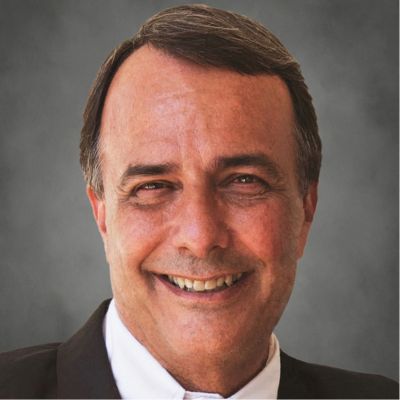
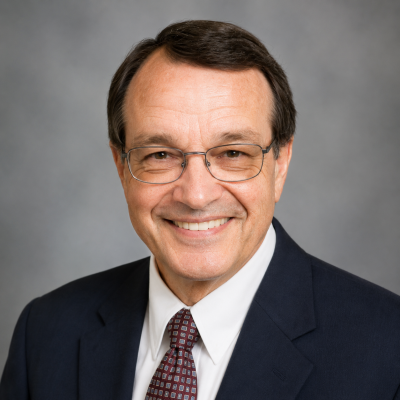
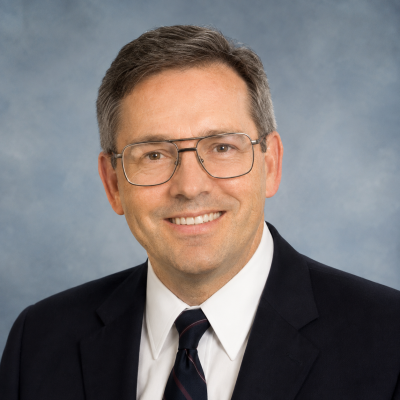
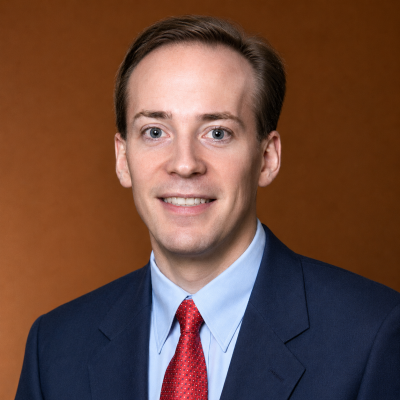
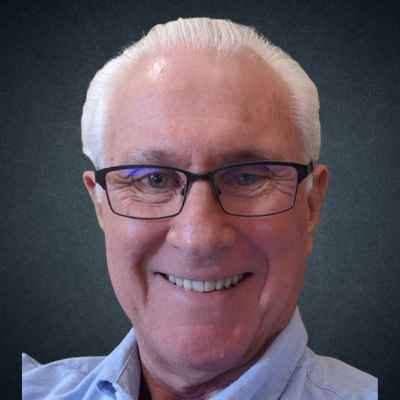
Jeffrey M. Bradshaw, Latter-day Saint scholar and author

Read Jeffrey M. Bradshaw's Statement of Faith ↓

Jeffrey M. Bradshaw is a Senior Research Scientist at the Florida Institute for Human and Machine Cognition (IHMC) in Pensacola, Florida. He graduated from the University of Utah and earned a PhD in Cognitive Science from the University of Washington. His professional writings have explored a wide range of topics in human and machine intelligence, and his career has included research leadership at The Boeing Company and the Fred Hutchinson Cancer Research Center. Jeff has been the recipient of several awards and patents and has been an adviser for initiatives in science, defense, space, industry, and academia worldwide. 1 2

Jeff has written extensively on the Book of Moses, Genesis, and temple themes in the scriptures. His publications include In God’s Image and Likeness, a detailed scholarly commentary on the Book of Moses, and his work has appeared in BYU Studies and other publications. He has presented at FAIR conferences and meetings in the United States and Europe. 3

Jeff was a missionary in France and Belgium from 1975 to 1977, and his family has returned twice to live in France. He and his wife, Kathleen, are the parents of four children and sixteen grandchildren.

From July 2016–September 2019, Jeff and Kathleen served missions in the Democratic Republic of Congo Kinshasa Mission office and the DR Congo Kinshasa Temple. They currently live in Nampa, Idaho.

As a church service missionary for the Church History Department, Jeff is writing histories of temples in the DR Congo and the Republic of the Congo. For The Interpreter Foundation he is working to document the history of the Church in Africa on film. 4

Bio last reviewed:

Contributions at FAIR

Statement of Faith

Jeffrey M. Bradshaw’s statement of faith

I grew up in a loving Mormon home in Salt Lake City, with faithful parents and a close relationship to my brothers and sisters. Books were always important to me. I have loved the scriptures since I was a child, and continued study over the years has given me additional “reason[s] for the hope that is within [me].” 5

In retrospect, I have realized that the relationship between scripture and personal experience operates in both forward and backward directions: not only do the stories of scripture guide daily life but, in addition, what we have lived conditions our understanding of scriptural accounts. This has been especially true for me: it has been through direct participation in repeated experiences of God’s power and help from my childhood that the scriptures have become both intelligible and credible. I like what the Catholic scholar Timothy Luke Johnson 6 says about the immediate nature of the sources for one’s personal conviction of the historical authenticity of New Testament scripture:

For those living in a community where “signs and wonders” done in the name of Jesus are a regular occurrence, hearing of such deeds attributed to Jesus in the Gospel narratives is no surprise or scandal…

For those living in a community where the “Word of the Lord” [is] proclaimed through [men and women of God],… it is no surprise or scandal to hear… words [spoken in the same spirit] attributed to Jesus in the Gospels, for it is the same Jesus who speaks in both places…

For a community that lives in the presence of the resurrected [Christ], it is beside the point to debate whether Jesus “back then” predicted His death and resurrection, for His death and above all His resurrection are confirmed as real precisely by this community that lives by His power [today]. It is equally silly, in this context, to debate whether Jesus “back then” predicted His return, for that return is predicated on His being the living and powerful Lord, and it is in the light of that truth that we await God’s final triumph through Him.

To me, Johnson’s statement rings with authenticity. I know the scriptures are true because I have lived things that mirror, in their own small way, what I read there.

One of the delights of reading is to learn that others before us have felt, thought, and experienced what we ourselves are going through. In Sir Richard Attenborough’s moving semi-biographical film about C. S. Lewis, the Oxford professor meets up with a troubled student whom he had seen stealing a book. The student freely admits that his personal library is filled with pilfered volumes and then adds, defensively, “At least I read them… which is more than most people do”: 7

Lewis: So you read differently to the rest of us, do you?

Whistler: Yes, I do. I read at night. It’s the only thing breaks my concentration. All night sometimes. When I start a new book my hands are shaking. My eyes are jumping ahead . . . Does he feel the way I felt? Does he see what I’ve seen? You know, my father used to say . . . He was a teacher like you. Well, not like you. He was only the village schoolmaster.

Lewis: What was it your father used to say?

Whistler: “We read to know we’re not alone.”

To read the words of God in scripture and then, at times, to hear that same voice within my own soul is a supreme joy. Likewise, the spiritual power I sense in the speech and writings of godly men and women eradicates the isolating barriers of time, culture, and distance, and stirs precious feelings of high communion. Because of what I have read, seen, heard, and experienced over a lifetime, I can say with conviction that the moorings of my faith are as deeply grounded in reality as is my knowledge of the quotidian.

The little study of French I had during elementary and junior high school had put a fear of foreign languages into me, so when it was time to serve a mission, I fervently hoped that I would go to an English-speaking mission. I wanted to share the deepest convictions of my mind and heart with no impediment of expression. Instead, I was called to the Belgium Brussels Mission. I served in three cities in France (Arras, Reims, and Calais) before finishing up in Brussels. Although I didn’t realize my hope of overcoming my American accent, I did learn the language much more quickly than I expected. This reinforced my conviction that the Holy Ghost can enhance every learning experience: guiding us in our search for knowledge, helping us to see and recognize the truth, and bringing all things to our remembrance. 8

There is nothing like being a full-time missionary. I enjoyed immersion in full-time service to a people I learned to love, and was rewarded with wonderful life-long friendships and a strengthened testimony. I have enjoyed frequent visits to France and Belgium in the years since my mission. Our family has lived there twice, all of our children have attended school there, and two of my sons have served French missions. My wife Kathleen valiantly began a lifelong study of the language, in preparation for a future mission together.

After graduating from the University of Utah, and prior to my going to the University of Washington for doctoral studies, my wife and I spent a year at Brigham Young University. I was fortunate to have taken courses from Arthur Henry King that changed the way I read the scriptures. 9 As a research assistant to both Bruce L. Brown and Allen Bergin during that year, I also learned much about how to combine faith and scholarship. Both of these professors were important friends and mentors and, along with others from whom I took courses, provided perspectives I would need for the years of graduate school ahead.

Our family grew to four children during the most intense years of my graduate study. Our small children were a great source of joy to Kathleen and me, and helped me keep my balance and perspective during this time. I was the only married student in my class, and eventually also took on full-time employment, so my situation was very different from that of my peers. In addition, it seemed that every time I found myself poised to take a leap forward on my dissertation research, my church responsibilities would increase. However, in retrospect, I believe that this church service was exactly what I needed to keep my testimony strong and vibrant.

Moreover, had I graduated earlier, the professional opportunities that eventually opened up for me would not have been available. I have learned to appreciate what Elder Neal A. Maxwell once said: “Since faith in the timing of the Lord may be tried, let us learn to say not only, ‘Thy will be done,’ but patiently also, ‘Thy timing be done.’” 10 Sixteen years after we moved to Seattle for graduate study, I finally received my Ph.D in Cognitive Science.

My patriarchal blessing is structured in an unusually linear fashion, which has been a help to me as I have looked to it for guidance. Receiving that blessing was a beautiful and intense experience—it seemed as if a window opened up into eternity as I not only heard, but also, in a way that is difficult to describe, saw and sensed the import of the words that were spoken.

I review my blessing the first Sunday of each month, and it is always obvious which paragraph is most relevant to my current situation. I have tried not only to avoid things that would be inconsistent with the path it marks out, but also to actively seek ways I could help transform its promises into reality. For example, the blessing has helped motivate our efforts to maintain close ties to France and Belgium throughout the years; and has recently made writing on gospel topics a daily priority.

Prayer and priesthood blessings have also been an essential part of the choices Kathleen and I have made at critical junctures in our life. For example, the decision to change the focus of my graduate studies from clinical psychology to cognitive science was confirmed in a blessing from a choice friend, and I received needed reassurance about our first family move to France in a blessing from my father.

Major moves have been undertaken and minor crises have been averted because of spiritual impressions received in the course of prayerful discussions with trusted friends and family. The disaster of losing our home in Hurricane Ivan was transformed into a blessing because of guidance received through unexpected spiritual promptings.

During my daily work at the Institute for Human and Machine Cognition, I’m caught up in creating new science and technology ideas to complement human physical, cognitive, and social capabilities. It’s a dream job, and I wouldn’t want to trade places with anyone I know. However, it’s a challenge in the sense that I can’t stand still. Although it’s true that every innovation builds to a degree on the past, the pace of change is so rapid that I am constantly occupied with throwing away the results of recent efforts to accommodate new and better ones.

In addition to the obvious spiritual enrichment that I find in the study of the scriptures, it is wonderful and satisfying to work on something where knowledge is much more cumulative than in my daily work. Though, of course, there are exciting new findings that appear every day in scholarship on ancient scripture studies, I can have the sense over time of continually building up a deeper understanding of God’s outlook on the human situation. Complementing the keys that come from study are those that come from faith, as I relate the spiritual experiences of the past to divine guidance and teachings in the immediate context of my own life.

I like what Donald Knuth, a well-known computer scientist when I was younger, wrote in the preface to his book of Bible commentary: “I can’t say that my scientific background makes me a better Bible student, but I don’t think it’s a handicap either.” 11 The apostle Paul advocated a very empirical approach to spiritual things: “Prove [i.e., examine, put to the test] all things; hold fast that which is good.” 12 I feel greatly blessed to have been raised in a Church that values truth and goodness, and that, because of its unique status in being led by modern revelation, does not have any reason to fear the bright light of close examination.

There are many simple things that add to my faith. For example, Kathleen and I never would have discovered on our own the many little things we did on a daily basis that have contributed to the happiness of our family. These things we learned from Church friends and classes, and from spiritual intuitions relevant to our own specific needs. I enjoy rubbing shoulders with people in the Church, and our long involvement with missionary work has repeatedly demonstrated that living the Gospel makes each of us better and happier people. The vehicle of church service affords unparalleled opportunities to extend what we have learned to bless the lives of members and non-members.

Though I don’t want to minimize the many serious problems in the world that seem to be aggravating daily, what I have experienced of the goodness of God over a lifetime has, to my own surprise, given me a feeling of increasing optimism. Richard L. Bushman insightfully observed that for Joseph Smith, knowledge was not only a source of power and salvation 13 but also of comfort. 14

It is the same for me. Said the Prophet on one occasion, “I am glad I have the privilege of communicating to you some things which if grasped closely will be a help to you when the clouds are gathering and the storms are ready to burst upon you like peals of thunder. Lay hold of these things and let not your knees tremble, nor hearts faint.” 15 The Gospel is the source of my strength, my joy, and my hope for a better life here and hereafter.
— September 2010

Call for Papers | 2027 FAIR Virtual Conference

FAIR VIRTUAL CONFERENCE · 2027
Call for Papers

A Light in the Wilderness

The Book of Mormon and Other Scripture
October 7–9, 2027 · Online

Submit a Proposal↓

Call for Papers

FAIR invites proposals for its fifth virtual conference, exploring the wilderness in the Book of Mormon and other scripture through historical, literary, theological, comparative, and apologetic inquiry.

Submit a Proposal ↓

View Submission Guidelines ↓

- Abstracts due February 28, 2027 -

THE 2027 THEME

The wilderness is more than a setting.

The Book of Mormon and Other Scripture

Across scripture, the wilderness is a place of testing and conflict, revelation and covenant, encounter and deliverance. It can be landscape, symbol, memory, literary structure, theological image, and sacred space.

A Light in the Wilderness invites scholars and researchers to explore these dimensions in the Book of Mormon and other scripture—individually, comparatively, and within the larger traditions through which scripture has been received and understood.

Proposals may focus on the Book of Mormon, the Bible, Restoration scripture, or relationships among them. Studies of ancient contexts, reception and interpretation, and the influence of wilderness traditions on Latter-day Saint thought and experience are also welcome.

We welcome original research, fresh perspectives, and questions

that expand the possibilities of the theme.

SCHOLARSHIP IN THE SERVICE OF FAITH

Rigorous inquiry. Faithful engagement.

In keeping with FAIR’s mission to create conditions where faith in Jesus Christ and His gospel can flourish, the conference brings scholarly inquiry into conversation with the understanding and defense of Latter-day Saint faith.

Contributions may address questions or criticisms, offer positive arguments, illuminate neglected texts, or develop interpretations that deepen appreciation of scripture and its witness of Jesus Christ.

Presentations should be accessible to an engaged general audience while maintaining scholarly rigor.

Where might the theme lead?

These suggestions are starting points, not boundaries.

Wilderness & Narrative

Book of Mormon and other scriptural wilderness narratives and imagery

Ancient Contexts

Historical, geographical, archaeological, and cultural contexts

Literary & Textual Studies

Literary, textual, intertextual, and comparative approaches

Revelation & Covenant

Prophecy, covenant, divine encounter, testing, and sacred space

Christ & Deliverance

Jesus Christ, redemption, exile, rescue, and deliverance

Apologetics

Responses to criticisms involving scriptural wilderness accounts

Ancient Traditions

Wilderness themes in ancient Jewish and Christian writings

Restoration Connections

Latter-day Saint history, doctrine, scripture, and experience

Faith Today

What wilderness narratives contribute to contemporary faith and apologetics

Have another approach? We hope you’ll propose it. Contributors are encouraged to define their own questions, methods, and arguments.

Submit your Proposal

What to include

The Book of Mormon and Other Scripture
  • Working title
    A proposed title for your presentation.
  • Abstract · 250–350 words
    Clearly identify your central question or argument, principal sources or approach, and contribution to the conference theme.
  • Presenter biography · up to 100 words
    Include your institutional or professional affiliation, if applicable, and one or two relevant publications or areas of research.
  • Email address
    Please provide the address you would like FAIR to use for all conference correspondence.

Proposal submission form coming soon.

Submission Deadline

February 28, 2027

Questions? Contact [email protected]

Submit your proposal
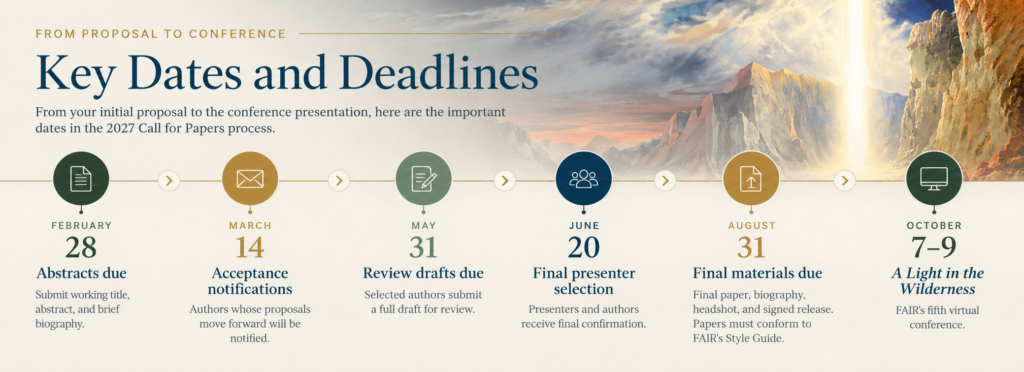
a timeline of due dates for the FAIR 2027 virtual conference
Preparing a FAIR paper?

Accepted papers must follow FAIR’s Style Guide. Authors are encouraged to review the guide early, particularly when preparing citations and references.

DOWNLOAD FAIR STYLE GUIDE →
FAIR VIRTUAL CONFERENCE · OCTOBER 7–9, 2027

Bring your question to the wilderness.

The Book of Mormon and Other Scripture

We welcome thoughtful scholarship that helps readers see scripture more clearly, engage difficult questions seriously, and better understand its witness of Jesus Christ.

Questions about the Call for Papers? Contact [email protected]

Brant A. Gardner

Brant A. Gardner

Book of Mormon Scholar • Mesoamericanist • FAIR Conference Speaker

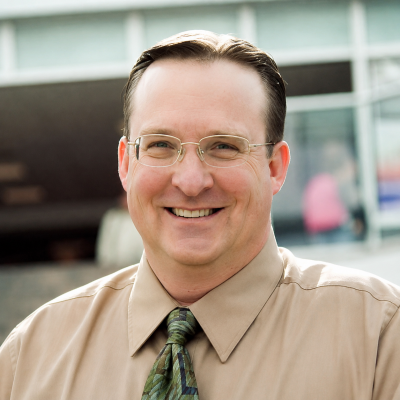
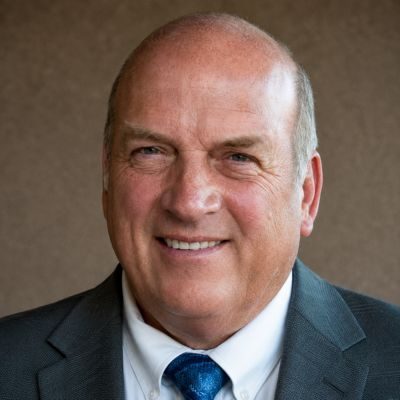
Brant A. Gardner, Book of Mormon scholar and FAIR Conference speaker

Read Brant Gardner's statement of faith ↓

Brant A. Gardner received a master’s degree in anthropology from the State University of New York at Albany, specializing in Mesoamerican ethnohistory. His work has focused particularly on reading the Book of Mormon in its historical, cultural, and literary contexts, with special attention to ancient Mesoamerica.

Gardner is the author of Second Witness: Analytical and Contextual Commentary on the Book of Mormon, Traditions of the Fathers: The Book of Mormon as History, The Gift and Power: Translating the Book of Mormon, Engraven Upon Plates, Printed Upon Paper: Textual and Narrative Structures of the Book of Mormon, and The Plates of Mormon: A Book of Mormon Study Edition Based on Textual and Narrative Structures in the English Translation, published by Kofford Books.

Gardner has also been a longtime contributor to Latter-day Saint scholarship and apologetics and has presented multiple times at the FAIR Conference. His research brings together anthropology, Mesoamerican ethnohistory, textual analysis, and close reading of the Book of Mormon to explore questions of translation, historicity, culture, and the structure of the text.

Bio last reviewed:

Contributions at FAIR

Testimony

Brant A. Gardner’s statement of faith

Books have typically defined both my intellectual and religious life. In my very early teens a relative gave me a book surveying world archaeology, and from that time some tie to antiquity formed in my soul and brain and eventually dictated my selection of graduate studies. That fondness for archaeology and ancient history began to intermingle with my understanding and testimony of the Book of Mormon when I found Thomas S. Ferguson’s One Fold, One Shepherd among my father’s books. From the time I first picked it up, my interests in the gospel and in archaeology had fused. My father never got the book back.

I took that excitement about the Book of Mormon and archaeology with me on my mission in Spain. When I returned, the excitement still burned brightly enough that I decided that I should take my new fluency in Spanish to the chronicles that surely supported everything in the Book of Mormon. I wanted to be able to say that I knew that they were true because I had read the sources and they said just that. I did: They didn’t. I didn’t lose any faith in the Book of Mormon, but I certainly lost faith in LDS writers who opined about New World history and the Book of Mormon (including One Fold, One Shepherd). By the early 1970s, I resigned myself to the role of gadfly, poking at the obvious problems with the armchair archaeologists and their misuse of information relative to the Book of Mormon. Then I met John Sorenson.

Dr. Sorenson allowed me to vent about the problems that were obvious in the way LDS writers had attempted to use archaeology and history in support of the Book of Mormon. His response was to give me a manuscript (about a decade before it was published as An Ancient American Setting for the Book of Mormon). At that time, my mental picture of Nephites and Lamanites vacillated between movie depictions of ancient Jerusalem and the Romans-from-an-alternate-universe depictions of Arnold Friberg. Sorenson painted a picture that comfortably placed the Book of Mormon in Mesoamerica. I didn’t, and don’t, agree with all of Sorenson’s analyses, but he gave me a context in which for the first time I could see how the Book of Mormon could plausibly fit into a real place and time.

Nevertheless, the Book of Mormon took a distant back seat to the exciting world of Mesoamerican studies. However, while doing some fieldwork in Guatemala, all of the note cards I had amassed towards a dissertation were stolen. In the days of typewriters rather than computers, there were no backups. Lost was lost. Right at the point where all that remained was the final examination and the dissertation, that disheartening loss and our economic realities led my wife and me to decide that I should stop my program for a year and earn some money to get us on our feet. It has been a very, very, long year.

While concentrating on trying to find a way to support and raise a family, interests in Mesoamerica lingered in my reading. Eventually, it was the Internet that provided the impetus to reintegrate my academic interests and love for the Book of Mormon. While participating on a fascinating email list, the owner/moderator of the list asked if I would be willing to write a weekly column. I remembered James Faulconer‘s book entitled Scripture Study: Tools and Suggestions (FARMS, 1999). Faulconer suggested that one might go through the scriptures slowly and to ask lots of questions of them. Having read several scholarly commentaries on books of the Bible, I keenly felt the lack of a similarly scholarly and comprehensive commentary for the Book of Mormon. I agreed to do the article as an ongoing commentary on the Book of Mormon that would go slowly so as to be able to ask lots of questions of the text.

It has been a fascinating project and in some ways a blind leap of faith. Considering my background in Mesoamerican religious ethnohistory and Sorenson’s foundational work, I determined to read the text against a Mesoamerican historical and cultural background. When I started, I didn’t know if it would work, but I began as though it would. I soon found that whenever I attempted to look ahead I was going to be wrong. I had to plug along a verse at a time.

It was not so much a process of fitting the Book of Mormon into a Mesoamerican setting as it was the text opening my eyes to the world in which it was written. The authors had to tell me their story; I couldn’t impose one on them. Why did the people in the Book of Mormon have the specific problems they had? Why did Nephite apostasy always take a very similar form? Why was victory defined so differently from my understanding of European history? Why did some faith-promoting stories in the text make so little sense if you looked at the story carefully?

The authors seemed to patiently explain how their particular culture at their particular time provided the background that seemed to naturally answer such questions. Of course, I mean that metaphorically. The text, seen through the plodding and gradual travel through time and space, was not only a different kind of fit than I had imagined, it was a better one.

The Book of Mormon is very different from what I read as a teenager or even as a young father. The text is the same, but now I read about some of my best friends. They were real people with real lives, real problems, and, perhaps best of all, real solutions. Even after the commentary was published, the Book of Mormon keeps reminding me that there is even more to its story. I had thought I would have finished, but it seems that there is still more to understand. The Book of Mormon has become richer, more nuanced, more understandable—yet no more true.

The Book that Mormon created was written by a very human man. It was translated by a very human man. Nevertheless, both Mormon and Joseph were touched by the divine, and it is the divine that shines in and through the text. It makes so much more sense to my mind as I understand it against history. The divine in it continues to make sense to my heart.

It always did. It always will.

February 2011

August 2006 FAIR Conference

FAIR CONFERENCE ARCHIVE · 2006

2006 FAIR Conference

Annual FAIR Conference · August 2006

The 2006 FAIR Conference brought together Latter-day Saint scholars and researchers to address questions about the Book of Mormon, Book of Abraham, Joseph Smith, DNA, plural marriage, anti-Mormonism, and other topics in Latter-day Saint history and apologetics. Browse the conference presentations below, with available transcripts, speaker information, and related resources.

Conference Presentations

2006 Wayne Arnett headshot

Apologetics 101

Wayne Arnett

Wayne Arnett introduces the principles of Latter-day Saint apologetics, exploring how thoughtful, informed responses to questions and criticism can strengthen faith. Drawing on scripture and practical examples, he emphasizes defending religious beliefs with knowledge, compassion, and an understanding of available resources.

Read & Watch Presentation →

mike-ash-fair-conference-2006.jpg

Book of Abraham 201: Papyri, Revelation and Modern Egyptology

Michael R. Ash

Michael R. Ash examines criticisms of the Book of Abraham involving the Joseph Smith Papyri, the Egyptian facsimiles, and modern Egyptology. He explores the distinction between ancient texts and surviving manuscripts, considers alternative explanations for the translation process, and identifies parallels with ancient Abrahamic traditions that may support the book’s antiquity.

Read & Watch Presentation →

2006 Joseph I. Bentley headshot

Legal Trials of the Prophet: Joseph Smith’s Life in Court

Joseph I. Bentley

Joseph I. Bentley examines the numerous legal proceedings involving Joseph Smith throughout his ministry, drawing on court records and historical research. Tracing cases from New York and Ohio through Missouri and Illinois, he explores how persistent litigation, religious opposition, and failures of legal protection shaped Joseph Smith’s life and ultimately contributed to his martyrdom.

Read & Watch Presentation →

2006 Matthew Brown headshot

Revised or Unaltered? Joseph Smith’s Foundational Stories

Matthew B. Brown

Matthew B. Brown examines claims that Joseph Smith revised his accounts of the Book of Mormon’s origins and the First Vision over time. Drawing on early eyewitness testimony, historical documents, and comparisons of Joseph Smith’s narratives, he argues that differences between accounts do not necessarily indicate fabrication or evolving beliefs.

Read & Watch Presentation →

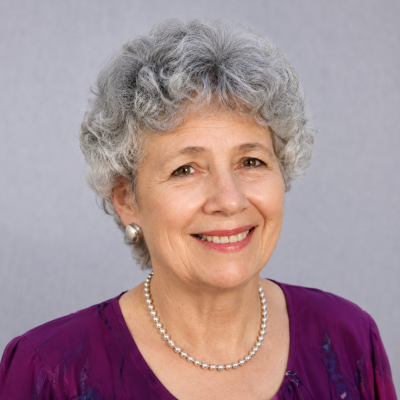
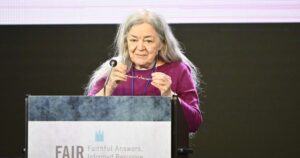
Historian Claudia Bushman, scholar of Latter-day Saint women’s history

The Lives of Mormon Women

Claudia L. Bushman

Claudia L. Bushman examines the experiences, contributions, and challenges of Latter-day Saint women, exploring their roles in Church leadership, family life, education, and community. She considers questions of gender, feminism, and institutional expectations while encouraging women to develop their talents, strengthen their relationships, and actively shape their religious lives.

Read & Watch Presentation →

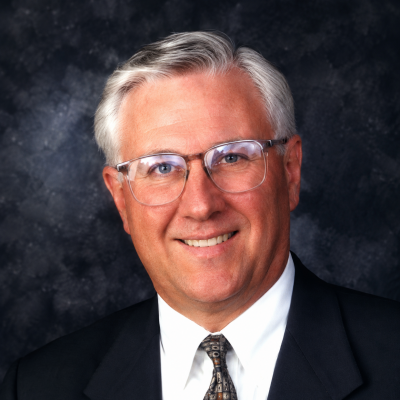
2006 Brant Gardner headshot

Defenders of the Book: Surveying the New World Evidence for Book of Mormon Historicity

Brant A. Gardner

Brant A. Gardner examines geographic, chronological, cultural, and political connections between the Book of Mormon and ancient Mesoamerica. Rather than relying on isolated parallels, he advocates evaluating multiple lines of converging evidence, arguing that their combined patterns offer a stronger historical framework for understanding the Book of Mormon and its ancient setting.

Read & Watch Presentation →

2006 Brian Hauglid headshot

Investigating the Kirtland Egyptian Papers

Brian M. Hauglid

Brian M. Hauglid investigates the Kirtland Egyptian Papers, a collection of manuscripts associated with Joseph Smith and the Book of Abraham. Distinguishing between Abraham manuscripts and Egyptian language documents, he examines their scribes, dating, organization, and textual relationships, highlighting the complexities of reconstructing their origins and historical development.

Read & Watch Presentation →

marcus-martins-fair-conference-2006.jpg

A Black Man in Zion: Reflections on Race in the Restored Gospel

Marcus H. Martins

Drawing on his experiences as a Black Latter-day Saint, Marcus H. Martins reflects on race, the historical priesthood restriction, and the 1978 revelation. He distinguishes enduring gospel principles from historical policies and racial explanations, acknowledging past injustices while emphasizing faith, spiritual blessings, and the Church’s growing global inclusiveness.

Read & Watch Presentation →

steve-mayfield-fair-conference-2006.jpg

Mythmaking and the Hofmann Case – Salamander Letters

Steven L. Mayfield

Steven Mayfield examines persistent myths surrounding Mark Hofmann’s forgeries, challenging claims about Church involvement, document suppression, and the criminal investigation. Drawing on historical records and firsthand accounts, he emphasizes careful source evaluation. Forensic document examiner George Throckmorton adds insights into the investigation and the challenges of identifying Hofmann’s forgeries.

Read & Watch Presentation →

2006 Kim Östman headshot

An International Perspective: Opposition to Mormonism in Finland 1845-2006

Kim Östman

Kim Östman traces opposition to The Church of Jesus Christ of Latter-day Saints in Finland from 1845 to 2006. Drawing on historical publications, missionary experiences, and public controversies, he examines how religious criticism, political suspicion, and anticult movements shaped Finnish perceptions of Latter-day Saints across changing historical and cultural circumstances.

Read & Watch Presentation →

2006 David Stewart headshot

DNA and the Book of Mormon

David G. Stewart

David G. Stewart Jr. examines genetic research concerning Native American ancestry and its implications for the Book of Mormon. Addressing mitochondrial DNA, Y-chromosome markers, and population history, he challenges claims that genetic evidence disproves Israelite ancestry, arguing that modern DNA comparisons cannot definitively establish the origins of ancient populations.

Read & Watch Presentation →

brian-stubbs-fair-conference-2006.jpg

A Few Hundred Hints of Egyptian and Northwest Semitic in Uto-Aztecan

Brian Stubbs

Brian D. Stubbs examines proposed linguistic connections between Uto-Aztecan languages and ancient Hebrew and Egyptian. Drawing on vocabulary, grammatical structures, and recurring sound correspondences, he presents evidence he believes suggests ancient language contact in the Americas, with potential implications for the Book of Mormon’s historical setting.

Read & Watch Presentation →

george-throckmorton-fair-conference-2006.jpg

Mythmaking and the Hofmann Case – Salamander Letters

George Throckmorton

Forensic document examiner George Throckmorton shares firsthand insights from the Mark Hofmann investigation, explaining the challenges of detecting sophisticated historical forgeries. Drawing on sixteen months of investigative work, he discusses document authentication, Hofmann’s methods, and misconceptions surrounding the case, emphasizing the importance of careful forensic analysis and reliable evidence.

Read & Watch Presentation →

2006 Allen Wyatt headshot

Zina and Her Men: An Examination of the Changing Marital State of Zina Diantha Huntington Jacobs Smith Young

Allen L. Wyatt

Allen L. Wyatt examines Zina Diantha Huntington’s complex marital relationships with Henry Jacobs, Joseph Smith, and Brigham Young during the 1840s. Drawing on historical records and personal accounts, he challenges common interpretations of her marriages and sealings, emphasizing Zina’s religious convictions, personal agency, and the historical circumstances surrounding her decisions.

Read & Watch Presentation →

Original 2006 FAIR Conference Schedule & Information

The following information preserves the original 2006 FAIR Conference program, including its schedule and event details, for historical reference. Event, registration, hotel, and contact information reflects the original 2006 conference and is no longer current.

The Foundation for Apologetic Information & Research (FAIR)
is pleased to announce the
Eighth Annual Mormon Apologetics Conference
August 3–4, 2006
South Towne Exposition Center
Sandy, Utah

Description

Every day seems to bring new attempts by the Church's critics to denigrate its divine mission. From the efforts of professional anti-Mormon ministries to a whole new generation of critics, the efforts of the naysayers seem to continue unabashed. This year's FAIR Conference is geared toward providing the information and answers you need to deal with a variety of interesting topics. Don't miss this conference!

This year's speakers will address wide-ranging topics sure to please every interest. We invite you to join us for a frank, thought-provoking, faith-building, and enjoyable experience. In past years, people have traveled from as far as England, Saudi Arabia, Australia, and New Zealand just to come to the FAIR conferences. Come see what the excitement is all about!

— Scott Gordon
President of FAIR

Location

This year's conference will be held at:

South Towne Exposition Center
9575 South State Street
Sandy, Utah 84070

Speakers

Speakers slated for the conference included Wayne Arnett, Mike Ash, Joseph Bentley, Matthew Brown, Claudia Bushman, Brant Gardner, Brian Hauglid, Marcus Martins, Steve Mayfield, Kim Östman, Dan Peterson, Matt Roper, David Stewart, Brian Stubbs, George Throckmorton, and Allen Wyatt.

Topics included the Book of Abraham, Joseph Smith, linguistic evidence for the Book of Mormon, international anti-Mormonism, early polygamy and polyandry, the Mark Hofmann forgeries, DNA and the Book of Mormon, and much more.

Schedule

General conference sessions began at either 8:00 am or 9:00 am each day and ended at 5:45 pm. Registration was available before the first session each day. Dress was business casual.

Thursday, August 3, 2006

Time Speaker / Event
8:00 amRegistration
9:00 amOpening
9:10 amMike Ash
10:10 amGeorge Throckmorton and Steve Mayfield
11:10 amBrian Stubbs
12:10 pmLunch
1:30 pmMarcus Martins
2:30 pmKim Östman
3:30 pmSnack Break
3:45 pmMatt Roper
4:45 pmJoseph Bentley
5:45 pmClosing

Friday, August 4, 2006

Time Speaker / Event
7:45 amRegistration
8:00 amOpening
8:05 amWayne Arnett
9:00 amDavid Stewart
10:00 amMatthew Brown
11:00 amBrant Gardner
12:10 pmLunch
1:30 pmClaudia Bushman
2:30 pmAllen Wyatt
3:30 pmSnack Break
3:45 pmBrian Hauglid
4:45 pmDaniel Peterson
5:45 pmClosing

Publicity

FAIR is a grass-roots organization, and we need your help to spread the word about our conference. Tell your friends and neighbors to visit our Web site and learn about the conference. If you'd like, you can download and print this poster about the conference. You could then give it to friends or, with permission, post it on your ward bulletin board or have it distributed with your ward newsletter.

Hotel

The official hotel for the FAIR Conference was the Best Western Cottontree, just minutes away from the South Towne Exposition Center. Rooms were available for $72 per night, including high-speed wireless Internet access, breakfast, and free shuttle service to the conference. The special FAIR Conference room rate was available through July 21, 2006.

Best Western Cottontree
10695 South Auto Mall Drive
Sandy, UT 84070
801-523-8484

Reservations were available by calling 800-662-6886 and requesting a FAIR Conference room or using confirmation number 901249.

Important Registration Notices

Seating was "first-come, first-served," and advance reservations were recommended.

Lunch was not available for registrations made after July 31, 2006, or at the door. Attendees who wanted the catered lunches were asked to register before August 1.

Because FAIR made commitments and allocated resources based on expected attendance, refunds for conference fees were not available after July 31, 2006.

Previous Conference Presentations

FAIR has preserved presentations from previous conferences in the FAIR Conference Archive.

FAIR Conference – Home

FAIR’S FLAGSHIP ANNUAL CONFERENCE

The FAIR Conference

For more than 25 years, the FAIR Conference has brought together scholars, researchers, authors, and thoughtful Latter-day Saints to explore questions of faith, scripture, history, doctrine, and the Restoration.

Faithful scholarship. Serious questions. Meaningful conversation.

Explore the 2026 Conference
Browse the Conference Archive

EST. 1999 | 25+ YEARS | HUNDREDS OF PRESENTATIONS | FAITH • SCHOLARSHIP • COMMUNITY

LATEST CONFERENCE · 2026

Explore the 2026 FAIR Conference

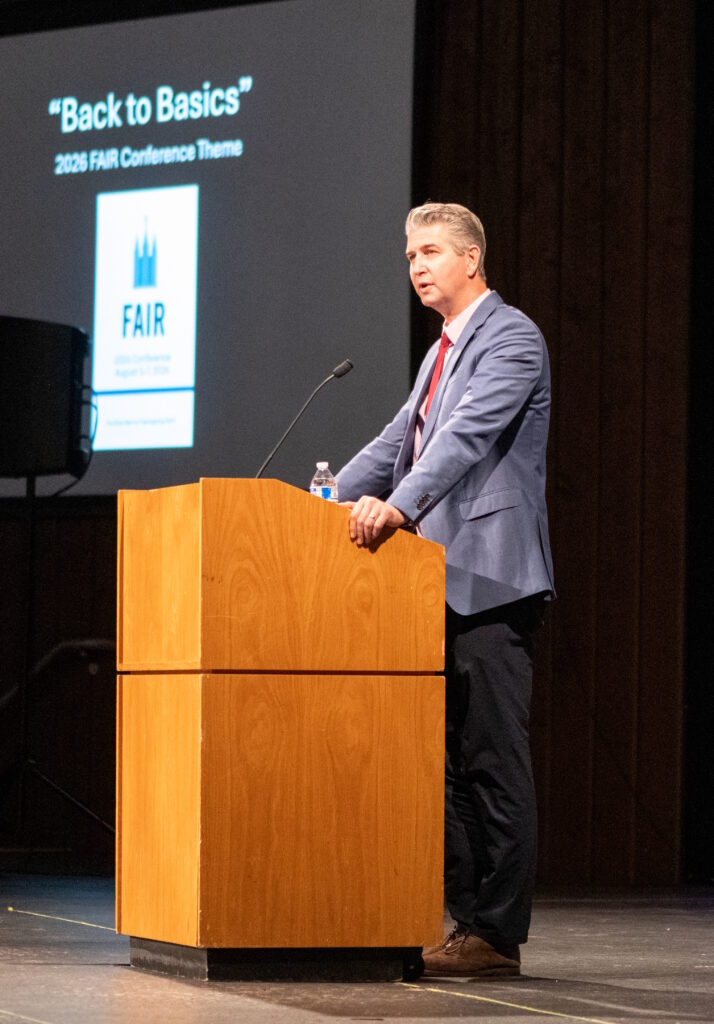
August 5–7, 2026 · Thanksgiving Point · Lehi, Utah

The 2026 FAIR Conference brought together scholars, researchers, authors, and Latter-day Saints for three days of presentations exploring scripture, Church history, doctrine, apologetics, and questions facing members of the Church today.

EXPLORE THE 2026 CONFERENCE →

THE FAIR CONFERENCE ARCHIVE

More Than 25 Years of Faithful Scholarship

Since 1999, the FAIR Conference has brought together scholars, historians, researchers, authors, and other thoughtful voices to explore Latter-day Saint scripture, history, doctrine, culture, and questions of faith.


Today, those presentations form an extensive archive of faithful scholarship—

available to watch, read, study, and explore.

Explore by Year

Dan Peterson speaking at the 2025 FAIR Conference

2025 FAIR Conference

EXPLORE →

2024 FAIR Conference

EXPLORE →

LaJean Carruth speaking at the 2023 FAIR Conference

2023 FAIR Conference

EXPLORE →

2022 FAIR Conference

EXPLORE →

Keith Erekson speaking at the 2021 FAIR Conference

2021 FAIR Conference

EXPLORE →

Jennifer Roach speaking at the 2020 FAIR Conference

2020 FAIR Conference

EXPLORE →

Earlier FAIR Conferences

Explore presentations from earlier FAIR Conferences, beginning with FAIR’s first conference in 1999.

2019–2015

Explore five years of FAIR Conference presentations →

2014–2010

Explore FAIR Conference presentations from 2010–2014 →

2009–2005

Explore FAIR Conference presentations from 2005–2009 →

2004–1999

Explore FAIR’s earliest conference presentations →

EXPLORE THE ARCHIVE

Conference Scholarship by Topic

Looking for a particular subject rather than a particular year?

Explore FAIR Conference presentations across decades of scholarship on Latter-day Saint scripture, history, doctrine, and questions of faith.

Book of Mormon

Evidence, translation, history, scripture, and ancient context

Explore presentations →

Temples

Temple worship, ordinances, symbolism, covenants, and ancient parallels

Explore presentations →

Joseph Smith

History, translation, revelation, the First Vision, and the Restoration

Explore presentations →

Science & Religion

Science, archaeology, DNA, creation, and questions of faith


Explore presentations →

Church History

Restoration history, people, events, controversies, and historical context

Explore presentations →

Apologetics

Evidence, methodology, reasoning, criticism, and faithful response

Explore presentations →

Scripture Study

Old and New Testaments, Book of Mormon, Restoration scripture, and interpretation

Explore presentations →

Theological Issues

Doctrine, revelation, grace, salvation, covenants, and Latter-day Saint thought

Explore presentations →

Explore FAIR Events

More Ways to Connect With FAIR

From our annual conference to focused online gatherings and special events, FAIR offers opportunities to learn, connect, and explore faithful scholarship.

You Are Here

Annual FAIR Conference

FAIR’s flagship annual gathering for faithful scholarship, apologetics, and thoughtful conversation.

Virtual Conferences

Focused online conferences exploring scripture, history, doctrine, and questions of faith.

EXPLORE VIRTUAL CONFERENCES →

Special Events

Regional, international, and one-of-a-kind FAIR gatherings for audiences around the world.

EXPLORE SPECIAL EVENTS →

Primary Sidebar

Faithful Study Resources for Come, Follow Me

Subscribe to Blog

Enter your email address:

Subscribe to Podcast

Podcast icon
Subscribe to podcast in iTunes
Subscribe to podcast elsewhere
Listen with FAIR app
Android app on Google Play Download on the App Store

Pages

  • Blog Guidelines

FAIR Latest

  • Come, Follow Me with FAIR – Isaiah 58–66 – Jennifer Roach Lees
  • Come, Follow Me with FAIR – Isaiah 58–66 – Part 1 – Autumn Dickson
  • Jesus Lives to Lift
  • Come, Follow Me with FAIR – Isaiah 50–57 – Part 2 – Autumn Dickson
  • Come, Follow Me with FAIR – Isaiah 50–57 – Jennifer Roach Lees

Blog Categories

Recent Comments

  • Willie Louise Truitt on The Joy of a Covenant Relationship with God
  • Katrina on In memory of Chandler “Chuck” Hendry
  • Nancy Farmer on Come, Follow Me with FAIR – Psalms 49–51; 61–66; 69–72; 77–78; 85–86 – Part 1 – Autumn Dickson
  • Nicko De Leon on In memory of Chandler “Chuck” Hendry
  • Becky Matson on In memory of Chandler “Chuck” Hendry

Archives

Follow Us

  • Facebook
  • Twitter
  • iTunes
  • YouTube
Android app on Google Play Download on the App Store

Footer

FairMormon Logo

FAIR is a non-profit organization dedicated to providing well-documented answers to criticisms of the doctrine, practice, and history of The Church of Jesus Christ of Latter-day Saints.

Donate to FAIR

We are a volunteer organization. We invite you to give back.

Donate Now

Site Footer

The use of the temple in past and current logos and the name "Mormon" are licensed for use by The Church of Jesus Christ of Latter-day Saints.