
In his October 2025 General Conference address, “Jesus Christ and Your New Beginning,” Elder Patrick Kearon testified of a foundational gospel truth: through Jesus Christ, new beginnings are always possible. He speaks directly to those who feel worn down by repeated failure, long absence, or discouragement, and who quietly wonder whether they have moved beyond the reach of real change.
Rather than treating repentance as fragile or conditional, Elder Kearon teaches that the Savior’s power to renew is constant. Christ does not merely forgive the past; He helps us move forward with hope.
Have you gone too far from Christ for Him to help you write a new story from here on out? No.
This declaration reframes how we understand repentance, discipleship, and our willingness to turn to the Savior again.

Common Criticism: “Some believe new beginnings are limited—that repeated failure, distance from covenants, or ongoing weakness eventually disqualifies them from real change.”
This belief often develops quietly. After repeated struggles or long seasons of spiritual distance, individuals may assume they have exhausted heaven’s patience. Repentance can begin to feel fragile—available once or twice, but not indefinitely. Over time, hope gives way to resignation.
Fallacy at Work: Scarcity of Grace
This mindset treats grace as a diminishing resource rather than an expression of Christ’s infinite Atonement. It assumes that mercy weakens with repetition and that divine patience eventually runs out. In doing so, it shifts trust away from the Savior’s power and places it on personal performance.
Elder Kearon’s Correction: New Beginnings Are Central to the Gospel
Elder Kearon teaches that repeated new beginnings are not a loophole in the gospel—they are its design. The Savior’s invitation to come unto Him is extended precisely because we are imperfect. Jesus Christ is not surprised by weakness, nor discouraged by repetition. His power to heal and renew does not diminish.
Resolving this Fallacy: When disciples believe new beginnings are limited, they hesitate to turn toward Christ. When they trust the Savior’s willingness to begin again with them, they move forward with hope. The gospel is not about preserving a flawless past; it is about stepping into a redeemed future—again and again.
Living Apologetics: The Courage to Begin Again
One of the most persistent misunderstandings about discipleship is the belief that repeated repentance signals failure. Elder Kearon gently corrects this by showing that beginning again is not evidence of weakness—it is evidence of faith in Jesus Christ.
This teaching speaks to those who wonder:
- “Why try again if I keep falling short?”
- “What’s the point of returning if I’ve already failed?”
The answer is not found in self-confidence, but in trust in the Savior.
Practical Apologetic Use
- If someone says: “I’ve already had too many new beginnings.”
- You can respond: “Elder Kearon teaches that no one goes too far from Christ to begin again. Repeated turning is not failure—it’s faith.”
Ways to Apply Today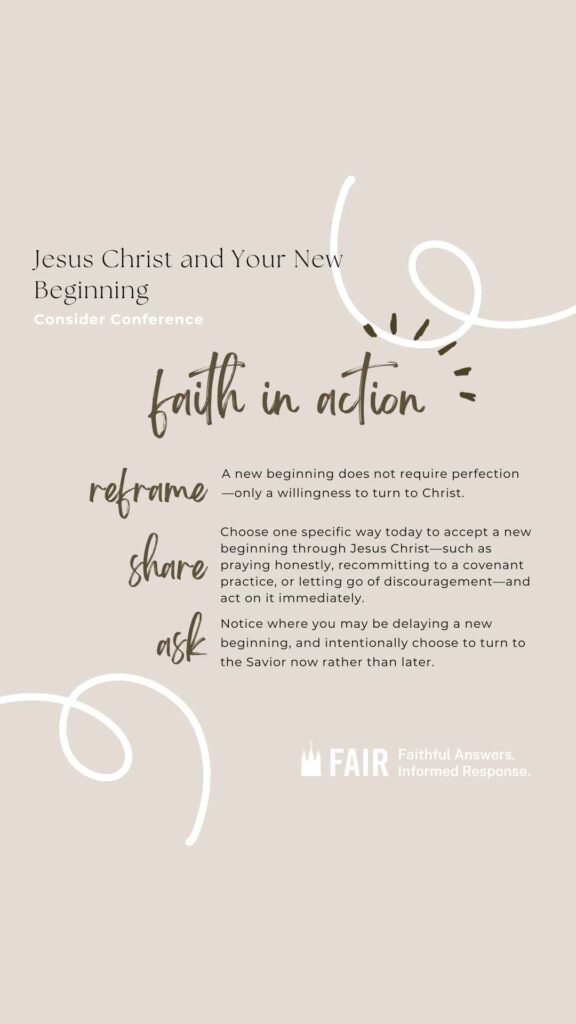
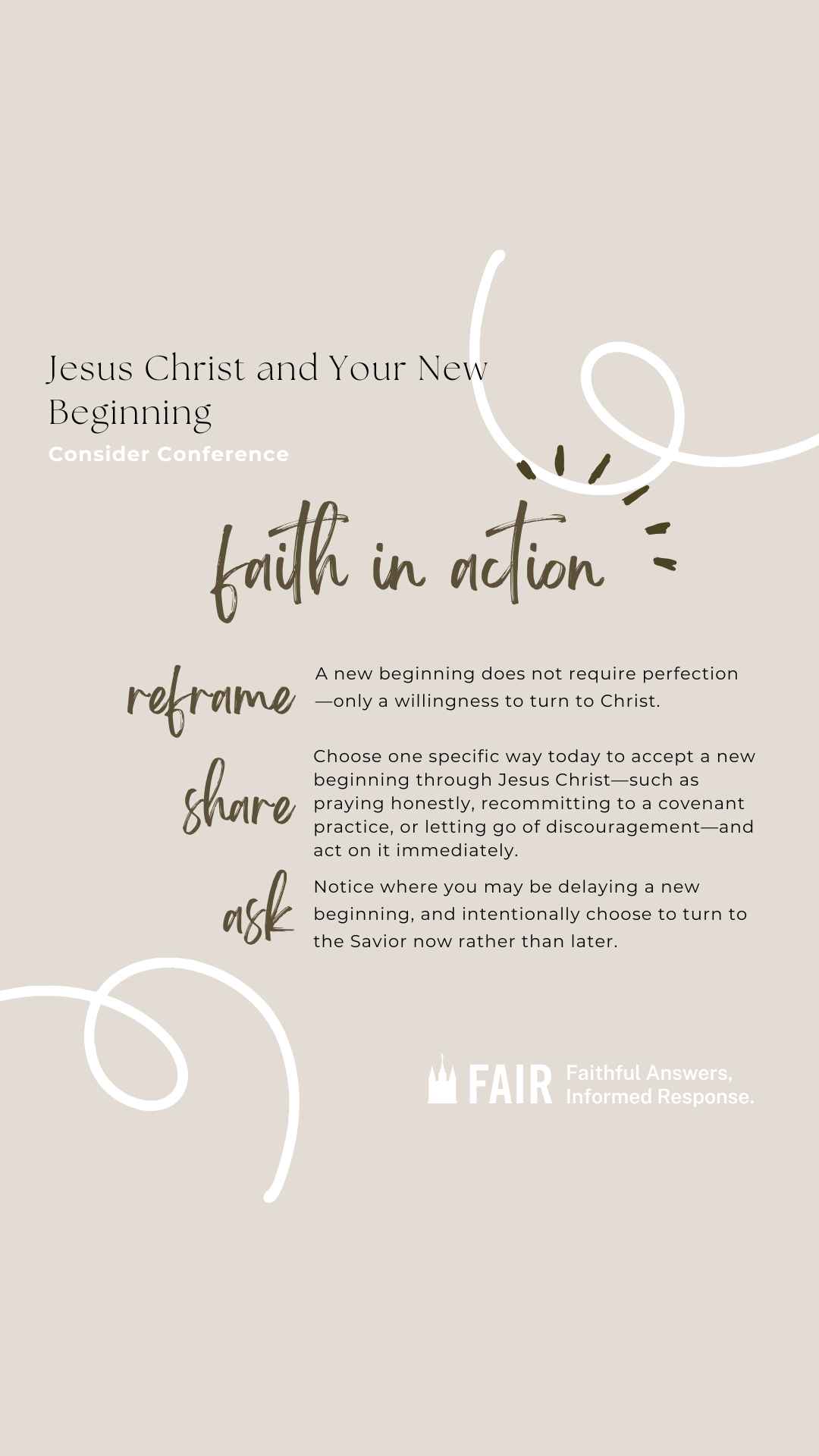
1️⃣ Identify one place where discouragement has replaced hope.
2️⃣ Choose to begin again today, without waiting for ideal conditions.
3️⃣ Trust Christ’s willingness more than your readiness.
Keep This Talk With You
Elder Kearon’s testimony reminds us that the gospel of Jesus Christ is not a single opportunity we pass through once, but an invitation we receive repeatedly. Each step toward the Savior—no matter how familiar or hesitant—opens the way for renewal and peace.
Christ does not keep count of how often we begin again. He simply invites us to do so.
Where might I need to trust Jesus Christ enough to begin again—right now?
The Consider Conference series by FAIR offers an in-depth look at recent General Conference talks to help members of the Church of Jesus Christ of Latter-day Saints navigate common questions, misunderstandings, and criticisms. Each post provides doctrinal insights, historical context, and practical ways to apply gospel principles in everyday conversations. Through this series, we hope to equip readers with faith-promoting resources that encourage thoughtful reflection, respectful dialogue, and a stronger foundation in gospel truths, fostering both personal conviction and meaningful discussions with others.
