
In his October 2026 General Conference address, Elder Dale G. Renlund taught that the challenges immediately before us can sometimes obscure the miracles behind us and the promises ahead. Through the memorable story of a heart transplant patient frustrated by cold oatmeal, he illustrated how easily our attention can shift from extraordinary blessings to ordinary disappointments.
This tendency can shape more than our mood. It can influence how we interpret God’s character, His promises, and our relationship with Him. When life becomes difficult, we may begin to wonder whether God has forgotten us—or whether His promised blessings were ever meant for us at all.
Elder Renlund offers a powerful correction:
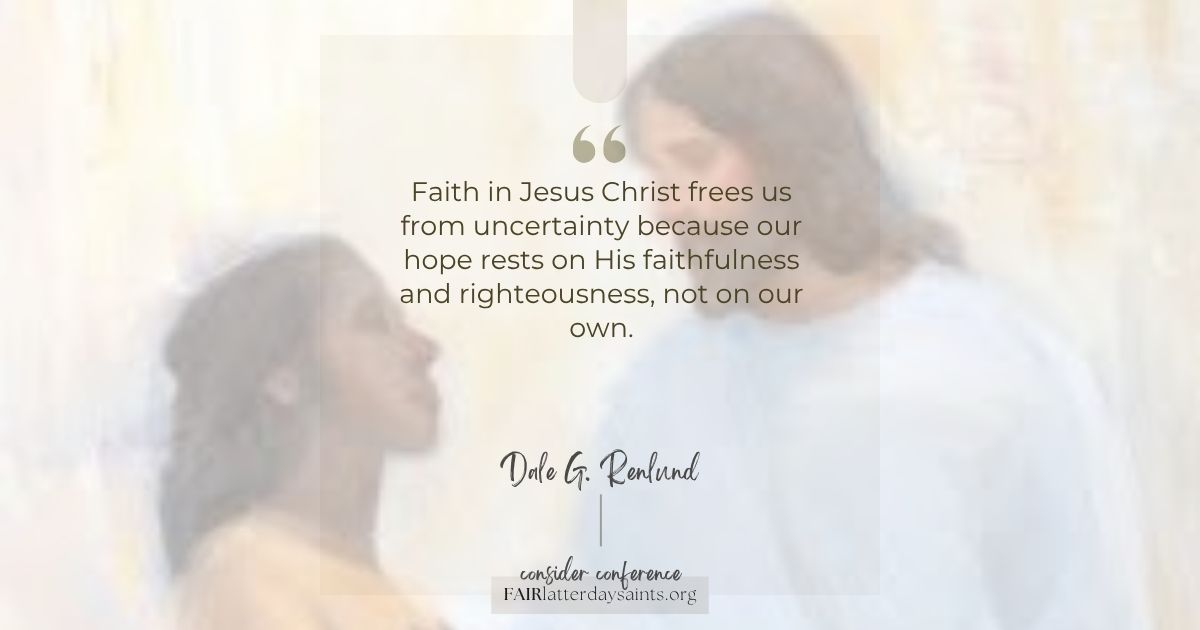
Faith in Jesus Christ frees us from uncertainty because our hope rests on His faithfulness and righteousness, not on our own.
The question is not whether we will experience hardship, but whether we will allow that hardship to overshadow what we know about Jesus Christ.
Common Criticism: If God Keeps His Promises, Why Do Faithful People Suffer?
Some question how a loving, covenant-keeping God can promise peace and joy while allowing faithful people to experience suffering, disappointment, or uncertainty. If God’s promises are sure, shouldn’t His blessings be more immediately recognizable?
This is an understandable question, particularly for those who have endured prolonged trials or prayed earnestly without receiving the answers they hoped for.
Fallacy at Work: Present Bias
Present Bias is the tendency to give immediate circumstances greater weight than long-term outcomes.
When applied to faith, this bias can cause present difficulties to overshadow past experiences with God and His promises for the future. Like Elder Renlund’s patient focusing on cold oatmeal after surviving a life-threatening crisis, we may become so consumed by what is wrong today that we lose sight of what God has already done.
Recognizing this bias does not mean dismissing genuine suffering. Rather, it reminds us that our present circumstances, however difficult, are not the complete measure of God’s goodness or faithfulness.
Doctrine: God’s Promises Rest on His Faithfulness
Throughout scripture, the Lord repeatedly reassures His children of His covenant constancy. To ancient Israel, He declared:
“I will never break my covenant with you.” (Judges 2:1)
Yet the children of Israel repeatedly struggled to trust Him. Despite witnessing their deliverance from Egypt, their passage through the Red Sea, and miraculous provisions in the wilderness, they became discouraged when confronted with new challenges.
The Lord’s question in Numbers 14:11—“How long will it be ere they believe me?”—reveals the central issue: their immediate fears had obscured the evidence of His faithfulness.
Jesus Christ later taught His disciples that tribulation would remain part of mortal life, but that peace could still be found in Him (John 16:33). God’s promises do not guarantee a life free from hardship. They provide a sure foundation upon which we can endure it.
Elder Renlund’s Correction: Christ Has Already Overcome
Elder Renlund redirects our attention from the uncertainty of our circumstances to the certainty of our Redeemer:
Jesus overcame the world; we do not have to do so ourselves.
This distinction changes how we understand covenant confidence. We are not promised peace because we can overcome every challenge through our own strength. We are promised peace through the One who has already overcome the world.
Lehi taught this principle when he assured Jacob that he was redeemed because of the righteousness of his Redeemer (2 Nephi 2:3). Jacob’s hope did not ultimately rest on his own goodness, but on the saving power of Jesus Christ.
The same is true for us.
Solution: Remember His Goodness and Trust His Promises
Elder Renlund’s invitation is not to pretend that difficulties are insignificant. It is to remember that they exist within a much larger story of divine mercy, covenant faithfulness, and redemption.
He also reminds us that God’s promises are personal. His sister Linda once imagined an asterisk beside the blessings described in scripture, as though they applied to everyone except her. Eventually, she recognized that she was not excluded.
Elder Renlund reassured listeners:
There is no asterisk excluding you from God’s richest blessings.
The Savior’s Atonement makes ample provision for every individual and circumstance. God’s promised blessings may unfold differently than we expect, and some await fulfillment beyond mortality, but His ability to fulfill them is not limited by our present understanding.
Our confidence rests not in predicting how or when every blessing will come, but in trusting the One who makes those blessings possible.
Living Apologetics: Remembering When the Present Feels Overwhelming
Faith can become particularly difficult when our current experiences seem inconsistent with what we believe God has promised. A prolonged illness, family struggle, unanswered prayer, or unexpected disappointment may leave someone wondering whether God is truly aware of them.
Elder Renlund teaches that remembering God’s past goodness can strengthen our ability to trust Him in the present. This is not an invitation to ignore pain or manufacture gratitude. It is an invitation to resist allowing one difficult chapter to define the entire story of our relationship with God.
Remembering becomes an act of faith when it helps us recognize that the God who has sustained us before has not ceased to be faithful.
Practical Apologetic Use:
- If someone says: “I’ve tried to be faithful, but things keep going wrong. Sometimes I wonder whether God’s promises really apply to me.”
- You can respond: “I can understand why you would feel that way. God’s promises don’t mean we won’t experience hardship or disappointment. But Jesus Christ has already overcome what we cannot overcome ourselves. His promises are grounded in His faithfulness, not in our ability to make life turn out perfectly. Your present difficulties don’t mean you’ve been forgotten or excluded from His blessings.”
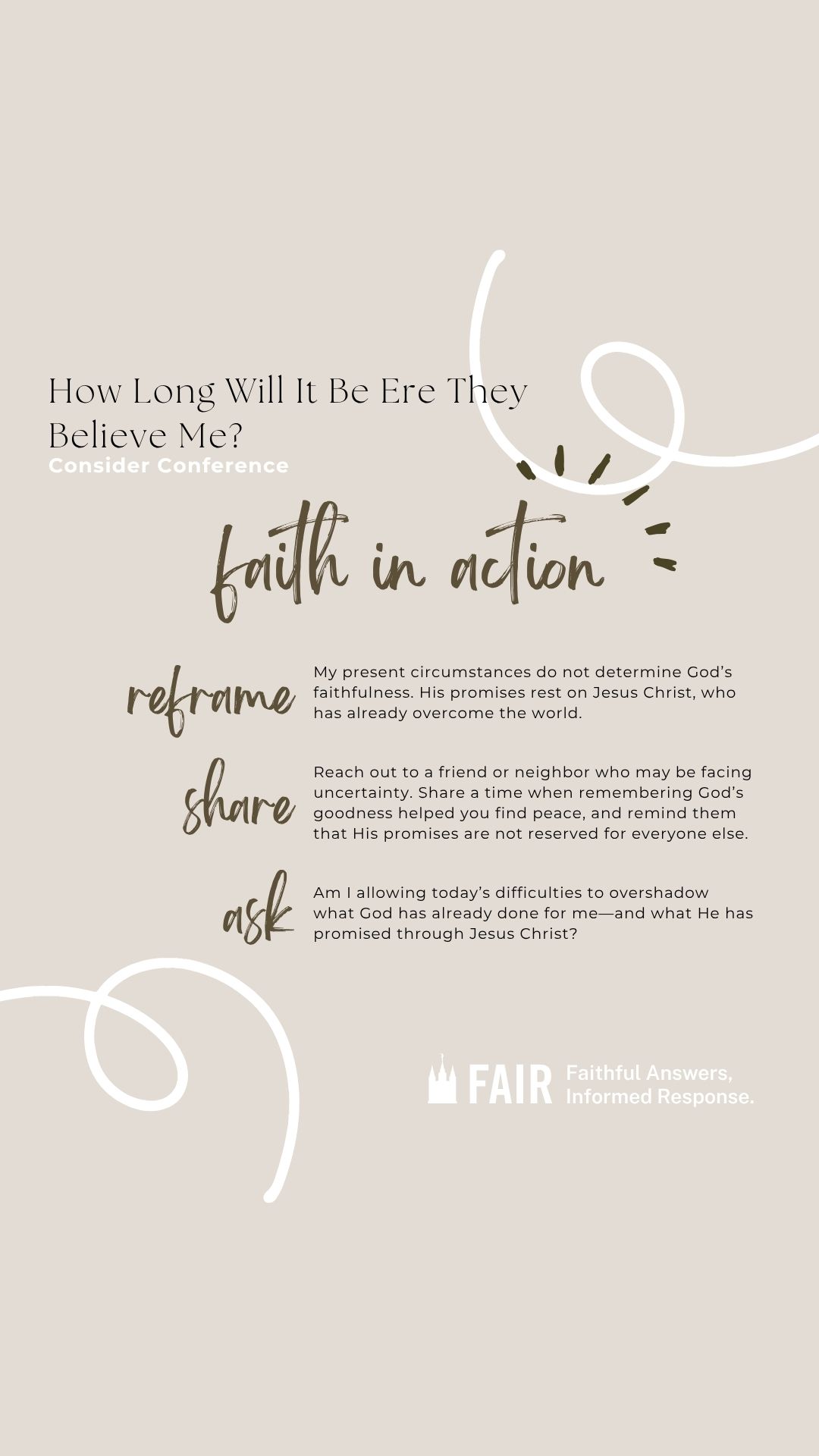 Ways to Apply Today:
1️⃣Remember deliberately. Write down a specific experience when you recognized God’s goodness, guidance, or mercy. Return to it when present challenges make His hand difficult to see.
2️⃣Look beyond the immediate moment. When disappointment feels overwhelming, ask yourself whether your current circumstances are telling the whole story. Consider what you know about God’s character and His promises.
3️⃣Trust the Savior’s sufficiency. When you feel inadequate or uncertain, remember that redemption rests on Christ’s righteousness. Seek His help rather than assuming you must overcome every challenge alone.
Keep This Talk With You
Elder Renlund’s message invites us to examine the lens through which we interpret our lives. The children of Israel witnessed remarkable miracles, yet repeatedly allowed new difficulties to overshadow what the Lord had already accomplished. Their experience reminds us that remembering is not simply looking backward—it is preparing our hearts to trust God moving forward.
The same Savior who sustained His covenant people in the wilderness offers peace to us today. His promises are not diminished by our unanswered questions, unexpected setbacks, or imperfect discipleship. We can acknowledge the reality of our struggles while still choosing to trust His faithfulness.
This week, try one small step:
- Record a reminder of God’s goodness. Identify one experience you do not want to forget, and write down what it taught you about Him.
- Encourage someone facing uncertainty. Share a scripture, personal experience, or simple expression of reassurance that reminds them they are not beyond the reach of Christ’s promises.
- Pray with a wider perspective. Alongside your requests for help, thank Heavenly Father for evidence of His care and ask for greater trust in His timing and purposes.
As Elder Renlund taught:
As we reflect on the great things the Lord has already done and remember His goodness and mercy, we are better positioned to grasp the bigger picture and to rely on His promises to us. We can trust Him.
The challenges of today are real, but they are not the entirety of our story. Through Jesus Christ, we can find peace in the present and confidence in the promises yet to be fulfilled.
When present challenges make it difficult to recognize God’s hand in your life, what past experiences can remind you that His promises are still sure?

The Consider Conference series by FAIR offers an in-depth look at recent General Conference talks to help members of the Church of Jesus Christ of Latter-day Saints navigate common questions, misunderstandings, and criticisms. Each post provides doctrinal insights, historical context, and practical ways to apply gospel principles in everyday conversations. Through this series, we hope to equip readers with faith-promoting resources that encourage thoughtful reflection, respectful dialogue, and a stronger foundation in gospel truths, fostering both personal conviction and meaningful discussions with others.

Leave a Reply