
In his October 2025 General Conference address, “Blessed Are the Peacemakers,” Elder Gary E. Stevenson teaches that peacemaking is not a passive or naïve response to a troubled world. It is a deliberate, Christlike choice that requires courage, restraint, and moral clarity.
Against a backdrop of grief, violence, and rising contention, Elder Stevenson invites disciples to reconsider common assumptions about strength. Rather than equating power with aggression or volume, he points to the Savior’s example and calls peacemaking a higher, holier form of strength.
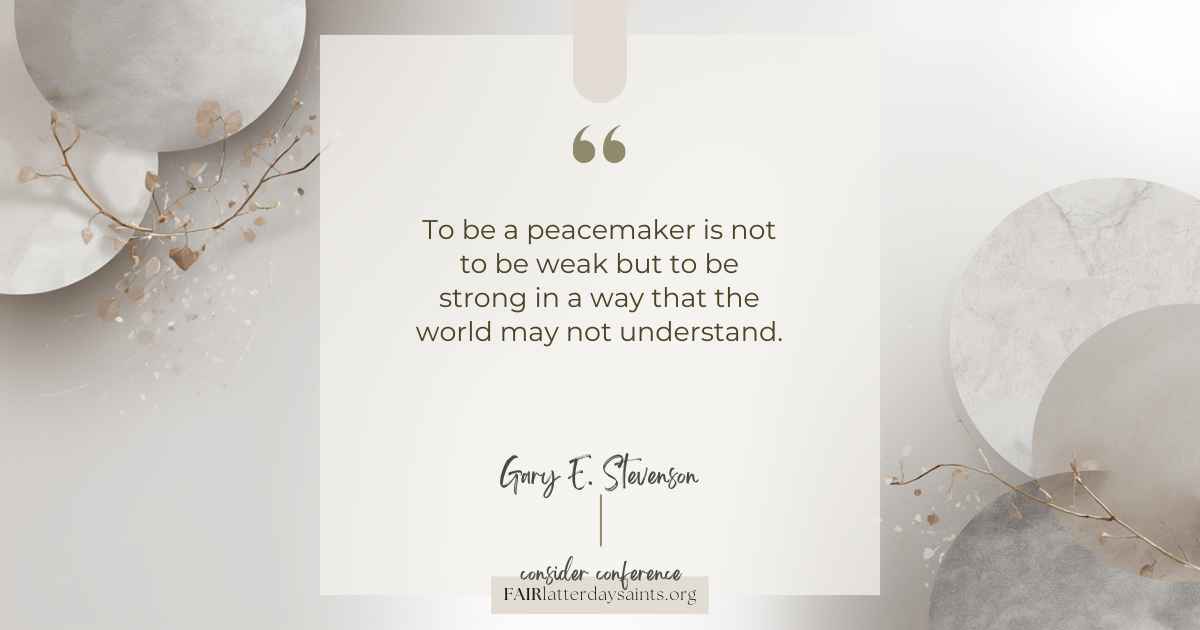
To be a peacemaker is not to be weak but to be strong in a way that the world may not understand.
This framing shifts peacemaking from a defensive posture to an expression of deep spiritual maturity.
Common Criticism: “In a world full of conflict, peacemaking is naïve, weak, or unrealistic.”
When tensions run high—politically, socially, or personally—calls for peace can feel impractical. Some assume that strength requires sharpness, retaliation, or emotional intensity, while restraint and forgiveness are seen as concessions.
Fallacy at Work: Strength Equals Aggression
This mindset confuses dominance with courage and assumes that peace can come only after others change. It overlooks the reality that contention often multiplies harm and that cycles of retaliation rarely produce healing.
Elder Stevenson’s Correction: Christlike Strength Looks Different
Elder Stevenson teaches that peacemaking is not the absence of conviction. It is the discipline to act with charity even when emotions run high. True peacemakers do not surrender principle; they refuse to surrender love.
Drawing on the Savior’s teachings, Elder Stevenson reminds us that Jesus Christ—the Prince of Peace—never compromised truth, yet consistently chose mercy, restraint, and reconciliation.
Resolving this Fallacy:
Rather than waiting for ideal circumstances or universal agreement, disciples are invited to practice peacemaking now. The gospel calls for courage that builds rather than wounds and for strength that heals rather than escalates.
Living Apologetics: Strength the World Misunderstands
Elder Stevenson’s message challenges a cultural assumption that loudness equals righteousness. In reality, peacemaking often requires more spiritual strength than retaliation.
This teaching speaks to concerns such as:
- “If I don’t push back forcefully, truth will be lost.”
- “Peacemaking means compromising my beliefs.”
Elder Stevenson offers a different vision: peacemaking demands courage, patience, and faith in Christ’s way of resolving conflict.
 Practical Apologetic Use
- If someone says: “Peacemaking is too soft for today’s world.”
- You can respond: “Elder Stevenson teaches that peacemaking is a form of strength the world often misunderstands—but Christ calls His disciples to it.”
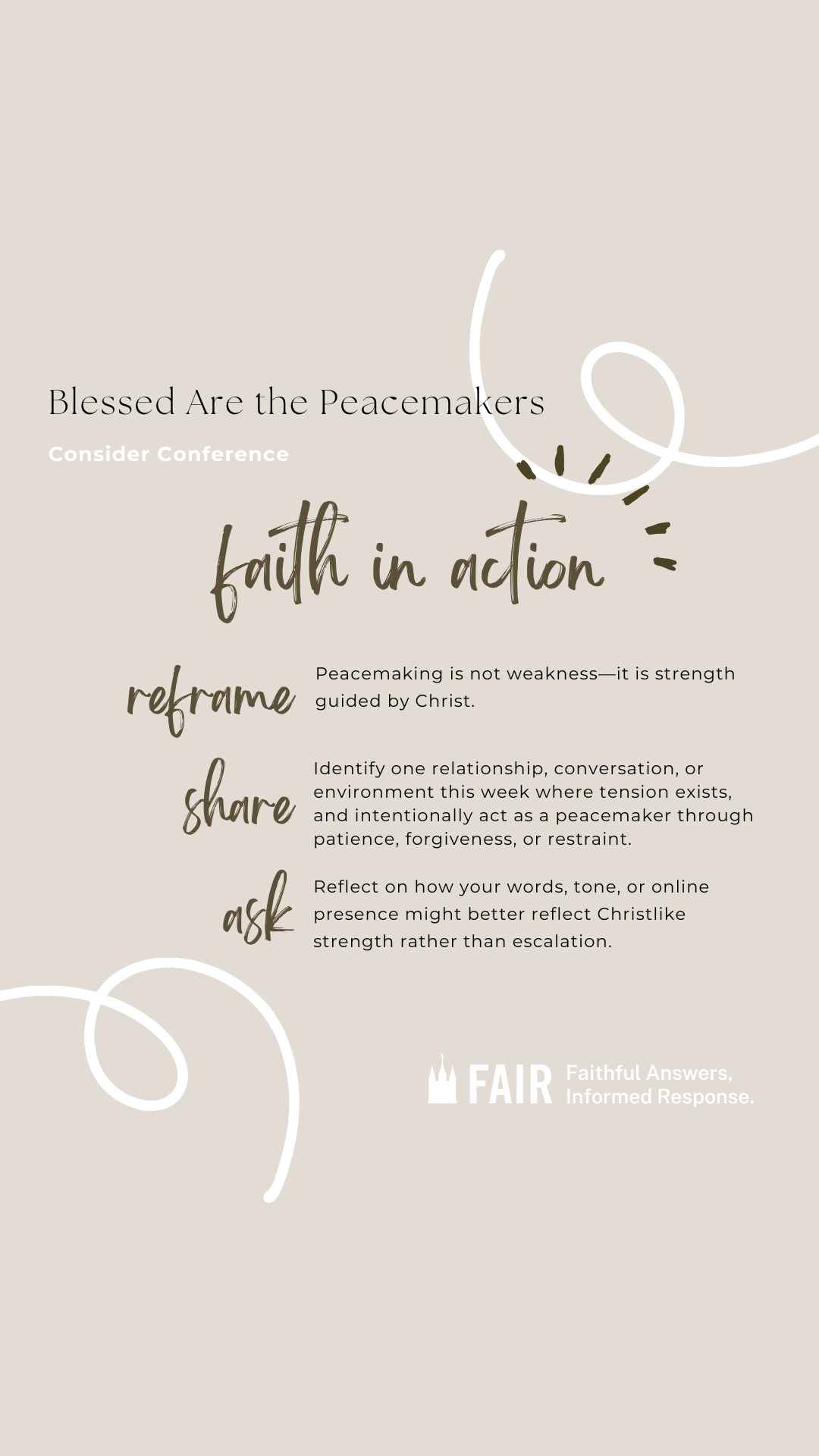
Ways to Apply Today
1️⃣ Notice moments where contention feels justified.
2️⃣ Choose restraint and kindness deliberately, even when it feels costly.
3️⃣ Trust that Christlike strength leaves lasting influence.
Keep This Talk With You
Elder Stevenson reminds us that peacemaking is not a modern trend or a situational response. It is a divine calling taught by Jesus Christ Himself and renewed in our day.
As disciples choose to be peacemakers—in hearts, homes, and communities—they become witnesses of the Prince of Peace and instruments of healing in a fractured world.
Where is the Savior inviting me to show Christlike strength through peacemaking right now?
The Consider Conference series by FAIR offers an in-depth look at recent General Conference talks to help members of the Church of Jesus Christ of Latter-day Saints navigate common questions, misunderstandings, and criticisms. Each post provides doctrinal insights, historical context, and practical ways to apply gospel principles in everyday conversations. Through this series, we hope to equip readers with faith-promoting resources that encourage thoughtful reflection, respectful dialogue, and a stronger foundation in gospel truths, fostering both personal conviction and meaningful discussions with others.
