
In his October 2025 General Conference address, “That All May Be Edified,” Chad H. Webb teaches that gospel teaching and learning are meant to do more than convey information. When centered on Jesus Christ and guided by the Holy Ghost, they are meant to shape discipleship over a lifetime.
Brother Webb emphasizes that meaningful spiritual learning requires intentional effort from both teachers and learners. Edification increases when responsibility is shared and agency is exercised.
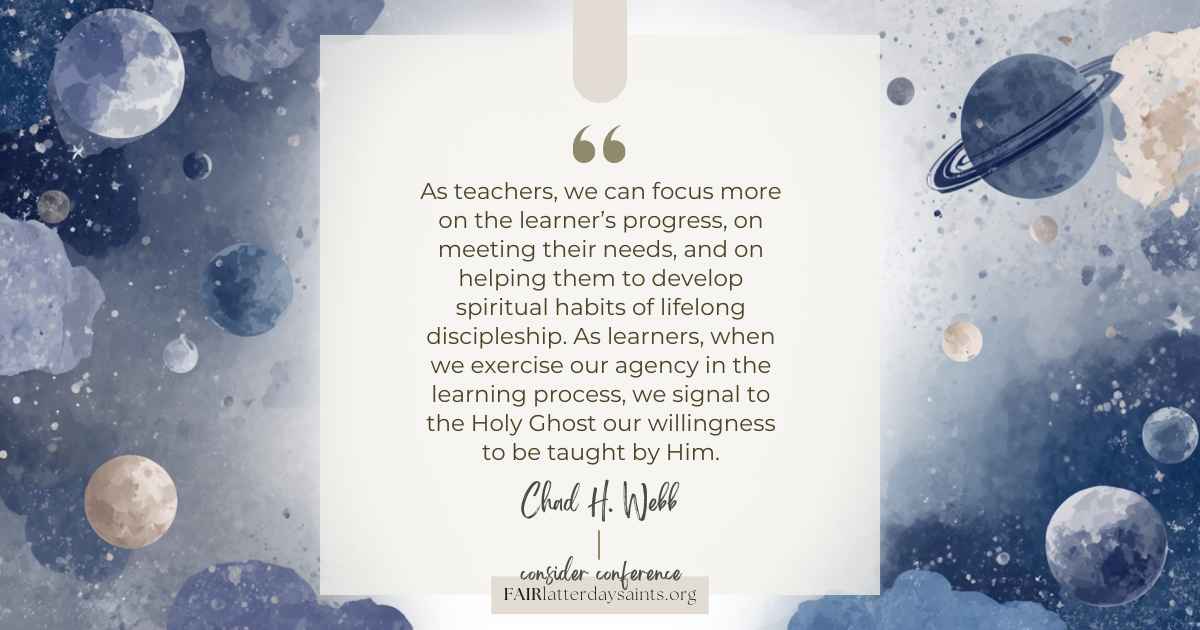
As teachers, we can focus more on the learner’s progress, on meeting their needs, and on helping them to develop spiritual habits of lifelong discipleship. As learners, when we exercise our agency in the learning process, we signal to the Holy Ghost our willingness to be taught by Him.
This framing places growth where it belongs: not in presentation alone, but in preparation, participation, and personal responsibility.
Common Criticism: “Spiritual learning is primarily the responsibility of teachers and leaders.”
It is easy to assume that meaningful gospel learning depends mostly on inspired teachers, well-prepared lessons, or compelling presentations. From this view, learners are largely recipients rather than participants.
Fallacy at Work: Passive Learning Produces Lasting Faith
This assumption treats spiritual growth as something that happens to us rather than something we actively choose. It underestimates the role of agency and personal preparation in inviting revelation.
Brother Webb’s Correction: Learners Must Choose to Engage
Brother Webb teaches that edification increases when learners come prepared and when teachers create opportunities for personal revelation. When learners exercise agency in the learning process, they invite the Holy Ghost to teach them directly.
He points to the Savior as the perfect example. Jesus invited His disciples to prepare, to share what they were learning, and to act in faith. In doing so, He helped them take responsibility for their own testimonies.
Resolving this Fallacy:
Gospel learning is most powerful when it is shared, participatory, and centered on Christ. Teachers guide and invite, but learners must choose to engage if they are to be edified.
Living Apologetics: Agency Strengthens Faith
Brother Webb’s message responds to a quiet but common concern. If faith depends on external teaching alone, it becomes fragile. His teaching reframes discipleship as an active process in which agency invites revelation.
This perspective addresses concerns such as:
- “I don’t feel spiritually nourished at church.”
- “Gospel learning feels disconnected from my real questions.”
Brother Webb teaches that when learners prepare, participate, and apply gospel principles, the Holy Ghost confirms truth directly to their hearts and minds.
Practical Apologetic Use
- If someone says: “Church doesn’t always meet my spiritual needs.”
- You can respond: “Brother Webb teaches that learning by faith requires active participation, which invites the Holy Ghost to teach us.”
 Ways to Apply Today

1️⃣ Prepare spiritually before gospel learning experiences.
2️⃣ Share insights and impressions when prompted.
3️⃣ Act on what the Spirit confirms as true.
Keep This Talk With You
Brother Webb testifies that when teaching and learning focus on Jesus Christ, the Holy Ghost deepens faith and helps disciples become more like the Savior. Edification increases when learners exercise agency and teachers invite revelation.
The aim of all gospel teaching is not simply knowledge, but conversion.
How can I more intentionally exercise my agency so the Holy Ghost can teach me as I learn the gospel?
The Consider Conference series by FAIR offers an in-depth look at recent General Conference talks to help members of the Church of Jesus Christ of Latter-day Saints navigate common questions, misunderstandings, and criticisms. Each post provides doctrinal insights, historical context, and practical ways to apply gospel principles in everyday conversations. Through this series, we hope to equip readers with faith-promoting resources that encourage thoughtful reflection, respectful dialogue, and a stronger foundation in gospel truths, fostering both personal conviction and meaningful discussions with others.
