
In his April 2026 General Conference address, “Alive in Christ,” Dallin H. Oaks teaches that belief in the literal Resurrection of Jesus Christ changes not only what we believe about the future, but how we live, love, and relate to others today.
Yet in a world often marked by hostility and division, some may wonder: What does belief in Christ actually change about how we treat one another?
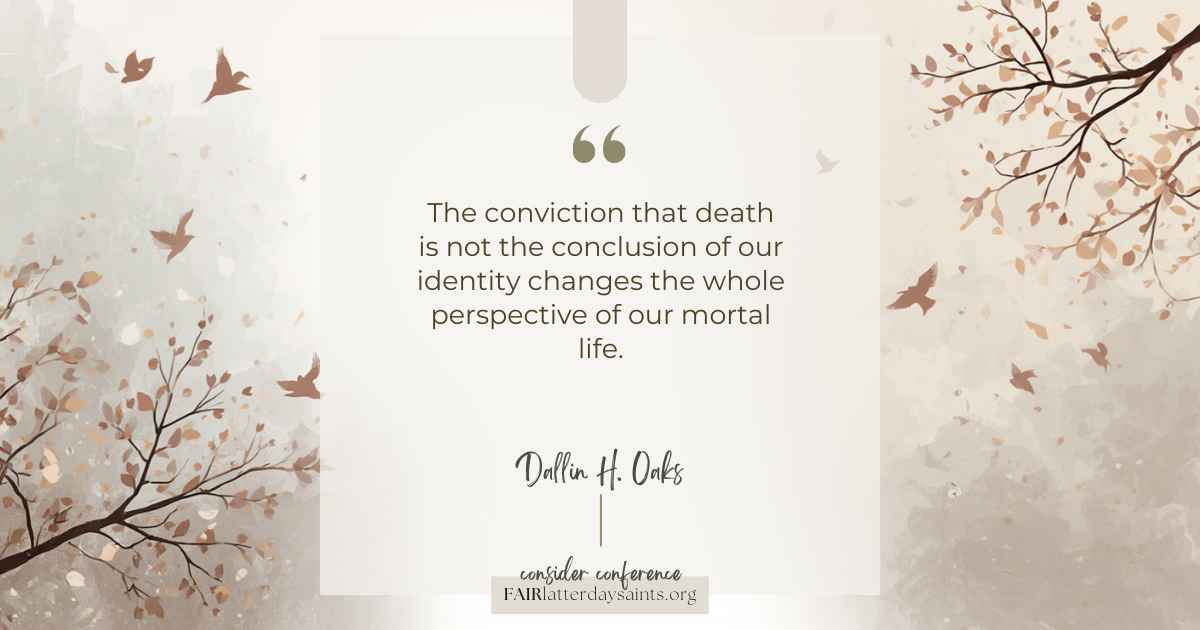
The conviction that death is not the conclusion of our identity changes the whole perspective of our mortal life.
Common Criticism: “Religious belief doesn’t really change how people treat others.”
Some observe that even those who believe in Christ still experience conflict, division, and harshness in relationships. This can lead to the conclusion that belief alone has little real-world impact.
Fallacy at Work: Belief–Behavior Disconnect
This assumption separates belief from behavior, suggesting that what we believe has little influence on how we act.
But the gospel teaches the opposite: true belief in Christ transforms both perspective and conduct.
Doctrine: The Resurrection Changes How We Live and Love
President Oaks teaches that belief in the Resurrection is not abstract. It reshapes how we see:
- Life and death
- Suffering and limitation
- Our relationships with others
Because all are children of God with eternal futures, we are commanded to:
- Love our neighbors (Matthew 22:37–39)
- Love even our enemies (Matthew 5:44)
This eternal perspective gives meaning to our relationships and calls us to something higher.
President Oaks’s Correction
President Oaks teaches that discipleship requires more than belief. It requires becoming peacemakers.
Even in a world described as “toxic” or hostile, followers of Christ are invited to:
- Forgo contention
- Use kind and respectful language
- Treat even adversaries with love
This is not passive. It is an intentional, Christlike response rooted in eternal truth.
Solution
When we truly understand that all people are eternal children of God, belief in Christ begins to change how we treat them.
. . .let us follow [Christ] by forgoing contention and by using the language and methods of peacemakers.
Living Apologetics: Becoming Peacemakers
In daily life, it’s easy to respond to frustration, disagreement, or offense with defensiveness or harshness.
President Oaks invites a different response: Choose to be a peacemaker.
This might look like:
- Responding calmly instead of reacting quickly
- Speaking with kindness, even in disagreement
- Choosing understanding over escalation
He teaches that peacemaking happens in ordinary places:
- In families
- In friendships
- In conversations with those who disagree
Even small choices can reduce contention and increase understanding.
Practical Apologetic Use
- If someone says: “Religion doesn’t really change how people act.”
- You can respond: “President Oaks teaches that belief in Christ should lead us to become peacemakers, choosing love, even toward those who oppose us.”
Ways to Apply Today
1️⃣ Replace one reactive response today with a calm, thoughtful one.
2️⃣ Choose to speak kindly in a conversation where you might normally feel defensive.
3️⃣ Look for an opportunity to reduce tension rather than escalate it.
 Keep This Talk With You
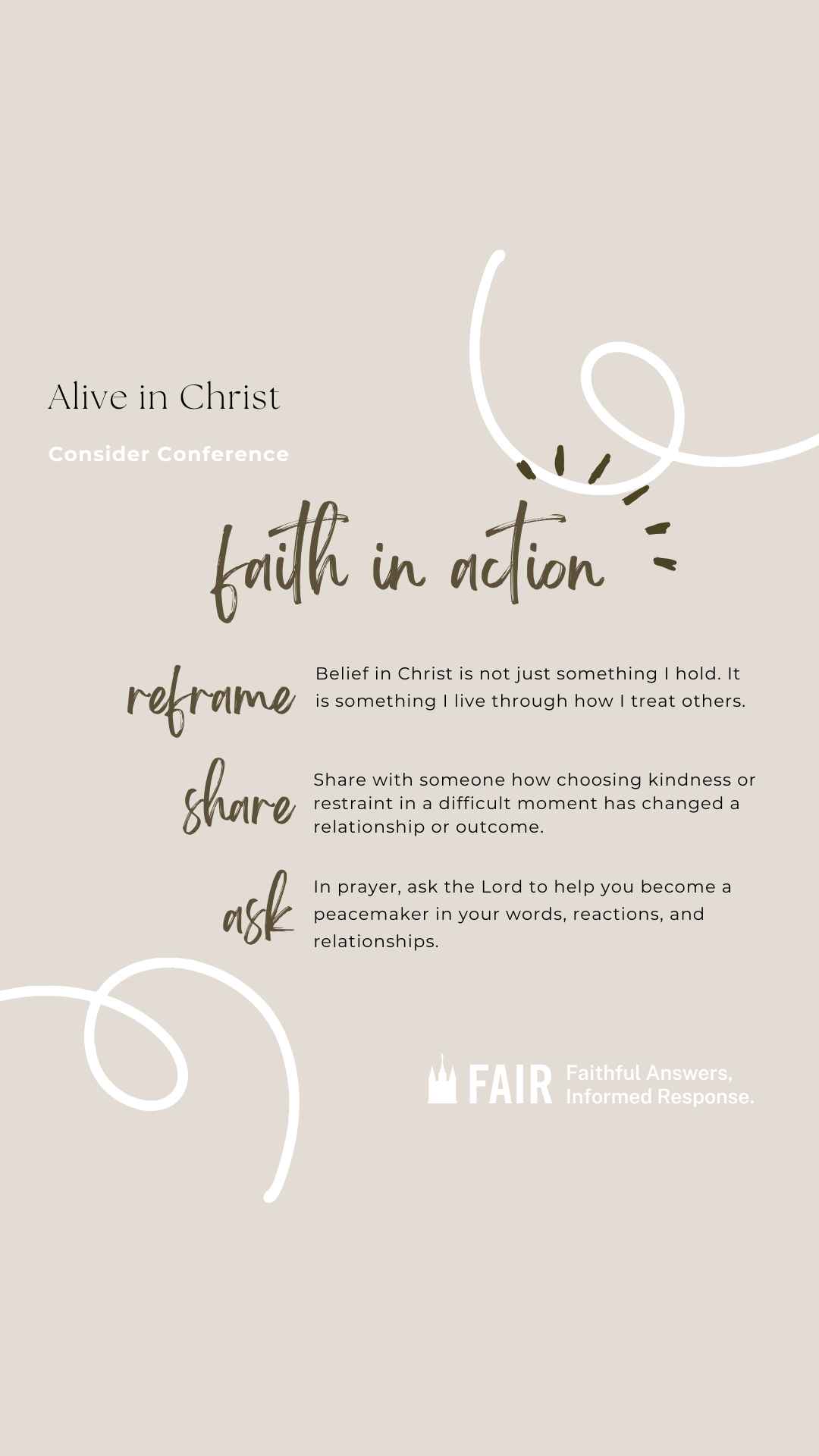
President Oaks reminds us that discipleship is not just about what we believe, but who we become.
Because of the Resurrection, we know that life continues. Relationships matter. Every person we meet is an eternal soul.
That knowledge invites a higher way of living.
This week:
- Pause before responding. Choose peace over contention.
- See others differently. Remember that every person is a child of God.
- Act with Christlike love. Especially when it is difficult.
As we do, something begins to change: contention gives way to understanding. Division gives way to connection. And belief becomes visible in action.
We do not just believe in Christ. We begin to live like Him.
How can I more intentionally act as a peacemaker in my relationships this week?
The Consider Conference series by FAIR offers an in-depth look at recent General Conference talks to help members of the Church of Jesus Christ of Latter-day Saints navigate common questions, misunderstandings, and criticisms. Each post provides doctrinal insights, historical context, and practical ways to apply gospel principles in everyday conversations. Through this series, we hope to equip readers with faith-promoting resources that encourage thoughtful reflection, respectful dialogue, and a stronger foundation in gospel truths, fostering both personal conviction and meaningful discussions with others.
