
In his April 2026 General Conference address,“’Tis Eastertide: No One Walks Alone,” Gerrit W. Gong teaches that the resurrected Savior does not leave us to walk life’s roads alone—even when we may not recognize His presence.
Drawing on the disciples’ journey to Emmaus, he invites us to see our own lives in that sacred pattern.
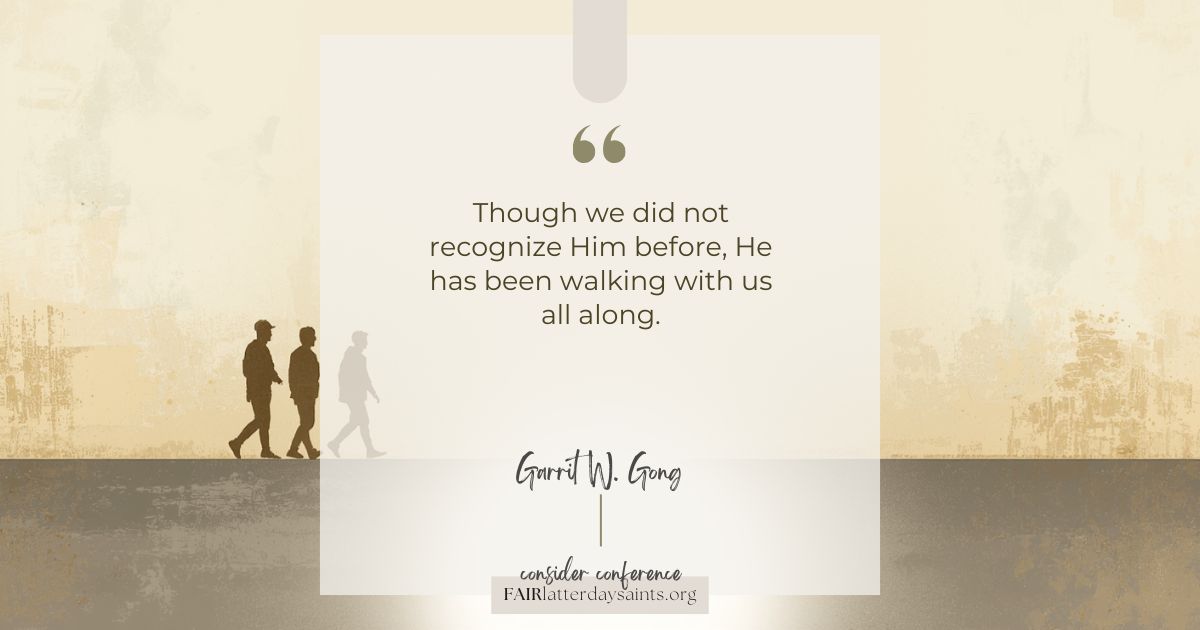
Though we did not recognize Him before, He has been walking with us all along.
But that raises a quiet question: If Christ is already walking with us, why do we sometimes feel alone?
Common Criticism: “If God were really with me, I wouldn’t feel so alone.”
Many experience moments of loneliness, confusion, or distance from God. In those moments, it can feel as though heaven is silent and Christ is absent.
Fallacy at Work: Felt Absence = Actual Absence
This belief assumes that if we don’t feel God’s presence, He must not be there.
It equates emotional experience with reality, or perception with truth.
Doctrine: Christ Walks with Us, Even When Unrecognized
Elder Gong teaches that the Savior’s presence is not dependent on our immediate awareness.
On the road to Emmaus, Christ walked with, taught, and comforted His disciples. Yet they did not recognize Him at first.
Similarly, in our lives:
- He speaks through scripture
- He is present in covenants and ordinances
- He sends the Holy Ghost as a Comforter
“As we walk by faith with Him… we come to know He lives.”
Elder Gong’s Correction
Elder Gong reframes loneliness through covenant relationship.
Christ promises not only to visit, but to abide with us through the Holy Ghost, His own presence, and covenant connection.
We are not abandoned.
We are accompanied.
Solution
When we learn to recognize Christ’s presence, we begin to see that we have never truly walked alone.
Living Apologetics: Walking with Christ—and Each Other
Elder Gong’s message doesn’t stop with recognizing Christ walking with us.
It extends outward:
“If you see someone walking alone and sad, will you please walk with them?”
This is the pattern: Christ walks with us and we walk with others.
In a world where many feel unseen, burdened, or alone, we are invited to become part of the answer. Walking with someone may look like sitting beside them. Listening without fixing. Or offering quiet companionship.
Often, the most Christlike thing we can do is simply not let someone walk alone.
Practical Apologetic Use
- If someone says: “I feel like I’m completely alone.”
- You can respond: “Elder Gong teaches that Christ often walks with us even when we don’t recognize Him—and He invites us to walk with each other so no one has to feel alone.”
Ways to Apply Today
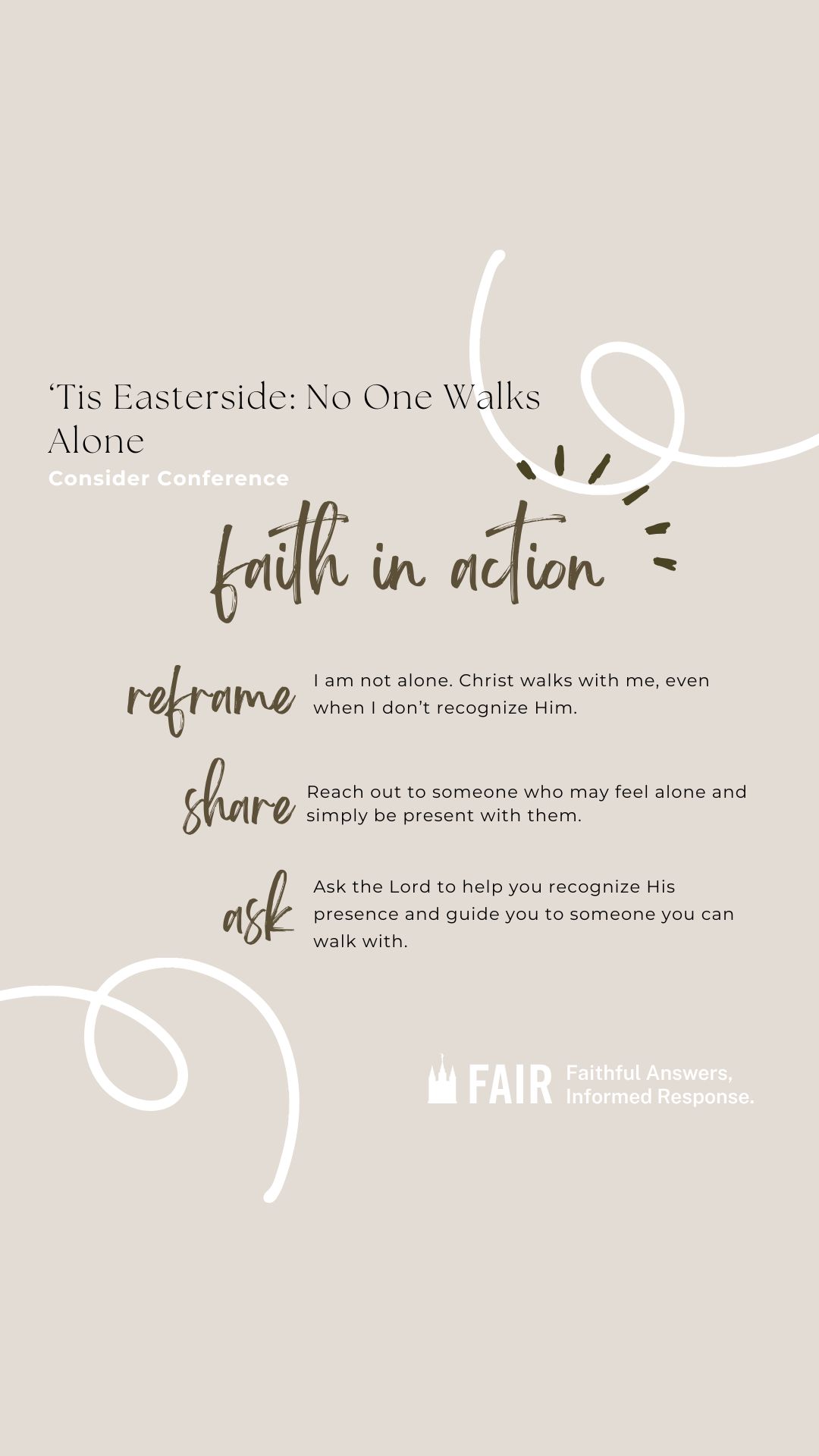
1️⃣ Look for someone who may be feeling alone and spend time with them.
2️⃣ Be more aware of how Christ may already be present in your life.
3️⃣ Slow down and listen when someone shares a burden.
Keep This Talk With You
Elder Gong reminds us that Easter is not only about the empty tomb.
It is about the living Christ who still walks beside His disciples. Even on dusty, uncertain roads. Even when we do not recognize Him.
This week:
- Look for Him. Notice how Christ may already be present in your life.
- Trust His presence. Even when you don’t feel it.
- Walk with others. Be the companion someone else needs.
As we do, we will notice loneliness soften as connection grows and faith deepens.
And we begin to see more clearly what has always been true: we were never meant to walk alone.
And through Jesus Christ we never do.
Who is someone I can walk with this week? And how can I better recognize Christ walking with me?

The Consider Conference series by FAIR offers an in-depth look at recent General Conference talks to help members of the Church of Jesus Christ of Latter-day Saints navigate common questions, misunderstandings, and criticisms. Each post provides doctrinal insights, historical context, and practical ways to apply gospel principles in everyday conversations. Through this series, we hope to equip readers with faith-promoting resources that encourage thoughtful reflection, respectful dialogue, and a stronger foundation in gospel truths, fostering both personal conviction and meaningful discussions with others.

Is the sheet music available to the song for this talk?