
In his October 2026 General Conference address, “A Higher and Holier Fast,” Elder Ulisses Soares invited Latter-day Saints to look beyond the outward observance of fasting and consider its deeper spiritual purpose.
Drawing upon Isaiah 58 and the Savior’s example, Elder Soares taught that fasting is more than abstaining from food or petitioning Heavenly Father for specific blessings. It is a sacred opportunity to strengthen our relationship with Him, align our desires with His will, and become more attentive to the needs of His children.
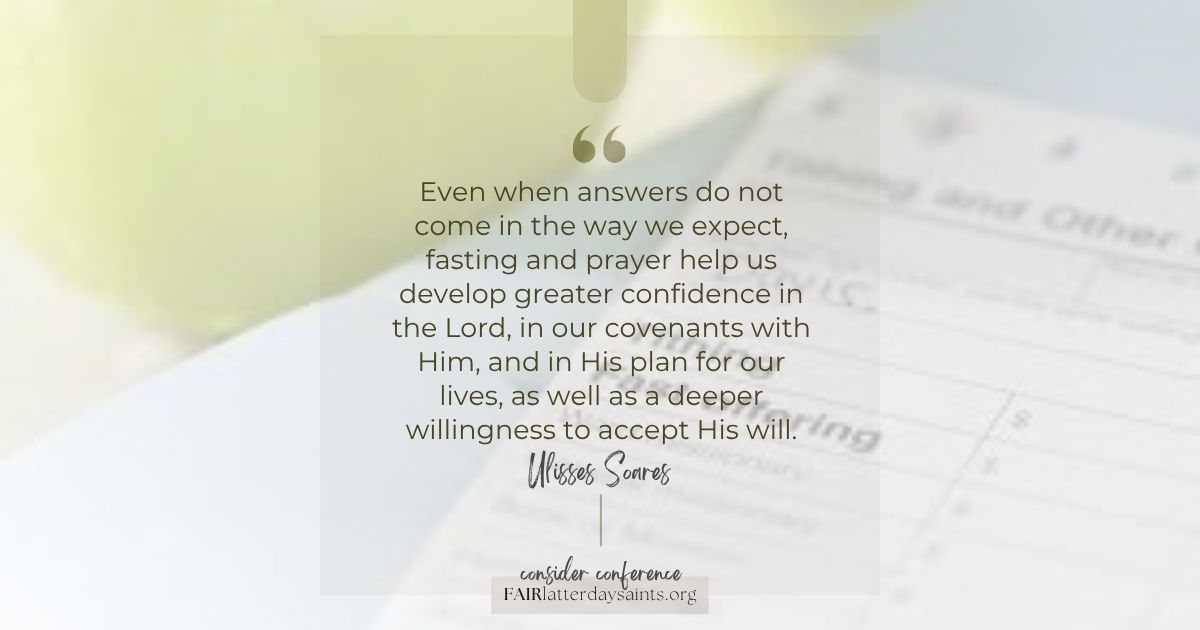
Even when answers do not come in the way we expect, fasting and prayer help us develop greater confidence in the Lord, in our covenants with Him, and in His plan for our lives, as well as a deeper willingness to accept His will.
Yet fasting can raise sincere questions. If Heavenly Father already knows our needs and desires to bless us, why does He ask us to fast? And if we fast faithfully but do not receive the blessing we seek, has our fasting accomplished anything?
Elder Soares’s message offers an important clarification: The purpose of fasting is not to change God’s willingness to bless us, but to draw nearer to Him and allow His will to shape our hearts.
Common Criticism: Fasting Treats God’s Blessings as Something We Can Earn
Some critics interpret religious fasting as an attempt to influence God’s decisions through personal sacrifice. From this perspective, abstaining from food may appear to be a spiritual bargaining process: if we sacrifice enough, pray earnestly enough, or demonstrate sufficient faith, God will reward us with the outcome we desire.
This concern can become especially troubling when faithful individuals fast for healing, guidance, reconciliation, or relief from suffering but do not receive the answer they hoped for.
If fasting is understood primarily as a way to obtain specific blessings, an unanswered prayer may leave someone wondering whether their faith was insufficient, their sacrifice was inadequate, or God was unwilling to help.
But this interpretation overlooks an essential distinction between seeking God’s help and attempting to control His response.
Fallacy at Work: False Cause
A false cause fallacy occurs when a causal relationship is assumed without sufficient justification.
In this context, the mistaken assumption is that fasting necessarily produces a particular divine response: if we fast faithfully, God must grant the requested blessing. Conversely, if the blessing does not come, something must have been wrong with our fast.
But fasting is not a spiritual formula that guarantees a predetermined outcome. The scriptures contain accounts of fasting and prayer accompanying remarkable blessings, but those examples do not establish that every faithful fast must produce the same result.
Elder Soares teaches that fasting is an opportunity to align our desires with God’s purposes and our expectations with His wisdom. The spiritual value of fasting cannot be measured solely by whether our circumstances change.
Doctrine: Fasting Draws Us Closer to God and Helps Align Our Will With His
In Isaiah 58, the Lord challenges His covenant people to look beyond the outward performance of fasting and recognize its sacred purpose. Rather than presenting fasting as an isolated act of physical deprivation, Isaiah connects it with sincere worship, righteousness, compassion, and care for those who suffer.
The Lord promises:
“Then shalt thou call, and the Lord shall answer; thou shalt cry, and he shall say, Here I am” (Isaiah 58:9).
This promise emphasizes the Lord’s nearness and His willingness to hear His children. Fasting, when joined with sincere prayer, can help us become more receptive to that divine relationship.
The Book of Mormon likewise teaches that the people of God fasted and prayed often, becoming increasingly humble and firm in their faith in Christ (Helaman 3:35). Their spiritual growth was not simply the result of enduring physical hunger. It came as they humbled themselves before God and opened their hearts to His sanctifying influence.
The Savior’s own example provides the clearest model. Before beginning His mortal ministry, Jesus Christ fasted in the wilderness. His fasting was not an attempt to persuade the Father to change His divine plan. It was an expression of perfect devotion and preparation to fulfill that plan.
Through fasting and prayer, we likewise seek to deepen our relationship with Heavenly Father and become more willing to follow His will.
Elder Soares’s Correction: Fasting Changes More Than Our Circumstances
Elder Soares taught:
His example teaches us that fasting and prayer may not remove every burden from our path, but they draw heaven near and endow us with divine power to overcome or endure whatever circumstances we may face, giving us the spiritual fortitude to remain faithful to the Father’s will.
This distinction is central to understanding the law of the fast.
We may begin a fast seeking a particular answer, but the Lord may bless us with something we did not anticipate: greater patience, deeper trust, spiritual clarity, increased humility, or strength to continue through a difficult season.
These blessings do not necessarily eliminate our challenges. Instead, they help us face those challenges with greater confidence in Heavenly Father’s love and wisdom.
Importantly, this does not mean fasting is merely a psychological exercise or that we should stop seeking specific blessings. The restored gospel teaches that God hears and answers prayers and that fasting can accompany sincere petitions for divine help. But our faith is ultimately placed in the Lord, not in our ability to produce a particular outcome.
Elder Soares describes fasting as an opportunity to align our desires with God’s purposes and our expectations with His wisdom. A higher and holier fast is not defined by how successfully we persuade God to follow our plans, but by how willingly we seek to follow His.
Solution: Fasting Is Both Personal Devotion and Christlike Charity
Elder Soares expands our understanding of fasting by connecting our relationship with God to our responsibility toward His children.
He taught:
Our fast becomes not only a personal act of devotion to God but also an outward expression of Christlike charity and love.
This principle is rooted in Isaiah 58, where the Lord describes an acceptable fast as one that helps relieve oppression, loosen burdens, and care for those in need. Fasting is therefore not intended to turn our attention exclusively inward. As we seek greater communion with Heavenly Father, we should also become more sensitive to the suffering, struggles, and needs of others.
For Latter-day Saints, generous fast offerings provide one tangible expression of this principle. These contributions help provide temporal assistance to those in need while allowing members to participate in a shared work of compassion and consecration.
Elder Soares reminds us that even offerings that appear small can become meaningful expressions of love and service. The Savior provides the perfect example of this outward-facing discipleship. He came not only to teach divine truth but also to minister personally to those who were burdened, afflicted, or in need.
As we follow His example, fasting can help us become more attentive to opportunities to serve. We do not fast simply to invite heaven into our own lives. We also fast to become more willing instruments through whom the Lord can bless others.
Living Apologetics: Recognizing the Blessings We May Not Have Expected
It can be tempting to evaluate a fast by asking whether we received the answer we wanted: Did the illness improve? Did the difficult relationship change? Did the anticipated opportunity appear? Did the uncertainty disappear?
These are understandable questions, especially when we are fasting about circumstances that matter deeply to us. But Elder Soares invites us to consider additional questions: Did fasting help us feel closer to Heavenly Father? Did it increase our willingness to trust Him? Did it soften our hearts or help us recognize someone else’s needs? Did it strengthen our ability to remain faithful through uncertainty?
Sometimes the most meaningful blessings of fasting are not immediately visible. They may appear gradually through increased spiritual sensitivity, greater compassion, or a growing confidence that the Lord is aware of us even when our circumstances remain difficult.
This perspective also encourages greater sensitivity toward others. We should not assume that someone whose prayers remain unanswered has failed to fast with sufficient faith. The Lord’s wisdom, timing, and purposes are not always fully visible to us.
And because fasting includes a commitment to Christlike charity, our response to another person’s suffering should not be to evaluate the adequacy of their faith, but to offer compassion and support.
Practical Apologetic Use:
- If someone says: “If fasting doesn’t guarantee that God will answer your prayers the way you want, what’s the point of doing it?”
- You can respond: “We believe fasting is about much more than receiving a particular blessing. When we fast and pray, we’re expressing our faith in God and seeking to draw closer to Him. Sometimes that includes receiving the specific help we’ve asked for, but sometimes the blessing comes through greater strength, understanding, or willingness to accept His will. Fasting also reminds us to look beyond ourselves and care for others. Its purpose isn’t to control God’s decisions, but to deepen our relationship with Him and become more like Jesus Christ.”
 Ways to Apply Today:
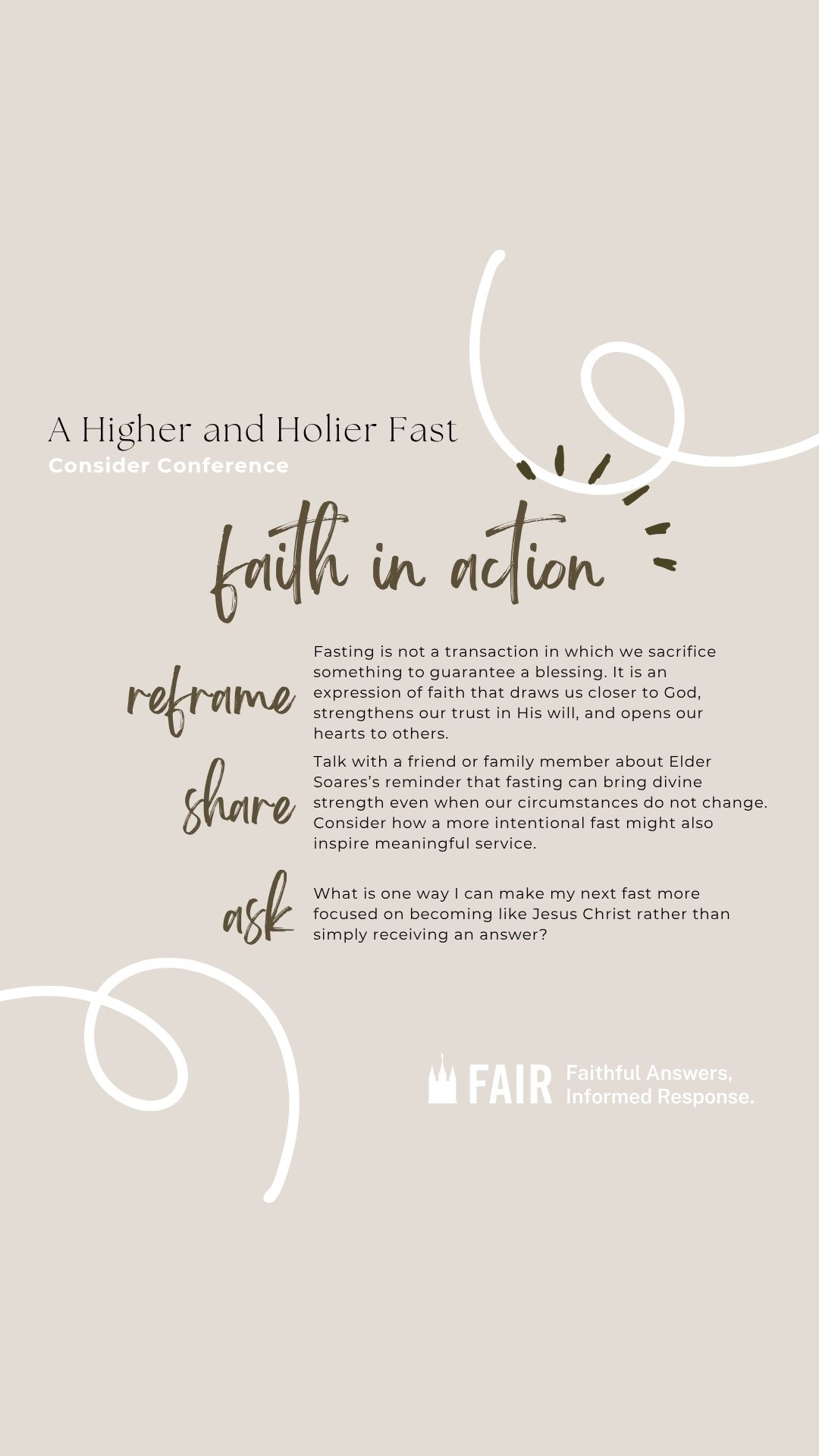
1️⃣Approach your next fast with a desire for communion, not only an answer. Bring your sincere needs and questions to Heavenly Father, but also ask Him to help you understand His will. Consider how fasting might strengthen your relationship with Him regardless of the immediate outcome.
2️⃣Look for blessings beyond changed circumstances. As you fast and pray, pay attention to feelings of peace, increased patience, greater humility, or a renewed willingness to trust the Lord. Remember that spiritual growth can occur even while difficulties remain unresolved.
3️⃣Allow your fasting to become an expression of Christlike love. Consider how your fast offerings, time, attention, or service might bless someone else. Ask Heavenly Father to help you recognize a need you can respond to with compassion.
Keep This Talk With You
Elder Soares’s message reminds us that the law of the fast is not simply about abstaining from food or seeking specific blessings. It is an invitation to experience deeper communion with Heavenly Father and become more like His Son, Jesus Christ.
We may approach fasting with sincere hopes for healing, direction, or relief. Those desires are worthy of bringing before the Lord. But faithful fasting also invites us to recognize that God’s wisdom may extend beyond the outcomes we can presently see.
Sometimes the answer comes through a changed circumstance. Other times it comes through a changed heart. And as our hearts become more receptive to the Lord, they can also become more receptive to the needs of His children.
Elder Soares taught:
Though our fast offerings may seem small and simple, they become consecrated expressions of compassion, concern, and service.
This week, consider how you might approach fasting with renewed purpose. Perhaps that means bringing a sincere question to the Lord while remaining open to His will, expressing gratitude for spiritual strength you’ve received, or finding a meaningful way to serve someone who is struggling.
Remember that fasting is not intended to be a joyless exercise in deprivation. It is a sacred opportunity to draw closer to God, deepen our trust in Him, and experience the joy of Christlike discipleship.
The highest purpose of fasting is not simply to receive something from the Lord, but to draw nearer to Him and become more willing to bless His children.
When I fast, am I primarily seeking a particular outcome, or am I also allowing the Lord to change my heart and guide me toward the needs of others?
The Consider Conference series by FAIR offers an in-depth look at recent General Conference talks to help members of the Church of Jesus Christ of Latter-day Saints navigate common questions, misunderstandings, and criticisms. Each post provides doctrinal insights, historical context, and practical ways to apply gospel principles in everyday conversations. Through this series, we hope to equip readers with faith-promoting resources that encourage thoughtful reflection, respectful dialogue, and a stronger foundation in gospel truths, fostering both personal conviction and meaningful discussions with others.

Leave a Reply