• Skip to primary navigation
  • Skip to main content
  • Skip to primary sidebar
  • Skip to footer

FAIR

  • Find Answers
  • Blog
  • Media & Apps
  • Conference
  • Bookstore
  • Archive
  • About
  • Get Involved
  • Search

NickGalieti

RiseUp Podcast – Polygamy and Joseph Smith

September 11, 2014 by NickGalieti

https://media.blubrry.com/mormonfaircast/www.fairlatterdaysaints.org/wp-content/uploads/2014/09/AOF-Polygamy.mp3

Podcast: Download (29.9MB)

Subscribe: RSS

Joseph_Smith_first_vision_stained_glassDr. Greg L Smith practices medicine near his home in Canada. Aside from medicine, Brother Smith studies the history and doctrine of polygamy. If you have questions, Greg Smith has answers.

Did Joseph Smith Practice Polygamy or Plural Marriage?
Did he marry other men’s wives?
Did he marry under age girls?
Did he force women to marry him?
These questions and more are answered in this episode of RiseUp.

RiseUp is a podcast for young adults in Seminary and Institute who are looking for answers to difficult or critical questions about the LDS (Mormon) Church, and the courage to share those answers with others.

Filed Under: Podcast, RiseUp Tagged With: Joseph Smith, Polygamy

Mormon FairCast Book Review: Women At Church by Neylan McBaine

September 8, 2014 by NickGalieti

https://media.blubrry.com/mormonfaircast/www.fairlatterdaysaints.org/wp-content/uploads/2014/09/MormonFairCast-NeylandMcBaine-WomenAtChurch.mp3

Podcast: Download (71.8MB)

Subscribe: RSS

Neylan McBain Interview - FairMomronNeylan McBaine grew up a member of the Church of Jesus Christ of Latter-day Saints (Mormon) in New York City and attended Yale University. She has been published in Newsweek, Dialogue: A Journal of Mormon Thought, Segullah, Meridian Magazine, and the Washington Post to name a few.

Neylan is the founder and editor-in-chief of The Mormon Women Project, a continuously expanding library of interviews with LDS women found at www.mormonwomen.com.

Neylan is the author of a collection of personal essays — How to Be a Twenty-First Century Pioneer Woman (2008) — as well as Sisters Abroad: Interviews from the Mormon Women Project (2013). She lives with her husband and three young daughters in Utah.

Questions:

Your bio speaks volumes about your passions to support and place a spotlight on Mormon Women. When did your first feel the sparks of this passion?

I actually wanted to start with the cover of the book. Aside from it being warm and fuzzy paper, easy to hold in your hand as you read, the artwork is also quite gripping. I don’t always have much to say about the covers, but I love the painting on the cover of your book. Could you describe it and how the cover actually speaks well to the theme of your book?

This theme of feminism has a wardrobe of interpretations that attempt to clothe a given message. Because there are so many different versions of feminism, could you please take a minute to describe your own interpretation of feminism, and how you frame your self in reference to it?

Your opening sentence is as clear a thesis as I have read however, “This book is predicated on a single belief: that there is much more we can do to see, hear, and include women in the church.” As I read it I wonder about one word in that sentence, the word “much” there is much more we can do to see, hear, and include women in the church. How bold, italicized, and underlined did you want the reader to read into the word “much?”

It is your clear assumption that women are not being heard, and in this same first chapter where you state that a good portion of your book is going to talk about the problem: that some women are feeling neglected, overlooked, and silenced in their church experiences. Is it that these women are feeling neglected and overlooked and silenced by men? By other women? Both?

You address the issue of hurt, of pain, that women are feeling. There are multiple accounts of this happening throughout the church. In a recent interview Terryl and Fiona Givens talked about their new book, The Crucible of Doubt. In that book they talk about the utility of suffering, of trials and tests. They consider these as part of the experience of worshiping deity. Then I read your book and I read about the primary effort to alleviating the hurt. For those that might see these two and feel that both offer some truth they may also seem paradoxical. How then do you define the place, utility, or role of hurt?

You call for greater empathy from general church membership with those who struggle or have hurt. The Savior called for the same thing in his day, and one could argue that seeking for greater charity is the cause of all who wish to be considered disciples of Christ. Discipleship, for men or women, tends to operate on a metaphorical scale where there is a balance of helping others being in ratio to others helping themselves. In reading your book, there is a clear indication that you feel that the church has not done enough to help women or to reach out to embrace women’s voices. What then is that balance as you see it?

We believe in a church of continuing revelation, a living church, one that should not fight flat out the idea of change. But that belief is also tempered by understanding from which changes are to come, and why they come. The first half of your book is meant to lay out the case that there is a need for change. The second part offers some perspectives and examples on how changes can come. How then are we to first acknowledge the need, in a faithful way, without doing so in attacking the system or those who are doing their best to administer the gospel with limited capacities?

In going through part 1 of the book you spend a lot of time talking about the deep need for change on these issues. It can be uncomfortable to sit with that material. While Part 2 of the book is example after of example of how people have enacted changes locally, things that people have done to adopt more equality. This is more a fulfillment of D&C 58:27 where people are being anxiously engaged in a good cause. What are some of those examples

Filed Under: Gender Issues, Hosts, Nick Galieti, Podcast, Women Tagged With: Neylan McBain, Women At Church

RiseUp Podcast: Defend Your Beliefs Game Show

September 3, 2014 by NickGalieti

https://media.blubrry.com/mormonfaircast/www.fairlatterdaysaints.org/wp-content/uploads/2014/09/RiseUp-DefendYourBeliefs-GameShow.mp3

Podcast: Download (33.3MB)

Subscribe: RSS

RiseUp is a show geared towards Young Adults in seeking to find answers to questions about LDS (Mormon) culture and doctrine. But the podcast is also meant to provide help, courage, and direction for those wanting to defend their beliefs and testimony.

In this episode of RiseUp, host Nick Galieti uses a metaphorical game show to introduce the challenge of defending our beliefs and in providing answers, as well as the importance of establishing a strong testimony to be an anchor when such challenges arise.

Using the article, The Do’s and Don’ts of Defending Your Beliefs by David A. Edwards (posted on LDS.org) we learn some fundamental approaches to the challenge of finding courage to defend our beliefs with friends and neighbors.

Filed Under: Podcast, RiseUp Tagged With: Defending Your Belief's, The Do's and Don'ts of Defending Your Belief's, Thomas S. Monson

Mormon FairCast-Book Review: The Crucible of Doubt: Reflections on the Quest For Faith by Terryl and Fiona Givens

September 1, 2014 by NickGalieti

https://media.blubrry.com/mormonfaircast/www.fairlatterdaysaints.org/wp-content/uploads/2014/09/MormonFairCast-CrucibleofDoubt.mp3

Podcast: Download (52.8MB)

Subscribe: RSS


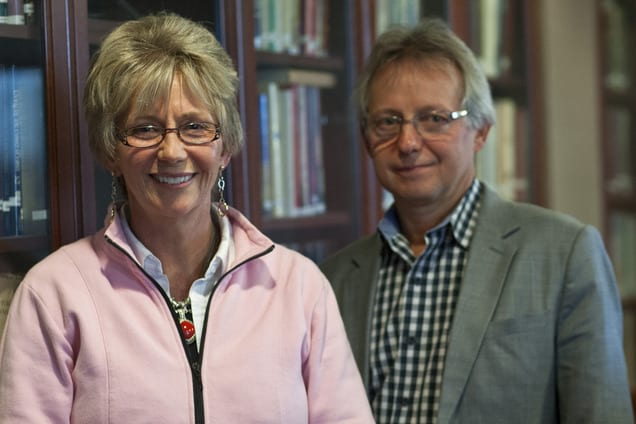
Terryl and Fiona GivensTerryl Givens holds the James A. Bostwick chair of English and is Professor of Literature and Religion at the University of Richmond and the author of several books. His writing has been praised by the new York Times as “provocative reading” and includes the most recent title, When Souls Had Wings, a history of the idea of pre-mortal life in Western Thought.


Fiona Givens is a retired modern language teacher with undergraduate degree’s in French and German and a graduate degree in European History. She is now an independent scholar who has published in several journals and reviews in Mormon studies, including the Journal of Mormon History, Exponent II, and LDS Living.


Terryl and Fiona are the grandparents of five, and parents of six. Welcome Terrly and Fiona Givens. They co-authored the book The Crucible of Doubt: Reflections on the Quest For Faith published by Deseret Book.


Questions addressed in this interview:


With two authors to a title I am always a bit curious as to who wrote what, or how that process took place. So how did that process take place?


This book is entitled The Crucible of Doubt and subtitled, Reflections on the Question for Faith. You have written on having doubts or experiencing what has been termed a faith crisis, would you call yourselves doubt scholars?


Now another word for crucible is trial, so the title itself implies that you approach having doubts or questions about LDS beliefs is a trial, but what makes these doubts such a trial? Why can’t they simply be viewed as a natural occurrence and something to address in some sense of normalcy rather than a “trial?”


While the book is primarily a devotional text, there does seem to have an apologetic subtext to it in that it helps the reader to reframe themselves with respect to the LDS Theology is such a way that questions are more answerable. What that part of the intent in your writing or did it simply speak to me that way?


Some introductions to books are superfluous. Your’s does not fit in that category, in fact, I would venture to say that if you skip over the introduction to the book, you will miss a good bit of the remainder of the text. That introduction starts out with a profound analogy using James Mossman’s front door in Scotland. Please help me to not sound so random in my reference. Please explain that story.


What are some of the common “wrong questions” that we encounter in current discourse?


The book continues to give an appraisal on the value of reason or in another sense the place of scientific information as the foundation upon which reason is based. Your argument sounds a little like a literature professor seeking to give more weight to their subject of scholarship.\


Let’s talk for a minute about the role of suffering.


It is the position of some today that questioning certain teachings, or even publicly advocating for things that shake up the norm is the act of an apostate, while others praise their actions as bringing people to a higher plane of Christianity through their advocacy. The next chapter of your book The Crucible of Doubt, deals with this idea and is entitled On Provocation and Peace: Of Life’s Fundamental Incompleteness. So is Christianity. What then is the role of questioning, of even experiencing a gospel that shakes us to our very core?


The Role and Function of the Church, a chapter that walks a line that few have articulated the way you have. There are those that feel that the church is the answer to all problems, and others that feel that church is the cause of all their problems. In order to talk about this concept we need to first put out your definition of religion, and your definition of church—then if you could go into what is the role of true religion and a true church in our spiritual journey?


Much has been talked about with the role of grace and works. A quote from your book comes from the German theologian Dietrich Bonhoffer, “cheap grace is the mortal enemy of the church” and one version of cheap grace is “baptism without discipline of community.” As we are talking about the disciples journey through doubt to greater faith and spirituality, what then do you attribute the role of ordinances and spiritual ritual in the overcoming of doubts?


There is a progression in your material as you address various paradigms that some have adopted, The Use and Abuse of Scripture, The Perils of Hero Worship, another interesting chapter is the Mormon’s and Monopolies chapters, and I am going to go ahead and leave those sections as a tease to go get the book, but these chapters lead in some ways to this idea of Spiritual Self-sufficiency, subtitled, Find Your Watering Place. What does Spiritual Self-sufficiency look like?


Let’s conclude with the articulation of what just might be at the heart of true faith, and that is the risk it presents. There is this quote, “The question may remain, how does one lock onto the propositional assertions of a restored gospel that is also laden with claims about gold plates and the Book of Abraham and a male priesthood and a polygamous past and a thousand other details we may find difficult? One might consider that the contingencies of history and culture and the human element will always constitute the garment in which God’s word and will are clothed. And one might refuse to allow our desire for the perfect to be the enemy of the present good. Finally we might ask ourselves, with the early disciples, “to whom [else] shall we go?” The Worst risk such a life of faith entails is not that such a life might be wrong—but that it might be incomprehensible to those unprepared to take such a risk.” It then goes to assert that to be faithful or to be a Christian disciple (that is my word not yours) that to live in faith is to live in such a way that one’s life would not make sense if God did not exist.”


Terryl and Fiona Givens are the co-authors of The Crucible of Doubt: Reflections on the Quest for Faith. Available now through Deseret Book at Deseret Book.com and other LDS retailers.


Filed Under: Faith Crisis, Hosts, Nick Galieti, Podcast Tagged With: doubt, Faith Crisis, Terryl and Fiona Givens

RiseUp Podcast: Overcoming Struggles and Doubts

August 27, 2014 by NickGalieti

https://media.blubrry.com/mormonfaircast/www.fairlatterdaysaints.org/wp-content/uploads/2014/08/RiseUp-Carpenter-OvercomingStruggles.mp3

Podcast: Download (33.4MB)

Subscribe: RSS

Jimmy Carpenter gives some personal insights as well as quotes from Elder D. Todd Christofferson, President Uchtdorf, President Monson, and Elder Ridd of the Young Men’s General Presidency. These insights address the idea that we all face struggles and doubts, but there are ways to prepare yourself for those times, as well as provide insights on the best ways to be patient in studying the gospel and finding answers to doubts.

The RiseUp Podcast is designed to offer answers to difficult or critical questions young adults have about LDS Church teachings or cultural practices. Feel free to ask questions about this episode or other topics in the comments section of this post @ blog.fairmormon.org, or email.

Filed Under: Podcast, RiseUp

Articles of Faith 14: Mormon Women Stand – Defending Prophetic Authority

August 25, 2014 by NickGalieti

https://media.blubrry.com/mormonfaircast/www.fairlatterdaysaints.org/wp-content/uploads/2014/08/AOF-MormonWomenStand-DefendingPropheticAuthority.mp3

Podcast: Download (42.6MB)

Subscribe: RSS

Kathryn-Skaggs

Kathryn Skaggs is the founder, and Angela Fallentine the co-founder of the Mormon Women Stand Website and Mormon Women Stand Facebook Page—an effort that focuses its efforts on defending the Church of Jesus Christ of Latter-day Saints, it’s leaders and its teachings by using a united voice of faithful women from the Church.

Kathryn Skaggs is a wife, mother, and grandmother. She took the Ann Romney approach to womanhood by staying home and raising her children, and making no apologies for doing so. Her online efforts started in 2008 with the blog A Well Behaved Mormon Woman where she shares her voice on a variety of social issues.

Angela grew up in Alberta Canada, and later attended Rick’s College/BYU Idaho, and Utah State UAngela-Fallentineniversity with a degree in Journalism with an emphasis in public relations and corporate communications. After graduating she interned for the Church Public Affairs Office and also worked for the Church’s Office of International and Governmental affairs in Washington D.C.


Both are here today to talk about what it means to be a voice on the internet, more specifically a female voice on the internet and the opportunities that effort has in sustaining Church leaders and furthering church dialogue online.

Questions we address in this interview: We are here (being recorded) at the Provo City library because you are both in town for BYU’s Education Week. How has your experience been so far?

In what ways does attending this conference help you in your efforts as a voice online in defense of the gospel and the church.

You have a combined effort that you co-founded, Mormon Women Stand. Was this a response to something in particular, the ground up inspiration to add your voice to the discourse online?

How and why is MWS different? (how many people involved and what is your audience?)

Who is the intended audience of your work with MWS?

There is an article posted on the Mormon Women Stand website entitled Chipping Away at Priesthood Authority of Mormon Prophets to Undermine Faith. This was written by Angela, but I was told by Kathryn that she shares your words. While neither of you have been guilty of too much subtlety when it comes to your online articles, I am sure the title is a bit of a giveaway, what is the genesis of the article?

The warning that you give in the article is that we need to give care and attention to the idea that the more we seek out the faults of our leaders, and they will be found as all of them will have them, the more we give place for discord, for distancing ourselves from orthodoxy. Is that accurate? What then is the remedy as many will say that there is nothing wrong with becoming aware of even the self proclaimed faults of the leaders themselves?

You give a statement in the article that might come across as strongly worded so I want to give you the opportunity to develop it further, “Is it wrong to speak ill or critically of church leaders or of a talk they give in General Conference? Yes. How serious is speaking and writing against the leaders of the Church? Very serious.”

You give in support of the thesis and title of your article, a quote from Elder Dallin H. Oaks, “Criticism is particularly objectionable when it is directed toward Church authorities, general or local. Jude condemns those who ‘speak evil of dignities.’ (Jude 1:8.) Evil speaking of the Lord’s anointed is in a class by itself. It is one thing to depreciate a person who exercises corporate power or even government power. It is quite another thing to criticize or depreciate a person for the performance of an office to which he or she has been called of God. It does not matter that the criticism is true. … When we say anything bad about the leaders of the Church, whether true or false, we tend to impair their influence and their usefulness and are thus working against the Lord and His cause.”

You encounter people everyday leaving comments on your articles and your accompanying Facebook posts. You are actively engaged in online discussion, which leads me to Elder Bednar’s talk here at Education Week regarding the proper use and role of social media online. In what ways has that presentation effected you, in what ways might you change and in what ways did you find yourselves affirmed by his presentation?


Kathryn Skaggs is the founder and Angela Fallentine the co-founder of Mormon Women Stand, found at mormonwomenwomenstand.com.


Filed Under: Articles of Faith, Hosts, Nick Galieti, Podcast, Women Tagged With: lds women, prophetic authority

RiseUp Podcast: Finding Answers to Prayer

August 20, 2014 by NickGalieti

https://media.blubrry.com/mormonfaircast/www.fairlatterdaysaints.org/wp-content/uploads/2014/08/RiseUp-Dalton-Prayer.mp3

Podcast: Download (52.4MB)

Subscribe: RSS

rane-first-vision“Have you prayed about it?” It’s a question that is often asked, but few may understand what it means to find answers to prayer. What kind of effort is needed to receive answers to prayer? How will we know when we have an answer to a prayer?

In this episode of RiseUp, Blake Dalton, a seminary teacher in Utah shares his insights from both the scriptures and from stories that illustrate principles that will help people find answers to prayers.


When it comes to difficult or critical questions about ANYTHING that comes up in life, wether it be a difficult question, or wether it be some other life choice, there is a good bit or work, of discipline that is needed if we are going to find the answer the Lord wants us to have. An all knowing God will not be without an answer to any question, but an all loving God will also help us to earn that answer so that the answer has the most value in our lives. Much like the Brother of Jared in the book of Ether in the Book of Mormon, our prayers should involve a lot of work, but it will also result in some marvelous experiences that will help us to know more fully who God is, and that he loves us.

The RiseUp Podcast is designed to offer answers to difficult or critical questions about LDS Church teachings or cultural practices. Feel free to ask questions about this episode or other topics in the comments section of this post @ blog.fairmormon.org, or email.

Filed Under: Podcast, RiseUp Tagged With: prayer, Young Adults

RiseUp Podcast – Introduction

August 13, 2014 by NickGalieti

https://media.blubrry.com/mormonfaircast/www.fairlatterdaysaints.org/wp-content/uploads/2014/08/RiseUp-Introduction.mp3

Podcast: Download (26.7MB)

Subscribe: RSS

RiseUp! is a new podcast, produced by FairMormon, that is designed to provide faithful answers to difficult or critical questions that young adults may have about Mormon (LDS) teachings or culture. Aimed at the seminary student or institute age individual, RiseUp deals honestly, and with sound reason, with a wide variety of topics ranging from how to find answers to prayer and what it means to “pray about it,” also, ways to talk with parents about issues surrounding chastity and sex, as well as answering questions that might arise with multiple accounts of the First Vision of Joseph Smith, church views on Same Sex (Gender) Attraction or even mental health issues.

Each week is a different contributor and on a different topic. And each week the audience will have a chance to interact with the shows contributors right here at blog.fairmormon.org for each episode. Ask frank and honest questions, and get honest and faithful answers. Look to the comments section of each episode for that interaction.

The goal is not just to answer questions, but also help young adults feel confidence and courage in defending their membership and beliefs in the Church of Jesus Christ of Latter-day Saints. RiseUp will release a new episode each Wendesday through the Mormon Fair-Cast podcast subscription in iTunes, Stitcher, and at blog.fairmormon.org.

Thanks for listening!

Nick Galieti – Producer of RiseUp

Filed Under: Podcast, RiseUp Tagged With: LDS Young Adult Podcast, Mormon Answers, RiseUp

Best of Fair 17: Sharon Eubank – This is a Woman’s Church”

August 12, 2014 by NickGalieti

https://media.blubrry.com/mormonfaircast/www.fairlatterdaysaints.org/wp-content/uploads/2014/08/BestOfFair-SharonEubank-2014FairMormonConference.mp3

Podcast: Download (70.6MB)

Subscribe: RSS

tumblr_m0jaoahzzF1qgi30vo1_r7_500Best of Fair Podcast episodes feature great presentations from FairMormon conferences, and Sharon Eubank’s presentation is no exception. We are grateful for her comments and perspective. This audio comes from her presentation at the 2014 FairMormon conference entitled, “This is a Woman’s Church.”

For the transcription of her presentation, please click here.

You can purchase access to video streaming of all the conference presentations at the FairMormon Bookstore.

Note: The audio presented in this podcast is “cleaned up” from the original video. So feedback issues and other noise previously present should be reduced if not unnoticeable. Other audio artifacts might be present, for this we apologize.

Filed Under: Podcast, Women Tagged With: Women and Priesthood

Articles of Faith 12: David L. Paulsen: A Mother There – A Survey of Historical Teachings about Mother In Heaven

August 3, 2014 by NickGalieti

https://media.blubrry.com/mormonfaircast/www.fairlatterdaysaints.org/wp-content/uploads/2014/08/AOF-DavidPaulsen-HeavenlyMother.mp3

Podcast: Download (38.0MB)

Subscribe: RSS


David-Paulsen-BYUDavid L. Paulsen received an associates degree from Snow College in English in 1957, a bachelors degree from BYU in Political Science in 1961 (in which he was BYU’s valedictorian), a JD from the University of Chicago Law School in 1964, and a Ph.D. in philosophy from the University of Michigan in 1975, with emphasis in the philosophy of religion. His doctoral dissertation, entitled The Comparative Coherency of Mormon (Finitistic) and Classical Theism, was said by two philosophers critical of LDS theology to be “by far the most detailed and comprehensive defense of Mormon theism.”


He is the author of an article in BYU Studies entitled: “A Mother There” A Survey of Historical Teachings about Mother in Heaven. Paulsen is married to Audrey Lucille Leer and has six children and eleven grandchildren. Recently returned from a mission with his wife to Iceland, welcome David L. Paulsen.


Questions and topics addressed in this interview:


Among your other articles is one that address an subject that is enigmatic for some, perhaps a rational conclusion for others. That is the subject and being of Heavenly Mother. We should give credit where credit is due. You had a research partner on this. Who is it, and what did they contribute?


“Penned in 1845 by Sister Eliza R. Snow (who would later serve as the Relief Society general president from December 18, 1867–December 5, 1887), these lines from our beloved hymn “O My Father” are perhaps the best-known reference in Latter-day Saint literature to a Mother in Heaven. Written and published within months of Joseph Smith’s death, these and other lines give considerable evidence that the Prophet taught of a Mother in Heaven, even if he did so only implicitly or restrictively to certain limited audiences.”

What is the earliest text that we have that mentions a heavenly mother, even if it is apocryphal?


Has anyone ever claimed to have had a vision of her?


There is a teaching that I have heard, and that is that we are not supposed to talk about our Heavenly Mother. It is too sacred to talk about. Where did that come from, and is there any substance to that concept? You refer to this in your article about, ““sacred” censorship.”

What might the warnings be with regard to a discussion of God Mother, or Heavenly Mother? Would worship be inappropriate and if so, why? Is she part of the Godhead?

As the song, Oh My Father, alludes, there has been a longing in the undercurrents of mormon thought for a connection to the feminine divine. How much of what we read is actual doctrine, official teachings of the church, vs. the longings and educated statements regarding who Heavenly Mother is, or if she exists?

There is also a notion that because God the Father and God the Mother are so unified that there is no need for distinction in holy writ or in our discourse as you cannot speak of one without speaking of the other. From what you have studied is our Heavenly Parents this androgynous concept of deity the dominant idea, or are there still some elements of individuality that each possess uniquely, but it is there combined effort that we experience?


The question arises with regard to Heavenly Mother’s involvement in our daily lives. The following is quote from President Harold B. Lee :

“Sometimes we think the whole job is up to us, forgetful that there are loved ones beyond our sight who are thinking about us and our children. We forget that we have a Heavenly Father and a Heavenly Mother who are even more concerned, probably, than our earthly father and mother, and that influences from beyond are constantly working to try to help us when we do all we can.”


Elder Glenn L. Pace (First Quorum of the Seventy, October 3, 1992–October 2, 2010) at a 2010 BYU devotional: “Sisters, I testify that when you stand in front of your heavenly parents in those royal courts on high and you look into Her eyes and behold Her countenance, any question you ever had about the role of women in the kingdom will evaporate into the rich celestial air, because at that moment you will see standing directly in front of you, your divine nature and destiny.”


David L. Paulsen and Martin Pulido are the authors of “A Mother There” A Survey of Historical Teachings about Mother in Heaven.


Links from the episode:

Joseph Smith and The Problem of Evil – BYU Devotional

Are Christian’s Mormon?

Joseph Smith Challenges the Theological World

Filed Under: Articles of Faith, Hosts, Nick Galieti, Podcast, Women Tagged With: Heavenly Mother, The Feminine Devine

  • « Go to Previous Page
  • Go to page 1
  • Interim pages omitted …
  • Go to page 6
  • Go to page 7
  • Go to page 8
  • Go to page 9
  • Go to page 10
  • Go to Next Page »

Primary Sidebar

Faithful Study Resources for Come, Follow Me

Subscribe to Blog

Enter your email address:

Subscribe to Podcast

Podcast icon
Subscribe to podcast in iTunes
Subscribe to podcast elsewhere
Listen with FAIR app
Android app on Google Play Download on the App Store

Pages

  • Blog Guidelines

FAIR Latest

  • Come, Follow Me with FAIR – Doctrine and Covenants 137–138 – Part 2 – Autumn Dickson
  • Come, Follow Me with FAIR – Doctrine and Covenants 137–138 – Mike Parker
  • FAIR December Newsletter
  • Come, Follow Me with FAIR – Doctrine and Covenants 137–138 – Part 1 – Autumn Dickson
  • Prophets of God 

Blog Categories

Recent Comments

  • LHL on Come, Follow Me with FAIR – Doctrine and Covenants 132 – Mike Parker
  • Stephen Johnsen on Come, Follow Me with FAIR – Doctrine and Covenants 132 – Mike Parker
  • Bruce B Hill on Come, Follow Me with FAIR – Doctrine and Covenants 124 – Part 1 – Autumn Dickson
  • Gabriel Hess on Join us Oct 9–11 for our FREE virtual conference on the Old Testament
  • JC on When the Gospel “Doesn’t Work”

Archives

Follow Us

  • Facebook
  • Twitter
  • iTunes
  • YouTube
Android app on Google Play Download on the App Store

Footer

FairMormon Logo

FAIR is a non-profit organization dedicated to providing well-documented answers to criticisms of the doctrine, practice, and history of The Church of Jesus Christ of Latter-day Saints.

Donate to FAIR

We are a volunteer organization. We invite you to give back.

Donate Now

Site Footer