• Skip to primary navigation
  • Skip to main content
  • Skip to primary sidebar
  • Skip to footer

FAIR

  • Start Here
  • Find Answers
  • Scripture Study
  • Blog
  • Events
    • FAIR Conference
    • Virtual Conferences
    • Special Events
  • FAIR Books
  • About
    • Media & Apps
  • Get Involved
  • Search

Joseph Smith

FAIR Examination 9: Joseph Smith’s Polygamy-Responding to the Tough Questions

August 7, 2013 by SteveDensleyJr

https://media.blubrry.com/mormonfaircast/www.fairlatterdaysaints.org/wp-content/uploads/2013/08/Brian-Hales.mp3

Podcast: Download (35.7MB)

Subscribe: RSS


hales

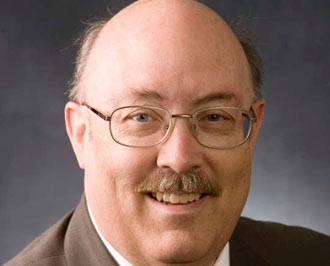
When people first learn that Joseph Smith practiced plural marriage, many jump to the conclusion that this is another example of someone who used religion for power and sex. In this podcast interview with Dr. Brian Hales, author of Joseph Smith’s Polygamy, Dr. Greg Smith asks Dr. Hales some of the most difficult questions that are ever posed regarding polygamy. Smith asks, what do we know about why plural marriage was instituted? What did Emma know, and when did she know it? What was her reaction to plural marriage? How can we begin to understand polyandry, or instances in which Joseph married women who were married to other men? Is it possible that polyandrous marriages were not consummated? Even though there’s no good evidence for consummation of polyandrous relationships, what do we know about sexuality in the other marriages to single women? How can we begin to understand why Joseph married several women who were under the age of eighteen, including two brides that were likely 14 years old? Did Joseph send men on missions to “steal their wives” or marry them? Did Joseph threaten or manipulate women into being married to him? Could and did women refuse him? What were the consequences of doing so?

In addition to his three-volume work entitled Joseph Smith’s Polygamy, Dr. Brian C. Hales is the author of Setting the Record Straight: Mormon Fundamentalism and also Modern Polygamy and Mormon Fundamentalism: The Generations after the Manifesto, which received the “Best Book of 2007 Award” from the John Whitmer Historical Association. In addition he co-authored the 1992 publication The Priesthood of Modern Polygamy: An LDS Perspective, and is webmaster of mormonfundamentalism.com. Brian works as an anesthesiologist at the Davis Hospital and Medical Center in Layton, Utah, where he serves as Secretary of the Medical Staff. He also served as President of the Davis County Medical Society in 2009.

An active member of The Church of Jesus Christ of Latter-day Saints, Dr. Hales has fulfilled many Church callings and is a former full-time missionary. He has presented at the Mormon History Association meetings, Sunstone Symposiums, and the John Whitmer Historical Association meetings on polygamy-related topics. His articles have also been published in Mormon Historical Studies, Dialogue: A Journal of Mormon Thought, and the Journal of Mormon History. In addition to his historical works, Brian has authored three books on doctrinal themes entitled The Veil  (Cedar Fort, 2000), Trials (Cedar Fort, 2002), and Light (Cedar Fort, 2004).

Dr. Hales has a website on Joseph’s plural marriages here. His material on Mormon “Fundamentalism” is available here.

gsmith

Dr. Greg Smith studied physiology and English at the University of Alberta. After medical school, he did his medical residency in Montréal, Québec, learning all the medical vocabulary and all the French Canadian slang that he didn’t learn during his LDS mission to Paris, France. He is now an old-style country doctor in rural Alberta with interests in internal medicine and psychiatry. A clinical preceptor for residents and medical students, he has been repeatedly honored for excellence in clinical teaching.

A member of FAIR since 2005, Greg helps manage the FAIR wiki. Due to his research interest in plural marriage, he has spoken to the Miller-Eccles study group and been published in the FARMS Review on this and other topics. With twelve years of classical piano training, he is a life-long audiophile and owns far too many MP3 files. He lives happily with his one indulgent wife, three children, and four cats.

The talk about Dr. Smith’s own experience is available at: Gregory L. Smith, “Everything You Always Wanted To Know About Plural Marriage (*But Were Afraid to Ask),” FAIR Conference presentation (7 August 2009). The audio version of this presentation can be heard here. You can also hear an interview with Dr. Smith at FAIR Podcast, Episode 1: Gregory L. Smith.

Additional materials from the FairMormon wiki and elsewhere are provided below, as well as cross-references to Hales’ books for readers who wish to study his evidence in more detail.

  • Regarding the types of evidence that exist for studying Joseph’s plural marriages: See Hales, Joseph Smith’s Polygamy, 1:6–21.
  • On fiction written about the Mormons rather than history or even journalism: See Hales, Joseph Smith’s Polygamy, 1:23, 27–29
  • Regarding Joseph’s behavior and character:
    • Early womanizer?
    • Lustful motives?
    • Youthful struggle with unchastity?
    • See also Hales, Joseph Smith’s Polygamy, 1:23–26, 31–84.
  • On the Introduction of eternal marriage
  •  On Fanny Alger and Willaim McLellin
  • Regarding the reports of Joseph telling people about an angel commanding him to implement plural marriage.
    • See Brian C. Hales, “Encouraging Joseph Smith to Practice Plural Marriage – The Accounts of the Angel with a Drawn Sword,” Mormon Historical Studies 11/2 (Fall 2012): 55–71.
    • See also Hales, Joseph Smith’s Polygamy, 1:105, 122, 187, 192–198, 219–20, 425–46, 614–15n64; 2:214, 219–20.
  • On Polyandry
    • A YouTube presentation by Dr. Hales at a recent FAIR conference can be found here, with a transcript here.
    • FairMormon wiki articles can be found here and here.
    • See also Hales, Joseph Smith’s Polygamy Vol. 1, 303–474.
  • On the case of Sylvia Sessions Lyon.
    • See Brian C. Hales, “The Joseph Smith-Sylvia Sessions Plural Sealing: Polyandry or Polygyny?” Mormon Historical Studies 9/1 (Spring 2008): 41–57.
    • See also Brain C. Hales, “A Response to D. Michael Quinn’s ‘The Evidence for the Sexual Side of Joseph Smith’s Polygamy‘,” (25 August 2012)
    • Further information can be found here and in Hales, Joseph Smith’s Polygamy Vol. 1, 349–376.
  • Regarding other marriages to single women?
    • See Hales, Joseph Smith’s Polygamy Vol. 1, 277–302.
    • A more dated analysis is also available in Smith, “George D. Smith’s Nauvoo Polygamy,” 108–112.
  • Regarding children
    • See the FairMormon Wiki article here.
    • See also Hales, Joseph Smith’s Polygamy Vol. 1, 277–302.
  • With respect to marriages to young women
    • See the FairMormon Wiki article here and here.
    • See also Hales, Joseph Smith’s Polygamy, 2:286–300, and Craig L. Foster, David Keller, and Gregory L. Smith, “The Age Joseph Smith’s Plural Wives in Social and Demographic Context,” in Newell G. Bringhurst and Craig L. Foster eds., The Persistence of Polygamy: Joseph Smith and the Origins of Mormon Polygamy (Independence, John Whitmer Books Press 2010), 152–183. Keller also explores some of the data discussed in this article on-line here and here.
  • A summary of the Temple Lot case, with citations from Hales’ volume is available here. See also Hales, Joseph Smith’s Polygamy, 1:404–407.
  • With respect to whether Joseph sent men on missions to marry their wives
    • See the FairMormon Wiki articles here and here.
    • Marriage to Orson Hyde’s wife is discussed here.
    • See also Hales, Joseph Smith’s Polygamy, 313–315, 515–594.
  • Did Joseph threaten or manipulate women into being married to him? Could and did women refuse him? What were the consequences of doing so?
    • See the FairMormon Wiki articles here and here.
    • On Nancy Rigdon and Sarah Pratt, see here.
    • See also Hales, Joseph Smith’s Polygamy, 1:274–275; 2:31, 115, 120–121.
  • With respect to Emma’s reaction to plural marriage
    • See the FairMormon Wiki article here.
    • See also Hales, Joseph Smith’s Polygamy Vol. 2, 33–138.
  • Regarding the unique dilemma in which Emma was placed by plural marriage
    • See the FairMormon Wiki entry here
    • See also Hales, Joseph Smith’s Polygamy Vol. 2, 113–138.
  • For views on why was plural marriage instituted
    • See Valerie Hudson Cassler, “Polygamy,” SquareTwo 3/1 (Spring 2010), Valerie Hudson Cassler, “A Reconciliation of Polygamy,” FAIR conference address (2011), and FAIR Examination 9: Polygamy as an Abrahamic Sacrifice–Dr. Valerie
      Hudson
      .
    • See also the FairMormon Wiki articles found here, here and here.
    • Finally, Hales, Joseph Smith’s Polygamy Vol. 3 is entirely dedicated to answering this question.

The opinions expressed in this podcast and in the referenced books, presentations, podcasts and articles do not necessarily represent the opinions of the Church of Jesus Christ of Latter-day Saints, or of FairMormon.

Filed Under: Joseph Smith, Podcast, Polygamy

Mormon FAIR-Cast 160a: Don Bradley and Dan Peterson Taking Questions

July 30, 2013 by SteveDensleyJr

https://media.blubrry.com/mormonfaircast/www.fairlatterdaysaints.org/wp-content/uploads/2013/07/Don-Bradley-and-Dan-Peterson-1.mp3

Podcast: Download (30.2MB)

Subscribe: RSS

BradleyDonWhy do people leave the Church? What was in the missing 116 pages of the Book of Mormon? How do we explain the appearance of horses in the Book of Mormon? Did Joseph Smith make up the story of the first vision long after it was supposed to have occurred? Is there any evidence that supports the authenticity for the Book of Abraham? Does the mention of grains in the Book of Mormon provide evidence of its truthfulness?

Joseph Smith Scholar Don Bradley and Dr. Dan Peterson take calls on K-Talk radio and answer a wide variety of questions in this interview that took place on July 25, 2013 on Drive Time Live with Mills Crenshaw.

Don Bradley is a writer, editor, and researcher specializing in early Mormon history. Don recently performed an internship with the Joseph Smith Papers Project and is completing his thesis, on the earliest Mormon conceptions of the New Jerusalem, toward an M.A. in History at Utah State University. He has published on the translation of the Book of Mormon, plural marriage before Nauvoo, and Joseph Smith’s “grand fundamental principles of Mormonism” and plans to publish an extensive analysis, co-authored with Mark Ashurst-McGee, on the Kinderhook plates. Don’s first book, The Lost 116 Pages: Reconstructing the Missing Contents of the Book of Mormon, is slated to be published by Greg Kofford Books.


DanPeterson

A native of southern California, Daniel C. Peterson received a bachelor’s degree in Greek and philosophy from Brigham Young University (BYU) and, after several years of study in Jerusalem and Cairo, earned his Ph.D. in Near Eastern Languages and Cultures from the University of California at Los Angeles (UCLA). Dr. Peterson is a professor of Islamic Studies and Arabic at BYU, where he has taught Arabic language and literature at all levels, Islamic philosophy, Islamic culture and civilization, Islamic religion, the Qur’an, the introductory and senior “capstone” courses for Middle Eastern Studies majors, and various other occasional specialized classes. He is the author of several books and numerous articles on Islamic and Latter-day Saint topics–including a biography entitled Muhammad: Prophet of God (Eerdmans, 2007)—and has lectured across the United States, in Europe, Australia, and New Zealand, and at various Islamic universities in the Near East and Asia. He served in the Switzerland Zürich Mission (1972-1974), and, for approximately eight years, on the Gospel Doctrine writing committee for The Church of Jesus Christ of Latter-day Saints. He also presided for a time as the bishop of a singles ward adjacent to Utah Valley University. Dr. Peterson is married to the former Deborah Stephens, of Lakewood, Colorado, and they are the parents of three sons.

This recording is posted here by permission of K-Talk Radio. The opinions expressed in this interview do not necessarily represent the views of FAIR or The Church of Jesus Christ of Latter-day Saints.

This is the first of a two-part interview.

Filed Under: Anti-Mormon critics, Apologetics, Book of Abraham, Book of Mormon, FAIR Conference, Joseph Smith, LDS Scriptures, Podcast

Best of FAIR 16: A Joseph Smith Miscellany

July 24, 2013 by SteveDensleyJr

https://media.blubrry.com/mormonfaircast/www.fairlatterdaysaints.org/wp-content/uploads/2013/07/A-Joseph-Smith-Miscellany.mp3

Podcast: Download (27.7MB)

Subscribe: RSS

bushman-01Richard Bushman, author of Joseph Smith: Rough Stone Rolling, discusses the issues that loomed in his mind as he wrote his books on Joseph Smith. One conclusion he has reached is that “we will not always be able to give satisfactory answers to our critics. We will never placate our critics completely and we should not seek to do so. If we placate them completely we are making our gospel, our history, conform to their sense of what life should be and what the path should be. In a sense, we’re caving in if we become too pleasing to those around them. We have to state it as we see it and recognize that there will be differences from what our critics expect of us and of what actually happened to our people.”

The text of his presentation can be found here. The video can be seen here.

Richard Bushman is the and Gouverneur Morris Professor of History emeritus at Columbia University. He is currently the Howard W. Hunter Visiting Professor in Mormon Studies at Claremont Graduate University. He also serves as one of three general editors of the Joseph Smith Papers.

The opinions expressed in this address do not necessarily reflect the opinions of The Church of Jesus Christ of Latter-day Saints, or of FAIR.

To purchase tickets to the 2013 FAIR Conference, visit this page. This short video clip also provides more information: FAIR Conference video clip.

Filed Under: Anti-Mormon critics, Apologetics, FAIR Conference, Joseph Smith, Women

Translating the Book of Mormon

June 27, 2013 by Mike Ash

Ash (newer) PictureHow did Joseph Smith translate the Book of Mormon? Joseph didn’t share many details of the translation process other than the fact that he received the translation by the gift and power of God. In order to develop any theories on how it was done we must to turn to clues from those who witnessed the events. When we examine those details we quickly discover that the translation process may not have been like what many members have envisioned.

As I began to write this article (based on my promise in the last installment) a friend of mine coincidentally published a detailed discussion of this topic in the new Interpreter on-line journal so I’ll provide a link at the end of this article for those who want more depth on this fascinating subject.

The average member’s mental image of Joseph translating the plates is generally formed from artwork in Church magazines and comments from Sunday school teachers rather than from a critical examination of the historical evidence.

Unfortunately most artists are not historians and may produce beautiful drawings and paintings that are based on misassumptions. Some wonderful LDS artwork, for example, depicts Caucasian-looking Nephites with romance-novel cover-model physiques wielding broadswords and Viking-like helmets—none of which fits the actual images that could be created for how early American warriors would have looked or the weapons they would have utilized.

The average painting of the Savior typically falls victim to similar problems with features generally based on the cultural or theological perspectives of the artist rather than on historical accuracy.[i] Da Vinci’s “Last Supper,” for example, depicts European-looking men sitting at a regular table instead of Middle Eastern men reclining at the low tables of Jesus’ day. An Italian Renaissance portrait of Mary and the baby Jesus has a Renaissance castle and town in the background, and the 1569 “Census of Bethlehem” by a Belgian artist depicts snow and ice-skaters in what appears to be a Renaissance Belgium village.[ii]

Some Church art of the Book of Mormon translation shows Joseph studiously looking at the plates with one finger on the engraved letters as if he could actually read what each character said. Some show Joseph reading the characters to his scribe Oliver Cowdery with the plates exposed in full view of them both. Other images show Joseph dictating to a scribe sitting on the opposite side of a curtain. A few images show Joseph looking at the plates through the Nephite Interpreters. All of these images are incorrect.

First, while a curtain may have been used between Joseph and Martin Harris (the first Book of Mormon scribe) the majority of the text was translated in the open while the plates were covered with a cloth. The plates were never in open view and were only exposed to others as instructed by the Lord when they were shown to witnesses. A curtain or blanket appears to have been draped across the entry to the living room at the Whitmer house (where much of the translation took place) in order to give Joseph and his scribe privacy from curious on-lookers while they worked.[iii] This curtain was apparently not present all of the time, however, because other Whitmer family members were witnesses to the translation process.

While some LDS artwork doesn’t depict any translating tools, most informed members are aware of the Nephite “Interpreters” that Moroni put in the stone box with the plates so Joseph would have a tool for translating. According to those who handled the Interpreters they were like large spectacles with stones or crystals in place of lenses.

Many of the details on the Book of Mormon translation method become lost or muddied over time. Part of this confusion was the result of the fact that some early Latter-day Saints began referring to the Interpreters as the “Urim and Thummim”—a reference to a device in the Old Testament that was associated with the High Priest’s breastplate and used for divination or for receiving answers from God (see Exodus 28:30).The early Saints didn’t think that the Nephite Interpreters were theUrim and Thummim mentioned in the Bible but were another Urim and Thummim given for translating the plates.

Unfortunately the Interpreters didn’t come with instructions and Joseph was apparently left on his own as to how to use them. This is when his cultural background came in handy.

It’s important first to return to D&C 1:24 which tells us that God speaks to His children (including the prophets) in “in their weakness, after the manner of their language, that they might come to understanding.” Our “language” includes more than words, but also how we understand the world around us. My “language” is different than the language of Joseph Smith, or Moses, or Gandhi. In Abraham’s day it was believed that the disc-shaped earth was covered with an inverted heavenly bowl that contained a heavenly ocean. Windows would open periodically to let out the rains.

In Joseph Smith’s day many of the frontiersmen in his vicinity believed that divining rods and seer stones could be used to find water, lost objects, and treasures. The ability to divine was generally considered to be a God-given gift and was practiced by devoutly religious men and women.

Long prior to acquiring the plates the young Joseph Smith was a believer in divination. In fact, he and his friends and family believed that he had the God-given gift to find lost objects by way of a seer stone. Seer stones were thought to be special stones in which one could see the location of the object for which one was divining. The seer stones were related to crystal balls or the practice of looking into pools of water or mirrors to divine information (such as the Queen’s magic mirror in the Snow White tale).

While this seems strange in modern times, in Joseph’s day many intelligent, educated, and religious people believed that such real powers existed in the forces of nature.  Well into the nineteenth-century, for instance, a number of people believed in alchemy—the belief that baser metals could be turned into gold. Some of New England’s practicing alchemists were graduates from Yale and Harvard and one alchemist was the Chief Justice of Massachusetts.[iv]

In order to see inside of the stone, it was sometimes placed between one’s eye and the flicker of a candle, or into something dark—such as an upside down hat—to shield out all light.  It was believed that in such an environment a seer (someone who “sees”) could stare into the stone for the information one was seeking.

When Joseph first acquired the Nephite Interpreters he also tried placing them into a hat to shield the light.  Although he apparently managed to translate the 116 lost pages by this method he complained that he had a hard time fitting the spectacles into the hat and that the two lenses were set too far apart—and were apparently made for someone with a broader face. It gave him eyestrain when he stared into the lenses.

After Joseph lost the first 116 pages, the Interpreters and his gift to translate were temporarily taken away. Eventually, after repenting, Joseph’s gift was returned but instead of using the Nephite Interpreters Joseph was allowed to use his seer stone to finish the translating process. In Joseph’s “language” the seer stone had the same properties as the Interpreters and was therefore also a Urim and Thummin. So when many early records speak of Joseph translating by way of the Urim and Thummim they are generally referring to the seer stone and not the Interpreters. Unfortunately, through time, members had forgotten about the seer stone (as divination become less accepted by society) and eventually most members assumed that the only Urim and Thummim Joseph used was the Interpreters.

The seer stone made the translating process much easier and we read that Joseph would sit for hours, his face in the hat—to obscure the light—while he saw the English translation of the Book of Mormon text that he dictated to his scribes.

While such an image may shock modern members, we have to remember that the Lord works through the culture of His children as speaks to them in language (words, symbols, and methods) through which they can understand. If one can accept that Nephite Interpreters could be used to translate an ancient document, is it really a wonder that God might have prepared Joseph with the cultural belief in seer stones so that he would be receptive to the workings of the Interpreters or that he believed that his seer stone was a Urim and Thummin like the Interpreters.

In reality the major difference between the average-member-view of the Book of Mormon translation (Joseph looked into the crystals in the Interpreters) vs the historical view (Joseph looked into a seer stone in a hat) is the “hat”—one is a stone or crystal out of the hat; the other is in a hat.

Joseph, of course, was not alone in believing in unscientific things in a world that didn’t have today’s advantages of scientific knowledge. The Bible records several instances or forms of divining as practiced by the righteous followers of God. We read that Aaron had a magical rod (Exodus 7:9–12). Jacob also used magical rods to cause Laban’s cattle to produce spotted and speckled offspring (see Genesis 30:37–39). In Numbers 5 we read about a magical test for adultery in which the priest would give the suspect a potion to drink. If the woman was guilty, her thigh would swell (v. 11–13, 21). The Old Testament records that the Joseph had a silver cup by which “he divineth” (Genesis 44:2, 5). This convention, known as hydromancy, was also practiced by the surrounding pagans. The casting of lots (sortilege) to choose a new Apostle (see Acts 1:26) was known and practiced by the pagans of Jesus’ day. Even some of Christ’s miracles were similar to the magic of surrounding pagans. Jesus’ healing of the deaf man by putting his fingers in his ears (Mark 7:33–35) and Jesus’ healing of the blind man by touching his eyes with spittle and clay were also common pagan practices.

Although the historical picture of the Book of Mormon translation process is not as commonly known to some members as it perhaps should be, despite the cries of critics the Church hasn’t been hiding this information. It has been mentioned for instance in the Ensign,[v] (one instance in which the talk was originally given to Mission Presidents[vi]), the Friend,[vii] as well as other LDS-targeted publications.

As we continue our discussion of scriptures and translation in subsequent installments it’s important to note that from the historical record we also learn that Joseph translated in plain sight of other witnesses and that, because his face was buried in a hat to exclude light, it would have been impossible for him to be reading the text of another document while he dictated the translation.

For those who would like to read a much more detailed paper on this topic I recommend Roger Nicholson’s new Interpreter article, “The Spectacles, the Stone, the Hat, and the Book: A Twenty-first Century Believer’s View of the Book of Mormon Translation” as well as Brant Gardner’s award winning book The Gift and Power: Translating the Book of Mormon.


[i] http://en.wikipedia.org

[ii] http://en.fairmormon.org

[iii] “David Whitmer Interview with Chicago Tribune, 15 December 1885,” in Early Mormon Documents, ed., Dan Vogel (Salt Lake City: Signature Books, 2003), 5:153.

[iv] Cited in Shaken Faith Syndrome: Strengthening One’s Testimony in the Face of Criticism and Doubt, 2nd ed. (Redding CA: FAIR, 2013), 282.

[v] Richard Lloyd Anderson, “By the Gift and Power of God,” Ensign (September 1977), 80; Gerrit Dirkmaat, “Great and Marvelous are the Revelations of God,”Ensign (January 2013), 46 (while Dirkmaat doesn’t mention the hat, he does explain that Joseph sometimes used a seer stone [also referred to as a Urim and Thummim] to receive revelation.)

[vi] Russell M. Nelson, “A Treasured Testament,” Ensign (July 1993). (Like Anderson [above] Nelson does mention both the seer stone and hat).

[vii] “A Peaceful Heart,” Friend (September 1974). (This article doesn’t mention the hat but does mention the “egg-shaped, brown rock… called a seer stone.”)

* This article was cross-posted from Meridian Magazine.

Filed Under: Book of Mormon, Joseph Smith, LDS History, LDS Scriptures

Mormon FAIR-Cast 137: The Anthon Transcript

March 27, 2013 by SteveDensleyJr

https://media.blubrry.com/mormonfaircast/www.fairlatterdaysaints.org/wp-content/uploads/2012/09/2012_07_15_religion_today.mp3

Podcast: Download (8.8MB)

Subscribe: RSS

What is the Anthon transcript? Can we rely on what Martin Harris said about his encounter with Proffessor Charles Anthon? How long did it take Joseph Smith to translate the Book of Mormon? In this episode of Religion Today, which originally aired on KSL Radio on July 15, 2012, Martin Tanner discusses these issues.

This recording was used by permission of KSL Radio and does not necessarily represent the views of The Church of Jesus Christ of Latter-day Saints or of FAIR. (Listeners will note that the first part of this recording is missing.)

Filed Under: Book of Mormon, Joseph Smith, Podcast

Keeping the Faith 5d: Don Bradley–Seeing with an eye of faith, pt 4

November 28, 2012 by SteveDensleyJr

https://media.blubrry.com/mormonfaircast/www.fairlatterdaysaints.org/wp-content/uploads/2012/11/Don-Bradley-pt-4.mp3

Podcast: Download (28.9MB)

Subscribe: RSS

This is part four of a four-part interview.

Filed Under: Apologetics, Book of Mormon, Joseph Smith, Podcast

Keeping the Faith 5c: Don Bradley–Seeing with an eye of faith, pt 3

November 28, 2012 by SteveDensleyJr

https://media.blubrry.com/mormonfaircast/www.fairlatterdaysaints.org/wp-content/uploads/2012/11/Don-Bradley-pt-3.mp3

Podcast: Download (39.6MB)

Subscribe: RSS

This is part three of a four-part interview.

Filed Under: Apologetics, Book of Mormon, Joseph Smith, Podcast

Keeping the Faith 5b: Don Bradley–Seeing with an eye of faith, pt 2

November 28, 2012 by SteveDensleyJr

https://media.blubrry.com/mormonfaircast/www.fairlatterdaysaints.org/wp-content/uploads/2012/11/Don-Bradley-pt-2.mp3

Podcast: Download (36.5MB)

Subscribe: RSS

This is the second part of a four-part episode.

Filed Under: Apologetics, Joseph Smith, Podcast

Critical Evidences of the Restoration

September 18, 2012 by John Lynch

Critics of the Church of Jesus Christ of Latter-day Saints are often quick to jump forward with any and all criticisms that they believe might prove the undoing of the testimony of our members. It is not uncommon to see the proverbial “shotgun” approach of bombarding individuals who are young in the gospel with a barrage of information that all seems damning on the surface.

Just as with birdshot that only requires a single pellet to bring down a flying bird, such an approach relies upon the notion that with so many things being claimed, that if only a few – or even one – were proven true, then the Church cannot be true!

Such tactics, also referred to as the “spaghetti” method of “throw it and see what sticks,” do not require depth of thought, or for that matter, even truth or context. It relies exclusively on the notion that if you throw enough at someone, they may just give up under the burden of fending off the attacks.
[Read more…] about Critical Evidences of the Restoration

Filed Under: Anti-Mormon critics, Joseph Smith

Learning About the Founding of Mormonism from Jon Krakauer (And Other Fallacies)

July 30, 2012 by Stephen Smoot

I like to consider myself a fairly open-minded guy. After all, I am studying history (particularly religious history) as my college major, which has exposed me a plethora of divergent world views. I know what it feels like to be an outsider of a religion looking in, so I often cut people slack when they approach Mormonism from perhaps not the greatest vantage.

That said, I have some serious misgivings when someone begins an article on the history of Mormonism like this:

And how did Mormonism come to be, anyway? Wasn’t it founded only a relatively little while ago by some dude in upstate New York? (Upstate New York?!)

I didn’t know the answer to any of these questions.

So, I’ve begun searching for answers.

My first stop, which which all the information below comes from, was John Krakauer’s 2003 book Under The Banner Of Heaven: A Story Of Violent Faith.

Yikes! There’s a big red flag right there. Allow me to explain. Jon Krakauer has penned a popular, yet highly questionable book on Mormonism. The punchline to Krakauer’s book is something along the lines of: “Mormonism, an inherently violent faith, is a shining example of how religious fundamentalism is dangerous, and will lead to killing people.”

There are so many problems with Krakauer’s book that to enumerate them here would take some considerable time. So instead I would direct the reader to this useful review of Krakauer’s book by Craig Foster. (Also don’t forget the Church’s posted review on the LDS Newsroom website.) [Read more…] about Learning About the Founding of Mormonism from Jon Krakauer (And Other Fallacies)

Filed Under: Apologetics, Book of Mormon, Joseph Smith, LDS History Tagged With: 1826 trial, Book of Mormon, Seer Stone, translation

  • « Go to Previous Page
  • Page 1
  • Interim pages omitted …
  • Page 38
  • Page 39
  • Page 40
  • Page 41
  • Page 42
  • Go to Next Page »

Primary Sidebar

Faithful Study Resources for Come, Follow Me

Subscribe to Blog

Enter your email address:

Subscribe to Podcast

Podcast icon
Subscribe to podcast in iTunes
Subscribe to podcast elsewhere
Listen with FAIR app
Android app on Google Play Download on the App Store

Pages

  • Blog Guidelines

FAIR Latest

  • LADBible/”Nemo the Mormon” Documentary Response
  • Come, Follow Me with FAIR – Isaiah 40–49 – Jennifer Roach Lees
  • Come, Follow Me with FAIR – Isaiah 40–49 – Part 1 – Autumn Dickson
  • Christ—Author and Finisher of Our Faith
  • Come, Follow Me with FAIR – Isaiah 13–14; 22; 24–30; 35 – Part 2 – Autumn Dickson

Blog Categories

Recent Comments

  • Willie Louise Truitt on The Joy of a Covenant Relationship with God
  • Katrina on In memory of Chandler “Chuck” Hendry
  • Nancy Farmer on Come, Follow Me with FAIR – Psalms 49–51; 61–66; 69–72; 77–78; 85–86 – Part 1 – Autumn Dickson
  • Nicko De Leon on In memory of Chandler “Chuck” Hendry
  • Becky Matson on In memory of Chandler “Chuck” Hendry

Archives

Follow Us

  • Facebook
  • Twitter
  • iTunes
  • YouTube
Android app on Google Play Download on the App Store

Footer

FairMormon Logo

FAIR is a non-profit organization dedicated to providing well-documented answers to criticisms of the doctrine, practice, and history of The Church of Jesus Christ of Latter-day Saints.

Donate to FAIR

We are a volunteer organization. We invite you to give back.

Donate Now

Site Footer

The use of the temple in past and current logos and the name "Mormon" are licensed for use by The Church of Jesus Christ of Latter-day Saints.