• Skip to primary navigation
  • Skip to main content
  • Skip to primary sidebar
  • Skip to footer

FAIR

  • Find Answers
  • Blog
  • Media & Apps
  • Conference
  • Bookstore
  • Archive
  • About
  • Get Involved
  • Search

Resources

Abraham’s Hebron: Then and Now, Part 5: Mamre (Old Testament Gospel Doctrine Lesson 8E)

February 20, 2018 by Jeffrey M. Bradshaw

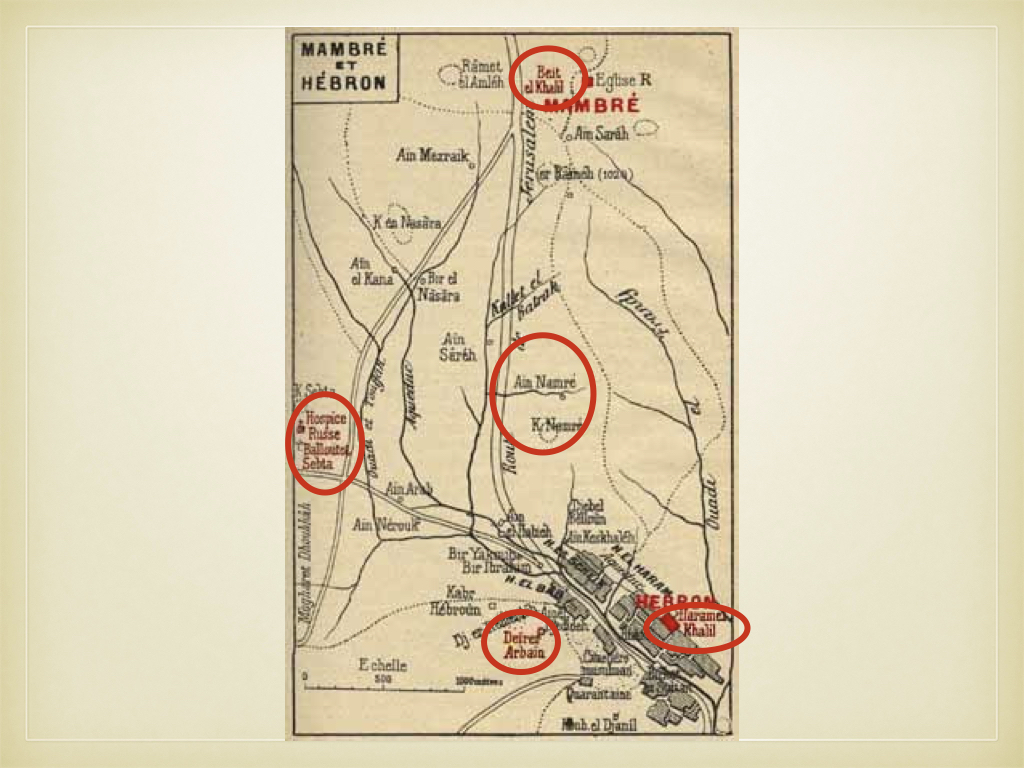
Meisterman’s 1906 map of the holy places of Hebron

An Old Testament KnoWhy for Gospel Doctrine Lesson 8: Living Righteously in a Wicked World (Genesis 13–14; 18–19) (JBOTL08E)

The purpose of this five-part series of videos is to provide a brief introduction to some of the places linked in tradition to the lives of the family of Abraham and Sarah. Many, though not all, of the sites we will visit are in or near the city of Hebron. Hebron and surrounding areas served as somewhat of a hub for Abraham in his many journeys.

Although archaeology cannot directly substantiate the scriptural stories of Abraham, Isaac, and Jacob, it can tell us something about the geography, settlements, and daily life of their contemporaries. Learning more about these places helps us get a more realistic sense of the setting in which the patriarchs lived. It is hoped that this series of presentations will increase exposure to these lesser-known sites, so rich in biblical history and tradition.

In this last of five video presentations, we will visit traditional sites associated with Mamre, the home of Abraham and Sarah after they separated from Lot. Mamre became the site of some of Abram’s most sacred experiences. After his return to Mamre from the rescue of Lot we read in Genesis 14 that he welcomed Melchizedek, “king of Salem” and “the priest of the most high God” (Genesis 14:18). Abraham sat in the door of his tent near the oak of Mamre when he received the visit of the three messengers who announced that he would have a son, Isaac, through Sarah.

As a first stop, we visit the St. George Church in Madaba, Jordan, where a floor mosaic of more than two million tiny pieces lays out the geography, buildings, and religious sites of ancient Palestine in the last half of the sixth century. The map of Hebron and Mamre provides useful clues to researchers about details of the ancient sites as well as to their location today.

Pinpointing the most likely sites for ancient Mamre is an almost impossible task. Five candidates have been identified, of which we will visit two of the most famous: the Oak of Sibta and Ramet al-Khalil/Elonei Mamre.

Though almost certainly not the tree of Abraham, the oak of Sibta has been venerated since the beginning of the Middle Ages. Its age has been variously estimated from 1000 to 5000 years old. The girth of its trunk is about ten meters. In former times, it grew undisturbed in the middle of a field surrounded by a small rock wall. Now it has declined in fulfillment of a tradition that it must die before the coming of the Antichrist. Anwar Zablah, the caretaker of the tree, has lived at the site of the Russian Orthodox monastery of the Holy Trinity for sixty years.

Two thousand years ago, at the same time he was building the Jerusalem Temple and the Tomb of the Patriarchs, Herod the Great erected a similar third monument at Ramet al-Khalil/Elonei Mamre, a traditional site of Abraham’s oak and well. Archaeologists have since discovered the remains of a church built by Constantine in 330 AD, constructed when he became disturbed by the pagan practices there.


The video may be found on the Interpreter Foundation website: KnoWhy OTL08E — Abraham’s Hebron: Then and Now, Part 5: Mamre

It can also be found on the FairMormon YouTube channel: https://www.youtube.com/watch?v=MNvHd5MzIoc

Filed Under: Bible, Lesson Aids, Questions, Resources Tagged With: Abraham, Constantine, Genesis, Gospel Doctrine: Old Testament, Hebron, Historicity, Mamre, Sarah

Abraham’s Hebron: Then and Now, Part 4: Ancient Hebron (Old Testament Gospel Doctrine Lesson 8D)

February 20, 2018 by Jeffrey M. Bradshaw

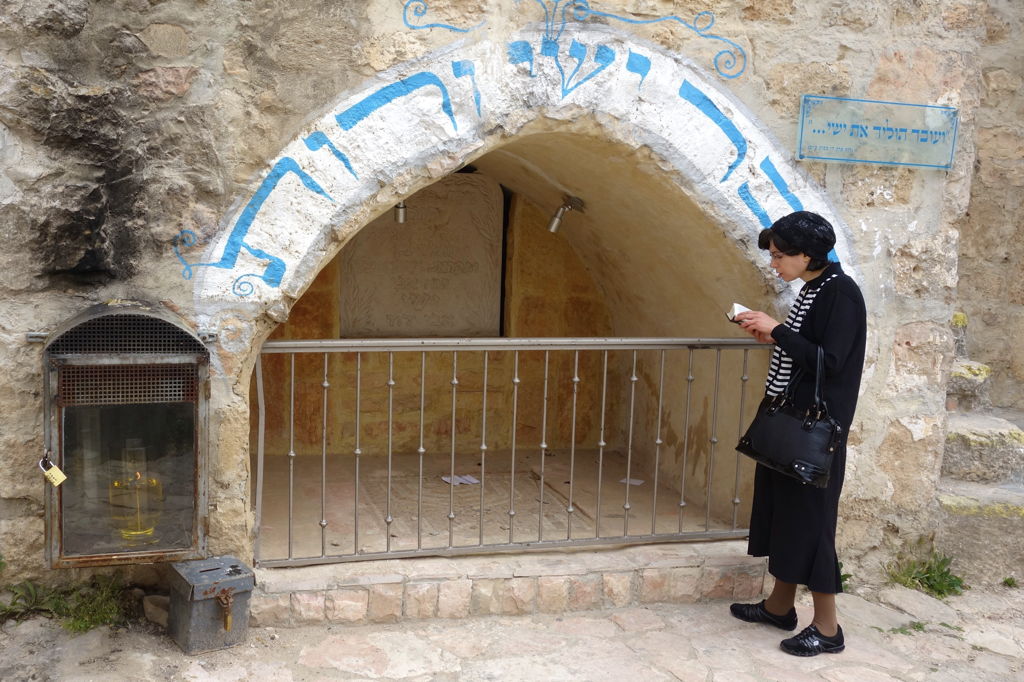
Jeffrey M. Bradshaw: Woman at the Tomb of Jesse and Ruth at Tel Hebron

An Old Testament KnoWhy for Gospel Doctrine Lesson 8: Living Righteously in a Wicked World (Genesis 13–14; 18–19) (JBOTL08D)

The purpose of this five-part series of videos is to provide a brief introduction to some of the places linked in tradition to the lives of the family of Abraham and Sarah. Many, though not all, of the sites we will visit are in or near the city of Hebron. Hebron and surrounding areas served as somewhat of a hub for Abraham in his many journeys.

Although archaeology cannot directly substantiate the scriptural stories of Abraham, Isaac, and Jacob, it can tell us something about the geography, settlements, and daily life of their contemporaries. Learning more about these places helps us get a more realistic sense of the setting in which the patriarchs lived. It is hoped that this series of presentations will increase exposure to these lesser-known sites, so rich in biblical history and tradition.

In this fourth presentation, we will visit archeological sites associated with the ancient city of Hebron. Hebron is referenced 68 times in the Old Testament. The first reference is in Genesis 13:18 when, after Abram separated from Lot and God promised to give him the land of Canaan, he “removed his tent, and came and dwelt in the plain of Mamre, which is in Hebron, and built there an altar unto the Lord.” Hebron was already a flourishing Canaanite city by that time. Though Abram’s presence would have naturally left little trace, biblical scholars still hope to find traces of King David’s reign of seven years in Hebron that occurred several hundred years later (2 Samuel 2:1-3). David’s son Absalom declared himself king in Hebron when he revolted against his father (2 Samuel 15:7-10). Because of its strategic position historically and geographically, t became the second most important Judean city after Jerusalem.

The population of Hebron is about 200,000 Palestinians and an estimated 600-800 Jews. We will begin by describing the current state of affairs in the partitioning of Hebron between Palestinian and Jewish residents. Certain of these areas continue to experience serious dispute.

Within the new Jewish neighborhood of Admot Yishai (Lands of Jesse) is an area of Tel Hebron thought to contain the entry to the north gate of ancient Canaanite Hebron, pre-dating the time of Abraham. This gate, or another on the south side, may have been the site where Abraham bough the cave of Machpelah to bury for family, the transaction having been witnessed by “all who entered the gate” (Genesis 23:10). A “four-room” house, of a kind typical to Israelite occupation, dates back 2700 years to the time of King Hezekiah. A layer of ash provides evidence that the house was destroyed in the Assyrian conquest of 701 BC.

Our second stop on Tel Hebron will be at the traditional site of the tombs of Jesse, the father of David, and Ruth, his faithful progenitor. On Shavuot, Jews ascend to this place to recite her story from the Bible.

On the south side of Tel Hebron are the “cyclopean walls.” The walls received the name “cyclopean” or giant not only because of the large size of some of the stones but also because the sons of Anak, some of the ancient inhabitants of the city, were reputed by the Bible to be giants.

Our last stop is a perennial spring on the lower eastern slope of Tel Hebron. It is called ’Ain Jadida (New Spring) in Arabic and Ein Avraham (Abraham’s Spring) in Hebrew. The spring seems to have been a water source for the ancient city. The water is about 12 feet deep. On hot, summer days its clear, cold waters are a playground for children. In the spring, adults from the Jewish community sometimes use the site as a “mikvah,” a purifying ritual bath.


The video may be found on the Interpreter Foundation website: KnoWhy OTL08D — Abraham’s Hebron: Then and Now, Part 4: Ancient Hebron

It can also be found on the FairMormon YouTube channel: https://www.youtube.com/watch?v=E-8oARSCdhs

Filed Under: Bible, Lesson Aids, Questions, Resources Tagged With: Abraham, Genesis, Gospel Doctrine: Old Testament, Hezekiah, Historicity, Jesse, Ruth, Sarah, Tel Hebron, Tel Rumeida

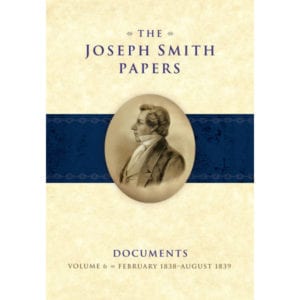
Book Review: The Joseph Smith Papers: Documents Volume 6: February 1838 – August 1839

February 12, 2018 by Trevor Holyoak

Available from the FairMormon Bookstore at 10% off

This volume of the Joseph Smith Papers was edited by Mark Ashurst-Mcgee, David W. Grua, Elizabeth A. Kuehn (who spoke at the FairMormon Conference last year about the Kirtland Crisis of 1837), Brenden W. Rensink, and Alexander L. Baugh. It covers the aftermath of the Kirtland Crisis of 1837 and the move to Far West, the identification of Adam-ondi-Ahman, the formation of the Danites, Hawn’s Mill, the Extermination Order, the stay at Liberty Jail, and the beginning of the building of Nauvoo.

As with all of the volumes, it contains an explanation of the Joseph Smith Papers Project and its methodologies, a volume introduction that gives the general history of the time covered by the volume, section introductions with more detailed history and context of the documents contained in each section, the documents themselves, and reference material such as source notes, timelines, maps, biographical information, organizational charts, and works cited. Each document is introduced by a source note and historical introduction. The document transcripts then contain extensive footnotes with sources and explanations. In some cases, the footnotes are multiple levels deep.

The editors did a good job of explaining controversial events and putting them in context, but also freely admitted when things are unclear. In the first document, the source note discusses Joseph Smith’s plural marriage with Fanny Alger, including Oliver Cowdery’s allegations of adultery. It is explained that “A few individuals who knew JS well recounted later that he had received a revelation about the doctrine of plural marriage as early as 1831, possibly in connection with his work on the revision, or new ‘translation’ of the Bible” (page 12). “After his separation from Alger and the controversy arising from Cowdery’s accusations, JS set aside the practice of plural marriage for several years” (page 13). A later footnote explains “It is unclear precisely what information JS entrusted to Cowdery regarding JS’s relationship with Fanny Alger. Later accounts variously claim that Cowdery performed a marriage ceremony between JS and Alger, was called upon by JS to mediate between JS and Emma Smith after the relationship with Alger was discovered, or had been taught the doctrine of plural marriage privately and took a plural wife contrary to JS’s instructions” (page 91, footnote 454). [Read more…] about Book Review: The Joseph Smith Papers: Documents Volume 6: February 1838 – August 1839

Filed Under: Book reviews, Joseph Smith, LDS History, Polygamy, Resources

Bamboozled by the “CES Letter”

September 28, 2015 by Mike Ash

MA

Bamboozled by the “CES Letter” (free download)

In April 2013 Jeremy T. Runnells published a pdf booklet entitled, “Letter to a CES Director.” This booklet, which is now typically referred to as the “CES Letter,” catalogues Runnells’ concerns and reasons why he left The Church of Jesus Christ of Latter-day Saints. Runnells has worked hard to make his booklet available to people everywhere (and in several languages) and has, unfortunately, been the agent for leading at least a few other believers out of Mormonism.

Sadly, most of those who have been bamboozled by the “CES Letter“ are Latter-day Saints who were blind-sided by scholarly-sounding interpretations of challenging data. In my opinion, however, the “CES Letter’s” caricature of Mormonism is fundamentally flawed and does not accurately represent either Mormonism or the only logical interpretations of the data.

Unfortunately, the reason the CES Letter has enjoyed any success is that most Latter-day Saints have never been exposed to some of the more complex matters in early Mormon history. On average, the typical Latter-day Saint has never needed to think outside of the box on Mormon-related philosophical, historical, or scholarly issues.

Also available for purchase in paperback edition

“Bamboozled by the ‘CES Letter'” explains, with a bit of humor, why these complex issues need not kill a testimony. Interpretation matters. A growing number of laymembers as well as educated Mormon scholars, are fully aware of the complex issues but continue strong in their faith because they recognize that there are logical interpretations which can be integrated with their belief in Mormonism.

Bamboozled by the “CES Letter” (free download)

Filed Under: Anti-Mormon critics, Apologetics, Faith Crisis, Michael R. Ash, Resources

  • « Go to Previous Page
  • Go to page 1
  • Interim pages omitted …
  • Go to page 7
  • Go to page 8
  • Go to page 9

Primary Sidebar

Faithful Study Resources for Come, Follow Me

Subscribe to Blog

Enter your email address:

Subscribe to Podcast

Podcast icon
Subscribe to podcast in iTunes
Subscribe to podcast elsewhere
Listen with FAIR app
Android app on Google Play Download on the App Store

Pages

  • Blog Guidelines

FAIR Latest

  • Come, Follow Me with FAIR – Doctrine and Covenants 137–138 – Part 2 – Autumn Dickson
  • Come, Follow Me with FAIR – Doctrine and Covenants 137–138 – Mike Parker
  • FAIR December Newsletter
  • Come, Follow Me with FAIR – Doctrine and Covenants 137–138 – Part 1 – Autumn Dickson
  • Prophets of God 

Blog Categories

Recent Comments

  • LHL on Come, Follow Me with FAIR – Doctrine and Covenants 132 – Mike Parker
  • Stephen Johnsen on Come, Follow Me with FAIR – Doctrine and Covenants 132 – Mike Parker
  • Bruce B Hill on Come, Follow Me with FAIR – Doctrine and Covenants 124 – Part 1 – Autumn Dickson
  • Gabriel Hess on Join us Oct 9–11 for our FREE virtual conference on the Old Testament
  • JC on When the Gospel “Doesn’t Work”

Archives

Follow Us

  • Facebook
  • Twitter
  • iTunes
  • YouTube
Android app on Google Play Download on the App Store

Footer

FairMormon Logo

FAIR is a non-profit organization dedicated to providing well-documented answers to criticisms of the doctrine, practice, and history of The Church of Jesus Christ of Latter-day Saints.

Donate to FAIR

We are a volunteer organization. We invite you to give back.

Donate Now

Site Footer