• Skip to primary navigation
  • Skip to main content
  • Skip to primary sidebar
  • Skip to footer

FAIR

  • Find Answers
  • Blog
  • Media & Apps
  • Conference
  • Bookstore
  • Archive
  • About
  • Get Involved
  • Search

Resources

What Are the Most Cited, Recited, and Misunderstood Verses in Deuteronomy? (Gospel Doctrine Lesson 17A)

May 1, 2018 by Jeffrey M. Bradshaw

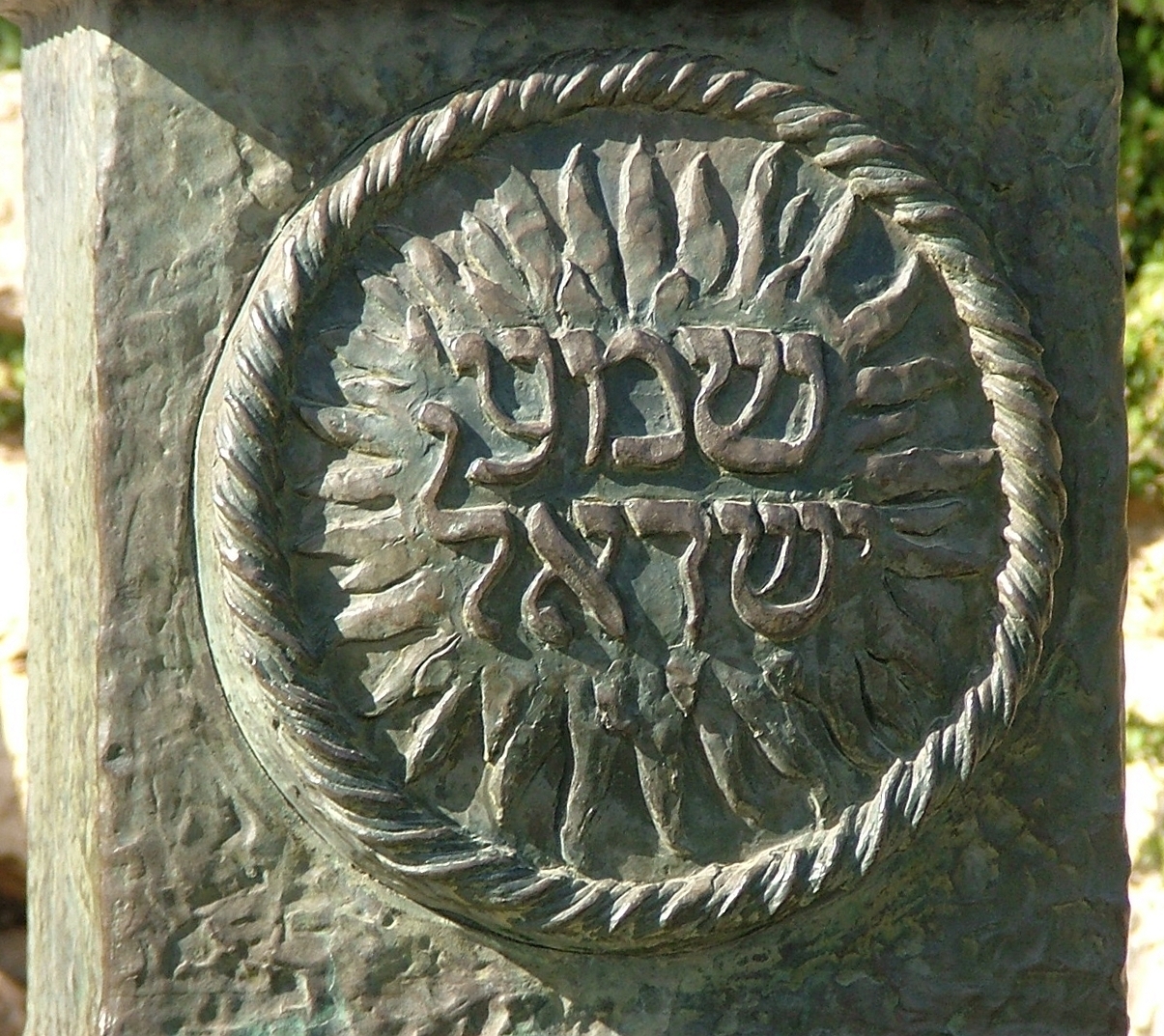
“Shema‘ Yisrael” (“Hear, [O] Israel”) at the Knesset Menorah in Jerusalem

An Old Testament KnoWhyrelating to the reading assignment for Gospel Doctrine Lesson 17: “Beware Lest Thou Forget” (Deuteronomy 6; 8; 11; 32) (JBOTL17A)

Question: What are the most cited, recited, and misunderstood verses in Deuteronomy?

Summary: Without any doubt Deuteronomy 6:4-5 best fits this description:

  1. Hear, O Israel: The Lord our God is one Lord:
  2. And thou shalt love the Lord thy God with all thine heart, and with all thy soul, and with all thy might.

The wording of Deuteronomy 6:5 is echoed frequently in the Old and New Testaments, the Book of Mormon, and the Doctrine and Covenants It is recited twice daily by observant Jews. And, sadly, commentaries on this and related scriptural verses rarely explore in any depth the long history of Jewish interpretation of the Hebrew terms that lie behind the key English words: “one,” “heart,” “soul,” “might.” A solid understanding of what Jesus Christ called the “first and great commandment” will illuminate the meaning of the law of consecration, “the last and hardest requirement made of men in this life.”


The full article may be found at the Interpreter Foundation website: KnoWhy OTL17A — What Are the Most Cited, Recited, and Misunderstood Verses in Deuteronomy?

Filed Under: Bible, Doctrine, Lesson Aids, Questions, Resources, Temples Tagged With: Commandments, Deuteronomy, Gospel Doctrine: Old Testament, Law of Consecration, Moses, Shema

Have There Been Any Latter-Day Parallels to Balaam’s Blessing? (Gospel Doctrine Lesson 16A)

April 26, 2018 by Jeffrey M. Bradshaw

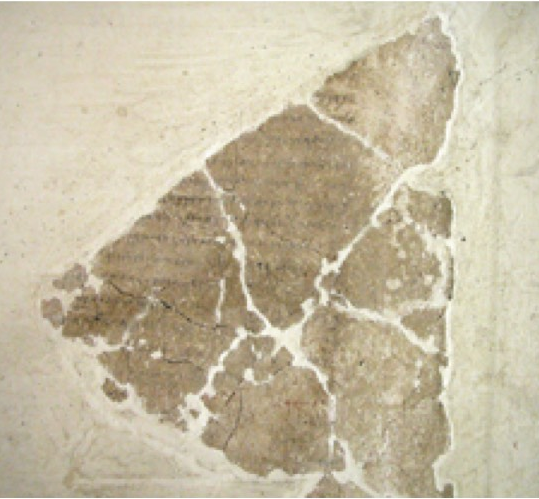
Balaam Son of Beor Inscription from Deir ʿAllah. This fragment, dating to several centuries after the events of Numbers, recounts a night vision of Balaam, son of Beor, a “seer of the gods.” Though the content of the vision has nothing to do with the Bible story, the text provides evidence that stories surrounding the figure of Balaam were known anciently outside the Bible among peoples who lived in the area east of the River Jordan.


An Old Testament KnoWhy relating to the reading assignment for Gospel Doctrine Lesson 16: “I Cannot Go Beyond the Word of the Lord” (Numbers 22-24; 31:1-16) (JBOTL16A)


Question: Have there been any latter-day parallels to Balaam’s blessing?

Summary: In 1898, Dr. John M. Reiner, a Roman Catholic scholar, visited Utah. In a talk given at the Salt Lake Tabernacle at the invitation of President Wilford Woodruff, he described in striking terms the parallels he found between ancient and modern Israel. Throughout his talk, he wove in colorful and informative allusions to the story of Balaam, who had blessed Israel in spite of himself. Reiner also spoke vigorously of the strength of the claims of apostolic authority that, in his view, had been credibly put forth by only two churches: the Roman Catholics and the Mormons. Although not claiming the gift of prophecy, Reiner’s eloquent words of appreciation and friendship for the Latter-day Saints were sincere and generous. His little-known discourse drawing out modern day parallels to the story of Balaam and Israel deserves to be better known.


The full article may be found at the Interpreter Foundation website: KnoWhy OTL16A — Have There Been Any Latter-Day Parallels to Balaam’s Blessing?

Filed Under: Apologetics, Bible, Interfaith Dialogue, LDS History, Lesson Aids, Prophets, Questions, Resources Tagged With: apostolic succession, Balaam, Gospel Doctrine: Old Testament, John M. Reiner, Numbers, priesthood, prophetic authority

How Do the Serpent and the Shewbread Symbolize Christ? (Gospel Doctrine Lesson 15A)

April 21, 2018 by Jeffrey M. Bradshaw

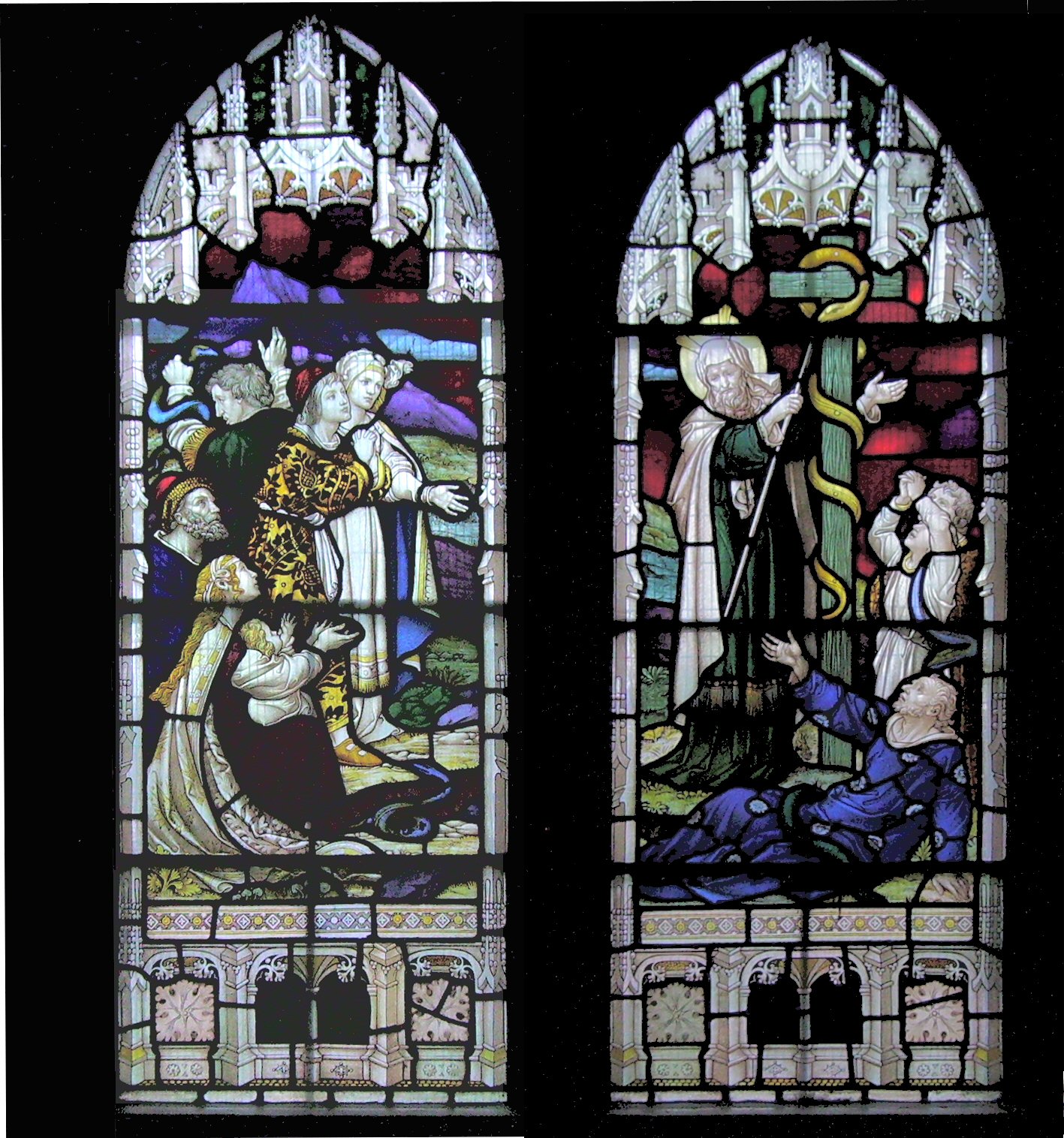
Moses and the Brazen Serpent, ca. 1866. Stained glass window at St Mark’s Church, Gillingham, England, 2006. Photograph by Mike Young

An Old Testament KnoWhy relating to the reading assignment for Gospel Doctrine Lesson 15: “Look to God and Live” (Numbers 11-14; 21:1-9) (JBOTL15A)

Question: Though the importance of the need generally for all of us to “look to God and live” is easily apparent to modern readers, the specific choice of a brazen serpent on a pole as a symbol of Christ is difficult to understand. How does the brazen serpent symbolize Christ? And, in addition, does the symbolism of the temple shewbread relate in any way to the modern LDS sacrament?

Summary: The serpent raised by Moses is cited more than once in the Book of Mormon as a type of Christ. Moreover, Jesus Christ Himself cites this story to explain His mission, but the imagery would have been much better understood by His disciples than it is to people today. In this article, we will draw out some of the ancient meanings of the serpent that was “lifted up”as they are found in the New Testament and the Book of Mormon. Less well known than the story of the brazen serpent is the symbol of the temple shewbread. Although reminiscent in some ways of the emblems of the Lord’s death that are administered in our weekly sacrament meetings, this article will explain how the symbolism of the shewbread builds upon and extends the significance of sacrament in ways that were meaningful in the time of Moses and continue to be so in our day.

The full article may be found at the Interpreter Foundation website: KnoWhy OTL15A — How Do the Serpent and the Shewbread Symbolize Christ?

Filed Under: Bible, Book of Mormon, Doctrine, Lesson Aids, Questions, Resources, Temples Tagged With: Brazen Serpent, Exaltation, Exodus, Gospel Doctrine: Old Testament, Jesus Christ, Moses, Numbers, Sacrament, Serpent, Shewbread, Son of Man

What Were Israel’s Most Serious Provocations of the Lord in the Wilderness? (Old Testament Gospel Doctrine Lesson 14B)

April 18, 2018 by Jeffrey M. Bradshaw

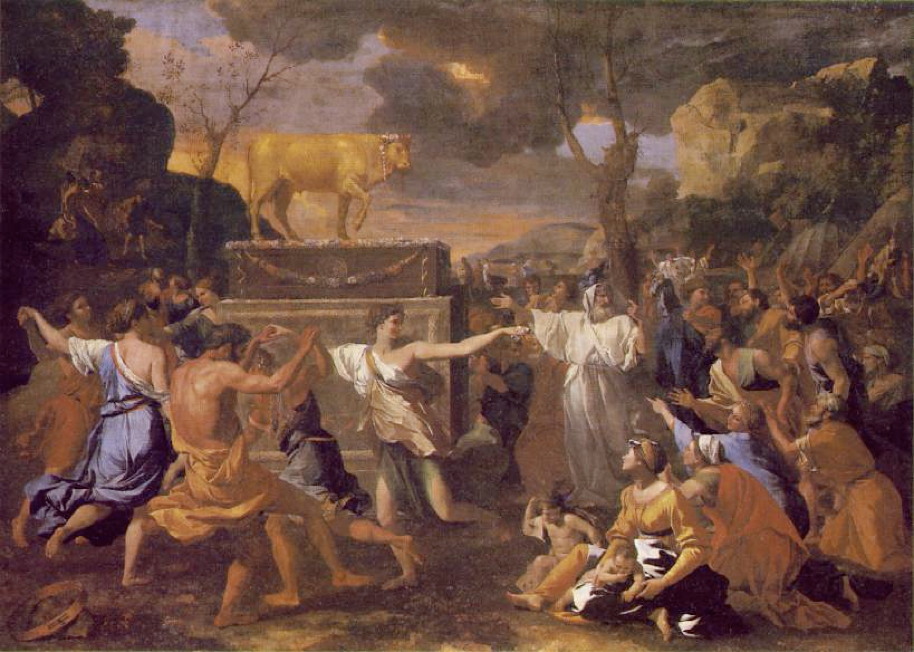
Nicolas Poussin, 1594-1665: The Adoration of the Golden Calf, 1634-1635

An Old Testament KnoWhy relating to the reading assignment for Gospel Doctrine Lesson 14: “Ye Shall Be a Peculiar Treasure Unto Me” (Exodus 15-20; 32-34) (JBOTL14B)

Question:The making of the golden calf is often presented as the height of Israel’s rejection of God and His law. But it was only one of several incidents of rebellion that occurred in the wilderness. Among all these provocations, which ones were the most serious?

Summary: The translations, revelations, and teachings of the Prophet Joseph Smith make it clear that the most serious provocations of Israel had nothing to do with their frequent complainings in the wilderness, as one might otherwise imagine. Rather, they had to do with Israel’s deliberate rejection of “the last law from Moses,” a law associated with the fulness of the priesthood and its blessings. In their rejection of that law, Israel had refused “to sanctify [themselves] that they might behold the face of God” at Sinai. Instead, they prayed “that God would speak to Moses and not to them.” “In consequence of [their actions, God] cursed them with a carnal law.” And, as a result of their actions, the generation of Israelites who left Egypt in the Exodus would neither enter into the promised land nor into “the rest of the Lord” during their mortal lives. Happily, the Lord holds out the possibility of receiving these sometimes-rejected blessings to faithful disciples in our day who are willing to make and keep the covenants that will enable them to continually enjoy the divine presence. Through “sufficient hope,” the “peaceable followers of Christ” may “enter into the rest of the Lord” in this life, “until [they] shall rest with him in heaven.” This rest “is the fulness of his glory.”


The full article may be found at the Interpreter Foundation website: KnoWhy OTL14B — What Were Israel’s Most Serious Provocations of the Lord in the Wilderness?


Filed Under: Bible, Lesson Aids, Questions, Resources, Temples Tagged With: Egypt, Exodus, Golden Calf, Gospel Doctrine: Old Testament, Moses, Provocations, Rest of the Lord, Sinai, Tabernacle

What Similarities Are There Between Egyptian and Israelite Temples? (Old Testament Gospel Doctrine Lesson 14A)

April 18, 2018 by Jeffrey M. Bradshaw

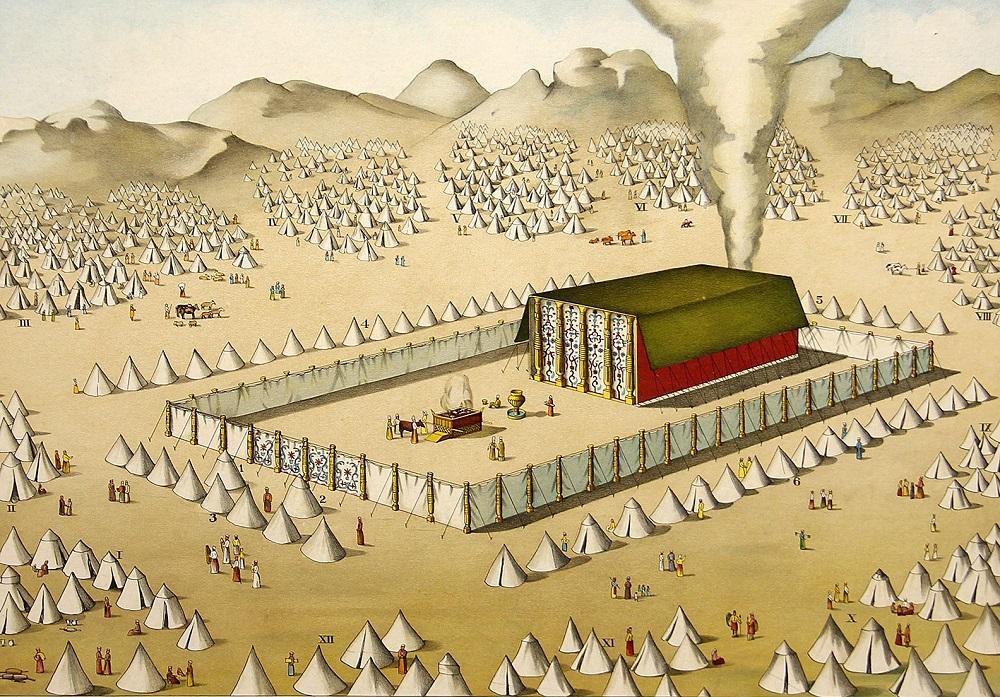
Israel Camped Around the Wilderness Tabernacle

An Old Testament KnoWhy relating to the reading assignment for Gospel Doctrinesson 14: “Ye Shall Be a Peculiar Treasure Unto Me” (Exodus 15-20; 32-34) (JBOTL14A)

Question:Hugh W. Nibley and other LDS scholars have written at length about Egyptian temple rites. What similiarities are there between Egyptian and Israelite temples?

Summary: Temple rituals in the ancient Near East may seem in some respects far removed from current LDS teachings and ritual practices. However, what resemblances exist may be of significance to a people who claim that divine revelation about the ordinances go back to the beginning of mankind. Predating, as they do, the Israelite Tabernacle by more than a millennium, such resemblances may be “an embarrassment to exclusivistic readings of religion.” However, to Mormons they represent “a kind of confirmation and vindication.” Thus, Egyptian and other ancient temples should be better understood by Latter-day Saints. For although, as Hugh Nibley observed, “the Egyptian endowment was but an imitation, it was still a good one, and we may be able to learn much from it.”


The full article may be found at the Interpreter Foundation website: KnoWhy OTL14A — What Similarities Are There Between Egyptian and Israelite Temples?

An excellent short video discussing the Tabernacle and the Messiah is available from Daniel Smith at https://www.youtube.com/watch?v=TygiChDYd4Y. See also his presentation on “The Ancient Israelite Tabernacle, Its Accoutrements, and the Priestly Vestments,” given at the Interpreter Foundation 2016 Temple on Mount Zion Conference, 5 November 2016, Provo, Utah (https://www.youtube.com/watch?v=rEb4u4OB-aU).

On 7 October 2015, Joshua Berman gave a talk for the Academy for Temple Studies on “Differences between the Tabernacle and the Temple,” https://www.youtube.com/watch?v=LB6xlYpcO-w. He gave a similar talk on 8 October 2015 at the BYU Kennedy Center, https://www.youtube.com/watch?v=15ew7on3UL4 and https://www.youtube.com/watch?v=K3nw2C1J5Lg.

Filed Under: Bible, Evidences, Lesson Aids, Questions, Resources, Temples Tagged With: Egypt, Exodus, Gospel Doctrine: Old Testament, Moses, Tabernacle

Is There Any Evidence in Egyptian Sources for the Exodus? (Old Testament Gospel Doctrine Lesson 13C)

April 17, 2018 by Jeffrey M. Bradshaw

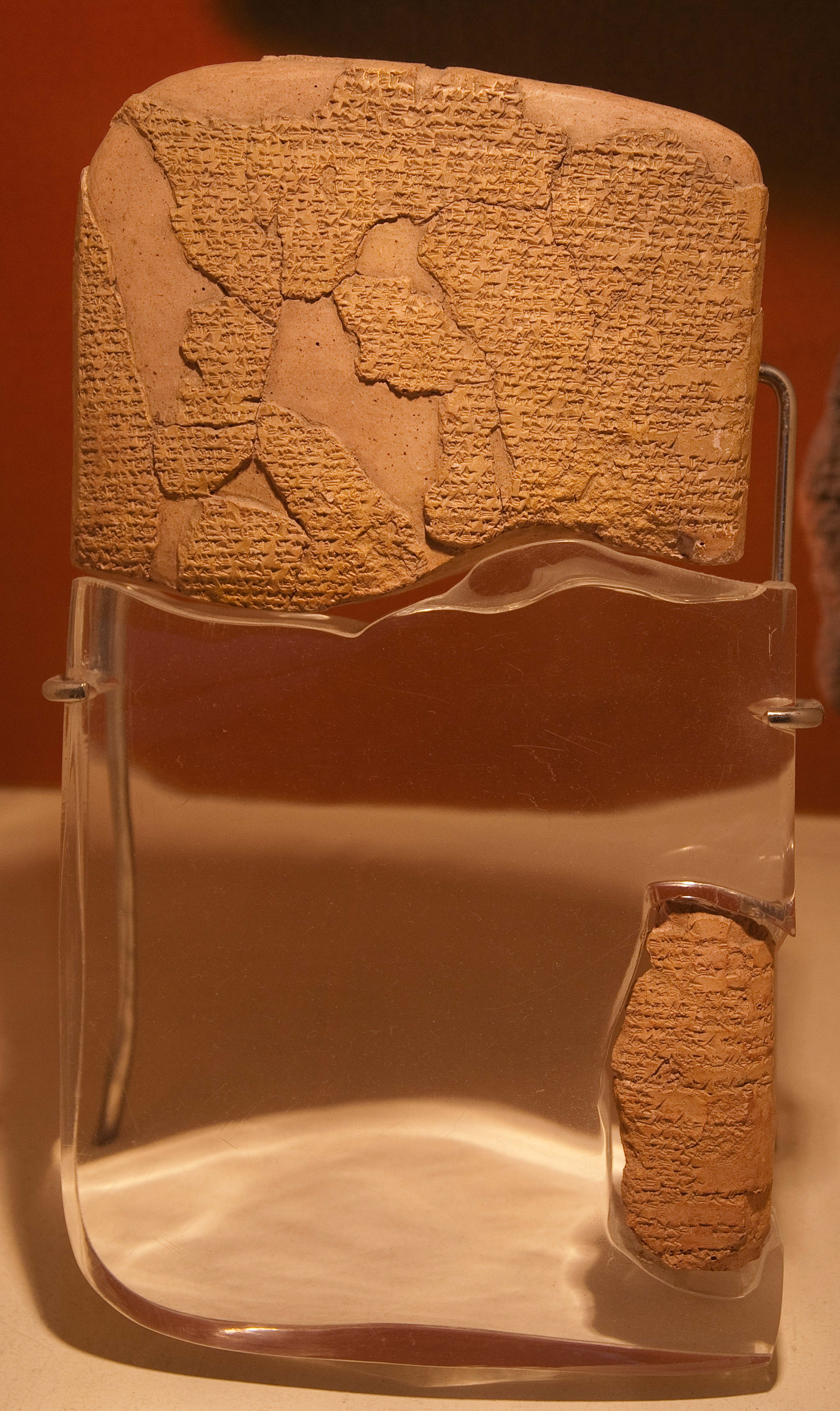
. Smaller Tablet of the Hittite version of a Peace Treaty with Egypt, executed ca. 1259 BCE, sixteen years after the battle of Kadesh. It “is believed to be the earliest example of any written international agreement of any kind.”

An Old Testament KnoWhy relating to the reading assignment for Gospel Doctrine Lesson 13: Bondage, Passover, and Exodus (Exodus 1-3; 5-6; 11-14) (JBOTL013C)

Question:Most of the evidence for the historical Exodus comes indirectly from general archaeological findings and analysis of biblical texts. Is there any specific evidence for the reality and timing of the Exodus that can be corroborated from Egyptian sources?

Summary: Very possibly, but only indirectly. Although the Egyptians, like other ancient (and modern!) peoples, were understandably loathe themselves to truthfully advertise a military defeat, the Israelites had no qualms about publicizing such an event on their behalf. According to Hebrew Bible scholar Joshua Berman, the author of the “Sea Account,” the oldest description of Israel’s final escape in the book of Exodus, may have intentionally imitated the structure and vocabulary of Egyptian propaganda trumpeting a claimed victory at the Battle of Kadesh in order to mock the pharaoh’s failure to stop the flight of the Israelites. Berman makes the case that the Israelite “Sea Account” must have been authored within a reasonable period of time after the battle of Kadesh by someone personally acquainted with the Egyptian inscriptions that reported it.

The full article may be found at the Interpreter Foundation website: KnoWhy OTL13C — Is There Any Evidence in Egyptian Sources for the Exodus?

A three-minute synopsis of Joshua Berman’s ideas can be found in “A Passover Story: Archaeology and the Exodus,” https://www.youtube.com/watch?v=ZOGeusWwI-g

For a video describing the historical context and weapon technology of the battle of Kadesh, see Ancient Discoveries: Egyptian Warfare (History Channel), Ancient Discoveries: Egyptian Warfare (History Channel), https://www.youtube.com/watch?v=SS3eQbQG5mA.

Filed Under: Apologetics, Bible, Lesson Aids, Questions, Resources Tagged With: Battle of Kadesh, Egypt, Exodus, Gospel Doctrine: Old Testament, Historicity, Joshua Berman

What Can We Learn About the Historical Exodus from Outside the Scriptures? (Old Testament Gospel Doctrine Lesson 13B)

April 4, 2018 by Jeffrey M. Bradshaw

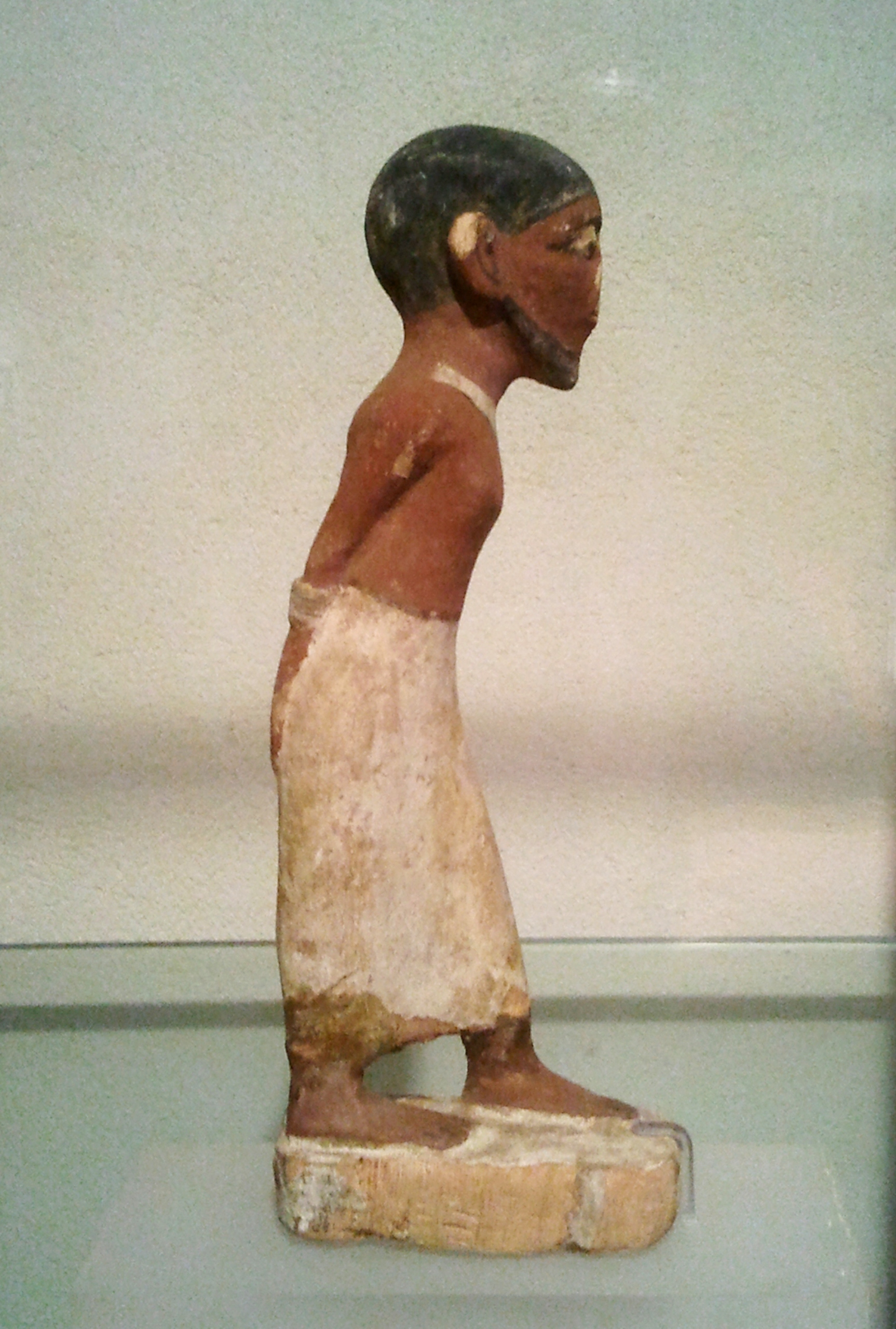
Egyptian Figurine of a Semitic Slave

An Old Testament KnoWhy relating to the reading assignment for Gospel Doctrine Lesson 13: Bondage, Passover, and Exodus (Exodus 1-3; 5-6; 11-14) (JBOTL013B)

Question:Many people nowadays believe that the Exodus never happened. Are there traces of the historical Exodus from sources outside the scriptures? And do they help us to identify the Pharaoh of the Exodus?

Summary: Traces of the historical Exodus from sources outside the scriptures are available — but only if you are looking for the right things in the right direction. For example, if you are expecting to find archaeological evidence for a group of millions of Israelites crossing the Sinai desert after leaving Egypt in shambles, you are likely to be disappointed. True it is that large numbers of Semitic people came and went from Egypt in the centuries before a much smaller group eventually left in the Exodus. But teasing out the subtleties of the historical context of scripture requires tedious and diligent efforts of dedicated scholars. In this article, we present a few tentative conclusions to help familiarize readers with the current landscape.


The full article may be found at the Interpreter Foundation website: KnoWhy OTL13B — What Can We Learn About the Historical Exodus from Outside the Scriptures?

A video version of a presentation by Richard Elliott Friedman on the subject entitled “The Exodus Based on the Sources Themselves” can be found at https://www.youtube.com/watch?v=H-YlzpUhnxQ 

Filed Under: Bible, Book of Mormon, Evidences, Lesson Aids, Questions, Resources Tagged With: Allegory of the Olive Tree, Egypt, Exodus, Gospel Doctrine: Old Testament, Historicity, Merneptah Stele, Moses, Pharaoh, Ramesses

What Did the Lord Mean When He Said Moses Would Become “God to Pharaoh” During the Plagues of Egypt? (Old Testament Gospel Doctrine Lesson 13A)

March 26, 2018 by Jeffrey M. Bradshaw

Moses and Pharaoh

An Old Testament KnoWhy relating to the reading assignment for Gospel Doctrine Lesson 13: Bondage, Passover, and Exodus (Exodus 1-3; 5-6; 11-14) (JBOTL013A)

Question: What did the Lord mean when He said Moses would become “god to Pharaoh”? And how did the symbolism of the plagues undermine the worship of the Egyptian gods?

Summary: Surprisingly, Exodus 7:1 does not say that Moses was to be “like a god” to Pharaoh. Rather, the Lord’s words to the prophet in Hebrew read literally: “I have made you God/god to Pharaoh.” To make sense of this statement, it must be remembered that Pharaoh was considered to be a god by his people, “the living embodiment of the god Horus, god of kingship, represented by the falcon.” Thus, to prepare Moses for his summit meeting with the leader of Egypt, the Lord made him not only Pharaoh’s “equal” in rank but in addition also enabled him to demonstrate the greater potency of the true and living God whom he served. Because Pharaoh was divine in the eyes of the Egyptians, “he should have been the one to function as a god to Moses.” However, in a display of power whose symbolism would have been understood both by the Egyptians and the people of Moses, Jehovah, the God of Israel, turned the tables against Ra, the supreme sun-god of Pharaoh. By means of the plagues, the great I AM executed His judgment “against all the gods of Egypt,” a phrase meant to include Pharaoh and his firstborn son. Drawing primarily on the work of Rutgers professor Gary A. Rendsburg, this article will describe the significance of the means by which Jehovah devastated Ra.


The full article may be found at the Interpreter Foundation website: KnoWhy OTL13A — What Did the Lord Mean When He Said Moses Would Become “God to Pharaoh” During the Plagues of Egypt?

For Gary Rendsburg’s 8 March 2007 BYU Kennedy Center talk entitled “Light from Egypt on the Exodus Story,” see https://www.youtube.com/watch?v=_iwvTZnwSy0 .

To access Gary Rendsburg’s 2013 video presentation of “Moses the Magician” at the UCSD Exodus Conference “Out of Egypt: Israel’s Exodus Between Text and Memory, History and Imagination,” see https://www.youtube.com/watch?v=aYhNo1jC9Fg .

Filed Under: Bible, Joseph Smith, Lesson Aids, Questions, Resources, Temples Tagged With: Deification, Exodus, Gospel Doctrine: Old Testament, magic, Moses, Pharaoh, Plagues

Why Are the Stories of Joseph and Judah Intertwined? (Old Testament Gospel Doctrine Lesson 11A)

March 12, 2018 by Jeffrey M. Bradshaw

Jacques Joseph Tissot (1836-1902): Joseph Converses with Judah, His Brother

An Old Testament KnoWhy for Gospel Doctrine Lesson 11: “How Can I Do This Great Wickedness?” (Genesis 34; 37-39) (JBOTL011A)

Question: Immediately after telling us that Joseph was sold as a slave in Egypt, Genesis suddenly shifts our attention to the story of Judah and Tamar. Why is Joseph’s story abruptly interrupted at such a crucial point in the narrative? Why are the stories of Joseph and Judah intertwined throughout?

Summary: The story of Judah and Tamar in Genesis 38 “seems to be out of place,” with some scholars going so far as to dismiss it entirely as “an extraneous fragment.” But closer examination of this story demonstrates that it was placed where it was for good reason — and with great skill and subtlety. Lacking this important interlude, we might think that the final chapters of Genesis were concerned only with the rise of Joseph in Egypt and how, through God’s hand and his faithfulness, Jacob’s family was saved from death by famine. In fact, however, the inspired editor of Genesis has deliberately interwoven the stories of Joseph and Judah. In doing so, he demonstrates that their trials and tests were part of a divine tutorial designed to prepare them to become models for and eventually leaders of their brothers. Later, Joseph and Judah would become the ancestors of the most prominent tribes of Israel’s northern and southern dominions respectively, thus fulfilling (in part) God’s promises to Abraham: “I will make nations of thee, and kings shall come out of thee.”

The full article may be found at the Interpreter Foundation website: Why Are the Stories of Joseph and Judah Intertwined?

Filed Under: Bible, Lesson Aids, Questions, Resources Tagged With: Forgiveness, Genesis, Gospel Doctrine: Old Testament, Joseph, Judah, Reconciliation

What Are We To Make of Jacob’s Apparent Deceitfulness? (Old Testament Gospel Doctrine Lesson 10A)

March 5, 2018 by Jeffrey M. Bradshaw

Francesco Hayez (1791-1881): Meeting of Esau and Jacob, 1844

An Old Testament KnoWhy for Gospel Doctrine Lesson 10: Birthright Blessings; Marriage in the Covenant (Genesis 24-29) (JBOTL010A)

Question: Why is Jacob so greatly blessed when “the pivotal moments in the scriptural account of [his] life seem to turn on deceit”?

Summary: Jacob’s youthful deceits are proverbial. Indeed, the Savior Himself praised Nathanael by contrasting him with Jacob, saying, “Behold an Israelite [i.e., descendant of Jacob] indeed, in whom[, unlike his forefather, there] is no guile!” However, as in all scripture stories (as in life), we cannot fully understand the lessons of Jacob’s divine tutorial unless we follow it to its end. In the Bible’s version of measure-for-measure justice, the deceiver will be himself deceived. Eventually, among the happy results of Jacob’s crucible of experience, he will learn humility, forgiveness, and that God has His own ways to fulfill His own promises.


The full article may be found at the Interpreter Foundation website: KnoWhy OTL10A — What Are We to Make of Jacob’s Apparent Deceitfulness?


Filed Under: Bible, Lesson Aids, Polygamy, Questions, Resources, Temples, Women Tagged With: Gospel Doctrine: Old Testament, Jacob, Laban, Leah, Rachel

  • « Go to Previous Page
  • Go to page 1
  • Interim pages omitted …
  • Go to page 6
  • Go to page 7
  • Go to page 8
  • Go to page 9
  • Go to Next Page »

Primary Sidebar

Faithful Study Resources for Come, Follow Me

Subscribe to Blog

Enter your email address:

Subscribe to Podcast

Podcast icon
Subscribe to podcast in iTunes
Subscribe to podcast elsewhere
Listen with FAIR app
Android app on Google Play Download on the App Store

Pages

  • Blog Guidelines

FAIR Latest

  • Come, Follow Me with FAIR – Doctrine and Covenants 137–138 – Part 2 – Autumn Dickson
  • Come, Follow Me with FAIR – Doctrine and Covenants 137–138 – Mike Parker
  • FAIR December Newsletter
  • Come, Follow Me with FAIR – Doctrine and Covenants 137–138 – Part 1 – Autumn Dickson
  • Prophets of God 

Blog Categories

Recent Comments

  • LHL on Come, Follow Me with FAIR – Doctrine and Covenants 132 – Mike Parker
  • Stephen Johnsen on Come, Follow Me with FAIR – Doctrine and Covenants 132 – Mike Parker
  • Bruce B Hill on Come, Follow Me with FAIR – Doctrine and Covenants 124 – Part 1 – Autumn Dickson
  • Gabriel Hess on Join us Oct 9–11 for our FREE virtual conference on the Old Testament
  • JC on When the Gospel “Doesn’t Work”

Archives

Follow Us

  • Facebook
  • Twitter
  • iTunes
  • YouTube
Android app on Google Play Download on the App Store

Footer

FairMormon Logo

FAIR is a non-profit organization dedicated to providing well-documented answers to criticisms of the doctrine, practice, and history of The Church of Jesus Christ of Latter-day Saints.

Donate to FAIR

We are a volunteer organization. We invite you to give back.

Donate Now

Site Footer