• Skip to primary navigation
  • Skip to main content
  • Skip to primary sidebar
  • Skip to footer

FAIR

  • Find Answers
  • Blog
  • Media & Apps
  • Conference
  • Bookstore
  • Archive
  • About
  • Get Involved
  • Search

Testimonies

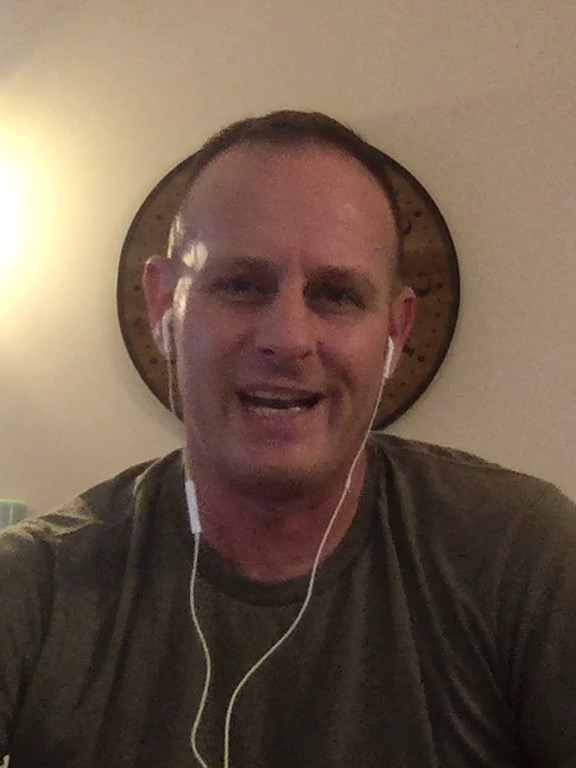
10 Questions with Dennis B. Horne

May 20, 2018 by Trevor Holyoak

Cross-posted from From the Desk of Kurt Manwaring

I recently had the privilege to interview Dennis B. Horne.

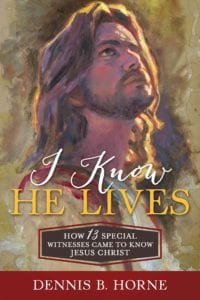
Horne is the author of many books, including Bruce R. McConkie: Highlights from his Life and Teachings, Latter Leaves in the Life of Lorenzo Snow, I Know He Lives: How 13 Special Witnesses Came to Know Christ, and Determining Doctrine. A Reference Guide For Evaluating Doctrinal Truth.

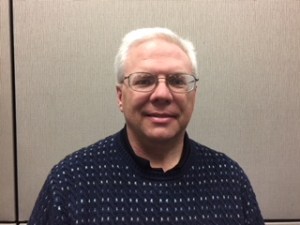
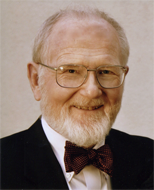
Dennis B. Horne, Photo provided by Dennis Horne.

Kurt Manwaring: Welcome! Before we begin, could you tell us a little bit about yourself and how you first got interested in writing about religious topics?

I am an independent researcher and author. I grew up in Bountiful, Utah, and served a mission to Independence Missouri. I obtained my bachelors from Weber State University in Communications with an emphasis in broadcasting. I spent some ten years, off and on, working for two local Salt Lake City television stations before I went to work for the LDS Church twenty years ago. I have two wonderful wives (one of them deceased and on the other side of the veil for the last twelve years) and three daughters.

The spark of interest I felt for church history and doctrine when I attended Seminary grew into a roaring fire while I served a mission. That is where I first heard the other missionaries speak so respectfully and reverently of Elder Bruce R. McConkie’s teachings and testimony. He had passed away just a few weeks before I graduated from high school, and I had not had the sense to pay attention to his final famous (April 1985) General Conference address at the time he delivered it. Following my mission, and on the side while pursuing my degree, I voraciously consumed Elder McConkie’s writings and those of the other great doctrinal thinkers and authorities of the Church. I even became a small-time collector of Mormon books when I could afford it. I began assembling my own files, filled with talks and articles related to church history and doctrine. These books and files became my main interest outside of gaining my secular education. Fortunately, I came under the influence of two knowledgeable and wise CES men, who gave me invaluable counsel in how to approach my gospel and historical studies: what to feast on; what to be wary of and why; what to study for proper perspective, and where to find the purest and sweetest doctrine.

These formative years in my twenties helped me avoid a serious crisis of faith, such as what has become something of a fad today. During the decade of the 1990s I felt, rightly or wrongly, that I might become knowledgeable enough to begin considering the possibility of doing some writing. I loved good Mormon books and soon developed the desire to contribute to the field myself. How little I knew how difficult that would be.

Kurt Manwaring: What do you do for work and what is your writing schedule like? [Read more…] about 10 Questions with Dennis B. Horne

Filed Under: Anti-Mormon critics, Apologetics, Chastity, Doctrine, Faith Crisis, First Vision, Homosexuality, LDS History, Perspective, Prophets, Questions, Resources, Temples, Testimonies Tagged With: Dennis B Horne

The Coming Revolution of Virtual Missionaries: Review of Books by Greg Trimble

May 3, 2018 by Trevor Holyoak

Available from the FairMormon Bookstore at 15% off

If I remember correctly, I first came across Greg Trimble’s blog by seeing his post “Quit Acting Like Christ Was Accepting of Everyone and Everything” shared by a friend on Facebook, apparently some time in 2014. I liked it enough that I shared it in a few places as well. He has since written a bunch of other posts that have also been shared widely, so most LDS people online are probably familiar with his name.

In the last year, Trimble has started publishing books. His first one, Dads Who Stay and Fight: How to Be a Hero to Your Family, showed up on Audible’s website, so I thought I’d give it a listen. It is a book about being a good father written by a young father, so it does have its weak spots. A lot of the chapters could have used fewer stories and more concrete examples. But there were some really good ones that made the whole thing worthwhile, in particular the ones on marriage, technology, and protecting your family from worldly influences.

A few months ago, I saw that he had published another book, The Coming Revolution Inside of Mormonism. I was curious enough about the title that I wanted to take a look at it, and I requested a review copy. When it arrived, it was accompanied by The Virtual Missionary: The Power of Your Digital Testimony, which had also recently been published. Since then, The Coming Revolution Inside of Mormonism has been retitled to The Cultural Evolution Inside of Mormonism, apparently because the original title had caused a lot of confusion. In order to avoid confusion here, I will refer to the book by its new title (and assume that none of the actual content has changed). [Read more…] about The Coming Revolution of Virtual Missionaries: Review of Books by Greg Trimble

Filed Under: Anti-Mormon critics, Apologetics, Atheism, Book of Mormon, Book reviews, Conversion, Doctrine, Faith Crisis, Interfaith Dialogue, Joseph Smith, LDS Culture, LDS History, Polygamy, Power of Testimony, Prophets, Questions, Resources, Temples, Testimonies Tagged With: blog, blogging, book review, digital missionary, Greg Trimble, Trevor Holyoak

FairMormon Conference Podcast #4 – Daniel Peterson, “What Difference Does It Make?”

March 19, 2018 by Trevor Holyoak

https://media.blubrry.com/mormonfaircast/www.fairlatterdaysaints.org/wp-content/uploads/2018/03/Dan-Peterson.mp3

Podcast: Download (97.2MB)

Subscribe: RSS

This podcast series features a FairMormon Conference presentation each month. If you would prefer to watch the videos, they can still be purchased here for the 2017 conference. Older conference presentation videos are available on our YouTube channel and FairMormon TV for Roku, Amazon Fire TV, and Android TV.

Daniel Peterson, What Difference Does It Make?

Video and transcript available here.

Daniel C. Peterson

A native of southern California, Daniel C. Peterson received a bachelor’s degree in Greek and philosophy from Brigham Young University (BYU) and, after several years of study in Jerusalem and Cairo, earned his Ph.D. in Near Eastern Languages and Cultures from the University of California at Los Angeles (UCLA). Dr. Peterson is a professor of Islamic Studies and Arabic at BYU, where he has taught Arabic language and literature at all levels, Islamic philosophy, Islamic culture and civilization, Islamic religion, the Qur’an, the introductory and senior “capstone” courses for Middle Eastern Studies majors, and various other occasional specialized classes. He is the author of several books and numerous articles on Islamic and Latter-day Saint topics–including a biography entitled Muhammad: Prophet of God (Eerdmans, 2007)—and has lectured across the United States, in Europe, Australia, and New Zealand, and at various Islamic universities in the Near East and Asia. He served in the Switzerland Zürich Mission (1972-1974), and, for approximately eight years, on the Gospel Doctrine writing committee for The Church of Jesus Christ of Latter-day Saints. He also presided for a time as the bishop of a singles ward adjacent to Utah Valley University. Dr. Peterson is married to the former Deborah Stephens, of Lakewood, Colorado, and they are the parents of three sons.

Filed Under: Anti-Mormon critics, Apologetics, Atheism, Doctrine, Evidences, FAIR Conference, FairMormon Conference, Faith Crisis, LDS Culture, Perspective, Podcast, Suicide, Testimonies

LeadingLDS Podcast: How I Lead as Bishop After a Faith Crisis

February 8, 2018 by FAIR Staff

https://media.blubrry.com/mormonfaircast/media.blubrry.com/leadinglds/content.blubrry.com/leadinglds/2018-02-05-HIL-Dan-Conway.mp3

Podcast: Download (63.1MB)

Subscribe: RSS

Dan Conway is a bishop in Newcastle, in northeast England, and has also served as an elders quorum president. He served a mission to Scotland, and works as a digital marketing executive. In this podcast episode from Leading LDS, Dan Conway, a bishop in England, explains how he experienced a faith crisis and overcame it, in part, through the efforts of FairMormon.

Filed Under: Faith Crisis, Podcast, Testimonies

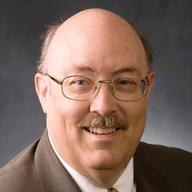
Mark W. Cannon

Mark W Cannon I was an inquisitive little chap raised in a large family with numerous Mormon pioneer ancestors who had many miracles and revelatory experiences that contributed to, as well as reinforced, their individual testimonies; but I wanted to know for myself if the Church of Jesus Christ of Latter-day Saints was indeed sanctioned by God.
Initially, I was like a very small and tender plant emerging from a seed beneath the soil; and the examples, teachings and stories of these ancestors nourished my initial understanding of divine and eternal principles that made the Church so helpful to individuals and families until I had internalized them deeply within my being along with personal prayer and scripture study while early on my mission.

That was when my own testimony of the reality of God as well as His Church emerged as it were from the soil to the light of the sun.  This illumination ended my inner uncertainty and puzzlement about the restored Gospel and further deepened my love and appreciation for the Lord … as well as my ancestors and others who had the courage to investigate the authenticity of divine truths and seriously ask God to help them learn the best ways to live as well as how they could most effectively help Him bless His children and build His kingdom.
A life full of personal experiences with the Lord followed as that initial tender plant emerged from the soil and grew into a substantial one bearing much fruit while partnering with God on many fascinating adventures.

[For readers with limited time, the following paragraphs show the effects of unique ancestral experiences on me and my personal observations. However, the key “nugget” of this journey begins with Section 2, “Personal Illumination: Acquiring My Own Testimony.”]

Ancestral Stories That Introduced Gospel Principles and Blessings

As a very young child, I seemed to have an insatiable curiosity about the world, country and society in which I lived.  So, when my relatives had an interesting story to tell, I was a very eager and appreciative listener!

Some of the earliest experiences that they shared with me were those of my grandfather, George Q. Cannon, who was a thirteen-year-old Isle of Man/British convert to the Church in 1840, mentored from his late teens by his uncle, John Taylor, the third President of the LDS Church. Grandfather was living with the Taylors at the time the Church’s founder, Joseph Smith, was martyred.  In fact, Uncle John was with Joseph then and was shot several times himself.  So, Grandfather’s life was co-mingled with the Church’s early history.

Some of the most impressive stories that I heard about Grandfather were when he was a young missionary in the Sandwich Islands (i.e. Hawaii).  Initially, he arrived with nine others, but half of them quickly became discouraged and left, as neither the sailors nor Protestant ministers were interested in their Gospel message.

To stay or to leave was a difficult decision for all of them.  So, with all of the faith and inner determination that his youth could produce, Grandfather inquired of the Lord what he should do.

We were in a foreign land, far distant from the Apostles and First Presidency, and, therefore, could not appeal to them.  Our only resource was to obtain revelation from the Lord for ourselves.  This is the privilege of every man and woman in the Church.  If Latter-day Saints seek for knowledge, God will give it to them to guide them in all the details of life, subject, of course, to the presiding authority and its teaching and counsels.  By this means we were able, on the Sandwich Islands, to know what course to take.  (George Q. Cannon, My First Mission)

Once knowing the Lord’s will, Grandfather “could not go home under any existing circumstances without feeling condemned.  The Lord, in my opinion, … would hold me accountable for not doing my duty to that people, if I were to leave them; and the people might rise up in judgment against me at some future day, for not having given them the privilege of hearing the truth.”  (George Q. Cannon, My First Mission)

Before Grandfather and his remaining four companions completed their missions, an amazing 4,000+ Hawaiians had joined the Church, and he had translated the Book of Mormon into the Hawaiian language with the assistance of Jonathan Napela, a district court judge of Hawaiian royal descent.

Being committed to serve the Lord in all things, Grandfather ultimately became an Apostle in 1860 at the age of thirty-three, a Counselor to four Presidents of the LDS Church, the Utah Territorial Delegate to the United States Congress (1872-82), principal negotiator for Utah statehood, editor of the Deseret News and founder of George Q. Cannon & Sons Publishing, which later became the Deseret Book Company.

Another early story Mother shared with me about staying true to the Lord was told by my Great Grandfather Edward Stevenson, one of the “First Seven Presidents” of the “First Council of the Seventy.”  During his many missionary journeys, he made a point of seeking out each of the three witnesses who had actually seen the gold plates from which Joseph Smith translated the Book of Mormon, and he “was personally favored with many conversations with” them.  (Edward Stevenson, Joseph, the Prophet, and the Coming Forth of the Book of Mormon, 1893)

Previous to those visits, they had collectively testified:

… we also know that they have been translated by the gift and power of God for his voice hath declared it unto us; wherefore we know of a surety that the work is true.  And we also testify that we have seen the engravings which are upon the plates; and they have been shewn unto us by the power of God, and not of man.  And we declare with words of soberness, that an Angel of God came down from heaven, and he brought and laid before our eyes, that we beheld and saw the plates, and the engravings thereon; … the voice of the Lord commanded us that we should bear record of it; wherefore, to be obedient unto the commandments of God, we bear testimony of these things. …  (Oliver Cowdery, David Whitmer, Martin Harris, “The Testimony of Three Witnesses”, The Book of Mormon, 1830 Edition)

“Notwithstanding everyone of these three witnesses withdrew from the Church in 1838, yet they remained firm in their declarations to the truth of their testimony.”  (Edward Stevenson, Joseph, the Prophet, and the Coming Forth of the Book of Mormon, 1893)

As a young child, that amazed me.  Their experience seeing the gold plates and hearing the voice of the Lord was so real that they dared not ever deny having had it no matter who laughed at them, ridiculed them or even gave them an easy way to “wiggle” out of their younger commitment.  That tenacity was very important to me as a youngster, as it still is today.

In 1870, Grandfather emigrated with Martin Harris, one of those three witnesses, to Utah, where he rebaptized him into the Church.  Of their journey it was written “Mr. Harris is in his 88th year, though still quite vigorous and sprightly, and he is Mormon soul and body.  He, as he claims, and as Mormons claim, together with two others, Oliver Cowdry [sic], deceased, and David Whitmore [sic], now an apostate living in Missouri, were the divinely appointed witnesses to the Book of Mormon.  The old gentleman evidently loves to relate the incidents with which he was personally connected, and he does it with powerful enthusiasm.”  (Daily Iowa State Register, August 28, 1870, p. 4, column 4).  “… by his request” Grandfather “baptized him [September 17, 1870], and President George A. Smith, and of the Twelve Apostles, John Taylor, Wilford Woodruff, Joseph F. Smith, and Orson Pratt confirmed him by laying on of hands, Orson Pratt being mouth.”  (“Journal History of the Church,” September 17, 1870, p. 1; Deseret News, December 28, 1881, XXX, 763)

With Grandfather Cannon being, among other things, a book publisher and newspaper editor, my Mother’s Dad having gone east in 1888 to become an MD and her Mother having graduated from the University of Utah in 1881 and afterwards having been a principal of three schools while also helping organize the first Kindergarten in Utah, it’s understandable that continuing education was highly encouraged in our home.  

However, I realized the principle goes much deeper than that, as it was a key concept within the Mormon faith.  For instance, the Doctrine and Covenants, the fourth book of canonized scripture in the Church, contains these frequently quoted verses:

“… seek ye diligently and teach one another words of wisdom; yea, seek ye out of the best books words of wisdom; seek ye learning even by study and also by faith.”  (D&C 88:118)

“Whatever principle of intelligence we attain unto in this life, it will rise with us in the resurrection.”  (D&C 130:18)

Dad also took very seriously Brigham Young’s encouragement to learn multiple languages; and during my childhood, he knew seven.  Mother knew five.  So, when they wanted to speak privately, they chose a language their seven children did not understand.  Once they caught on, Mother and Dad would switch languages.

As a busy doctor, my Grandfather Wilcox saw many women suffer greatly when their husbands passed away and they did not have sufficient skills and/or education to support their families easily. So that was an additional reason why, as a child, Mother was encouraged to get advanced degrees.  This included her father matching her savings dime for dime, so that she could join her brother, Fred, in Europe, attend the 1910 (once every ten year, eight-hour long) Passion Play in Oberammergau, Germany, and even tour Egypt before starting classes at the Royal University of Berlin (1911) and private study in Paris (1910).  Later, she was one of the first ten women in Utah to get a masters degree (1913), when only about 7% of Americans were graduating from high school. She continued to take doctoral classes into her late 80s.  Her brother, Fred, studied medicine at Harvard.

As for myself, I never did graduate from high school. But with the help of my sister, Jane, my brother-in-law, Dr. Julian Steward, a world renowned anthropologist, and the encouragement of my parents, I began full scholarship studies at the avant-garde and prestigious Deep Springs College, located north of Death Valley, when I was barely 16 years old.  Its goal was to educate practical idealists who would become future national leaders, and it was affiliated with Telluride House on the Cornell campus.  In recent decades, Deep Springs entering-student test scores have ranked second only to Cal Tech.

Upon the death of my father just two years later, I transferred to the University of Utah, and Mother, having diligently followed her father’s advice to be well educated “just in case,” began teaching classes there.

I could have graduated at nineteen. But I chose instead to round out my education by being associate editor of the student paper, The Daily Chronicle; Chairman of Founders Day; swimming letterman; annual intramural debate champion and Student Body President. Meanwhile, I was working at the Hotel Utah as a page boy/bell hop and maintaining a high enough GPA to be admitted into a Harvard PhD program with a scholarship after my nearly three year Church mission to Argentina.

Among the many reasons that I worked so hard at my studies was because of a story that my Dad had told me as a young child about Grandfather Cannon’s serious efforts to learn the Hawaiian language and the miraculous results that followed:

My desire to learn to speak was very strong; it was present with me night and day, and I never permitted an opportunity of talking with the natives to pass without improving it.  I also tried to exercise faith before the Lord to obtain the gift of talking and understanding the language.  One evening, while sitting on the mats visiting with some neighbors who had dropped in, I felt an uncommonly great desire to understand what they said.  All at once I felt a peculiar sensation in my ears; I jumped up to my feet, with my hands at the sides of my head, and exclaimed to Elders Bigler and Keeler who sat at the table, that I believed I had received the gift of interpretation!   And it was so.   From this time forward I had but little, if any, difficulty in understanding what the people said.  (George Q. Cannon, My First Mission)

Another important dimension of the emphasis that the Church placed on education was shared with me by my Mother about two early studies by a Columbia Professor, E.L. Thorndike.  In later life, I actually reviewed those studies and found them reassuring.  In production of scientists, Utah (in relation to its population) was over 40% higher than the second highest state, Colorado.  In production of men of achievement, Utah was over 30% higher than the second state, Massachusetts.  This was, of course, despite the enormous energy that had to go into making the desert “blossom as a rose.”

Mother also set up an appointment for me at the home of scientist and Apostle Joseph F. Merrill, so that he could explain to me how scientists could also have faith.  I found it significant that people whose profession required that they accept as certain only that which was proven by indisputable evidence could also be strong members of a Church that was convinced of the three members of the Godhead, the resurrection of Jesus Christ and modern revelation.

I was also very impressed early on that, in the LDS church, the most educated members were usually the most active in the Church—a fact that has since been substantiated by Dr. Stan L. Albrecht, current President of Utah State University, and also by Dr. Richard T. Wootten (Saints and Scientists, 1992).  Thus, one of my favorite Sunday activities while at the University of Utah was to attend Church firesides and sacrament meetings that featured prominent scholars like the chemist Dr. Henry Eyring, who had published hundreds of scientific articles and worked with Albert Einstein at Princeton.

Another major concept emphasized within the Church was that of one’s individual responsibility in maintaining health and wellness.  For instance, the Church’s book of modern scripture, the Doctrine and Covenants, describes an emphasis on fresh fruits and vegetables and adequate rest, as well as avoiding that which would harm the body, long before these issues were commonly researched and widely promoted throughout the country.

My parents also encouraged that healthy lifestyle.  We ate lots of salads and other fresh fruit and vegetables while also avoiding red meat except during the winter months when fresh produce was scarce.  Dad also urged me to drink eight to ten glasses of good water, take modest-sized portions and chew my food twenty times each bite.

To further emphasize the importance of choosing foods wisely, Dad took me to lunch with Apostle John A. Widtsoe, a prominent chemist, at the Lion House located next to the Church’s headquarters building.  After a very interesting discussion about the many diseases that are encouraged by refined sugar, he implored me to eat as little as possible of it.  He was convinced that refined sugar was as addictive as morphine.

Now, of course, there are numerous studies as to the damaging effects of consuming sugar as well as the long-term effects healthy lifestyles have had on active practicing Mormons.  One of my current favorites that emphasizes longevity was conducted by non-Mormon UCLA Public Health professors James E. Enstrom and former dean Lester Breslow. It involved 9,815 California high priests and their wives over a twenty-five year period.  They concluded that males who were highly committed to the Mormon lifestyle had a life expectancy of 84.1 years, which was 9.8 years greater than the average for U.S. white males.  Highly committed females had a life expectancy of 86.1 years, which was 5.6 years longer than the typical life expectancy of U.S. white females.  (Preventive Medicine, 2008)

Another study that supports the emphasis on health that I like was conducted by the Intermountain Medical Center.  Its 14 researchers concluded that Mormon-type fasting for 24 hours without food or water on the first Sunday of each month resulted in a 40% reduction of risk for the dreaded coronary heart disease.   The results were so astounding that they duplicated the study and the previous conclusion was completely reaffirmed.  (American Journal of Cardiology, 2008; Journal of Cardiology, June 1, 2012)

When life’s journey still leads to illness, accident, or confusion, members of the Church are encouraged to get special blessings from authorized priesthood holders such as those told about in the New Testament.   There are many impressive stories about the resultant healings throughout Church history.  One that had a unique impact on me as a child was hearing how Grandfather Cannon restored sight to a blind man while on his mission in Hawaii.

However, over time, each of us ultimately passes from this life to the next; and one of my first experiences being taught what that is like came from my Mother.  Dad was in Colombia, working on a business project with financing from Jesse Knight, and she had just settled the family into her parents’ summer mountain retreat at Spring Dell when she contracted diphtheria.  It was also the height of the 1918 influenza epidemic, and her condition became very severe.

“My mind was suddenly overwhelmed with an other-world atmosphere that rushed in on me.  It took me back to my earliest memories.  I realized that the scenes of my whole life were passing before my mind.  …  Silently, I slipped out of my cumbersome human framework.  … The dreadful headache, the choking throat, the ache from the antitoxin shots were all gone.  I felt light and strong and free and full of health.  My intelligence and understanding seemed greatly sharpened.  The dross was washed away and there was a flood of clarity ….  Everything seemed functioning in perfect harmony.  Everything felt so right.  This was exquisite joy.  …”

Among the throng of people she saw were her grandparents, Edward and Elizabeth Stevenson. Her companion/escort then “said,”

‘You may elect to go back to mortality if you desire.  … If you do return, you will be going back to trouble and illness.’ … I understood that this was not a threat but a simple fact of life.  … Although it was all I could do to handle my complicated life when I was well and strong, I felt a resurgent feeling that I should take my place at the side of my husband.  ‘I will go back’, I announced to my guide.  (Ramona Stevenson Wilcox Cannon, unfinished autobiography, tentative chapter title “Through the Portals of Death With a Joy”, 3rd draft, 1978)

Thanks to her selfless decision, I was born ten years later.  By then, Mother had cancer; but she delayed having a mastectomy until after I had been weaned.  She lived a very challenging yet fulfilling life and finally passed away sixty years later, in 1978, of pneumonia at 91 years of age.  She had published more than 4,000 articles after the age of 60, received numerous awards and served on four stake boards.  Her last publication, “One Cannot Live Long Enough to Outgrow a University,” was the lead article in the University of Utah’s feature book Remembering.  It was released in 1981, following her passing, and was still being displayed and distributed by them decades later.

Her profound example of personal sacrifice on behalf of my six older siblings as well as myself and others was in keeping with what I knew of many other Saints throughout Church history. For instance, though having a meager income by being a seamstress following the passing of her husband, Grandmother Cannon was the first to donate to the building of the Laie Hawaii Temple; although quite advanced in years, she also accepted an invitation by Church President Heber J. Grant to make the extensive trip by train and ship across the Pacific Ocean to be the first woman to speak at a Mormon temple dedication (11/27/1919).

Grandmother Stevenson was also very dedicated to serving others.  Along with Grandmother Cannon, she was a charter ordinance worker in the newly dedicated Salt Lake Temple (1893).  They both also served on the Church’s presiding women’s general board, called the Relief Society, as did Grandmother Wilcox.  It was on one of these numerous speaking assignments that Grandmother Stevenson got sick and passed away.

Her ambition to do her duty fully led her to go on that last journey when she was really so ill she should have been taken care of in her home.  It was at Emery City in Emery County sixty miles beyond the railroad, that she died of pneumonia, April 25, 1906.  Her faithfulness and her zeal were among her most outstanding characteristics.  (Elizabeth Jane Stevenson Wilcox, Stevenson Family History, p245)

Further examples of service that influenced me were how, during the Great Depression, my parents readily took in a hobo, Colonel Worthington, to live with us.  He was full of fascinating stories for a curious young man such as myself.  Later, Dad’s brother, Angus, his wife, Miriam, and Grandmother Wilcox also moved in with us, as did Mother’s sister, Mary.  Being a popular Granite High School history teacher, Aunt Mary had a prodigious knowledge of American history and a love of our heroes.  Thus, she heavily influenced my desire to be a part of that American heritage.

Also representative of how supportive the extended family was, descendents of Grandfather Cannon’s sister, Ann, invited me to live with them in the Mormon colony of Colonia Dublan, Chihuahua, Mexico, for six months when I was just twelve years old.  Here the Wilford Farnsworth/Orrin Romney families immersed me in Spanish as well as stories about the Mexican Revolution.  Pancho Villa’s bullets could still be seen in the upper walls of their home. Through these and many other experiences, I was introduced to the importance of preserving and appreciating family history as well as the Church’s history.

While working for the Church as First Counselor in the General Young Men’s Mutual Improvement Association presidency, Dad had access to genealogical information.  I really enjoyed hearing his stories about how we descended from Alfred the Great, Edward the Confessor, William the Conqueror, Charlemagne, etc. as well as seventh/eighth cousins of both General Douglas MacArthur and Republican presidential candidate Governor Thomas E. Dewey. My relationships with such leaders as Abraham Lincoln (third cousin four times removed) and Brigham Young (first cousin four times removed) were also mentioned.

In one instance in the 1940s, Church President George Albert Smith came to a surprised Cannon family reunion that I attended to tell us that he had been prompted by George Q. Cannon, from the other side of the veil, to come to the reunion and urge his descendants to live up to their heritage by maintaining even higher standards of the Gospel.  This visit intensified the motivation of many of us in the audience to strive to do more to help people in need and to help build the Kingdom of God as well as to excel in our professional pursuits.

However, having complete faith in the Lord as well as trust in His Church’s leaders is not always easily executed in real life experiences.  This I observed first hand when I was six years old.  In November 1934, Dad received a phone call from the President of the Church, Heber J. Grant.

[He] left immediately and was back within the hour.  Coming into the house he looked five years older.  His blue eyes burned in a face turned chalk white.  He sank into a chair, overcoat and all. ‘I am called on a mission,’ he said.

Joseph had a deep love for the gospel as anyone I knew.  And missionary work was a way of life with him.  When his business had called him to other cities he would pick up hitchhikers to extol the beauties of the gospel to them … ‘I am going to England, that is all I know.  President Grant had to go to a meeting and couldn’t finish the interview.’ (Ramona Stevenson Wilcox Cannon, unfinished autobiography, tentative chapter title “Surprise!”, 3rd draft, 1978)

This was the latter end of the era when men were called to leave their wives and families to fill missions.  Since missionaries had given up traveling without purse or scrip, their families had to find ways to send them money.  In the depth of the Great Depression, up to one third of the people were unemployed and job vacancies essentially nonexistent.  So, despite Dad’s working as managing editor of the Deseret News, we “were financially crushed — not a stock or bond left, or any investment bringing in a penny.”

My Mother further wrote:

For me, that night was one of the most wide-awake experiences in my lifetime. …  Suddenly, unaccountably, the words: ‘Peter’s wife’s mother lay sick of a fever’ jumped into my mind.  So, Peter was a married man.  How did his wife feel, I wondered, when he gave up his fishing enterprise, his family’s livelihood, to follow Jesus? …

I reflected upon our pioneer women and all the early saints.  … I had read and heard so much about them; I praised and honored them.  But I had thought of them as created out of some different kind of clay — or ‘dust of the earth’ than was used for my contemporaries.  I could now understand how they felt.

I thought about my own great grandmother, Maria Wealthy Dewey Richards Wilcox, who lost, and mourned deeply, her first three babies.  Then in subsequent years she had to endure the loss of her son, killed in the Hauns Mill massacre, and the loss of son George in the Mormon Battalion March and the loss of a third son in the mission field in England.  Tributes had been paid to her for her patience, sweetness and courage through her many trials. …

Morning light was streaking across the sky — time to get the family up and going.  I said a little prayer: ‘Well, dear Lord, I’ll leave it up to you.  Whatever is to be, I’ll do the best I can’. …

Joseph came home for luncheon at noon.  As he came into the kitchen, he looked peaceful and very dear.  I gazed at him in wonder. ‘Sit down’, he said.  We sat.  ‘President Grant didn’t make it clear yesterday, but we are called on a mission.  I am to preside over the British Mission — England, Scotland, Ireland and Wales.  We go as a family.  A home is provided and a modest amount for maintenance of the family.’ … a mountain seemed to slide off my shoulders into some invisible abyss.  (Ramona Stevenson Wilcox Cannon, unfinished autobiography, tentative chapter title “Surprise!”, 3rd draft, 1978).

However, like Abraham of old when commanded to sacrifice his son Isaac, she had passed an excruciatingly difficult test of her willingness to have faith in the Lord and trust His designated Prophet.

In 1863, Grandfather Cannon also served as a mission president in England as the Saints there prepared to immigrate to Utah.  Having read many tales by Charles Dickens, I was very interested that he came to the dock and observed the congenial and orderly passengers boarding the ship Amazon.  Later he described them as “the pick and flower of England.”  Of special interest to him was their practicality, efficiency and cheerfulness.  (Dickens, in Mulder and Mortensen, Among the Mormons, 337)

When my family arrived in England in 1934, tensions were beginning to build on the continent that ultimately led to World War Two.  These were also dynamic times in England.  During our stay, there were three kings. King George V, known as “George the Good,” died in 1936.  King Edward VIII was then crowned but shortly thereafter abdicated, leaving George VI as King.  Each change was accompanied by parades, which I was privileged to attend.

Mostly, however, I was immersed in the world of the British Mission and how much fun they had developing innovative activities to attract interest in the Church as well as the Gospel of Jesus Christ.  Dad recapitulated the Savior’s command that the missionaries were fishers of men and women.  He poignantly emphasized that fishermen do not catch fish unless they have the right bait for the particular fish they are catching, and that to be effective missionaries they had to develop alternative approaches to be able to use the best for each need.

Thus, in addition to teaching the Gospel, Dad encouraged a variety of events that would further improve the attitude of the people towards the Church.  Amongst these activities was the first basketball game ever covered on BBC radio.  Featured for that game was a highly praised team of our missionaries.  Missionary Woody Marriott, brother of J. Willard Marriott who was the founder of the international Marriott Corporation, created (under Dad’s direction) the Rochdale Grays, who, during their first year, won the championship in England with as many as 10,000 people watching.  They also won multiple European championships.

Missionaries also formed choirs and performed American Indian/Native American dances in feather headdresses and costuming that were provided by missionary Elder Hicks’s father as part of their efforts to increase interest in the Book of Mormon.  They also increased subscriptions to the Church’s magazine, the Millennial Star, from 1300 to 6000.  (In 1902, immediately after serving his first mission to Sweden, Dad had been asked to be its editor for two years.)

A bit more challenging, however, was speaking in Hyde Park.  Prior to our arrival, missionaries had stopped preaching there because of the hecklers threatening to throw them into the Serpentine, a stream filled with sewage.  However, my brave older brother, Adrian, who at seventeen was serving his own mission while we were there, decided with his companion, Jack Boud, that they would try once again in spite of what the consequences might be.

Thus, by the eve of King George VI’s coronation, “continuous speaking by the missionaries and singing by the Millennial Chorus were carried on for eight hours at Hyde Park.  Thousands of people stopped to listen.”  (Ramona Stevenson Wilcox Cannon, unfinished autobiography, tentative chapter title “Surprise!”, 3rd draft, 1978)

Since the European Mission headquarters was also located at ours, young Gordon B. Hinckley, future President of the Church, often mingled with our missionaries, including preaching at Hyde Park.    Thus, when referring to his 1995 interview with Mike Wallace for the 60 Minutes TV program, President Hinckley occasionally mentioned how his own speaking at Hyde Park as a young missionary was helpful in preparing him for this challenging opportunity.  The courage of these missionaries was a great example to me.

At a seminar for new mission presidents on June 23, 1996, President Hinckley referred to Dad having emphasized that the primary responsibility of the missionaries was to testify of the divinity of Jesus Christ.  He said,

Sixty two years ago I was a missionary in London and attended a meeting of the British Missionaries, a zone meeting it might have been called.  Joseph J. Cannon was the president and he said to the missionaries, ‘What is the greatest thing we can do for the people of the British Isles?’ … When they had all given their responses, he said, ‘In my judgment, the greatest thing we can do is to bring to the people of Britain a knowledge concerning Jesus, the Son of God, the Savior and the Redeemer of the world.’

The longer I have lived, the more I have come to that conclusion.  The greatest thing we can do is to bring to men and women everywhere, first to ourselves and then to those we teach, a living testimony, a vibrant witness of the reality of Jesus as the Son of God, the Redeemer of mankind.  (President Gordon B. Hinckley, Teachings of Gordon B. Hinckley, p 280-1)

At Mother’s funeral, he said that that Dad “was really a remarkable man.  I have seen many, many mission presidents, but I think I have seen none who was more anxious to find a way to work more ethically, more efficiently and more fruitfully than Joseph J. Cannon.  His head was as full of ideas as a nut is full of meat.”

Dad had hoped that British Mission would also be a period in internalization of the Gospel for me.  Consequently, he often took me with him to his activities and, where possible, explained things to me.  For instance, Dad also asked me, along with the missionaries, to memorize scriptures for their morning meetings when I was not otherwise at school.  By then, I had already acquired a strong Cockney accent.  One scripture that I still remember well, accent and all, was “Mark 12:28-32  And one of the scribes came and having heard them reasoning together and perceiving that he had answered them well asked him which is the first commandment of all? …”  Another favorite was John 3:16.  On March 4, 1937, I was the first person to be baptized in the beautiful and new Ravenslea Chapel in London by my father; and President Richard R. Lyman, Apostle and President of the European Mission, confirmed me.

1937 also marked the centennial of the British Mission.  So, President Grant came over to attend the festivities as well as tour the mission.  On some of those travels, I was invited to accompany him and my Dad and even to sit on the President’s lap as he taught me several lessons.  Thus, the Gospel and its accompanying life with its joys and hardships were deeply ingrained in my soul.

Another vital concept that the Gospel highlights is that of the reality of a very pure quality of love.  It is described as celestial love and the most precious and highly valued of all.  Other than through divine intervention, such magnificence is impossible to experience for oneself. However, I had the great fortune to have parents that magnified it with each other and, as far as it could be reasonably possible, with their family, friends and associates.

Just one illustration of their near perfect love was reflected in their letters.  For instance, Dad opened his letters with salutations such as: “My dear Sweetheart,” “My treasure Wife,” “My own sweet Lady-Love,” “Querido mio – Cuanto te amo,” “To the Light of my Life,” and “Beloved Mona.”  He also often ended his letters to Mother with comments such as “Your own true lover forever” and “Fly to me in my dreams, Precious One.  I adore you.”

His letters were informative and expressed interest in family members, with occasional comments of his deep feelings, such as: “Think and pray over our affairs and write me your feelings in all these things.  In all the uncertainties of life there are a few things that are fundamental and sure.  The Gospel of course and the fidelity and love of the dearest girl on all the earth.  I dearly worship you my darling sweetheart.”  In another letter: “Before very long I do hope that I will be able to be home among you and enjoy the greatest happiness I have ever had on earth, that is in the company of my family.”

Mother’s love and admiration for Dad were equally profound.  I can only remember one time when I ever heard them raise their voices (far below the level of screaming).  Afterward they were so sorry that they poured out their love and apologies.  Even though they often had different perspectives on things, they enjoyed and benefited from each other’s perceptions and wisdom without having ego fights as to whose view was the most correct.

I know of nothing more beautiful in life than perfect congeniality of husband and wife.  I do not look for the congeniality of which I speak merely in fondness of the couple for each other …. But I look for it in community of interest, in a real partnership which entails mutual appreciation, respect and love.  My observation convinces me that such congeniality always existed between Joe and Mona.  Their tastes seemed to be alike; their interests were mutual and they had marked abilities along similar lines.  I have heard him speak his admiration for her.  I believe their association has been as nearly perfect as I have ever known among my associates. (Stephen L. Richards, Apostle, future First Counselor to President David O. McKay and Mother’s second cousin, once removed; Joseph J. Cannon Funeral Address, November 6, 1945)

Yet, the question for me remained:  Is the Church of Jesus Christ of Latter-day Saints truly the Savior’s?  Grandfather Cannon wept as a child because he didn’t live at the time of the Savior and therefore couldn’t have been a help to Him; but upon hearing the Gospel message taught by his uncle, John Taylor, he knew the truthfulness of it and latter-day service came easily to him.  Great Great Grandmother Wilcox had one of her precious sons murdered at the Hauns Mill massacre, just because he was a believer.

The prominence of good versus evil was real to me.  So, as a four/five-year-old, I had conversations with two imaginary friends.  Brook always chose good and helped things turn out well, while Ditch always chose evil and got into trouble.  Then, as well as when I was a maturing adult, I wanted to be good.  That meant serving an LDS mission for the Church after graduating from the University of Utah.

Personal Illumination: Acquiring My Own Testimony

I arrived in Argentina in September, 1949, after a long steamship trip with three other missionaries, having just graduated from the University of Utah at the age of 20.  President Harold Brown was young, bright, articulate, well organized and super committed.  He sensed the seriousness of my wanting to make the most of my mission and gave me a great first assignment as companion to Elder Crosby, the president of the Buenos Aires District.  This was somewhat like having both missionary and church organization responsibility for a giant city like Los Angeles or Paris.  Over the decades, that single District grew into multiple Stakes of 7-10 congregations with a beautiful Temple.

I loved the intensity of our work and the wonderful Argentine Saints but, at the same time, I was praying intensely and repeatedly sought spiritual confirmation that our Church was created by God and was the restoration of the pure original Church created by Christ when He was on earth.  In return for a complete testimony, I promised that I would devote my entire life to living Christ’s commandments to the best of my abilities and helping to build His Kingdom.

This was before missionaries were given language training, but I had learned enough Spanish for basic communication.  So, I accepted an invitation to speak in a Sacrament Meeting in the Caseros chapel, along with President Crosby, less than a month into my mission.  I carefully and studiously wrote down every word of my talk.   Before the early evening meeting, I read Apostle Orson Pratt’s cogent piece “Was Joseph Smith Called by God?”

Following the reading, I prayerfully thought about it and received a peaceful calm spiritual communication of the Holy Ghost to my spirit that The Church of Jesus Christ of Latter-day Saints was created and led by God, not by humans alone!  This was not like thunder.  It was a great illumination, a sense of being privy to the big picture.  It was deeply satisfying.  It was a clarification that the multitude of positive observations about and experiences with the Church that I had previously were all part of the big picture, but alone missed the central cause of it all.

It simply could not have all come from pure chance.  It was somewhat like imagining seeing many dozens of beautiful ripe apples in the air and realizing that they could not be created and exist by accidental pure chance.  To think so would miss a major part of the image.   It was the tree that created, nourished and grew the apples from its own roots and methods and held them in the air until they were picked.  There was no way that the apples could have been created by accidental chance.  It, and multitudes of other complicated objects, had to have had an intelligent creator with divine intelligence—i.e., God.  It was also like trying to define an automobile by describing all of its parts and abilities but without including the motor that made it operate.

Therefore, I concluded that all the beautiful things in the teachings of the scriptures, the Church, the successful activities and growth of the Church, and the wonderful lives and growth of those who consistently followed the commandments could not have come from pure chance.  Something critical was missing.  That was the role of God the Father, Jesus Christ and the Holy Spirit.  With them, everything converged!

It is critically important to note that this was categorically different from learning something through reading, conversation or thought.  Paul urged the Philippians to “let your requests be made known unto God” with “prayer and supplication with thanksgiving.”  “And the peace of God which passeth all understanding shall keep your hearts and minds through Christ Jesus.”

This spiritual communication and illumination brought me “the peace that passeth all understanding.”   Indeed, this brief statement describes the miracle of an answer to prayer that millions of others have experienced, and all are invited to experience it.  It has stayed with me for the six-plus decades since then, and such divine guidance has been repeated.  I felt that experience sealed a permanent relationship with God that was promised in my patriarchal blessing.

So, with this new and very clear confirmation of the reality of God and His divinely established Church, I set aside the written speech that I had intended to give to the Caseros members and instead spoke fluently under the influence of the Spirit without any notes.

A Life Partnered With God

With this clarity of knowledge and partnership with God, I prayerfully determined to be the most effective possible missionary that I could.  As an example, mission president Brown asked the missionaries to add to the lower economically depressed areas we tended to work some upper middle class homes.  I felt guided to choose an attractive area that we had seen while bicycling toward our assignments and sensed that we should start with a large home on a corner.  We clapped at the gate many times and obtained no response.  Peddlers pushing their carts down the street stared at us as if they were saying “Don’t you know that they are either not home, or they do not want to talk with YOU?”  Nevertheless, I felt a spiritual impression that we should continue to clap.

Finally, a very irritated man walked from behind the house to the gate to see who was bothering him. Though it was not our typical starting discussion, I explained about the Book of Mormon.  Mr. Guzman looked very European.  However, he completely lightened up, said that he had a little indigenous ancestry and that he had always been curious about earlier people in the Americas.  The discussion made clear that this book contained scripture from ancient people and was part of the restored gospel of Christ.  He was fascinated with this possibility and promised to visit our Church on Sunday.  This he did—and never quit.

His wife and three daughters soon decided that he had become a better husband and father since he became interested in our church, and they all started attending with him.  Ultimately all were baptized, and the daughters went on missions.  In time, the whole family moved to the United States.  The daughters married solid, high-energy LDS men, and their children also had productive missions—many to Chile.

Family members have estimated that if you count all the people they helped bring into the Church, all that those converts had helped bring and all that those additional converts had helped bring in, etc. there could easily be 400 to 500 new members of the Church as a result of my heeding that divine prompting to stay at the gate and continue clapping.  Such dramatic miracles as this certainly come through divine intervention.  I am so grateful that I faithfully responded to the Spirit and continued to clap at that gate, thus assisting the Lord in introducing so many to His encompassing love.

In my life, I have had the good fortune to win numerous scholarships, awards, and jobs.  However, in no case did I feel that the result was totally, or even largely, from my effort.  I have always felt that there was divine help.  Many times I have received heavenly guidance. 

Let me give one additional example.  When I had emerged as a finalist from a field of more than seven hundred for the new statutory position of Administrative Assistant to the Chief Justice of the United States (now called Counsel), a Columbia professor who knew Washington, D.C., having served as Deputy Attorney General, said that no one would be able to stay in this new position more than six months.  Furthermore, Chief Justice Warren Burger had something of a “tough guy” public image.  So, even though I had submitted my application in a somewhat casual way, I now had to face the possible question of whether I wanted to accept a job from which I might be publicly ejected in a few months—a thought that somewhat terrified me.

After my long and fascinating interview with the Chief Justice.  We agreed that we would both think about it for a week until the following Saturday.  I prayed earnestly several times.  On Wednesday, I woke up at 3 AM with a feeling of complete illumination and calm and with three salient inspired conclusions in my mind:  first, the Chief Justice was going to offer me the position; second, I would be able to develop a very close, warm and productive relationship with him and I should accept the offer; third, it would be a very good thing for my children’s growth and opportunities. That was a very important goal of mine!

So, I quickly wrote him a brief letter and sent it to him special delivery saying that I had thought it over, that I was very excited about the potential to help him modernize the judiciary, and that, if he offered the position, I would happily accept it.  On Saturday, he phoned to offer the position and urge me to come to Washington as soon as possible.

Such heavenly communication has helped many times since I received my testimony, and the “peace that surpasses all understanding” has been part of my life ever since. It has allowed me to keep my cool in sometimes very complicated circumstances and has helped me resolve difficult situations without destructive “warfare.”  I have sincerely tried to do my best and then let God do the rest.

It has also been my experience that Heavenly Father teaches us with His perfect timing in unique and personalized ways based on our desires, diligence and readiness.  May you also feel His love and personal interest during this magnificent journey of your own.

————–

Mark W. Cannon (M.P.A, Ph.D., Harvard University) served on congressional staffs in both the House of Representatives and the Senate of the United States prior to chairing the Department of Political Science at Brigham Young University. From there, in 1965, he went to the Institute of Public Administration in New York, serving as its director from 1968-1972.   Between 1972 and 1985, he was Administrative Assistant to the Chief Justice of the United States, in which role he had responsibilities relating to the entire federal judiciary. From 1985 to 1988, he served as Staff Director of the Commission on the Bicentennial of the United States Constitution.

Co-author of Urban Government for Valencia, Venezuela and The Makers of Public Policy: American Power Groups and Their Ideologies, Dr. Cannon is also the author of more than eighty articles dealing largely with innovative planning, managerial leadership, and voluntary service in public and private sectors. He served as guest editor for a special issue of Phi Kappa Phi’s National Forum entitled Toward the Bicentennial of the Constitution, securing articles by President Ronald Reagan, House Speaker Tip O’Neill, and a number of leading scholars that, among other things, was sent by the American Bar Association to all of its members. He has lectured at more than seventy institutions in eighteen countries, including Jordan, Egypt, Japan, Taiwan, China, Korea, the Philippines, Russia, Germany, Hungary, Brazil, Argentina, Chile, and Nigeria.

Dr. Cannon has been an officer for the American Political Science Association and in various private enterprises in the technology and energy sectors, chaired the National Advisory Council of Brigham Young University’s Marriott School of Management, served on the Inter-American Advisory Council for the U.S. Department of State, and, from 1979 to 1985, was a member of the Harvard Overseers’ Committee to Visit the Law School.

Posted March 2016

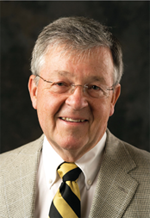
Edward L. Kimball

Edward Kimball “Dispute not because ye see not, for ye receive no witness until after the trial of your faith.” (Ether 12:6)

 

As a teenager, I liked to speculate about religion with my parents. My general attitude about religion was skeptical; I felt it the responsibility of others to build my faith.

One day, when I was nearly seventeen, I was leaning over the counter in the kitchen reading the LDS Church News, which ran a cartoon strip that day depicting events from the Book of Ether in the Book of Mormon. I read the passage, “Dispute not because ye see not, for ye receive no witness until after the trial of your faith.” That admonition struck a particularly responsive chord and I realized that I had things backward. Instead of demanding proof first, this scripture was telling me I should try to exercise faith first; the assurance would then come after my faith had been tried. One effect of reading this scripture was to make me generally more optimistic. It was the start of a conscious shift of direction, a willingness to try first and expect proof later.

The Book of Mormon itself stands for me as a persuasive artifact, because of the many witnesses who speak to the physical presence of the gold plates; the short time in which it was translated; and particularly the chiastic form in which much of the Book of Mormon is cast. This and the power with which it speaks to my soul all lead me to believe the book is everything Joseph Smith said it was.

————

Edward L. Kimball’s childhood was spent in Safford, Arizona. When he was thirteen, he and his family moved to Salt Lake City. After graduating from high school and finishing two years at the University of Utah, he served as a missionary for the Church of Jesus Christ of Latter-day Saints in the Netherlands.

After finishing a bachelor’s degree in history he continued on to graduate top in his class at the University of Utah Law School. He continued studies at the University of Pennsylvania, earning a further doctorate of law. Professor Kimball taught evidence and criminal procedure at the Montana State University in Missoula for about five years, and then taught at the University of Wisconsin in Madison for 12 years. When Brigham Young University opened a law school, the administration there invited him to come as a member of the original faculty. He was a law professor at the J. Reuben Clark Law School at BYU, holding the Ernest L. Wilkinson Chair, from 1973 to 1995, when he retired.

He has written biographies that have been described as “well crafted” and have been listed among “60 Significant Mormon Biographies.” He wrote an article on Henry Eyring and Harvey Fletcher published in Dialogue: A Journal of Mormon Thought, and has published an in-depth study on the 1978 Revelation on the Priesthood. He has also written an article on the history of LDS temple admissions standards. In retirement, he has continued authoring family biographies and papers on Church history.

He and his wife, Evelyn Bee Madsen, are the parents of seven children.

Posted July 2015

Brian Shirts

Introduction

I assume that most readers are members of the Church of Jesus Christ of Latter-day Saints (Mormons), but that a smaller group of readers may be scientists who are curious about the gospel of Jesus Christ as taught by this church, so I have written a two-part essay.   The first section is directed mostly to Mormons. In this first section I discuss some of my beliefs and experiences as a scientist, but instead of using scientific writing, I will use the language of religious belief and testimony. The second section is directed towards non-Mormon scientists. In it I discuss the experiences that have led me to be a believer in Jesus Christ and in the Book of Mormon. I will try to use the language of science for this second section. I think this has been a fun exercise, and I hope you enjoy reading it.

Part 1: My Testimony of Human Molecular Evolution

I have a testimony of the principles of evolution as they apply to human genetics. In my medical practice as a molecular genetic pathologist I have the unique privilege of reviewing large stretches of DNA sequence from dozens of individuals every week. I look for mutations that may increase cancer risk and cause other specific disease syndromes. The underlying principles that I see in every sequence and that I use to understand the variation in these sequences are the principles of molecular evolution. One of the most powerful tools I use is comparison of nucleotide and amino acid conservation over several dozen species. This tool constantly reiterates that the human species fits into the tree of mammalian and vertebrate evolution. Other tools I use every day are databases of variants from the sequence of several thousand healthy individuals’ genomes. Analysis of these databases shows how human populations have changed through new genetic mutations as they have grown and migrated.  I see mutations that have been around for thousands and tens of thousands of years and others that are as recent as the last few generations; each new mutation has apparently arisen at random. Because of these and other experiences analyzing human DNA sequences, I know without any doubt that the principles of molecular evolution apply to the human species, just as I know that they apply to every other living organism on the earth. I am a witness of human evolution.

Because of my experience with human molecular evolution, I reject the false doctrines of strict genetic determinism, social Darwinism, and eugenics. Genetic determinism is the belief that an individual’s character traits and, to a large extent, his or her fate are determined by genetics. There are strong genetic components to many physical and health traits, but from my experience and my understanding of current research most intellectual, emotional, and character traits have only minor genetic components. Family, friends, environment, and individual decisions seem to be much larger factors. Social Darwinism is the application of “survival of the fittest” to social interactions and policy, with the belief that people with power should press their advantages over the weak and the poor. I have seen that this philosophy is driven by subjective value judgments rather than science, and I can find no strong evidence to support the premise, attitudes, and policies of social Darwinism. Eugenics is the belief that human genetic experiments, such as controlled reproductive pairing or forced sterilization, should be practiced in humans to “improve” genetic traits in the population. Any eugenic practices or beliefs rely on strong, unscientific value judgments and huge assumptions about what “improvement” means and what will be important in the future. None of these beliefs is necessarily linked with the principles of evolution that I know to be true.

I choose to belong to a church led by prophets who have considered these principles, have acknowledged the possibility that scientific truth might be at odds with conventional Christian dogma, and have had the wisdom to leave science to scientists. I am grateful this church has a strong belief in ongoing revelation and is not necessarily wedded to literal readings of the biblical creation story that are based on millennia-old traditions. Evolution has been debated several times among leaders of my church; I believe this indicates that honest, thinking individuals lead the church.

Part 2: My Personal Experiment with Faith

Background: The Book of Mormon is a central text for the Church of Jesus Christ of Latter-day Saints. It claims to be a history of some of the ancient inhabitants somewhere in North or South America written by several self-described prophet-scribes on golden plates and miraculously translated by Joseph Smith. This is a fantastic story; however, multiple independent witnesses report seeing the golden plates and accompanying angel, and literary analysis shows the Book of Mormon to be a work of complexity consistent with its purported origins. Millions of believers subscribe to the tenets taught in the Book of Mormon. The golden plates have never been available for public viewing, but this lack of a purposeful display of objective evidence is internally consistent with the theology of the Church of Jesus Christ of Latter-day Saints.   Many detractors have laid out conspiratorial arguments describing how Joseph Smith created the Book of Mormon, but the historical evidence supporting alternate narratives is tenuous.

Hypothesis: The teachings of the Book of Mormon about Jesus Christ and his gospel are true.

Methods: The methods used to test this hypothesis are not conventional to scientific reasoning because the major questions related to this hypothesis are historical and theological. There are no other historical records from the population described. Most or all of the archeological, genetic, and linguistic analyses appear to be biased one way or the other, with conclusions that are dependent on enormous assumptions. I used the methods suggested in multiple places by the text in question (Alma 32, Moroni 10:4-5). These were: 1) Reading the text. 2) Studying and analyzing the text. 3) Attempting actions suggested by the text in limited situations. 4) Asking God to give evidence of the truthfulness of the text.

Results: I read the Book of Mormon. As I read the Book of Mormon I examined the cosmological explanations and reasoning in the doctrinal explanations. Upon examination these explanations brought up many questions but seemed internally consistent in most aspects. The actions suggested by the text were consistent with the teachings of general Christianity. At several intervals in my reading I prayed, as suggested by the text, asking God if the principles the Book of Mormon teaches about Jesus Christ and his gospel are true. When I was about three fourths of the way through the book, I had a remarkable experience where I felt that my heart and mind were full of enlightenment and joy. The experience was similar to “Eureka” moments I have had making intellectual connections to understanding scientific principles, but much more powerful almost to the point of being overwhelming. As far as I can tell, the experience was not brought on by any existential crisis or any emotional trauma. The experience was pleasurable enough that if I knew how to recreate the same experience I would. The only immediate antecedent to the experience that I can recall was this nonvocalized thought: “If what this book says is real, it would mean I should probably make more substantial changes in my life.”

I have subsequently had several similar subjective revelatory experiences since the experience described above. These experiences have been unpredictable and impossible to systematically elicit; however, each experience has come at a time and place such that it has had the effect of reassuring me that the stated hypothesis is correct and that living by the principles outlined in the Book of Mormon and taught in the Church of Jesus Christ of Latter-day Saints can increase feelings of general happiness and fulfillment.

Discussion: There are substantial limitations to this study. The only objective evidence presented is the existence of the Book of Mormon. The methods described rely entirely on subjective feelings, impressions, and perceived changes in personal happiness. Although I have found personal evidence to support the hypothesis, I acknowledge that my evidence is entirely subjective. I would not expect my experience to motivate action from anyone other than myself.   Additional studies would be necessary to come to any objective conclusions about the type of experience I have described. Randomized trials might determine if readers of the Book of Mormon consistently receive subjective responses to prayers and experience increased subjective happiness more often than nonreaders, but because of the polarizing nature of religious discussion, it might be impossible to identify a meaningful number of unbiased participants for such a study.

Despite the limitations of this study, I have found the results of this project to be personally compelling. Every week I see people who are positively influenced by their belief in the Book of Mormon and the Church of Jesus Christ of Latter-day Saints. The Church of Jesus Christ of Latter-day Saints is an imperfect, dynamic organization that has strengths and challenges at local, regional, and global levels, but it is the organization that I have found best reflects the spiritual truths contained in the Book of Mormon.

Conclusion

My religious faith parallels my faith in evolutionary principles; they are both beliefs based on study paired with longitudinal experience. I use my knowledge of evolution to help identify individuals who have increased cancer risk with the belief that this will lead them to take preventative measures that will make their lives better. I likewise try to follow Christian principles as taught in the Book of Mormon in hopes that this will help other people and improve their lives. As much as I love my work in molecular genetic pathology, I am confident that my part-time work in the Church of Jesus Christ Latter-day Saints has a greater positive effect on other people’s lives than my professional genetics work. My subjective spiritual experience combined with my observations about the benefits that many individuals gain from their faith and church experience are the reason I do not hesitate to encourage anyone who reads this testimony to undertake similar personal studies.

—————
­­­­
Brian Shirts, M.D., Ph.D., is an assistant professor in the Genetics and Informatics Divisions of the Department of Laboratory Medicine at the University of Washington. He completed medical school and also earned a Ph.D. in Human Genetics at the University of Pittsburgh. He completed residency training in clinical pathology and fellowship training in molecular genetics pathology at the University of Utah. His main clinical work consists of supervising informatics analysis of next-generation sequencing and clinical testing for hereditary cancer risk and genetic diseases. His research focuses on integrating complex genetics knowledge into clinical care including research on clinical classification of rare variants of uncertain significance and research on improving the use of complex clinical information for personalized healthcare.

Posted September 2014

Bruce L. Brown

BruceBrown1 I was born and raised in the small town of American Fork, Utah, in the shadow of Mount Timpanogos. In my middle school years I enjoyed backyard basketball, archery, making model aircraft of balsa wood covered with tissue paper, and cross-country skiing, and was active in the Boy Scouts. I was also enamored with the adventure of flying light aircraft. In my high school years I joined the Civil Air Patrol, went to summer camps at various U.S. Air Force bases, and participated in an air cadet exchange to Ontario and Quebec.

I have always loved mathematics and when I began college at the University of Utah I majored in aeronautical engineering. After one year of college I served an LDS mission in western Canada (Alberta and Saskatchewan), and upon returning home completed a bachelor’s degree and a master’s degree in psychology at Brigham Young University. In 1966 I married Susan. A few months later we moved to Montreal, where I completed a PhD at McGill University. We enjoyed our many friends and experiences in that city, including participation in the 1967 Montreal world exposition. After graduating from McGill, Susan and I and our two small daughters moved to Ann Arbor, where I did summer post-doctoral studies in mathematical psychology at the University of Michigan. The year 1968 was a big one for us, as I began teaching at Brigham Young University. We have very much enjoyed the BYU community, and I am still teaching there.

We enjoy being involved in the Church. We attend our Sunday meetings each week, do our best to serve in whatever assignments we are given, and have particularly enjoyed our monthly visits with the families to whom we have been assigned as home teachers.

I love the story of Joseph Smith and I know by the voice of the Spirit that it is true. It is still wonderfully edifying to me to read the accounts of the First Vision, the appearance of the Angel Moroni to Joseph Smith, the events in the coming forth of the Book of Mormon, and other events in the restoration of the Gospel nearly two hundred years ago.

The restoration of the Gospel of Christ through the Prophet Joseph Smith is firmly rooted in Hebrew scripture, beginning with the promises made to Abraham, the miraculous events of the Exodus from Egypt, the entry of Israel into the promised land, the accounts of the ministries of Israel’s holy prophets, the records of their prophecies, and also the records of the fulfillment of their prophecies in the coming of the Promised Messiah two thousand years ago. There is much joy in the accounts of the life and earthly ministry of Jesus, and the testimonies of his disciples, such as, “What manner of man is this that even the winds and seas obey him.” The account in the book of Third Nephi of his visit to the ancient inhabitants of America following his resurrection is also wonderfully joyous and edifying.

Truly the scriptural record of the promised Messiah and of the prophets who have testified of him is the greatest story ever told. There is much joy in striving to follow the Savior through following his living prophet. Christ’s life and his Atonement are the foundation of a rich and fulfilling life, one leading to eternal continuation of the joy of families connected through many generations of ancestors and of descendants.

—————————-

Bruce L. Brown (Ph.D. McGill University), is a professor of psychology at Brigham Young University, where his primary current research focus is the development of methods for neuropsychological measurement. In particular, his research team has been investigating the extraction of cognitive components from event-related potentials (EEG waves) as biomarkers for neuropsychiatric illnesses. He also works with students and faculty on the application of quantitative methods to organizational psychology problems, such as sexual harassment in the workplace.

Posted September 2014

Stephen C. Yanchar

Stephen YancharI was not born a child of record in the Church of Jesus Christ of Latter-day Saints.

But since a very young age I was fascinated with the meaning of life and the human race’s real purpose on the earth. I was kind of a seeker of the truth. I remember as a young child looking at pictures of archaeological finds, ancient buildings, etc. and wondering about them.

What did these people know that I don’t?

What really went on in those ancient buildings in those sandy places, and what would they reveal about man’s connection with God, the ultimate nature of the universe, existence, and so on?

As an elementary school student I attended a local Protestant church with my mother and felt a sense of the reality of God. I felt the importance of trying to be good and the difficult weight of sin. While I didn’t doubt God’s existence, I wasn’t sure what his existence really meant. Why was I here on earth, in this particular place, at this time? What was I supposed to do or strive for?

My focus on these questions waned while I was in high school, but I never lost my general interest in them, and my desire for answers was rekindled afterward. In fact, seeking answers to such questions became a major preoccupation of mine while in college. I hoped that by taking classes in psychology, anthropology, philosophy, religion, and so on, I would take a step or two closer to the truth about human existence.

There’s a sense in which college did provide insight into these issues—or at least it offered some interesting possibilities to explore. A young person with my preoccupation could hardly avoid being intrigued by the writings of Sigmund Freud, Hermann Hesse, Joseph Campbell, Robert Pirsig, Fritjof Capra, Albert Camus, Carlos Castaneda, and many others. These “gurus” offered unique perspectives and did provide me some impetus forward on my quest. I learned that there were people out there specifically seeking to answer my question; so the task became sorting out these answers and identifying those that came closest to offering a true picture of reality and the purpose of human life.

However, I wasn’t in that much of a hurry. The journey was fascinating and I really did feel that I was making some kind of progress, even if I didn’t know what the destination looked like or precisely how I’d know if I reached it. It really was satisfying, in a sense, to explore what had been so interesting to me my whole life.

After college, I entered graduate school at BYU in psychology. It was a bit unusual for a non-LDS student to be in that program but I felt drawn there due to the encouragement of one of my undergraduate professors in Ohio who had colleagues at BYU and liked the university. It took me a couple of semesters to acclimate to BYU culture, but it went well and people treated me well. Aside from the full-time missionaries there at the time (Elder King and Elder Rebalkin), I was taught the Gospel by fellow students and by some professors who had powerful ways of integrating the gospel into their classes. I was finally baptized on June 22, 1994, a little less than two years after I first arrived on campus. Since that time, I’ve been active in the church.

What invited me to study the gospel was this deep desire to know the truth. There were some days, when I was in college and graduate school (before joining the church), that I couldn’t stand not knowing the meaning of life. It was almost painful to experience this sort of occlusion or opacity that separated me from knowing how my existence fit into the scheme of things. But no amount of exploration through the intellectual landscape answered my questions. However, I did feel that I was getting close any time my searches took me to a doctrine of love and simplicity—that the purpose of life had something to do with purity, divestiture, kindness, and self-forgetting in some sense.

But I didn’t find the full answer until I talked with members of the church. I had become very interested in the life of Jesus Christ before I went to BYU, which in retrospect helped prepare me for the important events to come. I was amazed at this ancient man who was at the center of so much history. And I started to gain a belief in him as the savior at this time, but my progress was blocked by a competing sense of doubt that was somewhat difficult to overcome at first. For me, the events that finally turned me toward Heavenly Father, Jesus Christ, and the restored Gospel were profoundly spiritual. I was interrupted in my searches and ruminations by God in a way that was undeniable. What I’m referring to concerns amazing spiritual experiences that could not be attributed to anything but divine powers. In my experience, there was no way to ignore the messages delivered by the Holy Ghost; they were profound and, for me, authoritative. Probably the most significant inspirations were those I received early in my explorations of the church. They guided me onward to Christ as he has revealed Himself in this dispensation. I cannot deny the direction I was given at that time. And I could not deny that I had finally been given answers to my questions about the meaning and purpose of existence.

Those experiences have continued over the years until the present time. They vary in their focus, but they are delivered unto me, as needed, to guide me in better paths than I would choose for myself, as they have taken me to what I prize most in my life—God, family, and other communal relations. I marvel at how merciful, generous, and patient Heavenly Father and Jesus Christ have been with me and my family. They have given me everything good in my life and I see the fruits of the Gospel of Christ, restored to Earth, everywhere.

In many ways, I think the Book of Mormon as a testament of Christ led the way for me. I knew it was an inspired work of true scripture the first time I laid eyes on it and held it in my hands, though I hadn’t read a word of it yet (besides what was on the cover itself). The Holy Spirit whispered to me that this book is holy and true and that some day I would come to know it. This message sank into my soul, though it took me a couple of years for this promise to be fulfilled in my life. The Book of Mormon has given me much spiritual strength and guidance over the twenty years since I joined the church. I am amazed at the breadth of its teachings and the depth of its insights in conjunction with the Bible—especially those pertaining to God’s love and mercy, the importance of human agency, the wages of sin, the atonement of Jesus Christ, the relationship among truth, faith, and knowledge, and so on. I have come to know that this book is true, holy scripture; and that Joseph Smith Jr. was a genuine prophet who did what few people could have done—raised up by the hand of the Lord to suffer massive, persistent persecution in His service. I am continually amazed at what Joseph was able to do, and realize that it was only possible because he was guided, strengthened, and protected by the Lord until he sealed his testimony with his blood. Many persecuted him and the Church during his lifetime, and many have continued to attack the church ever since, but the work of God in this dispensation for the salvation of the human family will continue to move forward.

It is my testimony that the restored church cannot be stopped and that everyone, in one way or another, must seriously face the question: is this work really true? It’s not enough to love the Lord. We must love the Lord Jesus Christ and conduct ourselves in the way He has set forth, with faith in what He has revealed anew in this dispensation, blessed by His priesthood, making covenants that He Himself has delivered to the earth by the hands of prophets. In the end, I can say that God is good. He shows us the way to true happiness and a life well-lived, if we let Him. He also shows us the true way to immortality and eternal life. Everything in the restored gospel centers on Christ and His sacrifice for the human family. This is my testimony, in the name of Jesus Christ, Amen.

—————————

Stephen C. Yanchar earned a bachelor’s degree from Cleveland State University and master’s and doctoral degrees from Brigham Young University, all in psychology. Having previously taught at Morningside College, he is currently an associate professor in Brigham Young University’s Department of Instructional Psychology and Technology.

Along with chapters in various books, he has authored or co-authored articles in the Journal for the Theory of Social Behavior, the Journal of Theoretical and Philosophical Psychology, Issues in Religion and Psychotherapy, Educational Technology Research and Development, Review of General Psychology, Evaluation & Research in Education, Journal of Geology Teaching, Computer Assisted Language Learning, Educational Researcher, Teaching of Psychology, Journal of Moral Education, Journal of Humanistic Psychology, American Psychologist, Behavior and Philosophy, The Journal of Mind and Behavior, Clinical Psychology and Psychotherapy, Educational Technology, Pragmatic Case Studies in Psychotherapy, Proceedings of the Association for Educational Communications and Technology, Journal of Clinical Psychology, Journal of Mental Imagery, Contemporary Psychology, Proceedings of the Deseret Language and Linguistic Society, Intercomm, Theory and Psychology, and New Ideas in Psychology. In addition, Dr. Yanchar has served as a guest editor for the latter two journals.

Posted May 2014

Frank McIntyre

Frank McIntyre I believe that Christ is my Savior and Redeemer and that the Church of Jesus Christ of Latter-day Saints is led by Him. I believe that we have prophets on the earth today and that Joseph Smith was a prophet of God who really did translate the Book of Mormon, which really is an ancient testament of Jesus Christ. This testimony rests on two kinds of things. First, and probably less important, is that I find these claims consistent with my own experience and the experiences of others. For just one example, the numerous witnesses who testified to seeing the golden plates from which the Book of Mormon was translated make it difficult for me to accept claims that no such plates existed. From my own experience, I have prayed to know if the Book of Mormon is true and I felt a distinct response to that prayer. I have tried living the teachings of Christ and it has made me a better person. I have prayed for help and feel that I received it.

Now, at my day job I do statistics, so I am perfectly well aware that coincidences happen. I am also an economist, and doing that I have seen many instances where people’s descriptions of events are shaded by their own beliefs. Too often people overvalue anecdotes that confirm their biases. But I think the probability is low that what I have felt and seen and read about the LDS church and Jesus Christ’s life is all either made up or coincidental. And as an economist, I know that we don’t act based on certainty so much as the weighting of what is most likely. Do I know the sun will set tonight? No, but it is incredibly likely, and that is good enough for me to act.

All of that, then, constitutes the first reason that I believe. The second is perhaps more important but is rather difficult to explain. In the first reason, belief is about rationally weighing probabilities. That is fine, but belief is also an emotional response. When faced with a variety of possible ways that one can explain the world, we have preferences over which one we accept. We have a choice to believe. So given that choice, I choose to believe. Now, if one’s beliefs are unsupported by any facts, I think one should get new beliefs, but I’ve seen enough theories bandied about to know that the available facts in our world are consistent with many different views of the world. So we have the choice of which one of those views we think is right, after all the current data are in. Since I believe in prayer, I think God can help us in making that choice, but it is still, in the end, up to us to have faith or not.

In my statistical work I often have data that are consistent with more than one theory. Or worse, and more common, that are not entirely consistent with any current theory. So I keep digging and revising my beliefs as I go. In the same way, I learn more about the gospel as I test it and live it. As I read the scriptures and pray and try to live the teachings of Christianity I revise my understanding of the Universe, hopefully for the better. I think that is what God expects of us.

————————————

Frank McIntyre received his B.A. degree in economics from Brigham Young University. He then received a PhD in economics from Stanford University. After teaching at Brigham Young University he is now on the faculty of the Rutgers Business School in the department of Finance and Economics.

His research applies microeconometrics to various questions in labor and law, such as wage policy, personal bankruptcy, returns to education, and the criminal justice system. His work has appeared in a variety of academic journals such as the Journal of Labor Economics, the Journal of Law and Economics, the Journal of Empirical Legal Studies, Texas Law Review, the Journal of Economic Behavior and Organizations, and Economic Development and Cultural Change.

Posted May 2014

  • « Go to Previous Page
  • Page 1
  • Interim pages omitted …
  • Page 7
  • Page 8
  • Page 9
  • Page 10
  • Page 11
  • Interim pages omitted …
  • Page 44
  • Go to Next Page »

Primary Sidebar

Faithful Study Resources for Come, Follow Me

Subscribe to Blog

Enter your email address:

Subscribe to Podcast

Podcast icon
Subscribe to podcast in iTunes
Subscribe to podcast elsewhere
Listen with FAIR app
Android app on Google Play Download on the App Store

Pages

  • Blog Guidelines

FAIR Latest

  • Come, Follow Me with FAIR – Exodus 1–6 – Part 1 – Autumn Dickson
  • The Atoning Love of Jesus Christ
  • Come, Follow Me with FAIR – Genesis 42–50 – Part 2 – Autumn Dickson
  • Come, Follow Me with FAIR – Genesis 42–50 – Jennifer Roach Lees
  • Come, Follow Me with FAIR – Genesis 42–50 – Part 1 – Autumn Dickson

Blog Categories

Recent Comments

  • Sister Truelove on Humble Souls at Altars Kneel
  • Antonio Moreno on Forsake Not Your Own Mercy
  • Wayne on Come, Follow Me with FAIR – Genesis 12–17; Abraham 1–2 – Part 1 – Autumn Dickson
  • Tanya Alltop on Be Reconciled to God 
  • Darci Larson on Adorned with the Virtue of Temperance

Archives

Follow Us

  • Facebook
  • Twitter
  • iTunes
  • YouTube
Android app on Google Play Download on the App Store

Footer

FairMormon Logo

FAIR is a non-profit organization dedicated to providing well-documented answers to criticisms of the doctrine, practice, and history of The Church of Jesus Christ of Latter-day Saints.

Donate to FAIR

We are a volunteer organization. We invite you to give back.

Donate Now

Site Footer