• Skip to primary navigation
  • Skip to main content
  • Skip to primary sidebar
  • Skip to footer

FAIR

  • Start Here
  • Find Answers
  • Scripture Study
  • Blog
  • Events
    • FAIR Conference
    • Virtual Conferences
    • Special Events
  • FAIR Books
  • About
    • Media & Apps
  • Get Involved
  • Search

Testimonies

Bishop Vaughn J. Featherstone’s Experience with the Scriptures and the Savior

February 8, 2019 by Trevor Holyoak

Cross-posted from Truth Will Prevail
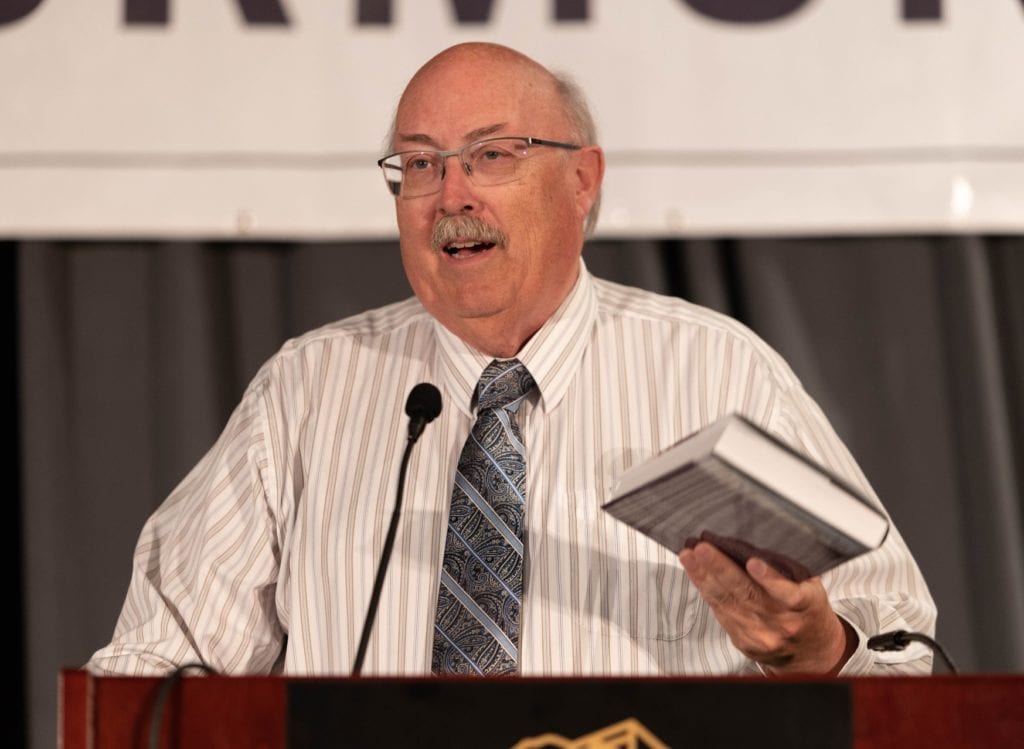
Cobbled together by Dennis B. Horne

            Note: In his earlier years, in some talks given in the 1970s, as a counselor in the Presiding Bishopric, Elder Vaughn J. Featherstone referenced a marvelous spiritual experience he received. The below contains both published text and newly transcribed wording that was withheld for whatever reason (perhaps felt to be too sacred then), from the published version, that gives further insight into the experience. Links are provided so readers can listen to both of the talks at their convenience:

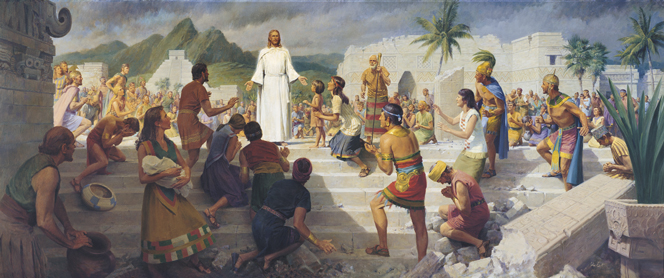
            Let me tell you the greatest experience I believe I have had in all my readings of the scriptures—and I am sharing something that is very tender with me. I remember the night that I read 3 Nephi the 17th chapter [3 Ne. 17]. That is when I discovered the Lord Jesus Christ, my Redeemer, the Lord of lords, the King of kings, my Savior, my personal Savior; and I believe that is where I finally found the description of the Savior as I thought him to be.

            He had been with the Nephite people all the day long, you will recall, and finally said: [Read more…] about Bishop Vaughn J. Featherstone’s Experience with the Scriptures and the Savior
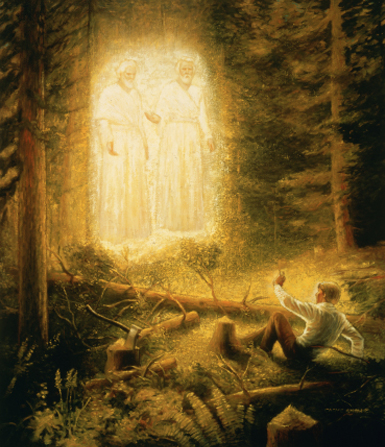
Filed Under: Book of Mormon, First Vision, General Conference, Joseph Smith, Testimonies

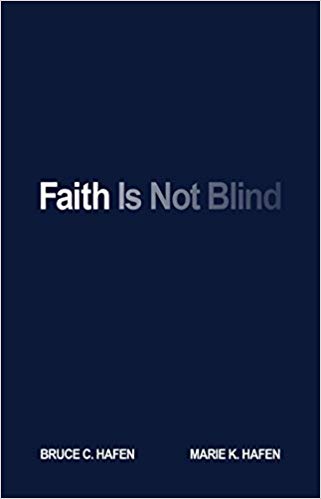
Book Review: Faith is not Blind

January 3, 2019 by Trevor Holyoak

Available at a discount from the FairMormon Bookstore

Bruce C. Hafen was a member of the First Quorum of the Seventy until 2010 when he was given Emeritus status. Prior to that, he was a president of BYU-Idaho and dean of the BYU Law School. He also was recently the president of the St. George Temple. Marie K. Hafen, his wife, taught at BYU-Idaho, BYU, and the University of Utah, as well as serving on the Young Women General Board and on the Deseret News board of directors.

This book is an expansion of a talk they gave together at a BYU-Hawaii devotional on January 24, 2017, which was an updated version of a talk called “Love Is Not Blind: Some Thoughts for College Students on Faith and Ambiguity” at a BYU devotional on January 9, 1979. Since 1979, the Internet has of course come to be a new avenue for people to stumble across things that would destroy their faith, and much of the book focuses on that.

The Hafens suggest a three part model for understanding stages of belief that people might go through. First, is what they call “simplicity.” This is when people have an innocent faith and “tend to think in terms of black or white – there is very little gray in [their] perspective. And many youth and young single adults have a childlike optimism and loyalty that make them wonderfully teachable. They typically trust their teachers, believe what they read, and respond eagerly to invitations for Church service. New adult converts often have similar attitudes” (page 8). [Read more…] about Book Review: Faith is not Blind

Filed Under: Anti-Mormon critics, Apologetics, Book reviews, Faith Crisis, Questions, Resources, Testimonies

The Temple 3: A Light to the World (The Church in the DR Congo: A Personal Perspective, Part 10)

December 31, 2018 by Jeffrey M. Bradshaw

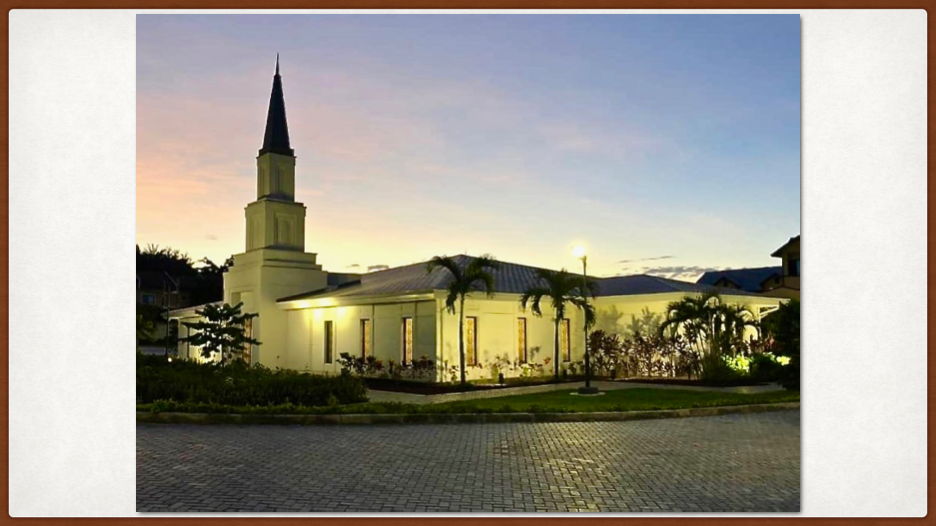
The DR Congo Kinshasa Temple Shining At Nightfall

In a presentation at the 2018 FairMormon Conference, I shared stories of some of the faithful Saints in the Democratic Republic of the Congo (Kinshasa) [1]. In this new series of presentations, I would like to speak from a more personal perspective, reflecting on the meaning of that experience for Kathleen and me, and pondering some of the dynamics of numerical and spiritual growth of the Church in that country.

The series is organized into eleven parts:

1. Prologue: What brought us to Africa?
2. Snapshot of the Church in the DR Congo
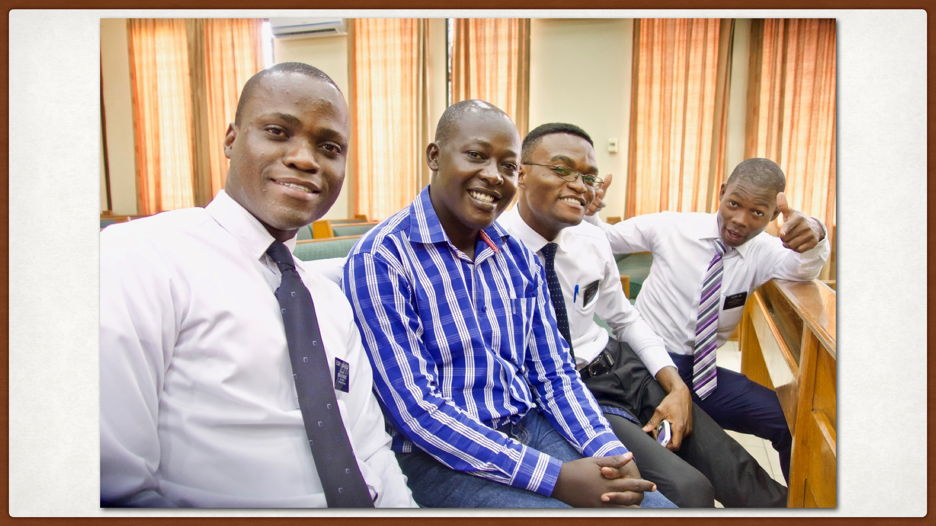
3. The missionaries
4. What attracts people to the Church?
5. Building from centers of strength 1 — Kisangani
6. Building from centers of strength 2 — Wagenya
7. Taking the Gospel to the “ends of the earth”
8. The temple 1: “Turning the hearts of the children”
9. The temple 2: “Holiness to the Lord”
10. The temple 3: A light to the world
11. “The labourers are few”

In this episode, I discuss why the temple is a light to the DR Congo — and to the world.

It was said anciently that God’s light filled the place of His presence in the heavenly temple. On earth, that light is symbolized by the Holy of Holies in the House of the Lord. In the symbolism of the temple, the Holy of Holies, corresponding to the celestial room of modern temples, is not only a place of light, but also the source of light for the entire universe.

Some may wonder, if temples are places of light, why the window openings of the Salt Lake Temple are relatively small and narrow, giving its exterior the appearance of thick battlements. As it turns out, there is a scriptural explanation for both the thick walls and the narrow windows. It seems clear that the purpose of the reversal in temples versusordinary homes in Old Testament times must have been meant to be symbolic rather than practical. Designing ancient temples that differ in obvious waysfrom buildings of ordinary construction would have allowedthe Israelites to reflect on why such an anomalous design was required.

After providing the context for these architectural features, we will describe what they specifically have to do with the DR Congo Kinshasa temple, and what counsel Elder David A. Bednar implored the Congolese Saints to remember during a visit to the temple site.

We conclude the episode by an impromptu version of “Jesus of Nazareth” by Elder Rafarahavotra of Madagascar.

[1]The video version of the entire FairMormon presentation is available on the FairMormon YouTube channel at https://www.youtube.com/watch?v=nJl9FvLKmjw. The seven segments of this presentation, in an edited and somewhat expanded form, are available for reading at Meridian Magazine(www.ldsmag.com) and the website of The Interpreter Foundation(https://interpreterfoundation.org). For more articles and videos by Jeffrey M. Bradshaw, see www.templethemes.org.

Filed Under: Conversion, Temples, Testimonies Tagged With: Church in Africa, Democratic Republic of the Congo, DR Congo Kinshasa Temple, Elder Marvin J. Ashton, Elder Rafarahavotra

The Temple 2: “Holiness to the Lord” (The Church in the DR Congo: A Personal Perspective, Part 9)

December 24, 2018 by Jeffrey M. Bradshaw

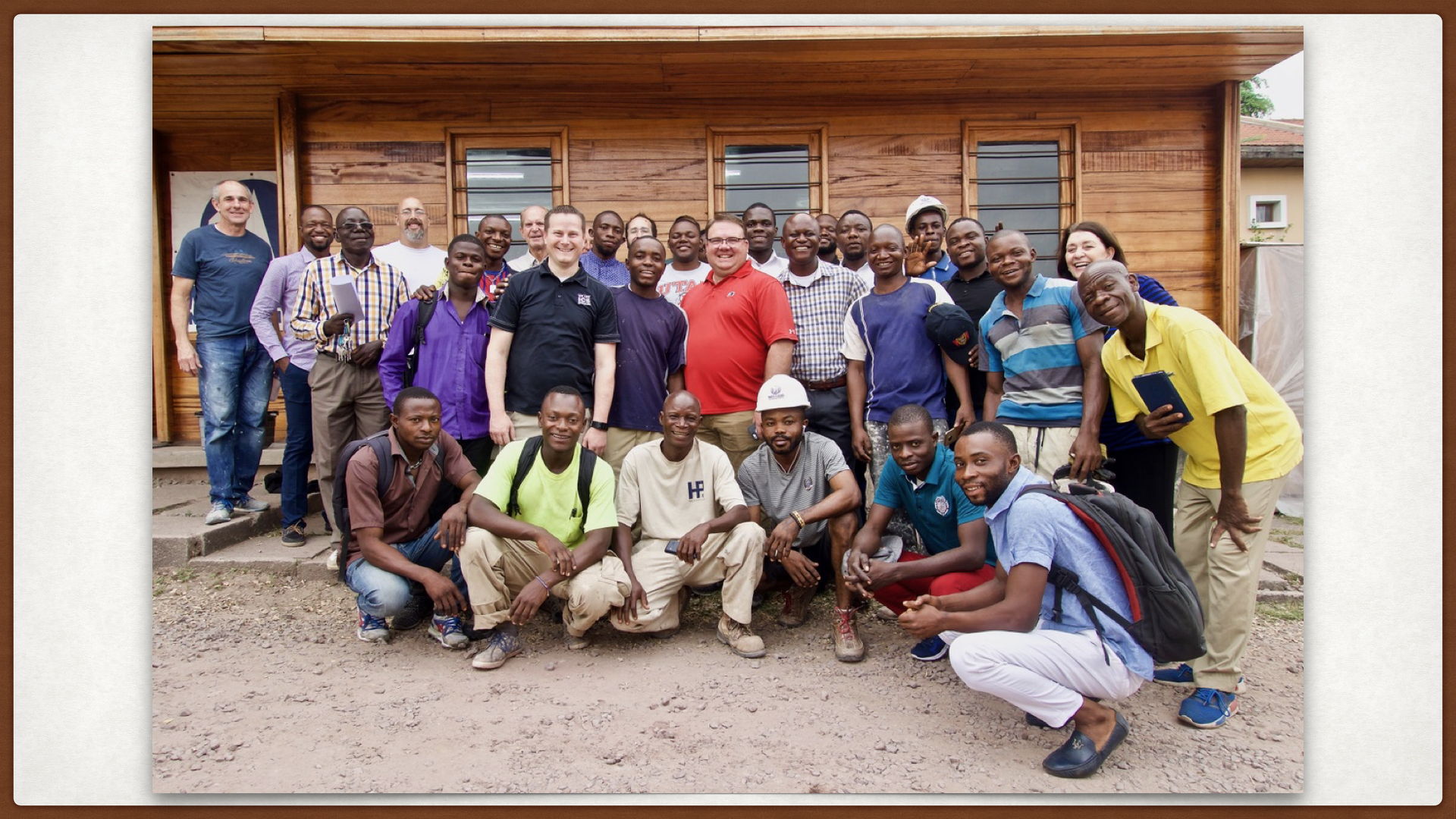
Construction Crew – DR Congo Kinshasa Temple

In a presentation at the 2018 FairMormon Conference, I shared stories of some of the faithful Saints in the Democratic Republic of the Congo (Kinshasa) [1]. In this new series of presentations, I would like to speak from a more personal perspective, reflecting on the meaning of that experi-ence for Kathleen and me, and pondering some of the dynamics of numerical and spiritual growth of the Church in that country.

The series is organized into eleven parts:

1. Prologue: What brought us to Africa?
2. Snapshot of the Church in the DR Congo
3. The missionaries
4. What attracts people to the Church?
5. Building from centers of strength 1 — Kisangani
6. Building from centers of strength 2 — Wagenya
7. Taking the Gospel to the “ends of the earth”
8. The temple 1: “Turning the hearts of the children”
9. The temple 2: “Holiness to the Lord”
10. The temple 3: A light to the world
11. “The labourers are few”

In this episode, we discuss the holiness of the temple and of the people who are preparing for it.

At the temple groundbreaking, Elder Neil L. Andersen reminded his listeners that everything has to be “near perfection” in temple construction. A strenuous effort to meet that high standard was made by the construction crew. Over and beyond this professionalism, the essential construction skills learned through patience and persistence, there was a soberness of loving submission in the task of building a temple, a quality of the soul that added an intangible, spiritual element to the work being performed.

Eventually, we witnessed the culminating work begin around the temple doorway in preparation for the inscription plaque, a reminder to everyone who would be worthy to enter to continually cultivate holiness in their hearts: “Holiness to the Lord. The House of the Lord.”

Significantly, so far as we know, the phrase “Holiness to the Lord” never appeared on buildings in Old Testament times. It was, however, applied to high priests who had been consecrated to the Lord’s service through sacred ordinances. This did not mean that the high priests were themselves already holy and pure in every respect, for they had not yet completed the process of sanctification. Rather, it meant that they had been “chosen” or “set apart” to take upon themselves solemn covenants, covenants that put them under divine obligation “to live up to the holiness to which they [had] been set apart.”

The Congolese saints have been preparing through their faithfulness for a temple for more than three decades. The construction of the temple is a witness that the Lord has found them ready for it.


[1]The video version of the entire FairMormon presentation is available on the FairMormon YouTube channel at https://www.youtube.com/watch?v=nJl9FvLKmjw. The seven segments of this presentation, in an edited and somewhat expanded form, are available for reading at Meridian Magazine(www.ldsmag.com) and the website of The Interpreter Foundation(https://interpreterfoundation.org). For more articles and videos by Jeffrey M. Bradshaw, see www.templethemes.org.

Filed Under: Conversion, Temples, Testimonies Tagged With: Church in Africa, Democratic Republic of the Congo, DR Congo, DR Congo Kinshasa Temple, Elder Neil L. Andersen, President Russell M. Nelson

FairMormon Questions: Is it true that most historians that look into the life of Joseph Smith eventually leave the Church?

December 22, 2018 by Trevor Holyoak

FairMormon has a service where questions can be submitted and they are answered by volunteers. If you have a question, you can submit it at http://www.fairmormon.org/contact. We will occasionally publish answers here for questions that are commonly asked, or are on topics that are receiving a lot of attention. The question and answer below have been edited to maintain confidentiality.
QUESTION:

I have heard that most historians that look into the life of Joseph Smith wind up leaving the Church. Is this true?

ANSWER FROM FAIRMORMON VOLUNTEER CRAIG L. FOSTER:

My comments are my own and do not reflect either the Church or Fairmormon. I read your email and felt strongly that I needed to respond given my background. While I am certainly not a Joseph Smith expert, I have done a significant amount of research on the Prophet. As I have written numerous articles and several books dealing with aspects of Church history, I consider myself an LDS historian. Therefore, I feel I am in a position to respond to the assertion that most historians who look into the life of Joseph Smith wind up leaving the Church.

I am aware of a few who studied Church history and did end up leaving. However, they were very few. In fact, for most historians I have known, it has strengthened their testimony – and I have known and been friends with almost all of the major Mormon historians from Leonard J. Arrington to Thomas G. Alexander, James B. Allen, Richard Lyman Bushman, etc. These men were/are staunch defenders of the prophetic mission of Joseph Smith.

Recently, a friend of mine named Don Bradley posted a Facebook post about Joseph Smith and the First Vision. He has given me permission to include his comments. He emphasizes that he had come to consider Joseph Smith a liar and a fraud. He had his name taken off of the membership of the Church but continued to do research. Because of his research on Joseph Smith, he returned to the Church, was rebaptized and is a strong, believing member. We spoke the other day and he again bore testimony to Joseph Smith’s prophetic mission. Here are his comments: [Read more…] about FairMormon Questions: Is it true that most historians that look into the life of Joseph Smith eventually leave the Church?

Filed Under: First Vision, Joseph Smith, LDS History, Perspective, Power of Testimony, Prophets, Questions, Testimonies

Taking the Gospel to the “Ends of the Earth” (The Church in the DR Congo: A Personal Perspective, Part 7)

December 9, 2018 by Jeffrey M. Bradshaw

Emmanuel Issamba, an investigator from the remote city of Bunia, DR Congo. Left to Right: Elder Luzayadio, Emmanuel Issamba, Elder Lokpo, and Elder Ga.

In a presentation at the 2018 FairMormon Conference,[1] I shared stories of some of the faithful Saints in the Democratic Republic of the Congo (Kinshasa). In this new series of presentations, I would like to speak from a more personal perspective, reflecting on the meaning of that experience for Kathleen and me, and pondering some of the dynamics of numerical and spiritual growth of the Church in that country.

The series is organized into ten parts:

  1. Prologue: What brought us to Africa?
  2. Snapshot of the Church in the DR Congo
  3. The missionaries
  4. What attracts people to the Church?
  5. Building from centers of strength 1 — Kisangani
  6. Building from centers of strength 2 — Wagenya
  7. Taking the Gospel to the “ends of the earth”
  8. The temple 1: Turning the hearts of the children
  9. The temple 2: A light to the world
  10. “The labourers are few”

In this episode, I will tell the story of how a new branch came to be formed in Boma, and the situation of isolated members and investigators of the Church who live in cities where groups and branches have not yet been organized. Illustrating the challenges and opportunities of these individuals, we will share the story of Emmanuel Issamba, who traveled at great personal sacrifice a distance equivalent to halfway across the United States to learn more about the Church, only to be told that he could not be baptized because he was 436 miles away from the nearest organized Church unit. [2] We explore current efforts in social media to help such individuals stay in touch.

In his call for a “home-centered, Church-supported” approach to Gospel living,[3] President Russell M. Nelson has signaled the urgency of an oft-repeated theme while significantly expanding its rationale. He has made it clear that rebalancing our efforts to ensure a “home-centered, Church-supported” approach will not only increase the simplicity and effectiveness of Church programs, but will also be a key development that will enable the Gospel to be taken to the “ends of the earth.”

Complementing the policy of building up centers of strength geographically, we summarize the teachings of Elder Joni L. Koch of the Seventy, who explained to our missionaries how they should focus their finding efforts in light of the fact that we could currently teach only a fraction of those who were interested in the Gospel in the DR Congo. Echoing the promises of scripture and modern apostles and prophets, he testified that the day will eventually come when “the Gospel will have been preached everywhere, to all people; and this will occur before the second coming of the Son of Man.”[4]


[1]The video version of the entire FairMormon presentation is available on the FairMormon YouTube channel at https://www.youtube.com/watch?v=nJl9FvLKmjw. The seven segments of this presentation, in an edited and somewhat expanded form, are available for reading at Meridian Magazine(www.ldsmag.com) and the website of The Interpreter Foundation(https://interpreterfoundation.org). For more articles and videos by Jeffrey M. Bradshaw, see www.templethemes.org.

[2]Ibid., p. 7. See, e.g., D&C 1:11; 65:2; 72:21; 90:9; 105:39; 109:57;112:4; 133:3.

[3]R. M. Nelson, Opening Remarks (October 2018), p. 7.

[4]B. R. McConkie, Revelation on Priesthood.


Filed Under: Conversion, Power of Testimony, Testimonies Tagged With: Bunia, centers of strength, Church in Africa, Democratic Republic of the Congo, Elder Jony L. Koch, Emmanuel Issamba, Home-Centered Church-Supported, missionary work, President Russell M. Nelson

Building from Centers of Strength – Wagenya (The Church in the DR Congo: A Personal Perspective, Part 6)

December 5, 2018 by Jeffrey M. Bradshaw

Photo of a Wagenya fisherman taken by Irish photographer Andrew McConnell in 2010. To get a glimpse of the Wagenya fishermen in action, see McConnell’s video at https://vimeo.com/45188921

In a presentation at the 2018 FairMormon Conference,[1]I shared stories of some of the faithful Saints in the Democratic Republic of the Congo (Kinshasa). In this new series of presentations, I would like to speak from a more personal perspective, reflecting on the meaning of that experience for Kathleen and me, and pondering some of the dynamics of numerical and spiritual growth of the Church in that country.

The series is organized into ten parts:

  1. Prologue: What brought us to Africa?
  2. Snapshot of the Church in the DR Congo
  3. The missionaries
  4. What attracts people to the Church?
  5. Building from centers of strength 1 — Kisangani
  6. Building from centers of strength 2 — Wagenya
  7. Taking the Gospel to the “ends of the earth”
  8. The temple 1: Turning the hearts of the children
  9. The temple 2: A light to the world
  10. “The labourers are few”

In this episode, the theme of “building from centers of strength” is concluded. Among other things, I will discuss the creation of a second branch in Kisangani, near the traditional home of the famous Wagenya fishermen. As was the case with Jesus’ disciples, fishermen were among the first members of the Church in Kisangani. Through photos and videos, their unique lifestyle, their challenges, and their faith will be highlighted.

We will also introduce the story of Brother Wilfrid MALEO, the current president of the Wagenya branch. After his baptism, he resigned his position as a teacher and later refused a post at the university of his former church, one of many sacrifices that he and his family have made in behalf of his fellow branch members.

[1]The video version of the entire FairMormon presentation is available on the FairMormon YouTube channel at https://www.youtube.com/watch?v=nJl9FvLKmjw. The seven segments of this presentation, in an edited and somewhat expanded form, are available for reading at Meridian Magazine(www.ldsmag.com) and the website of The Interpreter Foundation(https://interpreterfoundation.org). For more articles and videos by Jeffrey M. Bradshaw, see www.templethemes.org.

Filed Under: Conversion, Power of Testimony, Testimonies Tagged With: Bandundu, Boma, centers of strength, Church in Africa, Democratic Republic of the Congo, fishermen, Melinda "Mindy" Webb, missionary work, Muanda, Stanley J. Webb, Wagenya, Wilfrid Maleo

FairMormon Conference Podcast #18 – Jenny Reeder, “‘Fire In My Bones:’ Women’s Stories on churchhistorianspress.org”

December 5, 2018 by Trevor Holyoak

https://media.blubrry.com/mormonfaircast/www.fairlatterdaysaints.org/wp-content/uploads/2018/12/Jenny-Reeder.mp3

Podcast: Download (44.8MB)

Subscribe: RSS

This podcast series features past FairMormon Conference presentations. This episode is a presentation from our conference earlier this year. If you would like to watch all the presentations from the 2018 conference, you can still purchase video streaming. You can also buy books from The Church Historian’s Press at a discount from our bookstore.

Jenny Reeder, “Fire In My Bones”: Women’s Stories on churchhistorianspress.org

Jenny Reeder is the 19th-century women’s history specialist at the LDS Church History Department. She is the co-author of At the Pulpit: 185 Years of Discourses by Latter-day Saint Women, and The Witness of Women: Firsthand Experiences and Testimonies of the Restoration. She earned her PhD in American history at George Mason University, and an MA in history, archival management, and documentary editing at New York University. Jenny also speaks at Time Out for Women.

Audio and Video Copyright © 2018 The Foundation for Apologetic Information and Research, Inc. Any reproduction or transcription of this material without prior express written permission is prohibited.

Filed Under: FAIR Conference, FairMormon Conference, LDS History, Podcast, Testimonies, Women

Building from Centers of Strength – Kisangani (The Church in the DR Congo: A Personal Perspective, Part 5)

November 20, 2018 by Jeffrey M. Bradshaw

Little children at school for the poor in Kisangani, DR Congo

In a presentation at the 2018 FairMormon Conference,[i]I shared stories of some of the faithful Saints in the Democratic Republic of the Congo (Kinshasa). In this new series of presentations, I would like to speak from a more personal perspective, reflecting on the meaning of that experience for Kathleen and me, and pondering some of the dynamics of numerical and spiritual growth of the Church in that country.

The series is organized into eight parts:

  1. Prologue: What brought us to Africa?
  2. Snapshot of the Church in the DR Congo
  3. The missionaries
  4. What attracts people to the Church?
  5. Building from centers of strength — Kisangani
  6. Building from centers of strength — Wagenya and elsewhere
  7. The temple: A light to the world
  8. “The labourers are few”

Despite the great potential for explosive growth in the vast area covered by the DR Congo Kinshasa mission, the Church is organized in only a handful of cities. This is due in large measure to the general policy of building outward from “centers of strength.” Given its distance from Kinshasa, Kisangani provides an interesting case study in Church development in a remote area of the DR Congo.

In Part 5, I describe the challenges for dedicated leaders and members in this historic and rapidly developing area. We also highlight the work of Elder Stan and Sister Melinda Webb, who served as a Member Leader Support (or MLS) couple in Kisangani. During their mission, they were a tremendous support for the branch, for the missionaries, and in building friends for the Church in Kisangani. Videos and photographs of their enthusiastic work in teaching English to neighborhood friends and in schools for the poor give poignant evidence of the value of their service.

We will also meet Jean-Pierre GOIKABA, a kind and faithful member of the Kisganani Makiso Branch, who is the director of government efforts for disabled students in two provinces. With him and the Webbs, we will visit a school for blind children. We will witness their gratitude for the gift of basic learning materials, including five thick volumes of the Book of Mormon in Braille.

This video presentation is available on the Interpreter YouTube channel at: https://www.youtube.com/watch?v=yD3c7iihmC4


[i]The video version of the entire FairMormon presentation is available on the FairMormon YouTube channel at https://www.youtube.com/watch?v=nJl9FvLKmjw. The seven segments of this presentation, in an edited and somewhat expanded form, are available for reading at Meridian Magazine(www.ldsmag.com) and the website of The Interpreter Foundation(https://interpreterfoundation.org). For more articles and videos by Jeffrey M. Bradshaw, see www.templethemes.org.

Filed Under: Power of Testimony, Testimonies Tagged With: Blindness, centers of strength, Church in Africa, Democratic Republic of the Congo, Disabilities, English classes, Humanitarian Service, Jean-Pierre GOIBAKA, Jeannot KIRONGOZI, Kisangani, Melinda "Mindy" Webb, missionary work, Stanley J. Webb

Some 2018 FairMormon Conference Transcripts Now Available

October 8, 2018 by Trevor Holyoak

Our volunteers have been very busy transcribing the presentations from the conference held in August. The following transcripts are now available:

  • Taunalyn Rutherford, “For We Shall See Him as He Is”: Understanding Mormon Women in India
  • Brad Wilcox, “Have You Been Saved By Grace?” How Do We Respond?
  • Randall Spackman, Chronological Structure and Symbolism in the Small Plates of Nephi (a handout is also available)
  • Elder Kevin W. Pearson, A Sacred and Imperative Duty
  • Daniel Peterson, Apologetics: What, Why and How?

The transcripts for the remaining presentations will be posted here when they are available.

You can also still order the video streaming so you can watch the presentations on your computer, mobile device, or Roku.

Filed Under: Anti-Mormon critics, Apologetics, Book of Mormon, Doctrine, FAIR Conference, LDS Culture, Marriage, News from FAIR, Questions, Resources, Testimonies, Women

  • « Go to Previous Page
  • Page 1
  • Interim pages omitted …
  • Page 6
  • Page 7
  • Page 8
  • Page 9
  • Page 10
  • Interim pages omitted …
  • Page 44
  • Go to Next Page »

Primary Sidebar

Faithful Study Resources for Come, Follow Me

Subscribe to Blog

Enter your email address:

Subscribe to Podcast

Podcast icon
Subscribe to podcast in iTunes
Subscribe to podcast elsewhere
Listen with FAIR app
Android app on Google Play Download on the App Store

Pages

  • Blog Guidelines

FAIR Latest

  • Come, Follow Me with FAIR – Isaiah 50–57 – Part 2 – Autumn Dickson
  • Come, Follow Me with FAIR – Isaiah 50–57 – Jennifer Roach Lees
  • Come, Follow Me with FAIR – Isaiah 50–57 – Part 1 – Autumn Dickson
  • Prayers for Peace
  • Come, Follow Me with FAIR – Isaiah 40–49 – Part 2 – Autumn Dickson

Blog Categories

Recent Comments

  • Willie Louise Truitt on The Joy of a Covenant Relationship with God
  • Katrina on In memory of Chandler “Chuck” Hendry
  • Nancy Farmer on Come, Follow Me with FAIR – Psalms 49–51; 61–66; 69–72; 77–78; 85–86 – Part 1 – Autumn Dickson
  • Nicko De Leon on In memory of Chandler “Chuck” Hendry
  • Becky Matson on In memory of Chandler “Chuck” Hendry

Archives

Follow Us

  • Facebook
  • Twitter
  • iTunes
  • YouTube
Android app on Google Play Download on the App Store

Footer

FairMormon Logo

FAIR is a non-profit organization dedicated to providing well-documented answers to criticisms of the doctrine, practice, and history of The Church of Jesus Christ of Latter-day Saints.

Donate to FAIR

We are a volunteer organization. We invite you to give back.

Donate Now

Site Footer

The use of the temple in past and current logos and the name "Mormon" are licensed for use by The Church of Jesus Christ of Latter-day Saints.