In My Hands . . .
 As I consider my “scholarly” thoughts on God, the phrase that keeps coming back to me is one I have noticed at scientific seminars and conferences recently. “In our hands,” the speaker will say, “the experiments turned out like this, and that proves our hypothesis.” Often, adding the phrase “in our hands” means that the results are different than what another researcher has reported. It can indicate that the experiment in question is sufficiently complex or challenging that it would be impossible to control every variable in the experiment, and it could be one of these uncontrolled variables that leads to the unique reported observations.
In my experience, use of this phrase in science should, if anything, be more frequent. When I start collecting data on a new experiment, multiple repetitions often give results that don’t fit with my expectations. Sometimes the problem is a mistake I’ve made, while other times I just haven’t controlled all of the important variables accurately enough. Of course, once I figure everything out, the mess that previously seemed at best random or at worst contradictory now fits together in a coherent story. But even then, it doesn’t hurt to preface a recounting of my results with “In my hands”—while I may see a story in the data, it is likely that there are layers to the story that I haven’t yet uncovered, and levels of understanding I haven’t yet reached.
Why does this phrase keep coming back to me when I consider my thoughts on God? To see why, try reading this passage from the Book of Mormon, Alma’s passionate testimony to Korihor (Alma 30:37-44) about the existence of God, while imagining the exchange taking place at a scientific conference.
“And then Alma said unto him: Believest thou that there is a God? And he [Korihor] answered, Nay. Now Alma said unto him: Will ye deny again that there is a God, and also deny the Christ? For behold, I say unto you, I know there is a God, and also that Christ shall come. And now what evidence have ye that there is no God, or that Christ cometh not? I say unto you that ye have none, save it be your word only. But, behold, I have all things as a testimony that these things are true; and ye also have all things as a testimony unto you that they are true; and will ye deny them? Believest thou that these things are true? Behold, I know that thou believest, but thou art possessed with a lying spirit, and ye have put off the Spirit of God that it may have no place in you; but the devil has power over you, and he doth carry you about, working devices that he may destroy the children of God. And now Korihor said unto Alma: If thou wilt show me a sign, that I may be convinced that there is a God, yea, show unto me that he hath power, and then will I be convinced of the truth of thy words. But Alma said unto him: Thou hast had signs enough; will ye tempt your God? Will ye say, Show unto me a sign, when ye have the testimony of all these thy brethren, and also all the holy prophets? The scriptures are laid before thee, yea, and all things denote there is a God; yea, even the earth, and all things that are upon the face of it, yea, and its motion, yea, and also all the planets which move in their regular form do witness that there is a Supreme Creator.”
In my mind, I can see Alma standing in the front of a darkened auditorium, laser pointer in hand, going through a slide with a bulleted list. “Look at all this data I’ve collected. It is proof that there is a God!” Although he specifically mentions the earth and the motions of the planets, I think that when Alma says all things witness to him that there is a God, he really means all things, including every individual experience he has in his life.
For Korihor, the world looks different. He sees the same data, but is not convinced that they have anything to do with God. And in my mind, Alma’s approach to convincing Korihor is a bit off the mark. I personally know a lot of scientists who would laugh me off the stage if I told them that a closer look at the motions of the planets will prove the existence of God.
When I talk about God, I can’t help but feel the need to preface my comments with “In my hands.” The experiment is complex, there are a host of uncontrolled variables, and previous researchers have come away with a variety of different conclusions. But if that qualified testimony is the best I can give to other scientists, is there any chance a person will change from a latter-day skeptic to a saint? My answer is yes, because my hope is not that others will believe my testimony, but that they will be try the experiment for themselves.
My personal journey is taking me away from Korihor’s and toward Alma’s view of the world. This journey has inspired me to make changes in my life that in turn allow me to see God’s hand in the world more and more. This is something you have to experience for yourself to believe. I love the description of this experience given by Mark Wrathall in his 2006 article “The Revealed Word and World Disclosure”:
“Philosophers from Aristotle to Hubert Dreyfus have shown how, in developing habits and practicing actions for dealing with a particular domain, we acquire skilful dispositions so attuned to that domain that we can perceive things of which we were oblivious before. As I practice baking bread, for example, I gradually become sensitized to notice things like texture and elasticity in the dough, fine variations in colour as the bread browns in the oven, etc. The skills allow me to experience the world in a way that I could not without them. . . . Faith is, then, the condition of one who has acquired the skills of religious living, and thus has the dispositions to feel and act appropriately in the world that appears when one has those skills. . . . Faith will then not be amenable to proof in the way one verifies a cognitive state or proposition (i.e. demonstrating that it is true). But it will have the kind of confirmation or success conditions that all other skills have. Baking skills are confirmed or successful when they allow me to cope with the kitchen. Religious faith will be confirmed or successful when it gives me the practices and dispositions I need to cope with the world as a whole. As Father Zosima notes in Dostoevsky’s classic depiction of existential Christianity, ‘one cannot prove anything here, but it is possible to be convinced.’”
In my hands, increased faith in God has brought more happiness and an increased ability to deal with life’s challenges. I hope you’ll try it in yours.
————————————————-
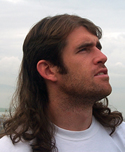
Dula Parkinson is a scientist at Lawrence Berkeley National Laboratory. He earned a Ph.D. in Chemistry from the University of California at Berkeley.
Posted October 2010
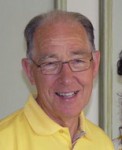 I have had a very rich and happy life and, although I do not feel I have earned the many blessings that have come to me, I know that my saviour Jesus Christ and his church, The Church of Jesus Christ of Latter-day Saints, is the source and the reason for the great joy and excitement that fills my life.
 I was born and raised in Portland, Oregon, into what in those days was called a part-member family. My mother was a member of the Church but my father, although he was supportive of our activity in the Church, was not. So from a young age I attended Church and enjoyed the support and friendship of a small community of LDS people that in time grew to be quite large. My first memories of Sunday meetings are of an Odd Fellows Hall in Beaverton, which served as our meeting house at the time. Often there were little brown beer bottles left on the window sills from some Odd Fellows activity from the night before, and I remember going around with other members collecting them and putting them in the trash can. Over the years, our little branch grew into a ward and our ward into a stake, and I remained active in the Church.
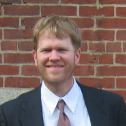 This year marks the twentieth anniversary of my theism. In 1990 I was an angry autodidact in semi-rural Utah, reading Sartre and announcing my agnosticism to audiences both willing and unwilling. I wore my hair long and my clothing torn as badges of adolescent independence.
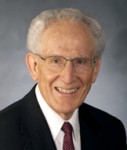 As many Jews discussed who they thought Jesus was, our Savior asked his disciples, “Whom say ye that I am?” Peter readily responded, “Thou art the Christ, the Son of the living God.”1 Peter had received this confirmation through personal revelation from his Father in Heaven. The same question is asked of us, with the following addendum: Has the Son of the living God restored what he established during his ministry, but which was lost through apostasy? My answer to the question, like Peter’s affirmation, is “yes.” This personal testimony has been confirmed many times by the peace and assurance that have come to me through study, prayer, and experience in His service. It is true that by doing His will we come to know the truth of His doctrine.2 My testimony prompts me to use a few more of Peter’s words. When some of his disciples took offense and “walked no more with him,” Jesus asked the twelve whether they, too, would go away. Peter answered, “Lord, to whom shall we go? Thou hast the words of eternal life.”3 These are my words, too.
 I was born in Pescara, on the Adriatic coast, right in the middle of the Italian peninsula. I was a happy, normal Italian girl, an only child with loving parents. I was reared in the Catholic Church, and, in our family, traditions and good moral principles were very important. I attended a Catholic elementary school, with nuns as teachers, who tried to convince all boys to become priests and all girls to become nuns! Well, that was not my vocation, because I always wanted to get married and have children.
 I am a convert to the Mormon Church from Roman Catholicism, and gained my testimony as the result of spiritual experiences that I cannot deny. In this essay, however, I will discuss instead why, as a feminist, I remain a steadfast member of the LDS Church.
 I appreciate the invitation to participate in this “Scholars Testify” project. For me a testimony of the gospel of Jesus Christ, the Savior’s atonement, and the restoration of God’s true Church on earth is above and beyond a witness of the Holy Spirit. Nor is it simply an inner feeling or confirmation of a set of truths, knowledge and facts. It’s more than rituals such as genealogy and temple work. It’s different than just a social movement, although Mormonism is greater than any in world history. It’s not simply attendance at Church and Sabbath rules, or adherence to the Word of Wisdom. Nor does it only signify that we are willing to sacrifice our time in local Church programs, pay tithing, or go on missions.
 I have a great many academic colleagues throughout the world who probably wonder if I am crazy because of my adherence to religion and my steadfast refusal to drink exotic draft beers and expensive vintages of wine. We live in an age when it is politically correct among academics to adopt a rational, secular, and often atheistic view of the world. I am writing this brief statement of beliefs with these non-religious colleagues in mind. I appreciate their friendship, their tolerance, their insights, and their outward acceptance of my apparent eccentricities. I am also grateful for the gallons of mineral water, sparkling apple juice, and diet soda they have provided in various social settings over the years. Now, I would like to tell them why I believe in God, the nature of the God I believe in, and why this belief is compatible with my work as a scientist.