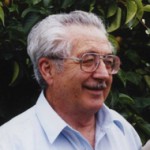
 My graduate training as a scientist began in 1954. Since that time I have been a frequent contributor to more than a dozen scientific disciplines. As a scientist, I am bound by procedural truth-seeking systems and research designs that include basic assumptions similar to those made in the pursuit of religious truths. These include:
- The world is knowable (i.e., understood through man’s physical senses).
- Its attributes and representations can be abstracted for discussion (i.e., oak trees can be pictured and discussed as concepts rather than being present in the classroom).
- Within a scientific framework, causal and associative relationships are logically inferred from cases, experimental conclusions, and other data.
Outside this somewhat limited intellectual territory of scientific inquiry are spheres of beauty, poetry, the arts, and normative standards of right and wrong. Evidence of the power of faith is explained by revelations of ancient and modern prophets. And although science speculates as to the relationship of light, mass, and energy, it is left to normative truth to explain each of their origins and ultimate purposes.
Just as I have tested the accuracy of scientific conclusions, I have likewise examined for myself the doctrines and moral principles of the Church of Jesus Christ of Latter-day Saints (the Mormon Church) as an active Church member. Through prayerful study and examination of sacred scriptures (revelations of ancient and modern prophets), I now testify of the existence of a living and loving Heavenly Father who is interested in all of his sons and daughters here upon the Earth. I know of his goodness and kindness. I understand his Plan of Happiness, which provides us a way back into his presence—with the aid of Jesus Christ’s atonement. This Plan, designed prior to the foundation of this World, contains provisions for binding righteous family members together throughout eternity and allows each of God’s mortal sons and daughters the potential to become like him.
The scientific world of orderly laws and outcomes is not foreign to members of the Church of Jesus Christ of Latter-day Saints. The Restored Gospel of Jesus Christ outlines eternal laws and ordinances that result in divine blessings promised for those who obey his laws. Those who live righteously have been given God’s divine promises of blessings, salvation, and exaltation. The joy promised by this plan causes those who have it to want to share it with others. All persons who search for peace and never-ending family relationships should examine this message further. It is a Pearl of Great Price.
———————————————–
Ellwyn R. Stoddard received his Ph.D. from Michigan State University in 1961, and is now a professor emeritus of sociology and anthropology at the University of Texas at El Paso (UTEP). He received UTEP’s Distinguished Faculty Award for Research in 1990.
Dr. Stoddard is an expert on the culture of the U.S.-Mexican borderlands and is the founder of the Association of Borderland Scholars. He is, moreover, the author or co-author of roughly a hundred publications, including Conceptual Models of Human Behavior in Disaster (1968); Mexican Americans (1973 [1981]; with Richard L. Nostrand and Jonathan P. West, Borderlands Sourcebook: A Guide to the Literature on Northern Mexico and the American Southwest (1983, winner of the 1984 Southwest Book Award); with John Hedderson, Patterns of Poverty along the U.S.-Mexico Border (1987); Maquila: Assembly Plants in Northern Mexico (1987); U.S.-Mexico Borderlands Issues: The Bi-National Boundary, Immigration and Economic Policies (2001); U.S.-Mexico Borderlands Studies: Multidisciplinary Perspectives and Concepts (2002); U.S.-Mexico Borderlands as a Multi-Cultural Region (2005).
Professor Stoddard and his wife have nine children and twenty-three grandchildren.
Posted August 2010
 How I Received My Testimony of Christ
 As a scientist, I seek for truth, and as a believer in Jesus Christ and a member of the Church of Jesus Christ of Latter-day Saints, I seek for truth. I believe that these two efforts are not exclusive of one another, but should come together when absolute truth becomes known. In fact, I have found that one enhances the other in a number of ways. For instance, the allegory of the seed told by Alma in the Book of Mormon (Alma 32) follows the pattern of the scientific method. The manner in which one searches for spiritual truth is pretty much the same as how one searches for scientific truth. The difference is in how the answer becomes known. Scientific observations become theories and eventually laws if the results from experimentation or testing always remain consistent. The more consistent the results are, the more believable is the law. Gaining spiritual truth also requires effort involving observations, testing, and consistency, but absolute verification comes by a manifestation of the Spirit. One can know a truth with certainty if it is verified by the Spirit.
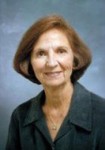
 My name is Beth Vaughan Cole, and I am a nurse educator, wife, mother of four, and grandmother. I am currently the Dean of Brigham Young University’s College of Nursing.
 OUR CENTURY
 I believe in true religion and true science, and I am grateful that the doctrine of the Church of Jesus Christ of Latter-day Saints allows me to be intellectually honest in my profession of both. More specifically, I am thankful that our religion professes no doctrine that requires me to ignore scientific facts that I know to be true, and that my understanding of science requires me to accept no observations that would controvert my religious beliefs. In fact, when I scrutinize the fundamental tenets of both sources of truth, I continue to see areas that testify of each other.
 As a fifth-generation Latter-day Saint, I am Mormon through and through. Yet others, with similar ancestry, have broken their chains of believers and chosen to reject the faith of their fathers. Why not me? The answer begins with the respect I had for my parents. Their faith was expressed and taught to their children by their way of life, not by persistent pedagogy. The basic pattern of Mormon life, which they wholly exemplified, was all-encompassing, invigorating, and sustaining. It was also sometimes challenging as I became more widely exposed to competing life styles. The “Mormon way,” however, never failed me through those questioning years and has since proved its worth as a satisfying and rewarding way of life.
 Regarding my testimony and its interaction with my professional life, I will present three major segments. First, I will give my personal testimony of the gospel of Jesus Christ—essentially why I believe what I believe. The second segment details how my experiences as a teacher are related to my testimony. Finally, the last segment is an argument against those who believe that science can disprove religious beliefs.
 Preparing for my oral and written exams for my PhD, I put myself on a rigorous schedule of reading five days a week, spending up to twelve hours daily flying through novels, poetry, and criticism, and taking notes furiously, all in an effort to fill my head with as much information as I could digest. I was amazed at how hard it was, but I was equally impressed that the brain was like a muscle and, with practice, I got stronger, more focused, and more capable of processing what I was reading in a sustained way.