• Skip to primary navigation
  • Skip to main content
  • Skip to primary sidebar
  • Skip to footer

FAIR

  • Find Answers
  • Blog
  • Media & Apps
  • Conference
  • Bookstore
  • Archive
  • About
  • Get Involved
  • Search

Testimonies

Phillip C. Smith

I grew up in a good LDS family with believing parents. My father was a positive role model though we had few gospel discussions over the years. My mother, though always faithful and active, was a wonderer and a questioner. She probed gospel-related issues and frequently discussed with me about this or that Church position. It was invigorating.
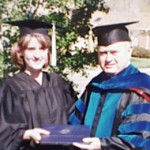
My need for and commitment to questioning and probing stem also in part from an experience my mother had with her great uncle, Heber J. Grant, then President of the Church. She asked him one day if he had ever doubted the truthfulness of the gospel. He responded that he had never doubted, but that he had wondered about many things. This is an important distinction to me, to wonder and question but do so with faith.

We did not do some of the things families do today to enhance faith and spirituality (we did not have Family Home Evening, for example). In addition, many of my parents’ friends who spent time in our home were college professors who were either non-LDS or lapsed LDS. The content of much that was around me thus was largely intellectual, with occasional criticisms of the Church made in my presence. Our home environment was overall a rather non-structured mixture of religious and secular influences.

I don’t remember when I did not have a testimony, a firm one even with frequent and constant attacks on my beliefs since I was a youth. When contemplating words and official actions of Church leaders, I usually feel agreement and acceptance. Attacks upon the Church, as I have discovered through examining many of them carefully, have not compromised its truthfulness. The gospel plan to me, as I understand it, seems mainly rational, intellectually credible, and sensible. Church organization, programs, and rituals have, in the main, acquired deeper significance or at least apparent relevance for our day.

Some gospel-related statements made by active Church members bother me a little, though, because they don’t represent how I see things. For example, I have on occasion encountered ideas about biological evolution at variance with my perspectives (I see nothing wrong with viewing evolution as the process whereby God incorporated non-human life forms on this earth). I try to remember that the Church is a divine organization full of imperfect people like myself, some seemingly at times misinformed. I believe that there are no basic truth conflicts between true religion, accurate history and valid science.

While an undergraduate I became aware of religion-related ideas that made sense to me and of others that did not. Several of my teachers at Utah State University and the University of Utah were critical of the Church, though this did not bother me but rather stimulated me to seek correct answers. My doctoral experiences at Stanford University particularly helped me see better, though, that all opinion and inquiry, humanistic, scientific, or religious, is in reality based ultimately on some kind of faith. I learned that scholars are exercising faith when they assume that their inquiry methods are valid, and that ethical ones will seek also to avoid coming to unwarranted or premature conclusions.

My Stanford professors helped me see also that most social science research findings lack adequate validity, and thus yield questionable conclusions. Most important, I learned how to assess the validity and reliability of scientific and historical studies and claims I encounter. As I examine and pray about gospel-related issues raised while in college and since, I find that overall my understanding grows and my faith is strengthened.

I try to apply inquiry methodology as appropriate to gospel-related matters. For example, while at Stanford I examined Fawn Brodie’s book on Joseph Smith carefully as to its historical source validity and correctness of interpretation. I came to see discrepancies between what she said about Joseph Smith and validated history. It became clear to me that her book tells us much more about Fawn Brodie than about Joseph Smith. Such attacks on the Church are not a sufficient indicator of its truthfulness but are definitely a necessary one, as intimated by the Lord in Matthew 5:10-12. I would start to worry if we ever get to the point that no one, inside or out, tries to find fault with the Church.

While most faithful Church members I know choose to ignore criticisms of the Church, and that is certainly an acceptable choice given 1 Nephi 8:33, I am often curious about such attacks, though upon examination I find them to be fundamentally flawed. Such criticisms leveled against us can be responded to usually in ways that reaffirm to me intellectually our credibility and help reinforce spiritually the truthfulness of the restored gospel. I have learned in the main to wait on those issues where correct answers still elude us. I still have questions, for example, about some of Joseph Smith’s views and actions relative to plural marriage. I believe that there are reasonable, accurate answers, but I haven’t heard any yet that truly satisfy all of my questions.

Of the many intellectuals like myself I know of in the Church, most have succeeded in operating successfully within President Grant’s faith-questioning paradigm and, although conversant with criticisms directed against the Church, are, like me, not really troubled by them. I appreciate and learn much from the many bright, faithful, articulate Church members around me, and from earlier ones who have responded to criticisms.

I have had a number of spiritual experiences that affirm for me that there is someone or something greater than man who can and does interact with us as he wishes. This greater being, who I believe is our Heavenly Father, has touched my life often. His interventions are not necessarily testimonies per se of the restored gospel, but they have drawn me nearer to him and resulted in reaffirming my testimony of matters related to the restoration. After such times I feel a greater assurance that the gospel is true.

On those occasions when studying and thinking about a gospel-related issue does not seem to be at all resolvable but is yet compelling, I have done what helps me, and that is make a real sincere, determined effort to gain some kind of answer from our Heavenly Father. It is often difficult for me to get close enough to him to really feel some kind of communication from him, due (I believe) to my weaknesses rather than his desire to respond. I try to act upon what I think our Heavenly Father would have me do, since his help and approval are central to my progression. His view of critical matters is more important to me than that of anyone else. I know he wants me to search, examine, and reason about things related to the gospel. The idea of blind obedience, faith, and action, without thinking and pondering about issues, has simply been impossible for me.

The Church issue of greatest concern I have faced was the former exclusion of African-Americans from holding the priesthood and receiving temple blessings. The issue bothered me and caused considerable discomfort. I really did not know what to say to those who brought it up. I read a number of books and articles related thereto from the 1950s on, but simply did not gain from them a clear, compelling understanding or feeling, one that was spiritually and emotionally satisfying. I watched several good friends who struggled with this issue drop out of Church activity. I did not feel then, nor do I today, that leaving the Church is a productive or wise course of action in such cases.

I do not remember the day or even the year, although it was in the late 1960s or early 1970s, but I finally got to a point emotionally and spiritually where I could ask with faith what I should do to gain a sense of peace on this issue. I can remember on a special day receiving what to me was a clear answer to prayer on the matter, which was “don’t worry about it.” I did not know at the time if this meant that something satisfying was forthcoming soon, or that I should content myself indefinitely with the status quo. In any event, I ceased to worry about it but to wait upon the Lord and his prophets. The revelation in June 1978 was, accordingly, a wonderful resolution.

What I have discovered most importantly for me is that the key to continuing faith, obedience, Church service, and inner peace on my part comes with my successful attempts to approach personal righteousness and closeness to God and serve faithfully in the Church. At those times when I resist temptation, my heart is pure. I feel that my actions are pleasing to God and I am at peace. My mind is then clear and I am happy. This is probably the strongest part of my testimony, that righteous living and service to others in the Lord’s way invite the Spirit of God, and this spirit gives me increased confidence that the course of life I am pursuing, being faithful to and active in the Church in spite of my weaknesses, is the right way to go.

———————————————–

I grew up in Wisconsin, California and Utah. After receiving a Ph.D. in sociology from Stanford University I taught at both the University of Utah and Brigham Young University-Hawaii. The best thing I have done in mortality, second to trying to live the gospel, is to have married Ruth Ann Hafen. We are the parents of eight children.

Posted August 2010

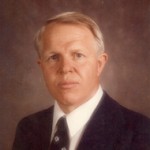
M. Lynn James

While doing post-doctoral studies in chemistry at a major mid-western university, my wife and I attended the local ward. The ward was composed of approximately 50/50 university people and townspeople. At the time, I was an ordained Seventy in the priesthood (this was during the period of time when there were Seventy’s Quorums in the individual stakes). The number of Seventies and High Priests in our ward was relatively small and so we met together during priesthood time.
Most of the High Priests and some of the Seventies were faculty members at the university and some of them were quite “intellectual” and professionally prominent. A few of these members would periodically raise questions during the lesson time, wondering about this doctrine, questioning that practice, or doubting some principle of the Church. After several months of such lesson discussions, I became quite tired of so many issues being raised. After considerable thought about this, I concluded that I needed to come to a point in my testimony where I would not be disturbed by such discussions. Ultimately, I came to what I call my five fundamental points of testimony: (1) I knew that there was a God, (2) that Jesus Christ was his literal son and the Savior of the world, (3) that Joseph Smith was, indeed, a prophet of God, (4) that the Book of Mormon and the Bible were the word of God, and (5) that the Church of Jesus Christ of Latter-day Saints was the only authorized Church of God on the earth. With a sure knowledge of these things, I could feel comfortable when such points came up in a gospel discussion. Furthermore, when something in the gospel would come to my attention that I did not understand I didn’t have to worry about it. If these fundamental things were true then those that depended upon them were also true.

For me, this was similar to “truths” that I learned in mathematics. In my courses, like calculus, we were shown certain proofs that proved the correctness of some mathematical principle or equation. Certain things I understood completely and felt totally comfortable with, while others were beyond my current understanding. Based upon the fundamental things that I did know were true, I didn’t worry about the ones that I didn’t understand, but simply used them confidently as I needed them. For example, I didn’t totally understand why the integral of dx/x was equal to ln(x)—(ʃdx/x = ln(x)) —but I trusted that it was true and knew that it worked, and, therefore, didn’t have to worry further about it, just use it when I needed to.

In my professional and personal life, I have found that my educational experience has reinforced my testimony of the Gospel of Jesus Christ. It helps me to stand firm against opposition to what I believe and accept as true, especially when others, particularly “educated” people, take pleasure in criticizing the Church, its doctrines, practices, or personnel. It has also helped strengthen me as I pursue a better understanding of the gospel. It has taught me to think critically, use logic, and to evaluate what things are really important.

——————————————————–

After service in the North Central States Mission, with headquarters in Minneapolis, Minnesota, M. Lynn James earned a bachelor’s degree in chemistry with a minor in mathematics from Brigham Young University. He went on to complete a master’s degree in physical chemistry with a minor in inorganic chemistry at BYU and a Ph.D. in physical chemistry with a minor in physics from the University of Utah. Following two years of post-doctoral research at Purdue University, in Indiana, he taught in the Department of Chemistry of the University of Northern Colorado, in Greeley, from 1966 to 1999. He is the author, with James N. BeMiller and James O. Schreck, of General, Organic, and Biological Chemistry: Chemistry for the Living System (Lexington, MA: D. C. Heath, 1980), and, with James O. Schreck, of General, Organic and Biological Chemistry: A Brief lntroduction (Lexington, MA: D. C. Heath, 1982).

Posted August 2010

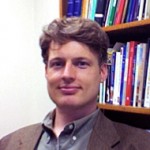
Robert W. Blair

A Linguist’s Perspective on Things Beyond Understanding

I don’t think that the universe with its billions of galaxies, trillions of stars and planets, and a huge assortment of other objects and phenomena, together with the laws that govern their precise movements, came about by accident. Many scientists conjecture that it all came out of an infinitesimally tiny speck so dense that it contained all that was to become the elements of matter. That out of that submicroscopic particle came all the chemistry and architecture that would make up the earth and the sun and the stars and all the galaxies and all the “dark matter” and “dark energy” of our physical universe. Up to a moment in time—less than fifteen billion years ago—it is assumed by many that there was nothing in the empty infinity of space, nothing in the infinity of time, except for that one incomprehensibly tiny, incredibly dense particle. No sound. No light. No heat. No movement. No change. Only the empty infinity of space, save for that one tiny particle. And of course, as far as can be discovered by empirical means, there was no design or plan or purpose or intelligence behind what was about to happen. How long that single submicroscopic particle existed or how it came to be or what set it in motion is unknown, but according to widely accepted speculation, at one point in time, out of absolute stillness there occurred within that speck a colossal explosion, what is humorously called the “Big Bang,” and out of absolute cold came unimaginable heat, out of darkness came light, out of that dense, inert speck came all that would become the physical universe, all that would became “nature,” including the invisible “dark energy” and “dark matter” that are said to constitute a large percentage of the universe.
Such, as I understand it, is one well-respected speculation of the beginning of the physical universe. But what is even more puzzling and marvelous is the transition from the most primitive inorganic stuff to organic stuff, living matter. Or let me put it this way: the transition over many billions of years from when there was no living matter, no DNA, no heart or womb, down to when the first heart began to pump blood; from when there was no male or female, no egg or sperm, to when there was the first conception; from when there was no brain that could process language and enable infinitely varied speech, no mind to create art or music or poetry—to when these emerged in human kind on this earth not that long ago.

I have negligible training in the physical sciences, but I am fascinated by the discoveries brought about over past centuries thanks to the invention of precision instruments along with meticulous calculations and bold reasoning. I am also aware that some of these discoveries have had to be modified, reinterpreted or retracted multiple times, and I expect that future discoveries and recalculations may well require revision of current explanations of things.

I hold in awe the advance of science and technology while at the same time I believe there is much in the universe that is forever beyond the reach of empirical science. I do not leave divine purpose and divine intelligence out of the equation. I am a believer in Holy Scriptures in which many realities or truths beyond the reach of science have been revealed to Man. I am a believer that, in a way far beyond Man’s ability to comprehend, the universe was organized and is governed by that Supreme Being we call God. How the world was created, whether or not it simply evolved uncontrolled since that “Big Bang,” I cannot speculate, but I ask myself important questions that science cannot address: Was this earth created for a purpose? If so, for what? What is MY life’s purpose? When I die, does my soul, the living spirit within me, continue living in another sphere? Does time stretch into eternity for ME? Did my personal history begin only at my birth? What should I make of my life, and why?

Philosophers may address these questions, but how am I to trust human reasoning about these and other all-important questions? To what or to whom can I turn to find answers to these questions—not just satisfying or comforting answers, but TRUE answers? God’s answers?

I am uplifted by God’s revelation of his purpose in Creation, recorded in sacred scripture: “This is my work and my glory, to bring to pass the immortality and eternal life of Man.” This tells me that although I am but a minuscule speck in the infinite universe, and my lifetime but a minuscule moment in eternity, I somehow fit into God’s purposes. I accept the truth revealed in the Holy Scriptures, that the Creator of this world is the father of my spirit, and that I am here of my own free will and choice to be tried and tested to see what I would do with my life when I have to go on faith. I believe that life is a time of learning and growth. I believe I am accountable for my life, accountable for my decisions and thoughts and intentions and actions, accountable to my Father in Heaven.

A bit of background. My name is Robert Wallace Blair. I was born in California in 1930, the son of parents whose ancestors two generations before chose to join the Church of Jesus Christ of Latter-day Saints. My mother being a high school Spanish teacher, our home was blessed with appreciation for speakers of foreign languages. For most of my eighty years I have probed into the fascinating world of language and languages. Before entering graduate school at Indiana University, I had studied Latin, French, Russian, Finnish, Hebrew, Arabic, German, Gothic, and Old and Middle English. As a doctoral student, I focused on two languages of the Americas, Quechua and Maya, and for my doctoral dissertation I wrote a structural grammar of the latter. Over the following years I engaged in intensive study and description of “exotic” languages, including Chinese, Guaraní, Cakchiquel, and Navajo. After retiring from the BYU Linguistics Department in 1998 I devoted much time to designing language courses for primary and secondary school students. Between 1975 and 2003, my wife and I lived half a year in Guatemala, half a year in Russia, five years in China, and three years in the Baltics (Estonia, Latvia, and Lithuania).

What have I learned from these language-related experiences? For one thing, I stand in awe of the capacity infants have to acquire a language. Living beings from ants to elephants come into the world with an innate bioprogram that equips them with faculties of communication sufficient for their needs. But human babies come into the world with far more. Human babies come into the world with an innate bioprogram than enables them to acquire language, and with it, cognition and communication faculties far beyond those of animals. Just as birds are genetically programmed to fly and fish are genetically programmed to swim, so humans are genetically programmed to learn to communicate and interpret the world with the aid of very complex language.

A newborn’s brain is not, I believe, a tabula rasa. It is more than just grey matter predisposed to learn language by responding to external stimuli together with positive and negative reinforcement. I believe a newborn’s brain is “wired” no more for nursing, crying, and vocalizing than for acquiring language. Many scholars believe, as do I, that its tiny brain contains something like a blueprint of language—not a specific lexicon or grammar, of course, but of language universals, features shared among all languages, features that, given adequate time and environmental conditions, enable language acquisition to happen. Activation of these universals, and creative building upon them, of course, requires, among other things, input from their environment over months and years, but what the nature of that input is, and what the child does with it, is not what one might suppose.

The acquisition of our first language does not come by repetition of word and sentence models, nor is it guided much by corrections from caregivers. Learning to speak proceeds more by creative experimentation than by imitation or repetition. Let me put that in other words: I believe that language acquisition proceeds largely as a creative process, building on the bioprogram, discovering how to make use of the tongue and lips, the lungs and diaphram, the oral and nasal cavities, the glottis, velum, and other parts of the vocal mechanism to modulate sound vibrations, then discovering how to correlate certain of those vibrations with meaning. Also, of course, how to make sense of vocal sound vibrations that enter its ears, roughly correlating those with sounds it discovers it can produce with its own vocal mechanisms. Correlating vocal sounds and rapid-changing articulations with meaning is no easy task. Surely that creative discovery is motivated to a great extent by social interaction, but much of the learning takes place out of view and out of hearing, normally before a child is three years old.

For me, the awesome marvel that appears to have occurred with and following the “Big Bang” is no more awesome than the marvel that occurs regularly in the human species, the marvel of language acquisition, the emergence of language in very young children. I’m struck by the hyperbolic statement of Derek Bickerton in his book The Roots of Language: “The consummate miracle of the universe is a baby acquiring language.”

In a story set in ancient Mesopotamia before writing was invented, a father challenges his son Kish to count the stars, name each one, and map the night sky. The boy soon finds it is an impossible task, but after a frustrating beginning, he combines some of the more prominent stars into constellations and makes up a story for each of those. This enables him to make a rough map of the vast chaos overhead. I compare Kish’s impossible task to the equally impossible task of a baby’s acquiring language. Despite limited cognition, limited memory, limited logic, every normal child succeeds in acquiring speech and the ability to make sense of others’ speech. I shake my head and ask: How is it done?

I am inspired by the story of the deaf and blind child Helen Keller, who, despite her extreme handicaps, mastered English and even learned to read classical literature in German, French, and Latin. Her breakthrough into language—in my mind reminiscent of the “Big Bang” —came when, at the age of seven, one day she suddenly discovered that things like water and leaf, and concepts like love and good and new, have names. From that wonder-filled day in her eighth year of life, she went about connecting word signs conveyed by hand touch to things and concepts, and suddenly a marvelous world opened up to her, a world mediated through language. In her autobiography The Story of My Life, on page 43, Helen wrote of her teacher Annie Sullivan: “Everything Miss Sullivan taught me she illustrated by a beautiful story.” I try to imagine how her teacher taught her through stories in sign language, but I think that for Helen, as for Kish, stories helped her penetrate the unknown and give order to the world she experienced without hearing or sight.

As I ponder the physical universe, I try in vain to conceptualize its beginnings and its processes in unending space and time. And as I ponder the universe of language and languages that I have experienced, their incredibly varied structure, their acquisition and use, I am equally at a loss to explain what undeniably presents itself before me.

My conclusion is that if I can accept such realities as these even though I cannot comprehend them, then, where there is sufficient evidence, I can accept spiritual realities, unseen realities that are beyond my understanding. So what is “sufficient evidence?” I recognize that throughout much of my life I have personally experienced sufficient evidence so that I accept that there is an almighty Ruler of the universe, the Creator of all things and the Spiritual Father of us all. With that, I accept the universal brotherhood of Man and realize that I have a stewardship in this life that extends beyond myself: it extends to my wife and family and to my ancestors and progeny as well as to all humankind, insofar as I can reach out to them.

In worshiping a Heavenly Father who is concerned with my life as well as with that of all His children past, present, and future, I accept that his counsels and commandments, given through ancient as well as modern, even living, prophets, are part of God’s Plan for his children. I accept that He sent his son Jesus Christ as our Savior to reveal God’s nature and almighty power, to establish a church and divinely guided priesthood, to teach and show us the way to heaven, to open the way for redemption from sin, and to provide resurrection and everlasting life for all. I accept that the church and its leadership, which Jesus Christ set up, over time deviated in teaching and practice, with the result that it lost God’s favor. I accept that Martin Luther and other reformers, relying on their interpretations of the Bible but lacking direct revelation from God, did all they could to reform the church. I accept that Christ’s true church and priesthood authority was at last restored in 1830 by direct revelation from God to a living prophet. I accept the Bible as containing sacred history; I also accept the Book of Mormon as another testament of Jesus Christ, witnessing to his divine mission and complementing the Bible in teaching the way to eternal salvation.

I know that some would say to me: Show me a sign, give me incontrovertible evidence, scientific proof. Only then will I consider accepting what you accept on faith. I can only reply that the witness of the Holy Spirit is a product of faith. As to receiving answers to life’s most pressing questions, I am not dependent on my own or anyone else’s philosophical reasoning or interpretations. What I have myself seen and experienced in the spiritual realm affirms my faith. It invites me to live a consecrated life and gives me hope for the resurrection, hope for life eternal with my wife and loved ones in God’s presence. This is at least as substantive to me as are realities of the physical world that are far beyond my understanding, or the realities of language acquisition that are equally far beyond my comprehension.

—————————————————–

After completing a doctorate at Indiana University with a dissertation on noun and verb morpho-syntax in Yucatec Maya, Robert W. Blair taught linguistics for many years at Brigham Young University. He is the author of Guarani Basic Course (Provo, 1968); with Leon Simmons and Gary Witherspoon, Navajo Basic Course (Provo, 1969); Cakchiquel Basic Course (Provo, 1969); with John S. Robertson, John P. Hawkins, and Andrés Maldonado, Mam Basic Course (Provo, 1979); Diccionario Espanol-Cakchiquel-Inglés (New York, 1981); Innovative Approaches to Language Teaching (Rowley MA, 1982); In Every Tongue: Russian for Latter-day Saints (Salt Lake City, 1994); and various other language-learning books and courses, especially for children and young adults, in Spanish, French, Japanese, Russian, and Latin.

He served as a young missionary for the Church of Jesus Christ of Latter-day Saints in Finland, and then, later in life, presided for three years over missionary work in the Baltic States from headquarters in Riga, Latvia.

Posted August 2010

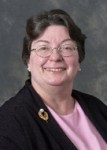
Benjamin I. Huff

People often ask me how being a philosopher fits with being a Mormon. That is a bit of a funny question for me because in my mind the two are really inseparable. Philosophy is the search to know and understand the most important truths, and to seek out and live by these truths is also the core of religious faith. The existence and nature of God and the best way to live have always been central topics in philosophy, and so for me, faith and philosophy are two aspects of the same process. There are reasons why people wonder how well they fit, though.
For most of the history of philosophy, faith and philosophy have been natural companions. Plato moved freely between logic and human experience on the one hand and myth, oracles, and inspiration on the other, as sources and support for his ideas. Al-Ghazali (a Muslim), Maimonides (a Jew), and Thomas Aquinas (a Christian) all relied on both human reasoning and religious authority in their work to understand, clarify, and support the most important truths. This was possible and natural for them because they found the messages of reason and revelation to be consistent with one another. Part of their task, as they understood it, was to show that where there appeared to be conflict, this was a result of either flawed reasoning or a misunderstanding of revelation, and to correct these errors.

Faith and philosophy have had something of a falling out, though, since the Enlightenment, or since the Reformation, which we might also see as two sides of the same centuries-long process. Both movements saw serious problems in Christian institutions, which caused them to rethink their relationship with human and divine authority.

Reformation leaders such as Luther and Calvin felt that false teachings had entered the Christian tradition, partly through reliance on human reasoning, including Greek philosophy. They also saw serious sin and corruption among even the leaders of the church. In response, they emphasized human weakness, both intellectual and moral, in contrast with the purity and authority of God. They worked to minimize the need for mediating priests and any tradition of human teaching beyond the scriptures.

Enlightenment thinkers increasingly came to see the claims of religious authorities as unreasonable, and the authorities themselves as untrustworthy. The Roman Catholic Church’s insistence on Ptolemaic astronomy was one of the more spectacular points of disagreement, but Enlightenment thinkers also found it difficult to accept traditional explanations for the existence of so much evil generally in the creation of a perfectly good and powerful God, and the collusion of many ecclesiastical authorities in particular with corrupt, tyrannical rulers. Rejecting the established authorities, philosophers increasingly looked for new conceptions of God (such as deism), or new conceptions of the world that did not rely on God. Philosophers such as Kant and Mill maintained that it was degrading to accept any form of authority, and insisted that individual autonomy in both belief and action was essential to human dignity.

Both sides came to see faith as antithetical to reason, both because they could not intellectually reconcile their conclusions, and also because each came to represent a different moral ideal. Proponents of reason emphasized the greatness of human potential and the dignity of autonomous thought and decision, which was incompatible with relying on any authority. Proponents of faith emphasized human weakness and sin, and the need to submit unquestioningly to the authority of God, setting aside even one’s reason. Essentially these same positions remain the most influential perspectives today.

However, as a Mormon, I have a different perspective on this story. Unable to reconcile faith and reason, Reformation and Enlightenment thinkers concluded that in principle they cannot be reconciled. From a Mormon standpoint, though, the problems in the Christian establishment at the time of Luther and Galileo were just that, problems in the Christian establishment. The solution is not to divorce reason from faith, or faith from reason, but to restore true authority and teaching, as Joseph Smith did, and to engage reason with a correct faith.

Intellectually, a correct understanding of revelation can be reconciled with human reason. Where revelation and reason seem to diverge, we should look for errors on one side or both. Too often what pass for the claims of “reason” are actually claims accepted from intellectual authorities without sufficient reflection. Similarly, too often we misunderstand revelation, or mix human errors with divine truths. Jesus didn’t reject the misguided questions of the scribes and pharisees; he answered them with stronger reasons because he knew the truth, and this is in part what made his authority clear. We too need a robust rational engagement with faith, to maintain our understanding of religious truths (not merely inert possession) and to keep our rational inquiries from becoming embedded in the errors that may arise from neglecting religious truths. As I understand them, LDS scriptures call us to use reason and faith together (e.g. D&C 50:10-12, Luke 24: 15).

In this enterprise, the specific differences between LDS and traditional Christian teachings are crucial. It is my view that some traditional Christian claims do not add up from a rational standpoint, but that many of these are themselves the results of flawed human reasoning which were then adopted by ecclesiastical authorities. LDS teachings differ substantially on the account of creation, the nature of God, the basis and results of divine judgment, and the role of sin and evil in God’s plan, and differ in ways that render them rationally defensible and appealing. Certainly traditional Christianity has produced and continues to support a dynamic intellectual tradition despite and at times because of the rational difficulties with its doctrines, but LDS beliefs provide a basis for intellectual life that is at least as fertile and stimulating, and may prove more sustainable.

Morally, subjection to tyrants and false priests is degrading, but submission to loving guidance and just laws is ennobling. Our knowledge and understanding at each stage of our lives is limited, and we need the guidance of authorities, including parents, teachers, laws, and ecclesiastical leaders, to reach our full potential both intellectually and morally. On the other hand, mere passive acceptance is not the end goal of faith. We should confirm the claims of human authorities on matters of religion by going to God in prayer (Moroni 10:4), and actively engage our faculties to understand the truth (D&C 9:7-8, 50, 17-22). Even God’s authority should have the ring of truth to it, when we listen sincerely. As Paul says, “The Spirit itself beareth witness with our spirit, that we are the children of God” (Romans 8:16). We are also called to exercise our reason to expand and go beyond the knowledge that comes from revelation. God does not want us to wait for him to tell us what to think, when we are in a position to work it out for ourselves (D&C 58:26-8), and the inquiries of philosophers, scholars, and scientists across history, religious and non-religious, have yielded many precious insights.

Faith is trust, but we must judge well and responsibly where to place our trust, and use our reason in order to carry out that trust intelligently. Similarly, living by our own reason and judgment carries a certain dignity where we are competent to judge, but to insist on one’s own judgment, against the advice of another who knows better, is merely willful and rash. Thus the proper exercise of faith requires reason, and sound reasoning calls us to exercise faith where appropriate.

Faith and philosophy haven’t always been an easy mix for me. In my teen years I felt quite keenly the tension between essentially the moral ideals of the Reformation and the Enlightenment. Thinking this was what faith required, I wondered how it could be responsible not to exercise my own judgment. After years of prayer and struggle, I was about to conclude that faith in God was a mistake, when I read D&C 67:6-7 and realized that in this passage, God was challenging me to assess his teachings according to my own judgment. Clearly there was more to faith than I had realized.

Recognizing that faith and reason are compatible in principle, however, is not the same as actually finding their claims harmonious. Accepting the challenge, I began to study LDS scriptures with a new perspective and energy. I was persuaded that God was worth listening to, and open to the idea that he might be right. This is a beginning for faith (compare Alma 32:26-7). I recognized early that it was hard not to admire the moral example of Christ. It took longer for me to conclude that I believed the Book of Mormon, though not some things others had said about it. To solidify trust in the LDS Church as an institution took two years as a hopeful but questioning missionary, and a lot of reassurance from God along the way. For the forseeable future there will remain aspects of the LDS tradition I am not sure how to understand, but I have come to trust it, and that trust is continually rewarded. Integrating faith and reason is a lot of work, but I have found that the tension between the two is a creative one, with each side shaping the other and making it much richer than it could be on its own.

Christ teaches that we will not receive the full truth unless we assimilate it actively and ask for more: “seek, and ye shall find; knock, and it shall be opened unto you” (Matthew 7:7); “unto him that receiveth I will give more; and from them that shall say, We have enough, from them shall be taken away even that which they have” (2 Nephi 28:30). As a part of this progression, we should expect that our initial, childlike understandings of some gospel truths will prove to be inadequate, but that a more subtle and complete understanding is waiting for us as we become ready to receive it (Articles of Faith 9, 1 Corinthians 13:8-12). As I understand it, to use my reason in an active process of discerning and discovering the truth is required by my faith, and the message of the LDS scriptures proves to be more impressive and convincing the more I examine and question them.

—————————————————-

Benjamin I. Huff is Assistant Professor of Philosophy at Randolph-Macon College in Ashland, Virginia. He was born in Virginia, then lived in Riyadh, Saudi Arabia, for seven years before attending high school in California, at The Cate School. He was a missionary in Japan (Tokyo South Mission) from 1992-94 and completed a B.A./B.S. with Honors in philosophy and mathematics at Brigham Young University in 1996. He completed an M.A. and Ph.D. in philosophy at the University of Notre Dame in 2006, with a dissertation in virtue ethics. He was among the founders of the Society for Mormon Philosophy and Theology and currently serves as its Secretary/Treasurer. His research and teaching interests include ethics, philosophy of religion, and ancient Greek and Confucian philosophy.

Posted July 2010

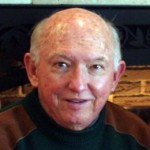
Barbara A. Heise

As a youth, I wondered why so many people in the world were constantly searching for something which seemed extremely elusive. I came to realize that they were seeking happiness. Most of our movies, music, novels, historical facts, and even conversations have a foundation on this search for happiness. Few people found happiness and if they did it was based on people, places, or things which gave them only momentary happiness.
Then, as a teen, as I pondered, I noticed that when I was serving others I was happy. When I prayed, I felt the Spirit, and was happy. After marrying and having a child, we strongly felt that we should bring up our daughter with some type of religious background. As we investigated many churches both Christian and non-Christian, none felt right . . . something was missing. Then, the Lord sent people to talk to us about the Church of Jesus Christ of Latter-day Saints (LDS). A member of the Church came to my husband’s place of business in Los Angeles to talk to him about food storage. At the same time, a coworker and I talked about our desire to find a church, and we found out that she had an LDS babysitter. So we arranged to have a dinner at my coworker’s home and invite the babysitter and her husband so they could teach us more about the Church. Through a series of events, missionaries finally came and taught us the fullness of the Gospel. We joined the Church, which remains, to this day, the best decision we ever made.

We continued to grow in the Gospel, diligently desiring to learn. Challenges came: poverty, the birth of a baby with a handicap, my husband becoming disabled, my trying to go to nurs¬ing school, working as the sole support of our family, and the death of two sons. As a registered nurse and then as a family nurse practitioner, educator, and researcher, I spoke with many people of all ages who were frantically searching for happiness. More challenges came in my life: the death of a younger sister and my husband. With every challenge I continued to seek and follow the Savior, Jesus Christ. I was taught about unconditional love, survival, obedience, and submissiveness to the will of the Lord, and that the Lord loves us and is always near to lift us up. Even during difficult times, I found peace and happiness through the Lord’s sustaining influence.

True happiness, eternal happiness, comes through following eternal principles found in the Gospel of Jesus Christ. I have come to know through the many experiences, challenges, and blessings that I have been given that Jesus Christ lives! He can do what He said He could do because He is who He said He was . . . Jesus, The Christ!

The Savior knows each of us individually—He knows our names! He loves us individually. He saves us individually. He gave His perfect life for us. He wants us to succeed and come Home, and He will never stop reaching after us. I say these things in the name of Jesus Christ, amen.

————————————————-

Barbara A. Heise, Ph.D., APRN, BC, is an assistant professor of nursing at Brigham Young University.

After receiving her B.S. in nursing from Missouri Southern State College (in Joplin), she went on to earn an M.S., also in nursing, from the State University of New York in Binghamton. Later, she received specialized training at the University of Virginia, Charlottesville, in psychiatric/mental health clinical nursing. Finally, she earned a Ph.D. from the University of Virginia, writing her dissertation on “Patterns and Outcomes of Health Care Use among At-Risk Alcohol Drinkers.”

Prior to joining the BYU faculty, Dr. Heise worked for various clinics, medical centers, and government agencies in Missouri, New York, and Virginia. Her research has focused on gerontology in the United States and Australia, mental health care for minorities and the rural poor, the care of adolescent cancer survivors, and the treatment of substance abuse.

Posted July 2010

R. Lanier Britsch

My parents, Ralph and Florence Britsch, reared me in a Mormon home. I attended church meetings with near perfect regularity. My parents held responsible positions in the Church and always assumed I would enjoy many of the same experiences they cherished. It was expected that I would serve a full-time mission, and I did. In January 1959, I commenced two years of proselyting in the Hawaiian Islands. The people I met during that period changed my life forever.

It was easy for me to love the peoples of Hawaii. I do not remember ever hearing a racist word in my parent’s home. Indeed, during World War II, while almost everyone was berating the Japanese in the vilest terms, I recall my mother lamenting that we could no longer obtain the wonderful toys that were made by the Japanese. Shortly after World War II an uncle spent three years as a Mormon missionary in Japan. Prior to that he had been part of the Occupation troops there at the end of the war. These positive feelings for a nation that was held in disrepute by many had a salutary effect on me.

While on my mission, I spent a year on the Kona Coast of the Island of Hawaii. From time to time, I dropped in to take a tourist’s eye view of several Buddhist temples in that district. I found the temple implements interesting, but even more than that I wondered why the old Japanese people we met always treated us kindly, while the younger Nisei and Sansei (second and third generation) Japanese who had become Christian were usually abrupt and unkind to us. I wondered, “What is it about the old Buddhists that causes them to be so kind?” This question and other experiences fostered in me an interest in other religions of the world.

Back at Brigham Young University I majored in Asian Studies with a strong emphasis in anthropology. I was also interested in comparative religions. At Claremont Graduate University, where I did my Ph.D., I emphasized Asian religions and thought. I was in academic heaven. My professors and colleagues were wonderful people who loved learning and trusted each other to be as intellectually honest as was possible.

Did my educational interests and pursuits cause me to question my religious foundation and beliefs? Yes, briefly. A rather strong dose of behaviorism actually caused me to question anyone’s ability to escape religious conditioning by parents, leaders, teachers, and friends. I asked myself, do some of my friends (even senior citizens) whom I have always known and respected actually know what they are doing when participating in religious observances? Are they so totally conditioned that they really don’t know what they are doing? Can we really know anything, especially of things religious? Is everything relative to the circumstances and environments in which we find ourselves? These are common questions among scholars and intellectuals. The usual answer leans strongly toward relativism. I was never comfortable with that answer. (Incidentally, I got over behaviorism quite easily when I realized that it is only one of myriad ways that people may be taught and trained. It no longer bothers me that God might use behaviorist methods to get us where he wants us. We still have agency.)

All this leads to a question: Lanny Britsch, where do you stand regarding religious relativity? And how do you view religious truth as held by non-Latter-day Saint religions—Christian and non-Christian? And how do you know your position is right or correct?

I will begin with the second question, How do I view religious truth as held by other faiths? I have long believed that the major religions of the world and some philosophies (such as Confucianism) contain much truth in their teachings. In a way, the question of salvation almost becomes a moot point because religious quests vary so much. For example, the quest for nirvana in Buddhism is so distant and different from salvation as defined by most Christians that trying to say which is better (truer?) is of little or no value. On the other hand, understanding another religion’s point of view is of real value. Understanding does much to lead one to respect another position. I believe most major religions contain many moral and ethical truths and do much to improve the human condition.

Regarding the question of religious truth, I believe religions may be usefully placed in one of three categories: exclusivist, inclusivist, and pluralist. Exclusivists hold that their religion is the only truth and that no other ideas are needed to answer the questions of human existence. Pluralists, on the other extreme, claim that no religion has claim to the truth and that all religions are true, just as all cultures are acceptable—a relative position. Inclusivists take the middle ground, the position asserting that one religion is correct and true but that other religions do have genuine value. This is the position of the Latter-day Saints. We believe there have been wise and inspired prophets, sages, philosophers, and religious leaders over the centuries who have provided much that is good and true for mankind.

Since the days of the prophet Joseph Smith, the LDS Church has consistently held to its position that the world is filled with truth, although there is also clearly much that is not true. The responsibility of the Latter-day Saint is to “receive truth, let it come from whence it may” (Joseph Fielding Smith, comp., Teachings of the Prophet Joseph Smith [Salt Lake City: Deseret Book, 1979], 313). Further, the prophet Joseph taught: “We don’t ask any people to throw away any good they have got; we only ask them to come and get more” (Ibid., 275).

Obviously, my answer to question two answered question one. I am not a relativist or pluralist. I believe that among the varieties of truths (that is, undeviating physical laws and spiritual laws) available to mankind there are some truths that are absolute and will lead to eternal salvation and exaltation. Perhaps I should explain what I mean when I speak of “varieties of truths.” For example, it is true when we say that something is red, yellow, or blue because there is universal acceptance of these words within the English language. These are also universally recognized as the primary colors. But we also make truth statements about matters that are not so clearly absolute. Often issues of relativism enter at this point. For example, those who say God is God no matter what he/it is called or named in one place in the world or another, would generally be classed as relativists. But the underlying implication is that it is impossible to know or define God; therefore, whatever God is called makes no difference because no one knows who or what God is. The six Hindu blind men touching different parts of an elephant and arriving at various conclusions regarding what an elephant is come to mind. Each blind man perceived but one part of the whole elephant (God). Many scholars and religionists believe that no one can understand what God is or what his/its true qualities and characteristics are. (I have used the term “he/its” because many religions do not wish to ascribe gender to the ultimate being.) While I know that I do not begin to understand God fully, I do believe we can know him with much greater certainty than is often believed.

How do I know (or believe I know) that the Mormon way to salvation and exaltation is the supreme path? Let me emphasize an important point regarding my testimony. I am not a Mormon because I have studied many of the world’s religions and found them wanting. That would be a negative path. And in my case it would be untrue. I have not arrived at Mormonism because there is something wrong with any other religion. I am a Mormon because of two positive blessings in my life: Firstly, the Mormon way of life works wonderfully well for me. Living in the Mormon way makes me happy. It makes me healthy. It has brought me love in my family and among my colleagues and friends. And it brings clarity to my life that I adore. Secondly, and most importantly, I am a Mormon because of my experiences with the Holy Spirit or Holy Ghost.

In the Book of Mormon, Another Testament of Jesus Christ, the life history of a man named Alma, son of Alma, is given. As a wayward youth, Alma the younger, as he is known, went about among the people seeking to destroy the Church of Christ and all that it stood for. This was especially heinous because his father was the head of the church. In an experience not so different from that of Saul on the road to Damascus, Alma the younger was struck blind as an angel from God called him and his companions to repentance. The result was much like Saul, who, as Paul, became the great apologist-apostle of Jesus Christ. Alma saw an angel and he also had many other spiritual manifestations from God. His repentance was complete. Eventually he became the high priest and leader of the church. In an effort to persuade his people to repent and return to their God, he testified that he knew the things he was saying to them were true. He said, “I testify unto you that I do know that these things whereof I have spoken are true. And how do ye suppose that I know of their surety? Behold, I say unto you they are made known unto me by the Holy Spirit of God. . . . I know of myself that they are true; for the Lord God hath made them manifest unto me by his Holy Spirit.” (Alma 5: 45-46.)

I find it important that Alma, who had seen an angel and received other important heavenly manifestations, did not say, “Yea, verily, I saw an angel and he told me these things are true.” What he said was far more important. He said he knew by the power of the “Holy Spirit of God.” Here lies the key to my testimony. My testimony of the truthfulness of the restored gospel of Jesus Christ as taught and administered by The Church of Jesus Christ of Latter-day Saints has come from the same source. I have not only been taught to believe as I believe, but also I have lived with the blessing of feeling the Spirit, the Holy Ghost, in my life. This has been true since I was a boy. Now, in my old age, I still enjoy the blessing of having the Spirit in my life on frequent occasions.

What do I mean when I say, “I have had the Spirit, the Holy Ghost, in my life”? This is not an easy question to answer. Indeed, to share this feeling is almost impossible if one has not had the experience himself or herself. Religious believers sometimes speak of ineffable experiences. Perhaps having the Spirit is such an experience. Those who have fallen in love know what it feels like, but it is very difficult to speak of the feelings love brings without experiencing it oneself. Regarding the personal testimony that is born of the Holy Spirit, this much I can say: I feel a warmth, a certitude, a peace, and surety that vital questions have been answered in the affirmative or that sacred knowledge has been given to me from an unseen source. I believe these positive feelings come to me from the Holy Spirit. I often feel the same way when I hear another person testify that something is true. Having the Spirit in one’s life can also be manifest while performing ordinances or giving blessings. Inspired words come into the mind of the person who is performing the ordinance, words that were not planned or expected. As a Latter-day Saint I believe such words or promptings come from the Holy Spirit. I know when I have spoken my own words and when I have been guided to speak by the Spirit.

I am not a prophet, as was Alma, but I know by the same feelings and inner knowledge as witnessed to me by the Holy Spirit that Joseph Smith was a prophet of God. The Church that Joseph Smith established through many encounters with heavenly beings is true. The Book of Mormon is true. It is the word of God. I believe in the three personages of the Holy Trinity, God the Father—our Heavenly Father—his Son Jesus Christ, and the Holy Ghost. Jesus Christ is our Savior. He is literally the Son of God. He atoned for the sins, sufferings, sorrows, and problems of all mankind. He was the first fruits of the resurrection—the gift he freely gave to all mankind. Jesus Christ is the center of our religion. He is the ground and basis for all we believe. I know these things through the power of the Holy Spirit and so testify in the name of Jesus Christ, amen.

—————————————————-

R. Lanier Britsch is an emeritus professor of history at Brigham Young University, where, for a time, he directed the David M. Kennedy Center for International Studies. He also served as the academic vice president of Brigham Young University-Hawaii from 1986 to 1990. He received bachelor’s and master’s degrees from BYU, and earned his Ph.D. from Claremont Graduate University. Among his publications are Unto the Islands of the Sea: A History of the Latter-day Saints in the Pacific (1986); Moramona: The Mormons in Hawai’i (1991); From the East: The History of the Latter-day Saints in Asia, 1851-1996 (1998); Nothing More Heroic: The Compelling Story of the First Latter-day Saint Missionaries in India (1999); with Donald Q. Cannon, Richard O. Cowan, David F. Boone, and Fred E. Woods, Unto Every Nation: Gospel Light Reaches Every Land; and, with Terrance D. Olson, Counseling: A Guide to Helping Others (1983).

Dr. Britsch has served in many capacities in the Church of Jesus Christ of Latter-day Saints, including two missions in the Hawaiian islands (the first as a young man, the second as a senior missionary assigned to help document the history of the Polynesian Cultural Center) and numerous assignments in bishoprics of BYU student wards and in the presidencies of both a BYU student stake and the Orem Utah Sharon Stake. He is currently a stake patriarch in Orem, Utah. He and his previous wife, JoAnn Murphy Britsch, are the parents of six children; she died in 2005. Dr. Britsch married Shirley McKay in 2006.

Posted July 2010

F. LaMond Tullis

Recently, my son pointed out to me a short bio in an on-line venue. The entry’s last sentence: “Tullis is a believing Latter-day Saint.” I do not know the connotation the contributor intended. I accept the statement as a badge of honor.
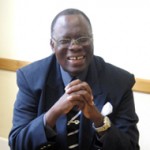
I believe in human immortality, that humans have a filial relationship with deity, that family and other relationships can endure eternally, that how we conduct our lives matters in an eternal perspective, and that the teachings embodied in the Church of Jesus Christ of Latter-day Saints offer a completely believable testimony and guide about these.

For some, faith is little more than a euphemism for religious superstition. Born a skeptic, I have thought about religious superstition a lot. I have seen it practiced in numerous settings, including, at times, among my fellow Latter-day Saints. I reject assertions that my faith is religious superstition. I do acknowledge that it lies beyond proof. However, in my seventy-five years I have subjected it to much testing and have, on balance, been gratified. Beyond, and more importantly, I have been jolted with subliminal influences that have clarified my thinking, given me knowledge that I had not rationally earned or had any right to expect to possess, and charted my life’s course in wholly unexpected yet, some would conclude, fortuitous ways.

My faith is not superstition. It is not science. It is conviction founded on study, contemplation, experience, and a profound respect for the wisdom of the ages. These have ordered my life’s journey. I am eternally grateful.

————————————————

After study at the University of Utah, LaMond Tullis earned a bachelor’s degree in Spanish and political science and a master’s degree in political science at Brigham Young University, and then, along with graduate work at Cornell University, earned an M.P.A. in development studies and a Ph.D. in political science from Harvard University. After a year teaching at Arizona State University, he returned to BYU, where he taught from 1969 to 1998. Among other University assignments, he chaired the Department of Political Science from 1978 to 1983 and served between 1985 and 1989 as BYU’s associate academic vice president. He also served on several occasions as a consultant to departments of the United Nations and to the U.S. Department of State. In 1983-1984, he was a visiting fellow at the London School of Economics and the University of Sussex, and, in 1990, at Princeton University. He was active as a conference organizer and a member of various editorial boards, and was the co-founder and general editor (with W. Ladd Hollist) of the International Political Economy Yearbook.

Among his numerous publications are A Search for Place: Eight Generations of Henrys and the Settlement of Utah’s Uintah Basin (Piñon Hills, 2010); Life without Marta: Letters to a Memory (Piñon Hills, 2008); Reflections at Skyefield (Piñon Hills, 2006); Unintended Consequences: Illegal Drugs and Drug Policies in Nine Countries (Lynne Rienner, 1995); Handbook of Research on the Illicit Drug Traffic: Socioeconomic and Political Consequences (Greenwood Press, 1991); Mormons in Mexico: Dynamics of Faith and Culture (Utah State University, 1987); (with W. Ladd Hollist) Pursuing Food Security: Strategies and Obstacles in Africa, Asia, Latin America, and the Middle East (Lynne Rienner, 1987); (with W. Ladd Hollist) Food, the State, and International Political Economy (University of Nebraska, 1986); general editor (with Arthur Henry King, Spencer J. Palmer, and Douglas F. Tobler as associate editors), Mormonism: A Faith for All Cultures (Brigham Young University, 1978); Politics and Social Change in Third World Countries (John Wiley and Sons, 1973); Modernization in Brazil (Brigham Young University, 1973); Lord and Peasant in Peru: A Paradigm of Political and Social Change (Harvard University, 1970), which was nominated by Harvard University Press for the Bancroft Award and the Francis Parkman Prize and won the Publication Award from Harvard’s Center for International Affairs.

Dr. Tullis continues to write, consult, and lecture, and to tend to Skyefield, his llama ranch in Sanpete County, Utah.

Posted July 2010

Banyan Acquaye Dadson

With the kind permission of Professor B. A. Dadson, the following is adapted from an essay that he composed and sent to the University of Cambridge on 10 June 2009. He was responding to a general request issued by the University to its graduates on the occasion of its 800th anniversary.

By the time I came to Cambridge in September, 1966, the character of classical Cambridge had been established, and I took great pride in strutting up and down colleges and to walk regularly between Christ’s, my college, and the University Chemical Laboratories, Lensfield Road, where I did my research.

Recently (to be precise, in September 2008), I returned to Cambridge and had the privilege of looking at the newer buildings—the Judge Business School, the Institute of Criminology, the William Gates Building, the Centre for Mathematical Studies, and the Buildings in West Cambridge, which reflect the taste of modern man. Frankly, I wish Cambridge retained its classical character.

I also noted the long cloud of Nobel Prize-winners led by Lord Rayleigh and the other giants of Trinity College—J. J. Thompson, William and Lawrence Bragg, Charles Barkla, and Niels Bohr. I remember meeting Lord Todd, whose lecture on “Phosphorylation” to the Department of Chemistry, University of Ghana, in 1962, filled me with the passion to come to Cambridge. In 1963, I remember meeting Dorothy Hodkin, whose husband, Thomas, had become the Director of African Studies, University of Ghana, and Nevill Mott, the future Nobel Laureate. They strengthened my resolve to come to Cambridge. Of course, my vision of F. H. C. Crick supplied the final doses of energy that helped me to complete the work on the Strychnos Alkaloids.

We thank the Almighty for the gift of these men and women who have taken humanity from the Stone Age to the Age of the Internet.

However, as I pondered over the great achievements in the sciences, I was struck by the lack of illumination from the humanities—particularly the Faculty of Divinity, for whose sake Pope John XXII gave the approval for the establishment of the University.

In the sciences, one postulate is challenged by another, one theory is opposed by another, and, in the conflict, truth emerges. And the truth works and is self-consistent.

I think Cambridge should dare to question religion as dispassionately as it has questioned science.

Was Henry VIII given divine mandate to establish the Church of England? Do its priests have the true priesthood which authorizes them to perform ordinances such as baptism by immersion for the forgiveness of sins and the laying on of hands for the gift of the Holy Ghost, the greatest gift of God to man in mortality, on behalf of Jesus Christ, the Greatest High Priest and Savior of mankind?

Meanwhile, in 1820, an important series of events started to unfold in the United States of America. A young boy, Joseph Smith by name—under the inspiration of this biblical passage: “If any of you lack wisdom, let him ask of God, that giveth to all men liberally, and upbraideth not; and it shall be given him” [James 1:5] —went into the woods near his home in Palmyra, New York, to ask God, the Father, which of all the sects in his hometown was right and which of them he should join.

After an initial fight with the forces of darkness, he saw a pillar of light exactly over his head, above the brightness of the sun, and in that light he saw two Personages, whose brightness and glory defied all description, standing above him in the air. One of them spoke unto him, calling him by name, and said, pointing to the other, “This is My Beloved Son, Hear Him!” (Joseph Smith-History 1:17).

He was answered that he should join none of them, for they were all wrong; and the personage, obviously the Son of God the Father, told him that their creeds were an abomination in his sight and that the professors were all corrupt. The Lord Jesus closed with the statement, “They draw near to me with their lips, but their hearts are far from me, they teach for doctrines the commandments of men, having a form of godliness, but they deny the power thereof” (Joseph Smith-History 1:19)/

In September 1823, Joseph Smith was visited by an angel called Moroni, who revealed a set of gold plates from which the Book of Mormon, the Second Testament of Christ, was translated in April 1829. On 15 May 1829, John the Baptist, on the authority of Jesus Christ, conferred the Aaronic Priesthood on Joseph Smith and Oliver Cowdery which gave them the proper power, recognized by God, for the baptism of men into his kingdom. By the end of June 1829, Peter, James and John, like John the Baptist, came as resurrected beings to confer the Priesthood of Melchizedek, which gave them power to confer the Holy Ghost, the greatest gift of God to man in mortality. In March 1830, the first printed copies of the Book of Mormon became available in the U.S., and on 6 April of the same year the Church of Jesus Christ of Latter-day Saints was organized in Fayette, New York, U.S.A.

In December 1832, Joseph Smith was commanded by the Lord Jesus to build a Temple in Kirtland, Ohio. (The last temple in which Jesus had taught and worshipped had been destroyed in AD 70.) On March 27, 1836, the Kirtland Temple was dedicated, and on April 3 of the same month, a remarkable series of events took place in that same Temple before the very eyes of Joseph Smith and his principal scribe, Oliver Cowdery. It is written in Doctrine and Covenants, one of the four major books of the Church of Jesus Christ of Latter-day Saints, Section 110:1-4, 7, and 9, as follows:

“The veil was taken from our minds, and the eyes of our understanding were opened. We saw the Lord standing upon the breastwork of the pulpit, before us; and under his feet was a paved work of pure gold, in colour like amber. His eyes were as a flame of fire; the hair of his head was white like the pure snow; his countenance shone above the brightness of the sun; and his voice was as the sound of the rushing of great waters, even the voice of Jehovah, saying: I am the first and the last; I am he who liveth, I am he who was slain; I am your advocate with the Father. . . . For behold, I have accepted this house, and my name shall be here; and I will manifest myself to my people in mercy in this house. . . . Yea, the hearts of thousands and tens of thousands shall greatly rejoice in consequence of the blessings which shall be poured out, and the endowment with which my servants have been endowed in this house.”

After this remarkable appearance of the Lord Jesus Christ, Moses, Elias, and Elijah, three of the greatest ancient prophets, appeared, one after the other. It is written as follows, in verses 11-16 of the same Section of the same book:

“After this vision closed, the heavens were again opened unto us; and Moses appeared before us, and committed unto us the keys of the gathering of Israel from the four parts of the earth, and the leading of the ten tribes from the land of the north. After this, Elias appeared, and committed the dispensation of the gospel of Abraham, saying that in us and our seed all generations after us should be blessed. After this vision had closed, another great and glorious vision burst upon us; for Elijah the prophet, who was taken to heaven without tasting death, stood before us, and said: Behold, the time has fully come, which was spoken of by the mouth of Malachi—testifying that he [Elijah] should be sent, before the great and dreadful day of the Lord come—To turn the hearts of the fathers to the children, and the children to the fathers, lest the whole earth be smitten with a curse—Therefore, the keys of this dispensation are committed into your hands; and by this ye may know that the great and dreadful day of the Lord is near, even at the doors.”

The appearance of Elijah in the Kirtland Temple is in direct fulfillment of the prophecy of the Prophet Malachi, which appears at the very end of the Old Testament, King James Version: “Behold, I will send you Elijah the prophet before the coming of the great and dreadful day of the Lord: And he shall turn the heart of the fathers to the children, and the heart of the children to their fathers, lest I come and smite the earth with a curse” (Malachi 4:5-6).

Alex Haley’s Roots and the worldwide interest in genealogy are a bold testimony of the truth that Elijah has indeed come.

What do the dons of Cambridge, particularly those of the Faculty of Divinity, say about these events, which undoubtedly are the very greatest that took place in the second millennium since the advent of Christ on earth to atone for our sins? The great works which attracted the Nobel Prizes are truly mind-boggling, but to the disappointed, to the distraught, to the sick, and to the dying, they are meaningless. All men seek to die in hope like Moses: “And Moses was an hundred and twenty years old when he died: his eye was not dim, nor his natural force abated” (Deuteronomy 34:7). Or like Simeon, who after seeing the Son of God, Jesus, pleaded, “Lord, now lettest thou thy servant depart in peace, according to thy word: For mine eyes have seen thy salvation, which thou hast prepared before the face of all people; a light to lighten the Gentiles, and the glory of thy people Israel” (Luke 2:29-32).

It is by this faith that I now live, and I feel constrained to tell all alumni and alumnae of Cambridge, and, indeed, all men and women everywhere, that “God hath made known unto our fathers that all men must repent.” And he called upon our father Adam by his own voice, saying, “I am God; I made the world, and men before they were in the flesh. And he also said unto him: If thou wilt turn unto me, and hearken unto my voice, and believe, and repent of all thy transgressions, and be baptized, even in water, in the name of mine Only Begotten Son, who is full of grace and truth, which is Jesus Christ, the only name which shall be given under heaven, whereby salvation shall come unto the children of men, ye shall receive the gift of the Holy Ghost, asking all things in his name, and whatsoever ye shall ask, it shall be given you” (Moses 6:50-52; see also Acts 4:12).

I came to Cambridge with a living faith in Christ. It was this faith which provided the invisible power behind all the powers derived from men which sustained me in Cambridge. Now, this faith is welded onto the rock of the Gospel restored to men through Joseph Smith, the prophet. It is the last opportunity given by God to men and women everywhere to lift them up from despair in the midst of innovation and superabundance.

Let the dons of the Faculty of Divinity use the tool of faith, not just the logic of science and mathematics, according to the counsel of that great English poet, Isaac Watts:

Give me the wings of faith to rise
Within the veil, and see
The saints above, how great their joys,
How bright their glories be.

Once they were mourners here below,
And poured out cries and tears;
They wrestled hard, as we do now,
With sins and doubts, and fears,

I ask them where their victory came;
They, with united breath,
Ascribe their conquest to the Lamb,
Their triumph to His death.

They marked the footsteps that He trod,
His zeal inspired their breast;
And, following their incarnate God,
Possess the promised rest.

Our glorious Leader claims our praise
For His own pattern given;
While the long cloud of witnesses
Show the same path to heaven.

And they will help open the doors to the new Nobel Prizes that will help humanity establish the new City of Enoch.

——————————————————

Banyan Acquaye Dadson received his BSc and MSc degrees from the University of Ghana and his Ph.D. from the University of Cambridge in the United Kingdom, all of them in organic chemistry.

At the time of his retirement, Dr. Dadson was a professor of chemistry at the University of Cape Coast in Ghana, where he had also served, for twenty years, as the head of the Department of Chemistry, the dean of the Faculty of Science (1982-1986), the Pro-Vice Chancellor (1984-1986), and the Director of Planning (1994-1996). He is a former secretary and president of the Ghana Science Association, and twice served as president of the Ghana Chemical Society (1983-1985, 1992-1996), of which he is a Fellow.

Baptized into the Church of Jesus Christ of Latter-day Saints in March 1980, Dr. Dadson has since held numerous leadership positions, including service in a district presidency and presiding over the Nigeria Lagos Mission from 1996-1999. Currently, he serves as the patriarch of the Cape Coast Ghana Stake.

“When the porters on duty in Christ’s College [Cambridge] on Saturday, 20 September 2008, saw me and learnt that I was seventy,” he writes, “they could not believe it. They thought I was about fifty. This is one of the greatest gifts that [my] faith has given me—the fulfillment of the prophecy in Isaiah [40:31]: ‘But they that wait upon the Lord shall renew their strength; they shall mount up with wings as eagles; they shall run and not be weary; they shall walk and not faint.’”

Professor Dadson and his wife have six children and eleven grandchildren.

Posted July 2010

William C. Duncan

I grew up as a member of The Church of Jesus Christ of Latter-day Saints. My dad’s family has pioneer roots and my mom joined the Church with her family as a young teenager. Although I have vivid memories of spiritual feelings associated with singing hymns about Jesus Christ at a very young age, my own personal conviction of the truth of the gospel of Jesus Christ seemed to settle over me as I grew up. When I was serving as a missionary for the Church, I realized more definitively that what I had learned about the Church was true and the most important part of my life. A pattern I’ve identified in my life is that moments of spiritual enlightenment accompany serious study and efforts to reach out in helpfulness to others.

I have always believed that education, formal and informal, was just what Latter-day Saints did. That fit comfortably with my bookish personality. As a missionary and student, I began to recognize that the scriptures and teaching of Church leaders actually endorsed a more demanding standard of excellence in learning and scholarship and that these were to be accompanied by moral excellence. This thought has been helpful to me in my career on the fringes of academia but also in my efforts at personal discipleship.

My choice of personal scholarly focus has been influenced by the Church’s emphasis on the importance and eternal nature of family. I am convinced that the Church’s teachings about the family are bolstered by empirical research and the accumulated wisdom of human experience. In my academic work, I have also experienced spiritual insights that supplemented my research and writing on family issues. A number of times I have found an important scholarly source through a reference in a talk or article by one of the Church’s General Authorities. I believe that the Church’s teachings and practices enhance scholarly pursuits and are themselves worthy subjects for scholarly enquiry. I think that enquiry supports my essentially spiritual witness that the Church and its teachings have a divine source.

I love being a member of the Church. I love the community that comes with membership. I love the teachings of the Church and believe them completely. I love studying the scriptures. I love the opportunities to try to help others that come from formal Church responsibilities and the less formal, but more important, effort to follow the example of Jesus Christ. I love the Church’s leaders. I have found that they are personally committed to learning and that they combine that commitment with moral qualities of humility, kindness, and devotion to others. I love that the Church’s commitment to families is deep and profound and eminently practical.

One thing I have found particularly powerful is the Book of Mormon’s consistent message that each of us can experience a “mighty change of heart.” I know that this is true. Because of the atonement of Jesus Christ, no one has to be trapped by what they are today. We can aspire to and achieve real nobility and moral excellence and we can draw on the enabling help of the Savior to do so. This truth has made all the difference in the world for me.

—————————————————–

Bill Duncan is the director of the Marriage Law Foundation. He received his law degree from the J. Reuben Clark Law School at Brigham Young University. After graduation, he worked at the Columbus School of Law of the Catholic University of America in the Law and Religion Institute’s program, the Marriage Law Project. He served as a visiting professor in the BYU law school and now teaches courses in Family Law to BYU undergraduates as an adjunct professor. He also teaches a Constitutional Law course for American Heritage School. He has edited two books and has published dozens of articles for legal journals, including the Rutgers Law Review, Stanford Review of Law & Politics, Ave Maria Law Review, and many others.

Posted July 2010

Richard D. Gardner

I have always been interested in both religion and science. I come from a scientific background; my father Donald has a Ph.D. in plant pathology and his dad Eldon was a geneticist who had a successful academic career, mostly at Utah State University, which included stints as the dean of the college of science and as the dean of the graduate school. He discovered a type of cancer now called Gardner syndrome. My mother’s uncle (my Grandpa Gardner’s best friend) was a parasitologist, as was my father’s brother-in-law. From an early age I knew that my grandpa, who also served as an LDS bishop at one time, believed in evolution. He even authored a pamphlet called Evolution and the Bible in which he argued that the Bible tells us why the world was created, and evolution tells us how. This taught me that one need not “choose sides,” although I’m aware that certain scriptures can be interpreted to deny the possibility of “theistic evolution.” However, since the church has taken no official position, other than that God was in charge of the process (whatever it was), I haven’t taken an “official” viewpoint of my own, other than that the evidence for evolution is strong but that God created us.

I lived in Logan, Utah until age four, and grew up in various states, especially Hawaii, from age nine through high school. We traveled each summer to visit both sets of grandparents in Utah so I was somewhat exposed to “Utah culture.” And then I attended and graduated from Utah State University. Growing up outside of Utah I was often the only LDS student in my class (except for occasions when my twin sister and I shared a class), and so I became aware early in life of the differences of beliefs that people have.

Even as a teenager I used to read church books for fun and I had a pretty good handle on church doctrine. My parents were very good about teaching me the gospel, and I attended four years of early morning seminary. I have continued to read church history and doctrinal works, and online sources such as FARMS [Foundation for Ancient Research and Mormon Studies] (now called the Neal A. Maxwell Institute for Religious Scholarship.)

I had always been a “good kid” and believed in what I was taught at home and at church; however, during my freshman year at Utah State I realized that I had better really know that the gospel is true prior to serving a mission. During that time I had read some anti-LDS literature; I’d seen some in high school as well, but this later exposure really made me feel that I needed to know more answers than I did. So I read and especially pondered, asking myself if anyone could or would write the Book of Mormon with the intent to defraud, or if an uneducated school boy in the early 1800s could write chiasmus, or understand Hebrew culture, or explain deep religious doctrine — that I believed was true — more clearly than the Bible explains it. I had several subtle but real answers to my prayers, prior to and during my mission in Curitiba, Brasil. However, even after my mission it was important to me to reconfirm what I had learned to be true. Often I found that confirmations of my testimony did not come immediately, or in the way I expected; while frustrating at the time, this helped me to know for sure that I wasn’t just “brainwashing” myself.

I spent much of my free study time on my mission, and after it, studying scriptures and finding cross references and trying to organize gospel principals in my mind as they relate to each other. I like to draw analogies to understand spiritual things, keeping in mind that analogies cannot be taken too far. Many of the analogies I have created draw on my science background. One seminar I attended on human development reminded me of our spiritual development, and helped me to understand spiritual development. I have also compared learning through the scientific method to learning spiritual truths through a similar method. There are actually more similarities than differences between understanding religion and understanding science. I’ve written up many of my thoughts into a couple of manuscripts which I hope at least my children and family members can someday benefit by.

I have learned that some people are naturally more believing, and others are naturally more skeptical. I have come to believe that these are not “good” or “bad” traits – they just are. It is ok to have doubts, and it is even ok to doubt things that others easily believe. But having a “desire to believe” (Alma 32:27) allows God to strive with us and teach us. Sometimes it requires a struggle on our part, but we can be stronger because of it. Struggles with spiritual things are nothing to be ashamed of; even Enos had a wrestle with the Lord (see Enos 1:2; see also Alma 8:10). I believe all Latter-day Saints should have these kinds of struggles. Rather than ignore our weaknesses and lack of understanding, we ought to tackle these things, in meaningful and deliberate ways (as opposed to fanatical or overzealous ways).

Three areas that I have struggled with (in the positive sense of the word) are anti-LDS claims (mostly from certain Protestants; Catholics generally aren’t anti-LDS); difficult issues in church history; and atheistic claims that we’re here by chance and all we really are is a bag of chemicals, in which even our consciousness is composed solely of chemical reactions.

It wasn’t hard to come to the conclusion that Latter-day Saints really are “biblical” despite the claims of some Protestants. Saints in Bible times had prophets, priesthood, and modern revelation, just as we do today. They worshipped a living God, not a book. Even a secular class in European history shows that the great apostasy was real. It just makes sense — both logically and scripturally—that Christ and God are separate people, that although we are in fact saved by Grace we must try to live the commandments for the atonement to fully apply (explained so well in Alma 42), and that, as God’s children, we can become as He is. I can see how, given centuries of beliefs to the contrary, it is hard for some people to step back and see the big picture of what the great apostasy has done to true religion. However, I have a great respect for other Christians for having the great faith that they do in spite of not accepting additional scriptures of the restoration. In fact, many non-LDS Christians have greater faith than I would probably have, absent the revelations of the restoration.

As for LDS history, there are some bothersome issues which I still don’t have answers for. But I have come to understand that I must trust in what I do know, rather than worry about what I don’t. I have learned that even though the Lord is perfect, he uses imperfect people to carry out his work; and in order for us to learn, we must often be allowed to make mistakes, up to a point. Also, we cannot judge people or record keeping/scholarship practices of the past, by present standards.

Regarding atheistic arguments that God is superfluous: In my current position at Southern Virginia University (a small four-year independent liberal arts institution in the LDS tradition — where most of our students and faculty are LDS, and the rest believe in God and live by LDS standards), this is not often an issue; but in previous educational and work environments, I have been repeatedly exposed to the idea that we are here by chance, and that religion is a crutch for people who can’t handle the idea that when they die, they cease to exist. I have considered arguments on both sides, including statistical analysis of the odds that life could form in the first place. I understand that to some scientifically enlightened people, the Bible is just a bunch of old traditions and myths. One of Christianity’s main counter-arguments is that the Bible is true because…it says it is true! (Another argument is based on archeological evidence of various biblical civilizations. But this doesn’t prove the miracles, or show that Jesus is really the Son of God, or that he resurrected.) This argument has never satisfied me. How do we know the Bible is true, and not, for example, the Hindu scriptures? We need an independent witness. God has provided two independent witnesses (actually more, but especially these two): The Holy Ghost and the Book of Mormon. The Book of Mormon proves, as one of its purposes, that God is the same yesterday, today, and forever (D&C 20:8-12 and 2 Nephi 29:9). When people ask why the God of the Bible would send angels and prophets and do miracles centuries ago, but not now, today’s Christians often reply that these aren’t for our day. That to me has always sounded like a cop out (it sure is easier to believe in angels and miracles in far away places, long ago), but we have the answer: God still does these things today, and the Book of Mormon is the main proof. Some people think that miracles and logic are contradictory, but the Book of Mormon is miraculous and shows that God’s plan is logical. It satisfies my need to have logical proof, even though that proof ultimately comes through ways other than our five senses; I know it is true by the power of the Holy Ghost. In my life, just as the Book of Mormon itself says (Mormon 7:8-9) the Book of Mormon has confirmed to me the truth of the Bible, and vice versa. The Book of Mormon is why I believe the Bible is true.

So to those scientists and humanists who can’t understand how a scientist can also believe in God, I say that:

  1. You have to accept a larger definition of truth than what you can know by your five senses. Truth can come in other ways, such as through the Holy Ghost. However, I cannot expect those who have not experienced spiritual promptings to understand or accept them, any more than I could expect a person blind or deaf from birth to really understand sight or hearing. Try explaining how the color blue differs from green to a person who has never seen, or explaining how a C played on the French horn differs from the same pitch played by a clarinet.
  2. Some scientists and humanists have been steeped so long in the “we are here by chance” idea that they no longer question it. It is reasoned that because science, by definition, cannot invoke God, we must look for scientific explanations of our existence. I have no arguments with this, except to say that we cannot a priori expect that all truth will be amenable to the scientific method. Our best scientific explanation of how life formed involves chance events. Then, atheists jump to, “since we know we are here by chance, god must not be needed or exist.” This turns into circular reasoning. Furthermore, many atheists equate a belief in God with a belief in magic or superstition. On the contrary, our LDS understanding of God is not magical or illogical, but rather just the opposite. The restoration has provided so many answers, and has showed us how logical, and merciful and just God is. Our knowledge of the purpose of life even tells us why there are so many things we don’t know: it is part of the test.

I still don’t know how God created the earth. I believe that much of what we learn and teach in evolution classes is true, but we don’t know the whole story, especially about life’s origin. What we as Latter-day Saints do know is that no matter the process, our bodies match our spirits, so our bodies’ existence and their form is not a matter of chance.

I have a large chart that shows many of the chemical reactions in a typical human cell, and how these reactions are all linked together and controlled by enzymes, which themselves can be turned “on” and “off,” so that all these reactions are tightly controlled. The chart is written in small print; my students are always amazed when I show my students how complex their cells really are. I like to suggest that instead of painting the universe behind the Cristus (aka Christus) statue in the North Visitors’ Center on Temple Square (and in other Church visitors centers) the artist could have painted these chemical reactions, for the Savior created them and understands them.

I still don’t know why each of us faces the particular trials in life that we do. But I have learned with Nephi that “[God”] loveth his children, nevertheless I do not know the meaning of all things” (1 Nephi 11:17). As God is patient with us and our lack of understanding, we need to be patient with Him and trust his understanding. And someday we will know the meaning of all things. In the meantime, God lives; Jesus is His Only Begotten Son in the Flesh and is our redeemer; He has restored His gospel through the prophet Joseph Smith, including the Holy Priesthood with its ordinances; and we have a living prophet today. Furthermore, the Holy Ghost can help us to know that all these things are true.

—————————————————–

Richard D. Gardner received a B.A. in biology from Utah State University in 1991 and, in 1998, a Ph.D. from the University of Arizona in molecular and cellular biology. He did post-doctoral work at the University of Virginia 1998-2004, and has been a member of the faculty at Southern Virginia University since 2004. His graduate and postdoctoral studies were focused on the yeast cell cycle and mitotic control—specifically, on “checkpoints,” which delay entry into mitosis if the DNA is damaged or if the chromosomes are not correctly attached to the mitotic spindle. Dr. Gardner served a mission in Brasil Curitiba (1986-1988). He married Naomi Blair in 1990, and they are the parents of six children, five of whom are living.

Posted July 2010

  • « Go to Previous Page
  • Page 1
  • Interim pages omitted …
  • Page 29
  • Page 30
  • Page 31
  • Page 32
  • Page 33
  • Interim pages omitted …
  • Page 44
  • Go to Next Page »

Primary Sidebar

Faithful Study Resources for Come, Follow Me

Subscribe to Blog

Enter your email address:

Subscribe to Podcast

Podcast icon
Subscribe to podcast in iTunes
Subscribe to podcast elsewhere
Listen with FAIR app
Android app on Google Play Download on the App Store

Pages

  • Blog Guidelines

FAIR Latest

  • Come, Follow Me with FAIR – Exodus 1–6 – Jennifer Roach Lees
  • Come, Follow Me with FAIR – Exodus 1–6 – Part 1 – Autumn Dickson
  • The Atoning Love of Jesus Christ
  • Come, Follow Me with FAIR – Genesis 42–50 – Part 2 – Autumn Dickson
  • Come, Follow Me with FAIR – Genesis 42–50 – Jennifer Roach Lees

Blog Categories

Recent Comments

  • Sister Truelove on Humble Souls at Altars Kneel
  • Antonio Moreno on Forsake Not Your Own Mercy
  • Wayne on Come, Follow Me with FAIR – Genesis 12–17; Abraham 1–2 – Part 1 – Autumn Dickson
  • Tanya Alltop on Be Reconciled to God 
  • Darci Larson on Adorned with the Virtue of Temperance

Archives

Follow Us

  • Facebook
  • Twitter
  • iTunes
  • YouTube
Android app on Google Play Download on the App Store

Footer

FairMormon Logo

FAIR is a non-profit organization dedicated to providing well-documented answers to criticisms of the doctrine, practice, and history of The Church of Jesus Christ of Latter-day Saints.

Donate to FAIR

We are a volunteer organization. We invite you to give back.

Donate Now

Site Footer