• Skip to primary navigation
  • Skip to main content
  • Skip to primary sidebar
  • Skip to footer

FAIR

  • Find Answers
  • Blog
  • Media & Apps
  • Conference
  • Bookstore
  • Archive
  • About
  • Get Involved
  • Search

Testimonies

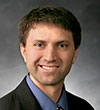
Jonathan Adjimani

I grew up in a Presbyterian home, and attended a Methodist primary school and a Catholic high school. I was a church-going Christian but did not understand most of the principles of the gospel. My understanding of things about God and His son was shallow. It was basically that of a hell prepared for the sinners and a heaven for the righteous and that Jesus Christ came to die for my sins so I could be saved and that I should strive to live righteously. This was what I understood of the Gospel up to the end of my undergraduate education. Though this provided a fairly good living guide, I felt I was still lacking a good understanding of certain Christian doctrines. The only scripture of my own I remember having was a pocket-size New Testament. I relied mostly on what was preached on Sundays from the pulpit for understanding.
After my undergraduate education in biochemistry at the University of Science and Technology (now Kwame Nkrumah University of Science and Technology), in August 1979, I had a unique opportunity to undergo practical training with Ciba-Geigy (now Novartis) and Hoffmann-La Roche, pharmaceutical companies in Basel, Switzerland. It was during my sojourn in Basel, on my second practical training with Hoffmann-La Roche in July 1980, that I met two well-dressed young men on the Rhine Bridge while walking home from work. They introduced themselves as Elder Edgar Snow and Elder Edward John Warner, and said they were missionaries of the Church of Jesus Christ of Latter-day Saints. They asked whether I had heard about the church or the Mormons. I told them no. They wanted to know if I was interested in knowing about the Church. I thought to myself, how could I refuse a conversation with two pleasant, good-looking, English-speaking young men in a German-speaking part of Switzerland. They took my address and booked an appointment to meet with me in my hostel during the week. So they came at the appointed time and brought the Book of Mormon and taught me about Joseph Smith and his quest to know the truth and his reading of James 1: 5, which led him to pray to God for knowledge of which was His true church. They told me about the visitation by the Father and His Son Jesus Christ to the young Joseph Smith as he prayed to know the truth. I took interest in the story especially because it was the first time I had heard it and it was a great surprise to me that God the Father and His Son should speak to man directly. They gave me the Book of Mormon and told me it was another testament of Jesus Christ and challenged me to read and pray about it. It was quite a challenge, since reading was not a favorite pastime. But since I was out of school and had not much learning to do at the time, I took up the challenge and started reading. I don’t know whether they sensed my lack of enthusiasm to read, as they had selected portions of the book that I could read if I did not feel like reading the whole book to start with.

Over a period of two weeks I read more than I had been assigned and prayed to know if the book was of God. I felt good about what I had read and about the simplicity of the teachings of the book. Its message about repentance really came to me strongly. A thought came to me that made it feel like the Lord had opened up the opportunity for me to go to Switzerland so I could be taught the truth about His gospel. After investigating the church for about a month I was baptized on 22 August of 1980 in Basel.

In September of that year, I left Switzerland for Ghana. To my surprise I did not hear much about the Church in Ghana but continued to study the Book of Mormon. My testimony about my newfound faith continued to grow. I left Ghana for Canada to pursue a master’s degree in biochemistry. To my surprise, the church in St. Catharines, Ontario, was right across the street from where I found my student accommodation. By this act I knew the Lord was preparing me to learn more about the Church. It was in Canada that my testimony grew the most. My wife joined me in Canada and was baptized during our stay in Canada. After completing my Master’s program, I got admission to do my PhD studies in biochemistry at Utah State University, Logan, USA. I was now in the home of the Mormons. Logan had some of the nicest people I had ever met on this planet. Even though there were not more than a hundred black Africans in the city, both member and non-member Africans felt very much at home among the Mormons of Logan. It is the city we have enjoyed the most in all our travelling experience. To this day we still maintain our contacts with the good people of Logan. We were sealed in the Logan Temple in 1985.

I have enjoyed my almost thirty years of membership in the Church of Jesus Christ of Latter-day Saints and have never regretted a second of it. I have served in various callings in the Church, including as a bishop. My life has been influenced both temporally and spiritually for good by the teachings of the Church. I bless the day I met the missionaries. I have no doubt that the Gospel of Jesus Christ as taught by the Church is the fullness of the Gospel. I cannot say I am perfect, but I know the Church has taught me the correct principles I need to govern my life, and it is for me to be true and faithful to the laws and ordinances that I have been taught. I have read the Book of Mormon several times and know it is truly another testament of the Savior, and a holy scripture like the Bible. I pray that the message of these two volumes of scripture, will reach all nations, peoples, kindreds, and tongues. I have no doubt that the Prophet Joseph Smith was a prophet called to restore the fullness of the Gospel in these latter days. I know that Jesus Christ atoned for my sins so I can be reconciled with Him and the Father through repentance and obedience to the laws and ordinances of the Gospel. I thank God for the gift of the Holy Ghost, which has borne testimony of this truth to me. That I might live worthy of these blessings and endure to the end is my sincere prayer in the name of Jesus Christ. Amen.

———————————————————

Jonathan Adjimani, Ph.D., is a senior lecturer in the Department of Biochemistry at the University of Ghana, and a member of the Ofankor Branch of the Accra Ghana Adenta Stake of the Church of Jesus Christ of Latter-day Saints.

Posted June 2010

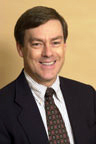
Kerry Muhlestein

While the development of my testimony is too multifaceted and encompassing to relate in its entirety here, I am very pleased to be able to talk about my testimony in relation to my academic work. In the end, they are really both the result of my desire to search for truth. Because I want so much to be able to continue learning and to acquire as much truth as I can, I seek it via every avenue I can. I cannot imagine that the Lord does not expect us to employ every means available to us as we seek for enlightenment. Would he expect us to do anything less than bring everything we have to the table, every bit of emotional, social, intellectual, and spiritual capacity we possess?
Because of this conviction, I have sought to find God with all of my mind, with all of my soul, and with all of my heart. I have found him in all of these ways. Having done so, I also know the variations of reliability between these differing sources of knowledge. Epistemologically, spiritual revelation is a more reliable source than intellectual investigation. Simply put, experience has shown me that we are ever learning in our intellectual pursuits, learning today that what we taught yesterday was incorrect, but that this is never the case with that which I have learned through revelation.

I have had too many experiences confirming the truth of the existence of God, the atoning power of His Son, and the restoration of His gospel through Joseph Smith to be able to retell them all in any setting. Some of these epistemological experiences have been large and powerful. They have come in the way of direct answers to prayers via powerful communication. They have come in unsought-for moments when I have been engaged in work associated with the Gospel. They have at times come unexpectedly when I have been about the tasks of daily life, but have let my thoughts be drawn out to pondering all manner of ideas. They have come in moments of first waking and in hours of exhaustion. These communications have sometimes been so tangible that I have wondered if there were physical and tangible beings or objects nearby.

Yet more often I have experienced quiet confirming nudges of spiritual communication. These are not typically overwhelming or awe-inspiring, yet they are real and recognizable as reminders that those things I have already learned continue to be unchangeable and steadfast truths. It takes familiarity with the language of the spirit to come to recognize these frequent bolsterings of the soul, but in my view they are more important and wonderfully welcome than the ostensibly larger events of life

I know there are those who have not had these experiences, and so they either do not understand them, they doubt them, or they stubbornly refuse to acknowledge that they are possible. In this they are wrong, for I have experienced them and know them to be real. While I have no intent of condescension, I honestly feel sorry for those who have either not experienced or recognized spiritual communications. They have never developed a vital, important, and exhilarating sensory ability. Like someone who insists that ultra-violet does not exist on the color spectrum because he himself has not experienced it, they limit their acknowledgment of reality because of their limited sensory ability. My pity for those who have not taken advantage of the opportunity to develop other avenues of learning does not cause me to value this venue of knowledge less. While it may take away opportunities for open discussion, it does not detract from a more sure form of knowledge.

With hope I warmly welcome all to seek out this form of learning. Study the words of ancient and modern prophets to learn how to experience spiritual communication. It is real, and is readily available to all who sincerely seek it.

Anyone with any experience in academia is aware that we are continually developing both better tools and skills for learning, and a better store of knowledge. This is exactly what we should be about. Yet inherent in such a system is the fact that things we hold to be true today may no longer be accepted as truth tomorrow. Even in studies such as physics we often have to unlearn certain principles as further evidence demonstrates that our former belief/knowledge was incorrect. This is certainly true of my own discipline, Egyptology. I have taught many things in the past that I can no longer teach today because we have learned now that they are not correct. I have often uncovered data myself which contradicts things which I had championed in the past. This is the nature of my profession, and any honest and good academician will operate with this understanding in view.

Yet this is certainly not the case with knowledge revealed from God. Truths learned from Him, via inspiration and revelation, never change. Thus it would be quite foolish of me to discard truth I have learned from God in favor of truths I have learned from even the most vigorous inquiries of my discipline. Having learned countless times in numerous, undeniable, unmistakable, and powerful ways that Joseph Smith is a prophet, I would be ill advised to discard this truth because of information that seemed to contradict it in my discipline. Thus I value knowledge learned from God more highly than knowledge acquired by my flawed intellect.

Even so, I relish the opportunity to apply all of my limited mental facilities to try to find out both the things of God and of this world. I am enthralled with the pursuit of truth that I undertake in my Egyptological endeavors. Moreover, I have found that when I do my best intellectual discovering, my findings align with my spiritual discoveries. To me this confirms that I am on the right track academically.

I would like to be clear that I have not set about trying to verify my spiritual knowledge with academic knowledge. I have not felt the need to defend the prophetic abilities of Joseph Smith—that defense is best left to the spirit. Yet I have always felt an almost siren-like call to apply my research skills towards better understanding the things of the scriptures and of Joseph Smith’s revelatory abilities. I have also developed a passion for helping others with honest questions find those answers. This has not been done in an apologetic way, but rather rises out of a real thirst for knowledge and a sincere desire to help other honest seekers of truth. This line of investigation has been enticing and addicting to me. I have continually found that when I apply my best efforts to learning more, those efforts confirm the truth of what I had already learned via revelation.

Let me provide a few examples. Early in my graduate career I encountered the writings of Latter-day Saints who argued that the story about the near-sacrifice of Abraham in the Book of Abraham was supported by evidence that the Egyptians engaged in this kind of sacrifice. I was somewhat repulsed by this argument for two reasons. First, as I read the Book of Abraham, it was clear that the near-sacrifice of Abraham consisted of an amalgamation of ritual trappings stemming from Canaan, Mesopotamia, and Egypt. I did not see why some would insist that the human sacrifice element had to have come from Egypt (and am still not convinced that the text dictates such a reading). Second, as an Egyptologist I had been taught that the Egyptians did not do this sort of thing. I took it upon myself to ask a few respected colleagues, who assured me this was the case. Thus I taught in classes and other settings that the Egyptians did not engage in human sacrifice, and I made light of attempts to show otherwise.

One day a colleague of mine suggested I might be mistaken in this, and suggested I look into a particular incident archaeologically attested at the Nubian fortress of Mirgissa. As I looked into this I not only saw that I might be wrong, but I found myself intrigued by how such an incident fit into a larger concept of Egyptian culture. I decided to do my dissertation on the larger concept, hoping to come to a clearer understanding of the apparent human sacrifice at Mirgissa and how it fit into Egyptian religion and culture in general. This was partially inspired by a desire to set right anything incorrect I had taught, and partially by an innate curiosity that had seen a gap in knowledge that was fascinating to me. Thus I studied the role of religious violence in Egypt, with special attention to sanctioned killing. As I studied this larger phenomenon I came to recognize many examples of ritual human sacrifice in Egypt, and to understand the kinds of circumstances that would lead to it. As the picture more fully developed, I was surprised to one day realize that the settings I was describing matched perfectly with those set out by the Book of Abraham.

Without having set out to justify that Abrahamic story, I found that I understood him and his time better, and simultaneously I unexpectedly found my intellectual learnings aligning with my spiritual knowledge. I have since taught extensively, in the United States and internationally, about ritual slaying in ancient Egypt. I have been asked by other Egyptologists to speak and write about this topic for other Egyptologists. My findings have been widely accepted. It also provided the smallest nudge of confirmation that my spiritual sensitivities were correct. This spiritual knowledge needed no such nudge, but often such bolstering confirmations come when unsolicited.

This was neither the first nor the last time that my academic undertakings paralleled my revelatory experiences. I will share just one more. I once had a well spoken and well intentioned friend of another faith correspond with me about some questions he had regarding the Book of Abraham. He asked me if there were any known examples of Egyptian priests possessing texts which spoke of biblical figures. I realized that I did not know much about this, and was not sure if anyone did. I knew that the owner of the papyrus from which the Book of Abraham was most likely translated was a priest from Thebes around 200 BC. But I did not know much about what priests from this or other periods knew concerning Jewish beliefs. I was aware that this was a time of real internationalization in Egypt, and that among Hellenistic and Egyptian elites there was a vigorous search for intercultural knowledge. The Septuagint, the Greek translation of the Hebrew Bible that came from Egypt, arose at least partially from this cultural phenomenon. I was also aware of other phenomena which suggested that Egyptians had a knowledge of things biblical. But I was sure there was more to be learned about this. Both Latter-day Saints and people interested in Judaism, Early Christianity, and Egypt in general would be interested in this topic. Furthermore, I had recently become involved in a project that was investigating the rise of Christianity in Egypt, and I felt that a greater understanding of what Egyptians knew of the Bible would be important background knowledge for understanding the advent of Christianity in that country. And so I set about finding some answers. It seemed to me that I would better understand a great number of things important to Egyptology and Latter-day Saints much better if I knew more about the spread of biblical knowledge in Egypt.

I found that my good friend and colleague John Gee had already done work on this (as he typically has with anything Egyptological that is in any way connected with the Book of Abraham). I started with what John had done, and attempted to go a step or two further. It was a fun and invigorating project, requiring me to stretch my academic abilities and to acquire a great deal more knowledge on some key subjects than I already had. This was exciting. Careful research yielded more and more, until I decided that the project was really something that I would have to break down into a few separate studies and papers. Work on some of these continues forward even as I write this.

It became very clear that Egyptian priests had an extensive knowledge of stories about biblical characters, both those that were in the Bible and stories that went beyond the canon. While I don’t think we can generalize this statement to all priests in Egypt, it is inescapable that at least a number of priests in Thebes had such knowledge, and hence presumably had texts which conveyed this knowledge. What was surprising to me was the way the evidence forced me to a conclusion about the timing of this. As I attempted to determine when the latest date could be for these Theban priests to have gained access to such texts, the evidence led me to positing that it was certainly by 150 BC, and almost surely by 200 BC. This was astonishing. Since it appears, from examining the Joseph Smith Papyri, that the Book of Abraham was owned by a Theban priest about 200 BC, it was almost too serendipitous to find evidence that Theban priests in 200 BC had texts about biblical characters, both canonical and non-canonical, and especially about Abraham. I have never based my testimony on such evidences, and would never think that something like this demonstrates the truth of this scriptural record. Yet it is always exciting to find one avenue of pursuing truth that matches another. I still remember when I was first able to put a finger on the date 200 BC and the city of Thebes that I sat in my office and experienced a wash of both emotions and spiritual inflows. It was another small reminder of things I had already learned more powerfully and more surely earlier. Yet I am grateful for these reminders.

These are only a few of the examples I could share. Most of the learning experiences I have had are too personal to share in such an open forum.

I am grateful for all of the learning experiences I have had, for all of the various avenues of learning which I have experienced. I am awash in real revelations regarding the existence of God, His overwhelming love for us, the supernal gift of His Son, the incomparable power of the atonement, and the gracious gift of the restoration of the Gospel through Joseph Smith. I look forward to more and more opportunities to learn about these truths, and to understand them in ever expanding ways. I trust that I am only at the beginning, and that there is more growth and learning in store via more avenues than I have guessed. While I have some questions that have not yet been answered, all of my past experiences assure me that there is an abundance of answers that will come in an endless variety of ways. My past knowledge gives me great hope for the future. Not just hope, but an assurance of those things which have already come and which are yet to come.

———————————————————-

Kerry Muhlestein is an associate professor of ancient scripture at Brigham Young University. He received his B.S. from BYU in psychology with a Hebrew minor, spending time in the intensive Hebrew program at the BYU Jerusalem Center for Near Eastern Studies. He then proceeded to receive an M.A. in ancient Near Eastern studies from BYU and a Ph.D. in Egyptology from UCLA. He has taught at Cal Poly Pomona, UCLA, and BYU-Hawaii. His research focuses on the texts and iconography of Egyptian religion, international contact between ancient Egypt and her neighbors, the Egyptian juridical process, Egyptian literature, and the overlap of the biblical and Egyptian worlds, including the ancient and modern history of the Pearl of Great Price, among other things. He and his wife, Julianne, have six children.

Posted May 2010

Michael D. Jibson

A few weeks ago, my daughter Tara shared with me a dilemma she faced with a friend as they struggled through the inevitable decisions they face as high school seniors. In the midst of final examinations, college applications, athletic opportunities, embryonic relationships, transitions from family to personal standards, confrontation with financial realities, and the troubling recognition that time’s flow is truly unidirectional, the most intractable questions they face arise in their contemplation of transcendent experience. Is such experience valid? If so, what does it teach us about the unseen world? What does it tells us about our current lives? That most of us have reflected on some variation of these questions is not a mystery; that we have come to so many different conclusions is.
Tara’s friend, a young man of great academic promise, preparing for the marvelous and seductive adventure of a liberal arts education at a top university, had come to her with a flattering but rather intimidating challenge. He expressed his admiration for her as a scholar, a vital member of their campus community, and especially as a person of religious commitment, but he was utterly unable to understand the nature of her faith. He recognized its importance to her, both as a governing principle and as an intrinsic element of her character, but he wanted an intellectual justification for it. “Prove to me,” he demanded, “with reason and logic the reality of what you believe.”

As an intellectual exercise, it was a hopeless task from the beginning. She figured that out fairly quickly and now presented it to me. A contest of IQ points with these two was anybody’s game, but I had the upper hand when it came to academic background. More important, I had struggled with these arguments for years and felt comfortable both sharing my experience and acknowledging its limits.

Tara grew up as a Latter-day Saint, but was never one of unquestioning faith. Her mother and I come from opposite backgrounds in this regard. My wife grew up in a different religious tradition, active and committed, but never satisfied. A long series of encounters with Latter-day Saints started a process that culminated in her recognition midway through college that her spiritual longings were not being met; neither the experience of her worship nor the world view of her faith satisfied her as an adult, and though it was a wrenching decision, she joined the Church of Jesus Christ of Latter-day Saints during college. She has never regretted doing so, and she remembers vividly that transition, the awakening of spiritual feelings and the realization that her lingering questions about the nature of God and her relationship to Him were now answered. I envy her the clarity of that contrast.

Five generations of my ancestors have been LDS, but my own continued involvement was not predestined. Many in my family struggled with their faith, or maintained it at some minimal level that did not quite sink far enough to entice them to leave altogether, but never brought them fully into the stream of religious commitment. Something changed with my parents about the time I was born, and I grew up in a household that held the purer faith as its ideal, if not always its practice.

My own religious journey was both a product of and a response to that home environment, followed by a series of academic pursuits that continues to this day. I discovered at an early age that my spirit is more firmly attached at the head than the heart. Trust in spiritual things was a late development for me, but my recognition that Joseph Smith’s revelations are a treasure of insight and enlightenment came early, and my joy in learning from them has never lessened. There is a coherence and simple depth to those teachings that continues to satisfy me.

None of my ancestors ever graduated from college, much less pursued academic careers. My father managed to get off the family farm for one year of engineering studies before he was derailed by the financial realities of the Depression and the demands (and opportunities) forced upon young men by the outbreak of World War II. My mother, after graduating as valedictorian of her high school class of 29 students, never seriously entertained the thought of college. Both appreciated the need for education in the post-war world but were deeply suspicious of academia. I never doubted their sincerity in encouraging my educational aspirations, but the fear in their eyes as they turned me over to the professors was unmistakable and I did little to reassure them in those first few years.

Eventually, however, I recognized the degree to which I shared their fear. I spent long years looking over my shoulder, waiting for the perfect argument, the historical tidbit, or the compelling intellectual system that would ultimately prove or disprove the truth of what I believed. My education, especially as an undergraduate, carried this theme as a brisk undercurrent, always on the verge of flooding the rest of my life. Even so, I loved that early experience, aptly described by an inscription on the campus noting that it, and we, were “dedicated to the pursuit of truth in the company of friends.” Academic truth proved rather more elusive than I had hoped, but its pursuit was an important process in which I learned the extent and limits of knowledge, the power and boundaries of reason, and my own capacity and weakness as a scholar.

My first discovery was the richness of philosophical tradition that grapples with the nature of truth, knowledge, and ethical decision-making. I frequently mused over the brilliance of the arguments, but was repeatedly deflated by the diversity of their conclusions, and invariably found them unsatisfying, or at least insufficiently compelling to demand devotion. A few of the philosophical writings of the past three millennia wielded significant impact on political systems and therefore history, but most were mere diversions, noteworthy primarily for how little difference they made except to the next generation of scholars who would carry on the tradition. I found myself asking after each encounter with yet another journey of reason, “Therefore, what?”

I had the good fortune to major in both chemistry and psychology at a liberal arts college, which gave me a unique opportunity to compare the perspectives of the natural and social sciences against a background of the humanities. What I gradually came to value above all else in my academic pursuits were testable hypotheses and concrete demonstrations of effect. In essence, I concluded that empirical data trump elegant theories, at least in any field that is focused on discovery rather than invention (i.e., this applies to science, not art).

That is not to say that I succumbed to the false dichotomy of faith versus facts. I don’t recall ever believing that, and if I did it was quashed early in my graduate years in a biochemistry laboratory. I spent innumerable hours studying protein molecules I could not see, trusting the mentors who taught me that there really are chains of amino acids, and that the circularly polarized light I shined on them not only existed but was actually made somewhere inside a machine capable of graphing colorful spectra that changed in ways I could predict, or sometimes failed to predict, based on a thousand prior experiments I had never seen done and had neither the time nor expertise to reproduce. Scientific research, I discovered, is an act of supreme faith.

It could not be otherwise. We cannot discover everything ourselves and must trust our predecessors in most things. We must also be prepared to consider alternative hypotheses, to change them in response to new findings, and above all, never get too far in front of the data. I learned this last point by repeated encounters with unexpected findings. Surprising data are always the most useful, but only if they emerge from a system that is otherwise comprehensible. It may be possible in fields that readily lend themselves to mathematical description, such as physics, to let the theoreticians run far ahead of the experimentalists, but in the more complex world of biological systems or social sciences, it never pays to extrapolate very far. One step past the data is sometimes reasonable, two steps usually risky, and three steps totally random.

On the religious side, I made the difficult decision to leave my studies after the first year and serve a two-year mission. Only two of my ancestors had chosen to do the same, most recently 50 years before. I was not entirely convinced that I wanted to be the one to disrupt that record of noncommitment, but I definitely did not want to live an unexamined life, and this was the hypothesis that most needed testing, so I accepted the calling and served.

It was a wise decision. Within a few weeks of my arrival I began to find exactly the depth and satisfaction that had been missing in the philosophy classes. In part, this represented the realization that religious conversion is about discovery of an objective reality, rather than exploration of purely subjective experience, invention of a personal viewpoint, or selection from among equal valid ethical constructs. Theology, I learned, is a fundamentally empirical pursuit. In part it represented the complementary realization that religious experience is personally transformative, involving not only intellectual enlightenment, but a deeper, more subjective resonance with the eternal. Those encounters left me profoundly changed, with a deeper appreciation of spiritual things and a desire to align myself with them. Spirituality, I found, leads inevitably to personal growth and commitment.

As I shared those experiences and the larger gospel message with the people of Argentina, I was confronted repeatedly with the question of how we gain a conviction of spiritual things. By that time, I had discovered for myself that the standard answers of study, prayer, humility, and the experiment of personal commitment really do work, and pretty much nothing else does. I had learned that it was essential to search, examine, and contemplate what was taught, to truly strive to understand it, and to put it into practice, at least on a trial basis. Perhaps the most difficult step for me was learning to trust my feelings as a legitimate indicator of valid spiritual experience. Neither the mind nor the heart was sufficient; both were essential. I intuitively recognized truth when I encountered it, but its confirmation came with the intense comfort and assurance that I recognized as the Spirit of God. I was pleased to discover, however, that those spiritual experiences never left me intellectually dissatisfied, but invariably enlightened.

In my search for those confirmatory experiences, I most often found them not in contemplation but in action. This step is crucial and most often overlooked. In medicine we call this “translational research,” the study of what happens when we take a new idea and actually put it into practice. Only then do we know if it is valid and useful.

I was afraid that my delight in education would be gone when I returned, but I found just the opposite. With the additional insight of spiritual experience, my journey of intellectual discovery was all the more satisfying. This was especially true when I made a commitment early in graduate school to apply the same level of rigor and commitment to my study of gospel topics that I was using in my scientific work. As I did so, it began to dawn on me that the Bible provides us with a collection of personal accounts of spiritual experience—in essence, data points. As in scientific research, our theories are only as good as our data, and those data can never be too plentiful.

I love the Restored Gospel largely because it provides us more data. Joseph Smith and his colleagues left us detailed accounts of their experiences with God—what He told them, what He showed them, and what He asked of them. They left us concrete works to examine—the Book of Mormon, Doctrine and Covenants, Pearl of Great Price, and innumerable other writings and sermons. They built a Church and religious tradition that remains with us and is available for all to examine. Their assertions demand examination, and the material to conduct that study is readily accessible to all.

Not long ago, I attended a discussion of baptism in a church meeting that included adherents of several faiths. Each of us presented a different theological perspective that led to different conclusions. One asserted that baptism is essential to free us from original sin and is a requirement for entry into heaven. Consequently, it must be done at birth by whatever means possible. Another argued that it is a sign of personal commitment to the Christian faith, and therefore can only be accepted by a competent adult following a spiritual rebirth. Yet another saw baptism as essentially about the remission of sins, and thus appropriate for anyone able to discern right from wrong, even without a mature understanding of faith. It occurred to me afterward that we were recapitulating one of the great theological debates that have tormented Christianity for half a millennium, and we were no more able to resolve it than the brighter minds and more devout believers who preceded us in the argument. Would we not have done better to go to the source of truth with that question and find out once and for all, rather than theorizing about it? Would it not be more informative to have the question answered by revelation from God, then to develop our theological principles based on what that teaches us?

Joseph Smith and the subsequent prophets of the Restoration have done just that. By receiving revelation from heaven, they provide answers to the critical questions. The proper order of things, with theology based on revealed truth, rather than the other way around, was once again established. The key for us is to test their claims. This cannot be done by assumption or by proxy. It requires that we carefully and prayerfully examine their words, apply them, and sincerely search for the confirmation of the Spirit to our souls.

And so I return to Tara’s dilemma. Her friend cannot be convinced by logical argument, but only by personal experiment, and that requires an open mind and open heart, a willingness to search, and a willingness to accept what that search reveals. That is what I believe. That is why I believe. I know from my own experience that this works. And I know that it is worth it.

————————————————–

Michael D. Jibson is a professor of psychiatry at the University of Michigan in Ann Arbor. He received his B.A. in chemistry and psychology from the University of California at Santa Cruz, followed by a Ph.D. in biochemistry from the University of California at San Francisco and an M.D. from the University of California at Davis as well as a residency in psychiatry at Stanford University.

Posted May 2010

Douglas E. Brinley

I grew up outside of the Church, in a small town in South Texas. My father was a professor at the local university. Though I was baptized at age eight, there were no Latter-day Saints in that area, so I attended the Methodist Church until my parents divorced just before my fifteenth birthday. My mother and I moved into Mormondom—Logan, Utah—where I began high school. Not used to giving talks in church, I avoided any involvement that could require my having to speak, and was successful. Following high school, I went into the military for a six-month program beginning at Ft. Ord, California. During a stake conference there, two presiding church officers spoke and I was impressed enough to get serious about the Church and serve a mission. I figured that if I was going to belong to a ‘lay’ church, I ought to know something about its teachings. However, I had never read the Book of Mormon, so was at a disadvantage right off the bat. However, there was a missionary study program where you had to answer questions on paper relative to what you read, so I went to work on them. One impressive thing I learned came from 1 Nephi 1:4, where Nephi explained the time frame: “in the commencement of the first year of the reign of Zedekiah, king of Judah. . . and in that same year there came many prophets, prophesying unto the people that they must repent, or the great city Jerusalem must be destroyed.” I noticed a cross reference at the bottom of the page to 2 Chronicles 36:15-16 (actually verses 11-16 was more complete.) I was stunned to think that a young man, Joseph Smith, at age 22, would know who Zedekiah was, much less know about prophets who called the Jerusalemites to repentance. Then, reading about the Jaredites who came at the time of the tower of Babel, I read Genesis 11:7-9. I knew that the Book of Mormon was a true record of at least two civilizations. It became the basis of my initial testimony.

Later, I read where Elder Bruce R. McConkie said: “There is another and simpler test that all who seek to know the truth might well take. It calls for us simply to read, ponder, and pray—all in the spirit of faith and with an open mind. To keep ourselves alert to the issues at hand—as we do read, ponder, and pray—we should ask ourselves a thousand times, ‘Could any man have written this book?’ And it is absolutely guaranteed that sometime between the first and [last] time this question is asked, every sincere and genuine true seeker will come to know by the power of the Spirit that the Book of Mormon is true, that it is the mind and will and voice of the Lord to the whole world in our day.”

President Ezra Taft Benson spanked the church for not reading the Book of Mormon (based on Doctrine and Covenants 84:54-57). It was clear to me what he was saying: ‘If the Book of Mormon is true, then Joseph Smith must be a prophet; and if he is a prophet of God, then the Church he established must be the Lord’s Church.’ That logic has stayed with me and can be applied to the other standard works of the Church. This work is of God. I know that to be true.

As I have had a chance to study the gospel and teach it over the years, I have come to appreciate the contribution of Joseph Smith. I believe that he has revealed more concerning the gospel of Jesus Christ in our day than has been revealed since the days of Adam. His Joseph Smith Translation, for example, solved so many mysterious passages in the Bible and has made the Bible come alive. Isaiah 29:10-14 comes to mind, as does Ezekiel 37:15-20. In return, the Book of Mormon testifies of the Bible (see 1 Nephi 13:38-42).

As I have studied the doctrines and teachings of other churches, it is apparent that a restoration was needed, and I know that Joseph Smith was that instrument in the hands of the Lord to bring that very thing about in these ‘latter days.’

——————————————————-

Douglas E. Brinley graduated in economics from Utah State University, obtained a master’s degree from Utah State, and later received a Ph.D from Brigham Young University in family studies. He has authored or co-authored ten books, nine of which are on marriage and family relations, including Between Husband & Wife: Gospel Perspectives on Marital Intimacy, First Comes Love (for those preparing for marriage), the sequel Then Comes Marriage, and Living a Covenant Marriage. The non-marriage book is America in Peril, which concerns the past, present, and future of America from a Book of Mormon perspective. He also has a marriage DVD entitled Relationships Seminar, from Covenant Communications. He taught at Brigham Young University in the College of Religious Education and the Department of Church History and Doctrine. He retired in 2008 after forty-three years in Church Education, the last eighteen years at Brigham Young University.

Posted May 2010

Lei Yang

對神的見證永不渝
(Testimony for God is forever)

楊磊
(Lei Yang)

我是一名歸信者,而引領我加入教會是我的妻子。我是在1987年12月20日,於美國印地安納州(Indiana),West Lafayette市的Purdue Ward 受洗的。受洗當時,我的身份是普渡大學(Purdue University)土木工程學院博士班一年級的研究生。我洗禮時,我的妻子已是一名教齡三年的教友了。我們是1986年12月20日結婚的,沒有錯,就在我結婚一週年的時候,我受洗了,因此我永遠不會忘記我與主正式立約的日子。
回想當年與我妻子結婚時,得知她是「摩爾門(Mormon)」,我竟然沒有感覺一點不舒服,反而鼓勵她時常去參加教會的活動,加入福音研究所學習經文。事實上我對我們教會的認識,早在我讀初中時,因為當時在台灣有一個很有名的電視節目,叫做「唐尼與瑪莉奧斯蒙兄妹秀(Donny and Marie Osmond Show)」,知道他們兄妹倆來自一個非常大的家族,他們都是虔誠信奉耶穌基督的「摩爾門教」教徒。由於節目精彩,強調家人之間的情誼,使我對我們教會留下深刻美好的印象。因此,當我的妻子說她是耶穌基督後期聖徒教會的教友時,我感覺非常良好,慶幸能夠娶到一位重視家庭的好妻子。但是結婚的第一年,我實在還沒有準備好要進入教會,成為教友。直到有一天,我在美國原來所就讀的田納西大學念博士班研究所時,遇到一件極為困擾的事,我實在手足無措,不知如何是好。當時我的妻子鼓勵我,試著向神祈禱,祈求祂幫助我渡過這個難關。很快的,我獲得了神的回答,他不但幫我解決了這個困難,甚至給了我更美好的祝福,讓我順利拿到全額獎學金,轉學到學術聲望更好的普渡大學,繼續博士班的學業。我感謝神,並承諾要開始接觸傳教士,並學習福音。經過四個月的傳教士慕道友課程,如同摩羅乃書:10:4-5中所言,當我蒙得這些美好的信息之後,我奉基督的名向神求問,藉著聖靈的力量,我得到了回答,我相信我們的教會是世上唯一真實教會,耶穌是基督,約瑟斯密是近代偉大的先知,摩爾門經是神的話語,是耶穌基督的另一部約書。所以我決定受洗,與神立約,加入祂的羊圈。

由於華人世界普遍信仰中國傳統的道教或佛教,因此一開始,我一直認定基督教是屬於洋人的教會,與我們中國的傳統文化格格不入。但是當我接觸到我們教會的福音及教義時,發現原來我們教會所強調的家庭價值,以及對祖先的尊敬,這不是我們中國人幾千年所流傳下來的文化傳統嗎?為甚麼只會在「摩爾門教」這個基督教教派中教導?而當我知道我們教會還要鼓勵每位教友做家譜事工時,更堅定了我對這位西方世界基督教的「神」,也是我們全人類,包括中國人,「神」的認定。就是因為這個了解,對於日後我對神的見證,以及決定受洗,具有關鍵性的意義。

此外,由於我的學術專長是環境工程,因此對於我們教會神所教導有關智慧語的律法中所述,不但可以促進人體健康,更可保護地球環境,留下深刻的印象。事實證明,早在一百多年前,神就給先知約瑟斯密的這個啟示,與目前全世界所倡導的「永續使用地球資源(sustainable use of resources on earth)」觀念完全一致,亦即要明智得體的使用這些資源,不要浪費,不要貪婪。而多吃五穀雜糧及青菜類食物,少吃肉類的主張,也已獲得世界環境科學專家對於可以減緩地球暖化的速度,防止氣候的變遷的認同。但是對於目前人的哲學中有關「環境科學」中所教導有關人口問題,卻主張節育,以減緩地球人口膨脹壓力,我以一位環境科學及工程的專家,以及一位後期聖徒的教友來看待這個主張,卻深深不以為然。因為經文上不是教導我們(D&C:104:14-18),只要我們採行神所制定的「合一體制」,把財物分給窮人,地球上的資源是豐富的,絕對是充足的,不會因為人口太多而用盡。之所以會有資源不夠,或者分配不均的問題,那是因為人類受到來自魔鬼自私及貪婪等俗世肉慾的誘惑所致。所以世界上有關人口的問題,絕對不是「量(quantity)」的問題,而是「質(quality)」的問題。只要神的每個人類兒女,都能認識世上唯一的真神及祂的獨生子耶穌基督,認知祂們所教導的真理及教義,並能遵行祂的誡命,持守到底,就能解決我們人類目前有關地球環境所面臨的所有問題。

最後我要留下我的見證,我知道神是我們地球上全部人類兒女在天上的父,而耶穌基督是我們慈愛的長兄,也是我們的救贖主,由於祂的贖罪,我們才有機會再次回到天父的身邊。耶穌基督後期聖徒教會是地球上唯一真實的教會,由近代偉大的先知約瑟斯密所復興,他同時也翻譯了地球上最真實的經書摩爾門經,藉由摩爾門經,我們更加清楚了解神真正的教義及聖約。以上的見證,是奉耶穌基督的名,阿門。

—————————————————

楊磊弟兄,於1959年9月5日出生於台灣的台北市。1981年8月於台灣的國立成功大學(National Cheng Kung University),獲得環境工程學士學位(B.S. on Environmental Engineering),1986年6月於美國奧本大學(Auburn University, Auburn, Alabama)土木工程學系(Dept. of Civil Engineering),獲得環境工程碩士學位(M.S. on Environmental Engineering)。1990年8月,於美國普渡大學(Purdue University, W. Lafayette, Indiana)土木工程學院(School of Civil Engineering),獲得環境工程博士學位(Ph.D. on Environmental Engineering)。1990年8月,楊磊弟兄學成返回台灣,於國立中山大學(National Sun Yat-sen University, NSYSU)海洋環境及工程學系(Dept. of Marine Environment and Engineering),擔任副教授(Associate Professor),並於2000年2月獲得升等為教授(Professor)一職,並兼任水資源研究中心主任(Director, Center of Water Resources Studies, NSYSU),直到目前。

楊磊弟兄曾經在教會擔任的事工包含有:西高雄支會主教(Bishop of West Kaohsiung Ward, Kaohsiung Taiwan Stake)、高雄第一支會主教(Bishop of Kaohsiung First Ward, Kaohsiung Taiwan Stake)、高雄支聯會二副會長(Second Counselor of Kaohsiung Taiwan Stake)及高雄傳道部一副會長(First Counselor of Kaohsiung Missionary)等。目前楊磊弟兄的召喚為由原高雄支聯會所新畫分出的東高雄支聯會會長(President of Kaohsiung Taiwan East Stake)。

——————

An Everlasting Testimony of God

I am a convert, and it was my wife that brought me into the Church. I was baptized on 20 December 1987 in the West Lafayette Indiana Purdue Ward. At the time of my baptism I was a first year doctoral student in civil engineering at Purdue University. At the time of my baptism my wife had already been a member of the Church for three years. We were married on December 20, 1986––––exactly one year before my baptism. So I will never forget the day I made a covenant with the Lord.

Reflecting back on the year we were married, knowing she was Mormon, I did not feel any discomfort. On the contrary, I encouraged her to regularly participate in church activities and to study the scriptures at the Institute of Religion. In fact, my familiarity with the Church began early on while a junior high school student. At the time there was in Taiwan a very famous television program called the Donny and Marie Osmond Show. I knew that they were a brother and sister from a very large family, devout Christians, and members of the Mormon Church. Because this wonderful program emphasized good family relations, it left with me a deep and positive impression of the Church. Therefore, when my wife told me she was a member of the Church of Jesus Christ of Latter-day Saints, I felt quite positive about it and pleased that I had found a wife who would be so attentive to family. However, during that first year of marriage I was still not really prepared to join the Church and to become a Church member. Then, one day, while at the University of Tennessee where I had been a doctoral student when first arriving in the U.S., I encountered an extremely perplexing problem. I was not sure what to do or what was right. My wife encouraged me to try to pray to God, and to ask Him for help getting through my problem. I quickly received an answer from God. Not only did He help me solve my problem, but He gave me an even greater blessing, allowing me to smoothly attain a full fellowship and transfer to the more prestigious Purdue University program to continue my doctoral studies. I thanked God and promised to seek out the missionaries and to study the Gospel. After four months of missionary lessons, I followed the words in the book of Moroni (10:4-5). When I received this great message, I asked God in the name of Jesus Christ, by the power of the Holy Spirit, and I received an answer–––believing that the Church was the only true church on the face of the earth, that Jesus was the Christ, that Joseph Smith was a great modern prophet, that the Book of Mormon was God’s word, another testament of Christ. So I decided to be baptized, to make a covenant with God, and to join His fold.

Chinese ordinarily believe in the traditional faiths of China such as Daoism or Buddhism, so from the beginning I always believed that Christianity was a church that foreigners join and that was incompatible with traditional Chinese culture. However, when I came in contact with the Gospel and the teaching of the Church, I discovered that the Church has always emphasized family values along with respect for ancestors, and wasn’t this a cultural tradition that we Chinese have passed down for thousands of years? Why would this only be found in Christianity, among the teachings of the Mormon Church? Moreover, when I learned that the Church encouraged each of its members to do genealogy work, I became even more steadfast in my belief that this God of Western Christianity was also the God of all humanity, including of the Chinese. It was because of this understanding that, in the days to come, I attained a testimony; this was a critical factor in gaining my own testimony and deciding to be baptized.

In addition, because my academic specialty was environmental engineering, the Church teachings concerning the Word of Wisdom, which not only promoted the health of the body but also the preservation of the world’s environment, left a deep impression on me. In point of fact, proving that more than a hundred years earlier, God inspired the Prophet Joseph Smith to propose what is referred to today as the principle of sustainable use of the earth’s resources–––namely that we wisely use natural resources, not waste, and not be greedy. Moreover, it advocated eating more grains and vegetables, and eating less meat, already attaining an understanding of what global environmental specialists say is needed to slow the rate of global warming and identifying a way to forestall climate change. The philosophy taught nowadays within environmental science concerning population problems, advocates birth control and reducing the population pressures on the earth. As a specialist in environmental science and engineering, and from the perspective of a Latter-day Saint, however, I find this view quite unacceptable. Because, as the scriptures teach us (D&C 104:14-18) we only need adopt God’s “United Order,” giving our substance to the poor, and there will be abundant resources, and there will be enough to spare. Resources will not be exhausted because of population growth. The reason there are inadequate resources and uneven distribution is that people are prone to be selfish and greedy because of worldly and carnal desire. Therefore, the world population problem is not a question of quantity but quality. The sons and daughters of God need only to be able to recognize the one true God and His only begotten Son, Jesus Christ, recognizing the truth and doctrine that They teach, to be able to follow God’s commandants, and to endure until the end. We could thus solve the problems facing humanity as they are before us.

Finally, I would like to leave my testimony. I know that God is the Heavenly Father of all of the children of earth, and that Jesus is our loving older brother and our redeemer. Because of the atonement, we will have the opportunity to return to our Heavenly Father’s side. The Church of Jesus Christ of Latter-day Saints is the only true church on the face of the earth, which was restored though the great modern day prophet, Joseph Smith. Moreover, he translated the most correct book of scripture on the earth, the Book of Mormon. Through the Book of Mormon we can more clearly understand God’s true doctrine and covenants. I offer this testimony in the name of Jesus Christ. Amen.

——————————————–

Brother Lei Yang was born 5 September 1959 in Taipei, Taiwan. He received a B.S. in environmental engineering from National Cheng Kung University in June 1986, an M.S. in environmental engineering from Auburn University in Alabama in August 1990, and a Ph.D. in environmental engineering in August 1990 from Purdue University’s School of Civil Engineering. In August 1990, Brother Lei Yang completed his studies and returned to Taiwan to take up the position of Associate Professor in the Department of Marine Environment and Engineering at National Sun Yat-sen University and to take the post of Director of the Center of Water Resources Studies, where he currently is.

Translated by Dana Scott Bourgerie
Posted May 2010

James Joshua Claus

Those who have accepted our Lord and his message know well that it is an all-encompassing endeavor, embracing all aspects of our lives. While it inevitably brings sacrifices, it also always gives more than it ever takes away from our lives. In many ways, despite my familiarity with Christian doctrine from my earliest days, I was the most unlikely of converts to Christianity and the Church of Jesus Christ of Latter-day Saints. This is the story of my conversion.

I come from a family of academics, my father having received his doctorate from Berkeley and my mother hers from Stanford. While both taught at prestigious universities, before long my father decided to yield to his innate adventurous nature and embarked on the life of an entrepreneur. Due to the erratic and demanding nature of his work, my father was almost constantly absent from the home. In marked contrast, my mother remained in academia for many years as a researcher at the nation’s foremost medical school, the University of California at San Francisco. Her job as a research scientist afforded her a certain flexibility, something that allowed her the opportunity to work from home often and, even when duty did call, she was never absent from the dinner table each night.

While the conversation at the dinner table was always entertaining, it was during the discussions that followed that my greatest instruction occurred. We would start by talking about our respective days, me talking about school, and once I’d finished, my mom would start telling me about her and others’ research projects at “the Hill” in San Francisco. While listening to your mother’s day at work may sound boring to most, I can assure you it was something that I looked forward to every day. Perhaps it was my mom’s formal education in educational psychology or her earlier years as a teacher, but she always presented her work in a way not only understandable to me, but also fascinating. A testament to the impact of her words is my ability to recall the specifics of those conversations to this very day, over thirty years later.

Due to her innate mathematical gifts and uncanny ability to write grants that inevitably received funding, she was invited to be a member of many cross-disciplinary groups at this university. This involvement in the varied projects presented in my mind the very ideal of a research institution as an endless source of wonder, something that I strive to reproduce in my own research labs today so many years later.

In those conversations I heard things about the physiological and psychological effects of common drugs such as alcohol, tobacco, and coffee as well as other less mainstream stimulants and depressants. It was from these conversations that I made a vow to myself that I would never take any drug or stimulant other than tea, something that I drank with my mother every morning. It is important to understand that I came to these conclusions despite the fact that both my mother and father drank alcohol socially and my father drank coffee and smoked cigars prodigiously.

We spoke about food during our talks also, something that we had a chance to put into practice every weekend when my mom and I worked together in the kitchen. Those were the early days of the “foodie” movement and no place were its effects felt stronger than in Northern California. The research that my mom told me about emphasized that we should get most of our calories from whole grains and fresh vegetables, and while meat is an excellent sources of protein, we should eat it in moderation in our diets. I also learned that modern technological processes used in the food industry were robbing our food of its proper structure and producing nutritionally deficient substances such as refined flour and sugar. My mom explained that these substances were causing physical responses that would be extremely negative to human health in the long run with resultant maladies such as diabetes and obesity.

Those discussions of the human body were regularly punctuated with topics of human reproduction and sexuality. My mother spoke to me as frankly as she could in clinical terms about subjects that despite my best efforts I was unable to fully grasp. Sometimes these discussions included topics like homosexuality and promiscuity. These subjects were of particular impact, with my mom focusing on the effects of the environment and genetics and even the psychological effects of promiscuous lifestyles. This conversation wouldn’t have been complete without a discussion of venereal diseases. While AIDS had not yet reared its ugly head, my mother spoke about the clinical symptoms of other “lesser” venereal diseases so that I understood clearly what a dangerous lottery it was having sexual relations outside the bonds of a dedicated monogamous relationship.

Nothing was off limits in these discussions, including religious topics. My mother had always been a spiritual woman and this had led her to a “study group” at the medical center that studied religion and its interaction with medicine, the human body and mind. In their group, they discussed matters as diverse as meditation, prayer, and spiritual healing. In the accounts of these discussions, I heard about the psychological effects of regular prayer and meditation and how one could reach altered states beneficial to the human body. In addition to this, she told me about the positive effects of regular rituals and how they produced a calming effect on the body and mind. Possibly strangest to me was the discussion we had about religious healing and the lack of understanding of the phenomenon. My mother described to me that while most try to attribute religious healing solely to psychosomatic effects, that there might indeed be something more to these “miraculous healings.”

As diverse and interesting as these discussions were, it was only the prelude to what was most important to me, our nightly reading of stories, the material for which was inevitably culled from the world’s past and present religions. I loved biblical stories, particularly the ones about my namesake, Joshua, but it soon became apparent to both me and my mom that I enjoyed the more “colorful” myths more, particularly those of Hercules, Jason, and Odysseus. Before long, Bullfinch’s Mythology had become my “bible,” something I demanded every night. As I grew older and my mom stopped reading to me, I never stopped reading myths and religious stories. In my own readings, I began to delve ever deeper into the religion section of our rather large personal library, devouring the books. As I became more serious I started with reading the reference series “Man, Myth and Magic” and then worked my way through the primary texts of the world’s great religions. By the time I was twelve, the Koran, the Ramayana, and even Kabalistic works were as familiar to me as the Christian New Testament. Perhaps even more important than the familiarity of the texts, was my belief that they were all equally true and false, simple manifestations of man’s way of dealing with the uncertainty of this life.

While I had always understood the practical benefits of possessing a religion, I had never chosen to join one. My parents, of different religious backgrounds, had determined that their children would decide what path, if any, they would follow and as a result I had made a choice to study all, but follow none. This is not saying that I did not attend religious services, something that I frequently did. Indeed, by the time I was fourteen I had attended countless Roman Catholic and Episcopalian masses, an occasional Russian Orthodox funeral and service, Lutheran and Methodist services and Sunday school classes, and even an occasional Southern Baptist meeting. I did all this without ever having a desire to partake in their sacraments or join in their communities. In addition to all of these Christian activities, I had attended numerous Shabbats at Jewish friends’ homes and celebrated numerous Bar Mitzvahs.

It was in these latter cases that I had the closest feeling of desire for my own religion, not due to the numerous gifts my friends received, but more due to the “Hebrew study” they all had to attend before their big day. Simply stated, I desired the training and knowledge that came with Judaism and the inevitable rite of manhood. These desires were tempered by the knowledge that, while according to Rabbinic law my father was considered a Jew, I clearly was not as I was the son of a Gentile woman. It is important to realize that while I attended frequent religious services, I was never looking for something. In fact, in stark contrast I was always critical, often brutally so, of any Christian service I attended in my commentaries afterwards. By the time I was fourteen I believed myself familiar enough with Christian practice that I was already planning on broadening my experience once I could drive. My goal was to start attending Reform Jewish synagogues, Sunni Islamic mosques, and Sikh temples, with Islam and Sikhism in particular having strong and romantic appeals to me.

It was in this time when I felt myself well enough versed in Christianity that it had lost all wonder to me that I found myself attending a Sunday morning service with my mother at a local Episcopalian Church. While only fourteen, I had attended countless such services in my life due to it being my mother’s religion. As we left the service and my mother and I spoke about the sermon, I was my typical self in being extremely aggressive in my condemnation of the priest and his topic, one that had centered on political issues. I said I clearly did not believe that such a thing was appropriate in the United States where we prized our separation of Church and state. So many had lost their lives to secure this right, I considered his sermon a blasphemy to their memory. As I continued on in my tirade, my brother interrupted our conversation with the non sequitur of “I want to see what the Mormons do.” Bewildered at his comment, our conversation ceased, and upon further questioning it was revealed that my brother’s sudden curiosity arose from a Mormon girl he had met in high school in whom it was obvious he had more than a casual interest. Humoring him, my mom made a call when we arrived home and soon we were on the way to my first Mormon sacrament meeting.

We entered the building and were greeted by two friendly middle-aged women who eventually became lifelong family friends. Sitting down, I remember very little except that I was taken aback by the simple and sincere sacrament ordinance, the austere yet pleasing chapel, and the overall tone of the service, something I’d never experienced before. Not as solemn as the Catholic, Episcopalian, or Russian Orthodox, but somehow more appropriately reverential than the Methodist or Southern Baptist. When the service ended we left the building and, as we traveled home in my mom’s car, she turned to me and asked my opinion, obviously expecting my typical trenchant criticism. As I sat quietly thinking, all I could muster was “The closing prayer was too long.” While my brother spoke positively, I sat quietly and my mom and my brother talked about returning the next week.

After the meeting the next week, the two women we had met the first week introduced us to two young men who they said were “missionaries.” I smiled to myself as I looked at the fresh-faced youths barely capable of attending college who were “missionaries.” My father had come with us this time and it was somewhat amusing for me as the young men fumbled over their invitation to come to visit us in our home so we could learn more about their Church. My dad was a man who was not only imposing, but also intimidating when he so desired, and he was obviously making no efforts to ease the young men’s discomfort. A few days later, the couple showed up at our door for our appointed meeting. I had many things to do that day, and as I sat and listened to their message more out of politeness than sincere interest, my mind drifted to what else I needed to be doing right then, including preparing my science fair experiment.

My experiment had generated significant interest as I had swept the county of every prize from the twelfth grade down. I had already received one job offer to be a lab assistant from it and I knew if I could just pull off the same feat at state, my future in research was almost assured. A friend had accepted early college admittance due largely to his computer science project and I hoped to follow in his footsteps. Lost in thought, I was snapped out of my daydream by one of the missionaries telling a familiar, yet somehow fantastic, story.

He spoke of a young boy my own age, Joseph Smith, who wanted to know which of all the religions was true and retreated to a forest, and knelt and prayed. As I listened to the story, it sounded familiar to me, having a flavor of Sikhism and Islam, yet it somehow became more real to me than anything else I had ever heard before. Rapt in attention, I was not prepared for what came next. I was told that two glorious beings appeared to the young man who, the missionaries explained, were God and Jesus Christ. I remember thinking “What? Aren’t they the same person in Christianity?” While I had studied the Athanasian Creed in Catholic school, I had never understood it. This was something my teacher, Sister Lucia, told me was common, in that the creed was true but incomprehensible to man. What these missionaries said was different, somehow almost too easy to understand. It was not an angelic visit like that of Muhammad or a spiritual one like that to Guru Nanak, but something tangible and direct.

As I sat puzzling over what was in my mind a clear contradiction of principles I had been taught to associate with core Christian and even traditional monotheistic principles, I realized that this conception was something not repugnant to me, but just unexpected. As I contemplated this new idea, I was shocked by what came next. Finishing his explanation, the elder said “and I know this is true.” This was simply too much! He was crazy or lying—how could anyone know such a thing?

As I sat thinking of the patent absurdity of the statement, I must have betrayed an element of my disbelief because, after a pause of a couple of seconds, the missionary looked me right in the eyes and said, “What do you think about this?” He could have asked anyone, but he asked me and politeness dictated that I not tell him that I thought he was crazy or lying, so I simply said, “I don’t know.” Pouncing on my response, he said, “Would you like to know?” To me this was a rhetorical question of sorts, so I played along and said “sure.”

What followed was a short description of the proper form for prayer and the gift of a blue-covered copy of the Book of Mormon after a description of the book. I had heard vaguely of this book in the past and was more than willing to read the Mormons’ fantastic account of their implausible myths. I can’t recall if the missionaries explained what I was specifically supposed to read, but when I eventually began the next day, I simply started from the beginning. I sat in my room engrossed, not stopping until I had read over ninety pages. I had been pleasantly surprised by the clear narrative in the beginning, but soon became mired in pages that faithfully reproduced large portions of the Bible’s book of Isaiah, something that, while I was familiar with it, had remained as obscure to me in the Book of Mormon as it was when I read it in the Bible.

It was then, alone in my room and mired in the Isaiah chapters in 2 Nephi, that I made a decision that to this day I cannot fully explain—I accepted the challenge to pray about the Book of Mormon, specifically asking if it was a book from God and if Joseph Smith were a prophet. I wasn’t even sure that I believed in God, but then and there I knelt down and prayed to a being that I hoped existed and asked if this book was from him and if this man Joseph Smith were his prophet. No sooner had the words come out of my mouth than a feeling of calmness overcame me unlike any I had ever felt in my life. It was as if I were embraced by a warm and loving hold that I wanted to never end. I knew that the Book of Mormon was a true book of scripture and that Joseph Smith was a prophet of God, a being that I now knew existed as well as His divine son Jesus Christ. That was over twenty-five years ago, and I remember it as if it were yesterday. While I have learned much more and grown in many ways, that moment remains to this day the bedrock upon which my testimony is founded and the seminal moment in my life.

As I rose from the floor, I walked immediately to the kitchen where my mom was drying dishes. As she turned to me I said, “Mom, I want to become a Mormon.” As her eyes widened, she almost dropped the dish in her hands and simply said “O.K.” Shocked into submission by her skeptical son’s request, she not only acquiesced but also did so when my older brother decided to join me in the waters of baptism. Initially trying to disprove the Church and save her sons from error, my mother eventually also decided to join the Church, an event that I leave for her to tell.

During the rest of the course of the discussions the missionaries were in particular concerned with answering my questions, feeling that I was the key to the family’s conversion. Interestingly, my first question after setting a baptism date could not be answered to my satisfaction and the missionaries soon learned that my desire to be baptized had nothing to do with them being able to answer any questions that I posed. As I said then, “Then I guess I’ll have to find out the answer myself.” Since then I have long discovered the answers to those first questions, but in the process I have also uncovered countless other questions, many of which I could not even anticipate when I first joined the Church. In those years it has become abundantly obvious to me that a testimony is not about having the answer to all questions, but only about one. Once that answer is received, it is simply part of the process of our individual growth in this life to find the answers about the other questions ourselves with help that God inevitably gives us.

Possibly the most interesting part of the missionary discussions to me was the part about the Word of Wisdom and the law of chastity. When the missionaries explained these principles, they again turned to me and said, “What do you think?” My response was simply that I thought it was great and was excited about it. A bit baffled, the missionaries asked me why I thought this. My reply was quick and to the point, “Because now you are giving me a religious reason to do what I was going to do for the rest of my life anyway.” They then followed up their question asking about inevitable peer pressure to compromise my values, to which I said, “No one will challenge my religion. If they do, I will challenge them as Americans. Nothing is more to the heart of being an American than freedom of religion and respecting other’s choices.” Smiling, we went on. I was baptized only a few weeks later.

Looking back on that decision made in my bedroom so many years ago, it has changed my life in too many ways to count. It has given me strength to persist when rationality would have dictated otherwise and it has likewise brought richness and blessings into my life I never could have imagined. In later years I served a mission to Rome, Italy, and saw many wonderful people make the same decision I did, and I consider it to this day one of the greatest honors of my life that I could assist them in some small way.

When I met my wife years later at a great research institution, she was like I was as a young boy, a critical thinker without a religion. I immediately recognized her goodness and was drawn to her. As we dated, I told her of my religion, to which she responded, “Don’t hold your breath about me joining your Church!” I told her I loved her all the same, would marry her regardless of her decision, but if she were planning on marrying me, she simply had to know what I knew to be true and never disparage or disrespect my beliefs, my religion, or my God. She agreed and we proceeded with our courtship.

Within a few months of that conversation my future wife called the missionaries on her own and started the missionary discussions without me present. She likewise turned to God in prayer and also made a decision alone in her bedroom to become a member of the Church of Jesus Christ of Latter-day Saints, but that is her story and one in which I am only tangentially a part. We have since married in the Holy Temple for time and all eternity and have had three beautiful daughters born to us. I simply cannot imagine my life, my marriage, or my family without the richness that the Gospel of Jesus Christ brings to it.

The Book of Mormon is not only a divine book given to man from God, but it is also the single most powerful book on the face of the earth. It has the power to change lives because it is the gate through which we enter into knowledge of the sweetness of God and the Gospel of Jesus Christ. I did not believe in Jesus Christ and was agnostic about God before I had read the Book of Mormon and accepted its challenge, but by reading it I came to a knowledge that cannot be denied the rest of my life. Ultimately my testimony is built upon the foundation of Jesus Christ and his work for all of mankind and our Heavenly Father’s love for all his children. This knowledge and sweetness, the greatest gift I have received in my life, came to me through the pages of the Book of Mormon and a simple prayer.

————————————————————-

James Joshua Claus is the Managing Partner of Rand Labs, an applied research company specializing in fields of software development, applied mechanical technology, and biochemical research. Prior to Rand Labs, Dr. Claus was a Managing and Founding Partner of two hedge funds located in London and San Francisco, before which time he worked for the investment arms of Duetsche Bank and Barclays Bank. He received his Ph.D. from Columbia University’s Graduate School of Business and has taught at the University of California at Berkeley.

Posted May 2010

Julie Damron

Although I hesitate to share such personal feelings and beliefs in such a public forum, I enjoy the peace that comes from taking time out of this busy day to sit in my office and think about and write about my testimony of The Church of Jesus Christ of Latter-day Saints.

Honestly, I don’t think I can be a scholar and not have curiosity about and questions with occasional cultural practices or historical events related to the Church, but my testimony of the doctrine of this Church supersedes any of the times in my life when I feel uncertain about an event or issue. The confirmation that I get from the Holy Ghost of the truthfulness of this gospel always dispels any doubts and reassures me with a calm peace that Heavenly Father has provided us with His Church on the earth today.

I know that there is a Father in heaven. He loves us unconditionally. He forgives completely. Like any loving, caring parent, He has prepared for us a way to return to him. Sometimes I feel the joy of his approval when I am following his lead. Other times I feel his sadness over my mistakes and ill-chosen paths. But he has always been there for me and he will always be there for all of us. I never doubt this.

I also believe in Christ. I feel unworthy to call him my brother, but I am so grateful for the life he lived, the love he gave, and the example and teachings he left for us. His last instructions to his disciples were “a new commandment I give unto you, that ye love one another; as I have loved you. That you also love one another.” It is this commandment that, when I am truly striving to live, brings me closer to my Savior and brings me real happiness.

The parable of the Good Samaritan is about a man from Jerusalem who was on his way to Jericho and fell among thieves and was left half dead. A priest and a Levite both passed by on the other side. Then Jesus taught:

“But a certain Samaritan, as he journeyed, came where he was: and when he saw him, he had compassion on him,

“And went to him, and bound up his wounds, pouring in oil and wine, and set him on his own beast, and brought him to an inn, and took care of him.”

We are told to “Go, and do thou likewise” (Luke 10:25–37).

During this time period, the Jews and the Samaritans were not at all friendly with each other. Generally, these two groups avoided association with each other. It would still be a good parable if the man who fell among thieves had been rescued by another Jew.

But Christ’s use of Jews and Samaritans shows me that we are all meant to be neighbors and that we should love, esteem, respect, and serve one another despite our differences—including religious, political, and cultural differences. Of all of the examples and teachings Christ offered us, his example and teaching to love one another, regardless of differences, is one that has profoundly affected me.

I believe, as instructed in the Articles of Faith, in doing good to ALL men (and women) and that we should allow all men (and women) the same privilege to worship where, how, or what they may.

I think that Gordon B. Hinckley reiterated what Christ taught when he said “… We must work harder to build mutual respect, an attitude of forbearance, with tolerance one for another regardless of the doctrines and philosophies which we may espouse. Concerning these you and I may disagree. But we can do so with respect and civility” (Teachings of Gordon B. Hinckley [1997], 661, 665).

Being the linguist that I am, I have thought a lot about the word tolerance not only in President Hinckley’s statement above, but in other respects as well. To me the word tolerate sounds like an attempt to put up with someone who is annoying or different or even viewed as lesser than we are. But it is through becoming tolerant, first, that we begin the journey to Christ-like love. I believe that attaining tolerance should not allow us to become complacent in seeking the ability to truly have Christ-like love for all of our neighbors. This is what I believe Christ wants of us.

How should we feel about those who have chosen paths that differ from our own? How should we respond to those who make wrong choices? How should we feel about those who believe in a different God? I believe that we should feel the same way that God feels about them and about us. We should not be their judge. We should love them. We should forgive them. We should reason together.

“Come now, and let us reason together, saith the Lord: though your sins be as scarlet, they shall be as white as snow; though they be red like crimson, they shall be as wool” (Isaiah 1:18–19).

I believe in a Heavenly Father and a Savior who is my brother. I know they are perfect and want us to strive for that same perfection. Knowing that we cannot reach that level, they have offered us continual forgiveness, perfectly fair judgment, and a way to return to them. This knowledge allows me to strive to love all people without feeling the weight and necessity of being a judge. I still have lingering questions here and there, but I know that I am loved by my Father in heaven and by Jesus Christ. I know they want us to live happy lives and be good people. I also believe that truth begets happiness. It is because of my beliefs that I am truly happy.

————————————————————-

Julie Damron earned her doctorate in linguistics at Purdue University and teaches Korean at Brigham Young University, where she is associate section head for the Korean program.

Posted May 2010

Peter Wöllauer

Kurz nachdem ich mein Chemiestudium an der Universität Innsbruck, der Stadt in der ich geboren wurde und aufgewachsen bin, begonnen hatte, hörte ich von der Theorie der Übergangszustände als einer Erklärung für den Verlauf chemischer Reaktionen. Diese Erklärung ist sehr plausibel und als Idee von wunderbarer Einfachheit, wenn sie auch im einzelnen nicht so einfach ist. Das war das erste mal dass ich von Henry Eyring hörte. Die Schönheit seiner Theorie der Übergangszustände verlieh mir Vertrauen in seine Worte und sein Denken.

Etwa ein Jahr später, im Frühjahr 1973, traf ich im Haus einer Freundin die Elders. Ich bat sie herein und sie erzählten mir von der Ersten Vision und dem Buch Mormon, damals für mich eine vollkommen unglaubwürdige Geschichte. Ich lieh mir ein Buch Mormon aus und kaufte eine Bibel um zu beweisen, dass es von der Bibel abgeschrieben war. Ich verschob diese Arbeit und die Missionare kamen wieder, belehrten mich,und ich erfuhr mehr über den Erlösungsplan und ich mochte das, aber ich glaubte es nicht. Meine Hauptsorge war, ich könnte mir selbst ein Zeugnis einreden, ich fürchtete, dass “den Geist zu fühlen” bloße Autosuggestion wäre.

Die Missionare wurden versetzt und schließlich begann Elder David Nicholes mich zu belehren. Sein Vater Paul war Professor für Mikrobiologie an der University of Utah , also ein Kollege von Henry Eyring (Ich glaube nicht, dass das Zufall war). Er gab mir ein kleines Büchlein mit dem Titel “Der Glaube eines Wissenschaftlers”, geschrieben von Henry Eyring, dem Chemiker, dessen Worten ich vertraute. Dieses kleine Buch nahm mir viel von Meiner Angst und zeigte mir, dass Glauben und Wissenschaft sehr gut zusammenpassen können. Auf das Drängen meiner Missionare hin stimmte ich zu, am 24. Februar 1974 getauft zu werden, obwohl ich nicht das Gefühl hatte, ein Zeugnis zu haben. Ich probierte einfach aus, ob die Gabe des Heiligen Geistes wirklich war. Sie war wirklich. In der Woche nach meiner taufe als ich mein erstes Buch über die Geschichte de Kirche las (Es war William E. Berretts “Seine Kirche wiederhergestellt” in deutscher Übersetzung), erhielt ich ein machtvolles Zeugnis. “An ihren Früchten sollt ihr sie erkennen” und ich sah, dass diese Früchte gut waren und der Geist bezeugte es mir.

Einige Jahre später, von 1977 bis 1979 erfüllte ich eine Mission in Norddeutschland. Dort tauchte die Frage des Findens der Wahrheit und wie man sie erkennt mit neuer Macht auf. Seit damals habe ich immer darüber nachgedacht, wie Wissenschaft und Religion zusammengehen können. Ich kam zum Schluss, dass das Erwerben von Erkenntnis immer mit Glauben beginnt, egal ob in der Wissenschaft oder in der Religion. Zuerst müssen wir glauben und dann nach unserem Glauben handeln. Das Ergebnis unserer Handlungen gibt uns Erkenntnis, als die Grundlage um auf einer höheren Ebene glauben zu können. Und es beginnt alles wieder von vorne. Das gilt sowohl für die Wissenschaft als auch für die Religion. Ob ich nun eine Hypothese verifizieren möchte oder ob ich mit dem göttlichen in Kontakt treten will, zu allererst muss ich daran glauben, dass es möglich ist, dann erst werde ich handeln. In der Wissenschaft werde ich ein Experiment machen, um einen Beweis zu finden, in der Religion werde ich beten. Ich sage immer: Man muss nur die angemessenen Bedingungen haben, dann ist das Ergebnis immer klar, das stimmt in der Wissenschaft, wie ich es in Chemie und Technik erfahren habe, und das ist wahr in der Religion, da ich öfter als einmal ein starkes Zeugnis durch den Heiligen Geist erfahren habe. Was mich an der Kirche Jesu Christi der Heiligen der Letzten Tage zuerst angezogen hat, fasziniert mich auch heute noch. Die vollständige innere Konsistenz der Lehren, die Beweisbarkeit durch persönliche Erfahrung und die Betonung von immerwährendem Lernen. Diese Kirche ist wahrhaft die Kirche Christi, des Meisterbauers der Welt, des größten Chemikers, Physikers Astronomen usw., der jemals existieren kann.

———————

Soon after I had started my study of chemistry at the University of Innsbruck, Austria, the city where I was born and raised, I heard of the transition state theory, an explanation for the course of chemical reactions. This explanation is very plausible and of beautiful simplicity as an idea, though not so simple in detail. That was the first time I heard of Henry Eyring, and the beauty of his transition state theory gave me trust in his words and his thinking.

About one year later, in spring 1973, I met the Elders at the house of a friend. I invited them in and they told me about the First Vision and the Book of Mormon, then a totally unbelievable story to me. I borrowed a Book of Mormon to prove that it plagiarized from the Bible and I bought a Bible to do so. I postponed this work and the missionaries came again and taught me. I learned more of the plan of salvation and I liked it, but I did not believe it. My main concern was, I could talk myself into a testimony, that “feeling the spirit” would be mere autosuggestion.

The missionaries got transferred, and finally Elder David Nicholes started to teach me. His father, Paul, happened to be a professor of microbiology at the University of Utah, so a colleague of Henry Eyring. (I don’t think this was coincidence.) He gave me a little booklet with the title The Faith of a Scientist, written by Henry Eyring, the chemist whose words I trusted. This little book took away very much of my fear and showed to me that faith and science can go together very well. Upon the urging of my missionaries I agreed to be baptized on 24 February 1974, though I did not feel that I had a testimony. I just tried to test whether the gift of the Holy Ghost was real. It was real. During the week after my baptism, while I was reading my first book about the history of the Church (William E. Berrett’s The Restored Church in German translation) I got a mighty testimony: “By their fruits you shall know them,” and I saw the fruits are good and the Spirit testified to it.

Some years later, from 1977 to 1979, I served a mission in Northern Germany. There the question of finding the truth and recognizing it arose with renewed strength. Since then I always thought about how science and religion can go together. I came to the conclusion that acquiring knowledge always starts with faith, no matter if we delve into science or into religion. First we have to believe and act according to our belief. The outcome of our actions then gives us knowledge as the foundation for believing on a higher level and it starts all over again. The same is true in science as in religion: If I want to verify a hypothesis or if I want to get into contact with the divine, first of all I have to believe that it is possible. Only then I will act. In science I will do an experiment to find evidence, in religion I will pray. I always say: You just have to use the appropriate conditions, then the outcome is always clear. That is true in science, as I have experienced in chemistry and technology, and that is true in religion, as I have experienced by a strong witness through the Spirit more than once. What attracted me first in the Church of Jesus Christ of Latter-day Saints still fascinates me: The total inner consistency of the doctrines, the provability by personal experience, and the emphasis on everlasting learning. This Church truly is the Church of Christ, the master builder of the world, the greatest Chemist, Physicist, Astronomer, and so on that ever can exist.

——————————————————

Dr. Peter Wöllauer was born in Innsbruck, Austria, in 1952, and studied chemistry at the University of Innsbruck. He has worked in industry, focusing on development and applied chemistry (construction materials and technical textiles), in adult education, and as the author of distance learning courses. Currently, Dr. Wöllauer works as a science journalist and freelance author in Neustadt, on the River Danube in Bavaria.

Dr. Wöllauer is married to the former Elvira Behn, and they are the parents of seven children. In the Church, he has held all of the offices at the congregational level, as well as serving as a member of a stake high council and as stake director of public affairs.

His private interests include botany and horticulture, the history of science and technology, church history, the philosophy of religion, and, above all, the theory of cognition. He particularly enjoys translating books and articles relating to the Church.

Among his own books are Carrageen, was ist denn das eigentlich—Nahrungsmittelzusätze, ihr Zweck und ihre gesundheitlichen Wirkung; Sauerkraut bis Salmonellen—Bakterien, Pilze, Hefen—ihr Nutzen und Schaden in Nahrungsmitteln; Pioniere ohne Planwagen: Mormonen in Bayern; (with Ingo Krüger) Sparkassen im Landkreis Kelheim 1842-2002; Ich bin gerne Lehrer, deshalb wurde ich keiner; and Energie aus Biomasse—eine Übersicht über Rohstoffe und Verfahren.

Posted May 2010

Giuseppe Martinengo (English)

[Click to read Italian version.]
[Click to read Portuguese version.]

I wasn’t born and raised in Utah, among Latter-day Saints, but I grew up as a Catholic, in Italy.

The influence of the Catholic Church was very strong in the environment of my childhood. I still remember a particular day, when I was 7 or 8 years old. After listening to my elementary teacher explain something about religion, I asked myself, “How can people not be Catholic? Don’t they know what terrible fate is awaiting them?”

The passing away of my father when I was about 10 years old, however, began to change my world and forced me to mature faster. I started to wonder about the real purpose of life. By the time I was 14 or 15, I felt that something was missing from my life, but I wasn’t sure what it was.

In those days we didn’t have the Internet, but I had access to many books in my home, including psychology books. One of my favorite authors was Eric Fromm, especially because of his books The Art of Loving and To Have or to Be.

I was also taking philosophy classes in high school, and I soon became very interested in some of the ideas of some of the great philosophers of the past. Consequently, I started questioning even more of the assumptions of my culture and religion.

In my home, we also had plenty of books about eastern religions and philosophies, including Yoga, Hinduism, Zen, and Buddhism. In those books, I started learning about personal spiritual progression and about having a direct experience of God.

I was also intrigued by several stories of the Bible, such as those of Moses, Joseph, or the early Apostles. However, I would often wonder why the feelings that I had while reading the New Testament were so different from those I had when participating in the religious services of my church.

I was also a member of a Catholic youth group which used to meet regularly at the local parish, where we would talk about religion and other topics relevant for people our age. While those friendships and discussions were an important aspect of my life in those days, I was sometimes frustrated by the overarching atmosphere and the ideological control exerted by the priests in charge of our group. I was sort of a dissident, not enough aligned with the official doctrine and purpose.

I didn’t like the idea of having to believe in dogmas and mysteries that cannot be comprehended, but only accepted with a blind faith or because an important person “said so.” I didn’t want to be a “dumb sheep,” but I could eventually accept to become an informed one. I didn’t want to accept passively the teachings of the Catholic Church or of any other religion. I had to know for myself what was true and what wasn’t.

While my personal search was becoming more intense during the last years of high school, I also noticed that most of my friends and adults in my life weren’t worrying too much about finding their own answers about life’s purpose. Many of them were satisfied enough with their religion, or if they weren’t, they were still going about their life without giving it too much thought. Others simply didn’t care either way.

On the other hand, I was interested in religion, but I didn’t want to be kept in darkness and delegate to a caste of priest my knowledge of God and my relationship with Him. I wanted to know by myself. Also, I did not like the idea of having to choose between a religious life and marriage, as priests need to do in the Catholic Church. I was feeling attracted to both experiences.

Though most of my friends were Catholics, one of them, Stefano, was a member of a small evangelical church. I was impressed by the fact that, in his church, there was no separate clergy, but those who were speaking or directing their church services were “normal” people who could still get married.

This was a long time before the Internet and social media, where one can quickly come in contact with many different ways of living and believing. I was still completely immersed in a pervasive Catholic culture and even a rare contact with another church, or new ideas found in a book, were giving me the inspiration and the courage to keep searching for something different, despite the strong pressure of the local traditions.

Around age 15, I had a life-changing experience that strengthened my resolve to find my own answers. I was on a trip to Rome with other Catholic youth. They came from all of Europe to gather at the Saint Peter’s Basilica to meet the Pope. During that trip, something special happened.

On the appointed day, thousands of youth were ready to meet the Pope. While waiting for him to arrive, we all sat on the floor of the St. Peter’s Basilica and they all started singing. I listened for at least an hour to those Gregorian chants, but after a while I started growing tired and uneasy. I had great expectations about that special meeting with the Pope, but after a while I began wondering: Why I am here? What am I expecting from this experience? Do I even care about meeting the Pope or am I here only because my friends came?

I struggled for a while about what to do, and then I decided to leave. I had a feeling of relief when I left that strange atmosphere in the St. Peter’s Basilica. I had an uncle living in Rome and I decided to visit him and spend some time with his family, instead of meeting the Pope.

While traveling by train back to my city in northern Italy, I had the opportunity to discuss what had happened with our guide, a very outgoing and usually friendly priest. I explained to him my feelings, my doubts, and why I had left that meeting. I also began asking him questions about some Catholic beliefs. After listening and discussing with me for some time, he finally said, “If you believe these things, then you are not a Catholic.” That was really a strong and challenging statement, a call back to orthodoxy! I was a little perplexed, but I ended up replying: “Then, I am probably not a Catholic!”

I suppose that the Spirit of the Lord was present that day to support me and open my mind, because I felt relieved when I expressed honestly what I was really thinking, and I was not afraid of the priest’s reaction. After that episode, my search for answers was directed mainly outside the Catholic Church.  Even that apparently open-minded priest had showed me that my different ideas and feelings didn’t fit in the Catholic Church. When confronted with hard questions, he couldn’t find anything better than suggesting I rely on blind faith or consider myself a heretic: he didn’t have the answer I needed!

Several years passed after that episode, and I continued to meet with my Catholic friends, but I became even more involved in learning about other religions and ideas.

An author that had a strong influence on me for a time, for example, was Sri Aurobindo, an Indian philosopher and leader of the Indian movement for independence from British rule. In his books, he focuses on human progress and spiritual evolution, and suggests that humankind will evolve spiritually beyond its current limitations and reach a future state of “supramental” existence that will transform human beings and lead to the divinization of the material world. Those were intriguing ideas that gave me some hope and meaning for the future.

I was also fascinated by the parallels between modern physics and eastern mysticism, as discussed, for example, in the book The Tao of Physics by Fritjof Capra.

Because of that, I even decided to study physics in college, after high school. However, after a few months, I realized that what I was searching for couldn’t be found in those classes. The physics studied in college couldn’t provide the answers I needed. I then decided to change my major to philosophy, and it was somewhat better, but still something was missing.

Looking back, I realize that all of those new ideas and experiences were progressively opening my mind. I was searching for a better knowledge of God, for spiritual growth, and for a better understanding of my life’s purpose.

All those readings and experiences were preparing me to understand the message of the Restoration. I believe that the Spirit of the Lord teaches people according to their language and understanding (see 2 Nephi 31:3 in the Book of Mormon), and guides the true seekers one step at a time, until they are ready for the fullness of the Gospel.

To have the courage to be unorthodox and challenge traditions, to think with our minds, to practice what we believe, to make sure that it works, are all necessary steps that prepare us to receive a testimony and accept the Restored Gospel.

I didn’t decide to be baptized in the Church of Jesus Christ of Latter-day Saints for social reasons, or out of a temporary interest, but only because I was touched by the Spirit, after learning the simple but powerful teachings of the Restored Church.

Sometimes I hear people criticize Latter-day Saints’ beliefs. Some even say that we are simple minded because of what we believe. But I have studied and to an extent tried different religions and philosophies, and very few, if any, can compare to the beliefs of the Church of Jesus Christ in logic and clarity. They are simple, but profound and beautiful, and we are not forced to believe in them. If we are sincere seekers of the truth, we can receive a confirmation of their truth from the Spirit of the Lord.

A great example is section 76 of Doctrine and Covenants, where the Kingdoms of Glory after this life are described in detail. If we study even the basic principles of the Gospel honestly, we cannot avoid seeing the perfection of the plan. However, if we go deeper, we come to realize that there is a lot more.

What is even more important is that we can receive a spiritual witness, even many of them, and know by personal experience what is true, so that we do not need to rely on others or on blind faith. We can develop a faith based on what we come to know to be true, and grow step by step, until this faith becomes perfect.

In my search, over time, I came to feel that the truth could be found and that I shouldn’t give up. It isn’t a hopeless pursuit, as many believe, but we cannot be afraid of searching for it in many different places, even in some that seem strange, because they are alien to our culture and experience.

We need to believe that we can reach our goals of knowledge, starting by following the spiritual principles that we already know and then adding to them the new ones that we learn during our search, often by trial and error, until we find what we are searching for. We cannot delegate to others this responsibility, and sometimes we even need to fight for it.

I can testify with all my conviction that the scripture that reads “seek, and ye shall find; knock, and it shall be opened unto you” (Luke 11:9) is true, because the Lord guided me by the hand through many different experiences until I found the true Church of Jesus Christ, once again established on the earth.

The Dark Ages of my life were dispelled when I finally met the missionaries and I was ready to understand. I am grateful that I was born in a time when the true Church of Jesus Christ was established on the earth once again. I can’t imagine the hardship imposed on those people who tried to find the Church when it wasn’t on the earth.

I recognize that I owe to the Catholic Church my initial understanding of many good principles, and a basic knowledge and faith in the role of Jesus Christ. That initial faith never left me, even when I was focusing on other religions. However, I owe to those other religions and philosophies a better understanding of several true principles, especially the idea of spiritual progression. Those experiences helped me to open my mind so that I was not afraid to listen and learn from the missionaries, and finally join the true Church of Jesus Christ.

—————————–

Giuseppe Martinengo, a native of Vercelli, Italy, earned a bachelor’s degree in social sciences from UEL, Brazil, and a Master of Business Administration and a Ph.D. in Marriage, Family, and Human Development from Brigham Young University. His research focused on the work-family interface, and in a series of several papers, using Structural Equation Modeling and cross-cultural IBM data, Giuseppe has analyzed the similarities and differences among groups of IBM workers, divided by gender, life stages, and cultures. Giuseppe became a member of the Church of Jesus Christ of Latter-day Saints in 1985, when he still lived in Italy. He is married to Giovanna and they have four children. At the time of this writing he was the Vice President of Operations of the More Good Foundation, a nonprofit organization devoted to promoting correct information on the Internet about the Church of Jesus Christ of Latter-day Saints. He is now an Operations Manager at FamilySearch International.

Posted May 2010

Updated May 2020

Susan Sessions Rugh

At the age of eight my father baptized me in the font at the chapel in Cambridge, Massachusetts. I wore a fancy white dress, and for the occasion my mother had undone my long braids so my hair haloed about me as I was lowered into the water. The place of my baptism, not far from Harvard University where my father was studying, symbolizes the tension in my life between learning by faith and learning through intellectual inquiry.

My faith in the Lord Jesus Christ took root in my childhood in a large Mormon family. As descendants of pioneers who crossed oceans and plains to gather to Zion in Utah, my parents made sure that religious observance and the teachings of Jesus were part of the fabric of everyday life. I grew up knowing I was under the watchful care of a benevolent heavenly father. By obedience I learned to live the Word of Wisdom (our health code), formed habits of daily prayer, observed healing by those who held the priesthood, and memorized the Beatitudes and the Lord’s Prayer. Yet we were trained by our parents to ask questions, to discuss the issues of the day, and to think for ourselves. When we moved to Lima, Peru, in the mid-1960s, my sisters and I were adolescents testing the limits of authority. Sensing that yet another lesson on the First Vision in Spanish would not sustain our faith, my father created his own Sunday class for us where we engaged in gospel study more appropriate to our intellectual abilities.

While in college I came to the realization that I needed to obtain a testimony of the truthfulness of the church on my own. I studied the scriptures daily, took classes in religion, and prayed for a conviction of the truths that I had lived throughout my life. At home one summer, I attended a Sunday evening meeting at the Stanford chapel. As the speaker bore testimony, I received a spiritual witness and a feeling in my whole body that attested to the truth.

I have not questioned the memory of that moment since, but while earning my doctorate at the University of Chicago, I very nearly left the church. After a time of walking only by faith, I regained my belief. It has been made more precious to me for nearly having lost it. Now I am content with knowing that God loves me, that he sent His son to redeem the world from sorrow and sin, and that His sacrifice means that I can forgive and be forgiven. This I know in my heart, and it is all I need to know.

——————————————————

Susan Sessions Rugh is a professor of history at Brigham Young University.

Posted May 2010

  • « Go to Previous Page
  • Page 1
  • Interim pages omitted …
  • Page 32
  • Page 33
  • Page 34
  • Page 35
  • Page 36
  • Interim pages omitted …
  • Page 44
  • Go to Next Page »

Primary Sidebar

Faithful Study Resources for Come, Follow Me

Subscribe to Blog

Enter your email address:

Subscribe to Podcast

Podcast icon
Subscribe to podcast in iTunes
Subscribe to podcast elsewhere
Listen with FAIR app
Android app on Google Play Download on the App Store

Pages

  • Blog Guidelines

FAIR Latest

  • Come, Follow Me with FAIR – Exodus 1–6 – Jennifer Roach Lees
  • Come, Follow Me with FAIR – Exodus 1–6 – Part 1 – Autumn Dickson
  • The Atoning Love of Jesus Christ
  • Come, Follow Me with FAIR – Genesis 42–50 – Part 2 – Autumn Dickson
  • Come, Follow Me with FAIR – Genesis 42–50 – Jennifer Roach Lees

Blog Categories

Recent Comments

  • Sister Truelove on Humble Souls at Altars Kneel
  • Antonio Moreno on Forsake Not Your Own Mercy
  • Wayne on Come, Follow Me with FAIR – Genesis 12–17; Abraham 1–2 – Part 1 – Autumn Dickson
  • Tanya Alltop on Be Reconciled to God 
  • Darci Larson on Adorned with the Virtue of Temperance

Archives

Follow Us

  • Facebook
  • Twitter
  • iTunes
  • YouTube
Android app on Google Play Download on the App Store

Footer

FairMormon Logo

FAIR is a non-profit organization dedicated to providing well-documented answers to criticisms of the doctrine, practice, and history of The Church of Jesus Christ of Latter-day Saints.

Donate to FAIR

We are a volunteer organization. We invite you to give back.

Donate Now

Site Footer