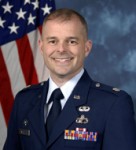
 Writing my witness of the restored gospel as an LDS scholar is a little different than standing up in a testimony meeting and rattling off the things I know to be true. In many ways, I see little difference in my testimony compared to a member with less educational experience. In the end, we all must find out truth the same way and the source of truth is the same for all of God’s children. Therefore, I write from my perspective, having been fortunate to have spent more than half of my life (about 22 years) in formal educational programs. It is my intent to share some of my experiences that led me to believe and eventually have unquestionable faith in Jesus Christ.
My parents are both converts and I was sealed to them in the Salt Lake City Temple when I was three months old. Like Nephi, I was born of goodly parents who taught me about Heavenly Father and Jesus Christ. Every week, I listened and tried to learn the simple doctrines in Primary that would help me be happy in life and fulfill my purpose on earth. My dad was a career officer in the US Army so we moved around periodically. My mom was a homemaker and invested many hours in my development. We were living in Aurora, Colorado, when I reached the age of accountability (8) and was baptized by my father and given the gift of the Holy Ghost. I shared what I knew about the gospel of Jesus Christ with my friends, and one late evening, we were looking up at the stars in a very clear night. I told my friends to look up into the heavens—clearly the universe did not happen by chance—and that we have a loving Heavenly Father and Creator. As I articulated what I believed, I felt the strong power of the Holy Ghost testifying to me that what I was saying was true.
As a young child, I had many experiences that led me to believe that God knew me and cared about my well being. It was clear to me that He was answering my prayers in a positive way. I remember being taught about the Word of Wisdom and the importance of keeping my body healthy, both physically and spiritually. When I needed to call upon God for physical strength, He always delivered according to His promises. One time in PE class, I was trying to earn the Presidential Physical Fitness Award, which required five pull-ups. I had never been able to do this many before, but I knew that I had practiced and done everything I could do, always coming up one short. I went behind a partition in the gym and sincerely asked Heavenly Father to help me achieve my goal to do five. I proceeded with confidence to the bar and was able to easily crank out five! I knew that my prayer had been answered. I also recall many times when I received inspiration on tests in school to remember the things I had studied. I credit my ability to remember things on tests to answered prayers. Indeed, I felt fortunate to have the Holy Ghost as my guide during my youth.
During my early to mid-teens, I struggled through the challenges of adolescence. I disliked reading and was slow to make progress in reading the Book of Mormon (or any other book, for that matter). Decades later, I now really enjoy reading. I think if I had read the Book of Mormon more diligently in my teens, it would have solidified my testimony and helped me better avoid the temptations of Satan. During this period, it was clear to me that Satan did not want me to serve a mission or be happy. Although he won some battles, I learned of the power of Jesus Christ and that, through faith and repentance, I could overcome my sins. I felt reassured that sincere repentance was the only way to be free of sin. As I experienced the feelings of being forgiven, I grew to appreciate the Atonement of Jesus Christ and His infinite love for all mankind. Inside, I had a strong desire to do what is right and to keep the commandments. Indeed, I knew that the commandments were from God and would lead me to happiness. My love for Jesus has continued to grow over the years as I’ve pondered the suffering He endured for my mistakes. I know that He lives, and I desire to live my life following His example.
Before my junior year in High School, I took my GED and passed. I continued one more year in school and left for Brigham Young University (BYU) on an Air Force ROTC scholarship without graduating from Dixon High School, Missouri. The BYU campus was a fabulous place to continue growing my testimony. Attending all of the devotionals and going to church with my peers helped my faith increase. I had done pretty poorly in my seminary classes during my two years in Dixon, and when I was a freshman at the International School of Kuala Lumpur, Malaysia, we had no seminary program. At BYU, I enjoyed the opportunity to take religion classes. Even though I took two semesters of Book of Mormon, I’m sure that I didn’t read it from cover to cover. While in Dixon, I received my patriarchal blessing, which has been an excellent guide in my life. I have watched many promises fulfilled over the years and recognize a few that will be fulfilled as I continue to live in accordance with the commandments. This blessing has greatly fortified my testimony. While at BYU, I had great experiences seeing friends converted. I was excited to be the first Hastriter to serve a two-year mission. When I received my call to Portugal, I knew that was where the Lord wanted me to serve.
I accepted the call, extended by the prophet, to serve for two years starting in January 1988. In the Missionary Training Center (MTC), I began a serious study of the Book of Mormon. I felt that I needed to read it cover to cover and know for certain that it was true. Up to this time, I believed that it contained the fullness of the gospel, but I had not put Moroni’s challenge (Moroni 10:3-5) to the test. I felt that I needed to read every page, ponder what I read, and pray to know for sure that it was a true book. I already believed that Joseph Smith was a prophet and the Plan of Salvation seemed to satisfy my desire for answers to the questions of life. I knew we lived before we came to earth and that death was not the end. I remember the day I finished reading the Book of Mormon in the MTC. I snuck away to be alone in a dark janitor’s closet, where I closed the door and prayed to know that the Book of Mormon was true. After that prayer, I received confirmation, as promised, through the Holy Ghost that it is true. With a solid testimony of the Book of Mormon, Joseph Smith the prophet of the restoration, the Atonement of Jesus Christ, and Heavenly Father’s Plan, I was ready to go into the mission field and teach the gospel. I had experienced the joys of the gospel through faith, repentance, baptism, and the gift of the Holy Ghost.
As a missionary in Portugal, I had hundreds of experiences that strengthened my testimony. Many of these were gained while teaching and testifying to the people or while giving Priesthood blessings. The combination of these experiences really forged the bedrock of my testimony. I remember one of the first times I had the opportunity to teach about Joseph Smith in Portuguese. The Spirit witnessed so powerfully to me that what I was communicating was true, and I knew that the person receiving my testimony could feel the power of the Holy Ghost witnessing of the truth. This was not an isolated experience and was the norm in most discussions I had with sincere seekers of truth. I had many opportunities to lay my hands on the heads of people in need of blessings. I saw people healed through the power of the Priesthood. Also, I learned that the words easily came to my mind during blessings and clearly had a divine source. Another interesting aspect of serving a mission requiring the study of a foreign language is the gift of tongues. After sixteen weeks in Portugal, my mission president (President McCook) told me I would be called as a senior companion. I was a little nervous about this because I couldn’t understand or speak the language very well. He assured me that the Lord would provide a way and that he was planning to assign me to a native-speaking companion. When I showed up at the mission home in Lisbon, my newly assigned companion was a native from California. I asked President McCook what happened and he said that his idea was not what the Lord had in mind. It was a long taxi ride back to the other side of the Rio Tejo realizing my linguistic weakness. I knelt and prayed a very long time that night, very humbled by the responsibility placed on my shoulders. The very next morning, I could understand and speak whatever was needed. In fact, I had to conduct a baptismal interview shortly after this and I asked a question with words I had never heard or spoken before that day. I learned what it meant to be a mouthpiece of the Lord and an instrument in His hands. The gift of tongues and interpretation of tongues is real and I know that through my experiences.
I returned to BYU in January 1990 and continued my studies in Electrical Engineering (EE). It was very frustrating to jump back into school, having forgotten most of my math and technical skills. There were many times when I thought I was not cut out for EE and considered other, ‘easier,’ options. I had great friends, like Mark Skousen, who encouraged me to keep trying and that the Lord would provide a way. That has been the case with all three of my EE degrees—the Lord has provided a way for me to succeed. My first quarter at the Air Force Institute of Technology (AFIT) required about 100 hours of study per week. I doubted my ability to sustain that pace for eighteen months. Luckily, I had fewer credits in following quarters and the academic juices began to flow again. The Lord blessed me with great success, and our family continued to grow. During this time, I had to make a decision to continue at AFIT to earn a PhD or go to my next Air Force assignment. Prayer works—God always listens and guides us. As an Air Force officer, I have always felt led in my career. Each assignment clearly has had a purpose in my development and in helping my family have opportunities to serve and grow. We joke, but believe, that God decides where we need to go next and the Air Force cuts the orders.
We ended up in San Antonio, Texas, instead of pursuing a PhD at AFIT. About three years later, I found myself at the University of Illinois, Urbana-Champaign (UIUC). I quickly felt inadequate for the task at hand—pursuing a PhD. My advisor, Professor Weng Chew (from Malaysia), was an incredible blessing for me. I felt that many experiences in my life had lined up to bring us together. I certainly felt the “tender mercies” of the Lord while studying at UIUC. I received blessings from my bishop (Steve Newman) and later from my home teachers that gave me the confidence that God would help me succeed in my studies. Special promises were granted and received. There is no doubt in my mind that I would not have succeeded without these blessings. After my doctoral program, I was able to teach EE at AFIT. I enjoyed teaching, but, after a short two years, inspiration led me to another assignment where I had the privilege of working for a couple of Air Force four-star generals. Three months after being hired by General “Speedy” Martin, General Bruce Carlson (now Elder Carlson, Second Quorum of Seventy) took command. I learned so much from these great men and it has been good for my career and in preparing me to be a better servant in my church callings.
This headquarters job opened up many doors, leading to my first opportunity to command a squadron at Hill Air Force Base, Utah and my current opportunity to command a group at the Air Force Academy. The timing of these jobs lined up with unique opportunities for our children, some opportunities that are not yet apparent. Although I continue to make plans for the future, it usually turns out much better than I plan. I have seen the hand of God in my life. I feel blessed to know that He is guiding and directing my path.
I conclude by stating that living the gospel, putting it to the test, has proven to be a blessing. As I’ve implied, my testimony is not much different than the testimony of millions of members worldwide. There is nothing in my education that makes my testimony stronger than others with less education. As an electrical engineer, I find the Plan of Salvation to be logical. I feel that all the pieces are available and fit together perfectly. In the end, I am not able to prove that all the things I believe are true. The evidence points to their truth and the spiritual witnesses that I have received over and over again motivate me to action. Indeed, I am committed to living the gospel for all my days on earth. Jesus is the key to our salvation and all things that help us have increased faith in Christ are good. I believe in miracles because I have seen them happen. I believe in spiritual guidance because I have received spiritual guidance. I challenge anyone to study these things with a sincere heart and real intent—you will find out for yourself that truth has been restored to the earth and that we have a living prophet to lead us in these latter days. May God bless you in your search for truth and may you be happy when you embrace it!
—————————————————
Michael “Larkin” Hastriter is a Lieutenant Colonel in the United States Air Force. He is married to Bethany and they have seven children. He earned successive Electrical and Computer Engineering degrees from Brigham Young University (Provo, 1993), the Air Force Institute of Technology (Wright-Patterson AFB, 1997), and the University of Illinois (Urbana, 2003). After his PhD, he taught at AFIT from 2003–2005. He has led a section, branch, and division and commanded a squadron. He currently commands a cadet group at the Air Force Academy and is projected to attend Air War College in 2011. He is an advocate of the Boy Scouts of America movement and earned his Wood Badge beads and the District Award of Merit. He has served as a Stake Missionary, Executive Secretary to Stake Mission President, Ward Mission Leader (x2), Gospel Doctrine Teacher, Primary Teacher (x3), Primary Pianist, Priesthood Pianist, Counselor to the Elder’s Quorum President, Webelos Leader, Assistant Scoutmaster (x4), Varsity Scout Coach, Stake 11-year old Scoutmaster, and Young Men President. He is currently a High Priest in the Monument Ward in the Colorado Springs North Stake.
Posted March 2010
 I grew up in a loving Mormon home in Salt Lake City, with faithful parents and a close relationship to my brothers and sisters. Books were always important to me. I have loved the scriptures since I was a child, and continued study over the years has given me additional “reason[s] for the hope that is within [me].”i
 While I was a graduate student pursuing a doctorate in philosophy, one of my professors was surprised to hear that I was a practicing Mormon. He was puzzled by the fact that I was both a serious graduate student and a serious believer. He could not understand how someone interested in philosophy could believe in angels, gold plates, and the other elements of LDS faith. So he asked me about it, wondering how I reconciled my religious beliefs with my interest in philosophy. He saw the two as incompatible. I must confess that I was surprised by his questions. Even though I had always known that someone would ask me about my faith and I often thought about what to say, I was never able to think of anything that I thought would satisfy a philosopher. At that moment, I simply said that I had had certain experiences that I could not deny. While I did understand that what I studied and my faith were often in conflict with each other, I could not deny the experiences that I had when I first investigated the LDS Church. My professor was impressed by the honesty of what I said and in response said that, if it was important to me, he would respect that and treat it seriously too.
 It was never my intention, dream, desire, or plan to become a scholar, much less a Mormon scholar. Or even a Mormon, for that matter. During my seventh and last year of ministerial studies for the Lutheran Church, I found myself floundering in both a Biblical Theology class and a Philosophy class, where I was embarrassed to confess to the professors of both that I couldn’t grasp either subject: that I felt like a farm boy who was just learning to read. I simply wanted to preach the Gospel of Jesus Christ and serve Him and my fellow man, leaving the intellectual ‘how many angels can dance on the head of a pin’ discussions to those so inclined. I managed to complete my BA in Ministerial Studies, Classics, and Choral Music, and then felt impressed to cease my studies. I went so far as to sign up for the Army, not even fearing that I could be sent to Vietnam. It wasn’t to be, however, but within one hour after being given the word that I had flunked the physical, I was on my way to becoming an Academic Librarian for my life’s career: a lifetime of diversity and variety in work, play, music, and family.
 My mother made a deal with me: If I would attend BYU for at least one quarter after graduating from high school, I could complete college at the University of Texas, which, at age seventeen, was my first choice. I had grown up in Houston as a Church-going member, but the real genesis of a testimony began with that mother-son deal. And in spite of the fact that in the late 1940s and early 1950s, BYU was just beginning to develop into a first class university, what I learned from a number of physical and biological science classes demonstrated to me that this mix also would be a good profession. However, there was a problem. A knowledge of Earth structures and processes could support either atheism or a belief in God, the former being the easier to manage. But if the gospel was true, the evolution of Earth’s structures and organisms should be consistent with theological matters dealing with Earth. Having developed a testimony of one requires testing that testimony against the other. Developing a real testimony not only requires maintaining a gospel-oriented course, but it also requires repeated examination of the apparent and real conflicts between understanding Earth’s processes and Christian/LDS theology.
 Only a few of my colleagues have asked me how I can be a believing member of the Church of Jesus Christ of Latter-day Saints and an Egyptologist at the same time. I suppose that more have simply not dared to ask me. I write this for them, and for any others who might benefit from it.
 I worship Jesus Christ as my Savior and best example. I want to be as much like him as I can. The Book of Mormon says, “. . . charity is the pure love of Christ, and it endureth forever; and whoso is found possessed of it at the last day, it shall be well with him. Wherefore . . . pray unto the Father with all the energy of heart, that ye may be filled with this love, which he hath bestowed upon all who are true followers of his Son, Jesus Christ.” My parents, their parents, their parents, and so on for generations gave their time, their talents, their resources—left family, homes, endured hardship, built homes in a harsh land—in their best hope to follow Christ. I would love their approval. When I read the scriptures, much of the Bible, and especially the Book of Mormon, my heart sings with the Book of Mormon prophet Nephi, who, when guided in vision by the angel to view the tree of life, symbol of Christ’s love, said, “ . . . it is the love of God, which sheddeth itself abroad in the hearts of the children of men; wherefore, it is the most desirable above all things.” And the angel replied, “Yea, and the most joyous to the soul.”
 I’m an oceanographer and a volcanologist. I am also a faithful member of the Church of Jesus Christ of Latter-day Saints (LDS). As such, I have spent a lot of time in discussion of science and religion. I have many friends and colleagues that are atheists with low opinions of religion in general. Most of them have freely expressed to me their belief that, to sum it up with a direct quote by one of them, “Anyone who is religious believes in foolish superstitions.” Despite that, I am thankful to say, none of them have ever questioned my scientific ability based on my religious beliefs. They understand, as I do, that science and religion are looking for different answers in different places. All that matters is whether I do good science or not. At the same time, I do not think that the two areas have to be mutually exclusive.
 As a member born-and-raised of the Church of Jesus Christ of Latter-day Saints, I learned from the time I was a very small child to view human experience as richly meaningful and therefore sacred. I listened to the testimonies of everyday men and women at church on Sundays, to sacred stories passed down from my ancestors, and to my own parents’ careful teaching. When I was seven years old and preparing for baptism, my father and I read the Book of Mormon together every night until we finished the book. Through these experiences, I learned to value reflection and discerning interpretation. I learned to place great faith in the revelatory power of words—both the words of scripture and words carefully rendered from human experience.
 Growing up close to the center of the Church in Utah with pioneer background on every line was a marvelous experience. Those were the days that General Authorities commonly came to stake conferences and General Conference was a two-hour drive (now a 45-minute drive). I participated in the Church-wide June Conference in drama and dance, even shaking the hand of the president of the Church when he came to thank the cast. So testimony should have come easily. But testimony never comes easily.