• Skip to primary navigation
  • Skip to main content
  • Skip to primary sidebar
  • Skip to footer

FAIR

  • Find Answers
  • Blog
  • Media & Apps
  • Conference
  • Bookstore
  • Archive
  • About
  • Get Involved
  • Search

Testimonies

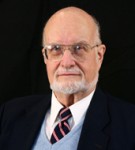
Stephen D. Ricks

I am a child of Mormon pioneer stock, but I still I had to receive a personal witness of the truth of the gospel by myself. My father (who will be celebrating his hundredth birthday this September) was born in Rexburg, but moved to California by way of Salt Lake City at age of twelve. He met my mother (who was herself from Salt Lake City and who died a few years ago) when he was studying at the University of California at Davis and married her shortly thereafter. After completing a Ph.D. and an M.D. and serving in the military, he set up a medical practice in Berkeley, California. I was born in the middle of the “baby boomer” generation. I attended church with my parents and other members of my family from the time that I was a small child. I had always had a testimony of the gospel, but began to experience a developing sense of commitment to the church as a young man.
I first became acquainted with Hugh Nibley’s writings when I was thirteen. At that time I read Nibley’s The World and the Prophets, which relates in simple, straightforward, yet eloquent language the effects of the loss of authority in the early Christian church. As clearly as anything, Nibley makes the case for the triumph of the philosophers and the loss of apostolic authority. The ideas in The World and the Prophets set my mind on fire. Nibley became my academic idol and has remained so to this day. Nibley’s example of serious scholarship in the service of the kingdom made me want to become an academic as well. Though the academic path I have followed has been somewhat different—I began as a classics student, then completed my doctorate in ancient Near Eastern Languages and Religions—he blazed the trail for me.

Before entering Brigham Young University as a freshman, I decided to read the Book of Mormon again. While reading 1 Nephi chapter 17, where Nephi, building a ship to transport Lehi’s family to the land of promise, relates the account of the faith of the Israelites to his brothers, I felt an overwhelming personal witness about the truth of the Book of Mormon. It was a feeling that lasted not just a few hours, or a day, but days. I have studied the historical, cultural, and linguistic background of the Book of Mormon; I am currently working with a group that is studying proper names in the Book of Mormon, all of which have powerfully enhanced for me my sense of the probability of the Book of Mormon’s historical authenticity, but it has been cast in the shade by the witness that I had received of the Book of Mormon as a young man.

When I came to Brigham Young University as an undergraduate student I felt as though I were coming home. As a young man I loved studying there; now I love teaching and researching there. I have been to countless other university campuses across the country and around the world. In none do I feel so comfortable and at home as I do at BYU. I hope, in my own way, to be able to do my part to enhance the quality of the university and to help it to achieve its destiny.

While a proselyting missionary in German-speaking Switzerland, I enjoyed a measure of success there. More than anything, though, I came to appreciate the vital importance of missionary work to realizing the destiny of the church. In his now-famous letter to newspaper editor John Wentworth, Joseph Smith wrote about the church’s duty and destiny in preaching the gospel, something that for many missionaries is material that deserves memorizing: “The Standard of Truth has been erected; no unhallowed hand can stop the work from progressing; persecutions may rage, mobs may combine, armies may assemble, calumny may defame, but the truth of God will go forth boldly, nobly, and independent, till it has penetrated every continent, visited every clime, swept every country, and sounded in every ear, till the purposes of God shall be accomplished, and the Great Jehovah shall say the work is done” (HC 4:540).

I have felt the hand of the Lord in my life and I have experienced His love. I have also felt God’s power to influence the direction and shape the destiny of His church. Joseph Smith spoke about the magnificent destiny of the church in 1834, when he called a priesthood meeting in Kirtland, Ohio, in a fourteen-by-fourteen-foot log schoolhouse for those men who had gathered as volunteers for “Zion’s Camp” to assist the beleaguered Saints in Misssouri. “When we got together,” Wilford Woodruff wrote of the meeting, “the Prophet called upon the elders of Israel with him to bear testimony of this work. . . . When they got through the Prophet said, ‘Brethren, I have been very much edified and instructed in your testimonies here tonight, but I want to say to you before the Lord, that you know no more concerning the destinies of this Church and kingdom than a babe upon its mother’s lap. You don’t comprehend it.’ . . . [Joseph said], ‘It is only a little handful of priesthood you see here tonight, but this Church will fill North and South America—it will fill the world.’” The late President Hunter said that the day will come when there will be a hundred million members of the church. I hope for a day when the membership of the church will be substantially greater than that, when it will be a force for good to be seriously reckoned with.

—————————————————-

Stephen D. Ricks was born in Berkeley, California, “when it was a peaceful university community.” He completed his B.A. in Ancient Greek and M.A. in the Classics at Brigham Young University, then received his Ph.D. from the University of California, Berkeley and the Graduate Theological Union. While completing his doctoral work he spent two years studying at the Hebrew University in Jerusalem. He is now professor of Hebrew and Cognate Learning at Brigham Young University where he has been a member of the faculty for nearly thirty years.

His academic work includes research and publication on the Book of Mormon, the Old Testament, Hebrew, and the temple, including studies on the ritual use of creation texts in the ancient world, temple-building motifs, enthronement ceremonies in history, and the garment of Adam in the ancient world. Professor Ricks has also done research on Isra’iliyyat, Arabic literature dealing with biblical figures.

He is the author or editor of twenty books, including A Lexicon of Inscriptional Qatabanian (Rome: Pontifical Biblical Institute, 1989); (with William M. Brinner) Studies in Islamic and Judaic Traditions II (Decatur, Georgia: Scholars Press, 1989); Western Language Literature on Pre-Islamic Central Arabia (Denver: American Institute for Islamic Studies, 1991); (with Donald W. Parry and John W. Welch) A Bibliography on Temples of the Ancient Near East and Mediterranean World (Lewiston ME: Edwin Mellen Press, 1991); and Developments on the Dead Sea Scrolls: Conference on the texts from the Judean Desert, Jerusalem, 30 April, 1995 (New York: Brill, 1996). He is also the author of more than eighty articles on the temple, the Old Testament, the ancient Near East, and the Book of Mormon. Among these are “The Prophetic Literality of Tribal Reconstruction,” in A. Gileadi, ed., Israel’s Apostasy and Restoration: Essays in Honor of Roland K. Harrison (Grand Rapids, MI: Baker Book House, 1988); the entries on “Abortion in Antiquity,” “Queen of Sheba,” and “Sheba” in the Anchor Bible Dictionary (Garden City, NJ: Doubleday, 1992); “Kinship Bars to Marriage in Islamic Law,” Proceedings of the XXXII International Congress for Asian and North African Studies, Hamburg 25th-30th August 1986 (Stuttgart: Franz Steiner Verlag, 1992); “Magic in the Old and New Testaments: The Tradition of the Outsider,” in Marvin Meyer and Paul Mirecki, eds., Ritual Power and Magic in the Ancient World (Minneapolis: Fortress Press, 1995); and “The Garment of Adam in Jewish, Muslim, and Christian Tradition” in Benamin H. Hary, John L. Hayes and Fred Astern, eds., Judaism and Islam, Communication and Interaction: Essays in Honor of William M. Brinner (Leiden: Brill, 2000).

From 1988 to 1991, he was the president of the Foundation for Ancient Research and Mormon Studies (FARMS, now the Neal A. Maxwell Institute for Religious Scholarship). From 1991 to 1997, he served as the chairman of FARMS board of directors. He was the founding editor of the Journal of Book of Mormon Studies, serving as editor from 1992 to 1997. From 1992 to 1996, he also served as the associate dean of general education and honors at BYU.

Professor Ricks has used his reading knowledge of more than twenty languages in his research, and is an expert in Biblical Hebrew. For many years he has worked toward promoting positive relations between the LDS Church and Jewish groups. He and his wife Shirley are the parents of six children and the grandparents of eight.

See, additionally, Professor Ricks’ chapter in Expressions of Faith: Testimonies of Latter-day Saint Scholars.

Posted February 2010

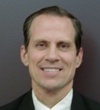
Duane Boyce

Just as our eyes and ears can be saturated in physical sights and sounds, so our souls can be immersed in the pure intelligence of the Spirit. The first, for the most part, teach us of the things of the world; the second, the things of eternity. The confirmation of the Spirit is also far more certain than the testimony of the physical senses. It is surprising—but I have discovered it to be true—that we can know eternal things through the Spirit better than we know mortal things through the physical senses.

It is in this way that I know that we do indeed have a Father in Heaven, that we have a Savior who is Jesus Christ, that the fullness of the gospel was restored through the Prophet Joseph Smith, that the Book of Mormon is true, and that the Lord directs His Church through living prophets.

These are the core truths of the gospel and I know of their reality better, literally, than I know anything else—more certainly, for example, than I know that I am sitting in a chair penning these words on a wintry Sunday morning.

Born of this knowledge is a profound gratitude for the Church established by the Lord. I don’t feel I’m good enough for the Church, its leaders, and its members, but as long as they are willing to have me, I’m in.

A Thought or Two on Scholarship

My scholarly attainments are modest, but I have enough experience to have developed a number of convictions about the relationship between academic and gospel study. Here are four of them:

First, both are pursuits of the truth. At this level of abstraction they are identical.

Second, I believe I should pursue both as a way of honoring God. That seems to me true of every conceivable worthy task, and no less of intellectual study. In my best moments I find myself drenched with the desire to do nothing but please the Lord. My quest is to make all my moments these moments.

Third, as pursuits of the truth, both academic and gospel study impose on me the same requirements. These include (1) critical, sound reasoning, (2) painstaking effort, and (3) a fundamental attitude of humility.

The need for sound reasoning and diligent effort may be obvious, but I believe that no less required is a spirit of humility. Nothing impedes our understanding of the world, or of the gospel, quite as thoroughly as a dogmatic insistence on whatever understanding we think we possess at the moment. On the contrary, in both scientific and gospel scholarship (beyond the core truths of the gospel and the official teachings of the prophets) there is profound reason for a lingering tentativeness about many of the ideas we hold at any one time. Whatever my intellectual convictions, I know they are beholden to a complex, intricate, and hidden web of assumptions, preconceptions, and predispositions that I do not even recognize, much less comprehend, however hard I might try to do so. How can I pretend certainty in my vast array of beliefs in the face of this reality of intellectual life?

For this reason, no matter how much I think I understand, I believe it best to live with the expectation that I will turn out in the end to have been wrong on an endless host of matters. This is inevitable, and it is both futile and unwise to imagine otherwise.

The proper scholarly attitude, as I see it then, can hardly be one of defensiveness or of unbending insistence on some point of view or other. The proper scholarly attitude is to live in welcome anticipation of surprise. It is to pursue the truth, but to embrace the reality of my current ignorance, enthusiastically and with wonder. This attitude, it seems to me, is one that honors God.

Finally, and obviously, to pursue the truth in either academic or gospel inquiry is simply to follow the evidence wherever it leads. This includes refusal to acquiesce to the intellectual consensus of the time just because it is the intellectual consensus of the time. Or, even unwittingly, to adopt a point of view just because it was the view of my graduate professors. Others, too, are beholden to intellectual influences they cannot name and they too are destined to turn out mistaken on an endless number of matters, both large and small. My loyalty, if I am to pursue the truth aright, must be to the most subtle and critical understanding of the evidence that I can muster, certainly not to any intellectual system (in my field of psychology, for example) just because people I admire accept it.

Eventually, though we may fail to appreciate it from our current vantage point, we will see that academic and gospel study are roads that lead to each other. The nearer we approach the truth, the nearer we approach the intersection of gospel and intellectual understanding, where the two meet and become one. It is there that the flame of the Spirit burns most brightly and illuminates both what we study, and what we are.

Reaching that point, I believe we will appreciate more than we do now just Who stands at that intersection, and just Who is the source of that divine flame. And we will also appreciate then, more than we do now, that He genuinely is the way, the truth, and the life. Whether we realize it or not, the search for truth is the search for Him.

He is the Only Begotten Son, the Creator, the Light and Life of the world, the Lamb of God, the Holy One of Israel, the Bread of Life, our Savior and Redeemer.

I don’t know much. But I know that and rejoice in it.

———————————————–

Duane Boyce received his academic training in psychology, philosophy, and the clinical treatment of families. He received a Ph.D. from Brigham Young University and conducted his postdoctoral study in developmental psychology at Harvard University. He was a member of the Moral Studies Group at BYU and served on the faculty there before becoming vice president of a steel company headquartered in St. Louis, Missouri. He is a founding partner and COO of a worldwide management consulting and educational firm headquartered in Salt Lake City, and is the coauthor of four books. In the Church he has twice been a bishop and currently serves as stake president.

Posted February 2010

Steve Walker

I was seven years old when I realized the local Catholic church wasn’t another Mormon ward. That revelation dropped the theological ground out from under me into a quicksand of shifting beliefs. The ground I found to stand on then, I stand on still: truth is the stuff that features transparency, doesn’t get nervously defensive, fears no questions. We can recognize truth by its open arms, its open invitation to investigation.
I came to the secular ivory tower by an ecclesiastical route. I’d planned since tenth grade to teach seminary, worked through the training, student teaching, even got offered a job in Payson, prime offer for that time when teachers started in the boondocks and gravitated with seniority toward the center of Zion. So it was with reluctance that I considered a counter offer teaching English. BYU Chairman Dale West asked, “Now what is it you’ll be doing all week long if you teach seminary? And what is it you’ll be doing on Sundays?”

The potential monotony of round-the-clock theology wasn’t the problem for me: I’ve never been able to get enough, couldn’t imagine what I could teach that could matter nearly as much as life values. But Dale did make me wonder about the best venue for teaching those values. Might testimony, however sincere, be suspect in religion class because I was paid to espouse the party line? Could English class, because of its secular atmosphere, better certify the authenticity of my convictions?

Having ventured into a secular venue for religious reasons, I’m anything but naive about how vulnerable faith can be to fact. A BYU classmate left the Church when she found out about the Mountain Meadows massacre. My two best friends at Harvard, after reading a 1968 Newsweek article about the Church’s stand on blacks, would have nothing more to do with anything Mormon, especially me. My favorite brother-in-law lost his faith when a high councilor scammed him with a Dream Mine investment. My ten-year co-author drifted away from Mormonism into agnosticism as his researchings lead him into some of the dark sides of Church history. My closest faculty colleague, a friend whose life featured the most dramatic healing miracle I’ve witnessed, disavowed his belief because “poststructuralism makes more sense.”

Maybe it’s some kind of intellectual defense mechanism with me. Maybe I just lack imagination. But seeing from an inside perspective the things that have soured the faith of my friends—intelligent friends, goodhearted friends, big-souled friends whose views I not only respect but admire—seeing up close and personally the precise evidence that has eroded the faith of my friends has somehow enhanced my faith.

If that appears to you to be in any way heroic, the result of determined orthodoxy, think again. I suspect the enduring strength of my faith has more to do with realistic examination of the evidence than with any sort of moral stamina. And if my faith seems to you hardheadedly mulish or lightheadedly Pollyannaish, think again again. I suspect the resilience of my faith has more to do with honesty of doubt than with ignoring negative evidence.

Faith can be a kind of clinging to certainties, a theological Linus’s blanket. But to me faith is at its best a refusing to close any doors to potential truth, however hard the winds of possibility may blow. That might be just my natural contrariousness; I’m a born professor, a person who naturally thinks otherwise. I find myself more conservatively orthodox in Boston than in Provo, more spiritually engaged teaching English than teaching seminary.

As a result of that going-against-the grain disposition, I may have had deeper doubts, and almost certainly have had earlier doubts, than any of my faith-forfeiting friends. From my realistic—maybe even skeptical—view, graduate school is too late to learn about the Mountain Meadows massacre—we need informative inoculation against the realities of Mormon history earlier. Similarly, from my questioning perspective, it takes a heavy-duty dreamer, in such cynical times, to be taken in by dream mine schemes. Joseph Smith’s Nauvoo polygamy problems seem to me capable of making disbelievers only of those who’ve somehow convinced themselves that prophets, against every example of prophet we’ve ever had in history or in scripture, are supposed to be perfect. And from where I stand—sorry, kind colleague, because I know how bright you are, and how learned—anyone who thinks poststructural literary criticism runs deeper in its implications than Mormon theology just doesn’t know enough of either.

I’m not trying to pull intellectual rank on disbelievers. Nor do I think they’re insincere, or self-deluded. The last thing I wish to suggest is a stereotype of those who see faith differently than I do. But I can’t help noticing a definite pattern among the people I know who’ve lost their Mormon faith. The pattern is not what we tend too simplistically to think—not sin leading to rationalization. Nor does the faith erosion I’ve observed result from standing so close to the secular evidence as to be burned by it. In every instance where I’ve seen faith lost I was at least as familiar with the negative evidence as the friends for whom that same evidence triggered disillusionment.

The pattern in every loss of faith I’ve observed is not overreaching into too much learning. It is, rather, uninformed expectations. It is an insistence on perfection in anything religious that sets up overidealizing believers for inevitable disillusionment. Far from being too much learning, the consistent cause of the loss of faith I have seen is in fact too little learning, or learning too late. Every person I know who’s lost faith has been a true believer of the straight arrow Eagle Scout “best two years of my life” missionary variety until the messy facts caught up with their faultless ideals.

That theological naivete may explain why, as Tennyson has it, “there lives more faith in honest doubt, believe me, than in half the creeds.” It’s certainly why my personal faith is deeply invested in the facts of my secular academic discipline. I find God sometimes in church. I find Him more often in scripture, still more often in nature. I find Him a lot in people. I find Him surprisingly often in literature. I don’t expect others to find Him where I do, to share the spirituality that is so real to me in my academic discipline—it’s too intricately and idiosyncratically integrated into the most personal dimensions of my personal testimony. But that spirit is very real to me.

When I was six, showing off my newfound reading abilities to my Uncle Clyde, I seized the Book of Mormon, nearest book at hand, to read aloud to impress him. Hardly aware of what I was reading, reading for audience effect only, I was stunned to find how moved I was by such unprepossessing words as “I, Nephi, having been born of goodly parents, therefore I was taught somewhat. . . .” (1 Nephi 1:1). Not half a dozen verses into that quiet prose, I found myself in tears. Chagrined at having failed to impress my Navy-tough uncle, and nonplussed at such a reaction to any words on any page, I asked my mother what had come over me. She said then, and I believe her still: “It’s the Spirit, Steve. God is in that book.”

The spirit is so untheoretical to me, so experientially specific, that it doesn’t surprise me to find it in places where others might not. It’s not just that I feel it more sometimes in the Book of Mormon than in Sacrament Meeting. I even feel it at times more in the Bible than in the Book of Mormon. I teach the “Bible as Literature” at BYU, a course which for some will be a contradiction in terms, so little will they concede the possibility that the literary can inform the scriptural, let alone the spiritual. But for me it does exactly that.

Yesterday my class came across the “taunt song” at the conclusion of Judges 5, a poem whose precise purpose is to add insult to the injury of the Assyrian defeat at the hands of Deborah. Reading that brutal account of the grisly death of Sisera, his imperial head nailed to Jael’s dirt floor, we were surprised to detect amid that vicious triumph some suggestion of compassion. When Sisera’s mother looks out her window for the son we know will never return, we sense not only Israelite gloating but a hint that for every enemy warrior conquered, however heinous, there may be a mother grieving. One of the students said “If there is compassion here, in this fiercely unlikely context, it has to be from the spirit.”

The spirit comes easier in The Book of Mormon, more accessibly. Open the book and you can practically feel it on your fingertips. But I find the spirit more forceful when it pushes through the murder and mayhem of the Old Testament: it’s so hard-earned in that context, so natural and realistic, so honest and close to the bone.

So I’m not surprised to hear sometimes echoes of that hard-earned spirit in other literary places–-in Wordsworth’s great “Immortality” ode or Paradise Lost or King Lear or The Lord of the Rings or The Grapes of Wrath or Tess of the D’Urbervilles or Keats’s “To Autumn” or Robert Frost or Emily Dickinson or Gerard Manley Hopkins’s poetry: “For Christ plays in ten thousand places,/ Lovely in limbs, and lovely in eyes not his/ To the Father through the features of men’s faces.” Whispers of the spirit may be harder to hear in English class than in seminary, but they’re more convincing when I hear them.

So when I hear unbelievers claim that “knowledge undermines faith,” I only half believe it, believe it for them, but not for me. Awareness has clearly disillusioned some of my friends, but it appears to me the facts may have disillusioned them from their own uninformed expectations. And when I hear that same “facts threaten faith” assumption from the faithful, sharing the faith as I do, the notion seems to me nonsense, or worse: defensive, a little cowardly, at best lazy, not having done its homework on the Mountain Meadows massacre or prophets’ foibles.

That’s why fear of facts and fear of questions equates in my experience to: not true. My truth-seeking experience has convinced me that doubt may be the very stuff of which faith is made—for me doubt is as necessary to faith as fear is to courage. Fact is even more crucial to my faith, the evidence on which it is grounded. Doubt and factuality—aspects of higher learning which I realize make it dangerous to the faith of some—are the very dimensions of the academy that make my professional world, with its frank secularity and insistent questioning and unabashed skepticism, anything but a liability to what I believe. My intellectual life may be the place where my faith most consistently expands.

—————————————————

Steve Walker (Ph.D., English, Harvard University) is professor of English at Brigham Young University, where he has taught Modern British Literature and The Bible as Literature for forty-four years. He has worked as Harvard University Research Fellow, director of the Center for Christian Values in Literature, Karl G. Maeser Distinguished Teacher, Honors Professor of the Year, Golden Key National Influential Teacher, Brigham Young University Alumni Professor, and Nan Osmond Grass Professor. His seven books include The Power of Tolkien’s Prose: Middle-earth’s Magical Style, Mourning with Those Who Mourn, and Seven Ways of Looking at Susanna (winner of the Association for Mormon Letters Award for Criticism).

Posted February 2010

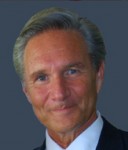
Paul Alan Cox

As a member of the Church of Jesus Christ of Latter-day Saints—and as a scientist, I am grateful for the invitation of Professor Daniel Peterson to prepare a statement on my personal religious beliefs for this Website on Latter-day Saint scholars. Since my comments here will be searchable on the Internet, I have decided to direct them not to my fellow church members, but instead to my friends, colleagues, and students who have other faiths or who do not profess a religious orientation.
1. Gratitude for Religious Tolerance Shown to Me

I was fortunate as a student to study with some of the world’s most gifted biologists. Today in my scientific work I continue to collaborate with renowned scientists, medical experts, and mathematicians. As a conservationist, I work with many dedicated people to protect precious habitats and cultures throughout the world. In my search for new cures to some of the world’s most serious diseases, I have joined forces with many wonderful individuals—who are now close friends—including those who have made different lifestyle choices than I have. Additionally, I have been taught by indigenous people around the world who make tremendous sacrifices to protect their forests, reefs, and other natural areas. Few of my colleagues share my religious beliefs. Yet they are competent, ethical, and pleasant people to whom I am indebted for their acceptance of my commitment to my faith.

I am particularly grateful for their efforts to accommodate my religious practices. Our Church teaches us not to smoke or drink alcoholic beverages. My wife Barbara and I are graciously provided juice or sodas at the dinners and cocktail parties we are invited to attend. Board meeting schedules have been altered so I can attend church services, and my lectures are scheduled on days other than Sundays. I am touched by the efforts of my associates to demonstrate tolerance and respect for my beliefs. I hope I can reciprocate by demonstrating similar respect for the dignity of their beliefs. As part of our foundational documents my Church accepts as an article of faith: “We claim the privilege of worshiping Almighty God according to the dictates of our own conscience, and allow all men the same privilege, let them worship how, where, or what they may.”

2. Roots of my Personal Spiritual Beliefs

As a little boy, I prayed nightly for God to protect the plants and animals we share this earth with. A commitment to conservation is in my family legacy. My great grandfather was an early advocate for Arbor Day and started the horticultural society. My grandfather built fish hatcheries and wildlife refuges, and helped create Grand Teton National Park. My father spent his life as a conservation officer, National Park ranger, and State Park Superintendent. My mother was a fisheries biologist and then became a regional administrator for the U.S. Fish and Wildlife service. My father-in-law spent his career protecting the deserts of California, and served as Director of the Interagency Fire Center. These family members had a great influence on my dedication to conservation. And the many years I have spent in the forests, and studying plants, has had a positive impact on my spirituality.

When I was ten years old, I spent a summer with my father and mother at a trail camp high in Death Canyon in the Grand Teton National Park. My dad’s best worker on his trail crew was a man not of our faith whose name was Red Rote. I noticed that Red disappeared early each morning before breakfast, and then would return in time for his meal. One day I asked him where he was going each morning. He told me that he liked to go out alone to the forest each morning to read his Bible so he could start his day off right.

I was impressed, and decided to follow Red Rote’s example. Soon I began my own study of the New Testament. When I read the Sermon on the Mount in Matthew 5, I realized that Jesus’ teachings to love our enemies, to do good to those who treat us unkindly, to do our alms in secret, to avoid lust and anger, could not have been formulated by a mere man—these instructions were obviously divine. Imagine how wonderful our world would be if we all followed such teachings.

As my spiritual commitment grew with my study of the New Testament, I began a lifelong study of the Book of Mormon. The Book of Mormon is an extremely deep and rewarding scripture comprised of writings of ancient prophets in America. They recorded a visit of the resurrected Jesus to some of the inhabitants of ancient America. He shared with them many teachings, including those contained in his Sermon on the Mount. The Book of Mormon constitutes a second written witness—comparable to the New Testament—for the divinity of Jesus Christ. I cannot read a single page of the Book of Mormon without feeling the power of God in the text. I know with my whole heart that the Book of Mormon is true.

There are spiritual realities that surround us, just as there are physical realities. For example, I know that if I do something wrong, I feel bad inside. Our conscience is God’s way to teach us how to become better people. Similarly, I know that when I kneel down and pray, God actually hears my prayers. If I listen carefully to the inspiration that comes, I find encouragement and direction. Through Church attendance, doing good works, and living Church standards, the little flame of faith that I nurtured so many years ago in the Tetons continues to grow.

One of the best benefits of membership in the Church of Jesus Christ of Latter-day Saints is to be sealed as a family forever in the Lord’s temple. When our family almost perished in massive waves that pounded a village in which we were living on a remote island, the assurance that we would be together forever as a family was very precious to us.

3. Support for my Church as an Institution

Some students tell me that they see no need for an organized religion. I respond that evil seems to me to be well organized—do they think that a disorganized response is sufficient?

The organized religions I am familiar with consist of cosmologies that explain our role in the universe, teachings on how to live a worthy life, and rituals or ordinances that bring one closer to the numinous. I have been moved by marvelous musical performances in European cathedrals, tears shed in synagogues when the Torah is revealed, kindness shown me by Muslims who seek to live the teachings of the Koran, and the deep commitment made by Buddhists to live quiet, inoffensive lives. The religions I have observed among indigenous peoples also have won my respect. Sometimes I am asked if my commitment to indigenous peoples is inconsistent with my profound personal commitment to my faith. Because I reverence the sacred in my own life, I can better respect the sacred in the lives of others.

We can learn good things from nearly all religions. One stunning area of agreement of these disparate faiths and traditions is that the earth itself is sacred, and is worthy of our respect. However, in the west, organized religions are beginning to wane. In contrast, my personal support for my Church—like that of many other Latter-day Saint scholars—has only grown through time. This is because we are focused on Jesus, his divinity, and his teachings. As an ancient prophet wrote in the Book of Mormon: “And we talk of Christ, we rejoice in Christ, we preach of Christ, we prophesy of Christ, and we write according to our prophecies, that our children may know to what source they may look for a remission of their sins” (2 Nephi 25:26).

When Jesus was on earth, he organized his church to proclaim the gospel, to heal the sick, and to care for the poor. We read in the New Testament: “And he goeth up into a mountain, and calleth unto him whom he would: and they came unto him. And he ordained twelve, that they should be with him, and that he might send them forth to preach. And to have power to heal sicknesses, and to cast out devils” (Mark 3: 13-15).

The apostle Paul wrote: “And he gave some, apostles, and some, prophets, and some, evangelists, and some, pastors and teachers, for the perfecting of the saints, for the work of the ministry, for the edifying of the body of Christ” (Ephesians 4:11-12).

Jesus has restored his Church to the earth with much the same organization as in ancient times. Just as Peter and the other apostles led the Church after Christ’s death, today the Lord has called a prophet and apostles to oversee his church in these modern times. President Thomas S. Monson currently is a compassionate man, a friend to everyone he meets. But there is something far more important to me than his outstanding personal virtues and life of service. As Søren Kierkegaard wrote in his essay “Of the Difference between a Genius and Apostle,” we revere Paul as an apostle, not because he was a good tent maker, but because of the Lord who called him. I believe that the Lord can give President Monson important direction for our time. President Monson has asked us to devote more of our time and resources in aiding individuals who are poor, ill, or otherwise distressed. Recently, he asked us to increase our efforts in providing assistance to the people of Haiti in the aftermath of the earthquake there.

Most of the leaders of our Church are accomplished professionally, but at their core they are normal people. However, when inspired by the Lord, they can receive divine direction. In my local congregation, I am provided with inspired lay leadership. We do not have a professional clergy, so the sermons and lessons and even sacramental services are all provided by others. When I listen carefully to their counsel and experience, I receive encouragement to live a better life.

The church also provides many organized ways to serve. Once a month, we fast for twenty-four hours and give to the poor the funds that would otherwise have been expended on our meals. Not only does this help the poor, but it also helps us have more compassion on those who go hungry. Our humanitarian efforts continue to expand in reach and sophistication. It is often a race between my Church and the Red Cross to be the first to arrive at international disasters with needed food, medical supplies, and other assistance. My son went with thousands of other church members to New Orleans to volunteer in the aftermath of Hurricane Katrina. While FEMA was still floundering, supplies and assistance were given to residents regardless of religious affiliation. Church leader Jeffrey Holland said: “I’m proud of that, when in a tragedy like Katrina you can count on the Mormons. They’ll be there. They’ll be there with their hammers and their saws and their donated labor. And when they’re through with this community, they’ll go on to the next.”

For two years beginning at age 19, I served as a volunteer missionary to the islands of Samoa. It was a wonderful opportunity for me to explain our faith to any who cared to listen, and to engage in humanitarian efforts. I was treated with tremendous kindness by the Polynesian people, who taught me their language, and I have tried through the years to repay their kindness. I subsequently have served in the Church as a scoutmaster, and have worked with our young people in various roles. Currently, I lead a Sunday school class for adults, and I look forward this coming year to discussing with my class passages from the Old Testament.

4. Potential Conflicts between Science and Religion

Many good people struggle with conflicts between science and religion. Without in any way wishing to diminish or demean their struggles, I must confess that I see almost no conflicts. I realize, though, that thoughtful people on both sides of the divide see conflict as inevitable. It is unfortunate when college students sometimes feel that they have to choose between science and the teachings of their religion. Brigham Young, one of the early prophets in our church, decried the impact of this false dichotomy:

I am not astonished that infidelity prevails to a great extent among the inhabitants of the earth, for the religious teachers of the people advance many ideas and notions for truth which are in opposition to and contradict facts demonstrated by science.

You take, for instance, our geologists, and they tell us that this earth has been in existence for thousands and millions of years. They think, and they have good reason for their faith, that their researches and investigations enable them to demonstrate that this earth has been in existence as long as they assert it has.

In these respects we differ from the Christian world, for our religion will not clash with or contradict the facts of science in any particular. You may take geology, for instance, and it is true science . . . to assert that the Lord made this earth out of nothing is preposterous and impossible.

I feel lucky to belong to a Church that “will not clash with or contradict the facts of science in any particular.” As a student, I heard chemist Dr. Henry B. Eyring declare that “our Church only requires us to believe what is true.” This has been very important to me, because I know the things that I learn in science that are true pose no conflict for my religious faith.

6. Conclusion

I am thrilled to be a member of the Church of Jesus Christ of Latter-day Saints, and am deeply committed both to its spiritual teachings and to its institutional mission. My colleagues in science, conservation, and medical research have been extraordinarily kind in accommodating my religious commitments, for which I am very grateful. My faith has grown through prayer and my studies of the New Testament, and subsequently by repeated readings of the Book of Mormon. I am active in my local congregation, and support the leadership of my Church. I am very grateful for my membership in the Church of Jesus Christ of Latter-day Saints.

————————————————–

A Harvard Ph.D., Paul Alan Cox has spent three decades searching the rain forests of the Pacific islands and Southeast Asia for new medicines. His discovery of the anti-AIDS drug candidate prostratin led TIME magazine to name Cox as one of eleven “Heroes of Medicine.” His efforts to protect island rain forests were recognized with the Goldman Environmental Prize and portrayed in the Discovery Channel documentary Triangle of Life. He later received the Rachel Carson Award for his advocacy of indigenous peoples.

He founded Seacology, a not for profit conservation organization in Berkeley, California, which has built schools, medical clinics, and water supplies in islands in forty-one countries around the world, in return for protective covenants for nearly two million acres of rain forest and coral reef.

Prior to becoming Executive Director of the Institute for Ethnomedicine in Jackson Hole, Wyoming, he served as Director of the Congressionally-chartered National Tropical Botanical Gardens in Hawaii and Florida. His current research focuses on finding and fighting the causes of neurodegenerative illness.

See, additionally, Dr. Cox’s chapter in Expressions of Faith: Testimonies of Latter-day Saint Scholars.

Posted February 2010

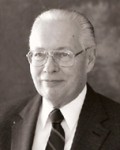
George Bennion

I suppose I am qualified to say I know that God lives. I don’t know it in the way I know who my children are or the way I know the difference between an apple and a potato. It is more like the way I know that kindness is better than roughness. I have a brother who, all his adult life, had “spiritual” experiences. I am not sure I have had such. Perhaps twice, but I can’t be sure the emotion of the moment didn’t induce the sensation. I had gone to Pearl Harbor soon after the December 7th attack. An uncle of mine had been killed in the attack and had been buried at Aiea, a promontory overlooking the harbor. I had been given a number marking his place, and found it on a day off. I went there several times, the last on an Easter Sunday. As I stood there, I thought about him, about a pleasant visit I had had with him while he was alive, about the circumstances reported of his death. And I prayed. During the prayer, I had the strongest impression that he was there, acknowledging me. I didn’t see him or hear him, but I was sure. Years later, I wondered if the intensity of my own feelings and the circumstances—my affection for him, my loneliness in those days—might have induced the sensation. I think he did respond, but I don’t know that.

There have been times when I needed help with a problem and thought I was given that help—an idea, a way to proceed. I was in Japan at the end of the war and had driven my commander from Sasebo Harbor to Tokyo and then took a train back to camp. I could not speak or read Japanese, and needed help to get off at the right station. It was evening when I boarded and the wee hours when I thought I must be close. The train was loaded with Japanese still in their uniforms, and, in my mind, not necessarily delighted to have a GI riding with them, but I had to ask someone. Most Japanese soldiers had had English in school. Two of them assured me that the next stop was mine. I got off, but immediately felt it was wrong. I quickly got back on the train. At another stop, there was a sign in English announcing my depot, the only English sign I had seen on the entire trip. I was sure, again, that I had been ‘helped.’ But it was not apples and potatoes.

In fact, that sort of thing is not the basis of my belief. I am pleased with the idea that in this life we walk by faith. That’s not just good enough for me, it is very productive. There is something wonderfully wholesome in the idea that I have to trust and to reach out. That’s great not only in religious matters, but in family relations, in friendships, in buying and selling, in science. It is a basic of life. The apostles are by definition special witnesses for Christ. And it is a conviction of mine that God would not require this of them without giving them a valid basis for doing so. I believe them when they say, “I know.” But it is sufficient for me to believe and to trust.

The real basis for my belief is the doctrine. The ideas of my religion are at least as important in my believing as any sense of contact with “the other side.” What good would it be if someone from the other side came to me openly, visibly, and said, “It’s true,” but the business on “the other side” were foolishness? The ideas in Christ’s teachings are all-important. For instance, some years ago I was reading a doctoral dissertation that had to do with the question of Jesus’ divinity. It reported a dispute between some of the early Christians. One position held that Christ’s divinity was inferior to the Father’s because he was born of a mortal woman. The opposite position, championed by Athanasius, was that “God became man, that man could become god.” That is a revealed doctrine of the LDS church: “As man is, God once was; as God is, man may become,” the doctrine of eternal progression, one of the beautiful ideas.

Another appealing belief has to do with our agency, and addresses one of the hang-ups for some people: the problem of evil and suffering in the world. Some ask, “How could God let my daughter be raped?” Or “How could a just God allow the genocide in Somalia?” Enoch asked God how it was that he could weep. And God told him.

The Lord said unto Enoch: Behold these thy brethren; they are the workmanship of mine own hands, and I gave unto them their knowledge, in the day I created them; and in the Garden of Eden, gave I unto man his agency; and unto thy brethren have I said, and also given commandment, that they should love one another, and that they should choose me, their Father; but behold, they are without affection, and they hate their own blood. . . . Behold, I am God; Man of Holiness is my name; Man of Counsel is my name; and Endless and Eternal is my name, also. Wherefore, I can stretch forth mine hands and hold all the creations which I have made; and mine eye can pierce them also, and among all the workmanship of mine hands there has not been so great wickedness as among thy brethren. But behold, their sins shall be upon the heads of their fathers; Satan shall be their father, and misery shall be their doom; and the whole heavens shall weep over them. . . . Wherefore should not the heavens weep, seeing these shall suffer? . . . And That [capital ‘T,’ meaning Christ] which I have chosen hath pled before my face. Wherefore, he suffereth for their sins; inasmuch as they will repent in the day that my Chosen shall return unto me. (Moses 7:32-39)

So he can weep. Pain and anguish are not ours alone. He suffers for our misbehavior, and for our loss. But in spite of all his desire for us to “make it,” it is eminently clear that he will not interfere with our decisions. Agency is sacrosanct. He will not prevent our folly or our evil.

Another idea: Christ tells us (in Doctrine and Covenants 93:29, 31) that “Man was also in the beginning with God. Intelligence, or the light of truth, was not created or made, neither indeed can be. . . Behold, here is the agency of man, and here is the condemnation of man.” We are coeval with God, of the same species, cut from the same cloth. This indicates that our minds, or something about them, are sacred to him—precious in his view. I am not sure about the idea that he gave us agency. Perhaps what is meant is that he endorses it, champions it. Surely, where there is intelligence, there is volition. In any case, he does not stop a person from criminal acts or even childish misbehavior. Since this mortal experience is a testing time, we must be free to choose our course. If it were not so, we could scarcely be either blamed or praised for what we do. What would we be but a tool someone else used? Further, the Chinese principle of Li insists that a child’s reverence for his father and a citizen’s for the emperor be reciprocated: the emperor must revere the citizen and the father his son. That concept prompted me to wonder what there is about us that could evoke awe in God, the great creator. What could he see in me that would explain the enormous investment he has made? It could not be my mathematical ability. It could hardly be the consistency with which I have applied myself in any way. It has to be something about my potential, and that has to do with my mind, my being in charge of and responsible for myself—my agency. The gospel of Christ is beautiful to me. I love it. I believe it.

——————————————————–

I was born on January 6, 1920, in Salt Lake City, Utah, where I attended primary and secondary schools. In 1937, I entered the University of Utah. In 1939, I began working at a bank in Salt Lake and took evening classes at the “U.”

I am a fifth-generation Mormon, grew up in a family of “believing folk.” I don’t remember a time when my faith was challenged. Science was not an attack on my belief, but a complement to it, explaining things not clear in the scriptures. I doubt if I ever thought of life in such categories when I was growing up. It was all one. My father, a rancher and at times a writer, was of a more technical turn of mind than I; he believed firmly that “you go where the facts take you,” in religion and science.

During World War Two I worked at a naval air base at Pearl Harbor until I was drafted. After basic training, I was assigned to a field artillery battalion in northern Luzon, in the Philippines. Later, in Japan, our duty was the demilitarization of an area in Sasebo Harbor. I was discharged in late 1946. While in Hawaii, I served as a part-time missionary in the Central Pacific States Mission (Japanese).

After World War Two, I attended Brigham Young University and took an undergraduate degree in banking, and went to work with a banking system in Phoenix, Arizona, where, in 1948, I married Joye McRae. The Korean War interrupted that with about a year of stateside duty. While at BYU, I had applied for a Desert Land Entry (similar to a homestead). When it was approved, I left the bank, no doubt with their ready endorsement, and returned to Utah and homesteading. To keep afloat, I taught at Delta Junior High School. After six years, we moved to Provo to teach in the English Department at BYU. I did graduate work at BYU and Arizona State University. After I retired in 1990 as a professor emeritus of English, my wife and I taught in China for five years.

My wife and I are the parents of ten children.

Posted February 2010

Kristine Wardle Frederickson

Each of us, whether we embrace belief or not, begins a spiritual journey at birth. We come into this life endowed with agency, the great gift of God to his children, and with the light of Christ. These gifts provide us opportunity to choose whether to act in faith and develop a testimony of Christ’s divinity, or to reject faith and turn our back on the things of the Spirit. As the scriptures teach, if an individual will try the experiment of believing in Jesus Christ and in faith abide by the precepts of His gospel, additional spiritual experiences will come and deepen testimony. Over my life, as I have acted in faith and been extended grace by the Savior, I have developed a testimony of the divinity of Jesus Christ and of the Church of Jesus Christ of Latter-day Saints.
Although I have had many profound experiences with the Spirit, two critical spiritual experiences significantly shaped my life. Both were unsolicited and, perhaps because of this, they deeply impressed themselves on my mind and on my heart.

I was born to parents who were members of the Church and, in keeping with Church practice, I was baptized at age eight. I don’t remember much about that day, but one experience I clearly recall. After I was baptized, as is customary, my father laid his hands on my head, confirmed me a member of the Church, extended to me the gift of the Holy Ghost, and gave me a blessing. I remember nothing from that blessing except that, when he said to me “Receive the Holy Ghost,” I felt what seemed a powerful surge of electricity course through my entire body, accompanied by a tingling and a heightened awareness of the moment. At age eight that feeling was entirely unanticipated and quite startling. I have never forgotten that experience, and through the ups and downs of life, the times of complacency and the times of doubt, it has stayed with me as a witness of the reality of things of the Spirit. It was an example of God’s grace, as He mercifully reached out to a young child and provided a seminal experience that proved to have enduring spiritual ramifications.

A second experience occurred many years later in Carthage, Illinois, in the jail where the Prophet Joseph Smith was martyred. Several years before I began teaching in the religion department at Brigham Young University, I sat in that jail with my daughter and listened to a young Japanese missionary bear testimony that Joseph Smith was a prophet of God. I had a testimony and believed Joseph was a prophet and I was not there seeking a further witness of this verity. Nevertheless, as she spoke, my entire being was suddenly overwhelmed by a sensation so overpowering that it stunned me, and I received an inexplicable yet powerful witness that Joseph Smith was a prophet of God. To this day I treasure that outpouring of God’s grace in my behalf. It is no small matter, neither do I believe that it was coincidental, that several years after that experience I began teaching Book of Mormon and Doctrine and Covenants courses at Brigham Young University and was able to affirm to my students my testimony of those books and of the Prophet who brought them forth.

While I recognize the supremacy of faith in developing a testimony, I also know that my scholarly career, as a historian, has reinforced and empowered my testimony of Christ and of The Church of Jesus Christ of Latter-day Saints. My journey is perhaps not typical of most scholars. I grew up a reader and an athlete. My obsession with anything that involved kicking, hitting, throwing, or shooting a ball dominated much of my youthful life. However, my joy in the physical dimensions and abilities of the human body was offset by my passion for reading and by my native curiosity. These two aspects of my personality, combined with an intensely competitive, curious, logical, and skeptical nature, made me ever ready to challenge any idea or theory before accepting its legitimacy. To verify or prove any idea I attempt to seek out the logic and rationale—the theory and principle—upon which any idea or practice is built.

With that in mind, I also follow a model that is distinct from that often employed in today’s world, where individuals demand visually discernible, scientific proof before proceeding to believe or act. The alternative (and I would suggest more legitimate) model is described by Boyd K. Packer, President of the Quorum of the Twelve Apostles, in the LDS Church. He explains, “In a world filled with skepticism and doubt, the expression ‘seeing is believing’ promotes the attitude, ‘You show me, and I will believe.’ We want all of the proof and all of the evidence first. It seems hard to take things on faith. When will we learn that in spiritual things it works the other way about—that believing is seeing? Spiritual belief precedes spiritual knowledge. When we believe in things that are not seen but are nevertheless true, then we have faith.”

With this modicum of faith we then have the opportunity to engage with the Spirit and to have further truth revealed to us: truth outside the realm of the corporeal, material world but equally viable and real. These ideas and concepts developed slowly over my life as I followed the fairly traditional pattern of the 1970s: I married, stayed at home, and raised a family. Recognizing my duty to care, instruct, and nurture my children, I was nevertheless restless at times.

Before marriage, I attended Brigham Young University, where I was not particularly fascinated by religious matters, though I was curious about all aspects of the religious and secular world. I loved my college experience both socially and intellectually. I loved learning and was greedy to increase my knowledge of the world around me and of the past. After bouncing between five majors and gaining enough credits for two to three minors, I finally settled and graduated in Communications—flitting between classes in public relations, marketing, advertising—and finally focusing on print journalism.

After graduation and marriage, my husband and I moved back to my home city in California. As I became more involved in Church activities I began a regular course of scripture study. With consistent study of the doctrine of Christ, my testimony of Christ and of his Church grew. I had many opportunities to teach and serve in positions in the Church that, in retrospect, educated, prepared, and trained me for the rigor and discipline of later scholarly pursuits. I received inspiration and answers to prayers, often in direct, specific and undeniable ways.

As a mother, I had experiences that can come only to mothers, or to women with a mother’s heart. These experiences improved my later ability, as I entered academia and the world of classroom and began my career as a researcher. A mother’s work involves intimate involvement and investment in others’ lives, and “mothering” attuned me to the nuances of the human condition. I approach teaching from the perspective of one who has the responsibility to nurture learning and to nurture learners. I also feel that, when I research and write, my experiences as a mother and a nurturer have improved and sharpened my ability to explore and understand the thoughts and lives of other human beings, and that they continue to do so. In all academic departments, both women and men should be necessary parts of a university student’s educational experience.

While living and raising our family in California, I also took classes at the local college, refereed high school and college basketball, played on community sports teams, became involved in community and political affairs, and was active in parent teacher groups. My five children were also active and involved, and I was busy with them—yet how I missed the life of the mind and the stimulation of an active intellectual community.

I remember a conversation with a friend who was the principal of my children’s junior high school. She held a Ph.D. from Stanford and asked me to join, and involved me in, an education consortium our school was participating in at Stanford University. On one occasion she encouraged me to consider postgraduate work. I needed no convincing, as it had always been a lifelong goal: I simply needed an opportunity.

That opportunity came, on the heels of several convincing spiritual experiences, when my husband and I felt impelled to transfer with his company and settle in Utah. Suddenly my children could get to activities and I did not need to drive them everywhere, my parents were close by to aid and assist, and I had discretionary time on my hands. I prepared to return to school—delayed three years by a surprise pregnancy and the birth of our sixth child—and finally entered a master’s program in history at Brigham Young University in the mid-1990s. It was a decision that, as I always counsel students today, was carefully taken between me, my husband, and my Heavenly Father. Even the decision as to what program to apply for—whether to study history or English literature—was compellingly answered when I took the time to seek counsel through prayer.

By the time I reentered academia there was a pattern firmly established in my life. That pattern involved the conflation of the spiritual and the secular (although I believe that all things have a spiritual dimension) and it has been fundamental to my academic accomplishments. It is that course described in the scriptures, to “seek learning, even by study and also by faith.” Although, as required of any graduate student and university educator, I have sacrificed and devoted long hours to study, it is only with the support and encouragement of family and the help of the Spirit that I have been able to pursue and achieve many of my academic goals.

Feeling a bit out of place among young students, I re-entered university. My life both expanded and narrowed. The life of the mind opened to me again, and, while life-long learning ought to be a feature of every person’s life, there is something to be said for the discipline, the rigor, and the instruction from individuals with expertise in various academic fields, that stimulates and stretches the mind to new vistas and new ideas. (In every university class I teach, while my goal is to encourage students to be life-long learners, and while life-long learning takes discipline and rigor, a university setting, by its nature, has the inherent capacity to challenge and stretch students’ intellectual boundaries in significant ways.)

University education also occasioned other changes in my life. I had far less discretionary time; my focus was on home, family, church, and school. I had to dispense with many “fun” activities. Leisure time was a thing of the past, sleep was a luxury, and, although I attended the sports, music, and theatre events that involved my children, I took a book with me and squeezed study and reading into every spare minute. I did it without regret.

I also did it prayerfully and, in doing so, I found that as I attended to church callings, read scriptures, and prayed, my ability to learn and to comprehend improved. When I made the decision to add weekly temple attendance to my schedule—wondering where I would find the time to do so—I learned a valuable lesson. Each time I came out of that “spiritual university,” my ability to retain, recall, and write was perceptibly enhanced. I quickly came to see that joining the spiritual and the scholarly synergized my ability to compete and to succeed academically.

After completing an M.A. in history at BYU, I entered a Ph.D. program at the University of Utah. This experience proved to be academically demanding and spiritually wrenching. My Ph.D. dissertation focused on Josephine Butler, a Christian reformer and women’s rights activist in nineteenth-century England. Butler’s life and actions emanated from her deep-seated Christian convictions and her devotion to Jesus Christ. Her spectacular achievements in the cause of women came as she tried to inculcate the gospel of Christ in her life, to act as Jesus acted, and as she taught and encouraged others to improve their lives by following Christian precepts.

Two women on my Ph.D. committee disdained all things Christian. They disputed the verity that although religion has the capacity to constrain individuals, it also has the power to liberate. The liberating aspects of Christianity provided the foundation for advancing the cause of women in the Victorian and Edwardian eras. Though my dissertation was in need of better oversight and organization, their antipathy precluded any helpful assistance—even though my dissertation broke new ground and included an abundance of evidence in support of my thesis. They eventually managed to orchestrate my termination, although in the years leading up to that action I felt the guiding influence of the Savior to do certain things and anticipate certain actions.

I appealed my termination and was sustained during a long, grueling, and often despairing year by spiritual experiences and by the practical help and advice of legal minds and other academics. My termination was eventually overturned by academic administrators at the University of Utah and I was re-instated in my Ph.D. program. I was able to secure the appointment to my committee of two respected academics in England, one a renowned religious historian and the other one of the world’s leading experts on Josephine Butler. They not only approved but were enthusiastic about the work I was doing; their expertise and the high standard they demanded immeasurably improved the quality of my dissertation. I received my Ph.D. in 2007, well schooled by my British colleagues in nineteenth-century British religious, social, and women’s history.

Previous to my dissertation troubles, when I achieved ABD status (“All But Dissertation”), I had begun teaching at BYU and had been doing so for six years. Since that time and after completing my Ph.D. I have had a wide and varied teaching career. I had the opportunity, sanctioned in scripture, to study “of things both in heaven and in the earth, and under the earth; things which have been, things which are, things which must shortly come to pass; things which are at home, things which are abroad; the wars and perplexities of the nations, and the judgments which are on the land; and a knowledge also of countries and of kingdoms.” The range of study that this has required further attests to me of the reality of God and Christ.

I teach at both Brigham Young University and Utah Valley University. I have taught or now teach courses in the History, Religion, Women’s Studies, Honors, and Continuing Education Departments. I taught for BYU in their semester abroad program in London and also re-entered journalism about a year and a half ago as a weekly online columnist for Mormon Times in the Deseret News. My interests are obviously varied and eclectic. I have presented at academic conferences on British literature, human trafficking, the way that cultural discourse mandated and reinforced century-long foot-binding in China, Josephine Butler, nineteenth-century feminist movements, material culture, evangelicalism, the power of the story, Joseph Smith, Emma Smith, and other aspects of LDS Church history.

I have taught and developed courses in world civilization pre-history to 1650, world civilization 1500 to present, introduction to the craft of history, and historiography, as well as senior history writing courses. More specialized historical courses include British History to 1689, British History 1689-Present, Religious Women in History, European Women’s History, and Nineteenth-Century European History. In other departments, I have taught Introduction to Women’s Studies (using a sociology-based text), Book of Mormon (second half), and Doctrine and Covenants (both first and second half).

In the process of presenting at conferences, writing and developing a variety of courses, and in the cross-discipline approach this has occasioned, I have had the opportunity to engage with a vast number of theories, principles, doctrines, and ideas. We are instructed to do so in scripture: “Be instructed more perfectly in theory, in principle, in doctrine.” I require students to read primary source documents, meaning documents that are contemporary to the period under study in the courses I teach. In reading many collections to choose appropriate selections for the courses I teach, I have been privileged to engage with myriad ideas and with great minds from across a wide spectrum of cultures and times. In all these, and as a religious, social, British, and women’s historian, I have studied many ideas and theories. As I have done so, without exception, I have found essential currents of thought that attest to the reality of God and to the spiritual dimensions of life.

While many individuals today promote the secular and blithely subscribe, with little or no thought, to such pithy maxims as Karl Marx’s “religion is the opiate of the masses,” the study of history debunks such a presentist idea. Rather, the historical record discredits any notion that across the vast sweep of history individuals overwhelmingly disparaged religious belief. Rather, religion has been a fixture and central to most of what mankind has achieved. Nor does history suggest that mankind is better off in a secular world. While the misapplication of Christian tenets has certainly been used to oppress, history more powerfully demonstrates that time and again great social reforms and social improvements have been motivated and realized by religious reformers.

Throughout the ancient world we find temples and religious ritual: They are at the center—physically and socially—of sophisticated civilizations and central to individuals in these societies. We find creation myths, and embedded in those myths is deity in some form or fashion. We find tree of life myths and notions of purpose and life after this life. We find prophets or mediators between God and man who commune with God and preach God’s word. Overwhelmingly, in the ancient world and on into the modern world, amongst the billions of individuals who have lived on the earth, it is religious devotion, not secularization, that appeals, shapes, transforms, and improves lives and behavior.

As I study history, I am struck, and my testimony of God and Christ grows, as I find strains and staples of belief that fit like so many pieces of a jigsaw puzzle. When combined, these sometimes seemingly disparate pieces create a breathtaking picture of the holistic unity that exists in the doctrine of the Church of Jesus Christ of Latter-day Saints.

On the pages of history, we meet individuals like Josef Stalin, Adolf Hitler, and other vicious demagogues. While they spewed hate and their impact was immense (and often immensely destructive), it was toxic. Their deeds were evil and rent the fabric of humanity, and their enduring legacy, on the whole, makes right-minded people shudder, and has been rejected.

On those same pages, we meet Gandhi, the Buddha, William Wilberforce, Josephine Butler, Mother Teresa, Mohammed, Asoka, Joseph Smith, Brigham Young, bodhisattvas, and other profoundly religious individuals who manifest faith in God. Their influence not only endures but continues to appeal and to grow among myriad people who have lived and will live on the earth. These individuals’ teachings reflect certain consistent, deep-seated ethical practices and teachings that are overwhelmingly in harmony with the teachings of Jesus Christ.

I acknowledge, as the great Greek philosopher Plato acknowledged in “The Allegory of the Cave,” that humans live, as it were, “in a cave” and that the cave is our “world of sight, [and] the light…and the journey upwards [is] the ascent of the soul into the intellectual world…and is seen only with an effort; and…[what we see] is the universal author of all things beautiful and right, parent of light and of the lord of light.”

I see in both history and nature the presence of God, and join with the great scientist Sir Isaac Newton as he attested, “This most beautiful system of the sun, planets, comets could only proceed from the counsel & dominion of an intelligent & powerful Being. . . . He endures forever, & is everywhere present; & . . . exist[s] always & everywhere.”

I share the desire of the great Renaissance Christian humanist Desiderius Erasmus, who proclaimed, “The glory of [an immortal name] moves me not at all, I am not anxious over the applause of posterity. My one concern and desire is to depart hence with Christ’s favour.”

Lastly, as a woman I recognize in the doctrine of the Church of Jesus Christ of Latter-day Saints firm and steadfast defense of the rights of women. Though LDS cultural interpretations and practices may, at times, misinterpret and misunderstand Christ’s doctrine, and though individuals outside the Church falsely charge the Church with oppression and misogyny, in reality Church doctrine articulates practices and principles that protect, defend, and elevate the rights of women.

The LDS Church stands in defense of chastity and virtue, which, throughout history, has always provided women, and continues to provide them, enormous and much-needed physical and social protection. In Church doctrine and in Church conferences men are consistently enjoined to treat their wives with respect, as equals, and the Church requires fidelity of both men and women. Church doctrine speaks of the eternal destiny of both men and women, of equal partnership between men and women; it encourages companionate marriage and defends the sanctity of the individual and of individual agency within an orderly patriarchal framework. The Church, since its inception and into our day, continues in the forefront of involving women in Church organization, in giving them authority and voice, and in encouraging education for women.

Church practices support honesty, virtue, integrity, and charity. Members are asked to pay a tithe, to give fast offerings to benefit the poor, and to visit each other monthly as a way to discern needs and to care for each other. They are to worship God and Christ, renew covenants in remembrance of the Savior’s Atonement and keep the Sabbath a holy day. Members are commanded in the “Word of Wisdom” to be health-conscious and to care for their bodies: a sublime revelation given to a prophet over one hundred and fifty years ago that today stands as a testament, now backed by the force of modern science and medicine, of God’s love and concern for his children.

In many other ways LDS doctrine elaborates the deep and comprehensive love of God for all his children, both living and dead. It binds members, by covenant, to be Christ-like in their actions, and it rests upon the principle of proper authority in the performance of all ordinances and covenants. These were all features of Christ’s church when he was upon the earth.

In a world where individuals are encouraged to disdain self-discipline and indulge their passions, where violence and brutality abound—the inevitable consequence of selfishness and self-indulgence—LDS Church teachings, as they always have, continue to promote temperance, self-restraint, charity, peace, and love. Throughout history, when these principles have been practiced, humans have existed in harmony and love. When they have been abandoned and selfishness and hedonism have reigned, people have suffered and societies have disintegrated.

What is perhaps most truly amazing is that, when all is said and done, as incomprehensible as it seems, Christ is interested in each individual. I know this because I have felt his love in my life and have received a witness of His divinity and that I am a member of His Church. In my life, the study of history combined with acting in faith testify of God and Jesus Christ and reinforce the truth of Christ’s gospel and of his Church.

—————————————————-

Kristine Wardle Frederickson (Ph.D., University of Utah) teaches British, European, and world history, religion, and women’s studies at both Brigham Young University and Utah Valley University. She has written and presented widely on Victorian England, Mormon history and historiography, and women’s issues.

Along with many other activities, she helped to cover the 1970 World Cup soccer games in Mexico City and the 1972 Munich Olympics for United Press International, and she currently writes a weekly column for the Mormon Times portion of Salt Lake City’s Deseret News.

Among her non-academic interests are tennis, swimming, running, biking, basketball, softball, volleyball, carpentry, calligraphy, and jewelry-making, as well as politics and current events, travel, and family.

Posted February 2010

David H. Bailey

As anyone who knows me will attest, I have feet planted firmly in both the scientific and the religious realms. I am a well-known scientist, employed at a large research laboratory, yet I also have deep religious roots — five generations of Mormon ancestors, including the second convert to be baptized in Great Britain in the famous race to the River Ribble.
Thus it is with considerable sadness that I have witnessed the growing rift between the scientific and religious worlds. On one hand, here in the twenty-first century, serious writers with large followings (fortunately not Latter-day Saints, for the most part) assert that the earth and all its living organisms, or even the entire universe, were created out of nothing in their present form just a few thousand years ago, and the reason they appear old is that God created them with an “appearance of age” (i.e., God is a Great Deceiver). Other groups are more accepting of modern science, but still feel they must battle the teaching of science in public schools, because science is the “enemy.” Both groups accuse scientists of being minions of Satan and responsible for the decline of modern society.

On the other hand, a group of “new atheists,” including at least one biologist that I admire, have publicly ridiculed religious belief as antiquated and even harmful in this modern scientific age. These scholars have been roundly criticized, even by other scientists, as being uninformed about modern religion and destructive of the bridge between the two disciplines, but many in the public arena nonetheless see them as representative of modern scientific thought. If nothing else, their in-your-face style is a public relations nightmare for those trying to upgrade science education in public schools.

As I have researched this issue, I have been deeply struck by the fact that the vast majority of both scientists and theologians do not think this way. I note that roughly the same percentage of professional scientists affirm a religious faith today as did a hundred years ago, and numerous religious-minded scientists are leaders in their fields, in disciplines as diverse as biology, astronomy, physics, and mathematics. For example, one of the most prominent biologists (and coauthor of a popular textbook) is Roman Catholic. The most widely cited computer scientist today is Lutheran. One prominent physicist is Anglican. And some very accomplished scientists are LDS.

It is also remarkable that even scientists who do not profess conventional religious belief or affiliation have, in many cases, expressed deep reverence for the majesty of the universe and the elegant laws that govern it. Albert Einstein once described the “cosmic religious feeling” as the “strongest and noblest motive for scientific research.” Astronomer Carl Sagan wrote that “A religion old or new, that stressed the magnificence of the universe as revealed by modern science, might be able to draw forth reserves of reverence and awe hardly tapped by the conventional faiths.”

LDS scientists have done very well in scientific research, especially given the fact that few had access to graduate education until after World War II. In a 1974 study, for instance, Utah led all other states in the percentage of B.S. graduates who went on to receive doctorates in fields of science. Even today, BYU ranks tenth nationwide in the number of graduates who go on to graduate school in scientific or other fields (according to a 2006 ranking).

It is not too hard to see why so many Latter-day Saints have done well in science: Mormonism, from its foundation, has taught that God acts within the realm of natural law, thus eliminating any need for a “war” between science and religion. Brigham Young taught that “there is no such thing” as a miracle, and that “God is a scientific character, … he lives by science or strict law.” Apostle James E. Talmage, in his book The Articles of Faith, wrote that “Miracles are commonly regarded as occurrences in opposition to the laws of nature. Such a conception is plainly erroneous, for the laws of nature are inviolable.”

With this fundamentally naturalistic worldview, it is not surprising to see relatively progressive viewpoints on science expressed in LDS discourse. Brigham Young declared that it did not matter “whether the Lord found the earth empty and void, whether he made it out of nothing or out of the rude elements; or whether he made it in six days or in as many millions of years.” Apostle James E. Talmage, who received a doctorate in geology, described the “countless generations of plants and animals” in the history of the world, and added “What a fascinating story is inscribed upon the stony pages of the earth’s crust!” President David O. McKay mentioned that “evolution’s beautiful theory of the creation of the world” could be seen as evidence that mankind is destined for eternal life. President Hugh B. Brown urged us to “go out on the research front and continue to explore the vast unknown,” because “[r]evelation may come in the laboratory, out of the test tube, out of the thinking mind and the inquiring soul, out of search and research and prayer and inspiration.” More recently, President Gordon B. Hinckley declared: “But in a larger sense [the twentieth century] has been the best of all centuries. … The fruits of science have been manifest everywhere. … The miracles of modern medicine, of travel, of communication are almost beyond belief.” In summary, these LDS leaders have strongly affirmed the value of scientific progress, while at the same time avoiding firm doctrinal positions on questions that are better left to scientific research.

Similar affirmations of modern science (although generally not quite so dramatic as these) can be found in the teachings of numerous other major world religions. I am not aware of any major religious movement that teaches that science and religion are fundamentally irreconcilable. In other words, most of the “noise” we hear is coming from small groups outside the mainstream of modern religion.

Recently, I had an epiphany. I realized that if I didn’t want to live in an increasingly polarized world, I needed to speak out for harmony, not warfare, between science and religion. So I have to ask, “Why all the fighting?” Isn’t it remarkable how elegant the laws governing the universe are? And isn’t it particularly remarkable that we humans can comprehend these laws? Why does the fact that we have been able to discover these laws detract from our sense of wonder? Indeed, both scientists and nonscientists can stand in awe at the majesty of the universe, which is now known to be much vaster, more intricate and more magnificent than ever before realized in human history.

Why isn’t that enough? It is for me.

—————————————————-

David H. Bailey earned a doctorate in mathematics from Stanford University, and is the Senior Scientist in the Computational Research Department at Lawrence Berkeley Laboratory. He has published three books and over 150 articles, ranging in topics from high-performance computing to computational mathematics, probability, and computational biology, as well as some articles in science and religion. He also operates the website http://www.sciencemeetsreligion.org.

Posted February 2010
Updated August 2012

Richard Dilworth Rust

“‘Classic.’ A book which people praise and don’t read.” Or so Mark Twain has it in Pudd’nhead Wilson’s New Calendar. I prefer the definition I heard once from John W. Welch: “A classic is a book that wears you out before you wear it out.” Through four decades of studying and teaching British and American literature, I have encountered many classics that I will never wear out. I keep returning with new eyes to authors such as John Milton, William Shakespeare, Jane Austen, Herman Melville, and Emily Dickinson. Of all that I have ever read, the classic that has engaged me the most over a lifetime of learning is the Book of Mormon. Not only do I find the book inexhaustible, but through study and faith I continue to gain insights that are remarkable, even stunning.

I was first exposed to the Book of Mormon in a home where it was loved and treasured by my parents. However, only in my later teenage years did I finally read the book in its entirety. I took to heart and tested Moroni’s promise: “And when ye shall receive these things, I would exhort you that ye would ask God, the Eternal Father, in the name of Christ, if these things are not true; and if ye shall ask with a sincere heart, with real intent, having faith in Christ, he will manifest the truth of it unto you, by the power of the Holy Ghost” (Moroni 10:4). While I had never doubted that the Book of Mormon was God’s word, I was grateful for the intimations I received of its truthfulness.

During a mission in my early twenties, I came to realize that my testimony of the truthfulness of the Book of Mormon was also a testimony of the Prophet Joseph Smith who translated the book “by the gift and power of God” (Title Page). My testimony has been further strengthened by prayerful reading of additional scriptures brought forth through Joseph Smith, including the inspired translation of the Bible as well as the Doctrine and Covenants and the Pearl of Great Price. As I have taught these scriptures in adult Sunday School classes, sessions of early morning seminary for youth, and Institute of Religion classes, I have had repeated confirmations by the Spirit that Joseph Smith was an instrument in the Lord’s hands. I accept, as the apostle Paul taught, that “the things of God knoweth no man, except he has the Spirit of God” (JST 1 Corinthians 2:11). Other whisperings of the Spirit regarding the heaven-directed calling of Joseph Smith have come during repeated visits to sacred places associated with the Prophet, including Kirtland, where my wife and I were missionary tour guides at the Historic Kirtland Visitors Center, and Nauvoo, where I taught at the Joseph Smith Academy and also served as an ordinance worker in the Nauvoo Illinois Temple.

While I was regularly engaged with the Book of Mormon during the first decades of my adult years, I somehow had not connected this engagement with my professional pursuits. That changed when a colleague in the English Department at the University of North Carolina proposed that he and I write a book on the Book of Mormon as literature. I had studied the Bible as literature in college, yet I had never before thought of the Book of Mormon in a literary way. When my colleague’s publisher turned down the proposal, that ended plans for a collaborative venture. However, having seen new dimensions of the Book of Mormon, I continued exploring literary aspects of the book with increased enthusiasm. As I did so, I experienced many enlightening impressions.

A major university press was interested in my manuscript, but it became clear from readers’ reports that I had striven unsuccessfully to write simultaneously to two quite different audiences. Realizing that, I changed my focus to a Latter-day Saint audience, with the result being the publication of Feasting on the Word: The Literary Testimony of the Book of Mormon (Deseret Book and FARMS, 1997). I did, though, have a good experience in communicating with a non-Latter-day Saint audience about the Book of Mormon. I presented at a South Atlantic Modern Language Association conference a well-received paper on the Book of Mormon as a New World epic. The chairman of the program, a Jesuit professor of English at Georgetown University, expressed afterwards his desire to include a segment on the Book of Mormon in his American literature course.

At another time, while flying to a scholarly conference, I informed a colleague from Texas that I was working on literary aspects of the Book of Mormon. When he asked for an example, I recounted Lehi’s dream about the tree of life and elaborated upon it. In ways I hadn’t seen before, my colleague proposed that the tree of life dream sets up much of the Book of Mormon that follows, including the major journey motifs. He was right. Coming early in the Book of Mormon, Lehi’s dream vision initiates the invitation to come unto Christ that permeates throughout the Book of Mormon. In his vision, Lehi traveled through darkness to come to a major symbol of Christ, the tree of life whose fruit did “exceed all the whiteness” Lehi had ever seen (1 Ne. 8:11). Not content to partake of the fruit by himself, Lehi as a type of Christ beckoned to his wife and children and said “unto them with a loud voice that they should come unto [him], and partake of the fruit, which was desirable above all other fruit” (1 Nephi 8:15). Seeking a similar vision, Lehi’s son Nephi learned from the Spirit of the Lord that he would see “the tree which bore the fruit which thy father tasted” and afterward would “behold a man descending out of heaven” and would “bear record that it is the Son of God” (1 Nephi 11:7). This prophetic view was fulfilled by the resurrected Savior’s appearance to the Nephites. Echoing Lehi’s initial appeal, the prophet Alma preached that the Lord mercifully invites all persons to come unto Him and “partake of the fruit of the tree of life” (Alma 5:34). Later, Alma led his auditors through the steps of faith, showing how eventually they could partake of that “which is white above all that is white, yea, and pure above all that is pure; and ye shall feast upon this fruit even until ye are filled, that ye hunger not, neither shall ye thirst” (Alma 32:42). This suggests a connection between the tree of life and a sacramental experience—which we remember when we read of the resurrected Savior’s administering the sacrament to the children of Lehi gathered at the temple in Bountiful. There the Lord’s countenance and clothing, like the tree of life, “did exceed all the whiteness, yea, even there could be nothing upon earth so white as the whiteness thereof” (3 Nephi 19:25).

With President Ezra Taft Benson, I have had confirmed to my soul that “The Book of Mormon was written for us today. God is the author of the book. It is a record of a fallen people, compiled by inspired men for our blessing today. Those people never had the book—it was meant for us” (“The Book of Mormon Is the Word of God,” Ensign, May 1975, 63). If one were to ask if God, “the author of the book,” knew the final structure the Book of Mormon would take, the answer would surely be, “Of course.” “Known unto God are all his works from the beginning of the world” (Acts 15:18). He directed both Nephi and Mormon to do things for purposes unknown to them. Nephi said: “The Lord hath commanded me to make these plates for a wise purpose in him, which purpose I know not” (1 Nephi 9:5). And Mormon averred: “I do this for a wise purpose; for thus it whispereth me, according to the workings of the Spirit of the Lord which is in me. And now, I do not know all things; but the Lord knoweth all things which are to come; wherefore, he worketh in me to do according to his will” (Words of Mormon 1:7). For me, as it was for President Gordon B. Hinckley, the Book of Mormon is as relevant as today’s newspaper—or better, because of its prophetic quality, tomorrow’s newspaper. I testify that the book is God’s word for us today and a second witness with the Bible that “Jesus is the Christ, the Eternal God, manifesting himself unto all nations” (Title Page). It is “brought out of the earth,” Moroni prophesied, “and it shall shine forth out of darkness, and come unto the knowledge of the people; and it shall be done by the power of God” (Mormon 8:16). In the Lord’s words, it proves “unto many that I am the same yesterday, today, and forever; and that I speak forth my words according to mine own pleasure” (2 Nephi 29:9).

————————————————–

Richard Dilworth Rust is a Professor Emeritus of English and an Adjunct Professor Emeritus of American Studies at the University of North Carolina at Chapel Hill. He was also a visiting professor at Indiana University, Brigham Young University, the University of Heidelberg, and Berne University. His Ph.D. (1966) is from the University of Wisconsin.

Dr. Rust was the General Editor of the thirty-volume Complete Works of Washington Irving and has published mainly on nineteenth-century American authors such as Irving, Cooper, Hawthorne, Melville, Longfellow, Mark Twain, and Henry James as well as on the American Civil War and the Revolutionary War. Besides his book on literary aspects of the Book of Mormon, he has published in the Ensign, New Era, BYU Studies, Journal of Book of Mormon Studies, Review of Books on the Book of Mormon, Literature of Belief: Sacred Scripture and Religious Experience, Encyclopedia of Mormonism, Colloquium: Essays in Literature and Belief, Book of Mormon Reference Companion, and two FARMS collections, Warfare in the Book of Mormon and Rediscovering the Book of Mormon.

As Elder Rust, he served in the Northern States Mission (1957-1959) and subsequently, with his wife, in the Ireland Dublin Mission (2003-2004) and the Cleveland Ohio Mission (2005), assigned to the Historic Kirtland Visitors Center. An ordained patriarch, he has served in various capacities in The Church of Jesus Christ of Latter-day Saints, including as a branch president, a bishop, and a counselor in two stake presidencies. He currently teaches a Gospel Doctrine class in Sunday School and is an ordinance worker in the Raleigh North Carolina Temple.

Dr. Rust is married to the former Patricia Kathleen Brighton. They have three children and fourteen grandchildren.

See, additionally, Dr. Rust’s chapter in Expressions of Faith: Testimonies of Latter-day Saint Scholars.

Posted January 2010.

Peter Stopher

It has never been difficult for me to see a connection between science and faith in God. The order of the universe and the fact that so many physical aspects of our world follow very clear and precise rules and laws has always made it abundantly clear to me that this earth and the entire universe must have been created by God and that He has set in place everything in an orderly manner. It is for us as members of the human race to discover the many wonderful things our Father in Heaven has created for us. Science is about discovering those things, and engineering, in which I was trained, is about learning how to use these wonderful creations of our Heavenly Father to solve problems that we have created for ourselves. I have also always been able to see that part of the underlying goal of my own life is to use the talents that God has given me to try to solve problems in such a way as to improve the lives of my fellow men and women.

I came late in life to the Church of Jesus Christ of Latter-day Saints. It was not until I was already 54 years old that I first heard the missionaries and began to consider the truth of this church. I was brought up in England in the Methodist Church, in which both my parents were actively engaged, and they encouraged us as children to find for ourselves the truth of the Gospel through prayer and scripture study. I developed a habit of daily prayer and scripture study from my youth, even though I found that this often meant that my various friends found it strange that I did so and also did not understand why I would spend Sundays attending church and doing other things related to my faith. As I became an adult and through my first marriage, I spent a few years as a member of the Anglican Church in England, but then moved with my young family to the United States, where I joined the United Methodist Church and remained a member of that church for almost the next thirty years.

Then, after a failed marriage and meeting a very special person who is now my wife, I was introduced to the Church of Jesus Christ of Latter-day Saints. At the time and often since, I described listening to the full-time missionaries of the Church teaching me gospel principles as a series of “light bulb moments.” From my many years of studying the Bible, I thought I knew and understood the Gospel, yet, as these young men taught me the principles of the Restored Gospel, I felt as though light bulbs kept turning on in my mind, as one verse after another from the Bible was explained and its meaning, hidden from me all these years, suddenly became so clear and obvious. I found myself frequently asking myself how I could have read these verses so many times and yet never fully understood what they meant. I already knew that God lived and that Jesus Christ was His Son, who came to the earth and showed by example how we should live our lives, and also then went through the awful experience of Gethsemane and the crucifixion to atone for my sins. Even though I had often repeated creeds of the churches to which I had belonged that spoke of the Trinity, I had always, deep in my heart, believed that our Heavenly Father, Jesus Christ, and the Holy Ghost had to be separate entities. Yet, when I questioned this idea, I never received a satisfactory explanation from those in the churches to which I had previously belonged. Now, here were the missionaries teaching me that God our Heavenly Father, Jesus Christ His Son, and the Holy Ghost are three personages and proceeding to describe to me the First Vision of Joseph Smith in which he learnt, as a 14-year-old boy, this same truth. It was clear to me and I had no doubts.

Many, many other doctrinal truths were revealed to me, first by the full-time missionaries, and then through the learning I commenced as I entered into membership of this church. Being an academic and being used to learning by reading, I acquired many books about the church and read them voraciously. I read and studied the Book of Mormon and have not ceased re-reading it time after time ever since. I read and study the Doctrine and Covenants and all of the other scriptures, conference talks, etc. so as to continue to add to my knowledge of the wonderful Plan of Salvation and to learn how to live my life better.

In the relatively short time that I have been a member of the Church of Jesus Christ of Latter-day Saints, I have found my beliefs change to faith, and my faith change to knowledge, as I receive repeatedly the witness of the Holy Ghost to the truth of the doctrines of this church. I know that my Heavenly Father lives. I know that Jesus Christ is my Saviour and Redeemer. I know that Jesus Christ came to earth and that he has atoned for my sins. I know that the truth of the gospel was restored to the earth by the Prophet Joseph Smith and that the Book of Mormon contains truth about the Gospel, greater truth than in any other book on the earth today. I know that I lived with Heavenly Father in a pre-mortal life, that this time on earth is a time of probation, and that, if I live true to His commandments and endure to the end, I can again return to live with my Heavenly Father in eternity. I know, too, that families can be together in eternity. I know that the priesthood has been restored to the earth and that, through this priesthood, sealing powers originally given to Peter the Apostle are again upon the earth. I know that, through these sealing powers, husbands and wives can be sealed together for eternity, that children can be sealed to their parents, and that this can be done for generation after generation, so that families stretching all the way back to Adam and Eve, our first parents, can be sealed together.

I also know that every person on earth is my brother or my sister, that we are all children of our Heavenly Father. In my daily life, I try hard to treat everyone around me with the love and care that I should in the knowledge that these are my brothers and sisters. I received a strong witness, when I met my present wife, that she and I had known each other in the pre-mortal life and that we had covenanted with one another to help each other find this church during this life. She succeeded nearly 25 years before me in finding this church, so she then found me and helped me to find this church.

My conversion to the church has further reaffirmed what I already believed about my professional life—that it has to do with applying my talents to improving the lives of those around me. I have also come to realise that so many of the discoveries that mankind has made have the intent to help us to spread the gospel. In my field of transport, I find it quite remarkable that for thousands of years, mankind travelled either on foot or by using beasts of burden. Even after the wheel was invented, we continued for many hundreds of years to use animal power to pull carts and other wheeled conveyances, and there were no major developments in transport. Travelling over the oceans relied upon wind and sails, after the oar. However, in a very short period of time, mainly since the early 1800s, we have discovered the power of steam, then the internal combustion engine, then jet engines and rockets. Back at the time that the Book of Mormon came forth through the Prophet Joseph Smith, most transport was still by horse and cart and walking on land, and by sail on the seas. However, in the almost 200 years since the gospel has been restored, we have seen an incredible revolution on the earth in our means of travel, so that we can now travel rapidly around the globe. We have cars and trucks, trains and buses, all of which can move us at speeds that were considered unthinkable 150 years ago. We can fly by airplanes, and man has travelled to the moon and out into space.

We have also invented means of communication such as the telephone, the fax, the Internet, and so on and so forth, that have revolutionised our ability to communicate one with another. While many non-believers may put all of this down to the ingenuity of man, I do not. I see all of this as evidence of Heavenly Father’s plan to bring the gospel to ALL his children throughout the earth, by revealing to scientists and engineers those principles that allow the invention of these various means of transport and communication, so that the gospel can go forth to every corner of the earth.

I do not know what future discoveries mankind will be lead to. I do know, without any shadow of doubt, that the principal discoveries that mankind will make in the future will be to make it yet easier to bring the gospel to everyone in the world. Unfortunately, I also do not doubt that Satan will continue to try to subvert these discoveries to draw mankind away from the gospel, as he has always done. Nevertheless, I know that the gospel will come to all people throughout the world in the Lord’s due time.

Also, as I look towards the end of my own mortal life, I find myself excited at the prospect of all that I will be able to learn in the next life. There is so much in this life that I do not yet understand, so many things that are still a mystery, and so many things that we have but a small understanding about. However, it is my belief that, in the next life, we will be allowed to learn everything about everything that our Heavenly Father has created. What a wonderful prospect this is. I am excited that I will have the chance to receive answers to all the questions that I have unanswered now and that I will receive knowledge that will open up vistas of questions and answers that I cannot even begin to imagine in this life. I know that, in the time that remains to me in this life, I need to continue to be open to whatever knowledge my Heavenly Father still wishes to give me. I know that I need to continue to learn about Him and His plans for us all and that I need to share what I know with those around me. I also know that I need to work on changing myself with His help, so that I can become more the person He would have me be, so that I can return to live with Him.

—————————————————-

Dr. Peter R. Stopher is Professor of Transport Planning in the Institute of Transport and Logistics Studies, in the Faculty of Economics and Business of the University of Sydney, in Sydney, Australia. He received a B.Sc. (Eng) in Civil and Municipal Engineering and a Ph.D. in Traffic Studies from the University of London. After spending eighteen months working for the Greater London Council in the Highways and Transportation Department, he accepted a position as Assistant Professor in Civil Engineering at Northwestern University in Evanston, Illinois, in 1968. He spent two years there and then moved to Canada, where he spent a year at McMaster University in Hamilton, Ontario. This was followed by two years as Associate Professor in Civil and Environmental Engineering at Cornell University and then a return for five years to Northwestern University, first as Associate Professor and then as Professor of Civil Engineering. In 1980, he left the academic world for a period of eleven years, which he spent in consulting in transport planning. He spent the first four years based in Miami, but practicing across the United States, and was then transferred to Los Angeles to work on the Metro Rail project there. He remained in Los Angeles for another four years after the completion of planning for the Metro Rail and then returned to the academic world as Director of the Louisiana Transportation Research Center at Louisiana State University in Baton Rouge, Louisiana. He continued as Professor of Civil Engineering at LSU until the end of 2000. Following a sabbatical leave in 1998, spent partly at the University of Sydney, he was offered a position at the University of Sydney, which he has held since January of 2001. Peter has published or presented more than 250 papers and has authored four books, with a fifth one currently in press, and has edited more than ten books, all in various aspects of transport planning and travel survey methods.

Peter has two daughters by his first marriage, both of whom reside in California, and a stepdaughter from his present marriage who lives in Louisiana. He and his wife have ten grandchildren. He has been happily married to Carmen Palermo for the past almost thirteen years, during which they have both served in various callings in the Church, initially in Baton Rouge and now in various wards in Australia. During his short time in the Church, Peter has served as an elders quorum president, in a bishopric, and now on the stake high council, as well as in a number of other callings in the church. Peter and Carmen are also ordinance workers at the Sydney Temple and have worked there on evening shifts for the past eight years. Peter and Carmen became Australian citizens in September 2003.

Posted January 2010

Don L. Lind

There are a number of things that I take so much for granted that I don’t even think about questioning them. For example:

  • My own existence. I’m here. I’m alive. I don’t worry about it.
  • There is a real world around me. I see it. I take it absolutely for granted.
  • The sun will come up in the morning. I’m really sure that it will. It has never failed to do so.

With equal confidence, I also believe:

  • Our Father in Heaven exists and loves us and watches over us.
  • Jesus lived on this earth, performed His great atonement for us, and is our Savior and Redeemer.
  • The church that we belong to—The Church of Jesus Christ of Latter-day Saints—is the Lord’s true and restored church.

Much of this confidence comes from the inner whisperings of the Holy Spirit. But some of it comes from the experiences that I have had. For example, I have studied about the Prophet Joseph Smith, and he did things that, to my mind, prove that he was a true prophet of the Lord. Consider the following example:

In the early 1830s, shortly after the Church was organized, Joseph Smith reported that Moses had appeared to him in a vision and had given him authority for the Jews to return to Palestine, their promised land. The Jews had been claiming for many years that they were about to go back to the Promised Land. Even to this day, every time they celebrate the Seder supper at the Passover, they pray, “Tonight we eat the supper in Bremerhaven (or wherever they happen to be), but next year in Jerusalem.” They had said this for two thousand years, and yet almost none of them went to Jerusalem until Joseph Smith, under the authority that he said he had received when Moses appeared to him in a vision, sent Orson Hyde to dedicate that land for the return of the Jews. This he did without television cameras, without the press corps, and without telling the Jews. But after two thousand years something inspired this branch of the house of Israel to “go home.” They started gradually, but by the late 1940’s they were willing to buck the entire British Navy, which had formed a blockade around un-partitioned Israel. Every Jew that the British caught was sent to one of the detention camps in Cyprus instead of to Jerusalem, but these people were willing to take that risk. I am convinced that the Lord was inspiring those Jewish people because of the action taken by the Prophet Joseph Smith. I was an Aaronic priesthood youth when the Jews were struggling to get back, and I remember reading about it and being thrilled that I was seeing a prophecy fulfilled. And, even at that age, I clearly understood that, if the Lord was fulfilling a prophecy, this was undeniable evidence that the person who made the prophecy had truly been speaking with the authority of the Lord.

Let me share another example of a more personal nature:

Several years ago I was flying a NASA T-38 jet aircraft from the Houston area to Utah in order to fulfill two church commitments that I had made. As I recall, they were a youth conference talk in the afternoon and a missionary fireside in the evening. The weather had been good until I reached the northern Utah area. A very heavy snowstorm was completely covering the Hill Air Force Base area when I arrived. The control tower reported that the ground level visibility was less than a quarter of a mile and that they were experiencing heavy snow. I was in no physical danger from the storm, because I could easily land at the Salt Lake airport and proceed to the National Guard area where I could get the proper support. Since I was flying a T-38 military jet aircraft I would need the proper type of jet fuel and would need the correct type of a starter available for the return flight. However, my sister Charlene was waiting at Hill Field to pick me up and take me to these assignments. If I landed somewhere else, by the time we could make contact and she could come to the new location we would certainly miss the first speaking assignment. When I saw what the weather situation was, I said a silent prayer to the Lord: “Heavenly Father, I’m on your errand but the weather is causing a problem. If I’m going to be able to make my commitments I need Thy help.” Then, the dark and foreboding storm clouds that had been so threatening began acting like great theatrical curtains. The clouds divided in the middle like a huge stage curtain, opening slightly to reveal the runway, “center stage,” in the narrow opening. The tower cleared me to land immediately and in a few quick moments I had touched down and was rolling down the runway. Before I got to the end of the runway, it was snowing with blizzard intensity and the visibility was only a few feet. I had to watch carefully to see where I was to turn off the runway. I murmured, “Thank you, Heavenly Father.” The visibility was so restricted that the control tower personnel could not see me land and were surprised when I reported that I had turned off the runway. Later, I was told that no one was able to land at Hill Field for the next two hours.

Before my flight into space on the space shuttle Challenger, I was given a beautiful priesthood blessing. Don Reeves, a dear friend of ours, pronounced the blessing. In that blessing he said two things that really stood out. The most significant one was that he promised, “in the name of the Lord,” that I would “go and come in safety.” It was not until nine months after our flight that we learned how significant that promise was. When Challenger took off on a flight at that time with a different crew, there was a terrible explosion and all of the astronauts were killed. During the investigation of that accident it was learned that, on our flight, we had come very close to the identical explosion. And by “very close” I mean within three tenths of a second. The giant 14½ -story-tall boosters under each wing of the space shuttle are so large that they are built in segments, which must be securely joined before flight. In the joint between two of the segments of the booster under the right wing of the shuttle, there was a breakdown of the combination of three concentric seals that should have contained the incredibly hot gases within the booster. The gases that escaped through the broken seals on the fatal flight ignited the liquid oxygen in the giant brown tank to which the shuttle was attached, and, as a result, the crew were killed in a terrible explosion. On our flight almost the same thing happened. The same seals were damaged in the same way, except that, in our case, a remaining sliver of one of the damaged seals slipped into the crack through which the gases were escaping, sealed the crack, stopped the flow of gases, and, thus, prevented an identical explosion. You may well imagine our gratitude for the Lord’s protection.

The other element in Don Reeves’s blessing that was significant was far less dramatic but was still meaningful to Kathleen and me. Our flight had experienced a number of delays. The launch date had been changed a number of times due to technical problems of one sort or another. This was a problem for Kathleen because we had a number of our friends who were planning to travel to the Cape to see our liftoff. Each time the schedule was changed, Kathleen had to call everyone and tell them about the delay. This was getting to be quite a burden. In Don’s blessing he also stated the date on which the launch would actually occur. Kathleen contacted our friends and said, “NASA may not know when Don’s flight will take off. But we do. You can make firm reservations. He will launch on April 29th of this year. The Lord has told us.” And, of course, that is exactly when we did launch.

Events such as these (and I’ve had many more similar experiences) change a casual beginning testimony into an unshakable certainty that the Lord exists and watches over us individually. I am as convinced of His reality and of His protecting care as I am of my own existence. He lives. He is the Father of our spirits. He watches over us. Of these realities, I am certain. And I am grateful for this knowledge and for His love and protecting care. This is my testimony.

—————————————————

Born in Midvale, Utah, Don Leslie Lind graduated with a B.S. in physics from the University of Utah and a Ph.D. in high energy nuclear physics from the University of California at Berkeley, eventually doing postdoctoral study at the Geophysical Institute of the University of Alaska.

Dr. Lind worked at the Lawrence Radiation Laboratory in Berkeley, California, doing research in pion-nucleon scattering, a basic type of high-energy particle interaction, and joined the NASA Goddard Space Flight Center as a space physicist. There, he was involved in experiments to determine the properties of particles in the earth’s magnetosphere and in interplanetary space. He also holds the rank of Commander in the U.S. Naval Reserve. He served on active duty as a jet pilot in San Diego and aboard the aircraft carrier USS Hancock, and has logged more than 4500 hours as a pilot—mostly in high performance jet aircraft.

Dr. Lind was selected as an astronaut in 1966. He had a major role in developing the equipment and procedures to be used on the Apollo missions to the moon, and served as the backup science pilot for the Skylab 3 and Skylab 4 missions and as a member of the rescue crew for all of the Skylab missions. He flew into space as the payload commander aboard the space shuttle Challenger on the Spacelab 3 mission, which launched from the Kennedy Space Center in Florida on 29 April 1985. Among a variety of scientific experiments on this mission was one developed by Dr. Lind to take unique three-dimensional video recordings of the earth’s aurora. After completing 110 orbits of the earth and traveling just under three million miles, the space shuttle landed on 6 May 1985.

At the close of his twenty-two-year career with NASA, during which he was awarded the NASA Space Flight Medal and the NASA Exceptional Service Medal, Dr. Lind joined the faculty of Utah State University. At Utah State, he taught physics and astrophysics until his retirement in 1995. He also conducted an experiment aboard the LDEF satellite, called the Interstellar Gas Experiment. Collectors in this experiment entrapped one of the first samples of matter from outside the solar system, particles of the interstellar medium moving between the stars.

As a young man, Dr. Lind served as a missionary for the Church of Jesus Christ of Latter-day Saints in New England. Since then, he has worked in almost all aspects of the Church’s youth programs, including service as a scoutmaster and Explorer advisor. He has also served as a bishop, a bishop’s counselor, a singles branch president, a member of a high council, a counselor in two mission presidencies, and a temple sealer. He and his wife, the former Kathleen Maughan, have served as public affairs missionaries in the Europe West Area of the Church, as temple missionaries in the Nauvoo Illinois Temple, and, respectively, as a counselor and an assistant matron in the presidency of the Portland Oregon Temple. They are the parents of three sons and four daughters.

Posted January 2010

  • « Go to Previous Page
  • Page 1
  • Interim pages omitted …
  • Page 38
  • Page 39
  • Page 40
  • Page 41
  • Page 42
  • Interim pages omitted …
  • Page 44
  • Go to Next Page »

Primary Sidebar

Faithful Study Resources for Come, Follow Me

Subscribe to Blog

Enter your email address:

Subscribe to Podcast

Podcast icon
Subscribe to podcast in iTunes
Subscribe to podcast elsewhere
Listen with FAIR app
Android app on Google Play Download on the App Store

Pages

  • Blog Guidelines

FAIR Latest

  • The Atoning Love of Jesus Christ
  • Come, Follow Me with FAIR – Genesis 42–50 – Part 2 – Autumn Dickson
  • Come, Follow Me with FAIR – Genesis 42–50 – Jennifer Roach Lees
  • Come, Follow Me with FAIR – Genesis 42–50 – Part 1 – Autumn Dickson
  • Lovest Thou Me?

Blog Categories

Recent Comments

  • Sister Truelove on Humble Souls at Altars Kneel
  • Antonio Moreno on Forsake Not Your Own Mercy
  • Wayne on Come, Follow Me with FAIR – Genesis 12–17; Abraham 1–2 – Part 1 – Autumn Dickson
  • Tanya Alltop on Be Reconciled to God 
  • Darci Larson on Adorned with the Virtue of Temperance

Archives

Follow Us

  • Facebook
  • Twitter
  • iTunes
  • YouTube
Android app on Google Play Download on the App Store

Footer

FairMormon Logo

FAIR is a non-profit organization dedicated to providing well-documented answers to criticisms of the doctrine, practice, and history of The Church of Jesus Christ of Latter-day Saints.

Donate to FAIR

We are a volunteer organization. We invite you to give back.

Donate Now

Site Footer