• Skip to primary navigation
  • Skip to main content
  • Skip to primary sidebar
  • Skip to footer

FAIR

  • Find Answers
  • Blog
  • Media & Apps
  • Conference
  • Bookstore
  • Archive
  • About
  • Get Involved
  • Search

Testimonies

Adam S. Miller

“Our friend Lazarus sleepeth; but I go, that I may awake him out of sleep.” (John 11:11)

“Wherefore he saith, Awake thou that sleepest, and arise from the dead, and Christ shall give thee light.” (Ephesians 5:14)

I’m reminded of the opening lines of the first canto of Dante’s Divine Comedy.

There, Dante claims that we each wake, if we wake at all, to find ourselves already midway through life. We, each of us, are shaken from feverish dreams to find ourselves already promised to bodies we did not choose, to families we did not elect, to times and places we did not will.

Or, to borrow a similar image from Jonathan Swift: we each wake, if we wake at all, to find ourselves like the hero of Gulliver’s Travels, smack in the middle of Lilliput, shipwrecked, bruised in the head, and already bound by ten thousand gossamer threads of circumstance.

I, born and named and promised a Mormon long before ever catching glimpse of my life, found, upon stirring from my dreams, that I was already bound by the invisible twine of ten thousand threads to Mormonism.

Such accidents of circumstance qualify me to claim (outside the bounds of a more or less appropriate sentimentality) precisely nothing about Mormonism.

And, it must be confessed, to find oneself bound in such a way does not mean that, upon waking, one is powerless, despite their vast numbers, to upend such fragile anchors. Certainly many have done it, and certainly it continues to be in my power as well.

But I have remained. I have remained because of one conclusion that I have been entirely unable to avoid:

I am convinced that not only did I wake to find myself bound to Mormonism but that it is Mormonism (with Joseph Smith, handcarts, extra-Biblical scripture, modern prophets, Jell-o molds, temples, missionary work, and all the rest) that has done the waking.

This is, without question, a matter of faith. But, at least on this particular point, it is not a faith rooted in hope or preference or fond wishes. Rather, it is a faith pressed upon me by the raw liveliness of the breath drawn into my lungs, of the warm blood circling in my veins, and of the electricity crackling through my nerves.

The substance of my conviction about Mormonism amounts to a running account of the ways in which, because of Mormonism, I have been and increasingly am awake.

For my part, I can conceive of no other measure for religion. Does it or does it not conduce to life? Does it or does it not roughly shake me from the slumber of self-regard, from the hope of satisfaction, from the fantasy of control? Does it or does it not relentlessly lead my attention back to the difficulty of the real? Does it or does it not reveal the ways in which my heart, my mind, and my body have always already bled out into a world not of my own making, into the hearts and minds and bodies of my parents, my wife, my children?

As Parley P. Pratt, the quintessential early Mormon apostle, put it in his Key to the Science of Theology:

The gift of the Holy Spirit adapts itself to all these organs or attributes. It quickens all the intellectual faculties, increases, enlarges, expands and purifies all the natural passions and affections; and adapts them, by the gift of wisdom, to their lawful use. It inspires, develops, cultivates and matures all the fine toned sympathies, joys, tastes, kindred feelings and affections of our nature. It inspires virtue, kindness, goodness, tenderness, gentleness and charity. It develops beauty of person, form and features. It tends to health, vigour, animation and social feeling. It develops and invigorates all the faculties of the physical and intellectual man. It strengthens, invigorates, and gives tone to the nerves. In short, it is, as it were, marrow to the bone, joy to the heart, light to the eyes, music to the ears, and life to the whole being.1

Mormonism has indeed been marrow to my bones, joy to my heart, light to my eyes, music to my ears, and life to my whole being.

Thus lit up, I woke to find Jesus leaning over me, smiling wide, with the Book of Mormon snapped like smelling salts beneath my nose.

A final note, because I have, to this point, spoken only in such an emphatically personal way.

I am convinced that the scope of Mormonism’s power to wake people up far exceeds the particulars of my own experience. This conviction rests on two considerations.

One. Increasingly awake, I have found myself progressively pressed out into a world that is marked as real precisely by the degree to which it is common. I have found the fog of my idiosyncratic daydreams burned away by the warmth and friction of a life that is openly shared. To wake to one’s life is, invariably, to wake to its rootedness in a plurality of lives.

Two. Whenever I pull, in matter or conception, as a practitioner or a scholar, on any of the threads that tie me to Mormonism, I find that the whole world comes with it. Mormonism’s thinly cast lines run straight through the heart of the world and wend around and about all its major thoroughfares. The resulting tangle appears irreparable.

With it, I am convinced that the scope of Mormonism is genuinely universal.

——
1Parley P. Pratt, Key to the Science of Theology (Liverpool: F. D. Richards, 1855), 98-99.

————————————

Adam S. Miller is a professor of philosophy at Collin College in McKinney, Texas. He and his wife, Gwen Walters, have three children. He received his MA and PhD in Philosophy from Villanova University, as well as a BA in Comparative Literature from Brigham Young University. His areas of specialization include contemporary French philosophy and philosophy of religion. In addition to a number of book chapters and scholarly articles published in such journals as Philosophy Today, Horizons, Journal of Cultural and Religious Theory, and Review Journal of Political Philosophy, he is author of the book Badiou, Marion, and St Paul: Immanent Grace (Continuum, 2008), the current director of the Mormon Theology Seminar (www.mormontheologyseminar.org), and a co-owner and managing editor of the independent academic publisher Salt Press (www.saltpress.org).

Posted February 2010

Bill Glen

Recently I attended a multi-faith event at Griffith University in Brisbane Australia. The event was organised by Prof. Swee Hin Toh, the director of the Multi-Faith Centre at that university. At the event, I met a fellow academic whom I had not seen for some time, and we arranged to sit together at the multi-faith luncheon. My name tag which I was given for the day showed that I was a representative of The Church of Jesus Christ of Latter-day Saints. At the luncheon, my academic friend, Rev. Prof. James Haire, commented to me, “How can a Scotsman and an academic like yourself ever become a Mormon?” James and I had met some years earlier at university council meetings, when he was head of the School of Divinity at Griffith University and I was head of the School of Accounting. He commented that he had never known that I was a Mormon, and wanted to know how I had decided to become a member of that faith. James is now professor at the University of Canberra and Chairman of the Australian Council of Churches. The Church of Jesus Christ of Latter-day Saints (despite its name) is not recognised by the Australian Council of Churches as a Christian faith, and is therefore not entitled to be a member of that Council. James was therefore curious about my conversion process.

He explained that he had first met Mormon missionaries in England at the end of his divinity studies, and had been impressed with what they had to say. He said that, as he viewed the experience a few years later, he saw it as a test to see if he was ready to assume his responsibilities as a Protestant minister like his father in Northern Ireland. It was now my turn to explain my experiences with the Mormons.

I am a Scotsman and, by tradition, I was raised as a member of the Church of Scotland. From early childhood, I attended Sunday school and would go to church with my maternal grandmother. In effect, my early childhood was much like that of James Haire, who grew up in Northern Ireland. Both of us were Protestants and gained our early religious training in Sunday Schools. This comfortable traditional approach to religion changed when my parents immigrated to Australia in the early 1950s. Australia is a land where Jack is as good as his master, and the social norms of Great Britain really are not strong there. So the opportunity for the abandonment of traditional belief now existed. My mother had given birth to my younger brother shortly after arriving in Australia, and she missed daily contact with her own mother, and so she was ready for some new social interaction. The local Presbyterian Church seemed cold and uninviting to my mother, although I went to Sunday school there with my brother and sister. One day, two Mormon missionaries knocked on the door of our home while my mother was washing clothes and baby diapers. She suggested that they come back that evening to talk to her husband, as she was too busy. When my father came home from work and heard what my mother had arranged, he was not happy and said he would soon send these American Mormons on their way. When the missionaries arrived, they introduced themselves as Canadians, and my father let them in as he was interested in Canada at the time and thought there might be something of interest in their conversation. So began a two-year interaction between Mormon missionaries and the Glen family that culminated with the eventual baptism of our whole family into The Church of Jesus Christ of Latter-day Saints.

As a family, we were united in our view that this new religious experience was the right course to take. There was a realisation that there was nothing to offer in the religious traditions of the past. The Protestant-Roman Catholic divide was gone, to be replaced by a genuine belief that bigotry had no place in the Church of God. None of my immediate family has varied from that observation since the day we became members of the Mormon Church. When we became members in 1953, there was no large Mormon Church base in Australia, and the members attended meeting in rather humble circumstances. However, the social contact between members was strong, and as a family we were all involved in the lay member aspects of Church administration. This was a Church where we felt wanted and needed and where we could participate in administration and religious debate in the various auxiliary organisations with the Church structure. Here was a Church where every member could at some time or other be asked to take up a broad range of religious responsibilities. As a member, you did not promote yourself for a position nor did you seek relief from a position in the Church. You were called to serve by others who observed your worthiness to serve. In 1962, I was asked to serve as a missionary for the Church. This service was to be in the same capacity as the two young men who had first knocked on our family door, years earlier. I had no knowledge as to where I would serve, or with whom I would serve. My missionary call was to Scotland.

On my mission, I learned to study and defend the doctrine of the Church. There is no question in my mind that the doctrine taught to investigators of The Church of Jesus Christ of Latter-day Saints (LDS), is soundly based on the principles of Christianity outlined in the Old and New Testaments. Criticism of the LDS Church is usually centred around the Book of Mormon. This “Book” does not introduce any new Christian doctrine; indeed, it is viewed by the LDS Church as a second witness of Jesus Christ. The real criticism of the LDS Church is based on the view that God no longer directly communicates to mankind through prophets as he did in times past. On my mission, when this view was expressed to me that God no longer communicates to man, I would answer, “Why not?” Today, as in times past, there is a prophet on this earth to guide God’s Church. Traditional Christianity states that God no longer communicates to man by prophets. No explanation can be given as to why this doctrinal policy exists. However, as a Latter-day Saint I believe that a prophet of God has always directed the LDS Church. Many Christian churches are now declining in number, because their traditional message does not satisfy an inquiring mind. My work life has trained me to inquire and question every issue that I face. I could never go back to traditional religion because it does not answer life’s questions adequately. Since my day of baptism into the LDS Church, I have continued to learn about God’s plan for his children and his creation. The LDS Church is a Christian Church, as Jesus Christ is the foundation of that Church as taught in the doctrine of the Church. I am at peace with myself with what I have learned, and I have no doubts at all about any doctrine of the LDS Church.

James Haire and I had a long lunch and we promised to keep in touch. I have sent him some academic material on the position that the LDS Church takes on certain issues. He has not responded. I hope he reads this email and reflects on our discussion and on the gospel principles he heard from Mormon missionaries all those years ago.

——————————————-

For those who are interested, my work experience has been a mix of business and university life. By profession, I am a CPA, and I hold a B.Sc.(Econ) cum laude, from BYU; an MBA from the University of Utah; and a Ph.D. (Econ. Studies) from the University of New England in Australia. Twenty years of my work life have been spent in academic teaching and administrative positions, and the remainder in corporate management and public practice as a CPA.

In regards to my service in the LDS Church, I have served in nearly all the auxiliaries of the Church, including the Public Affairs Department where I have worked for fifteen years. During my membership, I have been a full-time and part-time missionary on three occasions. In addition, I have served as a bishop, stake president, and regional representative of the Council of Twelve, and I now serve in the presidency of the Brisbane Australia Temple.

Posted February 2010

Steven F. Faux

Sometimes I like to joke that university professors make for questionable spiritual advisors (even if there are a few exceptions). Perhaps this deserved reputation results from the fact that professors generally raise more questions than answers. I hope my “professorial testimony” in this forum raises the right kinds of questions, even if it provides very few firm answers.
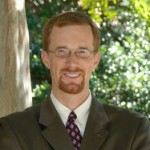
There is a stereotype about Mormons that I wish to dispel. The stereotype often propagated by outsiders is that Mormons are naïve, ignorant, and feeble-minded. Instead, we Mormons are thinkers, even critical thinkers. To be a good Mormon does not mean that one sets her or his brain aside.

In fact, intellectual freedom is built into the Book of Mormon. Found therein is chapter 30 of the book of Alma, which describes a great debate between the prophet Alma and the antichrist Korihor on the very existence of God. The chapter twice emphasizes (verses 7 and 11), that “there was no law against a man’s belief.” In other words, in Alma’s culture there was freedom of religion, and one could be an atheist like Korihor without legal consequence. Similarly, modern Mormons reject coercion of belief. Society must uphold the freedom to believe in God or not. Our eleventh Article of Faith states, “We claim the privilege of worshipping Almighty God according to the dictates of our own conscience, and allow all men [and women] the same privilege… .”

Thinking Mormons stand for principle. We are against racism. There are NO inferior races, only equal ones. We are against sexism. There is no inferior sex, because women and men are inherently equal in the eyes of God. We believe in improving the earth. We believe in democracy and freedom of speech. Based upon such principles, I am proudly a Mormon.

My religion promotes the intellect; as such it allows me to be a scientist—any form of scientist. In this context, I am a Mormon scientist with a firm commitment to the study of the physical operations of the brain and to the study of Darwinian evolution. My scientific testimony is that the earth is about 4.6 billion years old and that the universe is about 13.7 billion years old. But my bigger point is that Mormons are free to embrace these scientific facts or not.

Science is a description of the world as we find it in existence, and it is a public endeavor. The hypotheses, the methods, the data, and the conclusions are open to inspection and critique. Strong conclusions endure over time, and weak ones eventually die. Scientific findings are subject to revision, but after extensive testing any stable findings are no longer considered tentative.

Religion is a description of the world as we hope to find it. It is driven by faith, prayer, meditation, scripture, and inspiration. It too can involve experimental tests (Alma 32:27), but religious conclusions are individually driven, not normally subject to public scrutiny.

It is the job of science to show how natural processes can give a plausible account for events. The concern of science is natural mechanism. By contrast, the concern of religion is final cause—God. If the hand of God involves natural mechanism, then science indeed is a kind of religious experience—a true revealer of secrets in the laboratory or in the rocks. Scientists always seek natural mechanisms over miraculous ones. I do think theologians sometimes overplay the role of God as the proximate (immediate) explanation of both ordinary and perhaps extraordinary events.

I am skeptical by nature, a skill that has served me well in science, but maybe not always so well in religion. My religious beliefs have come the hard way—experimenting upon the word. Alma 32: 27 reads, “if ye will awake and arouse your faculties, even to an experiment upon my words, and exercise a particle of faith, … ye can give place for a portion of my words.” Please note that Alma seems to be saying that religious understanding occurs by turning on the brain (becoming awake) and doing experiments until one can accept a PORTION of God’s words. No one is asking, least of all Alma, for people to be enlightened completely and all at once. Knowledge, whether religious or scientific, takes place gradually. I appreciate that the Book of Mormon has the following passage found in Mosiah 4:27: “it is not requisite that a man should run faster than he has strength.” No one in this Church has pushed me farther than I have had strength.

*****

Beyond my interests in science, I have spent many years studying, teaching and writing on the “Mormon trail” of the nineteenth century. We modern Mormons have a lot of misconceptions about how our pioneer ancestors crossed the American plains.

We typically think of the pioneers loading up into prairie schooners (covered wagons) and riding them like cars. Our pioneer ancestors were smarter than that, because they had no desire to be jostled around like scrambled eggs. True, the wagon required a driver, but everyone else walked!! The wagons traveled at two miles per hour. Human beings can walk much faster than that speed.

While our traveling pioneer ancestors were plenty smart, they could have benefited greatly from modern medical science. For example, their nutritional and sanitary practices were quite unacceptable by modern standards.

A main dietary staple of pioneers on the Mormon trail was “hardtack,” a real hard biscuit that would crunch when chewed. It was easily preserved (far better than regular bread), and it traveled well. The pioneer diet had little variation. Occasionally pioneers ate dried or salt-soaked bacon, rice, beans, or corn meal. A piece of dried fruit would be a rare treat. Of course, the pioneers would hunt game when possible. The biggest gap in their diet was green vegetables. Scurvy was a real risk for pioneer travelers. Finally, but not least, they often drank water from wooden barrels. The water sat and stagnated, often growing the bacteria responsible for the deadly disease of cholera. The pioneers did not know that they should boil their water before drinking it.

Why have I gone through this exercise on nutrition? My basic argument is that Mormons, like all people, benefit from expanded knowledge, even expanded scholarship. I cannot be glued to past ways of thinking about nature or to those horrible “hardtack” biscuits. Knowledge grows. To be healthy I need to eat a varied diet, including salads. Also, I can avoid cholera-contaminated water, because I understand the bacterial bases of disease. I do appreciate my Mormon trail pioneer ancestors, but I have no plans to walk in their nineteenth-century pathways.

Latter-day Saints believe in continuing modern-day revelation (see Article of Faith #9). The terminology as used in the previous sentence is just a fancy religious way of saying that Mormons believe in progress.

The payroll of progress often deducts from the value of past practices. Thus, I am willing to jump on the wagon of progress, as long as that wagon is NOT a prairie schooner. Although I have much to learn from history, I am NOT beholden to relive it. In that context, I much prefer the writings of modern religious leaders at LDS.org over those found in the nineteenth-century Journal of Discourses. Similarly, I strongly prefer recent issues of Scientific American dated the past ten years to those issues dated any earlier.

Taking a modern approach is something I have long resolved.

———————————————-

Dr. Steven F. Faux received his B.A. degree in psychology from the University of California, Riverside, and his Ph.D. in experimental psychology from Brigham Young University. Post-doctoral studies were conducted at Harvard Medical School for five years. His current areas of focus include cognitive neuroscience and human evolution. Appointed in 1990, Dr. Faux is a faculty member of the Department of Psychology at Drake University (Des Moines, Iowa). He served as Chair of the department (for seven years) and also as Director of the Honors Program (for three years). He was awarded “Teacher of the Year” for the College of Arts and Sciences (1995), was named as the Levitt Teacher of the Year (2005), the highest teaching award given by Drake University, and has further been honored as a Stalnaker lecturer in recognition of his academic accomplishments. For a number of years, too, Dr. Faux taught an Honors Program course entitled “On the Mormon Trail.”

Posted February 2010

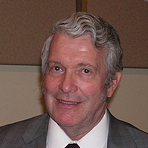
Nathan B. Oman

From Scandal to Wonder

Mormonism is a scandalous religion. The word scandal comes from the Greek term σκάνδαλον (skandalon). In the New Testament, it is translated as “stumbling block.” The central scandal of Mormonism lies in the outlandish claims it makes about its own origins: angels and visions, gold plates and miraculous translations, men claiming to speak with the authority of God. My parents are descended from nineteenth-century Mormon pioneers, and I cannot recall a time when I did not attend Mormon services and activities each week. Accordingly, I only became gradually aware of Mormonism’s scandalousness. It is not that I discovered new facts that had been hidden from me. Indeed, my parents were active participants in scholarly discussions of Mormonism, and I grew up in houses stuffed to overflowing with books on Mormon esoterica. Rather, over the course of my teens and early twenties I came to understand how fanciful the core claims of Mormonism—the ones made week in and week out in Sunday school classes and sacrament meetings—must seem to those not reared within the faith. As I acquired the capacity to see my own religion through the eyes of another, the core story of the Restoration became my stumbling block.
I have never doubted that there is a God. To be sure, I believe that there are plausible reasons for rejecting the existence of God. I studied philosophy as an undergraduate, and I can articulate the objections to the classical philosophical arguments in favor of theism. Indeed, I find many of these objections compelling. Still, try as I might, I have been unable to make atheism a viable alternative in my life. I can’t help but experience the world as a creation of God. It is not that I see a beautiful sunset, a crashing ocean, or a stunning mountain range as evidence in support of an argument whose conclusion is “There is a God.” Rather, it is that before the beauty of creation, my reflexive reaction is gratitude to God. I can only suppress this response by a conscious act of will. Unless I affirmatively remind myself to think and believe as an atheist, I believe in God. This may be no more than the work of habits instilled at an early age, an ingrained mental tick that turns naturally toward theism. I have no a priori reason for supposing that it isn’t. Nevertheless, I find myself as a believer and ultimately, I assume that the soundness of my faith will be revealed less in the story of my psychology than in the outcome of the life that my faith has led me to wager.

Unlike a life of atheism, I am quite capable of disbelieving Mormonism. Indeed, in my late teens and early twenties I had bouts of intense doubt about Joseph Smith and the Book of Mormon. While there was one night when I prayed over my doubts and felt a flood of light and fire, it would be a mistake to tell my story in terms of a dramatic resolution of my questions. Indeed, many of my questions remain and over the years I have added some new ones. What came out of my experiences, however, was a commitment to Mormonism. I gained a conviction that the core claims of divine restoration through Joseph Smith were true and, more importantly, I became convinced of the requirement that I live my life in light of that conviction. Mormonism became more than a genealogical identity or an exercise in nostalgia for a pioneer past. Rather, it is the structuring basis for how I choose to live my life.

Today, I find that angst over the scandal of Mormonism has largely disappeared from my spiritual life. I continue to have doubts and questions, but they no longer seem to have existential implications. I am a believing Mormon, and I don’t expect that to change. Rather, I find that the scandal of Mormonism has, for me, taken an ironic and even mischievous turn. Mormonism has become scandalous in the sense of being audacious, exciting, and iconoclastic. Within the largely secular world of the academy, I like to think that being a Mormon gives me a certain edginess. (At least to the extent that someone as bland as a law professor can have an edge.) With this rising confidence has come a shift in the sorts of questions that I direct at my faith. Questions such as “Was Joseph Smith a prophet?” or “Is the Book of Mormon true?” are increasingly replaced by questions such as “What does it mean for Joseph Smith to be a prophet?” or “What is the Book of Mormon saying?” Having committed myself to the truth of Mormonism, I find I am more interested in discovering its meaning than continually re-evaluating that act of commitment.

As an academic, I am a scholar of the common law. This is the vast corpus developed over the centuries by English and American judges that provides the basic rules of contract, property, and personal security. My legal studies have deepened my appreciation for Mormonism. It is not that my religion provides me with a set of neatly prepackaged answers to the endless succession of difficult choices that the law presents. It does not. Rather, studying the common law has given me a set of mental habits for thinking about my religion. Over the centuries, the common law has attracted a fair bit of intellectual tongue clicking. T.E. Holland, a nineteenth-century legal intellectual, for example, derided the common law as “chaos with a full index.” Upon closer study, however, the common law has a subtle grasp of human nature and a complex internal order that belies the critics who see it as little more than a succession of historical accidents. Out of the welter of seemingly unrelated particular cases emerges something of great usefulness and even beauty.

Mormonism is, by historical standards, a very young religion, and when compared to the elaborate and subtle intellectual traditions that one finds, for example, within Catholicism or Islam it seems disorganized and underdeveloped. For me, however, this is what lends my faith its intellectual excitement. To be a Mormon scholar is to stand on the threshold of a great adventure. Only rarely in human history is anyone vouchsafed the opportunity to be present at the birth of a new religious tradition, and while Mormonism is more than a century and a half old, that is, in historical terms, still new. I am certain, however, that Mormonism has the resources to grapple with the most difficult problems of life and mind. Like the common law, the apparently disorganized welter of Mormonism offers great intellectual opportunities to those who are willing to approach it with charity and respect. In the scriptures, teachings, and practices of the Restoration I find continents waiting to be explored.

If my first self-consciously intellectual engagement with Mormonism began with awareness of the extent to which it presented σκάνδαλον (skandalon), my current faith is defined by a different Greek word: θαυμάζω (thaumazō). Thaumazō can be translated as “wonder.” According to Aristotle all true philosophy begins in thaumazō, a sense of the marvelousness of the universe and the desire to understand it. Before reason or angst there is thaumazō, and it is this that gives rise to intellectual adventure. In light of Aristotle’s claim, I find it striking that in the Book of Mormon God refers to the latter-day restoration as “a marvelous work and a wonder.” I have a testimony of the truthfulness of the Restoration because of the witness of the Holy Spirit in answer to prayer. I have a testimony because of the blessings that living as a Latter-day Saint has brought into my life and the lives of those that I love. As a scholar, however, I also have a testimony of the Restoration because of the wonder it provokes, and I expect to spend the rest of my life and the life to come learning what it has to teach me.

——————————————

Nathan B. Oman is an associate professor at William & Mary Law School. He was born and raised in Salt Lake City, Utah. As an undergraduate, he attended Brigham Young University, where he was a Presidential Scholar, the highest academic scholarship offered by the university. After serving as a missionary in the Korea Pusan Mission of The Church of Jesus Christ of Latter-day Saints, he graduated from BYU, cum laude, with a B.A. in political science and minors in Korean and philosophy. After graduation he worked on the staff of U.S. Senator Mitch McConnell before attending Harvard Law School. While in law school he served as an editor for the Harvard Journal of Law & Public Policy, as well as a member of the articles committee of the Harvard Law Review. After graduation cum laude with his J.D., he clerked for the Honorable Morris Shepherd Arnold of the U.S. Court of Appeals for the Eighth Circuit and practiced law in Washington, D.C. before entering the academy. In addition to teaching at The College of William & Mary, he has been a visiting professor at the University of Richmond and Cornell University.

His legal scholarship has focused on the philosophy of contract law and Mormon legal history. His work has appeared in Harvard Law Review, Michigan Law Review, Georgetown Law Journal, Minnesota Law Review, and other law journals. In addition, he has published articles on Mormon history and Mormon theology in FARMS Review, Element: The Journal of the Society for Mormon Philosophy and Theology, Dialogue: A Journal of Mormon Thought, and BYU Studies. Within The Church of Jesus Christ of Latter-day Saints he has served as a young men’s president, Sunday school teacher, ward clerk, and elders’ quorum instructor.

He lives in Williamsburg, Virginia, with his wife, Heather Bennett Oman, their two children, and a friendly but psychotic Labrador retriever named Maggie.

Posted February 2010

LeGrand L. Baker

Several years ago, while I was reading a commentary on 2 Kings, I felt a kind of empathy as I watched the author struggle to make sense out of some passages he could not understand. I thought, “Wouldn’t it be wonderful if we had just one pristine document that dated back to the First Temple Period, and that we could trust it to teach us about the ancient Israelite religion?” I leaned back in my chair and responded to my own wish: “Yes, we do! First and Second Nephi, and even the entire Book of Mormon.” Not only does the book’s origin date to the time of Solomon’s Temple, but 1 Nephi is one of the most beautiful epic poems in the English language.
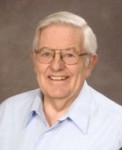
As years passed, I devoted my studies more and more to the Book of Mormon and to the life and teachings of the Prophet Joseph Smith who translated it.

Except for my father, the Prophet Joseph was the first man I ever loved. As a boy, even before I knew Joseph Smith’s history, I thrilled when I heard his name. As a teenager, I read everything I could find about him. As an adult, I have published two books about him. One, Joseph and Moroni, is a carefully documented look at the friendship that developed between those two remarkable persons. It tells how the angel taught the boy to be a prophet.

The other book, The Murder of the Mormon Prophet, is a history of the political events that swirled around the Prophet Joseph during the last years of his life. Although I never much enjoyed writing this book, I felt that out of my love for the Prophet I had to correct inaccuracies some historians were writing about him. I had heard Hugh Nibley say that when one writes, even though some might challenge one’s conclusions, the writing must be so well documented that none can challenge its scholarship. It took me thirty years to research and write the book. As is Joseph and Moroni, The Murder of the Mormon Prophet is a declaration of my testimony of the divinity of the Prophet’s call.

The more I studied the Book of Mormon, the more I realized that it is an ancient Israelite temple text. That is, every sermon in the book is founded upon the Nephite temple experience and on the Psalms that were much of the ceremonial foundation of Nephite theology. The focal point of their most important annual ceremony was Psalm 2, where the king testifies, “I will declare the decree: the Lord hath said unto me, Thou art my son; this day have I begotten thee.” That Psalm was sung as part of the ancient coronation ceremony, when the earthly king was adopted as son and heir of Jehovah and was anointed priest and king. In conjunction with the king’s anointing, every man in the congregation was symbolically adopted as a child of God and anointed as a sacral king and priest. As such, each was symbolically invited to come into the Holy of Holies where God was. The message of that Psalm runs like a golden thread through the entire Book of Mormon. King Benjamin’s sermon focuses on how to become a child of God. Abinadi’s teachings to Alma are also about what one must do to become a child of God. The high point of the Savior’s beatitudes is, “And blessed are all the peacemakers, for they shall be called [named] the children of God.” The conclusion of Moroni 7 is: “Wherefore, my beloved brethren, pray unto the Father with all the energy of heart, that ye may be filled with this love, which he hath bestowed upon all who are true followers of his Son, Jesus Christ; that ye may become the sons of God; that when he shall appear we shall be like him, for we shall see him as he is; that we may have this hope; that we may be purified even as he is pure. Amen.”

The context and power of that message is the subject of my third book, coauthored with my dear friend Stephen D. Ricks. It is called, Who Shall Ascend into the Hill of the Lord? The Psalms in Israel’s Temple Worship in the Old Testament and in the Book of Mormon. That book is our testimony that the Book of Mormon does in fact contain the fullness of the gospel of Jesus Christ.

It is my sure testimony that Joseph Smith is a prophet of God, that the Book of Mormon was written by ancient prophets and is therefore the word of God, that “a man would get nearer to God by abiding by its precepts than any other book.” (Getting nearer to God is also how one describes the purpose of the ancient temple.) Most important of all, I know that Jesus is the Christ, the Only Begotten Son of God. I have tasted of his love and know it to be the most precious of all things.

———————————————-

LeGrand L. Baker was born on his grandfather’s ranch in Boulder, Utah, then grew up on a small farm in Utah Valley. After graduating from Brigham Young University he received a master’s degree and a Ph.D. from the University of Wisconsin, Madison, in American History—concentrating on the period of the American Revolution and the writing of the Constitution. He recently retired from BYU, where he had been Curator of the Wells Freedom Archives and adjunct professor of history. At BYU he taught American Constitutional History for many years. While a graduate student at UW, he taught Church History and Doctrine in the LDS Institute, and he has taught in Education Weeks. At BYU he taught many religion classes, and especially enjoyed teaching about the Book of Mormon. He has taught Gospel Doctrine class in Sunday School for a cumulative total of well over thirty years, in every ward and branch he has lived in since he returned from an LDS mission in England.

His articles have appeared in The Improvement Era and the Ensign, and he is the author of Murder of the Mormon Prophet: Political Prelude to the Death of Joseph Smith (2006) and Joseph and Moroni: The 7 Principles Moroni Taught Joseph Smith (2007), and the coauthor, with Stephen D. Ricks, of Who Shall Ascend into the Hill of the Lord? The Psalms in Israel’s Temple Worship in the Old Testament and in the Book of Mormon (2010).

LeGrand and his wife Marilyn have four children and fourteen grandchildren.

Posted February 2010

Frank B. Salisbury

Sometime during the autumn of 1944, our double-dating foursome attended sacrament meeting in the Stratford Ward. My date was Marilyn Olson, and Frank (“Speed”) Davis’s date was Mary Thorpe. Speed and I were waiting anxiously to be called up for active duty in the United States Army Air Force—the wait being long because World War II was winding down, and the brass didn’t really know whether they needed us or not. We four often went to sacrament meetings together, but this one turned out to be a very special one. The speaker was John M. Knight, a patriarch from Sugar House Stake (next to our Highland Stake). How I wish I could remember exactly what he said, but I strongly remember the thrill that went through my body as he spoke. It had to do with God and His universe (maybe Doctrine and Covenants 88), but that is about as far as the memory goes. Especially because Speed and I were going into the service, the four of us decided that it was time for our patriarchal blessings. We called Patriarch Knight and made appointments (possible then, although he was not in our stake). On October 25th, Speed and Mary received their blessings, and a week later, on November 1st, Marilyn and I were given ours. (Speed and I were called to active duty in late January, 1945.)
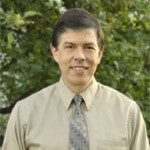
Looking back, my blessing is virtually a summary of the important parts of my life, but one theme came to mind as I thought about writing this testimony: “You shall be blessed with the gift of faith, with an understanding heart and power to distinguish between truth and error, between the genuine and the counterfeit . . . .” But the path would not be without a testing of my faith, for “Satan will seek your overthrow, and lay traps to ensnare your feet.” Furthermore: “It will require all your faith, your devotion, and integrity to combat these influences . . . .”

It is almost surprising to me that my faith has remained strong in view of the many “influences” to combat! Now, one more intellectual test comes to mind as I think about testimony; I must ask myself: Is my faith really a blessing from God, or is it just a self-fulfilling prophecy? Is the faith behind my testimony truly a blessing, or do I have such faith because John M. Knight said that I would, and I believed him?

I could argue in favor of the patriarchal blessing being truly inspired by citing other promises and their fulfillment through events that I did not control (such as my missionary call to Switzerland), but other thoughts come to mind. Looking back, my life has included many trials of faith, and I doubt that I could have met them if I were just trying to live up to my patriarchal blessing.

As a young lad, I was excited by science in general (and still am), and by my mid-teens I was headed for biology, specifically botany (thanks to the botany merit badge), with much physical science thrown in. Eventually, I ended up in plant physiology, which applies physical science to understand how plants function.

Biologists will tell you that the heart of life science is evolutionary theory: that it happened and how it happened. I’ve been deeply involved in thoughts about those matters at least since high school (reading Luther Burbank!) and a special course in evolution during a summer at the University of Utah. A visiting lady professor took us through the two most recent and important books on evolution, one by Theodosius Dobzhansky and the other by Ernst Mayr.

I hate to call evolutionary theory one of Satan’s traps, especially because it contains such a huge volume of truth! But there can be many kinds of traps, and this one seems to have been such a trap for many modern biologists who have used the doctrine (and the speculations about it) to reject God. Of course this is nothing new. I can think of scholars in the mid-1700s who took this road, and poor Charles Darwin struggled along that road all his life. His friend T. H. Huxley coined the term agnostic to express how he himself felt.

So I was becoming deeply immersed in biology and at the same time the LDS concepts of the Godhead, and pre-, present-, and post-mortal existence with its wonderful doctrine of eternal progression—based on how we use our God-given agency, all possible because of the atonement! If one is unaware of the depths of biology and/or our theology, it is easy to say that truth is truth so there should be no conflict. Well, there should be no conflict, but at the present state of our knowledge, there is plenty of conflict. Otherwise there would not be so many atheistic or at least agnostic biologists—and so many fundamentalist creationists who reject any version of evolution!

How to deal with the conflict and remain an active Latter-day Saint and an active biologist? I found it impossible to reject either evolution or LDS theology, so it was essential to seek some way to reconcile the two views. (Putting each one in its own separate pocket never worked for me.) I think this is where the blessing of faith pulled me through those early years while I was learning about what was known in both fields. Back then, I always seemed to know that there had to be an answer. I searched for it, and while I still haven’t exactly found that answer, my faith allows me to continue the search. And looking back, it seems like searching with faith is what it is all about.

Is there God in his heaven? Science has no way to really know, but “science” can make snide remarks about the question—like the cosmonaut who said that he had circled the Earth but never saw heaven. (Modern physicists may be coming around as they talk about parallel universes—where heaven might be located!)

Many biologists say there is no need for an intelligent Creator because they are convinced that the complexity of organisms can be accounted for by the operation of natural selection in populations that are struggling for existence, where those individuals most able to reproduce pass their sometimes-mutated genes on to the next generation. Natural selection can do it all, they say!

Before Darwin and Wallace proposed the natural-selection mechanism in 1858, there was already the counterargument from design. William Paley had talked about the watch and the watchmaker in his 1802 book. Many modern biologists proclaim that natural selection answers Paley’s argument (and, for that matter, Darwin made that claim), but some of us still see so much complexity in life structure and function that we are skeptical about the ultimate power of natural selection to accomplish such marvels. There were eyes and wings for Paley to contemplate, but by now there are mitochondria, chloroplasts, and even the molecular rotary motor called the ATP synthase machine, of which thousands in every living cell keep the cell alive. If there were hundreds of living complexities for Paley to cogitate about, by now there are tens of thousands for us to marvel at. (Yes, this is the intelligent-design movement, but I don’t use the term much because it implies a specific group of people whose philosophy is a little foreign to mine.)

Does biological complexity prove there is a Creator God? Well, not quite, because we simply do not know enough. Arguments on either side of the question can still be highly persuasive. And that’s where faith plays a role again. For a long time I argued that my faith was not based on biology, but that there were many other things that convinced me that there is a God and that the restored gospel is the closest we can come to learning about him and his purposes. A few powerful spiritual experiences fortified my view that testimony depended only on confirmation by the Spirit. Biology was only secondary to testimony. I wrote that idea, and I preached it in BYU Education Weeks.

When my sixteen-year-old son was killed in an automobile accident, however, that thinking was called into question. Contrary to the agonies of many others in that situation, I never wondered how a loving God could take my son. It was an accident, and that was that. But the pain was almost unbearable. And how disappointed Phillip must be to have been cut so short in his life! Suddenly, I had a comforting thought that may well be surprising to many: What if the atheists and materialists were right!? What if there were no God and no life after death? Then at death there could be no regrets. A “nothing” can have no regrets or anything else. I need not regret that I couldn’t see my son again. I would not regret anything because after death I would not be!

I remember where I was when that thought hit me, driving home alone. But the thought didn’t last for long. Down the road a ways I realized that I simply could not accept that view of the universe, comforting though it was at that moment. And it was not my religious teachings that pulled me through; it was biology! Not to mention astronomy and many other things about this complex and astounding universe. Life and the cosmos are simply too organized and complex to be without purpose. The human mind, situated in that incredible organ, the brain, which is in some way built by the divisions and specializations of a single fertilized egg, a zygote—that mind has to be part of some eternal plan. I knew it, and I know it. Thanks Father, for that patriarchal blessing of faith! And for the biological, spiritual experience or insight!

As time progressed, further ruminations again confirmed in my mind that the restored gospel was true, at least in the basic parts that our Lord wants us to understand; there are certainly many things yet to learn. Prominent in my testimony are the witnesses who took part in the restoration: Joseph, Oliver, Martin, David, Sidney (who saw God and the vision of the Glories), and others, including modern ones. And even in its yet imperfect form, LDS theology has a logic that gives it a place in the universe. At some intellectual level it makes sense. That idea was especially important to me as a young man. That’s why Patriarch Knight’s talk in sacrament meeting thrilled me to the core: The gospel was (and is) true! Knowing such truth is the most sublime kind of joy! Actually, knowing any kind of truth is a source of joy; otherwise I would not have entered science, especially biology, the science of life. And how thankful I am for that gift of faith, which allowed me to withstand the early buffetings of biology and build my understanding, religious feelings, and knowledge of biology and theology, such that it is.

By the way, after the Army Air Force and a mission to Switzerland, I married Marilyn Olson of that high school foursome. We were blessed with seven wonderful children, who are the pride of my life. But life can be complex, and today I am married to Mary Thorpe, the other female in that happy group! Life is full of unforeseen twists and turns, but knowledge and joy are still intimately united, and the restored gospel is true!

————————————————–

Frank Boyer Salisbury grew up in Springville and Salt Lake City, Utah. After a year in the Army Air Force, he served as a missionary in Switzerland. As a teenager, he led hikes and taught nature and crafts at two Scout camps, Tracy Wigwam and Camp Steiner, where he began a life-long fascination with biology in general and botany in particular—as well as all the physical sciences. B.S. and M.A. degrees in botany and biochemistry at the University of Utah were followed by a doctoral degree in plant physiology and geochemistry at the California Institute of Technology (1955). After a year (1954/55) teaching ecology, general biology, and other subjects at Pomona College (substituting for a professor on sabbatical), he spent eleven years at Colorado State University, then moved to Utah State University to become department head of the newly organized Plant Science Department in the College of Agriculture. He resigned as department chairman after four years to spend more time writing, then continued at Utah State for a total of 31 years. He retired in 1997, served with his wife in the Ohio Columbus Mission, returned to live in Salt Lake City (and serve as an ordinance worker in the Salt Lake Temple, 2002-2008), and has since been working on writing projects.

Professor Salisbury has authored or coauthored approximately three hundred items. He was a member of the editorial boards of Plant Physiology (1967–1992), BioScience (1972–1978), and the International Journal of Plant Sciences (1991-1999), and he served as Editor-in-Chief for the Americas and Pacific Rim Countries (1989–1993) and as Editor (1993–1996) of the Journal of Plant Physiology. Among his fifteen books are The Flowering Process (Oxford: Pergamon Press, 1963); The Biology of Flowering (New York: Natural History Press, 1971), for high school students; (with R.V. Parke) Vascular Plants: Form and Function (1964, 1970); (with E. J. Kormondy, T. F. Sherman, N. T. Spratt, and G. McCaine) Biology (1977); (with C. Ross) Plant Physiology (1969, 1978, 1985, 1991, besides editions in Chinese, Italian, Spanish, and other languages); (with W.A. Jensen) Botany (1972, 1984)—the latter four all published by Wadsworth, in Belmont, California. He edited Units, Symbols, and Terminology for Plant Physiology (New York: Oxford University Press, 1996), contributing four chapters of his own to it, as well as Geochemistry and the Biosphere (Santa Fe, New Mexico: Synergetic Press, 2006). The Utah UFO Display: A Biologist’s Report (Old Greenwich, Connecticut: Devin Adair) was published in 1974, and a revised and updated version is in press with Cedar Fort, in Springville, Utah. His two books on science and religion written in the context of The Church of Jesus Christ of Latter-day Saints are Truth: By Reason and By Revelation (1965) and The Creation (1976), both from Deseret Book in Salt Lake City. A book dealing with biology and creation was published in 2006: The Case for Divine Design (Springville, Utah: Horizon). This book (written for a general audience) is an examination of evolution and creation ideas, providing arguments for both sides of the debate (but concluding that there is indeed evidence for both evolution and a Creator God).

Professor Salisbury’s research projects included the physiology of flowering, plants in the alpine tundra, plant growth under snow, achieving maximum yields of crop plants in controlled environments (to provide food and oxygen for astronauts), and plant response to gravity. He led a project to grow wheat in the Russian Space Station Mir. The wheat produced more biomass than had been grown in any other space experiment, but the seed heads were empty, thanks to trace amounts of ethylene in the cabin atmosphere—which provided valuable insight for future space experiments with plants. He spent a sabbatical year (1962/63) in Tübingen, Germany, and Innsbruck, Austria, and another (1983) in Austria (as a guest professor at the University of Innsbruck) and Israel (as a Lady Davis Fellow at the Hebrew University of Jerusalem).

He received a Certificate of Merit from the Botanical Society of America in 1982, and the Founders Award from the American Society for Gravitational and Space Biology in 1994. He served on the NASA Life Sciences Advisory Committee (1986–1988) and the NASA Aerospace Medical Advisory Committee (1988–1993), and was the Chairman of the NASA Controlled Ecological Life Support System (CELSS) Discipline Working Group (1988–1992).

Professor Salisbury was married to L. Marilyn Olson, and they had seven children. He is presently married to Mary Thorpe Salisbury. He has been a semiprofessional photographer since college days, and has strong interests in skiing, hiking, swimming, and sculpture.

Posted February 2010

Jeff Lindsay

My personal journey of faith is deeply rooted in the power and reality of the Atonement of Jesus Christ. I have found peace and joy in seeking Him, and pain and frustration when I depart. I have seen that His love can heal broken hearts and shattered lives in miraculous ways. Although this mortal trek is filled with unavoidable death and suffering, compounded by the horrific cruelty of humans who abuse the precious moral agency we have from God, Christ does have power to bring us back to Him and will wipe away the tears in the end. He has power to free us from our sins and make us new, if we will accept Him and His covenants of mercy. He has power to raise us from the dead to live forever. Those glorious truths, affirmed and taught so beautifully in the Bible and Book of Mormon, make sense out of the chaos of confusion in this world. Though He seems remote and even nonsensical to the world, He is not far, and, indeed, has left evidences of His reality that can soften our hearts and give us just enough hope and faith to seek Him and experience life-changing encounters with the Divine. These evidences include the witness of the Bible and the witness of the Book of Mormon. My personal experiences with the Book of Mormon and my testimony that it truly is a miraculous witness of Jesus Christ rich in divine truth are important reasons why I believe in the Restoration of the Gospel of Jesus Christ and choose to be an active member in The Church of Jesus Christ of Latter-day Saints.
The Book of Mormon
The Book of Mormon, an ancient and miraculous witness for Jesus Christ, is among the most exciting treasures on the earth. While critics regurgitate old attacks and chant the weary mantra that there is “not a scrap of evidence for the Book of Mormon,” those willing to learn and explore have a rich journey of faith and even evidence waiting for them. Not evidence to take away the need for faith, for faith is required to accept any record as a genuine witness of God and Jesus Christ, but evidence to overcome stumbling blocks and arguments that might destroy growing faith. We don’t have all the answers and, in fact, are still in our infancy when it comes to understanding many things about the Book of Mormon. Yet after being attacked on all sides by scholars, ministers, and others for 170 years, the book today is “truer than ever” in that many puzzles have been resolved, many impressive evidences for plausibility have been found (I will simply mention the Arabian Peninsula evidence as a starting point for those interested) and theories for its non-miraculous origins increasingly rely on Joseph Smith tapping into intellectual resources and information far beyond his reach. Detailed scholarship on the lives, conversations, and writings of the many witnesses of the gold plates also make their life-long affirmation of the reality and divinity of the Book of Mormon an impressive and consistent witness for which fraud and conspiracy become utterly implausible explanations.

That ancient record of the Book of Mormon testifies more strongly now than ever that Jesus is the Christ, that man can have hope and joy in Him, and that the Son of God still speaks in our day as in days of old. The Book of Mormon is the most powerful tool on earth for convincing mortal man that Jesus is the Christ and for teaching the majesty and power of His Atonement with richness and depth that will surprise and delight those who open their hearts and minds.

An Intellectually Fulfilling Journey
I do not consider myself a scholar and frankly feel unqualified to have my views be shared on this site, though I have tried to apply scholarly tools in various parts of my career and life. I do love to learn and appreciate the contributions that real scholars both within and outside the Church have made over the centuries to elevate our understanding of life, of the Creation, and of the Gospel. I deeply believe that God intends us to explore and to use our minds in the quest to follow Him. My experience, like that of many LDS people I know and respect, has been intellectually fulfilling. Not just fulfilling, but breathtaking.

My journey in the Church has brought me great joy, peace, understanding, and intellectual satisfaction, though there are always issues that may annoy or puzzle in a Church with fallible mortals for its members and leaders. My faith, though, is not in the perfection of mortals, but in the power and wisdom of Jesus Christ, and I believe the Church is a tool created under His direction and given power from Him to bless our lives in many ways.

In spite of all the mortal flaws one might find in LDS leaders and members, in spite of the gaps in knowledge that we struggle with and have struggled with in the past, when we step back and look at what the restored Gospel offers us, there are remarkable answers that not only resolve great puzzles in theology and philosophy, but have powerful practical applications in making sense of mortal chaos. When I say that, I think of LDS teachings regarding the nature of God, the relationship between humans as spiritual sons and daughters of a real Heavenly Father, the pre-mortal existence, the purpose of mortal life, the nature of mortal agency as a genuine gift from God to His children, the role of the physical body and the Resurrection, the relationship between the Fall and the Redemption, the deep insights into the power of the Atonement of Jesus Christ to change our lives and overcome all that holds us back from joy, and the ministry to those who have died, including the mercy of God in giving an opportunity to all to hear and accept the Gospel of Christ if they will. I could also refer to the intellectually satisfying perspectives we have on the Restoration of the Gospel, including restoration of authority, principles, and covenants.

The intellectual excitement that a study of the Gospel brings can be part of a testimony. What we call a “testimony” is not self-deception based on fickle feelings, but a deep, multi-faceted perspective that integrates experience, knowledge, faith, study, and personal revelation given to the heart and mind. Heart and mind both play a role in receiving revelation from the Spirit: “I will tell you in your mind and in your heart, by the Holy Ghost, which shall come upon you and which shall dwell in your heart. Now, behold, this is the spirit of revelation…” (Doctrine and Covenants 8:2-3). This concept of personal revelation in receiving a personal “testimony” or witness of the Divine is rejected by some Christians, but they misunderstand the scriptures. It was revelation that let early Christians recognize and follow Jesus Christ as the Messiah (Matthew 16:17), and by revelation from the Spirit that mortals are able to know the things of God (1 Corinthians 2:10-14). Through our spiritual journey, there is and should be constant interaction between belief and knowledge, faith and logic, theory and experience, heart and mind, spirit and body, revelation and study. This interaction may sometimes seem like tension and discord, for we are always incomplete and many of the paradigms we use to interpret the Gospel and the world may need to be revised as we advance. We must be prepared for things we will not understand nor grasp. As we learn more through science, revelation, or other means, we may need to examine assumptions once made and recognize that they were not required by our faith at all, but were human artifacts in need of updating. Whether it is recognizing that the earth, according to the Hebrew text, may have been made over periods much longer than seven twenty-four-hour days, or recognizing that the Book of Mormon does not claim to identify the origins of all ancient Americans in the Western hemisphere and actually covers a limited geographic territory, updating assumptions about the text and replacing folk knowledge with a more detailed and careful understanding is not desperate backpedaling, but moving forward as we progress in knowledge. Progress in understanding often leads to intellectual growth and excitement.

Learning from Scholars
A recognition of the intellectual excitement that the Gospel brings became especially strong while I was in graduate school at BYU, completing a doctorate in chemical engineering. My wife and I were fortunate to be in the Provo Ninth Ward, where Dr. Hugh Nibley was member. I learned a lot from him and greatly admired the man, a true scholar. I learned much from others in that ward and elsewhere who had put forth the effort to keep up with the exciting advances in knowledge related to the Gospel, especially from the ancient world. Recommended reading from one friend would soon take my intellectual appreciation of the power and beauty of the LDS temple concept to a new level. This process was ignited by reading two books, one by a scholar of comparative religion and one by a scholar of ancient Judaism. Neither of these scholars was LDS. Mircea Eliade’s famous The Sacred and the Profane helped me understand the role of sacred space, the symbolism of several temple concepts, and the ancient importance of the great axis connecting the worlds of the living, of the dead, and the Divine. It was a whole new framework that made the temple all the more impressive. But even greater delight occurred when I read Jon Levenson’s Sinai and Zion: An Entry into the Jewish Bible (Minneapolis: Winston Press, 1985). Levenson, now a widely recognized scholar at Harvard, introduced me to ancient symbols and patterns that suddenly added vast new layers of meaning and beauty to the LDS temple. Early in the book he introduces and emphasizes the ancient “covenant formulary,” the classical pattern of covenant making from the ancient Middle East. In this pattern, only recently recognized by scholars a century after Joseph Smith’s day, ancient covenants between a king and vassals or between God and man can often be characterized with at least some of six key elements, a pattern that one can find majestically present with all six elements in the LDS temple paradigm that Joseph Smith restored. That pattern and many other elements of ancient covenant making, ancient festivals, and ancient coronation ceremonies can also be found in King Benjamin’s speech in the Book of Mormon, along with Hebraisms, chiasmus, and elements of Semitic poetry beyond anything Joseph Smith could have fabricated, in my opinion. (See King Benjamin’s Speech, ed. by John W. Welch and Stephen D. Ricks [Provo, Utah: Foundation for Ancient Research and Mormon Studies, 1998].)

I deeply appreciate the contributions that many serious scholars have made to understanding the LDS scriptures and the riches of the LDS perspective. Far too few within the Church and certainly far too few outside the Church appreciate the significant gains that have been made and the delightful treasures of understanding that are there. There is so much to learn and appreciate.

Facing Contrary Views
My faith is not blind or immune from logic. I have considered what others have said and have tried to understand and find answers. Indeed, my faith for a period was greatly shaken by some anti-Mormon writings on the Book of Abraham. But as I grappled with that issue, I found that what some might consider to be the “weak underbelly of Mormonism” is actually a source of great strength for the Church. There are delightful “bull’s eyes” in that book that are hard to account for as lucky guesses—and must be accounted for if we are to consider the big picture. Since recognizing some of the deceptive tactics used in the “slam dunk” arguments against the Book of Abraham and the impressive evidence hinting that at least something beyond Joseph Smith’s abilities is going on in that text, I have come to learn that there are numerous ancient documents not available to Joseph Smith that support many elements in the text itself. (See the impressive volume of scholarship by John A. Tvedtnes, Brian M. Hauglid, and John Gee, eds., Traditions About the Early Life of Abraham, Studies in the Book of Abraham, No. 1 [Provo: FARMS, 2001].) For those looking for understanding, there is great richness in the Book of Abraham text and much to study. As always, one looking for reasons to disbelieve can find them. In all matters of religion and even of history in general, there are usually enough unanswered questions and conundrums to allow for various conclusions.

In fact, one could say that there are good reasons for not accepting the Book of Mormon, Joseph Smith, or the claims of the Restored Gospel, just as there are good reasons for not believing in God, for rejecting Jesus Christ, and for rejecting the Bible. Yes, I mean that, and Latter-day Saints need to understand that and be more understanding of those who reject our faith, including fellow Latter-day Saints who struggle or even choose to leave. We must be cautious not to judge them too harshly or to assume that their objections are just excuses for some hidden sin. We must understand that there are plausible reasons that could lead an intelligent person sincerely seeking for truth to reject a claim that requires faith. In the day of Christ, the leading intellectuals and scholars presented long lists of arguments about why Christ was a con-man, a sinner, and a false prophet, with claims and teachings in plain violation of scripture and logic. There were sincere, intelligent people like Saul who could only see evil in the rise of the Christian cult. Others stumbled over particular doctrines, events, or practices. The same obstacles exist in our day, more than ever, and those who struggle deserve love, patience, and respect. Most need more than just affirmations of our testimonies. They need to know that there are some intellectually plausible perspectives relating to apparent and sometimes real problems in our religion and history. Don’t discount the problems they face. At least point them to resources from LDS defenders such as those at the Maxwell Institute (formerly FARMS), FAIRLDS.org, and other apologetic resources. I’ve tried to be a junior LDS apologist for several years since starting a website in 1994 and then the Mormanity blog in 2004, and have found it to be a fascinating experience. I’ve learned much from those outside and within the Church through the dialogs we’ve had. Apologetics is not meant to convert anyone or prove anything, but to help remove some of the roadblocks to faith, to help people believe that maybe there are reasons to actually read and ponder the Book of Mormon, or to seek to understand if Jesus really is the Christ. While sincere people have rejected our faith over some of the intellectual issues they see, others have received the help they need to understand that there are genuine answers to some of the questions bothering them and that there may be more to the Church than the slander they’ve heard. Intellectually satisfying answers can help people open their minds and their hearts to the real converting power that comes through the Spirit of God. That’s why apologetics matters to me and while I’ll keep trying to let people know there is more to the Gospel than they might think.

Theory Alone Is Not Enough
Studying the scriptures, early Christianity, scholarly writings, and other resources can be an exciting adventure, but it’s largely one of theory. A testimony does not always come from theory alone. Much of the growth of my own personal testimony has come from the opportunities to serve in the Church. The Church, in my view, is like a laboratory where we can put into practice what we learn in theory. Those who combine study with practice can find exciting new dimensions of faith where again both heart and mind will come into play. Some of the most dramatic experiences that have taught me about the reality of Jesus Christ and the power of His Gospel have come from home teaching, my two-year mission in Switzerland, or other service roles I have been in. When we seek to serve others and pray for their benefit, seeking guidance on what to do, the dew of personal revelation seems far more likely to descend, in my experience, than in any other scenario I can think of. I can also say that in serving in ward and stake callings, I have seen how the Church operates behind closed doors and what really motivates and drives decision making, Those experiences have shown me repeatedly that the Church is about bringing people to Jesus Christ and serving Him. The reality of the Church is a far cry from the caricature painted by its critics. They may have their reasons for condemning it, but my experiences and my studies have confirmed to my mind what the Spirit has confirmed to my heart, showing me that in spite of the fallible mortals walking its halls, the Church is a divine tool from Jesus Christ to bring us closer to Him. I do not have all the answers, but I dare to stand as a witness nonetheless that the Church of Jesus Christ has been restored, that the Book of Mormon is a divine record that testifies of Him, that Jesus Christ is real and is our Rock, our Redeemer, and our only hope for lasting joy.

———————————————-

Jeff Lindsay has a Ph.D. in chemical engineering from Brigham Young University, 1986, where he was a National Science Foundation Graduate Fellow. He graduated summa cum laude with a B.Sc. in Chemical Engineering from BYU in 1983. He was an Assistant and then Associate Professor at the Institute of Paper Science and Technology on the Georgia Tech campus (1987-1994, originally the Institute of Paper Chemistry). He worked as a researcher and eventually as Corporate Patent Strategist at Kimberly-Clark Corporation, 1994 to 2007, and since 2007 is Director of Solution Development at Innovationedge, Neenah, Wisconsin, where he works with clients in the US and abroad on innovation strategy, new product development, and intellectual property strategy. He is a registered US patent agent, an inventor with over 100 issued U.S. patents, and the lead author of the John Wiley & Sons book Conquering Innovation Fatigue, with coauthors Cheryl Perkins and Mukund Karanjikar (New York, 2009). Jeff is chair of the Forest Bioproducts Division of the American Institute of Chemical Engineers (AIChE), and a member of the Licensing Executives Society, TAPPI, and Engineers Without Borders. He blogs at Mormanity.org and InnovationFatigue.com. and his LDS-related web pages are mostly found at JeffLindsay.com. Jeff is on Twitter as @jefflindsay and @mormanity.

Jeff is married to his high-school sweetheart, Kendra Lindsay. She is a math and music teacher who is the founder of the Classical School in Appleton, Wisconsin, a public charter school with 460 students focused on academic achievement. She has a master’s degree in statistics from BYU. They are the parents of four Eagle Scouts and currently have two grandchildren.

Posted February 2010

Marilyn Arnold

[Click to read Japanese version.]

How is it that I, trained in the academic profession at one of the finest graduate schools in the country, turned out to be a believer rather than a nonbeliever? Among some academicians there is the notion that scholars are supposed to be religious skeptics, even cynics. But there is an odd phenomenon in The Church of Jesus Christ of Latter-day Saints. The more educated a Latter-day Saint is, the more likely he or she is to be active and committed in the faith.

A few years ago, at an international literature seminar, the subject of religion came up in a late-night conversation I shared with several colleagues. We sat out on the deck of a large conference lodge, gabbing, gazing at the night sky, listening to crickets, and enjoying each other’s company. One of the women in the group turned to me and said, “You’re a Mormon, aren’t you?” And I answered, “Yep, I’m a believer.” She seemed surprised that I would say openly, without qualifications, “I’m a believer,” and she confessed that she was deeply touched by my statement. “Most people don’t say that and mean it in quite the way I sense that you do,” she said. “Especially not scholars.” Then I pointed out that in the Church, I was the norm. I’m educated; I believe.

Another person spoke up and asked why the Church kept growing and thriving when it had so many “rules.” I laughed and replied that maybe it thrived because it had a lot of rules, because it wasn’t especially easy to be an active Latter-day Saint. “Don’t most if us grow to love the things for which we sacrifice?” I asked. “Don’t we come to value something that requires more of us than a warm body in a pew once a week, or once in a while? And the more we give, the more we devote our energies and resources to an institution or a cause or a person, the more it, or that person, becomes a part of us and precious to us. Any parent should know that.”

The day after that conversation on the deck, the woman who had seemed touched by my comment approached me again, “I still can’t get over it,” she said, “that you would say you were a believer right out loud—at an academic conference, no less.” She paused, then added, “I’m glad you did. It’s given me a lot to think about.” What I didn’t explain, but what she probably understood, was what I meant by describing myself as a “believer.”

Perhaps I should have said that I believe in a Godhead composed of three distinct personages—the Father, His divine Son, and the Holy Ghost. I also believe that only through Jesus Christ can we mortals be redeemed from temporal death and from spiritual death. I believe, too, that Christ restored His full Gospel of salvation, and the attendant holy priesthood and ordinances, in modern times, through a devout young prophet named Joseph Smith. And I believe that He still reveals His will through living prophets today. Outside observers tend to focus more attention on what Church members are instructed not to do rather than on what they are. I would be naïve if I pretended that all believers toe the line in all departments all the time. But what I can say is that most of us try. And most of us thank the Lord every day for the principle of repentance.

I further believe that the Bible is not the only word of God. The Book of Mormon is the most powerful testament of Jesus Christ ever published, a worthy companion to the Bible. Of the many hundreds of books I have read, none has touched me more profoundly than the Book of Mormon. Without question, it is the greatest book I have ever encountered, and it wears better than any other book. I never tire of it, and it lifts and inspires me with every reading. The near-perfect blend of poetry and truth is, in my view, simply unequaled. Coming to know that book was one of the most important and valuable things I have ever done, and it changed me forever. I made a decision one day to read the Book of Mormon in earnest, almost non-stop, from cover to cover, investing the same concentrated energy that I would invest in a complex and masterful literary text.

When I did that, the Spirit made a decisive entrance into my study of the book, and into my life, And the unprecedented spiritual lift and understanding that came to me through that experience has stayed with me ever since. I love the book with all my heart and soul, and I continue to read and study it with wonder and thanksgiving. In a word, my heart was changed. I experienced a precious and priceless spiritual rebirth that to this day enriches my life in indescribable ways.

I testify with every ounce of my being that the Book of Mormon is true, every word of it. I testify that the Lord would not have preserved this record if it were not true, nor would He have given it to one who was not His chosen vessel, to bring it forth in a later day for the re-establishment of His Church on earth. The two are inseparable: The Church of Jesus Christ of Latter-day Saints and the Book of Mormon.

————————————————-

Marilyn Arnold is an emeritus professor of English at Brigham Young University, where she also served as dean of Graduate Studies, assistant to former university president Dallin H. Oaks, and director of the Center for the Study of Christian Values in Literature. She was awarded a Ph.D. in American literature from the University of Wisconsin-Madison and went on to receive various research awards, teaching awards, and lectureships. An internationally recognized scholar on the writings of Willa Cather, and a widely published writer and speaker in academic circles, she has devoted herself since her retirement to, among other things, writing novels that grow out of her spiritual roots and her deep attachment to the desert country of southern Utah. An avid hiker, skier, and tennis player, Professor Arnold continued her association with BYU for many years through the Women’s Research Institute. In the St. George area she has served for several years on the Dixie State College Board of Trustees.

Her numerous publications include Willa Cather: A Reference Guide (1986); Willa Cather’s Short Fiction (1986); with John March, A Reader’s Companion to the Fiction of Willa Cather (1993); Desert Song (1998); Song of Hope (1999); Sky Full of Ribbons (2000); Fields of Clover (2002); with Bonnie Ballif-Spanvill and Kristen Tracy, A Chorus for Peace: A Global Anthology of Poetry by Women (2002); The Classmates (2003); and Minding Mama (2004); as well as Sweet Is the Word: Reflections on the Book of Mormon—Its Narrative, Teachings, and People (1996), Pure Love: Readings on Sixteen Enduring Virtues (1997), and, with Maurine Ozment and Lisa Farr, Sacred Hymns of the Book of Mormon (2009).

See, additionally, Professor Arnold’s chapter in Expressions of Faith: Testimonies of Latter-day Saint Scholars.

Posted February 2010

Robert Cundick

I was born in 1926 in Salt Lake City, Utah. My childhood and youth were spent twelve miles south in the small town of Sandy, the end of the streetcar line. My parents were both devout Mormons, as were the majority of the town’s residents. I grew up conforming to every standard and requirement of our faith.

Our chapel (ward house) was located just a block away from our modest home. It was the center of both my religious and social life. As I was musically talented, it was the means of furthering my keyboard skill, as I served as the organist for our weekly church services.

My musical development continued during my school days as I played in bands and orchestras. In fact, I began saving for my future university studies with my income as a jazz band pianist. I was also fortunate to be accepted as the only scholarship student of famed Tabernacle organist Alexander Schreiner.

World War II began during my high school years. Upon graduation I enlisted in the Merchant Marines. After my release I immediately enrolled as a freshman music major at the University of Utah. I married my organ student, Charlotte (Cholly) Clark, who lived in my Sandy ward. We moved to a modest house on Douglas Street just west of the “U” campus, which we were able to purchase because of my combined income from teaching organ and piano students and serving as organist for the First Unitarian Church and Temple B’nai Israel. These positions were my first direct exposure to religions that were different from my own. This experience strengthened, rather than weakened, my belief in the validity of Mormonism, despite my failure to serve a mission because of my marriage and resultant young family.

Since my Merchant Marine service was not covered by the G.I. Bill of Rights, I paid for my entire university education without scholarship aid. Thus, of necessity, I remained at the University of Utah to gain my B.F.A., M.F.A., and eventual Ph.D. in musical composition under the tutelage of internationally famous composer Leroy J. Robertson. As a result, my ability to compose has remained an important part of my life to this day.

My minor subject was philosophy. The staff of that department included several liberal Mormons. They made every effort to make me question my heretofore strong testimony. After ridiculing my belief in Joseph Smith’s story of the First Vision and resultant Restoration of the Gospel, including my Temple endowments, one even denied the divinity of Jesus Christ. I was aghast.

I found immediate reassurance of the validity of my life-guiding faith in the Restoration from close friends Lowell Bennion, at the U. of U. Institute of Religion, and Hugh Nibley, at BYU. In response to my query concerning the validity of the Book of Mormon, Nibley replied: “I considered every possible explanation of this fantastic story, only to find one and only one answer: Joseph Smith’s account is true”! My faith emerged from this profound challenge confirmed and even more certain.

After graduation I joined the music faculty at BYU in 1957. While there, I became a member of the Sunday School General Board, whose members included such superb intellectual luminaries as Henry Eyring, Thomas Parmley, Bertrand Harrison, Victor Cline, and others. Their friendship and professional excellence formed an overpowering counter-balance to my previous experience with the liberal philosophers at the U. of U.

In a faith-centered discussion with Truman Madsen, I remarked that I believed that we were all seekers for a sign. The membership and testimony of outstanding individuals in the Restored Church form a significant part of my own testimony. “That’s right,” he said. I recalled our attendance at a pre-school-year, full faculty devotional in the old Smith Building auditorium at BYU. President Hugh B. Brown was the last speaker. He concluded his address with these never-to-be-forgotten words: “He lives, He lives! To say more would betray a sacred trust.” We all exited the building quietly as we realized the profound implication of what he had fervently proclaimed.

In 1962, my family and I and were called by President David O. McKay to go to London, England, where I served as organist at the new Hyde Park Chapel. This stimulating experience filled the void in my professional credentials, which had previously been limited to the state of Utah. It was most encouraging to find that I could “hold my own” in a musical culture of highest excellence. I appeared in concert at St. Paul’s Cathedral and King’s College, Cambridge, in addition to my daily recitals at Hyde Park Chapel and a BBC broadcast.

At the conclusion of our two year mission in 1964, we returned to Provo, where I resumed my teaching and compositional activity at BYU until I was abruptly called to serve as an organist at Temple Square in Salt Lake City. Thus began a twenty-seven-year period of faith promoting experience with the Tabernacle Choir and the central church leadership in music-related activities. While in England I had formed a strong friendship with N. Eldon Tanner, who was serving as President of the West European Mission. He counseled me, saying: “There is no limit to the good that you can accomplish during your life if you are not concerned with who gets the credit.” Thus, with similar friendships of prophets, apostles and others in key positions who called me by my first name, I was able to work quietly behind the scenes to spearhead many much-needed projects of significance during my years at Temple Square. Generally, these activities were not within my area of stewardship or job description. As service to others was and is my goal, I opened every window of opportunity that arose. Following my retirement in 1991, my wife and I were called to serve as Directors of Hosting at the BYU Center in Jerusalem, Israel. My opportunities to spearhead new needed projects of significance continued unabated, and have continued to do so to the present day. I believe that all such opportunities for service are inspired. I was in “the right place at the right time” to receive spiritual guidance.

Now, at age 83, I find that my own testimony grows even stronger through retrospection of my life, starting as a simple, uneducated boy, living in a small Utah town, through a rich life of service and achievement, to the present day when, as a noted professional violinist from New York wistfully remarked, “You’ve had it all!” as he contrasted his world-centered life with my spiritually-centered life.

God the Father, His Son Jesus Christ, and the Restored Gospel are as real, natural, and crucial to me as the very air that I breathe. The opportunity to be in His actual presence with my dearest wife and eternal companion, along with our priceless family, to join our loved ones who await us there, is a gift of divine love beyond description and fullest comprehension. I so testify.

—————————————————–

Robert Cundick was born in 1926 in Salt Lake City, Utah. He is perhaps best known for his twenty-seven years as Mormon Tabernacle organist on Temple Square in Salt Lake City. His principal teacher was Alexander Schreiner. He has composed in choral, orchestral, and chamber genres. Robert Cundick studied composition with the late American composer Leroy Robertson. In 1955, he received his Ph.D. and began teaching at the University of Utah. He later taught at Brigham Young University. As Tabernacle organist emeritus, he continues to devote much of his time to composition and other music-related activities. He is a former National Councilor of the American Guild of Organists.

Posted February 2010

Armand L. Mauss

Having entered recently the ninth decade of my mortal existence, I have settled on relatively few intellectual and spiritual positions on which I am prepared to testify with some degree of certainty. During my lifetime, I have come to be much more impressed with what I don’t know for sure—or wonder if even I can know—than with what now seems definite to me. Much of what I can’t claim to know is routinely included in the testimonies of other Latter-day Saints, whose conventional lists of what seems true and certain to them leaves me baffled at their apparent spiritual attainments. Yet I have learned that I have no right to gainsay the individual spiritual experiences of others, as I hope they will not gainsay mine, different (and fewer) though mine might be. Later I will set forth those relatively few matters to which I wish to testify, but first I shall review some of the life experiences that have contributed to my testimony.

I am a third-generation Mormon. Three of my four grandparents were converts, who joined the Church and came to Utah from European families late in the nineteenth century. The fourth grandparent was the daughter of a British convert who had joined the Church in Lincolnshire during the 1850s. They were all plain folks who sacrificed much for their faith but eventually prospered in Utah. I was born in what is now Murray, Utah, but my father moved us to California when I was but three years old, so my upbringing was entirely in California, most of it in the San Francisco East Bay area. We were a part of the great Mormon diaspora that started in the 1920s, when the new wards and stakes that were gradually established in “gentile” cities during those years became outposts and havens of Church influence and support. Growing up Mormon there meant dealing with a certain amount of latent prejudice, which made me a little defensive about my religion at times, but kept me close to my LDS ward community.

I benefited greatly from a rich public school education in Oakland, from which I accepted a mission call well before my nineteenth birthday in 1947. As with so many others, my mission had an extraordinarily formative influence, most especially because of an adventurous (not to say radical!) policy by a new mission president, S. Dilworth Young, who sent us out in the rural areas of New England “without purse or scrip” (except during the winter months). With my various companions, I walked the highways and byways of rural New Hampshire, Vermont, and much of eastern Massachusetts (before suburbanization had set in there). It was not an experience for the faint of heart, but eventually we learned to depend on the Lord for our food and lodging (through the hospitality of the locals), since there was nowhere else to turn. From that early experience, I developed a relationship with Deity that has served me well since then, even though I have not always cultivated it as I should have done.

I had been home from my mission only a matter of weeks when my father, Vinal G. Mauss, and my mother, Ethel Lind Mauss, were called to preside over the Church’s mission in Japan (then still under post-war military occupation), a mission which at that time (1949) covered all of the Far East. I had been planning to enter UC Berkeley as a freshman that fall, but I quickly elected instead to accompany the rest of my family to Japan. There is not space here for a systematic account of my varied experiences during almost five years in Japan, but together they had even a greater formative influence on my young life than my mission had had. The most important of these experiences in Japan (in no particular order) were (1) regular exposure to (but limited involvement in) the LDS missionary effort in Japan; (2) a modest conversance with the Japanese language and culture; (3) an education at Sophia University, a distinguished Jesuit institution in Tokyo, culminating in a bachelor’s degree with a major in the history of the Far East; (4) induction into the U. S. Air Force for training and service in military intelligence (without leaving Japan); (5) callings as president of a large LDS servicemen’s branch in Tokyo, and then as president of the servicemen’s district covering all of central Honshu (the main island of Japan); and (6) courtship and marriage to Ruth E. Hathaway, also there in military service, and the subsequent birth of our first two children (who thus were “made in Japan”!). The rest of our eight children were born after we returned to the U. S.

From my church service in Japan, I learned about the limitations of trying to apply standard operating procedures from church headquarters to exotic locales and idiosyncratic situations, and the consequent need for seeking divine guidance in improvising appropriately. My constant association with the local Japanese (we lived in a Japanese neighborhood), and with the Saints and investigators among them, added rich personal experiences to my formal academic studies of Japan, but I never felt that I achieved an adequate understanding of that culture. In my encounters with the Japanese, in and out of the Church, I did, however, confront for the first time a culture in which “one true religion” was an alien concept, and I was forced to consider seriously the constructive and functional aspects of relativity in both morality and religion.

On the other hand, my studies and associations with the Jesuits provided a powerful counterweight to relativity, for in those days (before Vatican Council II), the Jesuits took seriously their charge as defenders of the faith, and to them there was only one true faith—as, indeed, there was to me. Since my education at Sophia required a minor in philosophy (largely theological philosophy), I gradually gained some skill in turning the Jesuits’ arguments against them as I defended my “true faith” against their “true faith.” Yet we shared the premise that to God truth was absolute, not relative. The priests and I developed a grudging mutual admiration through our occasional arguments, and I grew to appreciate their gentle and pastoral mentorship, even as they seemed usually to get the better of the arguments. What I mainly internalized from my Jesuit teachers was their commitment to defending the faith, though for me, of course, it would be the LDS faith.

I returned with my wife and growing family to the U. S. early in 1954, and after finishing my military obligation in Spokane, Washington, we moved back to the California Bay Area, this time to Walnut Creek. In 1955, I entered graduate school at UC Berkeley for twelve years of on-and-off matriculation that eventually earned me a teaching credential for secondary schools, a master’s degree in history, and a Ph.D. in sociology. The process was prolonged and interspersed with a 5-year stint in a bishopric and a series of full-time teaching jobs to support my family. I never had occasion to regret the academic hiatus for service in the bishopric, but it did slow me down. At length I finished my graduate work and took a position on the sociology faculty at Utah State University. After two years, I found it professionally advantageous to move to Washington State University (Pullman), where for 30 years I was a professor of sociology and religious studies, retiring in 1999 to settle with my wife in southern California among many children, grandchildren, and great-grandchildren. In retirement, and on an adjunct basis since 2005, I have been teaching periodically in the new Mormon Studies program at the School of Religion of the Claremont Graduate University to help establish the Howard W. Hunter Chair of Mormon Studies, eventually (and initially) occupied by Richard L. Bushman.

My academic career has both nourished and modified the conceptions I had as a young man about God, about truth, about the Church, about revelation, and about religion more generally. Of course, much of my academic research and writing had nothing to do with religion but rather with standard theoretical and empirical issues in sociology. Yet the study of religious movements and institutions, especially the LDS Church, has occupied my scholarship increasingly since mid-career. Combining my disciplinary training in both history and sociology, I have sought to understand the transformation of the Latter-day Saints from an ephemeral new movement to an institutionalized and bureaucratic modern organization. Not everything involved in the rise and development of a religious movement can reasonably be attributed to Deity—not even in the case of the Latter-day Saints. So, in the panorama of LDS history, what can be attributed to the influence and revelation from God and what to human agency? How can we tell? If prophets are fallible and imperfect like other mortals, how can we know when their teachings might contain error? My research and study in LDS history have convinced me that prophets and other leaders do make mistakes, sometimes serious mistakes, which can affect the flow of church history. Yet, it is not my job to identify their mistakes, and I am more likely to avoid mistakes of my own if I follow their counsel.

More than any other academic disciplines, the social sciences implicitly (and sometimes explicitly) challenge the basic premises of belief in God and in an afterlife. It is not because these disciplines are deliberately perverse, but only because of their operative epistemology and their usual dependence on empirical positivism. Such challenges rarely arise, if ever, for Latter-day Saints in disciplines such as business, engineering, medicine, dentistry, law, or even history, which do not, by their very nature, offer alternative explanations for the creation, purpose, and destiny of humankind, as the social sciences do. When survey data are repeatedly cited to show that belief in God (and/or in the gospel) is positively correlated with advanced education among Latter-day Saints, we don’t see the whole picture; for if we break down that finding by discipline or academic specialty, we see a great deal of variation in that correlation : It is far less true for LDS students and professionals in the social sciences than for those in the other, more applied, disciplines. I have often observed that one does not have to be an atheist to be a sociologist—but it helps!

A fundamental philosophical premise of sociology (and other social sciences) is that truth and knowledge are, by definition, socially constructed. That is, every society, community, and even every family constructs its own understanding of what is true and real through an ongoing process of negotiation across generations and between reference groups. As individuals, the only truth and reality we learn in growing up is what has been constructed in our families, communities, and nations before we were born. To a social scientist, this process of social construction is the only operative source of truth and knowledge available to us. There might be, in the mind of God, or in the ultimate design of the universe, a final, ontological, absolute reality, but such is not available to mere mortals, and thus much depends ultimately upon faith. The only reality we have by which to live our lives is socially constructed. During our lifetimes, it will be subject to change, so it is relative not only to culture but also to time and place. So what does a good Mormon boy do with that perspective on truth and reality? I understand and accept it as a sociologist and as an analyst of human experience and behavior, even when I study Latter-day Saints (especially across changing generational cultures in the LDS experience).

Yet as an individual trying to live my life successfully, I must choose, among all the known socially constructed philosophies and frameworks, one which I will embrace above all others to inform my aspirations, my behavior, and my ultimate commitments. I have chosen the gospel of Christ, as I understand it, as the construction of reality on which I will depend for my destiny. Thus, I am a believer because I choose to believe, and not because I have been convinced either by powerful and sophisticated arguments or by special spiritual or otherworldly experiences. I will readily concede that the depth and power of my testimony wax and wane. When nourished by faith-promoting experiences, or by my own special efforts, my testimony approaches certainty. At the other extreme, I fall back pretty much on the old Pascalian Wager. Always, though, even in its weakest moments, it calls on me to keep trying, to be better than I am, to return by faith to my incessant quest for understanding what this mortal existence means for me to do and to be.

I have been active in the Church all my life. My cherished partner Ruth and I brought up eight children in the LDS faith, including five sons who served missions for the Church in their youth. Like many others born in the faith, I began my adult life with a naïve and simplistic understanding of the gospel (which I sometimes recall with a certain nostalgia). However, I gradually learned, throughout my education and my career, how to assimilate the new ideas I encountered, whether in religion or in academia, and, in the process, how to adapt those ideas to my own evolving philosophy of life and faith. Thus, unlike many others, I never experienced any great spiritual lows or highs—that is, no great crisis of faith nor any specific epiphany that altered the course of my life. It’s just been one long process of thinking and rethinking—a process still going on. One element in that process that has inoculated me to some extent against disillusionment is the distinction that I have always made between the Church and the gospel.

While I concur with the late Eugene England about the value of church life in teaching us how to live the gospel, I have found it helpful to keep gospel and Church separate intellectually. Whatever divine agency has been involved in the founding and history of the Church, it seems to me that in its actual operation the Church has functioned pretty much like the other human institutions that I have studied as a sociologist. The human element in the history and the daily life of the Church seems more conspicuous to me than the divine element. My expectations for the behavior of church members and leaders are thus correspondingly modest, so I am rarely disappointed. Like certain other scholars who have studied our Church and its policies from an academic perspective, I have sometimes been misunderstood and unfairly criticized, both by members and by leaders, but I have also had several occasions to appreciate the quiet support and recognition of other church leaders, both local and general. As a sometime local priesthood leader myself, I know that our leaders are only human like the rest of us. Their performance can range from the sublime to the deplorable, but most of them, most of the time, are trying hard to serve us and our Father to the best of their judgment and ability. I honor them for that; and though at times I might see undesirable consequences deriving from their policies, I claim no authority to correct them.

I said at the beginning of this essay that my quest has led me to a relatively few matters about which I feel I can testify on the basis of my own study, experience, meditation, and prayer. Perhaps it is time now to conclude by setting these forth:

First, I testify that there is a personal God, for it seems to me that I have felt Him (or His emissaries) remonstrating with me at times and attempting (if not always succeeding) to direct me away from my own vain, carnal, and foolish inclinations. I see Him as anthropomorphic, since alternative conceptions (such as some kind of Cosmic Force) seem to reduce God to a non-person, not so different from other natural forces like gravity. To me, that is akin to atheism. I have encountered a variety of doctrines about Deity, both within the LDS Church and without, including doctrines about Divine Parents, male and female. I have no certainty or other basis for testifying about any of those other doctrines, though I am open to further understanding. At this stage, I testify only to the existence and power of Deity in my own life.

Second, I testify to the divinity and power of the mission and teachings of Jesus of Nazareth, the Christ. The Atonement is the most sublime and elevating means for human redemption and ultimate perfection that I have encountered in any religious or philosophical system. I do not understand how the Atonement actually operates in the divine, cosmic economy, but I do know that it is efficacious for me only to the extent that I strive to live in a constant state of repentance; and that’s all I need to know. Mystical or sophisticated theological explanations about the Atonement really add nothing to that basic understanding.

Third, I testify to the authenticity of the calling and mission of Joseph Smith as a prophet of God. I revere him for what he sacrificed and accomplished in pursuit of that calling, despite what seem to me a great many human flaws and errors in his life. He remains a paradox to me in many ways. Knowing, as I do, how the official accounts of his visions and revelations were produced, I cannot testify to any particulars in those accounts. I am convinced, however, that he had periodic encounters with Deity, and that these provided the basis for his recorded revelations. His contributions to the religious and spiritual fulfillment of millions of people will guarantee a revered place for him in the history of humankind. The Book of Mormon is a unique tour de force in the history of religion. I know the official account of how it was produced, but I don’t understand it, and I have no explanation of my own apart from the Prophet’s own account. I find the alternative explanations, proffered by non-believers, harder to believe than the angel stories, so I’ll go with those for now. Such a revered academic intellectual as Harold Bloom attributes Joseph’s accomplishments, including the Book of Mormon, to “genius.” To me, that’s as close as a secular explanation can come to “divine origin,” to which I would testify.

Fourth, I testify that the Church of Jesus Christ of Latter-day Saints was established by divine intervention in human affairs. This was not the only such divine intervention, but I do not understand these interventions as routine, or even frequent. My understanding of God’s usual modus operandi is that He initiates events and institutions in human history by revelation and authorizes key human agents to carry them forward. From then on, these institutions typically become increasingly human, the more so to the extent that these agents rely upon human wisdom as opposed to divine inspiration. Those two sources of wisdom are not, of course, mutually exclusive. Ideally they go together. For example, modern general authorities have periodically hired professional consulting firms for advice, or have consulted professional scholars inside and outside the Church, either explicitly or at least by reading their published work. I myself served as such a consultant to the LDS Research Information Division in the 1970s and 1980s, and to the Presiding Bishopric in the 1960s, even before there was a RID. Yet, after all such consultations, it remains the ultimate responsibility of the priesthood leaders themselves to seek divine guidance in whatever uses they make of such human products.

Beyond these four fundamentals, I can testify also to the efficacy of certain specific gospel teachings in my own personal life. For example, I know that my life has been more successful economically, socially, and professionally during periods when I have paid a full tithe than when I have not. However, in most respects, and most of the time, I accept on faith the teachings of the Church as I understand them, without being able to claim any specific intellectual or spiritual bases for that acceptance. As a social scientist, I am impatient with theological discourses and arguments, which can rarely, if ever, be tested or falsified, and must therefore remain speculative and of dubious significance from an eternal perspective. I am much more interested in the empirical evidence for the relationship between theology (or doctrine) and actual behavior (which can, of course, be reciprocally causative). I know and respect the work of LDS philosophers and theologians, past and contemporary, and theirs is a legitimate preoccupation, but it is not mine. I have enough difficulty just trying to understand why I think and act as I do, without investigating the theological musings of others. May God bless us all in our efforts to gain greater understanding of our purpose and destiny as His children.

——————————————————–

Armand L. Mauss received a bachelor’s degree in history and Asian studies from Sophia University in Tokyo, Japan, and both a master’s degree in history and a Ph.D. in sociology from the University of California, Berkeley.

Dr. Mauss retired in 1999 as Professor Emeritus of Sociology and Religious Studies at Washington State University. Since 2005, he has taught courses in Mormon Studies as adjunct faculty in the School of Religion of the Claremont Graduate University. During his career, he has also been a visiting professor at the University of California, Santa Barbara; the University of Calgary; and the University of Lethbridge; and Visiting College Fellow in Religious Studies at Durham University in the UK.

He is author, co-author, or editor of several books, including Neither White nor Black: Mormon Scholars Confront the Race Issue in a Universal Church, with Lester E. Bush (Signature Books, 1984); The Angel and the Beehive: The Mormon Struggle with Assimilation (University of Illinois Press, 1994); and All Abraham’s Children: Changing Mormon Conceptions of Race and Lineage (University of Illinois Press, 2003), the latter two of which were awarded best book prizes by the Mormon History Association. He is also author of a hundred or so articles and reviews in professional sociological journals and in the journals of LDS scholarship, including Dialogue: A Journal of Mormon Thought; the Journal of Mormon History, BYU Studies (reviews), and Sunstone Magazine.

His distinctions in academia during his career more generally include editorship of the Journal for the Scientific Study of Religion, the main national journal in the social-science study of religion; election to the governing councils of the Society for the Scientific Study of Religion and of the Association for the Sociology of Religion; and presidential candidate for those same societies. His distinctions in the realm of Mormon studies include twenty years on various advisory boards for Dialogue and then on the Dialogue Board of Directors,1999-2008 (four of them as chairman); selection as Redd Center lecturer at BYU (November 1982); two prizes for best articles in social literature from Dialogue (1972 and 1996); and, from the Mormon History Association, two best book awards (best first book in 1994 and best book in 2003), as well as MHA’s 1994 Grace Fort Arrington Award for historical excellence.

In his formal Church callings, Dr. Mauss served a mission to the New England States, 1947-1949, and since then he has served as a branch president and district president (overseas), a bishop’s counselor, a high priest group leader, a Gospel Doctrine teacher, and, more recently as a member of his stake’s Public Affairs Council. In less formal and more ancillary capacities, he has served the Church as a professional consultant to the Presiding Bishop’s Office (1964-1968) and to the Research Information Division (periodically during the 1970s and 1980s). Since 2005, he has also been active on the LDS Council for Mormon Studies at the School of Religion, Claremont Graduate University. He has been married to the former Ruth E. Hathaway for 59 years. They are the parents of eight children, 21 grandchildren, and five great-grandchildren.

Posted February 2010

  • « Go to Previous Page
  • Page 1
  • Interim pages omitted …
  • Page 37
  • Page 38
  • Page 39
  • Page 40
  • Page 41
  • Interim pages omitted …
  • Page 44
  • Go to Next Page »

Primary Sidebar

Faithful Study Resources for Come, Follow Me

Subscribe to Blog

Enter your email address:

Subscribe to Podcast

Podcast icon
Subscribe to podcast in iTunes
Subscribe to podcast elsewhere
Listen with FAIR app
Android app on Google Play Download on the App Store

Pages

  • Blog Guidelines

FAIR Latest

  • The Atoning Love of Jesus Christ
  • Come, Follow Me with FAIR – Genesis 42–50 – Part 2 – Autumn Dickson
  • Come, Follow Me with FAIR – Genesis 42–50 – Jennifer Roach Lees
  • Come, Follow Me with FAIR – Genesis 42–50 – Part 1 – Autumn Dickson
  • Lovest Thou Me?

Blog Categories

Recent Comments

  • Sister Truelove on Humble Souls at Altars Kneel
  • Antonio Moreno on Forsake Not Your Own Mercy
  • Wayne on Come, Follow Me with FAIR – Genesis 12–17; Abraham 1–2 – Part 1 – Autumn Dickson
  • Tanya Alltop on Be Reconciled to God 
  • Darci Larson on Adorned with the Virtue of Temperance

Archives

Follow Us

  • Facebook
  • Twitter
  • iTunes
  • YouTube
Android app on Google Play Download on the App Store

Footer

FairMormon Logo

FAIR is a non-profit organization dedicated to providing well-documented answers to criticisms of the doctrine, practice, and history of The Church of Jesus Christ of Latter-day Saints.

Donate to FAIR

We are a volunteer organization. We invite you to give back.

Donate Now

Site Footer