• Skip to primary navigation
  • Skip to main content
  • Skip to primary sidebar
  • Skip to footer

FAIR

  • Find Answers
  • Blog
  • Media & Apps
  • Conference
  • Bookstore
  • Archive
  • About
  • Get Involved
  • Search

Testimonies

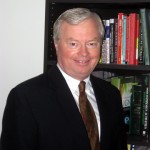
R. Jerome Anderson

Conversion Story and Testimony

In the 1990s, I lived and worked in Russia. Elder Charles A. Didier of the Seventy presided over a district conference in Moscow during that time. In the Sunday morning session, he asked how many members were converted by the Spirit as compared with the number who were converted by intellect. By far the majority of hands were raised when he asked how many were converted by the Spirit. I raised my hand when Elder Didier asked how many were converted by intellect.
I did so because my initial testimony came through the intellect as I read a pamphlet entitled Which Church Is Right? by Elder Mark E. Petersen of the Quorum of the Twelve. On a cold February day in 1964, when I was 14 years old, two LDS missionaries knocked on the door of our home in western Pennsylvania, a few miles north of Pittsburgh. Because of the bitter cold, my mother felt sorry for them and invited them into the house. The elders left some church literature, including a copy of the Book of Mormon and Elder Petersen’s pamphlet. When I came home from school I began looking through the material. As I read Elder Petersen’s pamphlet, I was struck by its logic: the Saviour lived on the earth; He called twelve apostles to lead his church; He gave them authority; they organized and led his church; eventually they died1 and the authority was thus lost; only a restoration of the power they held could permit the re-establishment of the Lord’s church; that restoration took place when Peter, James, and John appeared to Joseph Smith and Oliver Cowdery and conferred on them the Melchizedek Priesthood and ordained them apostles. I was convinced on that reading. To me, that explanation made perfect sense.

My mother was a faithful member of a small Disciples of Christ congregation. She taught five-year-old children in the church’s Primary organization and served as a deaconess. The church’s motto was “where the Bible speaks, we speak; where the Bible is silent, we are silent.” My mother took me to church with her. The church had excellent Sunday School teachers who taught me the stories of both the Old and New Testaments.

When I was about eleven or twelve years of age, the church had a membership drive. A friend in my Sunday School class had been baptized. I asked him what the requirements were for baptism. He said he simply had to acknowledge Jesus Christ as his Saviour. I thought to myself “I know Jesus Christ is my Saviour. I can be baptized.” Accordingly, one Sunday morning, as the hymn of invitation was sung at the close of the service, I went forward and sat in the first pew, signalling my intention to be baptized. I was then baptized by immersion in the font behind the pulpit at the front of the church.

Thus, when presented with Elder Petersen’s pamphlet, I had a testimony of the Saviour. I knew the stories of His ministry. I knew who the early apostles were and what they did. I knew of Peter’s visit to Cornelius and of the missionary journeys of Paul. I knew that Paul had organized congregations of the church in Galatia, Corinth, Thessalonica, and Ephesus. And it was obvious to me, once Elder Petersen explained it, that when the apostles died, the authority to lead the church died with them.

My mother was not pleased with my acceptance of Mormonism. My mother’s church was very important to her and, except for a few family members and friends, was the center of her social life. I was her only child and my father had died several years before. My mother’s hope was that I would become a minister. Leaving her church was not what she had planned for me.

However, by September of that year, when I turned 15, my mother had reluctantly decided to join the LDS church with me to keep us together. An October baptism was planned. A few weeks before the baptism my mother and I went to a home of a family in the Christian Church to tell them of our plans to join the LDS church. The husband and father in the family was an elder in the church, a choir member, and a member of the church’s governing board. After my mother announced our intention to leave the Christian Church to become Mormons, emphasizing that it was my idea, not hers, the father took me into the dining room. I recall being in the dining room with him for four hours, from 8 PM until midnight. During that time he discussed every scripture he knew that might dissuade me from my decision. He was an excellent scriptorian, and we discussed concepts and verses, with neither of us convincing the other. Finally, close to midnight, he showed me Revelation 22:18. In his interpretation, the Book of Mormon could not be true because it improperly added to God’s word. I had to admit I had no answer to that. My mother and I then went home. During the evening, she changed her mind and decided she would not join the church and that I would not do so either.

At lunchtime the next day, instead of eating, I went home from school and called the missionaries. Elder Gordon L. Bown answered the phone. I told him what had happened the previous evening. I asked him how to deal with the issue raised by Revelation 22:18. Elder Bown told me to get my Bible and open it to Deuteronomy 4:2 and read it. I did so. Then Elder Bown asked me “Can God add to God’s word?” Of course I knew the answer to that question. That ended any doubt or hesitation on my part regarding the truthfulness of the Gospel.

Following this, my mother forbade me to have any contact with the church, and to wait until I was 21 to be baptized. I could not endure six years with no contact with church members, so I surreptitiously contacted the missionaries and a few church members for another year before the missionaries told me I had to tell my mother what I was doing. I did so, and it hurt her deeply. Fortunately, her pastor had been a convert himself, and he counselled her to allow me to attend the church of my choice, saying it was better for me to attend a different church than reject religion altogether. On that basis, my mother permitted me to attend church on Sundays only. She did not, however, permit me to be baptized. I attended church without being baptized until July, 1968. By that time I had completed my freshman year at a nearby Presbyterian college and, through the intervention of Norman R. Bowen, then president of the Eastern Atlantic States Mission, was permitted by my mother to transfer to Brigham Young University. Knowing that I would leave for Utah in September, my mother permitted me to be baptized. After more than four years since my initial reading of Elder Petersen’s pamphlet and my realization The Church of Jesus Christ of Latter-day Saints was true, I was baptized and confirmed a member of the Church.

Even at age 14, when I read Elder Petersen’s short pamphlet, I was convinced by its logic. That is why I raised my hand as I did when Elder Didier asked his questions. Even to this day, logic plays a strong part in my testimony. Having been reared a Protestant, surrounded by Catholics, now living among Muslims and having an understanding of Judaism from reading the Scriptures and current events, I am convinced that either the Gospel of Jesus Christ as taught by The Church of Jesus Christ of Latter-Day Saints is true, or there is no God at all. The Gospel as taught by the Church is the only logically consistent religion on earth. It is this, or nothing.

This is not to say that the LDS Church has the answer to every question. It does not, nor does it make that claim. We still have not found “the generation where Gods began to be.” (Hymns, number 284.) But every system of philosophy eventually reaches a set of unanswered questions. Each person must decide the set of unanswered questions with which he or she is willing to live. Yes, Mormonism has unanswered questions. But I would rather live with Mormonism’s unanswered questions than any other set of unanswered questions.2

The Spirit, however, is also very important to me. One summer, during the time our family lived in Kentucky, the Lexington Kentucky Stake participated in a large LDS scout camp in Ohio. Leaders from the General Young Men Presidency attended the camp and told us of a study conducted by the Church. The study found that, among young people in the Church, the greatest predictor of future Church activity was the individual spiritual experiences of the young people. In spite of the role of intellect in my testimony, I believe the survey’s finding regarding spiritual experiences is valid. As important as the intellectual side of my testimony is, it is experiences with the Spirit that sustain me.

There are times I feel, as Lehi did, that I am a “visionary man” (1 Nephi 5). I felt the Spirit strongly as I gave the opening prayer in the first discussion with the missionaries. I received my patriarchal blessing while I attended BYU. When I explained to the patriarch that I wished to work overseas, he told me, even before he laid his hands on my head, I was “inspired of the Lord to choose that calling.” The first time I saw Margery, the young woman who became my wife, I knew I would marry her. I saw her across the room in the Pittsburgh 2nd Ward Chapel and I knew, almost instantly, she was to be my wife. Many years later, when Margery was considering graduate school, she asked for a blessing. At the time we lived in Frankfort, Kentucky. When I laid my hands on her head, I saw in my mind a building. I knew the building was in Lexington. I did not remember seeing that building previously. Yet I blessed her that she would go to the University of Kentucky to complete her doctorate, and I knew it would be in that building. The next time I went to Lexington, I saw the building. It was the Chandler Medical Center on the UK campus, and Margery earned her Ph.D. there.

I have had similar experiences when I have blessed my children or laid my hands on the heads of others to give blessings of comfort and counsel or to administer in times of sickness. Thoughts and feelings have come to me that I knew I did not and could not have formulated myself. They had to come from a higher source.

One of the most moving experiences with the Spirit came in December 2007, when I attended Fast Meeting in the Newcastle-upon-Tyne Ward of the Sunderland, England Stake. I felt impressed to bear my testimony. Many of the members who had spoken had said they were converts. I stood and had the overwhelming impression in the pre-mortal existence I had chosen to be a convert, to be a member of Elder Pieper’s “first generation.”3 When I sat down I cried. I could not help it. The Spirit was too strong.

There are many times I have asked myself “Do I know it is true?” “Do I really know there was a Man called Jesus Christ who was conceived by God the Father and who wrought an infinite atonement for the sins of the world?” And then I remember the words of Elder Neal A. Maxwell, who told us that scientists do not begin each experiment by proving anew the formula for water. They know that; it is a given. It does not need to be proven each time.

So it is with my testimony. Doctrine and Covenants 46: 12 states: “To some it is given by the Holy Ghost to know that Jesus Christ is the Son of God, and that he was crucified for the sins of the world.” When I was just a boy, before I knew anything of Mormonism, I knew Jesus was the Christ and my Saviour. I walked to the front of the First Christian Church in Beaver, Pennsylvania, and made my confession of faith and was baptized. I knew it then, and I knew it later when the fullness of the Gospel was presented to me. I do not have to prove, over and over again, that these things are true. My mother may have died without joining The Church of Jesus Christ of Latter-Day Saints, but she took me to a church in which I could learn the fundamental truth of the reality of the Saviour and His atonement, and when the fullness was presented to me, the Spirit, as well as my intellect, confirmed to me that it was true.

Life in some ways has become progressively more difficult. The challenges have sometimes been discouraging. Sometimes it is difficult to “feel” (1 Nephi 17:45) what I know to be true. It has been especially difficult to sustain a strong, unwavering testimony during weeks and months away from organized units of the Church as I have worked in remote parts of the world. It has been difficult to go for extended periods without a calling in the Church and the resultant spiritual strength one receives from rendering service to others. I have sustained my testimony by a detailed study of the Book of Mormon and by frequent listening to the hymns of the restoration. Doing that brings the Spirit back, and eases the doubts and disappointments.

A counsellor in the Pittsburgh Pennsylvania Stake Presidency, Dale Weight, used to conclude his talks by saying “I know, through experiences too sacred to relate, the Gospel is true.” So it is with me. I know, through sacred experiences from my youth forward, that the restored Gospel of Jesus Christ is true. God our Father lives, Jesus is the Christ, Joseph Smith was the first prophet of the last dispensation and the Book of Mormon is the word of God. This is my testimony, and I bear it in the name of Jesus Christ, amen.

——–

Notes:

1 Except John, who was translated.
2 Reid R. Reading, a long-time member of the Pittsburgh First Ward and my comparative politics professor at Pitt, once said “We all need to learn to live with a little dissonance.” I can accept Mormonism’s “dissonance.”
3 Elder Paul B. Pieper, October General Conference, 2006.

—————————————

R. Jerome Anderson is a development assistance consultant, specializing in real estate law reform, property tax reform, fiscal decentralization, land policy, land registration, and land information systems. He is also a visiting fellow in the Global Urban Research Unit of the School of Architecture, Planning and Landscape at Newcastle University (UK). Prior to his development career, he practiced real estate, mineral, and municipal law for ten years and for five years was a geographic information systems consultant and project manager.

Brother Anderson earned undergraduate and master’s degrees at the University of Pittsburgh, his law degree at Duquesne University, and his Ph.D. at Newcastle University (UK). He has published in the fields of urban economic development, land law reform, property taxation, and land registration. He has worked in Afghanistan, Iraq, Saudi Arabia, Jordan, Egypt, Russia, Armenia, Azerbaijan, Bosnia and Herzegovina, Kosovo, Albania, Bénin, and Sudan.

Posted January 2010

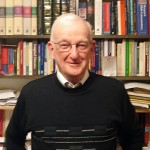
Blake T. Ostler

My background is in law and in analytic philosophy, with an emphasis in the philosophy of religion. Virtually every challenge to belief is earnestly explored at length in the discipline of the philosophy of religion. This field of study presents every conceivable argument both for and against faith. I have been blessed to be exposed to numerous perspectives and the remarkable faith of some of the great minds in human history. I have felt a challenge throughout my life to honestly explore, challenge, and assess my beliefs. It is rare for a philosopher to claim to know anything. The realm of what we can honestly say we know is extremely small. Nevertheless, I know what I have experienced. I know that God has spoken in my heart of the truthfulness of the revelations of Jesus Christ to Joseph Smith.
The knowledge that my heart responds with knowing joy to the revelations and scriptures given through Joseph Smith has freed me to explore all challenges with a simple faith. This knowledge has defined my life since I was fourteen years of age. In about July of 1972, I saw a classic film about Brigham Young on TV that starred Tyrone Power, Vincent Price as Joseph Smith, and Dean Jagger as Brigham Young. Toward the end of the film, the saints have arrived in the Salt Lake Valley and nearly starved to death because they lacked food. When spring arrives they plant and await an early harvest. Just as the saints are about to harvest their crops necessary to make it through the next winter, a hoard of crickets descends from the hills and begins devouring their crops – you know the rest of the story. However, in the film, just before the seagulls arrive, Brigham is so despondent that he concludes that he must confess that he is really just a false prophet. Of course the seagulls arrive just in the nick of time to save him from this damning confession.

As a fourteen-year-old I figured that, if Brigham Young thought he was a false prophet, it followed that he was in fact a false prophet. I didn’t want to spend my life pursuing a religion that was led by false prophets. So I felt that I had better find out what was going on with Brigham Young. I asked my Mother where I could find more information about Brigham Young and she suggested that I could find what I was looking for in the Doctrine and Covenants. I commenced my search for answers with urgency. I decided that I would read ten chapters a day. As I began to read I discovered that there wasn’t much about Brigham in the Doctrine and Covenants. However, it occurred to me that Joseph Smith also had to know whether he was a prophet or just making it all up. Indeed, I didn’t see how he could possibly be self-deceived into thinking he was a prophet if he wasn’t, because he knew full well whether he had gold plates that he received from an angel or was just lying about it. So I began to read, and searched with an intensity I had never known in my admittedly inexperienced and short life.

As I read, I scrutinized carefully every chapter, page, sentence, and word to see if it could answer my question: Was Joseph Smith a prophet? I remember vividly, as I read, coming to the conclusion that, though Joseph Smith knew whether he was a prophet, I couldn’t know. I would have to get inside his head to know what he knew—and he was dead, and that knowledge died with him. Nevertheless, I also felt a sense of deep remorse for things that I had done. I remember kneeling and asking for forgiveness—and the response was so unexpected to me. I knew that I was forgiven. I felt as if someone had taken a powerful soap and cleaned me from the inside out. I felt as light as light itself.

I continued to read to see if somehow I could figure out whether Joseph Smith had tipped his hand in some detectable way. About the sixth or seventh day, as I read, my heart began to burn, to radiate, to vibrate with life, to expand with knowing, to enlighten my mind with knowledge—the deepest sense of knowing that I had ever experienced. It was the most joyful and meaningful experience I had ever known to that point in my life. As I sat on the side of my bed reading, I knew that I knew. I had found an answer in a way that I had not anticipated and, indeed, found knowledge within my heart that at some level I didn’t know already resided there.

About a year after that experience, I had another that convinced me that listening to the subtle stirrings of the still small voice is a matter of life and death—and very vital and real. I was waiting outside the gymnasium at the old Jordan High School. I was a sophomore at the time. As I sat there, a young women that I didn’t know well at all came and sat beside me. Without thinking and without hesitating, I turned to her and said: “I know that this will sound strange, but I have a message for you. God wants you to stop thinking about suicide.” Her eyes became great big and her mouth dropped in stunned surprise. She gasped, “How did you know?” In truth, I was also stunned that I had just said what I did. This young lady was a very pretty senior to whom I don’t remember having spoken previously. If I had thought about it before speaking, I would never have opened my mouth. I would have been completely intimidated. On any other day, I would have been too self-conscious to open my mouth. She explained to me that she had laid out on her bed stand an entire bottle of sleeping pills that she planned to go home to take right after the assembly we were about to attend.

The next morning she ran out of the building to meet me as I approached the school steps. She ran up to me and hugged me, crying. I’ll never forget what she said as she sobbed: “I didn’t know that God cared about me. Thank you.” To this day I’m stunned that somehow I knew God had a message for that marvelous young lady. We became friends after that experience. But the truth is that I don’t know how I knew—I just did.

At the beginning of my sophomore year I decided that I would prove that the theory of evolution must be wrong for a research paper in my English class. I read everything I could find, including specifically Joseph Fielding Smith’s Man, His Origin and Destiny. As he explained it, if evolution is true, then there was no fall; if there was no fall, then there is no need for atonement; and, if there is no atonement, then there is no Christ. I knew that the gospel is true and thus concluded that evolution had to be false. In many ways, this experience of searching to disprove evolution would define my path in life. As I researched to disprove evolution, I became convinced that evolution is the best explanation for the evidence that is overwhelming. Everything in paleontology, geology, zoology, and biology made little sense unless I accepted some form of the theory of evolution. Instead of writing a refutation of evolution, I wrote a paper about the relationship between intelligence and hominid cranial evolution. I concluded that cranial size or capacity had no real relation to intelligence, but morphite dendrology or the complexity of dendrites in the endocasts of hominid cranial fossils was the real determinant of intelligence.

However, my conclusion presented a very trying dilemma and a good deal of cognitive dissonance for me. How could the gospel be true as I knew in my heart and yet evolution also be true? I began to research that issue at length. I spent almost every waking hour researching, reading, thinking, and pondering the implications of these issues. I learned of the historical discussion among the Latter-day prophets and apostles and their disagreements and disputations regarding this issue. I admit that it is an issue that I continue to research. But I have long since concluded that Genesis was written in a pre-scientific culture that had a very different world view than any that I could truly entertain as an explanation for the evolution of life. However, I have also learned about ancient Near Eastern cultures and the role that the creation stories played in their explanation of human experience. The opening chapters of Genesis are among the most valuable in the scriptures for me. I continue to see myself and the reality of the human condition and our relationship to God and the gods powerfully revealed in these chapters.

Shortly after or during this same time, I also learned that Joseph Smith and others had made numerous changes to the revelations of the Doctrine and Covenants and the Book of Mormon in editions subsequent to the first editions. Because of my love for the Doctrine and Covenants, I began to ponder how that could be. How could Joseph Smith alter a revelation he had received? It was during this time that I first formulated what I have come to the call the co-creative view of revelation. I knew from my own experience that I had impressions, revelations, and insights that spoke in my mind and that I could formulate in many different ways. In fact, the fullness of the knowledge could almost never be expressed adequately and, as I grew in capacity, I was better able to express even what I had learned in earlier revelations. I figured it was the same for Joseph and the translation of the Book of Mormon.

Shortly after I began to work on this issue, I also discovered that Egyptologists had raised a number of issues about the translation of the Book of Abraham. This issue became my next project. I read all of the Improvement Era articles and everything I could about what is known as the 1912 Bishop Spaulding attack on the Book of Abraham. I was surprised how open the Mormons had been to publishing even the attacks on the Book of Abraham in full in the Improvement Era. Frankly, I didn’t find much helpful to respond to the points made by the Egyptologists. I also read all of Hugh Nibley’s articles in the Improvement Era that responded largely to the issues raised when facsimile number 1 was found by Aziz Atiya in the Metropolitan Museum of Art in New York City in 1966.

This issue presented more challenges than I had capacity to answer. I began to study Egyptian as best I could, using Budge’s introduction to Egyptian. It is clear that the papyri that Joseph Smith possessed were not written by “Abraham’s own hand,” because they date from around 200 B.C. to 100 A.D.—at least 1,500 years after Abraham lived. However, since I had experienced the truth of Joseph Smith’s calling as a prophet, I knew that I didn’t have to become an Egyptologist to retain my integrity. I still have questions about the Book of Abraham, but I have come to a few firm conclusions. First, the parallels between the first century pseudepigraphic work known as the Apocalypse of Abraham and the Book of Abraham are so compelling that they require some explanation. Joseph Smith could not have known about this pseudepigraphic work. Second, it is rather clear that Joseph Smith is not translating the facsimiles in any common sense. Rather, he is explaining their meaning in relation to the story of Abraham and using them to illustrate Abraham’s visions in a manner very similar to another first century pseudepigraphic work known as the Testament of Abraham, which also used vignettes from the Book of the Dead to illustrate Abraham’s visions. I have provisionally concluded that these vignettes from the Book of the Dead, or the vignettes from the Book of Breathings that Joseph Smith had, are recognized as derivative of Abraham’s visions by both these Jewish writers and Joseph Smith through revelation. Third, I have also studied the ancient Near Eastern sources and creation stories. As I read the Book of Abraham, it reflects an ancient Near Eastern knowledge of the council of the gods and their activity in creating the world.

I have also studied the history of Joseph Smith. While I was still in high school I became aware of what many regard as thorny issues regarding Joseph Smith. I have continued to study as much as I can for greater insight. Joseph’s practice of polygamy has not been the challenge for me that it is for many. Nevertheless, I have explored as much as I can because it is so easy to engage in judgment of Joseph Smith regarding this issue. The knee-jerk reaction is that Joseph was just a sexual lech who used his position of power to persuade others to give up their daughters for sexual escapades. However, the practices of sealing, of being sealed to other men’s wives, of being married to many older women, and of asking for other men’s wives only to use the challenge as a test of faith is much more complex than such a facile judgment—or judgmentalness—can explain. I have concluded that there is a great deal that we must surmise and that there is a great deal that we just cannot know because of the intimacy and sacredness of these relationships. These were, after all, almost puritanical women committed to faith in God who consented to marry Joseph Smith.

However, there are a few provisional conclusions that I have reached. The fact that we cannot verify any descendants of Joseph Smith except those begotten through his wife Emma strongly challenges the notion that Joseph Smith was simply using plural marriage as a means to satisfy his sexual lust. Second, and far more importantly, polygamy was and is intended to be a test that stretched those who confronted the request to engage in it beyond anything they could imagine. It also stretches and challenges us. Indeed, even today it challenges us to give up the preconceived notion that we can pigeonhole God into our matrix of judgments. The practice of plural marriage obliterates the notion that God must fit into our categories of right and wrong and that we can know all about God without God revealing himself to us as he is, rather than as we think he must be.

————————————–

Blake T. Ostler is a partner in the Salt Lake City law firm of Thompson Ostler & Olsen. Mr. Ostler concentrates his practice in the areas of civil litigation, education law, special education, employment law, construction law, intellectual property litigation, and real property law.

In 1981, Mr. Ostler graduated from Brigham Young University with a Bachelor of Arts in Philosophy (summa cum laude) and a Bachelor of Science in Psychobiology (magna cum laude). He then graduated in 1985 as a William Leary Scholar from the University of Utah with a Juris Doctorate (cum laude).

Blake Ostler has published widely on Mormon philosophy in professional academic philosophy journals such as Religious Studies (Oxford, England), the International Journal for the Philosophy of Religion (Netherlands), and Element: The Journal of the Society for Mormon Philosophy and Theology, as well as in the Mormon scholarly publications Dialogue: A Journal of Mormon Thought, Sunstone, BYU Studies, and FARMS Review. He is the author of the multi-volume series Exploring Mormon Thought—The Attributes of God (2001), The Problems of Theism and the Love of God (2006), and Of God and Gods (2008)—published by Kofford Books. He has also taught philosophy at Brigham Young University as an adjunct instructor.

Mr. Ostler is fluent in Italian and French, conversant in Swedish and Spanish, and conducts scholarly research in German, Egyptian, Hebrew, Greek, and Latin. He loves spending time with his wife and five children, and (to a qualitative lesser extent) fly fishing, playing racquetball, four wheeling, and watching BYU football.

Posted January 2010.

Richard Lyman Bushman

Reasons

Behold, that which you hear is as the voice of one crying in the wilderness–in the wilderness, because you cannot see him–my voice, because my voice is Spirit; my Spirit is truth; truth abideth and hath no end; and if it be in you it shall abound. (Doctrine and Covenants 88:66)

I was born in Salt Lake City to parents who had been married in the temple. I am a fifth-generation Mormon on both my mother’s and father’s sides. I had ancestors who knew Joseph Smith in Nauvoo. All of my immediate ancestors were in Utah before the railroad was completed in 1869. By the official definition, that makes them all pioneers. I have never wandered even for a few months from church activity. I have held many positions in our basically lay-run church from scoutmaster to bishop, stake president, and patriarch. You could say that I was born Mormon and will likely die Mormon.

Why then am I always interrogating my own faith? I am always asking why I believe. What do my beliefs mean? How can they be explained and justified? I have sympathy for questioners because I am a questioner too. Settled as faith is in my own life, I understand why people doubt. I see in questioning something deeply religious as well as deeply human. A Doctrine and Covenants scripture speaks of “the voice of one crying in the wilderness” and then goes on to explain itself: “in the wilderness because you cannot see him.” That is the human plight. We live in a wilderness where we cannot see God. We must believe in him in his absence. The scripture goes on to further explicate itself by explaining “my voice, because my voice is Spirit” [88:66]. We live in a wilderness and listen for the voice of a person we cannot see, coming not by sound waves to our ears but as a spirit voice. If that is our situation, as it truly seems to be, how can we not sympathize with bewildered questioners? Under those circumstances, I too question God.

My answers to my own questions are partially philosophical but mostly practical. During my first semester in the School of Religion at Claremont Graduate University, one of my new colleagues invited me to lunch. We had barely given our orders when he asked quite kindly: how is it that you believe in Mormonism? He did not elaborate but I could imagine him thinking of our belief in angels, revelation to ordinary men, gold plates and ancient records, and all the other extraordinary parts of Mormon history and religion. As a Catholic theologian and philosopher of religion, he probably was looking for an answer along the lines a Thomist would give–something reasoned and philosophical. Not stopping to think, I told him I remained a Mormon because when I followed my religion I became the kind of man I want to be. No philosophy, no evidence, nothing elaborate. Simply the personal reality that my religion helps me get better. That’s what it comes down to in the crunch. The scripture verse explains what will happen when you listen to the spirit speaking in the wilderness: “My Spirit is truth; truth abideth and hath no end; and if it be in you it shall abound.” For me that promise becomes a simple matter of fact: when I hearken to the spirit, truth seems to abound in me as the verse promises. By that I mean not just truth as propositions about the world but truth as in the true and highest way to live.

Staying in that practical vein, I sometimes tote up a few specifics about the church. What makes it work? While I am a constant inquirer, I like being a Mormon. I like its gritty, down-to-earth feel, and when I stop to think about it, lots of good things come to mind. Here are a few from a recent list.

1. I like what I call the basic discipline. By that I refer to the commandments Mormons are taught to live by. We don’t drink alcohol or smoke or drink tea and coffee. We stay away from extramarital sex. We pay tithing, exacting from ourselves ten percent of our income for use by the church. We give freely of our time to church work, as much as twenty hours a week for bishops. When I explained all this to a group of students at Columbia, one responded, “Ugh, you don’t have much fun.” But think of all the misery the world would be spared if no one got drunk, if no one cheated on wives or husbands, if no one smoked. Think of all the good that would be brought about if everyone gave ten percent of his or her income to charitable causes. We would live in a happier, saner, healthier, more orderly and elevating world if everyone lived like Mormons. I want all my children to follow this basic discipline for their own good here and now, apart from any eternal benefits, and so far as I can tell, the Mormons do better than anyone in making this discipline stick. Children are much more likely to adopt these good habits when everyone in the congregation lives by the rules. The whole village teaches the kids how to live clean and upright lives. For me, that is a big plus.

2. Mormon theology casts life as a time of learning. We are here to gain experience, Joseph Smith was told. Mormons hold to the standard Christian idea of a Fall and Redemption through Christ; the great object of life is indeed to cross the cavernous gulf that separates us from God. But we are put in this situation for a good reason: to learn about good and evil in a fallen world. In the long run we will be much better off for having struggled with evil. God has not cast us aside because he is furious with our rebellious behavior. The fall was fortunate. It introduced us into a phase of existence where we can become as the gods, knowing good and evil. This frame of mind goes back to a time before earth life when God came among the spirits and offered to be their God and to teach them how to attain eternal life—that is, a life like His. Mormons think of God as their ally, teaching and cheering them on as they struggle to make the best of their lives in this fallen state. The atonement of Christ enables us with his grace to battle with sin and eventually return to the divine presence. I like this because even in moments of despair we can understand our agonies as part of a plan of learning. Mormons rarely blame God for the evil in the world. We knew beforehand from our instruction as spirits that life would be hard and extremely risky. But we chose to come here anyway, and we have the faith that, by placing our trust in God and helping one another, we can pull through. I think that is about as good as you can do by way of explanation for what Mircea Eliade has called the horror of history.

3. Going back to the scripture about “my voice is Spirit,” Mormon theology instills a belief in heavenly guidance. Mormons take very seriously scriptures about “the Spirit of truth, which proceedeth from the Father” (John 16:26). We believe that anyone who will open his or her mind and heart can hear the voice of the spirit and learn from it. Mormons teach their little children to “listen to the Spirit.” In all our church callings, in making life decisions, in seeking to comprehend, in choosing good over evil, we listen to that inner voice. Experienced Mormons are almost always listening with a “third ear” for promptings about how best to proceed. Mormon theology generously extends this good spirit to people everywhere—to the whole world, for that matter. The spirit of Christ, we believe, bathes all of his creation and all who will pause to listen can receive its inspiration for any good cause—for art, for invention, for good works, for peace-making, for scholarly inquiry, for just management of a family or a corporation. The spirit of Christ—his voice—can be heard by all who will listen. Again from personal experience, I find this doctrine works and I recommend it to everyone. Creative and good people act under this principle anyway, as their accounts amply testify, but this doctrine recommends that quite ordinary people seek the same intuitive guidance for their lives. In the church it leads to the idea that our brothers and sisters can speak under inspiration; our bishops can give us righteous counsel; Sunday School teachers can be guides to our children; in a sense we can all be God-speakers to one another. A revelation to Joseph Smith before the Church came into existence sums up the doctrine:

And now, verily, verily, I say unto thee, put your trust in that Spirit which leadeth to do good–yea, to do justly, to walk humbly, and to judge righteously; and this is my Spirit.
Verily, verily, I say unto you, I will impart unto you of my Spirit which shall enlighten your mind, which shall fill your soul with joy. (Doctrine and Covenants 11:12-13)

4. In my experience, Mormons know better than anyone how to work together for good causes. A bishop can make a few phone calls to members of the ward and turn out scores of people to clean the chapel, help with a flood emergency, paint a house, help at a shelter. At Claremont Graduate University, where I teach, the Mormon students have formed an association, and they get the same results. Put on a party, arrange a lecture, hold a conference—they can do it because they have been habituated from their youth up to working together. The absence of a paid clergy strengthens the cooperative impulse. Every Mormon knows the bishop is working day and night without pay for ward members. The least they can do is reciprocate. From the time they are teenagers, Mormon children are called to hold positions as class leaders or home teachers. They grow up knowing cooperative ventures are a basic part of life. Their effectiveness is more than habit. It results from a kind of simple selflessness. You don’t engage in church service to promote yourself. The idea is to get a job done, not to buck for an advancement or an increase in salary. You try to overcome obstacles and solve problems. I believe that because Mormons know what it means to work for the good of the order, they can be useful in many settings, not just at church. Because of their willingness and selflessness, they can be useful in advancing good causes in schools and universities, businesses and sports teams, and virtually every other site where people try to work together.

5. Coming at last to something slightly more philosophical, I admire the empiricism of Mormon belief. By that I mean that it is open to empirical testing, using concrete evidence. I once gave a talk to a group of evangelicals about confirming one’s beliefs by a spiritual witness. I thought we could make common cause in arguing for the validity of “self evidence”—that is, evidence about reality coming from within the self, such as the testimony of the Spirit of God. Some in the room, though, would have none of this. They insisted that their faith was grounded in reason and evidence. It was, they said, “falsifiable”—that is, you could devise an empirical test to prove their beliefs true or false. The example one of them gave (a famous one, I later learned) was that if someone discovered the bones of Jesus, proving his body had never been resurrected, this believer would give up his Christian faith. I was so surprised that I had no answer to give on the spot, but I began to wonder if Christian archeologists were diligently searching for the bones of Jesus, and, if the bones were supposedly discovered, how would they determine that they were authentically his? I realized afterwards that the bones business was not a research agenda. It was an example of what falsifiability meant. Actually digging to locate the bones—that is, to really put the Resurrection to an empirical test—was not the point. All that mattered was the theoretical possibility. I contrasted this with the massive scholarly endeavor to prove or disprove the historical authenticity of the Book of Mormon. Hundreds of books and articles have been written arguing one way or the other. Scores of scholars labor away on the question. The issue is hotly debated. Tons of evidence are brought to bear. As with so many historical questions, a definitive answer may never emerge, but the search is not merely a theoretical possibility. It fuels a scholarly industry. Mormons are in the anomalous position of saying that a spiritual testimony, not empirical proof, undergirds their faith, while all the while furiously working to dig up evidence in support of the Book of Mormon. This is practical empiricism as contrasted to the theoretical empiricism of the bones of Jesus argument. I do not anticipate a conclusive, open-and-shut case in favor of the Book of Mormon, but I like the willingness of Mormon scholars to pursue the question. They are actively putting their faith on the line. They take the risk of failing. I admire their courage, and furthermore their arguments must be taken seriously.

A list like this can be expanded. Items doubtless will be added and subtracted as the years go by. This list and all future such lists are a product of my incessant self-questioning. What does my faith mean? What do I truly believe, and how can I explain it? Over time, these inquiries will doubtless lead to new prospects and broader perspectives. In my case, the interrogation all goes on under an umbrella of faith. I am looking to support what I know in my heart is good and true. Others may have had their confidence shaken and don’t know which way to turn—towards faith or away from it. I cannot say that they must swim toward the shore where I stand, or perish; the truth is that we have to find our own footing in our search for understanding. I can only say that Mormonism has served me well and that I believe most people would be better off if they followed the Mormon way.

—————————————-

Richard Lyman Bushman is Gouverneur Morris Professor of History Emeritus at Columbia University in New York City, and currently occupies the Howard W. Hunter Chair of Mormon Studies at Claremont Graduate University in California.

Educated at Harvard College, where he graduated Phi Beta Kappa and received his A.B. magna cum laude, Professor Bushman went on to earn an A.M. in history and a Ph.D. in the history of American civilization from Harvard University. Before joining the faculty at Columbia University, he taught at Brigham Young University, Brown University, Boston University, Harvard University (as a visiting professor), and the University of Delaware (where he chaired the Department of History 1977-1983, served as coordinator of the History of American Civilization Program 1984-1989, and held the H. Rodney Sharp Professorship of History).

Dr. Bushman’s first book, From Puritan to Yankee: Character and the Social Order in Connecticut, 1690-1765 (Cambridge, Mass.: Harvard University Press, 1967), was awarded the Bancroft and Phi Alpha Theta prizes. He has also published Joseph Smith and the Beginnings of Mormonism (Urbana, Illinois: University of Illinois Press, 1984), which was a History Book Club selection in 1985 and won the Evans Biography Award; King and People in Provincial Massachusetts (Chapel Hill, N. C.: University of North Carolina Press, for the Institute of Early American History and Culture, 1985); The Refinement of America: Persons, Houses, Cities (New York: Alfred A. Knopf, 1992), which was a selection of both the History Book Club and the Book of the Month Club; (with Claudia Bushman) Mormons in America (New York: Oxford University Press, 1999), which was republished in a new edition as Building the Kingdom of God (New York: Oxford University Press, 2001); Believing History: Latter-day Saint Essays, ed. Reid L. Neilson and Jed Woodworth (New York: Columbia University Press, 2004); Joseph Smith: Rough Stone Rolling (New York: Alfred A. Knopf, 2005), which garnered the Best Biography Award from the Association of Mormon Letters, the Evans Biography Award, and the Best Book Award from the Mormon History Association; On the Road with Joseph Smith: An Author’s Diary (New York: Mormon Artists Group Press, 2006); and Mormonism: A Very Short Introduction (New York: Oxford University Press, 2008). In addition, he has edited The Great Awakening: Documents on the Revival of Religion, 1740-1745 (New York: Athenaeum, for the Institute of Early American History and Culture, 1970), and Uprooted Americans: Essays to Honor Oscar Handlin (Boston and Toronto: Little, Brown and Co., 1979). He has also written numerous scholarly articles in both early American history and Mormon studies, and his current research focuses on “Farmers in the Production of the Nation: Family Agriculture in Eighteenth-Century America.”

Among his many honors, Professor Bushman has been an Interdisciplinary Fellow in History and Psychology at Brown University and an R. Stanton Avery Distinguished Fellow at the Huntington Library, and has won the Regents Fellowship of the Smithsonian Institution, as well as a John Simon Guggenheim Fellowship. He has been a Fellow of the American Council of Learned Societies, the Charles Warren Center, the National Endowment for the Humanities, the Center for Advanced Studies at the University of Delaware, the National Humanities Center, and the Shelby Cullom Davis Center at Princeton University. He has received the Presidential Teaching Award from Columbia University and the E. Harold Hugo Memorial Book Prize of the Old Sturbridge Village Research Library Society.

Professor Bushman has served as president of the Mormon History Association, 1985-1986; as a member of the Board of Editors of the Encyclopedia of Mormonism, 1989-1991; as a Council Member for the Institute of Early American History and Culture, 1982-1984 and 1989-1992; as president of the Society for Historians of the Early American Republic, 1997-1998; and chaired the Advisory Committee to the Joseph Fielding Smith Institute for Latter-day Saint History at Brigham Young University, 1999-2004. He is currently Co-General Editor for the Joseph Smith Papers project of the History Department of the Church of Jesus Christ of Latter-day Saints, and chairs the Board of Directors of the Mormon Scholars Foundation.

See, additionally, Professor Bushman’s chapter in Expressions of Faith: Testimonies of Latter-day Saint Scholars.

Published January 2010

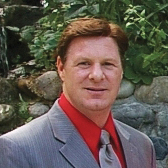
Lawrence L. Poulsen

My testimony of the Gospel of Jesus Christ is very simple.
I know that there is a living God and that He is the father of our spirits, that we lived with him in a pre-mortal existence, that we are here in this mortal existence by choice, and that we have the opportunity to return to live with him as immortal and eternal beings.

I know that Jesus Christ lives, that he suffered in Gethsemane for my sins and disobediences, and that through this suffering and atonement I have the opportunity to be forgiven and receive eternal life, that he died on the cross and was resurrected and that said act provided me and all humanity with immortality.

I know that the Holy Ghost, the comforter, is the third member of the Godhead and that through his power and gifts I can receive personal revelation that gives me direction not only for my spiritual needs but in my endeavors in the secular and scientific arena.

I cannot think of any time in my life when I have not known these things to be true. I am a fifth-generation member of the Church of Jesus Christ of Latter Day Saints and have never doubted the truth of the restoration of the gospel through the Prophet Joseph Smith. I know that the Book of Mormon is a true history of two ancient cultures that existed on this continent and that it was translated from a real ancient record by Joseph Smith by the gift and power of God.

As a young man I had the privilege of serving a mission for the Church in Mexico, where I came to love the Mexican people and the Spanish language. As a result I have been an avid student of the Book of Mormon both for its spiritual message and for the insight it gives about the cultures whose history is recorded on its pages. While serving in Mexico, I had the privilege of visiting the ruins at Teotihuacán, and it was there that my lifelong interest in Book of Mormon geography was born. Although more recent analysis of the actual text of the Book of Mormon has convinced me that these ruins are not directly related to the cultures described in the text, I still have the hope that future studies will uncover a link to the Nephite culture.

As a youth I was always interested in chemistry and, after returning from my mission, I managed to get a position as a research assistant in a plant biochemistry laboratory at the Salinity Laboratory, a part of the United States Agricultural Research Service, where the third love of my life was born, the first being my wife, with Book of Mormon geography in second place. It was there that I began my career in biochemistry. Through the good help of the people at the Salinity Laboratory and the National Defense Education Act, I obtained a Ph.D. in plant biochemistry and went looking for a permanent position. Unfortunately, there were no jobs for plant biochemists, and I ended up at the University of Texas as a research scientist in drug metabolism and disposition. As I studied and did research in the biochemistry of living plants and animals, I became more and more convinced of the reality of God and Jesus Christ and the reality of a divine creation of this world and the creatures that abide here. Through the research in our laboratory we were able to establish and get acceptance for a theory that helps to explain how the delicate ecological balance between plants and animals is maintained. This theory, though based on evolutionary concepts, only strengthened my testimony of the hand of God in the creation process.

Although there were many, over the years, who questioned my ability to be a good Latter-day Saint and still do good science in a life science field, in the end my belief in the gospel and my ability as a scientist were both confirmed. In 1998, based on both my scientific contributions and my activities in the Church, I was selected to have my biography published in the Marquis Who’s Who in America.

After retirement in 2000, I had more time to dedicate to my love of the Book of Mormon and my interest in Book of Mormon geography. As I studied the text of the Book of Mormon and compared it to the three-dimensional geography of the American continents, the many convergences between the text and the real world supported and strengthened my testimony of its truthfulness and historicity as a real document that describes a real people in a real place on this earth. Some of my thoughts and conclusions based on these studies can be found at www.poulsenll.org/bom/index.html.

————————————

Dr. Lawrence (Larry) L. Poulsen is a retired research scientist from the University of Texas at Austin. He has a bachelor’s degree in chemistry, with honors, and a Ph.D. from the University of California at Riverside. While earning his doctorate he received an NDEA fellowship for three years and an NIH fellowship for the final year. He served one year as a postdoctoral fellow in the Department of Biology at Texas A&M University, after which he was hired as a postdoctoral student in the Clayton Foundation at the University of Texas at Austin. He served three years as an NIH Fellow in the Clayton Foundation for Biochemistry at the University of Texas and was then hired as a research scientist in the same foundation. While working as an associate to Dr. D. M. Ziegler, an associate editor for the Journal of Biochemistry, he reviewed numerous scientific papers for that and other scientific journals. He is an author on numerous scientific papers, including several chapters in Methods in Biochemistry. His work is extensively referenced in numerous scientific publications. For the last five years before his retirement, Dr. Poulsen served as a lecturer and as Manager of Computer Services in the Department of Chemistry at the University of Texas at Austin. He has been a biographee in the Marquis Who’s Who in America since 1998. He currently lives in Austin, Texas, where he has served in numerous Church callings, including bishop, high councilor and other stake and ward responsibilities. He is, at present, first assistant in his ward’s high priests leadership. He is the husband of Maclovia Poulsen, and they have six children, twenty-one grandchildren and three great grandchildren.

Posted January 2010

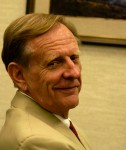
B. Kent Harrison

I come from various ancestral lines in which my ancestors met the missionaries and joined the Church of Jesus Christ of Latter-day Saints. Thus, the Church was a part of my life since I was born. My father, Bertrand F. Harrison, taught botany at Brigham Young University. My mother, Lorna J. Harrison, sometimes assisted him with his classes. I was the oldest of four children.
I went to church regularly as I grew up. Except for a short period of inactivity when I was a deacon, I have continued to attend church, as have my wife, Janyce, and our four children.

I was a believer in the gospel from my early years. I remember thinking how wonderful it was that Joseph Smith was able to see the Father and the Son at age fourteen. My parents were married in the Salt Lake Temple, and it was very satisfying—nay, wonderful—that I knew that they were sealed for eternity and that I was sealed to them. That made sense to me. Later, I followed their example when I married my wife, Janyce Maxfield, in the Salt Lake Temple.

I did not read scriptures regularly as a youth. I read the Book of Mormon for the first time when I was 18 years old. I did not graduate from seminary. I did not really start to internalize the Book of Mormon until I had joined the BYU faculty as a member of the Department of Physics. Then I realized that I didn’t know the Book of Mormon and that I should start reading it.

Since that time I have read the Book of Mormon many times. At first, I only believed it was true. Later on, as I read it more and its sweet spirit—and the Holy Ghost—spoke to me, I could say that I knew it to be true. I affirm that today: I know that the Book of Mormon is true. Supporting that testimony is the realization that Joseph Smith could not, by himself, have written such a book, especially in the short time in which it came forth. I appreciate its extensive testimony of the Savior Jesus Christ. Similarly, I know that Joseph Smith was, and is, a prophet, and that we have been and continue to be led by prophets. I know the gospel of Jesus Christ is true.

Early in life, I came across the words, “The glory of God is intelligence.” They resonated with me. I have always thought of our Father in Heaven, and His Son Jesus Christ, as intelligent, logical, self-consistent beings. The gospel made sense to me. For example, the practice of work for the dead is entirely logical to me, consistent with a God who loves all His children in equal measure. As I grew, I realized that the gospel is more than logic; it is an expression of the love our Father and His Son bear for us. As I realized this, my love for them grew, as did my love for others of His children here on earth. I realize the importance of serving others of His children.

Living in the home of a botanist father, I was exposed to the science of living things. I learned early about the theory of organic evolution, and it seemed to me to be the natural way in which Father in Heaven had created the human body. Only when I went to college did I find out that there were many people who did not accept the theory of evolution, regarding it as an atheistic doctrine. That puzzled me, although as I have read the scriptures I can understand their concern. The race of men and women is a race of divine beings. If evolution is true, there must have been some point at which Father in Heaven made us divine. I do not know how that happened, nor do I know what might have happened to the human-like creatures who were the ancestors of our race. I accept the account of the divine creation of Adam and Eve—whatever that entailed—the garden of Eden, and their fall and subsequent death. But I believe that death existed in the world, outside the garden, for many years before them. I do not know how it all ties together.

Being interested in physics and astronomy, I learned at an early age that the Earth is very old, as is the Universe, with ages of several billion years. I also learned that the biblical time since Adam and Eve appeared seems to be a matter of a few thousand years. Doctrine and Covenants 77:6 speaks about the seven thousand years of the Earth’s temporal existence. However, the scientific evidence strongly supports the very old Earth and Universe. I do not know how these vastly different times are to be reconciled. I content myself with believing the large scientific ages, but also believing that at the appropriate time our Father in Heaven created Adam and Eve in some way and began the divine race of men and women.

The vast distances in the Universe also seem hard to understand. How do divine beings navigate such distances? As I have learned about general relativity in my profession, I have thought that it may provide a way. General relativity allows for space and time to be “curved.” So perhaps one part of space could curve around near another part and allow quick transport between them, in a way that persons like us, confined to lower dimensions of space, cannot comprehend. But the energies involved in curving space are much larger than we normally experience, and that is a puzzle. The introduction of quantum mechanics, which has yet to be combined successfully with general relativity, complicates the situation fearfully. One has the feeling that, despite all the scientific advances made by mankind, especially in the last four hundred years, we are still in kindergarten.

When I was young, I tried to harmonize and reconcile everything. Now that I am older, I am content to let apparent differences between science and religion alone, having faith that eventually all will come together in a harmonious whole. I expressed that view in a statement on science and religion that I wrote for a physical science textbook (Physical Science Foundations, 2d ed., written by seven members of the College of Physical and Mathematical Sciences and published by the BYU Bookstore). I include it here, somewhat edited:

Both science and religion use the four ways of knowing. These are knowledge (1) by authoritative statements, (2) by intuition—private knowledge, which includes inspiration and revelation, (3) by reason, and (4) by the use of sensory data—experiment. However, their emphases are typically different. Science relies on sensory data; religion depends upon intuition, in the form of inspiration or revelation. Furthermore, their aims differ; religion tells us about life’s spiritual journey, while science seeks to describe the physical world around us. (Galileo is supposed to have said that religion teaches us how to go to heaven, while science teaches us how the heavens go.) We hope and expect these two disciplines to be in harmony, but we often see little overlap between them, and sometimes they even appear contradictory. Why?

Differences arise because of the different aims and learning methods, as noted above, but also because our knowledge is incomplete in both areas. Science is incomplete, as is evidenced by the thousands of new scientific articles written and published every year. Religion is incomplete, as we see from several scriptures which indicate that there is more religious information to come forth. In fact, despite the great amount of knowledge that already exists in both disciplines, there is good reason to believe that there is much, much more to learn. Consequently, it is not surprising that there may be little overlap and some differences.

In view of this situation, humility and patience are required. We must wait for progress in unifying understanding of these two areas, be it in this life or the next. We must not try to force a reconciliation of these two areas where it is not yet apparent how to do so. In the meantime, we should be content to allow differences to exist without assuming that either science or religion is wrong.

As a result of our incomplete knowledge in science and religion, I have become reluctant to attempt premature reconciliation of points of difference. There are scientists who, without a foundation of religious faith, take an atheistic or agnostic stance. There are religionists who discount science. Both positions can do harm, especially to young persons who are still leaning on the understanding of their elders. As I have indicated above, I think it best to be patient.

I know the gospel is true. I have had many spiritual experiences in my life that indicate it to be so. I have felt the Holy Ghost; on a few occasions the Spirit was so strong it was as if I was standing outside my body watching the Spirit speak through me. I have seen miracles happen, for example in miraculous healings and in being promptly rescued when our car was mired in a desolate area in northern New Mexico. My wife Janyce has had a number of spiritual experiences that have guided us in our family. I am grateful for these many indications of our Father’s love and attention to me and to my family. I hope to have our family eventually all together in our Father’s kingdom.

—————————————-

B. Kent Harrison received his B. S. degree at Brigham Young University (BYU) in 1955, where he was valedictorian, and, attending on a fellowship from the National Science Foundation (NSF), took his M.A. and Ph.D. at Princeton University in 1957 and 1959, respectively. His area of specialty was general relativity (Einstein’s theory of gravitation).

After receiving his doctorate, Prof. Harrison worked at Los Alamos Scientific Laboratory for five years and then joined the BYU Physics Department in 1964. (He took a leave at the Jet Propulsion Laboratory in Pasadena, California, for a period after coming to Utah.) At BYU he taught several majors’ and general education courses in physics and also taught Book of Mormon. He supervised the science part of a bachelor’s degree program for adult students who had not previously finished college, acting too as the physics teacher and astronomy teacher in that program. He served as department chair and as a member of several committees and councils, received five NSF grants, was honored with the University’s Alcuin Award for excellence in teaching, and supervised a number of doctoral and master’s degree candidates. A member of the American Physical Society and of Sigma Xi, the Scientific Research Society, he retired from BYU in 2000.

Dr. Harrison published approximately fifty papers, most on general relativity and mathematical physics, edited a textbook on physical science, and gave many talks at conferences on five continents. He wrote Ideas and Experiments in Physical Science (2d ed., Dubuque, 2007) for use in general science courses, and, with Kip S. Thorne, Masami Wakano, and John Archibald Wheeler, co-authored Gravitation Theory and Gravitational Collapse (Chicago, 1965). He also authored the chapter “Truth, the Sum of Existence” in David Leigh Clark, ed., Of Heaven and Earth: Reconciling Scientific Thought with LDS Theology (Salt Lake City, 1998).

In the community, Prof. Harrison has been active in Scouting and holds the Silver Beaver award and the Provo Peak Award (similar to the Second Miler Award.) He has long had a particular interest in the concerns of women, co-authoring a paper entitled “Feminism in the Light of the Gospel of Jesus Christ,” giving several talks on women’s issues and domestic abuse, and co-editing the book Confronting Abuse (Salt Lake City, 1993). He was a member of the board of the Provo Center for Women and Children in Crisis for over ten years and served as president of the Center during several of those years.

In the Church of Jesus Christ of Latter-day Saints, Dr. Harrison has served as a stake missionary, bishop, high councilor, stake clerk, high priests group leader, manager in transient services, teacher in priesthood and Sunday School, cub scout leader, ward organist, and choir director. He is currently an ordinance worker in the Provo Temple and a volunteer in the Edgemont North Stake Family History Center.

Kent Harrison has been happily married to the former Janyce Maxfield for fifty-five years. They are the parents of Alan, Neil, Paul, and Mary Ellen. They have twelve grandchildren and six great-grandchildren.

Posted January 2010

C. Randall Paul

I
This will be a confession of belief and allegiance with very little apologetic argument. I believe most humans–no matter their socialization, education or wisdom–choose to believe a religion or ideology is true based on the desire that it be true in the face of under-whelming evidence to the contrary. Even if belief is ‘given’ to some of us as a birthright, the live option to question beliefs or to reinterpret them in momentous ways is always available. There are desirable benefits from any belief position, and we weigh those against the alternatives we have available. At age eight, I joined the Church of Jesus Christ of Latter-day Saints and over time came to believe the Articles of Faith of my religion. I had several deeply moving experiences with prayer in my teenage years—some in the form of a ‘still small voice’ within my mind and heart confirming my allegiance to the Church, or forgiveness of my sins, or the rightness of a passage of scripture or act of service, and some in the form of an intense feeling of joy for life and clarity of identity, enthusiasm for purpose, and love for those around me. When I was nineteen years old my father placed his hands on my head and in the name of Christ charged me to share my spiritual experiences in a world where intellectual apostasy from religious teachings would be widespread. I came to understand spiritual experiences to include any experiences that lead us to desire and act to expand beyond the given. I believe the very desire to create and pursue some worthy purpose with our fellow beings is the fundamental spiritual experience. For eternal souls, the most interesting purpose derives from the desire to become more together, to pro-create original beauty
Humans are distinctively aware of their freedom to live for a purpose they can negotiate together. This leads to the question of who will combine with others for some collective purpose. It also leads to the question of disagreement over collective purpose. We Latter-day Saints believe all mankind agreed to join in a family relationship with Heavenly Parents and each other to pro-create a new world—becoming something more, with others, than what we were. When we have desires to build something wonderful together we are having a ‘godlike’ experience. So, whoever you are—atheist, agnostic, religious—you are behaving ‘like the eternal gods’ when you act on your desire to freely and creatively join in common purposes with your fellow men and women. This awareness is especially clear when you experience it as a full-bodied desire—including all the faculties we describe as heart, mind, and might. This is what the best friendships and marriages and teams and communities can produce. Joseph Smith described the eternal worlds as places of ‘sociality’ between the eternal persons that each of us is. One of the most inspiring aspects of Latter-day Saint ritual and worship is the elevation of the partnership of man and woman in marriage as the divine way of eternal life. Hierogamy is the supreme form of experience for learning and enjoying love among eternal intelligences (known here as the race of gods called mankind).

II
I am a witness to many spiritual experiences—some of which include communications with unseen influences that I presume to be invisible immortal humanlike beings who want to help or hinder us from achieving our collective goal to creatively grow together in ways that expand our love and joy. I pray frequently by speaking out loud or in my mind to a person I trust to be my Heavenly Father, presuming that he has adequate capacity and concern to hear and respond by sending ideas and feelings to me that I can use to engage the challenges and enjoyments of life beyond my unaided ability. I believe witnesses who have returned from death to tell us about another social world to come, where we live, work, and play as persons in another sphere. I believe that we humans never cease to exist as persons in some continuous historical form (unseen before and after death to most human instruments), and that what matters most to us is experiencing the freely given love and collaboration of other everlasting persons.

I believe that God is at least a person of flesh and bones living in space-time and that belief in a divine ‘Man of Holiness’ who communicates from afar is no more (nor less) astounding or incredible than the existence of the amazing human race. Indeed, I offer as plausible evidence for the claim of divine communication the existence of human communication. I presume that God has his infinite limits and does the best he can in responding to diverse, conflicting, and impossible prayers. Impossible prayers are those that would have God change the desires and force the actions of another free soul. Moving mountains or universes might well be a cinch for God, but moving the human heart to freely change is ultimately beyond divine control. I have experienced an unseen divine influence (not unlike the influence of other humans) that entices my mind and heart to change without force. That persuasion of the heart is what I believe God does best.

III
What, if any, religious way of thought and practice is most worth believing and following? Along with William James, I tend to ask what difference does some belief or experience make? Given that we cannot do all things, what cause do we desire to push forward? Whose influence do we most desire to follow in life? Who do we most desire to emulate? The answer to this points to our ‘subject of worship.’ Who is our god? We are all presented enough variety within our own traditional society to allow us to feel the desire to emulate or worship one person or god more than another. Since we cannot become another being, we ask ourselves whose desire do we most wish to influence us? Whose purpose do we wish to blend with ours? With whom do we desire to share our destiny?

I am a social-psycho-teleologist looking for the why behind the truth we live by. Strong believers (some of them secular humanists) who desire to improve the world by open persuasion without coercion are my favorite godlike subjects, no matter their brand of salvation. William James said in his essay The Sentiment of Rationality that rationality is a sentiment of feeling safe based on our expectation that our actions will influence the future as we desire. Even though our reasons for acting “are ludicrously incommensurate with the volume of our feeling, yet on the latter we unhesitatingly act . . . [with] a certain degree of subjective energy . . . so that, after all, the future is conditioned by my present faith in it,—how trebly asinine would it be for me to deny myself the use of the subjective . . . method of belief based on desire!” I always presume our actions are over-determined by multiple (often conflicting) desires or motives or beliefs. So the unavoidable fact of continuous human action as living beings breaks the psycho-spiritual logjam, and we observe ourselves acting each instant for something in the face of our conflicting desires, motives, and beliefs. To be educated and wise is to be aware of the fact that no matter what might be the eventual case, so far, no God, no system, no way of being has conquered the world once and for all. Brilliant human hearts and minds are fixed on different gods, systems, and ways of being. Does anyone see how this perennial contestation over truth and purpose can end in full agreement—even if God acted more openly to set matters straight once and for all?

IV
I believe that the leaders of the Church of Jesus Christ of Latter-day Saints are singular linear recipients of the same keys of influential power employed by the ancient apostles of Jesus, but, along with most Mormons, I hold that every human being (Mormon or not) will attain as much divine assistance to attain joy in eternal worlds as he or she desires. I believe humans are divine offspring of God in some genetic fashion and that God desires each of us to become as joyful as God is.

There is no getting around Blaise Pascal’s practical analysis of the wager we make with our hearts and actions. Bet on God by living his commandments and, if you are right, you win eternal life; if you are wrong, you lose nothing when you annihilate at death. However, I find that bet on the hereafter less compelling than the attraction I feel to practice with my religious community here and now, and to indulge the inspiring hope that we are all divine-human beings on the road to more joy together—abundant life. The question and response between Peter and Jesus in John 6:57-71 symbolizes my experience with Mormonism so far: After Jesus tells his disciples that, through him, they will become everlasting beings (immortal like gods), many of them leave him in disbelief. Jesus says to the twelve, ‘Will ye also go away?’ and Peter replies, ‘Lord, to whom shall we go? Thou hast the words of eternal life.’ These are my words, too, based on the experience I have had among men and women and with the scriptures and the unseen spirit(s) that moves me to love from time to time, that I believe to be what prophets have called the spirit of Christ or of God.

I have explored other religious and philosophical paths, in part to discover what God is doing outside Mormonism and to give me context for my affirmation of following Jesus to achieve the joy of eternal life—or, as Joseph Smith so wonderfully described (without adverting to reincarnation cycles), eternal lives. What better way to live now than to anticipate that the experience of eternal life will expand all our souls together with the God of love so as to describe it as abundant and multiple? Who has a more compelling story than that one of social resurrection into divine peerage? Who told it better than Joseph Smith?

Nietzsche and Marx don’t even get close! They claim no views into heaven and tell us to enjoy what we can here because there is nothing better to come. The eastern way leads us to another story that is restful; and for those who prefer eternal rest, the way of the east is more likely to inspire a life of peacefulness if not enthusiasm. Where are words of eternal life? Human evolutionists are getting closer to sensing the power of the story of human ascent as a race, but lack the witnesses of divine messengers who affirm the personal continuity of each soul. There is more social power in the hope for personal life after death than in the hope for general human progress that will be annihilated when the sun goes cold. When I look at the alternatives to the Latter-day Saint grand narrative, I ask, where is your glory? (See Moses 1:9-18.) I believe in a God who, if he found someone who out-loved him more gloriously, would ask us all to shift allegiance to the more loving God.

V
I believe all people receive divine communications that God knows each person will interpret differently according to different desires and prior experiences. I believe God could communicate much more clearly (in human terms) to everyone, but does not, in order to bring people to face their conflicting interpretations about the purpose of existence, the nature of God, and the way we should treat each other. I believe this unclear communication allows us to wrestle over truth as a test of our desire to love others in spite of our conviction that they are dangerously wrong about important truths. The world is designed for people to disagree and then decide what to do about it. How do we respond to a group of people who have a contaminating plague—moreover, who believe they are well and we have the plague? Here is the set up: We are brought to decide for ourselves how we will interpret in action ‘love of neighbor’ and ‘love of enemy.’ Do we quarantine others and/or ourselves? Try to annihilate each other? Try to cure each other, somehow? This is an increasingly pressing issue in our pluralistic interactive age.

I believe the main purpose of human life is fulfilled by coming to love different human beings in social relations that bring us to respond with action to the question: How should I love these people? This, I believe, is also God’s constant question.

VI
In midlife, I realized that the Heavenly Father I believed in needed a better public relations agent. The various scriptures did not persuade that he is a loving heavenly father—more an absentee Dad making big promises, but without follow-through. For a while, Joseph Smith’s personal story about the close human family relation with God seemed too good to be true. I did not crave an all- powerful God as much as a persuasively loving God. God seemed distant to most people, and, therefore, I began pondering the thought that there might be a distant deity or no One at all.

I was blessed to meet two new people via their writings: the radical empiricist William James, who was open to More than categorical boxes of mechanism or idealism could contain, and the Christian existentialist Fyodor Dostoevsky, whose characters, especially in The Brothers Karamazov, moved me to see Christ in every aspect of the human soul. I came to believe in God the loving father through believing in the story of Jesus Christ who loved his heavenly Father. If this Jesus, the Lord of Dimitry, Ivan, and Alyosha, could vouch for the God of Abraham, Isaac, and Jacob, then I would pray to the old heavenly Father with confidence (again). William James reminded me that no one has ever been able to get to truth by jumping ahead of his or her subjective desires—that there has yet to be any education or esoteric learning that is the clear and obvious answer to all questions about the purpose of life and the nature of ultimate reality and happiness.

Philosophy is a useful skepticism that keeps us aware of our limited ability to understand things comprehensively; therefore we are wise to constantly explore without final affirmation or denial what might be true. Each religious tradition affirms a true way or ways of going, but none is so universally compelling that all humanity has chosen to follow it. So, the visit of the Father and the Son and other heavenly beings to Joseph Smith, and his ensuing distinctive, synthesizing revelations, are on the table with the rest of the human stories about the big questions. I believe the Latter-day Saints’ restoration of ‘open revelation from God’ will turn out to be one of the most positive, influential stories for billions of people in coming centuries.

————————————–

C. Randall Paul, Ph.D., is the president of the Foundation for InterReligious Diplomacy (New York and Utah). A native of New Jersey, he has a BS from Brigham Young University in social psychology and an MBA from Harvard University. He worked as a business partner at Trammell Crow Company in the southwestern USA, where he developed many commercial real estate projects for sixteen years. He then obtained a doctorate in 2000 at the Committee on Social Thought at the University of Chicago, writing his dissertation on methods for engaging in religious conflict without acrimony or violence. He is on the executive board of the Society for Mormon Philosophy and Theology, and is an editor of the International Journal for Decision Ethics. Having served as a missionary for the Church of Jesus Christ of Latter-day Saints in France and Belgium, he has held numerous callings since, including service as a bishop. He and his wife, Jann, have five children and ten grandchildren.

Posted December 2009

James M. McLachlan

My testimony of the gospel is bound up with my family and my ancestors. I couldn’t think of how to give or even how to think about my testimony without thinking of them.

I grew up in Utah, in Taylorsville, on what was left of the thirty-acre family farm that was sold to my Great Grandmother Margaret Naismith by my Great Grandfather William McLachlan for $1.00 during the polygamy raids. She had a hard life, losing three of her sons within a just a few days to scarlet fever. My Grandfather John survived, married Janet West, and supported their ten children on that farm through the depression. My Grandmother Janet had a weak heart and died in her forties, but was remembered as a wonderfully empathetic woman who lost two of her children, one to disease and another in a horrible accident. They and their children were committed to the cause of Zion, though some might be what you would call “Jack Mormons.”

My father, James West McLachlan, left on his mission to the Northwestern States on December 7, 1941. He returned in 1944, joined the Merchant Marines, and served out the war in the Pacific. There he had a visionary experience, tied to the death of my uncle Marvin, a Marine on Okinawa. His experience became one important anchor of my testimony. My father didn’t finish high school until he was in his forties. The depression, work, and his mother’s death prevented it. But I became a philosopher because of his love of speculation and of the ideas he engaged through his reading of B. H. Roberts, James Talmage, and John A.Widstoe. My mother was a convert to the church who, as a young girl, discovered the Book of Mormon in a library in Bloomfield, New Jersey, and waited until she was of age to join the church. As a girl she fell in love with the stories of her ancestors and came to be an avid genealogist, writing books on the history of her family and compiling massive amounts of family history. During the war she decided to serve the common good and became a nurse. After it was over she moved to Utah, entered the public health profession, was assigned to Taylorsville, and met my father. The story of her conversion has always been important to me but, most importantly, through her love of genealogy I learned that the dead are not dead and that it is a beautiful thing to say the names of people so long forgotten once more in the Temple and to come to know them as sisters and brothers.

As a child in Taylorsville I was fascinated with the stories, debates, and speculations about the gospel that went on in our house and up and down our street between my father, mother, uncles, and aunts—all who lived in what was for me sacred landscape, rural Salt Lake Valley. This landscape stretched out from our little farms, where the sacred stories of my ancestors had played out, to the Valley that was the image of the holy land with its own Dead Sea, Sea of Galilee, and Jordan River. On the west side of the valley was our sacred ancestral space on the east side, the larger sacred space of the Temple, the prophet David O. McKay, the tabernacle, the Utah Symphony and Maurice Abravanel. At the time, all this fit together for me. But eventually I grew up and, though Temple Square remained, our family sacred space shrank considerably. Rural Taylorsville all but vanished in the development of the West Valley. And though we kept the sacred two room house of our ancestors and a couple of acres, the farm disappeared as we, as well as several of my uncles and aunts, sold and moved. Paradise lost!

I tell this personal story for two reasons. First, my testimony is tied to my ancestors, Mormon, Jack Mormon, and non-Mormon, good and not so good, nice and not so nice. And my feelings towards my ancestors are tied to Moroni’s message to the prophet Joseph Smith, with the gospel’s commitment to the redemption of the dead and forging the great link between the living and the dead. If there is salvation, it cannot be “private” but must be bound to theirs: this seems to me to just obviously be true. Second, I allude to my family history because, early on (after leaving our home in Taylorsville), I became quite suspicious of the sacred and spiritual experience. The great sociologist Emile Durkheim, in his Elementary Forms of Religious Life, reduced religion to the emotional experience that people have in groups. For him this would apply equally to the feelings people have in testimony meetings, rock concerts, pep rallies, tea parties, and even Nuremberg rallies. One is swept away by the emotion of belonging to a group and the “love” that unites the group. But it doesn’t have to be a group: I have been swept away by Maurice Abravanel’s interpretations of Mahler’s 8th Symphony, by Yasujiro Ozu’s Tokyo Story, and by the beauties of nature. I have been disappointed and even angered when my students, friends, or even loved ones haven’t seen how important these are. But I also came to wonder whether these experiences and perhaps even spiritual experiences might only be subjective, private experiences, or at best group enjoyments. Such feelings can be wonderful but also can do violence to us as persons as we are swallowed up in something we think is not only ourselves but greater than my brother or sister sitting next to me, who I think just doesn’t get it or isn’t “chosen”. And one only has to look briefly on the history of religion and politics to realize how dangerous it can be to get between some jerk and his sacred beliefs. The Epistle of James says “pure religion and undefiled” is to get out and help our brothers and sisters, not just signing on to something that makes us feel complete or good about ourselves when we really haven’t done anything.

I served a mission in France and Switzerland between 1974-1976. Like many missionaries, my mission was one of the defining moments of my life. As any returned missionary from Europe can tell you, people there are not lining up to become Mormons. We might tract 60 hours a week never entering a door, and only occasionally did we have the opportunity to teach the gospel. Yet I came to love France and the French for their wonderful sense of humor, love of beauty, and love of thinking. I met so many working people who, like my father. loved ideas and loved to talk about them. I served in Beaujolais, Burgundy, and Provence. Wine is a part of the French sacred landscape—it is tied to the land from which the grapes emerge—and when we were invited into someone’s home and they offered us wine, our response usually ended their interest in Mormonism. When I went on my mission I had no testimony of the gospel. I thought the gospel was beautiful and kind, but I was very suspicious of people’s certainty about it. I went on a mission for what is usually said to be the wrong reason: I loved my parents. Shortly before I decided to go, my father, as kind a man as ever lived, came to me and said, “If you don’t want to go on a mission you don’t have to go. That will be fine.” I looked into his eyes and realized I had to go. I loved him so much I couldn’t break his heart. He loved the gospel so much, and my mother had risked so much by challenging her parent’s religion, leaving New Jersey for Utah. Through them I think I had my first inkling of what real transcendence might be. Not simply an idea in my own head or a feeling in my heart but the divine you see in other people; out there, beyond you, different from you, challenging you, and worth loving. I experienced this often in France. I met people who challenged me, who often didn’t believe what I believed, but whom I came to love. Some of them were in the church, some joined the church, most never even came close.

In The Brothers Karamazov Zosima’s brother Markel has an intense religious experience that changes his life. His way of worship involves as much his interaction with the others around him, whom he loves, as an immediate experience of the divine. Markel’s worship reaches beyond an inner experience to others and to God. There is a scene in which he watches a beloved servant lighting an icon. He does not have the same reverence for the icon as does the servant. However, he realizes that they can be united in their worship: “Light it, my dear. What a monster I was to forbid you before! You pray to God as you light the icon lamp, I pray rejoicing at you. So we are praying to the same God.”1 Through his love of the servant, Markel is led to God. This is similar to the discussion of spiritual gifts in the Doctrine and Covenants:

To some it is given by the Holy Ghost to know that Jesus Christ is the Son of God, and that he was crucified for the sins of the world. To others it is given to believe on their words, that they also might have eternal life if they continue faithful (D&C 46:13-14).

Normally I think we look at this passage with the view that the individuals with the direct revelation of the Holy Ghost and testimony that Jesus Christ is the Son of God have a superior gift to one to whom it is given to believe on their words. But it doesn’t say this in the text. Though it is said that we should seek all the good gifts, we all have different gifts and these diverse gifts are not merely for our own benefit but especially for the benefit of all: the Body of Christ. I have come to believe that I haven’t yet received certain important gifts, but I wouldn’t have the gifts I have had I received the ones I thought I wanted.

As a missionary I repeatedly read the King Follet Discourse and the Sermon on the Mount. For me these texts revealed the heart of the gospel: encountering the divine in my brothers and sisters, each a son or daughter of God. Joseph Smith taught that we are one great Heavenly Family:

God himself, finding he was in the midst of spirits and glory, because he was more intelligent, saw proper to institute laws whereby the rest could have a privilege to advance like himself. The relationship we have with God places us in a situation to advance in knowledge. He has power to institute laws to instruct the weaker intelligences, that they may be exalted with Himself, so that they might have one glory upon another, and all that knowledge, power, glory, and intelligence which is requisite in order to save them in the world of spirits. . . . The greatest responsibility in this world that God has laid upon us is to seek after our dead. The Apostle says, “They without us cannot be made perfect” (Hebrews 11: 40). 2

It is not that ideals exist from eternity, but persons and beings exist in relation to others. God is “in the midst of spirits and glory.” God did not create them out of nothing but is related to them from the very beginning and calls them from chaos into the sociality of community. The revelation is that God desires others, us—the kids—to enjoy the same fullness that God does, that we too may be exalted. The freedom or creativity we attain is what determines how fully we enter that community:

When the Savior shall appear we shall see him as he is. We shall see that he is a man like ourselves. And that same sociality which exists among us here will exist among us there, only it will be coupled with eternal glory, which glory we do not now enjoy (D&C 130: 1-2).

The same sociality is the basic truth of our lives. It is the paradise I see each time I look into my wife’s eyes.

When I entered graduate school at the University of Toronto to study religion I thought I might be able to settle some of my questions about my own belief. The questions often deepened but were not settled. I started to realize that, no matter how much I read, I would never be able to find more than a reasonably good interpretation of Sartre and Hegel, much less a convincing proof that the historical Jesus was the Christ or that the risen Christ visited ancient America or that Joseph Smith was more than a clever, charismatic, and somewhat lovable charlatan. I could not find proof. What convinced me of the truth of the gospel was not reading scholarly articles on philosophy of religion or the ancient origins of the Book of Mormon, or the history of the life of the prophet, though I greatly admire much of this work and find it extremely helpful, not to mention inspiring. It was rather associating with people in my inner city Toronto ward and later my ward in Cherokee, North Carolina, helping people move, working for years as a volunteer institute and early morning seminary teacher. It was seeing people’s lives changed by the gospel. I saw my children touched by reading the Book of Mormon. They reminded me of its social teachings of our responsibility for the poor and for each other. For me it’s not the Hebraisms in the Book of Mormon that lead me to believe its true, though I’m glad they’re there, nor the warmth I feel when I read the stories, though I’m thankful for that as well, but the injunction to mourn with those that mourn and to comfort those who stand in need of comfort (Mosiah 18:9). It’s the fact that the book makes me uncomfortable and reminds me that I must do something.

Last summer I had the great opportunity to tour the Humanitarian Center, Welfare Square, and the new Oquirrh Mountain Utah Temple with a group of Latter-day Saint and non-Latter-day Saint scholars. I was there with my good friend Richard Cohen, Professor of Philosophy and head of Jewish Studies at the University of Buffalo. The Humanitarian Center and Welfare Square represent the commitment to living brothers and sisters struggling in this life, as the temple represents our commitment to healing each other’s wounds in the next. This is what James and Brigham Young called pure religion; it is seeing God in the face of another person.

As the turn-of-the-century Mormon philosopher William H. Chamberlin wrote, “The gospel is so beautiful, our story is so beautiful, that even if it wasn’t true there is no reason that we can’t make it true. God needs willing earthly hands to build Zion, it can’t be built by celestial beings alone.” It may not yet be my gift to know how Jesus is the Christ and how Joseph was a prophet, but I know that what they taught is true, not because they are great philosophers who showed us a transcendent and ideal truth, but because they pointed us in the direction of those sitting across from us in the church pews, coming up to us in the street, yelling at us as we try to go to conference, calling us to the crib in the middle of the night, or smiling at us across the pillows before we fall asleep. We are needed by God and by our brothers and sisters in this struggle in the here and now. This is where we love and help each other. Our great hope is that this sociality will be perfected in the world to come.

———–

Notes:

1 Fyodor Dostoevsky, The Brothers Karamazov, tr. Richard Prevar and Lissa Volokhonsky (Farrar, Straus, and Giroux, 1990) p. 288.
2 Joseph Fielding Smith, ed. Teachings of the Prophet Joseph Smith (Salt Lake City, Deseret, 1989) P. 312.

———————————————————

James M. McLachlan is Professor of Philosophy and Religion at Western Carolina University. He received his B.A. in philosophy and history from BYU, then studied philosophy at the Université de Paris, Sorbonne, and Pennsylvania State University. He earned an M. A. in European history at Indiana University and a Ph.D. in Religious Studies at the University of Toronto. He has been a visiting scholar at the Claremont School of Theology, where he studied process theology. He is co-chair of the Mormon Studies Consultation at the American Academy of Religion and president of the Society for Mormon Philosophy and Theology. He is author or editor of three books and many articles on Mormon theology, process theology, Personalism, and the philosophies of Jean-Paul Sartre, F.W.J. von Schelling, and Nicholas Berdyaev. He is currently working on a book on the early Mormon philosopher William H. Chamberlin, and a translation of Jacques Rolland’s Dostoevsky and the Question of the Other.

He lives in Sylva, North Carolina, and attends the Cherokee Ward with his wife Carrie. They are parents of three grown children: James, Jonathan, and Elizabeth.

Posted December 2009

Ross Baron

I was raised Jewish and, as such, participated in the religious traditions of Judaism. I attended Hebrew school, read the Old Testament, and took part in the holy days of the Jewish calendar. I enjoyed and felt comfortable in my culture and religious environment, but I had many questions that seemed to go unanswered. In my teenage years I studied Eastern religions, especially Buddhism and Taoism. I learned a great deal and found much wisdom and insight in their teachings. I also learned and practiced Transcendental Meditation. However, I still harbored many questions about life and life after death that went unanswered.

As a senior in high school I decided, on my own, to read the New Testament. Each morning before school I would go to the library and read from the New Testament. I had a profound but troubling experience. When I finished the four gospels I was unable to explain the feelings I was having. I knew what I had read was true and that the testimony about Jesus was also true. It was troubling because it seemed so clear, precise, and in some ways very simple; but I knew that that knowledge would irrevocably change my life. People have asked me, over the years, if it was difficult for me to accept Jesus as the Christ given my Jewish upbringing. I respond that the testimony of the gospel writers concerning Jesus completely connected with my understanding of the Old Testament and its prophecies about the Messiah. In addition, the holy days of the Jewish calendar, specifically Passover, which I had done every year of my life, absolutely pointed to everything that Jesus was and did. I had obtained a certain peace after reading the New Testament, but some things were still not clear.

I studied some of the Christian sects and went to a few meetings but felt no desire to unite myself with them. There were very few LDS members in my high school, but one of my friends was and so before a class I asked, “What do Mormons believe?” In the next five or so minutes he taught me the plan of salvation; he had just answered every question that I had my entire life! I was so excited that I peppered him with questions, to which he said, “Hey, I don’t know all of that . . . but my dad does.” I went and spoke with his father that very day and received from him the Book of Mormon, Jesus the Christ and Articles of Faith by James E. Talmage, and A Marvelous Work and a Wonder by LeGrand Richards. Over the course of about the two weeks I devoured those books and I started reading the Doctrine and Covenants.

The same experience, perhaps even more powerful, occurred during the reading of the Book of Mormon that had happened when I finished reading the New Testament. I knew that the Book of Mormon was true. However, I also knew that if I became a Latter-day Saint that would cause major problems in our all-Jewish family. So, I went to a Christian bookstore in the San Fernando Valley to purchase books on the Church to make sure that I was intellectually aware of all facets of the Church. At the time I had no idea that I would be buying anti-Mormon material; I just thought Mormonism was another branch of nominal Christianity.

I purchased three books and read them in a very short period of time. I had a yellow pad and made extensive notes from the writings of these books. I also followed the footnotes to ascertain if the quotes were accurate. The acidity, poor scholarship, and overt hate in these books surprised and shocked me; in some ways it reminded me of the trash that is written about Jews by anti-Semitic writers. Some of the questions from those books I was able to answer for myself and some of the questions I took to Latter-day Saints I had come to know. Ironically, my experience with those books deepened my convictions about the Church and my desire to joint it.

After I had taken the missionary discussions, the missionaries asked me to fast and to pray, which I did. I received the indelible and spirit-to-spirit communication from the Holy Ghost that Jesus was the Christ, that Joseph Smith was a prophet just like Moses, and that His Church was upon the earth—The Church of Jesus Christ of Latter-day Saints. I was subsequently baptized and, a year following my baptism, put in my papers so I could serve a full-time mission. I was called and served in the Argentina Buenos Aires South Mission.

After my return from the mission I married Kathleen Ann Bolton in the Los Angeles temple and we have seven children and, as of this writing, two grandchildren and another on the way.

I received a B.S. degree in finance from Brigham Young University, and an M.A. and a Ph.D. in religion and social ethics from the University of Southern California. During my time at U.S.C., many Latter-day Saints would ask me if my studies in religion and philosophy were undermining my testimony, or shaking my faith. I would always answer that my studies in religion and philosophy were doing the opposite—they were strengthening and fortifying my testimony of Joseph Smith and the restoration; many days after intense classes I would walk back to my car with profound gratitude for the teachings of the Prophet Joseph and for the clarity and insight of the revealed doctrines!

I am a professor in the department of religion at Brigham Young University—Idaho. My dissertation is now a published book, entitled Social Ethics of The Church of Jesus Christ of Latter-day Saints: Analysis and Critique.

Posted December 2009

Hollis R. Johnson

The Puzzle of a Life-Containing Universe

Thoughtfully, the psalmist asked:

“When I consider thy heavens, the work of thy fingers, the moon and the stars, which thou hast ordained; What is man, that thou art mindful of him? and the son of man, that thou visitest him? For thou hast made him a little lower than the angels, and has crowned him with glory and honor.” 1

It’s a good question: What makes humans so important in the universe? Or does it only appear so to us humans? If the laws of nature were even slightly different, humans could not exist. Our universe permits life—even intelligent life. Why? That’s the puzzle. Is the universe specifically designed for life and for us humans? If the universe is designed for us, can we demonstrate it? Do the sweeping discoveries of physics, astronomy, and cosmology help answer the question? Can science ever provide a solution to the puzzle?

Although our universe obviously contains life, the natural laws and physical conditions that permit life are very restrictive. If the laws or constants of nature were even slightly different, no life could exist.2 So why does our universe have exactly these exact conditions?

Current cosmological discoveries have provoked a great deal of scholarly thinking about the remarkable fitness (the so-called “fine tuning”) of the universe for life. From the big bang, the universe has expanded to become big, old, dark, and cold—the precise conditions necessary for the formation of stars and galaxies, for the consequent production of the chemical elements heavier than hydrogen and helium that are necessary for complex molecules, and finally for life itself.

Scholarly opinions cover a wide range, but current solutions to the puzzle of a universe with life fall into three groups: (1) The universe just happens to be that way; (2) God created the universe to support life; or (3) Out of a multitude of universes (a multiverse)3 at least a few will have the conditions that permit life, and our universe is just one of these. (The English physicist Paul Davies has considered this problem, and imagined and analyzed other “possible” universes, in a number of accessible books.)4 Perhaps there are other possibilities as well.

Each of these scenarios solves the puzzle for those who accept that solution. Nature solves the problem for those who accept as a brute fact that the universe “just happened.” God solves the puzzle for those who believe the universe was designed and created by God. The multiverse solves the puzzle for those who can imagine a multiverse.

Much as inquisitive humans might desire a decisive solution to the puzzle, science cannot now and likely cannot in the future provide evidence for an ineluctable choice. Perhaps we are asking too much. What then? Each person will choose what seems most reasonable or most likely to give meaning to life. One physicist and author writes of his belief in a way that resonates: “For me, the real meaning in life is that we can create our own meaning.”5 Latter-day Saints would probably add something like: “With the benefit of revelatory guidance.” The Saints have good reasons to be optimistic about the possibilities.

LDS scholars who follow the theistic cosmologists to a God who created the universe may be disappointed in the god they find there. It is very difficult to see how the attributes or characteristics of a postulated god that created the entire universe and therefore is somehow “antecedent to it” and “outside of it” can be known from explorations of nature alone. The god of the theistic cosmologists therefore remains an unknown god, and that brings precious little guidance or comfort.

More directly, Mormons (as LDS Christians are often called) understand that God, our Heavenly Father, is a God of revelation. The Prophet Joseph Smith stated: “It is the first principle of the Gospel to know for a certainty the Character of God, and to know that we may converse with him as one man converses with another.”6 Church leaders have spoken of the necessity and actuality of revelation in the affairs of the kingdom of God on earth, and the reception of revelation is explicitly extended to all servants of God through a modern revelation.7 In the authorized book, The Articles of Faith, James E. Talmage writes: “We have no record of a period of time during which an authorized minister of Christ has dwelt on earth, when the Lord did not make known to that servant the divine will concerning his ministry.”8

Arguably, the Church of Jesus Christ of Latter-day Saints would not exist, and member readers would not be members of that church, except for their acceptance of the striking claim that the Church is built upon divine authority by direct revelation.9 That remarkable claim sets the LDS Church apart from other Christian churches and has earned the Church a good deal of opposition. But, in LDS theology, God is a personal Being—as revealed to his prophets and as described by Jesus Christ as “my Father,” “your Father,” and “our Father.” The God of revelation exercises watchful care over his creations and loving guidance over His children. God has clearly stated his goal: “For behold, this is my work and my glory—to bring to pass the immortality and eternal life of man.”10

By no means do I suggest that divine revelation solves the puzzle of the origin of the bio-friendliness of our universe, but I do suggest that revelation provides a means of knowing about God and his relation to human beings that cannot be found from scientific discoveries. Mormonism is exciting to me for its acceptance of all truth, including ideas flowing both from modern revelation and science. The divine plan of salvation and happiness, remarkable in its power and scope, matches the grandeur of the universe.

———

Notes:

1 Psalms 8:3-5
2 John D. Barrow, The Constants of Nature: The Numbers that Encode the Deepest Secrets of the Universe (New York: 2004, Vintage Books, 2004).
3 Fred Adams, Our Living Multiverse (Free Press, 2002).
4 Among these are God and the New Physics (1983), The Cosmic Blueprint (1987), The Mind of God (1992), The Fifth Miracle: The Search for the Origin and Meaning of Life (1998), and The Goldilocks Enigma (2007).
5 Michio Kaku, Parallel Worlds (New York: Anchor, 2006), 358.
6 Joseph Fielding Smith, Teachings of the Prophet Joseph Smith, p.347
7 Doctrine and Covenants 68:2-5
8 James E. Talmage, Articles of Faith, p. 270
9 For example, Articles of Faith of The Church of Jesus Christ of Latter-day Saints, no. 9
10 Book of Moses 1:39

——————————————

Hollis R. Johnson, Professor Emeritus of Astronomy at Indiana University, earned his Ph.D. in astrogeophysics from the University of Colorado in 1960, and taught at Indiana University from 1963-1994, chairing the Astronomy Department from 1978-1982 and, again, from 1990-1993. He served as the dissertation advisor for seventeen successful doctoral candidates, received numerous research grants (as principal investigator) from both the National Science Foundation (NSF) and the National Aeronautics and Space Administration (NASA), authored more than ninety research articles in refereed journals, edited or co-edited three scientific books, and served as a member of the board of directors of the Association of Universities for Research in Astronomy (AURA).

In the Church of Jesus Christ of Latter-day Saints, Professor Johnson presided over the Indianapolis Indiana Stake (1973-1979) and the Bloomington Indiana Stake (1979-1982), and served as a counselor in the presidency of the Louisville Kentucky Temple (2004-2007). He served a mission to Denmark as a young man, and then returned with his wife to serve there again (1995-1997). Subsequently, they also served missions in Accra, Ghana, from 1998-2000, and in Beijing, China, from 2002-2003.

He and his wife, the former Grete Margit Leed, from Horsens, Denmark, are the parents of three sons and three daughters, and they have twenty-four grandchildren and twelve great-grandchildren.

Posted December 2009

Jennifer C. Lane

To testify is to give a witness. I am grateful for the chance to stand with colleagues and friends as part of a “cloud of witnesses” (Hebrews 12:1) of the divinity of Jesus Christ and the reality of the Restoration of His Church through the prophet Joseph Smith. In doing so I can briefly give my witness of that which I have seen and experienced with the hope that others might desire to “experiment upon the word” and know through their own experience (see Alma 32:27).

I am a believer, a Christian, and a Latter-day Saint. This should come as no surprise to anyone familiar with the criteria for being a Religion professor at one of the universities operated by the Church of Jesus Christ of Latter-day Saints. The surprise might be that I made it there. That I am still a believer and a faithful Latter-day Saint after my doctoral work in Religious Studies, a field that is notorious for promoting skepticism and doubt.

The experiences that I have had that make me a believer in many ways are no different than any other faithful member of the Church of Jesus Christ of Latter-day Saints who seeks to be a disciple of Jesus Christ. What may put me and fellow faithful academics in a unique category is prolonged exposure to a perspective on reality that has fundamentally different ontological and epistemological assumptions.

There will always be some historical or theological questions to which we do not have answers, but the fundamental questions and answers are the most important. My witness is that reality does include more than we can perceive with our senses. My experience is that there is a God that loves us and communicates with us, both personally and through modern-day prophets. My testimony is that Jesus Christ is the Son of God and that His redemptive power can be felt today on an individual level.

In this sense I identify strongly with the man born blind in John chapter 9, who, when asked about something to which he could not answer, replied: “I know not: one thing I know, that, whereas I was blind, now I see” (John 9:25). I am not worried to answer either my students or critics with an admission of my lack of omniscience because of this “one thing I know.” My life has been profoundly changed through the healing, sanctifying influence of Jesus Christ. And I have found Him through The Book of Mormon and through my faithfulness to the covenants that I have made in His restored Church.

I was twenty years old, a student a Brigham Young University, a believer, but struggling on many levels. I had been faithful in reading scriptures daily since starting Seminary, our early-morning religious education, in High School, but life was more complicated as a college student and I found myself feeling helpless amid the challenges I faced. At that time the recent words of the then-current Church President, Ezra Taft Benson, came to my mind. “When we put God first, all other things fall into their proper place or drop out of our lives” (Ensign, May 1988, 4). Because I believed that he was the Lord’s prophet I was willing to experiment on this word, to try it out for myself. At that point my frame of reference was such that I wasn’t completely sure what this involved, but I knew that he had encouraged Church members to read the Book of Mormon every day and I knew that I wasn’t doing that.

So I took the challenge to do this and a few other small practices of religious observance that I knew I could do better. I cannot describe all the changes that occurred in my life over the course of the next weeks, months, and years, but I can testify that I changed. I began to be able to recognize the voice of the Lord speaking to me individually. Even more importantly I began to experience a change of heart in regard to the things of righteousness. I wanted to be different. I wanted to be what God wanted me to be and I was willing to make changes in my life.

My faith in Christ continues to increase as I feel the sanctifying influence of His Spirit and Atonement in my life. Paul taught “For what man knoweth the things of a man, save the spirit of man which is in him? even so the things of God knoweth no man, but the Spirit of God. Now we have received, not the spirit of the world, but the spirit which is of God; that we might know the things that are freely given to us of God” (1 Corinthians 2:11-12). Seeking for and following this kind of knowledge is a life-long process.

I continue to read the Book of Mormon on a daily basis, along with the Bible, as I also continue to read and learn from the insights of secular scholarship in Religious Studies. It does not bother me that others, more secular scholars or scholars from other faith traditions, have perspectives that differ from mine about Jesus Christ’s divinity, the calling of the prophet Joseph Smith, the authenticity of the Book of Mormon, and the revelations and ordinances held sacred in the Church of Jesus Christ of Latter-day Saints. I believe that most of them are very good people of integrity, but I know what I know through experience that has changed me: “one thing I know, that, whereas I was blind, now I see” (John 9:25). My hope is that others will “come and see” if anything good can come out of the Restoration through their own experience (see John 1:46).

————————————-

Jennifer C. Lane is an associate professor of Religious Education at Brigham Young University-Hawaii. She received her Ph.D. in Religion from Claremont Graduate University, with an emphasis in History of Christianity, in 2003. She received her M.A. and B.A. from Brigham Young University in Ancient Near Eastern Studies and History, respectively. She serves on the Executive Board of the Society for Mormon Philosophy and Theology. Her presentations and publications include work on adoptive redemption in the Old Testament, the writings of Paul, and the Book of Mormon; Franciscan piety in late medieval Jerusalem pilgrimage and interactions with eastern Christians; New Testament historical context; and Latter-day Saint theology and doctrine.

Posted December 2009

  • « Go to Previous Page
  • Page 1
  • Interim pages omitted …
  • Page 40
  • Page 41
  • Page 42
  • Page 43
  • Page 44
  • Go to Next Page »

Primary Sidebar

Faithful Study Resources for Come, Follow Me

Subscribe to Blog

Enter your email address:

Subscribe to Podcast

Podcast icon
Subscribe to podcast in iTunes
Subscribe to podcast elsewhere
Listen with FAIR app
Android app on Google Play Download on the App Store

Pages

  • Blog Guidelines

FAIR Latest

  • The Atoning Love of Jesus Christ
  • Come, Follow Me with FAIR – Genesis 42–50 – Part 2 – Autumn Dickson
  • Come, Follow Me with FAIR – Genesis 42–50 – Jennifer Roach Lees
  • Come, Follow Me with FAIR – Genesis 42–50 – Part 1 – Autumn Dickson
  • Lovest Thou Me?

Blog Categories

Recent Comments

  • Sister Truelove on Humble Souls at Altars Kneel
  • Antonio Moreno on Forsake Not Your Own Mercy
  • Wayne on Come, Follow Me with FAIR – Genesis 12–17; Abraham 1–2 – Part 1 – Autumn Dickson
  • Tanya Alltop on Be Reconciled to God 
  • Darci Larson on Adorned with the Virtue of Temperance

Archives

Follow Us

  • Facebook
  • Twitter
  • iTunes
  • YouTube
Android app on Google Play Download on the App Store

Footer

FairMormon Logo

FAIR is a non-profit organization dedicated to providing well-documented answers to criticisms of the doctrine, practice, and history of The Church of Jesus Christ of Latter-day Saints.

Donate to FAIR

We are a volunteer organization. We invite you to give back.

Donate Now

Site Footer