• Skip to primary navigation
  • Skip to main content
  • Skip to primary sidebar
  • Skip to footer

FAIR

My Account Search
  • Start Here
  • Find Answers
  • Scripture Study
  • Blog
  • Events
    • FAIR Conference
    • Virtual Conferences
    • Special Events
  • All Presentations
  • FAIR Books
  • About
  • Get Involved

Faith and Reason

Nourishing the Roots

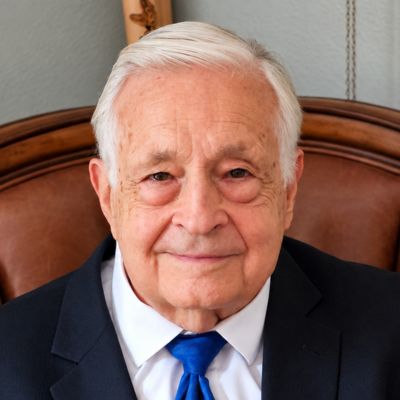
Introduction of Speaker

Our next presenter, Walker Wright, has spent years studying the philosophical and practical foundations of testimony. Through his work as a scholar, educator, and author, he has explored how the most basic doctrines of the restored gospel provide stability even when life becomes uncertain. Today, he’ll invite us to consider how returning to the fundamental questions of faith can strengthen our testimony and provide lasting confidence. Please welcome Walker Wright.

Presentation
Well, good morning everyone.
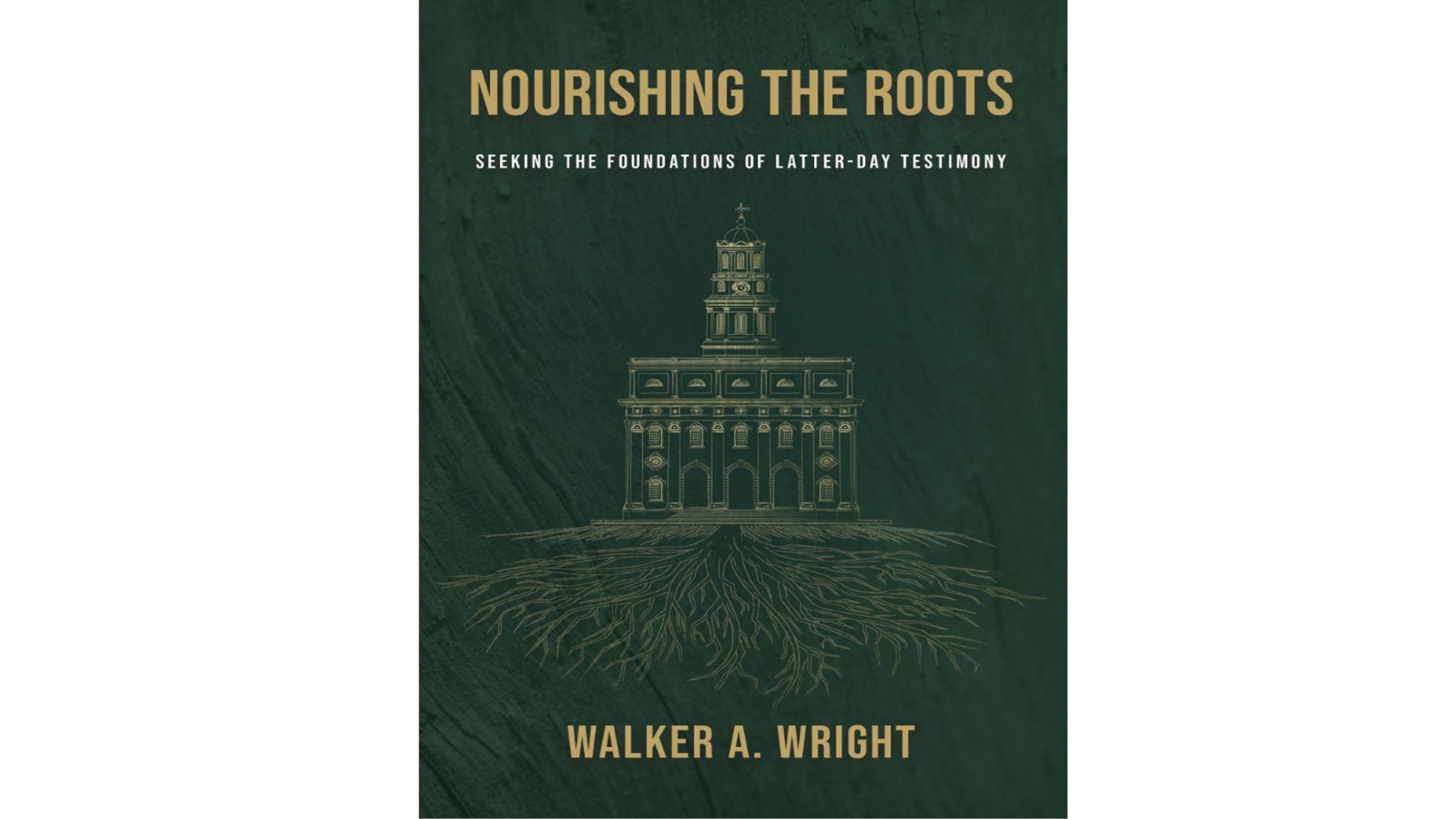
I’m very grateful to be here and I’m grateful to FAIR for the invitation to speak but also for publishing my book Nourishing the Roots, which this presentation is based on. But also I want to give a special thanks to Jared Riddick who was the main driver behind this project. He very deservingly won the John Taylor Defender of the Faith Award at the beginning of this conference and is doing a lot of great work with the publishing arm of FAIR. So, if you would give Jared a hand for the work that he’s doing. Really appreciate you, buddy.

Temple Recommend Questions as a Diagnostic Tool

I can’t hope to cover the entire book in 25 minutes, but I do want to at least give you a flavor of it and reflect on what I think is an underappreciated diagnostic tool in the Church, which is the first three questions of the Temple Recommend interview.

The title of my talk’s a little misleading because I only focus on the first three. But that’s because I believe that they cut straight to the roots of our faith. They speak to our deepest questions about life, death, and meaning. Which is why I’ve built the book and its arguments around them.

For the restored gospel to truly take root in our hearts and in our minds, it has to grab us existentially. And to explain what I mean, I want to start with a personal story. A Personal

Experience with Loss and the Plan of Salvation

So, my older sister Nicole was born with a heart condition that developed into a rare form of heart disease. She wasn’t supposed to live past an early age, but to the surprise of everyone around her, she continued to live a relatively normal and healthy life. She eventually graduated high school and went to BYU for a summer semester.
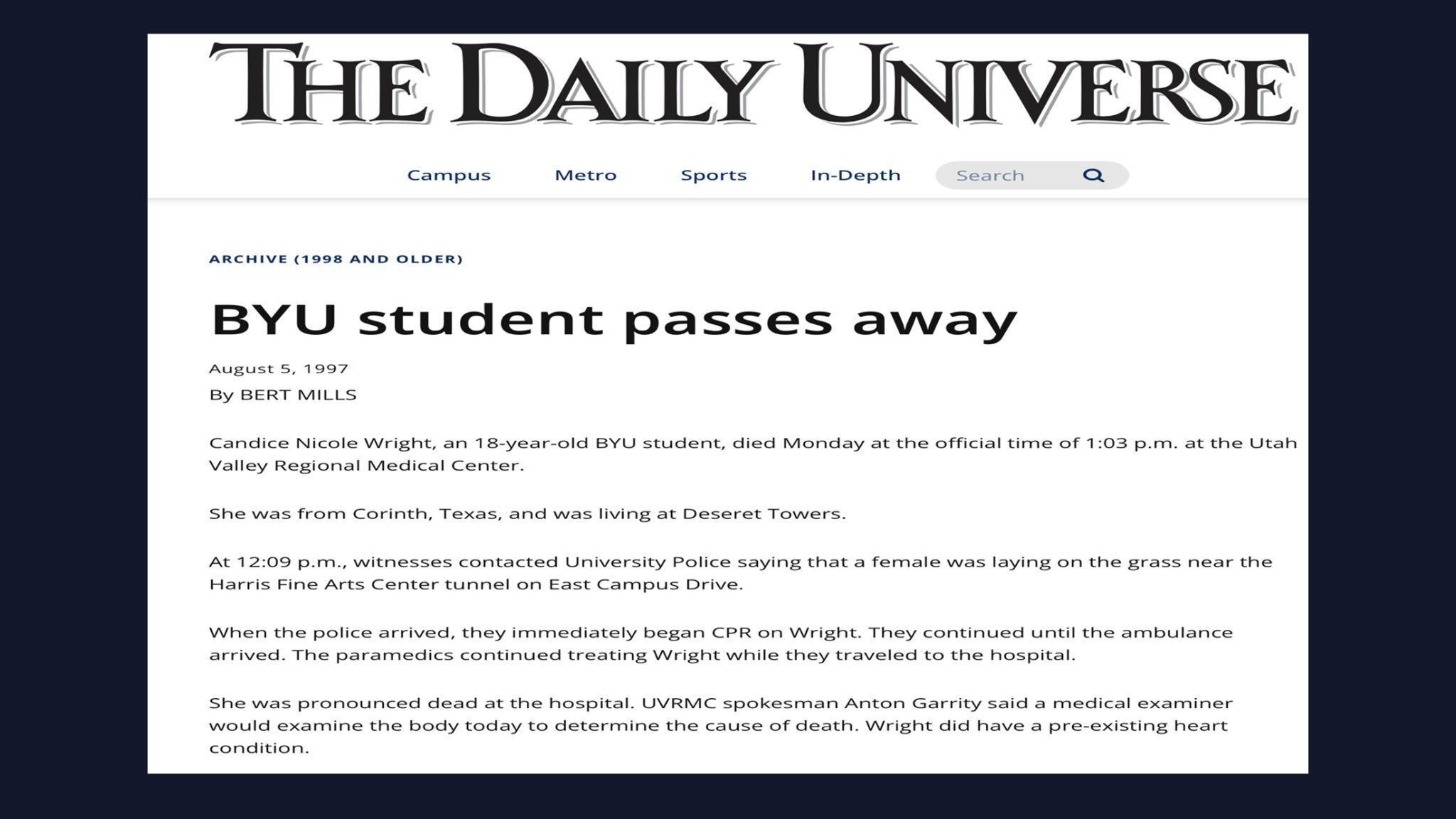
But one morning in August of 1997, while she was walking across the campus, her heart suddenly stopped and she collapsed there on the ground, and those that found her were unable to revive her. She was only 18 and I was 11 years old.

So that was traumatic to say the least. And for as long as I could remember, “bless Nicole’s heart” had been a staple of family and personal prayer. And to my young mind, prayer had been working. Like I said, she’d lived longer than anyone expected. But with her death, that stability and simple assurance was now gone, which led to fluctuations in my young faith over the years.

Now, despite my spiritual confusion, some good influences and experiences eventually nudged me to go on a mission.

The Plan of Salvation

While I was at the MTC, my companion and I were being taught the Plan of Salvation by an instructor who asked us at the time, if we had ever lost anyone close to us. When I shared that I had lost my sister, all the grief and fear that I buried for a number of years came flooding back suddenly. I realized that my sister was dead and gone and I may never actually see her again.

The emotional dam broke and so did I. Right there in the middle of the room I started bawling. But after I got a hold of myself, the instructor continued to walk me through the entire Plan of Salvation and then gave a simple testimony that I would one day eventually see my sister again.

Now, it was nothing new. I had heard this a bajillion times before. But in that moment, I felt like I was given a bird’s eye view or perhaps a God’s eye view of our purpose here on Earth.

And that experience along with numerous others helped me understand something that Elder Dieter F. Uchtdorf taught in the October 2024 general conference.
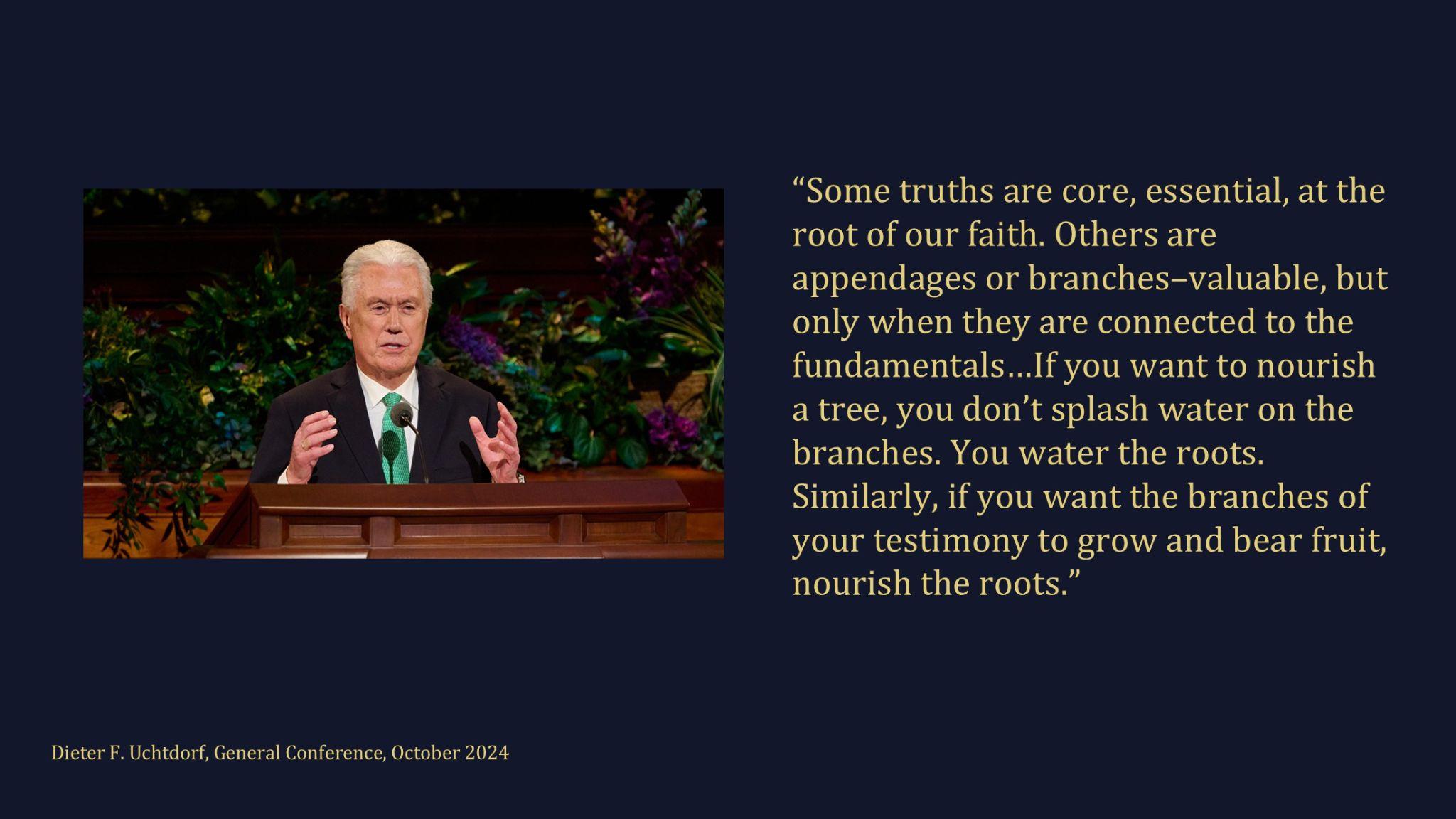
Some truths are core, essential, at the root of our faith. Others are appendages or branches, valuable, but only when they are connected to the fundamentals. If you want to nourish a tree, you don’t splash water on the branches. You water the roots. Similarly, if you want the branches of your testimony to grow and bear fruit, nourish the roots.

Now, he was quick to emphasize that the branches of our faith are still important, but if they are disconnected from the core, they begin to wither and die.

Many Latter-day Saints today wrestle with the branches, messy history, human imperfection, confusing policies, you name it. But what if the way forward isn’t found among the branches? What if our view of the branches is actually shaped by our view of the roots?
The First Three Temple Recommend Questions

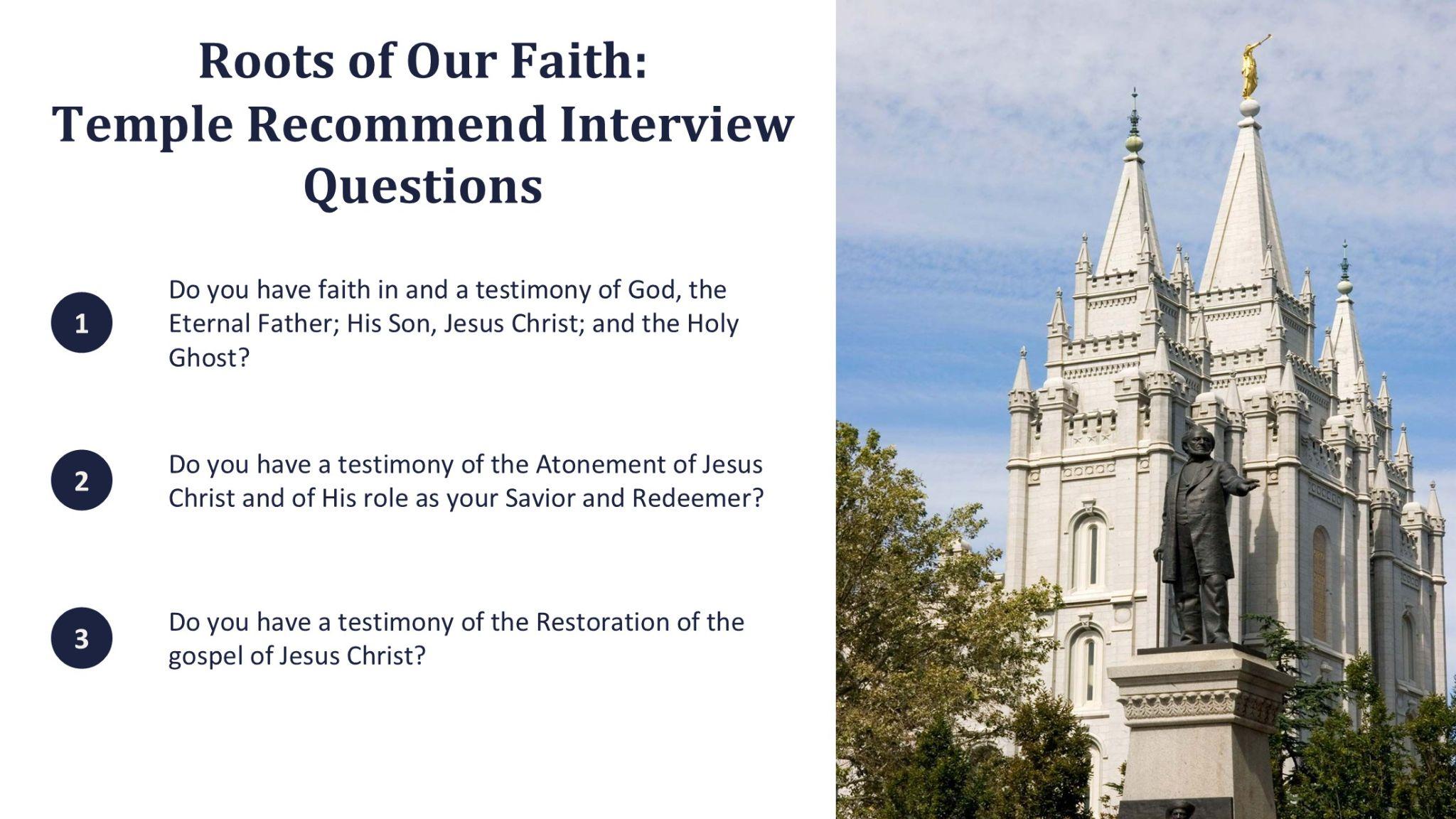
Now, as I said before, I believe that the roots are best captured by the first three questions of the temple recommend interview. These questions get to the heart of the matter–the existence of God, the divine mission and identity of Jesus Christ, and the restoration of the gospel through the prophet Joseph Smith.

What we believe about these fundamentals informs the way that we make sense of everything else.

Questions about God are ultimately questions about life and death, who we are, why we are here, and where we are going. They are some of the most existential questions that human beings can have. And for me, wrestling with these existential questions has made concerns about human shortcomings, Church history, or Church policy, pale by comparison.

How you tackle a challenging topic like say polygamy as Brian covered the other day, will depend largely on whether or not you believe that God actually restored his Church through a prophet.

Now, in the book, I argue that nourishing the roots requires what BYU’s Steven Harper, who was kind enough to write a forward for the book, calls thinking slow. But given the nature of a 25 minute presentation, we’re going to be doing quite a bit of the opposite and actually sprinting through several concepts.

I’ve highlighted only a few broad points throughout each chapter, but I hope that these points will at least get the wheels turning a bit.

The Existence of God and the Nature of Reality

So, let’s consider the first interview question: “Do you have faith in and a testimony of God?”

This goes back to the most basic of questions, whether God is actually real. But apart from a direct experience with God himself, how exactly would you even begin to develop a belief like that?

I think a good place to start is with reality itself. Is it the kind of reality that makes sense more with or without God? So, let’s start with this question.
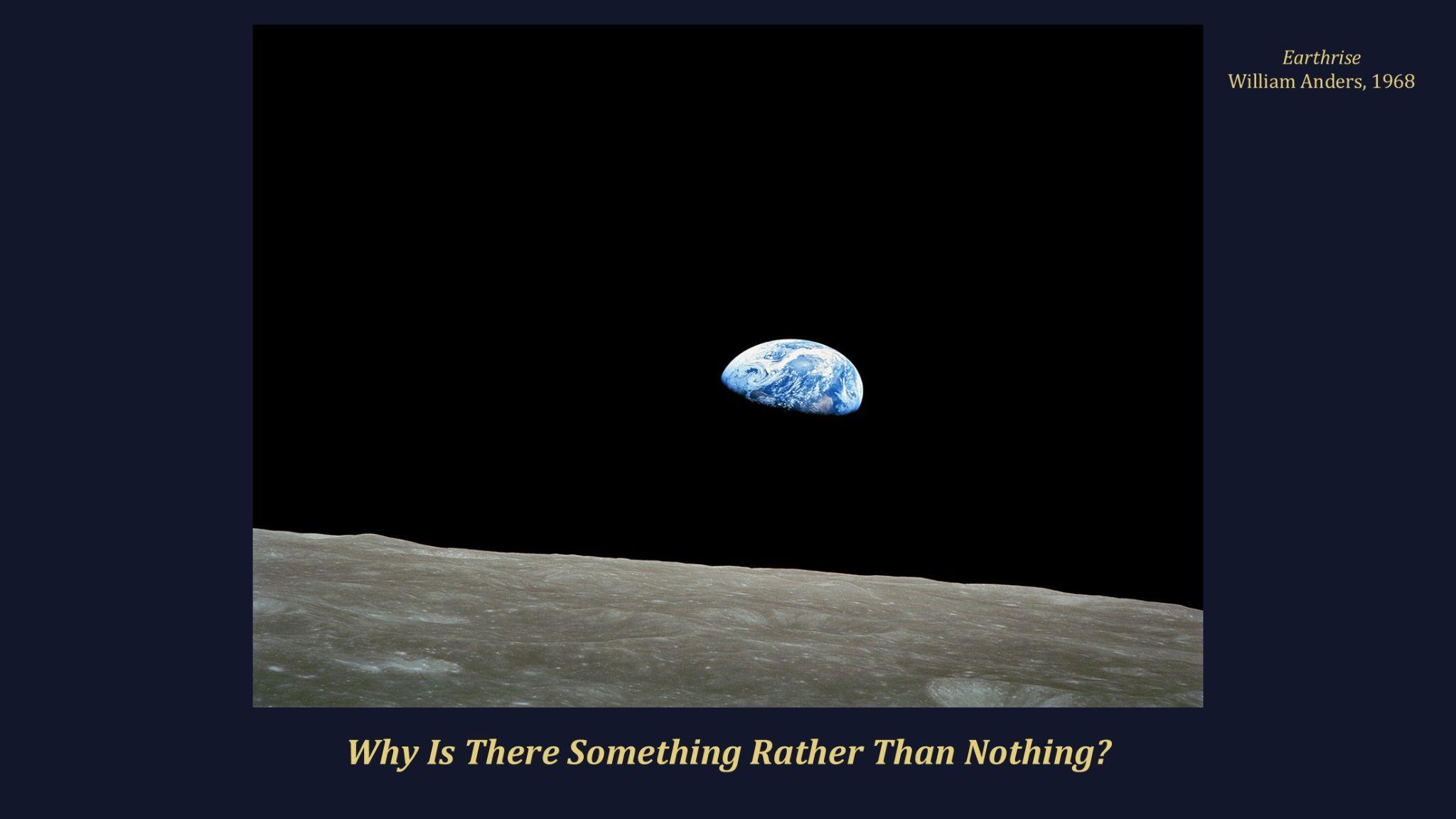
Why is there something rather than nothing?

Now this question has almost become a little bit cliche but only because few take time to actually think through it. So seriously, take a moment to think about why that is. You exist. Things around you exist. The universe exists. Why? Why should anything at all exist? And what’s at the foundation of everything that exists?

When you think about it, there’s nothing outside of existence.

  • Nothing predates it.
  • Nothing could have brought existence into existence.
  • Nothing does not suddenly turn into something.

So, whatever is at the foundation of everything isn’t dependent on something else. It would be independent and self-existent.

This also seems to indicate that the foundation has always been around. It’s eternal.

What’s even stranger, though, is that existence is suspiciously intelligible.

Why is it Rational?

Now, what do I mean by that? Well, math works, and there’s no real reason for it to do so. The laws of nature make sense to us. There’s a rationale, an orderliness to them. We experience things like moral values in our everyday lives.

If existence were meaningless, as some have proposed, then whatever order and values we think we’re discovering, are actually just fairy tales we’re projecting onto a nonsensical universe. This includes the very reasoning we use to come to that conclusion.
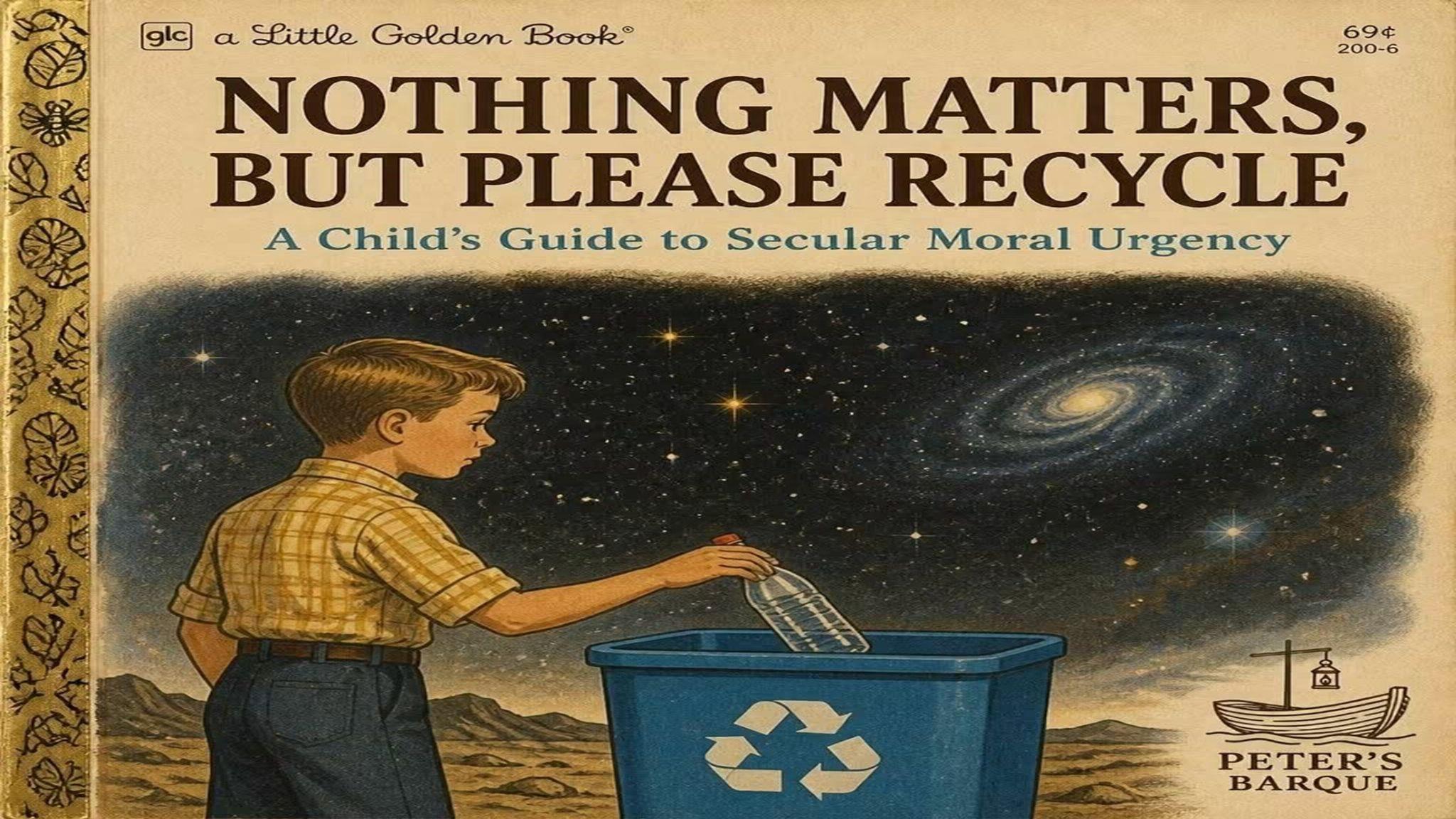
Ultimately, it boils down to a kind of metaphysical nihilism where nothing matters, there’s no sense to be made, and we’re all just pretending otherwise.

So ask yourself, do you think that the intelligibility of reality and reasoning itself are merely figments of your imagination? Does that seem reasonable to you?

For me, they instead seem to point to a foundation of everything that is not only independent, self-existent, and eternal, but also rational.

For Latter-day Saints, it sounds a lot like what Joseph Smith described as the light of truth, which was not created or made and is the law by which all things are governed and fills the immensity of pace.

Now, that doesn’t automatically bring us to a personal God just yet. But I do think it puts a crack in the strictly naturalist worldview and points to something beyond our immediate world.
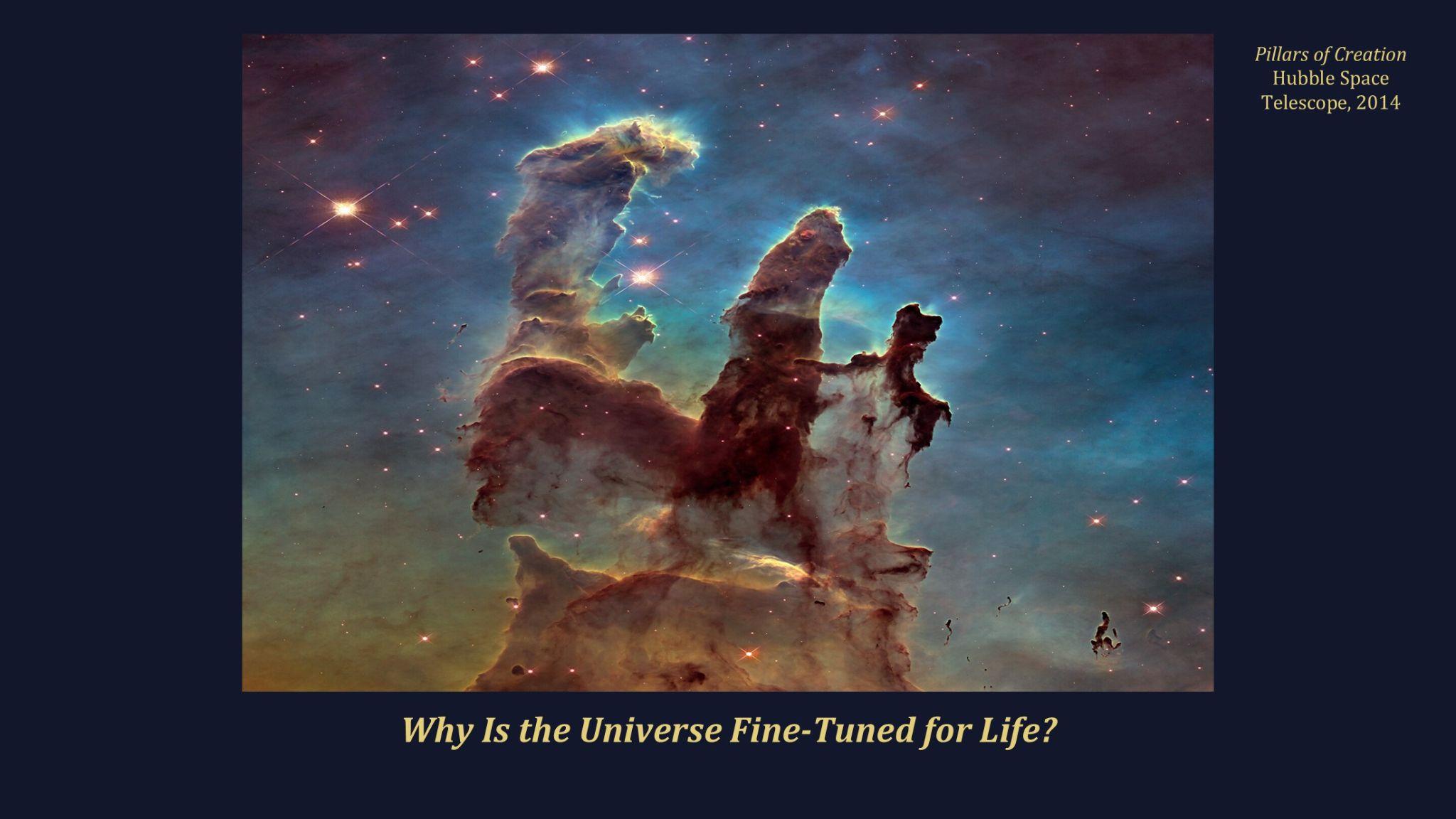
Fine-Tuning and the Universe

And another crack in that worldview is what’s known as the fine-tuning of the universe. So, what do I mean by fine-tuning?

Physicists have found that the physical constants that govern our universe had to fall within an extraordinarily narrow range if intelligent life were to even be possible.

To give just one example, if the early universe had expanded ever slightly slower, gravity would have caused it to collapse in on itself before life had a chance to develop. If it had expanded even slightly faster, matter would have dispersed too quickly for stars and planets and whatnot to come together and for life to get off the ground.

So the question is, should we expect such a narrow range of physical parameters if the universe were merely an accident? Or should this cosmological precision raise some eyebrows?
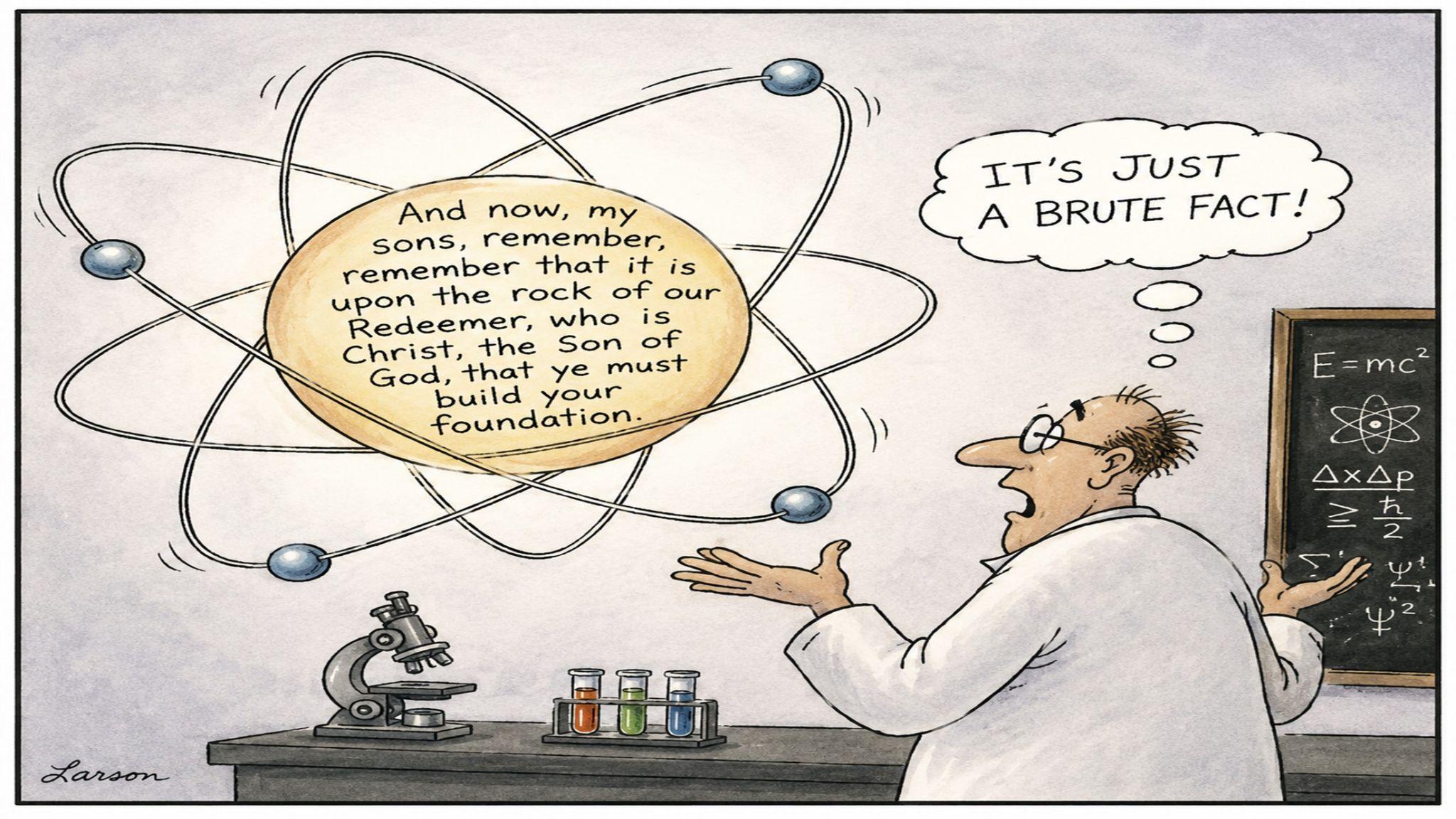
Of course, there have been numerous objections to the notion of fine-tuning. But ask yourself this, if physicists somehow discovered that every atom had Helaman 5:12 written on it, would you take that as good evidence for God in the restoration?

Or would you object and say,

“Well, maybe atoms couldn’t have been any other way. Helaman 5:12 is just a brute fact of the universe. After all, this is the only universe we’ve ever observed. Maybe there’s an infinite number of universes, and the other ones have Quran verses etched on every atom.”

If you’re not convinced by these objections to the unlikelihood of finding a Book of Mormon verse on every atom of the universe, then you might not be convinced by the objections to the fine-tuning either.

As one physicist put it, the universe seems to have known we were coming. And, maybe — because it did.

Consciousness and the Foundation of Reality

Now consider the fact that our minds can grasp all of this. It’s only through conscious experience that we grasp anything at all. Consciousness is the thing we’re the most familiar with, but it’s probably the hardest thing to explain.
So, how does that big gray blob in your head do it?

Neurons fire, chemicals flow, sure, but is there any reason to think that that physical activity is about anything?

I mean, a rock rolling down a hill doesn’t have beliefs, intentions, or meanings, and it’s far from obvious how rearranging enough squishy gray matter suddenly produces them. So why are you able to experience thinking or feeling at all?

And with that question, something stranger is going on. You are now thinking about your own thinking.

All these questions referred back to what philosophers have dubbed “the hard problem of consciousness” or how mindless particles can somehow produce the what it’s like experience of being you.
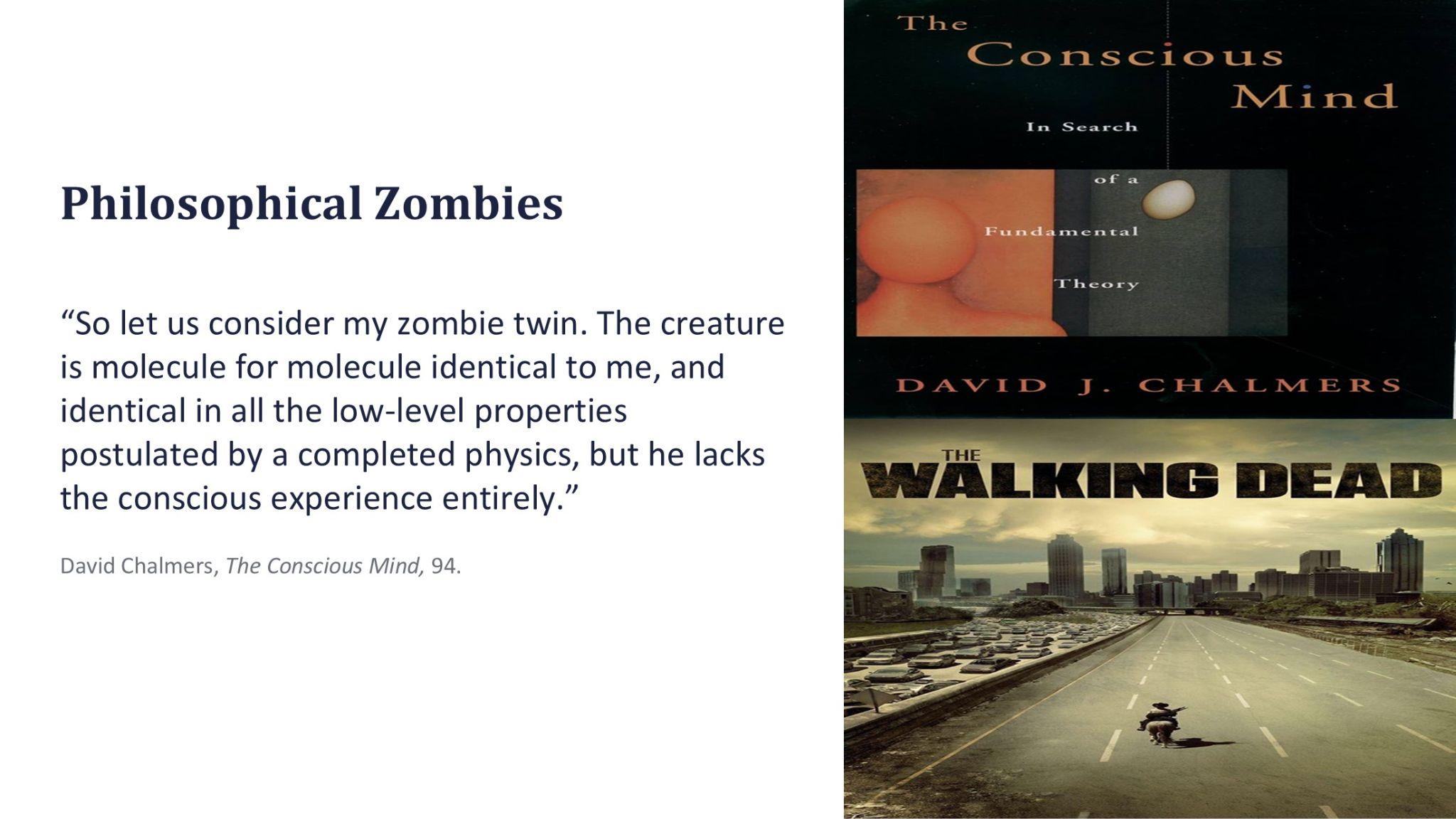
The Walking Dead

Now, if consciousness was nothing more than physical processes, then the brain is nothing more than a machine. And we should be able to imagine a world full of what philosophers have referred to as zombies. Not the flesheating kind from TV shows or movies or whatnot, but perfect physical duplicates that are essentially meat robots, exactly like us in appearance and behavior, but no subjective experience whatsoever–just machinery and mechanical processes going on upstairs.

So if consciousness is just mechanical processes, this means we could have ended up as zombies. So if we did not have to be conscious, why are we conscious? The fact that you are seems to be a knock against the purely mechanical view of consciousness, providing another crack in the naturalist worldview.

Now, all of this is to say that consciousness is really bizarre and it’s quite difficult to get from mindless particles to produce mind or how subjectivity suddenly emerges from non-subjectivity.

Instead, it seems that mind is a fundamental part of reality, part of that foundation of everything. Or as modern revelation teaches, man was also in the beginning with God and intelligence was not created or made, neither indeed can be.

Reality is Rational

This gives greater clarity to the intelligibility and fine-tuning we have discussed. Reality appears so rational, purposive and mindlike because it is. Mind is at the root of reality’s logical structure.

Now, the strangeness of existence, the intelligibility of reality, fine-tuning, consciousness, these may not appear like roots at first, but as I mentioned before, they ask fundamental questions about the kind of reality we inhabit and whether it is the kind of reality in which God exists.

An intelligible, fine-tuned, mindlike reality makes the possibility of other realms of intelligence, of a god even, seem less like a wild leap and more like a natural extension of what we already know.
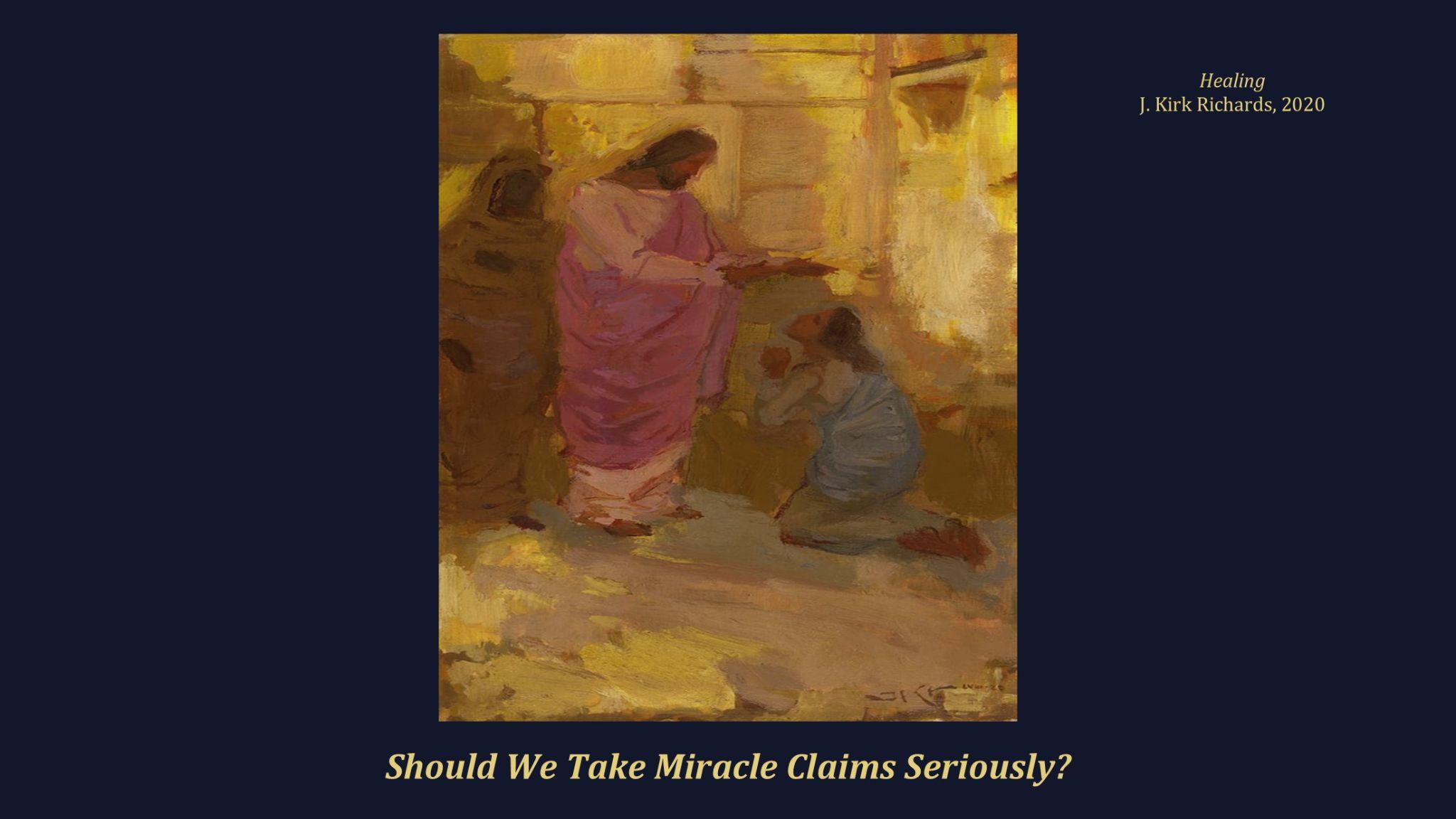
Religious Experiences and Divine Encounters

And across cultures and centuries, people have claimed various encounters with this God. Even today, we have an incredible number of reports from all over the world. And we are not talking about a handful of quacks here and there. We are talking about literally millions of people all across the world.
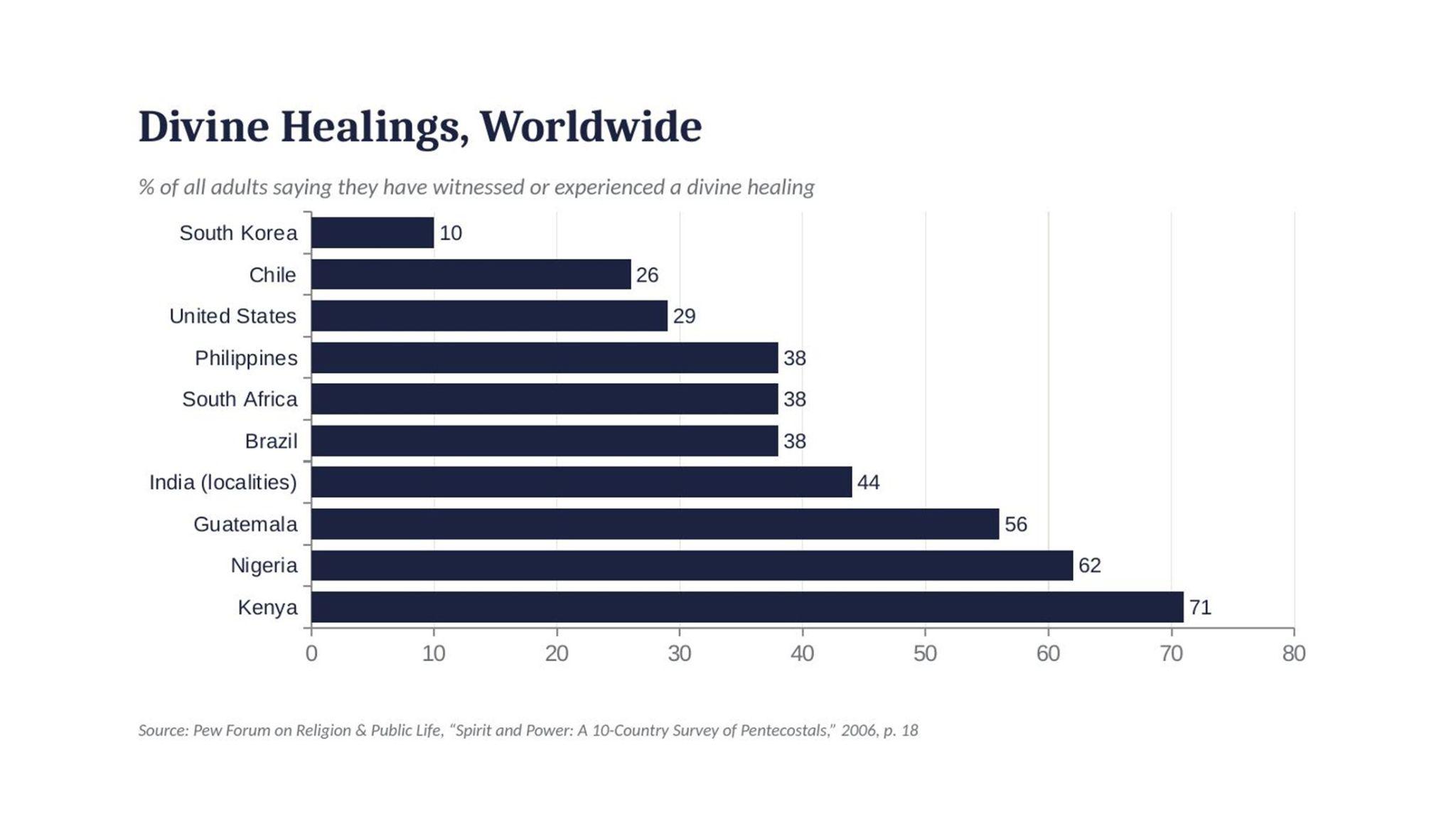
And I’ll stick with just one report on miracle claims. In 2006, the Pew Research Center performed a survey of 10 countries across four different continents. Let’s take a look at this chart here.

  • In the United States alone, 29% of the adult population reported having witnessed or experienced divine healings.
  • In Chile, it’s over a quarter of the adult population.
  • In places like Guatemala, Nigeria, and Kenya, well over half the adult population reported experiences of this kind.

And similar data could be produced for exorcisms or direct experiences with God. This is a ton of people. Can all of these simply be dismissed as mistakes or delusions or lies?

One does not have to accept all or even most of these to still be blown away by the sheer volume. The magnitude and global reach of these phenomena suggests that we should have faith in and a testimony of God.

The Resurrection of Jesus Christ

Now, none of this proves the veracity of a particular religion, but it does suggest the existence of the divine. So, if the divine has been revealing itself throughout human history, has it done so in a decisive way?

Christians have long claimed that that role is played by the resurrection of Jesus Christ.
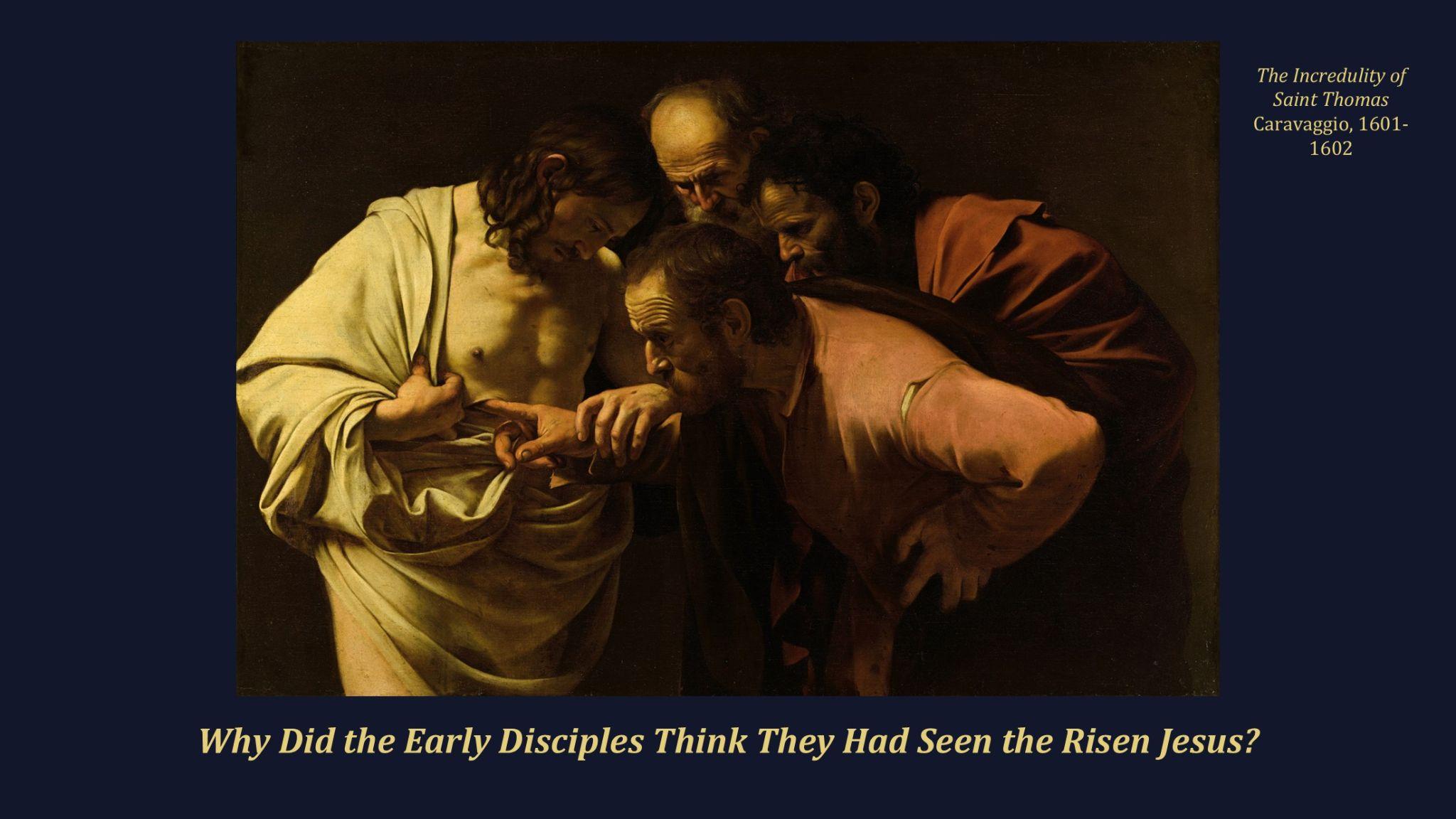
So, are there good reasons to have a testimony of Jesus Christ? I think there are quite a few.

Scholars now recognize that the genre of the gospels are similar to Greco-Roman biographies, indicating that the authors of the texts, at the very least, thought they were dealing with historical information rather than fiction.

Scholars like Richard Bauckham, Craig Keener, and others have argued, persuasively in my view, that the gospels are rooted in eyewitness testimony and reliable oral tradition. Not necessarily that they were written by eyewitnesses, but that the source material, whether direct testimony or the oral tradition it shaped, goes back to those who witnessed the events firsthand.
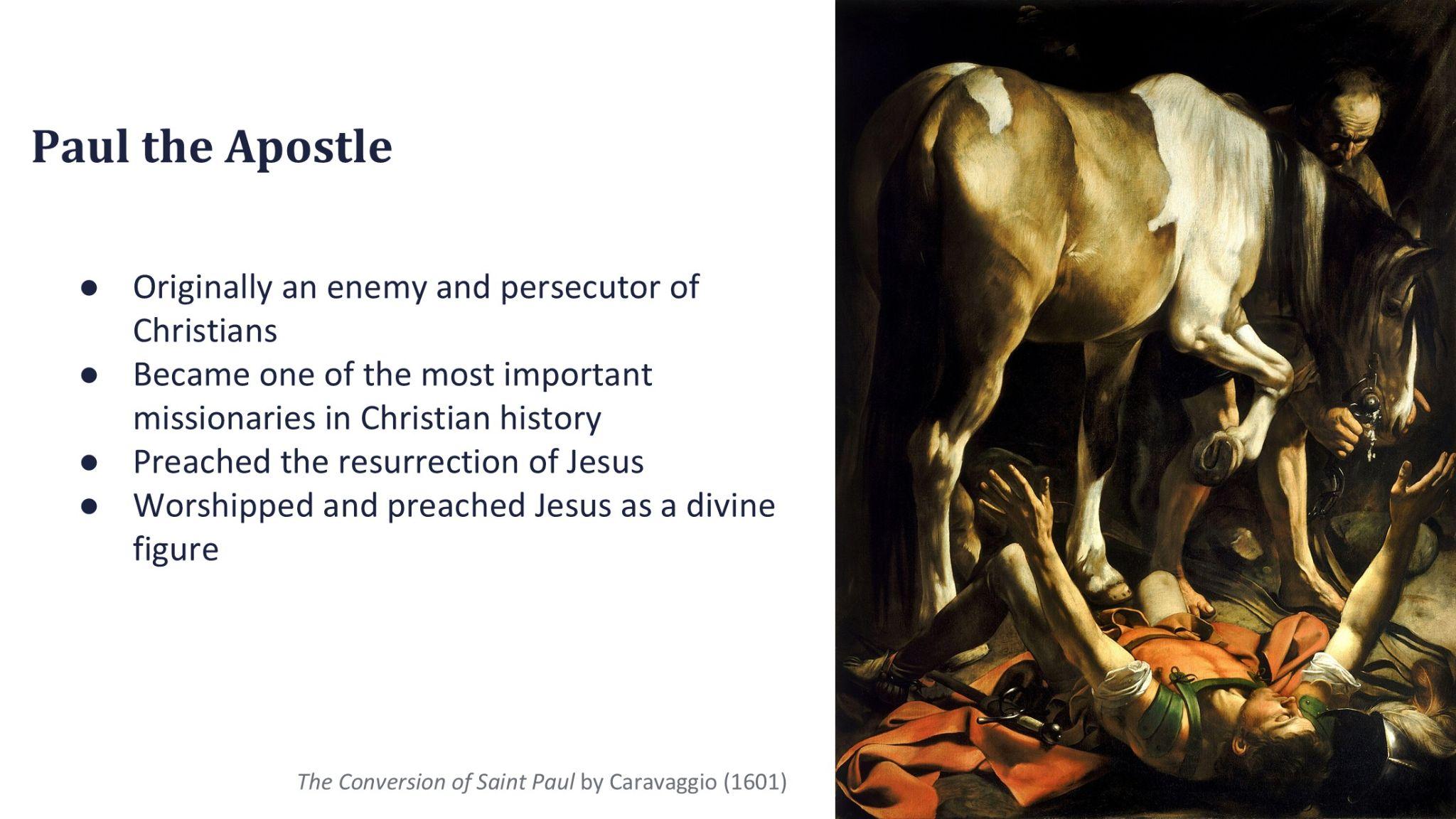
The Apostle Paul

But the bedrock witness, however, is the Apostle Paul. Now, what makes Paul’s claim truly strange is that he was originally an enemy of the Church. Something radically transformed Paul from active persecutor to one of the most important missionaries in Christian history. Something that led him to suffer and die for the sake of his message. And according to him, that was the appearance of the resurrected Jesus.

But even the centrality of the resurrection in early Christianity is historically puzzling.

A crucified Messiah is already weird enough, but a resurrected one, no one was expecting a single resurrection in the middle of history, well before all the rest of the end of time. What’s more, Jesus, who would have been understood as a crucified criminal, was then worshiped as a divine figure. His resurrection became seen as the culmination and fulfillment of God’s covenantal promises to Israel.

So what explains these historical changes in ideas and people?

As one scholar noted:

The nearly unanimous consent of critical scholars is that in some sense, the early followers of Jesus thought they had seen the risen Jesus.

The question then becomes, why did the witnesses believe they had experienced the risen Jesus?

Might I suggest that perhaps it is because they actually did?

The Book of Mormon and the Restoration

Now, the Book of Mormon also lends its witness to the resurrection of Jesus. And this gets us to the question of a testimony in the restoration itself.

But why should a 19th century text deserve to stand alongside the witness of the New Testament?
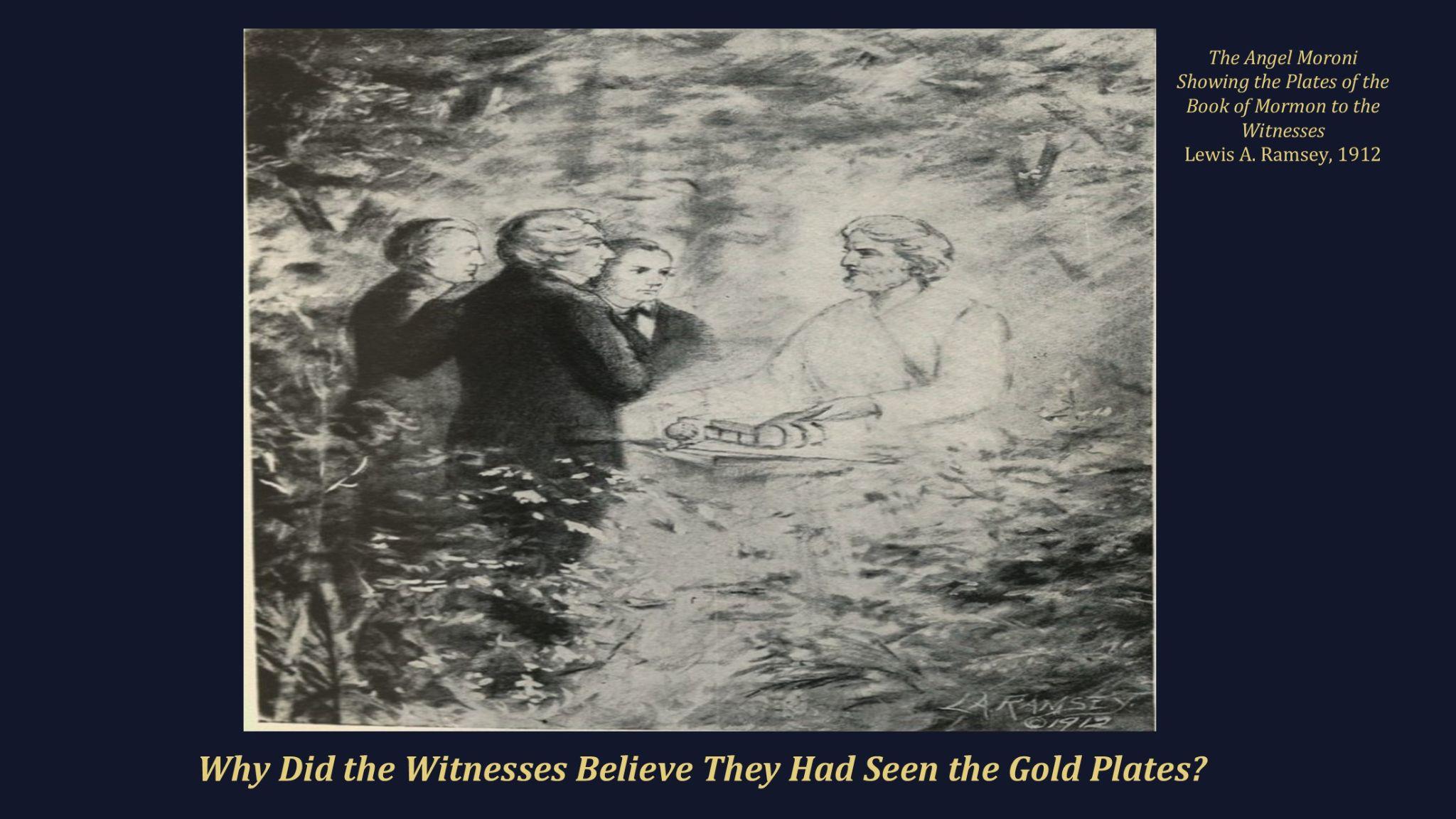
Witnesses of the Gold Plates

Well, some major reasons are the witnesses of the gold plates. Now, I won’t belabor this point since this is well known among this audience.

But just to quickly summarize:

  • The three witnesses declared that an angel showed them the plates and the engravings and that God’s voice affirmed the work’s truth.
  • The eight witnesses physically handled the plates with no supernatural elements to speak of.

Despite hardships, death threats, and some personal estrangements from Joseph Smith and the Church, all reaffirmed their testimony to the end of their lives, often on their deathbeds.
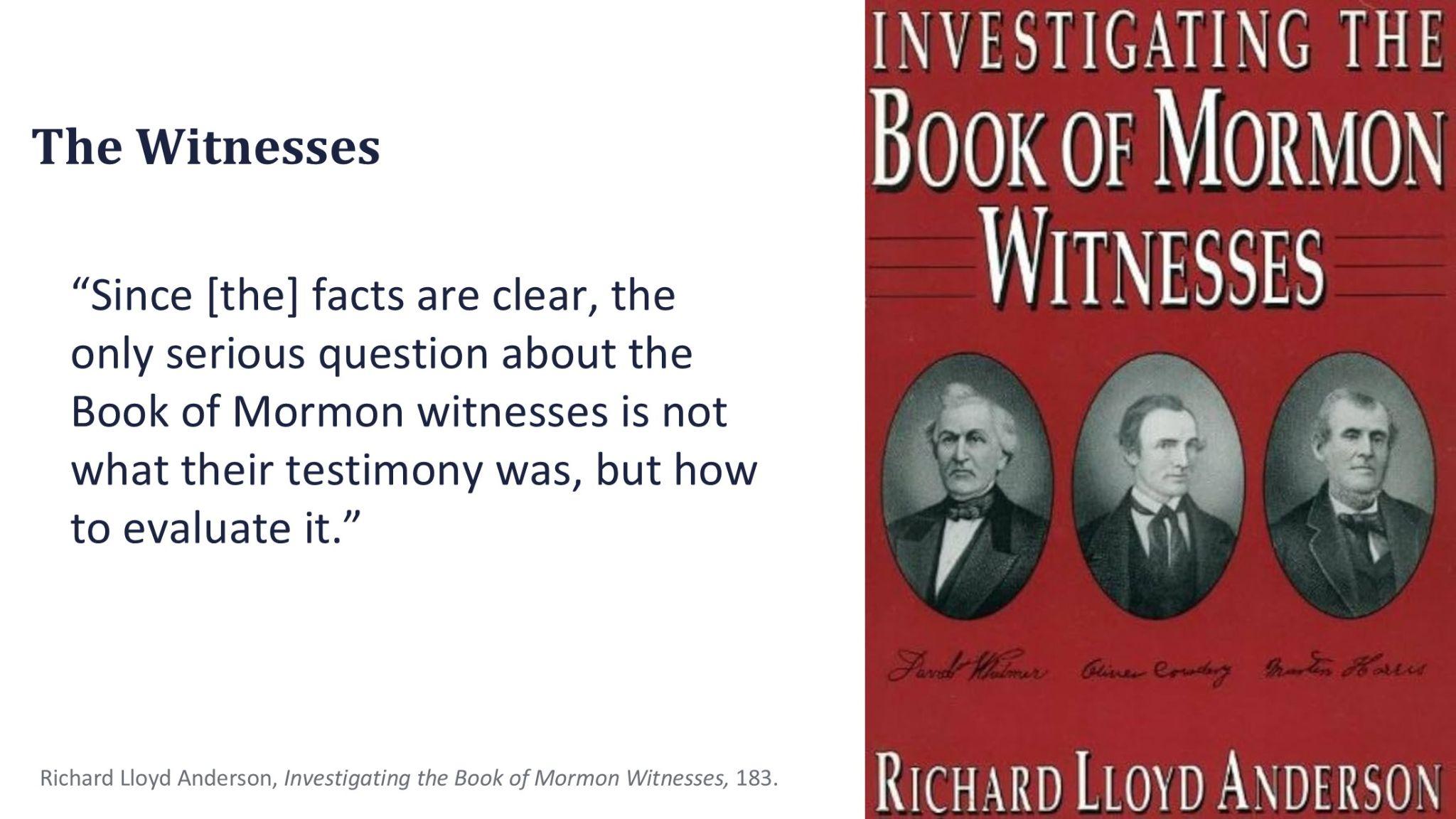
Just as in the case of the resurrection, the question becomes” why?” Why did they sincerely believe that they had seen gold plates and an angel in the case of the three?

The most straightforward answer, the one that makes the most sense of available historical evidence is that they did.

Book of Mormon Text

And then there’s the Book of Mormon text itself, which Gerrit Dirkmaat talked about yesterday.
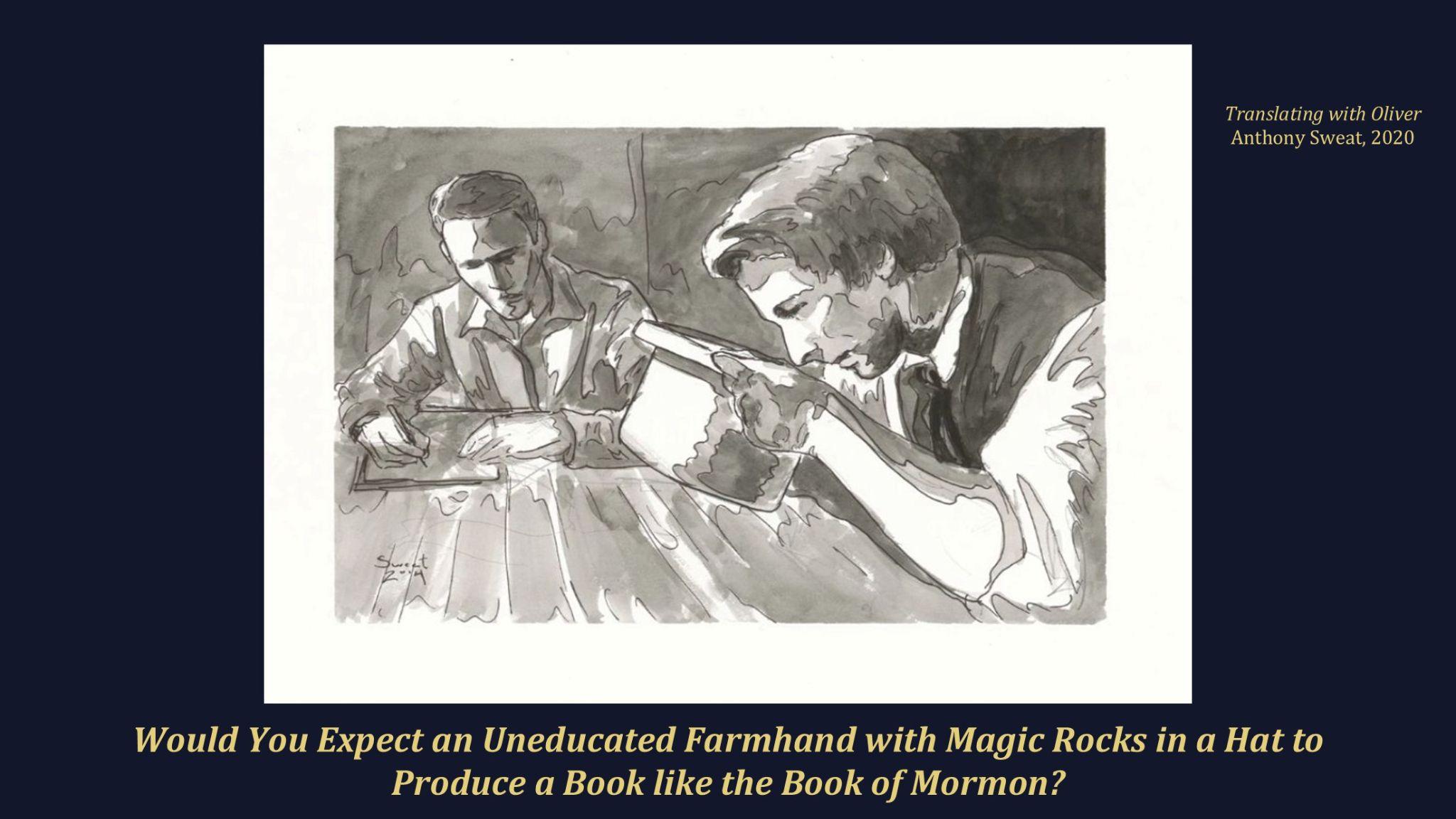
So consider this. If I asked you to give me a profile of the kind of person who could or would author a book like the Book of Mormon, would it look anything like Joseph Smith? In your heart of hearts, is that really what it looks like to you? Or would your profile look quite a bit different?

And how long do you think it would take to write such a book? What would the process of writing it look like? And does any of that match the historical record?

According to both witnesses and manuscript evidence, this incredibly complex text was dictated in two to three months amid interruptions, travel, and daily life by a largely uneducated farm boy with magic rocks and his head in a hat. It’s a little bizarre if you ask me.

Not only that, he would pick up dictation where he left off without looking at the manuscript. He was also surprised by the text as it went along.

Those that knew him best believed that the Book of Mormon was far beyond his capabilities. That is really weird if you actually think about it.
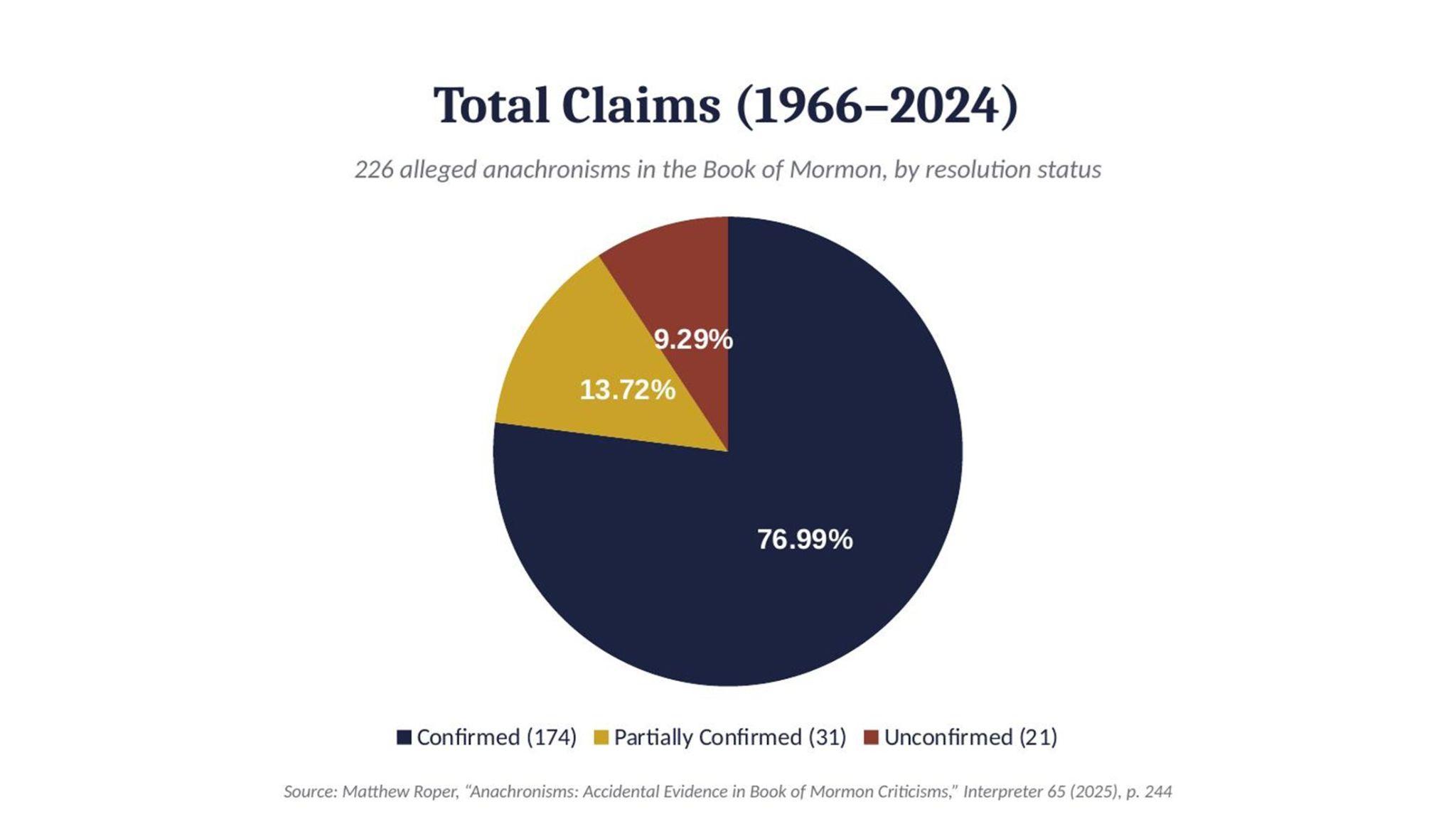
And as we’ll hear from Matt Roper, Brant Gardner, and others shortly, the historical case for the book has gotten better, not worse, over time.

So, what on earth is going on with this book? I don’t think people realize just how unexpected all of this is. A book like this has no business having the track record that it does. and reflecting on that unexpectedness can actually begin to grow a testimony of the restoration.

Moroni’s Promise and Spiritual Experience

Finally, there is the most important piece of the puzzle and that is Moroni’s promise that we can pray and receive a spiritual witness of the Book of Mormon.
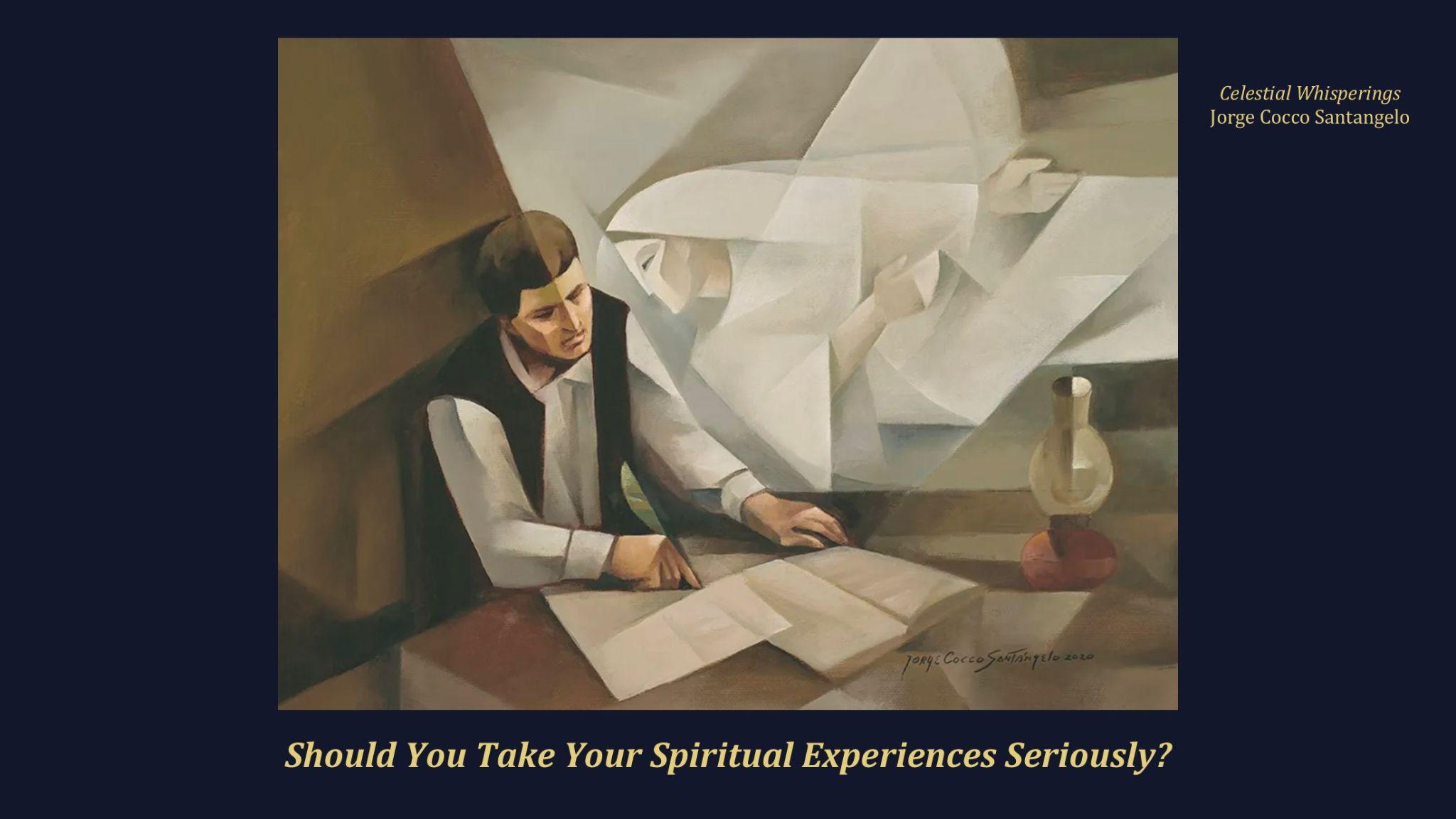
Can and should we take the spiritual experience seriously? But before going into that, perhaps we should ask if we should take any experience seriously.

For example, how do you know that you are not in the matrix right now? How would you begin to even argue that you’re not?

You likely didn’t reason your way into thinking that the external world is real and that you’re not in a computer simulation. You simply experienced your way to that.

We trust our senses and the reality around us because it seems inescapably obvious. And we are right to do so unless we have a strong reason to doubt it. That same principle applies to spiritual perception.
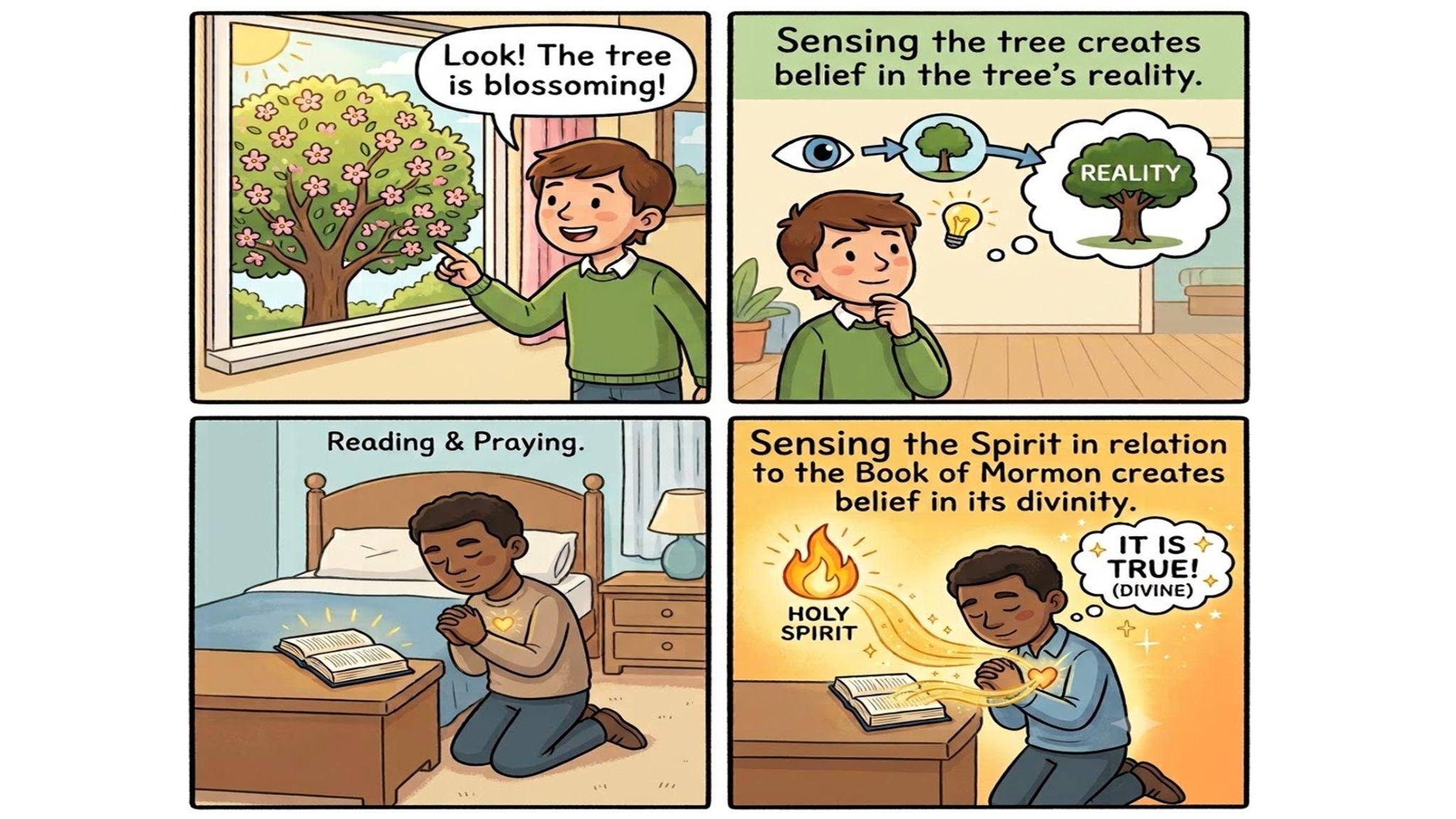
If we are justified in trusting ordinary experiences, then we should also be open to trusting direct experiences of the spirit.

Moroni’s promise is not a vague call to a generic spiritual experience. It invites us to a specific test: read the Book of Mormon, ponder it, and ask God in the name of Christ about its truthfulness. The Holy Ghost can then confirm its divine origin, anchoring our testimony in the reality of the restoration through Joseph Smith.

Just as sensory perception grounds our belief in the external world, this targeted spiritual perception can ground a direct personal knowledge of God, the Savior, and his restored gospel.

Nourishing the Roots: A Concluding Testimony

So, we have very briefly and very quickly discussed

  • The strangeness of existence
  • The intelligibility of reality
  • The fine-tuning of the universe
  • The hard problem of consciousness

Add reports of the supernatural throughout time and across the planet, and the question of God becomes harder to ignore.

In a world where God exists, what can we say of the resurrection of Jesus or the coming forth of the Book of Mormon?

And finally, when we ask God if he is there, if Jesus is the Christ, and if the Book of Mormon is true, what do we experience in response?
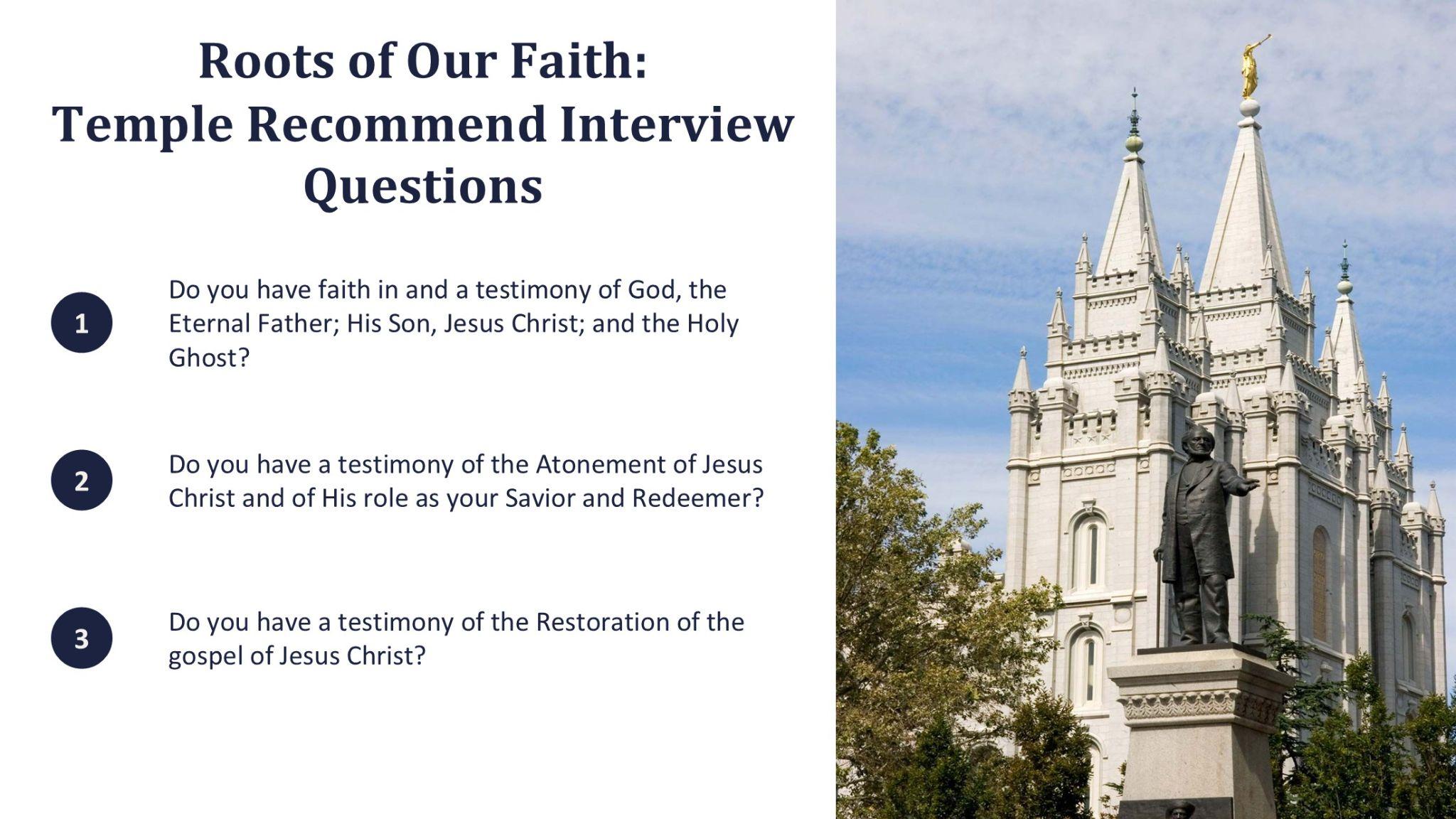
When we consider all of this, we are faced with those same temple recommend interview questions that I mentioned at the beginning. And these become the roots of our faith.

So, when it comes to evaluating the restored gospel of Jesus Christ, I would ask, what exactly are you seeking?

  • Is it a resolution to some grievance?
  • Is it relief from certain restrictions of certain expectations?
  • Or is it the actual meaning of your life and existence? Who you are, why you are here, and where you are going?

Because these are very different quests. And if I might be so bold, one of them matters more than the others.

Nourishing the roots has a way of putting the branches in their proper place. And it allows us to approach them with a better perspective.

What I Believe

Now, I cannot speak for anyone else here or anyone else in general. I can only share what I believe after everything we’ve discussed and everything that I go through within the book. And it is this. God is real. Jesus is his Christ and Joseph is his prophet.

Death may shape our mortal experience as my sister’s death did for mine. But it is not the end of that experience.

Because of Christ’s atonement and resurrection, death does not have the final say, and we are not defined by our worst moments.
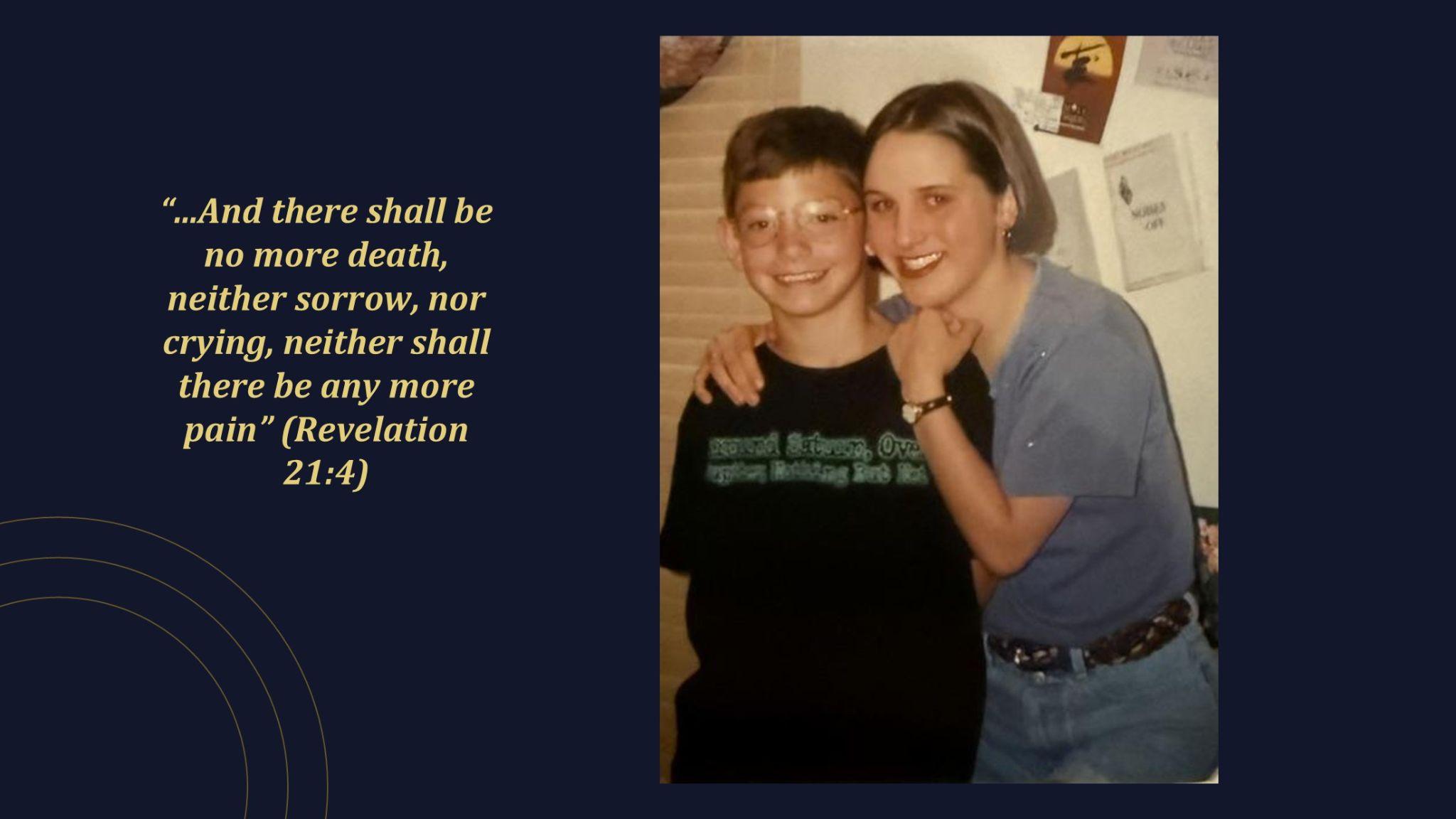
Instead, we can look with hope to a time when God shall wipe away all tears from our eyes, and there shall be no more death, neither sorrow nor crying, neither shall there be any more pain. For the former things will have passed away.

And he that sits upon the throne shall say,

“Behold, I make all things new.”

Thank you.

 

Daniel T. Ellsworth

Writer · Researcher · Biblical Studies

Daniel T. Ellsworth, Latter-day Saint writer and researcher in biblical studies

Daniel T. Ellsworth is a Latter-day Saint writer and independent researcher with a particular interest in biblical studies, scripture interpretation, and the relationship between faith and academic approaches to scripture.

Ellsworth earned a BA in international studies from Brigham Young University and works professionally as a technology consultant. Alongside his professional career, he has pursued extensive study of the Bible and Latter-day Saint scripture, with particular attention to Isaiah, biblical authorship, historical-critical scholarship, and the assumptions scholars and believers bring to the interpretation of sacred texts.

His published work includes “Their Imperfect Best: Isaianic Authorship from an LDS Perspective,” which examines scholarly approaches to the composition and authorship of Isaiah and considers how Latter-day Saints can engage those approaches while taking Restoration scripture and prophetic revelation seriously. He has also written about faith, belief, and religious community.

At FAIR’s 2025 Virtual Conference, Ancient Truths for Modern Faith, Ellsworth presented “Defending the Old Testament: Ancient Israel’s Offering to the World.” His presentation explored what it means to defend the Old Testament from a Latter-day Saint perspective, emphasizing careful interpretation, awareness of underlying scholarly assumptions, and the enduring importance of revelation and prophetic authority.

Ellsworth’s work encourages believing readers to engage biblical scholarship thoughtfully while recognizing the role that worldview, methodology, and assumptions play in the conclusions we draw about scripture.

Bio last reviewed:

Contributions at FAIR

Statement of Faith

Statement of faith coming soon.

Date of Statement of Faith

Stephen F. Johnsen

Psychologist • Faith & Evidence Researcher • FAIR Volunteer

Stephen F. Johnsen

Stephen F. Johnsen, PhD, was raised Protestant and earned a BA from a Christian college. By his late teens, he had become an atheist. While pursuing a PhD in psychology, Johnsen experienced an unexpected and powerful religious experience that prompted him to join The Church of Jesus Christ of Latter-day Saints.

During his first year as a member of the Church, exposure to extensive critical literature about Latter-day Saint beliefs led him to begin investigating empirical evidence related to religious claims. That interest developed into a long-term study of evidence concerning scripture, Christianity, and the Book of Mormon.

Johnsen co-authored And Now My Son: When Your Faith Is Challenged with his wife, Dale. He has volunteered with FAIR for a number of years and has also served for many years as a temple worker, in addition to serving in a Church teaching calling.

Bio last reviewed:

Contributions at FAIR

The Enlightenment of Neo-Mormons

June 11, 2017 by Mike Ash

In Greek, the word neos means “new.” In English, the prefix “neo” generally refers to something that is new, revived, or newly refreshed. We have compounds such as neo-classic, neo-Darwinism, neo-Nazis, neo-Hellenism, neo-Platonism, neo-orthodox Mormons, and more.

While Neo-Mormons might refer to Mormons who take a new or modified approach to Mormon matters, for the purpose of this post Neo-Mormons refer to those who compare their exit from Mormonism to the character in the fictional movie, The Matrix.

For those who haven’t seen the movie, Keanu Reeves plays the character of Thomas Anderson, a computer programmer and infamous hacker known as “Neo” (the name by which he is known throughout the movie). Morpheus, another infamous hacker (who is almost as much myth as legend), contacts Neo to warn him that his life in danger.

After meeting face to face, Morpheus explains that the world in which Neo lives is not “real” but offers Neo the opportunity to transition to the real world. Neo can either swallow a red pill which will extract him from the “Matrix” (the computer-generated world in which he lives) or he can choose to swallow the blue pill which will cause Neo to wake up in his bed at home, forgetting the entire conversation and everything about the Matrix. If he takes the red pill, he could never go back to the way things were. If he takes the blue pill, he could be happily ignorant to reality. Neo takes the red pill, wakes up in the “real” world and discovers that the Matrix was a world of little more than digital smoke and mirrors.

Neo’s red pill vs. blue pill dilemma has frequently been commandeered by former Mormons in their attempt to explain their new perspective of reality once they left Mormonism. According to several ex-Mormons, they, like Neo, were confronted at some point with information that caused (or even forced) them to choose between the red pill and blue pill. In every case in which I’ve seen the analogy used, the former (or teetering) member took the red pill. They became “enlightened,” and discovered the “truth,” or “reality” of Mormonism.

This new enlightenment allowed them, like Neo, to see (sometimes for the first time) truth with eyes wide open. That truth, they claim, destroyed the untruths found in Mormonism and exposed it as a man-made institution sitting on a continuum somewhere between an evil enterprise and a well-meaning assembly of honorable but gullible dupes.

While I understand that there is no such thing as a perfect analogy, I think the Neo Mormon/Matrix analogy falls flat. First, the red pill vs blue pill analogy implies that ex-Mormons are not only open to the truth but can see the truth, while believing Mormons stick their heads in the sand (taking the blue pill) and don’t want to see the new information that comes with taking the red pill.

The fact is, however, that myriad of LDS scholars, lay members, and believing students of Mormonism, are equally as informed about the supposedly troubling Mormon information. Despite seeing this same information they still accept the prophetic calling of Joseph Smith and the continuation of modern prophets today. There’s no hiding of heads in the sand, no rejecting the red pill because they don’t want to see allegedly challenging issues. The eyes of informed Latter-day Saints are at least as wide open to all the same information as any critic.

Secondly, the new information doesn’t automatically destroy basic Mormon beliefs. Taking the red pill does not automatically prove that Mormonism is false. While some people may find the critics’ interpretations of the data to be convincing, such interpretations are not the automatic definitive conclusions to understanding the data. To insist that there is only one way to interpret the data is naïve and sophomoric. There are no slam dunks proving nor debunking Mormonism. There is only evidence, and evidence must be weighed.

Thirdly, everyone assumes they are “right.” We have reasons for our beliefs. Those reasons may not be transferrable; they may not, for example, convince others, even when they make sense to us. The fact is—and a growing number of studies bear this out—intellect alone does not impel humans to believe or disbelieve. In other words, despite the ridicule by some critics who claim that believers rely on “feelings” while they (the critics) rely on reason, the simple fact is that all people’s beliefs are influenced, at least to some degree, by “feelings.” No human is a purely rational creature.

Differences in religious opinions and beliefs are not anything like what we might imagine with a fictional Neo-Mormon who takes the red pill and a believing Mormon who takes the blue pill. Instead, the differences are much more akin to what we find among people who embrace divergent political views. If you are a staunch Democrat it doesn’t mean that you’ve taken the red pill—that your eyes are wide open—and that Republicans have swallowed the blue pill. If you are a staunch Republican, you are not seeing reality while your Democrat friends hide their heads in the sand. Some members of each party may like to think that’s the case, but it isn’t.

Lastly, we run into the problem of changing minds. Just as some Democrats become Republicans and some Republicans become Democrats, some members go through periods of disbelief, doubt, and possibly even separation from Mormonism. I have a couple of friends who have been married to the same spouse several times. They get divorced, then remarried, more than once—each time to the same person. Some members or former members seem to have a similar relationship with the Church. They are members (perhaps from birth), then leave the church over “troubling” issues, then return because of spiritual or intellectual resolution, then leave again over spiritual or intellectual quandaries, and so forth.

In which phase of their change can they claim to be the surest of their beliefs? Obviously, it would be the most current phase. They can look back and tell themselves that in their earlier phase they were duped, but this time they got it right. The problem is, however, that we all tell ourselves this same story (it’s a form of confirmation bias). Studies show that our memories of the past are influenced by our present selves—in other words, we can’t accurately remember how we felt about our past situation because we can’t escape our current situation.

As I’ve matured in life, wisdom, and Gospel understanding, I’ve had to modify paradigms many times—rejecting those things that I’ve found to be weak, and embracing those things which I’ve found to be strong. It would be foolish of me to think that I’ve reach a zenith—that I’ve reached a point where I’m right about everything I reject, and never wrong about everything I accept. I’m among those who has seen all the details supposedly hidden in the Matrix. I’ve seen the same data which allegedly is revealed to those Neo-Mormons who swallow the red pill. And yet, I believe.

For me, the same data that causes some members to falter simply illuminates the world I already knew. I absolutely had to modify my worldview by absorbing new facts, rejecting common myths, and by recontextualizing some of the things which didn’t seem to fit my previous world-view (which, by the way, is the same modification process we find in the evolution and revolution of scientific paradigms). From my current perspective, however, I find that most of the data fits comfortably within a framework that I embraced.

While I like to think that my eyes are opened wider with every new bit of data, I’ve found that new discoveries haven’t forced (or enticed) me into rejecting Mormonism as a mirage, a fabrication, or a Matrix of human creation. And just because someone else comes to a different conclusion than my own (based on the same data) doesn’t mean that they are more correct, that they’ve swallowed the red pill while I swallowed the blue pill, hid my head in the sand, and simply ignored conflicting information.

From a Matrix analogy, I don’t think that there are any real Neo-Mormons. There are no red pills and blue pills which ultimately expose or conceal the truth. As both science and religion tells us, we are all related and part of something greater than our individual selves. All humans are very similar—including the fact that we are faced with similar cognitive, physical, psychological, and emotional challenges and strengths— and we are also all unique in interesting and complex ways.

This, to me, is what makes God’s plan—as expressed in the LDS faith—so appealing. It’s impossible for you to fully know me, or me to fully know you. We can’t escape our own heads, or our physiological influences or impediments. We can never fully know when we are the ones who are doing the “acting” or when we are being “acted upon” (2 Ne. 2:14).

We are told not to judge others (outside of specific instances involving ecclesiastical or legislative authority) because we are not only weak ourselves and influenced by too many factors to be good judges, but because we cannot know all the factors involved in someone else’s choices. Only God knows. He knows why we do the things we do, say the things we say, and make the choices we make.

While some of those who have left Mormonism (or who consider leaving Mormonism) believe that they can see reality, the truth is that their eyesight is no better than that of believers. Their logic and reasoning is no better than that of believers. And they certainly are no more open to the “truth” because they decided to reject Mormonism, than those who accept Mormonism. Swallowing the red pill simply means that you consciously chose to reject Mormonism because of how you interpret the data. Swallowing the blue pill means that you consciously chose to accept Mormonism because of how you interpret the data.

If there is an analogy to be made with the movie The Matrix it is this: If we believe that a rejection of Mormonism automatically comes with seeing the ambiguities in Mormon history or the scriptures—that the data automatically compels the intellectually honest to reject the LDS faith and that the data cannot be honestly accepted as consistent with LDS faith claims—then we are believing in an illusion and we are still trapped in the Matrix.

—

Michael R. Ash is the author of: Of Faith and Reason: 80 Evidences Supporting The Prophet Joseph Smith. He is the owner and operator of MormonFortress.com and is on the management team for FairMormon. He has been published in Sunstone, Dialogue: A Journal of Mormon Thought, the Maxwell Institute’s FARMS Review, and is the author of Shaken Faith Syndrome: Strengthening One’s Testimony in the Face of Criticism and Doubt. He and his wife live in Ogden, Utah, and have three daughters.

Filed Under: Apologetics, Michael R. Ash, Uncategorized Tagged With: anti-Mormonism, apologetics, Faith and Reason, Faith Crisis, Michael R. Ash, the Marix

Interview with Dr. Louis C. Midgley

October 8, 2016 by FAIR Staff

https://media.blubrry.com/mormonfaircast/www.fairlatterdaysaints.org/wp-content/uploads/2016/10/Midgley-Interview-2016.mp3

Podcast: Download (45.0MB)

Subscribe: RSS

louis-midgley2

This week’s interview on the Mormon FAIRCast is with is with Dr. Louis C. Midgley. He was born and raised near Salt Lake City. He received a bachelor’s degree and a master’s degree from the University of Utah, and, after teaching for a year at Weber State University, he and his wife moved to Providence, Rhode Island, where he received his Ph.D. from Brown University in the political science department. He taught the history of political and legal philosophy for thirty-six years at Brigham Young University, from which he retired in 1996.

Dr. Midgley has had an abiding interest in the history of Christian theology. He wrote his doctoral dissertation on Paul Tillich, the then-famous German-American Protestant theologian and political theorist/religious-socialist activist. Midgley also studied the writings of other influential Protestant theologians such as Karl Barth. Eventually he took an interest in contemporary Roman Catholic theology, and was also impacted by the work of important Jewish philosophers, including especially Leo Strauss and his disciples.

Beginning with its first issue in 1989, he was a regular contributor to the FARMS Review, which soon became the flagship publication of the Neal A. Maxwell Institute for Religious Scholarship. He eventually also had the pleasure of serving as one of its associate editors until it was cancelled in 2011. He then began serving as a contributing editor for Interpreter: A Journal of Mormon Scripture in 2012.

Dr. Midgley served two missions to New Zealand—the first in 1950-52 and the second, with his wife, in 1999-2000, during which they directed the Lorne Street Institute of Religion, in Auckland.

He is married to the former Ireta Troth, of Bountiful, Utah. They are the parents of two sons and a daughter.

Dr. Midgley’s wife passed away on 3 February 2014 from an unexpected catastrophic event following successful surgery at the Huntsman Cancer Hospital. He is now without the immediate companionship of his beautiful wife. He lives with a firm hope that he will eventually be reunited with her.

Dr. Midgley’s testimony can be found at Mormon Scholars Testify.


Filed Under: Apologetics, Faith and Reason, Julianne Dehlin Hatton Tagged With: apologetics, Book of Mormon Geography, Brown University, Camerion Club, Faith and Reason, Lou Midgley, New Zealand, Podcast

Faith and Reason 75: Deification

August 14, 2016 by FAIR Staff

https://media.blubrry.com/mormonfaircast/www.fairlatterdaysaints.org/wp-content/uploads/2016/08/Deification-2016.mp3

Podcast: Download (11.6MB)

Subscribe: RSS

From the book: Of Faith and Reason: 80 Evidences Supporting the Prophet Joseph Smith

by Michael R. Ash

Joseph Smith taught that we are of the same lineage and race of God. As God’s children, we have the potential to reach spiritual maturity and become like him. Most other Christians are shocked or outraged at such a suggestion. But this is what the scriptures tell us. The Psalmist wrote: “Ye are gods; and all of you are children of the most High” (Psalms 82:6). Many ancient Christians in the primitive Church also understood that we are to follow Christ’s example in a literal sense. Gregory of Nazianus taught: “I may become God to the same extent as He became man”. Likewise, the early Christian Irenaeus wrote that Jesus Christ became “what we are, that He might bring us to be even what He is Himself”. Even as late as the early part of the fourth century, Athanasius said that Christ “was made man that we might be made God”.

Michael R. Ash is the author of: Of Faith and Reason: 80 Evidences Supporting The Prophet Joseph Smith. He is the owner and operator of MormonFortress.com and is on the management team for FairMormon. He has been published in Sunstone, Dialogue: A Journal of Mormon Thought, the Maxwell Institute’s FARMS Review, and is the author of Shaken Faith Syndrome: Strengthening One’s Testimony in the Face of Criticism and Doubt. He and his wife live in Ogden, Utah, and have three daughters.

Julianne Dehlin Hatton has worked as a News Director at an NPR affiliate, News Anchor, and Airborne Traffic Reporter. She graduated with an MSSc from the Maxwell School of Citizenship and Public Affairs at Syracuse University in 2008. Julianne and her husband Thomas are the parents of four children.

Music for Faith and Reason is provided by Arthur Hatton.

Filed Under: Faith and Reason, Julianne Dehlin Hatton, Michael R. Ash, Podcast Tagged With: Deification, Faith and Reason, Julianne Dehlin Hatton, Michael R. Ash, Podcast

Faith and Reason 74: Degrees of Glory

June 25, 2016 by FAIR Staff

https://media.blubrry.com/mormonfaircast/www.fairlatterdaysaints.org/wp-content/uploads/2016/06/Degrees-of-Glory-2016-1.mp3

Podcast: Download (9.8MB)

Subscribe: RSS

From the book: Of Faith and Reason: 80 Evidences Supporting the Prophet Joseph Smith

by Michael Ash

Christ spoke of many mansions (John 14:2) and Paul compared the difference between the glory of the sun, moon, and stars with the different glory of those at the resurrection. Richard Anderson explains, “[Paul] sometimes wrote ‘heaven’ of the place where God dwells, but he used ‘heavens’ twice as much. Paul normally used the plural, even though the King James Version sometimes writes the singular for the Greek plural. For Paul, Christ is exalted ‘far above the heavens’ (Ephesians 4:10). If Christ is literally ‘higher than the heavens’ (Hebrews 7:26), he is in the highest heaven.

Michael R. Ash is the author of: Of Faith and Reason: 80 Evidences Supporting The Prophet Joseph Smith. He is the owner and operator of MormonFortress.com and is on the management team for FairMormon. He has been published in Sunstone, Dialogue: A Journal of Mormon Thought, the Maxwell Institute’s FARMS Review, and is the author of Shaken Faith Syndrome: Strengthening One’s Testimony in the Face of Criticism and Doubt. He and his wife live in Ogden, Utah, and have three daughters.

Julianne Dehlin Hatton has worked as a News Director at an NPR affiliate, News Anchor, and Airborne Traffic Reporter. She graduated with an MSSc from the Maxwell School of Citizenship and Public Affairs at Syracuse University in 2008. Julianne and her husband Thomas are the parents of four children.

Music for Faith and Reason is provided by Arthur Hatton.

Filed Under: Faith and Reason, Julianne Dehlin Hatton, LDS History Tagged With: Faith and Reason, Joseph Smith, Julianne Dehlin Hatton, Michael R. Ash, Podcast

Faith and Reason 73: Salvation for the Dead

June 18, 2016 by FAIR Staff

https://media.blubrry.com/mormonfaircast/www.fairlatterdaysaints.org/wp-content/uploads/2016/06/Salvation-for-the-Dead.mp3

Podcast: Download (14.1MB)

Subscribe: RSS

Baptismal font in the Copenhagen Denmark Temple.

Jesus Christ taught that baptism is essential to the salvation of all who have lived on earth (see John 3:5). Many people, however, have died without being baptized. Others were baptized without proper authority. Because God is merciful, He has prepared a way for all people to receive the blessings of baptism. By performing proxy baptisms in behalf of those who have died, Church members offer these blessings to deceased ancestors. Individuals can then choose to accept or reject what has been done in their behalf.

From LDS.org: https://www.lds.org/scriptures/gs/salvation-for-the-dead?lang=eng

Michael R. Ash is the author of: Of Faith and Reason: 80 Evidences Supporting The Prophet Joseph Smith. He is the owner and operator of MormonFortress.com and is on the management team for FairMormon. He has been published in Sunstone, Dialogue: A Journal of Mormon Thought, the Maxwell Institute’s FARMS Review, and is the author of Shaken Faith Syndrome: Strengthening One’s Testimony in the Face of Criticism and Doubt. He and his wife live in Ogden, Utah, and have three daughters.

Julianne Dehlin Hatton has worked as a News Director at an NPR affiliate, News Anchor, and Airborne Traffic Reporter. She graduated with an MSSc from the Maxwell School of Citizenship and Public Affairs at Syracuse University in 2008. Julianne and her husband Thomas are the parents of four children.

Music for Faith and Reason is provided by Arthur Hatton.

Filed Under: Faith and Reason, Julianne Dehlin Hatton, Podcast Tagged With: apologetics, Faith and Reason, Julianne Dehlin Hatton, Michael R. Ash, Podcast, Salvation for the dead

Faith and Reason 72: Sacred Vestments

June 12, 2016 by FAIR Staff

https://media.blubrry.com/mormonfaircast/www.fairlatterdaysaints.org/wp-content/uploads/2016/06/Sacred-Vestments.mp3

Podcast: Download (14.8MB)

Subscribe: RSS

garment

To those outside a particular faith, the rituals and clothing may seem unfamiliar. But for the participants they can stir the deepest feelings of the soul, motivate them to do good, even shape the course of a whole life of service.

The nun’s habit. The priest’s cassock. The Jewish prayer shawl. The Muslim’s skullcap. The saffron robes of the Buddhist monk. All are part of a rich tapestry of human devotion to God.

Not all such religious vestments are on public display. Some are seen only in places of worship. Temple robes of The Church of Jesus Christ of Latter-day Saints, known as the robes of the holy priesthood, are worn only inside Mormon temples and reserved for the highest sacraments of the faith. White symbolizes purity. There is no insignia or rank. The most senior apostle and the newest member are indistinguishable when dressed in the same way. Men and women wear similar clothing. The simple vestments combine religious symbolism with echoes of antiquity reflected in ancient writings from the book of Exodus.

From the LDS Newsroom: http://www.mormonnewsroom.org/article/temple-garments

Michael R. Ash is the author of: Of Faith and Reason: 80 Evidences Supporting The Prophet Joseph Smith. He is the owner and operator of MormonFortress.com and is on the management team for FairMormon. He has been published in Sunstone, Dialogue: A Journal of Mormon Thought, the Maxwell Institute’s FARMS Review, and is the author of Shaken Faith Syndrome: Strengthening One’s Testimony in the Face of Criticism and Doubt. He and his wife live in Ogden, Utah, and have three daughters.

Julianne Dehlin Hatton has worked as a News Director at an NPR affiliate, News Anchor, and Airborne Traffic Reporter. She graduated with an MSSc from the Maxwell School of Citizenship and Public Affairs at Syracuse University in 2008. Julianne and her husband Thomas are the parents of four children.

Music for Faith and Reason is provided by Arthur Hatton.

Filed Under: Faith and Reason, Julianne Dehlin Hatton, Podcast Tagged With: Faith and Reason, LDS Temples, Michael R. Ash, sacred vestments

Faith and Reason 71: Secret Teachings Among the Apostles

June 5, 2016 by FAIR Staff

https://media.blubrry.com/mormonfaircast/www.fairlatterdaysaints.org/wp-content/uploads/2016/06/Secret-Teachings.mp3

Podcast: Download (9.6MB)

Subscribe: RSS

Christ with the Twelve Apostles by Jacques Tissot

From the book: Of Faith and Reason: 80 Evidences Supporting the Prophet Joseph Smith

by Michael R. Ash

Although Jesus often gave sermons that lasted for hours, all of his words in the New Testament can be read in about a half hour. Both the recently discovered Nag Hammadi Library and the rediscovered writings of the early Church Fathers include many quotes that they attribute to Jesus but are not found in our Bible.

Michael R. Ash is the author of: Of Faith and Reason: 80 Evidences Supporting The Prophet Joseph Smith. He is the owner and operator of MormonFortress.com and is on the management team for FairMormon. He has been published in Sunstone, Dialogue: A Journal of Mormon Thought, the Maxwell Institute’s FARMS Review, and is the author of Shaken Faith Syndrome: Strengthening One’s Testimony in the Face of Criticism and Doubt. He and his wife live in Ogden, Utah, and have three daughters.

Julianne Dehlin Hatton has worked as a News Director at an NPR affiliate, Television Host, News Anchor, and Airborne Traffic Reporter. She graduated with an MSSc from the Maxwell School of Citizenship and Public Affairs at Syracuse University in 2008. Julianne and her husband Thomas are the parents of four children.

Music for Faith and Reason is provided by Arthur Hatton.

Filed Under: Faith and Reason, Julianne Dehlin Hatton Tagged With: Faith and Reason, Michael R. Ash, Podcast, Secret Teachings

  • Page 1
  • Page 2
  • Page 3
  • Go to Next Page »

Primary Sidebar

Faithful Study Resources for Come, Follow Me

Subscribe to Blog

Enter your email address:

Subscribe to Podcast

Podcast icon
Subscribe to podcast in iTunes
Subscribe to podcast elsewhere
Listen with FAIR app
Android app on Google Play Download on the App Store

Pages

  • Blog Guidelines

FAIR Latest

  • Come, Follow Me with FAIR – Hosea 1–6; 10–14; Joel – Jennifer Roach Lees
  • Come, Follow Me with FAIR – Hosea 1–6; 10–14; Joel – Part 1 – Autumn Dickson
  • Courage Born of Our Faith in Jesus Christ
  • Come, Follow Me with FAIR – Daniel 1–7 – Part 2 – Autumn Dickson
  • Come, Follow Me with FAIR – Daniel 1–7 – Jennifer Roach Lees

Blog Categories

Recent Comments

  • Willie Louise Truitt on The Joy of a Covenant Relationship with God
  • Katrina on In memory of Chandler “Chuck” Hendry
  • Nancy Farmer on Come, Follow Me with FAIR – Psalms 49–51; 61–66; 69–72; 77–78; 85–86 – Part 1 – Autumn Dickson
  • Nicko De Leon on In memory of Chandler “Chuck” Hendry
  • Becky Matson on In memory of Chandler “Chuck” Hendry

Archives

Follow Us

  • Facebook
  • Twitter
  • iTunes
  • YouTube
Android app on Google Play Download on the App Store

Footer

FairMormon Logo

FAIR is a non-profit organization dedicated to providing well-documented answers to criticisms of the doctrine, practice, and history of The Church of Jesus Christ of Latter-day Saints.

Donate to FAIR

We are a volunteer organization. We invite you to give back.

Donate Now

Site Footer

The use of the temple in past and current logos and the name "Mormon" are licensed for use by The Church of Jesus Christ of Latter-day Saints.