• Skip to primary navigation
  • Skip to main content
  • Skip to primary sidebar
  • Skip to footer

FAIR

  • Find Answers
  • Blog
  • Media & Apps
  • Conference
  • Bookstore
  • Archive
  • About
  • Get Involved
  • Search

science

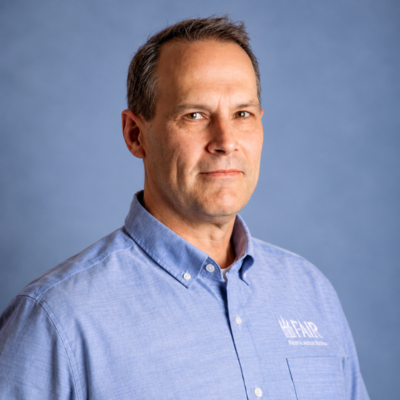
Tim Dunn

FAIR Board Chair • Science • Finance & Business

Tim Dunn, Chair of the FAIR Board of Directors

Tim Dunn is a scientist, educator, investor, and business leader who serves as Chair of FAIR’s Board of Directors.

Tim earned a bachelor’s degree in physical science and chemical engineering from Brigham Young University. After graduation, he began his career teaching science before moving into the financial industry, where he worked as a hedge fund trader and helped establish Clearwater Advisors. Over the next 19 years, he worked in trading, risk management, and portfolio management.

After leaving the financial industry, Tim returned to teaching high school science and pursued a variety of other interests, including small-business consulting, audio engineering, and property development.

Tim has served in a variety of callings in The Church of Jesus Christ of Latter-day Saints. Outside of his professional and Church service, he enjoys music, fishing, swimming, and spending time with his family.

Bio last reviewed:

Contributions at FAIR

Some Thoughts on Finding “Truth”: The Right Tool for the Job

February 24, 2017 by Mike Ash

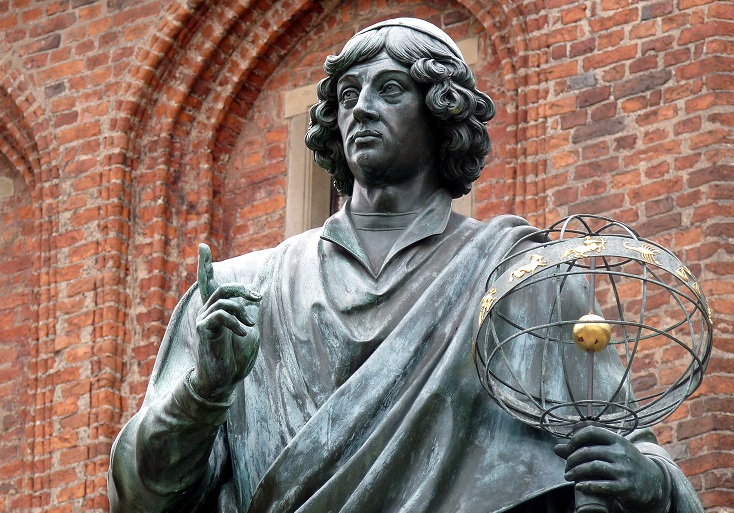
Nicolaus Copernicus Monument by Bertel Thorvaldsen

According to the on-line Oxford Dictionary, science is defined as “the intellectual and practical activity encompassing the systematic study of the structure and behaviour of the physical and natural world through observation and experiment.”[i] In short, science works by interpreting data, and data is typically collected through observations (using eyes, computers, microscopes, etc.).

Thousands of years ago, in the early days of human history, our ancestors could see that the sun, moon, planets, and stars moved across the sky. Direct observation demonstrated that the sun rose in the east and set in the west. In winter months, the days became shorter, and in the summer, longer. The Milky Way also rises from the horizon. North Americans watch the ribbon of stars arch into the sky, nearly paralleling the horizon in the winter months, and arching straight overhead during the summer months.

Very early humans recorded the movement of these celestial objects. NASA, for example, points to the discovery of an ancient lunar calendar that dates to about 32,000 B.C.[ii] The ancient Egyptians likewise had an annual calendar that was based on the “rhythms of the farming year.”[iii] The “morning rising of Sirius or the morning setting of Pleiades, were taken as announcing the Nile flood or as a reminder to plough.”[iv]

All evidence, and the direct eye-witness observations of millions of people all over the world, testified that celestial objects moved above the Earth. Any argument for an alternative interpretation of the observable data would have been preposterous. In fact, when the Greek mathematician and astronomer Aristarchus (about 300 B.C.) suggested that the Earth revolved around the sun (rather than the sun around the Earth), his arguments were rejected because they didn’t fit the prevailing understanding of the cosmos.

It was nearly 2000 years later before Copernicus revived the theory in the mid-1500s (and his writings, like Aristarchus before him, were initially rejected by many people). The Copernicus model was imperfect, however, and it wasn’t until Kepler suggested elliptical orbits (instead of circular orbits) that some of the problems began to fade. In 1632 Galileo could support the Copernicus/Kepler model with observations made through the newly invented telescope.

For thousands of years before Copernicus, Kepler, and Galileo, humans were technically “wrong” regarding what they saw with their very eyes. They weren’t wrong that the sky seemed to move, and they weren’t wrong knowing when to plant and harvest, but they didn’t have a complete understanding as to how the sky appeared to move. Sixteenth-century astronomers added information to the undeniable fact that the sky appears to move, by showing that the universe was not geocentric (Earth-centered), but rather that the universe was heliocentric (sun-centered). While the demarcation between accurate and inaccurate might be debated, I see the Copernicus/Kepler resolution as building on previously accurate beliefs, and correcting erroneous beliefs. There really is an Earth, a sun, a moon, planets, and stars, and they somehow move in predictable patterns with very real relationships to each other.

In our modern world, more modifications were made thanks to better astronomical tools. We now know that a heliocentric universe is also incorrect. Our planets orbit around the sun, but the universe doesn’t. Our solar system orbits around the center of our Milky Way Galaxy, and our galaxy is just one of perhaps a hundred billion galaxies in the observable universe.[v] Each new refinement comes, in part, by building on the discoveries and calculations of previous scientists, as well as continually improved technology (or tools) which offer greater access to understanding the space in which we live.

Even though scientific understanding has evolved tremendously in the course of human history, each generation is typically pretty confident that they have the answers (or are, at least, headed in the right direction). While the humble and inquisitive can acknowledge that we still have a lot to learn, it’s human nature to believe that we are probably right. It’s hard to imagine that some of our cherished truths might be overturned or drastically altered with additional discoveries—but some of them will.

While we know more today (scientifically) and have achieved more in modern times (technologically) than we might have even imaged tens of thousands of years ago, I find it fascinating that the more we learn and achieve, the more we discover, ironically, that there is an even greater collective of things which are unknown.

It’s as if we achieve knowledge and technology by discovering a new doorway, but each door we open leads to the discovery of enormous storerooms filled with new data and information that needs exploration and answers. We might reach inside some of the rooms to examine and learn about those things contained therein, but we are never quite able to learn the full details of everything inside every room.

Sometimes, there are doorways within those rooms that lead to new related, yet undiscovered, information. And as we examine the few bits of things we can analyze and measure, new doors are opened just down the hall and we again peek into storerooms full of new mysteries. The opening of doors to the unknown seems to outpace those things which we can fully comprehend. The pursuit of such mysteries is exciting—especially as puzzles are solved and pieces come together—but is also never-ending.

One of the theoretical pursuits of science is to find the “theory for everything”—a unifying principal or paradigm that explains everything. We want to understand the overall structure of the building which houses all the doors, the rooms to which they lead, and the furnishings within. We hope—or at least suspect—that there may be a unifying set of laws that govern everything. But in the meantime, we find that some of the different rooms seem to have laws which don’t cooperate with the laws in other rooms.

A few years ago, I read a book entitled, Knocking on Heaven’s Door: How Physics and Scientific Thinking Illuminate the Universe and the Modern World, by Dr. Lisa Randall. Randall is one of America’s leading scientists on theoretical particle physics and cosmology, and her religious beliefs seem to be on the continuum somewhere between agnostic and atheist. Nevertheless, she recognizes that a turf war between science and religion can be avoided if we realize that the two perspectives don’t necessarily pitch their tents in the same campground. “Science is not religion. We’re not going to be able to answer the ‘why’ questions. … Religion asks questions about morals, whereas science just asks questions about the natural world.”[vi]

I’ve often heard those who lean toward the agnostic/atheist point of view as saying something to the effect: “I don’t believe that feelings are accurate barometers of truth”—and by “feelings” they are, of course, referring to spiritual promptings, manifestations, revelations, inspirations, or any other communication which comes via supernatural discourse or impressions.

The problems with such a claim, however, are numerous. First, I personally don’t believe that “feelings” accurately describes how I’ve received spiritual enlightenment (although this is a topic for another time). Secondly, all humans incorporate “feelings” in their decision-making process (yes, even scientists—which is part of the reason that science occasionally reverses the conclusions of previous positions). Thirdly, “truth” doesn’t universally describe all conclusions (which are often temporary points of consensus) in all fields of knowledge (including spiritual knowledge).

As noted above, there is yet to be discovered a “theory for everything,” and we often run into seemingly conflicting laws in the world of physics. Randall explains, for example, that “Newton’s laws are instrumental and correct, but they cease to apply at or near the speed of light where Einstein’s theory applies. Newton’s laws are at the same time both correct and incomplete. They apply over a limited domain.”[vii] This, in some ways, is not unlike what we find with the moving sky, moving Earth, and moving solar system models. All three positions have validity depending on one’s perspective and ability to measure and observe.

“As scales decrease,” notes Randall, “matter seems to be governed by properties so different that they appear to be part of entirely different universes.”[viii] Newton’s laws work well for the types of things he was able to observe (and the same kinds of things we can observe today) but at very small distances the rules change and we have to apply quantum mechanics. Likewise, at extremely high speeds the rules of relativity take over. With the enormous densities of black holes, we must turn to general relativity.[ix]

The rules and principles of quantum mechanics, string theories, and general relativity are theoretical tools to help us better understand our world and the cosmos. Just as the telescope helped humans understand the solar system, the microscope helped us understand the miniature world around us, and as DNA helps us understand our physical relationship to life on this planet, so likewise tools such as the Large Hadron Collider (nearly 600 feet underground, beneath the France-Switzerland border) help us understand the early formation of the universe.

The right tool is needed for each different job. We can’t measure heat with a hammer, or weight with a yardstick. When it comes to understanding spiritual truths, we must use spiritual tools such as humility, scriptures study, and prayer. There are currently no scientific tools available to examine the existence of God or the reality of the Resurrection.

Conversely, it’s important to recognize that the Holy Ghost reveals all of those that are “expedient,” or necessary, to return to God (D&C 75:10), not necessarily those things which explain quarks, black holes, gravity, Earth’s diversity of life, or even Book of Mormon geography. Revelation on scientific principles are typically not “expedient” for our divine family reunion.

The late scientist, Dr. Stephen Jay Gould, advocated what he termed “non-overlapping magisteria” (NOMA) for the supposed conflict between science and religion. Gould defined “magisteria”—a term he borrowed from Pope John Paul II—as “a domain where one form of teaching holds the appropriate tools for meaningful dialogue and resolution.”[x] While not all of his atheist friends agreed with Gould, the scholar argued that the domains of religion and science don’t overlap.

NOMA also cuts both ways. If religion can no longer dictate the nature of factual conclusions residing properly within the magisterium of science, then scientists cannot claim higher insight into moral truth from any superior knowledge of the world’s empirical constitution.[xi]

Truth is truth, and while the Holy Ghost may certainly prompt or inspire scientists and scholars, we should be open to accepting the scientific discoveries about the natural world because science offers the best tools for discovering those truths. As Joseph Smith said, “One of the grand fundamental principles of Mormonism is to receive truth, let it come from whence it may.”[xii]

While Randall sees no reason to believe in a God, and although she agrees that scientific tools cannot measure the existence of a divine being, she nevertheless believes that God, if He exists, should leave some sort of fingerprint on those things which can be measured by science. “…it is inconceivable from a scientific perspective,” she writes, “that God could continue to intervene without introducing some material trace of his actions.”[xiii] If Randall knew me and my religious beliefs, she might be surprised to find that I agree with her.

I personally believe that there is a grand unifying theory for everything; that there are top-tier laws and principles which govern all areas of physics. I also believe, however, that the grand unifying theory for everything governs all facets in our universe, including not only the physical world, but also the unseen world of the spiritual realm, and the moral codes of the divine realm. This grand law, is the law of God. Like the pinnacle of a pyramid, it sits above all other subordinate laws, including those physical laws discovered in science. If we fully understood the grand divine law, we would see that the spiritual world, moral principles, and physics are intertwined and are not—in the big scheme of existence—contrary to the other laws.

The problem is that we simply don’t know enough about physics, the cosmos, and our own material universe to confidently state with certainty that God’s imprint is absent. Before we understood those light waves which are invisible to human eyes, those waves were, for all intents and purposes, non-existent. While we can’t see—with the unaided eye—x-rays or infrared light, we know they exist because we’ve discovered tools which can measure or “see” them.

Thanks to physics, we do understand more about our world and cosmos than at any other time in the past (even if that understanding is incomplete). Scientists are aware, however, that there are many more things we really don’t understand. The stuff in the universe that interacts with light, notes Randall, “constitutes only about four percent of the energy density of the universe. About 23 percent of its energy is carried by something known as dark matter that has yet to be positively ID’d.”[xiv] Dark matter somehow interacts—albeit weakly—with matter we know. Detecting it, however, has thus far remained elusive.

“Even more mysterious than dark matter,” Randall continues, “is the substance that constitutes the remaining 73 percent and that has become known as dark energy.”[xv] Einsteinian equations for the universe are based, in part, on the matter and energy found in the universe. These equations show that some other energy—“not carried by matter… particles or other stuff”—is required to exist. The conclusion is based on the observations and “measurements of the characteristics of the universe.” This dark energy “doesn’t clump like conventional matter. It doesn’t dilute as the universe expands but maintains a constant density. The expansion of the universe is slowly accelerating as a consequence of this mysterious energy, which resides throughout the universe, even if it were empty of matter.”[xvi]

Dark energy and dark matter are possibly the mere tips of enormous icebergs of undiscovered properties and laws in our universe (or perhaps just in our dimension). Most scientists who have spent any time studying what we know about the universe, seem open to the possibility that there may be multiple universes, or even multiple dimensions in our own universe. “…space,” Randall explains, “might contain more than the three dimensions we know about: up-down, forward-backward, and left-right. In particular, it could contain entirely unseen dimensions that hold the key to understanding particle properties and masses.”[xvii]

I’m a big fan of science and I believe that science, as a self-correcting discipline, is moving closer to truths about how the diversity of life developed on Earth, and how our planet and perhaps the universe was formed. As a human institution, scientific explorations have, at times, stumbled, changed positions, or hit dead ends—but then so have more than a few of our religious beliefs for the simple fact that we can’t help but see through a glass, darkly (1 Corinthians 13:12; once again, a topic for another time).

Overall, I believe that scientific truths are part of God’s universal grand truth. Not only don’t we need to fear the discoveries which science brings to light, but we need to embrace those discoveries—even if it means reexamining religious traditions that are based on human assumptions.

With so much left to learn and discover, I think it’s a bit naïve to claim that God’s fingerprint is missing from the physical world. We have not yet discovered all the tools we need to measure the physical world. When, or if, we ever do, I suspect that God’s fingerprint will be as visible as a human fingerprint under ultraviolet light. Until that day comes, however, God has already given us the right tools to know that He is there. It’s found in all religions and in all cultures.

All people of the Earth—at every stage of known history—are given the ability to seek and find God through the spiritual practices of their culture, and according to the spiritual light available. The answer to God’s existence may also come packaged in the cultural raiment of those seeking spiritual enlightenment (another topic for another discussion). God grants all His children a door which can be opened to feel his presence—a door that can be reached by every normal human, regardless of their status or stature. Neither technological abundance, nor scientific deficiency, impacts access to spiritual tools. While I believe that the revelatory tool is as much a part of God’s universal law as is our embryonic understanding of physics, this “expedient” tool is all that is necessary to mark the path which ultimately leads back to the Father.


[i] https://en.oxforddictionaries.com/definition/science (accessed 9 February 2017).


[ii] “The Oldest Lunar Calendars,” https://sservi.nasa.gov/articles/oldest-lunar-calendars/ (accessed 9 February 2017).


[iii] John Romer, Egypt: From the Great Pyramid to the Fall of the Middle Kingdom, V2 (New York: St. Martin’s Press, 2017), 97.


[iv] Bartel L. van der Waerden, Science Awakening II: The Birth of Astronomy (Noordhoff International Publishing, 1974), 13.


[v] http://www.physics.org/facts/sand-galaxies.asp (accessed 9 February 2017).


[vi] Quoted by Corey S. Powell, “The Discover Interview: Lisa Randall,” Discover (July 2006), at http://discovermagazine.com/2006/jul/interview-randall/ (accessed 9 February 2017).


[vii] Lisa Randall, Knocking on Heaven’s Door: How Physics and Scientific Thinking Illuminate the Universe and the Modern World (Harper Collins Publishing, 2012; Kindle Edition), 8.


[viii] Ibid., 69.


[ix] Ibid., 71.


[x] Stephen Jay Gould, Rock of Ages: Science and Religion in the Fullness of Life (New York: Ballantine Publishing Group, 199), 3.


[xi] Ibid., 9-10.


[xii] Joseph Smith, History of the Church of Jesus Christ of Latter-day Saints, 5:499.


[xiii] Randall, 50-51.


[xiv] Ibid., 119-120.


[xv] Ibid., 122.


[xvi] Ibid., 123.


[xvii] Ibid., 119.


Michael R. Ash is the author of: Of Faith and Reason: 80 Evidences Supporting The Prophet Joseph Smith. He is the owner and operator of MormonFortress.com and is on the management team for FairMormon. He has been published in Sunstone, Dialogue: A Journal of Mormon Thought, the Maxwell Institute’s FARMS Review, and is the author of Shaken Faith Syndrome: Strengthening One’s Testimony in the Face of Criticism and Doubt. He and his wife live in Ogden, Utah, and have three daughters.

 

Filed Under: Apologetics, Evidences, Faith Crisis, Michael R. Ash, Uncategorized Tagged With: apologetics, Copernicus, cosmos, faith, Michael R. Ash, science, Truth

DNA and the Book of Mormon – Ryan Parr (2005)

Summary

Summary

Ryan Parr examines claims that DNA evidence contradicts the Book of Mormon, introducing mitochondrial DNA, Y-chromosome inheritance, and population genetics. He explains why drawing conclusions about ancient populations from modern genetic data can be far more complicated than it first appears.

TL;DR

TL;DR (Too Long; Didn’t Read)

Modern Native American DNA largely reflects Asian ancestry, but Ryan Parr argues that this alone cannot determine whether small ancient Near Eastern populations contributed to the ancestry of people in the Americas. Genetic lineages can disappear over generations, and mitochondrial DNA and Y-chromosome evidence represent only narrow portions of a population’s ancestry.

Start Here

Question

Did DNA disprove the Book of Mormon?

Short Answer

DNA studies show that most identifiable Native American maternal and paternal lineages are closely related to Asian populations. Ryan Parr argues, however, that this does not by itself rule out the presence of a small ancient Near Eastern population because genetic lineages can disappear over many generations and modern population data cannot necessarily reconstruct every ancestral contribution.

Key Takeaways
  • Modern DNA evidence strongly supports substantial Asian ancestry among Native American populations.
  • Mitochondrial DNA traces only maternal lines, while Y-chromosome DNA traces paternal lines.
  • Individual genetic lineages can disappear from a population over many generations.
  • The genetic descendants of an ancient person need not retain that person’s detectable mitochondrial or Y-chromosome lineage.
  • Conclusions about Book of Mormon populations therefore depend partly on assumptions about population size, ancestry, migration, and intermarriage.

[Editor’s Note: This was a graphics-rich presentation. This transcript does not include slides from the presentation.]

I would like to thank the organizers of the conference for being invited to talk about two really great subjects and that is the Book of Mormon and DNA which, when you look at its structure and its design, is no less of a divine inspired molecule!

We live in a very exciting age. Now, by the time you finish watching CNN you may not think that, but there is a lot of good that is going on in the world today and actually we call- so this is sort of a public service announcement on DNA—you’ll often hear the word “genome” and genome refers to the entire complement of genes that each one of us has and for humans that’s between 30-80,000 genes and this is really going to be the basis of an economic revolution in countries that will take note. In fact Bill Gates has said that if he had the opportunity to do it over again he would be in biotechnology because with the early days of this type of research, it was pre-1995 (they call the ancient days), and now since we’ve actually looked at and deciphered the entire human genome there are many things that we think we can now do. We can use DNA as a biosensor to detect what we’re thinking; all types of diseases; cancers that now we treat after their clinical manifestations; long before there are clinical manifestations; so we really stand on a cusp and a threshold of a revolution much like the antibiotic revolution of the last century.

So, they are exciting times. In fact if you work in biotechnology and DNA everybody’s really excited to get work, to see the progress that’s going to move forward and all this is really because of this molecule—DNA.

DNA is really quite amazing because it just has four simple letters to convey its message: G, A, T, and C. With these four letters everything about the human body is written in what we call the blueprints of life. Now that’s pretty amazing because, of course, we have to use 26 letters to speak but all of the information content held within a human body, and really responsible for the variation we see in this room when we look around us, is written in that simple genetic alphabet.

Now as we have deciphered the human genome there’s been quite a few surprises along the way. If you notice there’s all types of genes that we’ve found, there’s the reality-based TV fixation; delusions of stock market savvy; and one I’m actually convinced is that fixation in my family—and fixation means that everybody has the gene you can’t escape—and this is just late-breaking news but I think right here there’s a Wal-Mart gene. (Laughter) And this was affirmed by Business Week about a year ago who said that, ‘Eighty percent of Americans made at least one visit to Wal-Mart in that particular year.’ And it also comes in handy because, remember we used to- what was it? In the 70s we used to blame our environment and then we used to blame our parents for things that we didn’t do that we should do and now you can blame your genome so this really comes in handy. It’s no longer, ‘My parents made me do it’ but ‘My genes made me do it.’ Kind of like it’s not your fault that mom married your dad.

But along with this comes other challenges as well and that is that there are DNA claims against the Book of Mormon and most of these are based on modern population data. Number one, the genetic evidence of Native American characterizations does not support an Ancient Near Eastern descent for Native Americans. Population genetics are consistent with Asian origins for aboriginal groups and I don’t know if we should really be too concerned about this. It all lies in your expectation. And this is mostly based on mitochondrial DNA (mtDNA) and Y chromosome because in each one of us there is actually a paternal name that’s written in your Y chromosome that you get exclusively from your dad and in the mitochondrial genome that you get exclusively from your mother. So these actually turn out to be fairly great genealogical tools, that is if you’re just thinking in terms of a couple of generations. The more generations are received the more difficult it gets and I’ll show you why.

Let’s look at the claims behind this and to do that we have to look at just a few basics to begin with and that is there are two great archives of DNA in the human body, or in the cell, there’s this master library that is held in the nucleus and this has billions of letters of information. If you take the information that you got from mom and you got from dad there is 6.6 billion pieces of information and the more we learn about this I think the more astounded we are. We used to think that there were just genes and then long islands of nothing. But recently, within the last year, one of the big—you probably heard the word microarrays—a group that makes microarrays has done a lot of research and found out that these islands of nothing may not be nothing but they are important for coding, they are important for turning genes on and off.

And then we have out here what I like to term branch libraries, out away from the central nucleus are these mitochondria and mitochondria are very important. I think when most of us went to school, if you paid attention in biology class, they just said, ‘Oh it’s just the battery. It powers the cell and don’t worry about it.’ However that’s changing quickly.

Now for the mitochondrial aspect, it’s interesting because it has its own complement of DNA but it’s extremely modest in comparison to its nuclear cellmate. It only has 17,000 pieces of information but these branch libraries are numerous—there’s thousands, maybe 10,000 in a particular cell.

So important is this molecule that the nucleus actually pays the tithing of 10 percent of its total complement to speak to the mitochondria. So these two speak back and forth and they’re in communication, actually in just microseconds- nanoseconds and that will become apparent as to why that’s so important.

Just for a rough comparison here, nuclear DNA of course sits in a nucleus; and it’s the equivalent of amount of 50 sets of encyclopedias so a lot of information. MtDNA resides out away but it’s still in communication, there are still phone lines, still e-mail, going back and forth in a chemical sense. There’s about ten pages of information but these ten pages of information are the same in every mitochondria that’s in the cell and so there’s a certain number of volumes here that’s important to make sure that mitochondria work.

And the reason why that is is because mitochondria are vital. I can tell everyone in this room your mitochondria is working otherwise you wouldn’t be here because it’s responsible for generating 80 percent of the cellular fuel at a molecular level. In fact we’re now moving into a new phase where they’re beginning to recognize that there are mitochondrial diseases and many a-typical diseases that we see now are going to end up being mitochondrial diseases. Estimates go as high as- incredibly high, that as many out one out of every five people may have a mitochondrial disorder and that’s because mitochondria, they code for actually 37 genes. Now 13 of those genes- they’re important because they make sure, or (let’s see- it’s hard to do math when you’re in front of a group!) but anyway there’s 13 genes there that are very important for energy production. They work in concert with signals that are sent down from the nucleus and the other genes just simply make sure that these get made.

So I think what I’m trying to say here that maybe I should have said at the beginning, is that just simply looking at the population genetics and making a judgment as to what it means to a group of people from 2600 years ago is very precarious because this just isn’t simply a genetic marker. It’s vital for energy metabolism. So this is just a gee-whiz figure and you’re not supposed to be able to figure it out because it’s supposed to overwhelm you. (Laughter)

With all of the metabolic pathways that’s actually driven by mtDNA so actually we found that when a cell develops pathology, for example cancer develops, in some cases it shows up early in the mtDNA in the form of alterations in this simple genetic alphabet.

So now the claims are made against the Y chromosome and mtDNA. So let’s first of all take a look at the Y chromosome.

So these have unique patterns of inheritance and that is that they stay steady through a line. In fact it’s not surprising that some Jewish groups have a specific Y chromosome marker at a high frequency of about 50 percent. If you read the heavy, heavy paternal lineages, for example in Chronicles, or if you’ve seen “The Home Teachers” and where they put that tape in and they go on Jehosophat, Jehu… and whoever, that’s literally true. Long histories of paternal chromosomes and those can actually get fixed but what happens is that dad has to have a son, the son has to have another son that has to be passed on. Now if this dad here had a daughter, he doesn’t pass on his paternal Y chromosome. That doesn’t mean that he doesn’t have a brother out here that doesn’t pass it on.

But this comes into a very important point called “coalescence” where, over time, most of these genetic signals can and do disappear—it’s been proven from a statistical viewpoint.

We also have mtDNA which we get from our moms. So actually in mtDNA there is in the same paternal, or Y chromosome, there’s a maternal name written in these four simple letters: the G, A, T, and C and this occurs in a subset of the entire genome. So where the maternal name is written is usually very small, we call that the hypervariable region and same game, so if mom has daughters then this is passed on. If mom had a son right here, this isn’t passed on.

So I want you to keep this in mind because this is very important when you start to talk about really small groups like Lehi’s family and you consider the eight years that they were in the wilderness. Statistically you start to get problems with the frequencies that have been suggested.

So how did these look? How do we actually read these? It’s actually quite dull! (Laughter) So this is (and I just said that this was exciting didn’t I?)- So, each one of these lines actually represents, you could say, a maternal name. This is actually, sequencing data what we call, you can see there’s the Gs, the As, the Ts and the Cs and then down here the software—and I should say that without the advent of computers this would be impossible and now many large companies like IBM are trying to get interested into these types of biosciences because there’s so much information that needs to be decoded and because of the coming revolution in health care they see these as tremendous revenue generators.

So one thing I forgot to mention, sort of the blue sky of all this, is that in the not too distant future you’ll go in to your physician and you’ll swipe a card and it will say: ‘Okay, well Scott Gordon back there he doesn’t respond very well to ibuprofen because he has this particular gene but we know aspirin works for him.’ ‘Ampicillin may not work for you but we’ll give you tetracycline.’ So all these things will become a very highly practiced type of science and things will be treated long before they show up clinically because they’ll be anticipated at the DNA level.

So all this information is interestingly once again written in this code but for our purposes here, so what happens, if you look at this little dot right here, the software gives us this heads up and says, ‘Well there’s somebody here that doesn’t match.’ So if you run up all these Ts we say ‘Aha, there’s a C right here!’ So this person actually has a different name simply because this differs by one letter of the genetic alphabet and the same here. So you can imagine the problem with trying to handle all of this data when you’re looking at populations of people that have billions of pieces of information.

But what’s important, I think, here is that most of the lineages can actually be the same and most of them probably swamp this particular individual here and this is a sampling of a large population of people from Thunder Bay, Ontario, Canada. And this information, this maternal information also the Y chromosome, has been used to come up with various ideas and this is really quite ingenious and very exciting.

There’s been multiple migrations out of Africa, you’ve probably all heard of the seven daughters of Eve and you can send in your DNA and they’ll tell you which Eve you came from and Adam and all that type of thing which are interesting commercial ideas. But so, from this, and the caveat is these are once again modern populations. So we can see that Native Americans really- scientists aren’t very inventive because they have four(sic) maternal names: A, B, C, D and X—that’s not very exciting is it? But it looks like, really from areas here in Siberia that many of the modern-day signatures actually- but they do match these people coming out of Siberia and to a lesser extent there are some haplotypes in Asia that match as well but it’s these major four(sic?) and I think that here’s where the claims come that, ‘Well sheesh, Native Americans have these haplotypes and where are the Ancient Near Eastern haplotypes when we look at modern DNA?’

But another important thing to notice is that there are different distributions of these haplotypes and that’s another thing that comes into play. So there are limitations to this approach, and this is never really brought out, but the huge limitation is this is based on contemporary data and we’ll look at some population histories later on here and you’ll actually see that there are many population histories that are written in Native Americans and simply because all these names don’t appear at this particular period in, for example the Cherokee, doesn’t mean that they weren’t there sometime in the past; it doesn’t mean that there aren’t names that have gone to extinction because there are a lot of variants. We’re just seeing, this is much like reading a Sherlock Holmes book, well, not reading a Sherlock Holmes book but reading the last chapter and then from what is written there trying to reconstruct all the nuances of the plot of a Sherlock Holmes book. That would be difficult. And mitochondria are much more than population markers, they’re actually very, very dynamic. Sometimes we get the idea that genes don’t move, that it’s just what we get (inaudible) but they can be dynamic, as we’ve seen with pathology, that you can get mutations—but that probably doesn’t apply here.

So let’s go back to the beginning, the guy that’s really responsible for all this and that is father Abraham. Just to illustrate some points of groups that move. So father Abraham here started out from Ur, he came across the Fertile Crescent and he ended up somewhere in Palestine. Now what’s interesting about this, and I think this comes into play with the Promised Land, is that when father Abraham went to Canaan he didn’t go to Promised Land ‘Retirement Villa’, there were people there, there was opposition. So when you go to a Promised Land it’s just not like, you know, go there and play golf until the Second Coming—that’s not how it works.

But from a population perspective let’s go back to the city of Ur. So this maybe what the city of Ur looked like when Abraham was there, people are at the market, they’re shopping for leeks and maybe they’re going to go hear a reading of the Epic of Gilgamesh that evening! (Laughter)

But what I’ve done with Abraham is I’ve taken some of these people, I pulled them out, so if you think of the gene pool of all these people I’ve taken a very restricted number, a kin-associated group, they’ve gone somewhere else. Now just because you’re Abraham and you’ve left your population doesn’t mean that God hits you over the head with a wand and says, ‘Oh I’m going to change your genetics so you’re unique.’ No we’re all pretty much, like for example in this room, we all look very much European. We would probably all be X- mitochondrial type X.

This is what happens to Abraham, so he lives the area. And this is what we call a genetic bottleneck—there’s just no getting around it. So if you think of a genetic bottleneck, think of—and I think I better thank FARMS for this because this is one of their articles and I just chopped it up—so you have an old fashioned pop bottle and you have a variation in here that represents all the people and then Abraham is going to leave so you just pour a couple of these guys out. So you don’t have what’s represented any more, you have a sub-set of this. So we have a genetic bottleneck already.

But now let’s step ahead 1200 years to Jerusalem and to the outskirts where we have a small kin-associated group, such as Lehi and his family who’ve left. Who’ve left for a Promised Land and, once again, this is a kin-associated group. So we’ve had Abraham in the Land of Canaan, I mean there’s been population histories for that 1200 years. We just don’t know, so even probably the signal from Abraham is lost once again in the intermarriages that may happen. Maybe they all looked very consistently the same. This the problem you run into if I was to run over to the Ancient Near East today and say, ‘Let me look at these Israeli and Palestinian populations. This is what they looked 2600 years ago.’ It just doesn’t work that way, and the literature actually is very cautious about that and says, you know, we have to be very careful how we reconstruct these ancient lineages.

So we have this kin-associated group, Lehi and friends, and they leave. So we have another bottleneck and they’re out here wandering around in the wilderness and of interest there is that they’re out there for eight years. Now there are things called infant mortality rates and that type of thing because you don’t have modern medicine, and you don’t have physicians, you just can’t drive into an emergency ward and if you’re going to die you generally die. So there’s probably again a genetic reduction that occurs naturally in the small kin-associated group—not everybody lives, not everybody has sons and daughters and it’s more acute in a small group like that. So they can tend to go to what again we call ‘fixation’ rapidly but probably it shouldn’t have happened here because it was only eight years.

So when we travel to new lands, the things that we always take with us are our genes. We take our nuclear DNA, we take our mtDNA, and it’s all a certain amount of variation that comes along in a little cup. In fact if you looked really close Sariah is holding this cup. (Laughter) But anyways- you are alive out there!

I just want to say a couple of things about the Promised Land. We believe that they sailed over to Mesoamerica and landed somewhere in this area and this wonderful graphic is courtesy of Blake and Joseph Allen. Let’s talk just a minute about the Book of Mormon and what it has as the Promised Land.

I know that we all believe that they went to a land where there never was before man. At least that’s our traditional understanding of what that means but if you look really close at 2 Nephi, I mean I think it seems like sometimes we tend to get carried away. It’s sort of written in covenant of Abraham language that says those brought out of the land of Jerusalem. It’s a very specific group of people, they’ll prosper, they’ll be kept from all other nations, they’ll possess this land unto themselves, but the conditions always are that the laws and statutes are respected and lived. So the Promised Land idea is really associated with the covenant of Abraham and does not cover some of God’s other children that are living in this New World. In fact you can almost think of Lehi’s group as a boat of missionaries. Why not? Bringing the covenant of Abraham to a new land.

And also if you want to think in terms of, like, the Saints that came into the Valley in 1847, they certainly didn’t come to a Promised Land ‘Retirement Area’. In fact it was just the opposite. There were things that they had to do that built character that let them become all that they were to become. In fact Elder Maxwell always makes the point that these trials and tribulations that we are given are very specific for each one of us so that we can tutor, we can learn, we can become all that’s intended for us in the divine sense.

So we also look at Joshua and the children of Israel. They had a literal war on their hands but nevertheless God told Joshua to be not afraid, neither be dismayed but be of a strong courage and I’ll be with you in these ventures.

So it seems like in the terms of Promised Land there is opposition in all things. So they come into Mesoamerica, and according to Michael Crawford, at the beginning of the 15th century, and see now again here we’re having to rely on modern data because that’s all we have, he says that there were 25 million inhabitants in Central America—those are a lot of people.

Let’s just sort of look at what John Sorensen calls Lehi’s neighbors. I call this (I was going to call this shadows of the empire but it had already been used) shadows of existing people and when we read in the Book of Mormon—it was never intended as a population history—but if you read it as that, there are really interesting clues and nuances.

First of all, we find out—it’s repeated over and over—this is only a hundredth part of the record so those things that we think are important today, the genetics and so on and so forth, weren’t even an issue and if you’ve read the Book of Mormon you can understand why. I mean Mendel is still in the future; he’s sort of the father of genetics. James Watson and Francis Crick, the discoverers of the double helix in 1953, aren’t even a thought. In fact, the bacterial theory of disease isn’t even a thought.

These people have other issues and the issues seem to be social and political. What’s really fascinating I think is some of the language that’s used. So the sibling rivalry becomes very dangerous, Lehi is told by revelation to leave. Well, he says, I’m going to take my relatives and then he says, and those who would go with me. Well who were these people? I mean there are so many people who came over on the boat and he should know everybody. Temple construction takes a lot of manpower so it’s going to cause these people to be industrious. So the shadows continued.

What I tried to do is look early on in the Book of Mormon for these clues and these nuances. This is what Jacob says, and you can’t- it just turns out that Lamanites and Nephites isn’t even a genetic term and it’s not anyway because they all share the same genetic background. Jacob says this, he says, “But I, Jacob, shall not hereafter distinguish them by these names, but I shall call them Lamanites that seek to destroy the people of Nephi, and those who are friendly to Nephi I shall call Nephites, or the people of Nephi.” (Jacob 1:14)

Interestingly polygamy is no longer an accepted practice so you’re not going to have these huge Y chromosome incursions and even if it was there are not enough women from the Ancient Near East to drive that genetic agenda.

And this one is I think is very interesting, it was pointed out by John Sorensen, he talks about Sherem. So Sherem comes to see Jacob and he says, “Brother Jacob, I have sought much opportunity that I might speak unto you; for I have heard and also know that thou goest about much, preaching that which ye call the gospel, or the doctrine of Christ. And ye have led away much of this people.” (Jacob 7:6-7) Well c’mon when I go to my- I know where my relatives live, don’t you?

So it seems like there were these collisions and these interjections with the populations fairly early.

And if we continue, some of these shadows, interestingly Jarom, who is the son of Enos, who is the son of Jacob, says, “And they were exceedingly more numerous than were they of the Nephites.” (Jarom 1:6)

And then there’s always this missionary effort, “And it came to pass that many means were devised to reclaim and restore the Lamanites to the knowledge of the truth.” ( Jacob 7:24) The Lamanites, or, those who do not believe. Alma the Younger and the four sons of Mosiah, for example, set off on a long missionary effort.

And finally when you go to 4 Nephi 1:17 “Neither were there Lamanites, nor any manner of -ites.”

So these divisions that we see in the Book of Mormon really have nothing to do with genetics but they seem to be one large group.

Let’s look at our genes coming from Jerusalem. So you have these four- you have these kin-associated groups; you have, let’s be generous and say there were four mitochondrial lineages and there were three Y chromosome lineages. So you dump these guys into the gumball machine, we’ll make A, B, C, D, and X all the same and then you dump these guys in and one of the things that we find right off is that if you brought some of these genes from Jerusalem you’re not going to fare very well in this new environment. It’s like wanting to be a basketball star but not being able to dribble or shoot or run. And that is that the way mitochondrial DNA is distributed in populations has to do with what we call ‘selection’ so if you can’t run, jump or shoot the Jazz are not going to ask you to come and try out. And the same thing again- natural selection shaped regional mitochondrial DNA variation in humans and it’s very, I think, instructive that in these migrations that we see we only see a select number of mitochondrial DNA names: A, B, C, D and X.

In ancient history I think we have to suspect that there were many of these that just went out of existence and there’s this other issue that’s called ‘coalescence’ or ‘lineage sorting’. So let’s look at this.

So these- note at the top, these are 18 women and we’re looking at the first generation. It doesn’t matter if these are actually women or men but what happens is you look at the lineage scenario through the generations and this is 20 generations—or 500 years. This person- this women had no daughters and we’re supposed to assume that all these are unique mitochondrial lineages and so it’s even worse if this is strung out across the room where many people have the same lineage and then there’s just a couple that have these lineages that are probably at a selective disadvantage. What happens is that through time things coalesce; there’s this lineage sorting process so that when you get down to the bottom there’s only two of the 18 that made it—eleven percent.

Now, these are just population facts, whether or not you’re God’s people or whether or not you’re Nephite, Lamanite or whatever -ite you may be, there is a sorting process and that’s based on the idea that these molecules here are the same. Well you have some, you’re outnumbered, you’re at a disadvantage because you can’t run, jump and shoot like everybody else. And so there is actually this funnel, this sieve sort of, process that takes place.

And if we look at the current people that live in Mesoamerica you can see this very well. So you have your A, B, C and D and various populations here but you can see for example, like, this group has A, it has B, it has C but where’s D? It doesn’t mean that 300 years ago they didn’t have D here. So what I’m trying to say is that, and it’s the same for all these, you see a population history written in everyone of these people and we’re seeing the buds on the tips of the trees, we’re not seeing the branches, we’re not seeing the trunks.

So everyone, I mean for example, this one- this group of people, they’re missing three of these. This one probably is not fair(?), this is Caribbean so they’re probably islanders, which means there’s more of a reduction yet. I think this also speaks of selection once again, so why wouldn’t all these be at the same frequency?

Now if we want to look at the way we do genealogy, say I’m right here and I want to look back a couple of generations, we can see that every generation—and now I should say I’m talking about nuclear DNA I’m not talking about mitochondrial or Y chromosome—but at every generation receding, your number of ancestors doubles. Now when you get back so many generations a lot of people, I mean I have people tell me, you know in my ward at home, ‘Well I’m related to so-and-so- the King of France back in 1400.’ Well you may be related to the King of France because there’s one of these lines that comes your way but you’re also related to everybody else. You may be related to Siegfried here that was thrown in jail, you may be related to so-and-so here that was a bank robber. And so, there’s a lot of people that you become related to and the chances that their DNA is in you is very, very small—it’s like winning the lottery. And once again that’s just the population genetics so this is really called the ‘law of increasingly remote and genetically irrelevant ancestors.’ (Laughter) I don’t make this stuff up.

Then another interesting note that I think has been forgotten, and this comes from the Dakhleh Oasis, there is a Romano-Coptic Christian site in the Dakhleh Oasis and it looks like the people were proselyted (Coptic Christian just means Egypt and there was a time when the early Christian movement moved throughout Egypt and proselyted people in their native tongue) and these oases exist as big footprints out in the sand on the west side of the Nile which is kind of interesting in and of itself if you’re Egyptian why would you live out in the West Desert because that’s the Land of the Dead—who wants to live out in the Land of the Dead? Anyway, they did and here’s a view of the ancient town of Kellis and if you can look off to- I believe this is the east, there’s the desert escarpment that moves up- these are sand dunes and then here’s the town of ancient Kellis.

Well in Kellis there’s a cemetery called Kellis 2. Kellis 2 is very interesting because they buried everything. They buried stillborn, they buried children that had died, they buried fetuses. And so we really get a look at ancient population demographics and what’s interesting when you want to think about the Book of Mormon and trying to push these genetics in the Ancient Near East up through this population is that the pre-reproductive mortality rate is 63 percent—so over half of your children don’t make it to have more children and a lot of these, they were Christian, they believed in God as well. So God isn’t selective among His people, we’re sent here, we have to put up with the physical facts. So there you go there is another genetic (inaudible).

So I think from all of this I would like to conclude that these small kin-associated groups that we see in the Book of Mormon are at genetic disadvantages. There were large indigenous populations in Mesoamerica 600 BC and the Book of Mormon populations assimilated into the ancient genetic topography of Mesoamerica with these mitochondrial haplotypes A, B, C, D and X.

So do Book of Mormon people have the same mitochondrial haplotypes as Native Americans? Yes. They were assimilated in but they were a small part that were participating in a specific geographical area and once again I think the really important, and sort of our- you know, science always thinks that it has all of the answers right now but we always live in an age of ignorance and that is, assuming that these current population data are adequate for this test, they’re just simply not I think if you were to be intellectually honest with yourself it just isn’t possible to really reconstruct these. What you’d have to do is you would have to find a cemetery where Nephi and everybody was buried and then do ancient DNA analysis on those individuals. But it looks like fairly quickly this population was eclipsed and this story wouldn’t be different for any of us that would move into a large foreign population. I mean, pretty soon our kids start talking like so-and-so, start acting like so-and-so. There’s only a certain number of people you can pick to be married to and if they did stay together then you have a lot of problems with recessive alleles starting to pair up and there is a lot of genetic problems with that.

And finally I like this particular quote from Elder Maxwell, he says, “Because the editing of the Book of Mormon, with its witnessing gospel of hope, occurred under divine direction, it has a focus which is essentially spiritual. Yet some still criticize the book for not being what it was never intended to be, as if one could justifiably criticize a phone directory for lack of a plot.”2 And, for all intents and purposes, that’s what we’ve been doing. (Laughter)

I guess from a personal note am I saying that we won’t ever find Ancient Near Eastern genetics? No. I think there are some tantalizing papers now that suggest that there may be European input, I would say at this time, into these ancient populations; but I’m not that familiar with that information so that’s a subject for future study. And overall, the genetic differences in the human family is pretty slight and so when we all say and speak of God’s children we are all very, very closely related at a genetic level and here we’re talking about very, very small nuances and differences when we talk about A, B, C, D and X.

I think that- well I mean we need to see in sacred scriptures its full intent and its possibilities and not really look for its limitations.

Mercifully the blessings of God and the Atonement, they don’t have genetic constrictions and how could they with an all-loving God? We’re all His children operating under the principle of free agency and the whole idea is whether or not we accept or deny that fact.

One final item is that I think that we as Latter-day Saints are too willing to accept what science or what critics have to say. We really need to be thoroughly skeptical of skeptics and critical of critics. Sometimes we are very gullible in our faith. If the boy Joseph saw Jesus Christ and God the Father in the grove what do these criticisms really matter? That is the major fact and so I would like to leave that with you and thank you once again.

(Applause)

Q: Can you comment on the DNA research done by Simon Southerton?

PARR: Simon Southerton has written a book called “Losing a Lost Tribe: DNA, the LDS Church” and so on and so forth.

For the reasons that I outlined here that book is very problematic because once again it looks at population frequencies. In fact the one graphic that I did show showing current population frequencies, if you noticed the note at the bottom was actually from his book but that’s a compilation of all the data that’s out there in the literature it suffers from this same- I hate to use the word ‘myopic’ but you just can’t look at modern populations and say, ‘This is how it was 2600 years ago.’

Population histories are really complex and many of the experts in this field say we can only hope to understand the very outlines of what happened and what went forth.

Q: In other words could I be a descendant of Lehi and yet have none of his DNA?

PARR: That’s a very good question. I think we all have this same sort of problem when we do our genealogy and again on a DNA basis we’re all very closely related; and I think we’re making Mt Everests out of speed bumps—and I mean I didn’t mean that in a rude way.

“… and yet have none of his DNA?” I don’t think God cares about DNA. If, once again, you consider the covenant of Abraham, he says that all of the nations of the world will be blessed. How could that be genetic? If we’re all created in His image and, if you look at DNA, it’s this divine sculpted molecule that’s incredible. We are His children. If you want to have to claim that you’re from Lehi or so on and so forth, to me, from my perspective, that’s not- I don’t know. I mean, my ancestors could’ve fought at the Battle of Hastings in 1066; I would be very thrilled if they did. Well sheesh they would’ve had to have made it didn’t they? They couldn’t have got killed! (Laughter) But, I still probably have none of their DNA in me.

SCOTT GORDON (President of FAIR): So it’s possible to have none of his DNA?

PARR: It’s possible to have none of his DNA but you could have one of these lines coming down showing that you are a direct descendant. But remember you’re related to all the other people in line as well.

Q: The African tribe, the Lemba, have been easily shown to be descendants of Hebrew migration. They also heavily intermarried with the locals. What is different with Lehi’s migration?

PARR: That’s a very good question and first of all, once again, we don’t know the nuances behind that genetic migration and that’s based on Y chromosomes and there were heavy, heavy Y chromosome populations.

Once again if you read in 2 Chronicles these men had multiple wives and all they list are the sons and so, what’s interesting about the Lemba is they have those chromosomes but they also have African chromosomes so the time schedule there may be different. Say they had 50 percent had Y chromosomes that were Jewish and 50 percent didn’t that says to me that these groups are going to fixation in another direction and if you look at them, they look African. So, I mean you can’t say that there isn’t this integration taking place and once again we don’t know. I mean if there were multiple migrations into this area, and I’m not an expert on this, then you get this genetic reinforcement. Sort of like, you know, at the beginning of the last century we always hear the story of the Titanic and the White Star Lines, those ships were actually built to carry immigrants to the New World and that’s what I’m saying. Here, we have this reinforcement from Europe and we simply don’t know what happened to the Lemba. Was there a trail where people continued to go there? So yes, they do have this Hebrew look but physically they don’t look that way and half of them genetically aren’t.

So are you going to say that those half that don’t have those markers are not Abraham’s children? So this is where we really run into problems.

And the difference with Lehi’s migration is that Lehi’s is a small kin-associated group and they left, they’re there. They’re in collision with the large population. And so those are the sorts of things you have to consider.

Notes

1 See also “Losing a Lost Tribe: Native Americans, DNA, and the Mormon Church: Missing the Boat to Ancient America . . . Just Plain Missing the Boat” by Ryan Parr in The FARMS Review, vol. 17, 2005. pp 83-106. < http://farms.byu.edu/publications/reviewvolume.php?volume=17&number=1 > (accessed on 6 March 2006).

2 Not My Will, But Thine by Neal A. Maxwell, p. 29.

Search topics

DNA and the Book of Mormon; Ryan Parr DNA research; Book of Mormon DNA evidence; Native American DNA ancestry; mitochondrial DNA and the Book of Mormon; Y chromosome inheritance; population genetics and ancient populations; genetic lineage loss; DNA coalescence; Lamanite DNA; Native American Asian ancestry

Did DNA disprove the Book of Mormon?; are Native Americans descended from Israelites?; Book of Mormon historical evidence; Book of Mormon criticism; CES Letter DNA claims; Latter-day Saint responses to DNA criticism

Primary Sidebar

Faithful Study Resources for Come, Follow Me

Subscribe to Blog

Enter your email address:

Subscribe to Podcast

Podcast icon
Subscribe to podcast in iTunes
Subscribe to podcast elsewhere
Listen with FAIR app
Android app on Google Play Download on the App Store

Pages

  • Blog Guidelines

FAIR Latest

  • Come, Follow Me with FAIR – Isaiah 1–12 – Part 2 – Autumn Dickson
  • Come, Follow Me with FAIR – Isaiah 1-12 – Jennifer Roach Lees
  • Come, Follow Me with FAIR – Isaiah 1–12 – Part 1 – Autumn Dickson
  • Because of Jesus Christ
  • Come, Follow Me with FAIR – Proverbs 1–4; 15–16; 22; 31; Ecclesiastes 1–3; 11–12 – Part 2 – Autumn Dickson

Blog Categories

Recent Comments

  • Willie Louise Truitt on The Joy of a Covenant Relationship with God
  • Katrina on In memory of Chandler “Chuck” Hendry
  • Nancy Farmer on Come, Follow Me with FAIR – Psalms 49–51; 61–66; 69–72; 77–78; 85–86 – Part 1 – Autumn Dickson
  • Nicko De Leon on In memory of Chandler “Chuck” Hendry
  • Becky Matson on In memory of Chandler “Chuck” Hendry

Archives

Follow Us

  • Facebook
  • Twitter
  • iTunes
  • YouTube
Android app on Google Play Download on the App Store

Footer

FairMormon Logo

FAIR is a non-profit organization dedicated to providing well-documented answers to criticisms of the doctrine, practice, and history of The Church of Jesus Christ of Latter-day Saints.

Donate to FAIR

We are a volunteer organization. We invite you to give back.

Donate Now

Site Footer

The use of the temple in past and current logos and the name "Mormon" are licensed for use by The Church of Jesus Christ of Latter-day Saints.