• Skip to primary navigation
  • Skip to main content
  • Skip to primary sidebar
  • Skip to footer

FAIR

  • Find Answers
  • Blog
  • Media & Apps
  • Conference
  • Bookstore
  • Archive
  • About
  • Get Involved
  • Search

Apologetics

Apologetic Notes from General Conference – April 2013

April 12, 2013 by Neal Rappleye

Now, I know that there are much more useful ways to read/listen to conference then with apologetic issues in mind. And I certainly wouldn’t advise that anyone seek out an apologetic message from conference at the expense of other, far more important messages that the General Authorities and the Spirit are trying to communicate. I’ll also grant that things which one, such as myself, might read/hear an apologetic message in are probably, more often than not, not indented apologetically. But, I do think that conference often has some things in it that are useful in our efforts to defend the faith, and so with that in mind I give you these apologetic notes. Some of things are not strictly apologetic, but have some bearing on the matter.
Saturday Morning
 
President Boyd K. Packer seemed to clearly have the issue of sex-same marriage in mind when he said the following:

Tolerance is a virtue, but like all virtues, when exaggerated, it transforms itself into a vice. We need to be careful of the “tolerance trap” so that we are not swallowed up in it. The permissiveness afforded by the weakening of the laws of the land to tolerate legalized acts of immorality does not reduce the serious spiritual consequence that is the result of the violation of God’s law of chastity.

While these words certainly could – and probably should – be applied to heterosexual cohabitation, given the current political climate it seems clear that President Packer had same-sex marriage in mind. He has pointed his remarks in that direction before, and caught the ire of many in so doing, but I think his remarks here are sound. We certainly should try and be tolerant and understanding of those who have same-sex attraction, even when they chose a lifestyle that goes against the gospel of Jesus Christ. But we must be sure not be so bending in the name of “tolerance” as to yield any and all gospel standards. There are still commandments – a point frequently made this last conference – and they still apply, regardless of what the laws say.
Some fuss is being made about Sister Elaine S. Dalton’s talk and her “deliberate emphasis”, as some are calling it, to say that young women are daughters of Heavenly Father, rather than “Heavenly Parents,” or even just “Heavenly Mother,” despite the fact that others have used such language in General Conference. I, for one, think people are reading way more into that “word choice” than exists – she was using the Young Women’s theme (or motto or whatever it is called) as the basis of her remarks, and that theme uses “Heavenly Father.” I honestly doubt there is anything more to it than that.
More significant to matters of women in the Church, I thought, were her remarks based on the old adage: “What-e’er thou art, act well thy part.” After relating her personal experience in coming upon that phrase, she had this to add:

As daughters of God we are each unique and different in our circumstances and experiences. And yet our part matters – because wematter. Our daily contributions of nurturing, teaching, and caring for others may seem mundane, diminished, difficult, and demeaning at times, and yet as we remember that first line in the Young Women theme – “We are daughters of our Heavenly Father, who loves us” – it will make all the difference in our relationships and our responses.

In light of the recent commotion with women in the Church – particularly with a small group calling for women to get ordained to the priesthood – Sister Dalton’s message to young women of the Church seemed loud and clear: Stop worrying about what you don’t have, but know your part and perform it well. Though it may seem unglamorous, your role in God’s plan is important, and when you remember that he loves you as a daughter, it can lighten the burden when fulfilling that role seems difficult or undesirable. This is really a message that can be applied to anyone in the Church, regardless of age or gender, but that it was pointed to the young women seems directly related to criticisms and press the Church is getting over the role of women.
Elder M. Russell Ballard followed up later in that same session with more comments that seemed directly pointed at those who are currently seeking that women receive the ordination of the priesthood:

In our Heavenly Father’s great priesthood-endowed plan, men have the unique responsibility to administer the priesthood, but they are not the priesthood. Men and women have different but equally valued roles. Just as a woman cannot conceive a child without a man, so a man cannot fully exercise the power of the priesthood to establish an eternal family without a woman. In other words, in the eternal perspective, both the procreative power and the priesthood power are shared by husband and wife. And as husband and wife, a man and a woman should strive to follow our Heavenly Father. The Christian virtues of love, humility, and patience should be their focus as they seek the blessings of the priesthood in their lives and for their family.

It is crucial for us to understand that Heavenly Father has provided a way for all of His sons and His daughters to have access to the blessings of and be strengthened by the power of the priesthood.

Elder Ballard then goes on to mention the story of Mary Fielding Smith, a women who accessed the blessings of the priesthood for her family:

She was the widow of Hyrum, the Prophet Joseph’s older brother. As a single parent, through her strong faith in the priesthood, she called upon and relied on that power to raise and bless her children in love and the light of the gospel. Today her posterity of thousands of faithful leaders and members of the Church thank her for her faith, courage, and example.

Again, it seems clear to me that Elder Ballard is speaking to the issue of women in the priesthood, stressing that – despite common rhetoric used in the Church – men arenot the priesthood, and that ultimately the full powers and blessings of the priesthood can only be shared by husband and wife, and not individually possessed. According to Elder Ballard, the men only uniquely hold the authority, everything else is shared.
Saturday Afternoon
 
Elder Quentin L. Cook offered these thoughts that touch on atheism and the problem of evil:

For those who reject God, there is no peace. We all participated in the councils of heaven that provided for moral agency, knowing that there would be mortal pain and even unspeakable tragedy because of the abuse of agency. We understood that this could leave us angry, bewildered, defenseless, and vulnerable. But we also knew that the Savior’s Atonement would overcome and compensate for all of the unfairness of mortal life and bring us peace.

He later makes these remarks about the popular trend today toward the kind of feel-good spirituality over religiosity:

The Church is a refuge where followers of Christ attain peace. Some young people in the world say they are spiritual but not religious. Feeling spiritual is a good first step. However, it is in the Church that we are fellowshipped, taught, and nourished by the good word of God. More importantly, it is priesthood authority in the Church that provides for sacred ordinances and covenants that bind families together and qualify each of us to return to God the Father and Jesus Christ in the celestial kingdom. These ordinances bring peace because they are covenants with the Lord.

While such matters are not necessarily apologetic, these are things that the apologist may face from time to time, and thus having the thoughts of one of the Lord’s apostles on the matter can’t hurt.
Elder David A. Bedner’s talk returns us to the topic of Chastity and same-sex marriage. Elder Bednar lays out the doctrine that undergirds the Church’s position on same-sex relationships:

After the earth was created, Adam was placed in the Garden of Eden. Importantly, however, God said “it was not good that the man should be alone” (Moses 3:18; see also Genesis 2:18), and Eve became Adam’s wife and helpmeet. The unique combination of spiritual, physical, mental, and emotional capacities of both males and females was needed to enact the plan of happiness. “Neither is the man without the woman, neither the woman without the man, in the Lord” (1 Corinthians 11:11). The man and the woman are intended to learn from, strengthen, bless, and complete each other.

The means by which mortal life is created is divinely appointed. “The first commandment … God gave to Adam and Eve pertained to their potential for parenthood as husband and wife” (Ensign or Liahona, Nov. 2010, 129). The commandment to multiply and replenish the earth remains in force today. Thus, marriage between a man and a woman is the authorized channel through which premortal spirits enter mortality. Complete sexual abstinence before marriage and total fidelity within marriage protect the sanctity of this sacred channel.

The power of procreation is spiritually significant. Misuse of this power subverts the purposes of the Father’s plan and of our mortal existence. Our Heavenly Father and His Beloved Son are creators and have entrusted each of us with a portion of Their creative power. Specific guidelines for the proper use of the ability to create life are vital elements in the Father’s plan. How we feel about and use that supernal power will determine in large measure our happiness in mortality and our destiny in eternity.

As a part of “the standard of sexual morality,” Elder Bednar stresses first and foremost that “intimate relations are proper only between a man and a woman in the marriage relationship prescribed in God’s plan.” Understanding these theological underpinnings are essential to understanding the issue of same-sex relationships and the Church. Unfortunately, it is these teachings that are so often absent in the way that dynamic is understood. Apologist, I think, can play a major role in shaping the conversation on these issues by stressing the theological side as they engage others on this topic.
Elder Bednar closes by making a similar point as that of President Packer: “The doctrine I have described will seem to be archaic and outdated to many people in a world that increasingly mocks the sanctity of procreation and minimizes the worth of human life. But the Lord’s truth is not altered by fads, popularity, or public opinion polls.”
While some are wont to push to the Church in one direction or another based on such fads, the Church will stay the course God provides, and if and when a course change is needed – in regard to women and the Church, or same-sex relations, or any other topic – it will come as revelation through the proper channels. That does not mean we cannot have an open dialogue about these issues, and how to help those who struggle with the Church’s position on them, or what the possibilities and implications might be for the future. But it does mean that we, as members of the Church, should leave it the Lord’s chosen servants to ultimately decide what to do about these issues and how to handle them.
In closing out this session, Elder Russell M. Nelson gave this admonition to those responsible for preparing the rising generation of missionaries: “Be ready to give an answer to those who ask why you live as you do. Be ready to give a reason for the hope and joy that they see in you.” Elder Nelson’s words echo 1 Peter 3:15, “be ready always to give an answer to every man that asketh you a reason of the hope that is in you,” in which  “answer” is the Greek term ἀπολογίαν (apologian), meaning “apology” or “defense,” and is quite obviously the root source of words apologetics andapologist.
Priesthood Session
 
Elder Robert D. Hales counseled the brethren in the priesthood session “to stand strong with a shield of faith against the fiery darts of the adversary.” He then states that Latter-day Saints are “role models to the world, protecting God-given inalienable rights and freedoms. We stand in defense of our homes and our families.” He speaks of a childhood experience where his dad drew “a warrior capable of defending castles and kingdoms,” and then said his father proceeded to teach him “how to be a faithful priesthood holder – to protect and defend the kingdom of God.”
To me, these kinds of statements make apologetics – the defense of the kingdom – a priesthood responsibility.
1 Peter 3:15 comes into play again in President Thomas S. Monson’s priesthood council:

Obey the counsel of the Apostle Peter, who urged, “Be ready always to give an answer to every man that asketh you a reason of the hope that is in you.” Lift up your voices and testify to the true nature of the Godhead. Declare your witness concerning the Book of Mormon. Convey the glorious and beautiful truths contained in the plan of salvation.

President Monson urges members to speak up and declare their witness of the Book of Mormon. A witness in this sense is a “public affirmation by word or example of usually religious faith or conviction,” but a related meaning is “something serving as evidence or proof.” Hence to declare your witness of the Book of Mormon is not just to make a public affirmation, though it certainly is that, but to give your evidence for belief in the Book of Mormon.
Sunday Morning
 
For a third time, the words of 1 Peter 3:15 were invoked, this time by Elder Neil L. Anderson, “We also pray for our own opportunities to share the gospel. The Apostle Peter said, ‘Be ready always to give an answer to every man that asketh … a reason [for] the hope that is in you’.”
Later in this session, Elder L. Tom Perry noted, after speaking of his experience in World War II, that:

Today we find ourselves in another war. This is not a war of armaments. It is a war of thoughts, words, and deeds… Secularism is becoming the norm, and many of its beliefs and practices are in direct conflict with those that were instituted by the Lord Himself for the benefit of His children.

As with any war, this war requires that we have a defense against the opposing side, which Elder Perry identifies with secularism. We must, therefore, have a defense ofthoughts, words, and deeds against secularism. Part of apologetics seeks to make such a defense in thoughts and words, while living the gospel daily would seem to be our deeds of defense.
Sunday Afternoon
 
The most apologetically relevant talk came in the closing session, when Elder Jeffrey R. Holland gave a stirring address to those who are struggling with doubt. While apologetics is the defense of the faith, the purpose of that defense is help those whose faith is wavering, who are doubting as a result of the various attacks upon their faith. Elder Holland stresses, “In moments of fear or doubt or troubling times, hold the ground you have already won, even if that ground is limited.” He goes on:

When problems come and questions arise, do not start your quest for faith by saying how much you do not have, leading as it were with your “unbelief.” That is like trying to stuff a turkey through the beak! Let me be clear on this point: I am not asking you to pretend to faith you do not have. I am asking you to be true to the faith you do have. Sometimes we act as if an honest declaration of doubt is a higher manifestation of moral courage than is an honest declaration of faith. It is not! So let us all remember the clear message of this scriptural account: Be as candid about your questions as you need to be; life is full of them on one subject or another. But if you and your family want to be healed, don’t let those questions stand in the way of faith working its miracle.

He encourages patience when confronting controversial issues:

Brothers and sisters, this is a divine work in process, with the manifestations and blessings of it abounding in every direction, so please don’t hyperventilate if from time to time issues arise that need to be examined, understood, and resolved. They do and they will. In this Church, what we know will always trump what we do not know. And remember, in this world, everyone is to walk by faith.

And also asks that we understand that God’s servants have always been imperfect:

So be kind regarding human frailty—your own as well as that of those who serve with you in a Church led by volunteer, mortal men and women. Except in the case of His only perfect Begotten Son, imperfect people are all God has ever had to work with. That must be terribly frustrating to Him, but He deals with it. So should we. And when you see imperfection, remember that the limitation is not in the divinity of the work. As one gifted writer has suggested, when the infinite fulness is poured forth, it is not the oil’s fault if there is some loss because finite vessels can’t quite contain it all. Those finite vessels include you and me, so be patient and kind and forgiving.

Elder Holland encourages those who are struggling to ask for help, and promises that if they do so sincerely, they will get it from both sides of the veil. He then relates the story of a 14 year old boy who said he could only believe, not know. Elder Holland than has this to say: “I told this boy that belief was always the first step toward conviction and that the definitive articles of our collective faith  forcefully reiterate the phrase “We believe.” And I told him how very proud I was of him for the honesty of his quest.” The message: It is okay if you can only say “I believe,” rather than “I know.” As taught by Alma of old, let that belief and desire work in you, and overtime your faith will grow and at some point you will be able to say that you know some things.
Elder Holland offers his own life as an example of this process, and invites those with doubts to lean on the strength of his testimony for now:

What was once a tiny seed of belief for me has grown into the tree of life, so if your faith is a little tested in this or any season, I invite you to lean on mine. I know this work is God’s very truth, and I know that only at our peril would we allow doubt or devils to sway us from its path. Hope on. Journey on. Honestly acknowledge your questions and your concerns, but first and forever fan the flame of your faith, because all things are possible to them that believe.

Closing Remarks
 
It seems appropriate to end with those words from Elder Holland. There may be other apologetically relevant counsel from this last General Conference, but this is a nice sample. Given that we were admonished three times to be ready always with an answer to give to those who question us about our faith, identifying apologetically useful words from the prophets, apostles, and other leaders can help us be prepared to give an answer.
This article was cross-posted from Reason and Revelation.

Filed Under: Apologetics

Help Thou Mine Unbelief

April 8, 2013 by Kevin Barney

In the Sunday afternoon session of General Conference, Elder Holland (hereafter “EH”) gave an address with the title “Lord, I Believe.”  He sets the stage by recounting the story of the father of an afflicted child, desperate for whatever help might be afforded.  The disciples were not able to provide the needed blessing.  The father then appealed to Jesus with last-resort desperation:

“If thou canst do any thing, have compassion on us, and help us.

Jesus said unto him, If thou canst believe, all things are possible to him that believeth.

And straightway the father of the child cried out, and said with tears, Lord, I believe; help thou mine unbelief.”

EH tells us that the man’s initial conviction, by his own admission, is limited, but he has an urgent, emphatic desire on behalf of his only child.  And we are then told that that is good enough for a beginning.

EH astutely notes the plural pronouns the father uses in his plea:  “have compassion on us, and help us.”  The help needed was not for the child alone, but for the father himself as well.  And in response to this new and still partial faith, Jesus heals the boy.

At this point EH states that he is addressing the youth of the Church, but then he clarifies that he is including under that rubric those young in age, young in years of membership or young in faith, which one way or another probably includes most of us.

He then offers a series of observations.  Observation No. 1: Hold fast the ground already won.  He observes how the father asserts his strength first, and only then acknowledges his limitation.  “Hold fast to what you already know and stand strong until additional knowledge comes.”

Observation No. 2: Lead with Your Faith.  Do not start your quest for faith by saying how much you do not have, leading as it were with your “unbelief.”  In an image that is sure to become a classic, EH tells us “That is like trying to stuff a turkey through the beak!”  He makes clear that he is not asking us to pretend to faith we do not have, but he is asking us to be true to the faith we do have.  “Sometimes we act as if an honest declaration of doubt is a higher manifestation of moral courage than is an honest declaration of faith.”  We should be as candid about our questions as we need to be; life is full of such questions on one subject or another, but don’t let those questions stand in the way of faith working its miracle.

A third observation (introduced by “Furthermore“) is that we need to realize that we have more faith than we may think if we will but pay attention to the fruits we experience from living the Gospel.

Don’t Freak Out!  Well, that’s my way of saying it.  EH says “don’t hyperventilate if from time to time issues arise that need to be examined, understood, and resolved.”  They do and we will.  “In this Church what we know will always trump what we do not know.  And remember in this telestial world everyone is to walk by faith.”

So, EH observes, we need to be patient with human frailty, both our own and that of others.  “Except in the case of his only perfect Begotten Son, imperfect people are all God has ever had to work with since time began.”

Last Observation:  Ask for help.  When doubt or difficulty comes, do not be afraid to ask for help.  If we seek it as honestly and humbly as that father did, we can get it.

Know v. Believe.  EH then tells the story of a 14-year old boy who recently said to him, a little hesitantly, “Brother Holland, I can’t say yet that I know the Church is true, but I believe it is.”  EH then hugged that boy until his eyes bulged out.  EH explained that “belief” is a precious word, and an even more precious act, and he need never apologize for “only believing.”  Christ himself said, “Be not afraid, only believe,” a phrase that sent GBH into the mission field.  Our AoF each begin with “We believe…”  EH told the boy how proud he was of him for the honesty of his quest.

Then, with the advantage of an additional 60 years since he too was a newly believing 14-year old, he went on to tell some things he knows, and conveyed an Apostolic testimony, finally inviting us, if our faith is ever tested in this or any season, to lean on his.

“Hang on.  Hope on.  Honestly acknowledge your concerns but first fan the flame of your faith, because all things are possible to them that believe.”

So in summary:

  • Hold fast to the ground already won.
  • Lead with your faith.
  • Upon reflection, you may realize that you have more faith than you thought.
  • Don’t freak out.  BREATHE!
  • Ask for help.
  • If you have to, lean on his faith.

I was particularly pleased to see EH’s allowance and even encouragement for framing one’s testimony in the language of faith (“I believe, I trust, I have faith that”) in contrast with the language of absolute assurance (“I know”), since my own practice has long been the former and not the latter.  That may mean that I’m closer to that 14-year old boy than to an EH, but I can live with that.


Cross posted from By Common Consent

Filed Under: Anti-Mormon critics, Apologetics

Even the Very Elect Can be Deceived

April 4, 2013 by Mike Ash

Ash (newer) PictureIn my last installment I said that I would discuss some of the ways that fundamentalist thinking can unknowingly create stumbling blocks to our testimony. Before I get to that, however, I need to point out some important considerations about those who might be vulnerable to testimony damage.

It is significant that we ask: Who are those members who could potentially fall away because of hostile “intellectual” arguments? The answer is: all of us. We are told that in the last days “the very elect” (Matt. 24:24)—even the “elect according to the covenant” (JST Matt. 1:24)—could be deceived by “false Christs” and “false prophets.”

When we think of false Christs and false prophets we may envision lunatics who claim to be Jesus or perhaps radical leaders who would try to draw us into a faith of their own making. A false Christ or false prophet, however, would refer to anyone (religious or secular) who falsely claims the power and/or knowledge that leads to ultimate happiness and answers man’s greatest questions: Where did we come from? Why are we here? Where are we going?

Basically, any belief system that attempts to lead us down a path of thinking or behavior that draws us away from returning to Heavenly Father would count as a false Christ or false prophet. It is important therefore to note that we are told that such false teachings would even deceive the “very elect” and even those who made “covenants.”

History relates the tragic stories of other “elect” who lost their way—including one third of our pre-mortal brothers and sisters, Cain, Laman and Lemuel, Judas, the Book of Mormon Witnesses (although two returned), Sidney Rigdon (who, with Joseph, saw the Savior), and others. It should become apparent that all of us need to be on guard. Having a testimony now, or having had spiritual experiences in the past, doesn’t guarantee safety.

According to a 2001 informal poll of over 400 former members of the Church,[i] nearly two-thirds of the respondents had been active church members for at least 20 years, 58% had been married in the temple, and 59% had served missions. Former-members, of whom I am aware, include Relief Society Presidents, as well as Elder’s Quorum presidents, Bishops, and even a Mission President. A large percentage of former members undoubtedly had real testimonies and were active in their wards.

In the dream given to Lehi and Nephi they saw that many who had already “commenced” on the path to the tree of life “did lose their way” because of the mists of darkness (1 Ne. 8:23).  An iron rod ran alongside the path to the tree and those who grabbed on to it were able to stay on the path even when blinded by the dark mists. Nephi saw that this iron rod represented the word of God (1 Ne. 11:25).

Those who stayed on the path, held on to the rod, and finally made it to the tree (the “love of God” [11:25]) and tasted of its fruit were not completely safe, however. Lehi saw that some of those who tasted the fruit did “cast their eyes about as if they were ashamed” (8:25). Why were they ashamed? They were scoffed at by those in the great and spacious building on the other side of the river (11:26-28). Nephi saw that his building represented “the world and the wisdom thereof” as well as the “pride of the world” (11: 35-36).

Some of the people who had traversed the long path, held on to the word of God, managed to stay on the path in spite of the mists of darkness, and finally tasted the fruit of God’s everlasting love, still lost focus of the power of goodness of God’s love (perhaps even looked to see if there was something better [“cast their eyes about”]) because of the “wisdom” of the world.

I’ve seen this happen myself. Members who have real testimonies, who are active in the Church, who not only hold leadership callings, but devote their times and talents to the Lord, who pray, pay tithing, hold family evenings, and live the commandments—I’ve seen them lose focus on their spiritual experiences because they discover something (or several things) that contradict their assumptions of non-doctrinal issues (although they may not realize that their concerns typically center on non-doctrinal issues).

Unless they recognize that their paradigms about those issues are either faulty, naïve, or incomplete, they may suddenly doubt their spiritual experiences and question (and often jettison) any witnesses they had previously received from the Holy Spirit.

The wisdom and pride of the critics in the world tells us that there is no such thing as spiritual experiences—that all such feelings are nothing more than emotions driven byconfirmation bias (this will be discussed in greater detail in later installments). Critics argue that not only are such sources unreliable but they give contradictory answers to different people throughout the world (another topic to be addressed later). Only science, reason, and intellect, they tell us, are valuable in determining truth.

While I’m a big fan of truth as acquired from science and I believe that there are many scientific evidences that support belief, it is not possible to know, or fully deny, the existence of God through scientific means alone.

The best two medicines with which we can inoculate our testimonies are: A) The recognition that “All truth is independent in that sphere in which God has placed it” (D&C 93:30). In other words spiritual things are spiritually discerned. We can never know if God exists, that Jesus is the Christ, or that Joseph Smith beheld them both in his First Vision without tapping into the spiritual realm; and B) Many of our paradigms and assumptions about the intellectual aspects involving the scriptures, prophecy, and the nature of prophets, are often sophomoric. As Paul said: “When I was a child, I spake as a child, I understood as a child, I thought as a child: but when I became a man, I put away childish things” (1 Corin. 13:11).

As we will discuss next time, it’s not childish to have different opinions on matters of non-doctrinal issues, but it is potentially dangerous to one’s testimony to not to recognize that there are differing opinions and approaches to many LDS topics, or to ascribe to those opinions the weight of doctrine.

_________________________________

[i] http://www.misterpoll.com/polls/16415/results

This article also appeared in Meridian Magazine.

Filed Under: Apologetics, Power of Testimony

Is Logical Thinking Compatible with Spiritual Thinking?

March 20, 2013 by Mike Ash

Ash (newer) PictureSome of you may have received something like this in an email from a friend:

Y0UR M1ND 15 R34D1NG 7H15 4U70M471C4LLY W17H0U7 3V3N 7H1NK1NG 4B0U7 17

How is our mind able to accurately decode the above sentence when many of the words are made up of more numbers than letters? Cognitive scientists tell us that our brains typically and quickly assemble clues from the environment to paint a picture of what’s around us while filling in the necessary assumptions.

“For emaxlpe, it deson’t mttaer in waht oredr the ltteers in a wrod aepapr, the olny iprmoatnt tihng is taht the frist and lsat ltteer are in the rghit pcale. The rset can be a toatl mses and you can sitll raed it wouthit pobelrm.”[i]

What does this have to do with challenges to an LDS testimony? I’ll get to that in a moment.

In order for the brain to make assumptions (generally based on past experiences) there needs to be some sort of context—such as the shapes of numbers or the first and last letters of a word. Concurrent words or scenarios also can provide context which can “prime” the brain into filling in the blanks with what is expected. In the following two-word combinations, for example, what is likely the second word? “Wash. So_p.”  Most people will fill in the blank with an “a” thereby creating the word “soap”. If instead, however, I gave you this two-word combination: “Eat. So_p.” You would likely fill in the blank with a “u” for the word “soup.”

Dr. Daniel Kahneman (a non-LDS Israeli-American psychologist and Nobel Prize winner) argues that people—depending on the situation—either think “fast” (what he metaphorically refers to as “System 1” thinking) or “slow” (“System 2” thinking).[ii]

System 1 is our intuitive system that makes quick decisions (like reading the garbled words in the sentences above), while System 2 takes over when we have tougher puzzles such as complex math problems or other challenges that require more brain power. System 2 is lazy and avoids work unless it is forced to act. System 1 is always on and helps us navigate through our daily lives. Virtually all of us rely heavily on System 1 and we need the intuitive answers it provides. Without System 1 we couldn’t make quick enough decisions to walk, drive, or carry on a conversation.

When it comes to practically all beliefs (not just religious beliefs), it appears that a large part of our thinking depends on System 1 as well. While we may have a spiritual experience that taps into System 2 to tell us that Jesus is the Christ or that the Book of Mormon is the Word of God, System 1 takes over to fill in the blanks. When we read things in the scriptures, for example, most of us “recontextualize” or envision what we read in the context of the world around us.

This System 1 approach to scripture, Church history, and words from the Brethren, is fine when we draw on those resources in our quest for spiritual strength and enlightenment, but may fail us when we are confronted with challenging questions.

Research has shown that people who put their sole reliance on System 1 typically have a relatively high need for simplicity and absolute answers. Such persons are also generally more rigid and closed-minded and less likely to tolerate ambiguity.[iii] In other words, placing too much reliance on System 1 can lead to dogmatic or inflexible black and white thinking. This can set us up for big problems when we find that some of the issues associated with the Church are more complex than we might assume.

I should first note two important points:

1) The uneasiness that comes from discovering conflicting information is not unique to Mormonism or even religion, but plays a factor in all of those things in which we believe. The angst of discovering religion-critical complexities, however, is generally greater because religion can be a very important part of their lives. The greater the personal investment, the greater the distress.

2)  The basic tenets of the Gospel are simple—they are not complex. We are told that the two greatest commandments are to love God and to love our fellow man (Matthew 22:26-40). Joseph Smith likewise said:

“The fundamental principles of our religion are the testimony of the Apostles and Prophets, concerning Jesus Christ, that He died, was buried, and rose again the third day, and ascended into heaven; and all other things which pertain to our religion are only appendages to it.”[iv]

Non-doctrinal issues, however—those topics that deal with the historical and scientific aspects in which important religious events took place—are often more complex than some people have presumed.

And unfortunately, too many people—both members and non-members—seem to think that topics such as the breadth and depth of Noah’s flood, or the DNA make-up of ancient New World inhabitants, or the connection between the Joseph Smith Papyri and the Book of Abraham, are equal (or near equal) to doctrine. They are not.

When a member takes a rigid, dogmatic, and black and white approach to these non-doctrinal issues, they set themselves up for some major intellectual heartburn when they discover that their assumptions don’t hold water. Feeling foolish for putting their faith in such things (which are ancillary to real Gospel teachings), they often express feelings of betrayal and anguish to the point where they lose their faith in primary Gospel teachings as well.

From my experience the vast majority of members who leave because of “intellectual” difficulties with the church are those who take a black and white, rigid approach to the following issues: (1) How they assume scriptures and prophets should behave, compared to how they actually behave; (2) What they assume early LDS history should look like, compared to how it actually looks; or (3) What they assume science should be able to tell us about ancient Book of Mormon peoples, versus what science can actually ascertain.

System-1-conditioned people are not stupid or intellectually lazy, System 1 is the natural mode of thinking upon which we all rely for many of the decisions we make or beliefs we value. Learning how to think outside of System 1’s intuitive box may be part of the process of “putting off the natural man” (Mosiah 3:19) and can help us inoculate our testimony against any damage caused by challenging issues.

In the next several issues I hope to engage some of those things that seem to attract a fundamentalist, black and white approach of thinking in the hopes of showing that we can change our worldviews about non-doctrinal issues without sacrificing our spiritual testimonies of those things that really matter.

___________________________________________________

[i] Both of these examples can be found in “Breaking the Code: Why Yuor Barin Can Raed Tihs,” (10 February 2012) Discovery News  (accessed 14 March 2013).

[ii] Daniel Kahneman, Thinking, Fast and Slow (New York: Farrar, Straus and Giroux, 2011).

[iii] Hal W. Hendrick, “Cognitive and Organizational Complexity and Behavior: Implications for Organizational Design and Leadership,” Information and Communication Technologies, Society and Human Beings: Theory and Framework, eds. Darek M. Haftor and Anita Mirijamdotter (Hershey, PA: Information Science Reference [IGI Global], 2011), 149.

[iv] History of the Church, 3:30.

This article also appeared in Meridian Magazine.

Filed Under: Apologetics

Mormon FAIR-Cast 135: Shaken Faith Syndrome, 2nd ed.

March 20, 2013 by SteveDensleyJr

https://media.blubrry.com/mormonfaircast/www.fairlatterdaysaints.org/wp-content/uploads/2013/03/Religion-Today.mp3

Podcast: Download (8.7MB)

Subscribe: RSS

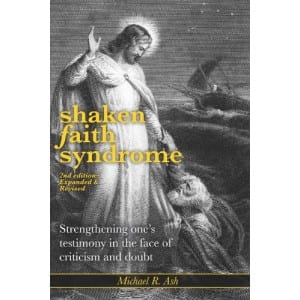
10-1706-largeHow can we help family members or friends who are struggling with their faith in the gospel? What should someone do who experiences a crisis of faith? In this episode of Religion Today, which originally aired on KSL Radio on March 17, 2013, Martin Tanner talks with Michael R. Ash, author of Shaken Faith Syndrome. The second edition of this important book can be purchased at the FAIR Bookstore, here.

This recording was used by permission of KSL Radio and does not necessarily represent the views of The Church of Jesus Christ of Latter-day Saints or of FAIR. (Listeners will note that the first part of this recording is missing.)

Filed Under: Apologetics

Mormon FAIR-Cast 133: Apologetics Organizations

March 13, 2013 by SteveDensleyJr

https://media.blubrry.com/mormonfaircast/www.fairlatterdaysaints.org/wp-content/uploads/2013/03/Religion-Today-for-Sunday-November.mp3

Podcast: Download (9.2MB)

Subscribe: RSS

In this episode of Religion Today, which originally aired on KSL Radio on November 11, 2012, Martin Tanner discusses FAIR and the Interpreter Foundation and the way in which they help to defend the Church and strengthen the faith of its members. This recording was used by permission of KSL Radio and does not necessarily represent the views of The Church of Jesus Christ of Latter-day Saints or of FAIR.

Filed Under: Apologetics, Podcast

Evidence, Education, and The Loss of Faith

March 8, 2013 by Mike Ash

“Religious faith not only lacks evidence, its independence from evidence is its pride and joy, shouted from the rooftops,” Richard Dawkins.[i]

For atheists like Dawkins, religion is for the weak-minded who believe in fairy tales—not only in the absence of evidence, but in spite of evidence. Likewise, most anti-LDS pundits (even sectarian LDS-critics who themselves accept God, Jesus, and the Bible) claim that Latter-day Saints believe in a fictional Book of Mormon which is not only unsupported by evidence, but makes claims that are contrary to known historical and scientific evidences.

As I launch this new column for Meridian Magazine (original article here) I’d like to explain the direction I hope to take.

Despite the fact that Christianity is the largest religion in Europe and has been practiced in Europe since the first century,[ii] studies show that atheism is showing rapid signs of growth—especially in Western Europe.[iii]

While the atheistic movement is not yet as strong in the United Sates, polls indicate that one out of five Americans failed to indicate a religious identity.[iv] There are also a growing number of vocal atheists in the media, the news, and even groups on college campuses,[v] and several books which denounce religion have held strong spots on the best seller’s lists.

Not surprisingly, with the increase in atheistic popularity in many developed countries, we’ve also seen an increase in anti-LDS activity and prevalence. Much of this anti-religion and anti-Mormon material has sprung from the growth of the Internet. This combination has caused more than one Latter-day Saint testimony to stumble.

At a recent Utah State University question and answer session with Elder Marlin K. Jensen, for instance, Elder Jensen said that “…maybe since Kirtland, we never have had a period of, I’ll call it apostasy, like we’re having right now; largely over these issues. …we are suffering a loss…”[vi] While critics exaggerated the extent of LDS membership losses,[vii] it is undeniable that The Church of Jesus Christ of Latter-day Saints is experiencing member losses because of hostile Internet sites.

In this column I plan to address testimony damage, the cause of testimony damage, how we can prevent such damage, and how we can actually strengthen our testimonies because of modern scholarship and evidence.

Atheism and anti-Mormonism are not the only religious-related categories that have seen growth in the past few decades. LDS scholarship, based on the wider scholarship of academia (including disciplines such as history, archaeology, anthropology, Egyptology, molecular biology, and various other areas of science), have increased our understanding and appreciation for what Joseph Smith brought forth through revelation. This increased understanding brings new evidences for what Latter-day Saints believe.

Some members may think that faith is enough, that our intellects need not, or should not factor into a testimony. For some members, faith might be all that’s needed, but for other members, intellectual support for belief is not only helpful but necessary.

When Oliver Cowdery made his failed attempt at translating the plates the Lord told him: “Behold, you have not understood; you have supposed that I would give it unto you, when you took no thought save it was to ask me. But, behold, I say unto you, that you must study it out in your mind; then you must ask me if it be right, and if it is right I will cause that your bosom shall burn within you; therefore, you shall feel that it is right” (Doctrine and Covenants 9:7-8).

Moroni (Moroni 10:3) and other prophets (2 Nephi 32:1) have counseled us to ponder things in our hearts—which sounds like an emotional rather than intellectual approach. Most people in ancient times, however, generally didn’t understand that the brain was the source for thoughts and reasoning. They typically believed that the heart was home for both the soul as well as the origination of thoughts.

While the Egyptians experimented with brain surgery, for instance, they nevertheless believed that the heart—not the brain—was the source for thoughts. To “ponder things in our hearts” means to include our brains in our spiritual quest.

As Latter-day Saints who believe that the glory of God is intelligence (D&C 93:36), we are told to seek wisdom from the best books (D&C 88:118) and learn more than just what we hear in Sunday School. We are encouraged to learn about astronomy, geology, history, current and foreign events, and much more (D&C 88: 79).

“Each of us,” said President Boyd K. Packer, “must accommodate the mixture of reason and revelation in our lives. The gospel not only permits but requires it.”[viii]

In 2007, the church published a statement about LDS doctrine which read in part: “The church exhorts all people to approach the gospel not only intellectually but with the intellect and the spirit, a process in which reason and faith work together.”[ix]

Latter-day Saints (like most other people who believe in a spiritual realm) believe that some evidence—such as a spiritual witness—can only come through faith, but they also maintain that faith and reason are not typically in conflict and that evidence-based reason can support faith.

Studies even suggest that for Latter-day Saints, increased education strengthens testimony and that higher education contributes to the religiosity for Mormons. It is my hope that rational thinking will play an active role in magnifying our testimonies.

“Evidence” for belief, and evidence supporting defenses against anti-LDS claims, are, contrary to some atheists, a prominent part of much LDS scholarship. Some of the web resources which offer this intellectual support include:

The Neal A. Maxwell Institute for Religious Scholarship (formerly FARMS): (www.maxwellinstitute.byu.edu/). While the direction of the Maxwell Institute is currently finding a modified course, the Institute offers vast amounts of information, articles, and books, on various LDS-scholarly topics.

The Interpreter (www.MormonInterpreter.com): This new on-line and print-on-demand journal was created by several of the original members of FARMS. In a short amount of time, they’ve been able to produce an impressive amount of material.

And, of course, there is FAIR—the Foundation for Apologetic Information and Research (www.fairlds.org)—an international organization of LDS volunteers who have produced a massive repository of responses to LDS-critical claims. FAIR hosts an annual Conference (the 2013 event is schedule for the August 1-2), as well as podcasts, videos, DVDs, and the most comprehensive wiki that engages challenging LDS issues.

Lastly, FAIR has produced my book Shaken Faith Syndrome: Strengthening One’s Testimony In the Face of Criticism and Doubt. This book was initially published in 2008, and just this week a 2nd edition—revised and enlarged by nearly 20%– has come from the press (http://bookstore.fairlds.org/product.php?id_product=10).

The cure for shaky testimonies—as will be shown in the months to come—is often not to study less, but to study more.


[i]  Richard Dawkins, “Is Science a Religion,” The Humanist (January/February 1997), 26-27.


[ii] http://en.wikipedia.org/wiki/Christianity_in_Europe


[iii] Nigel Barber, “The Human Beast: Why We Do What We Do,” Psychology Today (18 May 2010) available at http://www.psychologytoday.com/blog/the-human-beast/201005/why-atheism-will-replace-religion.


[iv] Barry A. Kosmin and Ariela Keysar, “American Religious Identity Survey  [Aris 2008],” (Trinity College, March 2009), available at http://b27.cc.trincoll.edu/weblogs/AmericanReligionSurvey-ARIS/reports/ARIS_Report_2008.pdf


[v] Laurie Goodstein, “More Atheists Shout It From the Rooftops,” The New York Times (16 April 2009), available at http://www.nytimes.com/2009/04/27/us/27atheist.html


[vi] http://www.fairblog.org/2013/01/15/reports-of-the-death-of-the-church-are-greatly-exaggerated/


[vii] Peggy Fletcher Stack, “Mormons Confront ‘Epidemic’ On Line Misinformation,” The Washington Post (1 February 2012) available at http://www.washingtonpost.com/national/on-faith/mormons-confront-epidemic-on-online-misinformation/2012/02/01/gIQApULJiQ_story.html


[viii] Boyd K. Packer, “I Say Unto You, Be One,” BYU Devotional (12 February 1991), available at http://speeches.byu.edu/?act=viewitem&id=373


[ix]  “Approaching Mormon Doctrine,” (4 May 2007) available at http://www.mormonnewsroom.org/article/approaching-mormon-doctrine


Filed Under: Anti-Mormon critics, Apologetics

Reports of the Death of the Church are Greatly Exaggerated

January 15, 2013 by Stephen Smoot

There has been a bit of buzz (mostly amongst ex- and anti-Mormons) recently over some remarks of Elder Marlin K. Jensen, an emeritus member of the 1st Quorum of the Seventy and former Church Historian and Recorder, who is alleged to have said that, thanks to Google, the omniscient fount of all knowledge, members of the Church are leaving “in droves”. A titanic exodus of members, the likes of which have never before been seen, are leaving the Church, Elder Jensen is reported by many on the Internet to have said. This, the claim on the Internet goes, is because the seedy truth of Mormon history and doctrine, kept secret by a conniving leadership, has been exposed by intrepid researchers on the web. [Read more…] about Reports of the Death of the Church are Greatly Exaggerated

Filed Under: Anti-Mormon critics, Apologetics, General, LDS History, News stories Tagged With: apologetics, Church membership, Internet, Marlin K. Jensen, members

Trusting Imperfect Prophets

December 20, 2012 by Neal Rappleye

An important part of the mission of FAIR, as part of defending the faith, is to promote and defend the credibility of the Brethren in the First Presidency and Quorum of the Twelve Apostles as Prophets, Seers, and Revelators, authorized to lead and guide the Church in the Latter-days. For some, the notion that the prophets or apostles might at times be wrong is just too earth shattering. “They speak with God,” so the thinking goes, “and therefore cannot be wrong.” This leads them to the conclusion that since they are sometimes mistaken, they must not be prophets. Others may perhaps come away with a distorted view of prophets, with an inordinate focus on their imperfections that erodes their faith and confidence in them as men of God. Our hearts go out to those who have had, or do have, similar concerns and struggles.

With that in mind, I would like to offer a few suggestions that have helped me maintain faith in the prophets and apostles and other leaders despite my awareness of their imperfect and fallible status.

[Read more…] about Trusting Imperfect Prophets

Filed Under: Apologetics, Doctrine, General

A Letter to a Friend About Keeping the Faith

December 20, 2012 by SteveDensleyJr

For those who have benefited from the Keeping the Faith podcast series, you may also appreciate the recent blog post from Nate Oman over at Times and Seasons. You can read it by clicking here.

Filed Under: Apologetics

  • « Go to Previous Page
  • Page 1
  • Interim pages omitted …
  • Page 38
  • Page 39
  • Page 40
  • Page 41
  • Page 42
  • Interim pages omitted …
  • Page 46
  • Go to Next Page »

Primary Sidebar

Faithful Study Resources for Come, Follow Me

Subscribe to Blog

Enter your email address:

Subscribe to Podcast

Podcast icon
Subscribe to podcast in iTunes
Subscribe to podcast elsewhere
Listen with FAIR app
Android app on Google Play Download on the App Store

Pages

  • Blog Guidelines

FAIR Latest

  • Come, Follow Me with FAIR – Moses 7 – Jennifer Roach Lees
  • Come, Follow Me with FAIR – Moses 7 – Part 1 – Autumn Dickson
  • Look to God and Live 
  • Come, Follow Me with FAIR – Genesis 5; Moses 6 – Part 2 – Autumn Dickson
  • Come, Follow Me with FAIR – Genesis 5; Moses 6 – Jennifer Roach Lees

Blog Categories

Recent Comments

  • Kathleen Chin on Forsake Not Your Own Mercy
  • Daniel Peterson on In Memoriam: Sarah Allen
  • Matt on In Memoriam: Sarah Allen
  • Jerry Allred on Come, Follow Me with FAIR – Moses 1; Abraham 3 – Jennifer Roach Lees
  • Jann E Cahoon Campbell on In Memoriam: Sarah Allen

Archives

Follow Us

  • Facebook
  • Twitter
  • iTunes
  • YouTube
Android app on Google Play Download on the App Store

Footer

FairMormon Logo

FAIR is a non-profit organization dedicated to providing well-documented answers to criticisms of the doctrine, practice, and history of The Church of Jesus Christ of Latter-day Saints.

Donate to FAIR

We are a volunteer organization. We invite you to give back.

Donate Now

Site Footer