



• Skip to primary navigation
  • Skip to main content
  • Skip to primary sidebar
  • Skip to footer

FAIR

  • Start Here
  • Find Answers
  • Scripture Study
  • Blog
  • Events
    • FAIR Conference
    • Virtual Conferences
    • Special Events
  • FAIR Books
  • About
    • Media & Apps
  • Get Involved
  • Search

New Testament

Spencer Kraus

Early Christianity Researcher • Greek New Testament • FAIR Conference Speaker

Spencer Kraus

Spencer Kraus graduated from Brigham Young University with a bachelor’s degree in Computer Science, Modern Hebrew, and Ancient Near Eastern Studies.

He is a researcher with the Ancient America Foundation and works with Lincoln Blumell on topics related to early Christianity and the Greek New Testament.

Bio last reviewed:

Contributions at FAIR

Christopher B. Meldrum

Attorney • Early Christianity & New Testament • FAIR Conference Speaker

Christopher B. Meldrum

Christopher B. Meldrum earned a BA in Classical Studies, with an emphasis in Ancient Greek and Latin, from Brigham Young University. He is an attorney in Washington, D.C., and has continued his study of classical antiquity and early Christianity alongside his legal career.

Meldrum has assisted with translation and editorial work on the BYU New Testament Commentary and is co-authoring its forthcoming volume on the Pastoral Epistles. His research focuses on the Pastoral Epistles, early Christian concepts of priesthood and ministry, temple themes in the New Testament, and the relationship between early Christian theology and Latter-day Saint thought.

Bio last reviewed:

Contributions at FAIR

Lynne Hilton Wilson

New Testament Scholar • Theology & Religious History • FAIR Conference Speaker

Lynne Hilton Wilson

Lynne Hilton Wilson earned a PhD in Theology and American Religious History from Marquette University, where her doctoral research examined Joseph Smith’s understanding of the Holy Spirit in comparison with his contemporaries. She also earned an MA in Religious Studies from Cardinal Stritch University and completed undergraduate studies in university studies and nursing at Brigham Young University.

Wilson’s scholarship includes New Testament studies and pneumatology—the study of the Holy Spirit. She has presented and published research for organizations and venues including the Society of Biblical Literature, the Sperry Symposium, and the BYU Religious Studies Center.

She is one of the founders of Scripture Central and has taught religion as an adjunct professor at Brigham Young University. She has also served extensively in Church education in France, Belgium, Wisconsin, and California and is a frequent BYU Education Week presenter.

In addition to her academic and gospel teaching, Wilson is an accomplished cellist who has performed with the BYU Philharmonic and Chamber Orchestra. She and her husband, Dow R. Wilson, are the parents of seven children.

Bio last reviewed:

Contributions at FAIR

Statement of Faith

When I think about the teachings of the restored church of Jesus Christ I am filled with awe at their simplicity and simultaneous multifaceted depth. The gospel plan seems so straightforward: God loves His children and has prepared a way for them to find peace through repentance, baptism, and the Gift of the Holy Ghost to guide them through life. And yet when I seriously study that doctrine I am fascinated with its expanding ramifications, continuity, symbolism, typology, and harmony with the natural world. A good example of the latter occurred when I began researching for my dissertation. I contrasted the pneumatology of nineteenth century Americans and was overwhelmed by how much richer Joseph Smith’s understanding of the Holy Spirit was, compared to his peers. He did not claim authorship of the intricate ideas, though, but attributed divine revelation as the source of his doctrine. Again I observed the balance between the simplicity of personal inspiration and the new far-reaching insights it brought.

As an undergraduate I was fascinated by the Book of Mormon’s ties to Hebraic linguistics—syntax, chiasmus, numerology, and history. The more I studied, the more connections I was able to make between the Book of Mormon and biblical history and thought. It was stimulating and interesting, and yet that is not why I am a believer. I believe that the Book of Mormon is a second witness of Jesus Christ because, after studying it, I prayed to know if it were the word of God. God answered my prayers with a feeling of sweet peace and His love. My mind was enlightened and I knew it was true from a feeling deep within me that resonated of rightness. This witness from the Holy Spirit has been repeated over and over as I further experiment on the Word of God.

These feelings motivate me to try every day to live the life of a disciple of Christ. I often fall short, and that is why I desperately need a Savior. I am filled with gratitude for Jesus Christ whom I accept as my Redeemer and the Son of God. I have felt the cleansing power of His Spirit and the blessings of repentance with its corollary, the love of God. I believe with Isaiah, “He was wounded for our transgressions, he was bruised for our iniquities: the chastisement of our peace was upon him; and with his stripes we are healed” (53:5). I also believe that he was the promised Messiah and fulfilled the Mosaic Law. He came at the meridian of time and will come again to rule and reign during the thousand years of peace known as the millennium.

I believe the Savior’s ministry continues in the twenty-first century under the direction of living prophets and apostolic priesthood. These are not infallible people, but they are working under the direction of an omniscient and omnipresent devoted God. I believe God carries out His work through these servants and when they speak through the gift of revelation their words are the words that God wants communicated. This is an awesome thing, and yet I too have felt inspired by the Spirit of God so I can extend my faith to believe that repentant Peter served as the Lord’s mouthpiece and so can other anointed fishers of men.

November 2010

Brent J. Schmidt

Classics Scholar • Biblical Studies • FAIR Conference Speaker

Brent J. Schmidt

Brent J. Schmidt earned degrees in history and classics from the University of Utah and a PhD in classics from the University of Colorado Boulder. He teaches in the religion and humanities departments at Brigham Young University–Idaho.
Schmidt specializes in Greek and Latin moralistic literature and wrote his dissertation on ancient utopian communities. His publications on biblical subjects include word studies on grace and faith, and he is an author and editor of the BYU New Testament Commentary series.

His interests outside of his academic work include reading—particularly the Book of Mormon and Bible—gardening, collecting ancient coins, world travel, skiing, and learning ancient and modern languages. He and his wife, Judith, are the parents of one son.

Bio last reviewed:

Contributions at FAIR

David Harper

History Student • New Testament & Second Temple Judaism • FAIR Conference Speaker

David Harper

David Harper studies history at BYU–Idaho. Originally from New Mexico, he served a two-year proselyting mission for The Church of Jesus Christ of Latter-day Saints in the Richmond, Virginia Mission.

Harper helped found the BYU–Idaho Study & Faith Society, an organization devoted to faith-building scholarship. His academic interests include apologetics, Second Temple Judaism, New Testament history, and Pauline theology, and he enjoys studying ancient Greek and Hebrew.

He also runs a growing community of nearly two thousand missionaries and returned missionaries focused on promoting gospel scholarship.

Bio last reviewed:

Contributions at FAIR

Daniel N. Gullotta

Early Christianity Scholar • Religious Studies Scholar • FAIR Conference Speaker

Daniel N. Gullotta

Daniel N. Gullotta is an assistant professor at Ohio State University’s Salmon P. Chase Center for Civics, Culture, and Society. He earned a PhD in Religious Studies from Stanford University and has previously held teaching and research positions at Wycliffe Hall, University of Oxford; the University of Mississippi; and Ashland University.

Bio last reviewed:

Contributions at FAIR

Lincoln Blumell

Lincoln Blumell

Early Christianity Scholar • New Testament Scholar • FAIR Conference Speaker

Lincoln Blumell

Lincoln Blumell received a BA with honors in Classical and Early Christian Studies and an MA in Religious Studies, with an emphasis in ancient Christianity, from the University of Calgary. He earned an MSt in Jewish Studies from Christ Church, Oxford, and a PhD in Religious Studies, specializing in early Christianity, from the University of Toronto.

Before joining the faculty at Brigham Young University, Blumell held a visiting assistant professorship in the Department of Classical Studies at Tulane University in New Orleans.

His teaching and scholarship focus on the New Testament, Second Temple Judaism, and the history of ancient Christianity through the Byzantine period. His particular research interests include early Christianity in Egypt, ancient Christian letters, and Greek papyrology.

Blumell has taught courses on the New Testament, the Book of Mormon, Second Temple Judaism, the history of ancient Christianity from AD 100–400, persecution and martyrdom in ancient Christianity, Egypt in the Roman Empire, and classical mythology.

His research draws on several ancient and modern languages. He reads Biblical Hebrew, Sahidic Coptic, Classical Greek, Latin, French, and German.

Bio last reviewed:

Contributions at FAIR

Foundations of Faith

FOURTH ANNUAL FAIR VIRTUAL CONFERENCE

Foundations of Faith

Defending the New Testament in the Latter Days
October 8–10, 2026 · Online

EXPLORE SCHEDULE AND VIEW THE CONFERENCE ↓

About This Conference

The 2026 FAIR Virtual Conference explores the New Testament through faithful apologetic, historical, theological, and cultural perspectives. Presentations examine scripture, early Christianity, the life and teachings of Jesus Christ and His Apostles, and connections between the New Testament and Latter-day Saint doctrine.

Presentations

Explore presentations from the 2026 FAIR Virtual Conference examining the Gospels, New Testament interpretation and theology, the Epistles, the early Christian Church, and the Great Apostasy.


The Conference will be streamed on FAIR’s YouTube channel.

Opening Keynote

Lincoln Blumell
Lincoln Blumell

Lady Eclecte: Recovering a Woman in the New Testament

Description coming soon

THE GOSPELS, INTERPRETATION & THEOLOGY

Daniel N. Gullotta
Daniel Gullotta

“Cunningly Devised Fables”: The Jesus Myth Theory and Its Problems

Daniel N. Gullotta examines the Jesus myth theory—the claim that Jesus of Nazareth never existed—which has surfaced periodically since the late eighteenth century. Drawing on evidence from the Apostle Paul, the Gospels, and critics of Christianity, he argues that its central claims fail on historical grounds. He considers why the theory flourishes online without gaining acceptance among historians, with particular attention to where Latter-day Saints are likely to encounter it. Gullotta presents Jesus’s historicity as common ground for Latter-day Saints, Catholics, and Protestants, who draw on the same evidence and reach the same conclusion, making defense of the New Testament a shared undertaking.

Allen Hansen
Allen Hansen

The Midrash of Matthew: How the Passover Reveals the Messiah

Allen Hansen examines how Jewish interpretive traditions beyond the biblical text shape Matthew’s presentation of Jesus as the fulfillment of scripture. Drawing on Josephus, midrash, and the Passover Haggadah, he explores Passover parallels in Jesus’ birth, the star of the magi, Joseph’s dreams, the flight into Egypt, the wilderness temptations, and the Sermon on the Mount. Hansen argues that Passover provides the organizing logic of Matthew’s Gospel, connecting Christ’s birth, ministry, and atoning sacrifice. He considers how these traditions illuminate Matthew’s selection and interpretation of events, and how understanding Passover’s significance for Matthew and his audience can deepen readers’ appreciation of Christ.

Stephen Smoot crop
Stephen Smoot

The Olivet Discourse Restored: Approaching Joseph Smith–Matthew

Stephen Smoot examines readings of Matthew 24 that treat Jesus’s prediction of Jerusalem’s destruction in AD 70 as ex eventu prophecy—a prediction written after the event—and considers their implications for the Gospel’s dating and historical reliability. He draws on Joseph Smith’s 1832 prophecy on war, now Doctrine and Covenants 87, which he presents as accurately anticipating the Civil War’s outbreak in South Carolina. Situating this comparison within the Latter-day Saint understanding of continuing revelation, Smoot challenges the assumption that accurate prediction necessarily implies post-event authorship. He argues that the Restoration’s prophetic tradition offers a framework for reading the Olivet Discourse as genuine prophecy rather than retrospective composition.

Devon Bollin
Devon Bollin

“The Spirit of Truth”: A Latter-day Saint Reading of the Johannine Prologue

Devon Bollin reads John’s Prologue through Doctrine and Covenants 93, shifting attention from what the Word is to what the Word does in becoming flesh. Connecting Christ as “the Spirit of truth” with teachings on truth, embodiment, and a fullness of joy, he suggests that truth is personal, lived, and made complete in embodied existence. Bollin presents a Restoration framework in which growth, covenant, and relationship are basic features of reality, and God and humanity are continuous in kind while differing in degree. In dialogue with other Christian accounts of sharing in divine life, he argues for reading John’s Prologue as a story of disclosure and transformation in which flesh expresses divine life rather than obstructing truth.

David Harper
David Harper

Is It Written? Scriptural Context and Interpretive Methods

David Harper examines how ancient Israelite, Jewish, and Christian communities interpreted scripture, arguing that they gave earlier passages inspired meanings beyond those intended by their authors or understood by their original audiences. Drawing on the Old and New Testaments, Qumran writings, other Second Temple texts, and works by Philo and Josephus, he assesses how interpretive approaches such as allegory, typology, and midrash account for these patterns. Harper contends that modern criticisms of Latter-day Saint interpretations for departing from original meanings would also apply to biblical authors. He argues that Restoration prophets and apostles follow an ancient pattern of renewing scripture’s relevance by giving it new meaning for contemporary audiences.

Stephen F. Johnsen
Stephen Johnsen

The Bible and Book of Mormon: Exceptional Evidence of Christ

Stephen Johnsen examines the Book of Mormon as a source of empirical evidence beyond the Bible for central Christian claims. Drawing on Latter-day Saint and non–Latter-day Saint research, he argues that the book challenges assumptions of Joseph Smith’s time and contains information unavailable then but later confirmed. He contends that these features exceed what writers of that era—or even a century later—could have produced. Acknowledging unresolved questions and the limits of archaeology in establishing biblical miracles, Johnsen presents the accumulated research as exceptional evidence for the Book of Mormon’s truthfulness and, in turn, for a God who interacts with humanity, Jesus as the Messiah, and the reality of His resurrection.

Bryner cropped 2
Paul Bryner

“Spirits Which Ye Could Not Understand” (D&C 50:14): A Restoration Analysis of Biblical Evil Spirit Theology

Paul Bryner examines biblical accounts of evil spirits through Restoration teachings that affirm their existence while emphasizing divine sovereignty and limits on their power over nature and human agency. Drawing on the Book of Mormon, Doctrine and Covenants, and prophetic teachings, he argues that physical control by evil beings is rare and that some possession accounts may primarily describe healings of serious mental illness. He also considers how Alma 22:15, Doctrine and Covenants 50, and early Christian confirmation practices illuminate the displacement of evil spirits. Bryner advocates spiritual healing alongside medical treatment, regardless of whether evil spirits are shown to cause particular suffering, as a way to continue Christ’s healing ministry while affirming New Testament historicity and accounting for biological phenomena.

Michael DiPaolo
Michael DiPaolo

Restorationist Metaphysics and the Evidential Problem of Evil

Michael DiPaolo examines how assumptions about divine perfection, humanity’s relationship to God, and freedom in heaven shape the evidential problem of evil—the challenge posed by apparently pointless suffering. Drawing on Latter-day Saint theology and biblical accounts of Christ growing in wisdom, learning obedience, and exercising entrusted authority, he argues that wisdom and stewardship require development and cannot be instantly conferred on free agents intended to participate in the divine nature. He considers natural and nonhuman suffering within a world of moral formation, delegated stewardship, and ongoing responsibility. DiPaolo also presents heaven as continued moral and creative participation. He argues that this framework of eternal agency makes suffering intelligible without treating it as gratuitous or incompatible with divine goodness.

THE EPISTLES, EARLY CHURCH & APOSTASY

Brent J. Schmidt
Brent Schmidt

Restoring Heavenly Father as the Divine Patron in Romans

Brent Schmidt examines Paul’s use of the Greek definite article ho (“the”) before the word for God in Romans. He argues that this grammatical feature, obscured in English translations, identifies Heavenly Father as a personage separate and distinct from Jesus Christ. Drawing on the ancient patron-client system and 1 Corinthians 8:6, Schmidt interprets Romans as presenting the Father as the divine patron—the source of all blessings—and Jesus as the mediator of His gifts, including the Holy Ghost. He explores how these gifts call for a faithful response and how this understanding encourages disciples to love and trust Heavenly Father and cultivate a covenant relationship with Him through His Son.

Jonathon Riley
Jonathon Riley

Zenos, Lehi, and Paul: How the Book of Mormon Illuminates Romans 11

Jonathon Riley examines how the Book of Mormon’s grafting imagery may illuminate Paul’s declaration that “all Israel will be saved” in Romans 11. He traces how the Book of Mormon connects grafting with remnants of both the northern and southern kingdoms, then interprets Romans 11:25–32 with the northern tribes in view. Using an audience-oriented approach, Riley argues that the passage can be read as referring to both northern and southern Israel. He presents this interpretation as a more expansive understanding of Israel’s salvation, encompassing not only Jews and Gentiles but also scattered Northern Israelites.

Lynne Hilton Wilson
Lynne Hilton Wilson

Set Free and Counted: Women in the Apostolic Church

Lynne Hilton Wilson examines claims that the apostolic Church was hostile to women, drawing on forty-one New Testament passages that she identifies as affirming women’s worship and ministry. She reassesses the restrictive passages in 1 Corinthians 14:34–35 and 1 Timothy 2:9–15 through questions of translation, congregational circumstances, possible textual changes, and Restoration scripture. Her study also identifies twenty-four named female disciples in Acts and the Epistles, including Phoebe, Priscilla, and Junia. Acknowledging unresolved difficulties, Wilson argues that the broader scriptural witness affirms women praying, prophesying, teaching, serving, and leading, rather than making restrictive passages the defining theology of the apostolic Church.

Jennifer Roach Lees
Jennifer Roach Lees

From Diakonos to Relief Society: Reclaiming Biblical Precedents for Women’s Spiritual Authority

Jennifer Roach Lees examines parallels between New Testament women and contemporary Latter-day Saint women, distinguishing spiritual authority from modern conceptions of priesthood office. Drawing on Phoebe, Priscilla, Lydia, Junia, and Philip’s four daughters, she argues that women exercised gospel leadership through spiritual gifts and the direction of the Spirit, sometimes within specific callings. Lees presents these examples as a theological foundation for recognizing women’s gifts and normalizing their voices in decision-making within the Church’s revealed structure. She advocates a shift from leadership grounded in hierarchy to practical, Spirit-led initiative, arguing that this approach does not require changes to the priesthood structure revealed by modern prophets.

Christopher B. Meldrum
Christopher Meldrum

Order, Authority, and Service in 1 Timothy 2–3

Christopher Meldrum examines 1 Timothy 2–3 through ancient Jewish and Greco-Roman understandings of sacred order, mediation, and diakonia—entrusted, tested service. He argues that Paul’s instructions to women in 1 Timothy 2:9–15 address preparation for responsibility and premature or usurped authority rather than female incapacity. He reads Paul’s appeal to Genesis as a narrative about sacred order rather than a claim of gender hierarchy. Meldrum connects this interpretation with chapter 3’s emphasis on testing, blamelessness, and the inclusion of women “likewise,” presenting the passage as a coherent vision of Church order. He briefly notes a resonance with early Latter-day Saint understandings of entrusted service, without treating that parallel as proof.

Spencer Kraus
Spencer Kraus

“They Went Out From Us”: Apostasy in the Johannine Writings

Spencer Kraus examines apostasy as an internal challenge to the early Church, drawing on John’s writings, Paul’s letters, and other early Christian texts. Examples include the Judaizer movement in Galatians and Diotrephes in 3 John. He explores apostolic responses to movements labeled “gnostic,” clarifies the term’s limitations, and uses the Nag Hammadi codices to examine their differing beliefs. He also considers how some teachings may reflect authentic doctrines and ordinances, including baptism for the dead, later abandoned partly because of their association with heretical movements. Kraus argues that these movements departed from one apostolic Christianity by rejecting its teachings, while advocating discussion and defense of the doctrine of apostasy with clarity and charity.

Kerry Hull
Kerry Hull

Vocabulary of Deviation: Heresy, Schism, and the Construction of Orthodoxy, c. 1st–5th Centuries

Kerry M. Hull examines how Christian writers from the first through fifth centuries used the language of heresy, schism, error, innovation, and tradition to defend what they understood as apostolic teaching. Drawing on authors including Clement of Rome, Irenaeus, Tertullian, and Augustine, he explores competing appeals to apostolic authority and the institutional consequences of disagreement, including rebaptism controversies, the removal of bishops, and condemnations by councils. Hull places the warnings of apostasy in Acts 20:29–30, 2 Thessalonians 2, and 1 Timothy 4 alongside these doctrinal conflicts. He invites Latter-day Saints to recognize both early Christianity’s persistent doctrinal fragmentation and the sincere efforts of its leaders to preserve apostolic faith.

Bryan Habashi
Bryan Habashi

Evidence of the Apostasy? Contradictions between a 2nd Century Bishop and the New Testament on the Necessity of Apostles and Prophets in the Christian Church

Bryan Habashi compares Irenaeus of Lyon’s teachings on apostolic succession with the New Testament’s accounts of Church leadership. He examines the second-century bishop’s claims that the Apostles appointed bishops as their successors and that other churches must agree with Rome’s doctrine. Habashi argues that these claims contradict apostolic teaching and invalidate Roman Catholic claims of unbroken succession. He presents Irenaeus’s theology on this issue as evidence of an apostasy from the original Christian Church. Emphasizing apostles and prophets as essential to Church leadership, he seeks to strengthen Latter-day Saints’ faith that the Church of Jesus Christ of Latter-day Saints is the original New Testament Church restored to the earth.

John Gee
John Gee

Theologia and Apologia

John Gee examines Latter-day Saint ambivalence toward theology and how the term’s use differs from its meaning as a professional discipline in other denominations. He traces theology’s origins as a way of interpreting Homer and Hesiod, then explores how and why Christianity adopted it. Gee considers the consequences of that adoption and problems some Christians identify within Christian theology. He contrasts this history with the role of apologetics, arguing that a practice viewed unfavorably by some Latter-day Saints today was considered an imperative duty by early Christians and sanctioned by Jesus himself.

Conference Schedule

Join us online October 8–10, 2026, for three days of presentations exploring the New Testament, early Christianity, Latter-day Saint theology, and the Great Apostasy.

Thursday, October 8 — Opening Keynote

Keynote Address

7:00–7:45 p.m. — Lincoln Blumell

Friday, October 9 — The Gospels, Interpretation & Theology

Morning Session

10:00–10:35 a.m. — Daniel Gullotta, “Cunningly Devised Fables”: The Jesus Myth Theory and Its Problems

10:35–11:00 a.m. — Allen Hansen, The Midrash of Matthew: How the Passover Reveals the Messiah

11:00–11:35 a.m. — Stephen Smoot, The Olivet Discourse Restored: Approaching Joseph Smith–Matthew

11:35 a.m.–12:30 p.m. — Devon Bollin, “The Spirit of Truth”: A Latter-day Saint Reading of the Johannine Prologue

12:30–1:30 p.m. — Lunch Break

Afternoon Session

1:30–2:05 p.m. — David Harper, Is It Written? Scriptural Context and Interpretive Methods

2:05–2:40 p.m. — Stephen Johnsen, The Bible and Book of Mormon: Exceptional Evidence of Christ

2:40–2:50 p.m. — Short Break

2:50–3:25 p.m. — Paul Bryner, “Spirits Which Ye Could Not Understand” (D&C 50:14): A Restoration Analysis of Biblical Evil Spirit Theology

3:25–4:00 p.m. — Michael DiPaolo, Restorationist Metaphysics and the Evidential Problem of Evil

Saturday, October 10 — The Epistles, Early Church & Apostasy

Morning Session

10:00–10:35 a.m. — Brent Schmidt, Restoring Heavenly Father as the Divine Patron in Romans

10:35–11:10 a.m. — Jonathon Riley, Zenos, Lehi, and Paul: How the Book of Mormon Illuminates Romans 11

11:10–11:20 a.m. — Short Break

11:20–11:55 a.m. — Lynne Wilson, Set Free and Counted: Women in the Apostolic Church

11:55 a.m.–12:30 p.m. — Jennifer Lees, From Diakonos to Relief Society: Reclaiming Biblical Precedents for Women’s Spiritual Authority

12:30–1:30 p.m. — Lunch Break

Afternoon Session

1:30–2:05 p.m. — Christopher Meldrum, Order, Authority, and Service in 1 Timothy 2–3
2:05–2:40 p.m. — Spencer Kraus, “They Went Out From Us”: Apostasy in the Johannine Writings

2:40–2:50 p.m. — Short Break

2:50–3:25 p.m. — Kerry Hull, Vocabulary of Deviation: Heresy, Schism, and the Construction of Orthodoxy, c. 1st–5th Centuries
3:25–4:00 p.m. — Bryan Habashi, Evidence of the Apostasy? Contradictions between a 2nd Century Bishop and the New Testament on the Necessity of Apostles and Prophets in the Christian Church

4:00–4:35 p.m. — John Gee, Theologia and Apologia

4:35 p.m. — Closing

Explore the New Testament with FAIR

Continue exploring faithful answers, scripture study, and resources related to the New Testament and early Christianity.

New Testament

Explore FAIR resources on New Testament scripture, history, and interpretation.

Early Christianity & the Great Apostasy

Explore historical and apologetic resources on the early Christian Church and the Great Apostasy.

Come, Follow Me: New Testament

Study the New Testament with FAIR’s Come, Follow Me resources.

A NEW New Testament Translation and Study Bible!

November 29, 2018 by NickGalieti

https://media.blubrry.com/mormonfaircast/www.ldsmissioncast.com/wp-content/uploads/2018/10/LMC-Thom-Wayment.mp3

Podcast: Download (34.4MB)

Subscribe: RSS

A NEW New Testament? Finally!

Do you find that reading King James Version of the  New Testament English feels old, out dated, or just hard to understand? Have no fear, Thom Wayment is here. Our guest on this episode of the Latter-day Saint MissionCast is the translator of a NEW translation, a more modern translation of the New Testament Study Bible for Latter-day Saints! Brother Wayment is a professor of Classics at Brigham Young University. He joined the faculty of Religious Education in June of 2000 after completing a PhD in New Testament studies at the Claremont Graduate School, and he later joined the faculty of Comparative Arts and Letters at BYU in 2018. His recent research interests focus on Christian literary papyri, Oxyrhynchus, and the Joseph Smith Translation of the Bible. He served as the publications director of the Religious Studies Center from 2013 until 2018.

In this episode we learn about the translation process he took, the history of the King James Version of the New Testament, and how the study hints and helps that he brings forth makes a tremendous impact on the way we study the Bible. This is great content considering the 2019 Curriculum with the Come, Follow Me – For Individuals and Familiesas well as Come, Follow Me – For Sunday School and Primary that will be featuring the New Testament. This is also a great resource for missionaries looking to study the gospel on or off their missions. The New Testament is our bridge to other Christian Faiths, and it contains the words of Christ. This new edition is being published by BYU and Deseret Book, released in November 2018.
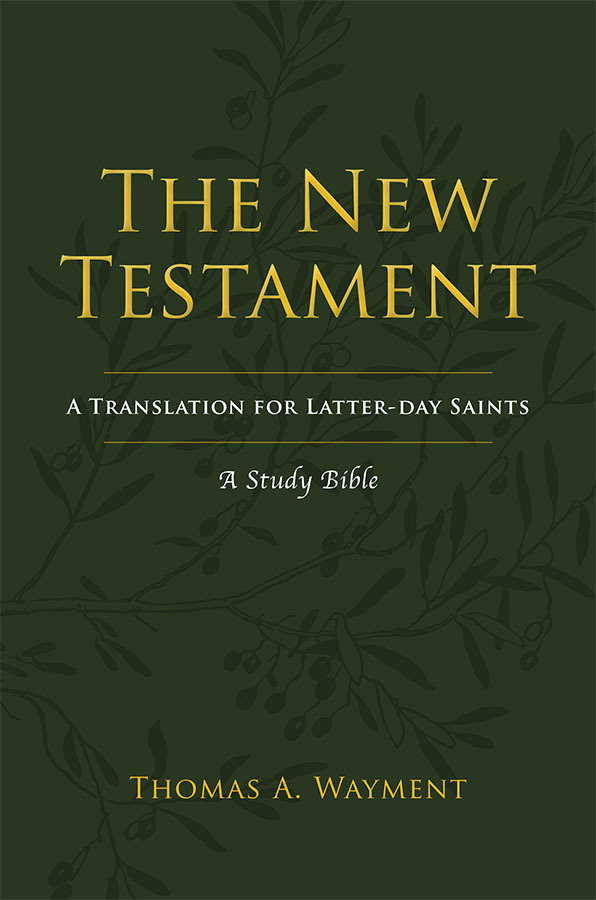
THE BOOK IS NOW AVAILABLE THROUGH Deseret Book! CLICK HERE TO PURCHASE A COPY!
The New Testament - Latter-day Saint Study Bible

Filed Under: Bible, LDS Scriptures, Lesson Aids, Nick Galieti, Podcast, Resources Tagged With: Come, Follow Me, New Testament

A Note on the First Visions of Paul and Joseph Smith

July 11, 2011 by Stephen Smoot

Luke reports three accounts of Paul’s conversion on the road to Damascus in the book of Acts. The first is in Acts 9:1-9. The second appears in Acts 22:6-11. And the third is recorded in Acts 26:12-20. Below are these three accounts reprinted as they appear in the King James Version:

Acts 9:1-9

1And Saul, yet breathing out threatenings and slaughter against the disciples of the Lord, went unto the high priest,

2And desired of him letters to Damascus to the synagogues, that if he found any of this way, whether they were men or women, he might bring them bound unto Jerusalem.

3And as he journeyed, he came near Damascus: and suddenly there shined round about him a light from heaven:

4And he fell to the earth, and heard a voice saying unto him, Saul, Saul, why persecutest thou me?

5And he said, Who art thou, Lord? And the Lord said, I am Jesus whom thou persecutest: it is hard for thee to kick against the pricks.

6And he trembling and astonished said, Lord, what wilt thou have me to do? And the Lord said unto him, Arise, and go into the city, and it shall be told thee what thou must do.

7And the men which journeyed with him stood speechless, hearing a voice, but seeing no man.

8And Saul arose from the earth; and when his eyes were opened, he saw no man: but they led him by the hand, and brought him into Damascus.

9And he was three days without sight, and neither did eat nor drink.

Acts 22:6-11

6And it came to pass, that, as I made my journey, and was come nigh unto Damascus about noon, suddenly there shone from heaven a great light round about me.

7And I fell unto the ground, and heard a voice saying unto me, Saul, Saul, why persecutest thou me?

8And I answered, Who art thou, Lord? And he said unto me, I am Jesus of Nazareth, whom thou persecutest.

9And they that were with me saw indeed the light, and were afraid; but they heard not the voice of him that spake to me.

10And I said, What shall I do, Lord? And the Lord said unto me, Arise, and go into Damascus; and there it shall be told thee of all things which are appointed for thee to do.

11And when I could not see for the glory of that light, being led by the hand of them that were with me, I came into Damascus.

Acts 26:12-20

12Whereupon as I went to Damascus with authority and commission from the chief priests,

13At midday, O king, I saw in the way a light from heaven, above the brightness of the sun, shining round about me and them which journeyed with me.

14And when we were all fallen to the earth, I heard a voice speaking unto me, and saying in the Hebrew tongue, Saul, Saul, why persecutest thou me? it is hard for thee to kick against the pricks.

15And I said, Who art thou, Lord? And he said, I am Jesus whom thou persecutest.

16But rise, and stand upon thy feet: for I have appeared unto thee for this purpose, to make thee a minister and a witness both of these things which thou hast seen, and of those things in the which I will appear unto thee;

17Delivering thee from the people, and from the Gentiles, unto whom now I send thee,

18To open their eyes, and to turn them from darkness to light, and from the power of Satan unto God, that they may receive forgiveness of sins, and inheritance among them which are sanctified by faith that is in me.

19Whereupon, O king Agrippa, I was not disobedient unto the heavenly vision:

20But shewed first unto them of Damascus, and at Jerusalem, and throughout all the coasts of Judæa, and then to the Gentiles, that they should repent and turn to God, and do works meet for repentance.

Notice how Luke attributes additional words to the Lord Jesus to Paul in his third account than in his first two. In the first account, Jesus tells Paul to “arise, and go into the city, and it shall be told thee what thou must do” (Acts 9:6). In the second report, Luke describes Jesus telling Paul to “arise, and go into Damascus; and there it shall be told thee of all things which are appointed for thee to do” (Acts 22:10). But notice in the third account how Luke quotes Jesus as saying much more to Paul than in the previous two accounts:

And he said, I am Jesus whom thou persecutest. But rise, and stand upon thy feet: for I  have appeared unto thee for this purpose, to make thee a minister and a witness both of these things which thou hast seen, and of those things in the which I will appear unto thee; Delivering thee from the people, and from the Gentiles, unto whom now I send thee,To open their eyes, and to turn them from darkness to light, and from the power of  Satan unto God, that they may receive forgiveness of sins, and inheritance among them which are sanctified by faith that is in me (Acts 26:15-18).

This added information in the third report from Luke is understandable, considering the context. In Acts 26 Paul is relating to Agrippa the reason behind his imprisonment and the ruckus he had created with the Jews at the Temple. Luke reports that Paul got into hot water with his pious Jewish peers for not only preaching against the Law of Moses but also for allegedly bringing “Greeks also into the temple, and pollut[ing] this holy place” (Acts 21:28). So grievous was Paul’s perceived profaning of the temple that his zealous would-be executioners immediately took him outside the precincts of the temple to summarily dispatch him (Acts 21:30-31). Fortunately for Paul the clatter alerted the Roman authorities, who took him into their custody before he could be killed (Acts 21:32-40).

As such, Paul had a lot of explaining to do on his part. Why was he so hated amongst his Jewish peers to the point of blood lust? Furthermore, as a Jew what business did he have associating with Gentiles? Paul gives Agrippa the answer, as reported by Luke: Jesus had specifically charged Paul to witness unto the Gentiles, and to win them over from their Satanic paganism to forgiveness and sanctification through Christ. Hence, we can infer, Paul gave this additional detail to Agrippa because of its expediency and relevance to his defense before the Gentile king. It certainly would have done Paul no good to relate this revolutionary (not to mention blasphemous) information to his Jewish enemies in Acts 22. As a matter of fact, these same Jewish foes patiently listened to Paul’s story until he described a hitherto unrecorded vision in the Jerusalem temple wherein he was commissioned by the Lord to depart unto the Gentiles. Upon hearing this unbearably shocking detail they cut him off and were driven to madness as they demanded his life (Acts 22:17-22). Furthermore, Luke had no need to provide this information in Acts 9 since he has yet to detail the ministry of the Apostles to the Gentiles beginning in Acts 10. It would throw off the development of the narrative history for Luke to provide a full account of the Lord’s words to Paul before the reader even knows what is going on with the Gentiles in the first place. But, once Luke has firmly established Paul’s role as the apostle to the Gentiles, and given the immediate context of Paul’s account to Agrippa, it makes perfect sense why he would omit this information until the third account in Acts 26.

What does all this have to do with Joseph Smith’s own theophany in 1820? Critics of Joseph Smith are eager to point out that his first recorded account of his vision written in 1832 is not as detailed as his accounts written in subsequent years, especially his 1838 account that was later canonized in the Pearl of Great Price. Surely, these critics contend, Joseph Smith was evolving his story over time to suit his purposes. His story becomes grander and more spectacular with each telling, in what can only be Joseph’s desperate attempt to bolster his prophetic legitimacy in the face of widespread apostasy and doubt within the Church.

However, this argument is unwarranted, and is especially dangerous for sectarian critics of Joseph Smith. I shall allow the esteemed Professor Richard L. Anderson to explain, since he has done a better job in succinctly demonstrating the sectarians’ dilemma than I could ever hope to:

Critics love to dwell on supposed inconsistencies in Joseph Smith’s spontaneous accounts of his first vision. But people normally give shorter and longer accounts of a vivid experience that is retold more than once. Joseph Smith was cautious about public explanations of his sacred experiences until the Church grew strong and could properly publicize what God had given him. Thus his most detailed first-vision account came after several others–at the time that he began his formal history that he saw as one of the key responsibilities of his life (see JS-H 1:1 2, 17 20). In Paul’s case there is the parallel. His most detailed account of Christ’s call is the last recorded mention of several. Thus before Agrippa, Paul related how the glorified Savior first prophesied his work among the gentiles; this was told only then because Paul was speaking before a gentile audience (see Acts 26:16 – 18). Paul and Joseph Smith had reasons for delaying full details of their visions until the proper time and place.[1]

Thus, for me at least, when faced with anti-Mormon allegations against the authenticity of Joseph Smith’s First Vision, the phrase “he who lives in a glass house shouldn’t throw stones” comes to mind.

Notes:

[1]: Richard L. Anderson, Parallel Prophets: Paul and Joseph Smith.

Filed Under: Apologetics, Joseph Smith, LDS History Tagged With: First Vision, Joseph Smith, New Testament, Paul

Primary Sidebar

Faithful Study Resources for Come, Follow Me

Subscribe to Blog

Enter your email address:

Subscribe to Podcast

Podcast icon
Subscribe to podcast in iTunes
Subscribe to podcast elsewhere
Listen with FAIR app
Android app on Google Play Download on the App Store

Pages

  • Blog Guidelines

FAIR Latest

  • Come, Follow Me with FAIR – Isaiah 50–57 – Part 2 – Autumn Dickson
  • Come, Follow Me with FAIR – Isaiah 50–57 – Jennifer Roach Lees
  • Come, Follow Me with FAIR – Isaiah 50–57 – Part 1 – Autumn Dickson
  • Prayers for Peace
  • Come, Follow Me with FAIR – Isaiah 40–49 – Part 2 – Autumn Dickson

Blog Categories

Recent Comments

  • Willie Louise Truitt on The Joy of a Covenant Relationship with God
  • Katrina on In memory of Chandler “Chuck” Hendry
  • Nancy Farmer on Come, Follow Me with FAIR – Psalms 49–51; 61–66; 69–72; 77–78; 85–86 – Part 1 – Autumn Dickson
  • Nicko De Leon on In memory of Chandler “Chuck” Hendry
  • Becky Matson on In memory of Chandler “Chuck” Hendry

Archives

Follow Us

  • Facebook
  • Twitter
  • iTunes
  • YouTube
Android app on Google Play Download on the App Store

Footer

FairMormon Logo

FAIR is a non-profit organization dedicated to providing well-documented answers to criticisms of the doctrine, practice, and history of The Church of Jesus Christ of Latter-day Saints.

Donate to FAIR

We are a volunteer organization. We invite you to give back.

Donate Now

Site Footer

The use of the temple in past and current logos and the name "Mormon" are licensed for use by The Church of Jesus Christ of Latter-day Saints.