• Skip to primary navigation
  • Skip to main content
  • Skip to primary sidebar
  • Skip to footer

FAIR

  • Find Answers
  • Blog
  • Media & Apps
  • Conference
  • Bookstore
  • Archive
  • About
  • Get Involved
  • Search

Book of Mormon

Fair Issues 76: How were the languages confounded at the tower of Babel?

January 4, 2015 by Ned Scarisbrick

https://media.blubrry.com/mormonfaircast/www.fairlatterdaysaints.org/wp-content/uploads/2015/01/Fair-Issues-76-pod.mp3

Podcast: Download (11.0MB)

Subscribe: RSS

MAIn this episode Mike explores several possibilities that may have resulted in the confounding of languages as recorded in the Book of Ether and in the Old Testament of the Bible.

The full text of this article can be found at Deseret News online.

Brother Ash is author of the book Shaken Faith Syndrome: Strengthening One’s Testimony in the Face of Criticism and Doubt, as well as the book, of Faith and Reason: 80 Evidences Supporting the Prophet Joseph Smith. Both books are available for purchase online through the FairMormon Bookstore. Tell your friends about the Mormon Fair-Cast. Share a link on your Facebook page and help increase the popularity of the Mormon Fair-Cast by subscribing to this podcast in iTunes, and by rating it and writing a review.

The views and opinions expressed in the podcast may not reflect those of the Church of Jesus Christ of Latter-day Saints or that of FairMormon

 

Filed Under: Apologetics, Bible, Book of Mormon, Doctrine, Evidences, Fair Issues, Faith Crisis, General, Hosts, Joseph Smith, Michael R. Ash, Mormon Voices, Ned Scarisbrick, Podcast

Fair Issues 75: How did Noah’s ark and Jaredite barges get light and air?

December 14, 2014 by Ned Scarisbrick

https://media.blubrry.com/mormonfaircast/www.fairlatterdaysaints.org/wp-content/uploads/2014/12/Fair-Issues-75-Pod.mp3

Podcast: Download (10.7MB)

Subscribe: RSS

MAThe story of Noah, or some equivalent figure, is found in a wide array of ancient non-biblical literature and could have easily have been known to the ancient Jaredites.  Some of these traditions about the Ark – or “deluge boat” – contain details and oddities not found in the Bible.

In this podcast brother Ash talks about how the Jaredite barges along with Noah’s ark may have been built to not only withstand the strong winds of sea travel but to also allow proper ventilation and light during their voyages.

The full text of this article can be found at Deseret News online.

Brother Ash is author of the book Shaken Faith Syndrome: Strengthening One’s Testimony in the Face of Criticism and Doubt, as well as the book, of Faith and Reason: 80 Evidences Supporting the Prophet Joseph Smith. Both books are available for purchase online through the FairMormon Bookstore. Tell your friends about the Mormon Fair-Cast. Share a link on your Facebook page and help increase the popularity of the Mormon Fair-Cast by subscribing to this podcast in iTunes, and by rating it and writing a review.

The views and opinions expressed in the podcast may not reflect those of the Church of Jesus Christ of Latter-day Saints or that of FairMormon


Filed Under: Anti-Mormon critics, Atheism, Book of Mormon, Evidences, Faith Crisis, General, Hosts, Joseph Smith, Michael R. Ash, Mormon Voices, Ned Scarisbrick, Podcast

Fair Issues 74: What happened at the Tower of Babel?

November 23, 2014 by Ned Scarisbrick

https://media.blubrry.com/mormonfaircast/www.fairlatterdaysaints.org/wp-content/uploads/2014/11/Fair-Issues-74-Pod.mp3

Podcast: Download (10.9MB)

Subscribe: RSS

MAIn Genesis we are told that following the confusion of tongues the people were scattered across the earth (11:7-9).  Many people have traditionally assumed that the scattering or dispersion, was caused by the divergence in languages.

In this episode brother Ash explores the possibility of a serious drought and  strong winds that could have contributed to this event.

The full text of this article can be found at Deseret News online.

Brother Ash is author of the book Shaken Faith Syndrome: Strengthening One’s Testimony in the Face of Criticism and Doubt, as well as the book, of Faith and Reason: 80 Evidences Supporting the Prophet Joseph Smith. Both books are available for purchase online through the FairMormon Bookstore. Tell your friends about the Mormon Fair-Cast. Share a link on your Facebook page and help increase the popularity of the Mormon Fair-Cast by subscribing to this podcast in iTunes, and by rating it and writing a review.

The views and opinions expressed in the podcast may not reflect those of the Church of Jesus Christ of Latter-day Saints or that of FairMormon
 

Filed Under: Bible, Book of Mormon, Evidences, Faith Crisis, General, Geography, Hosts, Joseph Smith, Michael R. Ash, Mormon Voices, Ned Scarisbrick, Podcast

Fair Issues 73: Is the Tower of Babel historical or mythological?

November 2, 2014 by Ned Scarisbrick

https://media.blubrry.com/mormonfaircast/www.fairlatterdaysaints.org/wp-content/uploads/2014/11/Fair-Issues-73-Pod.mp3

Podcast: Download (10.9MB)

Subscribe: RSS

MAIn this podcast brother Ash discusses the Jaredites and the Tower of Babel, and how the story might be reconciled for those who believe that science and religion do not necessarily conflict.  Some people, for instance, believe that the story of Tower of Babel falls into the realm of fantasy rather than history.  There are historical indicators, however that suggest that the story is a myth in the scholarly sense.

The full text of this article can be found at Deseret News online.

Brother Ash is author of the book Shaken Faith Syndrome: Strengthening One’s Testimony in the Face of Criticism and Doubt, as well as the book, of Faith and Reason: 80 Evidences Supporting the Prophet Joseph Smith. Both books are available for purchase online through the FairMormon Bookstore. Tell your friends about the Mormon Fair-Cast. Share a link on your Facebook page and help increase the popularity of the Mormon Fair-Cast by subscribing to this podcast in iTunes, and by rating it and writing a review.

The views and opinions expressed in the podcast may not reflect those of the Church of Jesus Christ of Latter-day Saints or that of FairMormon
 

Filed Under: Anti-Mormon critics, Apologetics, Bible, Book of Mormon, Evidences, Faith Crisis, General, Hosts, Joseph Smith, Michael R. Ash, Mormon Voices, Ned Scarisbrick, Podcast, Power of Testimony, Science

Fair Issues 72: How did the Book of Mormon people travel to the New World?

October 26, 2014 by Ned Scarisbrick

https://media.blubrry.com/mormonfaircast/www.fairlatterdaysaints.org/wp-content/uploads/2014/10/Fair-Issues-72-Pod.mp3

Podcast: Download (9.9MB)

Subscribe: RSS

MAIn this podcast brother Ash discusses how the Lehites weren’t the only Book of Mormon people to come from the Old to the New World.  The Mulekites (or people of Zarahemla) and the Jaredites (who preceded the Lehites) also begin their journeys from the Old World.  The next few issues will examine the world of the Jaredites and their journey to the New World.

The full text of this article can be found at Deseret News online.

Brother Ash is author of the book Shaken Faith Syndrome: Strengthening One’s Testimony in the Face of Criticism and Doubt, as well as the book, of Faith and Reason: 80 Evidences Supporting the Prophet Joseph Smith. Both books are available for purchase online through the FairMormon Bookstore. Tell your friends about the Mormon Fair-Cast. Share a link on your Facebook page and help increase the popularity of the Mormon Fair-Cast by subscribing to this podcast in iTunes, and by rating it and writing a review.

The views and opinions expressed in the podcast may not reflect those of the Church of Jesus Christ of Latter-day Saints or that of FairMormon
 

Filed Under: Anti-Mormon critics, Apologetics, Bible, Book of Mormon, Conversion, Evidences, Faith Crisis, General, Hosts, Joseph Smith, LDS History, Michael R. Ash, Mormon Voices, Ned Scarisbrick, Podcast, Power of Testimony, Science

A Mormon Reads a REAL Atheist’s Blog Post

October 24, 2014 by Neal Rappleye

"An ostracon from the end of the eight century BCE. In the first line we have the ciphers 50 + 7 in Egyptian hieroglyphic forms used widely in Israel and Judah." (Shmuel Ahituv, Echoes from the Past, 36.)
“An ostracon from the end of the eight century BCE. In the first line we have the ciphers 50 + 7 in Egyptian hieroglyphic forms used widely in Israel and Judah.” (Shmuel Aḥituv, Echoes from the Past, 36.)

[Cross posted from Studio et Quoque Fide.]

Many have probably already seen the post, “An Atheist’s Response to the First 31 Pages of The Book of Mormon.” I am going to guess that fewer people have seen “A REAL Atheist’s Response to the First 31 Pages of the Book of Mormon.” This “real atheist” appears to be an ex-Mormon named Benjamin V. (or else a Benjamin posted this on behalf the atheist). In any case, this “real atheist” (RA from here on out) is much less flattering than the first, providing a critique of the historicity of the Book of Mormon. (In keeping with RA’s own practice, I will not link to either of these blog posts.)

RA was respectful in his critique, no snarky remarks or sarcastic jabs, which I appreciate. I nonetheless found his critique to be somewhat naïve not only of LDS scholarship, but of biblical scholarship more generally. In RA’s defense, he (I am assuming gender here) does admit, “I’m not an expert on Christian theology or the Bible, and I certainly don’t believe in much of either, but I do have a passing familiarity with them.” In the spirit of promoting a more informed discussion, I would just like provide an informed Mormon’s opinions of RA’s objections.

  1. Pre-Exilic Jews: RA thinks Nephi’s frequent reference to “Jews” is anachronistic. He writes, “the term ‘Jew’ wasn’t coined until after the Israelites returned from captivity under the reign of the Persians.” RA then tries to predict the apologetic response:

Knowing a bit about Mormon apologetics, I’m sure some would like to explain this away by appealing to Joseph Smith’s imperfect translation skills. Perhaps Nephi used a word like “Israelite,” and Joseph Smith translated it as “Jew.” But there are clues in the text that would argue against this explanation. For example, in 1 Nephi 15:17 (on page 31, as it happens), Nephi refers to “…the Jews, or… the House of Israel.” Clearly Nephi was familiar with both terms, when only one would have been invented at the time of his writing.

Actually, a more simple solution is that Nephi used yehudi (יהודי); plural yehudim (יהודים), which is translated as “Jew” (or in the plural, “Jews”) in the KJV, and even in some instances in modern translations like the NIV and the NASB. In fact, it appears at a rather high frequency in the writings of Jeremiah, Nephi’s contemporary (e.g., Jeremiah 32:12; 34:9; 38:19; 40:11, 12, 15: 41:3; 44:1; 52:28, 30). Though it more properly means “Judean” or “Judeans,” the distinction was not made in 1830. So, there is really no problem with Nephi’s use of the term. In fact, there are arguably a number of wordplays in the underlying text on the Hebrew meaning of the word.[1] An interesting point to consider, since Joseph Smith did not know Hebrew.

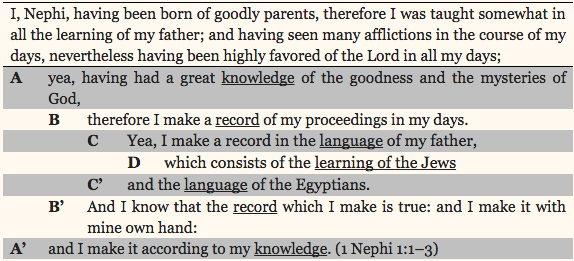
  1. Egyptian Writing: RA’s next comments, “It’s hard to understand why someone who was born and raised in Jerusalem ‘in all his days’ would have known Egyptian at all.” This is not really a serious conundrum. Stefen Wimmer has documented several instances of what he calls “Palestinian hieratic,” an Egyptian script being used by Israelites in ancient times (cf. 1 Nephi 1:2).[2] According to Wimmer, this script was used in Palestine “probably over several centuries,” and its usage peaks in the late-7th century bc, coming to an abrupt end “after the Babylonian captivity.”[3] This is the very time period of Lehi, Nephi’s father (it probably would not have been his primary language, but nothing in the text requires it to be). Given that RA says he knows “a bit about Mormon apologetics,” I am little surprised he does not know about this, since it has frequently been commented on by LDS scholars.[4]

The idea that Lehi’s “children write their diaries in Egyptian,” is not really in the Book of Mormon. Nephi is not writing a “diary,” but an official record of his people, replete with an origin story meant to give them a sense of identity and meaning. Under such circumstances, Nephi was probably following the pattern of the Brass Plates, which were actually written in Egyptian (Mosiah 1:4). This resolves the contradiction RA creates by saying, “This document seems to have been written in Hebrew, but it is taken, in part, ‘that we may preserve unto our children the language of our fathers.’ So is the language (always singular) of their fathers Egyptian or Hebrew?”

  1. Clarity About the Messiah: The next strange thing, according to RA is “their portrayal of the Messiah.” RA goes on to explain that there are few explicit prophecies of Christ in the Old Testament, and the prophecies of the Messiah that do exist provide a very different picture than the Christian version. He states that most Messianic prophecies are taken out of context.

if you read the Old Testament and 1 Nephi back-to-back, 1 Nephi’s Messianic prophecies are wildly out of place. The Old Testament contains a few scant clues that (even if read the way Christians traditionally understand them) are so vague that they could only be understood in hindsight. Meanwhile, Nephi is receiving incredibly specific prophecies that could only apply to Jesus. The Jewish conqueror-Messiah of the Old Testament is nowhere to be found in 1 Nephi. In his place is a Jesus precisely described, right down to the time and place of his birth, his name, his mother’s name, and a description of John the Baptist. It also specifically refers to this Messiah as God, which would never have occurred to any Old Testament prophet. If anything like this had appeared in the Old Testament, it’s hard to imagine that anyone would have questioned Jesus’ divine identity.(emphasis added)

Frankly, I think that RA answers his own question here. The prophecies are only “wildly out of place” if one rejects the idea of genuine prophecy. If we accept that God can, in fact, reveal the future, then there is no real barrier to believe that God could reveal even highly specific prophecies; nor can there be a reasonable objection to God revealing more specific prophecies to one group of people, and less specific prophecies to others. Within Mormon theology, agency is an all-important principle: people need to have the ability to choose. Thus, since highly specific prophecies like those in the Book of Mormon make it “hard to imagine that anyone would have questioned Jesus’ divine identity,” such specificity could not be revealed to those who would be there for his mortal ministry; otherwise it would be so obvious their agency would be compromised. Meanwhile, those who would not be there could have more specific details.

I get that this answer can come across as a bit of a cop-out. But the purpose of the Book of Mormon is to provide evidence that revelation is real. As such, it seems inappropriate, to me, to judge its historicity on grounds which rule prophecy and revelation out a priori. For what it is worth, some non-LDS scholars would dispute RA’s points entirely. Margaret Barker, for instance, has argued that Christianity was based on deep roots of pre-Exilic (i.e., before the Babylonian captivity) Israelite religion. When she commented on the Book of Mormon, she wrote:

The original temple tradition was that Yahweh, the Lord, was the Son of God Most High, and present on earth as the Messiah. This means that the older religion in Israel would have taught about the Messiah. Thus finding Christ in the Old Testament is exactly what we should expect, though obscured by incorrect reading of the scriptures. This is, I suggest, one aspect of the restoration of “the plain and precious things, which have been taken away from them” (1 Nephi 13:40).[5]

Daniel Boyarin, a Jewish scholar, has made a similar argument.[6] I have not yet read Boyarin’s book, but Daniel C. Peterson quotes him as saying, “The theology of the Gospels, far from being a radical innovation within Israelite religious tradition, is a highly conservative return to the very most ancient moments within that tradition, moments that had been largely suppressed in the meantime — but not entirely.”[7]

Nephi’s prophecies still might seem much too specific for those who refuse to believe in revelation, but in light of work by the likes of Barker and Boyarin, they really are not quite so “wildly out of place” after all.

  1. Law of Moses: RA states that, “upon a cursory analysis of the text, I could find very little evidence that these people even knew what the Law of Moses was, let alone that they lived it.” Many who have given the text more than a cursory reading, however, have found that the law of Moses permeates the text. John W. Welch, who is an attorney and a scholar of ancient Jewish and Israelite law, has provided numerous studies of the law and the Book of Mormon. Welch has shown that the text describing Nephi’s “particularly grizzly murder,” of Laban, as RA calls it, was in fact consciously written with an understanding of the Mosiac law as it existed and was interpreted in 600 bc.[8] Welch has also thoroughly examined 7 legal cases in the Book of Mormon, finding them consistent with the ancient law of Moses.[9]What about the “holidays or festivals that play such an important role in Jewish life,” which RA says, are never “mentioned in the Book of Mormon”? Several scholars have shown that major sermons like those of Jacob in 2 Nephi 6–10 and Benjamin in Mosiah 1–6 are examples of just such festivals.[10] Several other aspects of the law of Moses have also been found in the Book of Mormon.[11]

Then there is the fact that, “the moment Lehi and his (non-Levite) family leave Jerusalem, they immediately set up altars and sacrifice animals in the wilderness, which would have scandalized a family of Israelites raised in the Deuteronomistic Mosaic tradition.” This actually finds an interesting solution in the Dead Sea Scrolls, where the Temple Scroll allows such sacrifices if you are beyond a three-day journey from the temple.[12] It also worth pointing out that some have argued that Lehi was not fully on board with the Deuteronomistic reforms going on in his day, and in fact spoke out against them; in which case, his not being in full compliance with the Deuteronomistic tradition is not a serious defect.[13]

  1. Miscellaneous Topics: RA states that, “there are so many other oddities that it would be ponderous to give an exhaustive list.” In that same spirit, I note that there are so many other responses, both to the topics I have chosen to respond to, and the ones I have not, that it would be a rather tedious task to keep going. He notes that, “structures that seem to be natively English,” and “phrases copied from the New Testament” which are, in my opinion, not surprising for an English translation made ca. 1830. He also notes “a pattern of prophecy that is highly unusual, consisting of uncharacteristically specific predictions from the time of Nephi to the time of Joseph Smith … followed by absolute silence about anything that’s happened since the early 19th Century, which would have been most useful to the stated audience of the book.” This, like the prophecies of Christ, are really a matter of accepting prophecy or not, and agency could again be invoked for the lack of specificity on details after Joseph Smith’s time—highly specific prophecy of events after its publication would have simply made it’s truth to obvious, and thus interfered with the exercise of true agency (which requires that competing explanations have seemingly approximately equal merit). I could go on with the issues I have skipped over, but will refrain.

Closing Comments

I appreciate that RA was willing to read and comment on the Book of Mormon, and his professional tone. I hope I have successfully engaged him with just as much professionalism. I realize that little of what I have to say is going to convince RA or any other atheist that the Book of Mormon is true. And, it is certainly correct that none of the above proves the Book of Mormon true. I have merely sought to add to the conversation, as I said before, with some reflections from a Mormon who considers himself well-informed. I hope that, at the least, I have shown some that the Book of Mormon merits a more serious reading. Much of what initially seems odd and out of place turns out to fit more comfortably than one would expect, and certainly more comfortably than what was known in 1830.

[1] Matt Bowen, “‘What Thank They the Jews’? (2 Nephi 29:4): A Note on the Name ‘Judah’ and Antisemitism,” Interpreter: A Journal of Mormon Scripture 12 (2014): 111–125.

[2] Stefen Wimmer, Palästiniches Hieratisch: Die Zahl- und Sonderzeichen in der althebräishen Schrift  (Wiesbaden: Harraossowitz, 2008).

[3] An English summary of Wimmer’s work, from which I have quoted, is  William J. Hamblin, “Palestinian Hieratic,” at Interpreter (blog), September 1, 2012, online at http://www.mormoninterpreter.com/palestinian-hieratic/ (accessed September 25, 2014).

[4] For example, Stephen D. Ricks and John A. Tvedtnes, “Notes and Communications—Jewish and Other Semitic Texts Written in Egyptian Characters,” Journal of Book of Mormon Studies 5/2 (1996): 156–163; John S. Thompson, “Lehi and Egypt,” in Glimpses of Lehi’s Jerusalem, ed. John W. Welch, David Rolph Seely, and Jo Ann H. Seely (Provo, Utah: FARMS, 2004), 266–267; Aaron P. Schade, “The Kingdom of Judah: Politics, Prophets, and Scribes in the Late Preexilic Period,” in Glimpses of Lehi’s Jerusalem, 315–319; William J. Hamblin, “Reformed Egyptian,” FARMS Review 19/1 (2007): 31–35.

[5] Margaret Barker, “Joseph Smith and Preexilic Israelite Religion,” in The Worlds of Joseph Smith: A Bicentennial Conference at the Library of Congress, ed. John W. Welch (Provo, Utah: BYU Press, 2006), 79.

[6] Daniel Boyarin, The Jewish Gospels: The Story of the Jewish Christ (New York: The New Press, 2012).

[7] Daniel C. Peterson, “Messianic Ideas in Judaism,” Deseret News, June 14, 2012, online at: http://www.deseretnews.com/article/765582991/Messianic-ideas-in-Judaism.html?pg=all (accessed October 23, 2014).

[8] John W. Welch, “Legal Perspectives on the Slaying of Laban,” Journal of Book of Mormon Studies 1 (1992): 119–141.

[9] John W. Welch, Legal Cases in the Book of Mormon (Provo, Utah: BYU Press and Neal A. Maxwell Institute of Religious Scholarship, 2008).

[10] John S. Thompson, “Isaiah 50–51, the Israelite Autumn Feastivals, and the Covenant Speech of Jacob in 2 Nephi 6–10,” in Isaiah in the Book of Mormon, ed. Donald W. Parry and John W. Welch (Provo, Utah: FARMS, 1998), 123–150; John W. Welch and Stephen D. Ricks, eds., King Benjamin’s Speech: “That Ye May Learn Wisdom” (Provo, Utah: FARMS, 1998).

[11] For example, John W. Welch, ed., Reexploring the Book of Mormon: A Decade of New Research (Provo, Utah: FARMS, 1992), chaps. 16, 18, 24, 38, 39, 44, 50, 54, 56, 70, 72, 73.

[12] David Rolph Seely, “Lehi’s Altar and Sacrifice in the Wilderness,” Journal of Book of Mormon Studies 10/1 (2001): 62–69.

[13] Margaret Barker and Kevin Christensen, “Seeking the Face of the Lord: Joseph Smith and the First Temple Tradition,” in Joseph Smith Jr.: Reappraisals after Two Centuries (New York: Oxford University Press, 2009), 143–172; Kevin Christensen, “The Temple, the Monarchy, and Wisdom: Lehi’s World and the Scholarship of Margaret Barker,” in Glimpses of Lehi’s Jerusalem, 449–522; Kevin Christensen, “Paradigms Regained: A Survey of Margaret Barker’s Scholarship and Its Significance for Mormon Studies,” FARMS Occasional Papers 2 (2001).

Filed Under: Apologetics, Atheism, Book of Mormon

Analysis of Textual Variants Now Available Online FREE

October 20, 2014 by Neal Rappleye

[Cross-posted from Studio et Quoque Fide.]

I was born in Colorado Springs, Colorado in May of 1987. A year later, in Provo, Utah, Royal Skousen took over the FARMS-sponsored Book of Mormon Critical Text Project (CTP from this point on). For the last quarter-century and some change, Skousen has been dedicated to that project, while I have just been living a rather ordinary and unaccomplished life. Frankly, I cannot personally imagine what it would be like to spend what is essentially my entire lifetime (up to this point) with a dedicated focus to a single topic of study. Yet that is exactly what Skousen has done. And anyone who has even lightly pursued the fruits of his labors can only stand in appreciative awe at the breadth and depth of Skousen’s work.

Skousen himself has given the background history to the project. The fruits of the CTP finally began to published in 2001, starting with the ultra-violate photographs and transcriptions of the extent fragments of the original manuscript (plus relevant background commentary on the history of the OM, paper type and size, parts of the Book of Mormon extant, the scribes based on handwriting analysis, etc.), and a two-volume set of the same for the printer’s manuscript. These were already important and significant contributions to Book of Mormon scholarship. Never before had the two earliest extent versions of the Book of Mormon been both published in full and studied so thoroughly. But that was only the tip of the iceberg.

The next step was the monumental effort to study each and every variant in the text from these two manuscripts and 20 different print editions from 1830 to 1981. Between all these editions, Skousen documented over 100,000 changes, which he then analyzed carefully to determine which reading is most likely the original. (Unsurprisingly, earlier readings tend to be favored over later ones.) This analysis was published between 2004–2009, and spanned across 6 different volumes of 650–720 pages each, for a total of 4060 pages! Called Analysis of Textual Variants of the Book of Mormon (ATV), it was indeed a monumental effort.

To some, this might all seem pretty over-the-top—who needs such extensive study of every change in the Book of Mormon? I would argue, and I think Skousen would agree, that as the foundational text of our faith—the “keystone of our religion,” in the words of Joseph Smith—knowing the precise language of the text in its original form is of utmost importance. It is, after all, declared the word of God in Article of Faith 8.  Still, I can imagine that most people do not need all the thorough analysis involved here. So can Skounsen, which is why he made the ultimate fruit of his analysis—simply the text of the Book of Mormon in what is most likely its earliest form—available in a single volume, without all the extra analysis, called The Book of Mormon: The Earliest Text, published by Yale University Press in 2009.

While Yale’s Earliest Text edition of the Book of Mormon will serve most needs, anyone who wishes to engage serious study of the Book of Mormon—academic or otherwise—will no doubt find that at times, having the extend analysis would be helpful. This is especially so if one is making academic arguments, or even merely personal meditations on the text, which hinge on specifics of vocabulary and grammar. Yet, the monumental size of the ATV has naturally made it costly—$300 for the whole set—and difficult to access to. Until now. As of October 7, 2014, the entire ATV was made freely available online via the Interpreter Foundation.

Dr. Skousen and Interpreter are to be commended for making this landmark in Book of Mormon scholarship widely accessible any and all Book of Mormon students, from the most erudite scholars of the text, to average members of the church who would simply like to get closer to the text of the Book of Mormon as God revealed it to Joseph Smith. In doing so, they have rendered for the Latter-day Saints and the community of scholars who study Mormonism a great service. I would encourage every Latter-day Saint to explore it and get familiar with the ATV and learn to use it, at least occasionally, in their study of the Book of Mormon.

Filed Under: Book of Mormon, Book reviews

Fair Issues 71: Were there transoceanic voyages in ancient times?

October 19, 2014 by Ned Scarisbrick

https://media.blubrry.com/mormonfaircast/www.fairlatterdaysaints.org/wp-content/uploads/2014/10/Fair-Issues-71-Pod.mp3

Podcast: Download (11.3MB)

Subscribe: RSS

MAWhile LDS scholars agree with non-LDS scholars that the New World was populated primarily by humans who traversed the Bering Strait thousands of years ago, a growing number of non-LDS scholars agree with LDS scholars that there was transoceanic contact between the Old World and the New Worlds in ancient times.

In the podcast brother Ash explores the evidences for cultural, linguistic and botanical discoveries that confirm such voyages did take place in both directions between the 7th millennium B.C. and the European age of discovery.

The full text of this article can be found at Deseret News online.

Brother Ash is author of the book Shaken Faith Syndrome: Strengthening One’s Testimony in the Face of Criticism and Doubt, as well as the book, of Faith and Reason: 80 Evidences Supporting the Prophet Joseph Smith. Both books are available for purchase online through the FairMormon Bookstore. Tell your friends about the Mormon Fair-Cast. Share a link on your Facebook page and help increase the popularity of the Mormon Fair-Cast by subscribing to this podcast in iTunes, and by rating it and writing a review.

The views and opinions expressed in the podcast may not reflect those of the Church of Jesus Christ of Latter-day Saints or that of FairMormon
 

Filed Under: Anti-Mormon critics, Book of Mormon, Evidences, Faith Crisis, General, Geography, Hosts, LDS History, Michael R. Ash, Mormon Voices, Ned Scarisbrick, Podcast, Power of Testimony

Fair Issues 70: What was Nephi’s ship like?

October 12, 2014 by Ned Scarisbrick

https://media.blubrry.com/mormonfaircast/www.fairlatterdaysaints.org/wp-content/uploads/2014/10/Fair-Issues-70-Pod.mp3

Podcast: Download (6.9MB)

Subscribe: RSS

MABrother Ash discusses how Nephi was instructed to build a ship to take his family to their new land.  The ship was not to be built “after the manner of men” but according to the Lord’s instructions.  There are few clues in the text as to what this ship may have looked like but several types are explored in this episode.

The full text of this article can be found at Deseret News online.

Brother Ash is author of the book Shaken Faith Syndrome: Strengthening One’s Testimony in the Face of Criticism and Doubt, as well as the book, of Faith and Reason: 80 Evidences Supporting the Prophet Joseph Smith. Both books are available for purchase online through the FairMormon Bookstore. Tell your friends about the Mormon Fair-Cast. Share a link on your Facebook page and help increase the popularity of the Mormon Fair-Cast by subscribing to this podcast in iTunes, and by rating it and writing a review.

The views and opinions expressed in the podcast may not reflect those of the Church of Jesus Christ of Latter-day Saints or that of FairMormon


Filed Under: Anti-Mormon critics, Apologetics, Book of Mormon, Evidences, Faith Crisis, General, Geography, Hosts, Joseph Smith, Michael R. Ash, Mormon Voices, Ned Scarisbrick, Podcast, Power of Testimony

Articles of Faith 15: Loren Spendlove – Understanding Nephi with the Help of Noah Webster

October 6, 2014 by NickGalieti

https://media.blubrry.com/mormonfaircast/www.fairlatterdaysaints.org/wp-content/uploads/2014/10/AOF-LorenSpendlove-WebsterandNephi.mp3

Podcast: Download (47.7MB)

Subscribe: RSS

loren-spendloveLoren Spendlove (MBA, California State University, Fullerton and PhD, University of Wyoming) has worked in many fields over the last thirty years, including academics and corporate financial management. Currently, he and his wife design and manufacture consumer goods. A student of languages, his research interests center on linguistics and etymology.

Questions addressed in this episode:

Why use the 1828 dictionary? Why not an earlier or later edition?

What is the value of looking at a book like the Book of Mormon with any appeal to a dictionary?

There are some devotional interpretations that your article offers, and there are some more apologetic interpretations. What are some examples of both?

When it comes to answering the critics using these alternative definitions, there is a clear, you are reading this with the wrong language understanding. With the more devotional aspects, are you saying the same thing only perhaps to members of the Church?

In the episode Loren Spendlove references a 20+ page guide of his findings from 1 Nephi that include the changes in word use from 1828 till today’s language use.

Click here for that spreadsheet —>> Nephi and Noah Webster

Click here to read Loren Spendlove’s article in the Interpreter.

Filed Under: Articles of Faith, Book of Mormon, Hosts, Nick Galieti, Podcast Tagged With: 1 Nephi, Websters Dictionary

  • « Go to Previous Page
  • Go to page 1
  • Interim pages omitted …
  • Go to page 32
  • Go to page 33
  • Go to page 34
  • Go to page 35
  • Go to page 36
  • Interim pages omitted …
  • Go to page 49
  • Go to Next Page »

Primary Sidebar

Faithful Study Resources for Come, Follow Me

Subscribe to Blog

Enter your email address:

Subscribe to Podcast

Podcast icon
Subscribe to podcast in iTunes
Subscribe to podcast elsewhere
Listen with FAIR app
Android app on Google Play Download on the App Store

Pages

  • Blog Guidelines

FAIR Latest

  • Come, Follow Me with FAIR – The Family: A Proclamation to the World – Part 1 – Autumn Dickson
  • The Eternal Gift of Testimony
  • Come, Follow Me with FAIR – The Articles of Faith and Official Declarations 1 and 2 – Part 2 – Autumn Dickson
  • Come, Follow Me with FAIR – The Articles of Faith and Official Declarations 1 and 2 – Part 1 – Autumn Dickson
  • The Lord Is Hastening His Work

Blog Categories

Recent Comments

  • lyrics to song on Come, Follow Me with FAIR – The Articles of Faith and Official Declarations 1 and 2 – Part 2 – Autumn Dickson
  • Nalo on Come, Follow Me with FAIR – The Articles of Faith and Official Declarations 1 and 2 – Part 2 – Autumn Dickson
  • Diana on Come, Follow Me with FAIR – Doctrine and Covenants 132 – Mike Parker
  • JC on The Lord Is Hastening His Work
  • LHL on Come, Follow Me with FAIR – Doctrine and Covenants 132 – Mike Parker

Archives

Follow Us

  • Facebook
  • Twitter
  • iTunes
  • YouTube
Android app on Google Play Download on the App Store

Footer

FairMormon Logo

FAIR is a non-profit organization dedicated to providing well-documented answers to criticisms of the doctrine, practice, and history of The Church of Jesus Christ of Latter-day Saints.

Donate to FAIR

We are a volunteer organization. We invite you to give back.

Donate Now

Site Footer