Podcast: Download (12.6MB)
Subscribe: RSS
This podcast series features past FAIR Conference presentations. This presentation is from our 2021 conference held in August. If you would like to watch all the presentations from the conference, you can still purchase the video streaming.
Ben Spackman, Through a Glass, Less Darkly: The 20th Century History of Genesis and Evolution
 Ben Spackman is a PhD candidate in American Religious History at Claremont. His dissertation examines the intellectual roots of LDS creationism and evolution in the 20th century. Prior to his work at Claremont, he received a master’s degree and did PhD work in Old Testament languages and literature at the University of Chicago. He is a guest editor of a special edition of BYU Studies dedicated to biological evolution and LDS faith, and writes at BenSpackman.com.
 Daniel C. Peterson (PhD, UCLA) is a professor of Islamic studies and Arabic at Brigham Young University and founder of the university’s Middle Eastern Texts Initiative. He has published and spoken extensively on both Islamic and Mormon subjects. Formerly chairman of the board of the Foundation for Ancient Research and Mormon Studies (FARMS) and an officer, editor, and author for its successor organization, the Neal A. Maxwell Institute for Religious Scholarship, his professional work as an Arabist focuses on the Qur’an and on Islamic philosophical theology. He is the author, among other things, of a biography entitled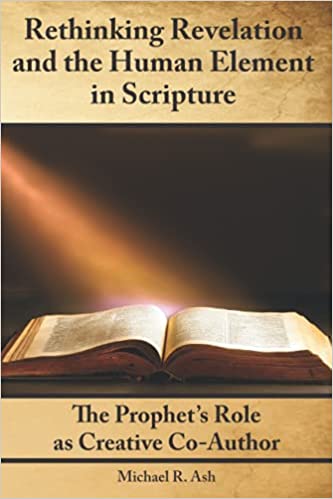
 Rebekah Clark is co-author of the book Thinking Women: A Timeline of Suffrage in Utah and works as a historian for Better Days, a nonprofit public history organization dedicated to expanding education about Utah women’s history. She holds a law degree from the J. Reuben Clark Law School at Brigham Young University, studied as a visiting student at Harvard Law School, and practiced law in Boston for four years. She graduated with a degree in American History and Literature from Harvard University, where her honors thesis focused on Utah women’s activism in the national suffrage movement. She has worked at the LDS Church History Department and taught as an online adjunct faculty member at BYU-Idaho. Her work has appeared in journals such as the Utah State Historical Quarterly, the Journal of Mormon History, BYU Studies, Pioneer Magazine, and BYU Law Review and in podcasts by the National Conference of State Legislatures, the Church News, What’s Her Name, Zion Art Society, and the Maxwell Institute for Religious Scholarship. In addition to her work with Better Days, she currently serves on the board of the Mormon Women’s History Initiative Team. Rebekah lives in Highland with her husband Andrew and their five children.