• Skip to primary navigation
  • Skip to main content
  • Skip to primary sidebar
  • Skip to footer

FAIR

  • Find Answers
  • Blog
  • Media & Apps
  • Conference
  • Bookstore
  • Archive
  • About
  • Get Involved
  • Search

Book of Abraham

The CES Letter Rebuttal — Part 15

October 8, 2021 by Jeff Markham

Part 15: CES Letter Book of Abraham Questions [Section F]


by Sarah Allen


I’m going to dive in and start discussing what Joseph’s interpretations of what the figures on Facsimile 2 mean compared to what “modern Egyptologists say,” but first, I do want to point out that on this facsimile, there are a lot of numbered entries where Joseph says he’s not allowed to translate those figures yet while the Egyptologists have a description. Jeremy Runnells stacks them up in such a way as to imply that Joseph was incompetent by comparison, but Joseph could not read Egyptian. His translations and explanations were given to him by revelation.

The scriptures are full of verses comparing the wisdom of God to the wisdom of men. It’s not surprising these interpretations don’t match in every case, particularly when, as we’ve pointed out, those figures could be “read” multiple different ways by multiple different groups of people. As Hugh Nibley said, “In viewing them today, we must bear in mind the principle [of] … the ‘plurality of approaches,’ which states that the Egyptian, far from being adverse to giving more than one interpretation to a character, rejoices in putting as many meanings and associations as possible into every situation. Any one figure could stand for more than one idea, deity, force or principle, so that one may not say ‘this figure cannot be Re because it is Atum.’ On the hypocephalus, to make things more interesting, all the symbols, each with its multiple meanings, are drawn together into a circle where they are closely interrelated, suggesting a great wealth of possible interpretations.” It’s also not surprising that, if those figures were interpreted as having to do with temple worship and covenants the way we discussed last week, God would not allow Joseph to reveal them to a worldwide audience. But even with those caveats, there is a surprising amount of information that aligns between the various explanations. Regardless of what Runnells is trying to imply, Joseph was not incompetent, and his interpretations of these figures do hold up against ancient Egyptian and Jewish thought.

[Read more…] about The CES Letter Rebuttal — Part 15

Filed Under: Anti-Mormon critics, Apologetics, Book of Abraham, CES Letter, Faith Crisis

The CES Letter Rebuttal — Part 14

October 6, 2021 by Jeff Markham

Part 14: CES Letter Book of Abraham Questions [Section E]


by Sarah Allen


We’re talking about Facsimile 2 today. I’ll have to discuss the facsimile explanations next time, since there’s background we need to cover for those to make sense. Anyway, Facsimile 2 is what is known as a hypocephalus:

Facsimile 2 belongs to a class of Egyptian religious documents call hypocephali (Greek: ipokefalos, hypokephalos), “under the head,” a translation of the Egyptian hry-tp with the same meaning). A hypocephalus is a small, disk-shaped object, made of papyrus, stuccoed linen, bronze, gold, wood, or clay which the Egyptians placed under the head of their dead. They believed it would magically cause the head and body to be enveloped in flames or radiance, making the deceased divine. The hypocephalus symbolized the Eye of Re or Horus, that is, the sun. The scenes portrayed on it relate the Egyptian concept of resurrection and life after death. To the Egyptians, the daily rising and setting of the sun was a vivid symbol of the resurrection. The hypocephalus itself represented all the sun encircles, the whole world. The upper portion represented the world of men and the day sky, and the lower portion (the part with the cow) represented the netherworld and the night sky.

Pearl of Great Price Central elaborates:

Today there are 158 known hypocephali which have been catalogued and/or published. Based on their attested chronological and geographical distribution, “it is clear that the hypocephalus [did] not become a widespread funerary object” in ancient Egypt. Instead they “remained exclusive pieces of funerary equipment reserved for the high clergy and for the members of their families who occupied” high-ranking positions in the temple, especially the temple of Amun at Karnak, the temple of Min at Akhmim, and the temple of Ptah at Memphis. Although hypocephali themselves appear to be later creations, the mythological and cosmological conceptions contained in hypocephali have apparent forerunners in earlier Egyptian texts.

According to Spell 162 of the Book of the Dead, hypocephali served a number of important purposes: to protect the deceased in the afterlife, to provide light and heat for the deceased, to make the deceased “appear again like one who is on earth” (that is, to resurrect them), and to ultimately transform the deceased into a god. Hypocephali were also conceived of (and even sometimes explicitly identified as) the magical eye of the sun god Re that consumed enemies with fire. Their circular shape and function to provide light, heat, and protection naturally lent themselves to this conceptualization in the minds of the ancient Egyptians.

While these might perhaps have been the primary purposes of hypocephali, it is clear from the explanatory rubric of some copies of Spell 162 of the Book of the Dead and from other surviving evidence that they also served non-funerary roles. For example, hypocephali or objects that served the same purpose as hypocephali were used as divinatory devices in the Egyptian temple and as astronomical documents. This is especially significant since Joseph Smith’s interpretation of Facsimile 2 draws connections to the temple and features several astronomical elements. Hypocephali also shared a conceptual link with temple gates. In this capacity they served, among other things, to keep out enemies and admit friends into sacred space and shared a focus on creation motifs. Once again, this parallels some of Joseph Smith’s explanations of Facsimile 2 which emphasize creation.

In summary, while hypocephali served a number of important religious and ritual purposes for the ancient Egyptians, they ultimately “point[ed] toward the Egyptians’ hope in a resurrection and life after death as a divine being.”


[Read more…] about The CES Letter Rebuttal — Part 14

Filed Under: Anti-Mormon critics, Apologetics, Book of Abraham, CES Letter, Faith Crisis

The CES Letter Rebuttal — Part 13

October 1, 2021 by Jeff Markham

Part 13: CES Letter Book of Abraham Questions [Section D]


by Sarah Allen


Today, we’re going to start talking about the facsimiles, beginning with Facsimile 1. Facsimile 1 is pretty unique, not just among the other Book of Abraham facsimiles but also among other similar known scenes, which are often referred to as “lion couch scenes.” This is the only facsimile that we actually have the original copy of. We don’t have the originals of Facsimile 2 and Facsimile 3 anymore. Facsimile 3 was described on one of the scrolls in the 1863 Wood Museum catalog, showing that it was among that papyri that burned in the Chicago Fire.

To begin with, this is what we have in our scriptures today. It’s an engraved copy of the original with numbered explanations of what the figures mean. This is the papyri fragment showing the facsimile. You’ll note that in the fragment, there are pencil markings filling in missing pieces, which I’ve circled in teal on this copy. We don’t know who penciled in those missing pieces or when they did it, but eyewitness testimony does suggest at least some of those missing pieces were intact when Joseph first received the papyri. There are at least two eyewitness descriptions of what seem to be the original vignette. So, maybe Joseph filled it in, maybe he didn’t. We honestly don’t know. There are claims it was filled in incorrectly, which seems to be partially true and partially untrue.

[Read more…] about The CES Letter Rebuttal — Part 13

Filed Under: Anti-Mormon critics, Apologetics, Book of Abraham, CES Letter, Faith Crisis

The CES Letter Rebuttal — Part 12

September 29, 2021 by Jeff Markham

Part 12: CES Letter Book of Abraham Questions [Section C]


by Sarah Allen


As the beginning of the next question in the CES Letter is basically a retread of the previous one, I’m just going to skim over it really quickly as a brief recap.

Egyptologists have also since translated the source material for the Book of Abraham and have found it to be nothing more than a common pagan Egyptian funerary text for a deceased man named “Hor” around the first century C.E.

As we went over previously, the papyri fragments have been translated and do reflect funerary texts, which the Church confirmed just over a month after they received them. As we also went over, we certainly cannot say they were the source material for the Book of Abraham. Joseph himself said otherwise, and even if you don’t believe him, numerous other eyewitnesses all confirmed that it was the long roll that was the source material, not the fragments mounted under glass. Since the fragments are all we have today, we can’t confirm the eyewitness testimony. However, whether you believe in the catalyst theory, the missing scroll theory, or some other theory entirely, if we trust in Joseph Smith, the one thing we know for certain is that the fragments are not the source material for the Book of Abraham, no matter how many times Jeremy Runnells insists that they are.

[Read more…] about The CES Letter Rebuttal — Part 12

Filed Under: Anti-Mormon critics, Apologetics, Book of Abraham, CES Letter, Faith Crisis

“The Book That Answers All the Questions”: Hugh Nibley and the Pearl of Great Price

April 22, 2021 by Trevor Holyoak

https://media.blubrry.com/mormonfaircast/www.fairlatterdaysaints.org/wp-content/uploads/2021/04/Hugh-Nibley-Book-of-Moses.mp3

Podcast: Download (12.5MB)

Subscribe: RSS

Post 1 | Post 2 | Post 3 | Post 4 | Post 5 | Post 6 | Post 7 | Post 8 | Post 9

Post 4 of 9

by Jeffrey M. Bradshaw

For more information on the book, visit https://interpreterfoundation.org/books/

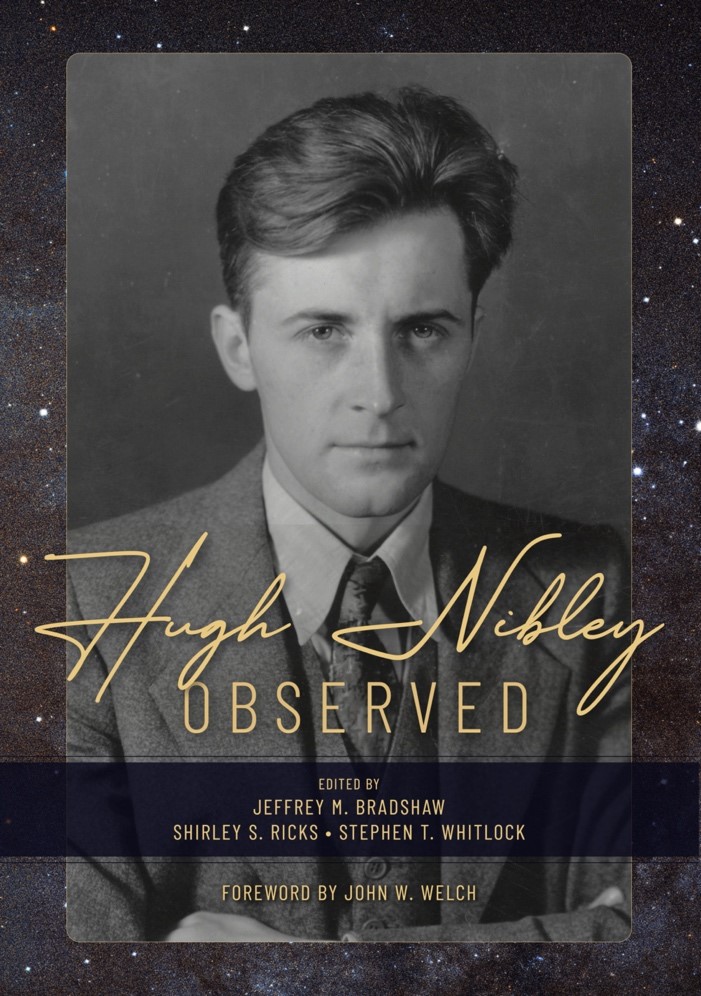
This is the fourth of nine weekly blog posts published in honor of the life and work of Hugh Nibley (1910–2005). The series is in honor of the new, landmark book, Hugh Nibley Observed, available in softcover, hardback, digital, and audio editions. Each week our post is accompanied by interviews and insights in pdf, audio, and video formats. (See the links at the end of this post.)

In line with Nibley’s description of the Pearl of Great Price, we borrow a chapter title from Boyd Jay Petersen’s wonderful biography on Hugh Nibley as the theme of this week’s Insight: “The Book That Answers All the Questions.”[1] [Read more…] about “The Book That Answers All the Questions”: Hugh Nibley and the Pearl of Great Price

Filed Under: Bible, Book of Abraham, Book of Mormon, Book of Moses, Doctrine and Covenants, Hugh Nibley Observed, Podcast

Book Review: The Joseph Smith Papers, Documents, Volume 11: September 1842 – February 1843

October 19, 2020 by Trevor Holyoak

Available from the FairMormon Bookstore

This volume of the Documents series of the Joseph Smith Papers covers a period of time when Joseph Smith hid from attempts to arrest and extradite him to Missouri while trying to lead Nauvoo and the Church. He then had a legal victory which enabled him to come out of hiding and attend to many items of business, including continuing to teach the Saints and becoming mayor of Nauvoo.  The collection of 105 documents includes letters, poems, discourses, deeds, notices, meeting minutes, affidavits, songs, etc. These combine to paint an interesting picture of a very busy time in Joseph’s life.

Among the illustrations in the introduction is a sketch of Joseph Smith by local artist Benjamin West, done during an extradition hearing in Springfield, Illinois, in January 1843. It is unknown whether it was meant to be accurate or more of a caricature, but it does match written descriptions of Joseph (see https://www.churchofjesuschrist.org/study/new-era/2005/12/what-did-joseph-smith-really-look-like?lang=eng). [Read more…] about Book Review: The Joseph Smith Papers, Documents, Volume 11: September 1842 – February 1843

Filed Under: Book of Abraham, Book reviews, Joseph Smith, LDS History

Update from Kerry Muhlestein re: Raising the Abrahamic Discourse

September 2, 2020 by Trevor Holyoak

[This is an update to a post from August 25, Raising the Abrahamic Discourse: An Essay on the Nature of Dialogues About the Book of Abraham]

UPDATE

I believe that academic dialogue is important and can be fruitful. There are many scholars who are academically interested in the Book of Abraham, its translation, and its content. Some scholars have even made such study their life’s work. (This is not unusual in many specialized subject areas.)

Regardless of the area of study, all scholars approach any topic with their own sets of existing beliefs. It is impossible for a scholar to be a “blank slate” when it comes to any field of study. It is no surprise that my existing beliefs are consistent with what I view as the prophetic calling of Joseph Smith. It is likewise no surprise that others, including Professor Ritner, start with a set of beliefs that preclude divine involvement in the work of Joseph Smith.

With that in mind and because I am truly interested in academic dialogue about the Book of Abraham, before I posted any kind of response online, I personally contacted Professor Ritner. I suggested that we work together on creating an academic volume on the subject. I suggested possible guidelines for doing so, possible academic venues, possible editors, and even a potential table of contents. I modeled it after volumes on contested issues that have been successfully done in academia elsewhere. The goal would be to have a balanced approach observing the highest academic rigor and tone, creating a dialogue with each other rather than having parties who speak past each other. If done correctly, I believe that such an approach can lead to real progress. [Read more…] about Update from Kerry Muhlestein re: Raising the Abrahamic Discourse

Filed Under: Anti-Mormon critics, Book of Abraham

Raising the Abrahamic Discourse: An Essay on the Nature of Dialogues About the Book of Abraham

August 25, 2020 by Trevor Holyoak

by Kerry Muhlestein

Cross-posted from The Interpreter Foundation

See also: Scholarly Support for the Book of Abraham

[Kerry Muhlestein also gave a presentation at the recent FairMormon Conference on “Egyptian Papers and the Translation of the Book of Abraham: What Careful Applications of the Evidence Can and Cannot Tell Us.” You can purchase access to watch the full conference here.]

We live in an era of online communications. If you want to reach large numbers of people in quick fashion, then online videos, blogs, memes, and podcasts have become the tool of the moment. These tools are effective at conveying information in an attractive and user-friendly format and in a way that can reach across the globe in mere minutes. Moreover, they are quite convenient for the consumer, which further helps spread the message. They certainly have their place, and do some things very well.

If these online communications have a downside, it is insuring the accuracy of the information they convey. Many are accurate, many are not, and it is difficult to tell which is which. Like news sound bites, such media often seem to lend themselves to simplistic and over-reduced explanations that frequently misrepresent complex matters. Further, somehow they often easily fall into a low level of discourse. This is not true of all them, it really depends on the hosts and forums. Yet too often this is exactly what happens. Some who engage in these electronic venues work very hard to try to provide accurate information at an honorable level of rhetoric, but the forum does not require it and thus many are extremely poor at ensuring a high academic quality of information and sometimes make little to no effort at maintaining the kind of respectful and noble level of discourse that is supposed to be the hallmark of the academic world. Nowhere has this been more apparent than in some podcasts that have recently been released in various venues about the Book of Abraham. [Read more…] about Raising the Abrahamic Discourse: An Essay on the Nature of Dialogues About the Book of Abraham

Filed Under: Anti-Mormon critics, Book of Abraham, Joseph Smith, LDS History

Scholarly Support for the Book of Abraham

August 25, 2020 by Trevor Holyoak

Cross-posted from The Interpreter Foundation

See also: Raising the Abrahamic Discourse: An Essay on the Nature of Dialogues About the Book of Abraham

[Kerry Muhlestein also gave a presentation at the recent FairMormon Conference on “Egyptian Papers and the Translation of the Book of Abraham: What Careful Applications of the Evidence Can and Cannot Tell Us.”]

The Book of Abraham in the Pearl of Great Price continues to generate considerable interest (and controversy) among readers. Ever since George Reynolds published his series “The Book of Abraham—Its Genuineness Established” in the year 1879,[1] members of The Church of Jesus Christ of Latter-day Saints have sought to both make sense of this small yet profound book of scripture and provide evidence for its authenticity and inspiration. Those skeptical of Joseph Smith’s claims to have a divine gift of translation, on the other hand, have argued for the problematic or outright fraudulent nature of the text.[2] “Needless to say,” remarks one neutral observer, “neither side has been convinced by the other, and as a result, the controversy continues.”[3]

Those who wish to hear a representative opinion on the skeptical side of the debate need simply listen to a series of recent podcasts with Dr. Robert Ritner of the University of Chicago, who has vocalized his criticisms of the Book of Abraham and his low opinion of Latter-day Saint scholarship on this text.[4] To help them easily access the Latter-day Saint side of the argument, the following resources have been collected for readers’ convenience. To help orient readers with this material, this blog post will take a few moments to frame the interlocking issues of the historicity of the Book of Abraham, the facsimiles of the Book of Abraham, and the translation of the Book of Abraham and the respective scholarship that has gone into them. [Read more…] about Scholarly Support for the Book of Abraham

Filed Under: Anti-Mormon critics, Book of Abraham

FAIR Voice Podcast #5: Interview with John Gee on the Book of Abraham

July 30, 2020 by Hanna Seariac

https://media.blubrry.com/mormonfaircast/www.fairlatterdaysaints.org/wp-content/uploads/2020/07/Podcast-5.mp3

Podcast: Download (37.3MB)

Subscribe: RSS

Please register for the FairMormon Conference that is on August 5-7. It’s a great opportunity to support FairMormon, hear from amazing speakers, and ask questions directly to speakers!

Today, Hanna interviews Professor John Gee of Brigham Young University.

John Gee is the William Gay Assistant Research Professor of Egyptology at the Neal A. Maxwell Institute for Religious Scholarship. They begin by touching upon the difference between John Gee’s and Brian Hauglid’s claims before going into a greater discussion about the Book of Abraham. John Gee relays the most important evidences for the Book of Abraham, outlines faithful positions on historicity that believers can have, discusses his favorite Abrahamic stories, and much more. He offers a preview of what his FairMormon presentation will be. In a truly great interview, John Gee offers an excellent case for why the Book of Abraham has historical probability and also, why that matters.

Note: At the end, Hanna says “historical probability” and it should be “historical plausibility.”


Hanna Seariac

Hanna Seariac is a MA student in Greek and Latin at Brigham Young University. She is writing a book on the history of the priesthood and another one that responds systematically to anti-LDS literature. She works as a research assistant on a biblical commentary and as a producer on a news show. She values Jesus Christ, family, friends, hiking, baking, and good ice cream.

Filed Under: Book of Abraham, Evidences, FAIR Voice, Faith Crisis, Hanna Seariac, Podcast

  • « Go to Previous Page
  • Go to page 1
  • Go to page 2
  • Go to page 3
  • Go to page 4
  • Go to page 5
  • Interim pages omitted …
  • Go to page 8
  • Go to Next Page »

Primary Sidebar

Faithful Study Resources for Come, Follow Me

Subscribe to Blog

Enter your email address:

Subscribe to Podcast

Podcast icon
Subscribe to podcast in iTunes
Subscribe to podcast elsewhere
Listen with FAIR app
Android app on Google Play Download on the App Store

Pages

  • Blog Guidelines

FAIR Latest

  • Come, Follow Me with FAIR – Genesis 1–2; Moses 2–3; Abraham 4–5 – Jennifer Roach Lees
  • Come, Follow Me with FAIR – Genesis 1–2; Moses 2–3; Abraham 4–5 – Part 2 – Autumn Dickson
  • Come, Follow Me with FAIR – Genesis 1–2; Moses 2–3; Abraham 4–5 – Part 1 – Autumn Dickson
  • In Memoriam: Sarah Allen
  • Come, Follow Me with FAIR – Moses 1; Abraham 3 – Jennifer Roach Lees

Blog Categories

Recent Comments

  • Jerry Allred on Come, Follow Me with FAIR – Moses 1; Abraham 3 – Jennifer Roach Lees
  • Jann E Cahoon Campbell on In Memoriam: Sarah Allen
  • Terry Allen on In Memoriam: Sarah Allen
  • Bryan on In Memoriam: Sarah Allen
  • Chris Gordon on In Memoriam: Sarah Allen

Archives

Follow Us

  • Facebook
  • Twitter
  • iTunes
  • YouTube
Android app on Google Play Download on the App Store

Footer

FairMormon Logo

FAIR is a non-profit organization dedicated to providing well-documented answers to criticisms of the doctrine, practice, and history of The Church of Jesus Christ of Latter-day Saints.

Donate to FAIR

We are a volunteer organization. We invite you to give back.

Donate Now

Site Footer