• Skip to primary navigation
  • Skip to main content
  • Skip to primary sidebar
  • Skip to footer

FAIR

  • Find Answers
  • Blog
  • Media & Apps
  • Conference
  • Bookstore
  • Archive
  • About
  • Get Involved
  • Search

Book of Abraham

Come, Follow Me Thoughts to Keep in Mind – The Covenant

February 6, 2022 by Trevor Holyoak

https://media.blubrry.com/mormonfaircast/www.fairlatterdaysaints.org/wp-content/uploads/2022/02/Kerry-Muhlestein-Abrahamic-Covenant.mp3

Podcast: Download (16.7MB)

Subscribe: RSS

The Abrahamic Covenant, Its Influence on Scriptures, and What that Has to Do with Us

by Kerry Muhlestein, author of God Will Prevail: Ancient Covenants, Modern Blessings, and the Gathering of Israel

The Abrahamic covenant is a central theme of the Old Testament, and really of all scripture. Every prophetic writer, whether in the Old Testament, the New Testament, the Pearl of Great Price, the Book of Mormon, or the Doctrine and Covenants, assumes that you know and understand the Abrahamic covenant, and writes based on that assumption. As a result, when we are not familiar with this covenant, there are a number of things in every book of scripture that we miss. We lose some of the message and the rich power in the scriptures without even realizing it. Studying the Old Testament is an excellent time to rectify this situation. This year we are afforded the opportunity to read about the establishment of the covenant and to study some of the places where it is most fully explained. This will allow us to start to understand the covenant the way President Nelson has been asking us to. President Nelson certainly realizes the significance of the covenant, and has been energetically teaching about it throughout his apostolic career, and has even asked us to study the blessings promised to Israel in the covenant.[1] There is no better time than this Come Follow Me year to come to more fully share President Nelson’s desires for us to better recognize, understand, and appreciate what it means to be heirs to the Abrahamic covenant. [Read more…] about Come, Follow Me Thoughts to Keep in Mind – The Covenant

Filed Under: Bible, Book of Abraham, Book of Mormon, Book of Moses, Come Follow Me, Doctrine, Doctrine and Covenants, General Conference, Jesus Christ, Marriage, New Testament, Old Testament, Podcast, Priesthood, Prophets, Temples

Come, Follow Me Week 1 – Moses 1; Abraham 3

January 1, 2022 by Trevor Holyoak

How did we get the books of Moses and Abraham?

The Come, Follow Me manual poses this question and gives links to articles on the Church’s website about the Joseph Smith Translation of the Bible and the Translation and Historicity of the Book of Abraham. For further information, the following resources are available from FAIR and other trusted sites:

An Introduction to the Book of Abraham – the full text of this book by John Gee is available online for free from the publisher. (Click on the chapter titles to go to the text. You can also download PDF files from within each chapter that include photos and illustrations, which are very helpful.)

YouTube playlist of videos from FAIR on the Book of Abraham

Book of Abraham section of our website with common questions and answers

Book of Moses section of our website with common questions and answers

Interpreter Foundation 2021 Book of Moses Conference videos – Kent P. Jackson’s “How We Got the Joseph Smith Translation, the Book of Moses, and Joseph Smith—Matthew” is a good place to start.

More Come, Follow Me resources here.


Filed Under: Bible, Book of Abraham, Book of Moses, Come Follow Me, Joseph Smith, LDS History, Prophets, Revelation

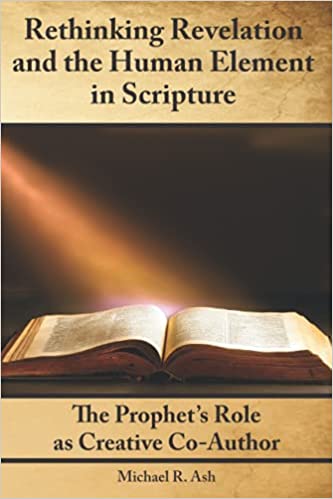
Rethinking Revelation and the Human Element in Scripture

December 23, 2021 by Trevor Holyoak

Available in the FAIR Bookstore

by Michael R. Ash

Those who have read any of my writings in the past several decades will know that I’ve been a volunteer for FAIR for more than twenty years. I’m an active Latter-day Saint who accepts prophets as the divinely called and authorized agents of Christ’s church on earth. And, like many other believing members, scholars, and LDS-scientists, I also try to think rationally and logically, and I embrace the general conclusions of secular science and “objective” history.

Faith-Crisis

In the more than forty years that I’ve been reading and writing about LDS scholarly issues (including the twenty years I’ve been volunteering for FAIR), I’ve spent a lot of time analyzing the intellectual reasons people leave the faith. Obviously, there are many reasons that people leave the Church, but I’ve always been interested in the historical and scientific issues that unseat some LDS testimonies. [Read more…] about Rethinking Revelation and the Human Element in Scripture

Filed Under: Bible, Book of Abraham, Book of Mormon, Book of Moses, Doctrine and Covenants, Faith Crisis, Joseph Smith, LDS History, Michael R. Ash, Prophets, Revelation, Science

Inspiration, Intellect, and Rethinking Revelation

December 11, 2021 by Trevor Holyoak

by Michael R. Ash

for FAIR Newsletter 2021 1211

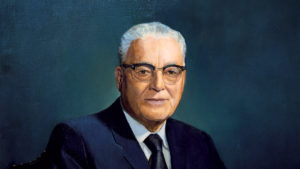
Inspiration and Intellect are two sides of the same coin in how Latter-day Saints believe that God communicates with His children. We know that the Spirit testifies to eternal truths, but we often forget (or neglect) the role that intellect plays in uncovering truth. The late Apostle Hugh B. Brown said, “revelation does not come only through the prophet of God nor only directly from heaven in visions or dreams. Revelation may come in the laboratory, out of the test tube, out of the thinking mind and the inquiring soul, out of search and research and prayer and inspiration.”[i] Likewise, the Lord instructed the Saints to “seek learning… by study and also by faith” (D&C 88:118). This counsel was repeated several more times in modern revelations (see D&C 11:22, 90:15, 93:53; and 109: 7, 14), and the admonition led Joseph to establish the “School of the Prophets” (D&C 88:127).

The dual-nature or dual-sources for discovering truth presents some challenges, however. The first challenge is that neither source—neither inspiration nor intellect—can provide infallible and inerrant data.

The Challenge of Inspiration [Read more…] about Inspiration, Intellect, and Rethinking Revelation

Filed Under: Bible, Book of Abraham, Book of Mormon, Faith Crisis, Joseph Smith, Michael R. Ash, Newsletter, Prophets, Revelation, Science

“Ask the Egyptologist” Virtual Fireside for Sustaining Members on Dec. 1

November 17, 2021 by Trevor Holyoak

The Book of Abraham is an incredible book that contains many truths about the gospel. But there are often questions about the Book of Abraham that can be difficult to understand or answer. There is a feeling among some critics that the Book of Abraham is evidence that the Church is not true.

With this in mind, we are pleased to announce a video streaming fireside “Ask the Egyptologist” with Dr. John Gee.  Dr. Gee has a Ph.D. in Egyptology from Yale University and has been prolific in academic publication. The fireside will take place on December 1st at 7 pm Mountain Time. For those in other time zones where it’s not convenient to watch it live, it will be recorded for later viewing.

Please submit your questions to him now, and then he will do his best to answer as many of the questions as possible.

This is, however, an exclusive event that is only available to our sustaining members and to our larger donors. To become a sustaining member you can sign up here for an annual membership, or here for a monthly subscription.

We hope to see you there!

About John Gee:

John Gee is the William (Bill) Gay Research Professor in the Department of Asian and Near Eastern Languages at Brigham Young University. He has authored over one-hundred and fifty publications including three books and editor of eight books and has edited a peer-reviewed international professional journal. He has served on the board of trustees of national and international organizations.

The FAIR Bookstore is currently carrying two of John’s books: An Introduction to the Book of Abraham and Saving Faith: How Families Protect, Sustain, and Encourage Faith

Filed Under: Book of Abraham, News from FAIR, Questions

FAIR Conference Podcast #66 – Mike Ash, “Rethinking Revelation and the Human Element in Scripture: The Prophet’s Role as Creative Co-Author”

November 16, 2021 by Trevor Holyoak

https://media.blubrry.com/mormonfaircast/www.fairlatterdaysaints.org/wp-content/uploads/2021/11/Mike-Ash.mp3

Podcast: Download (11.0MB)

Subscribe: RSS

This podcast series features past FAIR Conference presentations. This presentation is from our 2021 conference held in August. If you would like to watch the presentations from the conference, you can still purchase the video streaming.

Mike Ash, Rethinking Revelation and the Human Element in Scripture: The Prophet’s Role as Creative Co-Author

Mike’s book is available from the FAIR bookstore.

Michael R. Ash, a FairMormon member for more than twenty years, has been featured in nearly 90 podcasts and 30 videos. In more than two decades of writing LDS-themed material, and as a former weekly columnist for Mormon Times (owned by the Deseret News), his works include over 160 on-line articles, as well as articles in periodicals such as the Ensign, Sunstone, Neal A. Maxwell Institute’s FARMS Review, and Dialogue: A Journal of Mormon Thought.

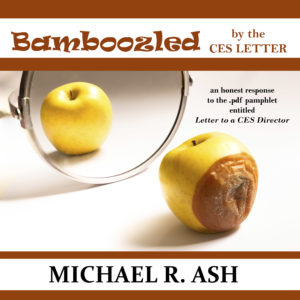
Michael is also the author of four LDS books. In 2008 FAIR published his book Shaken Faith Syndrome: Strengthening One’s Testimony in the Face of Criticism and Doubt (which is available in English, German, and Italian). Mike quickly followed this publication with his second book, Of Faith and Reason: 80 Evidences Supporting the Prophet Joseph Smith. In 2015 Michael published Bamboozled by the CES Letter: An honest response to the .pdf pamphlet entitled “Letter to a CES Director”, and this year he has introduced his newest book, Rethinking Revelation and the Human Element in Scripture: The Prophet’s Role as Creative Co-Author.

Filed Under: Book of Abraham, Book of Mormon, Book of Moses, Doctrine and Covenants, FAIR Conference, FairMormon Conference, Joseph Smith, LDS Scriptures, Michael R. Ash, Perspective, Podcast, Prophets, Revelation

The CES Letter Rebuttal — Part 16

October 13, 2021 by Jeff Markham

Part 16: CES Letter Book of Abraham Questions [Section G]


by Sarah Allen


Facsimile 3, like Facsimile 1, is difficult to classify because it doesn’t have the standard features that it should if it was a “common” scene “discovered elsewhere in Egypt.” Once again, also just like Facsimile 1, there are accusations of the facsimile being “altered” and “wrong”. As Quentin Barney explains:

The assumption that parts of Facsimile No. 3 had been “changed” or “badly drawn” was held by the majority of individuals quoted in [Franklin] Spalding’s work. Archibald Henry Sayce, for example, argued that “the hieroglyphics, again, have been transformed into unintelligible lines,” and “hardly one of them is copied correctly.” William Flinders Petrie appeared to have trouble with both the text and the figures, stating that the figures were “badly drawn” and the text was “too badly copied.” Another claimed that “Cuts 1 and 3 are inaccurate copies of well-known scenes on funeral papyri.”

I haven’t mentioned Franklin Spalding yet, but his work will come up in a later post, so I wanted to take a quick moment to elaborate on that. Franklin Spalding was an Episcopalian Bishop who wrote to a bunch of Egyptologists about the Book of Abraham and then, in 1912, published the findings of those who responded that were critical of Joseph in a book titled Joseph Smith, Jr., as Translator: An Inquiry Conducted. B.H. Roberts, Joseph F. Smith, Hugh Nibley, and others rebutted this work, most notably in the February 1913 edition of The Improvement Era and in Nibley’s Abraham in Egypt. Jeremy Runnells quotes from several of these Egyptologists later, though, so we’ll discuss it all more than.

So, was the facsimile altered by Joseph or anyone else? We don’t know. We don’t have the original and there are no mentions of it being damaged or altered, but that’s yet another unanswerable question about the Book of Abraham. Anyway, these criticisms that the scene has been changed contribute to the fact that Facsimile 3 doesn’t fall neatly into categorization. Sometimes referred to as “the most neglected of the facsimiles,” much of what has been said about it has been incorrect.

[Read more…] about The CES Letter Rebuttal — Part 16

Filed Under: Anti-Mormon critics, Apologetics, Book of Abraham, CES Letter, Faith Crisis

The CES Letter Rebuttal — Part 15

October 8, 2021 by Jeff Markham

Part 15: CES Letter Book of Abraham Questions [Section F]


by Sarah Allen


I’m going to dive in and start discussing what Joseph’s interpretations of what the figures on Facsimile 2 mean compared to what “modern Egyptologists say,” but first, I do want to point out that on this facsimile, there are a lot of numbered entries where Joseph says he’s not allowed to translate those figures yet while the Egyptologists have a description. Jeremy Runnells stacks them up in such a way as to imply that Joseph was incompetent by comparison, but Joseph could not read Egyptian. His translations and explanations were given to him by revelation.

The scriptures are full of verses comparing the wisdom of God to the wisdom of men. It’s not surprising these interpretations don’t match in every case, particularly when, as we’ve pointed out, those figures could be “read” multiple different ways by multiple different groups of people. As Hugh Nibley said, “In viewing them today, we must bear in mind the principle [of] … the ‘plurality of approaches,’ which states that the Egyptian, far from being adverse to giving more than one interpretation to a character, rejoices in putting as many meanings and associations as possible into every situation. Any one figure could stand for more than one idea, deity, force or principle, so that one may not say ‘this figure cannot be Re because it is Atum.’ On the hypocephalus, to make things more interesting, all the symbols, each with its multiple meanings, are drawn together into a circle where they are closely interrelated, suggesting a great wealth of possible interpretations.” It’s also not surprising that, if those figures were interpreted as having to do with temple worship and covenants the way we discussed last week, God would not allow Joseph to reveal them to a worldwide audience. But even with those caveats, there is a surprising amount of information that aligns between the various explanations. Regardless of what Runnells is trying to imply, Joseph was not incompetent, and his interpretations of these figures do hold up against ancient Egyptian and Jewish thought.

[Read more…] about The CES Letter Rebuttal — Part 15

Filed Under: Anti-Mormon critics, Apologetics, Book of Abraham, CES Letter, Faith Crisis

The CES Letter Rebuttal — Part 14

October 6, 2021 by Jeff Markham

Part 14: CES Letter Book of Abraham Questions [Section E]


by Sarah Allen


We’re talking about Facsimile 2 today. I’ll have to discuss the facsimile explanations next time, since there’s background we need to cover for those to make sense. Anyway, Facsimile 2 is what is known as a hypocephalus:

Facsimile 2 belongs to a class of Egyptian religious documents call hypocephali (Greek: ipokefalos, hypokephalos), “under the head,” a translation of the Egyptian hry-tp with the same meaning). A hypocephalus is a small, disk-shaped object, made of papyrus, stuccoed linen, bronze, gold, wood, or clay which the Egyptians placed under the head of their dead. They believed it would magically cause the head and body to be enveloped in flames or radiance, making the deceased divine. The hypocephalus symbolized the Eye of Re or Horus, that is, the sun. The scenes portrayed on it relate the Egyptian concept of resurrection and life after death. To the Egyptians, the daily rising and setting of the sun was a vivid symbol of the resurrection. The hypocephalus itself represented all the sun encircles, the whole world. The upper portion represented the world of men and the day sky, and the lower portion (the part with the cow) represented the netherworld and the night sky.

Pearl of Great Price Central elaborates:

Today there are 158 known hypocephali which have been catalogued and/or published. Based on their attested chronological and geographical distribution, “it is clear that the hypocephalus [did] not become a widespread funerary object” in ancient Egypt. Instead they “remained exclusive pieces of funerary equipment reserved for the high clergy and for the members of their families who occupied” high-ranking positions in the temple, especially the temple of Amun at Karnak, the temple of Min at Akhmim, and the temple of Ptah at Memphis. Although hypocephali themselves appear to be later creations, the mythological and cosmological conceptions contained in hypocephali have apparent forerunners in earlier Egyptian texts.

According to Spell 162 of the Book of the Dead, hypocephali served a number of important purposes: to protect the deceased in the afterlife, to provide light and heat for the deceased, to make the deceased “appear again like one who is on earth” (that is, to resurrect them), and to ultimately transform the deceased into a god. Hypocephali were also conceived of (and even sometimes explicitly identified as) the magical eye of the sun god Re that consumed enemies with fire. Their circular shape and function to provide light, heat, and protection naturally lent themselves to this conceptualization in the minds of the ancient Egyptians.

While these might perhaps have been the primary purposes of hypocephali, it is clear from the explanatory rubric of some copies of Spell 162 of the Book of the Dead and from other surviving evidence that they also served non-funerary roles. For example, hypocephali or objects that served the same purpose as hypocephali were used as divinatory devices in the Egyptian temple and as astronomical documents. This is especially significant since Joseph Smith’s interpretation of Facsimile 2 draws connections to the temple and features several astronomical elements. Hypocephali also shared a conceptual link with temple gates. In this capacity they served, among other things, to keep out enemies and admit friends into sacred space and shared a focus on creation motifs. Once again, this parallels some of Joseph Smith’s explanations of Facsimile 2 which emphasize creation.

In summary, while hypocephali served a number of important religious and ritual purposes for the ancient Egyptians, they ultimately “point[ed] toward the Egyptians’ hope in a resurrection and life after death as a divine being.”


[Read more…] about The CES Letter Rebuttal — Part 14

Filed Under: Anti-Mormon critics, Apologetics, Book of Abraham, CES Letter, Faith Crisis

The CES Letter Rebuttal — Part 13

October 1, 2021 by Jeff Markham

Part 13: CES Letter Book of Abraham Questions [Section D]


by Sarah Allen


Today, we’re going to start talking about the facsimiles, beginning with Facsimile 1. Facsimile 1 is pretty unique, not just among the other Book of Abraham facsimiles but also among other similar known scenes, which are often referred to as “lion couch scenes.” This is the only facsimile that we actually have the original copy of. We don’t have the originals of Facsimile 2 and Facsimile 3 anymore. Facsimile 3 was described on one of the scrolls in the 1863 Wood Museum catalog, showing that it was among that papyri that burned in the Chicago Fire.

To begin with, this is what we have in our scriptures today. It’s an engraved copy of the original with numbered explanations of what the figures mean. This is the papyri fragment showing the facsimile. You’ll note that in the fragment, there are pencil markings filling in missing pieces, which I’ve circled in teal on this copy. We don’t know who penciled in those missing pieces or when they did it, but eyewitness testimony does suggest at least some of those missing pieces were intact when Joseph first received the papyri. There are at least two eyewitness descriptions of what seem to be the original vignette. So, maybe Joseph filled it in, maybe he didn’t. We honestly don’t know. There are claims it was filled in incorrectly, which seems to be partially true and partially untrue.

[Read more…] about The CES Letter Rebuttal — Part 13

Filed Under: Anti-Mormon critics, Apologetics, Book of Abraham, CES Letter, Faith Crisis

  • « Go to Previous Page
  • Go to page 1
  • Go to page 2
  • Go to page 3
  • Go to page 4
  • Interim pages omitted …
  • Go to page 8
  • Go to Next Page »

Primary Sidebar

Faithful Study Resources for Come, Follow Me

Subscribe to Blog

Enter your email address:

Subscribe to Podcast

Podcast icon
Subscribe to podcast in iTunes
Subscribe to podcast elsewhere
Listen with FAIR app
Android app on Google Play Download on the App Store

Pages

  • Blog Guidelines

FAIR Latest

  • Come, Follow Me with FAIR – Doctrine and Covenants 137–138 – Part 2 – Autumn Dickson
  • Come, Follow Me with FAIR – Doctrine and Covenants 137–138 – Mike Parker
  • FAIR December Newsletter
  • Come, Follow Me with FAIR – Doctrine and Covenants 137–138 – Part 1 – Autumn Dickson
  • Prophets of God 

Blog Categories

Recent Comments

  • LHL on Come, Follow Me with FAIR – Doctrine and Covenants 132 – Mike Parker
  • Stephen Johnsen on Come, Follow Me with FAIR – Doctrine and Covenants 132 – Mike Parker
  • Bruce B Hill on Come, Follow Me with FAIR – Doctrine and Covenants 124 – Part 1 – Autumn Dickson
  • Gabriel Hess on Join us Oct 9–11 for our FREE virtual conference on the Old Testament
  • JC on When the Gospel “Doesn’t Work”

Archives

Follow Us

  • Facebook
  • Twitter
  • iTunes
  • YouTube
Android app on Google Play Download on the App Store

Footer

FairMormon Logo

FAIR is a non-profit organization dedicated to providing well-documented answers to criticisms of the doctrine, practice, and history of The Church of Jesus Christ of Latter-day Saints.

Donate to FAIR

We are a volunteer organization. We invite you to give back.

Donate Now

Site Footer