As I reflected upon the relationship between faith and scholarship, I have come to realize something I feel is crucial in regards to historicity of scripture: we should evaluate historicity as a matter of faith; not as a matter of scholarship. When examining whether or not the Book of Mormon, Book of Abraham, or Book of Moses contain any historical truth, we often overlook necessity of the fundamental principle of it: “it rests first upon faith in the Lord Jesus Christ.”[1] Satan moves scriptures wholly to a secular sphere because it invites skepticism. While many evidences exist in favor of the historicity of the Book of Mormon[2] and Book of Abraham[3], there exists much to explore and uncover. Indeed, we do not have a complete picture of any ancient civilization, especially not in the Americas. By transitioning the conversation about historicity into an entirely secular sphere, we do not encounter scriptures on the terms that they must be encountered upon. [Read more…] about Historicity: Not By Scholarship Alone
Prophets
Q&A with editors of Producing Ancient Scripture: Joseph Smith’s Translation Projects in the Development of Mormon Christianity

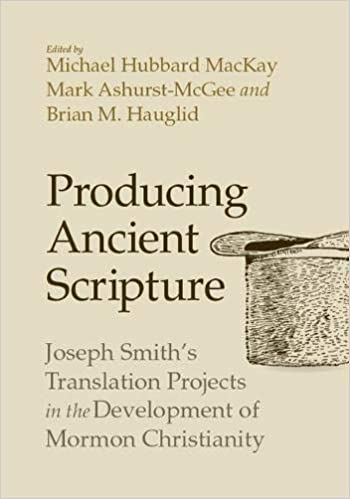
This book includes a mixture of scholarship about all of Joseph Smith’s translation projects, including the highly anticipated paper by Thomas A. Wayment and Haley Wilson-Lemmon on the use of the Clarke Commentary in the Joseph Smith Translation of the Bible. We had the opportunity to discuss the book with Michael Hubbard MacKay and Mark Ashurst-McGee. A review of the book will be forthcoming.
Q1: What is the purpose of the book?
Mike and Mark: The book was conceived as an attempt to cover all of the various Joseph Smith translation projects—not only the Book of Mormon and the “New Translation” of the Bible and the Book of Abraham but also the excerpt from the new account of John (D&C 7), the excerpt from the “record of John” (in D&C 93), the Kinderhook plates, and anything else. This had actually never been done before—at least not at this depth. [Read more…] about Q&A with editors of Producing Ancient Scripture: Joseph Smith’s Translation Projects in the Development of Mormon Christianity
Enduring in Faith to the End: “Take Heed That No Man Deceive You”
What is Enduring to the End?
Once we have entered into the covenant path that leads to eternal life, what more is there to do? We “must press forward with a steadfastness in Christ, having a perfect brightness of hope, and a love of God and of all men;” we must “endure to the end” (2 Nephi 31:20).
“Endure” can carry a negative connotation in our modern language. It sounds tedious, difficult, unbearable, or boring! “The end” sounds a bit ominous, too.
Thankfully several scriptures add the important and clarifying details that we are to endure in faith to the end, and that to “endure” means to “continue” (For examples, see Mosiah 4:6, 30; Alma 5:13; Alma 27:27; Moroni 3:3; 8:3; and Doctrine and Covenants 63:20).
In other words, “enduring to the end” is “to continue in faith.” Enduring to the end isn’t just an exercise in patient suffering, it is a conscientious effort to be a committed, faithful, life-long disciple of Jesus Christ.
Three Hazards to Enduring in Faith
In order to do that, we need to be aware of the hazards that would prevent us from continuing as faithful disciples. To help us in this challenge, Jesus predicted three specific hazards we would face in the latter-days. Each of us have or will face these hazards to some degree or another. [Read more…] about Enduring in Faith to the End: “Take Heed That No Man Deceive You”
Vaughn J. Featherstone’s Atlanta Temple Letter
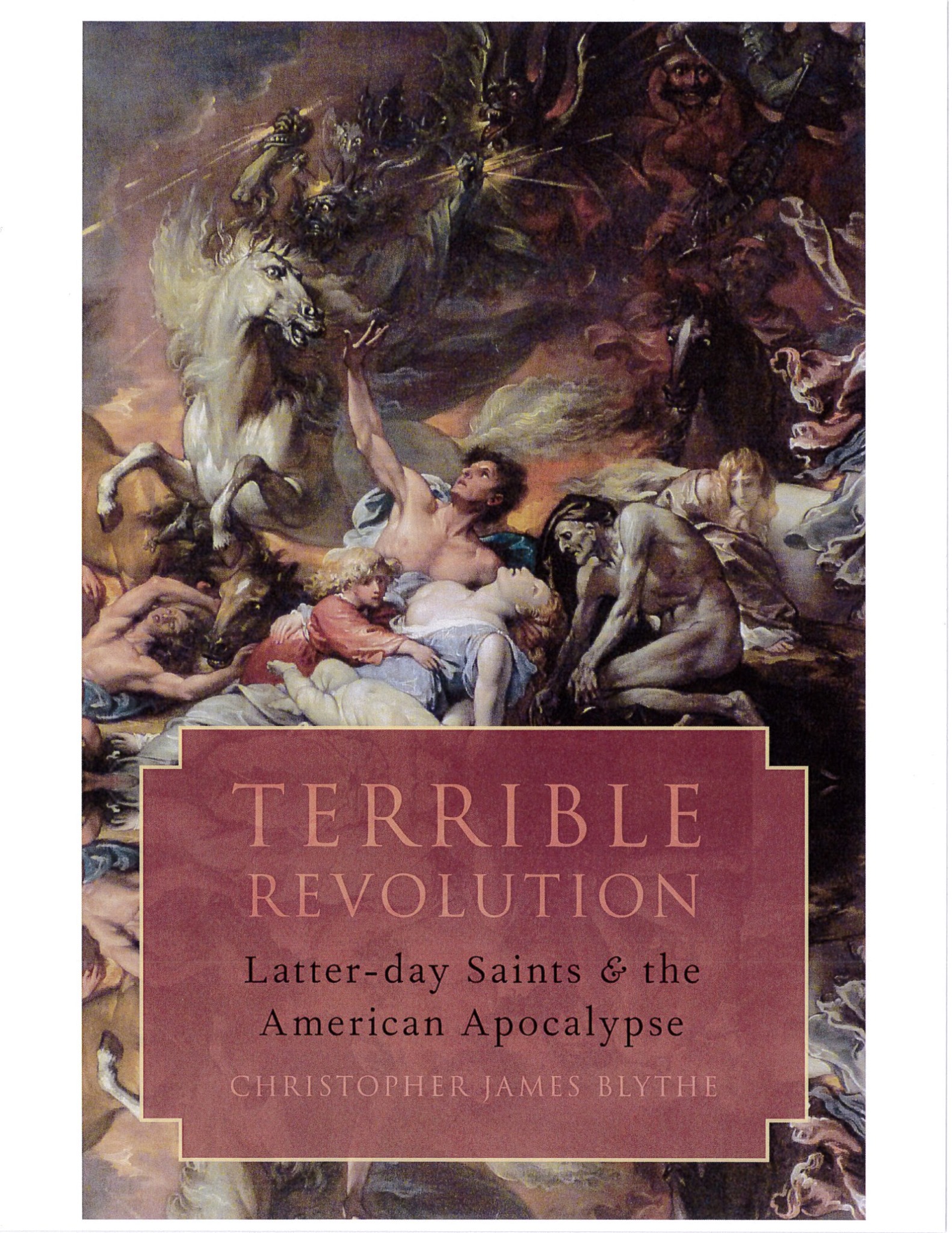
[FairMormon has received several questions about this recently, so we were pleased to see Interpreter publish this essay by Christopher J. Blythe. It has been cross-posted with permission.]
Abstract: In this essay, I examine a letter written by Elder Vaughn J. Featherstone in 1983 and deposited in the cornerstone of the Atlanta Georgia Temple. The letter is addressed to twenty-first century members of the Church and is written with the expectation that these future Saints will have been alive for the Second Coming of Jesus Christ. I consider the claims made about this letter from a recent viral video entitled “7 Year Tribulation in the SEVENTH Seal TIMELINE.”
On March 12, 2020, the video “7 Year Tribulation in the SEVENTH Seal TIMELINE” was released on YouTube.1 Six weeks later it had 375,000 views and had made the rounds on various Facebook groups, including one devoted to discussion among seminary teachers. The video presents a last days timeline that places the Second Coming in the very near future. The video’s creator, Masayoshi Montemayor, makes his points largely through official Church sources, including the Church’s website, institute manuals, and conference reports. However, in other instances, he points to obscure sources, including an April 1983 letter written by Seventy Vaughn J. Featherstone. This letter serves as Montemayor’s final piece of evidence for an imminent second coming. In this essay, I examine this document to understand its limitations for the argument Montemayor makes. My goal is not to criticize Elder Featherstone or to disparage sincere Latter-day Saints — among them presumably this video’s creator — who like myself are eager to be present for our Savior’s coming. [Read more…] about Vaughn J. Featherstone’s Atlanta Temple Letter
Book Review – 1st Nephi: A Brief Theological Introduction

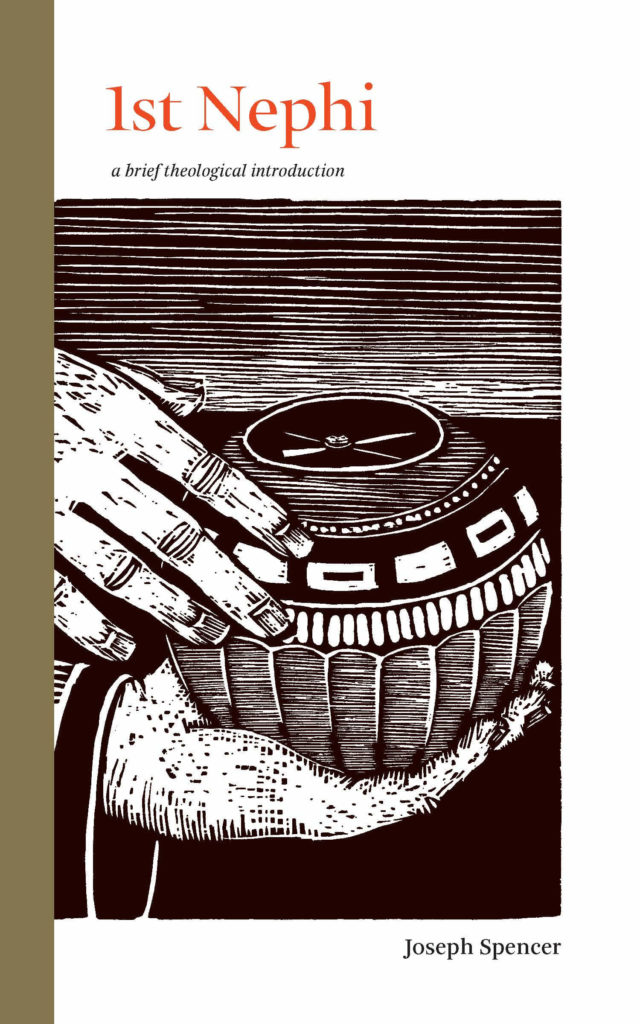
This is the first in a series of books from the Neal A. Maxwell Institute meant to seek “Christ in scripture by combining intellectual rigor and the disciple’s yearning for holiness,” (page vii) and focusing on theological aspects of the Book of Mormon. “In this case, theology, as opposed to authoritative doctrine, relates to the original sense of the term as, literally, reasoned ‘God talk’” (page viii). This volume is by Joseph Spencer, an assistant professor of ancient scripture at BYU and the editor of the Journal of Book of Mormon Studies.
At 146 pages, the book is indeed brief. It is a small paperback, but it has a lot of nice features. The front cover is embossed and both the front and back covers have flaps that can (almost) be used as bookmarks. There are woodcut illuminations matching those in the recent “Study Edition” of the Book of Mormon, also published by the Maxwell Institute. And the text has orange highlights and notes throughout.
The book has two parts. The first part, “The Theological Project of 1 Nephi,” was the most interesting to me. It talks about the original chapter breaks, and how they made it easier to see that Nephi intentionally structured the book to have two parts. The first part is an abridgment of the record kept by Lehi, and the second part, beginning with the original chapter three (now chapter ten) is about Nephi’s life. “The first half of the book prepares for the second by explaining how Nephi’s family came to possess the two key prophetic resources [the brass plates and the vision of the tree of life] essential to Nephi’s own subsequent ministerial efforts. The second half of the book then recounts Nephi’s ministry to his brothers, built on parallel expositions of the two key prophetic resources from the first half of the book” (pages 19-20). This is all shown in two diagrams, which explain that each of the original chapters had a theme and how they relate to each other. [Read more…] about Book Review – 1st Nephi: A Brief Theological Introduction
Tracing Ancient Threads in the Book of Moses
2020 Interpreter Foundation Conference
Tracing Ancient Threads in the Book of Moses
September 18-19, 2020
Brigham Young University, Tanner Building, Room 251
(If temporary COVID-19 restrictions preclude gathering on campus, we will hold the conference virtually. For late-breaking news, watch this website.)
Presented by
The Interpreter Foundation
Brigham Young University Department of Ancient Scripture
Book of Mormon Central
FairMormon
Because we believe that the Book of Moses includes authentic history, the possibility of evidence for that belief interests us as scholars. Although the primary intent of Joseph Smith’s translations is to meet the needs of modern readers, not to provide precise matches to texts from other times, we consider significant patterns of resemblance to ancient manuscripts that the Prophet could not have known and of unexpected conformance to conditions imposed by an archaic setting as potential indicators of antiquity that are best explained when the essential element of divine revelation is acknowledged. [Read more…] about Tracing Ancient Threads in the Book of Moses
Interpreting Scripture, History, Science, and Creation
Ben Spackman is a Latter-day Saint scholar who works in American religious history, history of science, and Biblical interpretation. He is writing a dissertation at Claremont on LDS creationism/evolution conflict in the 20th century, and has spoken at the FairMormon Conference in 2017 and 2019. This is cross-posted at his site, BenSpackman.com
May 4th holds significance in LDS history: it’s the day Joseph Smith introduced temple ordinances in the upper room of the red brick store in 1842. The temple ties together a number of questions, like: [Read more…] about Interpreting Scripture, History, Science, and Creation
In the News: Chad and Lori Daybell and Gospel Extremism
In recent news coverage of Chad and Lori Vallow Daybell, such as this article in the East Idaho News, people within the Church of Jesus Christ of Latter-day Saints may look at the situation as a warning against looking beyond the mark. However, it is important that those outside of the Church realize that they do not represent faithful members of the Church, and that we have been counselled against such fanaticism.
FairMormon member Cassandra Hedelius spoke at the 2015 FairMormon Conference, warning against this very thing. In fact, some of the people, groups, and sites she was referring to are the very ones mentioned in the East Idaho News article.
In 2016, Elder Quentin L. Cook of the Quorum of the Twelve Apostles also gave a warning:
While there are many examples of looking beyond the mark, a significant one in our day is extremism. Gospel extremism is when one elevates any gospel principle above other equally important principles and takes a position that is beyond or contrary to the teachings of Church leaders. One example is when one advocates for additions, changes, or primary emphasis to one part of the Word of Wisdom. Another is expensive preparation for end-of-days scenarios. In both examples, others are encouraged to accept private interpretations. “If we turn a health law or any other principle into a form of religious fanaticism, we are looking beyond the mark.”
[Read more…] about In the News: Chad and Lori Daybell and Gospel Extremism
FairMormon Questions: Is the church excessively “hoarding” money that should be given to charities?

[Editor’s note: Latter-day Saint Charities just released their 2019 Annual Report, available here.]
FairMormon has a service where questions can be submitted and they are answered by volunteers. If you have a question, you can submit it at http://www.fairmormon.org/contact. We will occasionally publish answers here for questions that are commonly asked, or are on topics that are receiving a lot of attention. The question below has been edited for brevity.
Question:
A recent article in the Wall Street Journal said that Ensign Peak Advisors has amassed about 100 billion dollars for the Church of Jesus Christ of Latter-day Saints over the years because of prudent investment. I applaud the fact that the Church is fiscally conservative and stays out of debt, however “hoarding” 100 billion dollars seems very excessive given the fact that there is so much poverty in the world. I am concerned that too little (percentage wise compared to the overall revenue) is being given to the poor and needy.
Answer from FairMormon Volunteer Sarah Quan:
Frankly, we don’t know enough about Ensign Peak as a general populace to really say one way or another. The issue is nuanced, and a single whistleblower report is not enough for us to draw a good conclusion about the church’s financial situation or intentions. In response to the WSJ article, Bishop Waddell commented that the budget for humanitarian aid has increased to close to a billion dollars in welfare per year.[1] Here are four doctrinal considerations to help us better understand the church’s position. [Read more…] about FairMormon Questions: Is the church excessively “hoarding” money that should be given to charities?
Book Review: The Rise of the Latter-day Saints: The Journals and Histories of Newel Knight

Newel Knight lived from September 13, 1800 to January 11, 1847. He met Joseph Smith in 1826 and remained close friends with him until Joseph’s death. He was directly involved in some of the early events in church history, so his autobiography and journals are valuable to historians. However, these have only been available in manuscript form, in several different versions, which have made them difficult to use. This book amalgamates them in a coherent form and provides a transcription that can be better understood and cited.
The book splits Knight’s writing into five parts, covering different chronological periods of his life. Each section has an introduction with a biographical summary. Editorial remarks are given in footnotes, and spelling and punctuation are generally retained, except in cases where the editors felt clarification was necessary (which to me seemed inconsistent, and in at least one case, possibly incorrect[1]).
There are many things included that are important, such as a letter from Joseph Smith that has not been published in the Joseph Smith Papers Project, Christ’s appearance in the Kirtland Temple[2], many accounts of healings, the aftermath of the martyrdom of Joseph and Hyrum Smith, and the exodus from Nauvoo. Despite his human imperfections, Knight comes to life as a role model worth emulating with his tremendous faith, even during discouragement, and always remembering to be grateful for the blessings that followed.
I found this particular episode of 1839 in Nauvoo to be very interesting, involving his wife Lydia: [Read more…] about Book Review: The Rise of the Latter-day Saints: The Journals and Histories of Newel Knight