• Skip to primary navigation
  • Skip to main content
  • Skip to primary sidebar
  • Skip to footer

FAIR

  • Find Answers
  • Blog
  • Media & Apps
  • Conference
  • Bookstore
  • Archive
  • About
  • Get Involved
  • Search

Blog

Mormon FAIR-Cast 160a: Don Bradley and Dan Peterson Taking Questions

July 30, 2013 by SteveDensleyJr

https://media.blubrry.com/mormonfaircast/www.fairlatterdaysaints.org/wp-content/uploads/2013/07/Don-Bradley-and-Dan-Peterson-1.mp3

Podcast: Download (30.2MB)

Subscribe: RSS

BradleyDonWhy do people leave the Church? What was in the missing 116 pages of the Book of Mormon? How do we explain the appearance of horses in the Book of Mormon? Did Joseph Smith make up the story of the first vision long after it was supposed to have occurred? Is there any evidence that supports the authenticity for the Book of Abraham? Does the mention of grains in the Book of Mormon provide evidence of its truthfulness?

Joseph Smith Scholar Don Bradley and Dr. Dan Peterson take calls on K-Talk radio and answer a wide variety of questions in this interview that took place on July 25, 2013 on Drive Time Live with Mills Crenshaw.

Don Bradley is a writer, editor, and researcher specializing in early Mormon history. Don recently performed an internship with the Joseph Smith Papers Project and is completing his thesis, on the earliest Mormon conceptions of the New Jerusalem, toward an M.A. in History at Utah State University. He has published on the translation of the Book of Mormon, plural marriage before Nauvoo, and Joseph Smith’s “grand fundamental principles of Mormonism” and plans to publish an extensive analysis, co-authored with Mark Ashurst-McGee, on the Kinderhook plates. Don’s first book, The Lost 116 Pages: Reconstructing the Missing Contents of the Book of Mormon, is slated to be published by Greg Kofford Books.


DanPeterson

A native of southern California, Daniel C. Peterson received a bachelor’s degree in Greek and philosophy from Brigham Young University (BYU) and, after several years of study in Jerusalem and Cairo, earned his Ph.D. in Near Eastern Languages and Cultures from the University of California at Los Angeles (UCLA). Dr. Peterson is a professor of Islamic Studies and Arabic at BYU, where he has taught Arabic language and literature at all levels, Islamic philosophy, Islamic culture and civilization, Islamic religion, the Qur’an, the introductory and senior “capstone” courses for Middle Eastern Studies majors, and various other occasional specialized classes. He is the author of several books and numerous articles on Islamic and Latter-day Saint topics–including a biography entitled Muhammad: Prophet of God (Eerdmans, 2007)—and has lectured across the United States, in Europe, Australia, and New Zealand, and at various Islamic universities in the Near East and Asia. He served in the Switzerland Zürich Mission (1972-1974), and, for approximately eight years, on the Gospel Doctrine writing committee for The Church of Jesus Christ of Latter-day Saints. He also presided for a time as the bishop of a singles ward adjacent to Utah Valley University. Dr. Peterson is married to the former Deborah Stephens, of Lakewood, Colorado, and they are the parents of three sons.

This recording is posted here by permission of K-Talk Radio. The opinions expressed in this interview do not necessarily represent the views of FAIR or The Church of Jesus Christ of Latter-day Saints.

This is the first of a two-part interview.

Filed Under: Anti-Mormon critics, Apologetics, Book of Abraham, Book of Mormon, FAIR Conference, Joseph Smith, LDS Scriptures, Podcast

A Gathering of Study and Faith

July 25, 2013 by Mike Ash

Ash (newer) Picture“…as all have not faith,” the Lord told the members of the early Restored Church, “seek ye diligently and teach one another words of wisdom; yea, seek ye out of the best books words of wisdom; seek learning, even by study and also by faith” (D&C 88:118).

In the early 1980s I struggled for a brief time with my own personal testimony, brought on by exposure to LDS-critical material for which I had no answers. I was stunned, confused, and anxious. In my search for answers I stumbled upon the Foundation for Ancient Research and Mormon Studies (FARMS)—a newly formed (1979) organization of LDS scholars. The handful of writings and reprints produced by this LDS scholarly group was exactly what my fledging testimony needed.

I joined their mailing-list, purchased every publication they had, and became aware of other sources for academic studies of LDS issues—sources such as BYU Studies,Sunstone, Dialogue, and the writings of Hugh Nibley. I bought used back-copies of everything I could get my hands on to feed my craving for learning more.

In the FARMS newsletters I would occasionally get invitations to attend a lecture or other event hosted by the scholars who contributed to LDS studies. These were always held in Utah, but I was a young family-man in Colorado without the means to travel these events. In 1985 BYU hosted the first Ramses II exhibit and in my FARMS newsletter I received an invitation to attend a tour of the exhibit with Hugh Nibley as the guide. Since Dr. Nibley was my hero at that stage in my life, I was devastated that I was unable to attend.

My wife and I were convinced that we needed to move to Utah, in part, so I could be closer the Mecca of LDS scholarship. Once we settled in Ogden (north of Salt Lake City) I attended virtually every event the FARMS offered. In 1999 the Foundation for Apologetic Information and Research (FAIR) was created.

Like the original FARMS (now-defunct and replaced by BYU’s Maxwell Institute) FAIR was organized by a group of grass-roots Latter-day Saint volunteers who were interested in LDS studies. FAIR, however, was dedicated to educative apologetics (“apologetics” means to defend one’s beliefs). With a policy of non-confrontation (they didn’t want to engage in “Bible-bashing”) FAIR’s goal was to apply scholarly research and answers to the anti-LDS accusations of the Church’s critics.

Since its inception as a non-profit organization, FAIR has grown into a multi-national organization of volunteers who draw upon the best latest scholarship, and has produced books (such as my Shaken Faith Syndrome), DVDs, YouTube Videos, podcasts, a Wiki, and hundreds of articles. In 1999 FAIR held its first conference in California. In 2000 the venue was moved to Utah where it has remained ever. I attended the first Utah FAIR Conference and haven’t missed one since.

There are a few annual events I eagerly anticipate—Christmas with my family, Halloween, 4th of July, and the annual FAIR Conference. Some of the brightest LDS scholars have spoken on some of the most interesting topics ranging from such issues as Egyptology, DNA, Race Issues, Women’s Issues, the First Vision, Same-Sex Attraction, Plural Marriage, and more. The FAIR Conferences are consistently one of the highlights of my year.

This year, the 15th annual FAIR Conference will be held August 1 and 2 and promises to continue the standard of interest and excellence that has drawn increasingly larger crowds. The first FAIR Utah Conference was held in Alta. The next few years were held in Provo to provide for a greater number of attendees. For the past several years the FAIR Conference was moved to a venue in Sandy, and this year (because FAIR has outgrown the Sandy venue) it is being moved back to Provo to the Utah Valley Convention Center.

The list of speakers this year is fantastic. This year’s line of up scholars includes Ronald Barney of the LDS Church historical department who will speak on “Joseph Smith’s Visions.” Morris Thurston will present the “Kidnapping” at Palestine Grove: Missouri’s Final Attempt to Extradite Joseph Smith. Don Bradley will speak on The Original Context of the First Vision Narrative: 1820s or 1830s.

Salt Lake Tribune humor columnist, Robert Kirby will present, Why It is Important to Laugh at Ourselves, and Lynne Wilson’s topic will be, Was Joseph a Product of the Second Great Awakening? Dr. Mark Alan Wright, a specialist in Mesoamerian Archaeology will present, Heartland as Hinterland: The Mesoamerican Core and North American Periphery of Book of Mormon Geography. Rosalynde Welch will discuss “Disenchanted Mormonism,” and Seth Payne will speak on “Why Mormonism Matters: Pastoral Apologetics and the LDS Doubter.”

Ralph Hancock will reflect on “Mormonism and the New Liberalism: The Inescapability of Political Apologetics,” Maxine Hanks will present, “Working With the Church: Another Narrative,” and Daniel Peterson (a perennial favorite) will address, “Toward a More Effective Apologetics.”

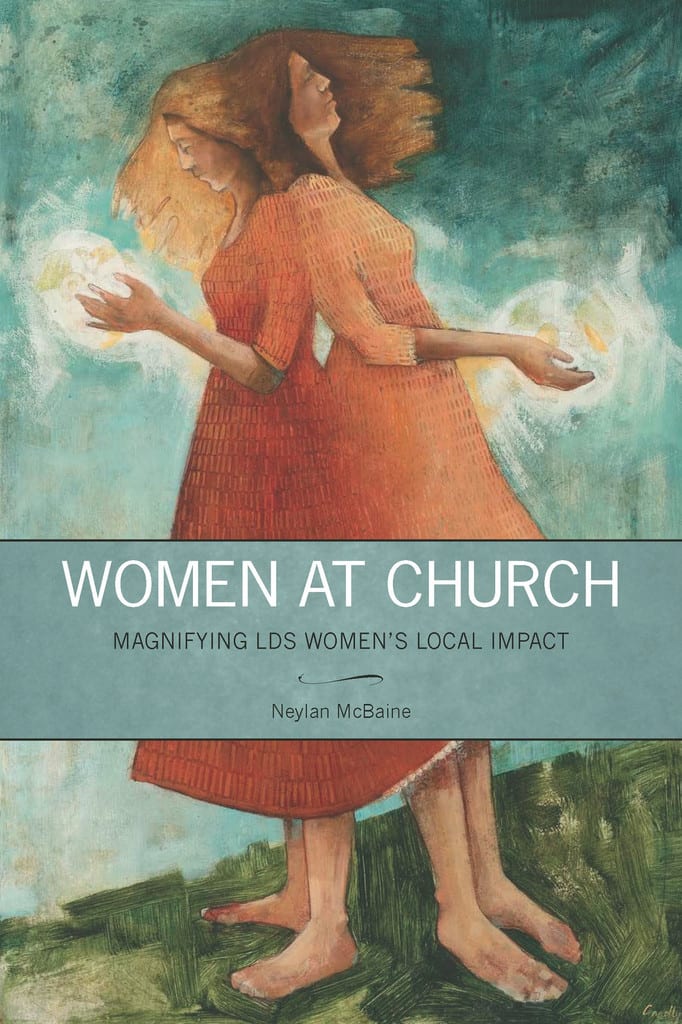
In addition to this awesome list of speakers and subjects, the FAIR Conference will host two panel discussions: Charity Never Faileth: Seeking Sisterhood Amid Different Perspectives on Mormon Feminism, with Neylan McBain, Valerie Hudson, Wendy Ulrich, Kris Fredrickson, and Maxine Hanks.

The second panel is entitled, The Loss and Rekindling of Faith, and will include panelists, Bill Reel, Don Bradley, Janet L. Eyring, and Maxine Hanks.

Anyone interested in Mormon studies should attend. Early-bird discounts are still available until July 28 but even if you miss the discount, the “study and faith” you’ll gain from this assemblage of speakers will be worth far more than the price of the ticket. You can get all the info here, and I hope to see you there.

*This article was also published in Meridian.

Filed Under: Apologetics, FAIR Conference

Best of FAIR 16: A Joseph Smith Miscellany

July 24, 2013 by SteveDensleyJr

https://media.blubrry.com/mormonfaircast/www.fairlatterdaysaints.org/wp-content/uploads/2013/07/A-Joseph-Smith-Miscellany.mp3

Podcast: Download (27.7MB)

Subscribe: RSS

bushman-01Richard Bushman, author of Joseph Smith: Rough Stone Rolling, discusses the issues that loomed in his mind as he wrote his books on Joseph Smith. One conclusion he has reached is that “we will not always be able to give satisfactory answers to our critics. We will never placate our critics completely and we should not seek to do so. If we placate them completely we are making our gospel, our history, conform to their sense of what life should be and what the path should be. In a sense, we’re caving in if we become too pleasing to those around them. We have to state it as we see it and recognize that there will be differences from what our critics expect of us and of what actually happened to our people.”

The text of his presentation can be found here. The video can be seen here.

Richard Bushman is the and Gouverneur Morris Professor of History emeritus at Columbia University. He is currently the Howard W. Hunter Visiting Professor in Mormon Studies at Claremont Graduate University. He also serves as one of three general editors of the Joseph Smith Papers.

The opinions expressed in this address do not necessarily reflect the opinions of The Church of Jesus Christ of Latter-day Saints, or of FAIR.

To purchase tickets to the 2013 FAIR Conference, visit this page. This short video clip also provides more information: FAIR Conference video clip.

Filed Under: Anti-Mormon critics, Apologetics, FAIR Conference, Joseph Smith, Women

Maxwell Institute Interview with Terry and Fiona Givens

July 21, 2013 by SteveDensleyJr

https://media.blubrry.com/mormonfaircast/www.fairlatterdaysaints.org/wp-content/uploads/2013/07/Episode-1_-Terryl-and-Fiona-Givens.mp3

Podcast: Download (35.4MB)

Subscribe: RSS

The Maxwell Institute has started a podcast and subscribers to the FAIR Blog will especially enjoy this interview with Fiona and Terryl Givens. They talk about their recent book, The God Who Weeps: How Mormonism Makes Sense of Life, and also discuss their recent string of firesides and symposia discussing the navigation of faith crises. Former Mormon FAIR-Cast host, Blair Hodges, conducts the interview as they cover subjects like the character of God, the pre-earth life and human agency, the balance between faith and the intellect, individuality and Mormon culture, and many other topics.

This recording is used here by permission of the Maxwell Institute and does not necessarily represent the opinions of the Church of Jesus Christ of Latter-day Saints or of FAIR.

Filed Under: Apologetics, Podcast

4th Watch 9: Secret Combinations – The Masonic Mormon Connection

July 19, 2013 by Ned Scarisbrick

https://media.blubrry.com/mormonfaircast/www.fairlatterdaysaints.org/wp-content/uploads/2013/07/4th_Watch_9.mp3

Podcast: Download (23.0MB)

Subscribe: RSS

SQC52This is a parallel podcast to the presentation made by Greg Kearney at the FAIR conference in 2005.  Greg used the title “Message and the Messenger” to distinguish how a teaching, principle or concept can be illustrated by symbols.  There are those who see this system as a secret combination designed to avoid public inspection.  Yet in this podcast we explore the symbolic teaching method used in Masonry and in the temples of the Church of Jesus Christ of Latter-Day saints in more detail, to offer insight into what might be considered a deeper understanding of the sacred commitments we make to each other and Deity.


Filed Under: Anti-Mormon critics, Hosts, Masonry, Ned Scarisbrick, Podcast

Online ticket sales for FAIR Conference ending July 28th

July 19, 2013 by Mike Parker

This year’s FAIR Conference will be held on Thursday and Friday, August 1 and 2 at the Utah Valley Convention Center in Provo, Utah.

We have an exciting lineup of speakers this year, including Ron Barney, executive director of the Mormon History Association; Salt Lake Tribune columnist Robert Kirby; and Maxine Hanks, one of the “September Six” and a newly rebaptized member of the Church.

See the FAIR home page for a full schedule and details of the conference.

Online ticket sales are open now and will be available through Sunday, July 28. After that, tickets will be available at the door, but will cost $5 more per ticket than the online price.

If you haven’t registered for the conference yet, now is the time to order!

Filed Under: FAIR Conference

Annual Subscription of Interpreter Journal Paperback Volumes Now Available

July 19, 2013 by S. Hales Swift

copies-fanned
The Board of The Interpreter Foundation is very pleased to announce that we are now offering an annual subscription of our print volumes. Utilizing the latest innovations in print-on-demand technology and in shipping and inventory management, we have partnered with one of the foremost print providers and distributors in the country to offer this service to our readers.

With an annual subscription to Interpreter: A Journal of Mormon Scripture you will receive professionally bound paperback copies of our journal volumes in the mail, automatically, shortly after they are finished being compiled. Once each volume has been finished, it will be shipped direct to your door. These are identical to the individual volumes available for sale on Amazon.com, but with a subscription you will not need to order each volume individually.

We estimate that we will produce four or five volumes annually of the journal, or about one volume every ten or eleven weeks, and all volumes produced in a year are included in your annual subscription. The first volume to ship to subscribers will be Volume 5, which was finalized at the end of June, and which we hope to ship later this month in July. Your subscription will start from the day you subscribe, and go through the same day of the following year. For example, if you subscribe on July 6, 2013, then your subscription will go through July 6, 2014, and you will receive all print volumes completed during that time period. Your subscription will automatically renew after a year unless you unsubscribe.

Each subscription is $35 annually (U.S. dollars). You may purchase multiple subscriptions at once, if you would like multiple copies of each volume. Please contact us if you’d like to order more than five subscriptions, or if you are a retailer. The $35 price is carefully calculated to cover the cost to print the volumes and shipping and handling only. There is no other markup or royalty included in the price. Additionally, this print subscription is available to all our readers living internationally, at the same price.

Please note that this print subscription should not be viewed as a donation to The Interpreter Foundation since it covers cost of printing and shipping only. If you would like to donate to the foundation, please go to the Donations page or click on the “Donate” button on the subscription page. We strongly encourage and ask our subscribers to donate to The Interpreter Foundation, before or after subscribing, to help defray the costs associated with preparation and publication of Interpreter, as well as the other activities of the foundation such as the production of videos, symposia, and books.

Please help spread the word about this new subscription offering from The Interpreter Foundation with your family and friends, and others you know who are interested in Interpreter, so that we may quickly meet the minimum order quantity required for our first shipment.

Click here to go to the subscription webpage to subscribe.

If you have any questions or comments about this new print subscription, please let us know in the comments below, or by contacting us via our Contact page.

Thank you for your continued support of The Interpreter Foundation.

*This item is cross-posted from mormoninterpreter.com

Filed Under: General, LDS Scriptures, News stories

Mormon FAIR-Cast 156: Defenders Beget Defenders

July 17, 2013 by SteveDensleyJr

https://media.blubrry.com/mormonfaircast/www.fairlatterdaysaints.org/wp-content/uploads/2013/07/Religion-Today-for-Sunday-July-14.mp3

Podcast: Download (8.8MB)

Subscribe: RSS

Christian minister George MacDonald, a primary inspiration to C.S. Lewis, once said “It is often the incapacity for defending the faith they love, which turns men into persecutors.” Adding to this, Elder Neil A. Maxwell said, “Defenders beget defenders and one of the significant side benefits of scholars who are devoted, . . . is that we will at least reduce the number of people who do not have the capacity to defend their faith and who otherwise might ‘grow weary and faint in their minds.’”

In this episode of Religion Today, which originally aired on KSL Radio on July 14, 2013 Martin Tanner and Steve Densley, Jr. discuss the need to defend the faith and the way in which FAIR and the FAIR Conference can help prepare people to respond to attacks against the Church.

To purchase tickets to the 2013 FAIR Conference, visit this page. This short video clip also provides more information: FAIR Conference video clip.

This recording was used by permission of KSL Radio and does not necessarily represent the views of The Church of Jesus Christ of Latter-day Saints or of FAIR. Listeners will note that the first part of this recording is missing.

Filed Under: Anti-Mormon critics, Apologetics, FAIR Conference, Podcast

Naming in the Desert (Howlers # 13)

July 12, 2013 by Matthew Roper

All the rivers and valleys he makes Lehi name with new names.
John Hyde Jr., Mormonism: Its Leaders and Designs (1857), 223.

From Hugh Nibley, Lehi in the Desert (1988), 75-76.

By what right do these people rename streams and valleys to suit themselves? No westerner would tolerate such arrogance. But Lehi is not interested in western taste; he is following a good old Oriental custom. Among the laws “which no Bedouin would dream of transgressing,” the first, according to Jennings-Bramley, is that “any water you may discover, either in your own territory or in the territory of another tribe, is named after you.” So it happens that in Arabia a great wady (valley) will have different names at different points along its course, a respectable number of names being “all used for one and the same valley. . . . One and the same place may have several names, and the wadi running close to the same, or the mountain connected with it, will naturally be called differently by members of different clans,” according to Canaan, who tells how the Arabs “often coin a new name for a locality for which they have never used a proper name, or whose name they do not know,” the name given being usually that of some person. However, names thus bestowed by wandering tribesmen “are neither generally known or commonly used,” so that we need not expect any of Lehi’s place names to survive.

Speaking of the desert “below the Negeb proper,” i.e., the general area of Lehi’s first camp, Woolley and Lawrence report “peaks and ridges that have different names among the different Arab tribes, and from different sides,” and of the nearby Tih Palmer says, “In every locality, each individual object, whether rock, mountain, ravine, or valley, has its appropriate name,” while Raswan recalls how “miraculously each hill and dale bore a name.” But how reliable are such names? Philby recounts a typical case: “Zayid and ‘Ali seemed a little vague about the nomenclature of these parts, and it was only by the irritating process of continual questioning and sifting their often inconsistent and contradictory answers that I was able in the end to piece together the topography of the region.” Farther east Cheesman ran into the same difficulty: “I pointed out that this was the third different hill to which he had given the same name. He knew that, was the reply, but that was how they named them.”  The irresponsible custom of renaming everything on the spot seems to go back to the earliest times, and “probably, as often as not, the Israelites named for themselves their own camps, or unconsciously confounded a native name in their carelessness.” Yet in spite of its undoubted antiquity, only the most recent explorers have commented on this strange practice, which seems to have escaped the notice of travelers until explorers in our own times started to make maps.

Even more whimsical and senseless to a westerner must appear the behavior of Lehi in naming a river after one son and its valley after another. But the Arabs don’t think that way. In the Mahra country, for example, “as is commonly the case in these mountains, the water bears a different name from the wadi.” Likewise we might suppose that after he had named the river after his first-born the location of the camp beside its waters would be given, as any westerner would give it, with reference to the river. Instead, the Book of Mormon follows the Arabic system of designating the camp not by the name of the river (which may easily dry up sometime), but by the name of the valley (1 Nephi 10:16; 16:6).

*This item is cross-posted from Ether’s Cave.

Filed Under: Book of Mormon

How to Read Ancient Nephite

July 11, 2013 by Mike Ash

Ash (newer) PictureAs pointed out in the last installment, Joseph Smith was not a “translator” in the Academic sense. He couldn’t read ancient languages. Somehow, through the power of God, he was able to convert the Nephite writings into the scriptural English of his day.

According to witnesses who were close enough to Joseph to get a feel for the translation process, Joseph would “see” the English translation of the Nephite text when he put is face into the hat with the seer stone. Anyone who tries to copy this process—with or without a hat—will quickly discover that you cannot see (let alone read) any text so close to your face. In the darkness of the hat it seems likely that the English text which Joseph saw was in his “mind’s eye.” Technically vision occurs in the brain. Yes, our eyes send the data to the brain, but the brain converts the signals to form the things we see.

Through the power of God—and Joseph’s faith that the seer stone in the hat operated through the power of God—Joseph’s mind was able to create an English “translation” of the Nephite text. The question becomes: What is the relationship between the English words that Joseph saw and what was written on the plates?

Professional linguist Royal Skousen is the foremost expert on the original Book of Mormon document— the document written by the scribes as Joseph Smith dictated the text. He has discovered subtle clues in the way that the scribes wrote—and stumbled or corrected as they wrote—which reveal some fascinating insights about the translation process. Textual clues, for instance, suggest that Joseph saw blocks of texts which included at least twenty words at a time.[i]

Sometimes, Joseph had trouble pronouncing proper names and had to spell them out (possibly the only examples wherein words outside of Joseph’s environment appeared in his translation tools). We have evidence of this not only from witnesses to the process but also from textual evidence. For example, when Joseph came to the name “Coriantumr,” Oliver Cowdery—his scribe—wrote “Coriantummer” but then crossed it out and wrote the correct spelling. There is no way Cowdery would have known this without Joseph offering the correct spelling. This confirms that Joseph actually saw the spelling of at least some Book of Mormon names.[ii]

At other times, Joseph was surprised by what he read. According to the manuscript evidence Joseph did not know in advance what the text was going to say. For example, he was apparently surprised by chapter breaks and book divisions. At such breaks he would tell his scribe to write “Chapter.” Only later did he discover that in some instances this was not a chapter break but a break for a wholly distinct book.[iii]

Some have argued that the English translation is a nearly a word-for-word conversion from reformed Egyptian to English. Others have argued that Joseph was given general impressions about what the plates contained and he framed those impressions from within his own worldview and according to his own language and gospel understanding.

Some, including myself, take a position that falls in between these two options. I agree, in fact, with the position articulated by Brant Gardner is his book, The Gift and the Power, wherein he argues that Joseph Smith translated by way of a “functional equivalence.” In this model, argues Gardner, the translation “adheres to the organization and structures of the original but is more flexible in the vocabulary. It allows the target language [English] to use words that are not direct equivalents of the source words [reformed Egyptian], but which attempt to preserve the intent of the source text.”[iv]

Steven Pinker, a non-LDS professor of Psychology at Harvard, argues that all humans (and perhaps many animals) have a natural language of thought, or “mentalese.” When we communicate we convert our mentalese into whatever language we speak. All of us have had many experiences where we’ve struggled to come up with the right words to convey our thoughts or have spoken words which didn’t accurately or fully translate the thoughts we hoped to impart. That’s part of the difficulty of translating mentalese into words.

In the “functional equivalence” model for the Book of Mormon translation, Joseph was given the divine mentalese impression or imprint of what was on the plates, but he had to formulate that mentalese into words of his language and understanding (the obvious exceptions being unknown proper nouns such as Book of Mormon names). Once Joseph’s mind formed a functional English equivalent to the mentalese imprint, the English words appeared and Joseph was able to read them off to his scribe. The resulting English translation would accurately transmit the meaning of the text but with words and phrases that may not have existed among the Nephites.

As Dr. Stephen Ricks, professor of Hebrew and Semitic languages suggests,

A reasonable scenario for the method of translating the Book of Mormon… would be one in which the …seerstone and the interpreters… enhanced his [Joseph’s] capacity to understand (as one who knows a second language well enough to be able to think in it understands) the sense of the words and phrases on the plates as well as to grasp the relation of these words to each other. However, the actual translation was Joseph’s alone and the opportunity to improve it in grammar and word choice still remained open. Thus, while it would be incorrect to minimize the divine element in the process of translation of the Book of Mormon, it would also be misleading and potentially hazardous to deny the human factor.[v]

Elder John A. Widtsoe likewise believed that Joseph, as a “translator,” would first have perceived thoughts and then would have attempted to reproduce those thoughts correctly “‘with every inflection of meaning, in the best words at his command…. This makes it unavoidable that much of the translator himself remains in his translation.’”[vi] Likewise, Elder Widtsoe wrote,

The language of the English Book of Mormon is to a large degree the language of the Prophet as used in his every day conversation on religious subjects, but brightened, illuminated, and dignified by the inspiration under which he worked.[vii]

The fact that Joseph had to incorporate his own language into the translation pretty much guarantees that some English words and phrases are unable to fully express Nephite words and phrases.  We find the same problem in Academic translations.Translators struggle to best express ideas from one language into another language. But, some will ask, why didn’t God just give Joseph a perfect English translation? In Shaken Faith Syndrome I quote LDS scholar Benjamin McGuire who wrote:

If we take the English language as a basis, it seems quite possible, for example, for God to create a text that could perfectly convey the meaning which God intended for it to convey. But, it would be to a specific audience. More than that, it would be to an audience of one (and even that, it would be to an audience of one at a particular time and place). No one else would be capable of achieving the same meaning from that text. Is this a weakness on the part of God? No. It is a weakness on the part of our ability to communicate. So who was the intended audience? Let’s say that it was Joseph Smith. Our ability then, to understand the perfection of the text which God intended, would largely be determined by how closely we resemble Joseph Smith in 1828—how closely our language resembles his, how closely our culture environment resembles his, how similar our intertextual exposure resembles his.[viii]

Any time that words are translated from one language to another language, problems can be compounded because words can have different meanings depending on a variety of factors. Despite what we may think, words do not typically have simple meanings by themselves; they only have meaning in the context of other words, the time and culture in which they were written, how the author may have used words as idioms, etc. For example, the word “gay” would mean something different to a twenty-first century American than it would to a nineteenth century American. In English we can catch a nap as well as catch a fish—but the word “catch” means something different in each example, and the difference in meaning is determined by context.

As non-LDS Hebrew scholar Joel Hoffman explains in regards to reading the Bible in ancient Hebrew: “While it’s hard to understand the text as a whole without knowing what the words mean, just knowing the meaning of the words… is not nearly enough to understand the text. More generally, a ‘literal’ translation is almost always just a ‘bad’ or ‘wrong’ translation, inasmuch as it fails to give a reader of the translation an accurate understanding or appreciation of the original.”[ix]

Anyone who has ever translated words from one language to another knows that there are inherent and inescapable difficulties. Sometimes, for example, there is no equivalent word in another language. For instance, I understand that the Japanese language has no word which simply means “brother.” Instead, there are different words for “older brother” and “younger brother.” This presents an interesting problem when translating the “brother of Jared” into Japanese. Many other such examples could be found. Word-for-word translations sometimes yield nonsense or even humorous results. If we translated the German word “Kindergarten” literally into English, for example, we would get “child garden” rather than the intended meaning of a school that precedes first grade.

Joseph understood that Book of Mormon passages could be improved and made several clarifications in subsequent additions. Brigham Young understood the problems of translation as well when he said: “…I will… venture to say that if the Book of Mormon were now to be re-written, in many instances it would be materially different from the present translation.”[x]

Understanding the complexities of translation will help us navigate the Book of Mormon when we attempt to understand the book as an actual ancient text, written by real people who lived and interacted with their own environments, as well as when we attempt to grapple with those critical issues—such as the inclusion of King James language and nineteenth-century revivalist terminology—that have caused some testimonies to stumble.

[i] Royal Skousen, “How Joseph Smith Translated the Book of Mormon: Evidence from the Original Manuscript,” Journal of Book of Mormon Studies 7:1, 25.

[ii] Ibid., 27.

[iii] Ibid., 27-28.

[iv] Brant A. Gardner, The Gift and Power of God: Translating the Book of Mormon(Salt Lake City: Greg Kofford Books, 2011), 156.

[v] Stephen D. Ricks, “Joseph Smith’s Translation of the Book of Mormon,” (accesse 8 July 2013).

[vi] John A. Widtsoe, Gospel Interpretations (Salt Lake City: Bookcraft, 1947), quoted in Ricks, “Translation of the Book of Mormon,” 207, n. 8.

[vii] John A. Widtsoe, Joseph Smith: Seeker of Truth (Salt Lake City: Deseret News Press, 1951), 42.

[viii] Michael R. Ash, Shaken Faith Syndrome: Strengthening One’s Testimony in the Face of Criticism and Doubt 2nd Ed. (Redding CA: February 2013), 56.

[ix] Hoffman, Joel M. (2010-02-02). And God Said: How Translations Conceal the Bible’s Original Meaning (p. 101). Macmillan. Kindle Edition.

[x] Journal of Discourses 9:311.

*This article also appeared in Meridan Magazine.

Filed Under: Book of Mormon

  • « Go to Previous Page
  • Go to page 1
  • Interim pages omitted …
  • Go to page 151
  • Go to page 152
  • Go to page 153
  • Go to page 154
  • Go to page 155
  • Interim pages omitted …
  • Go to page 201
  • Go to Next Page »

Primary Sidebar

Faithful Study Resources for Come, Follow Me

Subscribe to Blog

Enter your email address:

Subscribe to Podcast

Podcast icon
Subscribe to podcast in iTunes
Subscribe to podcast elsewhere
Listen with FAIR app
Android app on Google Play Download on the App Store

Pages

  • Blog Guidelines

FAIR Latest

  • Come, Follow Me with FAIR – The Family: A Proclamation to the World – Part 1 – Autumn Dickson
  • The Eternal Gift of Testimony
  • Come, Follow Me with FAIR – The Articles of Faith and Official Declarations 1 and 2 – Part 2 – Autumn Dickson
  • Come, Follow Me with FAIR – The Articles of Faith and Official Declarations 1 and 2 – Part 1 – Autumn Dickson
  • The Lord Is Hastening His Work

Blog Categories

Recent Comments

  • lyrics to song on Come, Follow Me with FAIR – The Articles of Faith and Official Declarations 1 and 2 – Part 2 – Autumn Dickson
  • Nalo on Come, Follow Me with FAIR – The Articles of Faith and Official Declarations 1 and 2 – Part 2 – Autumn Dickson
  • Diana on Come, Follow Me with FAIR – Doctrine and Covenants 132 – Mike Parker
  • JC on The Lord Is Hastening His Work
  • LHL on Come, Follow Me with FAIR – Doctrine and Covenants 132 – Mike Parker

Archives

Follow Us

  • Facebook
  • Twitter
  • iTunes
  • YouTube
Android app on Google Play Download on the App Store

Footer

FairMormon Logo

FAIR is a non-profit organization dedicated to providing well-documented answers to criticisms of the doctrine, practice, and history of The Church of Jesus Christ of Latter-day Saints.

Donate to FAIR

We are a volunteer organization. We invite you to give back.

Donate Now

Site Footer