• Skip to primary navigation
  • Skip to main content
  • Skip to primary sidebar
  • Skip to footer

FAIR

  • Find Answers
  • Blog
  • Media & Apps
  • Conference
  • Bookstore
  • Archive
  • About
  • Get Involved
  • Search

Book of Mormon

“I Glory in my Jesus”: How Nephi Helps Us Grow Closer to the Savior

March 27, 2016 by Neal Rappleye

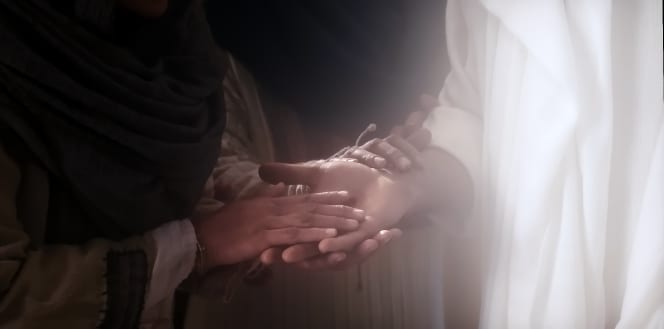
Christ's hands 

Today, Christians around the world celebrate the single greatest event in world history. The Son of God, the Great Creator of Heaven and Earth, condescended below all things, suffered for our sins, died on our behalf, and then three days later, He rose from the grave, giving life and hope to us all: He lives, and because of Him, we all shall live. Nothing can be said to inspire greater hope than those immortal words: “He is not here: for he is risen” (Matthew 28:6).

Like many others, I fear my own words are woefully inadequate to articulate my deepest feelings toward my Savior and Redeemer. Nephi, too, felt that his words were inadequate (2 Nephi 33:1), and yet few testimonies stir my soul greater than his powerful declaration toward the close of his record: “I glory in plainness; I glory in truth; I glory in my Jesus, for he hath redeemed my soul from hell” (2 Nephi 33:6).

Book of Mormon Central recently highlighted Nephi’s farewell testimony of Christ.

“Nephi’s account is brimming with the significance of Jesus Christ and his mission, affirmed through prophetic testimony, parental teaching, scriptural witnesses, and profound spiritual experiences.” Accordingly, Nephi “gives sincere followers of Christ everywhere a model of spiritual behavior to follow in seeking to gain, build, or strengthen their own relationships with Jesus Christ.”

Nephi’s knowledge of the Savior came in at least four different ways:

(1) Prophetic testimony;

(2) Parental teaching;

(3) Scriptural witnesses; and

(4) Personal spiritual experiences.

Let’s explore each of these in Nephi’s record and consider what we learn about the Savior in each instance.

Prophetic Testimony

The life and mission of Christ was understood by many prophets, many hundreds of years before His coming. While some scholarship is just starting to recognize an awareness of a divine Son-Redeemer figure in ancient Israelite theology, the Book of Mormon has long affirmed that pre-Christian prophets bore witness of the Savior.

Nephi records both Lehi and Jacob bearing prophetic witness of the Messiah. To the people of Jerusalem, Lehi had prophesied “plainly of the coming of a Messiah, and also the redemption of the world” (1 Nephi 1:19). As a prophet, Lehi had witnessed in vivid detail several events in the Savior’s life (see 1 Nephi 10:4–12). To the people of Nephi, Jacob taught the plan of salvation and the central role of the Atonement in that plan. He revealed the name of Christ to the people, and taught by revelation about the Savior’s mission.

Just as God had prophets teaching of Christ in the ancient cities of Nephi and Jerusalem, so there are prophets today who bear witness of Jesus Christ. Next week, we will gather together as Latter-day Saints throughout the world to hear them bear their special witness. Let’s follow the example of Nephi and cherish and learn from their testimonies.

Parental Teaching

Lehi, of course, was not only the prophet at the time, but he was Nephi’s father. He was acting in his paternal role when he gather this family together and taught them about how, due to the effects of the Fall, all must come unto the Messiah with a broken heart and contrite spirit. In the wake of his father’s passing, Nephi lamented over his personal shortcomings, but also affirmed his dependence of the Savior: “O Lord, I have trusted in thee, and I will trust in thee forever” (2 Nephi 4:34). Lehi and Sariah, faithfully taking their family in the wilderness upon the Lord’s command, are the ones who modeled that trust in the Lord for Nephi to learn.

Just like Lehi and Sariah, parents today have a personal responsibility to teach their children about Jesus Christ and his Gospel. Less often talked about, but equally important, children today have the responsibility to learn from their parents. May we all, in our roles either as parents or children (or, for many, both) teach and learn and better come to know the Savior within the family setting.

Scriptural Witnesses

There can be little question that Nephi was a diligent student of the scriptures. He risked life and limb to recover a copy of scriptural works from Laban in Jerusalem, and his entire record is laced with quotations of scripture. He draws on the writings of several prophets to describe Christ’s atoning death (1 Nephi 19:10–12). Nephi used Psalm 24 to teach about what must be done to come into the presence of Christ and to recognize Him as the Messiah.

Of course, everyone is familiar with Nephi’s extensive use of Isaiah. Nephi explicitly used Isaiah as a witness of Christ. In Isaiah’s writings, Nephi could discern prophetic descriptions of the Savior’s birth, divine titles, and ministry, and rejection by the people. A sweeping vision of the Redeemer’s mortal life and ultimate redeeming work guided Nephi’s selection and interpretation of Isaiah.

Just as Nephi and Isaiah’s words work together to bear witness of the redemptive mission of Jesus Christ, so do the entire Bible and Book of Mormon work together. Latter-day Saints are blessed today with the testimony of two nations that Jesus is the Christ, rather than just one. Like Nephi did with the brass plates, we can draw closer to the Lord and Savior as we read and ponder the teachings of Christ found in the scriptures we have.

Personal Spiritual Experiences

Nephi had his own sacred experiences that taught him about the importance of the Savior. While pondering on Lehi’s vision of a tree, Nephi received his own revelation wherein he learned the meaning of the tree and its connection to the birth of Jesus Christ. The vision also taught Nephi firsthand about the life, baptism, and death of the Son of God (see 1 Nephi 11). Later in life, as Nephi reflected on the Savior’s baptism, he came a greater understanding of why Jesus was baptized, and conversed with the Father and the Son about the doctrine of Christ.

Such personal spiritual experiences, which all of God’s children are entitled to, are more important than the witness of parents and prophets. But as Nephi’s experience teaches us, it is the teachings of prophets, parents, and scripture that serve as the springboard to personal testimony. Diligent study and application of the scriptures, teachings of modern prophets, and parental council often will generate spiritual experiences to cherish and use as building blocks to personal testimony.

The temple also plays an important role in providing a sacred space where these kinds of experiences can be had. The high mountain Nephi is carried to in 1 Nephi 11 is representative of the temple. After arriving in the New World, Nephi has his people build a temple shortly before he begins writing his account.

Coming into the Presence of the Lord

Although we are using Nephi as an example, we should keep in mind that ultimately, this is not about Nephi. It is about Jesus Christ and coming closer to Him. Nephi’s entire account is ultimately about guiding the reader into the presence of Christ. When Nephi talks about “speak[ing] with the tongue of angels,” Book of Mormon Central has proposed that, “Ultimately Nephi [is] invit[ing] all his readers to find the way to enter into the presence of the Lord and to participate in the divine council as one of the ‘angels.’”

Nephi drew on all the variety of sources—his father’s prophetic call, Isaiah’s scriptural writings, and his own personal revelation on a high mountain top—in order to ultimately drive this point home; and the way to get there is through the temple.

This Easter, as you reflect on what the Savior has done for you and consider how you can draw closer to Him, remember the example set by Nephi, and join with him. Just as he does, glory in Jesus Christ, the Redeemer, who has saved your soul from death and hell!

Neal Rappleye is a Research Project Manager for Book of Mormon Central. He blogs on Latter-day Saint topics at http://www.studioetquoquefide.com/

Filed Under: Book of Mormon, Early Christianity Tagged With: Book of Mormon, Easter, FairMormon, Jesus Christ, Resurrection

Nephi and Isaiah: Some Suggestions for Study

March 13, 2016 by Neal Rappleye

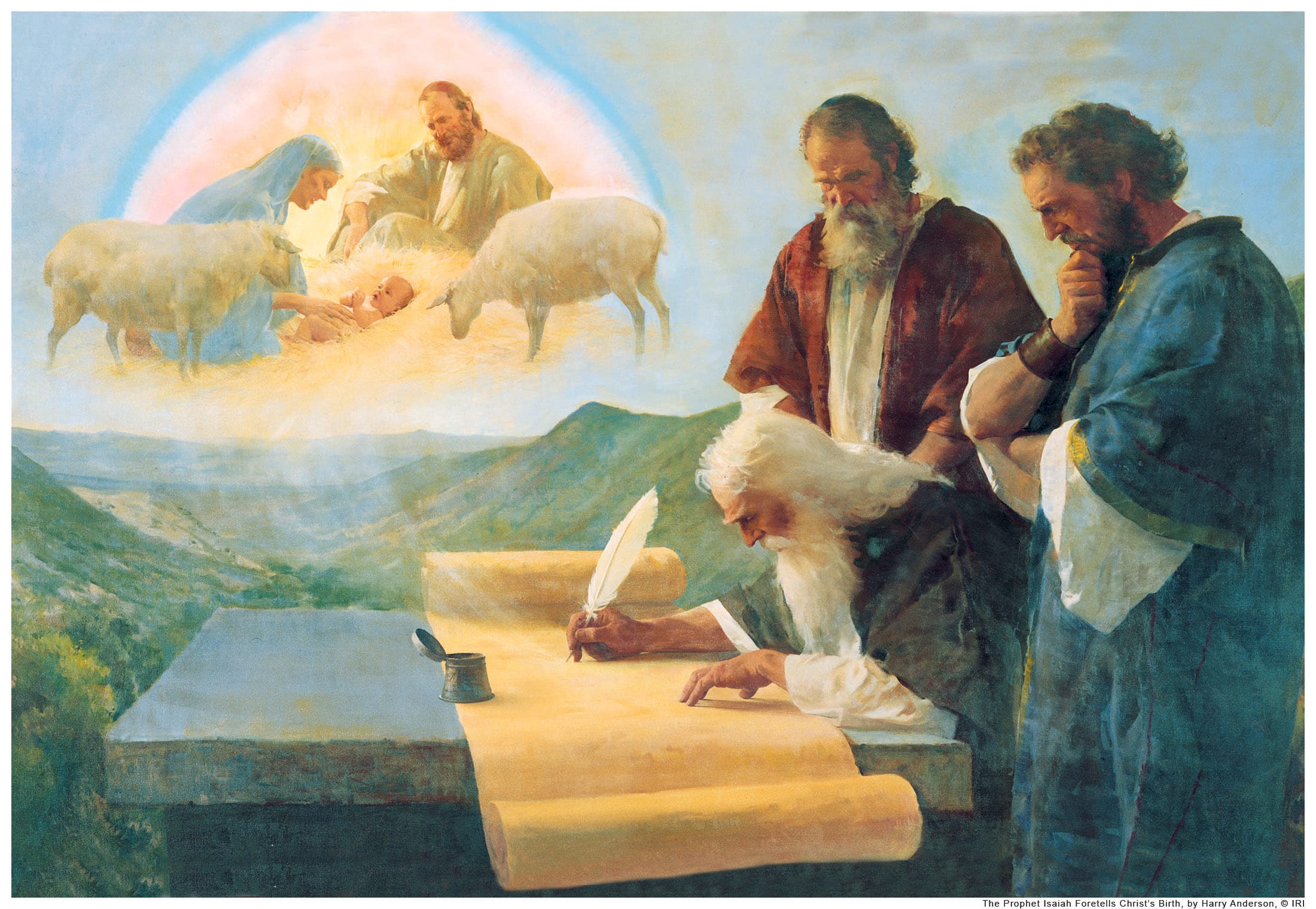
Isaiah

We have all experienced it. Newly committed to the read through the Book of Mormon, we eagerly start with the familiar words, “I, Nephi, having been born …,” and the reading seems to be going well. And then they come. The dreaded “Isaiah chapters.” These chapters are dense, difficult, and demanding.

You are tempted to just skip over them, but they wouldn’t be there if they weren’t important, right? Nephi “delights” in Isaiah’s words (2 Nephi 11:2), and the Savior himself declares them “great” (3 Nephi 23:1), but for you they are more like “great and dreadful.” How can you get more out of the Isaiah chapters?

Book of Mormon Central has been churning out KnoWhys—short insights into some detail in the Book of Mormon—at an astonishingly rapid rate, and the for the last few weeks they have zeroed in on the Isaiah chapters. With more than a dozen KnoWhys on Nephi and Isaiah, these provide a diverse set of tools to aid in your personal study. The Isaiah KnoWhys from Book of Mormon Central generally take four different approaches to the Isaiah chapters in 2 Nephi, each of which can provide a framework for further individual study of Isaiah.

Likening Isaiah

One approach Nephi uses is likening. Book of Mormon Central offers several insights into what Nephi might have meant by this. For example, when Nephi first quotes from Isaiah in 1 Nephi 20–21, he says that he “did liken all scriptures unto” his family (1 Nephi 19:23). But have you ever thought about how he likened them? What connections did he see between Isaiah 48–49 and his family’s experience? Book of Mormon Central suggests several possibilities, but they are far from exhaustive. Perhaps the next time you study these chapters you could ponder how Nephi saw his own experiences within those chapters.

Nephi also promised to “liken” Isaiah 2–14 Isaiah to his people (2 Nephi 11:2). So how did Nephi apply these parts of Isaiah to his followers and their situation? Book of Mormon Central offers a couple of examples. Perhaps he understood the temple they had just built to be “the house of the Lord,” prophesied of in Isaiah 2, just as modern prophets apply it to the Salt Lake temple today. Likewise, Nephi could have easily seen native peoples that the Lehites had interacted with as fulfilling several of the Gentiles’ roles in Isaiah’s writings. What are some other ways these chapters in Isaiah could be applied to Nephi’s people in the New World?

The Nephite Prophetic View

To get ready for studying Isaiah 2–14 in 2 Nephi 12–24, Book of Mormon Central introduced a 4-stage framework based on Nephi’s vision in 1 Nephi 11–14:

  • Stage 1: Christ’s coming (1 Nephi 11);

  • Stage 2: his rejection and the scattering of the Jews (1 Nephi 12);

  • Stage 3: the day of the Gentiles (1 Nephi 13); and

  • Stage 4: the restoration of Israel and the ultimate victory of good over evil (1 Nephi 14).

This same framework can be applied to other places where Nephi uses Isaiah, like 1 Nephi 19–22, 2 Nephi 6–10, and Nephi’s interpretations in 2 Nephi 25–30. This can prove a useful lens through which to read these Isaiah chapters, looking for each of these stages in Isaiah 2–14.

To make it more interesting, though, you can not only look for these themes, but also compare Isaiah’s words with Nephi’s in 1 Nephi 11–14. Book of Mormon Central, for example, compares Nephi’s vision in 1 Nephi 11 with Isaiah’s prophecies quoted in 2 Nephi 12–24, and get illuminating results. They also explored ways each of the other three stages are manifest in Isaiah’s writings and how they compare with Nephi’s own prophetic visions.

In each instance, Book of Mormon Central is only just scratching the surface. There is a lot more to explore for each of these stages. The “Nephite Prophetic View” can thus be employed productively by anybody seeking to get more out of these Isaiah chapters. And with each one, it starts to become clear that Nephi deeply identified with Isaiah. No wonder Nephi went to pains to include Isaiah as one of his three witnesses of the Messiah. In marvelous poetic fashion, Isaiah described many of the same things Nephi had witnessed in vision. How could Isaiah not resonate with Nephi?

Nephi’s Keys

Another approach to these chapters is to consider the “keys” Nephi offers in 2 Nephi 25. Once again, Book of Mormon Central helpfully outlines this lens of study:

  1. Understand the “manner of prophesying among the Jews” (v. 1)

  2. Do not do “works of darkness” or “doings of abominations” (v. 2)

  3. Be filled with the spirit of prophecy (v. 4)

  4. Be familiar with the regions around Jerusalem (v. 6)

  5. Live during the days that the prophecies of Isaiah are fulfilled (v. 7)

As an example of how this can enhance our study of Isaiah, Book of Mormon Central applies key 1 to a phrase found through Isaiah 2–14—“for all this his anger is not turned away, but his hand is stretched out still”—to show how understanding ancient Israelite thought changes how we read this passage. What other insights await us if apply Nephi’s keys while reading Isaiah?

Latter-day Application

Finally, Nephi invites his latter-day readers to “liken” the scriptures themselves as well (2 Nephi 11:8). Nephi himself provides some Latter-day applications. He likens Isaiah 49 to the latter-day (1 Nephi 22:6–14), for instance, and Book of Mormon Central argues that given such an application, Joseph Smith could be understood as the “servant” in Isaiah 49:1–6. How can the rest of the chapter be applied to the latter-day Restoration?

Isaiah 11 also seems to be applied to Joseph Smith and the Book of Mormon, if not by Nephi, at least by Moroni. Nephi’s most extensive application to the Latter-days, however, is his appropriation of Isaiah 29. Book of Mormon Central proposes that 2 Nephi 27 should not be read as Nephi quoting Isaiah 29, something Nephi never claims to be doing throughout 2 Nephi 25–30. Instead, he is applying and adapting the Isaiah’s words to his own vision of the coming forth of the Book of Mormon.

Nephi had seen the Restoration and coming forth the Book of Mormon in vision (1 Nephi 13:32–42). When Nephi read about “a book that is sealed,” taken by men to “one that is learned, saying, Read this, I pray thee,” and then subsequently taken to “him that is not learned” (Isaiah 29:11–12), he found apt words to adopt in describing certain events which would unfold in the life of Joseph Smith (2 Nephi 27:15–19).

While this is not only one way to approach the relationship between Isaiah 29 and 2 Nephi 26–27, it opens up interesting ways to study how Nephi is personally interacting with Isaiah. Have you tried reading the two prophecies side by side to see what Nephi is doing?

Conclusion: Delighting in the Great Words of Isaiah

Today there is a rich array of tools for Latter-day Saints to use in better understanding Isaiah, and what his writings are doing in the Book of Mormon. The recent slew of KnoWhys from Book of Mormon Central provides us with a number of different paths to follow for enriching study of Isaiah’s “great” words (3 Nephi 23:1). The application of several approaches to Isaiah derived from Nephi’s own words illuminates Isaiah’s writings in wonderful ways and begins to shed light on why Nephi “delighted” (2 Nephi 11:2) in the words of this great Israelite poet and prophet.

Neal Rappleye is a Research Project Manager for Book of Mormon Central. He blogs on Latter-day Saint topics at http://www.studioetquoquefide.com/


Filed Under: Book of Mormon Tagged With: apologetics, Book of Mormon, Isaiah

Lehi’s Lasting Legacy

February 29, 2016 by Neal Rappleye

Tree

Nephi tells us that his father, Lehi, kept a record (1 Nephi 1:17). That record is lost to history, but nonetheless his legacy lives on. His son recorded a number of his most profound prophecies and visions. These include his prophetic call vision, powerful poetic declarations to his two oldest sons while encamped in an Arabian wadi, his moving dream about the tree of life, and his prophecies about the Messiah.

Lehi’s legacy was solidified by the testament he left behind. While nearing his death, Lehi called together his posterity, warned them of temptations, taught them to live righteously, blessed them, and related prophecies (2 Nephi 1–4). Book of Mormon Central has dubbed this the “Testament of Lehi” because it has all the characteristics found in the Jewish testamentary literature. Book of Mormon Central also comments on the legacy this creates for Lehi:

It provides an example for fathers and patriarchs today. The tradition, initially but briefly present in Genesis 49, was not maintained and developed only by the Jews after their return to Jerusalem in the Second Temple period but was called upon extensively and effectively by Lehi in the sixth century BC. Building from there, later prophets in the Book of Mormon followed Lehi’s example, as Alma does in Alma 36–42 and Helaman does in Helaman 5:5–13. Latter-day Saint fathers today also follow these patriarchal examples as they bless, instruct, exhort, and testify to their children and grandchildren.

Some of Lehi’s most influential teachings were given as part of his testament. For instance, drawing on the imagery of the Psalms, Lehi taught about the importance of offering the Lord your broken heart and contrite spirit. Of this teaching, Book of Mormon Central pointed out, “This presents an important lesson for modern Book of Mormon readers. No matter what sacrifice we offer to the Lord—be it our time, our talents, etc.—if this is not done with the true sacrifice of our hearts and spirits, then it cannot be fully acceptable to the Lord.”

It is also as part of his testament that Lehi gave his epic discourse on the Fall. Drawing from the hints found in the Old Testament and Israelite temple traditions, Lehi provided the most complete teaching on the Fall presently on record. According to Book of Mormon Central,

Lehi’s teaching was the foundation for several other important sermons in the Book of Mormon by Alma, Amulek, and others, and continues to be the foundation upon which we build when we teach the Fall today.

Nephi’s love for Isaiah may have come from Lehi, since Lehi appears to be drawing on Isaiah 14:12 when he describes Satan. Isaiah 14 is drawing on a rich ancient Near Eastern mythos of a fallen deity, and like he does with the Fall, Lehi expands on Isaiah’s use to provide a fuller view of the Adversary. Indeed, Lehi seems well versed in the great literature of his day and time, as he poetically describes death in a way the resonates not only with the much later Shakespeare, but also with ancient Egyptian, Mesopotamian, Canaanite, and Israelite motifs.

Drawing on both the literary form and the language of the Psalms, Nephi lamented after his father passed away. Nephi, however, was not the only one of Lehi’s sons who was profoundly impacted by their father’s influence. In his first sermon recorded in the Book of Mormon, Jacob taught many of the same doctrines Lehi had taught to him. As Book of Mormon Central puts it,

Tracing Jacob’s understanding of the plan back one generation earlier, it appears that his inspired summation carried forth the influence of his father’s instructions to him in 2 Nephi 2. Although Lehi never called it a “plan,” he taught these same doctrines in his final blessing to Jacob.

Comparing the two also illuminates which doctrines both Lehi and Jacob most related to:

Though they taught the same doctrines, Lehi’s emphasis was focused more on the fall, opposition, and the agency afforded to all to choose between good and evil. Jacob, meanwhile, put more emphasis on the atonement, resurrection, and the eternal outcome from choosing either righteousness or filthiness.

Jacob also shows an awareness of Israelite and ancient Near Eastern conceptions of death. Given that Jacob was born in the wilderness and was still very young when the family arrived in the promised land, this knowledge surely came to him through his father’s teachings.

Given the reverence both Nephi and Jacob had for Lehi, it may seem odd that Nephi summoned Isaiah to act as a third witness of the Redeemer alongside Nephi and Jacob. Lehi had already born witness of Christ, multiple times (1 Nephi 1:19; 1 Nephi 10; 2 Nephi 2). Yet, this may actually be one of the most powerful reflections of Nephi’s love for his father.

Lehi was believed to be a false prophet by both the Jews at Jerusalem and also his two oldest sons, Laman and Lemuel. The penalty for false prophecy was death, and Laman and Lemuel try to kill him multiple times. Biblical law required two or three witnesses (Deuteronomy 19:15) to testify in a trail. As such, coming on the heels of Lehi’s passing, and the division of Nephi from his brothers, 2 Nephi 6–30, recording the testimonies of Nephi’s three witnesses—Jacob, Isaiah, and Nephi—could be read as the Apology of Lehi.

That is, it is Nephi’s defense of Lehi as a true prophet, marshalling the biblically required three witnesses to verify Lehi’s own prophecies about the Messiah. This would explain why Lehi himself was not considered one of the witnesses—he was the defendant. If this is correct, then it would speak powerfully to the legacy of Lehi, as nearly all of 2 Nephi would be dedicated to him in some capacity.

In either case, there is no denying the abundant legacy of Lehi left behind by his sons.

Neal Rappleye is a Research Project Manager for Book of Mormon Central. He blogs on Latter-day Saint topics at http://www.studioetquoquefide.com/

Filed Under: Book of Mormon, LDS Scriptures Tagged With: apologetics, Book of Mormon, FairMormon, Lehi, Prophets

Fair Issues 78: What is the correct Book of Mormon geography?

January 18, 2015 by Ned Scarisbrick

https://media.blubrry.com/mormonfaircast/www.fairlatterdaysaints.org/wp-content/uploads/2015/01/Fair-Issues-78-pod.mp3

Podcast: Download (11.1MB)

Subscribe: RSS

MAIn this episode brother Ash investigates real world distances in determining the proper Book of Mormon geographic models.

The full text of this article can be found at Deseret News online.

Brother Ash is author of the book Shaken Faith Syndrome: Strengthening One’s Testimony in the Face of Criticism and Doubt, as well as the book, of Faith and Reason: 80 Evidences Supporting the Prophet Joseph Smith. Both books are available for purchase online through the FairMormon Bookstore. Tell your friends about the Mormon Fair-Cast. Share a link on your Facebook page and help increase the popularity of the Mormon Fair-Cast by subscribing to this podcast in iTunes, and by rating it and writing a review.

The views and opinions expressed in the podcast may not reflect those of the Church of Jesus Christ of Latter-day Saints or that of FairMormon


Filed Under: Apologetics, Book of Mormon, DNA, Evidences, Fair Issues, General, Geography, Hosts, Michael R. Ash, Ned Scarisbrick, Podcast, Science Tagged With: Book of Mormon, Michael R. Ash

Fair Issues 77: What is the correct geography for the Book of Mormon?

January 11, 2015 by Ned Scarisbrick

https://media.blubrry.com/mormonfaircast/www.fairlatterdaysaints.org/wp-content/uploads/2015/01/Fair-Issues-77-pod.mp3

Podcast: Download (10.3MB)

Subscribe: RSS

MAIn this podcast Michael Ash relates the possible models for the Book of Mormon geography.  The strongest models are those which 1) are supported by the strongest evidences, 2) do the best accounting for all the data and 3) have the fewest anomalies.  Some people might be tempted to think that a good model shouldn’t have any anomalies, but the philosophy of science has shown that no paradigm is completely free of anomalies.

The full text of this article can be found at Deseret News online.

Brother Ash is author of the book Shaken Faith Syndrome: Strengthening One’s Testimony in the Face of Criticism and Doubt, as well as the book, of Faith and Reason: 80 Evidences Supporting the Prophet Joseph Smith. Both books are available for purchase online through the FairMormon Bookstore. Tell your friends about the Mormon Fair-Cast. Share a link on your Facebook page and help increase the popularity of the Mormon Fair-Cast by subscribing to this podcast in iTunes, and by rating it and writing a review.

The views and opinions expressed in the podcast may not reflect those of the Church of Jesus Christ of Latter-day Saints or that of FairMormon


Filed Under: Apologetics, Book of Mormon, Evidences, Fair Issues, General, Geography, Hosts, Joseph Smith, Michael R. Ash, Ned Scarisbrick, Podcast, Science Tagged With: Book of Mormon, Michael R. Ash

A Scientist Looks at Book of Mormon Anachronisms

May 23, 2014 by Neal Rappleye

Review of Wade E. Miller, Science and the Book of Mormon: Cureloms, Cumoms, Horses & More (Laguna Niguel, California: KCT & Associates, 2010). 106 pages + viii, including two appendices and references cited, no index.

Abstract: Anachronisms, or out of place items, have long been a subject of controversy with the Book of Mormon. Several Latter-day Saints over the years have attempted to examine them. Dr. Wade E. Miller, as a paleontologist and geologist, offers a some new insights on this old question, especially regarding animals mentioned in the Book of Mormon, including a report on some preliminary research which might completely change the pre-Columbian picture for horses in America. Overall, this is an indispensable resource on Book of Mormon anachronisms.

To continue reading, please visit the website of Interpreter: A Journal of Mormon Scripture. To purchase Science and the Book of Mormon please visit the FairMormon bookstore.

Filed Under: Book of Mormon Tagged With: anachronisms, Book of Mormon

Mormon’s Codex: Rich Support for Book of Mormon Plausibility

April 23, 2014 by Jeff Lindsay

Mormon_s_CodexI just finished John L. Sorenson’s monumental work, Mormon’s Codex (Provo: Neal A. Maxwell Institute, 2013). The reading took longer than I expected, but it was worth it. I will have more to say about it in the near future, but here’s an initial review.

Sorenson’s work will be viewed by many as an attempt to prove and defend the Book of Mormon using numerous random parallels and weak threads. This view both fails to grasp the value of exploring many dimensions of a physical and cultural setting when trying to evaluate a fragmentary record from an allegedly ancient source. Sorenson’s work does directly support Book of Mormon plausibility, but it also helps us to better understand the Book of Mormon and its peoples. It helps us understand the region they lived in and the many dramatic as well as subtle influences on their lives from the climate, the landscape, the surrounding peoples, the cultural setting, the plants and animals, the horticulture, the religions and languages, the patterns of war, infrastructure and social economy, political practices, and so on. Sorenson explores these in terms of what we scholars have learned about Mesoamerica and what we can draw from the Book of Mormon text, and then examines the correspondences and implications. The result is increased granularity and plausibility for the Book of Mormon record, and more informed questions for the future and new hypotheses to test. Along the way, some former objections to the Book of Mormon are soundly shelved.

Those wanting a quick and easy tool to defend the Book of Mormon will be disappointed, at least initially, for Sorenson takes over a hundred pages just laying some foundation regarding ancient Mesoamerica as well as the Book of Mormon, without providing any jaw-dropping arguments to win over converts. What he does, though, is provide new ways of looking at the text, informed by the skills of a professional anthropologist. Over the 800 pages of the text, he provides extensive evidence that the Book of Mormon fits numerous aspects of ancient Mesoamerica, ranging from issues of language, political society, practices of trade and war, the impact of natural disasters, and so forth. Some of the most interesting New World evidences known to date for the authenticity of the Book of Mormon can be found in this tome (see also my Book of Mormon Evidences pages for further information).

Why the Setting Matters

One quickly learns from Sorenson how much physical geography affects a society. The physical location of a place determines climate, available raw materials, opportunities for agriculture and other economic activities, and practical modes of transportation. It shapes political boundaries and influences strategies and tactics for warfare. Geographical barriers and isolating features like the terrain of the central depression of Chiapas can allow a region to experience reduced influence from other cultures in the area and develop its own ways more easily. These factors play major roles in the story of a people, even if those details are briefly mentioned or merely implied.

Mormons limit their ability to fully grasp the Book of Mormon when they dismiss its geographical setting as something unimportant. True, the Church has no official position on geography, and it is certainly secondary to the teachings about Christ, but its authors felt physical details were important enough to riddle their text with references to them. It’s a gritty text, linked to physical details, not just theoretical platitudes and lofty doctrine. Book of Mormon authors bothered to cite specific hills, valleys, rivers, cities, and lands with names and real physical locations carefully and accurately woven into the story. There are temples, thrones, prisons, fortifications, markets, and social structures to match: priests, kings, lawyers and judges, soldiers, and merchants. In some cases, these details matter a great deal and are part of the message for our day. Such things are not the trappings of Native American life Joseph Smith could have gleaned from his upstate New York environment, but they are elements of authentic Mesoamerican culture in the only place that offers hope of plausibly locating the places built into the text of the Book of Mormon. They matter not just for validating or defending the text, but for better understanding what happened, to whom, and why, sometimes with added understanding in drawing lessons for our day and our lives.

Aligning Details

The reasons why Mesoamerica is clearly the most reasonable setting have been discussed elsewhere and are again touched upon in Mormon’s Codex: the requirement for an ancient tradition of written language, the existence of many elements of civilization found in the Book of Mormon (armies, kings, temples, taxation, and complex social structures), the narrow neck of land, and many other details with major implications such as the apparent volcanism and seismic activity described in the text. These broad issues force us to consider Mesoamerica as the most reasonable candidate for the setting of the Book of Mormon, but if so, can the details of the text correspond in any degree with the details of Mesoamerica? This is the issue tackled by Mormon’s Codex. Literally hundreds of “correspondences” between Mesoamerica and the Book of Mormon are identified that create a powerful case that the Book of Mormon really does have its origins in Mesoamerica, so much so that scholars would be wise to reconsider the Book of Mormon as the most extensive surviving document from the ancient New World, a precious ancient codex that can teach us much outside of its spiritual message.

One can accuse Sorenson of “parallelomania,” straining to find parallels that really aren’t significant. Parallelomania is often seen in attempts to find plagiarism in the Book of Mormon. Sometimes seemingly impressive parallels can be piled up that, upon closer inspection, are contrived and can be simply due to chance or situations that naturally involve common phenomena. For example, in a written description of war in texts from Joseph Smith’s day, one should not be surprised to find descriptions of battles, prisoners taken, casualties suffered, defenses built, weapons stored, and so forth. These are common to war. It is in the uncommon details where we can see elements that may be meaningful parallels. Chance can always account for some intriguing finds, so we must be careful not to make too much of any one factor. What makes Sorenson’s work so interesting is the abundance of intricate correspondences coupled with insights from the proposed physical setting that repeatedly enhance our understanding of the text.

I was continually intrigued with the way Sorensen extracts and examines numerous social and physical details from the text of the Book of Mormon and from modern knowledge regarding Mesoamerica. His analysis based on his proposed setting helps to fill in missing details in the Book of Mormon, adding to our understanding of Book of Mormon peoples while also challenging lazy assumptions and stereotypes we sometimes import into the text.

A Mix of Broad and Narrow Details

The relationship between the Olmecs and later Mesoamerican peoples is one of the broad issues that fits the Book of Mormon remarkably well, with the rise and fall of the Jaredites and the subsequent remnants of Jaredite culture found in the Book of Mormon corresponding well in numerous ways with Mesoamerica. It’s an area that challenges unwarranted assumptions we have long made about the destruction of the Jaredites. A more informed approach must recognize, however, that in the midst of the civil war and chaos the ended the Jaredites in the Book of Mormon, that many people would have fled and survived. Since the Book of Mormon itself provides abundant internal evidences of an ongoing Jaredite tradition, with Jaredite names like Corihor/Korihor (Ether 7, 13, & 14 and Alma 30) and Nehor (Ether 7:9 and Alma 1) cropping up among the Nephites, generally associated with dissenters who had not fully bought into Nephite traditions. The remnants of Jaredite society among Nephites and Lamanites fit in well with the ways Olmec culture continued to influence Mesoamerica after their fall.

The rise and fall of the Olmecs has many parallels that can relate to the record we have of the Jaredites, and the rise of Mesoamerican cultures after the Jaredites can also accommodate the information we have regarding the Nephites and Lamanites, with numerous parallels that we can extract from the limited information we have today. Even the final destruction of the Nephites in the widespread warfare (ca. AD 350) toward the end of the Nephite record coincides remarkably well with the Early Classic depopulation in the Central Depression of Chiapas that Sorensen documents in Chapter 25.

What I found especially in Mormon’s Codex were the specific details of individual sites fit with the Book of Mormon. For example, Sorenson proposes a Mesoamerican archaeological site known as Santa Rosa as the city of Zarahemla. The archaeology of that region can accommodate the text effectively. Santa Rosa was a small chiefdom in the 3rd century BC with evidence of Olmec influence in its past, similar to what we might expect if it had been occupied by the Mulekites that had taken on the Olmec influence of their region when they arrived. From 75 BC to 50 AD, Santa Rosa saw a huge burst of activity, reaching its peak of socioeconomic activity at the time Zarahemla was experiencing its peak under the reign of judges. “Like the Central Depression [of Chiapas] as a whole, Santa Rosa was abandoned from about ad 350, very near to when the Nephites at last fled from the land of Zarahemla” (p. 586).

Analysis of the terrain around Santa Rosa helps shed light on troop movements and crop destruction from battles near Zarahemla, and helps to readily explain how travelers sent from the City of Nephi seeking for Zarahemla could have missed it and wandered into the land northward instead (see pp. 581-594).

The two key centers of cultural development in southern Mesoameria in the Central Depression of Chiapas and in the Valley of Guatemala in the first century B.C. correspond well with the land of Zarahemla (Nephites) and the land of Nephi (Lamanites) in the Book of Mormon (see p. 602-604), with detailed correspondences on many fronts. In the field of warfare, for example, the correspondences are especially interesting since just a few decades ago, there was a huge gap between expert opinion about Mesoamerica and the record of warfare in the Book of Mormon. The Mayans were viewed as having been peaceful for many centuries, quite unlike the constant warfare in the Book of Mormon text. But recent scholarship has completely reversed that view, showing that Mesoamerica was a scene of armed conflict from Olmec times and beyond, consistent with the Book of Mormon record (p. 606-7).

Understanding Mesoamerican warfare helps us recognize, for example, that Onitah, the “place of arms” mentioned in Alma 47:5 where rebellious Lamanite soldiers fled, was likely an obsidian outcropping used to produce the dominant weapons in the area, near the Lamanite heartland in the land of Nephi. Remarkably, we now know that for the people of Chiapas, the vital mineral obsidian mostly came from El Chayal, a big volcanic outcrop near Guatemala City, the prime candidate for the city of Lehi-Nephi (which became a Lamanite capital after it was abandoned by the Zeniffites; see Alma 22:1), where the archaeological site known as Kaminaljuyu is largely covered by the modern city. El Chayal qualifies well as Onitah in the Book of Mormon (p. 608). Further, lines of confrontation between Mayan groups and Mixe-Zoqueans in the region, as identified by modern scholars, also may correspond with Nephite and Lamanite boundaries in the Book of Mormon (p. 609).

Many other specific locations are discussed in depth. The results to me were somewhat overwhelming, usually interesting, and occasionally quite surprising. Dr. Sorenson has put a great deal of thought into his proposals, and while some sections are speculative and one of several possibilities, some of his proposals are difficult to dismiss.

Society

Sorenson explores numerous social issues, including the role of secret societies in Mesoamerica. He finds parallels with merchant guilds among the Aztecs and others in Mesoamerica. There were also predatory secrecy-based groups in other forms (e.g., the nahualistas) that could correspond with Book of Mormon descriptions. (See pp. 274-277.)

Natural Disasters

One of the most impressive series of correspondences is the large number of natural disasters that struck parts of Mesoamerica around 50 A.D., including volcanic activity and associated fires that can be see in geological and archaeological records. These disasters may account for some of the dramatic changes in Mesoamerica at that time, including large shifts in population and also major shifts in economics and religion. The changes included an abandonment of many long-standing cultic practices, offering an abundance of correspondences with the record at the climax of the Book of Mormon beginning around 3 Nephi 8 and beyond, when there was great destruction followed by the visit of the Resurrected Messiah, ushering in widespread changes that persisted for many decades before the region fell into widespread apostasy and warfare again, culminating in the destruction of Nephite society.

Arch Support for the Book of Mormon

As an example of the many fields of knowledge touched upon in Mormon’s Codex, Sorenson also considers evidence related to architecture. In Chapter 16, he states:

Friar Torquemada observed, “It is also worth noting the division of this [Aztec] temple; because we find that it has an interior room, like that of Solomon, in Jerusalem, in which the room was not entered by anyone but the priests.” Moreover, the floor plans of various Mexican temples are shown with “two [nonstructural] pillars at the entrance, at Tenayuca, Malinalco, Tepoztlan, Tetitla, Palenque, Yaxchilan, [and] Piedras Negras,” and in Late Pre-Classic Oaxaca. Since the temple in the city of Nephi was specifically patterned after the first Israelite temple (2 Nephi 5:16), it would have incorporated the two-pillar feature discussed by, for example, Meyers. It could have in turn modeled the feature for subsequent Mesoamerican temples.
Another architectural feature of note might or might not have been incorporated in temples: the true arch. For years it was assumed that Mesoamericans lacked knowledge of the true (keystone) arch. Over the years, reported finds have demonstrated the contrary, but only very recently has a comprehensive survey of those cases definitely shown that the principle was widely known, though little used. Hohmann now states unequivocally that “the principle of the true arch was already known amongst the Maya in the preclassic period.” He adds that the principle was also used at Monte Albán by around ad 600 and still later at Chichen Itza. The arch was, of course, widely known in some Old World centers much earlier. If the concept was not imported by transoceanic migrants, we would have to accept the somewhat questionable idea that it was invented independently on opposite sides of the earth. In light of the extensive evidence of cross-oceanic voyaging presented in chapter 9, it is more plausible that knowledge of this architectural feature was imported to Mesoamerica, whether by a group reported in the Book of Mormon or by others. The arch principle may or may not have been used in Nephite sacred buildings in this hemisphere (it was not used in Solomon’s temple), but the probability that the keystone arch came to Mesoamerica from the Old World supports the Nephite record’s historical assertion about the Near Eastern origin of the founders of its tradition. (p. 327)

These architectural details are issues I had not previously considered.

Transoceanic Diffusion: Plants, Animals, Disease, Cultural Practices, Architecture, and More

One of Sorenson’s strengths is his vast body of knowledge regarding evidences for ancient contact between the New and Old Words. Primarily in Chapter 9, “Transoceanic Voyages,” and also in Chapter 12, “Human Biology,” he provides conclusive evidence that there were episodes of transoceanic contact between the Old and New World before Columbus, consistent with general Book of Mormon claims. He delves into several topics with rich examples and references, especially for plants and diseases. One of the most interesting discussions, in my opinion, involves the hookworm (pp. 159-160). The hookworm points to ancient human contact via oceanic crossing, not wandering along the Bering Strait, because the life cycle of the parasite requires warm soil. A people moving through the Bering Straight would become hookworm free by the time they reached the Americas. The pre-Columbian presence of this southeast Asian parasite in a Peruvian mummy dating to AD 900 and in much older Brazilian remains (ca. 5000 BC) seems to require one or more ancient transoceanic voyages by human hosts from the Old World to the Americas. This is one of an abundance of evidences Sorenson provides for ancient transoceanic contact between the Old and New Worlds. It is not central to his thesis relating to the Book of Mormon, but is supporting evidence for the plausibility of the kind of migrations described by the Book of Mormon.

Future Work

Sorenson repeatedly explains how little is known about many key regions and specific sites, many of which have not had extensive digs. Some, of course, cannot be explored adequately because they may be covered by modern cities or, in some cases, by lava flows. Others are in difficult terrain, often coupled with political and security risks, making exploration difficult and dangerous. But we hope much further exploration will take place. Sorenson offers many hints about regions in need of more research, and even offers what may be taken as tentative predictions of some things to look for. For example, Laguna Mecoacan is identified as a good candidate for the City of Moroni (Alma 50:13) which would sink into “the depths of sea” (3 Nephi 9:4), possibly into the lagoon. This would be an intriguing find, though the city was probably small, having been built primarily for defensive purposes in a war. But finding a sunken city there dating to around 50 A.D. would be interesting.

A more important place to investigate might be the candidate Sorenson offers for the Nephite city of Bountiful. He feels it should be at the mouth of the Tonala River, about 6 miles downstream from La Venta. The modern community of Tonala is built over a large archaeological site overlooking the mouth of the river. There is a large pyramid there, and it is in its debris where the town’s cemetery is located. Sorenson states that as far as he known no trained archaeologist has even visited the region, much less conducted detailed investigation. If future work there shows that it was inhabited during the Late Pre-Classic era, corresponding with the Book of Mormon description, this could be another interesting correspondence.

Much remains to be understood and future exploration and research is sorely needed. But what we do know does provide an abundance of evidences and insights that can be of great value to students of the Book of Mormon. I highly recommend this complex and, yes, heavy volume.

*Cross-posted from Mormanity. See also John Sorenson’s 2012 FairMormon Conference presentation “Reading Mormon’s Codex.” Mormon’s Codex can be purchased at the FairMormon Bookstore.

Filed Under: Book of Mormon, Book reviews Tagged With: Book of Mormon, Book of Mormon evidences, John Sorenson, Mesoamerica

Learning About the Founding of Mormonism from Jon Krakauer (And Other Fallacies)

July 30, 2012 by Stephen Smoot

I like to consider myself a fairly open-minded guy. After all, I am studying history (particularly religious history) as my college major, which has exposed me a plethora of divergent world views. I know what it feels like to be an outsider of a religion looking in, so I often cut people slack when they approach Mormonism from perhaps not the greatest vantage.

That said, I have some serious misgivings when someone begins an article on the history of Mormonism like this:

And how did Mormonism come to be, anyway? Wasn’t it founded only a relatively little while ago by some dude in upstate New York? (Upstate New York?!)

I didn’t know the answer to any of these questions.

So, I’ve begun searching for answers.

My first stop, which which all the information below comes from, was John Krakauer’s 2003 book Under The Banner Of Heaven: A Story Of Violent Faith.

Yikes! There’s a big red flag right there. Allow me to explain. Jon Krakauer has penned a popular, yet highly questionable book on Mormonism. The punchline to Krakauer’s book is something along the lines of: “Mormonism, an inherently violent faith, is a shining example of how religious fundamentalism is dangerous, and will lead to killing people.”

There are so many problems with Krakauer’s book that to enumerate them here would take some considerable time. So instead I would direct the reader to this useful review of Krakauer’s book by Craig Foster. (Also don’t forget the Church’s posted review on the LDS Newsroom website.) [Read more…] about Learning About the Founding of Mormonism from Jon Krakauer (And Other Fallacies)

Filed Under: Apologetics, Book of Mormon, Joseph Smith, LDS History Tagged With: 1826 trial, Book of Mormon, Seer Stone, translation

Donate to FAIR

Defend Faith. Strengthen Testimony. Support FAIR.

Your donation helps provide faithful, well-researched answers
to questions about the Church of Jesus Christ of Latter-day Saints.

Give Monthly (Most Impactful)

Monthly giving helps sustain FAIR’s mission year-round.

Make a Donation

Givebutter may suggest an optional tip to support their platform. This is completely optional and can be set to $0.

Why Your Support Matters

Every day, people search for answers about faith, history, and doctrine. FAIR ensures they find thoughtful, faithful responses—not misinformation.

  • Answers to real faith questions
  • Support for individuals and families in faith crises
  • Scholarship rooted in truth and testimony

Choose Your Impact

Best Way to Support FAIR

Give Monthly

Support ongoing apologetics work and help FAIR provide consistent, faithful answers to critical questions.

Most Impactful

Help Where It’s Needed Most

Empower FAIR to respond quickly to emerging questions and needs.

Give Now

Sustaining Membership

Support ongoing apologetics work and help FAIR provide consistent, faithful answers to critical questions. Membership comes with benefits!

Become a Sustaining Member

FAIR Conference

 Help fund speakers, production, and global access to faith-strengthening content.

Support the Conference

Thank you FAIR. You have provided answers and strengthened my faith over many years. You have helped me help others.”
-Brother Mecham

“Thank you for all you do; it makes a difference.”

“Thanks for your wonderful work! I have attended several conferences in the past and I regularly recommend your resources to people with questions or concerns.” -Brother Egbert

“Thanks for defending the faith!”

“Wherever we go, FAIR is our go-to for reliable answers to questions we hear from real members, old and new. In our world of skepticism, deceit, and lies, FAIR is a beacon light.”

Stand with Us in Defending Faith

Give Monthly
Give One-Time

What does FAIR do with donations?

Donations to FAIR support research, content creation, and outreach that provide faithful, well-documented answers to questions about the Church of Jesus Christ of Latter-day Saints. Because FAIR is a 501c3, your donation is tax-deductible.

Is FAIR a reliable source for LDS questions?

FAIR provides answers grounded in scholarship, primary sources, and faithful perspectives. Its work is focused on addressing real questions and criticisms while maintaining a commitment to accuracy, context, and belief.

How does FAIR respond to criticisms of the Church?

FAIR engages directly with common criticisms by examining historical context, doctrinal teachings, and source material. Its goal is to clarify misunderstandings, address concerns thoughtfully, and provide faithful responses without contention.

Quick Takeaways:

  • Funds faithful responses to questions about LDS history, doctrine, and beliefs
  • Supports content, articles, videos, and conference presentations
  • Helps individuals and families facing faith challenges
  • Expands access to trustworthy, well-documented resources
  • Strengthens confidence in the restored gospel of Jesus Christ

Why support FAIR?

FAIR exists to create conditions where faith in Jesus Christ can flourish. By addressing criticisms directly and providing thoughtful, well-researched answers, FAIR helps ensure that those seeking truth can find it in a faithful context.

Quick Takeaways:

  • Helps ensure faithful answers are available when questions arise
  • Supports individuals navigating faith challenges with clarity and context
  • Preserves access to scholarship rooted in belief and testimony
  • Expands the reach of faith-strengthening content worldwide
  • Contributes to a thoughtful, non-contentious response to criticism

The Gift and Power: Translating the Book of Mormon

Brant Gardner

I confess that I have been more afraid of doing this than I have any other presentation I have done and that’s because we’re talking about topics where you tend not to talk about we get someone embarrassed about the church we can talk about seer stones today. We don’t like to talk about seer stones. We like to talk about the Urim and Thummim and there is a good reason of why we talk about the Urim and Thummim but we try not to call the Urim and Thummim a seer stone it can sound so much more elegant if we call it the Urim and Thummim. So that’s kind of the problem and the basis that we are looking at.

What I want to talk about is the process of translating the Book of Mormon. Brother Brown started that process for us this morning and I was kind of encouraged by some of the questions because some of the questions that were asked of him are some of the ones that I really like to try and answer and that of course makes me nervous because what we really want to see if we can do is talk about how seer stones work and how you would translate with one and believe it or not we’re going to come up with the theory of how that’s going to work.

First what I am not talking about. Kind of have to being with that because as Scott had mentioned we had for a little while a book for sale out there and it’s becoming again at some point in time so this is a topic that I have written book about and there is no way that in this amount of time we’re going to be able to talk about everything that we try to cover in the book, so there is certain things that you can’t cover, one of the things that I didn’t put on the slide that is however very important. One of the things that I couldn’t cover the book and I am not going to cover now is a very important preliminary question to this entire issue of how was the Book of Mormon translated and that is that the question of how the Book of Mormon was translated is completely moot unless it was translated.

So the very first issue that we really ought to know about is can we say that the Book of Mormon was translated and neither here nor there in the book, well I actually address that. I start off in the book and I said no we’re just going to take that as given, so you have to take that as given right now. Now I will also tell you that it’s a given based on information that I have already researched and I have my reasons for having the security of knowing that the Book of Mormon is a translated ancient document. So I have seen the evidence it just not what we are going to talk about now. Now that we have a book that’s a translation what do we do with it? Well the kinds of things we are not going to do with it is I am not going to talk about the stories of translation. There is a lot of interesting things there, how is it that the seer stones became a Urim and Thummim, those are things that I am looking at in the book but again we are in a short period of time, we got to get to the fun stuff.

The next one I don’t want to spend too much time on but I do have to mention a little bit is what kind of translation was it. So we have the question of is it a translation that we are going to table for the moment but then the question becomes what kind of translation. For those of you read anything that people have talked about the nature of the translation of the Book of Mormon, there is all kinds of theories of what the relationship of our English text might have been to the text on the gold plates. One of the concepts is that it’s a literal word for word, very, very close translation.

For those of you familiar with work the Royal Skousen’s done, this is probably closest to what he would call an ironclad type, well actually it’s kind of back from that. He has this concept of an “ironclad translation” this is just absolutely dictated and absolutely controlled and he said that the evidence shows that’s not there. I would call that an inerrant translation and totally agree with him that the evidence is that we don’t have an inerrant, perfect, God-breathed translation, something else happened. What I found is as I was looking through the definitions of what kind of translation it might be I found that the scheme of that Skousen that come up with wasn’t particularly useful because what he defined as a “tight translation” that I would probably say is literal. His actual definition talked about the dictation not the translation and we really want to get to the translation. I want to talk about the relationship between the text in English to the text on the plates, not the text that Joseph spoke.

So what I am looking at is three different ways of translating that are all legitimately used modes of translation, each of which moves slightly farther away from its sourced text. So the literal one is the one that comes the closet to the source text. The functional translation is one that says I am following the text but the vocabulary will be slightly different and modify, the syntax might be modified so that somebody else would understand it. But in general that’s going to follow very closely without being a word for word literal translation.

And the last one a conceptual translation is one where you say, for instance, an idiom. I have to translate this idiom. What does it mean to be in hot water? If I translate that literally I am going to get it wrong. So I have to translate it in some way that conveys the information even though I am getting farther away from the words. And in some areas of a conceptual translation that might even drift a little bit farther away.

When I first started looking at the evidence to try and tell me what kind of translation we had in the Book of Mormon. My operating assumption based on everything that I had seen before was that I was pretty convinced from what I had seen that it was a functional translation. I started looking back through the data again and I started finding some things that told me it just wasn’t that simple. And you’ve heard brother Ricks talk about the names and the fact the names are authentic ancient names.  You know I have to agree with him. He is right. Not because I did the research, they did it and they showed it to me and I said “you guys are right”, those are authentic ancient names. That is not a functional translation. That one is pretty literal. And it’s literal and the connections are such that it’s non random so it’s not one where I could say you know it just so happened you came up with a word that was similar.

Linguists will tell you that there are about a 5% similarity between any two languages that are totally unrelated, where you could find a word in one language and a word in another language that really look the same and might even have the same meaning and the languages aren’t related at all. It just pure happen stance. There is only so many syllables we can pronounce and every once in a while somebody is going to put them together if you get enough languages together.

So one of the options might have been to say that some of these names were pure happenstance there is too many of them, the correlations are too tight. So for names there really is evidence, there is a literal translation. However it’s still the majority of the translation that the evidence that I have seen tells me that it’s more functional rather than literal. What that means is it’s going to follow the plate text but the vocabulary will be different. And one of the things we have to do as we start looking at how the book was translated is to come up with some sort of a theory that will say here is how was translated and here is why names are translated literally. Other things are functional and I’ve got at least two incidences where I think there is some conceptual translation of the Book of Mormon and I think we can talk about what triggered those and how those occurred as well.

All right. Let’s go into the more interesting stuff. What we really do want to talk about are those two questions. How do seer stones work and how do you translate with one? I have been in several conversations with people and I am sure you’ve asked yourself the same kind of thing. Do seer stones work? Really hard question to answer because unfortunately it’s the wrong question. Okay. Do seer stones work? If I really have to answer that question I have to say no, seer stones don’t work.

A seer stone is a rock. We have seer stones. The church still has them, I’ve seen them. At one point in time I remember going on the temple square and going through the museum there and I saw one and I looked at it and I saw a rock. I didn’t see the translation, I didn’t see anything else I saw a rock. I can pretty much guarantee you that the vast majority of us as we would look at that rock would see, a rock. That does not mean that something isn’t working because they were looking at the rock and that’s what we have to look at. What we will be looking at is the idea that this whole concept of the seer stone working “It’s the seer that’s working,” and it’s stone that becomes the trigger that allows the seer to do what the seer does. So that’s kind of step one and we will talk about how that happens.

Step two is once you know how a seer stone works, that isn’t necessarily telling us how you translate with one and so that’s the next question is how do you translate with the seer stone. All right. How do you see in a stone? I won’t read this one, you can read it. This is from a modern seer, a modern scryer. This is from a guy who actually wrote a book on how to see, how to scrye. That’s the word the people use for people who look in crystal balls or seer stones or any number of things. And as you can see there is a number of places where this particular quotation corresponds a lot to what we get for the descriptions of how Joseph Smith used the seer stone. He put them at the crown of his hat and stuck his head down in there.

Now for those people who think that he might have been reading something like a manuscript that he was hiding in the crown of his hat, how much light did he need? If you are putting your head down in the hat the purpose of that is to cut out light. I am going to have a real hard time seeing anything and the older I get the harder it’s getting for me to see if there isn’t enough light. So I am not getting light into my eyes, I am not seeing something and here is the secret of seer stones. Seer stones are used in ways that make it so you should not be able to see a thing. They create a contradiction in that the person explains what they are seeing at a time when they should not be able to see. And that happens with all of the instruments that they use for Scrying. So what you do with the seer stone? You stick in the hat. That wasn’t only way Joseph used it.

Another way that Joseph used it that we have a record he held it up to a candle. Think about what happens when you hold a seer stone up to a candle. You have this black dot in the middle and the corona of the light on the outside and you’re disrupting your vision. The Romans used to have a sword and they take the sword, the polished blade of the sword and they glint the sun of it and stare at the glint of the sun. Okay that blinds you. So you are not going to see correctly.

The ancient Americans used polished obsidian. They would have concave mirrors and would use polished obsidian. First of all you would see something in it but if it’s concave again something is disrupted there and so all though they were used as mirrors there is something else going on with the reflection that they are seeing. In the Salem witch trial they all began because there were girls who were trying to find out who they were going to marry and one of the ways is to do that was to see them by dropping an egg white into a glass of water. You stare through it and now that’s going to mess up your vision, so everything about seer stones says you are messing up your vision. Okay. Everything about seer stones also tells you that the seer saw. So now we’ve got a problem how do you see when you can’t see.

If we’re going to understand how seer stones work we have to understand a little bit about how the brain operates because these things are happening in a very human brain. Every prophet that I am aware of has been human no matter how divinely touched, no matter how extra and extraordinarily human they might have been. They had a brain and that brain functions in certain ways and in certain cases probably in ways that are slightly different but very similar to our own. One of the important things about vision is that we have to understand that vision does not occur in the eyes, vision occurs in the brain. Although light comes into the eyes we only see what is transmitted to the brain, and is only a very small part of the data that actually comes in through the eyes. Not only that but the brain is creating vision.

For those of you who know something about the optic nerve, at the very back of the eye you have an optic nerve and that optic bundle comes in and attaches to the back of the retina and it creates a blind spot where we cannot see anything. How many of you know exactly where your blind spot is and see it all the time? Nobody. That’s because the brain fills it in, the brain knows how to generate vision so that we see in a place in the brain where technically we can’t see. So the brain is capable of generating the image. We do not see because light takes a picture and somebody inside our brain looks at the picture. The brain creates the vision, sometimes we see less than what’s there.

There is a wonderful story about a group of psychologists that got together and they went in and took this test and they are all competing with each other to see who is going to do the best and so real simple one. They said what we want you to do is I want this group of people to account these three players in black as they pass the basketball around and I want you guys to watch the guys in white as they pass this basketball around and I want you to count how many times they pass the basketball.

So they go through this whole process and they finish it up and everybody is comparing and somebody is one off and they said at the end of this okay now “how many of you saw the gorilla?” And they said “what you mean.” Nobody saw a gorilla. So they played back the tape and in the middle of it the guy walks out in the gorilla suit stands there for one second, beats on his chest and walks off and nobody saw him. Because our brain interprets the information coming in and it saw that irrelevance that “you don’t need that I won’t show it to you.” How does that happen when you are seeing in the brain?

There are certain people that have a brain structure that sees a little bit differently than many of us do. They can see in pictures, I am not one of them. They have what they call an eidetic memory, some people have called a photographic memory and that’s not correct, that’s not what it means. But it does mean that people are able to have and hold in their mind a very detailed picture of something so that when they recall it they can bring up the picture and describe it. And they talk about these people saying when they describe this mental picture that they are seeing that their eyes will move like they are scanning the picture but it’s not there. One of the descriptions of one the man who had this capability, who had this fantastic memory and I am not suggesting the memory part but I am talking about the visual part.

Years able he was able to tell people, out of this grid of numbers, he could give the list down, across, diagonally. Somebody had written it down and tested them a couple of years later. Except for a number or two that were poorly written he got them all right and they said well how did you do that and he said simple I just call up the blackboard, I can see it and I read it off.  Now most of us can’t do that, but there are some people whose visual memory is sufficient that they can see a picture and they can read it. What I am suggesting is that when Joseph Smith uses a seer stone his vision is occluded but he sees in his brain a picture that allows him to describe it in detail that is much more vivid than the rest of us could. Anytime in the pre scientific world when they don’t know how he does this would say that the seer stones made it happen.

Close your eyes and I think you’ve had a pet cat or a pet dog, take a look at the back of your eyeballs and kind of figure out where the spots are, what kind of shape the ears were. Can you do that? The answer is, sure we all can. We can call up an image that we can look at and it’s not particularly vivid in many cases but if somebody says “what shape beagles ears?” You call up the picture of a beagle and start looking at it and then describe it. Okay. So we take this memory of things that we have seen and we store it and we can reverse the process and create a picture when there is nothing coming into our eyes, so the brain can generate an image.

How many of you dreamed last night? Yeah we all do but remembered it or not, right. In your dreams how many of you actually saw action happening. Now some people are good they can dream in color. I have no idea whether I dream in color or not because I am partially color blind, I don’t even seen in color but what happens is you see things happening, I see stories occurring. My eyes are pretty closed about that time but I am seeing something because vision occurs in the brain. So once we know that you can you reverse that process and instead of light coming into the eyes to generate vision we can have something in the brain that will generate vision that we can see when we cannot see, that’s how seer stones work. They all work on the principle that everybody knows who sees that process that you can’t see through your eyes. So what you are describing and seeing has to come through some other means and depending on what culture you are in and when you are there they’ll have different explanation for how that happens. It was the gods, the spirits, it’s something extra and that mechanism is what starts the process for understanding how Joseph is going to use the seer stone.

Now we have had people who have been scrying and using these methods for thousands of years in every culture around the world. This idea that you would see in a stone or see in a blade or see in a blot of ink or a polished thumbnail, all of those things are recorded and they happen in multiple cultures and people know they see these things. It’s not going to be that widespread if it doesn’t happen. This is human nature we’re talking about.

Now we can also know that it’s not normal because people see these and they know that they can’t do it but somebody else does. So that process is there. Regardless of that, none of them have translated the Book of Mormon, just one. If you take away Mosiah translating the plates we have only Joseph Smith whoever translated with that method. Go to Mosiah we got two. So if nobody else has translated how do you translate?

Now we have to talk about language. Where does language come from? One of the questions that was asked earlier of Brother Brown is can you think without language? Amazingly we have a hard time understanding that we can think without language. The problem is we all do, we all think prior to language. One of the things that Steven Pinker that I am quoting up here mention he said “everyone of us have had the experience of saying oh that wasn’t what I meant to say, we’ve said something but whatever came out of mouth wasn’t what we intended.” Which means that there has to be a meant to say before it meant and it just come out of our mouth and I would suggest that in many cases there is meaning that occurs prior to the time that we can express it.

Think of the number of times that people have had spiritual experiences and they know they’ve had them and the burning has been there and it’s been filling their soul and they try to explain it and words fail. That doesn’t mean they didn’t experience it, that doesn’t mean it wasn’t real. It means that there is comprehension and understanding that surpasses language and they haven’t been able to translate it. So we have something that occurs before language is generated and in his terms Pinker calls it “mentalese” say this is how we think, we think in this pre language subset.

Now one of the other things that’s fascinating is that as you see how the brain works that a lot of what we think occurs below the level of consciousness. So that what will happen is somebody will say, “what was the word for that?” And you go “if you hadn’t asked, I would have known. I know the answer to that, come back at about an hour or two and it will come.” And then what happens as you forget about it and a hour or two later all of a sudden you remember. Everybody has done this. That’s because the brain keeps working on this thing in the background and doesn’t tell us about it. It just keeps going, figures it out, puts everything together and goes up to the top and it says Eureka I’ve got it! Because there are all kinds of things that occur prior to the level that we are conscious of them and one of things he is talking about here is this idea of priming and they found out that there are people that will actually recognize sentences that they have not read because they contain words or concepts that they have read.

So we have a brain that is designed to interact with language and produces language but language is not its native storage mechanism, it generates language. Put those things together, how is Joseph Smith ever going to translate? How many of you have been reasonably fluent in more than one language? We should get a whole bunch of foreign missionaries here and a whole bunch of other people that have done it. Now how many of you who are not reasonably fluent with another language have struggled with the dictionary to translate. Okay. For those of you who are reasonably fluent and have trouble struggle with the dictionary you know the difference between those two.

If I am struggling with the dictionary I really don’t know that language and I am dealing with it on a word by word basis, if I know the language I am not even thinking about. I remember one time when I was on a mission they asked me to translate for this one sister we had she was French and our zone conference were in English. And so I was supposed to translate the English into Spanish so that she could hear it in Spanish so that if she needed it she might translate in French which she knew Spanish well enough so she didn’t have to go through that process. But you know when you are translating something live you don’t have a time to think and so that word is this word and I should do it this way and you are concentrating on getting the information across. That’s called translation, but it isn’t translation where you say this word is that word.

Something occurs in your brain that is located in the concept of meaning and you take that meaning and express it in language. How did Joseph Smith translate? First of all did he translate? That’s the question I say we had to pause it because there is no way to demonstrate that other than to take The Book of Mormon and go through it and say is that an authentic ancient record? The answer, I believe, is yes. So therefore he translated. How did he do it? Where do all this information come from.

The only explanation I can give you is the God gave it to him in pure understanding, and that pure understanding goes into his brain in the way that we store pure understanding. It goes into the brain in “mentalese.” How is it then expressed in language? It is expressed in language in the same way that we express “mentalese” is. Into our language through the vocabulary, the sentence structures, the idioms to which we have access, based on our education. So how is it that the Book of Mormon contains revival language? It’s part and parcel of Joseph’s brain, part of his language. As soon as that’s the meaning he is looking for those words come out.

How many of you have ever used a cliché? How many of know that you shouldn’t and do it anyway? Because I come out of your mouth whether you care about it or not? Even if you don’t want to use them they pop out because we have these phrases burned in our brain. They are part of our language and we hit the meaning and we pop them out we don’t even know what the heck we said. Because that language, that meaning triggers that string and we are going to pop out that whole strings. So how does Joseph get that language? It is part and parcel of his brain. Of course he is going to do it that way. But the understanding comes from that which God gave him.

We need to start pulling whole bunch of things together here. Andrew Lang was kind of an interesting anthropologist at the end of the 1800, 1900s. He got interested in this whole idea of scrying and people seeing and stones and crystal balls and all of that. So he bought a crystal ball and in a very unscientific experiment he took his crystal ball and he handed a bunch of his friends and asked them what they saw. A whole bunch of them looked at the crystal ball and didn’t see a darn thing. One of the things he said is you know if you look into a crystal ball he said if you try three or four times and you never see pictures you never going to sorry it just isn’t going to work for you.

He said however several of his friends without any prompting, without being told what was supposed to happen would look into this thing and they would see pictures, so it was working. The one that was really fascinating was the young girl. He gave it to this young girl, the young girl looked at it and what she saw was a paper with writing on it that was so real to her that she turned the ball over to see the paper on the other side. Okay. Now how did she see the paper? Brain created it. What is that have to do with Joseph Smith? Well in the discussion that Brother Brown was doing this morning we were talking about Joseph’s translation the papyrus of John. Several of the descriptions that we have of how Joseph translated talk about him seeing words on Parchment. Where did they come from? Same places the girl saw the paper. How does he see something on paper? The brain generates it. Where do the words come from? Well the “mentalese” translates them, he gets language, the language is translated into something that he reads and he sees the words that he dictates to the scribe.

So people say well did Joseph Smith read the translation? All the evidence says yes. Absolutely he saw it. The question then is if he saw it did he translate? Absolutely the same way I translate from two different languages if I know them well, I understand it and I say it. He understood it and he gave it to us and we have it in his language therefore in his translation. So yes he saw a translation, yes he translated.

Here is the last thing that I was trying to do. What we’ve just been talking about and how does the seer stone work and how do you translate with seer stone. I actually toyed with the idea of reading two chapters and I figured that will put you all to asleep after dinner. So we didn’t do that, but that’s the information and there is a final chapter that says now that we have a theory for how Joseph Smith translated is that a productive theory? Can we use that theory to begin to explain the facets of the Book of Mormon that we see? Can we answer questions and let me do two of them for you?

Let’s start with the hypothesis that the majority of the translation is a functional translation. One that, although it is an authentic translation of an ancient document may not have the precise words that were on the document. I am guessing that there is a very large majority of people here who have not read Allen Christenson translation to the Popol Vuh. I don’t know why you haven’t. The Popol Vuh for those who might not know is a Quiché document. Quiché is sufficiently different language that they use language in ways that don’t translate very neatly into English and so what Allen Christenson did was something absolutely wonderful for people like me that really want to get into this he gave us two translations. He gave us a functional translation, he gave us a literal translation. You read the literal translation you go what and then you read his other translation in nice smooth English and if you go between the two you can tell that he is telling the same story and getting the same information but the sentences are dramatically different.

The Quiché sentences are much smaller, tighter and demonstrate a completely different understanding of literature and how would you turn a phrase, what the meaning might be and they are both translations. The majority of the Book of Mormon reads like a functional translation. It’s nice and it’s smooth. Let’s say that it was some language like Quiché, doesn’t read like that at all, it reads like English. It reads like the King James Bible. Why does it read like King James Bible? The native language to Joseph of course that’s what he is going to produce, it was scripture. Any time he produced scripture and it sounded like King James Bible because that’s a scripture was supposed to sound like.

Again information comes into the brain, comes out. Why functional? Because the “mentalese” that we use to store information is designed to handle the gist and not the words. It comes into a brain that is created in such a way that what we understand is meaning, not specific vocabulary. So of course he’s got meaning and of course in the translation of that meaning it’s going to come out and whatever words Joseph Smith has to be able to communicate that meaning. I suspect that a scholar of a different language might translate it different way. Brigham Young said that if someone other than Joseph  were to translate the Book of Mormon he has no doubt that it would be materially different than the translations we have. Of course it was in Joseph’s words, it was what he knew.

Now that tells us why the majority of it was that way and I will confess that when I first started working on the project I was pretty convinced that Joseph only translated one way and I had to come up with an answer to how he translated. Then I started looking at the data and the data proved me wrong, data are funny things like that. And we have the names well if everything is functional how do you get a name? A name is a very different kind of animal and is stored in different structures in the brain. Names are not nouns, they are proper nouns and we remember them that way. In fact they are just finding out that there is now a cluster of things that all fire together and if we think of a particular person we think of this whole set of things. But still the name is a specific thing so when that fires it is qualitatively different in the brain storage mechanism than these meanings because it is a name not a description. And so why is it that we get this literal translation of names that we can go from that name back to the subject? It’s the way names are stored. It’s not surprising at all that’s how we’re going to get that information.

So far I have been able to go through questions about the translation and apply that theory in concept in ways that begin to answer facets of the text. That doesn’t say that it’s proof. When we were talking about someone in the message boards one of the brilliant anti Mormons said “you mean you’ve got these great theory that you can’t prove.” Yeah, you just can’t prove historical theory, it just doesn’t work. You can find out if it’s productive and if it does something, if it answers the questions, but there is no way to prove this. The only person who really could have told us how he did it was Joseph Smith and I suspect that he did not understand fully how he did it either. But he did know one very, very important thing. He knew that he did not do it alone. So that when he was asked how he did it, the only competent answer he could give was that it was through the gift and power of God and that is what we really need to know. Thank you.

  • « Go to Previous Page
  • Page 1
  • Page 2
  • Page 3
  • Page 4
  • Go to Next Page »

Primary Sidebar

Faithful Study Resources for Come, Follow Me

Subscribe to Blog

Enter your email address:

Subscribe to Podcast

Podcast icon
Subscribe to podcast in iTunes
Subscribe to podcast elsewhere
Listen with FAIR app
Android app on Google Play Download on the App Store

Pages

  • Blog Guidelines

FAIR Latest

  • Come, Follow Me with FAIR – Isaiah 1–12 – Part 2 – Autumn Dickson
  • Come, Follow Me with FAIR – Isaiah 1-12 – Jennifer Roach Lees
  • Come, Follow Me with FAIR – Isaiah 1–12 – Part 1 – Autumn Dickson
  • Because of Jesus Christ
  • Come, Follow Me with FAIR – Proverbs 1–4; 15–16; 22; 31; Ecclesiastes 1–3; 11–12 – Part 2 – Autumn Dickson

Blog Categories

Recent Comments

  • Willie Louise Truitt on The Joy of a Covenant Relationship with God
  • Katrina on In memory of Chandler “Chuck” Hendry
  • Nancy Farmer on Come, Follow Me with FAIR – Psalms 49–51; 61–66; 69–72; 77–78; 85–86 – Part 1 – Autumn Dickson
  • Nicko De Leon on In memory of Chandler “Chuck” Hendry
  • Becky Matson on In memory of Chandler “Chuck” Hendry

Archives

Follow Us

  • Facebook
  • Twitter
  • iTunes
  • YouTube
Android app on Google Play Download on the App Store

Footer

FairMormon Logo

FAIR is a non-profit organization dedicated to providing well-documented answers to criticisms of the doctrine, practice, and history of The Church of Jesus Christ of Latter-day Saints.

Donate to FAIR

We are a volunteer organization. We invite you to give back.

Donate Now

Site Footer

The use of the temple in past and current logos and the name "Mormon" are licensed for use by The Church of Jesus Christ of Latter-day Saints.