• Skip to primary navigation
  • Skip to main content
  • Skip to primary sidebar
  • Skip to footer

FAIR

  • Find Answers
  • Blog
  • Media & Apps
  • Conference
  • Bookstore
  • Archive
  • About
  • Get Involved
  • Search

Gospel Doctrine: Old Testament

Abraham’s Hebron: Then and Now, Part 4: Ancient Hebron (Old Testament Gospel Doctrine Lesson 8D)

February 20, 2018 by Jeffrey M. Bradshaw

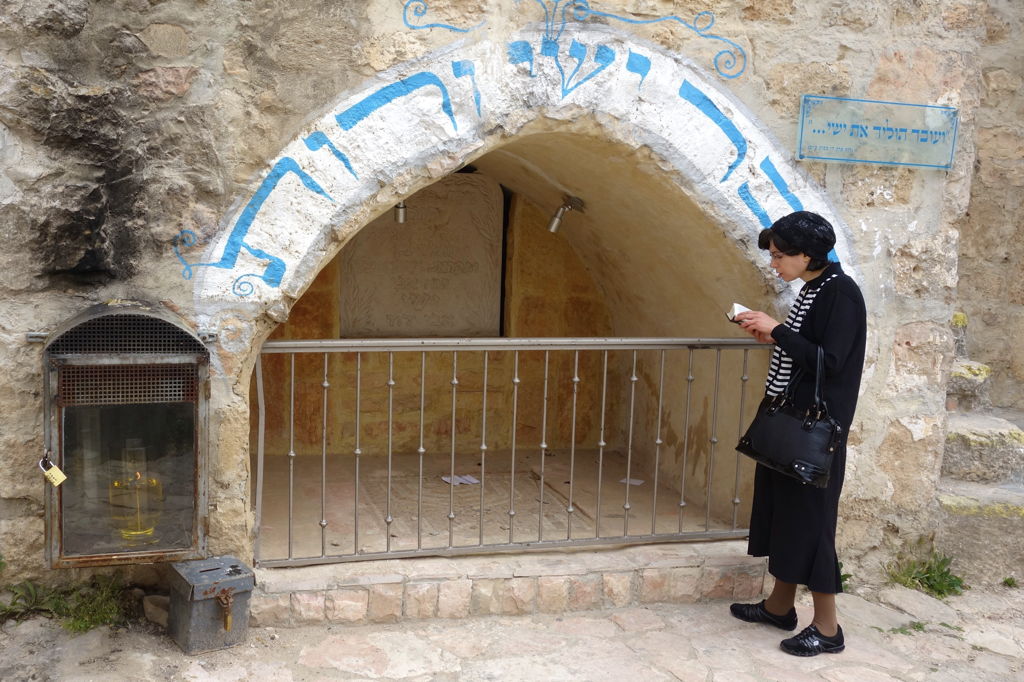
Jeffrey M. Bradshaw: Woman at the Tomb of Jesse and Ruth at Tel Hebron

An Old Testament KnoWhy for Gospel Doctrine Lesson 8: Living Righteously in a Wicked World (Genesis 13–14; 18–19) (JBOTL08D)

The purpose of this five-part series of videos is to provide a brief introduction to some of the places linked in tradition to the lives of the family of Abraham and Sarah. Many, though not all, of the sites we will visit are in or near the city of Hebron. Hebron and surrounding areas served as somewhat of a hub for Abraham in his many journeys.

Although archaeology cannot directly substantiate the scriptural stories of Abraham, Isaac, and Jacob, it can tell us something about the geography, settlements, and daily life of their contemporaries. Learning more about these places helps us get a more realistic sense of the setting in which the patriarchs lived. It is hoped that this series of presentations will increase exposure to these lesser-known sites, so rich in biblical history and tradition.

In this fourth presentation, we will visit archeological sites associated with the ancient city of Hebron. Hebron is referenced 68 times in the Old Testament. The first reference is in Genesis 13:18 when, after Abram separated from Lot and God promised to give him the land of Canaan, he “removed his tent, and came and dwelt in the plain of Mamre, which is in Hebron, and built there an altar unto the Lord.” Hebron was already a flourishing Canaanite city by that time. Though Abram’s presence would have naturally left little trace, biblical scholars still hope to find traces of King David’s reign of seven years in Hebron that occurred several hundred years later (2 Samuel 2:1-3). David’s son Absalom declared himself king in Hebron when he revolted against his father (2 Samuel 15:7-10). Because of its strategic position historically and geographically, t became the second most important Judean city after Jerusalem.

The population of Hebron is about 200,000 Palestinians and an estimated 600-800 Jews. We will begin by describing the current state of affairs in the partitioning of Hebron between Palestinian and Jewish residents. Certain of these areas continue to experience serious dispute.

Within the new Jewish neighborhood of Admot Yishai (Lands of Jesse) is an area of Tel Hebron thought to contain the entry to the north gate of ancient Canaanite Hebron, pre-dating the time of Abraham. This gate, or another on the south side, may have been the site where Abraham bough the cave of Machpelah to bury for family, the transaction having been witnessed by “all who entered the gate” (Genesis 23:10). A “four-room” house, of a kind typical to Israelite occupation, dates back 2700 years to the time of King Hezekiah. A layer of ash provides evidence that the house was destroyed in the Assyrian conquest of 701 BC.

Our second stop on Tel Hebron will be at the traditional site of the tombs of Jesse, the father of David, and Ruth, his faithful progenitor. On Shavuot, Jews ascend to this place to recite her story from the Bible.

On the south side of Tel Hebron are the “cyclopean walls.” The walls received the name “cyclopean” or giant not only because of the large size of some of the stones but also because the sons of Anak, some of the ancient inhabitants of the city, were reputed by the Bible to be giants.

Our last stop is a perennial spring on the lower eastern slope of Tel Hebron. It is called ’Ain Jadida (New Spring) in Arabic and Ein Avraham (Abraham’s Spring) in Hebrew. The spring seems to have been a water source for the ancient city. The water is about 12 feet deep. On hot, summer days its clear, cold waters are a playground for children. In the spring, adults from the Jewish community sometimes use the site as a “mikvah,” a purifying ritual bath.


The video may be found on the Interpreter Foundation website: KnoWhy OTL08D — Abraham’s Hebron: Then and Now, Part 4: Ancient Hebron

It can also be found on the FairMormon YouTube channel: https://www.youtube.com/watch?v=E-8oARSCdhs

Filed Under: Bible, Lesson Aids, Questions, Resources Tagged With: Abraham, Genesis, Gospel Doctrine: Old Testament, Hezekiah, Historicity, Jesse, Ruth, Sarah, Tel Hebron, Tel Rumeida

Abraham’s Hebron: Then and Now, Part 3: Jacob’s Well and the Tombs of Joseph and Rachel (Old Testament Gospel Doctrine Lesson 8C)

February 16, 2018 by Jeffrey M. Bradshaw


Sign at Entrance to Saint Photini’s Greek Orthodox Church and Jacob’s Well Convent, Nablus, Israel

An Old Testament KnoWhy for Gospel Doctrine Lesson 8: Living Righteously in a Wicked World (Genesis 13–14; 18–19) (JBOTL08C)

The purpose of this five-part series of videos is to provide a brief introduction to some of the places linked in tradition to the lives of the family of Abraham and Sarah. Many, though not all, of the sites we will visit are in or near the city of Hebron. Hebron and surrounding areas served as somewhat of a hub for Abraham in his many journeys.

Although archaeology cannot directly substantiate the scriptural stories of Abraham, Isaac, and Jacob, it can tell us something about the geography, settlements, and daily life of their contemporaries. Learning more about these places helps us get a more realistic sense of the setting in which the patriarchs lived. It is hoped that this series of presentations will increase exposure to these lesser-known sites, so rich in biblical history and tradition.

This third presentation will first take us northward in the West Bank for a visit to the traditional sites of Jacob’s Well and the Tomb of Joseph, then southward again to Rachel’s Tomb.

Although, Jacob’s Well is not mentioned explicitly in the Old Testament, it is not unreasonable to suppose that there was a good water source in “the parcel of a field” that Jacob purchased (Genesis 33:18-20). In John 4:5-42, Jesus used the backdrop of Jacob’s Well to teach a Samaritan woman about how the water He could giver her might become “of well of water springing up into everlasting life.” The beautiful Orthodox Church in Nablus that now stands over the crypt where the well still functions is a rich repository of faith and symbolism.

A short distance further up the road is the traditional site of the Tomb of Joseph. According to the Bible, Joseph gave specific instructions that his bones were not to be interred in Egypt but rather in Israel (Genesis 50:24-26). Accordingly, we are told that Joseph’s bones were removed from Egypt during the Exodus (Exodus 13:19) and buried in the tract of land that Jacob had bought in Shechem (Joshua 24:32). Though the physical site is much less well-attested than, for example, Jacob’s Well or the Tomb of the Patriarchs, it is a symbol of great spiritual significance to people of different faiths.

On the road that joins Bethlehem and Jerusalem, is Rachel’s Tomb. Chapter 35 of Genesis records that after Rachel “travailed, and … had hard labour,” she died in childbirth, calling her son “Ben-oni [son of my sorrow]: but his father called him Benjamin [son at the right hand].” She was buried on the road from Bethlehem to Jerusalem. Once an isolated and peaceful setting, the tomb is now surrounded by a concrete wall and watchtowers. Within this fortress-tomb, devout Jews gather in a small chapel for study and worship.


The video may be found at the Interpreter Foundation website: KnoWhy OTL08C — Abraham’s Hebron: Then and Now, Part 3: Jacob’s Well and the Tombs of Joseph and Rachel

Filed Under: Lesson Aids Tagged With: Abraham, Benjamin, Genesis, Gospel Doctrine: Old Testament, Historicity, Isaac, Jacob, Jacob's Well, Joseph, Nablus, Rachel, Rachel's Tomb, Samaritan, Sarah, Shechem, Tomb of Joseph

Abraham’s Hebron: Then and Now, Part 2: The Tomb of the Patriarchs (Old Testament Gospel Doctrine Lesson 8B)

February 14, 2018 by Jeffrey M. Bradshaw

Jeffrey M. Bradshaw: Market Scene in Hebron

An Old Testament KnoWhy for Gospel Doctrine Lesson 8: Living Righteously in a Wicked World (Genesis 13–14; 18–19) (JBOTL08B)

The purpose of this five-part series of videos is to provide a brief introduction to some of the places linked in tradition to the lives of the family of Abraham and Sarah. Many, though not all, of the sites we will visit are in or near the city of Hebron. Hebron and surrounding areas served as somewhat of a hub for Abraham in his many journeys.

Although archaeology cannot directly substantiate the scriptural stories of Abraham, Isaac, and Jacob, it can tell us something about the geography, settlements, and daily life of their contemporaries. Learning more about these places helps us get a more realistic sense of the setting in which the patriarchs lived. It is hoped that this series of presentations will increase exposure to these lesser-known sites, so rich in biblical history.

This second presentation will take us to the most well-known site connected with Abraham, the Tomb of the Patriarchs located in modern Hebron. In the Bible, this site is connected with the place names of Machpelah and Kiryat Arba. Here Abraham purchased a cave for the burial of Sarah from local residents.

The cave of Machpelah has been a site of pilgrimage for thousands of years. Machpelah has been under the control of Jews, Christians and Muslims at various times in its history. It was enclosed two thousand years ago within a roofless structure whose imposing walls were built by Herod the Great. It was later the site of Byzantine and Crusader Christian churches. In 1267, minaret towers were added by Muslim rulers and the structure was transformed into a large mosque, al-Haram al-Khalil, the al-Khalil referring to Abraham as “the friend,” meaning the friend of God. Jews call it Me’arat HaMachpelah.

The most important features of the structure are its six cenotaphs, monuments to Abraham and Sarah, Isaac and Rebekah, and Jacob and Leah. The bodies themselves are thought to be buried in the cave beneath the building. Currently sealed off to access, this cave previously has been eamined by ancient and modern explorers, and interesting artifacts have been found.

The video may be found at the Interpreter Foundation website: KnoWhy OTL08B — Abraham’s Hebron: Then and Now, Part 2: The Tomb of the Patriarchs

This video can also be seen on the FairMormon YouTube channel (https://www.youtube.com/watch?v=9DW8khMf78E).

Filed Under: Bible, Lesson Aids, Questions Tagged With: Abraham, Genesis, Gospel Doctrine: Old Testament, Hebron, Historicity, Kiryat Arba, Machpelah, Sarah, Tomb of the Patriarchs

Abraham’s Hebron: Then and Now, Part 1: Introduction (Old Testament Gospel Doctrine Lesson 8A)

February 14, 2018 by Jeffrey M. Bradshaw

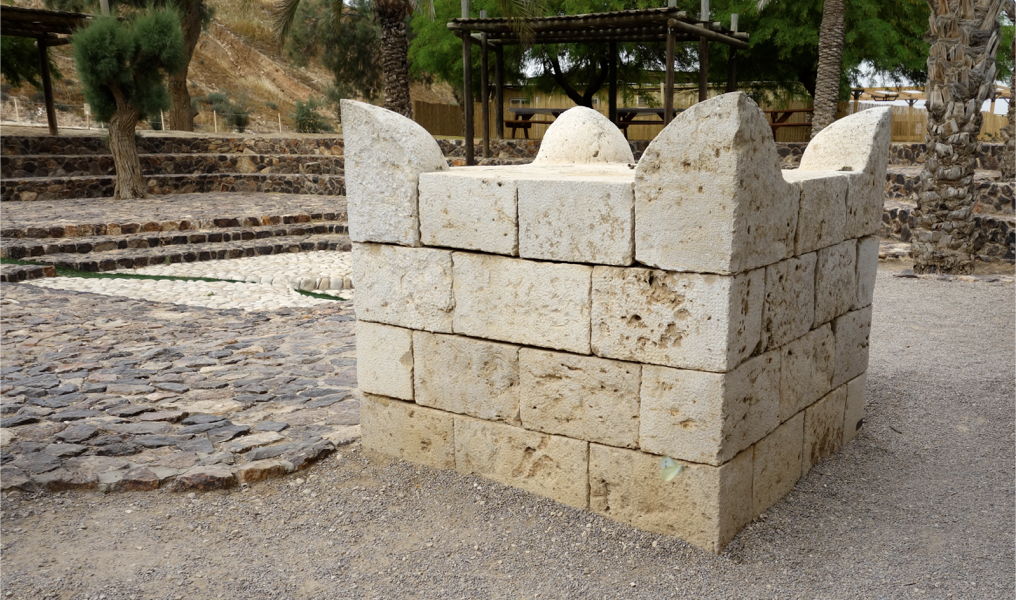
Jeffrey M. Bradshaw: Four-Horned Altar at Beersheba, 2014

An Old Testament KnoWhy for Gospel Doctrine Lesson 8: Living Righteously in a Wicked World (Genesis 13–14; 18–19) (JBOTL08A)

The purpose of this five-part series of videos is to provide a brief introduction to some of the places linked in tradition to the lives of the family of Abraham and Sarah. Many, though not all, of the sites we will visit are in or near the city of Hebron. Hebron and surrounding areas served as somewhat of a hub for Abraham in his many journeys.

Although archaeology cannot directly substantiate the scriptural stories of Abraham, Isaac, and Jacob, it can tell us something about the geography, settlements, and daily life of their contemporaries. Learning more about these places helps us get a more realistic sense of the setting in which the patriarchs lived.

Because the area surrounding Hebron is located in a part of the Palestinian-controlled West Bank that often has been the scene of violent dispute, it is not visited by tourists as frequently as some other places in Israel. Other sites such as Rachel’s tomb (near Bethlehem), as well as Jacob’s well and Joseph’s tomb further north are also in areas of the West Bank to which travel is sometimes complicated. It is hoped that this series of presentations will increase exposure to these lesser-known sites, so rich in biblical history.

Following this introduction, a second presentation will take us to the most well-known site connected with Abraham, the Tomb of the Patriarchs located in modern Hebron. In the Bible, this site is connected with the place names of Machpelah and Kiryat Arba. Here Abraham purchased a cave for the burial of Sarah from local residents. In the third presentation we will visit other areas in the West Bank: the traditional sites of Jacob’s well and Joseph’s tomb to the north, and the tomb of Rachel near Bethlehem. In the fourth presentation, we will return to Hebron to see excavations of ancient Hebron at Tel Rumeida, also known as Tel Hebron. Tradition associates this area not only with Abraham but also with David, Ruth, and Jesse. Finally, the fifth presentation will bring us to two sites associated with the tree on the plains of Mamre where Abraham welcomed heavenly visitors who promised him a child through Sarah and announced the impending destruction of Sodom.

The video may be found at the Interpreter Foundation website: KnoWhy OTL08A — Abraham’s Hebron: Then and Now, Part 1: Introduction

This video can also be seen on the FairMormon YouTube channel (https://www.youtube.com/watch?v=dL7BipxVcbA).

Submit a Comment

Your email address will not be published. Required fields are marked *

Filed Under: Bible, Lesson Aids, Questions Tagged With: Abraham, Genesis, Gospel Doctrine: Old Testament, Hebron, Historicity

What Was All the Confusion About at the Tower of Babel? (Old Testament Gospel Doctrine Lesson 6C)

February 14, 2018 by Jeffrey M. Bradshaw

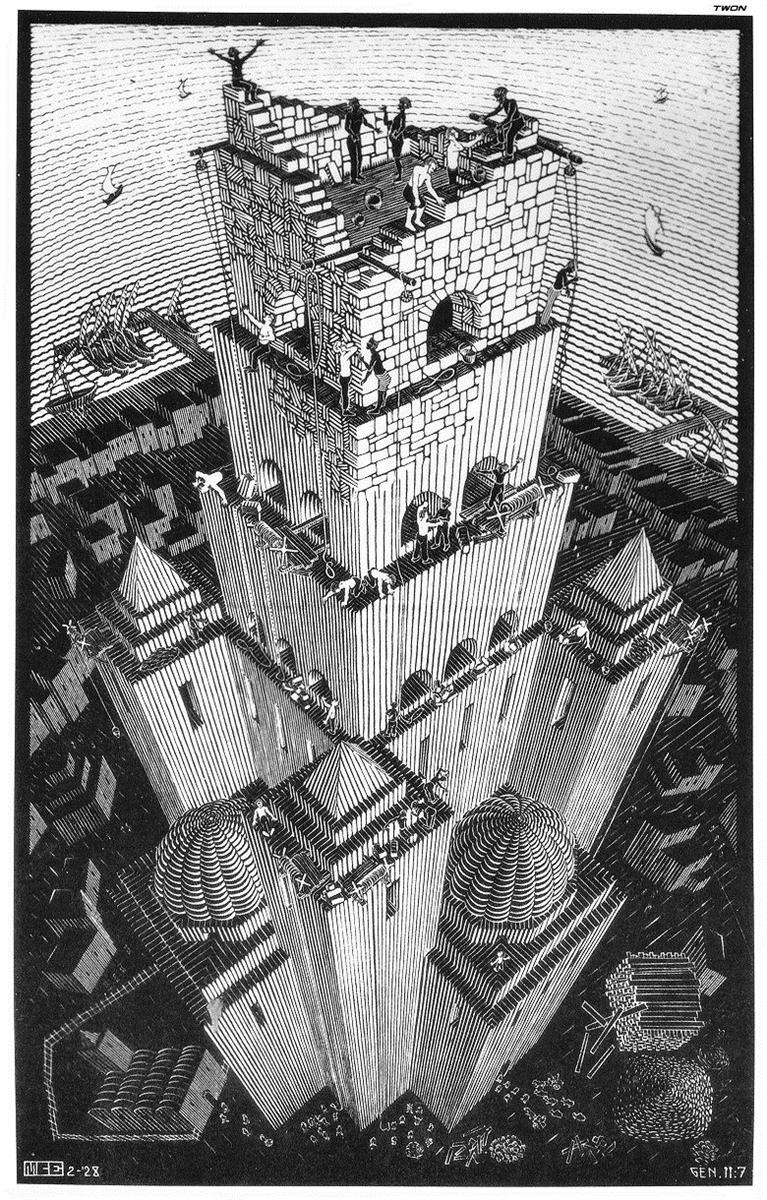
M. C. Escher, 1898-1972: Tower of Babel, 1928. A confused group of different peoples quarrel and cry out as the work comes to a standstill.

An Old Testament KnoWhy for Gospel Doctrine Lesson 6: “Noah … Prepared an Ark to the Saving of His House” (Moses 8:19-30; Genesis 6-9; 11:1-9) (JBOTL06C).

Question: At the beginning of the Tower of Babel story, we read that “the whole earth was of one language, and of one speech.” Later, we are told that “the Lord did there confound the language of all the earth.” But the scientific history of languages tells us that the diverse tongues of the world did not originate from the splitting of a single language. Must we choose between science and scripture?

Summary: To begin with, the Hebrew word eretz used in Genesis 11:1 (and also in the story of Noah’s flood) can mean either “earth” or “land,” and it is impossible to know which except from context. Here, the phrase probably just means that the people in the land where the story took place originally spoke a common language. In addition, despite the chapter’s focus on the confounding (mixing up) of languages, God’s most important concern seems to have been the confounding (mingling) of the covenant people with their unbelieving neighbors. As with other stories in Genesis 1-11, temple themes are woven throughout the account of the confusion at Babel. In this case, the Tower can be seen as a sort of anti-temple wherein its builders attempted to “make … a name” for themselves rather than acknowledging God as the one who gives names to those He has chosen because of their faithfulness. Abraham’s posterity will be separated out from other nations. His great name “will be achieved not in the present through heroic feats and imposing monuments but rather in a divinely promised future through the begetting of numerous offspring.” Though Abraham successfully passed the tests of his day, his latter-day posterity must continue their vigilance, for the project of Babel is making a strong comeback today.


The full article may be found at the Interpreter Foundation website: KnoWhy OTL06C — What Was All the Confusion About at the Tower of Babel?

As a video supplement to this lesson, see Jeffrey M. Bradshaw, “A Tower of Literary Beauty: Wordplay and Chiasmus in the Story of Babel” on the Interpreter Foundation website (http://cdn.interpreterfoundation.org/ifvideo/TowerOfLiteraryBeauty.m4v) or on YouTube (https://youtu.be/2enAFPODShs).

For a video that discusses some of society’s current “Babel projects,” see Jeffrey M. Bradshaw, “The future isn’t what it used to be: Artificial Intelligence meets natural stupidity.” Presentation at the Second Interpreter Science and Mormonism Symposium, March 12, 2016 (http://www.templethemes.net/media/videos/Jeff%20Bradshaw-480p.m4v). Links to an expanded, written version of this presentation published in a series of Meridian Magazine articles can be found here (http://www.templethemes.net/publications.php#mm-future).

Filed Under: Apologetics, Bible, Book of Mormon, Lesson Aids, Questions, Temples Tagged With: Gospel Doctrine: Old Testament, Great and Spacious Building, Jaredites, Tower of Babel

Was Noah Drunk or in a Vision? (Old Testament Gospel Doctrine 6B)

February 3, 2018 by Jeffrey M. Bradshaw

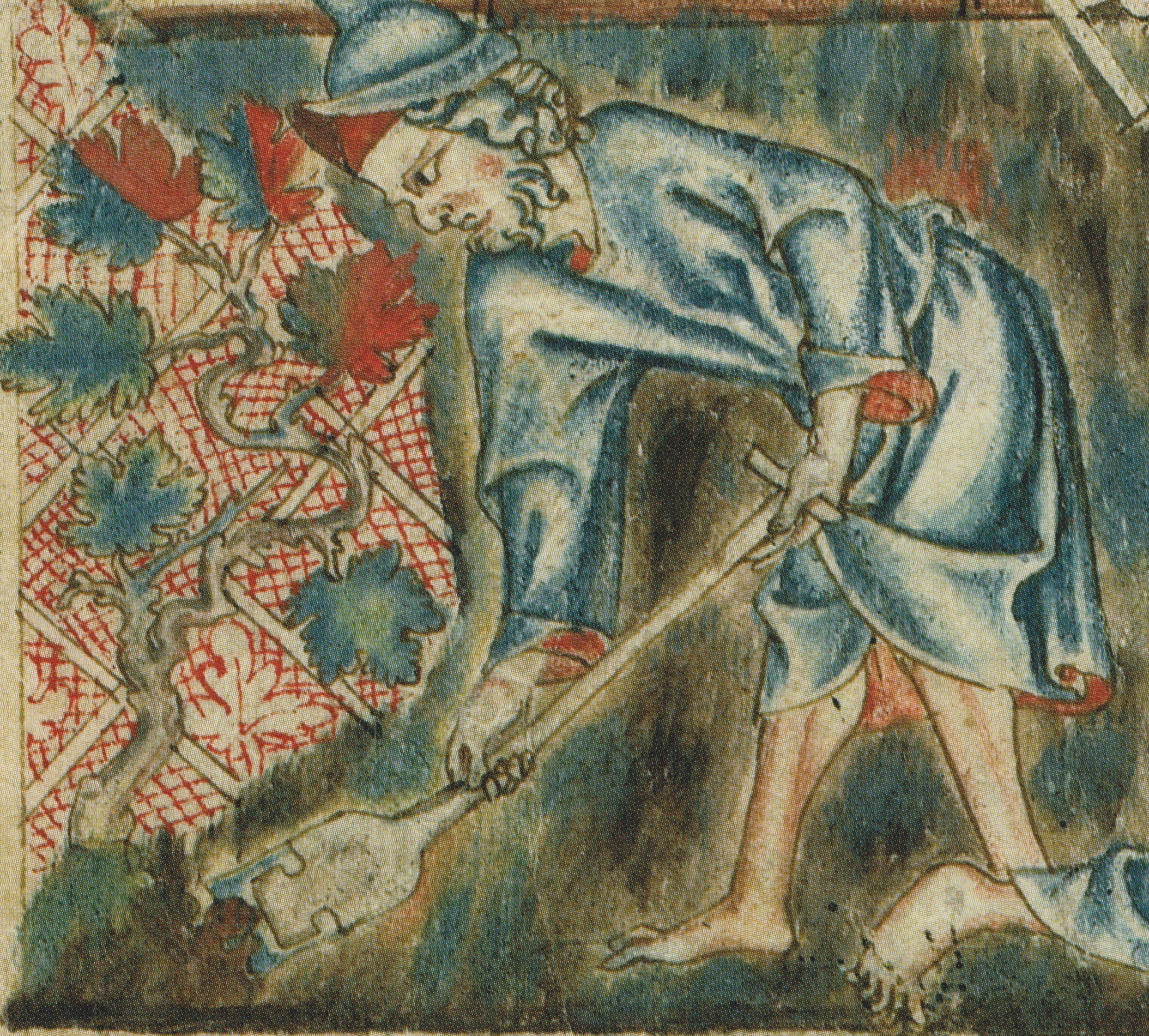
Noah in His Vineyard, Holkham Bible, ca. 1325-1350. Here we see an industrious Noah diligently tending his vineyard, in striking contrast to a later depiction in the same Bible chapter that features him in an inebriated stupor. Scholars have noted the odd inconsistency between these two scenes.

An Old Testament KnoWhy for Gospel Doctrine Lesson 6: “Noah … Prepared an Ark to the Saving of His House” (Moses 8:19-30; Genesis 6-9; 11:1-9) (JBOTL06B)

Question: In Genesis 6:9, Noah is described as “a just man and perfect in his generations,” a noble patriarch who, like Enoch, “walked with God.” However, the story of Noah finishes in a puzzling way. Immediately after Noah makes his covenant with God, his sons find him “drunken” and “uncovered within his tent.” Can these two opposing pictures of Noah be reconciled?

Summary: It is difficult to know whether this contradiction is the result of different traditions, textual misunderstanding, or the abbreviated nature of the biblical account. Some scholars even wonder whether there was a deliberate effort to defame or belittle the character of Noah. What seems certain is that the biblical author deliberately framed this sequel to Noah’s Creation and Garden story as a replay of the scene of the Adam and Eve’s Fall and consequent judgment in Eden. Most often the instigator of this “Fall” is seen to be Noah, who, it is reported, succumbed to the intoxicating influence of wine from his vineyard. However, it is significant that the scriptures omit any hint of wrongdoing by Noah and put all the blame on Ham and his son Canaan. In the admittedly tentative interpretation given in this article, I will discuss the possibility that Ham’s wrongdoing consisted in his having approached, without authorization, the inner curtains of the sacred tent where Noah was enwrapped in vision. Some ancient traditions viewed Ham’s actions as part of an effort to steal Noah’s priesthood garment and undermine his authority.


The full article may be found at the Interpreter Foundation website: KnoWhy OTL06B — Was Noah Drunk or in a Vision?

As a video supplement to this lesson with additional details and artwork not included in this article, see Jeffrey M. Bradshaw, “The Ark and the Tent: Temple Symbolism in the Story of Noah” on the YouTube Interpreter Foundation channel (https://www.youtube.com/watch?v=kIfArfB54Mk ).

Filed Under: Bible, Joseph Smith, Lesson Aids, Prophets, Questions, Racial Issues, Temples Tagged With: Flood, Gospel Doctrine: Old Testament, Noah

Was Noah’s Ark Designed As a Floating Temple? (Old Testament Gospel Doctrine 6A)

February 3, 2018 by Jeffrey M. Bradshaw

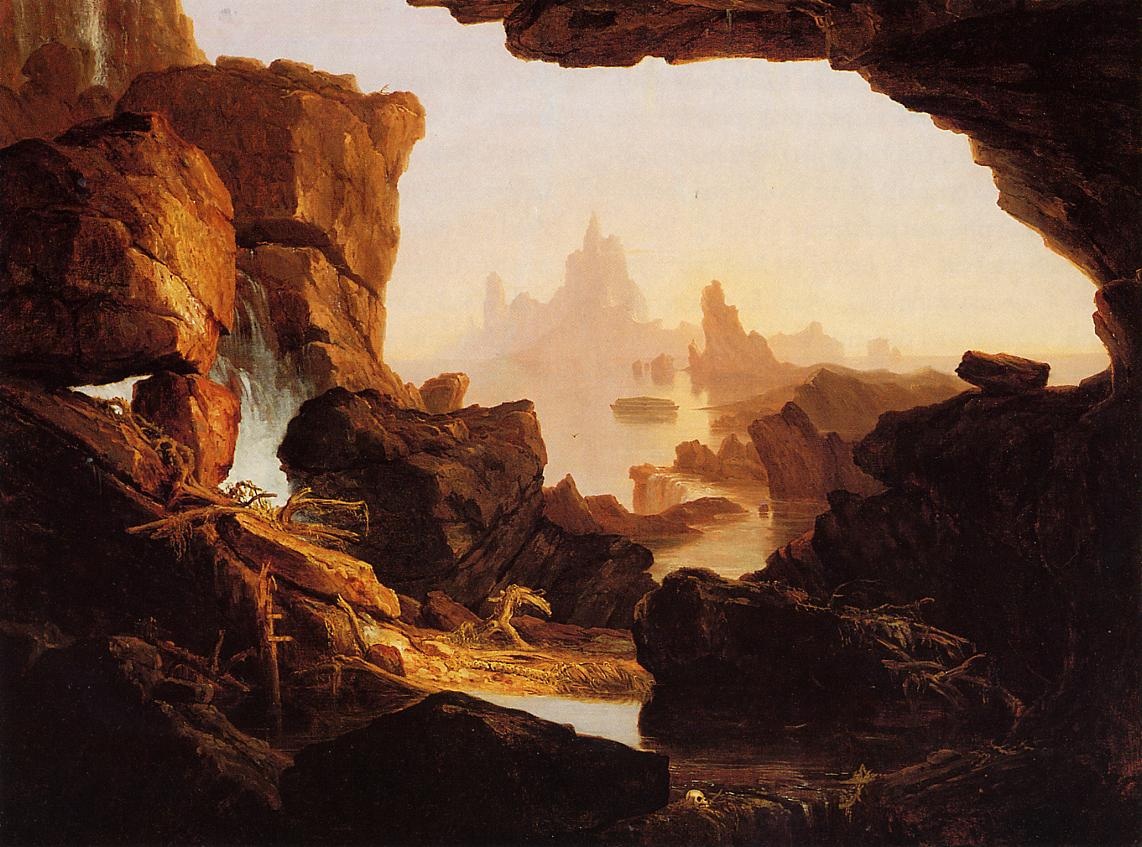
Thomas Cole, 1801-1848: The Subsiding Waters of the Deluge, 1829

An Old Testament KnoWhy for Gospel Doctrine Lesson 6: “Noah … Prepared an Ark to the Saving of His House” (Moses 8:19-30; Genesis 6-9; 11:1-9) (JBOTL06A).

Question: In the Bible, Noah’s ark is described as a huge, rectangular box with three floors and a roof, which makes it sound more like a building than a boat. Was Noah’s ark designed as a floating “temple”?

Summary: In the Bible, God reveals the design of three man-made structures: two of these are temples and one is Noah’s ark. To ancient Israelites, the dimensions, shape, layout, materials, and function of the Ark would have immediately suggested that it, too, had been designed as a “temple.” In addition, the story of the Flood explicitly echoes the scenes of Creation and Eden found in the story of Adam and Eve, including the Ark’s final destination on the heights of a mountain.


The full article may be found at the Interpreter Foundation website: KnoWhy OTL06A — Was Noah’s Ark Designed As a Floating Temple?

As a video supplement to this lesson with additional details and artwork not included in this article, see Jeffrey M. Bradshaw, “The Ark and the Tent: Temple Symbolism in the Story of Noah” on the YouTube Interpreter Foundation channel (https://www.youtube.com/watch?v=kIfArfB54Mk ).

Filed Under: Bible, Book of Moses, LDS Scriptures, Lesson Aids, Questions, Science, Temples Tagged With: Flood, Gospel Doctrine: Old Testament, Joseph Smith Translation, Noah

Could Joseph Smith Have Drawn On Ancient Manuscripts When He Translated the Story of Enoch? (Old Testament Gospel Doctrine 5C)

January 27, 2018 by Jeffrey M. Bradshaw

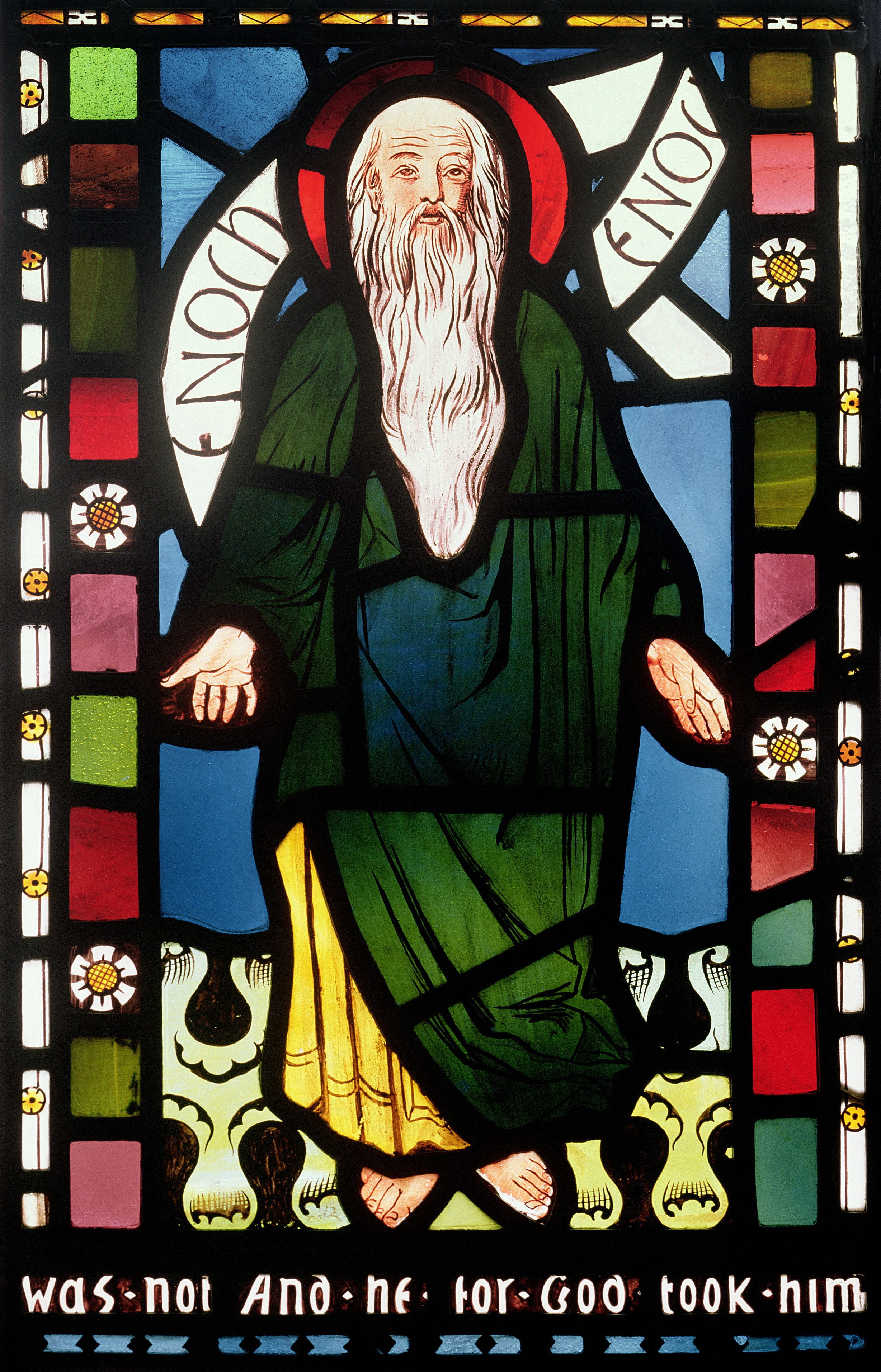
George Campfield, fl. 1861: Enoch, Creation Window, All Saints Church, Selsley, England, 1861

An Old Testament KnoWhy for Gospel Doctrine Lesson 5:“If Thou Doest Well, Thou Shalt Be Accepted” (Moses 5-7) (JBOTL05C). See the link to video supplements to this lesson at the end of this article under “Further Reading.”

Question: Some say that Joseph Smith drew on ancient stories about Enoch not found in the Bible as he translated the chapters on Enoch in Moses 6-7. How similar are the stories of Enoch in ancient accounts to modern scripture? And could Joseph Smith have been aware of them?

Summary: Although an English translation of the Ethiopian book of 1 Enoch appeared in 1821, the ancient manuscripts that are most relevant to the LDS story of Enoch were not available during Joseph Smith’s lifetime. The Qumran Book of Giants, discovered in 1948, contains striking resemblances to Moses 6-7, ranging from general themes in the story line to specific occurrences of rare expressions in corresponding contexts. It would be thought remarkable if any nineteenth-century document were to exhibit a similar density of close resemblances with this small collection of ancient fragments, but to find such similarities in appropriate contexts relating in each case to the story of Enoch is astonishing.


The full article may be found at the Interpreter Foundation website: KnoWhy OTL05C — Could Joseph Smith Have Drawn On Ancient Manuscripts When He Translated the Story of Enoch?

As a first video supplement to this lesson with additional details and artwork not included in this article, see Jeffrey M. Bradshaw, “Could Joseph Smith Have Drawn on Ancient Manuscripts When He Translated the Story of Enoch?” available at The Interpreter Foundation (http://cdn.interpreterfoundation.org/ifvideo/180122-Could Joseph Smith Have Drawn on Ancient.m4v) and FairMormon (https://youtu.be/7zJwuZ_yPyY).

As a second video supplement to this lesson, see Jeffrey M. Bradshaw, “The LDS story of Enoch As a Temple Text (http://www.templestudies.org/2013-enoch-and-the-temple-conference/conference-videos/). Several other excellent video presentations on Enoch and the temple, including one by David J. Larsen discussing ancient parallels with the taking up of Enoch’s city to heaven, are available at this same link.

Filed Under: Best of Fair, Bible, Book of Moses, Evidences, Joseph Smith, LDS Scriptures, Lesson Aids, Questions Tagged With: 1 Enoch, 2 Enoch, 3 Enoch, Book of Giants, Enoch, Gospel Doctrine: Old Testament, Historicity, Joseph Smith Translation

How Does Moses 5-8 Illustrate the Consequences of Keeping and Breaking Temple Covenants One By One? (Old Testament Gospel Doctrine 5B)

January 27, 2018 by Jeffrey M. Bradshaw

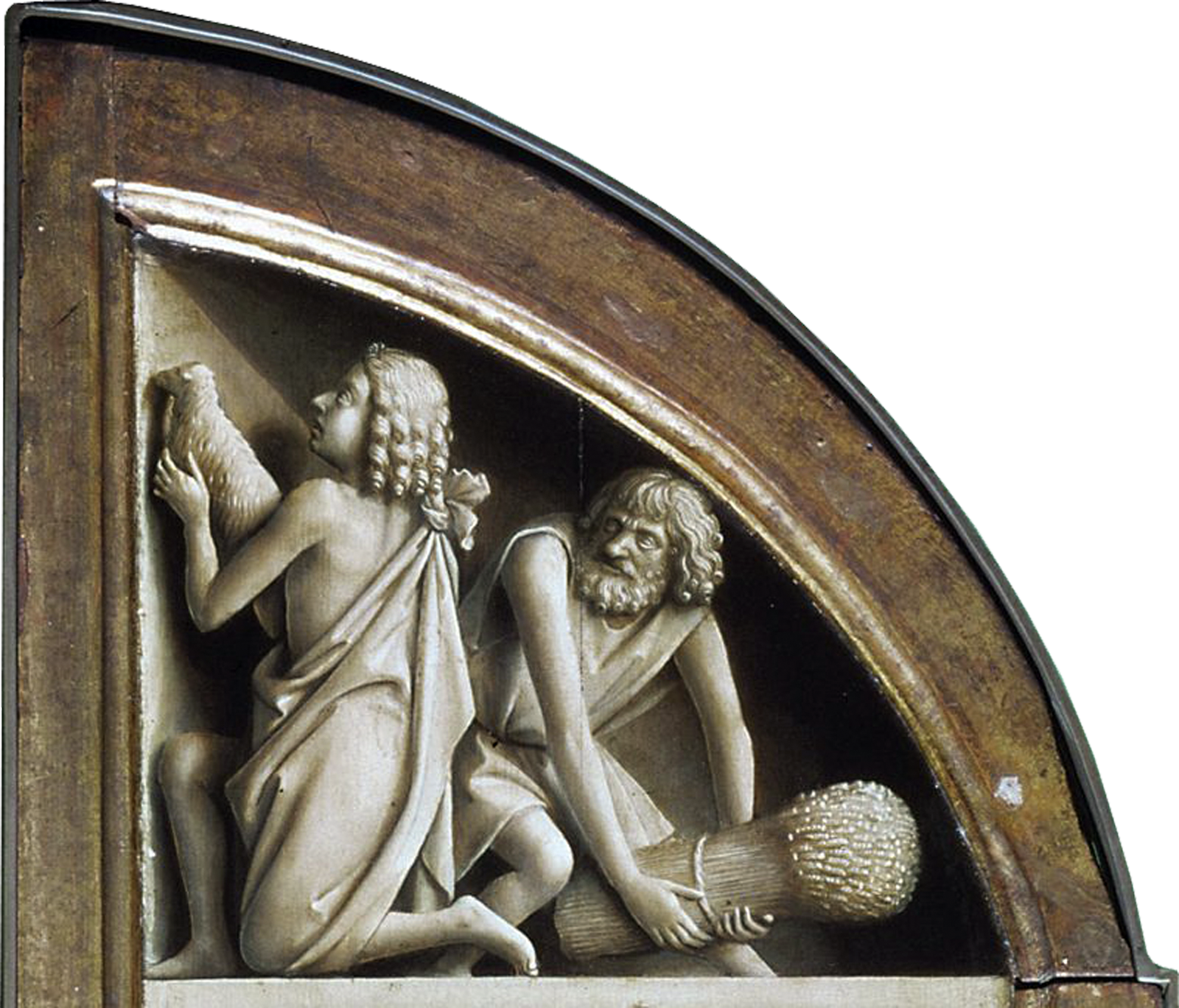
Jan van Eyck, ca. 1395-1441: Offering of Abel and Cain, 1425-1429

An Old Testament KnoWhy for Gospel Doctrine Lesson 5: “If Thou Doest Well, Thou Shalt Be Accepted” (Moses 5-7) (JBOTL05B). See the link to video supplements to this lesson at the end of this article under “Further Reading.”

Question: Some people believe that the basic teachings and covenants available today in LDS temple ordinances were not revealed to Joseph Smith until he got to Nauvoo. Others say he knew a great deal about temple matters long before that time. What could the Prophet have learned about temple covenants as he translated Moses 5-8 in 1830-31?

Summary: Because the book of Moses tells the story of the Creation and the Fall of Adam and Eve, it is obvious to endowed members of the Church that the book of Moses is a temple text, containing a pattern that interleaves sacred history with covenant-making themes. What may be new to many Latter-day Saints, however, is that the temple themes in the book of Moses extend beyond the first part of this story that contains the fall of Adam and Eve — their “downward road.” There is a part two of the temple story given in the book of Moses that describes an “upward road” that is to be climbed by making and keeping an ordered sequence of temple covenants. Significantly, Moses 5-8 appears to have been structured so as to present the consequences of both keeping and breaking specific temple covenants one by one.


The full article may be found at the Interpreter Foundation website: KnoWhy OTL05B — How Does Moses 5-8 Illustrate the Consequences of Keeping and Breaking Temple Covenants One By One?

As a video supplement to this lesson, see Jeffrey M. Bradshaw, “The LDS story of Enoch As a Temple Text” (http://www.templestudies.org/2013-enoch-and-the-temple-conference/conference-videos/). Several other excellent video presentations on Enoch and the temple are available at this same link.

For additional discussion of evidence that Joseph Smith knew much about temple matters early on in his ministry, see: “What Did Joseph Smith Know about Temple Ordinances by 1836?” (http://interpreterfoundation.org/conferences/2014-temple-on-mount-zion-conference/2014-temple-on-mount-zion-conference-videos/).

Filed Under: Bible, Book of Moses, Joseph Smith, Lesson Aids, Masonry, Questions, Temples Tagged With: Gospel Doctrine: Old Testament, Joseph Smith Translation

Why Was Joseph Smith Initially Prohibited from Publishing His Bible Translation? (Old Testament Gospel Doctrine 5A)

January 27, 2018 by Jeffrey M. Bradshaw

Liz Lemon Swindle, 1953-: Go with Me to Cumorah, 1997

An Old Testament KnoWhy for Gospel Doctrine Lesson 5: “If Thou Doest Well, Thou Shalt Be Accepted” (Moses 5-7) (JBOTL05A). See the link to video supplements for this lesson at the end of this article under “Further Reading.”

Question: For a while, the Lord prohibited Joseph Smith from sharing his Bible translation publicly. Also, Moses 1:42 explicitly says that the account of Moses’ vision should not be shown “unto any except them that believe.” Any guesses as to the reasons behind these restrictions?

Summary: I believe that these initial restrictions were due, at least in part, to the sacred content of many of the changes and additions in Joseph Smith’s Bible translation. This makes sense if we regard the knowledge that Joseph Smith received as he translated the Bible as part of a divine tutorial on priesthood and temple doctrines, authority, and ordinances. In fact, some parts of Genesis seem to contain echoes of what temple studies scholars would call a “temple text.” My study of the book of Moses and others of the initial revelations and teachings of Joseph Smith have convinced me that he knew early on much more about these matters than he taught publicly, contradicting the view of those who consider the fundamental doctrines, covenants, and teachings of the Nauvoo temple ordinances a late invention

The full article may be found at the Interpreter Foundation website: KnoWhy OTL05A — Why Was Joseph Smith Initially Prohibited from Publishing His Bible Translation?

For more discussion of evidence that Joseph Smith knew much about temple matters early on in his ministry, see the first video supplement to this lesson: “What Did Joseph Smith Know about Temple Ordinances by 1836?” (http://interpreterfoundation.org/conferences/2014-temple-on-mount-zion-conference/2014-temple-on-mount-zion-conference-videos/).

For a playlist of one-minute video clips discussing various aspects of Mormonism and Masonry in Nauvoo, see the second video supplement to this lesson at the FairMormon YouTube Channel (https://www.youtube.com/watch?v=X0zdSoYy_fg&list=PLw_Vkm1zYbIHW8n88zdpJuzK83caT7A2H).

Filed Under: Bible, Book of Abraham, Book of Moses, Joseph Smith, LDS History, LDS Scriptures, Lesson Aids, Masonry, Questions, Temples Tagged With: Gospel Doctrine: Old Testament, Joseph Smith Translation

  • « Go to Previous Page
  • Go to page 1
  • Go to page 2
  • Go to page 3
  • Go to page 4
  • Go to page 5
  • Go to Next Page »

Primary Sidebar

Faithful Study Resources for Come, Follow Me

Subscribe to Blog

Enter your email address:

Subscribe to Podcast

Podcast icon
Subscribe to podcast in iTunes
Subscribe to podcast elsewhere
Listen with FAIR app
Android app on Google Play Download on the App Store

Pages

  • Blog Guidelines

FAIR Latest

  • Come, Follow Me with FAIR – Doctrine and Covenants 137–138 – Part 2 – Autumn Dickson
  • Come, Follow Me with FAIR – Doctrine and Covenants 137–138 – Mike Parker
  • FAIR December Newsletter
  • Come, Follow Me with FAIR – Doctrine and Covenants 137–138 – Part 1 – Autumn Dickson
  • Prophets of God 

Blog Categories

Recent Comments

  • LHL on Come, Follow Me with FAIR – Doctrine and Covenants 132 – Mike Parker
  • Stephen Johnsen on Come, Follow Me with FAIR – Doctrine and Covenants 132 – Mike Parker
  • Bruce B Hill on Come, Follow Me with FAIR – Doctrine and Covenants 124 – Part 1 – Autumn Dickson
  • Gabriel Hess on Join us Oct 9–11 for our FREE virtual conference on the Old Testament
  • JC on When the Gospel “Doesn’t Work”

Archives

Follow Us

  • Facebook
  • Twitter
  • iTunes
  • YouTube
Android app on Google Play Download on the App Store

Footer

FairMormon Logo

FAIR is a non-profit organization dedicated to providing well-documented answers to criticisms of the doctrine, practice, and history of The Church of Jesus Christ of Latter-day Saints.

Donate to FAIR

We are a volunteer organization. We invite you to give back.

Donate Now

Site Footer