• Skip to primary navigation
  • Skip to main content
  • Skip to primary sidebar
  • Skip to footer

FAIR

  • Find Answers
  • Blog
  • Media & Apps
  • Conference
  • Bookstore
  • Archive
  • About
  • Get Involved
  • Search

Archives for March 2018

What Did the Lord Mean When He Said Moses Would Become “God to Pharaoh” During the Plagues of Egypt? (Old Testament Gospel Doctrine Lesson 13A)

March 26, 2018 by Jeffrey M. Bradshaw

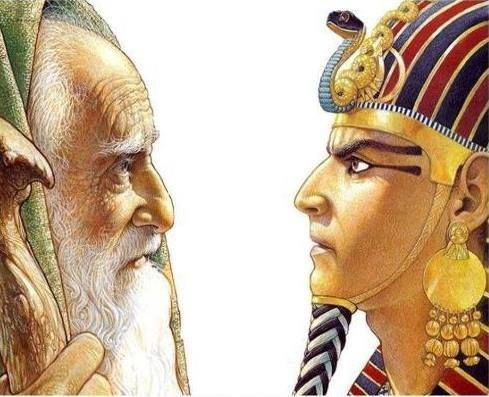
Moses and Pharaoh

An Old Testament KnoWhy relating to the reading assignment for Gospel Doctrine Lesson 13: Bondage, Passover, and Exodus (Exodus 1-3; 5-6; 11-14) (JBOTL013A)

Question: What did the Lord mean when He said Moses would become “god to Pharaoh”? And how did the symbolism of the plagues undermine the worship of the Egyptian gods?

Summary: Surprisingly, Exodus 7:1 does not say that Moses was to be “like a god” to Pharaoh. Rather, the Lord’s words to the prophet in Hebrew read literally: “I have made you God/god to Pharaoh.” To make sense of this statement, it must be remembered that Pharaoh was considered to be a god by his people, “the living embodiment of the god Horus, god of kingship, represented by the falcon.” Thus, to prepare Moses for his summit meeting with the leader of Egypt, the Lord made him not only Pharaoh’s “equal” in rank but in addition also enabled him to demonstrate the greater potency of the true and living God whom he served. Because Pharaoh was divine in the eyes of the Egyptians, “he should have been the one to function as a god to Moses.” However, in a display of power whose symbolism would have been understood both by the Egyptians and the people of Moses, Jehovah, the God of Israel, turned the tables against Ra, the supreme sun-god of Pharaoh. By means of the plagues, the great I AM executed His judgment “against all the gods of Egypt,” a phrase meant to include Pharaoh and his firstborn son. Drawing primarily on the work of Rutgers professor Gary A. Rendsburg, this article will describe the significance of the means by which Jehovah devastated Ra.


The full article may be found at the Interpreter Foundation website: KnoWhy OTL13A — What Did the Lord Mean When He Said Moses Would Become “God to Pharaoh” During the Plagues of Egypt?

For Gary Rendsburg’s 8 March 2007 BYU Kennedy Center talk entitled “Light from Egypt on the Exodus Story,” see https://www.youtube.com/watch?v=_iwvTZnwSy0 .

To access Gary Rendsburg’s 2013 video presentation of “Moses the Magician” at the UCSD Exodus Conference “Out of Egypt: Israel’s Exodus Between Text and Memory, History and Imagination,” see https://www.youtube.com/watch?v=aYhNo1jC9Fg .

Filed Under: Bible, Joseph Smith, Lesson Aids, Questions, Resources, Temples Tagged With: Deification, Exodus, Gospel Doctrine: Old Testament, magic, Moses, Pharaoh, Plagues

How Should We Understand the Rich Symbolism in Jacob’s Blessings of Judah and Joseph? (Old Testament Gospel Doctrine Lesson 12A)

March 20, 2018 by Jeffrey M. Bradshaw

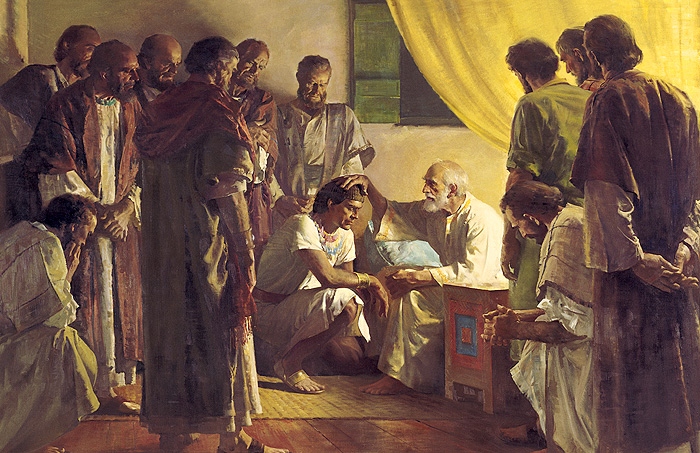
Harry Anderson: Jacob Blesses His Twelve Sons

An Old Testament KnoWhy for Gospel Doctrine Lesson 12: “Fruitful in the Land of My Affliction” (Genesis 40-45) (JBOTL012A)

Question: Some of the most significant prophecies in scripture regarding the posterity of Jacob are found in the blessings of Judah and Joseph in Genesis 49. However much of the poetry in the blessings is difficult to understand. How should we understand the rich symbolism of these verses?

Summary: The Hebrew manuscripts of Jacob’s blessings of Judah and Joseph present difficult problems in translation, since they contain several obscure and archaic terms and phrases. Some important passages (e.g., “until Shiloh comes” [49:10]; “Joseph is a fruitful branch” [49:22]) have been particularly troublesome, leaving translators with few options outside of “conjectural emendation” to reconstruct the text. This approach may result in translations of key phrases that differ significantly from what is contained in the LDS edition of the Bible. Adding to the difficulties of interpretation of these blessings is that we have no direct help from modern scripture. Surprisingly, while Joseph Smith made substantive changes in the wording of the blessings of Ephraim and Manasseh in Genesis 48 and in the testament of Joseph in chapter 50, he made no significant changes to Genesis 49. And, apart from brief restatements of a few lines from Jacob’s words to Joseph in an 1833 blessing of Joseph Smith’s father, we have no other known allusions to the specific content of Genesis 49 in the teachings and history of the Prophet. The intent of this article is to make this chapter — arguably “the most difficult segment of the Book of Genesis” — more understandable for LDS readers. More importantly, it is hoped that this understanding will lead us to a greater dedication to our own responsibilities as the posterity of Israel.

The full article may be found at the Interpreter Foundation website: KnoWhy OTL12A — How Should We Understand the Rich Symbolism in Jacob’s Blessings of Judah and Joseph?

Filed Under: Bible, Book of Mormon, Lesson Aids, Questions, Racial Issues, Temples Tagged With: Baptism for the dead, Gathering of Israel, Genesis, Gospel Doctrine: Old Testament, Jacob, Joseph, Judah, Lineage, Patriarchal Blessings

FairMormon Conference Podcast #4 – Daniel Peterson, “What Difference Does It Make?”

March 19, 2018 by Trevor Holyoak

https://media.blubrry.com/mormonfaircast/www.fairlatterdaysaints.org/wp-content/uploads/2018/03/Dan-Peterson.mp3

Podcast: Download (97.2MB)

Subscribe: RSS

This podcast series features a FairMormon Conference presentation each month. If you would prefer to watch the videos, they can still be purchased here for the 2017 conference. Older conference presentation videos are available on our YouTube channel and FairMormon TV for Roku, Amazon Fire TV, and Android TV.

Daniel Peterson, What Difference Does It Make?

Video and transcript available here.

Daniel C. Peterson

A native of southern California, Daniel C. Peterson received a bachelor’s degree in Greek and philosophy from Brigham Young University (BYU) and, after several years of study in Jerusalem and Cairo, earned his Ph.D. in Near Eastern Languages and Cultures from the University of California at Los Angeles (UCLA). Dr. Peterson is a professor of Islamic Studies and Arabic at BYU, where he has taught Arabic language and literature at all levels, Islamic philosophy, Islamic culture and civilization, Islamic religion, the Qur’an, the introductory and senior “capstone” courses for Middle Eastern Studies majors, and various other occasional specialized classes. He is the author of several books and numerous articles on Islamic and Latter-day Saint topics–including a biography entitled Muhammad: Prophet of God (Eerdmans, 2007)—and has lectured across the United States, in Europe, Australia, and New Zealand, and at various Islamic universities in the Near East and Asia. He served in the Switzerland Zürich Mission (1972-1974), and, for approximately eight years, on the Gospel Doctrine writing committee for The Church of Jesus Christ of Latter-day Saints. He also presided for a time as the bishop of a singles ward adjacent to Utah Valley University. Dr. Peterson is married to the former Deborah Stephens, of Lakewood, Colorado, and they are the parents of three sons.

Filed Under: Anti-Mormon critics, Apologetics, Atheism, Doctrine, Evidences, FAIR Conference, FairMormon Conference, Faith Crisis, LDS Culture, Perspective, Podcast, Suicide, Testimonies

Why Are the Stories of Joseph and Judah Intertwined? (Old Testament Gospel Doctrine Lesson 11A)

March 12, 2018 by Jeffrey M. Bradshaw

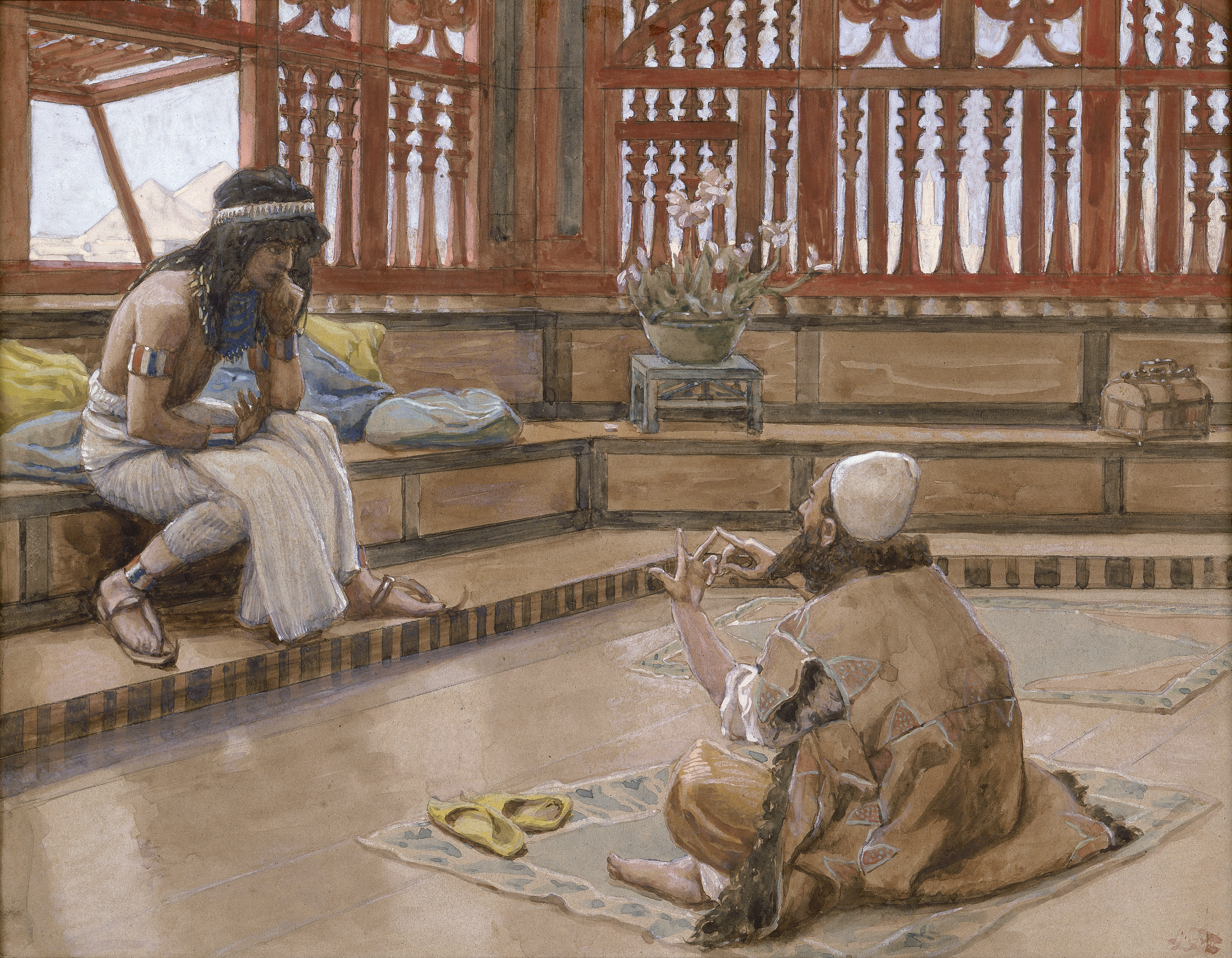
Jacques Joseph Tissot (1836-1902): Joseph Converses with Judah, His Brother

An Old Testament KnoWhy for Gospel Doctrine Lesson 11: “How Can I Do This Great Wickedness?” (Genesis 34; 37-39) (JBOTL011A)

Question: Immediately after telling us that Joseph was sold as a slave in Egypt, Genesis suddenly shifts our attention to the story of Judah and Tamar. Why is Joseph’s story abruptly interrupted at such a crucial point in the narrative? Why are the stories of Joseph and Judah intertwined throughout?

Summary: The story of Judah and Tamar in Genesis 38 “seems to be out of place,” with some scholars going so far as to dismiss it entirely as “an extraneous fragment.” But closer examination of this story demonstrates that it was placed where it was for good reason — and with great skill and subtlety. Lacking this important interlude, we might think that the final chapters of Genesis were concerned only with the rise of Joseph in Egypt and how, through God’s hand and his faithfulness, Jacob’s family was saved from death by famine. In fact, however, the inspired editor of Genesis has deliberately interwoven the stories of Joseph and Judah. In doing so, he demonstrates that their trials and tests were part of a divine tutorial designed to prepare them to become models for and eventually leaders of their brothers. Later, Joseph and Judah would become the ancestors of the most prominent tribes of Israel’s northern and southern dominions respectively, thus fulfilling (in part) God’s promises to Abraham: “I will make nations of thee, and kings shall come out of thee.”

The full article may be found at the Interpreter Foundation website: Why Are the Stories of Joseph and Judah Intertwined?

Filed Under: Bible, Lesson Aids, Questions, Resources Tagged With: Forgiveness, Genesis, Gospel Doctrine: Old Testament, Joseph, Judah, Reconciliation

What Are We To Make of Jacob’s Apparent Deceitfulness? (Old Testament Gospel Doctrine Lesson 10A)

March 5, 2018 by Jeffrey M. Bradshaw

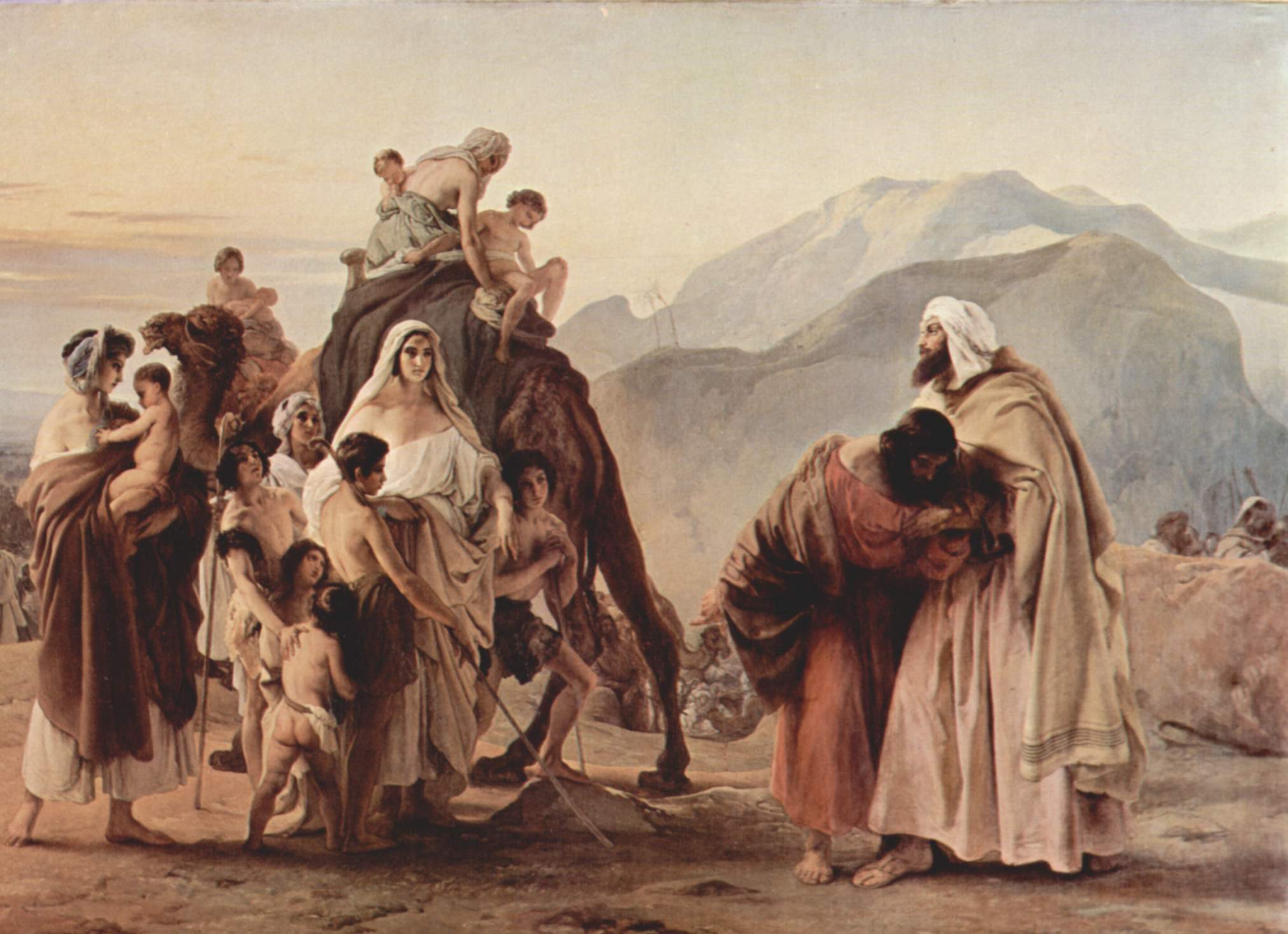
Francesco Hayez (1791-1881): Meeting of Esau and Jacob, 1844

An Old Testament KnoWhy for Gospel Doctrine Lesson 10: Birthright Blessings; Marriage in the Covenant (Genesis 24-29) (JBOTL010A)

Question: Why is Jacob so greatly blessed when “the pivotal moments in the scriptural account of [his] life seem to turn on deceit”?

Summary: Jacob’s youthful deceits are proverbial. Indeed, the Savior Himself praised Nathanael by contrasting him with Jacob, saying, “Behold an Israelite [i.e., descendant of Jacob] indeed, in whom[, unlike his forefather, there] is no guile!” However, as in all scripture stories (as in life), we cannot fully understand the lessons of Jacob’s divine tutorial unless we follow it to its end. In the Bible’s version of measure-for-measure justice, the deceiver will be himself deceived. Eventually, among the happy results of Jacob’s crucible of experience, he will learn humility, forgiveness, and that God has His own ways to fulfill His own promises.


The full article may be found at the Interpreter Foundation website: KnoWhy OTL10A — What Are We to Make of Jacob’s Apparent Deceitfulness?


Filed Under: Bible, Lesson Aids, Polygamy, Questions, Resources, Temples, Women Tagged With: Gospel Doctrine: Old Testament, Jacob, Laban, Leah, Rachel

Primary Sidebar

Faithful Study Resources for Come, Follow Me

Subscribe to Blog

Enter your email address:

Subscribe to Podcast

Podcast icon
Subscribe to podcast in iTunes
Subscribe to podcast elsewhere
Listen with FAIR app
Android app on Google Play Download on the App Store

Pages

  • Blog Guidelines

FAIR Latest

  • Come, Follow Me with FAIR – Easter – Part 2 – Autumn Dickson
  • Procedural Developments in the Solemn Assembly
  • The Solemn Assembly
  • Come, Follow Me with FAIR – Easter – Jennifer Roach Lees
  • Come, Follow Me with FAIR – Easter – Part 1 – Autumn Dickson

Blog Categories

Recent Comments

  • productx ai vedio ads maker on Come, Follow Me with FAIR – Easter – Part 2 – Autumn Dickson
  • Sister Truelove on Humble Souls at Altars Kneel
  • Antonio Moreno on Forsake Not Your Own Mercy
  • Wayne on Come, Follow Me with FAIR – Genesis 12–17; Abraham 1–2 – Part 1 – Autumn Dickson
  • Tanya Alltop on Be Reconciled to God 

Archives

Follow Us

  • Facebook
  • Twitter
  • iTunes
  • YouTube
Android app on Google Play Download on the App Store

Footer

FairMormon Logo

FAIR is a non-profit organization dedicated to providing well-documented answers to criticisms of the doctrine, practice, and history of The Church of Jesus Christ of Latter-day Saints.

Donate to FAIR

We are a volunteer organization. We invite you to give back.

Donate Now

Site Footer