
In his April 2026 General Conference address, “Keys, Covenants, and Easter,” Elder Quentin L. Cook connected the Savior’s Resurrection with one of the most significant events of the Restoration: the appearance of Jesus Christ, Moses, Elias, and Elijah in the Kirtland Temple. Elder Cook taught that the priesthood keys restored there are central to God’s plan to unite His children and families eternally.
But some people wonder why priesthood keys and temple sealing ordinances matter at all. Aren’t they simply later additions to Christianity? Elder Cook’s message offers a powerful answer: these restored keys are not peripheral doctrines—they are part of the Savior’s work to bring God’s children back into His presence.
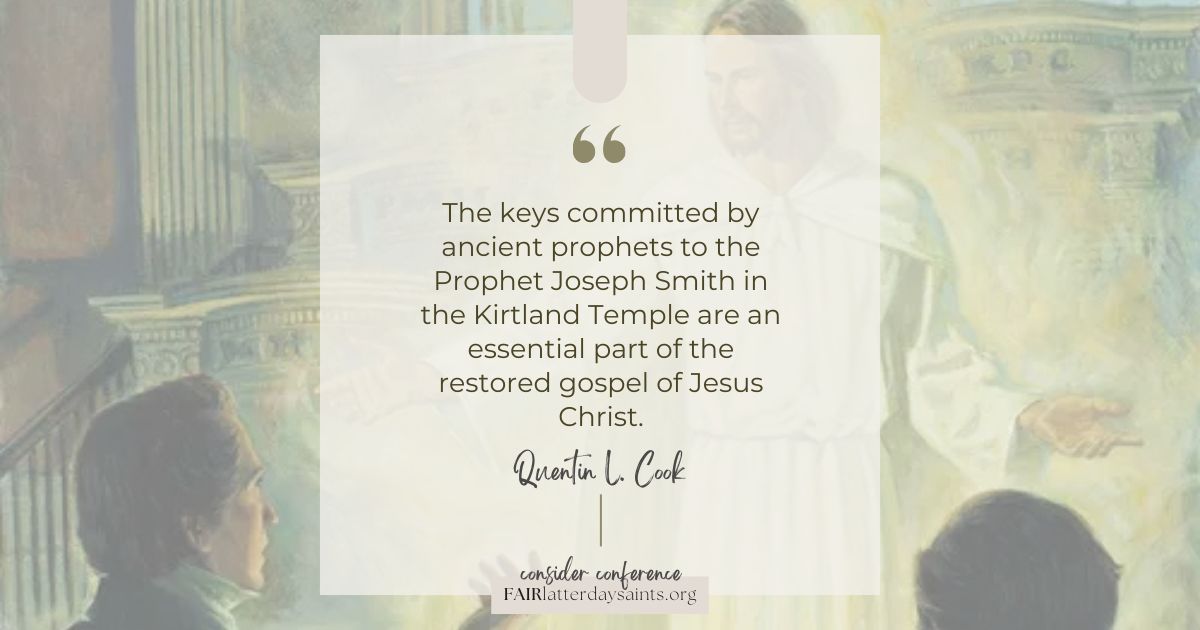
The keys committed by ancient prophets to the Prophet Joseph Smith in the Kirtland Temple are an essential part of the restored gospel of Jesus Christ.
Common Criticism: Priesthood Keys and Temple Sealings Aren’t Necessary
Many Christians believe faith in Christ alone is sufficient and see priesthood keys, temple ordinances, and eternal family sealings as unnecessary additions to the gospel. Others view temple work as an elaborate system built upon speculative interpretations of scripture.
Fallacy at Work: Presentism
Presentism is the tendency to judge past beliefs and practices solely through modern assumptions while overlooking their historical and scriptural context.
In this case, critics often assume that priesthood authority and covenant ordinances are later inventions because they are unfamiliar today. Yet this overlooks the biblical pattern of divine authority, priesthood keys, and prophetic restoration that stretches from Moses and Elijah through Christ’s ministry and into the Restoration.
Doctrine:
Priesthood keys are the authority God gives to direct His work on earth. Jesus spoke of these keys when He promised Peter the power to “bind on earth” and “bind in heaven” (Matthew 16:19). Through Elijah’s return, the sealing power was restored so sacred ordinances and family relationships could endure beyond death.
Elder Cook explained that Elijah restored “the priesthood keys pertaining to the sealing power to bind sacred ordinances and covenants on earth and in heaven.” These ordinances make possible the eternal union of husbands, wives, parents, and children. Without these keys, he taught, there would be “no eternal families.”
Elder Cook’s Correction
Elder Cook reframes the discussion by showing that sealing keys are not primarily about temples or procedures—they are about God’s plan to save and unite His children.
He pointed to the prophecy delivered through Moroni: “If it were not so, the whole earth would be utterly wasted at his coming.”
The Restoration provides an answer to questions many believers have wrestled with for centuries: How are families connected in eternity? What role do ordinances play in God’s plan? Why did ancient prophets repeatedly speak of Elijah’s return?
Solution
Rather than seeing temple sealings as additions to Christianity, Elder Cook invites us to see them as restorations of truths and authority that God promised would return before the Second Coming.
The gospel is not only about individual salvation. It is about creating an eternal covenant family through Jesus Christ. Priesthood keys make those covenants possible.
Living Apologetics: Seeing Temple Covenants Through the Lens of Christ
A common misconception is that temple work focuses more on ordinances than on the Savior.
Elder Cook’s message teaches the opposite. The purpose of priesthood keys is to connect us more fully to Jesus Christ and His Atonement. The restored sealing power allows the blessings of Christ’s sacrifice to extend across generations.
Practical Apologetic Use
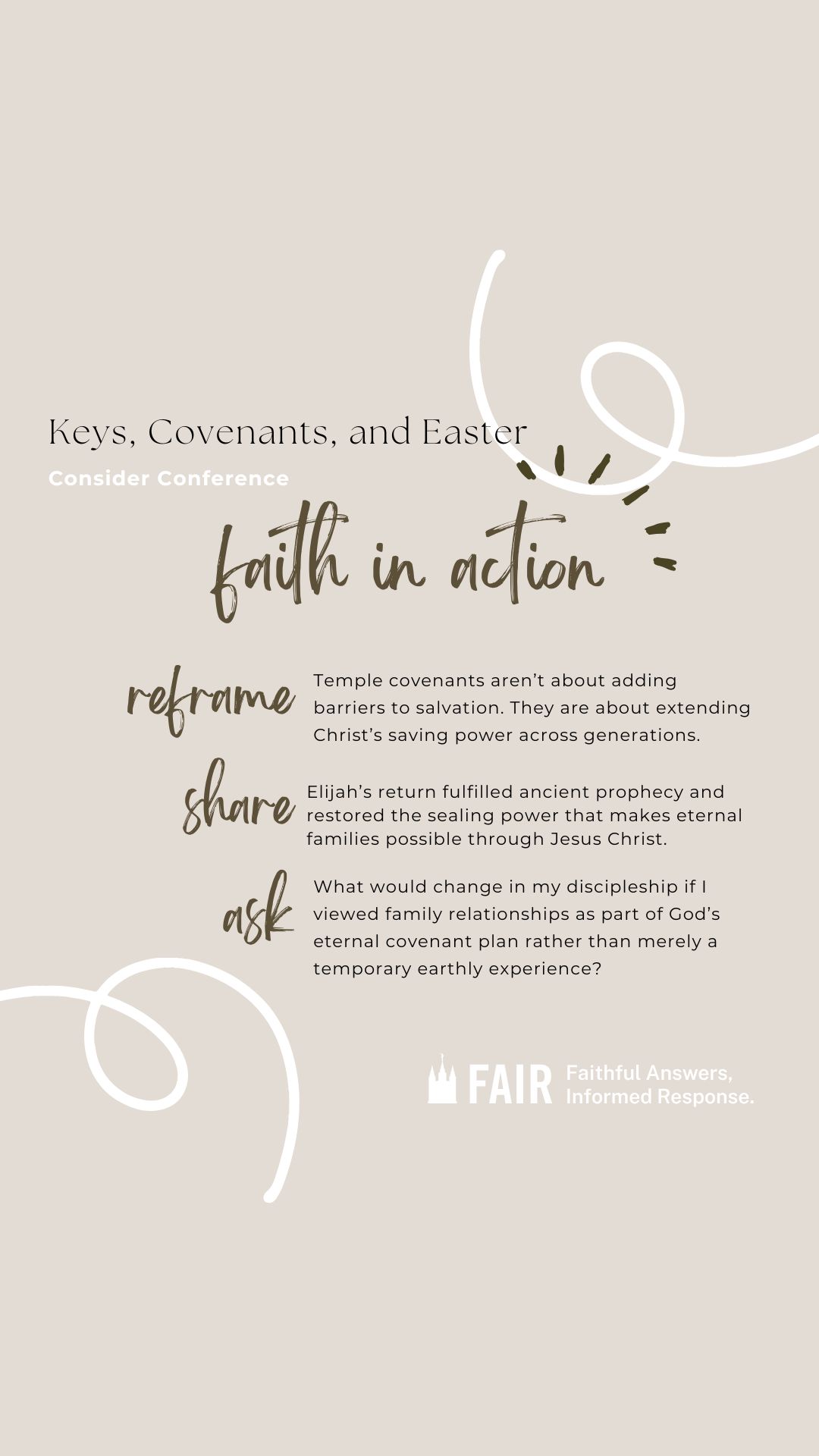 If someone says: “I don’t understand why temples and sealings are necessary.”
You can respond: “Latter-day Saints believe Christ restores authority whenever He restores His gospel. Temple sealings aren’t about adding requirements—they’re about making possible the eternal family relationships God has promised through His covenant plan.”
Ways to Apply Today
1️⃣ Study Elijah’s mission. Read Doctrine and Covenants 2 and Doctrine and Covenants 110 to better understand why Elijah’s return matters.
2️⃣ Strengthen family connections. Reach out to an ancestor, relative, or family member and learn more about their story.
3️⃣ Focus on Christ in temple worship. When attending the temple, consciously look for ways every ordinance points back to the Savior and His Atonement.
Keep This Talk With You
Elder Cook’s Easter message reminds us that the Restoration is ultimately about Jesus Christ. The same Savior who conquered death also restored the authority needed to unite families eternally. His Resurrection gives us hope beyond the grave, and His restored priesthood keys give shape and purpose to that hope.
The world often treats family relationships as temporary and fragile. The restored gospel offers a different vision: through Christ, covenant relationships can endure forever. The sealing power restored by Elijah is not merely a historical event to admire—it is a living reality that continues to bless families today.
This week, try one small step:
- Read the account of Elijah’s appearance in Doctrine and Covenants 110.
- Spend time learning about one ancestor or family story.
- Pray for greater appreciation of the Savior’s role in both your personal salvation and your family’s eternal future.
As Elder Cook promised, as we adhere to Christ’s ordinances, covenants, and commandments, we grow closer to Him and gain greater gratitude for the blessings restored in this dispensation.
How can you draw closer to Jesus Christ this week by strengthening your connection to the covenants and family relationships He has made possible through His restored gospel?
The Consider Conference series by FAIR offers an in-depth look at recent General Conference talks to help members of the Church of Jesus Christ of Latter-day Saints navigate common questions, misunderstandings, and criticisms. Each post provides doctrinal insights, historical context, and practical ways to apply gospel principles in everyday conversations. Through this series, we hope to equip readers with faith-promoting resources that encourage thoughtful reflection, respectful dialogue, and a stronger foundation in gospel truths, fostering both personal conviction and meaningful discussions with others.
